Notice: Function _load_textdomain_just_in_time was called incorrectly. Translation loading for the wordpress-seo domain was triggered too early. This is usually an indicator for some code in the plugin or theme running too early. Translations should be loaded at the init action or later. Please see Debugging in WordPress for more information. (This message was added in version 6.7.0.) in /home/bcm/src/dev/www/wp-includes/functions.php on line 6121 women in nigeria | Zikoko!
I was mindlessly scrolling through X when I came across a tweet that stopped me dead in my tracks. Here’s the gist: Home girl was stood up after taking some aphrodisiac in preparation for some genital slamming.
That was a first for me and several other X users who’d mostly associated this experience with men. I knew what I had to do, so here are some stories from women who can relate.
Patience*, 40
My libido dipped after my first child, and I got worried because I like sex. I told my mother-in-law, so she gave me this disgusting mix of okra water. I took it for a week and started feeling like my old self again. Unfortunately, my husband started coming up with excuses to avoid sex. He’d sleep in a different room, say he was too tired or even return late. Meanwhile, I was still taking the mixture, hoping to get some action. It took me asking what was happening before he said he’d been scared to have sex with me since I had a vaginal tear during childbirth.
Hauwa*, 39
I didn’t go all the way with my husband before we married. We cuddled, kissed, and that was it. After marriage, I realised I had trouble getting sexually aroused. I spoke to a friend about it, and she suggested aphrodisiacs from an Instagram kayan mata seller. I knew my husband enjoyed making out on Fridays as part of his “easing into the weekend” ritual, so I waited to take the aphrodisiac one Friday evening around the time he returned from work. He rushed into the bathroom and said he had to attend a friend’s surprise birthday party and he’d be back soon. I was already feeling funny and wanted to pull him into the bedroom. But I thought I could wait it out till he got back. He called two hours later and said I should lock the doors as he’d be home late. I’d never felt so stupid and betrayed. I cried to bed that night and kept to myself for the rest of the week.
Derin*, 33
At some point when I was dating my ex, I hadn’t seen him for up to nine months because we stayed in different states. When we finally decided to meet, I had to travel to Lagos. Before I left Ekiti, I used all the usables for sex — yoghurt and pineapple, pussy sweetener, Parlodel — because I really needed some action. This guy didn’t come home for three days and stopped answering my calls. I was alone in his house until I just packed my bags and left. That was the day I resolved to get a toy.
The biggest women-only festival in Lagos is BACK. Get your tickets here for a day of fun, networking and partayyyyy
Jumoke*, 28
Curiosity made me try out one of these natural sex health tips people share on Twitter. I had to blend dates, yoghurt and pineapple into a smoothie and drink. I didn’t notice anything on my first and second try, but I kept seeing people give testimonies, so I tried it one last time when my boyfriend was spending the weekend at mine. This time, it worked. I was horny and dripping wet, and immediately my he got to my house, we had a quickie. It was so intense he kept asking if I took anything, and I denied it. After he went out the next day, I made a fresh blend and took it in anticipation. That’s how he called, saying he couldn’t come back because something had come up at his mum’s. I played it cool since he didn’t know what I had in mind.
Kemi*, 27
My boyfriend always complains that I never initiate sex or make the next move. Truth is, I’m not so big on sex and could go months without it. But it became an issue between us, so I tried to spice things up. I told a friend about it, and she gave me Spanish fly. I took a drop, but it made all the difference, and I was fired up at night. When I tried to touch Uncle at night, he started forming he’s tired and not in the mood. I ended up touching myself because my vagina kept pulsating. That was the last time I initiated anything.
[ad]
Ada*,25
I had this crush in uni. We’d always flirt with each other while chatting. Soon, we started sexting, and I gave him the idea that I was a pro in bed. Truth is, I’m a one-minute girl, so when a guy takes too long, I lose interest. When we decided to meet, I wasn’t sure sex would happen, but I wanted to be prepared anyway, so I could live up to my sexting persona. I’d read somewhere that white wine does the trick. It worked because I was mad horny. I called this guy when it seemed he was running late, but he didn’t pick up. Texted, and he read with no response. This continued until it became clear he wouldn’t show up. I just finished the rest of my wine and went to sleep.
Being bullied based on an actual or perceived sexual character is something many Nigerian women are familiar with. I mean, we’re a society that calls women “ashewo” for travelling alone or just having money.
It’s our “normal”, but no woman expects to be slut-shamed by a significant other. Yet these seven Nigerian women have experienced it.
“He shared my nudes with his friends” — Dordor, 23
I was 20 when I started dating this 35-year-old man. The age gap was serious, but I was going through a lot with my family, which made me run away from home. He was there for me, even though he also had some drama of his own — he’d just been dumped by his baby mama. Somehow, we grew close and started a relationship.
Eight months in, he gave me his phone to do something on his WhatsApp. I’m not the type of girlfriend who wants to know what you’re doing on your phone. But that day, I found his chat with his married friend who lives in Canada. Lo and behold, there was a gif image of my vagina. I was shook.
I scrolled through the chat history to find several sexual voice notes I’d sent to him. It turns out the guy was bragging about my sexual nature to his friends; I was the smallie he’d deflowered.
I read everything and just kept quiet. When he came back and noticed something was off, he asked, and I confronted him with the evidence. You won’t believe the MF denied it. I left his house so I wouldn’t break a bottle on someone’s head, and he kept calling and threatening me not to leave him. I blocked him everywhere. The following day, as early as 6 a.m., I got a voice note from him — via a second number I’d totally forgotten about — begging me in the name of God. LOL. The relationship ended there.
“He claimed I was exposing myself… while breastfeeding his child” — Nina*, 27
I always thought my husband was a sensible person until we had our son in January [2023].
As a first-time mum, I had a difficult time adjusting to my reality. My mum left after one month of omugwo, and I was basically on my own till my husband returned from work every night. I think I even had postpartum depression.
When our son was three months old, we attended a friend’s wedding. It was my first time at an event after giving birth, and this boy was seriously showing me pepper. He kept crying, so we were juggling between petting and feeding him. At one point, he refused to take the bottle, so I had to breastfeed. I noticed my husband’s face change and asked what was wrong. He said, and I quote, “See how you just brought out your breast in this crowded place. Those guys were staring and lusting at your nipples. You should know how to cover up. Your whole breast is out.”
I don’t know whether it was the frustration, but I gave him a good piece of my mind right there. I’m sure the table beside us heard my voice. My husband started begging and promised never to try it again. He hasn’t tried it again.
I have mostly male friends, and I met my ex-boyfriend at a party hosted by one of these friends. That’s why I’m still shocked he woke up one day and told me to stop talking to my male friends.
We’d been dating for about six months at the time, and he knew I’d been friends with most of these guys for years. Even my friends’ girlfriends knew me and had no problem with me.
He started by dropping murmurs about how I felt comfortable being around guys when I know I have a big ass. Talking about, “What if they think you’re giving them green light?” or “Don’t you think they’ll hit it if you allow them?”
The complaints soon progressed to, “No one wants to be just friends with a fine babe like you”. Foolish lover girl that I was, I thought he was just joking. The straw that broke the camel’s back was when he tried to prevent me from attending one of the guys’ birthday parties. His reason? I looked too hot, and he thought I’d stopped talking to the guy. I dumped his insecure ass.
“He hid my thongs” — Favour*, 22
I started wearing thongs about a year ago because I was tired of the noticeable lines normal panties show when you wear a tight-fitting outfit.
The first day my boyfriend at the time noticed it, he went bonkers. According to him, only sex workers and strippers wore thongs. He also said it’d attract undue attention from men. I thought he was joking, but the next time I went to his place for the weekend, he took my thongs from my bag and hid them while I slept. In the morning, I couldn’t find them so I asked him. He said I was proving stubborn and that he’d rather buy me dozens of new underwear than allow me to wear thongs again. Funny enough, I didn’t break up with him then because I thought his offering to “protect me” was romantic.
“He accused me of wanting attention at the pool” — Lizzy*, 26
My ex-boyfriend and I planned a pool date. I don’t know what he expected me to wear, but he was visibly shocked when I turned up in a bikini. I started getting attention from other people there — male and female alike — and he took offence. He said I deliberately wore a bikini because I wanted attention from men. I had to tie a wrap around my waist till we left.
“He wanted me to stop posting on social media” — Abby, 20
My ex had issues with guys commenting on my pictures on Instagram. Ironically, he also used to drop “likes” on other girls’ pictures.
According to him, likes were his way of acknowledging he saw your post, but comments meant you liked what you saw so much you had to talk about it. He said posting pictures and allowing comments suggested I wanted validation from other men when I already had him. I didn’t stop, and we later broke up because he cheated on me.
“He insulted me on the first date” — Toyin*, 27
From our talking stage, I really should’ve known this guy was “traditional” when he said he believed women shouldn’t work and should be taken care of by their men.
We decided to meet up for a first date after talking for three weeks, and I wore a bodycon dress. The date was okay, but when it was time for him to drop me off, he said something like, “If not that I know you’re a good girl, I would’ve mistaken you for someone who does hookup”. He then advised me about dressing in certain ways to avoid sending the wrong message. He also talked about how it was only hookup girls who wore anklets (I was wearing one).
I calmly listened to all he said and blocked him everywhere immediately after getting home.
*Some names have been changed to protect their identity.
The first time I heard that taking your husband’s surname after marriage stemmed from patriarchy was in 2018 on Facebook.
This feminist had made a whole note explaining how women who did it didn’t have minds of their own and were changing their identities for a man. Such women are oppressed and have been conditioned to stay chained to the shackles of patriarchy.
Many of her fans commented in agreement, but while I partly agreed, I objected to the notion that women who did it were oppressed. What about those who chose to do it? I commented the same, and she descended on me, saying something about the patriarchy being so subconsciously ingrained in us that we’ve been conditioned not to see anything wrong with it. Not one for online arguments, I said nothing else, but it stayed with me.
My logic behind treating a married woman’s name-change as a choice might seem flawed, but maybe my story will explain my stance.
For as long as I can remember, I’ve hated the surname I was born with. It’s an unusual name, and I remember almost every new teacher in primary school asking me to tell them the meaning. My father is very traditional, so he made sure we knew the meaning of all our names as soon as we could talk. Translated into English from Yoruba, it means something like “worshipping an idol”, and it never sat right with me.
I soon learnt to pretend not to know the meaning when I left primary school. It almost always involved long explanations that made me the centre of the class’s attention for about ten minutes. Sometimes, my classmates would chorus the meaning when a teacher asked, because they’d already heard it multiple times. I found it off-putting.
A rare depiction of my actual reaction. Image: Zikoko memes
When I turned 18, I told my dad I wanted to change my surname legally, and he kicked against it. Unfortunately for him, I inherited his stubbornness, so we fought about it for weeks. My mother had to step in to stop the cold war between us. She told me I could easily change it when I got married, so what was I fussing about?
When I started thinking about marriage at 22, my potential spouse’s surname played a significant role. Imagine marrying someone surnamed “Sangonimi” (I am Sango), for instance, and jumping from frying pan to fire. I remember confiding in my best friend about it. She laughed so much I thought she’d choke. I eventually agreed it was childish and decided if the man I married had a “strange” surname, I’d just use his first name as my married surname. Thankfully, my husband has a “normal” surname, and I didn’t have to resort to that. I just wanted to change my name, and this social rule helped.
Recently, the (false) Hakimi Twitter gist brought back the name-change conversation. But while I understand that this surname matter has been a tool for men to claim ownership of their wives, I think outrightly labelling it oppression fosters the belief that women don’t have a choice in the matter. Maybe historically, we didn’t, but Nigerians have become more progressive. I’ve met several women who didn’t change their names after getting married, and I know many who did because they wanted to.
I may be wrong, but the emphasis should be on allowing women to choose what they want to do and accepting the choices without attributing said choices to oppression.
*Subject’s name has been changed for the sake of anonymity.
A couple of weeks ago, I shared Alanna*’s story about how her teenage pregnancy and subsequent traumatic abortion still haunt her seven years later. Several ladies could relate to her story and reached out, wanting to share their post-abortion experiences as well.
I decided to reach out to even more women, and here’s what seven of them had to say.
I had an abortion 20 years ago, and honestly, it was a rushed, emotional decision. I still blame myself, and I think I’m being punished because I’ve not had another pregnancy since.
This is what happened: I was in a relationship with this man, and we were planning to get married. Then, I got pregnant. According to him, we had to push the wedding till after I gave birth because his culture frowned on pregnant brides. I agreed and moved in with him to have the baby while wedding plans were still undergoing. Four months into the pregnancy, I discovered I was expecting twins. At the same time, my fiance and I started having issues.
To cut the story short, I had a surgical abortion at four and a half months because I didn’t want to go ahead with the marriage. It was in a hospital, but really hush-hush because it’s illegal. We broke up, and I later married someone else about six years later, but no child. Doctors say I have a depleted ovarian reserve, but if I didn’t have the abortion, I’d have two adult kids today.
“It gave me a new lease on life”
— Mercy*, 31
I’m pro-life, and I sometimes feel guilty about my abortion, but it gave me a new lease on life.
I had it three years ago, a year into my marriage. It was an abusive union — the abuse started four months after we got married — and I was already planning how to exit when I found myself pregnant. I didn’t tell anyone because I didn’t want anyone to try to change my mind. I’d already waited almost eight months for him to change, and I knew having a child with him would bind me to him forever. I didn’t want to end up being yet another figure on the list of domestic violence victims.
I got the abortion pill and did it within two weeks of finding out I was pregnant. It felt like really bad menstrual cramps, and I bled a lot, but it wasn’t so bad. I got better the next day and packed out the week after. I’m free.
“I don’t even think about them”
— Anne*, 27
I’ve had two pill abortions, both for the same ex-boyfriend. Each time, I thought I’d feel guilty about the babies, maybe because of how people try to bad-mouth abortions, but I don’t even think about them.
It was a choice we both made because we weren’t ready to be parents — we weren’t even thinking about marriage. I’m now more attentive to birth control and contraceptives, so I don’t have to go down that route again. But if I get pregnant by mistake, I’ll abort again.
“The depression is real”
— Dany*, 34
I don’t think we talk enough about the depression that comes after having an abortion. It’s real.
I got pregnant at 25, after my boyfriend raped me in the university. I confided in my best friend because there was no way in hell I could tell my parents.
She took me to a clinic, and they gave me two options: D&C or the pill. I was really paranoid about doing a surgical procedure because it seemed like the easiest way to lose my womb, so I opted for the pill. It was horrible. I bled terribly and still had to do the D&C two weeks later after all, because the pill didn’t evacuate the pregnancy completely. I still had symptoms.
For three weeks after the whole ordeal, I kept seeing babies in my dream, and I was depressed for a really long time. I’m married now and have one child, but I can’t forget the one I didn’t allow to live.
I’ve had two abortions; one while I was single, and the other after giving birth to my four children (my husband and I couldn’t afford a fifth), but I wouldn’t advise anyone to do it.
It’s too risky, and I know many women who’ve had complications because they had to do it under the table since abortion is still illegal in Nigeria. No standard doctor would want to do it because they’d risk losing their license, so we’re left with the ones who just don’t care. I’m just lucky not to have had any complications.
My first abortion was done traditionally. A local midwife inserted a leaf in my vagina, and within six hours, I started bleeding. My husband and I had to bribe a doctor to help us with the second one. I was scared, but I already have four children; there’s nothing I’m using the womb to do again. Thankfully, it went well, and I fully recovered within three days.
“It shouldn’t stop you from having kids”
— Mina*, 20
I had a pill abortion at 19, and only my girlfriends knew. One of them was heavily against it, though. She said she had a dream that I couldn’t have more children. I’m still in school and can’t even provide for myself talk more of a baby, so it was the sensible thing to do. I tried not to take her seriously and went ahead with it, but it was eating me up for a while. So a few months ago, I went to a gynaecologist for a full check-up.
The doctor confirmed all was well and emphasised that an abortion, when done properly, shouldn’t stop you from having kids. I think most people are scared because there’s so much misinformation in Nigeria.
“I think I died”
— Sophie*, 29
I’ve had an IUD since I was 24, so I was really surprised when I got pregnant in 2022. I told my boyfriend; the goat ghosted me. I got information online and bought an abortion pill because single parenthood isn’t in my dictionary.
I took the pill and mentally prepared myself, but I think I died. I blacked out for about three hours and woke up bleeding. I’m not sure what happened. Maybe I got dizzy and fainted, but I lost about three hours. I bled for two days, did another pregnancy test after a week, and it came back negative.
A part of me feels I should’ve kept the baby. I’m pushing 30, after all. I feel guilty whenever I see a pregnant woman on Instagram, but we move. Being a single mother would hurt my chances of getting into a serious relationship even further.
*Names have been changed for the sake of anonymity.
Hear Me Out is a weekly limited series where Ifoghale and Ibukun share the unsolicited opinions some people are thinking, others are living but everyone should hear.
This Hear Me Out was written by Aladeselu Margaret Ayomikun.
Of all the things a girl could be in this world, I chose to be a 19-year-old feminist in Nigeria. I was 9 years old the first time I read Chimamanda Ngozi Adichie’s Purple Hibiscus. Even though I could only understand the book the best way a child can, I still remember feeling like I had discovered the eighth wonder of the world.
“Being defiant can be a good thing sometimes.”These words stood out to me. Aunty Ifeoma was just a character in a book, but she gave me permission to embrace my “defiance”.
It seemed almost impossible that somebody could give ordinary words so much power. And the more I flipped through the pages, the more I felt as if Chimamanda was writing my mother’s story. Then, it occurred to me that many women in Nigeria are just like Mama. In that very moment, I knew I had to know more about the author.
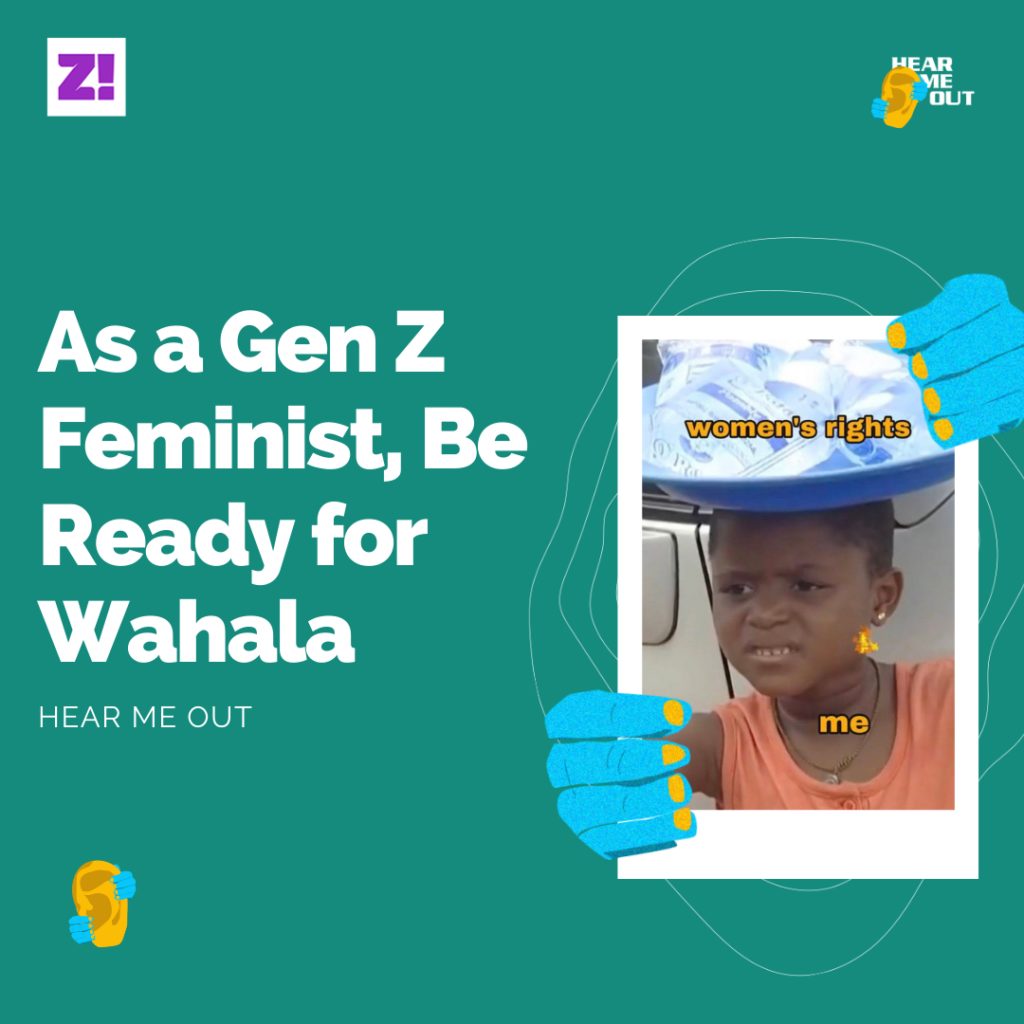
As a Gen Z feminist, you must be ready to become the topic of every family meeting.
I picked up my older sister’s phone and started my little quest for answers. It was during this process I discovered the word feminist,and when I knew what it meant, I knew I had found my identity.
I had found my identity.
The world will always come up with new ways to objectify and sexualise women. I grew up wearing mini-skirts and thin-strap tops my mother bought for me at bend-down-select. I was called a slut for the first time when I was only 10. And as weird as it might sound, it was my own mother who called me that. According to her, people were starting to talk, my breasts were poking through the thin fabric of my favourite tops. One day, she looked at me with distaste and called me a slut.
As a Gen Z feminist, you must be ready to become the topic of every family meeting. You should also prepare yourself for endless unsolicited opinions. I have come to realise my feminism terrifies a lot of people; it makes them angry. If I didn’t have such a coconut head, perhaps, I would’ve cared.
I’ve always been vocal about my feminism. I would walk into a room and somehow, start talking about women’s rights. The world has a long history of despising “loud women.” The result of that is I’ve had to sit through painfully long hours of my parents giving me “the talk” about how no man will ever want a wife who won’t submit.
Several times, I’ve listened to my brother try to convince me that identifying as a feminist would make people hate me. He suggested I try other terms like “gender rights advocate.” I’ve seen my name become the butt of jokes about Nigerian feminists in my school. People have asked, “Oh, you’re a feminist?” I imagine they pity the person who would marry me.
And I can’t forget my religious friends who remind me that feminism is not part of God’s plan. As a matter of fact, I’ve been bullied in church because of my feminism.
On a “special Sunday”, youth pastors were walking in circles, selecting random people in the congregation to answer questions. One pastor called me out and asked, “What would you do if your husband wants you to cook, do his laundry, do the dishes and clean the house, every single day?” My answer was simple. “I would tell him I’m his wife, not a slave.”
I was walking back to my seat when a young man requested to speak next. “Women like her are the problem of the church”. Even though these words were coming from a complete stranger, they still stung. There is a common idea that feminists are “strong” and have a “tough skin”, but we’re only human.
What’s it about my feminism that terrifies people? Why does it make people’s blood boil?
I was publicly humiliated at school once. I was in the middle of a heated argument about how Nigerian culture needs to be reformed until it acknowledges that daughters deserve the same respect sons get without even trying. There was a look of disgust on the faces of the men I was arguing with because I was suggesting something as “sacred” as culture needed to be reformed.
Not just that, the only woman who agreed with me expressed her view in low whispers. I was still trying to make people see the sense in what I was saying when I felt somebody yank my wig off my head. The loud echoes of laughter that followed right after broke my heart. I cried horribly for days because that was the smallest I’d ever felt in my entire life. I didn’t tell anybody about the new level of anxiety and self-doubt it unlocked inside me.
Memories like these leave me with questions I haven’t been able to answer to this very day. What’s it about my feminism that terrifies people? Why does it make people’s blood boil? Is it because I’m tired of seeing doors slammed in the faces of deserving women on the sole basis of gender? Is it because I believe women should not be denied their right to safe abortion? Or because I would never fit the “good African wife” narrative my mother has spent her entire life trying to fit?
Society claims to appreciate women, but in reality, they only appreciate women who deliberately dim their light just to allow men shine. As a woman, you’re expected to aspire to be a good wife and mother, to never prioritise anything over your matrimonial duties.
On some days, you’re allowed to have an opinion, but it’s usually better to keep those opinions to yourself. You can speak up about gender-based violence, but when you do, prepare for the “maybe you shouldn’t have gone to that place, or worn that dress, or said that to him” speech that would follow right after.
All my life, my mother shrunk herself just to stroke my father’s ego, and it’s never made much sense to me.
You’re expected to dress the way women are “supposed” to dress — everything knee-length or baggy, minimal accessories and NO cleavage — any other type of dressing would be seen as defiance. You should also smile even when you have no reason to. I’ve watched many women shrink themselves to fit that little, demeaning image society has created.
All my life, my mother shrunk herself just to stroke my father’s ego, and it’s never made much sense to me. Even though we all knew how hard she worked to raise our school fees, she would give the credit to my father because that’s what good wives do. Just like my siblings and I, my mother had a curfew because “good wives shouldn’t be outside past 8 p.m.” And if God forbid, she ever misses her curfew, he would punish her the way bad wives should be punished, by locking her outside her own home.
It’s very easy for people to ignorantly assume feminists are angry and unhappy women who hate men, and I’m tired of this misconception. You could spend your whole life educating people about the true meaning of feminism, and they would still choose to listen to those little patriarchal voices in their heads. I’m not naive enough to think the world would change overnight because of me, but I’m never going to stop clamouring for that change.
I was once the kind of feminist who only said the things men like to hear. Things like, “I’m a feminist but I still think a man should be the head of the family”. I was at a point where I relied heavily on people’s validation for every aspect of my life. Even my feminism was tainted by societal stereotypes because I didn’t want my views to offend anybody. I would tell myself I could be a feminist and still be a “Nigerian woman”, the one who would master the act of compromising to seem nicer to men. A small part of me didn’t want to contradict everything the Bible says a woman should be.
But last year, I got selected for a women’s rights fellowship where I met 19 like-minded women. For the first time in my life, I had the opportunity to be in a room full of feminists, and they helped me realise that if I couldn’t be an unapologetic feminist, there was no point in being a feminist at all. I’m used to being hated now. As a matter of fact, it doesn’t bother me anymore because the kind of people who hate me for my feminism is exactly the kind I don’t want to be associated with.
I have a clear vision of how I want my feminism to impact the world. It starts with calling bullshit on all the misogynist nonsense society likes to preach. And on days when I feel like giving up, I remind myself of the different ways society robbed my mother of her voice and happiness. Like many Nigerian women, she deserved better. She still does.
Did you see that gist about the guy that got fired after asking his co-worker whether she had started breastfeeding her son? If not, here is the thread for updates.
See eh, there’s nothing as important as minding the business that actually pays you money this year. So as we unlearn this habit, here are eight other questions both men and women really need to stop asking other women this year.
1. Why are you adding or losing so much weight?
See eh, we’ve had enough threads on why we need to stop doing this. Women add weight and lose weight for different reasons and it’s not your business if you’re not a doctor. The only thing you need to know is what size they are if you’re getting a gift and even that one requires some level of familiarity.
2. Who bought it for you?
You sef, haba! Who bought that dress for you? Who bought that car for you? Who bought, who bought. Mind ya business. Just observe and focus on getting your own.
3. Why do you like wearing so much makeup?
There’s no need to to tell her how makeup makes women age or how you prefer women that don’t wear makeup. If it’s really affecting you, comot your eye.
4. Why are you pregnant again?
Womb watchers, we need you to take a break this year. Let’s give room for people to be on their own journeys without so much anxiety from people that aren’t a part of it.
5. Who wore it better?
Let beauty exist without any competition this year. If you see two women wearing the exact same thing, just tell them how beautiful they look and move on. There’s no need to do a whole collage and tag them as A or B for the world to pick every time.
6. So who got you the job?
The “this is a man’s world” mentality is so 1990. Stop! In a world with women as business moguls and industry experts, how are you still asking young women how they’re getting jobs? She used jazz, don’t worry.
7. Why are you always going out?
There’s only one response to this: Is it your daddy’s money? Go and steal it from her now.
8. Do you have a fine sister like you at home?
Why? What is the reason for this question exactly? Because it’s not what? Your business dear. Stop it.
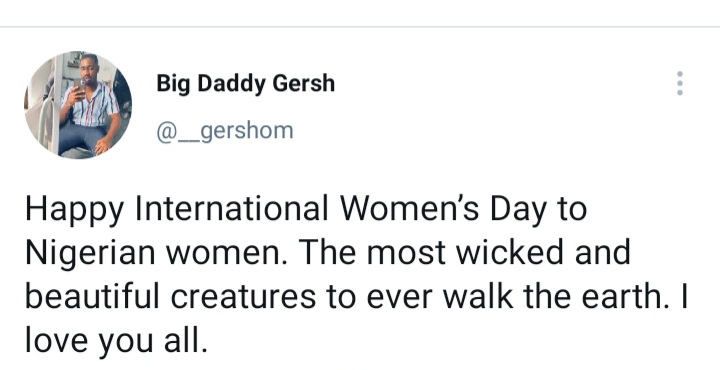
Nigerian women are elite babes because their wickedness knows no bounds. If any one of them breaks your heart, you should actually be grateful because it is a privilege. If you’re a Nigerian woman looking to tap into your full potential as a wicked entity, here’s a guide on how to do that.
This guy gets it.
1.Be an Igbo woman
If you’re an Igbo woman reading, you already have inbuilt wickedness so there’s nothing we can teach you about wickedness tbh. If anything, you should organise a masterclass to teach others.
2. Be a Scorpio
Your wickedness was written in the stars. There’s nothing here for you to learn.
By the time he uses your heart to play basketball, your heart will turn to stone and you can come into your wickedness properly. In fact, just date Yoruba men in general if you are looking for painful character development.
4. Be unable to cook
There is nothing that makes Nigerian men froth at the mouth like a Nigerian woman’s inability to cook. Outsource all your cooking and watch Nigerian men die a little inside.
5. Be a feminist
This one is very important. To truly be wicked, you must become a feminist. If someone insults you by calling you a feminazi, my sister you’re doing something right.
6. Be anti-kids
Are you truly a wicked Nigerian woman if you want kids? As a Nigerian woman, you must be anti-stress and kids will stress you. Do you know the gratification that comes with telling a man that has decided on his own that you’ll bear all his ten sons that you don’t want kids? Top tier feeling.
7. Be a slow texter
If anyone has the audacity to text you, surely they can wait for you to reply at your own pace. You did not come to this life to suffer, abeg.
8. Stress him
I promise you, he can take it. If he can’t, someone else will. Don’t lose guard. You are a spec, a moment, an event, and a happening babe. Move anyhow. Nobody will admit it but wickedness is sweet.
The culture of invalidating women and shutting down their experiences because people are uncomfortable with the conversation needs to die. The idea of tagging women-centred conversations as an agenda is a shallow and unfair attempt at creating a distraction. To counter this, we have compiled a list of things Nigerian women do not need a time-table to discuss:
1.Femicide
With the rise in femicide in Nigeria lately, it is an important conversation that needs to keep happening without being shut down.
2.Pregnancy, fertility and childbirth
The habit of keeping things secret amongst Nigerians has led to a lot of unshared information about pregnancy, childbirth and fertility. When women share their experiences, do not silence them. People who are incessant about silencing women should please read this.
3.Harassment
From home to school to protest grounds and anywhere else people gather, women have suffered harassment. From infancy to adulthood, no woman is safe. Although this is not uncommon for women alone, it is more common for women to get shut down during conversation about harassment. There is no scheduled time for these discussions, every time is a perfect time to talk about it.
4.Rape
UNICEF reported in 2015 that one in four girls in Nigeria has experienced sexual violence before the age of 18. More data retrieved from WARIF about the prevalence of rape and rape culture further increases the need for conversations around the unsafety and abuse of women. Until rape ceases to exist, women should always be able to talk about it.
5.Female genital mutilation
According to Wikipedia, nationally, 27% of Nigerian women between the ages of 15 and 49 were victims of FGM, as of 2012. Nigeria, due to its large population, has the highest absolute number of female genital mutilation (FGM) worldwide, accounting for about one-quarter of the estimated 115–130 million circumcised women in the world.
Issues that plague women should not be used as content for banter. This includes FGM.
Please remember that every time is a good time to discuss the injustices that women live through each day.
It’s International Women’s Day, and we’ve made this quiz to celebrate Nigerian women in our own way. Pick your faves from each group and we’ll guess your best quality.
The subject of this week’s What She Said is Ijeoma Ogwuegbu, a Nigerian woman who was diagnosed with Fibromyalgia, a condition that causes widespread pain all over the body. She talks about how difficult it was to get a diagnosis, coping with it while raising three children and how music helps her escape.
When did you first notice something was wrong?
I first noticed two years ago, in the first week of January, 2019. I was going through a lot emotionally — my marriage had just ended and I was attempting to move forward. That week, I felt a stabbing pain in my back and couldn’t move my right arm. It was really odd. This wasn’t something that had never happened to me.
That weekend, my sister and kids were in the living room, so I sent my sister a text to come to the room. Seeing my face, she knew something was wrong. She tried to move my arm, and it was hell. She called our other sister who lived nearby to come and drive me to the hospital. When we got there, the doctor looked through my records and said, “You complained about something like this about this time last year.” I didn’t even remember that. He gave me muscle relaxers and said to go home and rest.
What happened next?
The next Monday, I felt an electric shock going from the top of my head down. From then on, I was always in constant pain.
Oh wow. When did you eventually find out what was wrong?
Almost a year later. So, for about a year, I didn’t actually know the problem. I did different scans and tests, but they couldn’t identify the problem. My test results always came back fine.
To determine that it was in fact fibromyalgia, they had to do an elimination process where they ticked every other thing before coming to the conclusion. And up until this diagnosis, the pain kept getting worse. It got so bad that I couldn’t move my body.
Did they tell you what caused it?
Generally, there are two known causes of fibromyalgia: psychological trauma and physical trauma. I know I didn’t have physical trauma before this time. However, I had some psychological trauma from getting separated. So when I got the diagnosis, I knew it wasn’t completely out of the blue. The thing is, If you keep pushing emotional stress down and thinking it has gone, you’re wrong. It’s inside your body, and fibromyalgia will basically tell you: “Guy, you can’t keep stuffing these things here, your body will break.”
When you don’t deal with physical and psychological trauma at the time they happen, your body stores them up. Then the pain receptors in your body will break down and stop functioning properly. Your brain will begin to interpret every single thing as pain. You won’t be able sleep properly, you’ll be tired all the time. In fact, you’ll constantly be in pain.
Wow. I’m so sorry. Is there a part of your body that suffers more than the rest?
My limbs. I now walk with a walking stick, but I’m looking forward to getting an electric wheelchair.
I’m curious about the journey to getting diagnosed. What was your experience with doctors like?
I went from hospital to hospital between January and March but couldn’t get any help. Then I went to LUTH. In the first meeting I had in LUTH, I tried to explain the electric shocks I was experiencing anytime I put my foot down, but the doctor didn’t get it.
Eventually she said that what I was experiencing could be due to family issues I was having at the time and recommended that I needed to relax. She also prescribed antidepressants. I was a bit disturbed by this initially, but honestly, I needed them at that time. I had previously been diagnosed with depression and anxiety but had never done anything about it.
Using the antidepressants made me feel better. I didn’t feel as much pain on one hand. And on the other hand, I was seeing the world differently and was quite shocked. My brain is usually switched on and constantly evaluating my actions and everyone else’s. But with antidepressants, I realised that wasn’t the way the world was. It was a big ah-ha moment for me.
Did the antidepressants stop working to treat the pain?
Yes, it did. After about a month or two, the pain was back. However, because the use of the antidepressants gave me clarity, I was able to advocate better for myself. I knew that the antidepressants were not the solution to the pain. So I did more tests and eventually got diagnosed.
After being diagnosed, what kind of support did you receive from your family?
Even before I was diagnosed, they were there for me. I come from a really large, loud and boisterous family. I have five sisters and three brothers. My parents are alive. They were there for me all step of the way. My mother and sister moved in with me. My entire family treated the condition as a thing that happened to all of us. I never had to worry about my kids.
That’s good. How do you cope with the pain?
I’m not religious, but I’m a spiritual person. The way I experience spirituality involves a lot of physicality. I listen to music and can feel my body responding to it.
Because I’m constantly in excruciating pain and can’t move — fibromyalgia doesn’t want you to move, exercise or maintain a peaceful existence — I had to utilise music and sound in some way. Music generally opens up a folder of memories. So when I listen to music, I revisit the parts of my life that were positive and meaningful in some way and bring them to my present. I love Abba. When I listen to Abba, I remember all the joyful and blissful moments I spent with my siblings as kids. So these days, I listen to Abba with my children and all the pleasant memories come to my mind.
What about medication?
Very few medications work. You can’t use opioids for long because of dependency issues. So you have to figure out how to live your life with that amount of pain. That’s why music and movement are important to me. When I move, I immediately start to feel light — I’m not thinking about how I look or how someone else will perceive what I’m doing. My muscles will scream at me to stop, but if I keep going, then my body will loosen up and I’ll feel peaceful. I do this for about 15 minutes. And for the next hour or two, I feel lighter, like a weight has been lifted.
I’m not a fan of suffering, that’s why this is escaping through music and movement are important. There’s no place where they wrote my name next to “sufferhead.” I have fibromyalgia and that’s enough stress for 25 people and three lifetimes. No need to add anymore suffering on top.
Haha.
In fact, this is what I was thinking of when I created this thread. Two people, a man and a woman, came together and had children. One person has already used all her body and mind to have the babies. Yet, you who were involved in it, feel it’s okay to go on and live your life, leaving the children with her. People think that the mother and father are equal — 50: 50 — when raising children, but it’s not true.
The woman is already deficit because she’s spent nine months carrying the child. Her body is broken. The first three months after I had my child, I was just like, what the fuck is this shit? It is the absolute ghetto. Let’s not even talk about what happens to the woman’s body when she’s pregnant or what happens when you step out of the hospital with your child. You don’t love the child yet, because that child has crashed and burned your body to come out. It’s only normal if the first thing you think is “I don’t know what I feel about you right now.” You just know there’s something between you and your child.
There’s literally nothing to compare the pain of pregnancy to. Unfortunately, women don’t get the time to acknowledge and process what happened. You’re not even allowed to contemplate it in any serious way. You’re expected to bounce into motherhood. Then you start breastfeeding which is another torture.
But we’re supposed to experience all the stages of pregnancy and childbirth in pure and unbridled ecstasy. This idea of just moving on to the next thing forces us to drink so much trauma. We have normalised it so much that you’re the odd one if you question it.
With all of these in mind and the fact that you’re divorced and living with fibromyalgia, what’s it like raising your children?
I simply don’t have the time to do a lot of things. In a day, I might get just one hour to be active. All of this has forced me to be so conscious about even the smallest interactions and how it contributes to my wellbeing and my children’s well being. I hardly fly off the handle because I’ll probably say something that’ll hurt them even though I don’t intend to. At that moment, I’m not myself. So when I am annoyed with them, I ask them to leave, so I can process what happened, think of my reaction and then react.
We play music in the evening after their classes and sometimes, spend an entire day doing that, since mummy cannot jump up and down. Fibromyalgia forces me to consider my needs, their needs and how to make both work, rather than dwelling too much on could haves or would haves.
How has it affected working?
This is the hardest part. I’ve always been a writer. Because of how crippling the condition is, it is difficult to do any kind of sustained work. Fibro fog is an aspect of fibromyalgia that affects your memory. Short term memory isn’t saved as well as it should. You forget names, conversations, meetings and other details you should know. So I can’t write and even if I try, joint and muscle pain in my hands is another challenge.
A while ago, I started gardening because I was depressed. I also had a gardening group. I can’t garden or manage the group because of fibromyalgia.
On the other hand, fibromyalgia has forced me to focus and ask myself, if I can’t do what I used to do, what can I do? That’s how I became a painter. There’s a sense of freedom I get when I’m painting. I might never have discovered painting if this didn’t happen. Once I start doing something, I will become So immersed in it until I know everything about it.
— Vaginal Horoscope Agba feminist🏳️🌈🌈 (@IjeomaOgood) December 16, 2020
Currently, I’m script editor on Tinsel. They’ve given me a lot of concessions to be honest. We definitely need companies to start to think of their people beyond being a bottom line feeder.
What are the peculiar ways in which fibromyalgia affects women?
Women are more likely to have fibromyalgia than men. And I feel it’s because of all the ways in which we internalise trauma and are okay with it. That’s why so many women have fibromyalgia. It’s basically your body saying it’s enough — o ti to. In hindsight, I realise all the times when my body was trying to get my attention. We women end up treating our bodies in ways it’s not built to handle. Your body is not built to be constantly traumatised.
Then there’s the fact that the things we go through in Nigeria are not normal. We are so used to it that we have dehumanised ourselves. We don’t deal with the anger and the rage, but it’s still somewhere, either inside of us or we’ve transferred it to someone else to deal with.
Living with fibromyalgia has made me realise that I just want to have positive energy around me and transfer that positive energy to other people and by doing this, somehow improve the world. Even if it’s just for one person. I don’t have energy.
One important thing I learned from my mother is that valuing yourself. My mother was very clear that she deserved to be happy. She valued herself. Women need to know that we don’t need the trauma. We have value just by being here. Eyan nla ni e. We don’t need to break ourselves and our bodies to be anything.
For more stories like this, check out our #WhatSheSaid and for more women like content, click here
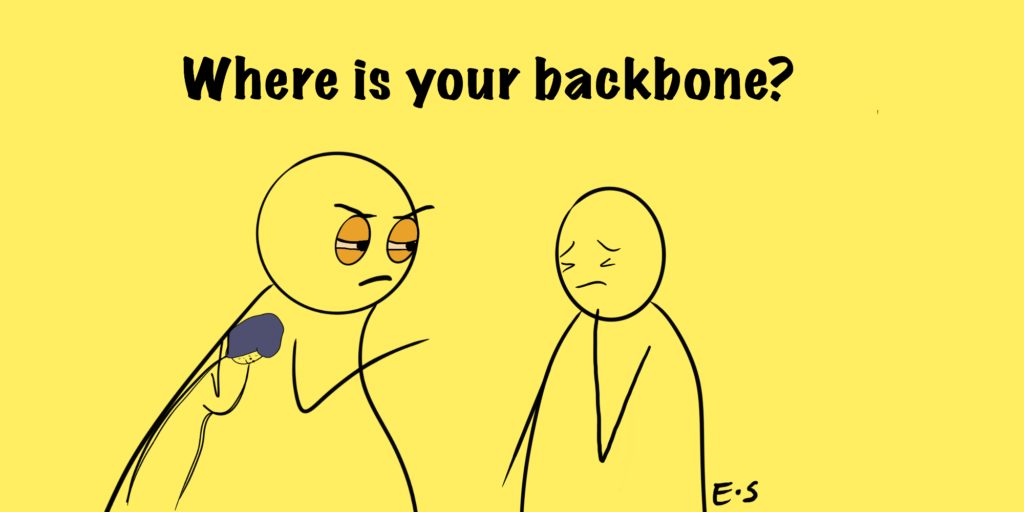
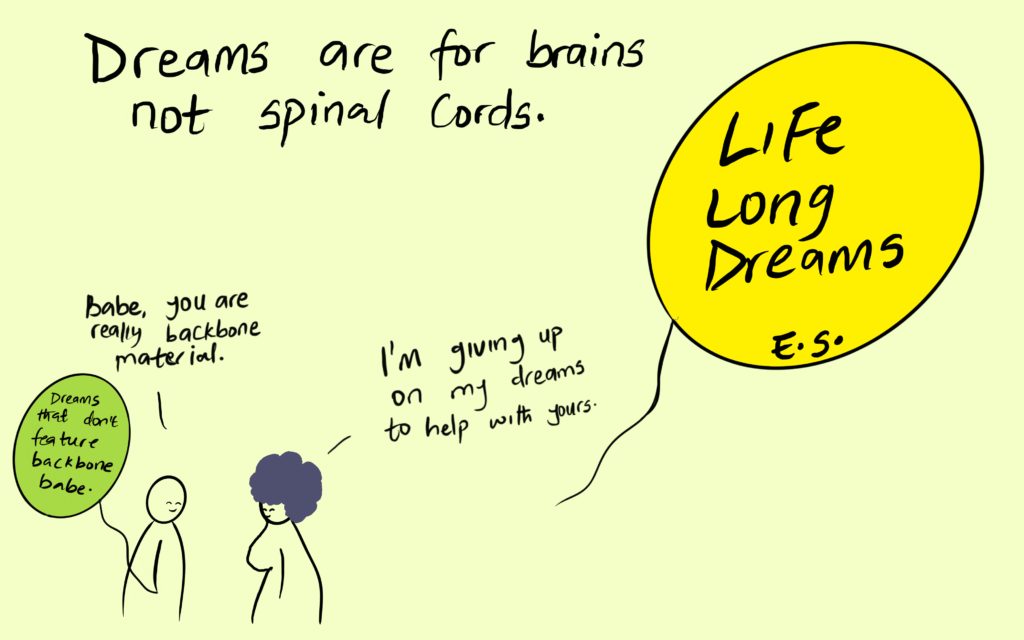
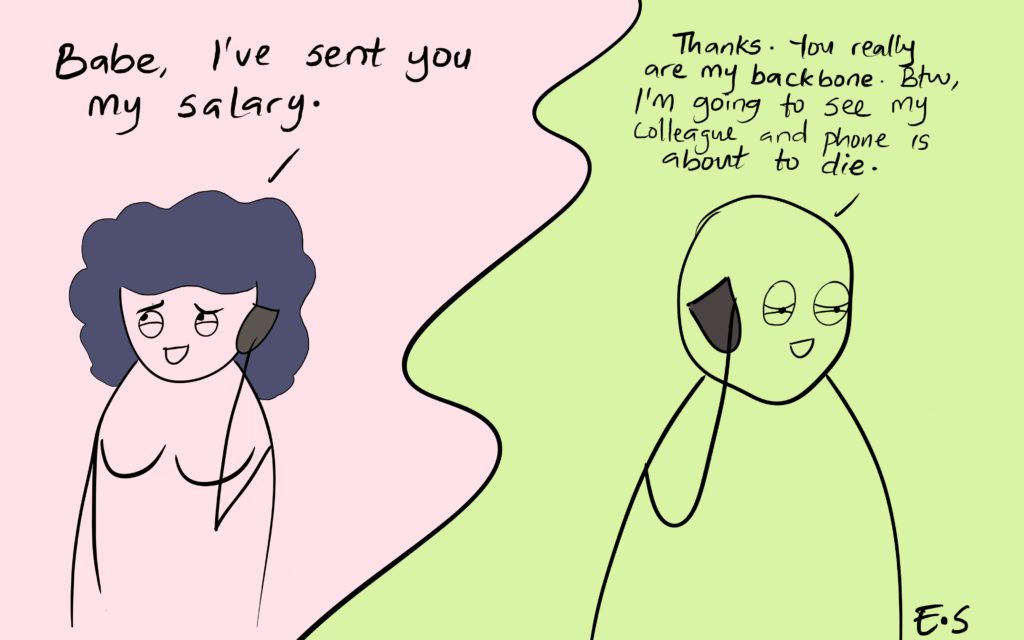
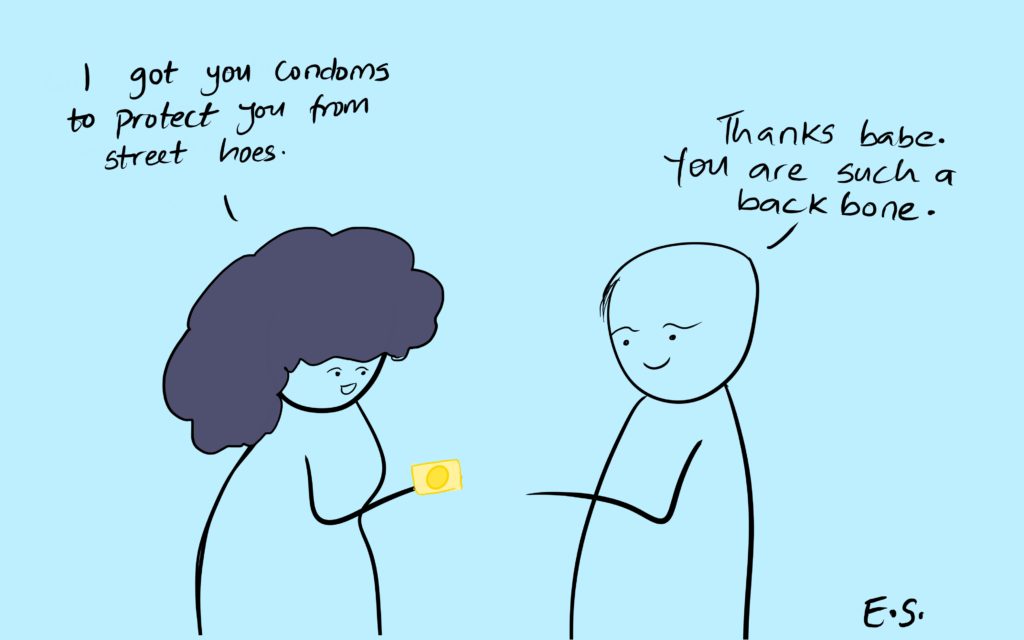
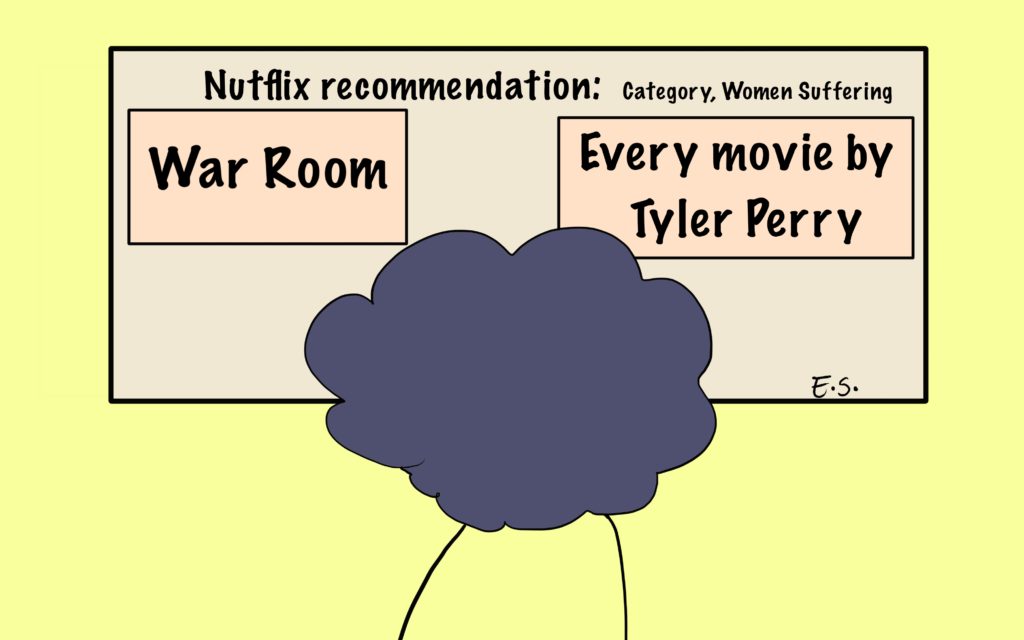
As a woman, you need to hinge your existence on a man. You need to be his ribs, neck and more importantly, his backbone. We even have a Quiz to help you determine if you are a rib, neck or backbone. If you are a woman who struggles with being a bone, don’t worry. Zikoko has curated a guide with illustrations on how you can become a backbone.
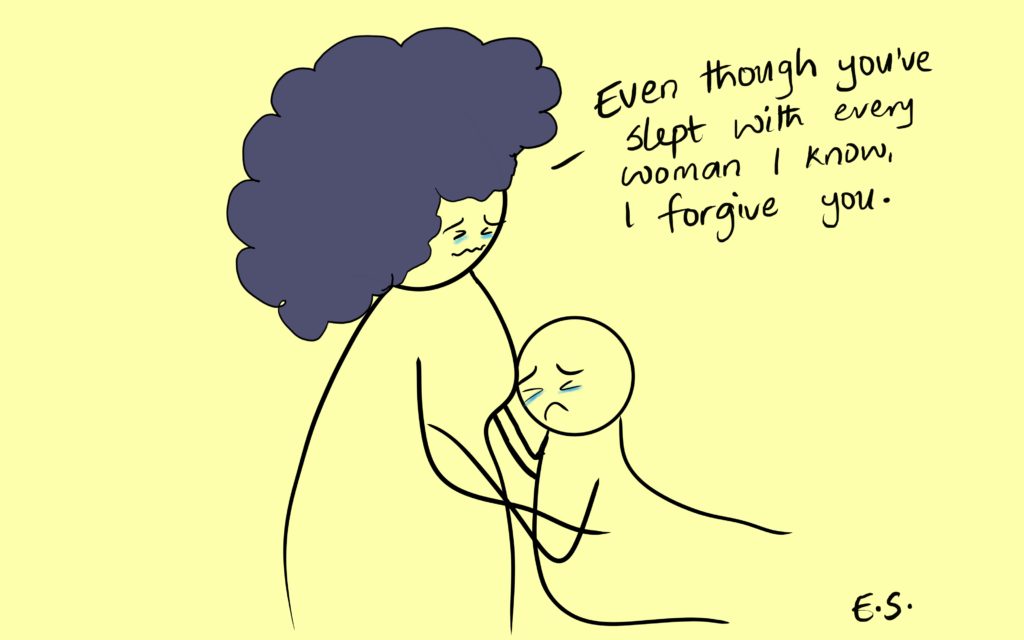
1. You must forgive all cheating
As a backbone, it is your responsibility to forgive your man when he cheats. Ordinary cheating should not make you abandon your backbone post. NO! If he comes home with lipstick stains, buy that shade of lipstick so it can match his shirts. Forgive your wayward man.
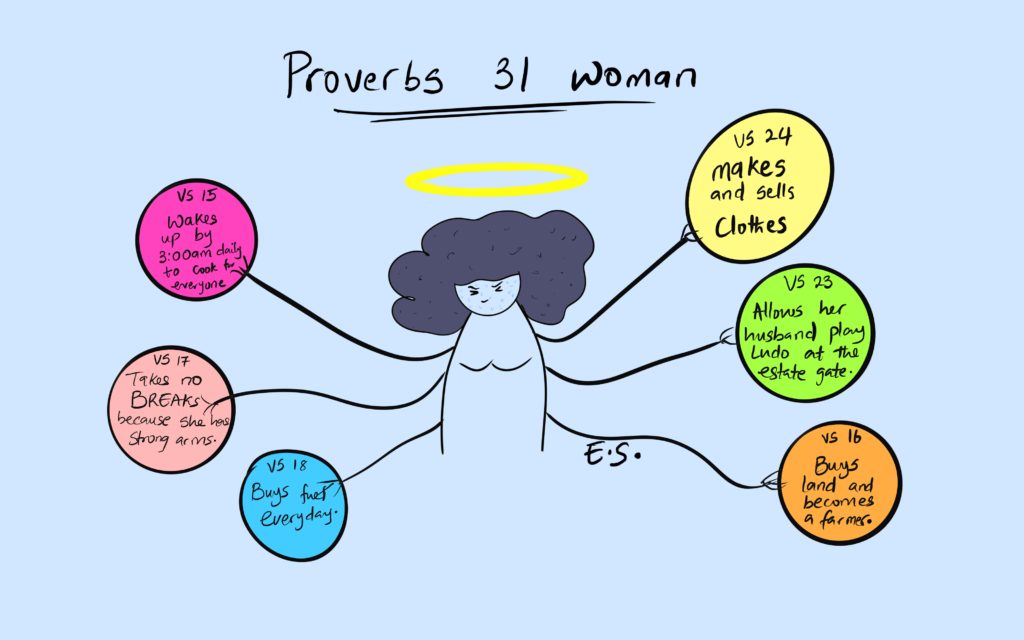
2. You must become a proverbs 31 woman
If you read that scripture, it will arm you with the knowledge you require to be a backbone. I have taken the liberty to illustrate some of the highlights in that chapter.
3. Give up on your dreams for your man
Dreams are for brains, not spinal cords. Your dreams are valid but not as valid as your man’s dreams. Do the needful, give up on yourself and your individuality and become a backbone.
4. All your savings and earnings must go to your man
What are you using money for? Sis, give that funds to your man. He needs it more. If he’s generous, he will give you the amount that is sufficient for all your needs. Men make better financial decisions so why not trust your man with your life savings?
5. Buy him protection
When there’s a guy’s night out, slip your man a condom so that he can stay protected from these street hoes. It shows that you care about his sexual needs. Plus, by protecting him, you are also protecting yourself from an STI. Stay woke.
6. Watch Tyler Perry movies to build stamina
You need to expose yourself to content that prepares you for the suffering that comes with being a backbone. What better set of content is out there than Tyler Perry’s movies. Watching black women get put through unnecessary suffering builds character.
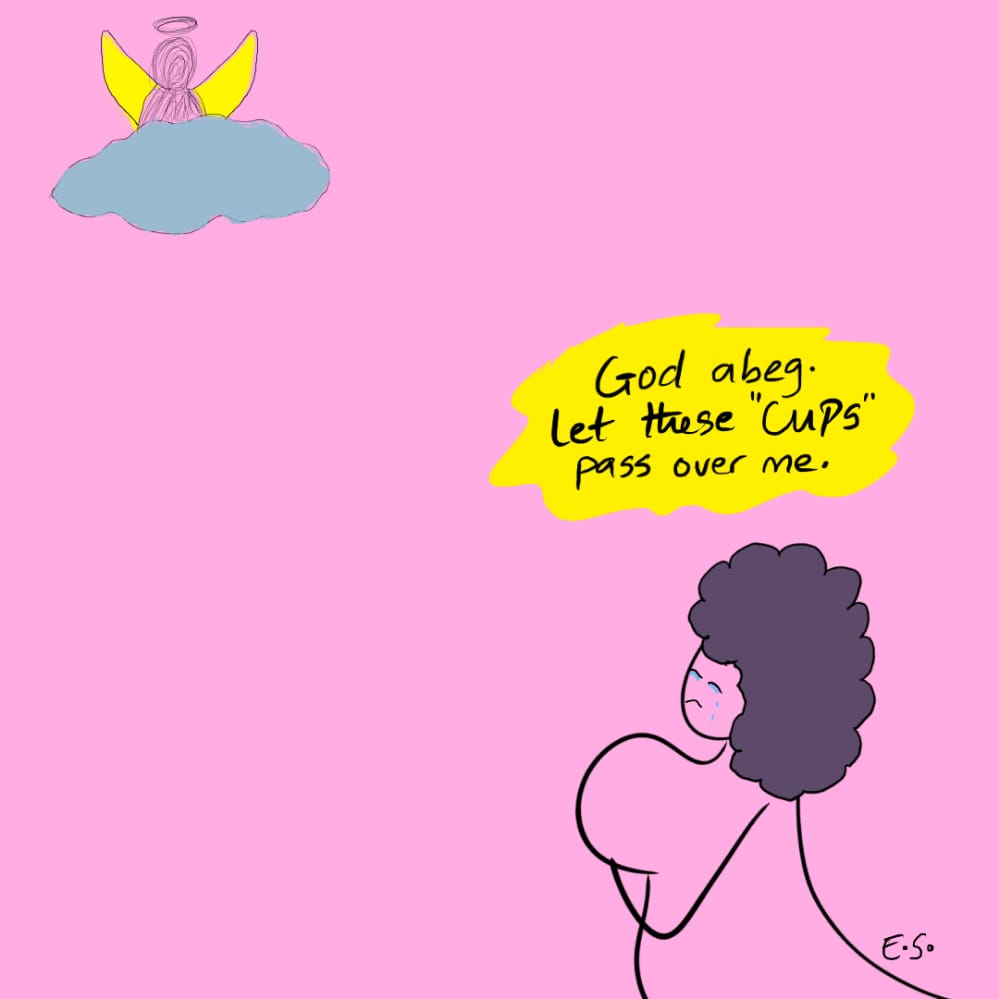
Having big breasts is like a curse and a blessing. More times, it is problematic asf. I asked Nigerian women to tell me what the problems of having big breasts are and they had a lot to say. These are 8 of some of the most pressing problems women with big breasts face.
1. People only maintain breasts contact
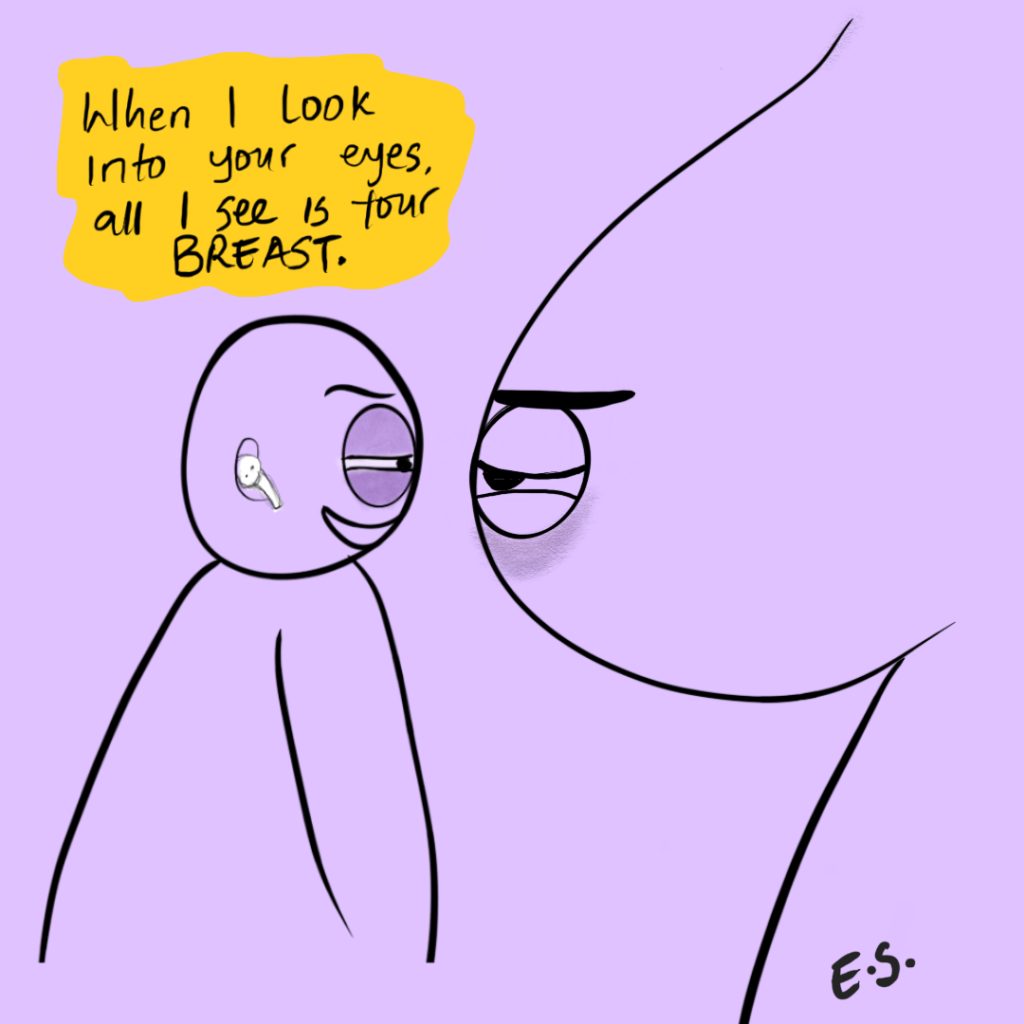
Having big breasts means having people talk to your chest instead of you. Where ever you go, people keep staring at your breasts, some even go as far as touching it without consent. Men, women, babies, they all want to touch your breast.
2. Bras are so EXPENSIVE
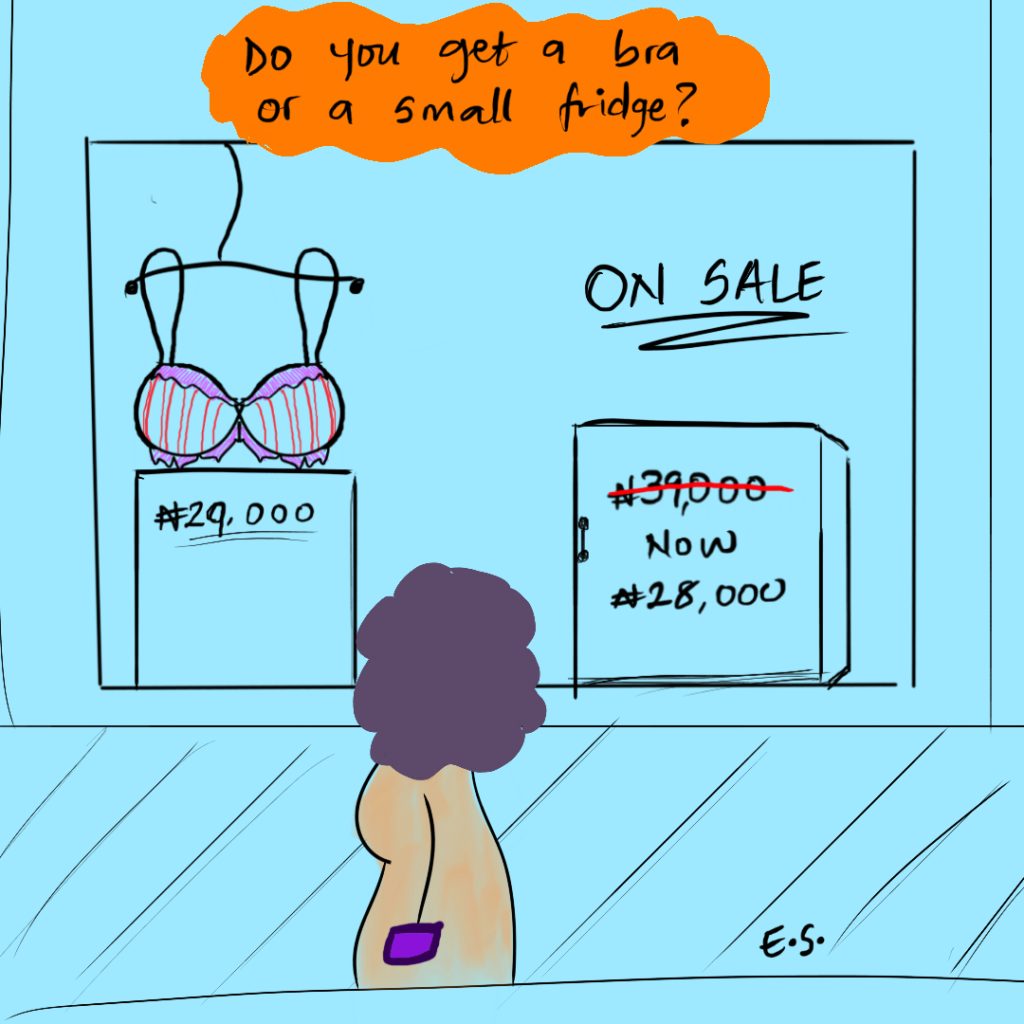
Buying a bra is an extreme sport when you have big breasts. Others can find their bra size for 800 naira while you have to spend at least 3k for a single bra. To top it off, the bras are always ugly. It’s like you don’t even get options. Designers want you to be grateful they even made a bra in your size.
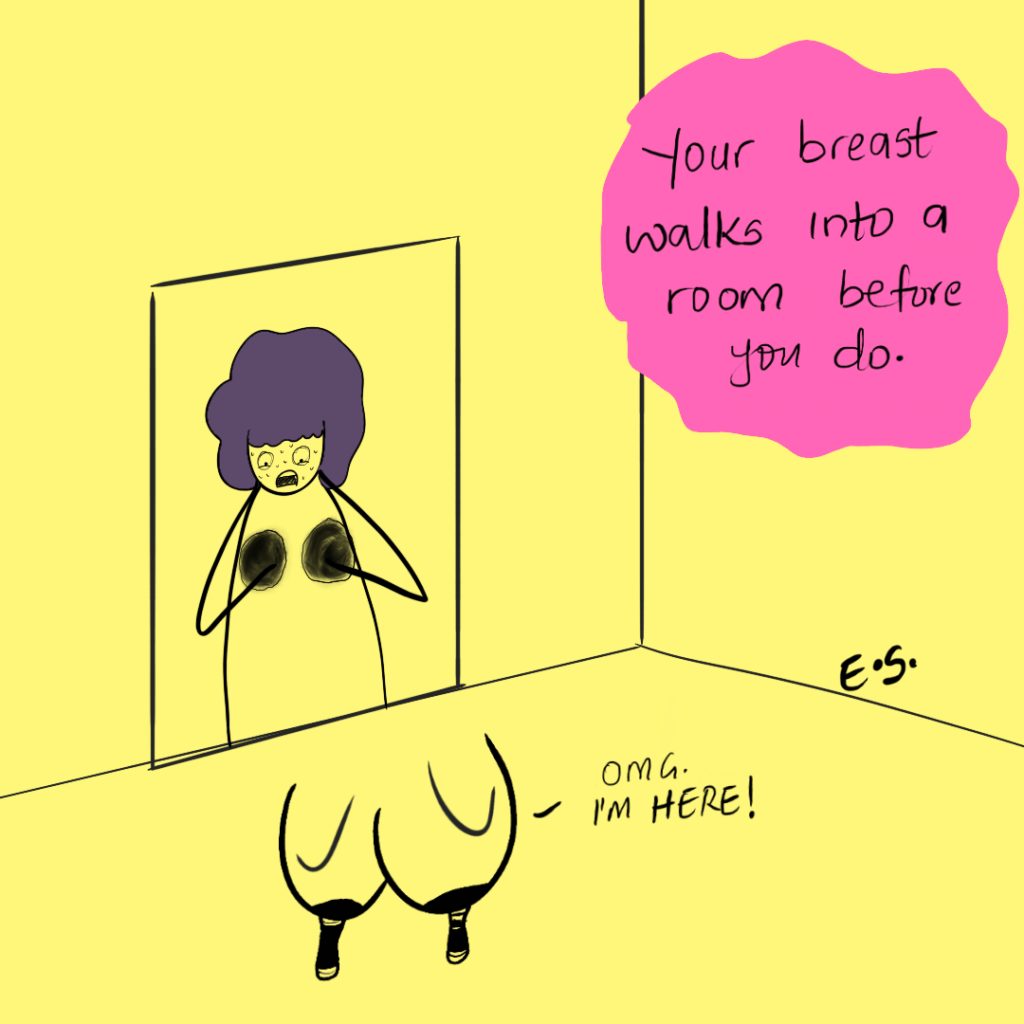
3. Your breasts walk into any room before you.
Having big breasts means having a town crier that just announces your presence. It doesn’t matter how you dress, your breasts will find a way to make you the talk of the room.
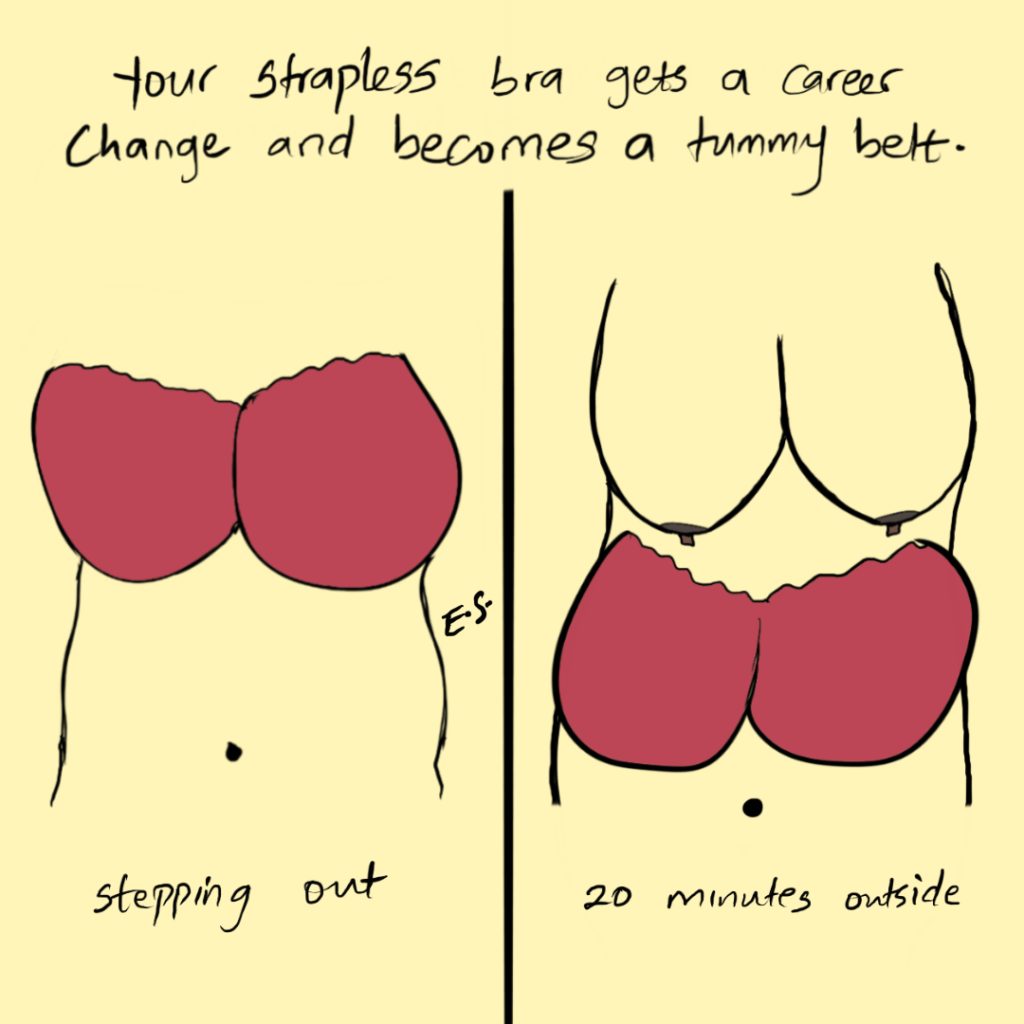
You wear a strapless bra to compliment your sexy gown. However, 20 minutes after you step out in a strapless bra, your bra decides it doesn’t want to hold your breasts anymore, it now likes tummy. So, now you have a high waist belt that used to be a strapless bra.
5. Limited lying down postions
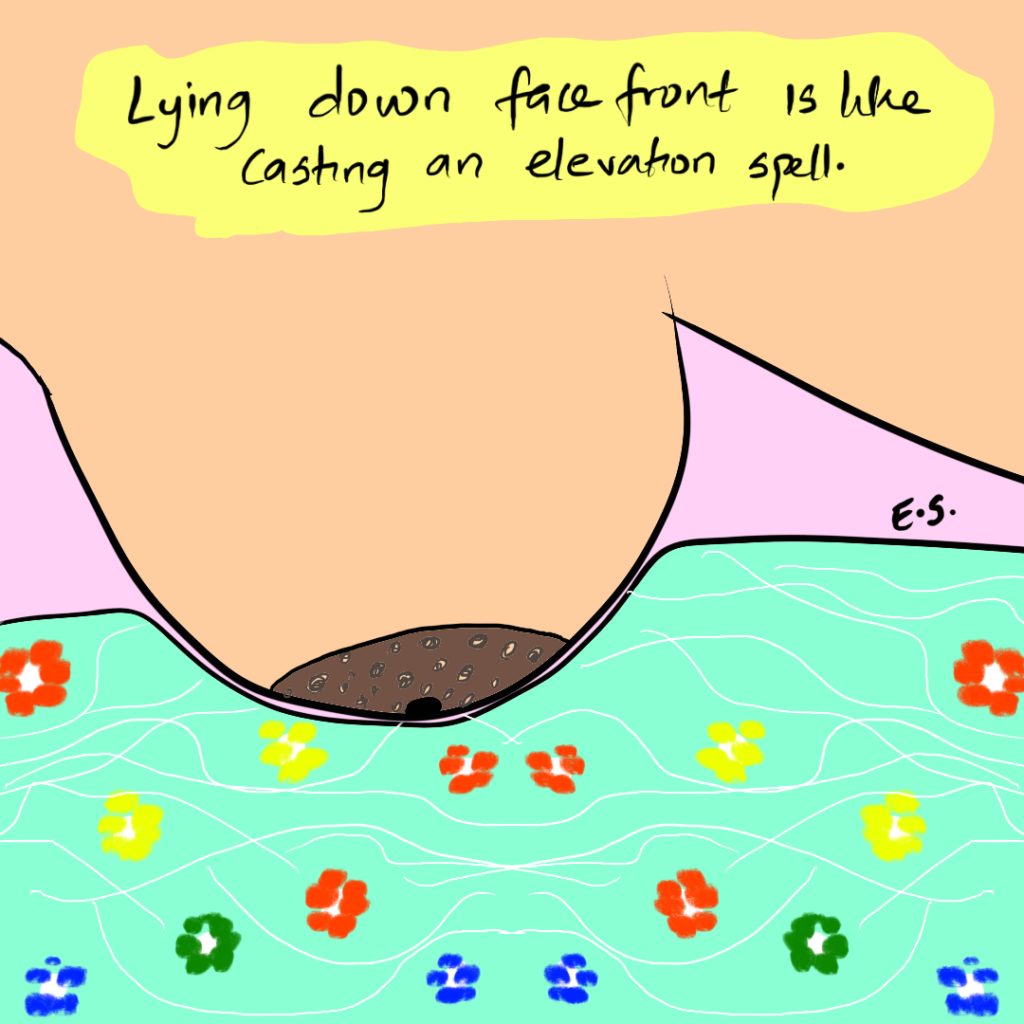
There aren’t a lot of comfortable positions for you to lie down. Your breasts are just everywhere. Lying on your sides make your boobs feel like melting ice cream. Lying face front somehow elevates your entire body. You can’t win with your breasts.
6. The back pain
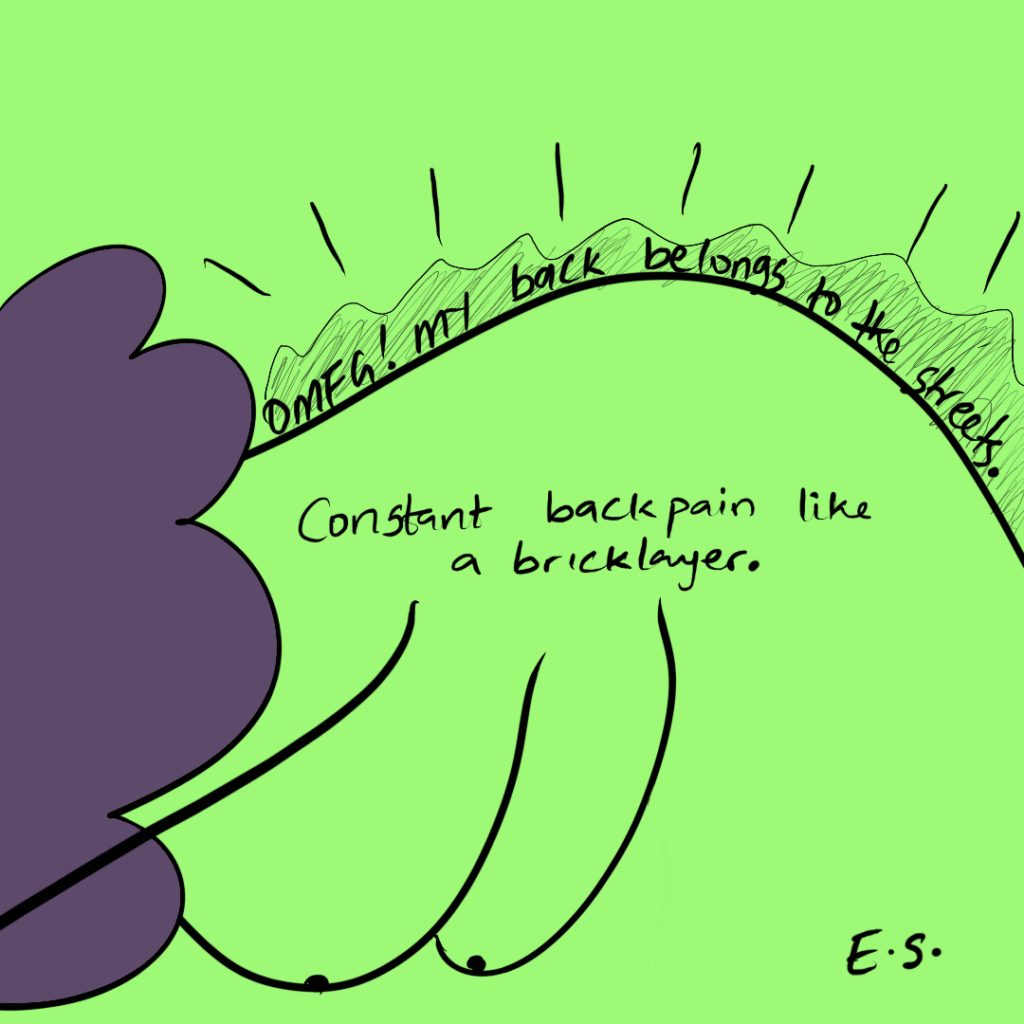
Women with heavy breasts have to endure back, shoulders and sometimes, waist pain. Their breast sometimes have them slouching which can lead to bad posture and inevitably, body pains.
7. Your dress size is never truly accurate.
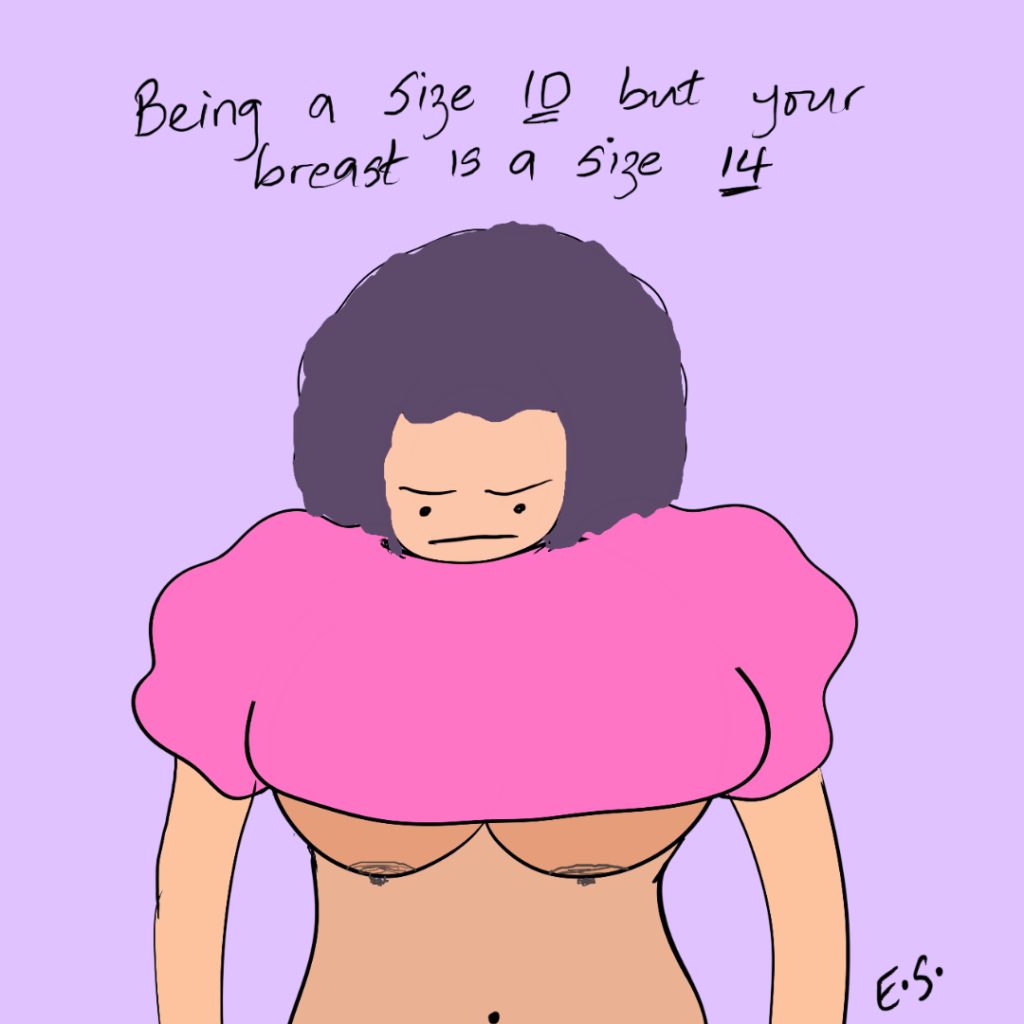
It’s as if big breasts just say to their owners “Go! For I have increased you from a size 10 to a size 14.” Having big breasts means knowing that clothes that do not size your breasts will not size you. You have to constantly worry about outfits. It’s exhausting.
8. Period boobs
Imagine having period boobs all the time, that’s the life our big tits sisters have to live. You can imagine how heavy and full their breasts become during their period. Honestly, it just gets worse.
Share this with someone you know can relate.
Hi there! The HER weekly newsletter launches on the 6th of March, 2021. A new newsletter will go out every week on Saturday by 2pm. If you have already subscribed please tell a friend. If you haven’t, you can by clicking this button. It will only take fifteen seconds. Trust me, I timed it!
When they said train a woman and you train a nation, they forgot to add that when you fight a woman, you fight a community. Throughout history, women have fought for their right to vote, own properties, and be included in government together as a force.
In light of everything happening in Nigeria with #EndSARS, we decided to curate different times in Nigerian history where women have led protest for change.
1. Agbaja women protest of 1910s
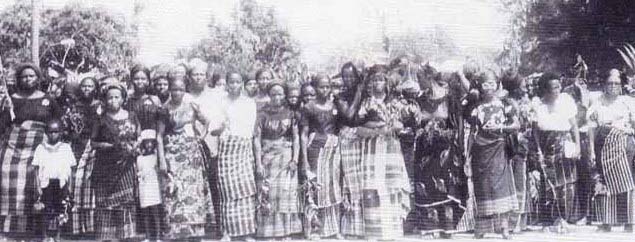
When the women in Agbaja area saw a decrease in domestic animals and observed an increase in female mortality, they stayed away from home for a month in protest. These women left their husbands’ villages and went to either Umunumu or to Orie Ekpa (market) with their mats so they could sleep wherever night met them. When their husbands went to ask the reason for their withdrawal, they said too many women were dying.
The men were forced to cook for themselves and even prepared food in large quantities to be taken to the place the women were encamped. To resolve the issue, every man had to swear on Ala – the earth – that they had not stolen the women’s animals nor killed any woman. Refusal to swear had a death penalty.
You have to stan these pre-colonial queens.
2. Calabar women protest of 1924
In the year of our lord, 3,000 women in Calabar went out to protest a market toll that was required by the government. Imagine mobilising a crowd of 3,000 without the help of social media. Back then, the presence of women associations and market women networks helped the protest movement.
3. Aba women riot of 1929
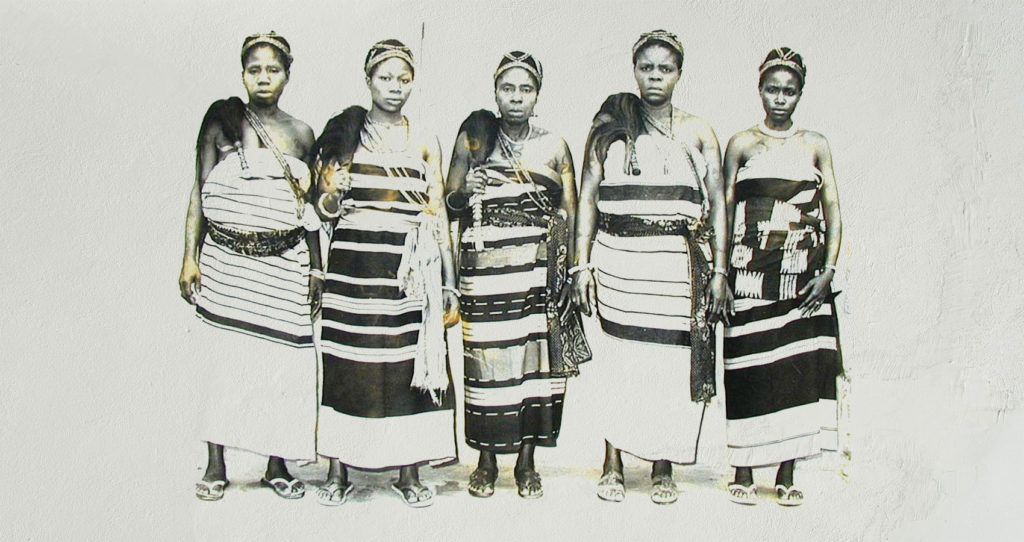
The Aba Women’s riot is also known as the Women’s war of 1929. Nigerian history is incomplete without the story of these women who fought against the injustice of the colonial administration. Before the colonisers took over, women in Igboland had a place in government. They were represented in all meetings and recognised as an important part of the political movement. The colonisers in trying to set things up in their own way completely shut the women out of power, choosing only Igbo men as representatives.
They tried to establish a “moral order” with patriarchal tactics that backfired when the women revolted against the increase in school fees, corrupt officials, forced labour and the final straw; taxing of women. These women were already burdened with supporting their families and helping their husbands pay tax. Faced with hyperinflation and low output of agricultural produce, the women settled that they would not pay taxes nor have their property appraised.
The protest succeeded in giving women representation in government.
4. Abeokuta’s women revolt of the 1940s
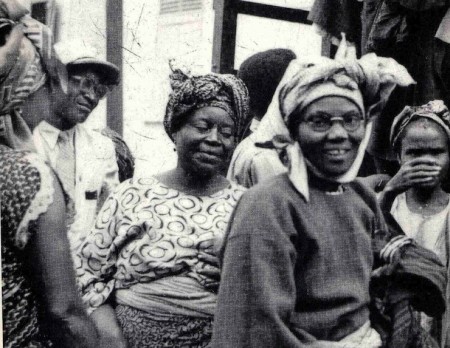
These women spent several years protesting the tax increase and the lack of women representation in government. The Abeokuta women believed that until they were granted representation in local government, they shouldn’t pay taxes differently from men. This revolt lead to the creation of Abeokuta Women’s Union (AWU) under the leadership of Fumilayo Ransome-Kuti. This political organisaton, united market women and middle class women. It challenged the colonial rule and patriarchal structure.
During the protest, the government promised and failed them. Each time, they regrouped and hit harder with their protest. They continued to advocate for women’s rights in Nigeria and were recognised for the role they played in the Nigerian nationalist movement. The group emerged as one of the first proto-nationalist feminist activist groups in Nigeria.
5. Bring Back Our Girls movement of 2014
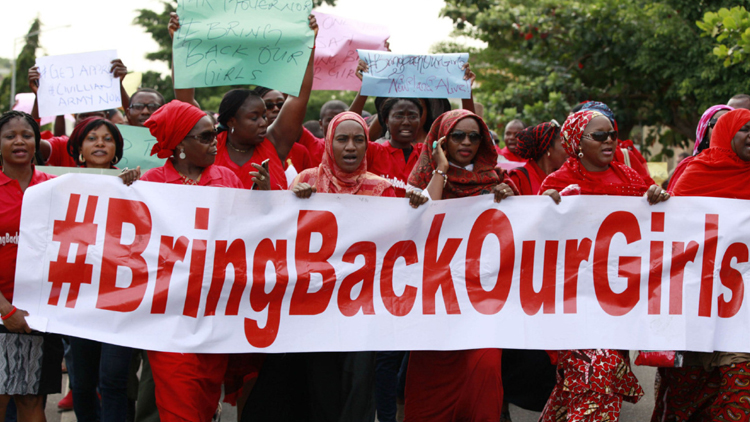
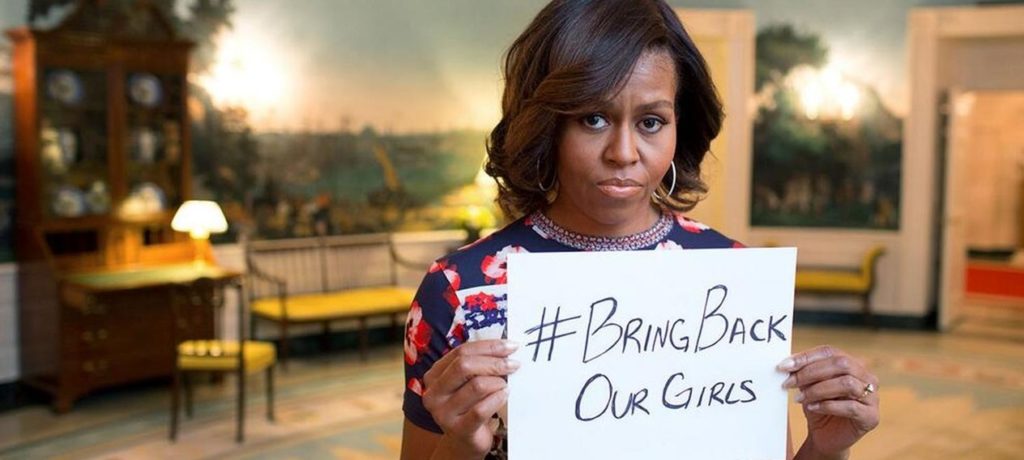
After over 200 girls were abducted from the school in Borno state by Boko Haram, all eyes were on the Nigerian government to do something. When it seemed like the government wasn’t making progress, Nigerian women mobilised themselves in Kaduna, Abuja, Lagos and across the country to protest for the rescue of these girls. The #BringBackOurGIrls and #SaveOurGirls went viral and piqued the interest of the international community. Women from all over the world joined the protest and over a million people signed the petition to mobilise world leaders to help rescue the girls.
6. Market march “stop touching us” movement of 2018
Women are fed up with being groped and harassed in market spaces. In 2018, Damilola Marcus started the Market March Movement to bring an end to sexual harassment at Yaba and other markets across the country. The traders who did the touching tried to justify their actions as a business strategy to get customers and in some cases, the women were “indecently” dressed. The march had young women in market spaces demanding not to be touched. Although some people tried to make a joke of the movement, it was effective in raising awareness. They are active on twitter as @MarketMarch.
Watch Zikoko exclusive interview with Dami on this movement:
7. Nigerian women protest against rape and sexual violence
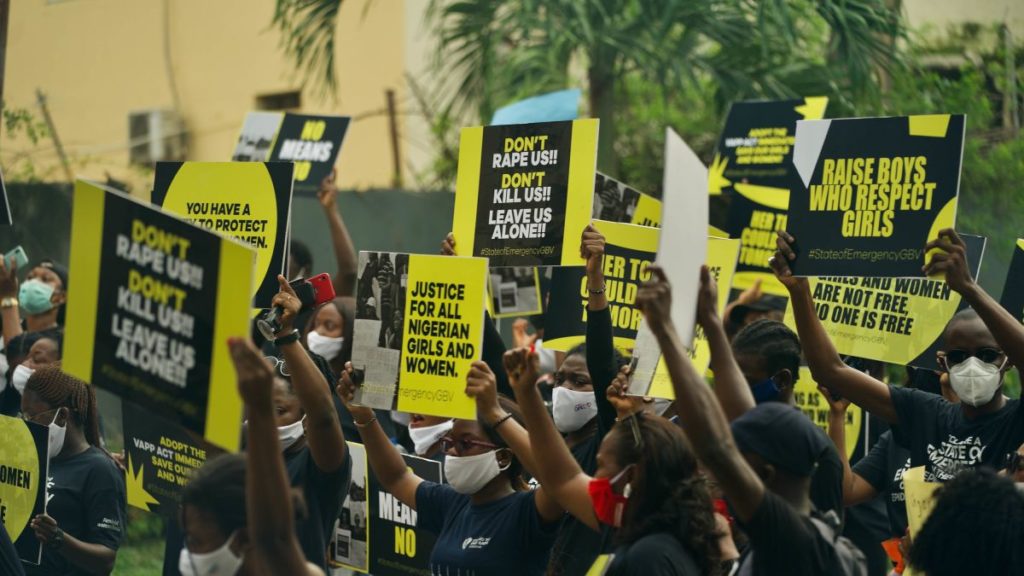
In June 2020, Nigerian women took to the streets after a series of high-profile rape cases caught the interest of the people. Following the story of 22-year-old Uwa Vera who was raped and murdered in a Church, more stories of women getting raped and killed surfaced online and this led to a protest organised by women. Women mobilised themselves and held a protest in Abuja and Lagos. The hashtag #NOmeansNo trended online as more victims of rape shared their story. There was a movement to stop victim-blaming and to discourage people from enabling rape with their silence.
Kindly reply this with other notable protests that were led by women. This list will be updated as you do.
Nigerians have come a long way from how they perceive mental health. The youths are more mindful and self-aware and are in turn educating the older populace about mental awareness. Today, I spoke to 6 strong Nigerian women about their mental health journey and because this is a story of how they conquered, I will be adding their superpowers.
Sophie, 21,
Superpower: Resilient and self-aware
In 2019, my mother was diagnosed with paranoid schizophrenia. It came as a shock to me because she is my everything, she is the parent that stayed so to see her become so ill broke me. At the time, I was already dealing with overthinking and anxiety so it was tough for me to accept this new reality. I’d be at school or work and start worrying that something must have happened to her in my absence.
A part of me is still ridden with guilt that somehow this is my fault. It’s ridiculous, I know but I cannot help but feel like I should have seen the signs or been more attentive.
Over time, I took on more responsibilities and I could feel myself getting drained. As she got better, I became worse. Food, sleep, hanging out became a distant memory for me. Whenever I went out, I’d find myself crying in the uber. This was when I decided to get help. E-counselling has really helped me. I now know to keep my mind and personal space clean. Trying not to clutter my life with negative people and so far, things have gotten better. I am mentally in a better place.
Anna, 25
Superpower: Speaks 4 languages and knows over 60 countries national anthem
I started learning national anthems as a way to beat depression and social anxiety. When I was 6, my twin brother died. When I turned 8, my mom died as well. It was just me and my dad and he wasn’t really the “fatherly” figure one would expect. He remarried and that was when my life truly became hell. My stepmother tortured me for days. She’d lock me up in a room for an extended period whenever my dad was away. It got so bad that I refused to come home for mid-term breaks and I’d be the last to leave school on long holidays.
When I got into university, this woman would pay boys to beat and harass me. At some point, I became friends with the guys she used to send. We would end up using the money she paid them to hang out.
Whenever I complained to my father, he would tell me everything would be okay. It took this woman almost setting me on fire for my father to send me to my aunt’s place. When I moved in with my aunt in Lagos, I began to seek help. I would stay indoors for days without eating or moving. So my aunt made me see a therapist and I got diagnosed with clinical depression.
In December 2018, I wrote a suicide note, had a bottle of sniper near me that day. Funny enough, a call from my Dad saved me.
He just called and said he loves me. That was the first time my dad ever uttered those words to me.
So I’ve been battling a lot of anxiety and sadness all my life. Even now that I’m older and more independent, I still have a lot of anxiety.
Sometimes I feel like my heart is about to fall out of my chest. I have unnecessary panic attacks. I almost feel like I’m broken. This past week, I haven’t been able to sleep at night. I’m mostly awake overwhelmed by my own thoughts. As much as I am thankful for life, I do not feel like I have a purpose.
Dami, 22
Superpower: Very Logical and empathetic
I have battled with mental health issues all my life but the incident that stood out for me was the year 2018 when I was in school. When it happened I just knew I had to get help. Just before I had my exams, I had a breakdown. Stayed in bed for a month, couldn’t function or eat. It ended with me in the hospital getting diagnosed with depression. It was so bad that I had to take a year off school. My parents wanted to make sure I wasn’t getting stressed over schooling while recovering. I think it hit them hard when they found out that I was cutting myself.
For me, I would say my triggers were a function of the uncertainty that hit me. All my life, I have maintained good grades, done what I was told to do and now I have to figure things out myself and the nagging question of “what next, what now?” hit me harder than I anticipated. I cut myself every few days during the hardest point of my depression. The only reason I’m alive is that I kept thinking about how my death would wreck my family and the religious implications as well.
I am very grateful for modern medicine and therapy. Although, being on anti-depressants makes me numb. I don’t feel sad or ecstatic about anything but it is better than feeling a pang of overwhelming sadness. I’d advise that people on anti-depressant always speak to a doctor before going off them cause suddenly stopping medication can lead to a deeper depression. I know this cause I have lived it.
Akpevweoghene, 20
Superpower: Unique thought process, open-minded
I haven’t been diagnosed yet but I have shown symptoms of anxiety. It is easy for me to breakdown during an argument, especially with a loved one. There was a day I broke down and tried to harm myself. It was terrible. I cried my eyes out, used my body to hit the floors. It was scary and confusing plus I had no idea what was happening. I felt insane. It got worse, I entered the kitchen, picked up a lighter and started burning my hands. A loved one had to intervene. After the incident, I started reevaluating myself. I wondered why I couldn’t feel the burning pain until I stopped hurting myself. It made me realise that I may have a mental health issue. ‘
Seeing that I cannot afford therapy, I have been getting help from mentally aware. Some days the breakdowns are subtle like the rains and other days it could be as harsh as a storm. To cope, I have distanced myself from my toxic family and their expectations. Writing also helps.
I believe everyone has their share of mental health issues but how they handle is what truly matters. The world may vilify people who have been open and expressive about mental health but I want those that aren’t speaking up to know that it is not their fault in any way and they shouldn’t let stigma stop them from speaking up.
Having a mental health issue actually saved me from a bad relationship. thing is, I left a bad relationship to a worse one. When I tried to leave again, the guy would come with a face full of remorse and a mouth full of apologies. I knew the relationship wasn’t what I wanted cause of the amount of stress the guy put me through. Imagine being in a relationship where your partner enjoys having quarrels. He was an overthinker and if I agreed too quickly on something with him, it would stir up an argument. I gave 80% of my life to him, we were always together because he’d insist on it.
I could feel myself hitting rock bottom in the relationship but I stayed. Until I started crying in my sleep. I’d wake up with tears and the nagging memories of a nightmare. I knew I had had enough when I woke up to voices in my head screaming hateful things at me. It was terrifying because it felt so real. I could hear the voices saying “I hate myself, I hate you.”
Thing is, I would never think these words to myself on a normal day so why are these voices yelling this at me? The voices were throwing a tantrum and I just stayed there crying. I didn’t want to link it with mental health because I felt I was strong and these things were beneath me. Eventually, I ended the relationship and left all social platforms for about 6 months. I didn’t go for therapy but I took on meditation, yoga and exercise to cope. Life is meant to be enjoyed and I’m glad I found what works for me.
Kevwe 26
Superpower: Selfless with a big heart that has nothing to do with cardiomegaly.
When I was in school in 2014, my father died. I had bouts of depression. Back then, I wasn’t quite sure what the emotions I was going through were but now I know that it’s a miracle I was able to pass my exams that year. Since then, I have dealt with anxiety in different forms. I have researched painless ways to die.
In my search for an optimal suicide option, found an injection that could let me go away painlessly but it’s wasn’t sold in Nigeria. The other options were drowning in the 3rd mainland bridge or by hanging. I searched for anything that would make me go and ensure I didn’t survive cause it would be worse than the depression. I didn’t want to deal with the guilt or get arrested cause apparently, suicide is a criminal offence in Nigeria.
The funny thing is, my organisation provides resources for therapy and such but I just want to wallow. I don’t think there is anything to be happy about. Right now, I can’t even tell my partner cause he is going through his own problems. In times like this, I miss being able to pray and just take things to Jesus. It was easier. I don’t want to bewoke anymore, I want to sleep. I’m tired.
A list of all of the things Nigerian women in public spaces have to normalize just to stay safe. Spoiler alert: Most of them are things men don’t have to worry about.
1. Hiding sanitary products in their sleeves, pockets or bags when going to the bathroom in public places. Why? Because there is still a lot of baseless stigma around periods with people terming them “disgusting”.
2. Having a pepper spray bottle as an actual handbag necessity “just in case”.
2. Wielding their keys as “weapon” when walking alone at night.
3. Not using headphones while walking on a path at night to stay alert and make sure they are not being followed.
4. Lowkey switching up their pace when someone is behind them on a lonely street.
5. Calling friends or family when alone in a taxi/Uber in order to feel safe.
6. Always texting friends/family the Uber driver’s details “just in case”. Because “just in case” is an actual possibility.
7. Being slutshamed and called ashawo by a man for any reason at all.
8. Not going out at all at certain times because it’s dangerous. Certain times include if it’s too early in the morning or too late at night.
9. Pretending to be taking a call on the phone while in public in any number of situations (ie walking down the street, waiting for a bus, waiting at an ATM queue) to avoid harassment.
10. Using a fake wedding ring as a shield to reduce the chances of men toasting/harassing them because men prefer the idea of respecting another man’s “property” more to the idea of respecting woman’s right to say no.
11. Giving men fake names and phone numbers when approached to altogether avoid their anger at being rejected.
12. Remaining silent when being verbally harassed because of the fear that if they fight back it’ll turn violent.
13. Keeping their drinks covered with their hands and getting their friend to watch it if they need to go to the bathroom at a bar so that it doesn’t get spiked.
14. Dealing with men invalidating their feelings because they can’t relate.
That’s a list of 14 extra things Nigerian women in public spaces have to normalize just to stay safe. Did we miss any? Drop it in the comments.
Hi there! The HER weekly newsletter launches on the 6th of March, 2021. A new newsletter will go out every week on Saturday by 2pm. If you have already subscribed please tell a friend. If you haven’t, you can by clicking this button. It will only take fifteen seconds. Trust me, I timed it!
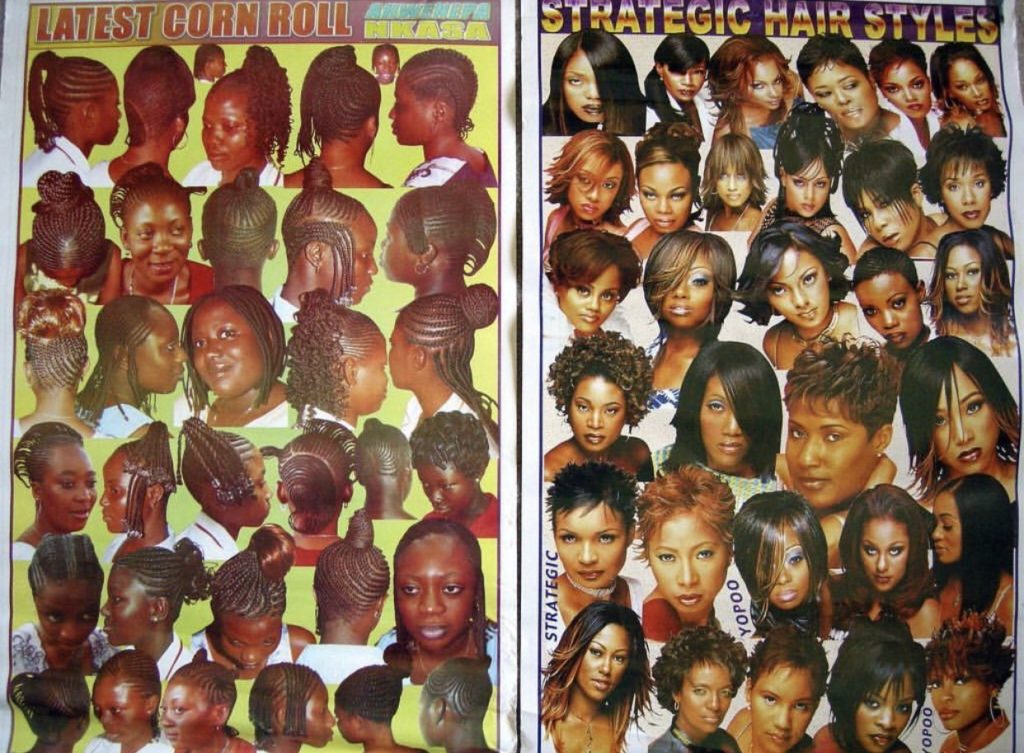
Nigerian hairdressers are in an untouchable league of their own. You can’t live without them, you can’t live with them. Here are some of the funny and annoying things they love doing:
1. They love their product mixes- Coconut oil, shea butter, and vaseline in one container.
It’s never just one product in there, it has to be a concoction with shea butter as the star product. And it usually comes with a subtly horrid smell.
2. They love to have pic mixes of Rihanna and Beyonce somewhere on the wall.
Never mind that those styles are now outdated. Nobody does “fowl nyash or feathers” again.
3. Putting your head between their knees as they weave.
Because they want your head trapped right where they want it and your hands off your phone.
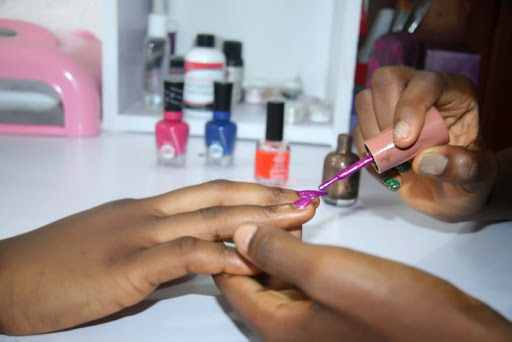
4. They love their side hustles- fixing lashes, fixing nails, make overs, wig making, orishirishi.
On a mission to finish all your money in their salon.
5. They always tell you it’s a good time to do your hair even if they have 700 people waiting.
They can never let you leave their shop without money entering their hands.
6. Nigerian hairdressers love talking.
They want to talk about the weather, about the news, about that your friend that you once came in there with, about random gossip you actually have zero interest in. The list goes on and on.
7. If you have natural hair, they’re going to complain about it and ask why you haven’t retouched yet.
You are stressing their hands and bending their combs with your glorious mane sis.
8. They love to load your hair with grease. (insert distressed emoji for our naturalistas)
All this petroleum jelly you loading on my hair there is God oh!
9. They love organising their trainings.
Every other month there is a flyer at the salon entrance with details of a hairdressing training session. The annoying part is when they assign one of the trainees to use your hair for practice.
Hi there! The HER weekly newsletter launches on the 6th of March, 2021. A new newsletter will go out every week on Saturday by 2pm. If you have already subscribed please tell a friend. If you haven’t, you can by clicking this button. It will only take fifteen seconds. Trust me, I timed it!
Apparently going on a date is not always the perfect romantic exercise the movies have lead us to believe. We asked eight women about their worst dates and some answers sounded like a badly written scene from a low budget romantic comedy.
Alex, 30 – This man took be to a bar!
My worst date was when the man took me to a bar! A bar oh! I got all dressed up and wore heels to be taken to a date at a bar! I didn’t realize that was what he had in mind the whole time. He just drove us to the bar with a silly grin plastered on his face. I sha just went along with it but blocked him afterwards. I was looking forward to champagne and I got shots on shots instead. Affliction shall not rise again.
Nonye, 25 – All he talked about was himself.
We were at the restaurant for 3 hours and all he talked about was himself. I felt like I was attending a class and not actually having a conversation. Like watching a badly scripted reality TV show.
Kehinde, 27- He invited his ex to join us.
We ran into his ex and the man actually invited her to join us. Said I was just a friend.
Precious, 23- He kept touching me.
He picked the right spot, the food was great, the ambience was perfect but I just wasn’t feeling it. He just wasn’t my type. Plus he kept touching me even when he saw it was making me uncomfortable. I don’t even know why I agreed to go on the date with him.
Lilian, 31- The venue was his low budget house.
He said we were going to the movies. The movies turned out to be his one bedroom apartment, his 4 year old HP laptop and some tacky weed. I have suffered in this life sha. One look at the bedroom and I booked me an Uber home. I know I was bored. But not that bored. I’m still waiting for his twitter call out because he seems like the type.
Jasmine, 24- He came with his friends.
I thought we were going to have something intimate with just me and him and some romantic pledges. But he showed up with one of his friends and 1 hour into the date another friend joined him. Why do guys do stuff like that? Apparently it wasn’t a date, it was a hangout. And to think I wore 6 inch Nine West heels for this man. The was definitely the worst date.
Dora, 26- He stood me up.
The man stood me up. 3 times! Why did I keep falling for it? One question I keep asking myself. Later found out he actually has a girlfriend.
Ada, 24- It was a blind date.
It was a blind date, saw the guy for the first time and was disappointed asf.
Did you relate to any experience on the list? Or do you have more tea to spill? Send a mail to blessing@bigcabal.com if you do and we’ll get right to it
Hi there, while you are here we would love a review of our “What She Said” series. Let us know what you think so we can bring you juicier content. Be a darling and drop it HERE please.
Apparently single Nigerian women are easy targets for unwanted advice and side talks. There are a billion problems plaguing the country but somehow people still consider a relationship status that says “single” to be an anomaly that should be fixed ASAP.
Like our list of annoying breakup lines, there’s also a list of annoying things people say to single Nigerian Women.
1. Consistent shade from parents with the theme being “When will you get married”?
When the time is right mummy. I will get married when the time is right.
2. Married friends telling them not to worry their own time will come
Married people are getting divorced too but you don’t see me putting you on that wait list.
3. Nigerian Landlords asking single Nigerian women to bring their husbands before renting a place
But what has that got to do with the rent you are charging me?
4. People expecting them not to have Friday night plans just because they are single.
Who trademarked “#TGIF” for people in relationships?
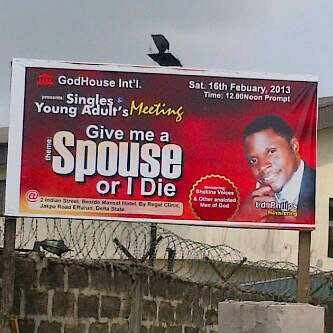
5. People inviting them to church services to find their husbands
But when did it become a life or death matter?
6. Unwanted family meeting attention
There is still no cure for cancer or COVID-19 but my family would rather concentrate a on a cure for me being single.
7. Friends introducing them to all their other single male friends
Can you just let me breath please? Being single is not life threatening.
8. Diligent matchmaking from their parents
Mummy, the only thing we both have in common is that we are single.
9. People asking if he is the one when they post a picture of a man.
Getat of my DM please.
10. Friends and family telling them to lower their expectations.
Why don’t you set a constructive example for me by taking a lesser salary than you deserve?
11. Friends telling them to reconsider their ex
Just out of objective curiosity what makes you think it would work this time?
12. People telling them they are running out of time.
Who made you the timekeeper in my life?
Which one of this lines do you hear the most? And while you are here we asked some Nigerian women to answer the most googled questions about relationships, its a hilarious read.