Notice: Function _load_textdomain_just_in_time was called incorrectly. Translation loading for the wordpress-seo domain was triggered too early. This is usually an indicator for some code in the plugin or theme running too early. Translations should be loaded at the init action or later. Please see Debugging in WordPress for more information. (This message was added in version 6.7.0.) in /home/bcm/src/dev/www/wp-includes/functions.php on line 6121
Uyai Ikpe-Etim | Zikoko!
  • Love Life: We’d Been Committed to Each Other Long Before We Started Dating

    Love Life is a Zikoko weekly series about love, relationships, situationships, entanglements and everything in between.
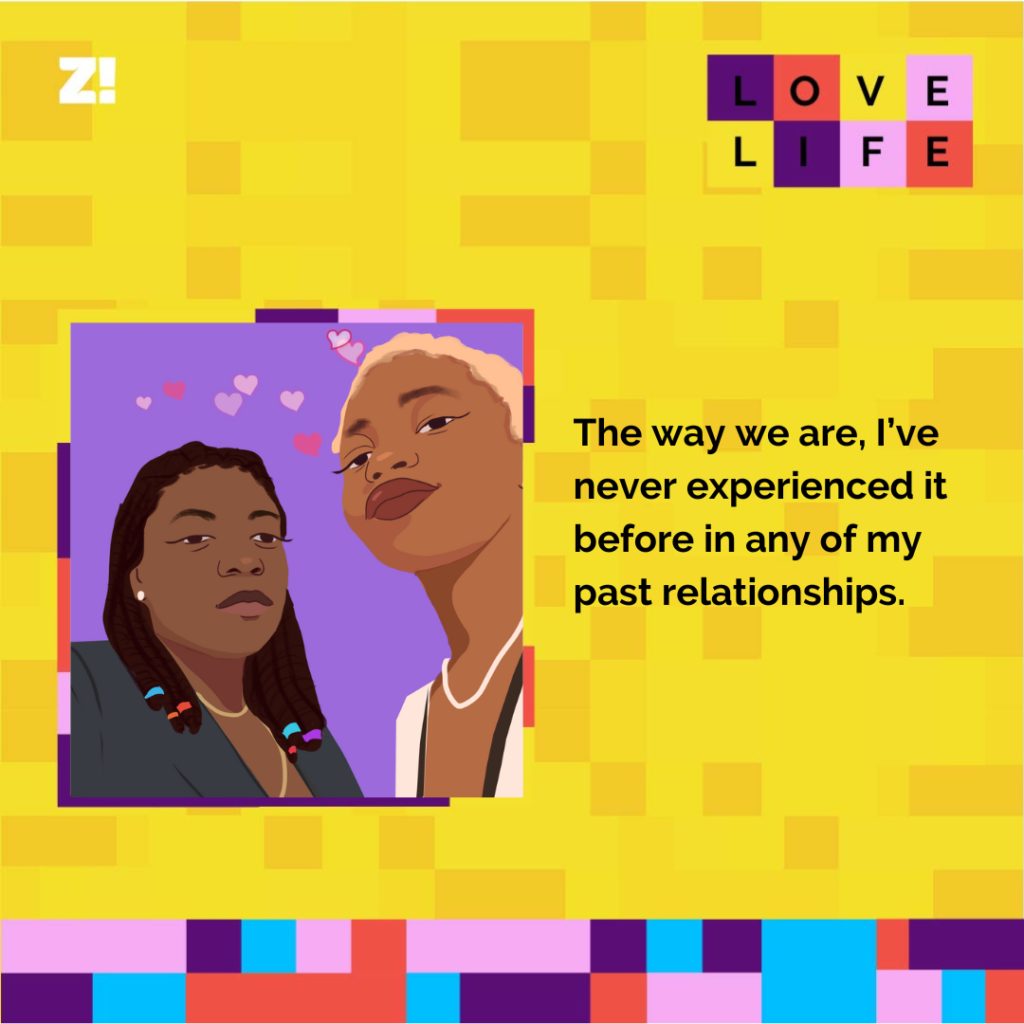
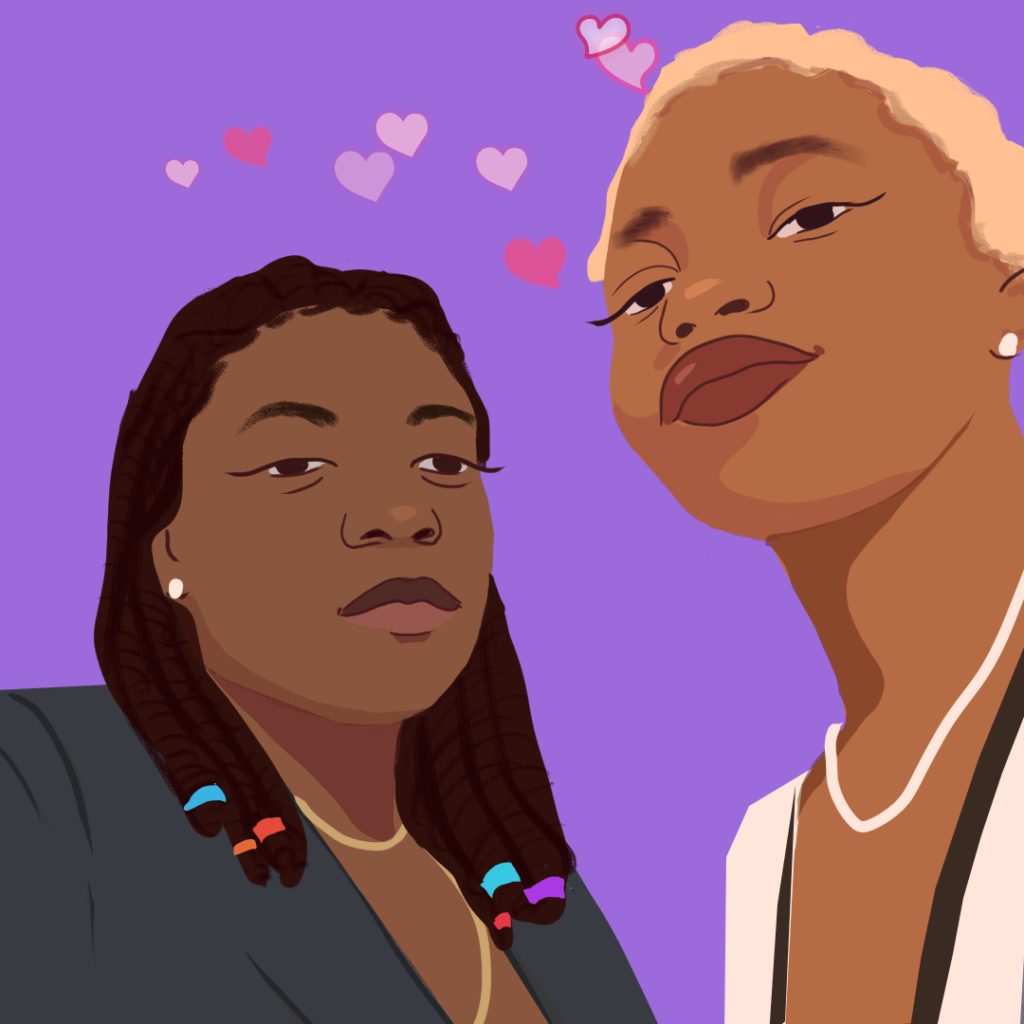
    Uyai, 33, and Ayo, 28, have been dating for a year. This week on Love Life, they talk about meeting on Instagram, dating each other while they were in primary relationships, and eventually, breaking up with those partners to be together.

    What’s your earliest memory of each other? 

    Uyai: In 2019, I was at BarBar on a date when I saw Ayo with her friends. She was wearing a white shirt and shorts, and she looked so happy with her friends. I thought she was interesting but I didn’t talk to her. 

    Ayo: I don’t even remember that day. But in May 2021, my partner at the time was showing me YouTube videos and Uyai happened to be in one of them. She looked cute and friendly, so I went on my Instagram and reached out to her. My goal was to connect with more queer people in Lagos. 

    Uyai, did you remember her from BarBar when you got the DM?

    Uyai: Not immediately. It was after I went through her profile I remembered. We got talking and she asked to meet up. 

    Ayo: We didn’t hang out until a month later because this babe had one excuse or the other. The day we eventually did, she told me she’d have to be back home early because the moon was potent. 

    Sis? 

    Uyai: Yes, I needed to do my full moon rituals. 

    Ayo: And she also needed to be with her partner. 

    Uyai: LOL. That too. But we had fun that day. We went to ArAbesQue, a restaurant in VI. 

    Ayo: And I saw this babe’s ass. It looked so good. I had to ask why she doesn’t post pictures of her ass on Instagram. 

    Uyai: LOL. After the date, Ayo followed me home and we kissed. It was shortlived because I needed her to leave.

    Why? 

    Uyai: My primary partner was coming over. Ayo came back two days later though because she forgot her lighter. For the next five days, she always had an excuse for us to see each other. And when we did, we couldn’t keep our hands off each other.  

    We were also friends despite the sexual thing going on. Ayo became the one I’d text whenever I had issues.

    Ayo: I wanted to spend as much time with her as I could. One time, I went to her house and ended up staying six days. 

    Uyai: I was worried about what my primary partner would think. 

    Ayo: I also had a primary partner who’d also become uncomfortable with the relationship Uyai and I were building. 

    How did you feel about each other’s primary relationship at the time? 

    Uyai: I was in support of Ayo’s relationship the same way she was supportive of mine. 

    Ayo: …until we both knew we had to end them because of what was happening with us. 

    How did that happen? 

    Uyai: Well, it wasn’t planned. It was just getting too complicated for me. I was spending a lot of time with Ayo and my primary partner wasn’t as patient as they used to be with that. 

    Ayo: Same here. It made me feel bad so I had to end it. 

    Then, you two started dating? 

    Uyai: Nope. We continued to spend time together but we didn’t give any name to what we were doing. 

    Ayo: We were wondering how we’d fit into each other’s lives. Our circles were very different and we didn’t see how our relationship would work when our worlds collide. But then, we decided whatever happens, happens, as long as we have each other. 

    Uyai: Another thing is we really didn’t want to rush into a relationship too soon. So we just remained in the talking stage. 

    In August 2021, we went to Tarkwa Bay for two days. The intimate time we shared there really helped our relationship grow. We had this thing where we would ask ourselves, on a scale of one to ten, where we think we’re at right now. We started from a good 6, then 7 before 9, but I don’t think we ever got to 10.

    Ayo: I think because we were both scared that getting to 10 meant much more than what we were doing. We didn’t date till February this year (2022)…

    Uyai: …when Ayo asked me to be her girlfriend. 

    Tell me how it happened 

    Ayo: We were talking in her room one random day. The conversation about girlfriends came up and I asked if she was my girlfriend. 

    Uyai: I said she had to ask me directly for a relationship and she did. 
    Aww. So tell me about your relationship. Did you two keep the relationship open? 

    Ayo: No. As soon as we started dating, it became clear to us that we didn’t want to be with other people. 

    Uyai: We would tell each other all the time that we didn’t know how we’d feel if either us was seeing other people. 

    Ayo: Yup, and we just stayed closed. The truth is we’d been committed to each other long before I asked her to be my girlfriend. 

    Uyai: But once that happened, I felt safer with her. We started making more career and travel plans together. 

    Nice! I’m curious about your biggest fight. What happened? 

    Ayo: It was basically a trust thing. Uyai saw my conversation with my ex where I was telling her what went wrong in our relationship and it caused a fight. 

    Uyai: I was super hurt. I was learning to trust her when this happened and I can be a vengeful person so the bigger fight happened when Ayo saw my own messages with my ex. 

    Ayo: This babe was reminiscing over pictures with her ex. I was like wow. I was so sad. 

    Uyai: Yeah, and for the first time we didn’t know what to do or where to go from there. It felt like there was a wall between us. 

    Ayo: I didn’t want us to get to the point of gbas gbos. 

    How did you resolve it? Did the moon intercede? 

    Uyai: I can’t lie, I cast a lot of spells. I also wrote her a long letter talking about the whole thing. 

    Ayo: After reading it, we talked. There was a lot of active reassurance from both of us. We were eventually okay and have been since then.

    Uyai: Also, we always try to speak tenderly even when we are mad at each other. We listen and are quick to apologise when we understand how our actions have hurt the other person. Ayo is very quick to ask, “What can I do better?” I love that and I’m learning it from her.

    Sweet. What attracts you both to each other? 

    Uyai: Apart from the fact that Ayo looks like a model, she is intelligent. She is super creative. I could go to Ayo with my problem and she’d have so many ideas for me. I love how she cares for the people in her life too. She’s so intentional and it’s beautiful to watch. 

    Ayo: Uyai is so beautiful and her features are unique. Then, there’s her ass. 

    Aside from the physical, she’s thoughtful. I’ve never met someone as sweet as she is. Her writing is amazing. Everytime she writes me a letter, it warms my heart. 

    She’s also generous. I can say something without giving it much thought, and the next day, she’ll have it delivered to me.  

    Awww. On that note, rate your relationship on a scale of one to ten. 

    Ayo: 10, because we’re so good together. Our communication is great and I know we can only get better.  

    Uyai: 10 too, because I think Ayo is perfect. This is not to say she doesn’t have any faults but the faults make Ayo who she is. Those little things make up this relationship. The way we are, I’ve never experienced it before in any of my past relationships. 

    Check back every Thursday by 9 AM for new Love Life stories here. The stories will also be a part of the Ships newsletter, so sign up here.

    If you want to share your own Love Life story, fill this form.

  • Announcement: It’s Time For The Womens!

    If there’s one thing Zikoko does, it’s support women. We have an entire category of our website dedicated to women where we tell the stories of African women from all walks of life. We also have the HER Newsletter where Itohan gists about being a 20-something-year-old woman living in Nigeria along with awesome recommendations every woman needs in her life.

    Check out the HER category and subscribe to the newsletter if you haven’t. It’s pretty iconic. 

    So it’s no surprise we’re excited about March, which is officially Women’s Month. At Zikoko, every month is women’s month, but this month, we have something extra special planned for the ladies.

    Let’s get into it.

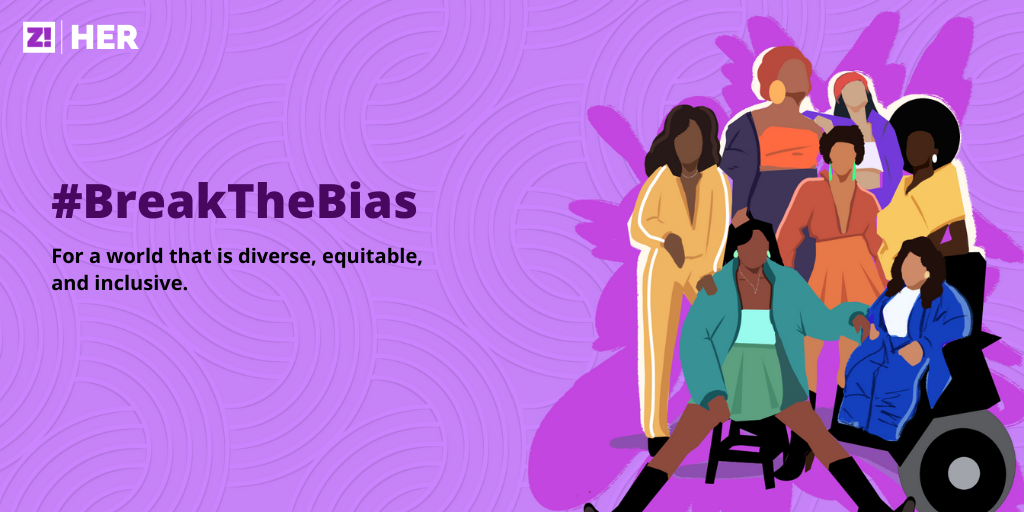
    For this year’s Women’s History Month, we’re bringing back The Elevator, a short, crisp series that profiles women turning the needle, breaking biases, and showing the world (especially women) how to do the damn thing. Expect inspiring stories of African women working in different fields talking about how they rose to the top. And in line with the theme for this year’s International Women’s Day (#BreakTheBias), we’re redefining what the top looks like

    Last year, we spoke to Odunayo Eweniyi, Co-founder of PiggyVest; Arit Okpo, host of CNN International’s African Voices Changemakers; Blessing Abeng, Co-founder of Ingressive for Good amongst other women about their work but also their lives. This year, we’re continuing the theme of exploring the journeys of female writers, artists, activists who push the boundaries in their work. 

    The drop is every Tuesday, starting from 8th March 2022 at 12 p.m., which is also International Women’s Day. 

    But that’s not all. On the 4th March 2022, the first letter from our To Her series will be dropped. What’s that you ask? It’s a miniseries celebrating the love women have for other women. Dead guys say women are their own enemies. We’ll be putting that to review by showing the various ways women come through for each other. 

    In covering women’s stories, you learn the following truths: women’s lives are exposed to a lot of trauma, and women’s identities tend to be tied to other social identities. We’re putting out this series to show other ways women can be celebrated: Through women looking out for themselves, finding love, affection, companionship in other women, but most importantly, themselves. Expect softness, cuteness, and expression.

    To ensure you don’t miss the drop, SIGN UP FOR HER newsletter.

    There’s one more thing in the works. If you follow the HER newsletter, you’ve probably gotten a scoop of it already. This thing shall be revealed to the world in due time. Till then, sit back, grab a bottomless glass of your favourite beverage, and let us entertain you.

    Zikoko 🤝 women

    Subscribe to our newsletter here.

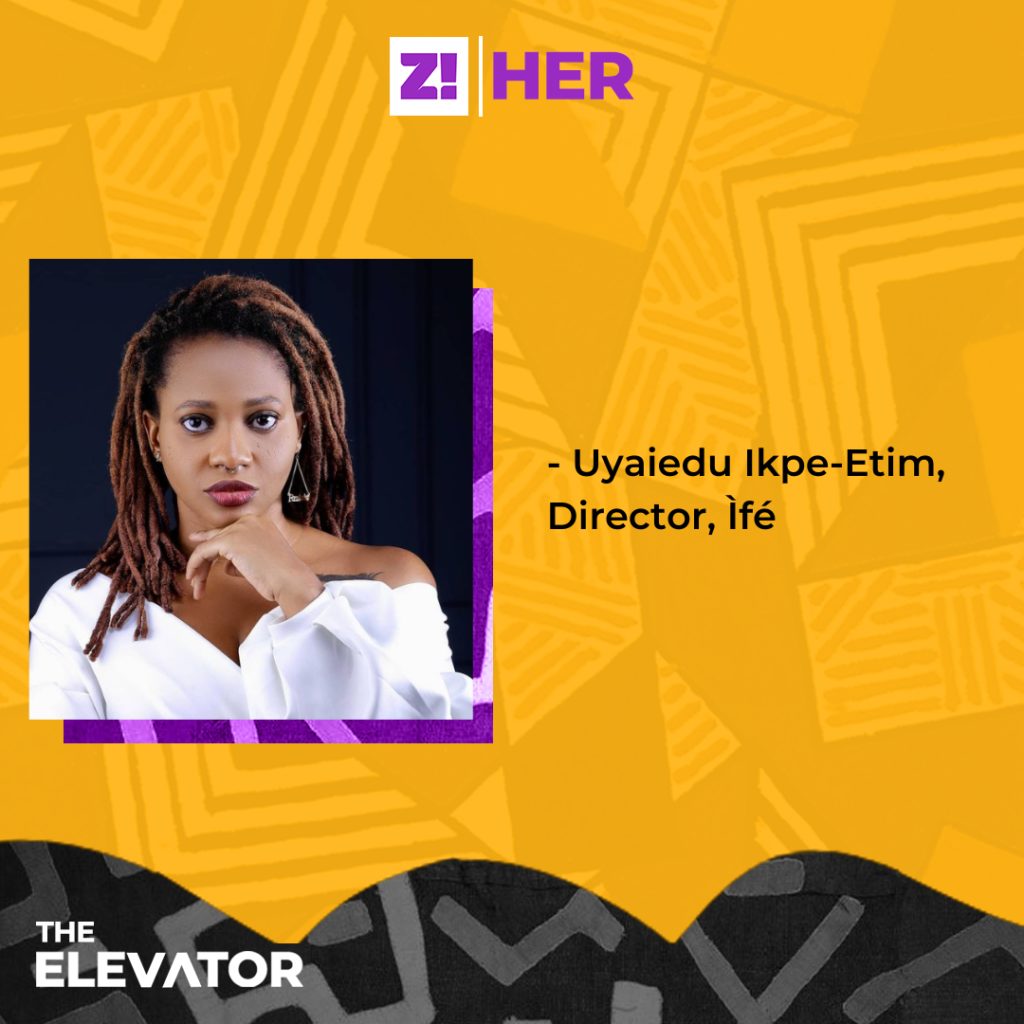
  • The Elevator: I Am Telling The Kind Of Stories I Want To See – Uyaiedu Ikpe-Etim

    The Elevator is a limited Zikoko series that details the growth of young successful Nigerian women. We tell their stories every Monday by 12 p.m. 

    Think about all the stories about women in the media. Most of the stories follow the same trail: women should be one thing and when they fail, they are punished for it. Uyai grew among women who challenged these stories, and after working on a movie set at 19, she was eager to tell different stories about women by writing the kind of characters she wanted to see. Uyaiedu Ikpe-Etim is a 31-year-old film producer, screenwriter and filmmaker. In today’s episode of The Elevator, Uyaiedu talks about her journey as a filmmaker challenging the status quo.


    What did you want to be as a child? 

    I remember clearly that I wanted to be a surgeon because I read Gifted Hands by Ben Carson. 

    Lmao. How did that change? 

    I was young when I had that dream. When I got to senior secondary school, where you have to choose between arts, business or science, I wanted to pick arts because I loved reading and writing. I imagined that literature and history classes would be interesting, but my mother wasn’t having it, so I went to science class. 

    I was already writing before I went to university, so when it was time for uni, I studied radio, television and film because no one could impose on me. 

    How did you get into writing?

    A lot was happening in my life so I went to university pretty late. A while before university, my sister, Nse, was writing a query and I had so many ideas for what to record. Eventually, she got tired of me chipping in and said, “Why don’t you write it?” I was a bit confused, but she encouraged me to go ahead with it. That was my first script. I think I was 17. 

    A year later, I met her friend, Jetta Amata, a Nollywood filmmaker. I told him that I wrote scripts, which was a funny thing to say because I didn’t have any to show at the time.  He told me he was working on a series, Queen Amina of Zazzau, and I could be a part of the group of writers on his team. I was the youngest person in that group. It was a very exciting experience. I learned how to use the software and things like lead character development. I worked with really experienced writers and read a lot. After working on that project, I wrote a few things for Emem Isong. The first film I wrote for her was Guilty Pleasures

    How long did you do that for?

    Three years. Then when I was about 20, I went to university in South Africa. I didn’t spend a long time there because there was a lot of crime and I didn’t like living in South Africa. I am a person who always welcomes change, so when it was time to leave, I didn’t fight it. I continued writing stories until I went back to university in Cyprus at 24. That was when I studied radio, television and film. I enjoyed being a student — I graduated top of my class. During this time, I had several projects I was working on — apart from the short films I made while I was in school, I was also doing a few jobs for filmmakers in Nigeria.

    At this point, were you confident you’d pursue a career in filmmaking? 

    Yes. Working on Queen Amina of Zazzau opened my eyes. It was very different from how women were portrayed in films, and I’m not talking about just Nollywood. I had seen films where husbands would throw their wives out, and I would always ask why the women did not own their own homes. I was raised by a single mother who owns hers, and my eldest sister was living on her own in her late 20s. 

    I knew that the stories I saw on TV were inspired by real women who live these lives, but I wanted to tell stories about women that were not being told. I feel like it’s easy to keep young girls in that cycle when those are the only stories they know and so I started writing the kind of women I wanted to see in films. 

    So that’s one motivating factor. Was there anything else?

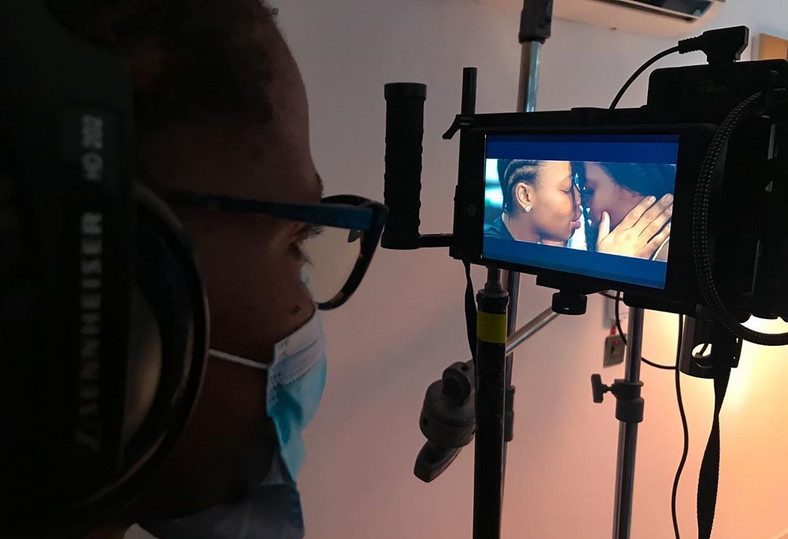
    With time, I started to see another lack. I was looking for black women in love. Every time I go on Netflix, it’s difficult to find films with two black women in love with each other. There are films of white women in love with other white women or black women but hardly any black woman in love with another black woman. I started to nurse the idea of telling a story like that, and that’s how Ìfé came about. 

    What was creating Ìfé like?

    I remember sitting in a coffee shop with the executive director of the Equality Hub, Pamela Adie, who also wanted to tell these kinds of stories. She already knew my work, and we were talking about making a film. Honestly, I don’t know if I had the story before we sat down in that shop or if it came to me while we were there. 

    For Ìfé, I wanted to play with a lot of stereotypes that we joke about, like how lesbians say they are going for a date and end up spending three days at their date’s house. It could be cheesy or cliche, but I was going to do it anyway. I like seeing cliches in romance. When it’s done right and you can relate to it, you will have special moments connecting to the story and that’s what I wanted. Two women meet up for a date and fall in love. I think I was in love with a woman at the time, and I wanted to see that on TV. Pamela was like, let’s do it and so we did. 

    Creating a film centred around queer women in a country like Nigeria. How did that happen? 

    The experience taught me that you have to tell the stories that the heads of production companies want to tell until you get the opportunity to write the story that you want to write. This means that if I had stopped doing the work because I wasn’t able to tell the stories I wanted to tell, I may not have been ready when Ìfé came along. 

    This is what I always tell writers — keep doing what you need to do to pay the bills and prepare yourself for the real thing because I strongly believe that it comes eventually. This also helped me get ready for directing because I spent a lot of time with filmmakers doing the work. 

    Did you experience any pushbacks? 

    To be honest, none of the backlashes was directed at us — the people who created the film. So, I never felt the need to react. Also, I was too focused on the collective joy of the LGBTQ+ community to think about anything else. 

    If you could talk to your 10-year-old self, what would you tell her?

    Five years ago, you wanted to be a princess. Two years ago, a nurse. Now you want to be one of the characters from Enid Blyton’s Famous Five. In three years, you would want to be a neurosurgeon. What you want will keep changing and that’s okay. Ignore the pressure from the adults who want you, a child, to know what you want to be. Welcome the changes and welcome all the women you will be. You do not have to be one thing. 

    What’s next for you? 

    More storytelling — whatever form that takes. Whether it’s films, series, documentaries or speaking engagements, I plan to put women at the forefront.

    Click here to read the previous Elevator story about Celebrity DJ Kiss.

    Subscribe here.