Notice: Function _load_textdomain_just_in_time was called incorrectly. Translation loading for the wordpress-seo domain was triggered too early. This is usually an indicator for some code in the plugin or theme running too early. Translations should be loaded at the init action or later. Please see Debugging in WordPress for more information. (This message was added in version 6.7.0.) in /home/bcm/src/dev/www/wp-includes/functions.php on line 6121
toxic masculinity | Zikoko!
  • I Like Doing These Things But Toxic Masculinity Won’t Allow Me Say it Outside

    Toxic masculinity keeps getting in the way of bad bitchery, and here are 9 confessions from men to prove it.

    “Saucy Santana makes me feel like a bad bitch.”

    — Tobi*, 24

    Whenever I listen to City Girls and Saucy Santana, I feel like a bad bitch. Their songs are empowering; they make me feel like I can take over the world. I’m also obsessed with Broadway musicals. I’m a great singer, and I learn the songs from all the musicals I watch so that I can sing along. It makes me feel as if I’m on Broadway too. I have all the songs from Hamilton on my phone. 

    “I can’t tell another man that he’s handsome.”

    — Obi*, 39

    I don’t think there’s anything I enjoy doing that I won’t admit to publicly. One thing I’ll never do, though, is tell another man that he’s fine. If I want to compliment a man, I’ll talk about his shirt, watch, or shoes. At most, I’ll say he looks nice, but the word “handsome” won’t come out of my mouth. 

    “I love being the small spoon.” 

    — Tunde*, 25

    I enjoy being the small spoon a lot. If you see my woman, you’d understand. She’s thick all over and her body is really soft. Having all that softness envelop me is pure bliss. I like having her in my embrace, but nothing compares to when I’m in hers. 

    RELATED: 8 Things Nigerians Do That Qualify as Toxic Masculinity

    “Painting my nails makes me feel sexy.”

    — Batman*, 24

    When my nails are painted, I feel sexy. And as long as a colour catches my eye, I’ll use it.  I’ve worn, blue, black, purple and pink nails. I’m looking forward to trying more. 

    “I have a playlist filled with Ariana Grande and Demi Lovato songs.”

    — Ibrahim*, 25

    After listening to Ariana Grande’s “thank u, next” album, I was inspired to come up with a playlist. In this playlist, I have songs by Taylor Swift, Ariana Grande, Demi Lovato, etc. I even have the Baby Shark song on it. The playlist is basically the softest side of me. I sometimes use it to workout. Also, I’m a 6’2″ man, and I like to be the small spoon. 

    “I find bubble baths comforting.”

    — Matthew*, 30

    Bubble baths are so comforting and relaxing. I take them at least twice a week. I use that time to either reflect on my life or listen to music and read a book. They help me de-stress from the mayhem of the day or week. It feels like I’m burying all my problems deep in soap bubbles. Also, I’m learning how to crochet and really enjoying it. 

    “I like learning TikTok dances.”

    — Musa*, 28

    If my girlfriend finds out, she’ll take advantage of this. But I like recording TikTok videos, especially the ones that include dancing. When I’m bored, I often use the time to learn TikTok dances that never make it out of my bedroom.

    “I loved watching Yoruba movies with my girlfriend.”

    — Timmy*, 27

    My girlfriend and I used to watch Yoruba movies every night, and I loved every bit of it. We always had a lot  fun when doing it, and we would laugh our eyes out . We don’t do it that much anymore, because I no longer live on the island and we don’t see that often. 

    “Play with my hair, please”

    — Akpan*, 23

    I love my hair being played with. You can sell me like that. If nobody else is around to do it, I make my male friends play with my hair. 

    ALSO READ: 6 Nigerian Men Recall the Times they Didn’t Really Feel Like Men

    Zikoko is launching a new series where we explore those friendships, familial and romantic relationships that are no longer sailing.

  • 7 Texts You Can Send To Check On Your Bros

    Men are constantly struggling under the weight of social expectations and other pressures, which ends up affecting their mental health. While more men are dropping toxic masculinity tropes like not showing affection to their friends, there’s still a long way to go in making affectionate male relationships a norm. Checking in on your guy goes a long way in helping them through tough times. Here are 7 texts you can send to your bros to see how they are doing.

    1. “Just checking in on you bro. Are you good?”

    A simple message like this can help your bros open up to you about stuff, which might be all he needed

    2. “How have you been? Don’t just say fine; I’m here if you need someone to talk to.”

    Your guy might need a little more prodding to open up. This passes a simple but reassuring message.

    3. “Just making sure you’re good bro. I know we’ve not talked in a while.”

    Great for your Man Dem who you’ve not been communicating with regularly. You might just give updates on what’s been going on in your lives.

    4. “Hey bro, I’m just letting you know I’m here for you. You’re never alone.”

    Sometimes, all your brother needs is reassurance that he’s got someone in his corner.

    5. “I love you, bro. Let me know if there is anything I can do to help you during this time.”

    Everyone goes through tough times and sometimes all he might need is your support.

    6. “I know you got a lot going on, how you holding up?”

    Regular check-ins during trying periods might be the best way to let them know that they’re not alone.

    7. “I’m here if you need someone to talk to.”

    This might be all they need to hear to get through their rough patch.

  • 7 Ridiculous Ways To “Act Like A Man”

    In today’s society, everyone has an opinion about what it means to really be a “man”. Whatever those opinions are they end up doing more harm than good, seeing as 75% of suicide victims are men. Here are some of the ridiculous ways society thinks you should act like a man.

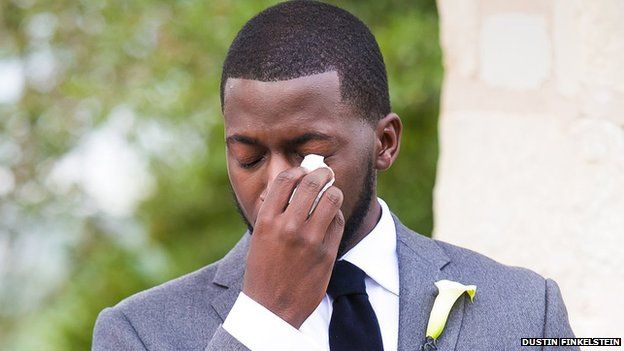
    1. Never cry.

    As society assumes men don’t have tear ducts, we’re not allowed to cry. If you cry, you’ve lost your men’s membership card. People would say, “don’t cry now, are you not a man?” As per men don’t have tears inside their eyes or what? Better cry before you give yourself BP. It’s a great outlet.

    How one couple's wedding photos became an internet meme - BBC News

    2. Be aggressive

    Sorry o, Mighty Igor. Kung-fu master. More times than not, you end up looking foolish.

    Nine Tips To Help You Tame Your Anger — Guardian Life — The Guardian  Nigeria News – Nigeria and World News

    3. Never share your problems with anyone

    They want you to keep your problems in your chest and as we all know, problem no dey finish. What do you think will happen to your chest?

    How to discuss race with Black teens and their families

    4. Sleep with more women to seem manly

    Sleeping with women not because you want to but because you want another “feather in your cap” is childish. Love yourself. That’s how people catch venereal diseases.

    6 Signs That Show You're Going To Become A Sugar Daddy | Zikoko!

    5. Cover up for your bros when they’ve fucked up

    Don’t encourage nonsense. Call out bad behaviour when you see it.

    HBO To Launch New Show 'Bros' Focusing On Black Gay Man & His Brothers -  JoJoCrews.com

    6. Don’t take care of your body

    Being a man is no reason not to maintain basic hygiene and skincare. Your masculinity does not lie in your ashiness. Moisturize today.

    Stream west broz13 | Listen to music tracks and songs online for free on  SoundCloud

    7. Don’t be involved in taking care of your home/kids

    Society expects the job of home-keeping and child-raising to be women’s jobs. When it’s your turn, try and do better.

    Meet the Author Advocating for More Black Stay-At-Home Dads

    Have you read: 5 Fathers Discuss What They Love About Raising Daughters

    [donation]

  • Crying Doesn’t Make You Less Of A Man — Man Like Timileyin

    What does it mean to be a man? Surely, it’s not one thing. It’s a series of little moments that add up. Man Like is a weekly Zikoko series documenting these moments to see how it adds up. It’s a series for men by men, talking about men’s issues. We try to understand what it means to “be a man” from the perspective of the subject of the week.

    Check back every Sunday by 12 pm for new stories in the Man Like series. If you’d like to be featured or you know anyone that would be perfect for this, kindly send an email.


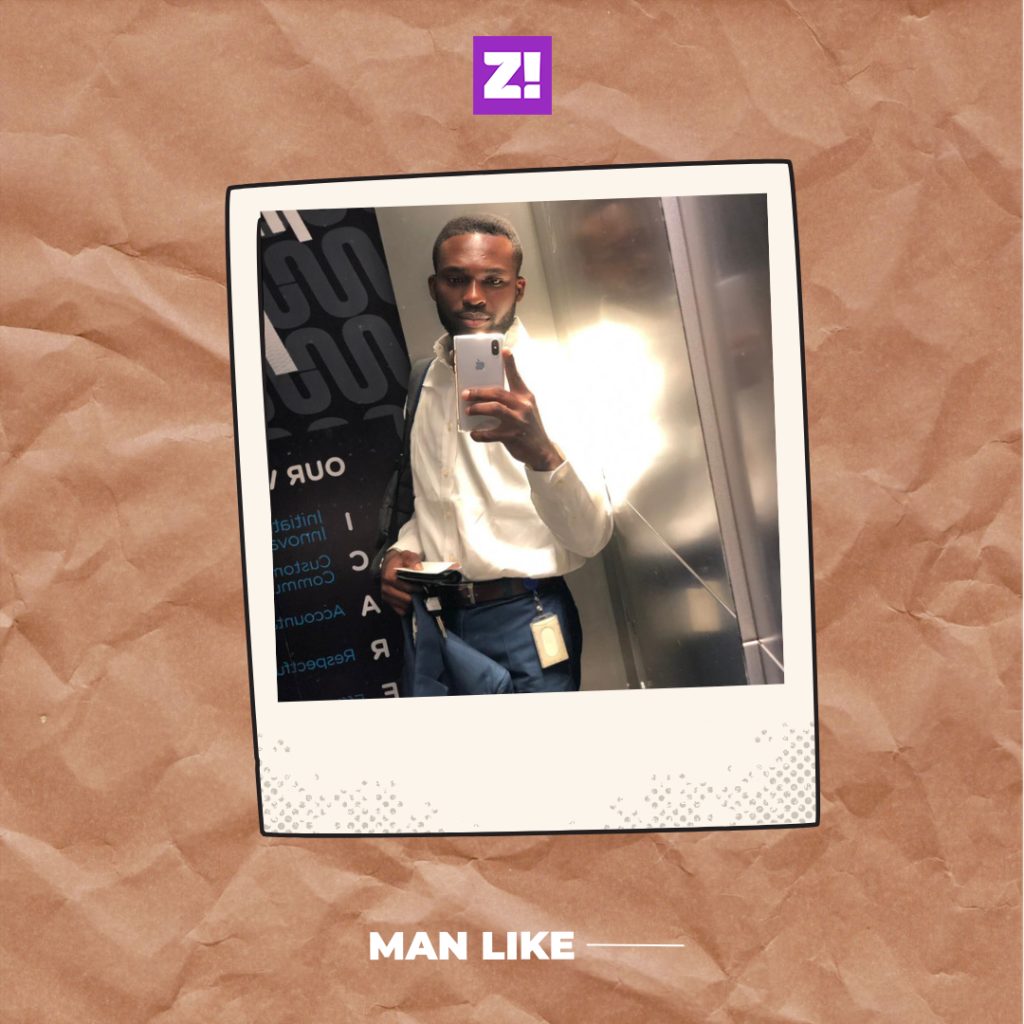
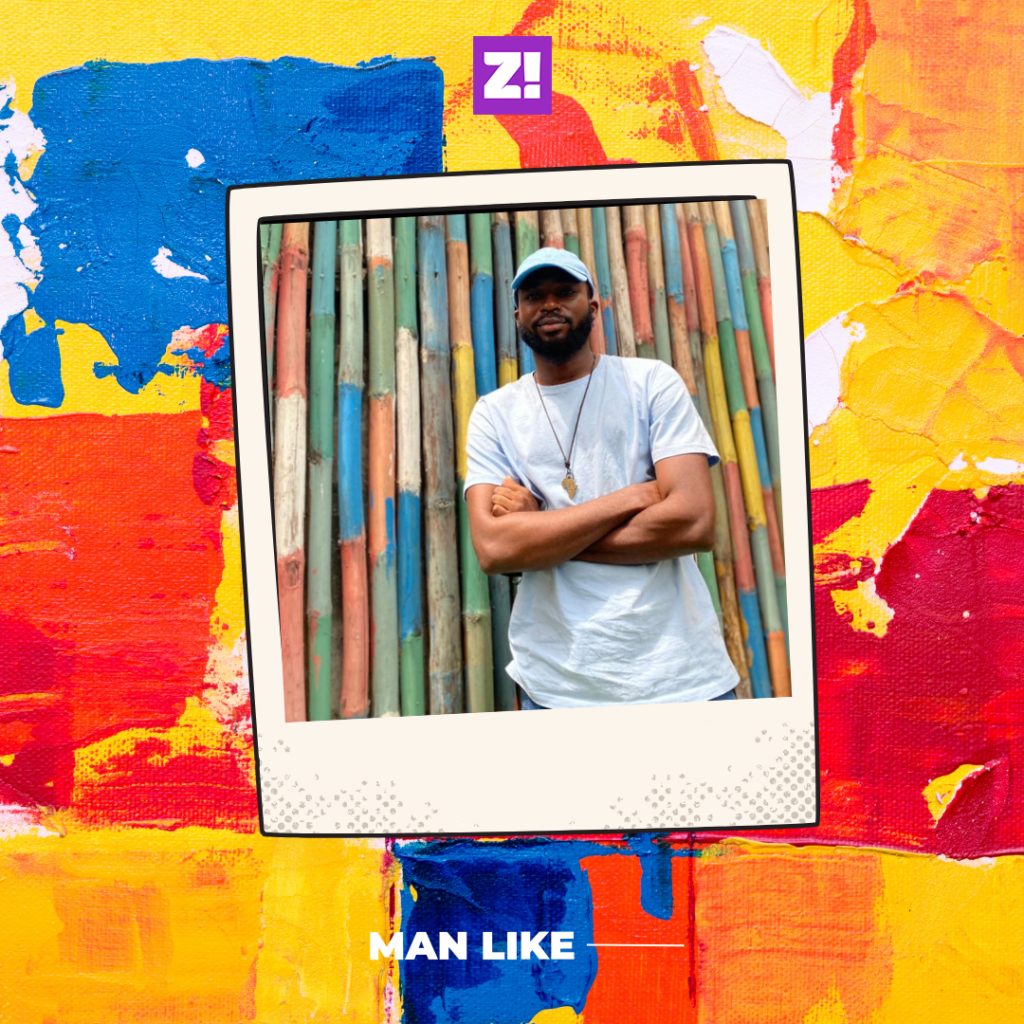
    The subject of today’s Man Like is Timileyin, a project and facilities manager. He talks about his father’s imprint on his character, how his parents’ marriage guides his approach to romantic relationships and why crying is therapeutic.

    When did you realise you were a man?

    Every time I open an episode of ‘Man Like‘ and see this question, I always wonder if I’m a man yet. When does one become a man? Is it when you move out of your parents’ house or when you get your first job and stop depending on pocket money? Is it when you start giving your parents an allowance? 

    However, some of the experiences that shaped me as a man happened when I was in university. In my third year, I was out of school for a year. Instead of being idle, I decided to work for my dad’s construction company. I worked every day, Mondays to Saturdays. It was the hardest I had ever worked. The experience made me realise what my dad went through to put food on our table. It made me realise that raising a family, providing and trying to set your kids’ up for success no easy. I realised that combining all those things shouldn’t be just one person’s job — it’s a heavy burden.

    Every young man needs that kind of experience so they start to think, early on, “How am I going to provide for my family? How will I make enough money to raise kids.”  

    Taking a lead cue from my father, I realised that taking care of family is paramount. Seeing what my dad did, I wanted to do even better. Apart from my five siblings, we had two or three cousins living with us at any given time. My father had to provide for about ten people in the household, whether his business was going well or not.

    He sounds like a stand-up guy.

    I recently received a call from my younger sister who’s in her final year of university. She told me that my dad asked her to send me her school fees invoice. I definitely didn’t see that coming. For context, I have two older brothers ahead of me. So asking me to pay her school fees was a big leap. It was a “wait, I’m really getting old” moment. It was the first time I was responsible for someone.

    What was your relationship with your father like?

    One of the most important things about my father is that he always showed up. Perhaps owning his own business made him wiggle room to always make time for his kids. Along with my mom, they were very present in our lives and we never lacked support from either of them. However, I feel like we could have had a better relationship.

    How so?

    As I said, he always showed up. School events, matriculations, graduations and prize giving days (because, you know, I’m smart like that), he was always there with my mother. In a way, it felt like he owed that to us as part of his promise to give us the best education he could afford. 

    However, I think there were some points in my life where I could have used a good father-son conversation. But we didn’t have a relationship like that. The only time we had a semblance of that was when I was working with him during the year I was out of school. We mostly just got along and vibed with each other on the peripheral, but I think it could have been a more rewarding relationship. 

    Our relationship has evolved now and we have more conversations about my plans but that’s pretty much it. Sometimes I feel like he could have been closer to us, his children. The typical African parent approach of punishing every transgression might have driven a wedge between us.

    What other lessons did you learn from your father?

    Diplomacy in relationships. I learned this from my mother and father. In the 20+ years I lived with them, I only saw them quarrel three times. Hours after they fight, you’ll find them laughing with each other. Their relationship gives me joy. They were always in each other’s spaces and faces and you could tell that they loved each other deeply. My parents are my blueprint for approaching relationships.

    So how do you approach relationships?

    Communication is very important to me. I need to know that a romantic partner puts all their cards on the table. Things you hide invariably begin to fester and that causes animosity and resentment. That’s a death sentence for any relationship. There will be fights but that’s natural because you’re different people. The approach to that should be “us vs. the problem”, not “me vs. my partner.”

    That’s a wholesome way to handle romantic relationships. What about platonic relationships?

    I handle my platonic relationships just the same way. I am up-front about the relationship and make sure fights don’t linger. I ensure there’s an open line of communication at all times. To me, the bro code means being present in your friends’ lives. It means that your friends know that there is always a safe space with you. It’s not about encouraging or covering up bad behaviour for your friends.

    Not unrelated – what are your thoughts about how Nigerian men handle toxic masculinity?

    I don’t think toxic masculinity as a concept should even exist. I don’t believe people should cage themselves and not do what comes naturally to them, regardless of their gender. It doesn’t matter what people think. It doesn’t matter if people think you’re being “feminine.”

    Interesting.

    One time, I was hanging out with a female friend. A male friend called and after the conversation, I ended the call with “I love you, my guy.” She was shocked and asked if I was gay. This is the same mentality older Nigerians have about how men should act. We claim to be smarter and more exposed than the older generation but still hold on to harmful views. We tell men to be strong, not to show emotion, not to cry. Men owe it to themselves to unlearn such harmful views and teach the younger generation that it’s okay to show emotion. Crying doesn’t make you less of a man. It’s therapeutic and really eases the tension you’re feeling. 

    Toxic masculinity also makes it difficult for men to seek help for mental health issues despite the immense trauma we go through as Nigerians. It’s also the reason Nigerian men don’t look after themselves because they think skincare is feminine. Is it only women that have skin?

    Speaking of women – what was your most memorable heartbreak?

    LMAO, ah! I don’t think I’ve experienced heartbreak a lot but the most memorable one had to be the person who broke up with me because I was too broke. Fresh out of school, I had just started working. I had small change in my pocket so I didn’t think I was that broke. Omo. It shook me to my core. I guess she had expectations I wasn’t meeting.

    Did you cry?

    Nah. The last time I cried was when I had a fight with someone I was dating. It was a long-distance relationship and it just seemed very frustrating. Not having your person by your side and fighting them at the same time was just overwhelming. I don’t cry a lot but I found it therapeutic.

    Check back every Sunday by 12 pm for new stories in the Man Like series. If you’d like to be featured or you know anyone that would be perfect for this, kindly send an email.

    Are you a man who would like to be interviewed for a Zikoko article? Fill this form and we’ll be in your inbox quicker than you can say “Man Dem.”

  • Toxic Masculinity Is The Worst Thing That Can Happen To The Boy Child – Man Like Victor

    What does it mean to be a man? Surely, it’s not one thing. It’s a series of little moments that add up.

    “Man Like” is a weekly Zikoko series documenting these moments to see how it adds up. It’s a series for men by men, talking about men’s issues. We try to understand what it means to “be a man” from the perspective of the subject of the week.


    The subject for today is Victor, and he’s the managing editor of TechCabal. He talks about the struggles of growing up effeminate, the challenges of toxic masculinity and what it means to be human.

    When did it first dawn on you that you were now a “man”?

    [Pause]

    The reverse to your question is that was I ever a child and the answer is no. I‘ve been responsible for stuff for the longest time. As early as eight years old, my mother would leave my siblings with me to take care of. I remember changing my sister’s napkins and her just crying. It was on one of these occasions that I cooked rice for the first time without supervision. I don’t remember the details, but the cry just full everywhere, so I had to do something. 

    After then, I graduated into worrying about family and stuff. I was very anxious — how’s the family going to be? What does the future look like? How would my siblings fare? This manifested in such a way that I went from thinking to going to look for work. It didn’t help that I was the first child, so there were expectations vs reality vs trying. I pulled nine million other stunts in the name of hustle and trying to contribute in my own way. 

    Mahn. Do you remember your first job?

    It was a mixture of things: I worked at a bookstore for a while. I also worked at construction sites doing manual labour. I think there was also work in a factory as a factory hand. 

    When I was doing these things, my age mates were not working. We’d just finished school, and they were carrying babes, but I had the mindset of  “what would I do next?” How would I apply myself? I guess that’s what drove me. 

    What’s something growing up like this does to you?

    I’ll talk about relationships — I’ve noticed that I’m always the carer. I’m the one worrying about the other person’s physical and emotional wellbeing. And it happens by default. I think my childhood of looking after people influences this behaviour.  

    Interesting. 

    What’s interesting is that I once dated someone that said I was going to have a midlife crisis because I didn’t have a childhood. The person was like I skipped some developmental phases, and it’d affect me. I don’t remember having the time or the mental luxury to play like a child. I can’t remember being a child.

    Did you ever talk to your parents about this?

    I had a period in my life when I was angry. As a teenager, I was angry at the world, angry at Nigeria, angry at my parents. The anger reflected in a lot of things. I was more physical; I had a temper problem, and I was just very angry. 

    However, the more experienced I got, the more I saw life from a different perspective. You’ve been born, and nobody owes you anything. I started to understand that I was in charge of my life to a large extent. I also strongly believe in God and the place of luck and chance in people’s destiny. The belief that my actions would be responsible for a lot of things helped my anger and resentment. The older I got, the more I saw my parents as human beings with their own flaws. By the time we started to talk, it was from a place of understanding. 

    And your siblings?

    I practically brought up my sisters. They were like my practise family. Until recently, I was very hands-on with them. I was trying to map their direction. I love the process of ageing and learning because it gives you perspective, and you see the world differently. I have come to accept that people will make decisions you don’t agree with and they’ll also be fine. My role is to support them. I love them very much, and I’m there for them to the extent that I can. Now, we chat, we text and all have a cordial relationship. 

    Nice. What gives you joy? 

    I think it’s important to make a distinction between joy and happiness. Someone like me, I can be happy at will. In making others happy, I’m happy. However, I think joy is one of those internal struggles that a human being embarks on until they die. Joy is a lifelong journey and there’s not one destination or route to it. I’m optimistic and at peace. I’m the kind of person who thinks that if I’m alive, the future will be fine. Inner peace for me is like a precursor to some form of joy because the pursuit is an unending one. 

    Philosopher, please. Does anything scare you? 

    Because of how I was brought up… I wasn’t brought up. Because of how I grew up, I quickly learned that the worst thing anyone could do was kill me. And if I didn’t die, I’d get through whatever challenge. I’m not saying I’m fearless, but I’m not constantly scared like OMG —  I’m not in that constant state of trepidation. Again, maybe I’m suppressing it.

    I’m more familiar with uncertainty. Uncertainty is exciting for me because I’m like, what does the future hold? There’s this thing in life where you make plans and it falls through. The knowledge that your well-stacked chips can just fall down is a vulnerable state; it sets uncertainty that’s akin to fear. It’s a blurry line between fear, excitement and uncertainty. I try not to think about it as fear, and I think that’s me being international in a Zen-like way.

    I’m curious. Who are your role models?

    Growing up, it was my dad. I had a great relationship with him, and he was instrumental to a lot of things. He introduced me to sports, creativity, and working out. But we weren’t always together. Somewhere along my late teens, separation happened, and he was no longer in the picture. 

    One of the biggest sources of my anger [growing up] was that I didn’t have anybody. At one point, when I was modelling, I wished there was someone to guide me. Most things I did in my life was basically just figuring shit out by myself — I’d just rough the thing. I’d read where I had to read. In other places, I’d put my head there and combine with hard work, smart work, God’s grace and luck. I honestly know that if I had guidance, I’d have gotten a lot of things “right.” In retrospect, it doesn’t matter because I think everything worked out the way God wanted it to. 

    Mahn…

    The experience formed the way I looked at role models growing up. I’d scoff at people who had role models. It’s ironic because I grew up needing these people. And by not having it, a defence mechanism came up. Growing older and wiser, I’ve realised that you need models: mental models and human models. And if you don’t have physical access, you can learn from them over the internet. 

    I have a tonne of role models. People blog and tweet and I know it’s not their life, but I’m like: I like this model of you and what you made of your career. Teach me how you did it. But I don’t need to talk to you. I’ll read your book, your blog or your tweets. My work also gives me access to talk to people, so I can throw in a question and learn from the person’s experience. Life for me has become like the role model — a mental model of everybody. It’s not intentional, it’s just circumstantial, and I’ve made the best of it.  I want to have things like career mentors that I talk to about my career. But I’m afraid, and I don’t want to bother someone. At the back of my mind, there’s still that inhibition that I’m being a bother. 

    At the end of the day, I’m still growing every day and trying to be better. 

    Heavy stuff. What was the hardest part of growing up as a man in Nigeria?

    One day, I’m going to write about how toxic masculinity is the worst thing that can happen to a boy child. In my early teens, I was effeminate. My earliest memories involved singing — I sang soprano. I read books and carried novels everywhere. I got a lot of  “Why you dey waka like a woman?” “Why you dey carry book like woman?” — this is gay.

    Growing up in Nigeria, there’s a lot of expectations of you to be manly. Most of it is societal norms that you are forced to conform to. I’ve heard people say it’s wrong for a man to rub cream like a girl, and they should do “like man.”

    I rebel against many definitions of manhood. For example, being a man doesn’t mean that when we’re gathered, we have to talk about who dey toast this one or who slept with this one. It stresses me out that there are adults still having that conversation. I’m talking about professionals. It’s stressful because it means that I can’t relate to a lot of young people who grew up this way. 

    I don’t want to be talking to you and the only thing we talk about is Arsenal and Chelsea. There are nine million other things for us to discuss and a world of interest that you probably have if you paid attention. But because your definition of being a man dictates that these are the things you talk about, we have to talk about them.

    I feel you.

    Being a man in Nigeria means being emotionally stunted. It’s just too much burden to place on one person. There are all these moulds in our mind that have nothing to do with manliness. You’re first human before you’re a man. If you start losing your identity because you’re attempting to fit into a societal male cast, then you have a problem. 

    Not every man is built to have a square chest, broad shoulders and slim hips. Some men are genetically built to have a big stomach, barrel bodies no matter how much they work out. Someone with a potbelly is not less of a man than I am. 

    I think the Nigerian definition of manliness is dangerous. Men think they own women or that they’re superior. These stereotypes make you believe that you own the world. And by fitting into this cast, you’re the king of the world; nobody can tell you nothing or sit with you. Then you grow up to become a shit human.  You should be human before being a man.

    Word. Tell me a major transformation that has happened between growing up and now. 

    I eventually grew up to be masculine, and became really sporty and athletic; I played basketball, did boxing, lifted weights. All these were antithetical to when I was younger where I had a lot of side comments to deal with. 

    At that age, I was impressionable, so the comments shook me to the core. This is one of the reasons why I can’t say this is what it means to be masculine. It took me a while to know that masculinity is not my identity. I’m Victor, and I’m human. I am kind and compassionate. I have the will to thrive. I’m a warrior and a survivor. There’s Victor from my early teens and there’s the current one, and both of them are masculine. 

    Sweet. What makes you human?

    MR NIGER D, and then empathy.


    Check back every Sunday by 12 pm for new stories in the “Man Like” series. If you’d like to be featured or you know anyone that would be perfect for this, kindly send an email.

  • 8 Things Nigerians Do That Qualify As Toxic Masculinity

    If you’ve been active on social media then the term “toxic masculinity” is something you’ve seen being thrown around quite often. Here’s a proper definition in case you’re wondering; Toxic masculinity is the normalized culture that expects men to not express emotion openly, be tough all the time, and disapproves of anything that makes them seem feminine or weak.

    Here’s a list of some of the things Nigerians have normalized that actually qualify as toxic masculinity.

    1. The saying – “Be a man“.

    If toxic masculinity had a motto, this would be it. This 3 worded sentence puts masculinity on a pedestal that can only be accessed through suppressing emotions and being unnecessarily aggressive.

    2. Don’t you know you are a man?

    zikoko-toxic masculinity

    Just in case you forgot you were supposed to be stone cold, unnecessarily aggressive, and disrespectful while demanding round the clock respect.

    3. Why are you acting like a woman?

    zikoko-toxic masculinity

    Usually thrown at a man when he is expressing emotions, or withholding throwing physical strength at a problem.

    4. Men are not supposed to cry.

    If toxic masculinity had a tag line, this would definitely be it. Expecting men to not express pain through crying will only make them bottle up whatever hurt or frustrations they may be experiencing and that is not healthy.

    5. Boys will always be boys.

    zikoko-toxic masculinity

    Meaning boys should be allowed to act in whatever way they want to and be allowed to get away with it because why? Because they are boys.

    6. Men are polygamous in nature.

    Which is a euphemism for “allow men cheat”. But we already know that philandering is not a function of gender so kolewerk.

    7. Blaming domestic violence victims for provoking the abuse.

    Because apparently the only time when a man can not help bringing his fists into a conversation is when it involves a woman. Not at the embassy when staff is being rude, not at an annoying colleague, not at a rude Lagos conductor, just when there’s a vulnerable woman in the picture.

    8. Putting the entire onus of rape prevention on women.

    Talmabout, women shouldn’t wear short skirts, or go to visit men or stay out late. How about telling men to just not rape women?