Notice: Function _load_textdomain_just_in_time was called incorrectly. Translation loading for the wordpress-seo domain was triggered too early. This is usually an indicator for some code in the plugin or theme running too early. Translations should be loaded at the init action or later. Please see Debugging in WordPress for more information. (This message was added in version 6.7.0.) in /home/bcm/src/dev/www/wp-includes/functions.php on line 6121
Therapy in Nigeria | Zikoko!
  • What She Said: I Still Cry Every Time I Have to Eat

    Navigating life as a woman in the world today is interesting. From Nigeria to Timbuktu, it’ll amaze you how similar all our experiences are. Every Wednesday, women the world over will share their experiences on everything from sex to politics right here. 

    Photo by Lucxama Sylvain

    This week’s #ZikokoWhatSheSaid subject is a 31-year-old Nigerian woman who’s had almost a decade of therapy to heal from food and weight anxiety. She talks about being fat-shamed in boarding school, still feeling fat at 61kg and why eating makes her cry.

    What’s your earliest memory of food?

    I have two conflicting early memories; a happy one and a painful one. Sometimes, it feels like I made the happy one up in my head.

    Tell me about that one first

    It’s this blurry image of myself in my maternal grandfather’s village house in the east. I must’ve been three or four years. Someone served me eba and okro soup in a big bowl. Sometimes, I remember the smell of the food. I remember life being simple, breeze blowing in from a big window and me happy to see the food, not thinking twice before digging in.

    And the bad memory?

    I remember my aunties on my father’s side teasing me about my weight. They used to talk about how pretty I was, a future beauty queen. Then it became, “Don’t get fatter than this o” or “Ahn ahn, what are you eating?” One day, when I was about eight, momsi made beans and then another pot of spaghetti because popsi wanted that. 

    Because those are my two favourite meals, I couldn’t decide which one I wanted for dinner. So I ate my plate of beans, then went back to momsi in the kitchen and told her I still wanted to eat spaghetti. One of my older cousins’ wife was there with her, and she exclaimed about me eating two plates of food the whole time my mum was dishing. I really wanted to taste, and I honestly just had small portions of the beans and spaghetti, but I felt so ashamed. 

    When I brought the empty plate back to the kitchen, she was like, “Ah! And you finished it. Na wa o. So that’s how you’re just eating everything you see?” Momsi was quiet the whole time. She never ever defended me when she heard people fat-shame me. She always just stayed painfully quiet while I was dying inside.

    Did you ever talk to her about it?

    That’s the painful part. I asked her about it right after I graduated from uni, and she just said she was never aware of it. That made me feel like I’d been exaggerating the amount of teasing I got in my head. I still don’t know for sure, but it really did feel like I was always singled out and unfairly shamed.

    Were you fat as a child?

    I thought I was. But I’m amazed when I go through old photos from school because it was more like I was big and tall for my age, with round features and chubby cheeks. I wasn’t slim, but I wasn’t fat either. Since I was a size ten up until 300 level, I honestly don’t understand why people fat-shamed me so much. They were always shocked I could fit into certain things. I just had the type of body that looked fatter than it actually was. Growing up, this made me so confused about how fat I was and caught up on it all the time.

    RELATED: What She Said: I Thought Being Tall Was a Masculine Trait 

    How so?

    I was always thinking about how much I was eating. I was constantly not eating, and when I ate, I’d take Andrews Liver Salt, which was my best friend throughout boarding school. But then, I’d turn around to order a box of pizza and finish it all in one sitting during the holidays. Then I’d cry for hours and hate myself. 

    I was constantly checking the scale. I’d wake up in the morning, and the first thing I’d do before getting out of bed was put my hand around my upper arm to check if it was smaller. My classmates would tell me today that I was losing weight, and the next day, “Your face looks puffier.” And I’d spend the rest of the week wondering which one was correct. 

    Did you ask your friends?

    My friends teased me a lot. They’d say I had a mini potbelly or my face looked bloated “like someone pumped it with air”. Someone once told me I talked like I had hot yam in my mouth. One time, a teacher, who’d been transferred to the primary school and then transferred back, saw me on the school street and was so shocked because she thought I’d have gotten much fatter than I was. 

    I’ll never forget the day I was having a casual conversation with a friend in another class — this was in SS 2. I don’t remember what she said that made me answer, “I’m not that fat.” And someone in the seat behind her just randomly said, “Not that fat?” with the loudest voice ever. I don’t even remember what happened after that because my comment and the other girl’s response are the only words seared into my mind from that scene.

    If you’d like to be my next subject on #WhatSheSaid, click here to tell me why

    Did you eat a lot in school?

    Don’t know o. I even used to give out all my meat during lunch and dinner, never asked for more food and never ate breakfast because I always bought two galas and one Pepsi or Viju Milk during short break. 

    But I hated myself so much that after they distributed yearbooks in JSS 3, I cut my face out of people’s copies any chance I got. My classmates started thinking someone else was doing it and used that as a new reason to make fun of me.

    Oh wow. What was it like in uni?

    By uni, I was very selective of food because I noticed people were highly critical of me when it came to food. 

    For example, at the start of 100 level, when we were all just getting to know each other and making new friends, I started talking to this girl whose room was next door to mine. She came to my room one day, and was standing beside me as I was going through my provisions closet. I picked up a jar of Nutella, and she just exclaimed, “You have this thing? No wonder. You’ll just blow up.” I was so confused and ashamed because I really thought I was the slimmest I’d ever been at that point in my life.

    That was uncalled for

    Throughout uni, I only ate once a day and never in front of people. There was an entire semester when I lived on a pack of small chops without puff puff — two spring rolls, two samosas, a piece of gizzard and barbeque chicken — a day. Then I started hearing, “Don’t get slimmer than this o”, “Your chubbiness fits you”, “You won’t be fine if you were slim”, from friends. It was all so confusing.

    And I used to lie stupidly about food a lot. Like when I told someone I hated small chops — I was ashamed to be eating them because of how greasy it was. But then, the person caught me either struggling with other students to buy a pack, or eating one, or telling another person that’s all I ate. I can’t really remember. All I know is next thing, he said, “I thought you hate small chops.”

    They sha caught you in a lie

    Yes o, red-handed. I found a way to deflect. But I cried that night. I felt so foolish.

    ALSO: What She Said: The More I Pretend to be Happy, the More I Hope It Works

    I’m so sorry. What has your relationship with food been like in adulthood?

    Well, for NYSC, I served far away from home. I brought a packet each of Minimie chinchin and Ribena with me to orientation camp. That’s all I ate during the three weeks there, one pack of each a day. I don’t know how I survived. But as soon as I entered town to begin the service year proper, I started stress eating. I was anxious about figuring out my life and career. I stuffed myself with so much food, I got properly fat, about size 14, by the time I returned to Lagos. And knowing my body structure, I was so round. That’s when things took a turn.

    What happened?

    I developed a kind of phobia for food I’ve still not gotten rid of today. Back in Lagos, fat and without a clue what I wanted for my life, I genuinely felt like nothing during that period. Like I didn’t have any value. So I fasted for days and prayed and cried and begged God for forgiveness for being such a glutton. I just stopped eating. When I was so tired and weak I had to eat something, I’d start crying once I saw or smelt the food.

    Crying? Like, shedding real tears?

    Yes. I wished I didn’t have to eat at all so I could just lose weight and people would see me as a person. I thought all people saw was a fat girl constantly in the process of getting fatter because she was always eating. At one point, all I could think about was food and how I could eat it to feel better.

    That sounds scary. How did you overcome this?

    Therapy. I couldn’t get a job and was withdrawing from everyone. I couldn’t even date because, I was terrified of getting married and having to get pregnant. Every pregnant woman I knew at the time doubled or tripled in weight. I even saw celebrities on IG whose faces and legs literally stretched out for their new weight. 

    When I say I was terrified, I mean I’d start shivering when I saw pregnancy photoshoots or even thought about it. I had to talk to a professional; there was no other solution. My cousin, who’d started seeing one after experiencing post-partum depression, referred me. I started therapy twice a week in 2014. Now, it’s once a month.

    How did it go?

    Very well. As soon as I started my sessions, I was ready to share every single thing I was going through and offload all the conflicting thoughts in my head. I really wanted it to work, so I put a lot of effort into it. I’d think hard about every question I was asked and consider every answer or suggestion I was given. I took all the prescribed medication too. 

    I tried not to do like the people in movies who deliberately make it hard for the therapist by hiding things and being cynical. Learning about food anxiety and body dysmorphia helped. For some reason, hearing logical explanations for some of my struggles took some weight off my chest. 

    But I weigh 61 kg today, and I still feel huge. I’ve made peace with the fact that I probably can never rework my brain to process myself as slim.

    How are you now, though, with almost a decade of therapy?

    I smoke weed, so I don’t overthink things or care at all about people’s idle words.

    However, I still feel uncontrollably sad when I see food that’s supposed to be for me. Tears fall down my eyes when I’m eating sometimes. I even cry when I poop out the food. Although, at this point, it feels more like I’m sweating through my eyes than crying.

    NEXT UP: What She Said: I Think They Misdiagnosed My Mental Illness

    For more stories like this, check out our #WhatSheSaid and for more women like content, click here

  • 5 Nigerian Men Talk About What They’ve Learnt From Therapy

    As Nigerians, especially men, talking about your feelings or addressing mental health issues don’t always come naturally. Thanks to years of social and religious conditioning, we have been taught to either stay silent or seek spiritual solutions to our problems. With the world slowly changing to allow for open conversations, Zikoko spoke to five young Nigerian men in their 20s about their experiences with therapy and what they’ve learned (if they learned anything at all). 

    Caleb, 22

    I have been in therapy for eight months. I realized earlier this year that I no longer wanted to be alive. I didn’t want to kill myself, but I silently prayed for death. I had to go in for therapy based on my professor’s suggestion. We had taken a random Beck’s Depression Inventory (BDI) test in class and it showed that I had a severe case of depression. I have to admit that it was weird at first – you’re essentially opening yourself up to a stranger, but I’m glad it passed. 

    One thing I’ve learned is that therapy isn’t a quick fix. It’s given me a sense of self-awareness that I have to keep putting in the work if I want to see changes. Before therapy, I had told my family how I was feeling but they couldn’t help interrogate what was wrong in the way I needed. We (men) haven’t been raised in a society that doesn’t understands how complex the mind is. Whenever there’s a suicide report or awareness about men’s mental health, we talk about paying attention, but people aren’t even learning to listen to their friends talk. Worse, we’re not learning to respond appropriately. 

    Somadina, 26

    I felt the need to see a therapist because I knew I needed to talk to a professional, a stranger that wouldn’t judge me. I suffer from depression and was once suicidal. Despite all of this, I couldn’t make it past two sessions because I couldn’t connect with my therapist at all. I remember talking to her about being an only child and she told me to go out and make new friends. Ma’am, I have friends and in case you’ve forgotten, we’re in a panini. Before therapy, and even now, I found it hard to talk to people about my issues because they’d either judge me or add to my problems. Some might even think you’re being dramatic or you’re overthinking things. My two sessions showed me that therapists aren’t problem solvers; this doesn’t mean that I’ve given up. I’m currently on the lookout for a new therapist. 

    Daniel, 25

    Let me start by saying I’m a pastor’s kid and the first male child in an Igbo family, that alone is cause for therapy. As Nigerians, we are taught to swallow our pain, cast all our cares on an “Almighty God” and not bring shame to our families. Between 2015 and 2017, I attempted suicide about five times. My friends connected me with my first therapist after they got wind of my last attempt. However, I couldn’t make it past one session with my first therapist as she started with prayers, suggesting that I pray to God to “take away” my sexuality. Thankfully, I found another therapist, a queer man who helped me navigate my life for the six months I was in therapy. Going to therapy helped me accept my sexuality and learn how to extend grace to people to learn and unlearn. I am currently considering going back to therapy to handle the weight of my life.

    Jamal, 27 

    While I’ll say I’ve always had a pretty good life, I had to consider therapy when I realized I was always sad and only a hair’s breadth from bursting into tears. I’ve been going for six months now; I saw a clinical psychologist for three months but I wasn’t getting better so I switched to an actual psychiatrist. I wouldn’t say I’ve learned anything new, the entire process is just boring AF! I thought I’d unearth some profound truth about myself, but it hasn’t been the case. People see it as this inherently good thing even when it’s not entirely necessary. That’s not to say I haven’t benefited from it though, it’s just not as life-changing as I thought. Also, I have to keep going if I want them to keep giving me antidepressants. 

    Kelechi, 27

    I’ve been going to therapy on and off for about three years now. I was suffering from debilitating anxiety and I would hyperventilate a lot. I also had issues accepting my queerness because I didn’t fit in with the LGBTQ+ community and there were hard times in my relationship with my family. I’ve had two therapists so far, but I had to leave the first one because I felt we were a little bit too similar. She didn’t challenge me much and I needed someone to call me out on my bullshit. While my new therapist talks too much, he’s helped me understand the importance of addressing conflicts immediately they arise. It’s nice to have someone that challenges me and I can’t get mad at him because it’s his job. 

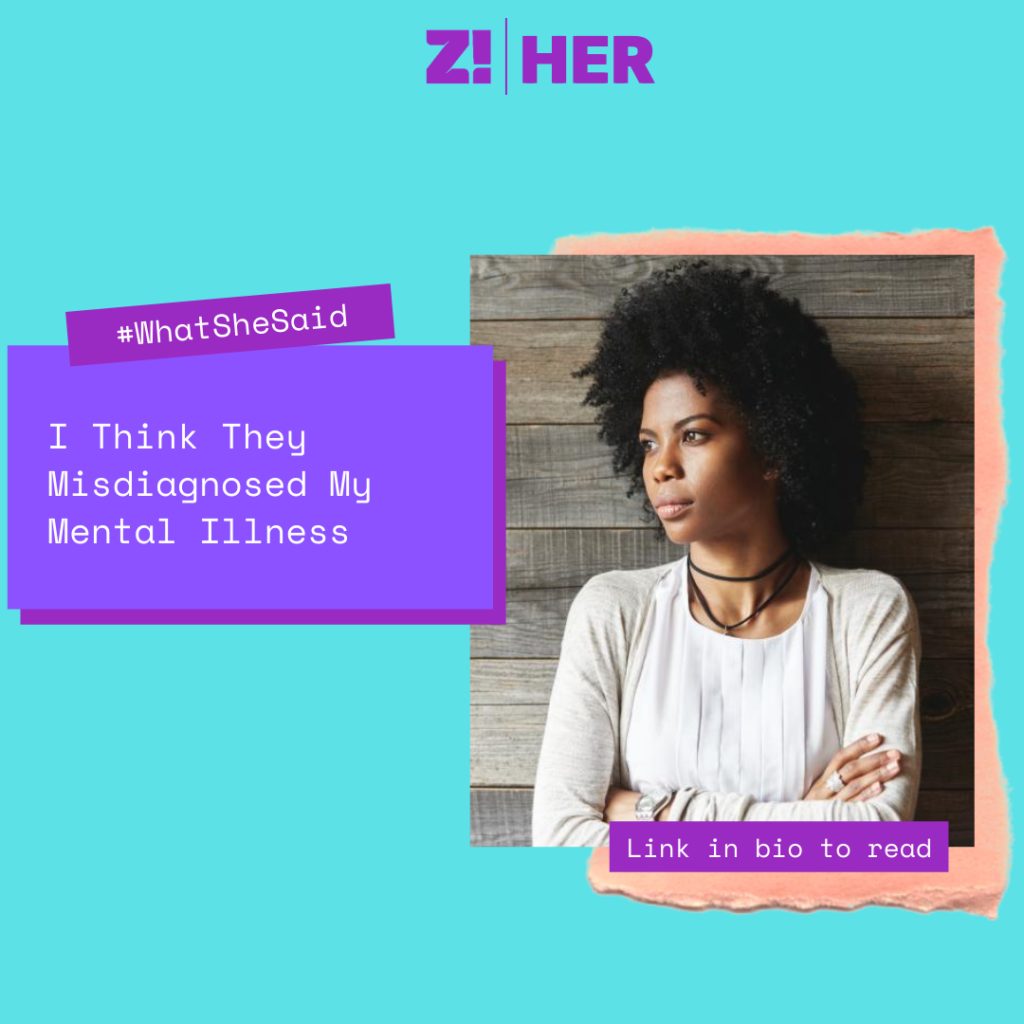
  • What She Said: I Think They Misdiagnosed My Mental Illness


    The subject of this week’s What She Said is a Nigerian woman in her early twenties who was diagnosed with bipolar disorder. She talks about her mental health journey in Nigeria, and why she thinks she was misdiagnosed.  

    What’s your earliest memory of your childhood? 

    The earliest memory I can recall is being molested by my uncle. I have no memory of anything before the age of eight, and I think that’s my brain trying to suppress the trauma from the assault and my parents neglecting me as a child. I lost my memories after the assault, and I only started recovering them again as an adult, but in fragments. 

    I’m so sorry that happened. Did your parents ever find out? 

    My parents eventually found out about it when I was nine or ten. I think they walked in while he was trying to molest me, but I don’t really remember. I just remember the aftermath and the questions they asked. He had to leave the house, but he was welcomed back so many times over the years. When they asked me what really happened, I was unable to tell the full story and had to lie that he only attempted to molest me.

    I lied because my parents were hysterical, and I was scared. My mum wouldn’t stop crying and calling me ruined. This was the first time I ever saw people so hysterical, so I thought I had to protect them. I was a child, I didn’t even know what protecting my parents meant. I just knew I did not want my mother to be so hysterical. 

    Would you say your mother reacted strongly?

    My mum was always an emotional person, so I witnessed a lot of her breakdowns and anger in a very extreme manner. When she got angry at me, she would call me names or hit me. Her moods were chaotic, so I never knew what to expect. 

    I think it affected my mood regulation, and showed me extreme expressions of anger, such as breaking things, saying horrible things and overall frantic efforts to avoid abandonment to be socially acceptable. Honestly, I believe she actually had some mental issues as well, but she never got any help. In fact, when she found out I tried to kill myself when I was 16, she opted to pray for me instead of actually helping me access help. My parents believe in faith therapy.

    Did you tell your parents about the suicide attempt? 

    I did not tell anyone I tried to kill myself, so there was nobody to urge me to get help. My mother only found out because she read my diary, but she never confronted me about it. My parents do not talk about or confront things that make them uncomfortable. 

    Then I was diagnosed with bipolar disorder type II in 2016 when I was 18.  A friend of mine who had been my support system at the time encouraged me to get one because of my behaviour. I always knew I was not like the average person so getting the diagnosis made me feel validated. Like I was not imagining it. 

    I am so glad you were able to get a diagnosis. Did they put you on any medication?

    Yes. After I was diagnosed, I was put on medication, but I stopped after a year. The medication did more harm than good. It did help sometimes, but it also made me fatter and sicker. There were headaches, diarrhoea, nausea, and sexual problems like dryness and being unable to cum. Now, I’m relatively untreated. It’s difficult because I have episodes three to five times a day. 

    What’s an episode like for you? 

    A memory from years ago can resurface in my mind and trigger an episode. I can then spend the next two hours crying and having anxiety attacks about this memory. My mind tells me that I am a horrible and stupid person that is undeserving of love. I start to remember all the people who have left me and I feel unloveable. On more intense days, the voices in my head may tell me to cut myself. 

    On a more extreme day, I burned myself as punishment for being a horrible person to someone I loved when, in fact, I just couldn’t see that these were efforts to avoid abandonment by him. 

    And these are just normal for people with bipolar disorder? 

    Technically, I don’t think I have bipolar disorder. I think I have BPD —  borderline personality disorder. It is a disorder in which the sufferer experiences and expresses extreme mood swings and socially unacceptable, uncontrollable anger, usually in frantic efforts to avoid abandonment or perceived abandonment. Unlike bipolar disorder, which episodes last at least 2 weeks, BPD episodes can happen multiple times a day.

    I emotionally abused a guy once. We were friends with benefits and I really liked him and I placed him on a pedestal, but I always felt threatened that he would leave me for someone else — that’s called splitting. I constantly called him names, checked his phone, was controlling and bullied girls that were around him. My lack of control over my anger was punishing him. It took me three years to figure this out, and I apologised. He said he has forgiven me, but I still struggle to forgive myself. 

    After losing a lot of friends and relationships, I realised something was definitely wrong with me. The feelings I had did not match my thoughts or feelings. My fear of abandonment would come out as anger, and my hurt as contempt. After reading a lot and inquiring about my behaviour from people, I think BPD is a more accurate diagnosis. 

    If you think you got a wrong diagnosis, why not go back to the doctor? 

    My experience with the mental health resources like medication and therapy is not great. The resources are ineffective, and mental health professionals are not understanding. It’s also not as affordable for the average person. Even though I can afford it right now, mental health professionals are judgmental or like to include faith healing. As someone who has traumatic experiences related to religion, this turns me off. 

    I think that mental health resources here are like a band-aid on a gunshot wound. They don’t help holistically but will help you feel better in the moment. 

    So with no medication, a misdiagnosis and your dislike for mental health resources in Nigeria, how do you navigate life? 

    I have a DBT (dialectical behavioral therapy) textbook. I read it when I have episodes to help me remember that I am seeing things in black and white. It helps but not much.

    I’m very lucky that I am self-aware and more high-functioning than some other people. However, I don’t think I can work in a public space anymore. The last experience was traumatizing for me, and I enjoy working remotely now. It’s easier to deal with episodes at home. 

    What was your last job like? 

    I was a digital marketer and it stressed me out so much that I started to have episodes every time. I started having PTSD trauma nightmares about my sexual assault and when I finally got fired, I thought my life was over because I had hyper focused on my job and was so obsessed with trying to live up to expectations that I had neglected my health. 

    Is there anything that’d make life easier for you to navigate? 

    I think we need professionals to separate religion from their jobs, and go through empathy training. It’s not just about writing exams and passing. Medication should also be more accessible. 

    Nigerians also need more education on mental illness and how to relate with people with mental illnesses. People look at me as weak or foolish for being sick when I have episodes, they will either laugh or think I am dangerous and trying to harm them. 

    They should be more open-minded towards friends and family who have mental illness and learn how to navigate our behaviours that may be considered socially unacceptable. Also, the culture of bullying and microaggressions here needs to change. 

    For more stories like this, check out our #WhatSheSaid and for more women like content, click here



    [donation]

  • 8 Nigerians On Finding Good Therapy In Nigeria

    So right after we published a piece on the worst therapy experiences Nigerians have had, we received requests urging us to write about the more positive experiences Nigerians have also had with therapy. While the issue of access, structure, and cultural perceptions are still huge contributors to Nigeria’s poor mental health ecosystem, therapy in Nigeria has also proven to be immensely helpful for some Nigerians. 

    Below we speak with eight Nigerians whose mental health has greatly improved through the help of good and professional therapy sessions.

    Mowa, 20

    I started therapy in January of 2020, primarily to deal with anxiety, depression, and suicidal ideation. I had gone to therapy once sometime in September 2019, but I didn’t like my therapist, she gave me very weird vibes, so I never returned, but things got really bad in December, so I got a different therapist and tried again. Sessions were the best part of my week. A time to decompress and share what was bothering me to a person who doesn’t know me and I know won’t talk about my issues to other people. She was so nice and funny and easy to talk to that it felt like I was talking to an older friend, so when she’d give advice or recommendations they were easy to think through and adapt to my life. 

    Laraba, 30

    I fell into a depression nearly a month after I was attacked at the EndSars protests. After a particularly horrible week of crying and suicidal ideations, I reached out to a therapist in Abuja to help me work through things because I knew I was getting too close to irreparable damage. We had our first meeting in-person, I was a bit nervous at first but I think I was put at ease when I saw that the therapist was young and probably in my age bracket. The first thing we did was a breathing exercise and I knew immediately that I was going to enjoy seeing that particular therapist. I’d gone to therapy before but it was online and with a therapist in the US and I can definitely say that I had a better experience with the Nigerian lady I saw in Abuja. I think maybe the fact that she was familiar with the Nigerian context/life made the difference? I don’t know. There was a lot of tears of course as well as a lot of going back to revisit old traumas and familial wounds but she very supportive. And when I try to be smart and wiggle my way out of dealing with really tough issues, she was able to see through my bullshit and firmly yet gently call me out on it. My sessions with her are over but I’m thinking of booking another one because I’ve had a really horrible week and I dealt with something a week ago that really triggered some suicidal thoughts. It’s not as bad but I think I still have some shit to work out.

    Ofeh, 25

    My very first encounter with good therapy came after a string of bad sessions with the psychiatrist I was seeing at the time. The therapist who provided the great therapy experience was so kind to me. For one, she is queer and was also a woman. And not just that, she was also a feminist. Sessions with her were great because she didn’t judge me, she didn’t try to convert me, she also understood anxiety. I know it is crazy to say that because it is her job, but I have seen therapists before her, and even after I met her that only understand therapy by how it works in the books but not how it manifests within the lives of their Nigerian patients. My therapist not only had an understanding of what mental illness should look like in the book, but she also had a grasp of what it could look like within the context of what it means to be young and Nigerian today. Another plus was that she was within my age bracket so it was very affirming to talk to her. I genuinely felt like I was actually going to therapy and relieving myself. At a point, I actually got scared to see her because I would be so open. I used to think I liked to talk, but by the time she made me open up, I was like na, “this tew much”.  But at some point it became expensive so I had to find another alternative. So I think there are good therapists in Nigeria, I wish more people had access to it.

    Tomisin, 24

    I’ve been in therapy for almost a year now. I guess because I was already open to the idea of therapy it was easy for me to get into it and also my parents kinda saw me deteriorating and they offered to pay for it so no financial stress there.  I go for therapy at least once every two weeks, sometimes once a week. It’s become the safest place I can think of, the only place I feel the burden of being alive almost taken off me. It’s also the same place I face all my demons, past trauma, and current issues. I’ve worked through some of them with my therapist. Like remembering my rapist’s name, something I had buried for the longest time, and being able to at least identify the pattern that had brought into relationships since. It has helped me manage my anxiety better too. Most people that knew me well in 2018 can testify to the difference in my personality and how I manage situations today. Not like therapy works for everyone if we are being honest, but I think my therapist is really good at his job.

    Ruth, 26

    My first exposure to therapy was in 2017 when I was working at a therapy and coaching company. In the beginning, I found it intrusive and demanding.  It forced me to go to places I had buried deep in me and to confront things I had kept hidden for a long time. Before therapy, I thought it would I would simply talk about my problems and the therapist would tell me what to do, but I found that that wasn’t the case. What therapy does is force you to examine issues you are dealing with and to come up with solutions yourself. The sessions I had really helped me with the self-image issues and anxiety I was dealing with at the time and I have come a long way in terms of improved self-confidence since then. Although with the entire problems that came with 2020, I had a relapse, I went back to therapy and so far I haven’t had any anxiety attacks and I generally feel a lot better

    Anuli, 23

    I literally struggled and still struggle with mental health issues. I had a turbulent childhood and it was pretty difficult especially because therapy isn’t as conventional as people on social media especially Twitter make it seem. Basically, I relied on youtube, motivational messages, music, and movies. A couple of months into my stay abroad, I knew I was losing it. I spoke to a friend and he recommended a therapist who works with MANI.  I’d expected to pay for the sessions, but he was kind and told me it was for free. I cannot explain just how helpful those therapy sessions were. I’m still on it anyway, but my mental health journey has improved remarkably. I haven’t had nightmares in months and with each day, I grow even deeper and in tune with myself. Feels like the inner child in me is healing and I’m here for it. Also, maybe out of context, Nigerians need to stop making mental health issues seem like some demonic attack. There’s a spectrum and it can be severe or mild, but whichever way, all mental health issues are valid. Whether it’s depression,  anxiety, or psychosis. All of them are valid. You can’t pray away everything.

    Deborah, 25

    Therapy for me was a lovely experience. The therapist was attentive to my needs and present through it. The therapy was handled virtually, on the first day I literally just balled for the first 30mins and she was really patient and gave me the space to cry. We talked about childhood trauma, my experience with my molester which was the main issue I had sought help for, it had happened years back but the effects were only just resurfacing, even though I had carried the shame and guilt for a long time she helped me see that it was not my fault and I was only holding on to my hindsight bias. Now, I feel really good and more aware of my shortcomings and how to handle them. I am not as worried about things I cannot control and do my best to be present. My greatest takeaway from going to therapy was journaling, especially journaling about gratitude, I was carrying so much emotional heavyweight and constantly beating myself up that it took a toll on a large part of my life. Focusing more on my emotional growth, career growth has made moving forward easier.

    Vee, 25

    I started therapy in 2019. I was really sceptical because it was a government hospital – that’s what I could afford at the time – and I didn’t really know what to expect. I just went with it because anxiety was kicking my ass and I needed any lifeline I could get. Honestly, it’s the best decision I ever made. My therapist was patient and super kind when I was finding it hard to open up to her. I moved states just before the pandemic and she told me I could always reach out for phone sessions – at no charge – since it would be hard for me to build trust with another person. She walked me through the anxiety from COVID-19, the death of a loved one, unemployment, and all the shittiness I experienced in 2020 for free. I’m convinced she’s an angel. Now things aren’t exactly great for me but I’m handling it a lot better and it’s because I got help. I’ve been off my medication for a while and I don’t feel like I’m drowning anymore. Therapy really saved my life. I recommend it to everyone.

  • 5 Nigerians Share Their Worst Therapy Experiences

    For many Nigerians, therapy is expensive and hard to access. This is because Nigeria suffers from treating mental health issues as exotic cultural concepts that don’t deserve to be paid more attention to or sufficiently invested in.

    However, for some Nigerians, therapy has offered an alternate path to healing, but because bad things always happen, their experiences with therapy haven’t always been rosy. Below, five Nigerians share the worst therapy experiences they have gone through. 

    Celine, 24.

    In 2018, during my service year, I had a meltdown in my office and a colleague of mine recommended I see another staff member who studied psychology and would often offer his services as a therapist to his coworkers. I went to see him that day, determined not to open up to him but he was so charming and kind that I eventually did. We bonded quickly and were always texting each other. About 3 months into our daily sessions where I would go to his office and we would talk, I went just before we closed and he offered to drop me at my destination. We talked all the way there and as soon as he parked, he held my hand and I quickly pulled away. He then said and I’ll never forget “why are you afraid of people being attracted to you?”, I couldn’t respond because I was freaked out so I got out of the car. He later apologized for the incident then went on to tell me how he felt about me over the weeks that followed. I was initially confused as to whether I should reciprocate his feelings because he was one of the few people who at that point in my life listened to me and cared about me so I didn’t want to lose him. I eventually told him I felt the same and we began seeing each other casually. I felt so guilty because he was married with kids but he would go on and on about how he was unhappy with his life and would leave his family if he could. This made me feel bad for him and so I stayed until one day in 2019 when I couldn’t take the guilt any longer. We had only kissed once by that time and I didn’t want it to go further. He left me a lot for a while then he popped back into my life at the beginning of 2020 with the guise of caring about my well-being and wanting to give me a present for my birthday. He gave me my present and asked that we hang out sometime. His gift was quite generous and I really thought he just wanted us to sit and talk. Long story short, he booked us a hotel room, we had sex, it was horrible and I felt so bad. 

    Emma, 23.

    The first therapist I met with was supposed to administer a personality test and in one of the forms, I stated that I am a lesbian. The therapist went into this long lecture about how he’s not invalidating my identity, but he has noticed that children who grow up without a good father figure or who grew up in abusive households usually turn out gay and he’s not saying that that’s the reason for me but that’s what studies show and my history that I shared with him is showing that I also went through the same kind of things growing up and that’s why I’m a lesbian. I managed to survive that part and I went to see the second therapist whose only job was to give me my meds and ask if I’m okay. He asked if I had a boyfriend and I said I had a girlfriend. He then asked who the man in my relationship is. I told him there was no man since we’re both women then he proceeded to ask how I and my girlfriend have sex. I really just wanted to punch him in the face at that point. As if all of that wasn’t enough, at my last appointment at the Federal Neuropsychiatric Hospital, the therapist (a different one) asked who the man in my relationship is and kept insisting that there’s a man. Later on, he asked if I had ever thought of changing my sexuality (the first therapist asked this as well) and told me that we’ll talk about how to stop being gay in my next appointment. So basically conversion therapy. I don’t think I’m going back there.

    Crystal, 22

    The therapist was a psychologist and a psychiatrist at a public hospital. During my sessions, he disregarded an important fact that I had mania episodes. They were not often but were important in my story. We had three sessions and in that period, he touched me inappropriately twice. It was a kind of touch where you’re not sure if he crossed the line or if you’re just overreacting. It was definitely unprofessional and made me really uncomfortable. I decided to try a popular mental health NGO, that too was a total waste of time. The person I spoke with made me feel t like I was just stressing him. At some point, I had to pretend I was okay so it could end.

    Tonye, 24.

    I’ve been in therapy on and off since I was 10. At that age,  my parents were about to get divorced. My therapist then was a deeper life lady who blames me (the 10-year-old) for going to my mum with proof about my dad’s infidelity (the reason for the proposed divorce

    And you know modern women (my mum) who can’t handle a little abuse and cheating here and there. My most recent ones have been the white male gay who wanted me to come out to my parents. And spent all our sessions (they are 150$ a pop, in this economy) talking either about queerness or about how ‘Africa’ is so backward. The First Lady was tied to my school so I mean she told everyone and would even take me from classes if I ‘missed’ a session (she’d go to my teachers and ask them about me), but I think it’s the microaggression and racist comments that take the cake for me.

    Aishat, 28.

    In February 2020, I was dealing with trauma from rape and battling depression/anxiety for a period. I decided I needed therapy but I wanted faith-based counseling (I’m a Christian). I went to the Counselling unit in my church. The session went on for about 30 minutes and from the first impression, the lady didn’t seem welcoming but I  was already there so I didn’t want to chicken out. The first time she called my name, she called me “Ashirat”, this was after I had spelled my name out for her on the piece of paper she was writing on. The door of the Counselling room was ajar and I could hear clearly the conversation happening in the adjacent room, so I was sure they could hear us too. And even as I tried to keep my voice down to manage some privacy, she kept talking at full volume. After I told her about my experience, she basically preached God’s grace to me, likening me to a harlot. Then she told me it’s been so long and I need to get over the experience. The good news is that I found a proper faith-based counseling service in Lekki and they’ve been quite helpful.