Notice: Function _load_textdomain_just_in_time was called incorrectly. Translation loading for the wordpress-seo domain was triggered too early. This is usually an indicator for some code in the plugin or theme running too early. Translations should be loaded at the init action or later. Please see Debugging in WordPress for more information. (This message was added in version 6.7.0.) in /home/bcm/src/dev/www/wp-includes/functions.php on line 6121 Seun Kuti | Zikoko!
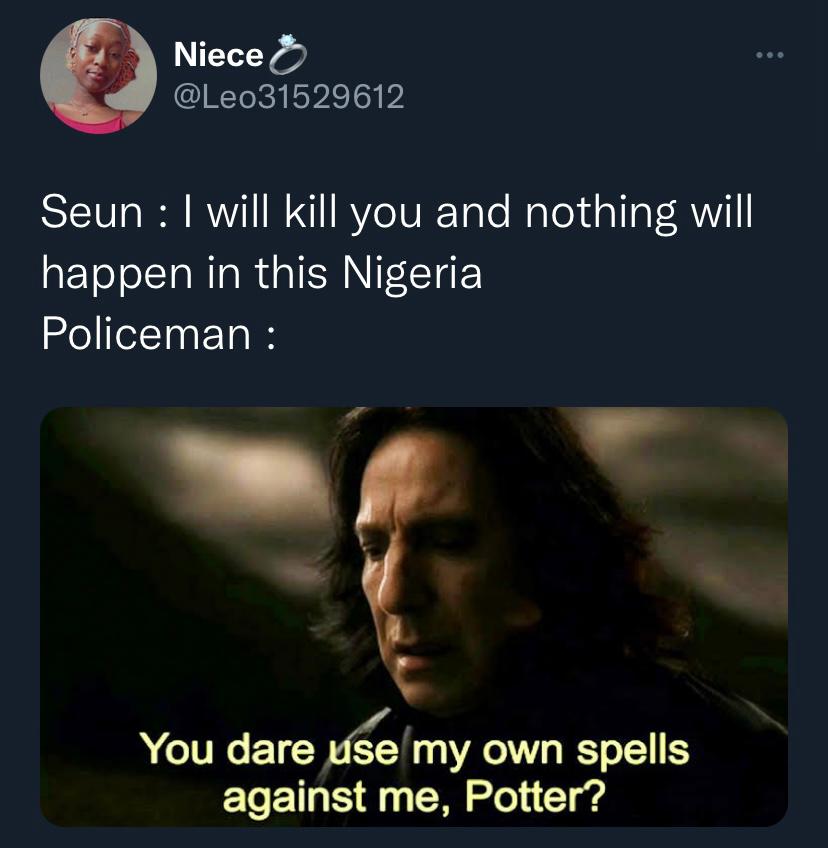
Nigerians being assaulted by police officers is nothing new; it’s as normal as spending four hours in Lagos traffic on a Friday evening. So, on May 13, 2023, when the video of Seun Kuti, son of the Afrobeat legend Fela Anikulapo Kuti, surfaced online of him assaulting an officer on Lagos’ Third Mainland Bridge, it definitely caught the attention of many and spawned many questions.
What exactly happened?
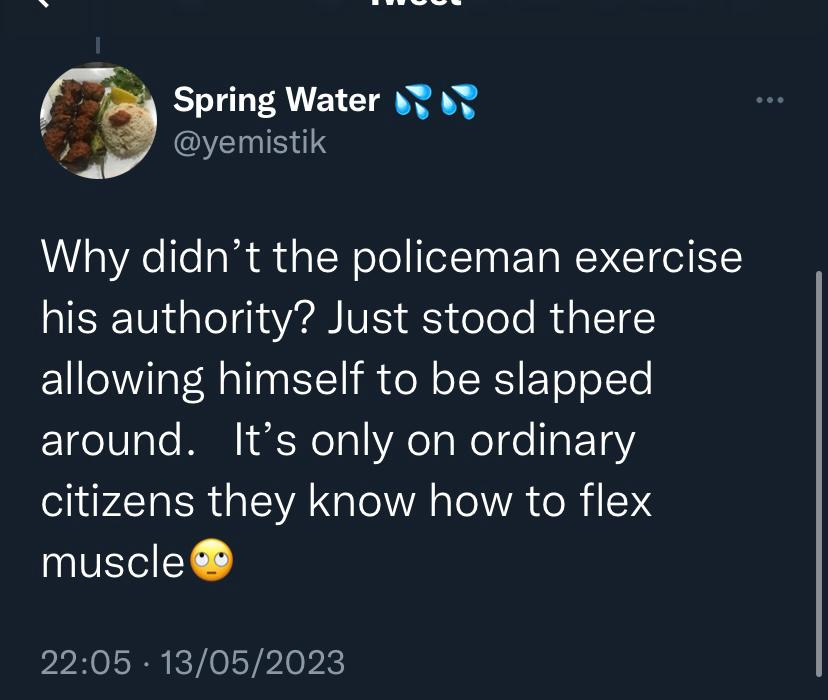
While the exact reason behind what started the issue in the first place is still unknown, the video showed Seun yelling repeatedly, manhandling, and eventually slapping the officer’s face.
Full Video of Seun Kuti seen in a physical Confrontation with a Nigerian Police Officer Third Mainland Bridge, Lagos. pic.twitter.com/v6jGFWIjaC
In his defence, Seun claims he was “assaulted” first, and the officer tried to kill him and his family members, although the video shows otherwise. He says that he has enough evidence to back this up and had the initial intention of placing charges against the officer for assault.
However, the Inspector General of Police, IGP Usman Alkali Baba, in a statement the next day on May 14, 2023, ordered the arrest of Seun Kuti and a full investigation into the causes of the assault shown in the video
We’ve seen this before
This isn’t the first time we’ve seen celebrities assault police officers. In 2014, when flagged down for violating a traffic law, Tiwa Savage decided she wanted all the smoke and proceeded to insult the police officers who stopped her. She didn’t stop there; she also removed and flung away the cap of one of the officers.
In 2018, Small Doctor was also arrested and prosecuted for threatening to open fire on an officer. And more recently, in 2022, Ice Prince was arrested for allegedly abducting, assaulting, and threatening to throw the police officer who stopped him for driving a car without a plate number at 3 a.m. into a river.
There are penalties for these kinds of offenses, as Nigeria is a country with laws.
What does the Law say?
According to Section 356(2) of the Criminal Code Act, assaulting, resisting, or willfully obstructing a police officer while acting in the execution of his duty, or any person acting in aid of a police officer, is considered a felony and can earn you three years in prison.
Section 98 of the Police Act 2020-98 also states that “A person who assaults, obstructs, or resists a police officer in the discharge of his duty, or aids or incites any other person to assault, obstruct or resist a police officer or other person aiding or assisting the police officer in the discharge of his duty, commits an offence and is liable on conviction to a fine of ₦500,000 or imprisonment for a term of six months or both.”
Reactions so far
It is unusual for Nigerians to sympathise with members of the police force, and we’ve seen no lost love in this case.
Popular Nigerian singer Peter Okoye pleaded with the Nigerian police to temper justice with mercy.
Today, Seun Kuti was arrested and is currently being detained at the State Criminal Investigation Department in Lagos. Many Nigerians anticipate what penalty or punishment follows.
No one knows for sure how this case will turn out, but given the history of police assaults by celebrities, we hope it doesn’t get swept under the rug.
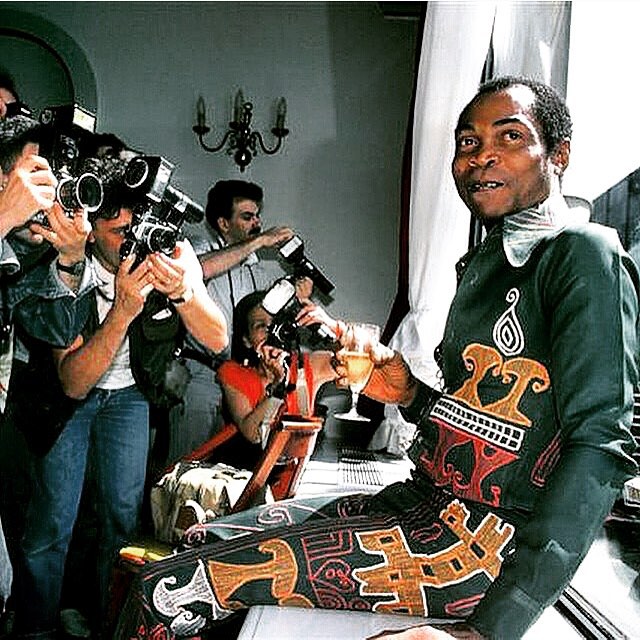
The day was the 11th of August 1997, nine days after Fela’s death. Seun Kuti stood on the first-story balcony of his father’s home in Ikeja. Tens of thousands of people stood below. Most of them had walked through Lagos for Fela Kuti’s funeral. Now, they looked on as Seun offered a brief yet brave eulogy to the late bandleader.
“We will remember the true meaning of Fela: Forever Lives Africa”, he screamed out.
That acronym now reads “For Ever Lives Afrobeat” – as the theme of Felabration, an annual celebration of Africa’s most influential musician. The event’s purpose is as simple as the statement; Fela’s legacy, this music and his beloved people will live forever.
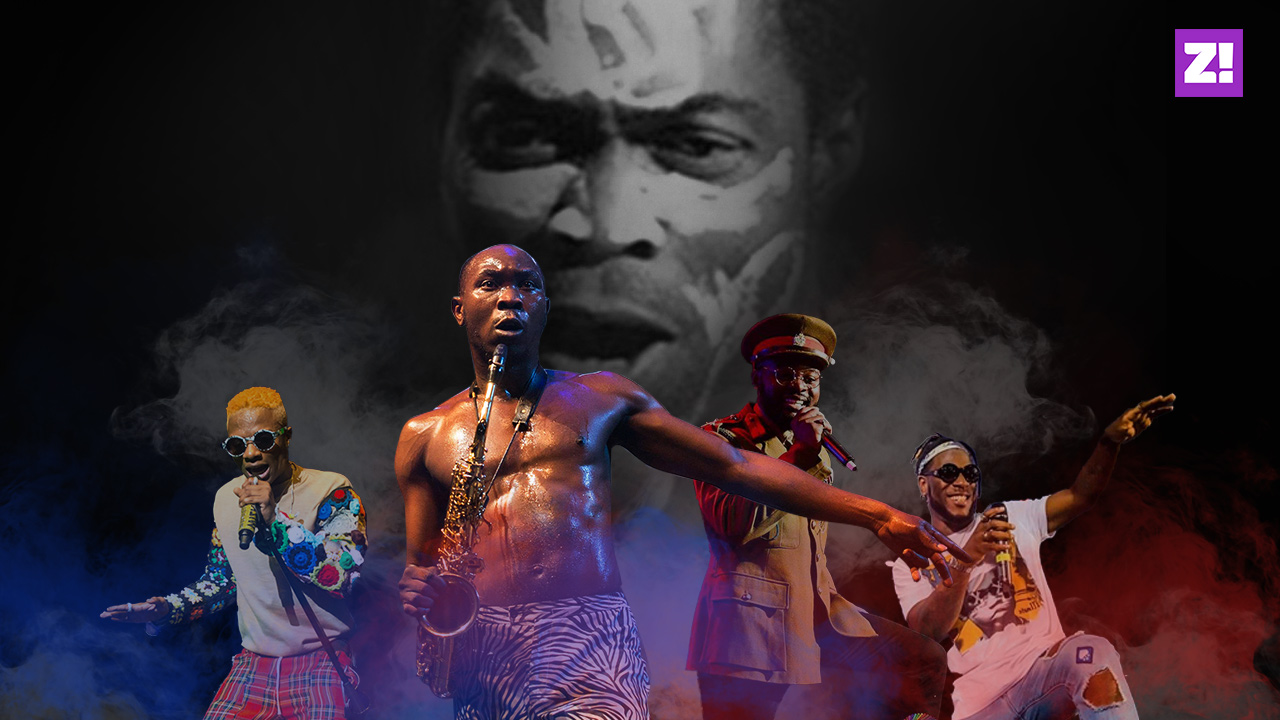
Fela would have turned 80 this year. In the years since, many names have come forward as potential successors, evidence that his legacy lives on.
But are they really? Which of these artists is the new Fela?
The Prince of Afropop
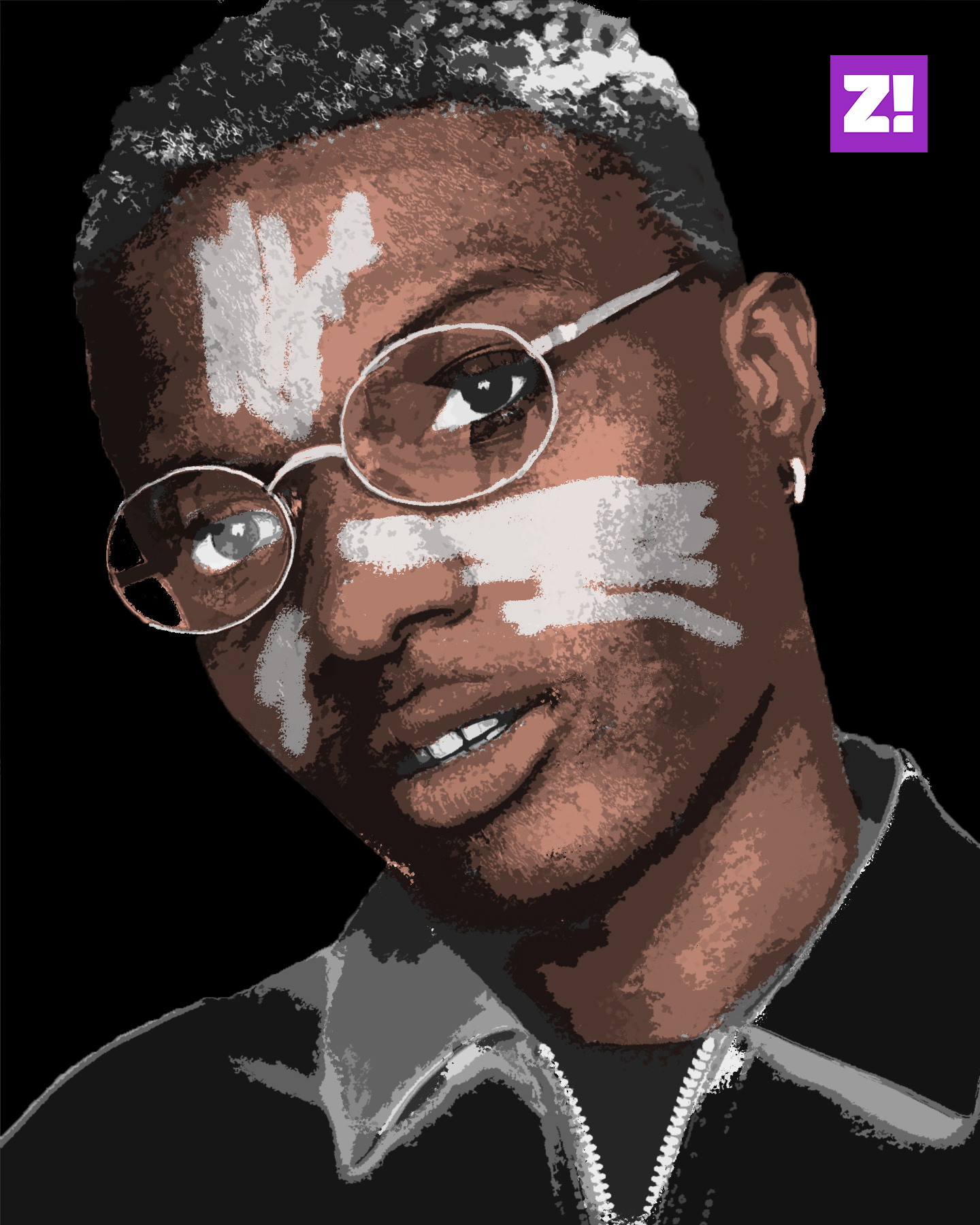
The first name that comes to mind is Wizkid, Africa’s pop prince and maker of watery party anthems.
In a way–considering his standing and the image he projects–the Fela comparisons were bound to come.
For one, Wizkid loves his marijuana, a drug that Fela described as a “gift from the gods of Africa”. Long before he decided to marry 27 of his dancers, Fela was known for his promiscuity. Wizkid’s 3 children and tussles over parental responsibility have brought that part to the fore as well.
If the comparisons have put them in the same sentence, Wizkid played his part to create an actual conversation by using the #Felaback hashtag.
He has “Jaiye-Jaiye”, a song with Fela’s first son, Femi Kuti, complete with a music video shot at Fela’s Afrika Shrine where he dresses like a Gucci-friendly version of the late icon.
But that’s where the attempts at similarity end. To start with, Starboy doesn’t look like he’s trying to get into trouble with anybody-he is more likely to talk about shoes than politics.
There’s also a lack of depth to Wizkid. His watery lyrics aside, he’s a sweet-faced poster boy for pop success in a way that opposes what Fela stood for; originality, pride in identity and a willingness to push the boundaries.
What we have is an easily digestible version of the real deal; a de-caffeinated Fela more interested in waist sizes than social commentary.
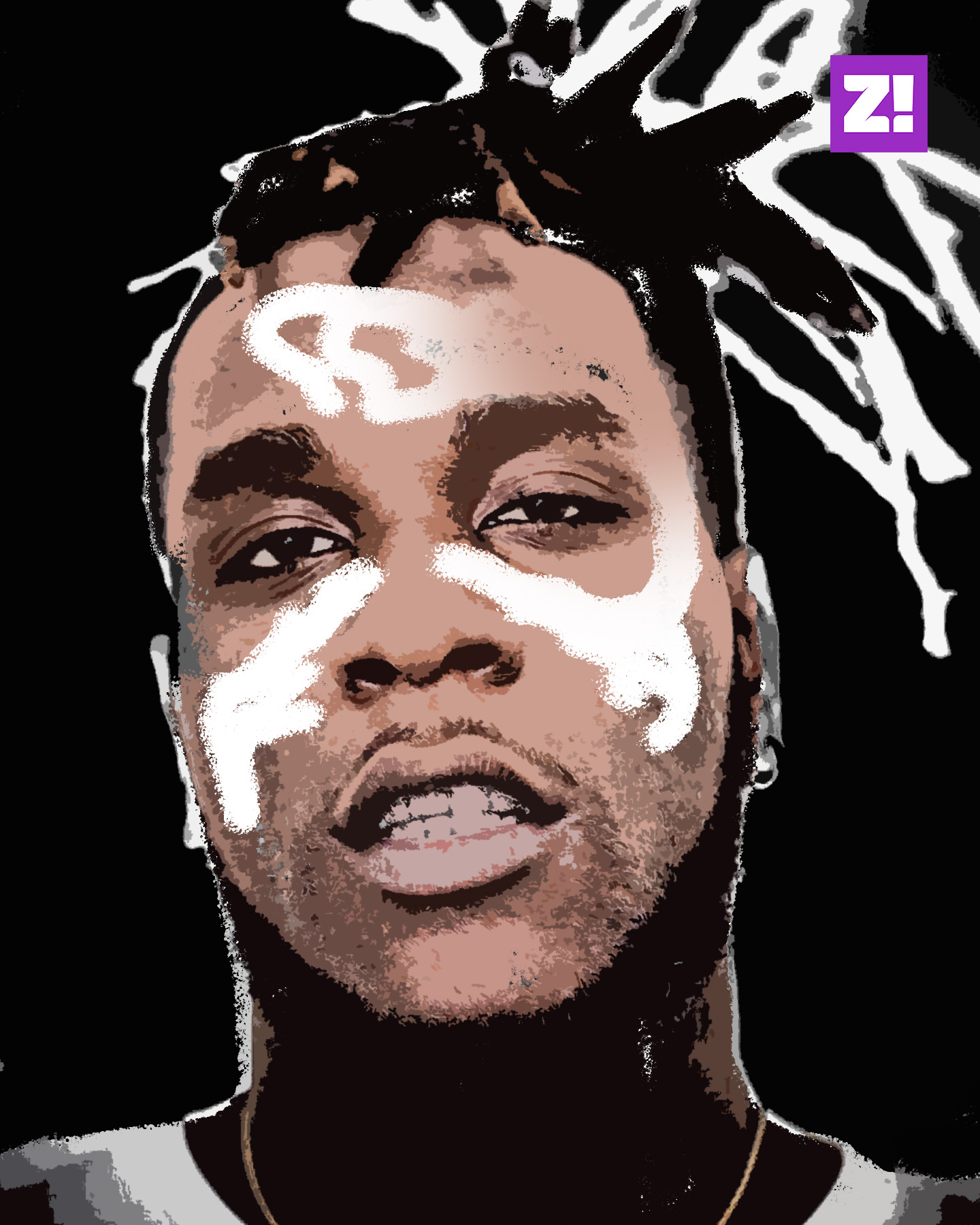
Damini Ogulu’s new national anthem, “Ye” revolves around a sample of Fela’s “Sorrow, Tears and Blood” that most people sing like a personal truth.
Burna ticks a lot of boxes, from Fela’s gang-like inner circle to walking around in his own perpetual cloud of smoke.
His devotion to Fela shows in his music. Burna is adept at making rousing songs of struggle with a sprinkling of Fela’s lyrics.
Like Fela who believed in corporal punishment, Burna has a reputation that suggests he is not one to shy away from using the power of the black man’s fist. And he has his own Afrika Shrine video too in “Run My Race“.
So what’s different? Perhaps, it’s Burna’s nonchalance. He may fill the Fela spec sheet quite well, but unlike Fela, there’s an impression that he’s not a deliberate product of his intentions.
Burna could sing Nigeria to revolution but he’s also as likely to inspire outrage for shutting down an interview of his grandfather because he was apparently bored.
On a bad day, he’s a loose cannon inspired by someone who had no regard for rules.
You get a sense that he wants to be as respected as Fela. But, for better or not, he’s confident he can become someone just as worthy by being himself.
Addendum: Since writing this piece, Burna Boy has delved deeper into Abami Eda’s influence on his sound and beliefs. For one, he has a massive diamond-encrusted necklace in the late singer’s image. The most substantial tributes to Fela have come on his fourth studio album, “African Giant” and the many events that led to that. He is Fela’s biggest and most prominent ambassador today.
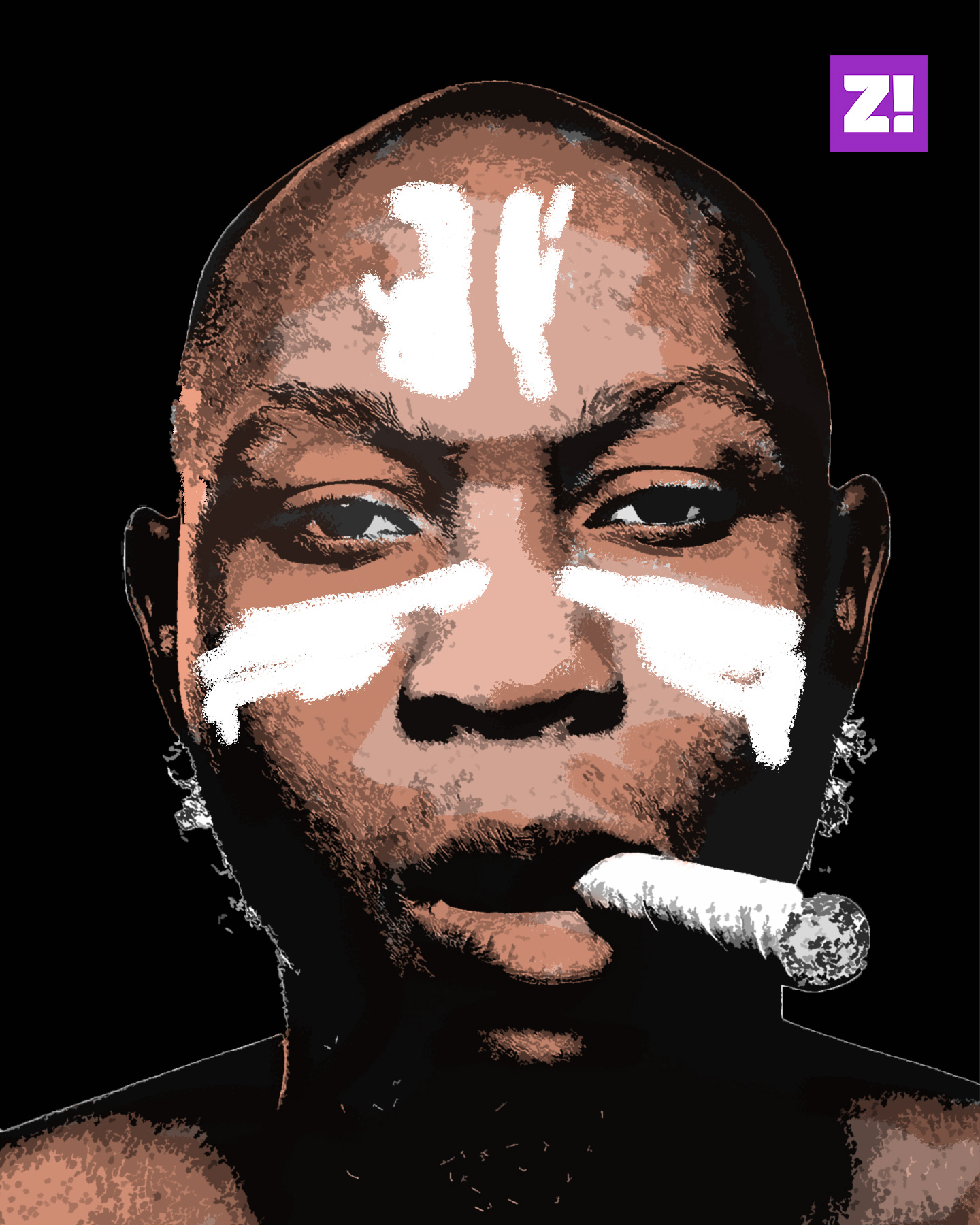
Seun Kuti still wears Fela on his sleeve.
It’s almost perfect that the closest real thing to Fela is one of his own.
You can hear it in his aggressive Afrobeat, see it in his outspoken nature, and feel it in his belief in a united Africa.
Seun has Fela’s aura; an air that demands respect even if you’re uncertain of what to expect in return.
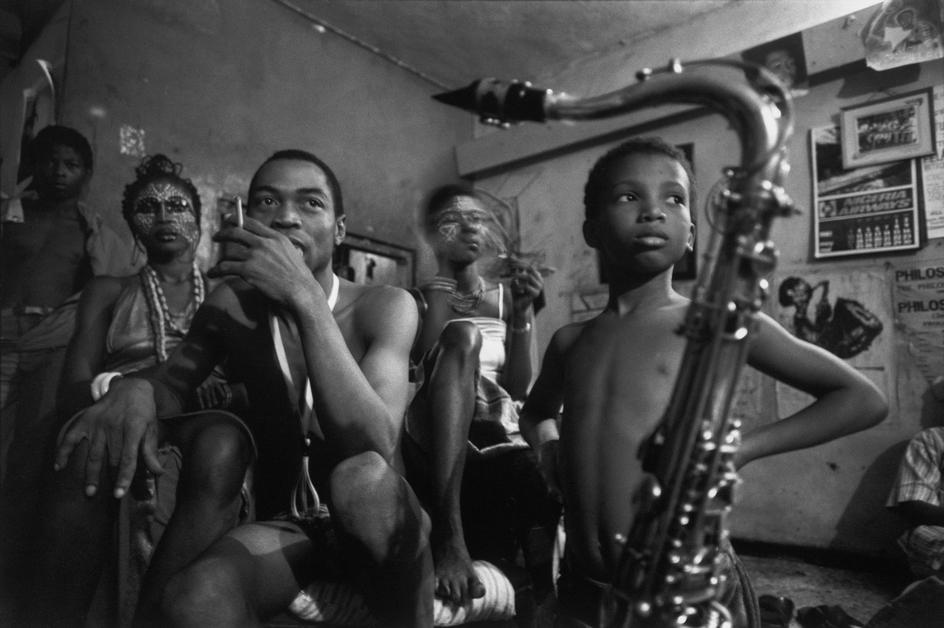
It is that impression that lures you to sit beside him and listen to whatever he has to say like the wives and children who shadowed Fela in interviews at his home.
Yet we never look at what Seun does as inspired in the same way that we look at Fela.
Seun, like all Kutis, suffers from the curse of having a unicorn for a father.
He has always been expected to follow in his father’s steps, like his brother Femi.
As such, his best efforts come across as one who is simply doing what he must.
Someone who might be surprised he’s making this conversation is Falz.
How does one compare a sweet-boy lawyer turned rapper – whose mainstream fame came with Instagram skits – to an unbridled, drug-using, anti-establishment bandleader with misogynist views?
The answer? The Internet.
This slightly-absurd story peaked when Falz put out “This is Nigeria“, a commentary on the Nigerian situation inspired by Childish Gambino’s “This is America”.
Lo and behold, the rapper, whose alter ego is named “Brother Taju”, was taking shots at everyone from politicians to yahoo boys.
Falz has found a sweet spot by making music that the average Nigerian finds personal, honest, or amusing at least.
Like Fela, he’s vocal about politics and the quality of people in power. After leaving crumbs of his singer’s inspiration, Falz released “Moral Instruction” in January 2019. It is an album so heavily influenced by the late icon that its could well be a cover album. The album was critically acclaimed for addressing “the lack of decorum that have become part of life in Nigeria”. However, the album faced backlash for selective morality, a problem that we deemed “problematic but not fatal“
But all that is only a feeble drop in a shallow puddle, next to the ocean that was Fela’s life.
At best, Falz’s image and approach is too clean for the grime of Fela’s impetuous life and legacy. At worst, he appears like an attempt to re-imagine a man who died in a class of his own, cooked up in the dark bowels of a strategy meeting.
What then does it take to be a new Fela? Or to be at least, worthy of the comparisons?
To start with, there’s an obvious flaw in how we see Fela. It should be obvious that most fans have grown familiar with a watered-down image where Fela is the benevolent daddy of all Nigerian musicians. But it was the same man who boasted of having death in his pouch.
To be the new Fela would mean to be free-spirited, like him, to the point of recklessness.
At the height of his career, Fela discarded every connection to foreign cultures, particularly those from Europe and the United States.
Despite being raised by an Anglican minister, he shunned Christianity and practised traditional faiths.
Before his performances at the Shrine, Fela would conduct elaborate ritualistic ceremonies with help from his personal magician, Professor Hindu.
To be Fela would mean to be idealistic to the point of self-sabotage.
Fela’s anti-colonial upbringing and his Black Panther teachings spurred a deep hatred for authority and repressive regimes.
As the military abandoned the barracks for government houses, Fela let them know what he thought of their autocracy with tongue lashings disguised as songs.
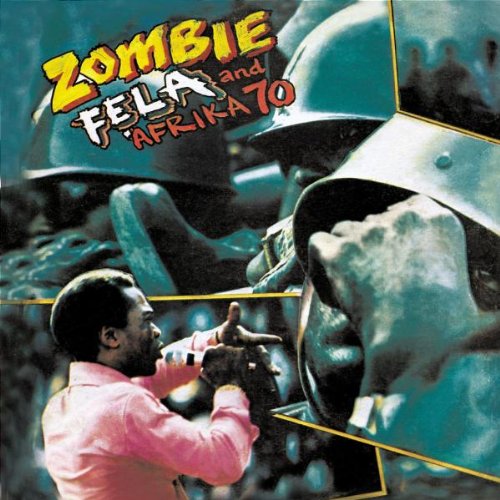
Some of them were like “Zombie“, a song so brutal that record shops refused to play them in public for fear of being beaten by soldiers.
For all his trouble, Fela had his home burnt down, his wives robbed and stabbed and his mother, the enigmatic Funmilayo Ransome-Kuti, thrown from a second-story window.
But till his last days, he never stopped.
To tick the boxes that make one worthy of being compared to Fela would mean abandoning material success for a greater purpose.
In this sense, Fela was closer to a religious leader than an artist.
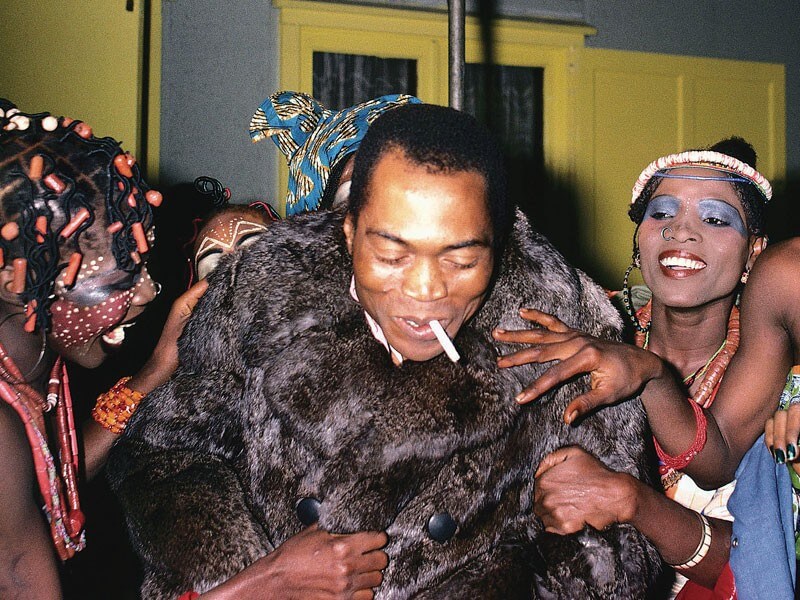
His home, Kalakuta Republic was a fenced compound that was home to hundreds of free-spirited young people, many of whom had run away from home in search of answers and like minds.
Maybe that’s why there can’t be a new Fela, or why there shouldn’t be.
There are too many boxes to tick, some of them exemplary, others dangerous.
Fela was a rarity – and there will be many more that invoke his ideals. The road to carrying on his legacy may seem covered in Afrika Shrine videos and angry lyrics from “Teacher Don’t Teach Me Nonsense”, but any potential successor may find that the destination is beyond limits.
Some, like Burna will be close in most regards. Others, like W4 who showed us Fela’s fashion in contemporary terms, will pull off some elements with insane precision. But what they will not be is the complete package.
And that’s okay.
On their own, despite their individual shortcomings, they could be all the evidence we need that Fela still lives.
Did you enjoy this? You should sign up for our weekly pop culture newsletter, Poppin’. You’ll get to know what we’re up to before anyone else + insider gist, reviews, freebies and more. If it sounds like your deal, sign up here.