Notice: Function _load_textdomain_just_in_time was called incorrectly. Translation loading for the wordpress-seo domain was triggered too early. This is usually an indicator for some code in the plugin or theme running too early. Translations should be loaded at the init action or later. Please see Debugging in WordPress for more information. (This message was added in version 6.7.0.) in /home/bcm/src/dev/www/wp-includes/functions.php on line 6121
rights | Zikoko!
  • What Are Your Rights as a Tenant in Nigeria?

    As a Nigerian, you quickly learn that there are many weapons fashioned against you, one of which is a landlord

    The endless struggle between landlords and tenants often exists because tenants are unaware of the rights accorded to them. Therefore, in this article, we will walk you through tenancy rights in Nigeria. 

    Right to property: 

    As a tenant, you can rent any property anywhere in the country, regardless of sex, state of origin, or nationality. 

    Download the Citizen Election Report: Navigating Nigeria’s Political Journey

    Right to a Tenancy Agreement:

    It’s in your rights that when renting a new property, a well-written tenancy agreement be presented and signed on your lawyer’s advice. The tenancy agreement should contain the following:

    • The full name of the tenant
    • The full name of the landlord
    • The description of the property
    • The total amount paid for the property
    • The duration of rent, i.e. the expiration and renewal dates of the tenancy

    And although the law makes room for an oral tenancy agreement, it’s advisable and safer to have a written agreement, as it makes it easier to make a case in court if needed. 

    Rights to receipt of payment:

    You’re entitled to a receipt of payment from your landlord to avoid stories that touch later on. This receipt should include:

    • The amount paid
    • Location of the property
    • Duration of the tenancy

    Another thing to know about this is that landlords who fail to issue a receipt are liable to a fine of ₦100,000. 

    Right to exclusive possession:

    According to the Law, once you’ve made payment and entered into a contract with the landlord, you have exclusive rights to the property. 

    This means that no one, including the landlord, can enter your apartment, room, or property without your permission. This also involves instances where maintenance is to be done by the landlord; you must first approve, or it’d be regarded as trespassing. 

    Right to habitable premises:

    This means that, as a tenant, the landlord has to ensure that the rented property is fit enough for any purpose for which it’s being rented, i.e., for domestic or corporate reasons. 

    Therefore, if there are any issues like wear and tear, flooding, or damage to certain utilities, the landlord’s expected to fix them, and if they refuse to, you can demand a refund of your rent or end the tenancy. 

    Right to an eviction notice:

    As a tenant, you must get a notice before being evicted from the rented property. The notice must contain the following:

    • The name of the landlord
    • The name of the tenant
    • The address of the rental property
    • The duration of the tenancy
    • The reason behind the eviction

    Typically, the eviction notice varies depending on the type of tenancy agreement you have with the landlord:

    • A one-week notice period for a weekly tenancy
    • A minimum of one month’s notice for a monthly tenancy
    • A minimum of three months’ notice for a quarterly tenancy
    • A minimum of six months’ notice for a yearly tenancy

    Also, tenants are entitled to a 7-day notice to recover their possessions after the eviction notice expires. 

    Also read: What Are the Rights of a Nigerian Citizen?

  • What Are the Rights of a Nigerian Citizen?

    The word “citizen” is defined as a native or naturalised person who owes allegiance to a government and is entitled to protection from it. 

    By this definition, you’ll see that citizens and the government they pledge allegiance to are locked in a social contract. One part of this contract is the citizen’s loyalty to the country to abide by its laws, while the other is an obligation by the government to grant certain rights to said citizen.

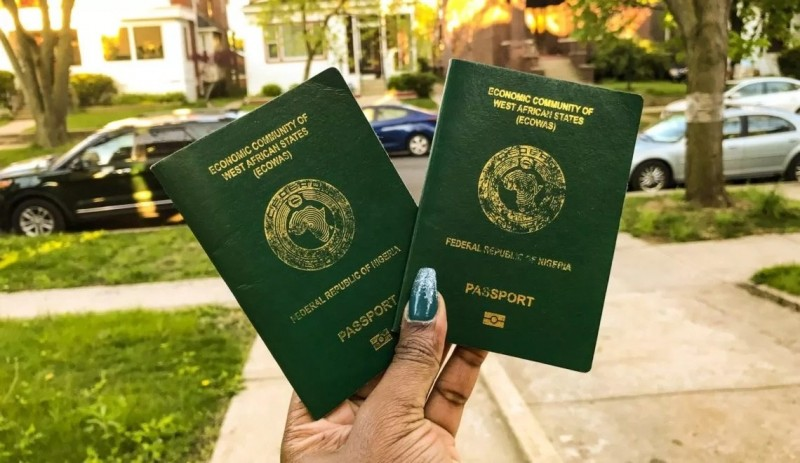
    [Nigerian passport / Nigerian Scholars]

    The Nigerian Constitution protects the rights of a Nigerian citizen. In particular, Section IV of the Constitution lists Nigerian citizens’ fundamental rights. What are these rights, and what do they mean to you?

    Right to life

    As Nigerians, the government has a duty not to kill you and to ensure your life is protected and not interfered with. But there is an exception:

    “Every person has a right to life, and no one shall be deprived intentionally of his life, save in execution of the sentence of a court in respect of a criminal offence of which he has been found guilty in Nigeria.”

    This section also provides some leeway which may excuse extrajudicial abuse.

    “A person shall not be regarded as having been deprived of his life in contravention of this section if he dies as a result of the use, to such extent and in such circumstances as are permitted by law, of such force as is reasonably necessary –

    (a) for the defence of any person from unlawful violence or the defence of property:

    (b) to effect a lawful arrest or to prevent the escape of a person lawfully detained; or

    (c) to suppress a riot, insurrection or mutiny.

    Right to human dignity

    This right says that all Nigerian citizens must be afforded human dignity. Nigerian citizens hold a unique value and must be respected regardless of birth, class, race, gender, religion, or abilities. To this end;

    (a) no person shall be subject to torture or inhuman or degrading treatment;

    (b) no person shall be held in slavery or servitude; and

    (c) no person shall be required to perform forced or compulsory labour.”

    Like before, there’s a caveat. 

    Forced or compulsory labour does not include:

    (a) any labour served as a court order or sentence;

    (b) any labour required of members of the armed forces of the Federation or the Nigeria Police Force;

    ©  for conscientious objectors to service in the armed forces of the Federation, any labour required instead of such service;

    (d) any labour required which is reasonably necessary in the event of any emergency or calamity threatening the life or well-being of the community; or

    (e) communal service or NYSC.

    Right to personal liberty

    Oliver Wendell Holmes Jr, former US Supreme Court associate justice, once said: “The right to swing my fist ends where the other man’s nose begins.” The import of this saying is that while you’re allowed a certain degree of freedom, it must not intrude into that of others. Nigeria’s constitution borrowed a leaf from this. 

    The Constitution says no one should be deprived of personal liberty unless under a set of unique circumstances, like when being presented following a court order or for educational purposes — for persons who haven’t reached 18 years — among other circumstances.

    This section also states that a person arrested must be issued a warrant and brought to court within 48 hours. If a person is detained unlawfully, they’re entitled to compensation and a public apology from the appropriate authority. Know your rights, folks! 

    Right to fair hearing

    This is founded on the legal principle of the presumption of innocence until proven guilty. As a Nigerian citizen, you’re entitled to a fair hearing by a competent court, regardless of the crime — which we hope you won’t commit.

    ALSO READ: What Are the Types of Citizenship in Nigeria?

    Right to privacy

    All Nigerian citizens are entitled to their privacy. The government has no business bugging your home or your phone.

    Right to freedom of thought, conscience and religion

    You’re constitutionally allowed to hold contrarian thoughts or conspiracy theories. You’re also free to change your religion as you see fit. But you’re forbidden from belonging to a secret society.

    Right of freedom of expression and the press

    Thankfully, Nigeria is a democracy, and its constitution guarantees freedom of expression and freedom of the press. That’s not to say you can make slanderous or libellous statements and walk away freely, though. There are laws against those.

    Right of peaceful assembly and association

    You can associate freely with whoever you want and belong to a political party. That doesn’t mean you should, in the words of Falz, join a bad gang.

    Right to freedom of movement

    The Constitution grants citizens the right to move freely anywhere in Nigeria.

    Right to freedom from discrimination

    No Nigerian citizen should be discriminated against because of their ethnicity, religion, disability, political opinion, place of origin, the circumstance of birth, sex and so on. In case we left anything out, the point is, don’t discriminate.

    Right to own property

    Nigerian citizens have the right to acquire and own immovable property. If the government forcefully acquires your property, you can claim compensation. You can also rightfully sue them in court.
    Other rights like access to education, healthcare and shelter can be claimed depending on the resources in a state. It’s important to note that while these rights exist, you may need to follow up on them if they’re infringed upon. Know your rights, but just as importantly, know a lawyer.

  • How to Hold Nepa’s Cloth in 2023, According to the Law

    When God said, “Let there be light”, Nigeria blinked. The little electricity we get is for seeing shege non-stop, and that is not about to end this year.

    Despite the fact that some petrol stations are selling fuel between ₦250-300 per litre, and electricity poles are trying to kill us; Nigeria is about to show us that our situation can and will get worse. 

    Electricity year rights

    Many people have complained about the country’s electricity state for many weeks. 24-hour electricity isn’t regular for many of us, but in the last couple of weeks, there’s been little to no power supply. Those lucky enough to get blessed by the Power Holding Company of Nigeria (PHCN) have electricity for a few minutes, at best hours, once or twice a week.

    Electricity year rights

    What are the Electricity Distribution Companies (DisCos) saying?  

    Although there has been no official statement from the DisCos, Ikeja Electric and Eko Distribution company gave the following reasons on their Twitter pages when asked for information on what was going on:

    • Low power generation
    • Some areas have ongoing maintenance work by the Transmission Company of Nigeria (TCN).

    Unfortunately, many Nigerians are in the dark about what’s happening, which shouldn’t be, and there’s a law to back this up.

    What is this legislation?

    According to the Nigerian Electricity Regulatory Commission (NERC), Electricity Distribution Companies (DisCos) are mandated by law to notify their customers in writing before Nigeria’s electricity service disconnection. In simple terms, if there isn’t going to be light for a couple of days, it is within our rights to be informed beforehand in writing. 

    It’s not shocking that this regulation isn’t being followed, as many of us had no idea it even existed in the first place. However, this isn’t the only right we are entitled to as electricity consumers.

    We have the right to contest an electricity bill

    It’s not uncommon to hear complaints of being overcharged for electricity that was barely even available in the first place. And although we’d usually pay irrespective of the fact that it seems unfair, it is within our rights to contest the bill brought. If more Nigerians start paying attention to this, it won’t be long before we start seeing changes in the power sector in this regard.

    It isn’t our responsibility to repair, replace or buy transformers or electric poles

    This seems like common knowledge, but citizens often take this burden on themselves as the government either takes years to meet these demands or shies away from the responsibility altogether.

    With elections less than a month away, the ruling party is giving Nigerians reasons not to vote them in again. Can they pull a miracle before February 25th, or should we accept this difficult lifestyle as the new norm?

    Are you signed up to our Game of Votes newsletter yet? We help you make sense of news jargon and keep you up-to-date especially with election news. Make the subscription of a lifetime here