Notice: Function _load_textdomain_just_in_time was called incorrectly. Translation loading for the wordpress-seo domain was triggered too early. This is usually an indicator for some code in the plugin or theme running too early. Translations should be loaded at the init action or later. Please see Debugging in WordPress for more information. (This message was added in version 6.7.0.) in /home/bcm/src/dev/www/wp-includes/functions.php on line 6121
prison | Zikoko!
  • Navigating Nigeria: 80% of Nigerian Inmates Are Awaiting Trial

    For Navigating Nigeria this week, Citizen spoke to Itunuoluwa Awolu, a lawyer and the fundraising director at the Headfort Foundation, an NGO focused on providing free and easy access to justice to indigent and wrongly incarcerated inmates, victims of police brutality, and minor offenders. She shared her thoughts on the Nigerian correctional system and how it can be reformed.

    Editorial Note: Navigating Nigeria is a platform for Nigerians to passionately discuss the Nigerian experience with little interference from individual opinions. While our editorial standards emphasise the truth and endeavour to fact-check claims and allegations, we are not responsible for allegations made about other people based on half-truths.

    Icebreaker. Have you ever heard of Citizen and the work we do?

    Yeah, of course I have. And I’ve gone through some of your stories and interviews. You guys like interviewing people about relatable occurrences or things affecting their communities. And that’s one thing I love about Zikoko Citizen, bringing the media to the people.

    Thank you. Recently, the Ministry of Interior announced a budget of ₦‎22.4 billion to feed inmates. What are your thoughts on this?

    I think that’s crazy. It’s crazy in the sense that if you look at the work that we do at Headfort Foundation and the inmates for whom we’ve secured their freedom, the stories that are shared as regards their experience in prison make it unbelievable to think that amount of money is put into the correctional system.

    How do we have that kind of budget and see people with different health issues when they come out of correctional facilities? You hear them complain about starvation. The food they receive is so poor that you wouldn’t even give it to animals.

    The Minister of Interior must explain precisely how that money is spent. To think that that amount of money is put into feeding almost sounds too good to be true, but I’m not going to categorically say that it’s a lie because I’m not in the system. But from the reviews and reports we’ve gotten from inmates who have interacted with our foundation, it’s unbelievable.

    Interesting. Do you want to tell us more about what Headfort does and how it started? 

    Yes, Headfort Foundation started in March 2019. We provide easy access to justice through different means, such as providing free legal services to poor people who can’t afford to engage the services of a lawyer.

    We also integrate the rehabilitation process for inmates after securing their freedom. Also, we sensitise the Nigerian public about their rights. We raise awareness about the effects of police brutality, how to engage with police officers, police-community relations, and the consequences of crime. We adopt different practical approaches.

    Since we started in 2019, we’ve secured the freedom of 445 persons for free. We also have a mobile app called Lawyers NowNow that connects citizens with lawyers. So if you’re in Lagos, for example, and require a pro bono lawyer, you can use the app to contact us. If you have a case at the police station or are due in court and need legal advice, you can contact us.

    How does Heardfort Foundation help people who are unjustly arrested or facing incarceration? Please share the process. I’d like to know how you advocate for their rights and provide them with legal representation.

    Every month, we go for prison visitations to take on cases of people who meet our set criteria because it’s not everyone we can take on—legal services must be paid for. But we try to optimise for people languishing in custody because they are poor, illiterate, or unjustly arrested. We ensure that we take up their cases and secure their freedom, which is our way of providing justice for them. Then we also have mobile offices in some courts in Lagos and Ogun states.

    Can you handle the hotness of Zikoko’s Hertitude? Click here to buy your ticket and find out.

    Let’s talk about an alarming statistic indicating that about 80% of Nigerian inmates are awaiting trial. Is it like that in other countries?  

    Unfortunately, yes. And it’s not just peculiar to Nigeria. It shouldn’t be so, but when you look at Nigeria, some other African countries, and even across the world, the issue of over-congestion is a big deal. This is why we have different enactments regarding fundamental human rights. Fundamental human rights should be respected, such as the right to dignity. Inhumane and degrading treatments shouldn’t occur in correctional centres because they’re congested. 

    When you look at the percentage of inmates in correctional facilities creating this congestion, you’ll see that many of them are awaiting trial, or pretrial detainees, as they’re referred to in other climes.

    Now bringing it back to Nigeria. This has been the reality for decades, and although the government has tried, the issue persists. A correctional facility was built to take 4,000 inmates but is housing 9,000. And if you check the category of these inmates, not all are convicts. Many of them are pretrial detainees. This means their trials haven’t even commenced in court; they’re just there languishing in custody, and no one’s sure they’d be found guilty.

    From our work at Hertford Foundation, we’ve seen cases where people spent eight years, 11 years in prison. I think 11 years has been our highest number. Eleven years in custody without trial.

    Wawu

    Someone goes to the police station to report a case, or the police pick up people, and then, due to the high level of corruption, you see that people are taken to court over frivolous charges, and there’s no evidence to back it up. There’s no way to prove that this person has committed the crime for which they’re being charged. Then they remain in custody because there’s no way they’ll start the trial without evidence against them. 

    You find out that the justice system is a prolonged one in Nigeria. The judges are trying, but they’re also limited. You go to some courts and see judges with 40, 50 cases to adjudicate daily. When the judge gives an adjournment, it can last months.

    So in a year, someone in custody may only appear three or four times before a judge. Before you know it, a person would’ve spent five or ten years awaiting trial.

    My goodness

    When the trial eventually commences, closing the case can take another five or 10 years. And this affects the entire justice system because the courts and wardens are overwhelmed while inmates suffer.

    Imagine someone is charged with an offence punishable by one month of imprisonment, and then this person has spent three or four years. How’s that justice?

    You’ve raised issues worth pondering. What would you recommend?

    Importantly, correctional centres are made for rehabilitation and reformation purposes. As such, in Nigeria, we’ve been trying to lean towards that model to ensure that people aren’t kept just for the sake of custody. They should be reformed and reintegrated into the society. We’re still lagging here. 

    I recommend that now that we have the correctional service under the concurrent list, states can, hopefully, have the financial capacity to build and run their correctional service centres. This way, we’d solve this overcrowding problem, eliminating all these challenges of health issues among inmates. It would also address fears of hardened criminals influencing one-time offenders or innocent ones.

    I also recommend the use of restorative justice and non-custodial sentences. Not every offender needs to go to a correctional centre. The system can then adequately cater to those who need rehabilitation and reformation.

    Let’s talk about the issue of jailbreaks. We’ve had a spike in those recently, with escaped inmates unaccounted for. What are your thoughts? 

    With technological advancement happening in the financial system and other sectors, you’d find out that we’re still lagging in technology regarding the justice system and even our security agencies. This, in turn, affects the correctional service centres—there’s no data.

    When you want to calculate the estimated number of part-time inmates in custody, the general public doesn’t have that data. Unless the Minister of Interior or their spokespersons say, we have 75k people and must work with whatever they say. So when you have a jailbreak, like in Edo State or Lagos State during the COVID-19 pandemic, where some facilities got burned, and data in files not backed up are lost, these questions come up. Many inmates in custody have their files missing.

    Whew

    These are the challenges. For example, the burned facilities have been renovated in Lagos, but can they regenerate the lost data? So when there’s a jailbreak and inmates escape, the lack of adequate data means it’ll be difficult to recover them. Those apprehended probably had issues finding a place to go or no money to transport themselves out of the state. It’s also easy for the authorities to pick up people wandering about. They’ll return them and say they were part of the escaped inmates. This happens because there’s no data to guarantee that these people picked up were the same as those who escaped.

    We must inculcate technology into our data collection and stop making it secretive. This applies to law enforcement agents at correctional service centres who can be secretive. There’s secrecy around the available data they have, which even extends to when you go for prison visitation.

    As much as we want to protect data, we should also be able to ascertain that whenever we need data for the inmates or for whatever legal purpose, we’ll access it.

    The Nigerian Prison Service has changed its name to the Nigerian Correctional Service, suggesting a reformatory model. Yet Nigeria still practises capital punishment. Over 3,000 Nigerian inmates are on death row. What are your thoughts on this?

    Beyond changing the name from the Nigerian Prison Service to the Nigerian Correctional Service, the Nigerian Correctional Service Act was also passed into law [in 2019].

    One of the recommendations was to make a provision for inmates on death row to have their sentencing commuted to life imprisonment. This is for situations where a person has spent over 10 years in custody.

    So if, after 10 years of sentencing someone to death, that person remains in custody, appeals have been made to either the Court of Appeal or the Supreme Court, and this person is awaiting execution, the Chief Judge of that state has the duty of commuting the death sentence to life imprisonment. That’s what that Act has done.

    Hmmmm…

    I understand that since we now have a correctional centre, people on death row should be forgiven and the death penalty removed. However, I think the death penalty remains necessary to instill fear in other people who are yet to be caught and to make them understand that the punishment for this grave crime is death.

    I think that’s why the death penalty still exists. Most times, you rarely even see governors assent to the death penalty being carried out. So you see many people awaiting the execution of their sentences, but the governors are not ready to implement them. The essence of it is to deter. Although it’s also true that we’re still holding on to archaic and pre-colonial beliefs that instituted the death penalty, we still don’t believe that for grievous offences, the death penalty should be removed because it’s going to pass the message that the worst that can happen is remaining in custody for many years.

    I think that if, after 10 years, the death penalty can be commuted to life imprisonment, why not just remove the death penalty? And let’s have life imprisonment as the maximum sentence. But I also understand the perspective of people who are victims of grievous crimes. When you see someone who’s killed, say, 30 or 40 people, it’s hard to argue to the victims’ families that such people are entitled to remain in custody, breathing and enjoying the right to life.

    Robust response there. Tell us about female inmates. Do they suffer similar indignities as male inmates in Nigerian correctional facilities?

    I’ll say no, they don’t. I mean, they don’t face the level of pain or degrading, inhumane treatment their male counterparts face. First of all, female prisons are rarely congested. In Nigeria, we have over 75,000 inmates in custody, and over 73,000 are male. And then we have like 1,600 or so who are female. So it means the female correctional facilities are not congested; they’ve been managed well. Because they’re a limited number, the staff can take care of them. Even if significant rehabilitation or reformation is not being done, they’re at least able to enjoy some rights better than their male counterparts.

    They face fewer health challenges and get relatively better medical care than male inmates. 

    How does the Headfort Foundation raise funds, and how can we help? 

    Fundraising is still a significant challenge for us, especially considering the scale of our work at the foundation. We provide free legal services for many people with our limited resources. This means there’s also a limit to the number of people we can help.

    Every quarter, we organise fundraising online, whereby we have donation links that we share on all of our social media platforms. We seek support from people to donate to us so we can continue to do our work. The operation is vital. 

    We also look for organisations and individuals to partner with us and help sponsor our projects. Headfort Foundation holds sensitisation programs, mentorship and rehabilitation programs, and vocational training as a means for our beneficiaries to gain employment. We connect them with employers and even provide scholarships for them. And for those with business ideas, we give them financial support to start up or continue from where they stopped before incarceration. We also provide accommodation facilities for some of them who have accommodation challenges.

    As I mentioned, we go on prison visitations to support inmates and provide essential items like toiletries, food, and books. But none of these can happen without support from partners and everyday Nigerians like you. A little donation can go a long way.

    [You can learn more about what the Headfort Foundation does here. If you’d like to support the Headfort Foundation financially, use the Flutterwave donation link here.]

  • How Valentine’s Day Bouquet Can Land You in Prison

    Some say it’s the most wonderful time of the year. And while some girls are saying “awwww” at the gifts they received, others will be serving their partners breakfasts soon because they couldn’t pepper people on Obasanjo’s internet.

    But regardless of what your case might be, do you know that there are some valentine’s gifts that can earn you prison time in Nigeria?

    On February 10, 2023, the Central Bank of Nigeria (CBN) announced that money bouquets and money cakes are forms of Naira abuse. And according to Section 21 of the Central Bank of Nigeria Act, 2007, anyone found guilty of this offence is liable to six months imprisonment or a fine of ₦50,000. 

    But these aren’t the only forms of Naira abuse. Let’s take a look at the others.

    Spraying money

    Asking Nigerians not to spray money at a party is like telling us Ghanaian jollof is better. Many people would give you the side eye if you said to them that it’s a form of abuse and illegal. 

    Why? For many years, no one could point to anyone being punished for breaking this law, at least until very recently.  

    On February 1, 2023, a Nigerian actress, Oluwadarasimi Omoseyin, was arrested by the Independent Corrupt Practices Commission (ICPC) after a video of her spraying and stepping on the new Naira notes circulated on the internet. She’s still in custody in Kirikiri prison, awaiting her trial on February 15, 2023. 

    Defacing the Naira

    It’s against the law to write or stain the Naira with oil or ink. The banknotes are supposed to be regarded as sacred, but we’ve turned them into jotters to help us note things down quickly. This is a serious offence coupled with the fact that this habit reduces the durability of the banknotes, which would cost the CBN billions to replace. 

    Selling the Naira

    If we had a working country, many POS agents would be serving jail time now. Since the issue of the Naira scarcity, Nigerians have had no choice but to “buy” money at different rates from them. According to the CBN act, selling banknotes is illegal, but perhaps Meffy has decided to ignore this law for now, given his hand in the crisis we’re facing.

    Rejecting the Naira

    Many Lagosians have almost lost an eye because a conductor rejected their money. But according to Section 20 subsection 5 of the CBN Act, it’s against the law to reject our banknotes. 

    So don’t be scared whenever you’re on a bus and the conductor tries to reject your money. He can’t; the law literally backs you. The only issue is you might have to get used to using one eye, but at least you defended your rights. 

    And for my fellow single pringles on Valentine’s Day, love might be in the air, but it’s time for us to show how much we can hate.

    Send a picture of that person that received a money bouquet today to the CBN so they can learn the sacredness of our Naira notes.

    Join the Citizen Situation Room and Helpline on WhatsApp today, to get real-time gist and drama on the 2023 elections.

    You should also sign up for our Game of Votes newsletter. We help you make sense of news jargon and keep you up-to-date, especially with election news. Make the subscription of a lifetime here.

  • Bassey Albert Wants to Be a Governor But He’s Headed to Prison

    Many Nigerian politicians are in the race to enter public office in 2023. One candidate will be sitting around in his prison cell. Senator Bassey Albert, a governorship candidate of the Young Progressives Party (YPP), is on Father Christmas’ naughty list. He certainly won’t be getting any presents this Christmas. Justice Agatha Okeke of the federal high court in Akwa-Ibom handed the senator a 42-year prison sentence on December 1, 2022, for fraud-related offenses.

    What did he do?

    The story began in 2019 . The Economic and Financial Crimes Commission (EFCC) arraigned Albert on a six-count charge for allegedly taking possession of six vehicles worth ₦2‎04 million when he was a finance commissioner in the state.

    The vehicles were allegedly received from one Jide Omokore. His name might not ring many bells until you recall he’s an associate of former petroleum minister, Diezani Alison Madueke. The EFCC in 2018 had a dossier on Omokore over the alleged laundering of $1.6 billion from oil proceeds.

    Albert was found guilty of money laundering and for receiving a vehicle worth ₦204 million as a bribe. A bribe he took from Omokore in exchange for offering him a contract worth ₦3 billion.

    The judge sentenced the senator to seven years imprisonment on each of the six counts. The separate sentences will run concurrently which means the governor will be out of prison in seven years.

    Who’s Bassey Albert?

    Senator Albert started his political career as Akwa-Ibom State’s commissioner for finance in 2007. He remained commissioner until 2014 and won his first election to the Nigerian Senate in 2015. Albert won again in 2019 and was a member of the People’s Democratic Party (PDP) until July 2022 when he defected to the YPP to contest for governor. 

    Albert has had a series of allegations against him, including being charged by the federal government in 2018 over false declaration of assets.

    So what next?

    No one wants to spend Christmas in prison, so there’s a good chance Senator Albert will fight the judgement all the way to the Supreme Court.  While we can’t predict how that’ll turn out, we do know for sure that his governorship aspirations are not happening anytime soon. All the best, Albert.

  • QUIZ: What Will Get You Arrested This Week?

    Take this quiz to know what will land you in prison this week.

    Please, show me:


  • The #NairaLife Of A Prison Warder Trapped In Low Income

    Every week, Zikoko seeks to understand how people move the Naira in and out of their lives. Some stories will be struggle-ish, others will be bougie. All the time, it’ll be revealing.

    This weeks’ #Nairalife was made possible by FCMB’s promise of quality medical care from the comfort of your home.

    What is your oldest memory of money 

    I was on my way to school — I was in JSS 3 at the time — my money was in my breast pocket. I sat inside the danfo, and as I was about to give the conductor money, I checked my pocket and the money was not there.

    Ah.

    My pocket had torn. After the conductor yabbed me, one woman pitied me and paid for me. I was 14, and this was 1999.

    Now, about that torn uniform…

    Life was tough. My mum used to go to a big pharmacy and help them sell drugs. Sometimes, I’d have gone to sleep by the time she got back. The only time I saw her was on weekends.

    The only adult who was at home with us was an aunty and she was mean. I couldn’t tell her if I had any problems sef.

    Ah, that struggle. What about your dad?

    My dad used to work with another family member to do construction work. When it got to a point and things weren’t working out, he decided to leave the country. The thing is, leaving the country to America and Europe was hard if you didn’t have money. So he went to Pakistan. I know he used to go to other Asian countries from there, but Pakistan was his main base.

    I know this because I overheard him talking about it with my mum.

    What changed when he got there?

    At first, nothing. You know there weren’t GSMs then. We used to go to a place to make calls on NITEL phones. So after we, first of all, confirmed that he’d reached Pakistan, we didn’t hear from him for a long time.

    How long?

    About a year and a half.

    Ah!

    Things got hard. So hard that I had to go live with my grandpa. When my father finally called, it was to tell us that he actually got arrested. He was in the wrong place, with the wrong people. But they’d already released him, which was why he was calling.

    What did they hold him, or the people he was with for?

    The people that helped him travel were into shady stuff over there. He came back in 1996, and I remember everything getting better. In fact, we moved from a ‘face-me-I-face-you’ to a flat. He went back to working in construction. Then people started sending him clothes to sell from Pakistan —  Jalabiyas and all that. When it looked like that was picking up, he travelled to Pakistan again.

    Then. Sigh.

    Then what?

    I went to school and when I came back, there was a crowd inside our house, and people were crying…

    Sigh

    Someone walked up to me and said, you’re a man, don’t cry. Your daddy is dead.

    I’m so sorry man.

    I cried ehn. They said he felt sick, went to the hospital, got admitted, and died there.

    What did this mean for you and the family?

    It was as if when he died, he went with all the money. We know he had some small investments, but we didn’t know where. We know he had friends owing him, but we didn’t know who. In fact, I remember that one of his friends came in 2007. He said that my dad’s spirit was disturbing him to return his money to his family.

    Interesting. How much did he return?

    ₦100k. He said he was going to bring the rest. He didn’t say the amount sha. The only thing my mother had was her shop. That shop was the only source of income for the family. When the stock went dry, I had to get a job, so I went to work at a video club for two years. That paid me ₦3,500. By the end of the first year, my salary climbed to ₦5k.

    You were 18 years old when you started.

    Yes. I used to give my mum ₦1,500, then I later added ₦500 to it. The rest was for my upkeep. Later, my sister started her own video club, and I was managing it.

    How many people were living in your house at the time?

    Like 10 o.

    Ah.

    We’re four children, but my mum went to pack her brother’s children. Three of them were staying with us. That harsh aunty too. Then someone else joined.

    A lot of mouths to feed.

    My mum likes her family more than herself. She was a petty trader and took care of all of them from that petty trading. They left when they could and never looked back. That meant that I had to figure out how to take care of myself. Especially after I entered University in 2006.

    Ah, nice.

    I had an aunty – my dad’s younger sister – who was trying to take care of us. But she said the pressure was getting too much on her. She had her own kids and suggested that the best thing to do was to get a job. So she helped me get a job in the Civil Service. I entered with my SSCE.

    Hmm. Tell me about your first salary.

    They paid my 6 months at once for the period I spent in training school. This was 2009.

    How much?

    ₦155k. Total.

    What was it like the day it first entered?

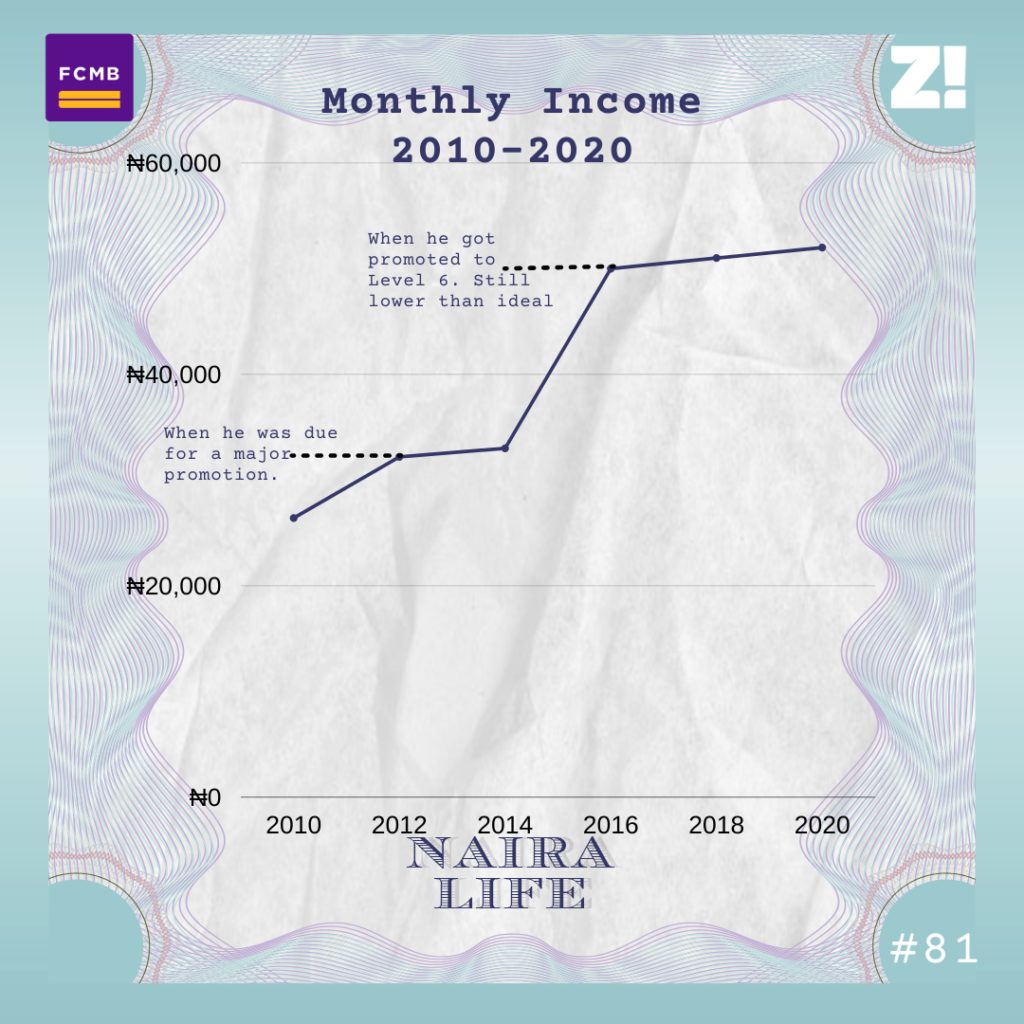
    Nothing. The people who’d been helping me calculate it were already expecting it. I went to Lagos the next day and I gave my mum ₦50k. I started at Level 5 and the salary was ₦26k then. It’s now about ₦45k.

    So, when did you graduate?

    December 2011. Computer Science. Now, the way it works is this. When you start with an SSCE and you have a complete result – that is with Maths and English – you get into Level 5. When you don’t have a pass in any of these, you start in level 3 or 4.

    But now that I’ve gotten a degree, I should be in Level 8, but I’m not. People are promoting only their people. I’m still stuck in Level 6.

    How much is a Level 6 salary?

    ₦51k.

    Tell me how your salary has grown since 2011. Year-on-year.

    They add ₦400 yearly to the monthly take-home. But when I got promoted to Level 6 in 2016, it got increased to ₦50k. Then they started adding ₦500 per year.

    Between 2009 and now, which responsibilities have you added?

    Marriage in 2015, a child in 2016. My wife started working in 2017.

    What’s your current household income?

    The combination of my salary and my wife’s salary? ₦110k.

    Other expenses are emergencies and miscellaneous.

    Tell me about those.

    My son gets sick sometimes. The last two times, we paid up to  ₦25k for medicine alone.

    Don’t you have health insurance?

    I have, but I always need to go outside to buy drugs, and my health insurance doesn’t cover that.

    How much do you feel like you should be earning right now? After 10 years of experience?

    At least ₦130k. But If I get promoted as I should, I’ll be earning ₦70k.

    What is something you need but can’t afford right now?

    I want to move to either Canada, USA or any European country. I want to leave this country, and try to help from there. People are suffering.

    I’m wondering if there’s an actual plan towards this

    There’s a plan, but there’s no money. To be honest, I’m cautious too, because I’ve got duped before. I gave someone my NYSC savings of ₦120k. My sister added another ₦120k, and we lost everything. This was in 2013.

    Have you ever considered picking up a skill that will fetch you more money on the side?

    I’m thinking of learning barbing, I hear it’s very useful when you travel abroad. There are other things I’m interested in learning. I’d like to learn photography, design or programming. The problem is that these ones need money to start.

    Do you have a computer?

    No. My phone is so bad that a friend even borrowed me his extra phone to use.

    What are some things that will make your life feel better if you buy them?

    A laptop, because I can do things with photography and learn other stuff. A car, because I can do some side hustling. Also, having my own house, because rent every year is tough.

    What’s the last thing you bought that made you feel better?

    The food we were supposed to sell. We ended up eating most of it.

    You sell food?

    My wife and I decided to collect a cooperative loan last year. We rented a shop at ₦4200 monthly, then decided to start selling foodstuff; rice, beans and all that. Now, we can’t even account for most of the money. The original loan was ₦500k, and we used everything to set up for the shop. For example, a freezer cost ₦110k.

    We started the business because we were targeting student areas. And then, the lockdown started.

    Eish. And they had to go home.

    Now, we can barely account for the money, and we intend to shut down the shop by December.

    I know it’s all you want, but do you have any back up plans if the travelling abroad doesn’t work out?

    Maybe I’ll start a viewing centre, or a farm.

    Do you ever think back at a point in your life where things might have turned out differently?

    Football. I’ve played everywhere; in school, at work, in the neighbourhood. I’ve always been the MVP, the one everybody picks to play on their team. I wanted to chase football at some point, but my mum didn’t agree.

    Why?

    She banned me from going for training. I used to go to lesson instead. You know what’s paining me? I have a certificate I suffered so much to get, yet I’ve never used it.

    I want to ask about your financial happiness, on a scale of 1-10, because it’s an essential question.

    3. It’s bad. My financial situation is just really bad. That is all.

    Have you ever considered leaving the service?

    Yes, but there are no guarantees that I’ll find something else in this country. Also, age is no longer on my side. I’m 35 years old.

    UPDATE: Upon request from readers, we’ve added a payment link for people interested in sending him some love and light here.


    Get the right medical help from the convenience of your home, workplace or even on the go, at pocket-friendly rates! Yes, you can connect with over 30 qualified medical doctors across a broad range of specialities, get access to free and up-to-date health resources on key medical conditions, and lots more.

    No stress, no judge-zone! Easy-peasy, right? What’s more, as an FCMB customer, your first 30-minute consultation with a doctor is FREE!
    Click here to get started

    Click the photo.
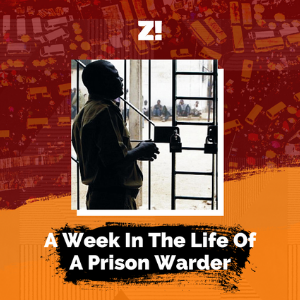
  • A Week In The Life Of A Prison Warder During A Pandemic

    “A Week In The Life” is a weekly Zikoko series that explores the working-class struggles of Nigerians. It captures the very spirit of what it means to hustle in Nigeria and puts you in the shoes of the subject for a week.


    The subject of today’s “A Week In The Life” is *Pelumi, a prison warder. He walks us through the prison system during a pandemic.

    prison warder

    MONDAY:

    I wake up by 6 am today. Parade starts by 7 am and I need to be on the parade ground before then. If not, I will be punished. The parade usually involves gathering all the officers and briefing us on the task of the day. Thankfully, my house is a walking distance from the prison. 

    I am working at the gate today. Working at the gate is better than supervising the inmates. This is because of the smell of the prison; water is gold in prison. Each cell has a chairman that supervises the water collection. This chairman has officials who gather the kegs, fetch water for the cell, then resell to the other inmates. Money is also a big deal in prison. 

    One of the chairmen of the cells used to be an armed robber. He killed an 8-year-old girl because she recognised his face from a robbery. This kind of thing makes sympathy for inmates hard. It affects you psychologically. It’s not easy to be kind to this sort of person. So, when the pumping machine or the light is faulty, nobody is in a rush to fix it. After all, these people don’t deserve it. Therefore, the whole place ends up smelling because the inmates haven’t had a bath in days.

    I shake away these thoughts from my mind. They are not my problem. At least, not today. I am not going to be on the inmate supervision shift for a while. So, let me enjoy this moment.

    I play Travis Scott’s highest in the room on my phone and drown out the noise. I am counting down till closing time. I just want to go home and play GTA on my PS4.

    TUESDAY:

    Today, we rejected 15 new inmates because of Covid-19. We have stopped admitting inmates because courts have been suspended. This means that people will be awaiting trial indefinitely until things resume again. The correctional facility is crowded already and it’s tough managing the crowd. We can’t afford a larger crowd in the middle of a pandemic.

    My first day at work was so scary. New recruits were taken into a particular cell holding at least 250 people. We were then asked to walk round the cell to get a feel of it. The number of people in that space was both scary and sad. It looked like something not fit for animals not to talk of human beings. 

    Thankfully, that crowd has been reduced over time. People have been released or transferred out of our facility. I am just thankful that we emptied the cells before Corona came. If not…

    This disease is scary. We are at risk because we can’t afford to stay at home. To protect ourselves, we have provided water and soap in all the cells. The chairmen in the cells have also agreed to make water more available. Everyone is working together because we are all scared. In addition, we also provided hand sanitizers, gloves, and nose masks to each cell.

    Even with all of this, some inmates still think there is nothing to be worried about. That’s their own business. I am impressed with how we are handling this whole thing. From the authorities to some of the inmates.

    At least, I have one less thing to worry about until closing time.

    WEDNESDAY:

    Prison can be scary. People land in here for various reasons. I am happy today because when I get to work, I hear that one of the inmates I like is leaving. He was imprisoned because he defaulted on a loan of ₦700,000. According to him, he failed to pay the debt and was arrested. Even after his family raised the money and paid the debt, he was still sent to jail. It took him 5 years to get justice and fight the conviction. I am just happy that he finally got justice.

    His case is even better. There are other people that have been jailed and they can’t raise bail of N5,000. These people are in prison because of bailable offenses like fighting and roaming around. For some of them, their families don’t know they are in prison because they can’t tell them.

    The saddest case I know is of a soldier that was fighting insurgents in Maiduguri. He left his base without permission for a wedding in Lagos. He then got into a fight with a traffic warden. He was arrested but he felt that his status as a uniformed man would protect him. It did until it was discovered that he left his base without authorization, then they threw him in jail. Now, he can’t call anyone because the repercussion for deserting the army without permission is two times worse than prison. So, he’s going to quietly serve out his sentence here without his family knowing where he is. At the end of his sentence, he will probably pretend that he had a mental illness and return home.

    There are so many of these kind of cases here.

    I keep looking at the time. A few more hours until I can go home to play FIFA with my housemates.

    THURSDAY:

    I don’t want to go to work today. I am not in the mood but I don’t have a choice. If I don’t go to work, I won’t get my temperature checked. If I don’t get my temperature checked, I won’t know whether I have Coronavirus or not. So, I get up to prepare for work.

    I run into my secondary school teacher and he looks surprised to see me in my uniform. He asks me what I am doing and I tell him I am a prison warder. He looks disappointed but I am not bothered. This is part of the stereotype that I face in this job and I am used to it. He seems uncomfortable so he tries to change the topic. I ask him if warders aren’t human beings like him but he doesn’t reply.

    I thank him and leave. I am actually not surprised. After working in a prison for the last 2 years, very little surprises me. I have seen so many things and this is the least of my problems. 

    My problem now is that I am late for work. I have to run if I want to make it in time for the parade.

    FRIDAY:

    American prison is different from Nigerian prison in the sense that the prisoners here fight but they don’t stab themselves. It’s just too much stress for everyone involved. The clinic is not equipped to handle that kind of emergency.

    To discourage inmates from fighting, we have designed a special cell. Our own form of solitary confinement with a twist. You get visitors – big rats. Even me, I am scared of the place, talkless of the prisoners. We don’t beat or force anyone not to fight. The promise of that cell is usually strong enough to make everyone behave.

    There is a hierarchy in each cell. There is the Chairman, then an “inspector general”, his deputy, then the “police.” These people are responsible for enforcing the law in each 53 man cell. The number of inmates varies per cell depending on the size. We hold these elected officials accountable for anything that happens in a cell. So, we warn the chairman to behave and the message trickles down to the other inmates. 

    There is a cell that recently impeached their chairman so they held elections for a new one. After the new chairman came into power, they started shouting like it was the Gubernatorial election. They carried their new chairman in the air and screamed. I had to threaten them with solitary confinement before they stopped shouting. But secretly, I was amused by the politics. 

    While all of this is interesting, I can’t stop thinking of the weekend. Thankfully, I am off-duty. I look forward to drinking a cold Budweiser, flirting with one or two girls, and sleeping. 

    SATURDAY:

    In prison, inmates and warders often watch big matches together during the weekend. But since football is on hold, we haven’t done that in a while. Saturdays without football are tough for me.

    I miss watching football. Especially big matches where both warders and inmates gather and argue heatedly. In those moments, we all come together as one. At least until 90 mins are over. I miss that rush. 

    There is nothing to do today, so I fire up Call of Duty to pass time. I don’t feel like texting any girl today.

    SUNDAY:

    I feel lonely today. I miss my family because I haven’t been able to visit them since the lockdown started. I miss my mum, dad, and siblings.

    The inmates must be going through a lot during this period. They can’t see their family members, they can’t spend time with them. It must be difficult for them. I understand how they must feel to an extent because I also can’t see my family. I feel trapped and helpless. Is this how they feel? 

    I can’t wait for this lockdown to end so I can spend time with my family. I’ll really love to see my family together. Having everyone one around and catching up is nice. If I have learned anything from this lockdown, it’s that I won’t ever take freedom for granted. 

    I miss my people. For now, I call my mum and catch up. At least I still have that luxury.


    This story was edited and condensed for clarity. The image does not represent the identity of the subject.


    Check back every Tuesday by 9 am for more “A Week In The Life Of” goodness, and if you would like to be featured or you know anyone who fits the profile, don’t hesitate to reach out. Reach out to me: hassan@bigcabal.com if you want to be featured on this series.

  • QUIZ: What Are You Most Likely To Get Arrested For?

    If you live in Nigeria, then you already know that our police are not above moving mad. So, the likelihood of you getting arrested, rightfully or not, is quite high. That’s why this quiz is here to prepare you for what you’re most likely to get in trouble for.

    Take to find out:

  • I Spent 36 Days In Prison.  ₦20,000 Stood Between Me And Freedom.
    Illustration by Felix Lucero

    To get a better understanding of Nigerian life, we started a series called ‘Compatriots’, detailing the everyday life of the average Nigerian. As a weekly column, a new installment will drop every Tuesday, exploring some other aspect of the Nigerian landscape.

    This week, we translated (from Igbo) and helped narrate, the experiences of a Nigerian wrongfully imprisoned in the early months of 2019. His time in prison and his first taste of freedom on making bail.

    In early 2019, a few weeks to my 27th birthday, I marked what will always be a milestone in my life. I didn’t buy my first car, that is still many dreams away nor my first home, I still share a flat with my mother. It was none of the above. 

    Weeks to my 27th birthday, I was taking my first steps of freedom from Ikoyi prisons, after 36 days behind bars.

    My offence? Breaking a padlock that belonged to the police.

    If you’ve ever met anyone that’s been to prison, especially a Nigerian prison, it’s a given they know the exact amount of time they spent locked up, almost down to the minute. For me, I will never forget the number 36. Not because I spent that time making a tally of days on top of my bunk like in the movies — where would I have found the personal space? No, the number stuck because I had spent every day during my time there trying to understand the hand life dealt me.

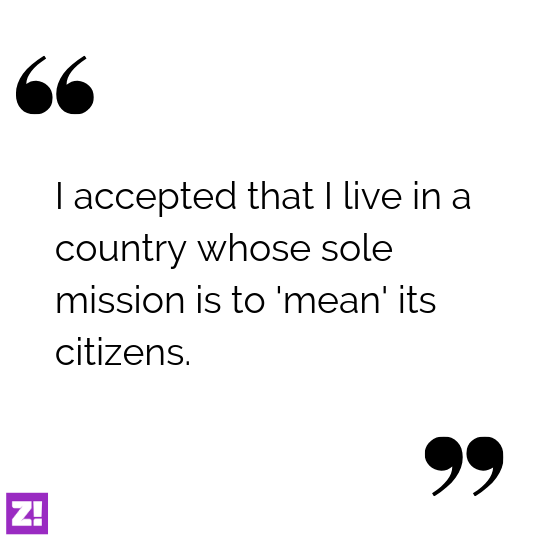
    I don’t think anyone who knows me would describe me as a negative person. Even after my arrest, and having to share an open, cramped space with 300 other men, I always made sure to start each day thanking God for the gift of life. But when it comes to Nigeria? Nothing can shake my feelings. I accepted that I live in a country whose sole mission is to ‘mean’ its citizens, a long time ago. The level of ‘meaning’ gets higher, the smaller the zeros at the end of your account balance. 

    It is why people struggling — my people — attend neglected public schools,  and ‘graduate’ without being able to read and write properly in English, just like I did. They’ll take jobs straight out of secondary school, not once stopping to consider the luxury of university, again ⁠— like I was forced to do: serving as everything from shop assistant, to errand boy at a printing press, before getting a security job at an Ikoyi office complex in 2017.  

    I was following the poor man’s script, and was fine doing so, never really allowing myself consider the possibilities of a career or ambition,  because what really were the opportunities this country could throw my way, without the usual leg-up? Yet somehow, despite this contentment, nothing could stop  Nigerian misfortune from setting its sights on me.

    As a security guard, I had a daily routine. In the morning, before daylight, I shared a cigarette with some construction workers not too far from my office, before returning to my post to welcome the first arrivers to the office. I usually did this with extra enthusiasm so they’d remember at lunch-time and when it was time to ‘dash’ something at the close of day. Afternoons were spent parking and re-parking cars, while night time ⁠— when I resumed my shift, was used to reflect on the day. I share a phone with my mother, so I had only myself for company.  I did everything to stay awake because the complex had experienced break-ins in the past; sleep was not an option.

    On the morning of my arrest, I started my routine as usual: smoking with the construction workers. What was different this time, however, was returning to the office to find the gates had been chained and padlocked by somebody. And it wasn’t me.

    So imagine this, it’s around 6:30 am, and while the offices open at 8 am, some workers from the mainland, fortunate to have beaten the mainland-island traffic would begin arriving around 7:15 am. In the past, the complex had experienced break-ins where offices were vandalised and I was blamed for it. I could not afford a repeat. So I did what I had to. Using a stone, I dismantled the padlock, placing it and the chains in my security post.

    This was exactly what I told the policemen when they made their way to the complex 20 minutes later, asking what had happened with the lock. According to them, the office (a private property) was sealed because there was word trespassers were around the area. As soon as I produced the broken lock, the pitch of their already loud voices increased; they were shouting that “I must pay o”, or follow them to their station.

    I know it says ₦20,000 stood between me and freedom, but on the day of my arrest, it was a lot less, at ₦2,000, maybe even ₦1,500 if I negotiated properly. But this amount, on my salary of ₦30,000 which I shared between my mother and a cousin, wasn’t something I carried around. At the time, I didn’t appreciate how serious my situation was. Even when we got to the station, I stupidly thought I could still beg my way out of it, or help would somehow come for me. But by 1 pm, when none of these had happened, I was charged with ‘wilful destruction of property’ at Ikoyi Magistrate and remanded in Ikoyi prison. I didn’t stand a chance.

    Even though I was in prison for a month and some days, the time I spent there broke me. It’s difficult to narrate and even harder to forgive.

    On my first day in prison, there’s no other way to put it, I was rushed by the older inmates. While getting kicked and punched, I struggled to explain that I was new, and begged them to release me. I believed they had me confused for someone else. When this only made them hit harder, I kept quiet, praying for a quick end to the attack. Eventually, I was told it was the prison idea of a welcome party. The guards and wardens knew when this happened, yet nobody stopped it.

    If there’s one thing I learned in Nigerian prison, it’s that Nigeria is a reflection of its prison system. It is filled with people who want to escape. The prison is run by people unconcerned with those placed under their care, just like the country it operates in. It is also run down and powered by bribes like I came to find out.

    There is no part of prison life that doesn’t feel like it is made specifically to break you. Even eating was difficult. We were served twice every day: morning and night. Breakfast was always small portions of watery beans and garri, while dinner was eba with pepper and water — their idea of stew. My body didn’t adjust to the meals quickly, and my stomach was always upset early on, which was even worse for me because the prison space is set up in such a way that, you’re expected to eat where you shit.

    The only way I can describe the way we slept is to liken it to chickens in a coop. We slept on the bare, overcrowded floor, dreading every breath exhaled from the next person, each one of us praying they were just a size smaller, so our limbs wouldn’t have to touch on hot nights.

    The hopelessness I experienced in prison was so present and so real, you could have stretched and touched it.

    While I was trying to make sense of my situation, my employers and mother — who eventually came to know what happened to me ⁠— were doing their best to get me out. From their daily visits, I learned that there was no real case against me, that the police and some members of the judiciary were only trying to get some money, a game they usually played on easy targets. It was from these visits I learned at least three bribes had to be paid by visitors. 

    Before my time in prison, I had no reason to consider the problems the judiciary; I had problems of my own. But by the end of my second week in prison, those problems became mine when, at my second appearance at the Ikoyi Magistrate, I was informed that the charge against me, was no longer just the willful destruction of property, but had increased to include cultism.

    According to the lawyer hired by my employers, this was an effort by the police and members of the judiciary to make sure a bribe for my bail — ₦100,000 was paid. 

    In the remaining weeks, while my stomach adjusted to the meals and I learned to carry out commands to clear waste from the older inmates quickly, to avoid another ‘rushing’ — my lawyer did a lot of running around, trying to get the bail money reduced and sureties to stand in for me.

    During that time, to cheer my mother, whose visits always started and ended in tears, I would tell her the progress my lawyer had made with reducing my bail, both of us choosing to ignore the fact that my freedom was being priced like choice meat in the market.

    Eventually, ₦20,000 was agreed on, which thanks to my mother, her church group and my employers was paid at the end of my fourth week behind bars. I was only allowed to leave five days after the money was paid, because one of the people responsible for keeping me locked up, refused to share it equally with the rest of his group.

    It’s been some months since I was released, but it is still hard to describe the feeling of taking the first steps outside of prison at almost midnight, not quite a free man, but thankfully no-longer an imprisoned one.

    (The narrator has since  had the charges against him dismissed, but chose not to relay the details)

  • Nigerian Politicians And Foreign Politicians Have A Lot More In Common Than We Thought And Here’s Why

    Let’s go a little back in time to the elections period in Nigeria.

    To when realistic and unrealistic promises were made, and “generous”politicians suddenly remembered the hungry, starving, Nigerian masses.

    And since honesty isn’t necessarily a Nigerian trait..

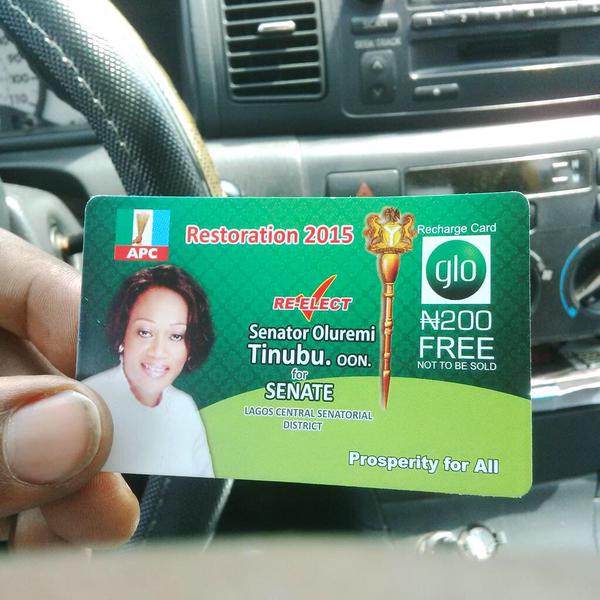
    Many politicians shared branded food items (and other gifts) which were eagerly received by some greedy voters.

    Packaged rice.

    For those that place Jollof above necessary infrastructure that should be provided by Nigerian leaders.

    Odourless Fufu

    In case the smell of mainstream Fufu gets in the way.

    And recharge card to call the love of your life.

    Aren’t our politicians just thoughtful?

    Let’s flip the script and go to Europe where this politician is going to spend two years in prison.

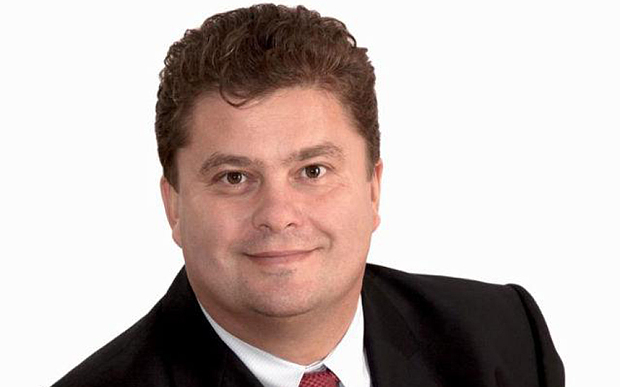
    Florin Popescu, a Romanian politician is being jailed for a crime he committed in 2012 while he was lobbying for votes for his re-election into office as a  council leader.

    He used his political position to secure an order of 60 tonnes of fried chicken worth $85,000 and shared it to voters in a bid to make them vote for him.

    He loaded the chicken packages into trailers and distributed them at several locations. Although he resigned earlier in February 2016 and claimed it was for the “good of the country”, Florin currently nicknamed the Chicken Baron will be cooling off in prison for two years as part of Romania’s crackdown on Kwaraption!

    Will this kind of crackdown ever happen in Nigeria?

    We wait. [zkk_poll post=24520 poll=content_block_standard_format_8]

  • Nigerian Police Are Holding 14 ‘Criminal’ Goats In Their Custody

    Apparently, the Nigerian police force in spite of not having adequate space for human detainees, have started arresting animals.

    Will these goats be detained with other humans?

    What offence did these poor goats commit?

    Were they even lead into their cells in handcuffs?

    In the wee hours of March 7, a police patrol team accosted a red Mitsubitshi car around Sekona junction in Osun state.

    After the driver of the vehicle refused to stop on the order of the police, the patrol team launched an unsuccessful chase of the car, as per fast and furious.

    The driver sharply parked the car and escaped before the police could get to him. Unfortunately, these poor goats were found in the vehicle.

    The Osun state Police Public Relations Officer, Mrs Folasade Odoro has said the goats will be detained until their owners show up.

    But what if the owners don’t come back for their goats?

    Are they going to rot in their ‘cells’ like the human suspects who have spent endless years in police detention without any hopes of going into trial.

    Will they eventually be charged to court?

    And if they are charged, do they have rights to a ‘lawyer for goats’? Maybe they’ll be charged for being animals that were jejely going for a quiet evening ride.

    Or they may all end up as endless pots of this…

    Or this…

    They may never grow up to be as flawless as this goat.

    We only have three words sha, Goats Lives Matter!

    [zkk_poll post=22533 poll=content_block_standard_format_9]
  • This Malawi Prison Band Has Been Nominated For A Grammy Award!
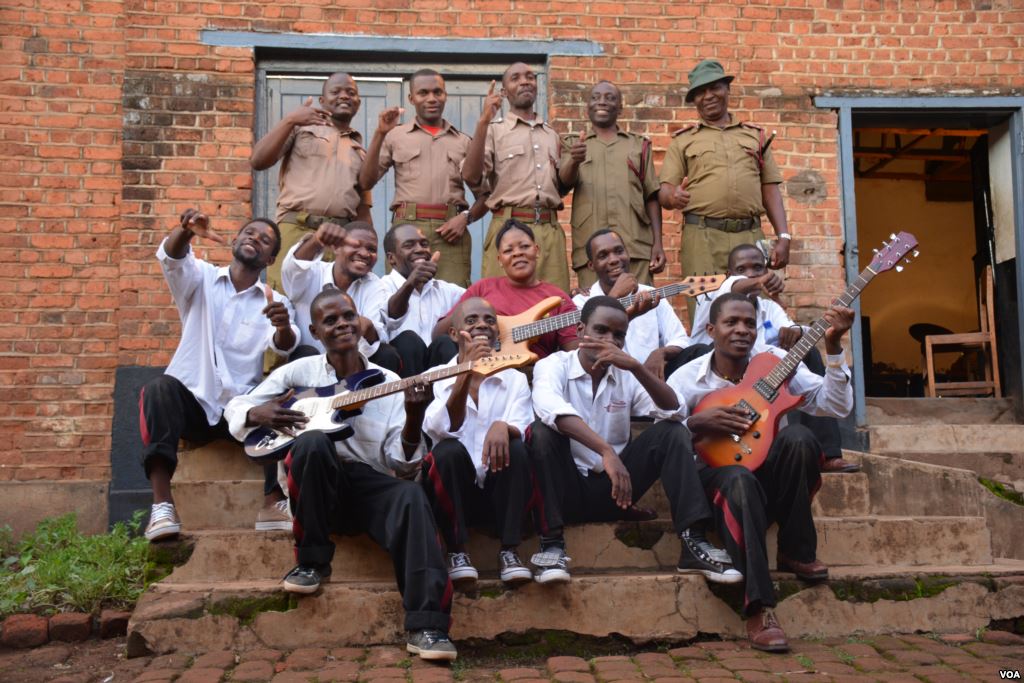
    Those found guilty of various crimes have been imprisoned and relegated to the back of our minds. They’ve been locked up and the keys thrown away. Most of us decide that they don’t deserve second chances. Such is the case of Zomba Prison, a maximum-security facility in Malawi.

    The prison which was built during the British era, to hold 330 people, has two thousand or more at any given time.

    It was to this same prison that Grammy winner and author Ian Brennan and his wife Marilena Delli, along with Kyp Malone and Tunde Adebimpe were granted access. 

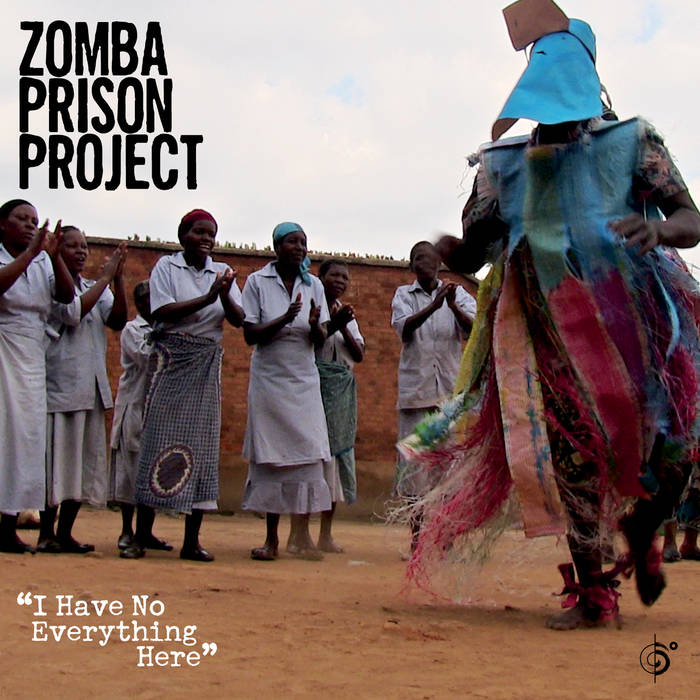
    They gave the inmates an opportunity to record their music. It was the resulting album “I Have No Everything Here that’s been given a Grammy nomination.

    The album has been nominated in the “Best World Music Album” category. A first for a record out of Malawi.

    These prisoners still face other problems, apart from overcrowding.

    Due to the prevalence of HIV and AIDS in the prison, the residents see imprisonment as a life sentence, because those that are disease free when they come to the prison more often than not end up with the disease.

    The female residents also face the difficult decision of  having one child under five years of age live in the prison with them, which means they have to choose between their offspring.

    With constant food shortages and overcrowding, prison conditions are particularly rough on the children. The topic is addressed in one of the more gripping songs on the album: “Please don’t kill my child” above. A lot of the prisoners have been unjustly jailed for situations where they are not the perpetrators, but the victims. Some are serving out life sentences they received as children. Ian Brennan put the album’s proceeds towards legal representation for some of the prisoners. Since the making of the album, three of the female prisoners on the album have been released.

    We definitely hope that Zomba Prison Project wins the award!

    Featured image via VOA.
  • A Man Was Kidnapped By a Nigerian Couple For 25 Years: 15 Things He Could Have Achieved In Those Years
    A Nigerian couple in the UK were sentenced to 12 years in prison on December 7, for subjecting  Mr Sunday Inuk to 25 years of servitude. He was just 13 when the Edets took him without permission  from his parents in 1989, with false dreams of getting work and an education upon getting to the UK.
    Sunday Inuk served the family without pay for 25 years, eating and wearing only what he was given, cooking, cleaning, gardening and sleeping in the hallway all through. We have compiled a list of 15 things he could’ve achieved in 25 years.

    1. Graduated from secondary school.

    2. Gotten an undergraduate degree.

    3. Completed his NYSC service year.

    4. Earned an M.Sc. Degree.

    5. Completed medical school and a residency.

    6. Been gainfully employed.

    7. Bought a good car.

    8. Probably launched a start up.

    9. Probably bought a good house.

    10. Become a senator in his constituency.

    11. Become a general in the Military.

    12. Written a book.

    13. Become a governor of his state.

    14. Travelled from Africa to Asia by road.

    15. Probably started his own family.