Notice: Function _load_textdomain_just_in_time was called incorrectly. Translation loading for the wordpress-seo domain was triggered too early. This is usually an indicator for some code in the plugin or theme running too early. Translations should be loaded at the init action or later. Please see Debugging in WordPress for more information. (This message was added in version 6.7.0.) in /home/bcm/src/dev/www/wp-includes/functions.php on line 6121
Parenting stories | Zikoko!
  • Am I a Terrible Mother for Wishing My Child Is Normal?

    Bolade* (33) is a mother of two, and her youngest child was born with Cerebral Palsy. She talks about the challenges and guilt she’s had to navigate, and why hope is the only thing that keeps her going.

    As told to Boluwatife
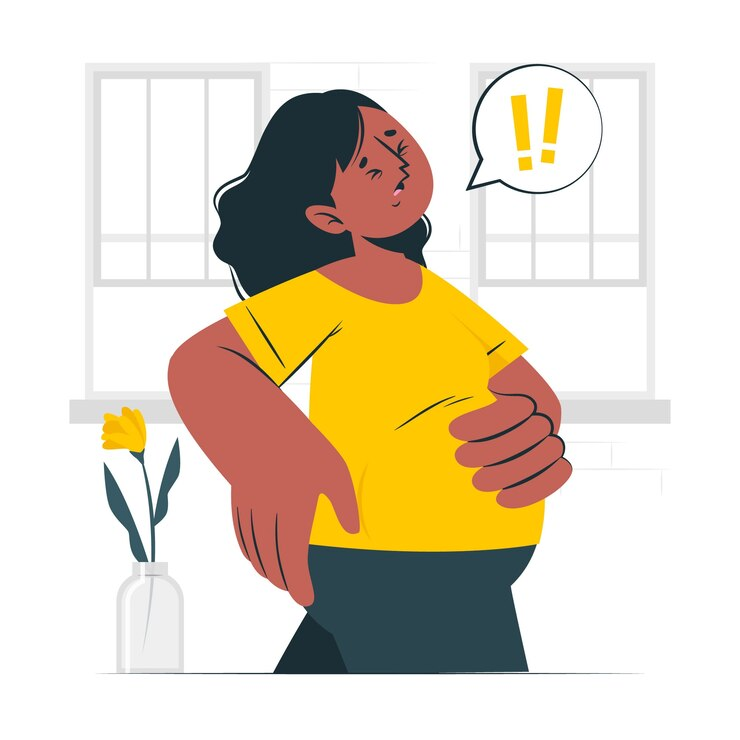
    Image designed by Freepik

    The school holidays are my favourite time of the year because I can bundle my two children (aged 7 and 5) to their grandparents’ and pretend I’m free. But I haven’t been free for five years, and I hate myself for even desiring freedom.

    By freedom, I mean somehow erasing the stress, worry and uncertainty that come with caring for a special needs child. 

    My second child, Ife*, was born with Cerebral Palsy, and she’ll live with it for the rest of her life. I love her with every fibre of my being, but sometimes I feel I’m not cut out to mother a special needs child.

    My husband and I got the diagnosis when she turned ten months old. I’d been worried about how long it was taking her to reach milestones her elder sister had crossed without stress. 

    Ire* had jumped the crawling stage and moved straight to walking at 10 months. But at that age, Ife couldn’t sit, roll over or even control her neck. My husband and mother waved off my concerns, insisting that children were different, but I felt in my heart that something was wrong. So, I insisted on taking her to the hospital. 

    It was the first time I even heard the words “Cerebral Palsy”. 

    After the doctor explained the diagnosis, my husband said, “God will help us”. Me, I spent hours Googling the condition daily. My research only drew me into a deeper level of fear. Would Ife ever walk or even eat on her own? What kind of future could she hope to have if she couldn’t take care of herself? Would people call her an “imbe”?

    I had to relearn everything I knew about mothering toddlers. 

    Typically, when children cross infancy, parenting becomes both easier and more difficult. The child becomes a bit more independent and learns to voice out their needs rather than cry constantly. But independent means you’re constantly monitoring them so they don’t jump into the road or drag a pot from the fire. 

    I’d experienced that with Ire, but with Ife, we’re still stuck in the infancy stage.

    Years of therapy have made it so that she can sit upright and hold a bottle to feed herself ogi and custard now, but she still can’t walk and barely speaks. Up until she was three years old, I used to take her with me to my teaching job so she could stay with other children in daycare, but the weird looks became too much. 

    If it wasn’t the stares, it was parents stylishly asking the daycare teachers if it was safe for Ife to be in the same class with the other active kids. I quit my job when it became too weird — I couldn’t take her someplace else where I couldn’t watch her closely — and we’ve been home together ever since.

    The daycare incident is an example of why I feel I’m not cut out for this life. I’m part of some special needs support groups online, and I regularly see other mothers share stories about the different ways they stand up for their kids. One even made her child’s school install wheelchair ramps. 

    I, on the other hand, couldn’t even speak up to keep my child in daycare so I could keep my job. Why couldn’t I say, “She just has a disability, she isn’t made of glass. She can be around other children,” when the parents dropped side comments about Ife?

    It’s been even more difficult to explain to my eldest why her sister can’t play with her, or why she can’t play outside because Mummy can’t leave Ife alone in the house. I don’t spend as much time with Ire as I should, and I wonder if she’ll ever resent me for always putting her sister first. 


    RELATED: I Love My Brother, but Sometimes I Feel Like an Only Child


    But what time is left after feeding, cleaning and massaging one child and then attending to chores? 

    Ife throws tantrums too. If she doesn’t like the food I’m feeding her or is just upset about something, she groans loudly for hours. And I have to beg her until she decides to stop. My husband relocated to the UK two years ago — with hopes that we’d join him later — so even though he sends money, I’ve had almost no support, except during the holidays when I can leave my kids with their grandparents and breathe a little. They have a live-in maid, so it’s easier for them to manage.

    Sometimes, I wish Ife was normal. Does that make me a terrible mother? Isn’t a mother supposed to accept her child wholeheartedly? I really don’t want this life. It seems there’s no end in sight to being Ife’s primary caregiver. I’ll never have a career again, and I’ll always be this exhausted, mentally drained woman.

    I’ve heard that speech therapy and surgeries may help, but with my husband’s japa and my unemployment, we can’t afford it. Our only hope is to gather enough money to handle visas and flights to join my husband in the UK, so we can get her the right medical care.

    People have advised me to take Ife to church and pray for a miracle. I won’t take her for deliverance sessions or anything, but praying and increasing my faith have kept me sane for a while now. 

    I also struggle with the fear that she won’t live long because of the average life expectancy of people with cerebral palsy. 

    It’s a lot to take in, and I just pray God will look at me one day and grant me a miracle. I’m not even asking for the cerebral palsy to disappear; just for Ife to be able to walk, write and talk legibly. I can only keep that hope alive.

    *Names have been changed for the sake of anonymity.


    NEXT READ:  What’s It Like to Care for People Living With Disabilities? — 5 Nigerian Caregivers Tell Us


    [ad]

  • Having Kids Took Me From Middle-Class to Poor

    Chima* (36) has two children under five years old, and compared to the average income of most Nigerians, he’s a high earner. But when I asked how parenting has affected his budget and cost of living, he simply responded: “I’m now poor”.

    This is Chima’s story, as told to Boluwatife

    Image designed by Freepik

    I didn’t go into parenting blind. I knew having children would stretch my finances. But I wasn’t prepared for how much.

    It was a full house growing up — six children and just as many cousins and extended family members dropping in at one point or the other. It was chaotic, but I loved it. When I started thinking about marriage and having my own family, I decided I wanted six children too.

    Of course, my girlfriend (now wife) was horrified when I first mentioned it during one of our “planning the future” talks. Coming from a much smaller family with only one sibling, she couldn’t fathom having six children. The conversation went something like this:

    Me: I’ve always wanted to have six children like my parents. Don’t you think it’d be an adventure?

    Girlfriend: Six, as how? Who will “born” all of them?  

    We eventually reached a compromise — four children. That was the plan when we got married in 2018, but I can confidently say the plan has changed now.

    I was earning ₦400k/month at the time, and it was more than enough in the beginning. My wife’s salary was ₦100k/month, but it was mostly for her needs or when she took me out for a treat. I took care of everything else. The major expenses were the ₦800k annual rent, feeding, clothing and transportation, and of course, romance bills. My wife and I made it a duty to go on weekly dates. We also regularly had staycations. We were comfortably middle-class.

    We had our first baby in 2019, and the financial implications began to dawn on us right from the birth. My wife delivered by caesarean section, which tripled our hospital bills. We spent roughly ₦800k on that, which was a huge chunk of my savings. Then there was the cost of other essentials, like the baby’s bed, car seat, bath, carrier and others.

    My wife also had problems with lactation, so we had to lean on formula. I can’t recall how much each tin cost, but we typically went through two tins in a week. 

    Then there were the clothes. It was as if the baby grew an inch per day. We had to buy new clothes every three weeks. We thought we wouldn’t have to buy diapers for a long time because we got quite a lot as gifts, but most of them were the smallest size. As baby grew, diaper size increased, so we ended up giving out most of the gifted diapers.

    By then, my wife had stopped working temporarily to care for the baby, and my salary was our only income source. ₦400k that made us ballers before struggled to take us through an entire month. I was almost always broke by month’s end. Weekly dates and staycations? Those became a thing of the past.

    We had another baby in 2021. I blame the pandemic for this. We’d originally planned to space our kids by three years, at least, but what’s there to do when you’re locked up together in the name of global safety?

    I got another job around the same time, and my salary increased to ₦500k/month, but it hardly made a difference. We had to move to a bigger apartment (₦1m yearly) and take an additional ₦1m loan to cover the agent fees, renovation and furnishing. 

    Remember all those expenses I mentioned when we had our first baby? Multiply it by three. We now had two babies, while struggling with inflation and removing ₦100k out of my salary each month for one year to pay back the loan. My wife had to suspend all plans of returning to work because daycare and a nanny were additional expenses we couldn’t afford.

    I love my children, but my wife and I jokingly call them “money-sucking creatures”. They eat like the world is about to end and grow out of clothes like someone is pursuing them. If they’re not eating, they’re spoiling something. 

    I was complaining to a friend about having to change their game tablets because they’d spoilt them, and the friend was wondering why they couldn’t do without the tablets. I just laughed. When you have kids, don’t give them something to entertain themselves so they can expend the unused energy on your walls and home appliances.

    It’s starting to look like we’ll stop at two children, so we can continue to afford food. I still earn ₦500k/month, and 60% of that goes into child care. I try to stretch the remaining 40% to save for rent and other household expenses. But the truth is, every expense is still related to child care. 

    For example, the new fuel prices mean I spend at least ₦20k weekly to fuel the generator so my kids can sleep at night. I pay ₦1m for rent because I need more room for them. Our feeding bill is almost ₦160k monthly because of the extra mouths to feed. I can’t spend ₦10k without thinking too much about it. I feel poor.

    My eldest will be old enough to start school next year, and the thought of school fees is already giving me heart palpitations. My friend is paying ₦400k per term for nursery school, and the school’s planning to increase fees because of the economy. I don’t even want to think about it. My wife and I are considering homeschooling till primary school. We can’t starve because we gave birth na, abi?

    Again, I love my children and consider them a blessing. But my quality of life has drastically reduced because of them. I lived better when I was earning less than my current income. If you aren’t stupidly rich, and you plan to have children in Nigeria, just accept that you will see pepper.

    *Name has been changed for anonymity.


    NEXT READ: Rainbow Babies: “I Was Supposed to Be Happy, but All I Felt Was Fear”

    [ad][/ad]

  • Rainbow Babies: “I Was Supposed to Be Happy, but All I Felt Was Fear”

    Healthy babies born after a miscarriage, stillbirth or neonatal death are commonly called “rainbow babies” — a sign of hope after a terrible loss.

    But what’s parenting really like after losing a baby? Nasara* (30) talks about losing her first baby due to medical negligence, experiencing anxiety throughout her second pregnancy and why she considered abortion.

    This is Nasara’s story, as told to Boluwatife

    Image designed by Freepik

    Nothing prepares you for losing a baby. From the moment you see the second line on the pregnancy test strip, you likely begin to imagine what your baby would look like. You never think you might bury them soon.

    Of course, that usually only applies when you want the baby. And I did want the baby.

    I’d gotten married to my husband six months before I saw my first double line on a pregnancy test strip. We didn’t actively try to have a baby, but we didn’t do anything to prevent it either. Plus, we’re a Nigerian couple living in Nigeria where the prayer you’d hear at your wedding is, “In nine months time, you’ll hear the sound of a baby.” So, we were happy. Our little family was increasing.

    It was a fairly normal pregnancy, complete with weird cravings. I had never tasted Nzu (edible chalk) before, but suddenly, I was consuming it by the bucket. I had some morning (read as all day) sickness in my first trimester, but I glowed throughout the following two semesters. My husband and I even placed a bet to see who the baby would look like. 

    Then labour came, and it was the worst day of my life.

    My husband took me to the hospital that evening when I started feeling the contractions. The midwife checked me and said, “You’re about 2 cm dilated. Go back home and return when the pain becomes too much.” Go back home, how? I thought, surely, she must be joking. She wasn’t, so my husband and I decided to wait in the car. 

    About an hour later, the space between contractions seemed closer and more intense, so we went back. She said I’d only progressed to 4 cm and suggested we just go home and return the next morning.

    My husband and I looked at each other and silently agreed we were going nowhere. He dropped the hospital bag we’d packed in a hurry and, raising his voice, insisted I get admitted to a bed.

    After some shouting, they finally agreed, and I was moved to a bed. What followed was a six-hour wait. The contractions weren’t progressing, and the midwife hardly came to check on me. We got nervous.

    When it hit the 12-hour mark, and I was still just 6 cm dilated, I started to panic from the pain and worry. The midwife put me on a drip, which I later found out was to induce the labour. The pain tripled, like something was ripping me from the inside. I entered active labour soon enough, but that’s when things became obviously wrong.

    I laboured for almost a day, but the baby refused to come out. My husband suggested a caesarean section, but they brushed him off. 

    When I eventually had the baby, it was in distress over the prolonged labour. It also needed oxygen, which the hospital didn’t have. My baby died in the ambulance on transfer to a general hospital for oxygen. I never even set eyes on it, but a part of me died that day.


    ALSO READ: “It’s a Personal Hell” — 7 Nigerian Women on Trying and Failing to Conceive


    It was after my baby died that we found out they brushed off the caesarean section request because the doctor wasn’t “on seat” or responding to calls. Our family suggested suing the hospital for medical negligence, but my husband and I just wanted to go home and try not to drown in the sorrow.

    The sorrow engulfed us for the next two years. 

    One bright Sunday morning, I took a home pregnancy test out of curiousity. I’d been ill for a while and wasn’t sure when my period was due. I had spare test strips at home, so I thought to just rule out pregnancy. The double lines on the strip stared back at me in confirmation. But instead of joy, all I felt was fear.

    What if I lost this baby too? Was I ready to go through nine months of hope only to have my heart shattered all over again?

    When I told my husband, he was over the moon… until I told him I wanted an abortion. Some part of me was convinced I’d lose this baby too, and wanted to do it before I got too emotionally attached. My husband was horrified, but no matter how much he tried to convince me, I was adamant. It took my family’s intervention to get me to abandon all abortion talk.

    I was still scared out of my mind. I dreamt about losing my baby throughout the pregnancy. I slept on pregnancy and baby websites, reading up on things to do and what to avoid. I lost my first baby due to medical negligence, but I didn’t want to take any chances on my own end.

    I was also wary of registering for antenatal care with just any hospital. I googled different facilities and was even considering moving states to stay with a friend just so I could be close to a hospital I’d seen online with glowing reviews. I eventually settled for a general hospital because there was a greater possibility they’d have more than one doctor on call. They couldn’t all be unavailable at the same time.

    By the start of the third trimester, I’d slipped into depression. Despite my husband’s and family’s best efforts, I was convinced something bad was going to happen. I put myself on compulsory bed rest and refused to do any other thing. Luckily, I run my own online business, so I could take a break.

    Then delivery day came. We chose an elective caesarean section, but I was still prepared for the worst.

    Ironically, the whole experience was a breeze. I was given a spinal block, so while I couldn’t feel the pain, I was awake when my baby was brought out into the world. I still remember that moment — holding my baby and telling myself this was real life, not a dream. I had my rainbow baby. All the pain from my previous loss would disappear.

    It didn’t quite happen like that. 

    I’m not sure why, but I went into postnatal depression. Healing from a major surgery and dealing with a newborn affected me mentally. I struggled to connect with my baby, and I couldn’t be happy because then I’d feel like I was forgetting the baby I lost.

    I’m grateful my husband noticed and encouraged me to see a therapist. 

    It’s been a year since I had my rainbow baby, and I’m in a better head space now. I now understand that having this baby will never erase the thoughts of my angel baby, and I’m at peace with that. My angel baby has a permanent space in my heart, and my earth baby is the one I get to pour all my love on. 

    After the first three months of therapy, I felt like someone turned on the “motherhood” tap in me. Every day, I gush in amazement when I look at my child or when they do something funny. When they grow older, I’ll tell them about their angel sibling. 

    I’m still navigating motherhood, but I’m content to take it a day at a time.


    *Name has been changed for anonymity.


    We’re bringing you the biggest meat festival on November 11, and it’ll be THE food experience of a lifetime. Come enjoy the juiciest suya, grills, and bask in the Nigerian meat culture at Burning Ram. Get tickets here.


    NEXT READ: 5 Nigerian Mothers Share What Pregnancy Did Not Prepare Them For

    [ad][/ad]