Notice: Function _load_textdomain_just_in_time was called incorrectly. Translation loading for the wordpress-seo domain was triggered too early. This is usually an indicator for some code in the plugin or theme running too early. Translations should be loaded at the init action or later. Please see Debugging in WordPress for more information. (This message was added in version 6.7.0.) in /home/bcm/src/dev/www/wp-includes/functions.php on line 6121 novels | Zikoko!
World Book and Copyright Day — a day set aside to promote reading, publishing and the protection of intellectual property through copyright — is coming up on the 23rd of April 2021. To celebrate, 9mobile would like to find out how well-versed you are in the wonderful world of Nigerian literature.
As any Nigerian who grew in the Nigerian school system knows, there were certain novels we were made to read in literature class. Some of them were clearly written for kids while others were adult books we had to read anyway. I always assumed these books were picked just because they had lessons to teach or whatever, but I recently realized that it was much more than that.
The authors of these books seemingly aimed to teach lessons in the most horrifying ways possible. Some of them went so ham that the messages got lost in the horror. Here are a couple of offenders:
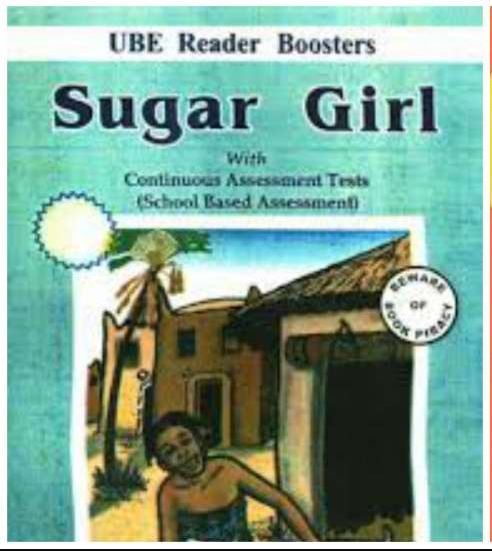
1)Ralia the Sugar Girl
Ralia is a happy-go-lucky village girl who everyone loves because she’s so…happy-go-lucky. At some point, she wanders into a forest and gets lost. While there, she runs into so much weird and scary shit. The worst of the weird shit is an evil topless witch with sausage boobs who threatens to dig out Ralia’s eyes and suck her blood, just because she trespassed on the witch’s property.
Ralia eventually finds her way home and the book ends. But I’ve always thought of writing a sequel, set three years after the events of the first book, where Ralia is in an asylum because she had a mental breakdown and murdered her entire family. The epilogue would see Ralia get a visit from a mysterious woman offering to get her out in exchange for her joining a secret organization.
The mysterious woman is Alice.
Alice from Wonderland.
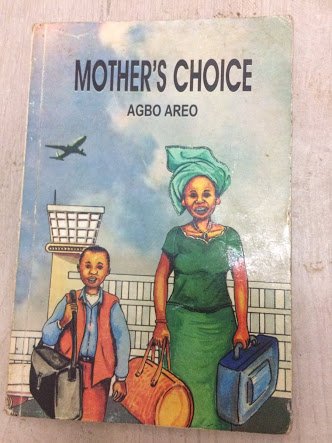
2) A Mother’s Choice
Mother’s Choice is about a boy named Ade. Ade has just graduated from primary school and his mother insists (despite her husband’s concerns) that Ade go to secondary school in the UK. As a weird form of foreshadowing, Ade’s father tells his wife that whatever happens to their son during his time overseas will be her fault. She agrees and lives to regret it because Ade goes to England, becomes an alcoholic, gets hooked on drugs, engages in orgies with prostitutes, gets arrested, and ends up in a psychiatric hospital. So much shit happens that by the end, you’re left wondering what lesson you were supposed to learn.
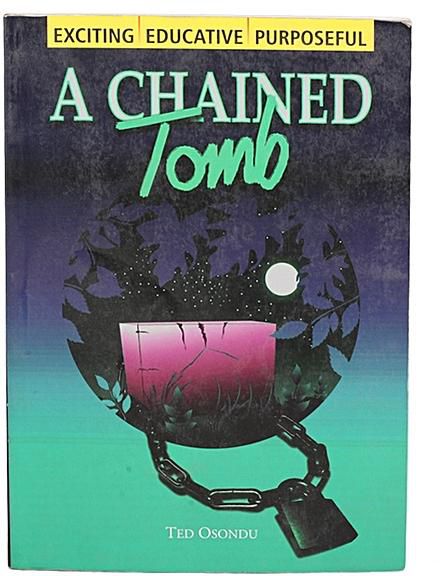
3) A Chained Tomb
The narrative of A Chained Tomb spans a couple of decades in the lives of a couple of people (most of them relatives) living separate lives in the same town. The main character is a boy named Uze, and he is the absolute worst kind of offspring. He joins a gang, steals, beats his mother to death in a violent rage, etc.
By the end, Uze in prison for murder.. A friend of his named Jade comes to visit him. The warden informs Jade that Uze died two days prior. After asking to see where Uze’s grave, the warden takes her to a patch of land behind the building that serves as a burial ground for deceased prisoners with no family on the outside. Uze’s grave has an unmarked tombstone with a chain around it. Seeing the confusion on her face, the warden lets Jade know that chains are put around the tombstones of prisoners who died without finishing their sentences, to KEEP THEIR SOULS BOUND UNTIL THE END OF THEIR SENTENCE.
And that’s how the book ends.
TF?!
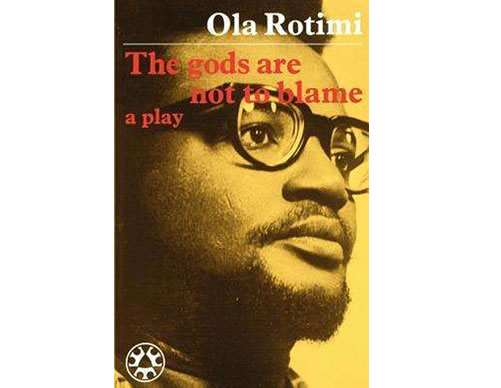
4) The Gods Are Not To Blame
You know what? I don’t think 12-year-olds need to be reading the Yoruba version of Oedipus Rex. I mean, the story’s themes of how free will is a myth, and fate is inescapable are awesome. But this story also contains patricide, incest, suicide, and self-mutilation.
The teaser trailer for the 2D animated movie adaptation of Cyprian Ekwensi’s “The Passport Of Mallam Ilia” was recently released. After freaking out over how awesome it looks (SO GOOD, YOU GUYS!), I started thinking of other Nigerian novels that deserve a place on the big screen. I settled on these 5:
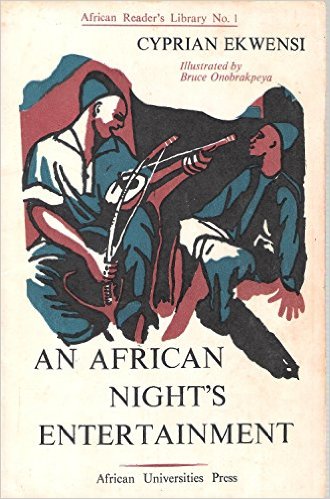
1. An African Night’s Entertainment
Written by Cyprian Ekwensi and released in 1962, this novel is set in Northern Nigeria and tells the story of a man named Abu Bakir. After having his betrothed, the beautiful Zainobe, stolen from him by a wealthy man named Mallam Sheru, Abu Bakir goes on a journey of vengeance.
Revenge, desire, and lost love are just some of the themes this novel explores, which, of course, means that it has the potential to become a kick-ass adventure/romance/tragedy movie with a bit of fantasy (magic) thrown in. It would be a period drama, so imagine all the beautiful costumes and set pieces!
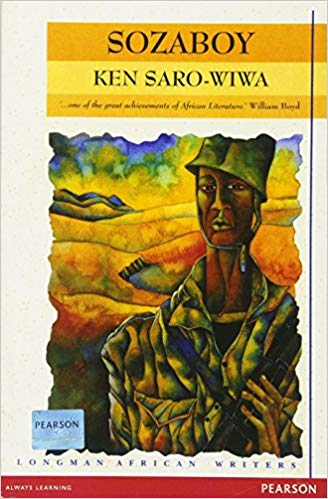
2. Soza Boy: A Novel In Rotten English
Published in 1985 and written by Ken Saro Wiwa, Soza Boy tells the story of a young and naive military recruit during the civil war named Mene. Growing up in Dukana, a town in the Niger Delta region of Nigeria, Mene sees joining the military as the ultimate status symbol. He thinks it will get him attention from the girl he likes, and the respect of everyone in his village. However, the horrifying realities of war quickly open Mene’s eyes and he realizes how wrong he was.
The novel can be a difficult read because it’s written in rotten English (a mixture of pidgin English, broken English, and idiomatic English) but in the right hands, would make a very compelling film.
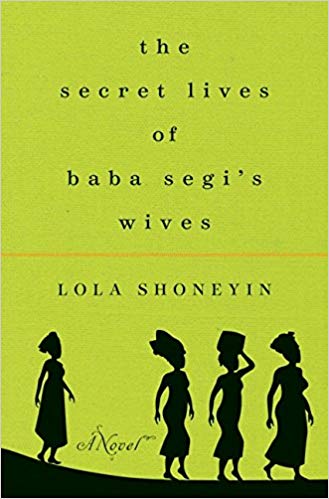
3. The Secret Lives Of Baba Segi’s Wives
“For Baba Segi, his collection of wives and gaggle of children are a symbol of prosperity, success, and a validation of his manhood. All is well in this patriarchal home until Baba arrives with wife number four: a quiet, college-educated, young woman named Bolanle. Jealous and resentful of this interloper who is stealing their husband’s attention, Baba Segi’s three wives begin to plan her downfall. How dare she offer to teach them to read, they whisper. They vow to teach her a lesson instead. What they don’t know is that Bolanle hides a terrible secret – a secret that unwittingly exposes the deception and lies upon Baba Segi’s household rests.”
– bookbrowse.com
Written by Lola Shoneyin and published in 2010, this novel offers an entertaining look into modern-day polygamous households, detailing the dynamics, struggles, intricate family politics, and conflicting personalities of the different characters. If that doesn’t scream comedy/drama gold, I don’t know what does.
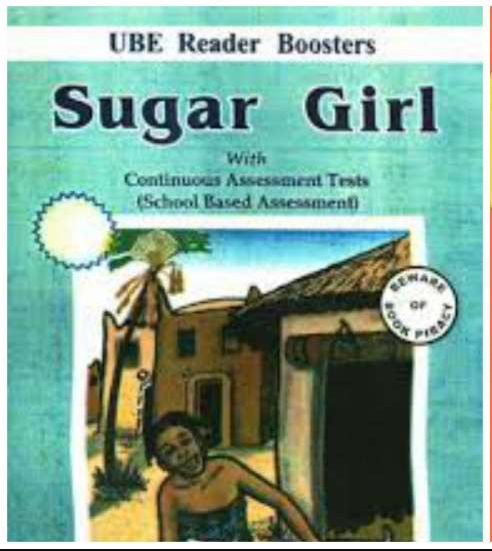
4. Sugar Girl
Sugar Girl is about a little girl named Ralia who goes missing from home under mysterious circumstances (she gets carried away by a giant bird while on her way to the farm). After this, she proceeds to experience so much weird shit that Alice and Dorothy’s adventures in Wonderland and Oz respectively look like child’s play in comparison. She’s held captive by an evil witch, meets a creepy hunter, and even goes blind at one point (because every Nigerian children’s novel from the late 20th century was specially designed to damage their psyches).
Someone needs to make this into a fantasy movie and give that godawful Alice In Wonderland movie from 2010 a run for its money.
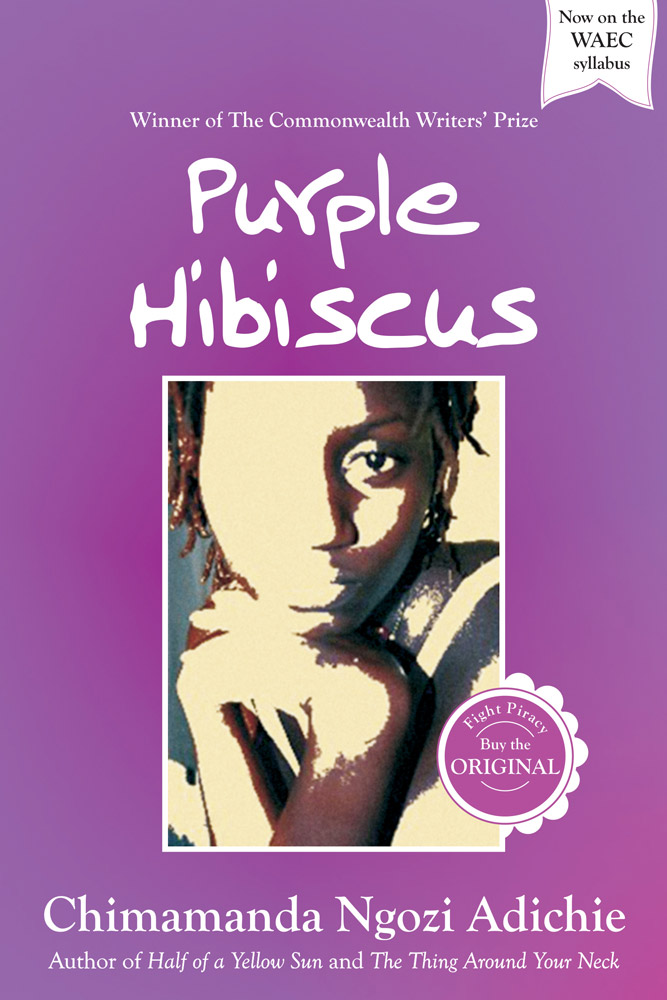
5. Purple Hibiscus
“Fifteen-year-old Kambili’s world is circumscribed by the high walls and frangipani trees of her family compound. Her wealthy Catholic father, under whose shadow Kambili lives, while generous and politically active in the community, is repressive and fanatically religious at home.
When Nigeria begins to fall apart under a military coup, Kambili’s father sends her and her brother away to stay with their aunt, a University professor, whose house is noisy and full of laughter. There, Kambili and her brother discover a life and love beyond the confines of their father’s authority.”
– chimamanda.com
Purple Hibiscus explores a unique mixture of themes (religion, domestic violence, nature etc) and would make a very solid coming of age drama if done right.
BONUS: The Trial Of Jimmy Johnson
Jimmy Johnson is a twenty-something-year-old guy who has just returned from America after schooling there. It’s clear, right from the get-go, that he is a less than reputable character because like 50% of his luggage (which he has a LOT of) is full of guns and drugs. Airport security catches him the moment he steps of the plane but he bribes his way out of trouble with thousands of dollars (IN CASH) and expensive fabrics. He goes to a hotel and spends the night with a prostitute he picks up at the bar. The next day, on his way to his parents’ house, he gets stopped at a police checkpoint comprised of incorruptible police officers who insist on searching his luggage. After they find all his contraband, Jimmy is detained, taken to court, and sentenced to death in a trial so short it’ll make your head spin.
The Trial Of Jimmy Johnson plays out like a 71-page long comedy skit. It was probably supposed to be a cautionary tale for children about the dangers of joining bad gangs or whatever, but the message gets lost in the hilarity of the batshit crazy series of events. Someone needs to buy the movie rights from the author, Sly Edaghese because this has mad dark comedy potential.
What other novels do you think deserve movie adaptations? Let us know in the comments.
Nigerians are expert storytellers, no doubt about it. This fact is evident in our largely oral history. But over the decades, our oral history began being recorded into stories that are as timeless and relevant – if not more than sef – as all the Shakespeare and Grimm Brothers’ fairytales.
Here are 16 timeless Nigerian books that the rest of the world ought to gather, sit down and read in much the same fashion as we used to read all their tea-sippin’, cookie-lovin’ stories:
1. God’s Big Toe by Obii Nwachukwu-Agbada
This story is about how one spoiled rich boy, Onwubiko’s life changes when his father dies. An important universal tale for all those privileged kids that forget to wake up grateful every morning.
2. Without a silver spoon by Eddie Iroh
From a book about a boy who had it all, to a book about a boy who did not really have anything to begin with. Without a silver spoon teaches that honesty is indeed the best policy; a universal lesson for everyone.
3. The Second Chance by Nyengi Koin
This is a story of how love conquers all. Move over Romeo and Juliet, come see how real romance plays out.
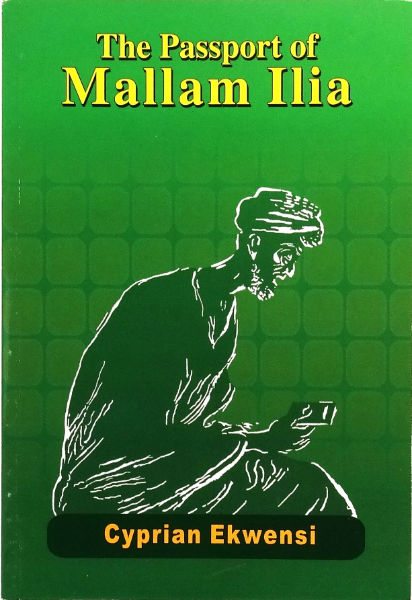
4. The Passport of Mallam Ilia by Cyprian Ekwensi
It is a story of betrayal and revenge told in such a way that keeps you captivated to the end. It also shows a glimpse of the Northern Nigerian culture and history.
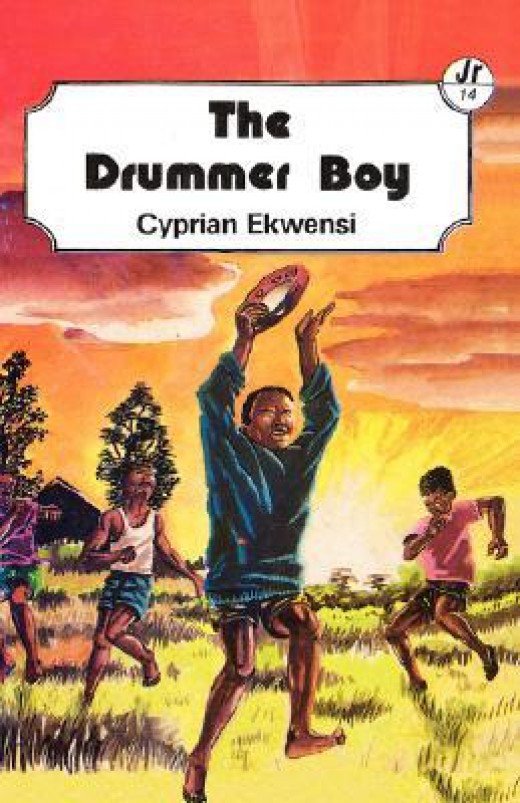
5. The Drummer Boy by Cyprian Ekwensi
This is a very touching story of Akin, the blind drummer boy, and all the many people he meets on his rigmarole sojourn in the world. It’s a touching tale of what blind trust looks like – both figuratively and literally.
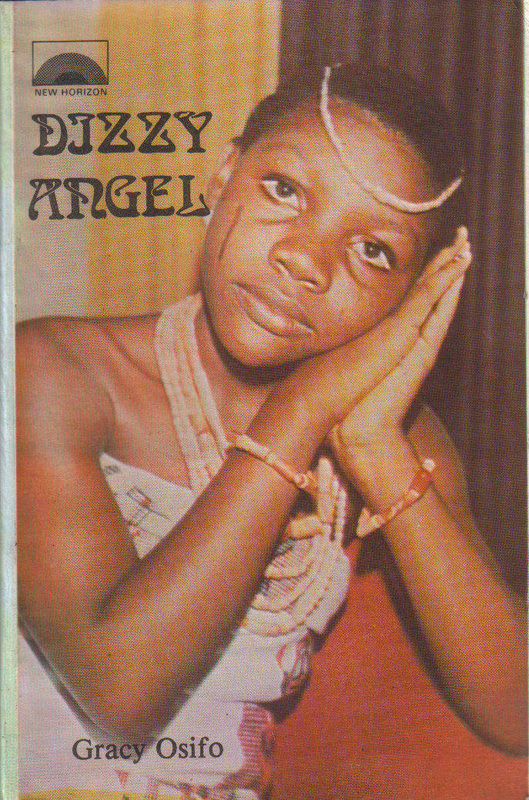
6. Dizzy Angel by Grace Nma Osifo
What’s it like being an ogbanje? I will never forget that scene where she describes making herself faint. This one is just a beautiful story of how in spite of tradition and superstitious beliefs, Ogbanje was still able to choose her own destiny. It has everything you will love in a good story, action, drama and yes, what is a good African tale without a bit of magic?
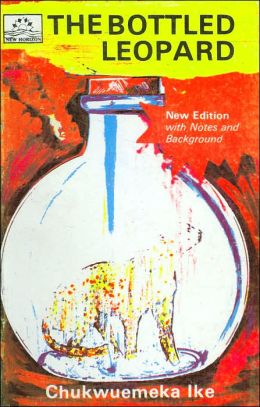
7. The Bottled Leopard by Chukwuemeka Ike
This epic novel will open your mind to the mystical realities in such a way that you have never experienced it. You will wake up in the middle of the night and wonder if you are really alone in the world. The spirit world will join with the real world. You will learn that before there were aliens, there were spirits.
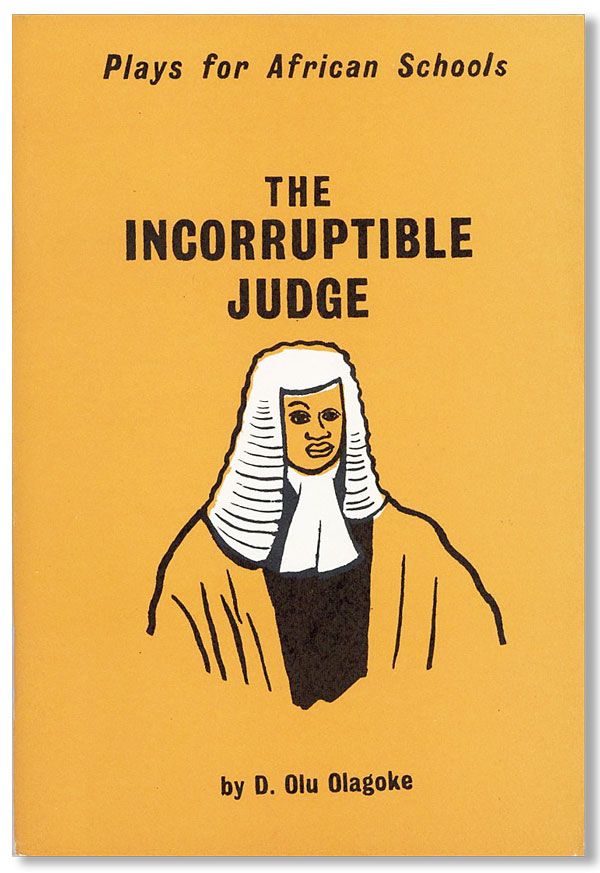
8. The Incorruptible Judge by D. Olu Olagoke
Just like it’s title, this book is about a judge that simply refused to take bribe. Not quite like some real life judges today. But it just goes to show that there is no “fantastically corrupt” nation, only people. And also that corruption can exist in the most seemingly insignificant and subtle of places.
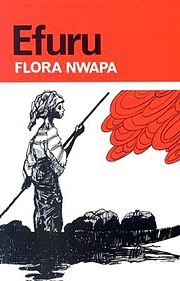
9. Efuru by Flora Nwapa
This is a pioneer story which features a Nigerian heroine that blazed the trail for many future novels with heroines. It will change everything the world thought it knew about women in historically patriarchal Nigeria.
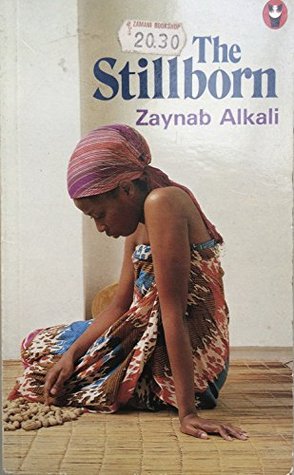
10. The Stillborn by Zaynab Alkali
Yet another book that addresses the female reality in historically and traditionally patriarchal Nigeria. For all those who think feminism is a western construct, think again.
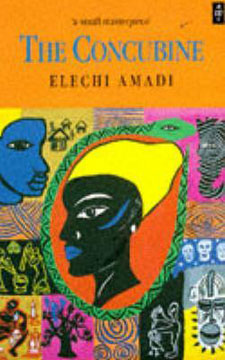
11. The Concubine by Elechi Amadi
This strong debut novel does what most novels of that time did; it explored the power of the spiritual in Nigerian culture. It will also teach you how to know if you have spirit husband.
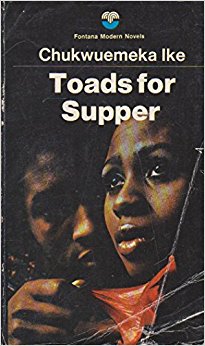
12. Toads For Supper by Vincent Chukwuemeka Ike
A complicated tale of love. Inarguably a classic. Which should be more than enough reason to read it.
13. The Last Duty by Isidore Okpewho
The writing style isn’t the only thing to love about this book, there’s also the strong themes and characters. It’s a powerful book about war and the emotional and psychological consequences of war and it should have it’s place up there right next to A Farewell to Arms by Ernest Hemingway.
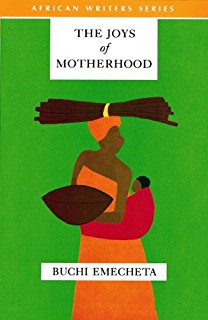
14. The Joys of Motherhood by Buchi Emecheta
This story takes you through the life of Nnu Ego and shows you every woman, or female, you have ever known. And the beauty of it is, this story is not just a depiction of a Nigerian reality, it shows a glimpse of a worldwide reality. Pretty heavy stuff!
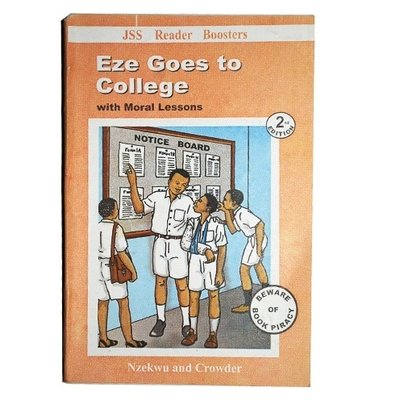
15. & 16. Eze Goes to School And Eze Goes To College
Co-authored by Onuora Nzekwu and Michael Crowder, is there any book more iconic than these two? It is the story of a boy who is determined to go to school despite the many challenges on his way.
And now, here’s a list of Nigerian novels that will make pretty awesome movies: