Notice: Function _load_textdomain_just_in_time was called incorrectly. Translation loading for the wordpress-seo domain was triggered too early. This is usually an indicator for some code in the plugin or theme running too early. Translations should be loaded at the init action or later. Please see Debugging in WordPress for more information. (This message was added in version 6.7.0.) in /home/bcm/src/dev/www/wp-includes/functions.php on line 6121 nigerians abroad | Zikoko!
It’s that time of the year when the “I Just Got Backs” (AKA IJGBs or Nigerians abroad) return to the motherland to check on their family and loved ones.
They’ll bring out foreign currencies, accents will flow left and right, and these allegations will remain around their necks.
Wannabe ballers
All IJGBs do is show off the superiority of their foreign cash. And now, naira can’t even fight back.
All IJGBs are liars. If you snooze, they’ll give you cold zobo.
Na why I no dey take all these abroad or IJGB men seriously, my mum keeps asking me why I turn all of them down, it’s cos they’re liars, they always have someone over there, because why will you leave all the women there and come and be asking me that is in Nigeria out
If you live in Nigeria and you are doing well for yourself despite the critical state of the country’s economy, don’t let any IJGB intimidate you, I can bet you most likely have a better life.
Normalise calling your abroad folks in the middle of the night just to cry, so they can know that there’s fire on the mountain, and the mountain in this case is your bank account.
Tell them you want to know what foreign currency feels like
If you know anything about abroad people, you’ll know they’re always eager to tell you how nice everything is abroad. So, why not have them extend the gesture to what the currency feels like too?
Remind them of when you were in the trenches together
Make them nostalgic with throwback pictures of when you were both in Nigeria, then follow up with stories of how everything is hard and you need urgent ₦2k to see front. It’ll be in your account before sundown.
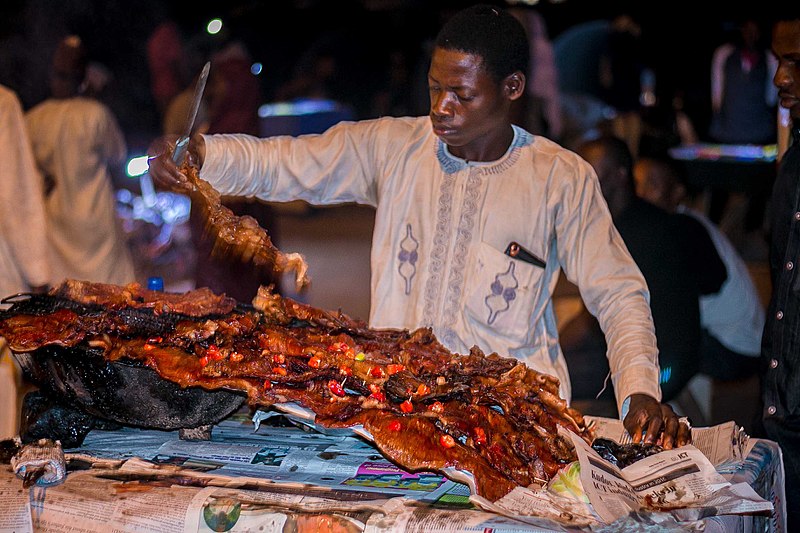
Offer to send them dry kponmo
It doesn’t even have to be kponmo, but something that’s hard for them to find abroad would definitely slap. Stockfish and Maggi cubes can work wonders.
Tell them you found land in the village
They want somewhere to tie down their dollars and pounds, and that’s where you come in. You can find them a piece of land in the village and bill them to pay for it. It might not be your money but at least it’ll touch your account.
Make it easy for them to send you money
Getting them to agree is one thing, but how you’ll receive the money is another. Don’t shoot yourself in the foot by not planning it well. Luckily, there’s Busha to help you take away the headache of receiving money from people abroad.
If you run a business, are a freelancer, or just need to receive crypto payments from abroad, you can easily get paid internationally using Busha Commerce. All you have to do is sign up on their website to get started.
The Nigerian experience is physical, emotional, and sometimes international. No one knows it better than our features on #TheAbroadLife, a series where we detail and explore Nigerian experiences while living abroad.
Today’s subject on #AbroadLife is the main character in a tale of three countries. After deciding to study abroad nine years ago, he was finally able to in 2021. He talks about being the only black person in an English town, having a fun time living in Greece, and dealing with the language barrier in France.
Where are you right now?
I’m in Nantes, France.
How did you get there?
I got an Erasmus Mundi scholarship to study for my Master’s degree in Europe, and it’s taken me through three countries so far. It’s a joint Master’s degree programme and it’s administered by three universities in three different countries, with full tuition paid.
Wild. When did you decide to leave Nigeria?
In 2013. I got into a federal university in 2012 and was admitted to study Fishery and Aquaculture. I wanted medicine, but that’s what they offered me instead. So, I spent my first year trying to be serious and get good enough grades to help me cross into Pharmacy at the very least.
I didn’t know anything about scholarships at the time. The people who ran printing centres in school would come to class and tell us to apply for scholarships. But I always thought it was a scam just to collect the ₦1,000 registration fee.
The following year, I started seeing my friends get some of the popular scholarships at the time; MTN, NNPC, Agbami, etc. These people didn’t have grades as good as mine, but they still got scholarships worth around ₦100,000 to ₦200,000 every year.
That’s when it really hit me that scholarships were a thing. I made the decision that I would get a scholarship to study abroad for my Master’s degree. The first reason was that I wanted to become an expert in my field, and the second reason was that I knew I could do it. I started researching and documenting things in my final year.
When did you start applying for scholarships?
In 2019, during my NYSC in Akure. I applied for two scholarships in the Netherlands and the UK. I was actually hopeful because my grades were stellar, but I was served breakfast on both sides.
LMAO. What did you do next?
I got a job upon completion of my NYSC, and I started thinking about ditching my scholarship dream because I was making enough money from it. On the other hand, I had nothing to lose if I didn’t get a scholarship, so I decided to try again. The only difference was, my motivation wasn’t as high as it was before. Money can distract you from your dreams, to be honest.
The next year, during COVID, I applied for two more scholarships. One of them was the Commonwealth scholarship administered by the UK government, and it was the one I eventually got. I was selected to get funding to study in the UK, but sadly, it didn’t happen then.
Why?
Because of all the economic damage COVID caused, the UK government decided to cut funding for that year. So, I received an email saying I still had my scholarship, but I’d have to defer my scholarship till the next year. The following year, I reapplied for the other scholarship that rejected me. This time, I was successful. Now, I had two scholarships and could weigh my options.
The commonwealth scholarship offered me full funding to study in the UK for a year, after which I must return to Nigeria to develop it. But the other scholarship didn’t have that clause. Even better, it was for a joint Master’s programme to be administered by three schools in different countries: Scotland, Greece and France. This meant I’d get to see more of Europe. I chose the second scholarship and started the process of migrating.
What was the process like?
Even though it was my first time leaving Nigeria, I found the process pretty easy. I got a letter from the scholarship office stating that the scholarship would cover 100% of the tuition and a monthly stipend. I didn’t have to worry about providing proof of funds and other things like that. I was granted a visa within three weeks of applying, and I moved to the UK in September 2021.
Walk me through your journey across Europe
I arrived in London first. COVID was still on at the time, so I couldn’t move to Scotland immediately, and my classes were online. I had many friends in the UK already, so I stayed with one of them. I was there for about three months before I moved to a town called Oban in Scotland.
I expected the UK to be cold, and it was. I expected it to be beautiful; it also was. But my God, the apartments are tiny! My room was smaller than my room back in Nigeria, and I had to pay £450 every month in rent, my yearly rent back in Nigeria.
To make things worse, I had to share a kitchen with other people in the building. So all I really had to myself was a room and toilet. And the buildings weren’t so modern because they try to preserve their architectural history. To top it all up, I was the only black person in the town.
Wait, what?
It’s a really small town. If there were any other black person there, I’m very sure I’d have met them at some point. But I never saw any other black person throughout my stay.
It wasn’t weird at all though. The people were very welcoming, and I’d sometimes go to bars and get them to play afrobeats. They loved it. I had a good time, but I only spent three months there before I had to move to Greece for the next part of my programme.
What was Greece like?
Honestly, Greece is like Nigeria Pro Max. When I got there, I thought, “Did they bring me to Lagos by mistake?” People were blaring horns so loudly, and no one respected zebra crossings. It was giving Ojuelegba-level chaos.
One time, I tried to use a zebra crossing, thinking the cars would wait for me the way they would in the UK. Come and see swerving. I was the one dodging cars. At that point, I knew I’d found Nigeria’s twin. It’s a very interesting country and naturally beautiful too sha.
I lived in a city called Heraklion, and it has a beautiful landscape, beautiful beaches and many historic sites. Things were also cheaper in Greece than in the UK. Their economy was worse, which meant the stipend I was getting translated into a lot more cash for me. The buildings were not that pretty, and you could tell the country was battling sapa at the time.
Tell me about the people
The people in Greece are friendlier and more laid back than those in the UK. Back in London, everyone was about their hustle and didn’t really give a shit about you. But no one knows how to have fun as much as the Greeks.
About 70% of the people in Greece speak English, so I could get by very well in social circles without knowing any Greek. The families are bigger because they don’t migrate very often.
How long were you there for?
Six months, before having to move to Nantes in September.
Where?
Nantes, in France. It’s a student city, so I met more people from different parts of the world there. For the first time since London, I saw a lot of black people. It’s a lot like the UK actually. But the main difference is language. One annoying thing is how snobbish French people are about their language. It’s almost as if they have a long-standing beef with English speakers.
The first thing I learnt to say in French was, “I don’t know how to speak French”. The whole point was to get the person to speak English with me, but nine out of ten times, their countenance would change the minute I said it. French people aren’t as friendly as the Greeks, but they’re even less friendly if you don’t speak French. They’ll say they can’t speak English and air you, even when they actually can.
It’s so bad that even in the hospitals, the doctors only talk to you in French. The country is also very bureaucratic; there’s a lot of unnecessary paperwork you have to deal with, and they’re all in French. Emails from the authorities come in French, and when you call to ask for clarity, they’ll speak French. So, language is a real social barrier for me here. The lucky thing in all of this is that my classes are in English. If not, I’d be in trouble.
How are you dealing with it?
I’m currently learning French sha, so these people can stop airing me anyhow. I have French classes twice a week, and it’s helping. The good part is my coursework across the countries has been in English, so language isn’t affecting my studies in any way.
What do you love about France?
First of all, it’s very multicultural. In the other countries, the diversity came from the people in my own class. But we’ve been the same people moving together from place to place for the past year. In Nantes, there are people from all over the world. One time, I went to a church and saw so many black people, I thought I was back in Benin, Nigeria.
Another thing I love is the fact that it’s a welfarist state. The government cares about the people who don’t earn very much. My stipend is around €1,000 per month. But because I’m a student, I get up to 60% off my €450 rent, financed by the French government. The same goes for food and a bunch of other things I need to stay alive.
And what’s school been like so far?
Moving from school to school across different countries is very tough. Not only is the system of education different from Nigeria, but each country has a different system of their own. In the UK, we didn’t have proper exams; we wrote essays that would count towards the assessment grade. Most of my classes were online, and there’s only so much one can learn without being in a classroom. In Greece, I had proper exams and the classes were in-person. It was a better learning environment for me as I could interact directly with my classmates and ask questions in class. I’d say my semester in Greece has been the easiest so far.
France basically combines everything. Essays, exams, assignments, field trips, you name it. We do everything.
So, where will you go from here?
Back to Greece to finish my programme. It’s a two-year master’s programme. I did the first semester of my first year in the UK and the second one in Greece. The third one is what I’m currently doing, and the last will be in Greece. I can’t wait to leave the stress of this place and get back to my second Nigeria.
LMAO. Your love for that place is really something
Yes. It’s like Nigeria but with constant light.
Hey there! My name is Sheriff and I’m the writer of Abroad Life. If you’re a Nigerian and you live or have lived abroad, I would love to talk to you about what that experience feels like and feature you on Abroad Life. All you need to do is fill out this short form, and I’ll be in contact.
When you’re across the world and five hours behind everyone you love, you quickly learn they can’t always help you through the challenging moments of living in a new city. At least, that’s what I learnt during my first week in Cambridge, Massachusetts.
Between getting confused about how to find the right queue to exit the airport as an immigrant, not knowing when to cross the street and accidentally locking myself outside my room on day three, I’ve had to depend entirely on strangers.
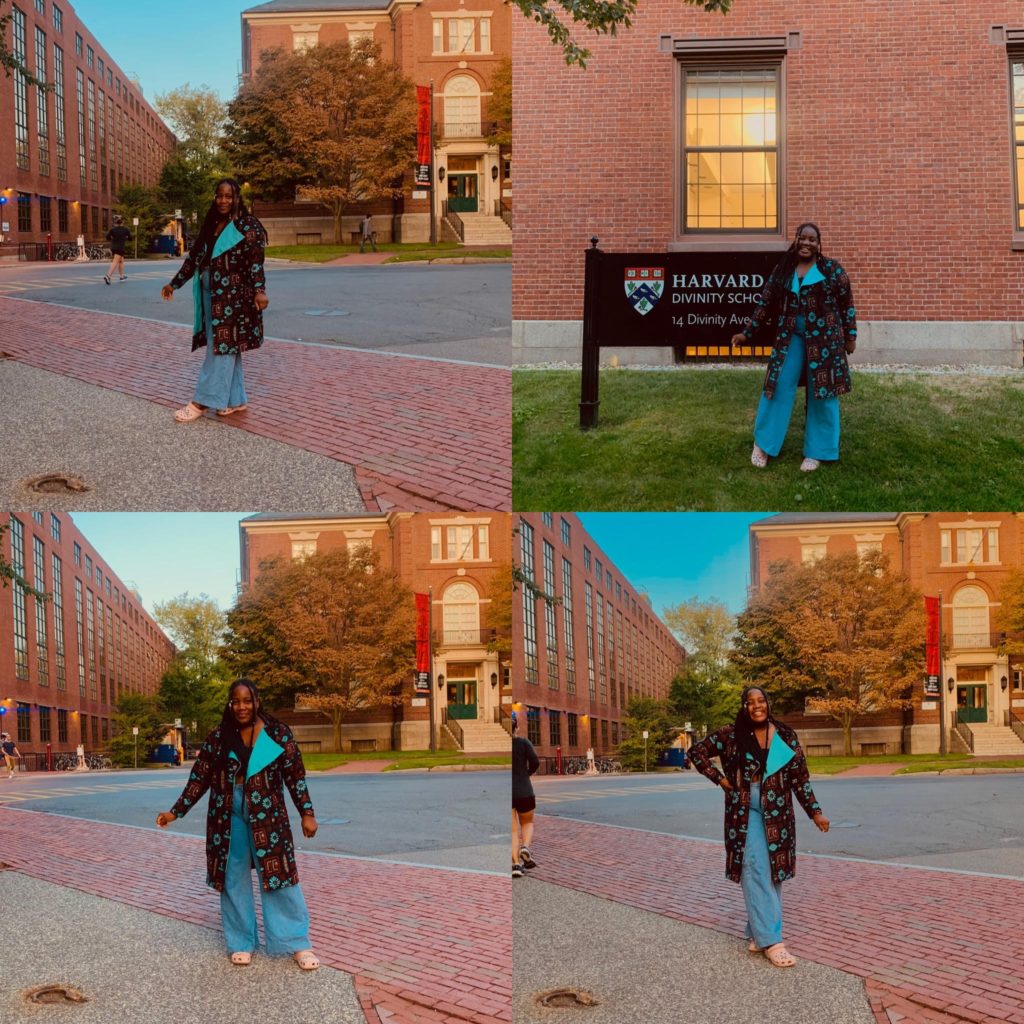
I travelled to Cambridge for my master’s programme. I’d been working on it for three years and finally got a break when I got a scholarship to Harvard in March. Getting a degree from an Ivy League college felt like I’d get a shot at finally working at the United Nations or World Bank. The excitement from my family and friends pacified the idea that I would be alone in a new country in five months. There was no time to focus on that. I needed to prepare for my departure.
The months leading up to leaving were fast. Every single day was a rush trying to meet up with the list of things I needed to pack. Honestly, the most important thing to me was food. Where was I going to find my favourite dried smoked catfish in Cambridge? The city has only 10% of black people in America living there, so I needed to stuff my bags with everything Nigerian — that could fit into two 23 kg luggage.
“They’d ask questions about your trip based on your visa type. But one wrong answer could mean going back to your country.”
How do you fit your entire life into two 23 kg luggage? You can’t. The night before my trip, I watched my mum and her sisters divide everything I owned for my cousins. My favourite clothes, the drawings I’d collected from paint and sip dates with friends and the speaker I tricked my boyfriend into leaving at the house just a month before. It felt slightly depressing.
You may think I’m ungrateful for the opportunity to leave Nigeria, but I couldn’t control feeling sad. The only time I ever left Nigeria before Cambridge was for holidays in Wales as a kid, and now, for the next two years, I’d suddenly be living in a foreign country with no family or friends. Imagine the stress of trying to make new friends as an adult or something as little as trying to figure out how to braid my hair rather than pay someone $200. That fear overshadowed all the hype about Harvard.
The feelings slowly faded away in the departure hall. I guess taking one last selfie with my parents and little brother should have made me feel worse, but somehow, it reminded me of how far we’d come — all the late-night reading for exams while I was working finally made sense. But what really got me was the last text from my mum before my flight took off. “You’re the best part of my dysfunctional relationship,” she said. It was the first time I felt my mum was really proud of me. My mum isn’t the most expressive person, so knowing that made the next 23 hours of transit feel better.
“Only my bags and the huge rosary that once belonged to my grandmother my mum forced into my hand luggage created a semblance of home.”
I’d read articles about immigration officers at the point of entry into the US who try to vet people coming. They’d ask questions about your trip based on your visa type. But one wrong answer could mean going back to your country.
Everything on my documents checked out, but I wouldn’t say I was the most optimistic person.
All my fear came rushing back when I finally landed in Massachusetts. In the departure hall, separate lines are designated for immigrants to access the point of entry. Unlike the Nigerian airports where you see mostly white people on one side, the foreigners were a mix of races. I tried to filter for other Nigerians on my connecting flight from Qatar to Boston, but I couldn’t. A clear sign that I was no longer home.
With my two large bags filled with all the Nigerian snacks and soup spices I took for granted back home, I stood confused. There were airport officials to help, but a dark-haired lady yelling, “Stand on the yellow line if you’re American. Blue line, non-Americans,” didn’t make things easier.
The sensible thing to do was ask for help, but the Nigerian in me wanted to figure it out alone. And that’s a character that doesn’t serve you well in a new country.
I finally made it to the right queue when I spotted a man holding a Ghana-must-go bag on the blue line.
When I got past immigration, the next challenge was figuring out how to get from the airport to the apartment I’d rented in Cambridge over an online renting platform. Luckily, my roommate happened to be in the area when I texted to let him know I’d landed safely.
Again, the Nigerian in me didn’t feel safe getting into the car without taking a picture of the plate number and sending it to everyone I knew back home. But what could they have done if the roommate I got online turned out to be the next Ted Bundy?
Thankfully, the apartment was real. “This is your new home,” my roommate said, as we dragged my bags onto the elevator. I wouldn’t call it home yet, but I can’t deny how pretty the apartment looked. I loved the view of trees from my window. But as I packed my stuff in and settled into my room, I felt empty. Only my bags and the huge rosary that once belonged to my grandmother my mum forced into my hand luggage created a semblance of home. It hurt to realise I was now alone.
I understand the excitement of my friends and family for my trip, this new adventure, but it didn’t take away the reality that I felt like I was starting my life all over again. All my friends and family expected me to be happy. That’s all they talked about leading up to my departure. “Oh, you’re so lucky. Thank God you’re getting out before the elections,” they said. But I’d left my job, all my friends, and I didn’t have any family in Massachusetts. Calling to share that sadness wouldn’t make me feel better, so I focused on unpacking.
“It was silly of me not to clarify what stew meant to my American roommate because I ended up eating the rice with chilli sauce and broccoli.”
I put all my foodstuff in the fridge. Of course, the garri poured in my bag, so I needed to clean it up. I also didn’t have any hangers for my clothes, so I picked out the nightwear I needed for the night and put out clothes I needed for a few days in my closet. Bathing was what really calmed my nerves. I brought my favourite soap, and the smell reminded me of being back in my own bathroom. Not the unfamiliar tub I was in.
The next decision to make was what to eat. My roommate offered me some crackers, cheese and pickles to snack on. I hated the thought of cheese and pickles, but I tried it sha. The pickles were definitely not for me. They were salty and had some weird taste I honestly can’t describe. After one bite, I decided chin-chin was the best way forward.
My roommate was kind enough to offer me dinner. His first suggestion was rice over chicken. I asked if there’d be stew. He said yes.
It was silly of me not to clarify what stew meant to my American roommate because I ended up eating the rice with chilli sauce and broccoli. Surprisingly, the broccoli was the best part. It was crunchy and salty, but the rest needed some salt and pepper to satisfy the Nigerian in me.
“I was happy that someone who’s lived in the city all his life was just as confused with the roads.”
In my first week here, the biggest hurdle was getting around the city. I want to trust Google Maps, but turning around at least three times to figure out the right direction to face gets really annoying. Yet, I’ve decided to figure it out on my own anyway.
I know it’s not unusual to walk up to a random stranger for help in Nigeria. But when I was trying to find my way to class the next day and approached an Asian lady for help, she seemed startled. Maybe it was the way I said, “Sorry, please, excuse me,” before I actually asked my question that confused her. So, I’m a little more cautious now.
After 15 minutes of walking, I eventually figured out I just needed to turn left from the street, and it was pretty easy from there with Google maps. But three days later, I got lost again trying to get to the store. It should be easy navigating the streets with Google maps, but the roads are laid out in a confusing way.
When I ranted to my roommate, he complained about how much he hated driving in Cambridge too. Apparently, the roads were previously horse tracks, so there are many intersections that lead to confusion.
“I blamed myself for moving away and making our relationship so difficult. “
I didn’t understand what all of that meant. I was just happy that someone who’s lived in the city all his life was just as confused with the roads.
If you’re wondering how I got home, just know I spent 20 minutes walking, missed one bus then cried at the bus stop. I eventually gave up and decided to take an Uber. I was upset at the thought of spending $10 on a ride rather than $2 on the bus. The Nigerian in me still converts everything to naira, so please, free me.
When I returned to my apartment, I cried some more and sat on the kitchen floor. I was frustrated with how hard finding my way around would be for the next few weeks. I wanted to call a friend to vent, but it was 1 a.m. in Nigeria.
I still tried calling my boyfriend. He wanted to be physically present, but hearing that was hard. I blamed myself for moving away and making our relationship so difficult. He didn’t think of things that way though. He wanted to comfort me in whatever way he could, so he ordered me some food with Uber eats.
“I miss Lagos conductors “
Sadly, the food never arrived. Turns out my street exists in two places, and I didn’t include the right one in the address I shared. There was no way we could sort things out because it was 11 p.m. on my end. I was getting tired and sleeping seemed like a better option.
I can’t deny that it’s been surreal walking through Harvard for a week. I remember my boss from last year telling me I’d never get in with a second-class degree from UNILAG. Until the moment I submitted my application, I believed him. But I pushed passed the fear and got in.
Now that I’m here, this phase of figuring things out has been overwhelming. I can’t tell you how much I miss Lagos conductors. They were my Google Maps of Lagos, and they actually knew where I needed to go. The little things I really appreciate now. I just hope one day I’ll think about Cambridge as somewhere that feels like home or close enough.
Believe it or not, they’re just five of us left in Nigeria, and the pressure is getting even werser. If you have doubts about your friends’ whereabouts, here are some simple ways to know they’ve japa.
They stop posting online
When your friend goes from always posting themselves on their statuses to only posting memes, or worse, not posting at all. Just forget it, them don leave you go.
They send you snaps of the sky or roof
Snapchat users can testify to this one. You’ll just wake up to a video of the sky or roof with an accompanying song about the wonders of God. Ehn, Mercy Chinwo, well done.
They start replying your messages by 2 a.m.
Somebody who used to reply immediately is now taking five hours, and the replies only come at night. In case you’re beginning to wonder if they’re only doing night plan, my dear, your guy is now in a new dispensation
They add the Nigerian flag to their bio
Because tell me, which Nigerian living in Nigeria would wake up, buy bread for ₦1k, swim inside Lekki flood on the way to their office, survive robbery in Lagos traffic on the way home, and still put Nigerian flag in their bio?
The call never connects when you try their line
You’ve been chatting with them online, but the line disconnects whenever you try to call them. Do you still need us to tell you that they’ve changed their line?
Their skin is now skinning
They posted selfies, and you’re asking them what their skin routine is. Leemao, it’s the abroad life filter.
They start joining foreign Twitter spaces
You’ve started getting notifications that Tobi is in a Twitter space about Nigerians navigating the UK? What other proof do you need?
Many Nigerians have decided it’s better to be patriotic from abroad than to stick around for things to get better, and can we blame them? The country is after our lives.
While you’re happy about your loved ones’ japaing, it’s also valid to feel sad, upset, frustrated, jealous even. Don’t take my word for it; here’s what these Nigerians had to say about being left behind.
“I don’t know how many more goodbyes I have in me” — Bola
My really close friend travelled a while back, and I was devastated, to say the least. I’d been aware of the whole process, but when it hit was when he got his visa. I was overjoyed — I’m not a witch — but I was also very sad because it could be the end of our friendship. I’ve started to think seriously about relocating because everyone around me seems either ready to leave or in the process, and I don’t know how many more goodbyes I have in me.
“We weren’t close, so it didn’t make a difference” — Esther
It was pretty much a relief for me. My sister getting her visa meant she could join her husband who left a year before. Asides from that, we hadn’t been close for a long time, so her relocation didn’t make a difference to me.
“I was heartbroken for the first couple of months” — Emma
Both my siblings are out of the country, so I’m experienced in this subject matter. However, the reactions were a little different for both of them — my elder sister left when I was younger and in boarding school, so even though I was sad, I didn’t feel it so much.
But because my younger sister and I really bonded over COVID, I was heartbroken for the first couple of months after she left. It’s been a year now, and even though I still miss her, I think the distance has helped us grow. My elder sister and I are even closer now.
“We don’t have enough memories” — Flo
Having people you care about leave just makes you sad. It makes you question yourself like “What are you doing with your life? When will you be ready for this big change too? Is relocating even something you want?”
When you get past that part, you realise you haven’t made enough memories with the person, and that’s the sad part because you can’t even say what will happen after they leave, you can only hope they don’t forget you in the end.
“I didn’t expect to feel as sad” — Bankole
A friend of mine who also happens to be my coworker told me he was leaving in a month, and I was sad. I didn’t expect to feel as sad as I did because we had a misunderstanding some months ago that put a dent in our friendship. But with him leaving, the fight seems so trivial now, and stupid.
“I’ll miss her, but I’m looking at the bigger picture” — Temi
My cousin leaving for the UK is one of the best things to happen with the country falling apart. Yes, I’ll miss her, but I’m looking at the bigger picture — her being there is all the motivation I need to be serious with my plans in the coming year.
“It’s like I’ve missed out on friendships that would’ve been” — Adebo
Over the years, I’ve had my sister and at least three close friends relocate. I’m so happy for them, I switch between asking them to come visit and advising them against stepping foot in Nigeria. But nothing takes away the feeling that I’ve missed out on friendships and relationships that would’ve been. It’s even worse when they move to places with different time zones from mine. My best friend is going to leave soon. Just thinking about it makes me shed tears because he’s my last close friend around.
The Nigerian experience is physical, emotional and sometimes international. No one knows it better than our features on #TheAbroadLife, a series where we detail and explore Nigerian experiences while living abroad.
This week’s Abroad Life story is three in one. Our subject is a development economist who has a particularly interesting Japa story that spans over seven years and took her to three countries on different continents. She’s currently in the United States, but that doesn’t seem to be her final destination.
First, why did you decide to leave Nigeria?
It was just a very oppressive place for me. Not just politically and economically, but also socially. It wasn’t a place that allowed me to express myself in the ways I wanted. I was alté before alté actually became a thing, so it was really stressful to explain why I dressed the way I did or did things a certain way. This was as far back as 2009. I was around age 15 at the time and my need for self-expression was starting to explode.
I decided I wanted to go someplace where I’d have the freedom to be more expressive. I can’t remember exactly when I made the decision to leave, but I remember doing a lot of research for places to go, and after a while, I settled for Italy.
Why Italy?
So, I really wanted to go somewhere that didn’t have a lot of Nigerians. This isn’t because I had anything against Nigerians, but you know how parents have their own international spy network? I was trying very hard to avoid that. I just wanted a place where I could really get to know myself.
Secondly, I’d begun a career in the creative arts, and it was important for me to go someplace where I could nurture my curiosity and gain more experience. I did my research and found a programme that would let me spend time in Italy and Germany. This was very appealing to me because at that time, I was working for an art foundation. Italy represents such a big part of art history with the Renaissance, and I would be living in Tuscany, one hour away from Florence.
Also, Berlin represents that edgy and experimental phase of art, and I thought that summed up everything I was looking for at the time. I also liked that I could see other countries in Europe relatively cheaply because of the EU agreement. I wasn’t even thinking about the US or Canada at the time. You could have given me a million dollars, and I still wouldn’t have gone to those countries.
That sounds very interesting and intentional. So what was the process like?
Hmmm, this question. So I applied for a long-stay visa to Italy. This was my first time handling such applications by myself, and it was quite stressful. It was also my first exposure to how demeaning traveling on a Nigerian passport is, whether you’rea tourist or not.
First of all, booking an appointment was very stressful. Even though there were websites for this, I had to go to the embassy and get the security to talk to me and give me a date. A lot of people had to bribe them just to get an appointment.
The second problem was the embassy staff themselves had all this information printed out and displayed, but they weren’t actually very helpful in person. They were mostly irritated by the applicants. This meant I had to figure most things out by myself or by talking to people who had been through the process.
Another thing I didn’t think about was that Italy isn’t an English-speaking country, so I had to translate all my documents to Italian, and I had to assemble documents from when I was born because it was for a long-stay visa. There was a time I lost all my translated documents and had to start over.
Another time, they asked me to come back to the embassy, and when I did, they refused to open the gates for me. I have this sharp memory of just standing outside the Italian embassy wearing my sunglasses, with silent tears streaming down my face. I felt very “f*ck this process!” at the time, but I picked myself up and continued.
Wow, that’s a lot!
The good part was once it was done, it was done. So, five months after I started, my visa got approved. I packed my bags and moved to Italy. This was in 2015.
Awesome! What was Italy like?
Italy was very beautiful, but because I was young and had never travelled before, there were a lot of things I didn’t know about being an immigrant. I just assumed everything would go smoothly. In hindsight, I should’ve done more research about that.
How young were you at the time?
I was between the ages of 20 and 21.
Wait…what?
Haha, yes. I was very young at the time.
What was the experience like in Italy?
Once you get there, you have to go to the police and register yourself, so they can prepare your residency documents. You basically show them your visa, and they prepare a residency card you can take everywhere.
The problem was the visa I had was very restrictive. I wasn’t on a work visa, so paid work was very hard to find. I was very fortunate at the time to be receiving a monthly allowance from my parents back in Nigeria. I just continued my academic research till I found an internship at an art gallery that allowed me to indulge my passion for the arts. I eventually had to come back to Nigeria because I had a long-stay visa not a permanent one.
Back to the trenches. How did you deal with that?
It was fun to be back actually. I just hung around for a bit and enjoyed life as a Lagos babe.
Where did you go from here?
I love Nigeria, but I can’t be there for too long or I start losing my mind. But at that point, I was no longer working full-time in the creative sector. It had become a side thing, and I was now in a field called “international development”. This was just a fancy name for NGO work.
I looked at the careers of people I wanted to be like and noticed they’d spent time in low-income countries. So I decided to do that. I found an international development gig in Uganda through a Facebook group I’d joined. The pay was poor but they provided for all the living logistics so I didn’t mind.
I took the job on the understanding that I was going to enter the country on a tourist visa with the provision for a work visa upon arrival. LMAO. Big mistake.
What happened?
The Ugandans denied my work visa. It was a big shock because everyone they’d hired for that position before had had their visa approved. But I was also the first African national to be hired for that role. Every other person was Canadian or American. This is when I discovered discrimination within Africa, and it was more traumatising to me than it was in western countries.
I had to file an appeal to get a work visa, which meant they had to keep my passport for that period. My job was meant to last for a period of two years but for the next seven months, I didn’t have a passport. The problem was, as a foreigner in Uganda, you need a passport to register for everything. So I had to beg my coworkers for everything. To get a SIM card, they had to register it under their name. I didn’t even have a bank account in Uganda; my salary had to be paid in cash. The worst part for me was I couldn’t even travel. Not home, not anywhere.
Eventually, I had to cut my two-year contract down to one year and cancel my appeal. But even after I did that, my passport wasn’t released to me. I was put in an immigrations vehicle and driven to the airport like I was being deported. They held onto my passport until I got to passport control. I’m never going back to Uganda. It was a harrowing experience.
I’m so sorry about that. So what did you do after all this?
At this point, I didn’t have migration energy anymore. I came back to Nigeria in 2019 and stayed for a while. I got a job I liked but didn’t see myself staying long-term at.
I had a short vacation in Europe that reinvigorated my travel spirit, and I started thinking more long-term about migrating. My plan was to go to a prestigious school and work at a prestigious organisation. This was when I stopped being alté and became more mainstream.
I did my research and decided to get a master’s degree in development economics. I was lucky enough to get a full scholarship to an American university. The programme was ranked top 0.1% in the world, and I liked that. But I wanted security. So, for the sake of insurance, I started processing my Canadian PR (Permanent Residency).
A smart woman. How did that go?
My school was in Washington DC, which is an expensive place to live in. Because my scholarship didn’t cover living expenses, I was a few thousand dollars short. Luckily, I had friends who were keeping their money in my account at the time, so I could easily ask to borrow from that to cover my expenses.
The visa application process was different than I was used to because I mainly interacted with the school and not the embassy, initially. I was meant to start school physically in August 2020, but COVID struck when I started the visa application process in March. As a result, I was going to school remotely from Nigeria. Because school had already started, I was granted an emergency appointment with the US embassy in November. The visa was approved, I bought my ticket and got ready to move. By January 2021, I was in the US.
How has it been so far? Expectations vs Reality: US edition
The first thing that struck me was how big everything is. The roads were big, the houses were big, even the serving portions at restaurants were really big. It’s why I like DC, because it has a bit of normalcy to it. But everywhere else, it’s as if they have an obsession with size.
Another thing that surprised me was the health system. Everywhere else, when you’re sick, you go to the hospital nearest to you. In America, that’s one chance! First of all, you have to have insurance. Secondly, your insurance only covers certain things, so you have to call your insurance company to confirm if what’s making you go to the hospital is covered. I find that ridiculous.
Advertising is also constantly in your face. Everyone’s trying to figure out another way to take money from you. On top of that, it’s actually cheaper to buy something new than it is to fix it, which feeds into the consumerist lifestyle they already have. For example, if something was wrong with the zip on my dress, it’ll be cheaper for me to buy a new dress than to take it to someone who can fix the zip. That’s insane.
The last shocker would be an abundance of well-mannered men. Right now, I’m retired from Nigerian men. Only God’s intervention would make me go back. Sorry, not sorry.
What’s your favourite thing about the US?
I like my life here because I have peace of mind. My favorite thing is I could never afford therapy until I came to this country. My insurance now gives me access to incredible mental healthcare, which has done a lot for me. I’m really grateful for that.
What’s life like right now and what are your plans for the future?
I’m basically enjoying myself right now. I really like it here. I particularly like DC because there’s a lot of thoughtfulness in how the city was planned that reminds me of Europe. It’s a really beautiful place.
My sister is closeby in Canada, and I’m also in a loving relationship. I’m applying for jobs, and yeah, I was right. Getting a fancy education and internships has opened ridiculous amounts of doors. I’m in a good place.
As for the future, I see myself staying here long-term. The worst-case scenario is I pack my bags and move to Canada next-door which solves the problem of ever having to be stuck in Nigeria by condition. So yes, that’s my story. It only took me seven years, but I did it.
The Nigerian experience is physical, emotional and sometimes international. No one knows it better than our features on #TheAbroadLife, a series where we detail and explore Nigerian experiences while living abroad.
When we asked this week’s subject on Abroad Life why he left Nigeria, his response was, “Nigeria”. He talks about finding Poland as a cheap japa option, touring Europe on a Schengen visa and his anger at the lack of an African equivalent.
Why did you decide to move abroad?
Nigeria, man, Nigeria. Inflation, low standard of living, insecurity and fear everywhere. I’m just like every other young Nigerian who’d been talking about japa for years. I think something that stops many people from actually japa-ing is money, and it was my problem for a while too. Between 2019 and 2020, I decided to work and have some savings so I can actually start the process.
In 2020, I stumbled on a travel agent’s page and made inquiries about japa on a low budget. I wasn’t targeting the popular countries like the UK or Canada because I knew they were expensive. I wanted somewhere that would match my budget.
And that was Poland?
Yep. According to the agent, he had a 90% success rate with helping people move there.
I’m curious about how much you eventually spent
Nothing more than ₦3.5m. I’m talking school fees, processing fees, flight money, and payment to the agent.
The easiest way to get a Schengen visa was by getting an admission here. I started the process in September 2020, and by March 2021, I was out.
Was that your first time outside Nigeria?
Yep.
Expectations vs reality
Before I travelled, my only idea of what abroad looked like was what I saw in movies and heard from family members who travelled. When I eventually came here myself, man, I was amazed. It just… isn’t Nigeria. You feel like you’re actually in a developed society. Beautiful buildings, great scenery, working transportation systems, everything is amazing here.
As I travel to other countries with my Schengen visa, I see more beauty and development, and I can’t get enough of it. I also didn’t realise I would meet many Nigerians everywhere I go. My thinking was that it’d be difficult to socialise because Nigerians are majorly in the UK, the US and Canada, and not so many elsewhere.
In my time here, I’ve been to Germany, Turkey, Spain and the Netherlands, and I’ve seen Nigerians and even Nigerian stores there. Bro, there are Nigerians in Lithuania.
I’ve also seen people of other countries. Beautiful women. It feels like I’ve been a bird in a box all my life, and now, I’ve been set free.
What type of Nigerians would I meet in Poland?
Mostly students.
Tell me about the Polish too
When I first got here, my neighbours were older people, and it was difficult to communicate with them. The language barrier is usually a problem for people, and that’s why many Nigerians don’t come here. But I survive with Google Translate.
I eventually got a different apartment, where my neighbour was a 21-year-old Polish woman and she was super friendly because we could communicate. Apparently, people in the older generation don’t speak English and don’t really associate with foreigners, but younger people want to learn English because it’s seen as cool and trendy.
They’re generally nice people. Their women like African men. There are some racists, but my stance is that humans just tend to be discriminatory to people that are different from them. Even within Nigeria, there’s tribalism. So I try not to see racism as a big deal.
As I socialised, people began to tell me about how international students get depressed after some time in Poland, and how I could avoid it.
Ah, tell me
So because it’s a different economic system than people are used to, they struggle to keep up. Many people come here because the cost of living is lower than in the rest of Europe — their currency is one-quarter of the euro — but even with that, monthly payment of rent and other bills tend to put people in a bad place financially, and therefore, mentally, especially during winter.
I also know about people who move to the UK with the plan to survive by working multiple jobs, but it doesn’t work out so they end up being broke and unable to survive. Maybe it’s not just a Poland thing, after all.
How do you survive?
I got a job online as a game tester. It pays me enough to pay bills and still have some money left to save and sometimes travel. Maybe people just don’t know, but getting decent jobs as a student here is not so difficult.
How’s school?
School has been online for me the entire time because of COVID.
Here, they don’t want you to fail. They teach pretty well, and if you fail an exam, you get the chance to retake it in a few weeks. The crazy part is that they’ll give you the same questions.
UNILAG is shaking. What’s your favourite part of moving?
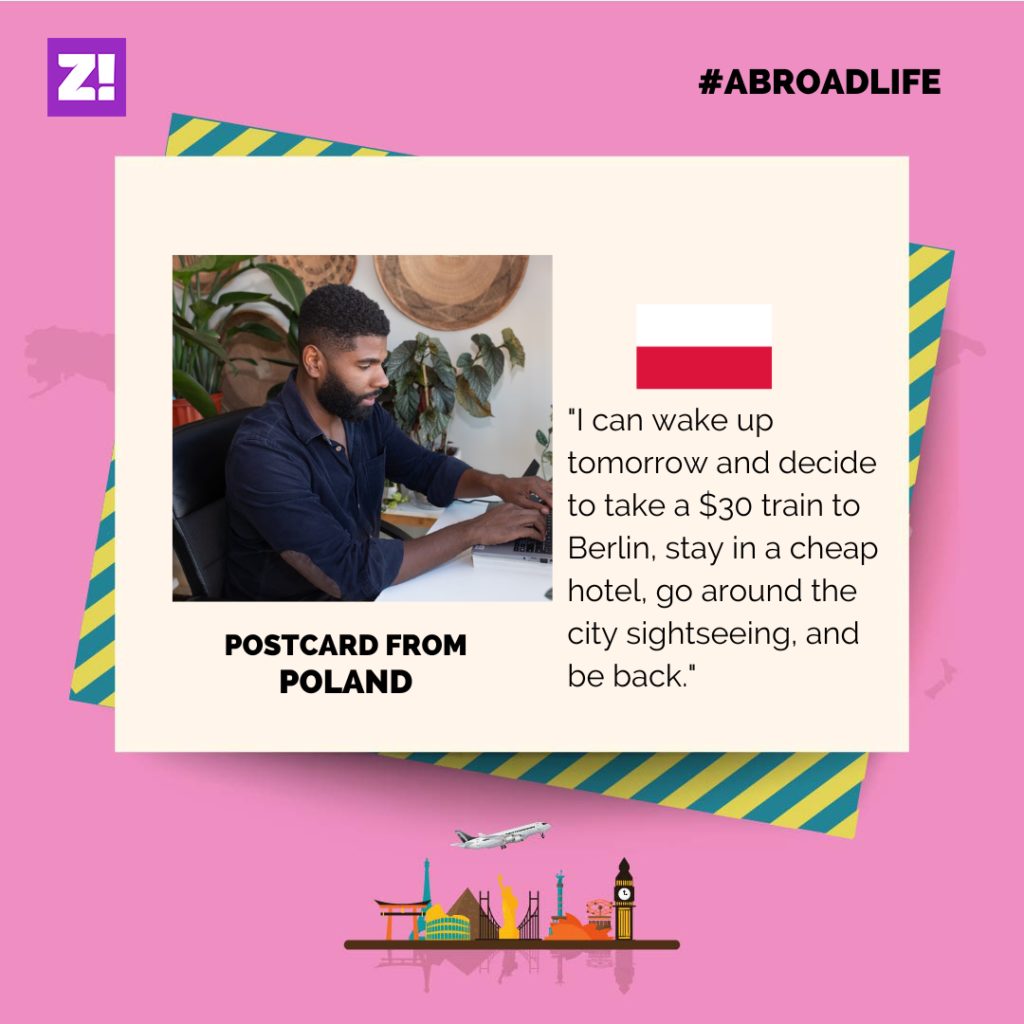
Being able to access Europe with just my Schengen visa. It makes me sad to think that we require separate visas to travel to different places within Africa. Bro, I can wake up tomorrow and decide to take a $30 train to Berlin, stay in a cheap hotel for two days, go around the city sightseeing, and be back. I’d only spend like the naira equivalent of ₦50k in total. Do you know how amazing that is?
God when o. Do you plan to stay there forever?
I’d rather not because, like I said, the currency here is not great compared to other European countries. If I decide to stay here after my studies, I’d be earning much less than I could be. So the plan is to finish my studies in two years and move to a country with a better economy. It’s still early, but I’m thinking Canada.
Hey there! My name is Sheriff and I’m the writer of Abroad Life. If you’re a Nigerian and you live or have lived abroad, I would love to talk to you about what that experience feels like and feature you on Abroad Life. All you need to do is fill out this short form, and I’ll be in contact.
We heard that you want to japa. Toh, we are happy for you oh, but we know how you like to put your mouth in what does not concern you, so we decided to warn you about some of the things you will see in obodo oyinbo.
1. Gay people are there oh. Do you still want to go?
Do you really want to go to a country where gay people will be kissing on the road? Are you sure you will not go blind if you see them like this? Better stay in Nigeria where such a thing cannot happen.
2. Hmm, oyinbo women wear bum short to the market oh.
How will you now survive like this, you that you always call women ashewo and believe that bum short is why they rape women? Are you sure you will not land in oyinbo jail like this?
3. Omo, there are feminists abroad oh.
Not just ordinary feminists, we mean feminists that believe the patriarchy should die by fire. Will you still survive like this, seeing how patriarchy is the air you inhale and exhale.
4. That abroad you want to go, hmm, some people don’t believe in God oh.
Will you not tell them that they will go to hell fire like this? Shebi you kuku know that you like to say things nobody sent you. Anyway, if it leads to fighting and they deport you, it’s holy deportation. Afterall, you’re doing spiritual work.
You sef, why would you want to go to that kind of country? Better stay in Nigeria where they don’t do that kind of thing. Nigeria the holy of holies, the place where the angels will start marking heavenly attendance.
6. Abroad can corrupt you oh.
You’ll drink their water now, next thing you know, you have started doing everything they are doing there. You that you are a person of culture, Culturechukwu, Culturedolapo, Culturebashir, Cultureosas. What will people say?
7. You can be abroad and you will not hear when the trumpet will sound.
Better stay in Nigeria where your only hindrance to heaven is generator noise. At least you will suffer on earth and go and enjoy in heaven — that is if you make it into heaven sha.
Yes, japa-ing is the latest thing. You wake up one day, pack your load and leave Nigeria and its many deficiencies alone. That’s commendable. But then, there’s one thing no one prepares you for, and that is the number of Nigerian foods you will miss when you are out of the country.
We made a list of some of those foods:
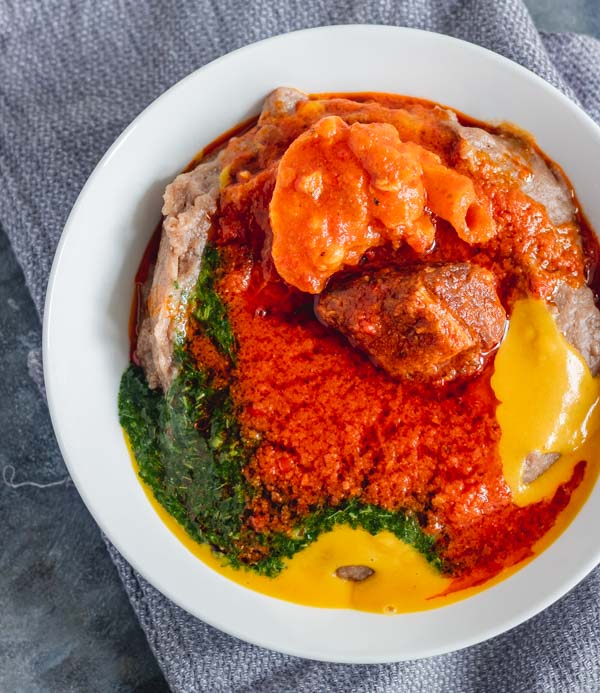
1. Ewa agoyin
Yes, you can cook it at home. But can you, really? Can you replicate the taste? The sauce, the soft yams that are sometimes paired with it?
Can you get this peculiar flavour?
2. Suya
LMAO. There’s no other way to say this. Suya comes with the Nigerian package. You see those TikTok videos of people making suya? Welp. If it is not suya, it cannot taste like suya.
3. Ofada rice
You know, you can easily cook this on your own. But can your neighbours withstand the smell? Sometimes being a good neighbour means that you have to let go of some of the things you enjoy eating.
4. Abacha
Can you find Abacha hawkers in Canada or New York?
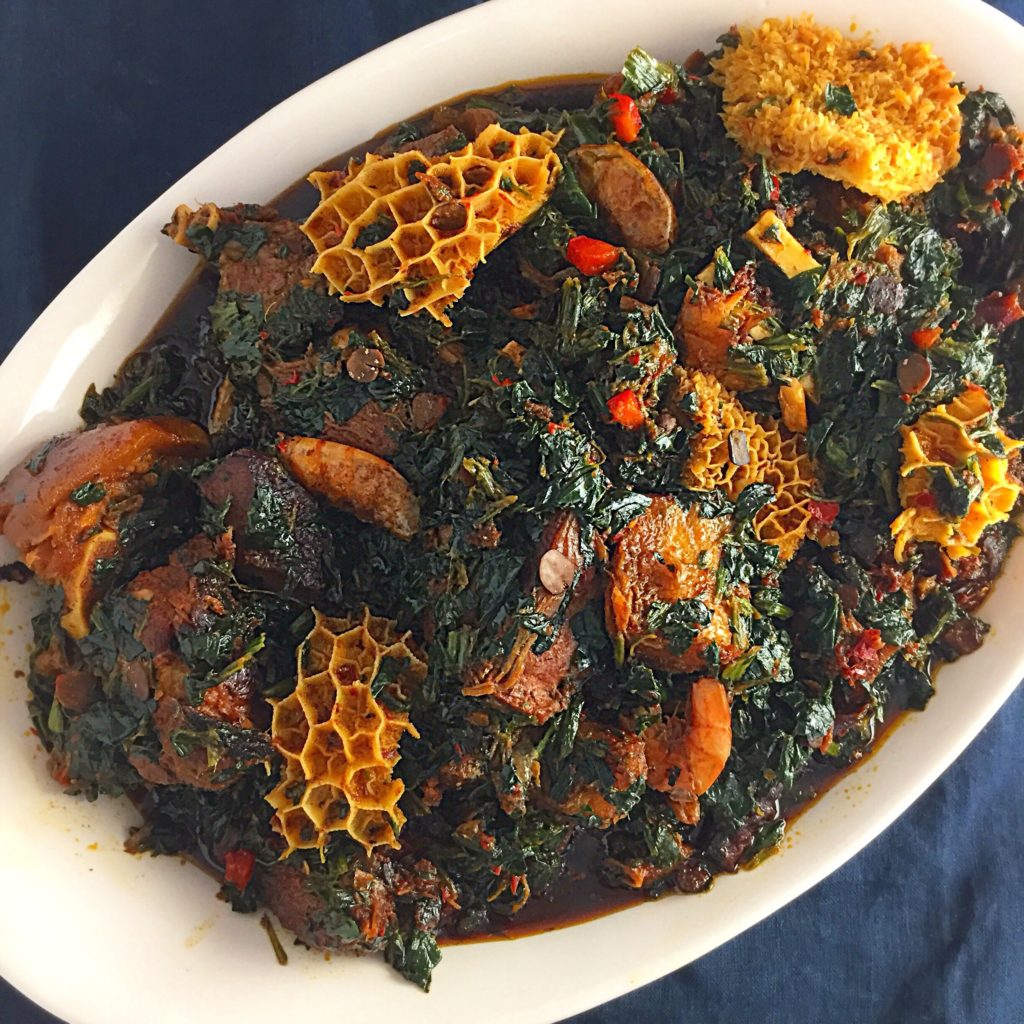
5. Efo riro
There are a lot of plants in the abroad, but I’m sure none of those people have a farm for Efo soko or Efo tete. So, what’s going to happen?
6. Kilishi
This one can be managed by shipping. Your people in Nigeria can ship it over to you.
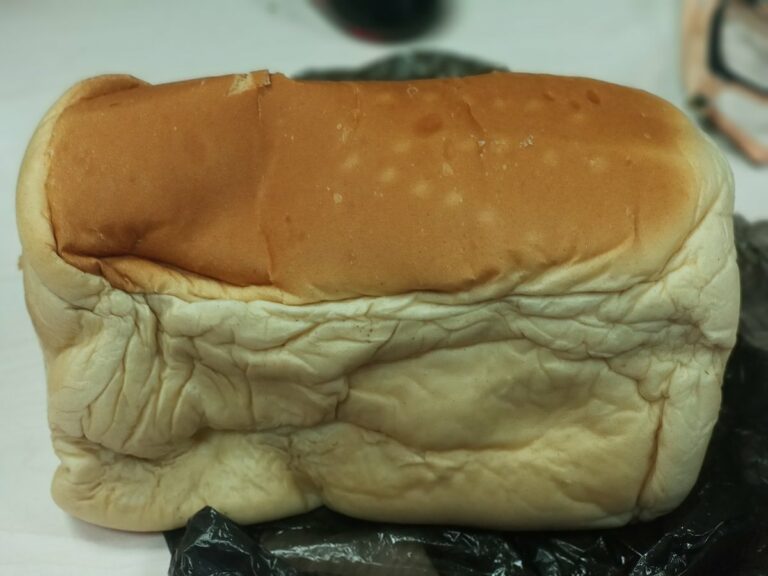
7. Agege bread
Sure, you can get proper (and better) American bread. But can it ever be like Agege bread?
8. Bole
Port Harcourt people will feel this the most. But even those who are not from Port Harcourt will also know what it feels like to be in a country where bole is not readily available.
9. Amala and abula
We know this can be cooked at home. But can anything beat the local abula in a local buka? The heat of the buka, the sweat, the… *whew*
10. Okpa
If you’re a foreigner visiting Nigeria for the first time, this one is for you:
The Nigerian experience is physical, emotional, and sometimes international. No one knows it better than our features on #TheAbroadLife, a series where we detail and explore Nigerian experiences while living abroad.
Today’s subject on Abroad Life has lived in Ghana for the past five years. He talks about his initial hesitation to move, perceptions Ghanaians have of Nigerians, Ghanaian women and Ghanaian jollof.
So how long have you been in Ghana?
I’ve been here for about five years. I came here for school, and I’m in my final year now.
Why did you choose Ghana?
The University of Ghana is considered the best in West Africa, so when I finished secondary school, my parents told me to go there. I remember they used the word “Prestigious” a lot as they tried to convince me. But I didn’t really know anything about the school, so I did some research.
What did you find?
All the stuff I saw online pointed to the fact that it was a good school. They even had detailed information for international students, but the Nigerian in me was still not sure I wanted to go there. I mean, I grew up in Nigeria and all my friends were there. Why would I want to go to Ghana?
What was the process of getting an admission like?
It was pretty easy. I used my WAEC. Some people use A-Levels, but it’s much easier to use WAEC. It’s the same way you’d apply to go to a Nigerian university, the only difference is that the cut off mark is higher for non-Ghanaians. Thankfully, that wasn’t a problem for me.
So what was your first time in Ghana like?
About two months before I had to resume school, my entire family decided to take a trip to Accra to see the school and the environs. We stayed there for about a week, then went back to Nigeria. When it was time to resume, I came on my own. Settling down and doing all my registration was really stressful. It was probably worse for me because I’m an international student and I had to do some extra stuff.
What’s one thing that shocked you about Ghana?
There are a few things. First, the language. You know how in Nigeria, there are three major languages, but everyone just has to know either English or pidgin to get by? It’s not like that here. There’s one major language and then the other languages are fringe languages. This means that a lot of people speak the major language and in turn, don’t speak English really well. Don’t get me wrong, the majority speak English well. But coming from Lagos where everyone spoke either English or pidgin fluently enough to communicate, it was strange to get here and see so many people struggling with English. The average person in Accra does not speak English as well as the average person in Lagos.
That’s interesting…
Ghanaians also strongly believe that their accents and pronunciations are superior, so I always get corrected when I pronounce something the Nigerian way. It’s hilarious.
Another thing I found strange is that many Ghanaians I interacted with automatically assume every Nigerian is a fraudster. When they see Nigerians, they see fraud. I noticed it in my first year because I would hear whispers, but I thought it was just a funny stereotype until one guy asked me to teach him how to do fraud. I was so offended. I told him I’d never done fraud in my life and asked why he would even consider asking me that His reply: “Stop lying. Are you not a Nigerian?”
Wow.
There are a lot of funny things that some Ghanaians believe about Nigerians. For example, many Ghanaians believe that the average Nigerian is a great entertainer. Like, we can sing and dance. I think it’s because we have many great musicians, but it’s just funny to me that they would assume it’s all of us that can sing and dance. People always ask me if I can do either, and when I ask why, it’s the same reason: “Because you’re Nigerian.”
Haha…
One last thing — they consider Nigerians to be very loud people. Okay, yes, we’re loud, but I’m a very quiet person, so whenever someone meets me for the first time and finds out I’m Nigerian, they get shocked and say something like, “You’re Nigerian? But you’re very quiet!”
You’re killing me… How then do you socialise?
When I first got here, I was in the hostel for international students, so I naturally spent more time with Nigerians and people from other nationalities. In my second year, I moved hostels and started mixing with Ghanaians. It was nice. They’re more accommodating than Nigerians. I would say the only thing that challenged me was the pidgin. Ghanian pidgin is quite different from Nigerian pidgin.
And then Ghanaian babes…
Tell me about them.
Ghanaian babes are super friendly. At first, it was strange to me that women were this nice in real life because most of the Nigerian babes I know will just give you attitude for nothing. I think the thing with Nigerian babes is that they think everyone is trying to hit on them, so they just put up a shield wall. It’s annoying, I won’t lie. But even if Ghanaian girls don’t like you, they’re still polite and will speak to you like a normal human being.
You’ve dated a Ghanaian woman?
Yes, but not until after a few years here. Because they’re nice people, I started feeling like the women I was hanging out with were not “honest” with their feelings. It’s like, “I know you want to be nice to me and all, but please it’s not like I’m perfect. Be real with me and tell me when I mess up. Be comfortable around me.” It took me a while before I found someone like that, but I did, and we dated. It was good, but Coronavirus came. Lockdown and distance were tough, so we ended things.
In the end though, I would rather be with a Ghanaian woman than a Nigerian one. I don’t think they’re as entitled as some Nigerian women can be. Nigerian women need to learn from Ghanaian women.
Are you coming back to Nigeria any time soon?
I’ll be honest, I’m now very used to life here and I’m enjoying it. It’s calm and there are job opportunities especially for people in tech. So I’ll probably stay.
Do you miss anything about living in Nigeria?
The food. The food and the people. Nigerians are generally livelier, but there are already a lot of Nigerians living here, so the people part is sorted. Nigerian restaurants are also springing up fast. So, basically the part of Nigeria that I love, I already have it here.
I’m curious, has “Ghana must go” ever come up in any of your conversations?
Hahaha, yes. There was a time I wanted to come back to Nigeria for the holidays and my bag cut, so I needed an emergency bag. I walked into a store and as I was telling the guy what I wanted to buy, I had to stop mid-sentence to re-evaluate what I was about to say. I later found out that they call it “Jute bag”, but they never take offence when anyone calls it Ghana must go. They’ll even laugh. But at that point, they already know you’re a foreigner.
Omo, Ghanaians seem like really chill people.
Most of them are. Of course, there are the people that don’t like Nigerians because they think we’re here to scam them, take their jobs and marry their women. They’re a small group, but they air their opinions with their chest. They won’t get violent or anything, but they’ll speak their minds. I got a lot of hate in school because, as a tall guy, I naturally attracted women and guys thought I was here to steal their babes. It was weird. Also, a lot of people say that Ghanaian women prefer Nigerian men because we dress better, have more game and are more confident. There might be some truth to it.
Final question, Ghanaian jollof or Nigerian jollof?
If someone says they prefer Ghanaian jollof, it means they’ve not tasted Nigerian jollof. Ghanaian jollof is tasteless until you add shito, and even then it doesn’t taste as good as Nigerian jollof. But what’s the point of calling something jollof if you’re even going to add stew on top.
The first time I had Ghanaian jollof, I was at a restaurant with my friend. When I saw and tasted it, I had to tell the waiter I didn’t order white rice and he should bring what I really ordered. My friend had to tell me to calm down and eat my food because I wasn’t going to find any jollof much better than that in Ghana. I was hurt.
Want more Abroad Life? Check in every Friday at 9 A.M. (WAT) for a new episode. Until then, read every story of the series here.
The visa application struggle is very real with our not-so-much-loved Nigerian passport, and a lot of us have learned that the hard way. However, there are still a few countries that will have us with no hassle! Check out these African countries you can visit visa-free.
Thank God, sha. We never cast for here.
1. Cape Verde – West Africa
A former Portuguese colony, this beautiful island country is located on the West African coast. The official language is Portuguese, and the national language is Kriolu. Cape Verde has amazing weather and is a great choice for a visit.
2. The Comoro Islands – East Africa
Comoros is a constellation of islands off the south-east coast of Africa, east of Mozambique and north-west of Madagascar. Although The Comoro Islands is listed as visa-free for Nigerians, we still have to get visas on arrival. Life. There are lots of exciting touristy things you can do on the islands, so you should definitely check it out.
3. The Gambia – West Africa
Africa’s smallest country, The Gambia is absolutely beautiful and is known for its diverse ecosystems around the central Gambia River, abundant wildlife, beaches, and so much more. It has it all. Nigerians can visit The Gambia visa-free for up to 90 days.
4. Ghana – West Africa
As part of ECOWAS benefits, Nigerians can enter our sister country visa-free, but sometimes, visas may be given on arrival. Ghana is famous for its slave-trade historic artefacts, beautiful beaches and parks, and Shatta Wale lol. You should definitely visit.
5. Kenya – East Africa
Kenya is a beautiful country with incredible wildlife. Nigerians can visit for up to 90 days, visa-free. From fun rides through the safari to snorkelling, Kenya is one of Africa’s most impressive vacation locations.
6. Madagascar – East Africa
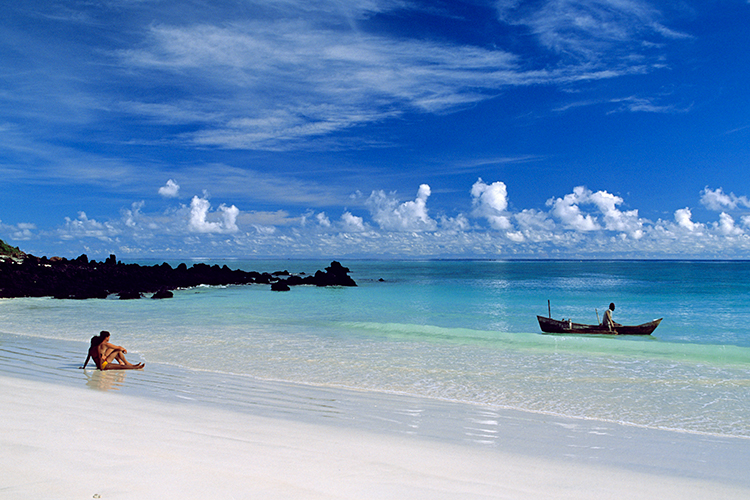
Madagascar is situated off the South East coast of Mozambique and is the world’s 4th largest island. Different species of palm trees surround the waters and you can go swimming or snorkelling in the Indian Ocean. In Madagascar, Nigerians receive visas on arrival.
7. Chad – Central Africa
Chad is located in the central African region and is home to a wide variety of wild animals. You can visit Chad visa-free and can pay a visit to the Zakouma National Park which has 44 species of large animals and many species of birds. There are also many interesting sandstone formations.
8. Mauritania – West Africa
Mauritania a beautiful desert country situated between Morocco, Mali, Algeria, Senegal, and the sweep of the Atlantic Ocean. On arrival, Nigerians can acquire a visa. You can cross the desert on a camel, or explore Chinguetti, an impressive “Old City”; a crumbling, sandstone village, with various antiquated mosques and a few libraries.
9. Mauritius – East Africa
Mauritius is a gorgeous island nation located along the coast of the Indian Ocean, off the southeast coast of Africa. Mauritius is an English/French-speaking country with a tropical climate, clear and warm sea waters and beaches. A perfect romantic getaway spot, you can go snorkelling, swimming or scuba-diving. For 90 days, Nigerians can visit Mauritius visa-free.
10. Seychelles – East Africa
Seychelles is located off the coast of East Africa in the Indian Ocean and is bordered by other islands like Zanzibar, Madagascar and Mauritius. The beautiful country of 115 islands boasts of a diverse blend of cultures and has some of the best beaches in the world. It offers Nigerians a visitor’s permit for one month.
Nigerians can be found everywhere in the world, this is not surprising. Leaving the shores of the country and meeting other Nigerians can be fun at times. But in some situations it can also be a chore or a huge bore-fest. Here are a few situations.
1. Meeting a random Nigerian and they believe they are related to you somehow
Don’t push it, please… Allow it… Let it slide… No we are not.
2. “So what did you bring from Nigeria for us?”
Did you tell me to bring anything?
3. When they keep reminding you about how long they have been away from home
Ah okay oh we’ve heard you Mr. long-term resident.
4. “I really miss home, tell me what it’s like now”
You don’t read the news? Are you being serious now?
5. When they say they are from a certain state abroad
Yes oh, I know you are “from Houston, Texas”. I meant where in Nigeria are you from.
6. “I’m British/American my parents are the Nigerians”
Are you serious? Tell me more about that, briefly explain that concept to me.
7. “You need to teach me how to improve my native tongue”
Oh because I am the expert and that’s what I came here for. Yeah getting you.
8. When they say “Nigeria needs people like me”
Okay then, Mr Superhero Savior come back and help us now.
9. And then “I don’t think I can cope in Nigeria anymore”
Not today Satan not today.
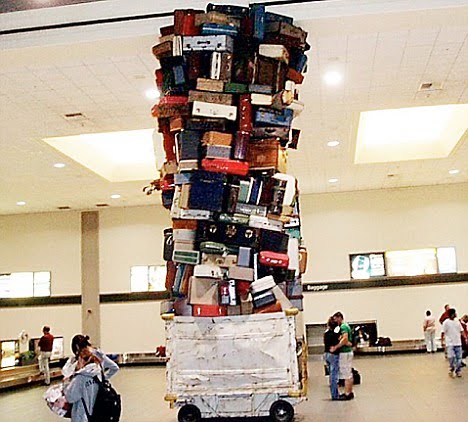
11. When you are leaving and they want you to deliver a whole store to their family
A Nigerian couple in the UK were sentenced to 12 years in prison on December 7, for subjecting Mr Sunday Inuk to 25 years of servitude. He was just 13 when the Edets took him without permission from his parents in 1989, with false dreams of getting work and an education upon getting to the UK.
Sunday Inuk served the family without pay for 25 years, eating and wearing only what he was given, cooking, cleaning, gardening and sleeping in the hallway all through.
We have compiled a list of 15 things he could’ve achieved in 25 years.