Notice: Function _load_textdomain_just_in_time was called incorrectly. Translation loading for the wordpress-seo domain was triggered too early. This is usually an indicator for some code in the plugin or theme running too early. Translations should be loaded at the init action or later. Please see Debugging in WordPress for more information. (This message was added in version 6.7.0.) in /home/bcm/src/dev/www/wp-includes/functions.php on line 6121 Nigerian weddings | Zikoko!
The Nigerian wedding industry is the epitome of the saying, “It’s expensive out here”. From make-up to hall decoration, the cost of an item is most likely to double — or even triple — once the word “wedding” is mentioned.
Wedding vendors be like…
The intending couple aren’t the only ones affected by this account balance-reddening venture. In recent years, bridesmaids have had to dig deep into their purses to afford the expenses that come with the position. We spoke to six Nigerian women about what it costs to be a Nigerian bridesmaid.
May, 29
Highest amount spent bridesmaiding: ₦800k
I spent that much on one wedding because I had to take flights to the bride’s village for the traditional wedding and then to Abuja for the church wedding. That cost about ₦300k. Then I spent about ₦150k on two outfits, ₦50k on make-up and contributed ₦30k with the other bridesmaids to throw the bride a bridal shower.
I can’t remember how I spent the rest now, but I still bought her a gift and took her out to eat one time. Then there was the cost of transportation within both cities and spraying money during the reception. I even had to borrow money for my flight back because my salary was delayed a bit. The expenses were worth it because she’s my childhood best friend. I wouldn’t spend that much money if it were someone else.
My usual bridesmaid budget is ₦100k – ₦200k and the outfits take most of the money — specifically sewing. Aso-ebi can cost between ₦15k – ₦50k, and my tailor charges between ₦30k – ₦50k. I try to limit bridesmaid activities to once every two months because of these expenses.
Rebecca, 26
Highest amount spent bridesmaiding: ₦300k
The bride lived on the outskirts of Lagos and didn’t provide any accommodation. She expected all six bridesmaids to manage in one room in her dad’s house for two days. I couldn’t do that. I think I spent about ₦80k on hotel fees alone — I stayed three days because I was too tired after the wedding.
I actively avoid bridesmaid activities — because where is the money? — but when I have to, I try to keep my budget under ₦100k. That almost never works out because I still have to spend on Uber cabs, make-up and outfits. And good owambe make-up starts from ₦20k. How much is remaining?
Ola, 31
Highest amount spent bridesmaiding: ₦400k
My husband and I drove from one city to another for that wedding, so a good percentage of the ₦400k went into servicing and fueling the car for the six-hour journey.
Out of that ₦400k, I also contributed ₦30k for the bridal shower, ₦20k for the wedding gift and ₦60k for hotel accommodation. Aso-ebi was ₦45k and sewing was ₦15k. I also had to buy shoes, a new purse and new hair. The hair cost about ₦100k.
I think a reasonable bridesmaid budget is ₦200k, especially with how expensive things are now. At least, I don’t do it every weekend, and I can only be a bridesmaid for people I care about.
Chioma, 23
Highest amount spent bridesmaiding: ₦150k
I’ve actually only been a bridesmaid once in my life. The expenses would’ve been more than that, but the bride is my close friend, and she was very understanding of the fact that I was going through a rough time.
The aso-ebi cost ₦50k, but she gave it to me for free. I used ₦50k to sew it and contributed ₦15k for the bridal shower. I made souvenirs for the wedding and that cost ₦35k. Make-up cost ₦15k, and the rest went into transportation, spraying and helping the bride pay for random things.
I feel like ₦150k is a reasonable budget for a bridesmaid. When it’s not like I’m the one getting married.
Prisca*, 26
Highest amount spent bridesmaiding: ₦200k
This was a few months ago and the money I spent still annoys me because I’d already accepted to be a bridesmaid before realising I’d have to buy two different aso-ebi for the traditional and white weddings. That cost ₦40k. The bride also asked all the bridesmaids to do a ponytail for the wedding, so I had to install a 360 lace wig. That cost about ₦120k. Then there was still make-up, hotel fees, styling and the rest.
I’ll make sure to confirm what I’m expected to buy before I agree to be a bridesmaid again. Spending more than ₦100k for someone else’s wedding is wild.
Jola*, 30
Highest amount spent bridesmaiding: ₦250k
I was the chief bridesmaid and a lot of that money went into getting outfits for the engagement party, traditional wedding, white wedding and afterparty. That also meant triple the cost of makeup (because of the three different events) and transportation. The bride handled accommodation and feeding, though. So, that helped.
My usual bridesmaid budget is ₦80k – ₦100k. Most of my friends don’t like wahala and a good number of them combined the traditional and white wedding on the same day. One-day weddings are usually more cost-effective because you’re just spending once. Right now, my motto is, “Count me out of any wedding that goes over a day”.
Nigerian DJs are turning wedding receptions into daytime clubs these days, and slowly replacing classic wedding songs like Sunny Nneji’s Oruka and Flavour’s Ada Ada with songs that have no business on a matrimonial dance floor.
If the DJ plays any of the following songs at your wedding, don’t pay him his balance because he clearly wants your marriage to scatter.
Last Last — Burna Boy
“E don cast. Last last, na everybody go chop breakfast.” The opening line of Burna Boy’s Last Last is enough to ban this song from all wedding venues, but no, Nigerians won’t listen. This man sang about suffering from severe heartbreak, but it has become an anthem of celebration for some reason.
How can your marriage last when you’re prophesying heartbreak into it?
Girlfriend — Ruger
Ruger’s Girlfriend is a song about cheating. Not just small cheating here and there, but public, no-shame-at-all-Lagos-men type of cheating. The whole song is about Ruger trying to move to a new girl, and every time she reminds him of his babe, he’s like:
Finesse — Pheelz and BNXN
We all love Pheelz and BNXN’s Finesse, but please and please, let’s keep it far away from wedding receptions. Apart from the “If I broke, na my business” part, which may invoke the spirit of poverty into your home, there’s also the part where he sings, “If you fall in love, girl it’s certain; you go chop breakfast, I’m not capping.”
No, man, this song doesn’t agree with my marital spirit.
Fem — Davido
Who are you fighting at your wedding? No, you need to show us the haters you’re beefing, that you felt the need to play Davido’s Fem. See, Fem was a protest anthem because we were fighting Nigeria at the time, and it’s a Davido beef anthem because he was allegedly fighting Burna Boy.
So unless you have beef at your wedding, please free this song.
If your husband asks the DJ to play Fireboy DML’s Playboy or dances with too much vim to this song at your wedding, then babes, that man is threatening you. How can you hear, “Girl, you wanna play with a big playboy like me,” followed by that dog sound, and not start trembling in your shoes?
You probably thought you could tame him, but alas. Good luck, boo.
Any song from Asa’s first album, Asha
From the first track, Jailer, to the last track, So Beautiful, not even one song on Asa’s Asha passes the marriage vibes test. Asa of 2007 was not in the mood for romance at all after chopping breakfast on Bibanke and observing Nigeria’s wahala on Fire on the Mountain.
If you want Asa at your wedding, there’s Show Me Off on her new album, V. Play that one instead.
Coming — Naira Marley
What happened to common decency and shame? The second-hand embarrassment I feel listening to Naira Marley’s Coming in public is overwhelming, so I don’t see why anyone would think playing this song at a wedding with parents, grandparents, aunties, and little kids makes any sense. Mr DJ, do better.
If You No Love Me — Chike and Mayorkun
It’s hard to go to a Nigerian wedding these days and not hear or see Chike. This guy has the wedding market by the throat with songs like Roju, Running (feat. Simi) and Beautiful People. But for some creepy reason, Nigerian DJs also like playing his song, If You No Love Me (feat. Mayorkun).
This song will cause doubt in your marriage, so I advise you to ask the DJ if he means you well the moment it comes on.
Navigating life as a woman in the world today is interesting. From Nigeria to Timbuktu, it’ll amaze you how similar all our experiences are. Every Wednesday, women the world over will share their experiences on everything from sex to politics right here. This is Zikoko’s What She Said.
This week’s #ZikokoWhatSheSaid subject is a 28-year-old Nigerian woman who’s recently had a South-Eastern wedding. From the point of view of a younger millennial, she talks having multiple ceremonies, bride price negotiations and how everything surprised her.
Let’s start at the beginning of the “getting married” process. What happened right after the date was fixed?
My first thought was, “Okay, you’re ready to do this adulting thing.” Then, it was like rush, rush, sharp, sharp, let’s get this done. We’d already scheduled the date at the time of my proposal, to be about six months after. So the experience was overwhelming. There was no time to actually sit down and process it. Going to the market, going to see the family, just all over the place almost immediately.
I thought people get engaged first, then one day much later, they say, “so when should the actual wedding be?”
People wait when they’re just not ready to get married. But why propose when you’re not ready? What’s the point? Do you want to become a Lord of the Rings?
LOL
Jokes aside. Yes, there are people who get engaged and don’t immediately decide on a date. But personally, I think once you’ve proposed to someone, the next thing to do is start planning. I wouldn’t say it’s the normal way. We just wanted to start doing our thing together.
What was the point of waiting when our parents already knew it was official. Six months is enough time to plan, especially if you can fund it. And that’s why it’s important to be in an intentional relationship; you guys are already talking about these things. It’s also very good for men to be intentional. It makes things so easy.
How so?
Because if he’s already determined, “I want to be married by February 2022”, he’ll make sure he proposes on time. Then, you both already have a date to work towards. There’s no uncertainty, at least, not too much.
Fair enough. So what were the next steps?
We officially went to meet our parents because you don’t want a case where you accept a proposal, and then, your parents are like, no. So the next logical step was to build a relationship between us and our parents so they know we’re serious.
I’d already told my dad about him, and I went with him to meet his parents. Then, we set dates that were friendly for everybody. After that, I had to draw up a list for the traditional wedding, and a different one for the white. I started asking friends for their wedding Excel sheets, and all that.
That’s a lot. What surprised you about the wedding preparations, and what didn’t?
I would say everything surprised me. Everything. First, I had no idea it would cost the extent of money I spent. But I think what really shocked me was how the wedding matters to parents as much as it does to you. The idea that your wedding is yours? More often than not, whether they’re bringing money or not, your parents are in charge. One parent would say, “I know you want it this way, but this is what we want.” The other one wants exactly the opposite. So you can’t just say this is what I want, and go to sleep. It also matters to them. And it’s not really from a bad place.
Like what, specifically? What were you parents/families’ expectations?
Okay, so my husband’s family is Catholic, and mine is Anglican. If you know these two Orthodox churches, you’d understand what it was like. It was the case of, “Where do we now get married?” I even have a Catholic background from my maternal side. So for a while, it was a huge conversation. When it looked like we would marry in the Anglican church, his family still asked why not a Catholic church? I mean, even if your husband has agreed to something, you still have his family to contend with.
Right
Also, Igbo people always go to their villages to marry. The average family has way better houses there than they do in the city. When you go, you have to add some value to the house. Maybe do a makeover, touch up the paint, clean, retile and so on. Things that ordinarily wouldn’t be a big deal.
But your parents would say, “No, this person is coming. We have to…” Or maybe, “You’re the first doctor in the family. This wedding has to be this or that. We can’t keep it inside the gate. We have to visit the extended family, the kindred, so that everybody passing through can see you and what you’ve done.” They just expected us to grant all their hearts’ desires, especially culture-wise. So compromises had to be made.
Like what?
I ended up getting married in an Anglican church in Lagos instead of a Catholic church in the east. Because we’d done the traditional wedding in the east, we wanted most of our loved ones, friends and friends of family who couldn’t make it to be part of the ceremony in Lagos.
How exactly did the decision go?
It went really well. Everyone was happy, and at the end of the day, nothing mattered. Just the joy on everyone’s faces.
You mentioned earlier that the wedding expenses surprised you. Tell me about that
As an Igbo lady, I had to tie a George wrapper. When I went to the market, I saw how ridiculous things were, like really, really pricey. You see people on Bella Naija and asoebi pages on Instagram, and you think, “Oh, this will not be expensive na. Max., maybe ₦50k.” Then, you touch the material in the market and hear ₦300k.
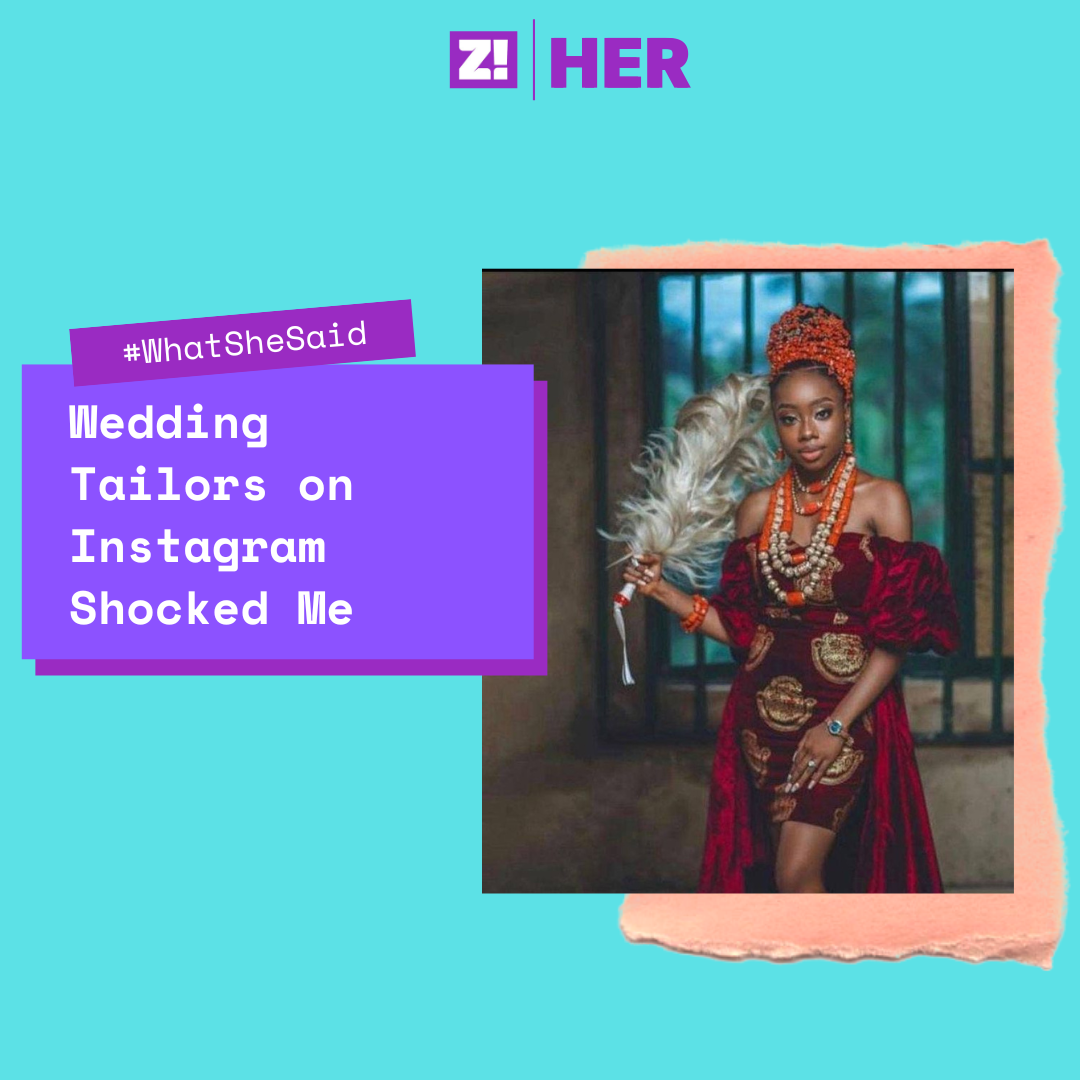
Even these wedding tailors on Instagram shocked me o; calling prices here and there. There were many times I wondered if I should’ve maybe saved more. But then, who wants to spend their life planning for a wedding that may or may not happen, so I just really managed everything. In general, the expenses got me thinking sha.
I had to walk around the whole of Balogun market to find something that worked with my budget o. And I ran away from IG tailors. LOL.
LOL. What about the formal introduction and bride price negotiations? Can you tell me about that?
I think my case was quite unconventional. When it comes to the typical Igbo family wedding rules, and what I even expected for mine, it didn’t end up like that. It was completely different, and I’ll explain. My parents are based in Port Harcourt, and my husband’s parents are in Lagos. So when I told my dad there was somebody who wanted to speak to him and express his intentions to marry me, he was like, “Who is this young man?” And I told him everything.
When we were to see my dad in particular, work came up, our schedules were scattered, so we couldn’t go. But my dad would have frequent phone conversations with him, and when it was time for the introduction in August (2021), his parents sent some of their relatives in Port Harcourt to see my parents.
They went with drinks for what we call Iku Aka — to knock on the door and say, “This is the person we want to marry?” At that point, my dad already knew my husband well. If we had gone to Port Harcourt to do Iku Aka, gone back again for the introduction, and again for the traditional wedding, I mean, all that travelling just didn’t make sense.
No bride price involved?
I come from a family of five girls. For the bride price, my dad often says things like he’s not selling his girls. But because our culture demands it, he went to his village to tell them, “What do I need to do to make this a peaceful process?” We’re from Imo State, Owerri, so they came up with this “normal” list, which I found very ridiculous.
I can imagine. How was it sorted?
My dad just met my husband’s dad and told him to bring the cash equivalent. When we went for my traditional ceremony, I saw them sharing the rice, and all those things from the list, to the women and men in our family. My dad didn’t make any trouble, and everyone just followed suit.
Wow. So no bride price madness? I’m happy for you
Hmm. There was a bride price for being an undergraduate, and different ones because I’m a graduate and a lawyer. They even had one for if I had a master’s degree or professional certifications. When I saw the list, I cringed. But I think my parents weren’t obsessed with that stage. They wanted to do what was right by where we were from, but they just said, “You know what, just do what you can do.”
So after they’d come to symbolically pluck you from your father’s garden?
LOL. We’d chosen a date when all our family members in the east could attend the Trad because a couple of people also couldn’t come down to Lagos for the white wedding. In our bid for the perfect date to accommodate everyone, we chose one we later realised we couldn’t get married on.
What?! How?
According to customs and traditions, Igbo people have four market days: Nkwo, Orie, Afor and Eke. In Owerri, we don’t get married on Eke market day. It’s believed if you do, the God of Eke would strike you with afflictions. In my husband’s place, they don’t get married on Nkwo market day. And what I mean is, even if the wedding is not on the day itself, you can’t go to a woman’s place to bring her back home on that day.
The main goal of an Igbo wedding is to sip the palm wine and give your husband to drink. That’s the most significant part, not the elaborate party. So imagine a scenario in which, on the day of the wedding, everybody is already cooking outside, and I get a message from my husband’s people that we can’t get married because it’s Nkwo market day in their own place, and they can’t come to my father’s home in the village. This was 4 a.m., so we were like, “what’s going to happen to all these caterers, all the guests?”
Wow. Sounds like a disaster
In fact. We had to start thinking. My husband’s people eventually came up with a plan to remove handing over the palm wine, because it would bring curses and all of that. They had to come the following day for that, so I had a two-way traditional wedding.
But guess what. The day we handed over the palm wine was now Eke market day. Remember I said in my own place, we don’t do wedding ceremonies on Eke. We’d already booked our flight to go back to Lagos the next day, so we couldn’t shift it. It was just messy. We had to do it hush hush in my father’s sitting room, and that was when the bride price was paid.
Again?
Well, even though they’d already sent money to buy the things on the list for the traditional wedding, there was still the main bride price. And all my dad collected was a ₦1000 note.
They put a lot of money on a tray and gave it to my father, saying, “Is this enough payment for us to collect your daughter?” Symbolically, my dad just picked some notes. I can’t recall if it was ₦1k or ₦500 notes they put on the tray, but my dad picked a note and said, “I’m not selling my child. I adhere (sic) you to take care of her. But I’m taking this one as a symbol of the agreement between our two families.”
And how do you feel about the whole experience almost a year later? What about it makes you happy?
I’m so glad I got to see all my relatives in the village. Looking at the pictures make me happy. Listening to our parents retell the stories of the trad day to their friends and how successful the event was makes me happy.
Our wedding album just came in yesterday, and I was grinning sheeeppiisshhllyyy (sic) as I flipped through… It made me smile to see our parents, siblings and dearest friends with sparks in their eyes and large smiles on their faces.
So yeah, the pictures and memories will always make me happy. And generally, I feel good about the experience. If I had to, I’d do the whole thing again. But maybe with me more in control. LOL.
If you’d like to be my next subject on #WhatSheSaid, click here to tell me why
Nigerian wedding parties are great — especially for the friends and neighbours that just came for the party jollof.
But have you ever wondered if some couples regret certain things from their big day, though? We asked these eight Nigerians, and here’s what they shared with us:
“Having a big wedding”
— Ola*, 25
I’ve wanted a small destination wedding for as long as I can remember, but I had no choice but to settle for a full-on Yoruba owambe-style wedding because of my husband and our families.
The whole wedding felt like a chore, and it’s still painful that no one listened to me, and I never got the excitement most people get before/during their wedding. It felt more like I was just there because I had to be the bride.
It wasn’t like I didn’t want to sleep — I just couldn’t because I was too excited. By the time Saturday rolled around, I was extremely tired. I couldn’t enjoy the reception because I just wanted to find somewhere to sleep. And it didn’t help that everyone expected us to spend more time on the dance floor.
I still berate myself for printing invitation cards since most people just got the information from our wedding website. We printed about 200 cards and still had about 100 cards after the wedding. Such waste in this Buhari government.
“I worried about everything”
— Chioma*, 24
I must have been a bridezilla because I was everywhere in the days leading up to the wedding, trying to make sure that everything was perfect. On my wedding day, I kept fussing about different things: the bridesmaid’s dress that needed to be fixed, the makeup artist that came in late, the traffic on the way to the church, etc.
Looking back, I wish I’d just let things sort themselves out and just enjoyed my day. Worse, the pictures bear witness to how stressed I let myself be. Brides-to-be, take note, abeg.
“Not booking backup photographers”
— Demi*, 30
The painful part is that my wife and I promised each other that we wouldn’t be the couple complaining about wedding picture disappointments because we’d get like two backups. LMAO.
Expenses really took a toll on our budget during wedding preparations, and we constantly postponed reaching out to backup photographers until we eventually forgot. We had just one photographer at our wedding, and the pictures weren’t great. The photographer even took forever to share them.
“The decorations”
— Edna*, 29
I let a family friend handle the hall decorations because I was trying to “encourage” growing businesses — big mistake. My heart dropped into my stomach when I stepped into the hall the evening before my wedding to check out what was happening.
The designs were tacky, and they definitely weren’t what I asked for. I had to let my maid of honour tactfully remove some items and arrange for another decorator to assist because if I had said anything, I would’ve beaten somebody up.
“Having a traditional wedding”
— Chi*, 27
Don’t get me wrong; I’m all for honouring traditions. But my traditional wedding (which took place in my hometown in the East) felt like a waste of money. I wish I had been more vocal in pleading with my family to reduce the items on the bridal list.
My husband had to spend so much money pleasing relatives I didn’t even know and buying stuff I didn’t even see — all for a one-day event. He didn’t complain to me, but I think he just didn’t want to come across as weak. I still wish I’d done something.
My mum attends MFM while I attend one of these modern pentecostal churches. As much as I tried, my parents kicked hard against getting married at my church. In their words, “What would our church people think?” They even threatened to be absent from the wedding if I didn’t concede to them.
Of course, I wanted my parents there, so I had to give in. I couldn’t wear the dress I wanted, and make-up was out of it. This thing about weddings being the “bride’s day” might be true everywhere else, but definitely not in Nigeria.
*Some names have been changed for the sake of anonymity.
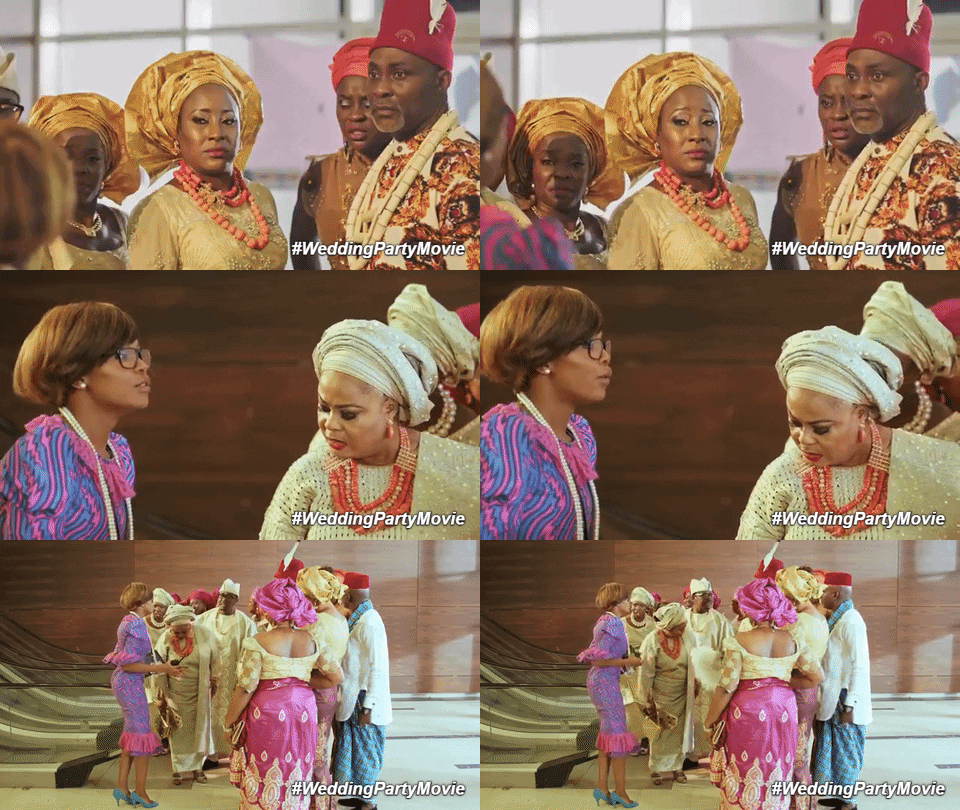
Nigerian weddings are a nightmare, and since the government and the world recognize you as an adult now — and guys I mean people above 18 — you will begin to get a lot of wedding invitations. How fun! Here are a few tips, so you don’t feel lost on what to do and how to behave.
1. Establish that you are poor
You shouldn’t have to drink garri for two weeks because you bought Aso-Ebi. It’s not even your wedding. Make sure you explain how poor you are, so they don’t keep calling you. They should find someone else to fund their destination honeymoon. If showing up is not enough for them, my dear, save that cab fare.
2. No gift is too small
Remember when you first moved into your new place and almost proposed to that person that brought spoons as a housewarming gift? Exactly. Buy what you can afford, abeg. If they want to fight you, give them our number.
3. Do not sit at the back in the reception
You made the effort to go to a Nigerian wedding and now, you want to spoil it because you are shy? How will you get the souvenirs, especially if you paid for Aso-Ebi? Jazz up.
4. Choose one event and attend it
If you want to go for the church service, good. If it’s the reception, better. Except you bought shares in their marriage, I don’t know why you’d go for both. Nigerian weddings last for too long.
5. Wear whatever you want
If the bride is going to get upset that your dress looks better than her WEDDING GOWN, clearly she lacked imagination when she was choosing it, and that’s on her. Wear what makes you feel good, maybe you’ll meet a glucose guardian as that is their main base.
6. Prepare to be depressed
It is easier to tweet that when older people ask you when you’d get married, you’ll ask them why they haven’t died but it is hard to say it. If it’s a family wedding, then sorry to you and all the hot takes you’ll hear from aunties in a thirty-year-old loveless marriage. Airpods were created specifically to block out their voices.
7. Eat
Does burial rice slap? Yes, but wedding rice slaps just as hard. Nobody will judge you for asking for a take-home pack. They will look at you in all your singleness and give you two packs because they think you are starving. However, if you aren’t family, please prepare for insort.
8. Take pictures
One thing about Nigerian weddings is that the venue is mostly picture-worthy. Take as many nice pictures as your phone’s storage will let you. When I say take pictures, I don’t mean pictures from those photographers that appear out of nowhere, except you want to pay for something that you’ll end up keeping carelessly.
9. Have fun
Catch the bouquet if you are into that kind of thing, dance like it’s your wedding, eat, drink and be merry. If you are out when you should be resting, you might as well have fun.
Last month, we thoughtfully made a quiz telling you guys exactly when you’ll marry, but some of you claimed that your spouse was nowhere to be found. Well, now we’ve created one that’ll tell you exactly who you’ll be dragging down that aisle.
Whether you do it in your father’s village or it’s a destination wedding in Dubai, no Nigerian wedding can be complete if the menu doesn’t include these dishes.
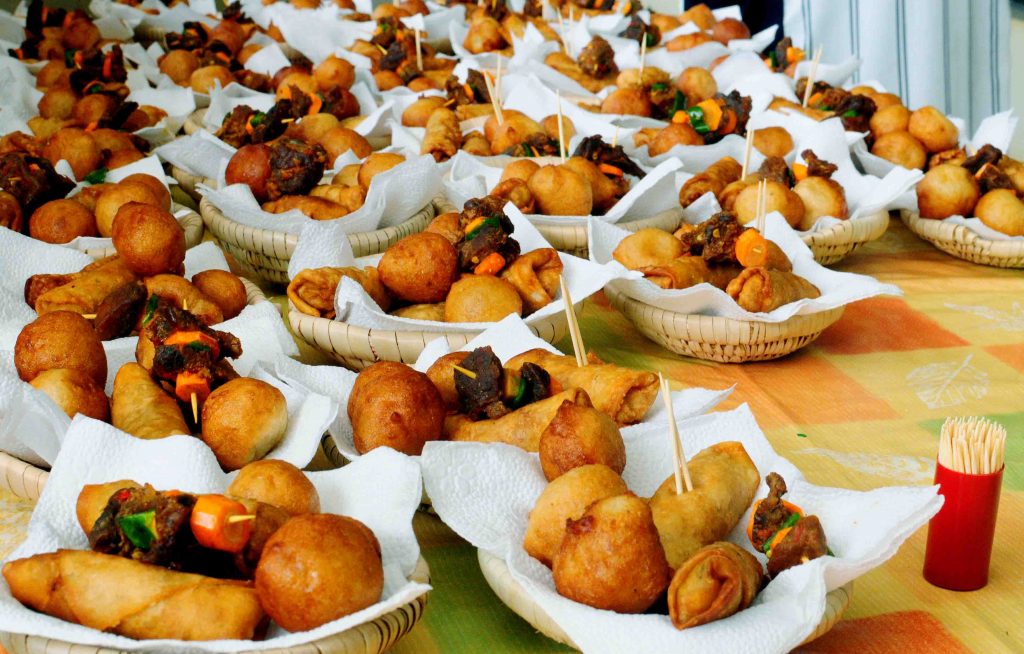
Small chops
It’s written in the Nigerian constitution that you must serve small chops as a starter at your wedding.
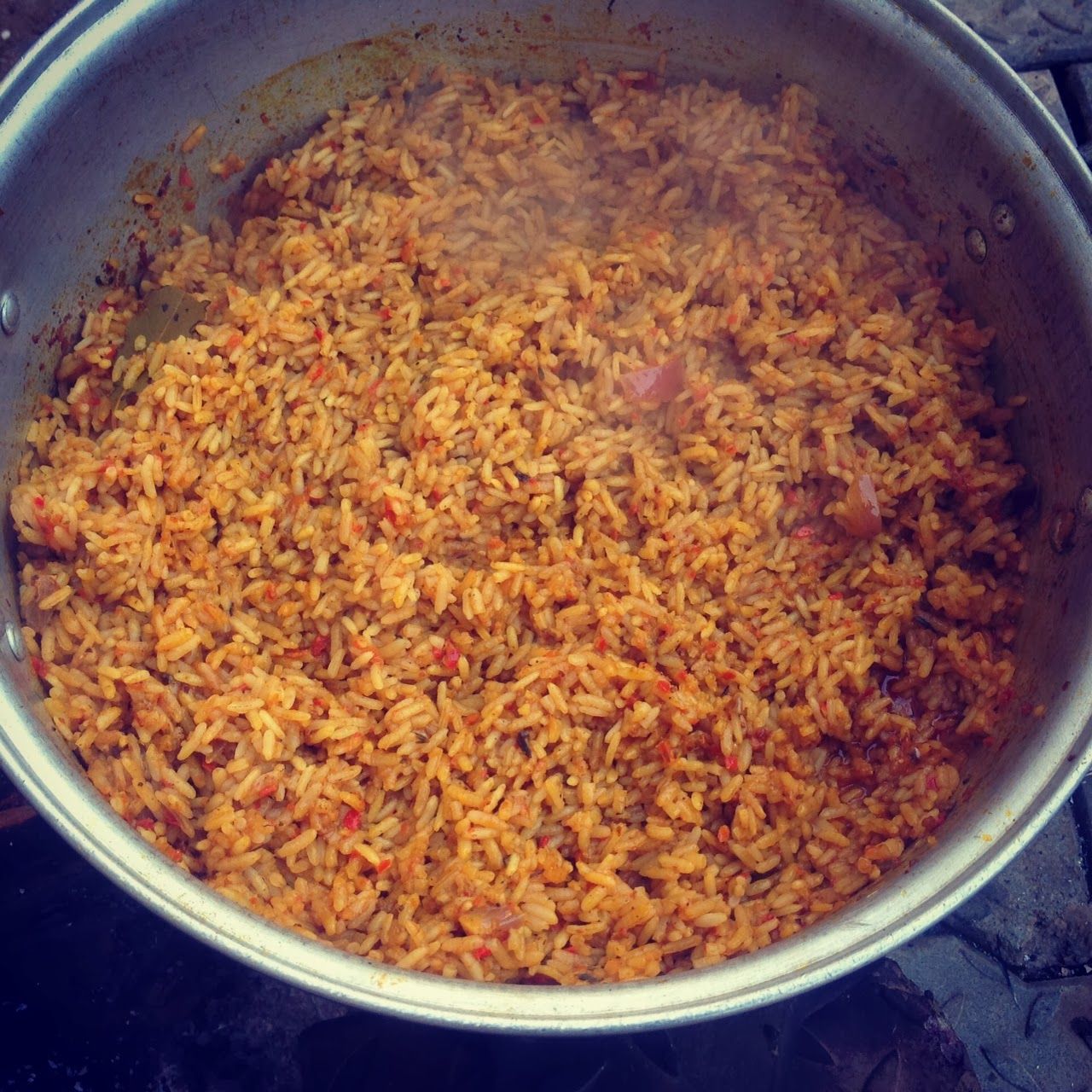
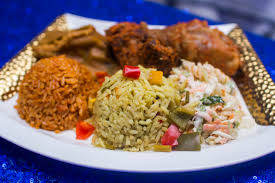
Jollof rice
We’ve not done proper research but it might be a criminal offense not to serve Jollof rice at your wedding. In fact, it’s just unheard of. And if it’s not firewood Jollof it doesn’t count.
Moin-moin
What’s jollof rice without spicy leaf wrapped moin-moin to go with it?
Fried rice
A standard plate of Nigerian wedding food has Jollof rice on one side and Fried rice on the other. The two just compliment each other.
Coleslaw and/or dodo to go with the rice.
Do you expect your guests to just be eating rice and meat like that? You have to garnish the rice with either coleslaw or dodo, and if you are feeling generous you put the two.
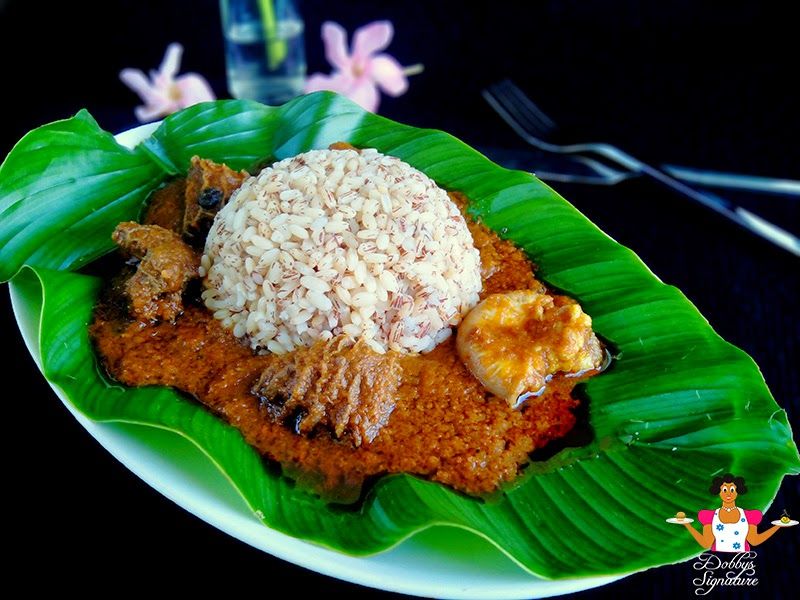
Ofada Rice & Ayamashe Sauce
Jollof and fried rice are great and all but it’s when the Ofada comes out that the real party starts.
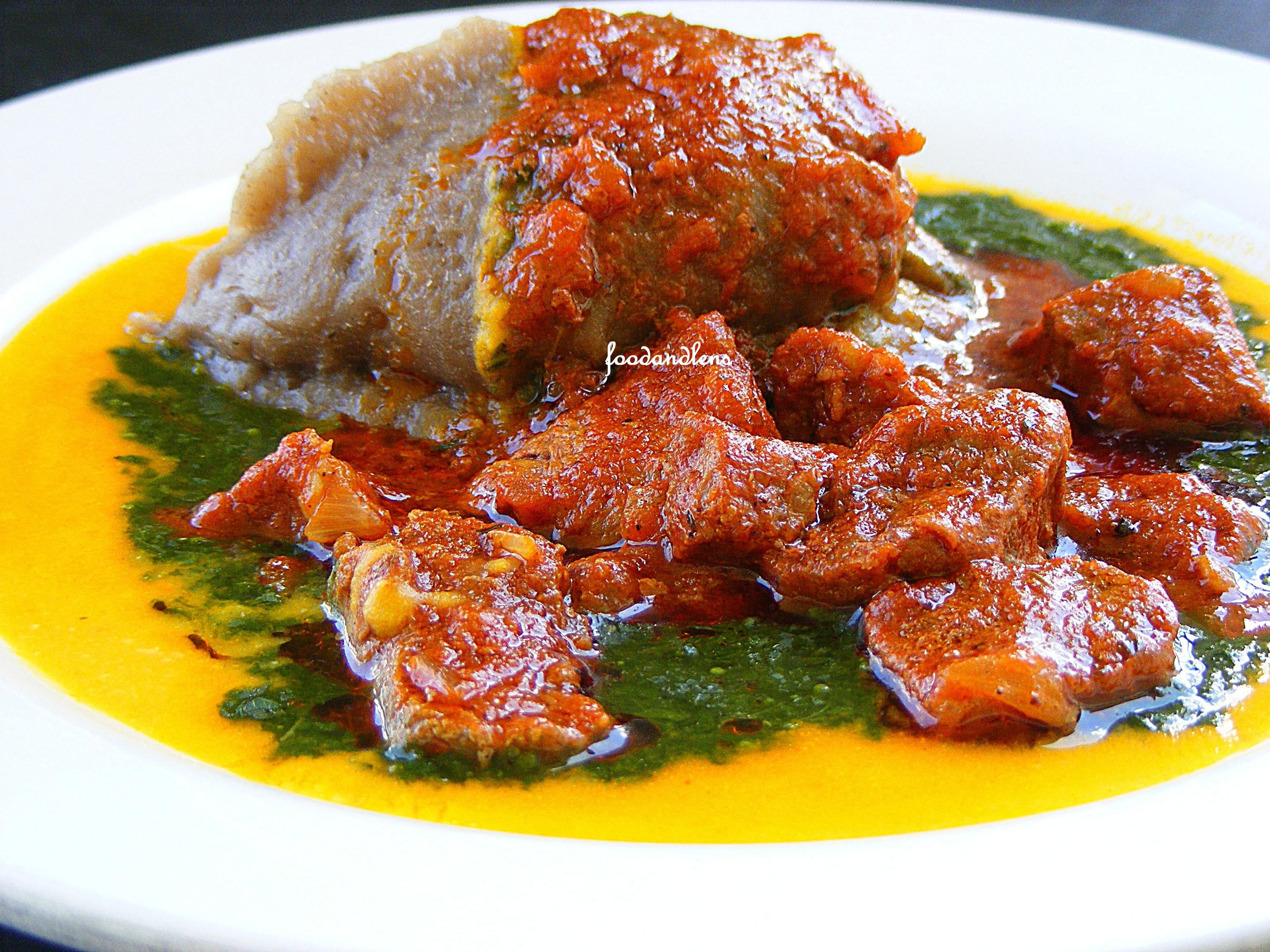
Amala and ewedu
This is for your guests who are ready to wash hand and lose their home training. Make sure you garnish the ewedu and gbegiri with assorted
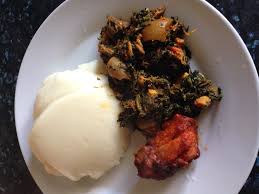
Pounded yam and efo riro
Emphasis on ‘pounded’ yam, poundo yam doesn’t count. Hot and fresh pounded yam must be on your Nigerian wedding food menu.
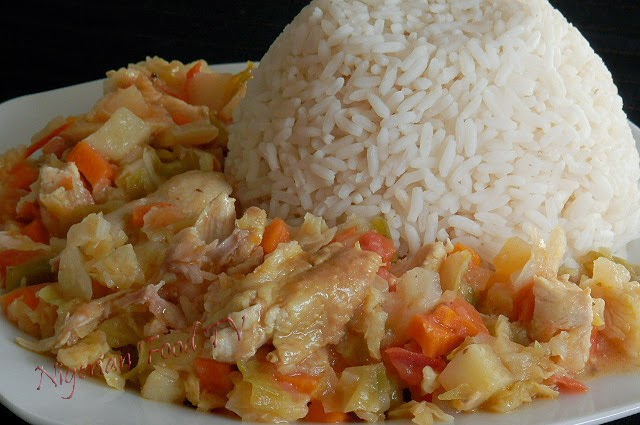
If you are feeling generous you can add ‘Chinese rice and sauce’ just to give your wedding some international exposure.
I’m not saying that I go to weddings because of food, but if there’s no food, I’m not going anywhere! If you’re someone like me, then I’m sure you’ve noticed these stages of getting food at Nigerian weddings.
Like, we all know that after small dancing, they will serve food. So tell me why you’re delaying my joy with your dance if you’re not wicked.
All of us have almost died, but you’re there doing shoki.
When they finally bring the food out, but keep skipping you.
Eskis me, sah. Am I invisible?
When the hunger gets too much, you just have to find the person that invited you.
See how your people are doing me. I’m hungry, epp.
When the waiter eventually heads your way to take your order.
Then comes back again and again… for the same order.
The same waiter comes back with a tray high above his head, and you’re excited for your food.
Only for him to lower it and give you water.
Then the gods finally smile on you and they bring you small chops.
Wawu… So I survived this torture?
Finally, they bring the jollof rice to your table.
By this time, you’re already shaking. And as your fate will have it, the plates finish before they reach you. You want to start shouting, but home training.
The waiter comes back with his tray, only to give you yam pottage and tell you that jollof rice has finished.
Whattt??? Jesus, is this a heart attack?
Have a wedding food nightmare story? Share with us, let’s laugh at you too!