Notice: Function _load_textdomain_just_in_time was called incorrectly. Translation loading for the wordpress-seo domain was triggered too early. This is usually an indicator for some code in the plugin or theme running too early. Translations should be loaded at the init action or later. Please see Debugging in WordPress for more information. (This message was added in version 6.7.0.) in /home/bcm/src/dev/www/wp-includes/functions.php on line 6121
Nigerian military | Zikoko!
  • After 35 Years of Service, All I Have Is a Monthly Pension of ₦80k

    With the 2023 elections drawing closer, I wonder what it was like to live in a time without democracy. In this article, a police officer who lived through the first military coup in 1966 shares the moments that led up to joining the force at 18 and the moment that reminded him there was more to life after 35 years of service.

    The life of an Igbo police officer in the ‘90s, as told to Ortega

    Life before the first military coup in 1966

    I was a restless child born in 1937. I grew up as the only son of my father, and his brothers expected me to take up his role as our village’s chief priest. But my father wanted something more for me. He wanted me to go to school and live outside the cage tradition had built for our lineage as its custodians.

    My father was convinced living together would make it easier for my uncles to persuade me. So he kept me away for as long as he could. When I was five years old, I had to live with different people in my village and depend on them to put me through school. They called me Nwali, son of the soil. It meant I belonged to everyone in my village but to no one at the same time. The villagers were in charge of taking care of me while my father kept my uncles at bay. Their generosity got me a secondary school education. But that was as far as I could go with the resources they had.

    “They called me Nwali, son of the soil”

    Everyone expected me to become a teacher, but I found the role quite stuffy and boring. I spent the two years after secondary school working odd jobs instead. I tapped palm trees and helped families build houses — I did anything I could get my hands on. I saw my father once in a while, but he expected me to figure things out on my own. 


    RELATED: We Got A Soldier In Here! Kolade’s #AbroadLife.


    At 17, I decided to leave my village in Delta for Benin. My cousin promised to teach me to drive and offered me work as one of his cab boys. The first three months were okay, but I couldn’t bear the long hours of driving just to have my cousin take most of the profit I made. I couldn’t tell him that because I had to be grateful to him for trying to help.

    After another three months of yelling for passengers under the hot sun, I decided to take a break and go back to Delta. That’s when I found a bit of luck in my life.

    On my way to the park, I met a friend who was coming in from Delta. We exchanged pleasantries and I explained why I was heading home. His response to my complaints of driving taxis for hours under the sun was an odd demand for me to follow him on an errand in Benin. He offered to cover the two pence it would cost to get a bus back to my village, so I decided to go with him. There was nothing to lose.

    The errand turned out to be recruitment at the police college for new constables in 1955. Of course, I was surprised my friend wasn’t just upfront about it, but I was more interested in how to get in as well. So while he queued up, I rode a bicycle back home to get my documents. Hundreds of people were in the queue when I got back. Every young man wanted a chance to wear fancy uniforms and work with white men. I just needed money.

    “I refused to learn Yoruba. I felt it was easier to handle thieves that pleaded for mercy if I didn’t hear anything after e jo”

    When it finally got to my turn, the constable took one look at my file and asked me to leave. Apparently, 18 was too young to serve. But then, luck was on my side. One of the senior officers asked him to consider me because I looked strong. And that’s how I got into the ranks. 

    There were only four police colleges in Nigeria at the time. Benin was just a point of recruitment, so I was moved to the one in Kaduna for a while before I was relocated with other southern officers to Lagos in 1956. I can’t remember how much I earned, but we were paid in pounds until 1973 when naira notes were introduced. What I loved about my job was the respect it gave me. No matter the rank, there was some kind of honour you felt putting on a police uniform in the ‘60s. There was also a lot more investment in the force. I attended the Police Colleges in Paris and Britain for short courses, and in a year, I rose to the rank of cadet.

    I worked in Lagos until 1959. A senior officer decided it was best to experience other parts of the west. And in 1959, the country was still at a point when a mid-western Igbo (Igbos from the Bendel region) man transferred to Lagos or Abeokuta wasn’t odd. Nobody cared where I was from or that I refused to learn Yoruba. I felt it was easier to handle thieves who pleaded for mercy if I didn’t hear anything after “E jo”. I didn’t believe Yoruba people were open to learning my dialect. But it didn’t matter. No one bothered too deeply. 

    Abeokuta was a lot calmer than Lagos. I was stationed there to monitor the railway stations. We derailed passengers coming in from the north and monitored the day-to-day running. But after two years, I got bored. I liked the rush of Lagos more, where things like welcoming renowned leaders happened. For instance, in 1956, I got to see the Israeli prime minister, David Ben-Gurion.

    “It wasn’t until the first military coup in 1966 things changed. The attack happened the day I got married in the village.”

    Working at the police station in Lagos let me meet people from different works of life. And that made my work interesting. Like the time I met a gambler who was brought in from Obalende back in 1956. He was charged as a thief, but he didn’t seem like one to me. I was in charge of the evidence desk, so I could probe a bit more when criminals came in. 

    When we spoke, he mentioned that he ran away from home and was trying to win bets to make more money. But the men who arrested him didn’t believe it. He confessed to stealing clothes the morning of his arrest, but that was it. For some reason, he seemed genuine, and I believed his story. I spoke to my colleagues and we got him off on a two-week sentence rather than a year for petty theft. Those were the moments that made me feel like my job mattered; even the bible says blessed are the peacemakers. 

    The year everything changed

    It wasn’t until the first military coup in January 1966 that things slowly began to change. The attack happened the day I got married in the village. For the most part, civilians were safe. But because the attack was by southern soldiers, Chukwuma Kaduna Nzeogwu and Emmanuel Ifeajuna, it looked like the Igbos were trying to disrupt peace. I knew better than to share my thoughts with colleagues; people were upset. 

    I was moved to Lagos to serve later that year. They began to look at me as a police officer who was Igbo rather than just a police officer. 

    As a corporal and the only breadwinner of my home, I knew better than to get involved in the messiness of politics. My main priority was keeping my family safe while my wife was expecting our first child. 

    RELATED: How to Tell a Story About Coups in Africa

    The second attempt at taking over the government took away the last shred of peace. It was in August 1966, and officers called it the revenge coup. Unlike the first coup, which was handled mainly by southern officers, this operation seemed like retaliation from northerners because it was led by Lt. Colonel Murtala Muhammed

    Unlike the first, this takeover was successful, and for the first time, we lived under military rule. It was a very difficult time depending on your tribe. For me, it suddenly meant something to be an Igbo man serving with the Lagos police force. Some superior officers checked our badges and their countenance changed when they found out I was from the south. But I wasn’t going to buckle under the sudden pressure. 

    “When we lost the war in 1970, Nigeria went into a long period of discrimination”

    Back home, people were being slaughtered. Trains were loaded with dead bodies in the east, and when Lieutenant Colonel Ojukwu decided to push back in 1967, so did the ruling officers. It was a bloodbath, and I still don’t know how Lagos maintained some sense of sanity. Still, by 1968, I had to send my family back to Delta state from Lagos. 

    I’d become a sergeant by the end of 1966, and it was business as usual at the force, which meant always being away from home. But I’d had my second daughter and wasn’t comfortable with working all the time when things were so unsafe. I also couldn’t get any of my wife’s sisters to travel from Delta to Lagos because of their safety. 

    It was better to take my wife and kids to Delta dressed in my police uniform, which was the only thing keeping me from being harassed or outrightly killed. It was a hard decision, but keeping them away was for the best. Our village didn’t experience the attacks going on in the eastern towns.

    Between 1967 and 1970, Nigeria was at war with itself. But I didn’t have the time to process what it meant at 30 years old. I had to focus on my task of training police officers, assisting to keep some level of sanity in Lagos. 


    RELATED: The Soldier Fighting For Country At ₦250k/Month


    When we lost the war in 1970, Nigeria went into a long period of discrimination. Rising to the top of the force suddenly became difficult. I should’ve officially been promoted to sergeant, but the results for the exams I took weren’t released until after a year. Most people had theirs a few weeks after the exams. That’s when I knew a lot was about to change for me. 

    By 1975, I’d made a life for myself in the Ikeja barracks. My marriage was what you’d call successful because my wife and I had five children at that point. What hadn’t been so successful was my ability to support my family on my salary. I was earning less than ₦20k as a sergeant, and a family of seven wasn’t exactly cheap. But I wasn’t the only one experiencing the economic challenge. 

    “When my friend, a fellow officer, died from high blood pressure, I realised there was more to life than chasing ranks”

    Leaving behind the police force

    With the political instability, getting goods was hard and prices went up. I could get Omo for less than ₦5 before the coup, but after, we were spending almost ₦20 per sachet. Rice was also a luxury because importing was difficult. My wife eventually had to open a store to sell drinks so she didn’t have to depend on my salary for foodstuff. But I didn’t care about the money. I wouldn’t have enjoyed any other job as much. 

    As the years went by, I began to feel like my work as an officer didn’t matter. My family joined me in Lagos again in 1971. The Civil War was over, and I missed seeing my family. I’d had my second child in 1968, and we only saw a few times a year because of the state of things. So I brought them to join me at my flat in Ikeja barracks.

    I spent years leading up to the final coup in 1975 as a sergeant. I was in the office with a few personnel who talked about setting a village close to mine on fire. I’m sure they didn’t have a clue where I was from. But that’s how ruined we were as a country after 1965. At least, the failed 1966 coup was just a power struggle, but the rest were about personal dislikes amongst ourselves. 


    RELATED: How to Stay Safe in Nigeria — Tips from the Nigerian Police


    As long as the ruling party preferred a certain ethnic group over mine, even as an Assistant Commissioner of Police (ACP) in 1983, I dealt with unwarranted questioning and didn’t get the recognition I deserved. But I was convinced I needed to rise the ranks to be a commissioner because it would make a difference. 

    Then one of my friends, a fellow officer, died from high blood pressure, and I realised there was a lot more to life than chasing ranks. I was earning around ₦80k as an ACP in 1986. I decided to start putting money aside to build a home for my family in Delta. As the only son, my father left over 500 hectares of land to me. That was enough for a farm and properties to rent out over time. 

    “I don’t regret my time on the police force”

    Major General Babangida was still in power and the force was dominated by western and northern men. I could count the officers in my rank who were from the south on one hand. But I didn’t have the time to feel bitter. I put in my notice for retirement in 1989 and was approved for pension within six months. I left in 1990 at 53 without looking back.

    It’s been 32 years since and my monthly pension hasn’t changed. Less than ₦80k per month is all I’ve gotten since 1990 while my retired colleagues from the army receive a minimum of ₦150k per month. I was one step away from the highest rank in the force, but I can’t get decent money for 35 years of work. That’s the biggest pain for me. It shows policemen aren’t as valued as we were in 1955.

    But I don’t regret my time there. I’d do it all over again if I could because being on the police force gave me some of my greatest memories. Being an officer was a time I got to see the real side of human nature because of the amount of history I saw unfold. And now that I spend most of my time alone, it’s nice to remember what life was like when I was a young man.


    Now that we know what life was like for a Nigerian police officer in the ‘60s, imagine what would’ve happened if Abacha Never Died.



  • Orlu Airstrikes: Everything We Know

    Citizen is a column that explains how the government’s policies fucks citizens and how we can unfuck ourselves.

    In Orlu, Nigerian military fighter jets have been conducting airstrikes amidst rising tension. Around 9 am today, a video showing one out of a number of military fighter jets shooting at a nearby bush in Orlu, Imo state, began to make the rounds on social media.

    https://twitter.com/honilatte/status/1362312823024590851?s=20
    https://twitter.com/honilatte/status/1362368748758384641?s=20

    In one of the videos, residents of the Orlu community can be seen running for their lives as the fighter jets continue to shoot. These videos have left Nigerians afraid for the lives of innocent people living in Orlu, with many unsure why the Nigerian military is bombarding a city populated by civilians. 

    https://twitter.com/Real_AdaKing/status/1362392968930459649?s=20

    But why are the airstrikes happening?

    The strikes are believed to be an attempt by the Nigerian military to find operatives of the Eastern Security Network, a security outfit set up by Nnamdi Kanu, the leader of the Indigenous People of Biafra, IPOB, to secure communities against attacks from armed Fulani herdsmen.  When Kanu launched the outfit on December 12, 2020, he said the regional security unit would assist in the swift eradication of crimes in the East, just like Amotekun is doing in the South-West.

    In January, the ESN had a clash with the Nigerian Army where four soldiers were said to have lost their lives. Following that incident, the Nigerian Army staged a retaliation/revenge mission which claimed more lives and resulted in the destruction of several properties. 

    What is happening now?

    Neither the Nigerian army nor the Air Force has made a statement regarding this development. And as it stands now, it is unclear what is happening in Orlu as no new reports have surfaced but we will keep updating this story with any new information that pops up.

  • A Week In The Life: 10 Must-Read Stories Of 2020

    On March 10 2020, I published the first-ever “A Week In The Life” story. It addressed the struggles of a female Keke driver who was punching her weight in a male-dominated field while also doubling as a breadwinner. This theme of understanding people’s work struggles set the tone for the rest of the episodes in the series.

    Since then, I’ve spoken to over 40 Nigerians with different jobs, struggles, and wins. These stories have opened minds, sparked conversations, and changed the life of subjects along the way.

    As the year comes to a close, I’ve picked 10 of the absolute must-read in this series.

    1) A Week In The Life Of A Kayan Mata Seller Focusing On Sex Education

    Today’s subject is Maryam Usman, a Kayan Mata seller from the North. She talks about the challenges that come with her business and more importantly, the need for sex education amongst Northern women.

    Read here.

    2) A Week In The Life Of A Flight Attendant

    Today’s subject is *Tunde. A 29-year-old flight attendant of mixed heritage who tells us that part of the training to become a flight attendant involves learning how to deliver babies.

    flight attendant

    Read here.

    3) A Week In The Life Of A Call Center Agent At The Suicide Hotline

    Today’s subject is **Mark, a psychologist who is a call center agent at the suicide hotline. He walks us through his battle with faith, the need to help people, and the challenges that come with his job.

    Read here.

    4) A Week In The Life Of A Nurse On The COVID-19 Frontlines

    Today’s subject is *Agnes, a nurse currently caring for Covid patients. She tells us her fears as a young person working in close contact with an infectious disease.

    Read here.

    5) A Week In The Life Of ‘Agba’, The Entertainer Who’d Rather Be Rich Than Famous

    The subject for today’s “A Week In The Life” is Olubiyi Oluwatobiloba, an entertainer popularly known as ‘Agba’ of Konibaje baby fame. He tells us about the good and bad side of fame, his creative process, and his exit plan when skits are no longer sustainable.

    Read here.

    6) A Week In The Life Of An Imam Navigating A Zoom Ramadan During Covid-19

    Today’s subject is Imam Nojeem Jimoh. He tells us how he’s navigating Ramadan using technology in this special time.

    Zoom Ramadan Covid-19

    Read here.

    7) A Day In The Life: The Soldier Eagerly Looking Forward To Civilian Life

    Today’s subject is a soldier in this mid-thirties who walks us through fighting bandits in the North, corruption in the military, and his plans for civilian life once his military service is over.

    Read here.

    8) “Border Closure Is Only Enriching People” – A Week In The Life Of A Smuggler

    The subject for today is Mr M, a businessman and smuggler. He talks about the risk involved in his job, how bribes affect the prices of goods, and his hope to diversify his source of income.

    Read here.

    9) “Men Try To Take Advantage Of Me” – A Week In The Life Of A Female Bouncer

    The subject of today’s A Week In The Life is Tope. She’s a bouncer and she talks about the stereotypes she faces at work, advances from men, and how difficult it is to be a bouncer during COVID. 

    Read here.

    10) A Week In The Life Of A Fish Specialist Earning $5,000/Month

    The subject of today’s “A Week In The Life” is a twenty-six-year-old fish specialist. He talks about making over $30,000 from selling fishes, how he stumbled on the business, the cruelty fishes face, and why he left paid employment.

    Read here.


    Check back every Tuesday by 9 am for more “A Week In The Life ” goodness, and if you would like to be featured or you know anyone who fits the profile, don’t hesitate to reach out. Reach out to me: hassan@bigcabal.com if you want to be featured on this series.

    [donation]

  • Can The ICC Prosecute The Nigerian Military?

    Citizen is a column that explains how the government’s policies fucks citizens and how we can unfuck ourselves.

    Can the ICC prosecute the Nigerian military?

    Many Nigerians are still in grief over the Lekki Massacre which took place on October 20, 2020, when protesters were shot at for exercising their constitutional right to peacefully protest. In the wake of this, several stories — and fake news — have infiltrated the media over what happened, even though video evidence showed officers of the Nigerian military opening fire on Nigerians on scene. The question that has occupied the minds of a lot of people is how Nigerians can get justice, and including if the International Criminal Court can prosecute officers and commander of the Nigerian military.

    https://twitter.com/SamuelOtigba/status/1318695796242587648?s=19

    Read: Who Is Shooting At Peaceful Protesters In Lekki?

    Read: The Nigerian Military Has A History of Killing Unarmed Civilians

    But what sort of crime did the Nigerian military commit, if it actually did? And, can the International Criminal Court (ICC) prosecute key officers of the Nigerian military, including their commanders? 

    1. What Is The International Criminal Court?

    In June 1998, representatives from 148 countries gathered in Rome, Italy to agree on how to establish an “International Criminal Court”.

    After five weeks of discussions, 120 countries voted for the creation of an International Criminal Court under the “Rome Statute”.

    In 2002, after the agreement was signed by 60 countries into their national laws, the ICC became the first and only international court with the capacity to prosecute a person with the international crimes of genocide, crimes against humanity, war crimes and the crime of aggression.

    2. How Does The International Criminal Court Work?

    *Green – Party to the ICC

    *Orange – Didn’t sign

    *Yellow – Signed (but never passed the ICC statute into law)

    The ICC works complementary to national courts. That is, it cannot prosecute a crime except a country’s courts are unwilling or cannot prosecute the crime.

    Also, the International Criminal Court cannot prosecute every criminal case in every part of the world.

    The three important things the ICC considers before prosecuting a case include: 

    1. Subject-matter jurisdiction: Is the crime a genocide, a crime against humanity, a war crime or a crime of aggression?
    1. Territorial or personal jurisdiction: Was the crime committed in a country that has agreed to the ICC’s rules or by a person who is a citizen of a country that has agreed to the ICC’s rules.
    1. Temporal jurisdiction: The ICC officially began operation in June 2002. So it does not have the capacity to prosecute international crimes before July 2002.

    3. Can the International Criminal Court Prosecute The Officers of The Nigerian Military?

    Nigeria is a party to the ICC’s rules. Nigeria signed the Rome Statute into our national law on the 27th of September 2001, and it became binding on Nigeria from 1st July, 2002.

    So, Nigeria is bound by the Rome Statute, and the ICC has “territorial jurisdiction” to prosecute international crimes committed in Nigeria or by Nigerians.

    4. What Is The Process?

    The ICC prosecutes individuals and not groups or countries, and no one has immunity or is exempted from the ICC’s prosecution, even if they are currently holding a high executive position.

    To begin an investigation, anyone who is from a country that is a member of the ICC can request the office of the prosecutor to carry out an investigation on a particular issue. The prosecutor can also begin investigations on their own, if they believe that a crime should be investigated.

    Already, Nigerian groups like the Socio-economic Rights and Accountability Project (SERAP) have sent petitions to the ICC about killings of several people during the #EndSARS protests in Abuja, Kano, Lagos, Osun, Plateau and other states in Nigeria.

    Over the years, the ICC has publicly prosecuted 44 people. It has issued arrest warrants for 36 people and summoned 8 others. 6 people are in the court’s detention. Former Sudanese President, Omar Al-Bashir, was also prosecuted by the International Criminal Court for war crimes.

    We hope you’ve learned a thing or two about how to unfuck yourself when the Nigerian government moves mad. Check back every weekday for more Zikoko Citizen explainers.


    [donation]

  • The Nigerian Military Has A History of Killing Unarmed Civilians

    Citizen is a column that explains how the government’s policies fucks citizens and how we can unfuck ourselves.

    The Nigerian military has a well-documented history of killing unarmed civilians. Listed below are five times the Nigerian military has killed unarmed civilians.

    1. Baga Massacre, 2013

    On 16 April 2013, 200 civilians were killed and over 2,000 houses were destroyed, with many other people injured in the village of Baga, Borno State, Nigeria.

    Refugees, civilian officials and human rights organisations accused the Nigerian military of carrying out the massacre, even though the military blamed the massacre on Boko Haram insurgents.

    Baga residents said the town was raided by angry soldiers in “retaliation” for the killing of a soldier. Another resident of the town stated that the destruction of lives and property in the town was triggered by a letter from Boko Haram to the Joint Task Force (JTF), which announced that they would chase the military out of Baga and environs.

    According to the resident, “the threat letter was deemed to be provocative by the military. It equally sent jitters to us because some soldiers threatened that if we allow anything funny to happen here, we (the locals) would pay the price.”

    2. Giwa Barracks Detentions, 2016

    Giwa barracks is a military detention centre located in Northeastern Nigeria, near Maiduguri, Borno State, Nigeria. NYTimes reported that over 150 people were killed in 2016 alone after they were illegally detained at the barracks by the Nigerian military.

    Amnesty International reports that over 1,200 civilians were detained in unsanitary and overcrowded conditions at the Giwa barracks in 2016; at least 120 of them were children and 12 children died between February and May 2016.

    One witness told Amnesty International that they saw the bodies of eight dead children including a five-month-old, two one-year-olds, a two-year-old, a three-year-old, a four-year-old and two five-year-olds.

    3. Rann Bombing, 2017

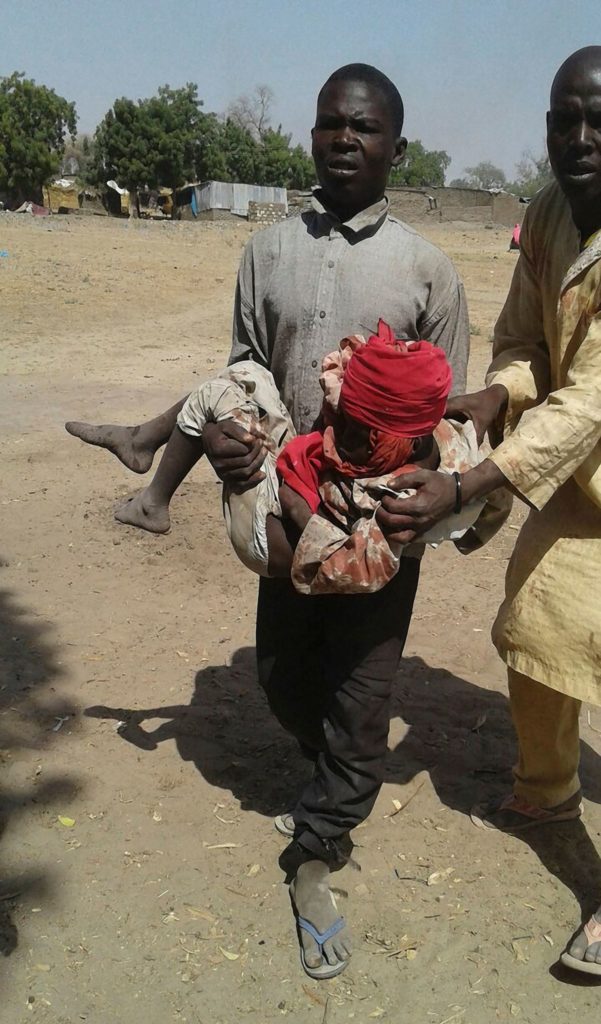
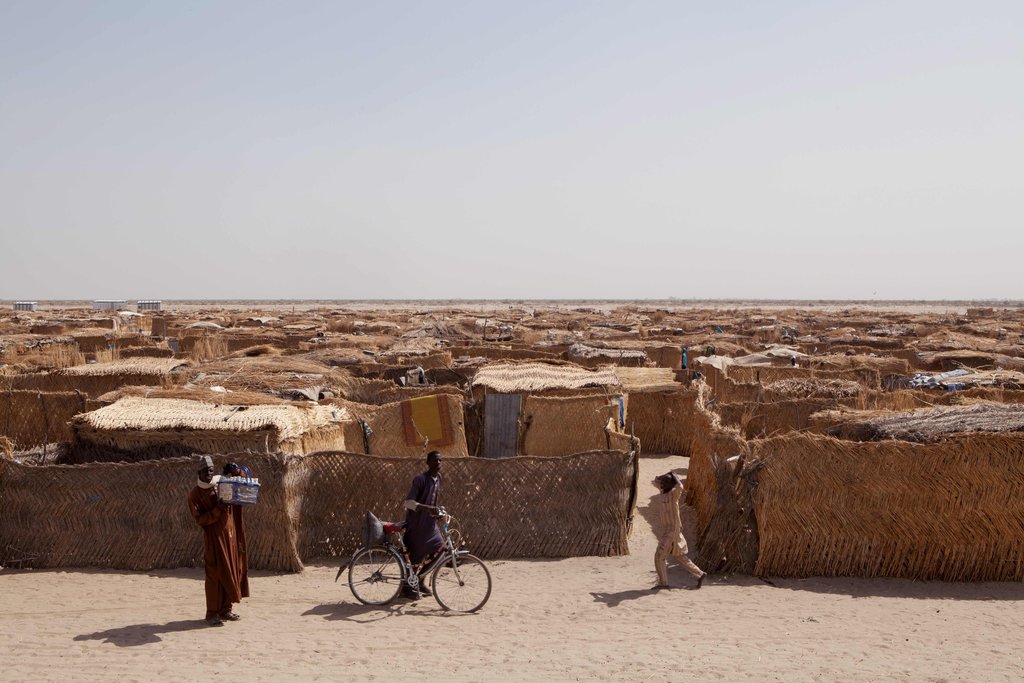
    At about 9 a.m. on 17 January 2017, the Nigerian Air Force Jet “mistakenly” bombed an internally displaced person (IDP) camp near the Cameroonian border in Rann, Borno State. The bombings killed at least 115 people including six Red Cross aid workers, with more than 100 people injured.

    Major General Irabor, who ordered the airstrike, called the bombing a “disturbing mistake.” He said he had ordered the airstrike on the location because they had intel on Boko Haram militants gathering there. President Buhari’s spokesperson also called it a “regrettable operational mistake.”

    4. Maiduguri Massacre, 2017

    In February 2017, NYTimes reported that over 80 men in a Maiduguri village were shot to death after they were forced to strip their clothes and lie face down. The attacks looked as if it was carried out by Boko Haram gunmen.

    However, villagers and other witnesses like Babagana said the killings were carried out by the Nigerian military. According to Falmata, a 20-year-old resident, the military opened fire on the residents after they failed to identify the Boko Haram members among them. This story was corroborated by other witnesses.

    There are also accounts of how the Nigerian military dumped up to 60 corpses daily at the Maiduguri hospital, since as far as 2013.

    5. Ngubdori Killings, 2017

    In Ngubdori, a small fishing village in Borno State, Nigeria, soldiers and local vigilantes surrounded the village and rounded up all residents including those out working in the fields.

    The soldiers forced men to remove their shirts to reveal any weapons they might be hiding, after which the soldiers told the residents to point out the Boko Haram members among themselves.

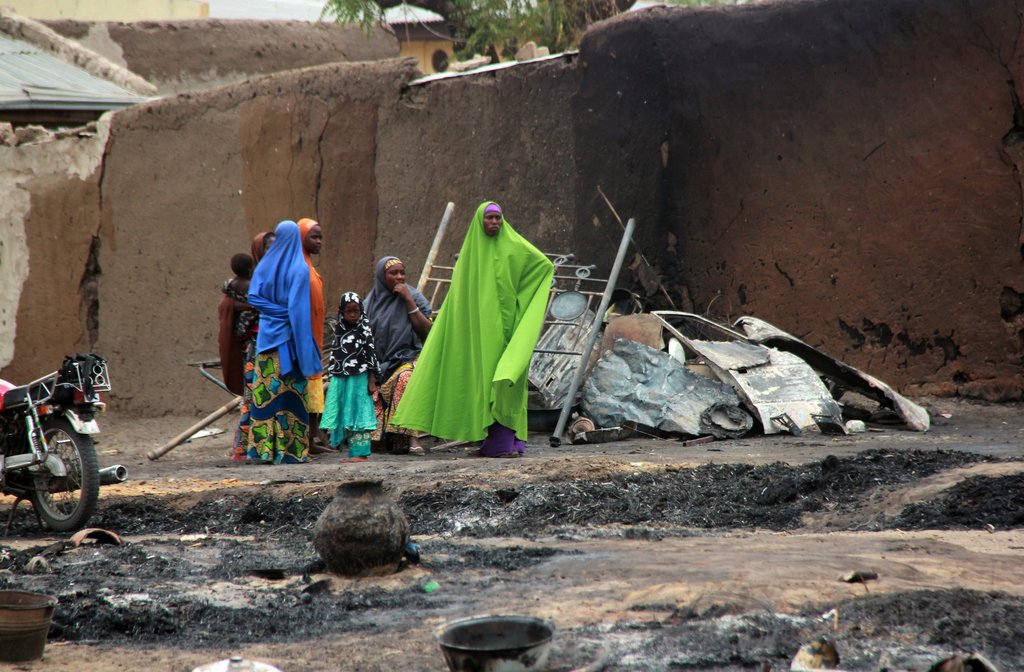
    The soldiers killed two men who stepped out of their houses, after which they turned their weapons on the crowd, killing 13 more men. The soldiers grabbed a container of fuel, poured it on rags and set fire to all the grass huts before leaving.

    Zainaba, another resident, said she she lost six relatives that day.

    6. Operation Python Dance 2, 2017

    According to the Igbo Civil Society Coalition (ICSO), a coalition of civil society organisations, activists and human rights groups, the Nigerian Army killed more than 180 people and injured more than 200 others in the Army’s “Operation Python Dance 2,” which took place between 8 September and 14th October 2017.

    According to a statistical breakdown of the killings, 105 deaths were recorded in the Afara-Ukwu palace massacre, 20 deaths in Isiala-Ngwa, and 55 deaths in the Aba/Asa-Ogwe area.

    The civil society organisation had put the death toll at 150 at an earlier report, only to later settle at over 180 deaths.

    We hope you’ve learned a thing or two about how to unfuck yourself when the Nigerian government moves mad. Check back every weekday for more Zikoko Citizen explainers.

  • Heads Up: Move With An ID Card In Nigeria Or Be Regarded As A Suspect

    In case you missed it, Nigerians are now required to walk around with a valid means of identification to avoid being apprehended by the Nigerian military as suspects of kidnapping, banditry, armed robbery, ethnic militia, or any other criminal activity in the country.

    Apparently, this “Operation Positive Identification (OPI)” by the Nigerian military has been happening in the North-East for awhile now and it will be implemented nationwide from November 1 to December 23.

    So if you’ve been living la vida loca in Nigeria without a documentation to show you exist, you now have about a week’s notice to go get a valid ID card.

    Because, yes, Nigeria is like that.

    Possible Effect On Citizens?

    This military operation was supposed to have commenced on October 7th but it was rescheduled, in order to give the military ample time to prepare. Yet, I’m pretty sure many people are not ready to be accosted by military personnel at anytime.

    We all know the force needs no excuse to harass citizens but they’ve been given a perfect one with this development.

    Considering SARS remains a constant pain in the neck, one that even the Vice President’s interference couldn’t get rid of, is it any wonder that we should be wary about this?

    How Effective Will It Be?

    According to a report by Premium Times, only 19% of Nigerians have national identity cards; we mustn’t forget that many people who register have to wait for YEARS to actually get the permanent ID. There are even more people without a voters card, drivers license, international passports or any other ID. Does this mean people who don’t have ID cards are engaging in criminal activities?

    Isn’t it proper for thorough investigations to be carried out instead of arresting someone on a whim with no evidence in sight because they have no ID’s?

    Can we take a second to realise that the actual (suspected) criminals will actually have proper means of identification? Think of Evans and Hamisu Wadume and then you have your answer.

    Also, isn’t this operation a tad bit inconsiderate to Nigerians? Yes, we know its said to be in the interest of everyone, to rid society of terrorists. But, isn’t there a better way to do this, without infringing on citizens right to freedom of movement?