Notice: Function _load_textdomain_just_in_time was called incorrectly. Translation loading for the wordpress-seo domain was triggered too early. This is usually an indicator for some code in the plugin or theme running too early. Translations should be loaded at the init action or later. Please see Debugging in WordPress for more information. (This message was added in version 6.7.0.) in /home/bcm/src/dev/www/wp-includes/functions.php on line 6121
money habits | Zikoko!
  • I Hate Spending My Own Money

    When this #NairaLife started a conversation online about savings culture, Gabriel* (28) saw himself in the subject. He talks about having millions saved but refusing to spend more than ₦20k per month, instead choosing to seek bailouts from friends.

    This is Gabriel’s story, as told to Boluwatife

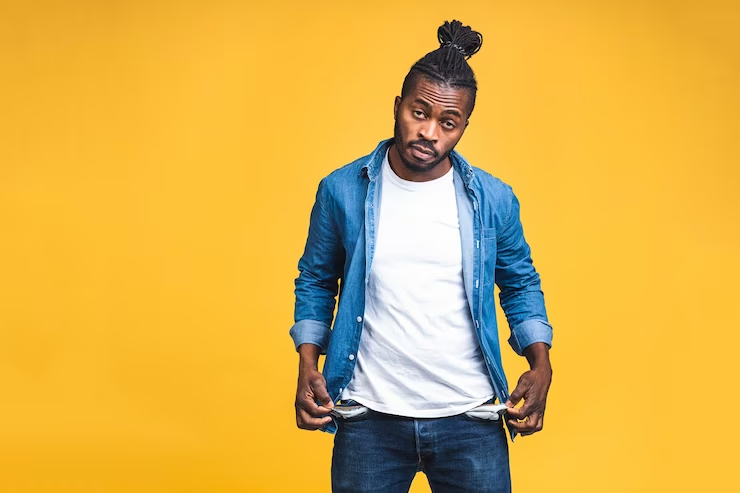
    Image source: Freepik

    I don’t know if I suffer from a chronic case of stinginess, but I have this chronic need to save money. I don’t have any issues with spending other people’s money, but I draw the line when it comes to mine.

    I’m what my parents like to call a “miracle baby”. I have just one sibling, and he’s 13 years older than me. After my parents had my brother, they tried for years for another child, and eventually had me when they’d given up. By then, they’d spent so much on fertility treatments which really drained their finances. By the time I came around, they didn’t have money, but to them, I was an answered prayer.

    I didn’t realise how bad the situation was until I was around eight or nine. If I ate twice a day, it meant my parents could only eat once that day. I watched as my brother worked crazy hard to support us financially. And it looked like he’d actually be the one to lift us from the depths of poverty. Around that time, he made enough to move us out of our one-room apartment in Bariga. But he decided to invest the rent money and the investment flopped. It was back to square one, and we never recovered.

    I think that’s when my chronic need to save started. In my mind, if I don’t touch the money, nothing bad would happen to it. Anytime anyone dashed me money or asked me to keep the change after running an errand, I’d hide it inside a hole in the wall of our apartment. I preferred to beg my mates for sweets when they bought them with money they were given, rather than buy my own sweets.

    Even when I managed to get into university, I kept feeling like I’d be made to drop out at any time over unpaid fees, so even though I helped my fellow students with assignments for a fee, I wouldn’t touch the money I made. I lived on handouts from my brother and squatted with friends. The few times I had to touch my savings for school expenses when my brother couldn’t afford it, it felt like I was physically hurting myself.


    RELATED: #NairaLife: She’s Saving for Her Future, and She’s at $150k


    I work now and earn an average of ₦180k per month, but my mantra is, “I don’t have money”. My parents and friends think I earn ₦60k because I’m trying to avoid black tax. I live on around ₦20k every month only because I have to eat and take public transportation to get to work. 

    I’m a single homebody, so I never have to eat out or spend money on a girlfriend. My friends are amazing guys who make good money, and they’re always helping me with bailouts. I live with my best friend so rent isn’t a problem, though I try to handle our food expenses once in a while. The last time I bought myself clothes was three years ago. I still have a shirt I’ve been wearing since 2016.

    I sometimes feel bad that I can’t be honest with my friends about how much I earn, but them knowing would only increase their expectations of me, and when I refuse to spend, they may call me stingy. But I honestly can’t bring myself to spend unless it’s absolutely necessary. Even then, I hate spending my own money.

    My savings are running into millions now, but I try not to focus on it. In this country, you’re one sickness away from depleting your entire account. One medical emergency can have you spending ₦5 million like it’s ₦5k. So, it only makes sense to save for the rainy day.

    I hope to japa one day, so I also save with that in mind, but the truth is, even if I don’t need money for proof of funds in the future, I’d still save like my life depends on it, because it does. There’s this assurance that seeing money in my bank account gives me. It tells me I’d never go back to that eight-year-old boy whose dream of leaving Bariga was unexpectedly cut short because of money.


    *Name has been changed for the sake of anonymity.


    NEXT READ: “I Was Aiming for at Least ₦1.2m a Year” — Nigerian Women on Different Salaries Talk About Saving Money

  • QUIZ: How Much Money Actually Fits Your Personality?

    ₦2k or ₦30 billion? How much money will fit you? Take this quiz and we’ll let you know.

  • “Basic Furnishing Cost Me ₦2m” — How Much Are Nigerians Spending on Their Homes?

    Nothing beats the fantasy of living alone and on your own terms. But how prepared are you for the cost of actually owning a home? If you plan on moving out soon, this article is for you. 

    Here’s what 8 Nigerian millennials spent on furnishing their homes. Note: curtains are the worst.

    Location: Shangisha Magodo, Lagos

    Total cost: ₦2 million

    Before I moved into my apartment in 2019, I lived in my family house. I was 27 and my relationship had gotten to a point where I needed full privacy. Since it was just my cousins, siblings and me, we had to take care of everything we needed in the house. So I knew how expensive things could get to furnish a home. I knew exactly what I wanted.

    A two-bedroom apartment was my target. Aesthetics were very important to me too, and plants were at the top of the decor list. My babe and I love plants, so I was going for at least seven to ten in our apartment. By the time I had the basics like paintings, curtains and setting up furniture — including a standard workstation because my job was a hybrid set-up — I had spent ₦2 million.

    I can’t remember the cost of each item, but the most expensive things were within the ₦200k – ₦350k mark each. I’m still asking myself where I got the money from.

    Here’s a breakdown, excluding miscellaneous costs:

    — Femi*, 30

    Location: Jabi, Abuja

    Total cost: ₦100k

    I moved into my first Nigerian apartment in 2020. Before then, I’d lived in the UK for a year doing my master’s, and my apartment came with furniture and basic living room and kitchen items. Compared to moving to Abuja on my own, that was heaven.

    My style is minimalist and clean. But with the ₦250k salary I was earning, even the furniture I wanted was too expensive. The average price range was ₦145k for a single-seater, ₦365k for a two-seater and ₦385k for a three-seater sofa. Those prices were ridiculous to me. I was also sceptical about using roadside carpenters who were even charging like ₦200k plus for a regular bed. Why?

    RELATED: How Nigeria’s Housing Problem Is Affecting Nigerians

    So I moved into the apartment with no furniture. For the time being, I’ve made a makeshift bed that cost me ₦20k while I save up. The thing I’ve sorted out, for now, are the curtains. They cost me ₦80k plus installations for four windows. And it’s not that the material was expensive. The thicker and more costly materials were going for ₦120k – ₦150k. That will be for another time. 

    — Lydia*, 26

    Location: Avontrou, Benin Republic

    Total cost: ₦30k

    I go to school in Benin Republic. February last year, I decided to get an apartment mostly out of frustration from living in the hostels. I live in Avontrou and my place costs ₦30,500 weekly. That’s about the most reasonable price for a good quality apartment here. But there are student-friendly prices, around ₦10k – ₦15k weekly.

    As for furnishing, my parents gifted me all my furniture except a mattress which cost ₦30k — someone needs to explain why beds are so expensive. Then, I stole curtains from my dad’s office. I’m not interested in any more expenses until I’m done with school.

    — Michelle*, 21

    Location: Gbagada, Lagos

    Total cost: ₦180k

    I moved into my first apartment in 2019. I was earning about ₦125k monthly at the time, so my budget was obviously low. I needed a place that wasn’t expensive and too far from my office at Gbagada. When I finally got one, the rent was ₦350k per year. I also paid the ₦60k agency and agreement fees and ₦30k caution fee. 

    I had to renovate it to make it liveable, but I didn’t consider aesthetics at all. I didn’t have money for that. The major thing I did was install metal burglaries over the door and windows. That cost ₦100k. Then, I painted the house and changed the tiles in my bathroom for ₦80k. 

    RELATED: Home Is a Shapeshifting Concept

    The apartment was convenient until earlier this year (2022) when I decided I could get a much better place. My monthly earnings have increased to an average of ₦380k, but you can’t get a decent one-room apartment on the Island for ₦800k right now except if you go as far as Sangotedo.

    I’d love to have a nice aesthetic in my new home. But the cost of rent alone is scary. The logical option is to furnish in phases.

    — Jane*, 27

    Location: Anambra

    Total Cost: ₦40k 

    Before I moved into my one-bedroom flat in November 2020, I lived in a self-contained that cost ₦75k yearly. This was during my master’s degree program at a faculty under Nnamdi Azikiwe University in Agulo village, Anambra. After school, I decided to move to a more urban area, Awka. 

    I got a job as a public health worker, but the bulk of my money came from sewing and selling yoghurt. I was making about ₦100k by 2018. That’s how I raised enough to move to Awka. My new apartment costs ₦250k yearly, so when I moved in, furnishing was not at the top of my list because I’d spent the majority of my money on rent. 

    RELATED: Adulting: 5 Nigerians on Things They Find Expensive as Adults

    For now, my aesthetics are sapa-inspired. For the first four months, the sunlight woke me up every morning because I didn’t have curtains. The sellers were charging ₦80k each. I couldn’t afford it so I went for blinds, which still cost ₦40k each.

    I’m at the point where I have to hit my fan before it comes on, and I can’t afford to buy air conditioners because my finances have dwindled over the years. I stopped sewing too; slouching all day gave me back pain. I’m focused on getting a job that’ll pay me enough. When I get one, all the sapa-inspired aesthetics will end.

    — Bridget*, 30

    Location: Mombasa, Kenya

    Total Cost: ₦901k

    I moved out of my parents’ house in 2021, and I got an apartment in Port Harcourt. Compared to Lagos, prices were reasonable there. But curtains were bloody expensive. One cost ₦60k. Why, please? By the end of the year, I had to move to Mombasa, Kenya for school. 

    Things there were six times the cost I’d spent trying to furnish in Port Harcourt. So I focused on the most essential things. First, I got an orthopaedic bed that cost 29k shillings (approx. ₦162k). I carried my PS4 from Nigeria and got a TV for 77k shillings (approx. ₦430k). Then, I got four blinds for 18k shillings (approx. ₦110k). Finally, I got my air conditioner for 35,500 shillings (₦199k). Omo, I haven’t actually sat down to look at the cost of things. I’m sure there were more, but these were the most pricey.

    — Richard*, 21

    Location: Portsmouth, United Kingdom (UK)

    Total cost: ₦765k-₦1m

    When I moved to the UK in 2017, I opted for a shared apartment because the rent was expensive. And my share cost £350 (approx. ₦179k). The apartment came furnished with some janky couches, chairs and beds. But one time, my roommate sat on the couch and it broke. They were clearly not made for black boys.

    Buying something brand new in the UK was out of the question. I’m talking £400+ (₦204k+) for a single couch! We had to tell the landlord to get us another one instead. He brought a black leather couch that had coins and stuff from God knows where. So he definitely either gave us his own couch or bought it off Facebook Marketplace. 

    RELATED: These Ridiculous Rules Prove That Nigerian Landlords Are From Hell 

    My bed was also destroying my back after a year. So I had to tell the landlord to change that too. A new bed cost about £300 (approx. ₦153k). If I had to replace it on my own, I’d have just slept on the floor like my ancestors. 

    So in the UK, you don’t furnish except you want to be extra. Most of the cost goes into rent, which can be between £750 – £800 (approx. ₦383k – ₦408k), and utilities like electricity, heat and WI-FI. If I get something, it’s a thrift piece. Like my TV that cost £120 (approx. ₦61k). Other costs of living come in too. The other day, the microwave broke down. That was £40 (approx. ₦20k) gone to fix it. 

    RELATED: 18 Things That Are Too Real for Any Nigerian Who Has Ever Gone House Hunting

    Also, the UK is set up in a way that you always need to split the bill. The cost of living is high. Right now, I’m looking for a new place to live because my landlord wants to sell the house. I’m also getting married so I need my own space. That’s a nice £150 – £200 (approx. ₦77k – ₦102k) on kitchen utensils alone. Full furnishing would likely be £1,500 or £2,000 (approx. ₦765k-₦1m).

    — Ben*, 27

    Location: Gbagada, Lagos

    Total cost: ₦750k 

    I moved out of my mother’s house when I finished university in 2019. I was going for a minimalistic vibe because I really didn’t have the money to do anything grand. My modelling career was just kicking off. But I also didn’t want clutter in my space because it was a small one-bedroom apartment. 

    I didn’t have enough money to fully furnish until 2020. I got a bulk amount and took out ₦500k to re-do my home. First, I got furniture. I was going for something that wouldn’t encourage people to stay in my house for too long. So the chair didn’t have any arm or backrest. But it cost ₦50k because of the pink suede material. 

    RELATED: Read This if You Want To Hack House Hunting in Lagos

    I bought a fake plant that was way more expensive than a real plant at ₦25k. But a real one would’ve died; there was no need to spend money on it. The truth is, forming minimalist was way more expensive. Things like painting my living room satin white cost more than ₦50k. Way more expensive than painting my room (which is way bigger) purple. Painting and screeding the whole house cost 100k. 

    Oh, and my vanity mirror cost ₦40k to make, excluding the chair and table. I racked up ₦500k on my floating shelves, LED lights for Youtube and new cupboard doors. Then, curtains! I can’t remember how much they cost, but it was ridiculous — I was better off with window blinds. If we’re adding my inverter, it cost ₦250k.

    I actually can’t complain because if I’d gone to a regular store, I would’ve spent at least ₦500k on furniture alone. And that was two years ago. 

    — Dolapo*, 24

    ALSO READ: 7 People Talk About How Much It Costs To Live In Abuja

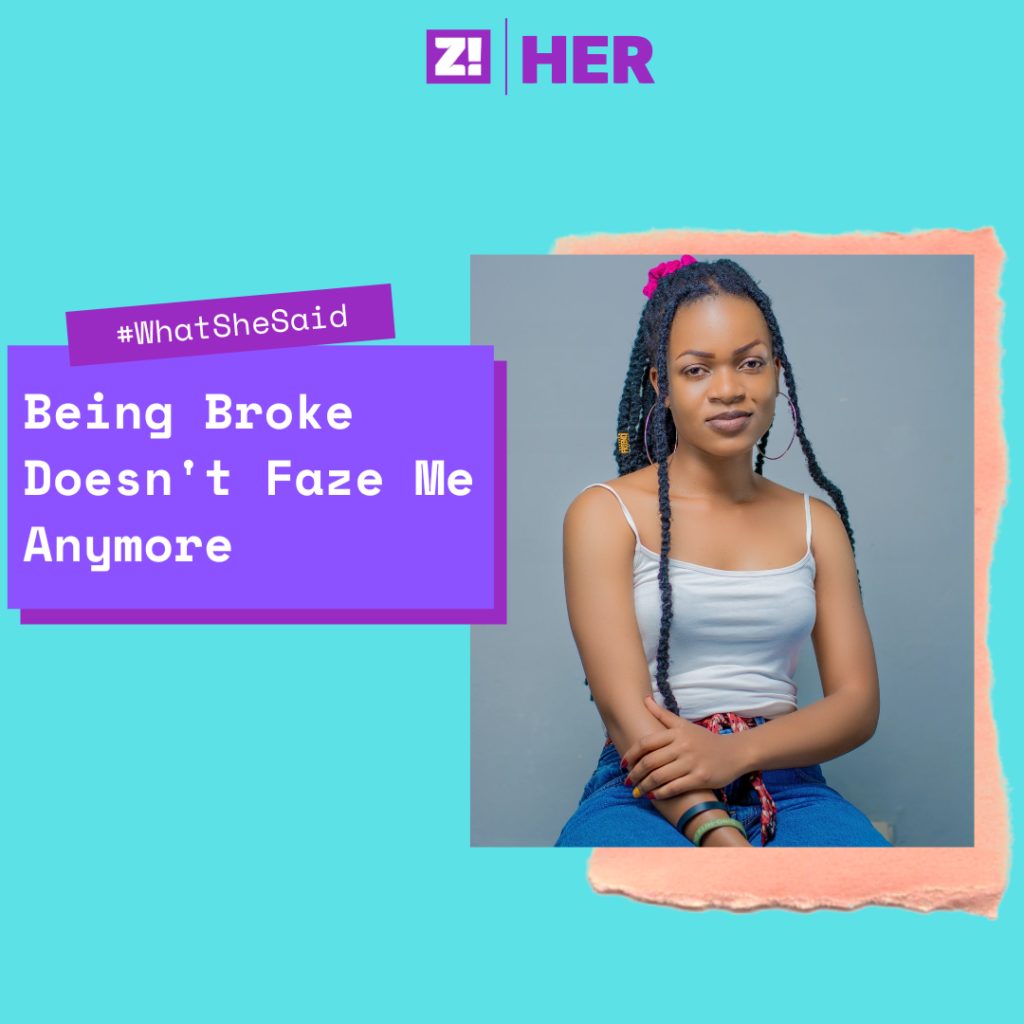
  • What She Said: Being Broke Doesn’t Faze Me Anymore

    Navigating life as a woman in the world today is interesting. From Nigeria to Timbuktu, it’ll amaze you how similar all our experiences are. Every Wednesday, women the world over will share their experiences on everything from sex to politics right here. This is Zikoko’s What She Said.

    Today’s #ZikokoWhatSheSaid subject is a 28-year-old Nigerian woman. She talks about living alone in Accra, how she ended up picking unemployment over money and why money cannot be all there is to happiness.

    What makes life interesting for you?

    Money. My views about it have changed over time though. Money was never a motivation for me, but it used to be the only quantifiable thing that let me know I was doing alright in life. When I had it, I knew I could relax. 

    And I was earning a lot of it at 27 in Accra. Everyone said I looked happier there. 

    Were you?

    I was alright. Ghana was a vibey place, and I got to meet a lot of people. But moving to a new country was also quite lonely. My friends thought I was happy because I posted a lot online. But that was all I could do because I had to go out often to make friends, connect with people — anything to get out. I guess my social media page created that facade of being much happier.  

    The part of my life that really made me happy was the growth I’d made in a year through therapy. That made it easier to be in a new country alone.

    What changed in a year?

    I was depressed for a really long time, probably since I was 18, and I didn’t realise why until I started to talk through things that had happened. I let a lot of the harassment I experienced as an engineering student slide during an internship. I was a quiet 18-year-old. You could literally put your finger in my eyes, and I wouldn’t say anything. And so men in their 30s were pestering me to date them.

    Wow. I’m sorry that happened.

    Thanks. I thought it was normal. But therapy helped me be more objective with my life. I understood that I needed to be a lot more vocal about how I’d experienced men at a young age. I also understood how sensitive I was as a person and how easy it was to let things slide. The sessions made me aware of myself. That’s how things slowly got better. 

    That sounds great. 

    It was. My life would have been richer if I started much sooner. Sometimes, I’d think my life was horrible without an exact reason. I’d just be sad. But when I started treatment, I realised some of those emotions had to do with having PMS. I never knew that. If I did, I would have taken better control of certain situations.

    I think understanding more about myself also prepared me for when I decided to quit my job without a plan. I’d been working at She Leads Africa since I was 25. I was already leading a team by the time I quit.

    And you quit without a plan?

    LOL. Yeah. 

    After two years, I’d hit a plateau. When I left, I ended up moving to Accra. Nothing about my move was exotic. I quit my job and was out of work for five months. Accra was literally my only option at the time. If I had an offer in Ekiti. I would have taken it. 

    How was your move?

    Accra was good for me. I always walked around with a chip on my shoulder about not being able to afford things I’d like. In Accra, I saw people with barely a quarter of what I had, hustling and making the most of it. That was something I needed to see to stop overthinking little things like saving to buy the kind of phone or laptop I wanted. People had bigger issues. 

    How long did you stay in Accra?

    A year. I quit the job in Accra and moved back to my parents’ home in Nigeria because I was offered a marketing role at a tech company. I’d worked as a program manager at my last job, but I always wanted to work in tech. Here, I was earning the most money I’d ever made. I was balling. But adjusting was difficult.

    The role was challenging. At first, I thought it was just a steep learning curve that I’d get the hang of. But whenever I submitted a report, my manager would ask if I’m sure the role was for me. He’d go on about hiring me because he thought I was good. The tough part was how everyone was “too busy” to explain how to fix it. 

    So, you left?

    Not immediately. I didn’t want to just give up. I decided to start a side hustle and left Abuja to see friends in Lagos for a bit. I convinced myself that a job wasn’t meant to be perfect.

    But when I had a panic attack and started feeling very sick, I knew it was time to go. I hated that because I quit my cool job in Accra for a risk that didn’t pay off. 

    Did you talk to anyone?

    Yeah. My friends asked me to give it some time, but it had been four or five months already. It wasn’t getting better. I felt like the job was killing me.

    So, you found a new job?

    Nope. My manager was also concerned that I wanted to leave without any other job offer. He felt I could make more of an effort to figure things out. But I was exhausted. I was banking on my savings to get me through the next five months.

    After quitting, I spoke to my therapist, and she felt it was an opportunity to build resilience rather than quitting. She gave me the “Life will always be difficult speech”, and I saw reason in it. So I went back to ask my manager for my job back. He said he’d have to think about it first. We never circled back on that.

    During the first month I was unemployed, I sha didn’t tell anyone at home I had quit. I didn’t want them to freak out. If they did, then I’d freak out about everything.

    How were you feeling?

    After a few weeks, I settled into being unemployed. It felt different from the first time it happened. Strangely, I preferred not having money to being stressed out by a job. 

    The skills I’d picked up from therapy also helped. I didn’t maximise the issue in my head. I focused on the fact that all I didn’t have was a job. And that wasn’t a big deal. When I thought about it, the only reason I wanted that tech job was to claim success. That’s all. Then, I’d spend the rest of my life deeply unhappy.

    So, you absolutely didn’t give a shit about choosing money over happiness?

    I’m the youngest of six kids. For me, bad as e bad, I’ll never starve. If one person says no, there are five others to ask for help.

    Accepting my privilege and deciding not to feel guilty about it is what helped me leave that job. I could’ve focused on trying to be independent like other times, but I wasn’t going to let pride kill me.

    LOL. How was it like living with your parents again after Accra?

    My parents are pretty laid back. Of course, no one welcomed me with open arms for quitting my job. But they were also not going to send me out of the house. And when I had money, I made sure I took up responsibilities at home. So, in scenarios like this where I didn’t have a job, they were supportive. 

    So, you’re not trying to find a job?

    LOL. I’m waiting on an offer from another company. 

    There’s something about getting past 27. After that age, you realise the world won’t fall apart just because you’ve made a few mistakes. You’re making money, maybe not as much. You’ve done a few of the things you wanted to. And most importantly, you’re alive. Na person wey dey alive dey enjoy money.

    If you’d like to be my next subject on #WhatSheSaid, click here to tell us why

  • “I Can’t Look at the Price of Turkey Without Getting Angry” — Here Are 10 Food Items Nigerians Are Giving Up

    There was a time I thought I couldn’t survive without eating roasted catfish. Gone are those days, my dear. With the way prices are going up, I’m convinced that I don’t need meat or fish in my food again. How about you though? Here are the foods ten Nigerians are cancelling for the sake of their account balances.

    1. “I’ve convinced myself that corned beef is too unhealthy to be almost ₦2k.”

    Ebere, corned beef

    Everyone talks about how expensive sardine is, but how about its cousin, corned beef? In 2015, I could eat it with every meal because the big can was just about ₦500. If I was frying eggs, cooking jollof rice, or just looking for something to munch, I’d add corned beef. Now, not even the smallest can of corned beef is ₦500. It’s triple the price, and I’ve convinced myself that it’s too unhealthy to eat. This isn’t life sha.

    2. “It’s not like my salary doubled, so why am I still buying grapes?”

    Uche, grapes

    I’m the kind of mum who wants her kids to have fruits every day. I stay in Abuja, and at some point, I could buy apples and grapes for my two kids for ₦4000, and it would last two weeks. Now, I spend the same amount for half the quantity. It’s not like my salary doubled since January 2022, so how can I keep up? I’m convinced they can do without grapes. After all, Ribena has vitamins too. At least, a carton can last for two weeks. 3.

    3. “I really don’t need shrimps to survive.”

    Lanre*, shrimps

    Shrimps used to be my go-to seafood. There was a time I couldn’t live without them, but look at me now, thriving in Bubu’s economy. Last year, a small portion of shrimps was ₦1200, but in a matter of months, they’re going for ₦1900. That’s a no for me, please.

    RELATED: 8 Things That Taste Better When They’re Free

    4. “I can’t look at the price of turkey without getting angry.”

    Pam*, turkey

    The price of turkey has doubled in the last two years. I thought not eating it would be the death of me, but seeing how much it costs makes me so angry now. I spent ₦3600 the last time I closed my eyes to buy a kilogram of turkey. I can’t keep doing that. Since chicken breasts cost the same thing, I’ve decided that it’s a healthier option for me.

    5. “I don’t mind if soda kills me.”

    Linda*, black Bullet and 5Alive Berry Blast

    Black Bullet once retailed for ₦350. The moment the price reached ₦800, my alcoholism was cured right away. The other thing is 5Alive Berry Blast. I would drink it every time, forming “it’s healthier than soda.” When it reached ₦500, I realised that soda can kill me, I don’t mind.

    6. “I went from eating steak bi-weekly to only monthly.”

    Maxwell*, steak

    I used to buy steak bi-weekly for about ₦7k – ₦15k, from supermarkets around Lagos. Now, I buy it online, and to be fair, the price isn’t significantly cheaper than in the stores. Also, I can’t keep eating it every other week, so I’m down to just once a month. 

    7. “I can’t think of buying suya anymore.”

    Chinwe, suya

    There was a time I could get a stick of suya for ₦500. Right now, that amount buys like six small pieces of suya, and that’s if the vendor likes you. They don’t even garnish it with onions and cabbage anymore. How am I supposed to drink garri without decent suya? Even the milk I’m trying to maintain is getting so expensive.

    RELATED: Where To Get The Best Suya in Lagos

    8. “Until the price comes down, I’ll live without plantain.”

    Chris, plantain

    In 2016, ₦200 could get me enough plantain to eat with beans, and still cook into a porridge the next day. It’s 2022, and I can’t even buy a banana for ₦200. I didn’t actually stop buying plantain with my money until ₦1000 became useless though. I love plantain, but I’ll wait for the price to come down.

    9. “Granola for ₦3k can’t work for me.”

    Chuka, granola and pringles

    How pringles went from ₦600 to ₦1200 in a matter of months still shocks me. I can’t even imagine swiping my card to pay for it anymore, so it’s been almost six months since I had any. Then, there’s the granola that I used to eat for breakfast every day of my life. When it went up to ₦3k, I knew that the mallam’s bread and fried eggs close to my office were good enough for me.

    10. “I’ll fully break up with shawarma when my guy starts selling to me at the normal price.”

    Mark*, shawarma

    In 2019, I was working in Yaba, Lagos, and shawarma cost ₦400 or ₦500. I’d buy at least three almost every night! In 2020, it jumped to ₦800 or ₦1k, and I stopped buying so much. Eventually, it went up to ₦2k in Lagos, and by the time I moved to Anambra in 2021, it cost almost the same there. My only saving grace now is one particular shawarma guy. He sells to me at a special price, two for ₦1600 each, because I’m consistent. The day he decides not to sell, it’s all over.

    ALSO READ: “Nigerian Business Owners Are Going Through Another Pandemic” — Let’s Talk About Inflation in Nigeria

  • “I Was Aiming for at Least ₦1.2m a Year” — Nigerian Women on Different Salaries Talk About Saving Money

    Men are always claiming women are rich but never spend their own money. Let’s put it to the test, In this article, six women share their savings journey with us and their money plans for 2022.

    1. Ifechi, 25

    When I was four, whenever visitors gave me money, I was allowed to keep it for myself. There was no “let me hold it for you” from my mother. I’d save up the ₦10 or ₦20 from visitors and blow it on condensed milk at the school canteen. 

    As I got older, the habit of saving money stuck, but my motivation changed. It started with my parents’ accident in JSS 3. For some reason, the incident sent me into a state of panic. Seeing my parents spend so much money made me worried about blowing my money on random desires like condensed milk. My parents got better and our finances went back to normal, but I was paranoid about the possibility of an accident happening again. At that point, I began saving to never spend. Call it paranoia, but I was always fearing the worst.

    I didn’t feel financially secure until I got my first job in 2020.  earned enough to start saving ₦100k every month. The paranoia was still there, but at least my bank account moved up, so I stopped saving solely for unplanned emergencies. The first expensive thing I saved up to get was a Macbook. Later, I started a savings plan for a car. The target for my car was 2022 and I was putting away at least ₦1.2 million each year. It’s 2020 now, but I don’t really need to get the car immediately. A friend has been driving me around town, so why stress? 

    Now, I’m focused on saving in dollars. My next goal is to double my ₦100k savings per month by 2023.

    2. Hauwa, 41

    I was late on the savings culture because of the strikes that held me back in school and the difficult job market in the early 2000s. The most I had done was ₦5k per month from my NYSC allowee in 2002. I was saving up for a Nokia flip phone.

    After that, I didn’t get a job that paid well enough until 2007. I was 26 and started earning about ₦208k per annum as a trainee in the bank. Three years later, I was promoted and my salary moved to about ₦400k per month. The growth was great, but I felt like age wasn’t on my side anymore. I was putting money away to have enough money to assist whatever man I finally married with wedding bills. Honestly, at the time, it made sense. But while I was waiting for someone’s son to find me, I also put money away for a degree in the UK.

    In my 30s, I was focused on saving to invest my earnings and it’s something I’m proud of. Now, I earn interest rates from treasury bills, stocks and my fixed deposit account. I believe it’s way better than leaving the money idle at the bank. In 2018, I moved into cryptocurrency with the money I had saved up from my bank job. Crypto is now the percentage of my income that covers my rent.

    3. Hannah, 23

    In January 2020, I wanted to start a fixed deposit account to save my allowee. The whole process was confusing. My friends had been raving about saving with a group through ajo. I didn’t have anything to lose so I joined them in February. We were 12 in the group and each person contributed ₦20k per month. By December, I got my  ₦120k  and started another round in 2021.

    Right now, I’m still saving up money on the group to rent an apartment. If I get it right this year, I’d like to visit Kenya for Christmas. To make that happen, I’ve moved my Ajo contribution to ₦100k per month.

    RELATED: Live Vicariously Through These 5 Nigerian Women Exploring Africa

    4. Kemi, 27

    I didn’t have any savings until 2021. Before, I wasn’t as committed to keeping to a yearly target — please don’t stress me. I’d put money away in a savings app, but it was easy to transfer the money back to my main account when I had any issues. I really didn’t take my finances seriously until I had to grow my nail tech business after university. Unfortunately, I didn’t have the capital. I was collecting only ₦12k from my parents and that barely covered the cost of feeding in a private university. I got a few bottles of nail polishes, but I needed more.

    When NYSC started, I was able to save ₦21k per month from my allowance. By the end of the year, I got a ring light and bought a phone for better pictures. In 2022, my nail business has grown enough to save ₦30k per month. Right now, I just want to be able to afford gifts for my friends. 

    RELATED: “I’m a Firefighter At My Job” — A Week in the Life of a Fintech Marketer

    5. Tina, 24

    In 2020Imy colleagues and I were saving part of our salary with an ajo that summed up to about ₦200k for each person. With ajo, each person collects the bulk money that is saved per month. So in a group of 10, each member was saving ₦20k to meet up with the ₦200k. In December, I got my share of the money. I used it to settle my bills and start a fruit juice business. So that took all the money I had until 2021. I was saving for a phone for the end of the year, but I didn’t make it. I also needed to change my clothes and get better bags — I wanted to look more like a lady. So once my savings reached ₦70k, I gave up and took out the money to buy the clothes and bags I needed. This year, I plan to make it through the year with savings. I don’t have a specific goal yet but I’m working on it.

    6. Amara, 27

    I’m just taking it one step at a time and trying to survive. I didn’t get a job until 2019 — I was earning ₦50k and saving ₦30k. I was living with my uncle at the time and focused on saving up for my own space. Along the way, I spent from the savings to sort out family needs and cover transportation costs in Lagos. By 2020, I was able to get a shared apartment in Orile for ₦100k. I’ve gotten a better job, so my “big mummy goal” now is to be able to afford a place where I won’t have to share the kitchen or toilet with other people. 

  • All the Signs Your Ajo Group Is About to Crash

    Last time, we told you about some of the worst experiences Nigerians have had with borrowing money. This time, we’re exploring how Nigerians have attempted to save and all the drama in between. Five Nigerians shared their worst experiences using Ajo. All we can say is, before you drop that ₦10k, read this. Ehe.

    1. “The Ajo lead collected first”

    Daniel

    I was in debt after the whole thing. My barber and I were close and he talked me into joining an Ajo group one of colleagues started. There were savings as a business so I felt it was alright. I should have known there was a problem when the guy starting the group insisted on collecting first to prove we were serious. My guy kept telling me nothing could go wrong. Telling me “Baba if anything wan shele I fit find this nigga clear am.” — Mtshw, money I borrowed from my brother. All I can say is, never again.  

    2. “Iya Oloja died on my own month”

    Dunni

    Why is my own always different please? Why? This is the first and last time I will do this rubbish please. A friend asked me to join a group run by a woman in their community. It was trustworthy enough since mama couldn’t run away now. Little did I know that mama only had two months to live. She ended up passing away when it was time for me to collect my own contribution and no one knows where this woman was keeping the money. I’m even angry just thinking about it.

    3. “He promised to pay his share later”

    Amaka

    I started an Ajo group to save money in school. One of the people contributing lost his job and asked me to help him pay for just one or two months. I was fine with it until other members of the group started asking me to pay for them too — it was either they lost their jobs or had urgent family matters they needed to handle. I kept covering up so the group wouldn’t fall apart, but from paying my own ₦10k each month, I moved to ₦60k because of other people. When they eventually paid me back, it was in small insignificant amounts. I was disgusted by the whole thing.

    4. “Ajo Lead borrowed the one million naira for a trip with his family”

    Shubi 

    It was November 2020 and I was kind of broke. One day, I got into a conversation with the woman who had a POS shop on my street. Somehow, we started talking about saving money for the next year and she suggested joining her Ajo group. Initially I was skeptical but she swore that she had collected her money back the last — so why not? Later that evening, she shared my number with the group head and he added me to the Whatsapp group. The main group had ten people paying ₦200k to collect one million naira each month. But for individuals like me that couldn’t afford to pay ₦200k, we were paired with four people to contribute ₦50k and split the one million naira. 

    Everything was cool until December. A few days before Christmas, the man coordinating the group chat sent a message to the group. I couldn’t believe my eyes at first. He said he needed to borrow one million naira for our group for a trip with his family — I thought it was bants. Until true true, December 31st came and baba didn’t say anything. I went to meet the POS lady and she kept telling me to be patient. One year later and I’m still being patient. The POS woman has even packed out of her shop and blocked my number. 

    5. “I didn’t know them from Adam”

    Kingsley

    Hm. My story was a big mumu experience because I didn’t know these people from Adam. I found a savings group for women online. The group was called Lagos big babes and the fee was ₦500 — that should have been my cue to turn back, but no. Apart from needing the money for my rent, I was hoping to meet women that were open to exploring — the possibility of pleasure while saving didn’t seem so bad.  My eye cleared when I woke up one morning to find the group chat closed. There was nobody on the group chat again, even the babe I had been flirting with for a few weeks stopped picking my calls. That was one month of my salary gone and nowhere closer to getting an apartment. That was my own foolishness sha.

  • 5 Healthy Money Habits Women Should Have, According to Oluwatosin

    Money is hard to come by but easy to lose. Here are five healthy money habits women should have to keep the money coming, according to Oluwatosin, founder of Money Africa, an ed-tech platform that enhances financial literacy. 

    Oluwatosin

    1. Commit to changing your mindset about money

    Did you know that by the age of seven, many of your money habits are already set? The first step is to understand your relationship with money and if that relationship is unhealthy, you have to be deliberate about changing it. Figure out your budget and maintain it. Cultivate a mindset of abundance. Personal finance is 80% mindset and 20% knowledge. You need the right mind to sustainably build wealth in the long run. 

    2. Track your spendings as much as you can

    Many people see this as a hard nut to crack but you can start with something simple like drawing up a budget. Try to maintain the budget. When you fail, go back to it. This way, it’s easy to see where your money goes when it comes in and you can make room for more. You can’t spend measure what you don’t track.

    3. Learn to take risks 

    The truth is nobody can get rich just by saving. Inflation is a thief and if you’re only saving, inflation will strip you of value. Investment is what you need to be financially independent. Take risks and succeed, albeit calculated. 

    4. Negotiate every deal 

    Remember that nothing is final until you have negotiated. Ask for a deduction on your insurance premium or your flight tickets. Ask for a raise on your salary, side hustle income or your project. You don’t know what will change when you ask so try. Do your research and negotiate to your advantage. 

    5. Resist instant gratification

    The big money win comes from the long wait. As Bill Gates said, “Most people overestimate what they can do in one year and underestimate what they can do in ten years.” Start planning for ten years from now. Learn patience and play the long term game. 

    Subscribe to our newsletter here.