Notice: Function _load_textdomain_just_in_time was called incorrectly. Translation loading for the wordpress-seo domain was triggered too early. This is usually an indicator for some code in the plugin or theme running too early. Translations should be loaded at the init action or later. Please see Debugging in WordPress for more information. (This message was added in version 6.7.0.) in /home/bcm/src/dev/www/wp-includes/functions.php on line 6121
mental illness | Zikoko!
  • #NairaLife: She’s 25, Navigating Low Income and a Mental Disorder

    Every week, Zikoko seeks to understand how people move the Naira in and out of their lives. Some stories will be struggle-ish, others will be bougie. All the time, it’ll be revealing.

    Let’s start from the beginning. What’s your earliest memory of money?

    I discovered we were poor-poor when I was ten years old. I’d been disturbing my dad to buy me something that day. He sat me down and broke down how much he earned and how we spent in the house. It was a sombre experience.

    How much was he earning?

    His work as a church pastor paid him ₦12k/month. He didn’t always work at the church, though. He was a mason but had to stop because he was getting older and couldn’t keep up with the demands of bricklaying. 

    My mum carried most of the financial weight. She started as a cleaner at the primary school my sister and I attended and eventually became a teacher. The staff discount she got was the reason we could attend the school. She also saved up all her money to feed and put us through secondary school. 

    My parents wouldn’t eat sometimes, so my sister and I could. I think it’s part of the reason I have a messiah complex now, in addition to my other issues.

    What issues?

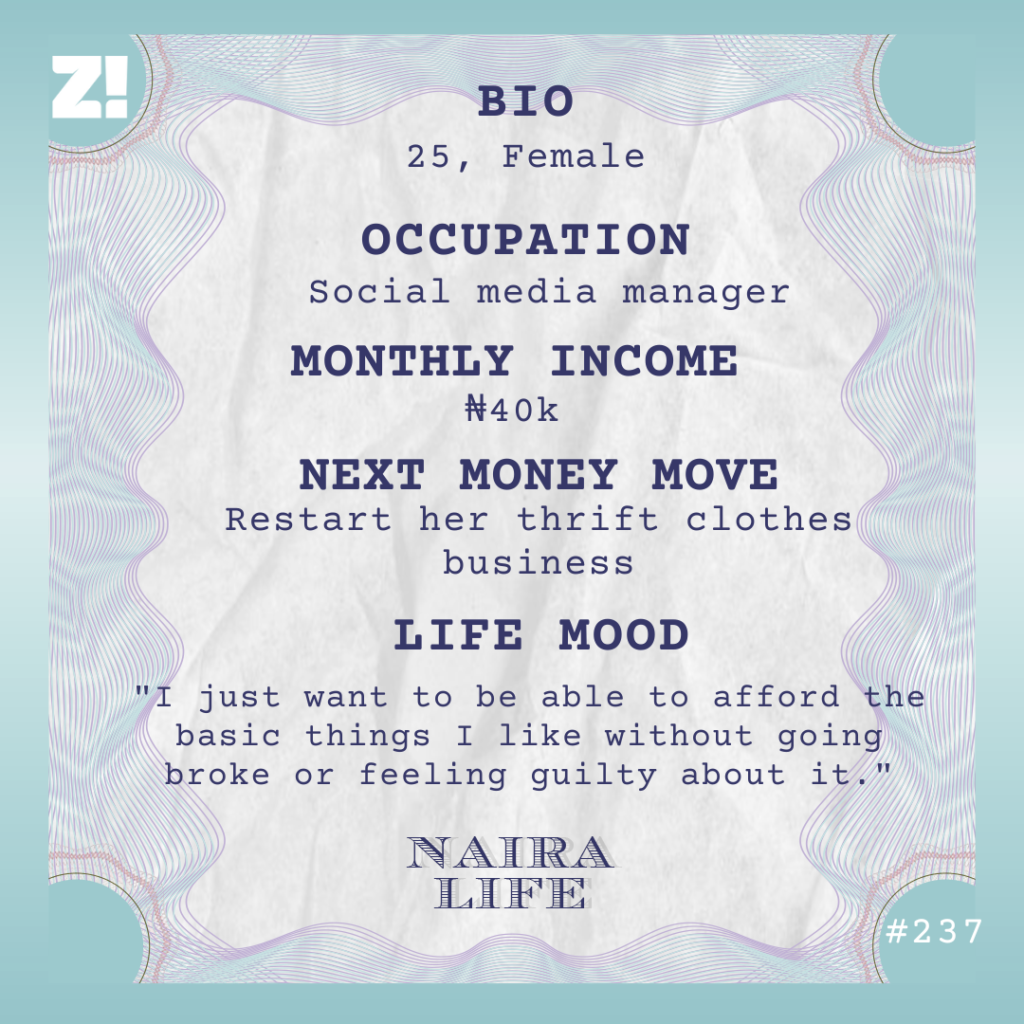
    I was diagnosed with Borderline personality disorder (BPD) in 2022, and I’ve had undiagnosed dyscalculia for as long as I can remember, even though I only found a name for it through my personal research two years ago. I struggle with numbers and typically have no clue how to handle money.

    When did you first realise something might be wrong?

    When I was 7 years old, a deaconess at our church asked me to tell her the time, and I just stared at the clock in fear. I knew I should know it. Instead of saying it was almost 2 p.m., I just told her that the “big hand” was on 12, and the “small hand” was close to 2. She just looked at me funny. It was so embarrassing.

    Was that the only indicator that you had issues with numbers?

    I also couldn’t recite the multiplications table. In school, when the teacher asked us to stand up to recite it, I’d either sneak peeks at the times table at the back of our notes or just mime along to the other students.

    As an adult, I still can’t recite it. After the two times table, it’s over. Solving maths problems on my own always muddles my brain. I still can’t tell time either, except if it’s by the hour or every 30 minutes. 

    I’ve been scammed several times while using public transport. Like, when the conductor asks you to bring ₦1k to collect ₦500, so someone else gives you ₦700, I’m always like, “Wait first, what’s going on?” I always end up getting cheated.

    How has this affected your ability to make money?

    I got my first job as a typist at a computer shop when I was wrapping up secondary school in 2013. My salary was ₦12k/month, and I’d blow all the money almost immediately and start wondering why I didn’t have any money.

    I quit the job in 2014 to write my first JAMB exam. I wrote the exam twice and passed both times but didn’t get admission, so my dad encouraged me to move to Ilorin for IJMB in 2016. It cost around ₦60k for the one-year period plus accommodation. I still didn’t get admission, but I was already quite independent, so I decided to move in with my friend and her grandma in Ibadan to look for a job instead of returning home. I found one as a cashier at a salon.

    A job handling money. What could go wrong?

    A lot. My salary was supposed to be ₦28k/month, but I always got shortages while balancing the account, and the difference would be removed from my salary. So most times, I only got paid ₦20k or less at the end of the month.

    I could only afford to send ₦5k to my parents, keep a little money aside for transport fare and buy Shoprite bread or a club sandwich for small jaiye jaiye. I had zero savings. It didn’t stop me from applying to the National Open University, though.

    But how did you handle school fees?

    The salon I worked at allowed staff to sell additional products as long as you gave the boss 10% of every sale. I found a beard growth serum on Jumia and convinced the barbers to upsell it to their clients, promising them ₦500 on every bottle they sold. I bought the serum for ₦800 per bottle and sold it for ₦2,500, so I got about ₦1k in profit after the barbers and my boss got their share of the money.

    The business was a hit. I started with just 10 bottles, but within a month, I started selling out 24 bottles in two weeks.

    I even kept all the money I was making with my boss and only collected it to settle school expenses because I knew the money would disappear if I held on to it.

    That was a smart decision

    I did that for about a year until I decided I couldn’t keep up with the calculations I had to do as a cashier. Plus, I wanted to learn a skill I could do on my own, so I approached my boss and asked him if I could train to become a pedicurist — we offered pedicures in the salon. He agreed and allowed me to learn for free since I was already a staff member. I learned for about six months while still working as a cashier.

    Then you switched from cashier to pedicurist

    Yes. In 2019, I moved to our branch in Ilorin because there was no space for pedicurists where I worked. The pay also changed from a fixed salary to commissions. Every pedicurist’s monthly target was at least ₦300k, and we’d get 20%.

    I wasn’t earning as much as my coworkers as it involved walking up to people to convince them to do a pedicure, and my anxiety made that really difficult. There were days when I’d be too scared or just not want to attend to anybody. 

    On average, though, I made about ₦60k/month —  a big deal considering where I was coming from.

    What were your finances like at this time?

    I raised ₦120k from my savings and a loan I took from my job to rent a one-room apartment. I tried to become better at saving money, but it never worked out because there was always a reason to spend. My parents depended even more on me, and I felt like I had to be responsible for them. 

    Basically, I spent most of my salary on my parents and the little foodstuff I needed. They’d call me for the smallest things, and when I didn’t have, I’d borrow. I always felt guilty about buying myself any piece of clothing, except it was something I needed to wear to work. 

    I also abandoned uni because I didn’t have as much time as I did when I was a cashier. I worked from 9 a.m. to 9 p.m. daily and had only one day off. I just kept telling myself I’d continue when I was more settled. I never did. It was also around this time I started really noticing patterns that contributed to my BPD diagnosis.

    What patterns?

    I had some issues with my boss, and it was an emotionally tough period for me. I didn’t have a hold of my emotions; when I was happy, I was too happy. When I was sad or angry, it was extreme too. I even started cutting myself.

    I’m sorry you went through that

    Thank you. I also felt directionless, spent spontaneously and kept changing jobs. I left the salon, and within one year, I worked at four different salons because I just couldn’t stay in one place for long. At some point in 2021, I moved back to Ibadan because I was tired of working every day and living on commissions.

    Were you doing anything else to make money?

    Not immediately. I moved in with a friend and former coworker. She offered home-service pedicures, but I had anxiety about going to people’s houses. So it took me a couple of months to build the courage to start home services. Thankfully, she introduced me to some people, and I got three regular clients.

    A pedicure session cost ₦7k, and the first client paid for two sessions in a month. The second client was a family arrangement with the wife and kids, and I got paid ₦20k for one session a month. The last client only had one session a month, too. 

    That brought my earnings to about ₦41k/monthly, but it wasn’t enough. I knew I had to look for a better option.

    So, what did you do?

    I reached out to a long-time friend in the UK. We’ve never met, but I call her my big sister. She encouraged me to write because I was always dropping long posts on Facebook. 

    As usual, I was anxious, but she introduced me to someone who paid me ₦1k for 800-word research articles for a real estate blog. It was small, but I was grateful for the opportunity to build my confidence. I did about 10 articles a month in addition to the home-service pedicures.

    How long did you write for the blog?

    About five months. And all the while, I struggled with confidence and imposter syndrome. I couldn’t even seek out other clients or try to establish myself as a writer. I always thought, “What will I even write? What if I write for someone, and they call me out as a no-nothing fraud?”

    When I stopped writing for the blog, I decided I wanted to be a copywriter. My UK big sis paid for a copywriting course for me, and I learnt a lot about it. But when it came to utilising the knowledge I’d gained and putting myself out there, I shrunk and concluded I wasn’t good enough.

    Oh no. Was this when you got diagnosed with BPD?

    It was around that time. After I had a breakdown in 2021, I found an NGO that offered free therapy sessions, and I’ve been in therapy since then. They diagnosed me with BPD in 2022, and it explained why my life is the way it is.

    I mean, one of the symptoms is spontaneous spending. I’d be broke and know I needed money to eat, but when the money came, I’d use it to do something completely different. 

    Was there medication involved after the diagnosis?

    My therapist advised against medication, but I’m currently using Dialectical behaviour therapy to manage it.

    How has treatment impacted your relationship with money?

    I haven’t found my direction yet, but I think I’ve gotten to a point where I know I need to be financially better and more responsible. 

    I constantly feel like I’m stuck on an island with wild animals without a means of escape, and I’m supposed to somehow figure out what to do. So I just pretend like I know what I’m doing because if I don’t, it means I’m dumb. 

    I still feel like my inability to keep a job or focus on a skill for a long time contributes to a vicious cycle of unstable income and inability to save. So I just need to combine this knowledge that I need to be better with willingness in order to put it into action. I’m not there yet, but I’m getting there.

    [ad][/ad]

    Rooting for you. What do you do for money these days?

    I don’t offer pedicures anymore because most of my regulars have japa. Since July 2022, a former client has been paying me ₦40k monthly to manage his social media page. 

    I know I can earn more, but I’m still struggling to put myself out there. I’m currently learning UX Design on Coursera, but I know deep down that I may end up not using it for anything.

    I’m also planning to start a thrift clothes business soon, partly to earn more and partly to settle a ₦155k debt, which I incurred while trying to secure my own apartment. I first started the thrift business in November 2022 and even started saving money from the almost ₦40k profit I made monthly, but I had to stop in April 2023 due to the debt. 

    How did you get into debt?

    When I was raising money for my current apartment, I loaned about ₦120k from a now-ex-boyfriend to add to my savings and make up what I needed for the rent, but he started disturbing me for his money when we split, so I’m now repaying from my salary monthly. 

    Of course, I still have to eat, so I’ve been borrowing random ₦5k here and there to survive — which is why my debt grew to ₦155k. But hopefully, when I restart my business, my finances become better.

    I already bought ₦60k worth of goods, and I’ll be selling them on Instagram.

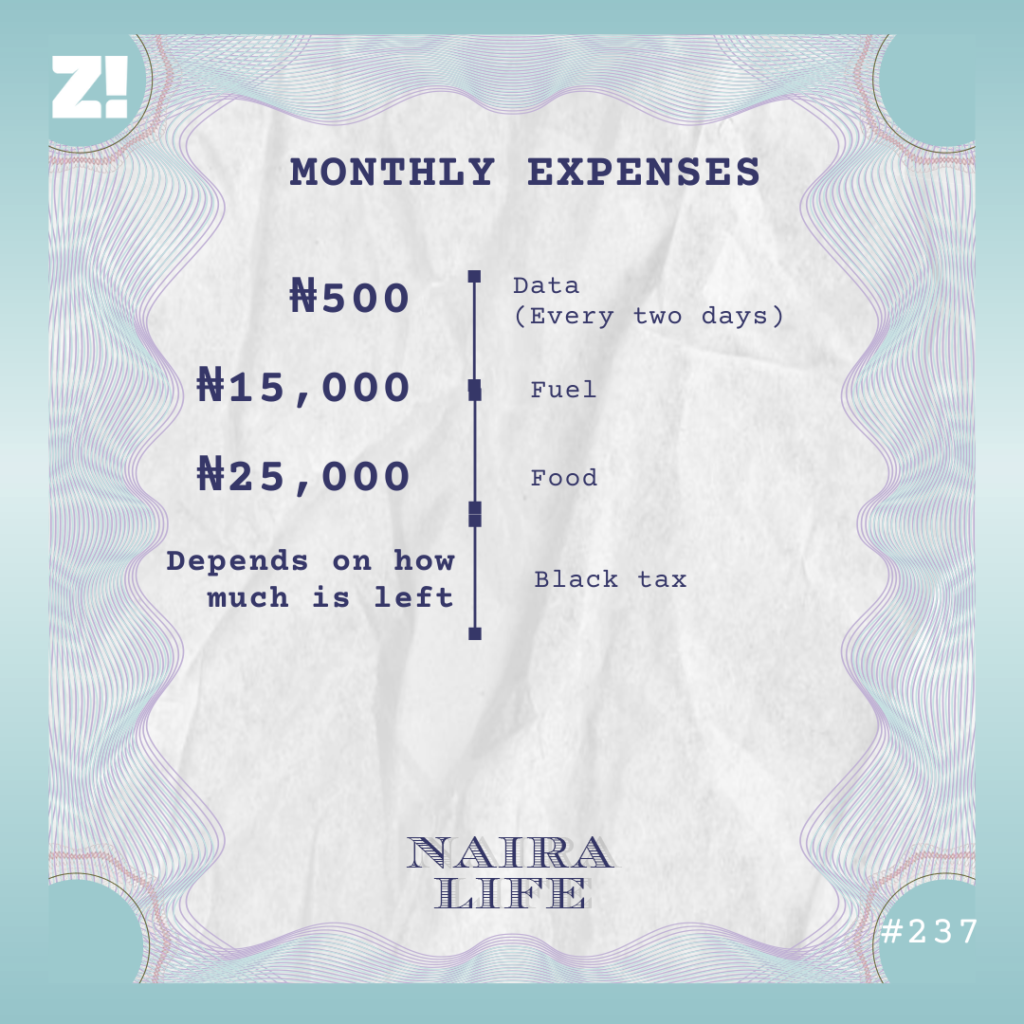
    What are your monthly expenses like?
    What would your ideal financial situation be?

    I’ll answer hypothetically because I don’t believe I’ll get to a point where I make sound financial decisions. But it’d be great if I could afford the basic things I like without going broke or be able to buy myself stuff without feeling guilty about it. 

    Is there something you want right now but can’t afford?

    I’d like to move my parents to a better space. I rented where they currently live for them, but it’s not great. I just want to be able to take care of them.

    How would you rate your financial happiness?

    -1. I’m not happy with my finances, and I desperately need to be better. I’m thankful for my friends, though. I’ve had people come through for me in amazing ways, and it’s such kindness that’s kept me sane because I really would’ve given up a long time ago.


    If you’re interested in talking about your Naira Life story, this is a good place to start.

    Find all the past Naira Life stories here.

  • What She Said: I Overdosed After Falling Out With My Boss

    Navigating life as a woman in the world today is interesting. From Nigeria to Timbuktu, it’ll amaze you how similar all our experiences are. Every Wednesday, women the world over will share their experiences on everything from sex to politics right here.

    I Overdosed After Falling Out With My Boss

    *TW: This story contains themes of depression and suicide*

    Tell me about your team lead

    We were very close. If somebody asked me out at the bank, I would tell her I’d tell her, and we’d laugh about it. She even got her best friend to talk to me when I was feeling very depressed, and she wasn’t around.

    But we started to fall out in late 2021. About a year into the role, I became restless and wanted to know where my career was headed. It was a new team, which meant there was  a lot of uncertainty about career growth. I wasn’t sure what was next, and I didn’t like it.


    So what did you do?


    As I became more restless, it started some friction with other members of the team. So I brought up how I felt with my boss, and she tried to calm me down. 

    She was away from the country and promised we’d talk about it when she returned. But I felt out of place in the team because she was away for a long time.

    How long?


    About six months. I’d already applied for another job before she returned. When I told her this on Whatsapp, she asked why, and I made a flippant statement like, “You people are confusing; I don’t know what I’m doing here.” 

    It hurt her a lot because apart from assuring me that we’d discuss how to navigate how I was feeling about work, she had been there for me.

    For context, when I almost O’D’ed in May 2021, she got me help and took care of me. 

    Overdosed? What happened?

    I had come into the bank job with a lot of debt because I’d just moved from Abuja. So I had to get a place to stay. Thinking about it now, it was probably just ₦‎200 or ₦‎300k but it felt really overwhelming at the time. I also felt very alone. I was away from my family and had no friends in Lagos. My family was also requesting black tax, as always. 

    How did your boss find out?

    We followed each other on Instagram, and I used to post worrying content. My state of mind also affected my output; tasks that typically take a day or two took two weeks. 

    One day, she texted me on  my WhatsApp and said she noticed what I posted on Instagram and offered to get me help. I broke down because I didn’t even know that someone would see that something was wrong. She paid for a session with a psychiatrist, and I was placed on medication.

    What were you diagnosed with?

    Depression. I’ve had depression since I was 14. It’s something I’ve struggled with all my life. 

    Also read: Growing up with a pastor mum was hard

    Can we talk about that?

    I grew up with my dad’s family in Port Harcourt. I had a step-mum because my mum and dad had separated when I was born, and my mum stayed in Bayelsa. 

    There was a lot of verbal abuse, and my stepbrother used to try to sexually assault me at night. Nobody ever did anything about it. My step mum once said to me, “If you wear shorts to sleep as I told you, he won’t try to touch you.” 

    I often ran away, and they’d find me and bring me back. She’d beat the shit out of me, all the works. I was around nine or ten years old.

    I’m so sorry. What about your dad?

    I never told him. He was barely around because he was into illegal oil bunkering, so he never noticed. I think the only time he noticed something was off was when my step-mum accused me of stealing her money. He asked me if I took the money and I said no, then he made a comment, “Children like this end up being the best people.” I don’t know what he meant, but I interpreted it to mean, “They’re maltreating you now, but tomorrow you’ll be alright.” That hurt because he was supposed to protect me.

    Because of all that trauma growing up, I was already very depressed. I’ve been suicidal for a long time, but I I was just too scared to do anything about it. 

    Let’s go back to your boss’ help in 2021 

    I felt very safe and heard with her, and I didn’t need to do anything extra. My boss said it was something I’d been battling for a long time, and I’d never really gotten a plan for recovery, so she wanted to get me all the help I needed, both therapy and medication. 

    Did the medication help?

    The jury’s still out on whether they work. What helped me was being seen and heard, not necessarily the medication. 

    If you’d like to be my next subject on #WhatSheSaid, click here to tell me why

    Fair enough. So what happened when you fell out with your boss?

    She told me that she blamed herself because it meant she couldn’t clearly communicate her vision for the team. She was also surprised because it felt like she was doing her best to carry me along. 

    Now I wanted to see what it was like in other teams, so I moved from marketing to the product team. It broke my boss because she felt like it was personal. We didn’t have a fight, but there had been a back and forth for months, and towards the end of the 2021, she called me and told me she’d heard a lot of stuff I’d said to HR, and she was very disappointed.  It was an emotional conversation, but it also felt finallike “this is it.”

    When she returned to the country, we eventually had a face-to-face conversation. I let her know it wasn’t personal, and I wasn’t lying to get ahead or trying to put her down. I just needed to move for me and the sake of my career. But by then, the damage was already done, and we were never that close again. 

    So sorry

    I left her team and joined another team; there was no going back. I was trying to get ahead with my work.

    In 2022, I got admission into a school in Sweden and was up for a scholarship. But I stalled the application process because the school required a reference letter from my boss; but I had fallen out with the person I’d worked with for about a year and didn’t know how to approach my new boss. So I was in limbo until the deadline passed. That’s how I lost out on the scholarship. 

    While this was going on, I was also in a situationship with a team member.

    It just happened; we were on the same project, so we were always working together. We started talking, and things progressed from that. But it didn’t work out and ended badly.

    Losing out on the scholarship and the end of my situationship took a toll on me. And I OD’d again. 

    I had a lot of medication at home from my sessions the year before. So I sat down and opened all the drugs, removed them from their packs and started swallowing them in bits until I’d taken them all. 

    I texted my older sister and told her I’d overdosed on my medication. Then I turned off my phone and stayed under the shower. She was out of town and couldn’t come but called a mutual friend who rushed to the house. He broke the door and rushed  me to my psychiatrist  — my sister had told him about it. 

    When I woke up the next day, my new boss, a top management member from work were by my bedside. The mutual friend had called the office because he said when he took me to the hospital, my psychiatrist wasn’t around, but the other people there had made some statements about suicide being illegal in Nigeria, and he was afraid I’d be arrested. 

    So he called my office and they came to take me out of the hospital that morning. We went to another hospital, and. I was admitted for three weeks. I saw a dozen psychiatrists and therapists. It felt like a prison, but with a lot of medication. 

    I’m sorry, that sounds like a lot. Did you go back to work?

    Not immediately. The entire month I was in the hospital, I was worried and kept thinking about work, but they said I couldn’t go. The psychiatrist consultant said he felt I didn’t understand the gravity of what I had done because I was very eager to go to the office, and that’s not how it works. I had to understand that trying to take my life wasn’t how to handle stuff when it got hard. That helped me through the treatment.

    After I was discharged at the end of June, I spent one month at home, getting better. I went back to work in August. I never returned to the psychiatrist I was seeing,l , and they never reached out. I also never went back to any of my appointments at the new hospital. 

    Why not?

    I didn’t think it was effective for me. I also stopped my medication in July when I went back home. I felt like I’d always be on medication, and I didn’t want that. When I get withdrawal symptoms, I take one or two to ease the symptoms. Therapy and drugs don’t help. I’m still very depressed but I won’t try to kill myself again. 

    So how are you doing now?

    Now, I’m okay mentally. I’m in a better place. Maybe it’s the pep talks I have with myself; maybe it’s the weed. 

    Haha

    I started smoking when I got off my medication. I don’t like depending too much on anything, so I don’t smoke all the time, but it helps. I’m better now. 

    For more stories like this, check out our #WhatSheSaid and for more women-like content, click here

    RECOMMENDED: I’ve completely given up on dating men

  • Sex Life: I Chase Orgasms But Medication Makes It Hard

    Sex Life is an anonymous Zikoko weekly series that explores the pleasures, frustrations and excitement of sex in the lives of Nigerians.

    The subject of today’s Sex Life is a 24-year-old pansexual woman with bipolar disorder and depression. She talks about prefering dry humping to touching herself as a coping mechanism, her love for sex leading her to chase orgasms, and the effect of her antidepressants and mood stabilisers on her sex life.

    Tell me about your first sexual experience 

    I humped a toy on my bed while pretending I was Gabriella from High School Musical,  and Troy was talking to me. I didn’t have an orgasm, but it felt nice. I was 8.

    How did you know what humping was at 8? 

    At the time, I technically didn’t. While I was pretending to be Gabriella, I just did what felt right in that moment. Humping the toy made me feel good, so I did it. 

    After the Troy and Gabriella incident, I didn’t feel the need to try humping anything till I was 9. I was on the floor of my grandma’s house reading my uncle’s copy of a Danielle Steele book. 

    While reading, I felt like I wanted to pee. I liked how it felt and bunched up the wrapper I was tying. I humped it till I came. It was my very first orgasm, and I tried so hard to recreate it. 

    I got an orgasm the next day by humping another thing I owned. I’m very relentless in chasing orgasms, and it started when I was a child. It got so bad, I thought I was addicted. 

    How bad did it get? 

    I moved to a boarding school at 13 years old. You’d think being in a boarding school would stop me, but it didn’t. I brought a toy plushie with me to school for humping. I also hid in empty classrooms to hump a sweater. 

    I was masturbating like three times a day, humping different things because that was the only way I knew how. I was Madam Humps-A-Lot.

    Why do you think you were so into it? 

    I was a very unhappy child. I was either masturbating or self-harming — I would take my release anywhere I found it, and humping was that place. It also helped me sleep.

    I tried other things, like touching myself, but it never felt right. The rhythm was off, and I couldn’t replicate the orgasmic feeling humping gave me. 

    All right. Let’s talk about sex with other people. When was your first time?

    I was 17 years old, and it was with my then-girlfriend. We were able to recreate that orgasmic feeling I got from humping. We tried every single form of sex that one can have without a penis, and it was awesome. 

    The year we started dating was the peak of my mental health issues. I was in SS 3, applying to universities I had no chance of getting into, and it was making me anxious. I wasn’t eating and I was oversleeping. I went through periods where I refused to look anyone in the eye because I felt like a failure. I was self-harming every other day, but she took care of me. 

    She wasn’t too scared to walk on eggshells around me and was genuinely interested in making sure I was as okay as possible. That turned me on all the time.

    This didn’t mean I stopped humping sha because we couldn’t have sex all the time. I didn’t start hacking other forms of masturbation till I was 21 years old. By this time, I had already started having penetrative sex. 

    Wait, let’s take it back. Penetrative sex? 

    The first time I had penetrative sex was when I was 18 years old. My then-girlfriend and I had broken up because school had ended. 

    I woke up that day in June and decided I was tired of my hymen. That’s when I told a guy to come over. 

    The sex was extremely painful. It wasn’t a particularly good experience because I kept cringing when he touched me, and he just grabbed me and shoved it in. 

    After that experience, I saw him for six weeks though I hated it and hated every time he touched me. It was even supposed to be a one-time thing, but he told me he liked me and I felt flattered. I didn’t like sex for a very long time after those six weeks. 

    How long is a long time? 

    7 months. I wasn’t able to have sex again till January. 

    When Christmas break ended, my friend linked me up with this man who brought my vagina back to life. Sex with him hurt, but in a good way. I particularly enjoyed his reactions when we had sex — he didn’t hold back expressing his enjoyment.. 

    From then on, I started to spread my legs with careless abandon. I’m one of those people that loves to experience things. So an opportunity for a new experience comes, and I’d take it. I was having as much sex as I could.  Plus carelessly spreading my legs led me to the man who taught me how to masturbate properly

    Please explain. 

    We didn’t have a masturbating lesson or anything like that. We were having sex, and he played with my clit til I came. I remember being shocked and trembling while he held me. I went there expecting to suck the soul out of his dick, but here I was shaking from my soul. 

    No man had ever made me cum by touching me before. I’d had plenty of orgasms, but none had been gotten by a man simply rubbing my clit. I tried to replicate what he did when it was just me, and that’s when I hacked masturbation with my fingers. I now know the pattern that works. and I masturbate often. I think frequent masturbation is healthy, but all that became difficult once I got on meds. 

    What meds? 

    Well, antidepressants for my depression and mood stabilisers because I was recently diagnosed with bipolar disorder. I’ve been on and off treatment for depression since I was 15. 

    I had a really bad episode in secondary school that got me suspended. The terms for my return were that a psychologist had to prove I wasn’t a danger to anyone else. I’ve never been violent toward others, but the violence I showed myself freaked people out. My dad wasn’t happy to hear that I was self-harming, but he wanted me to get back to school. 

    I was on antidepressant for a year. As soon as those meds were done, I knew I didn’t want any more of it. 

    But you got more? 

    At 20 years old, I  went to a mental health institution and got put on medication again. I stayed on it for two months before I went off. 

    Why? 

    The first time I had sex while on my medication, I couldn’t get very wet and was drying out super quick. I got frustrated too and then we ran out of lube. So I let him finish and then went home to sleep. 

    When I tried masturbating, it didn’t work. I wasn’t horny or as wet as I should have been. 

    How did you know it was the meds? 

    I’m a psychology major, so I did have a bit of knowledge of what happens when you’re on medication. I just never made the connection to myself until I tried to masturbate and absolutely nothing was happening. That’s when I talked to one of my friends who was on the same medication and had an “aha” moment. 

    The thing about the medication is that they make me feel worse for at least the first 2-4 weeks. When I start them, I’m the unhappiest and most suicidal you’d find me. My mind hardly ever goes to sex, and I’m just stressed all the time. Not being able to masturbate makes me upset. 

    The emotions  eventually balance out and I feel better, but my sex drive disappears for at least six months. It’s torture. 

    I’m sorry.

    Most of the time when someone I like turns me on during sex, I don’t need lube. Like at all. When I’m on my meds, I use all the lube I can get, and I still won’t orgasm. The sex doesn’t feel as good. 

    How long have you been on your meds? 

    I was on this current set of medication for 6-7 weeks, but I went off my medication in late February, 2022. 

    Why? 

    One of the people I’m currently sleeping with has a penis that’s too sweet. I need one thing to go well for me in this life. I deserve good sex. 

    Did you go off your meds for penis? 

    Something like that. I nearly lost my job because my meds had me fucked up. I couldn’t physically make myself do anything. I was barely getting out of bed. 

    I hated myself for feeling this way too. I know I should’ve been patient and let the effects wear off, but omo. When they told me at work that they were letting me go because I was underperforming, I had to stop the medication. I needed a break. 

    How’s the break going?

    Well, I’m currently trying to convince myself that drinking sniper is not a very bad bitch thing to do. 

    So, what will you rate your sex life on a scale of 1-10? 

    A 6 or 7. I’m currently having good sex with a lot of people, but I want a partner or my own. I just want a partner who knows how to give painful pleasure and isn’t a complete dickhead. 

  • 7 Nigerians Talk About Being In Love With Someone With A Mental Illness

    CW: Some of the themes discussed in this article might be triggering for people with mental illnesses.

    When it comes to navigating relationships, some external factors like mental illness affects the dynamic of said relationships. What’s it like being in love with someone that wants to commit suicide? Who finds it difficult to start each day? We ask seven Nigerians what it’s like being in love with people having mental illnesses:

    Kayode, 24

    As someone who is also mentally ill, it gives me a sense of comfort. I know that this is a space in which there will be no judgement when I have episodes or when life does what it does. It’s comfortable but scary. Scary because I know that death is an option. I don’t know which of us will go first, and it makes me worry.

    Yinka, 28

    Honestly? It can be exhausting, but it doesn’t mean it’s not worth it. Someone I fell in love with had anxiety and bipolar disorder. I knew she couldn’t always control her actions, but some of them hurt me as well. There was a time she cancelled on a date I had planned because she was super anxious that day and was unable to leave the house. It hurt. I wasn’t equipped with the facilities to understand or deal with it, and I don’t think I still am.

    Amina, 20

    A guy I was in love with has terrible anxiety. It gets so bad that sometimes he can’t go outside. He’s always thinking of a million and one possibilities and he always came up with the worst possible option. If I go without texting him for a few hours, he could assume the relationship is over. This led to me constantly over-explaining myself so he wouldn’t make assumptions. He was afraid of me triggering his anxiety and that was a lot of pressure on me. Loving someone with a mental illness is having to constantly be aware of your every action and inaction because of how much it directly or indirectly affects how they feel mentally.

    Tobi, 22

    As someone that thinks of committing suicide a lot, dating someone who probably thinks of it even more than I do is hard. Very hard. When he takes breaks, I get scared. I worry that this time he has to himself might cause him to hurt himself. I’m really worried and scared when he makes statements like “I just need a break from anything and everyone”. Also, when I am having an episode, I can’t really bring it up because he might be having one too. I don’t want to feel self centred. However, everything is nice when mental illness gives us a chance to breathe. It just doesn’t give us a chance to breathe often.

    Jumoke, 20

    My current partner and I are both depressed, but I don’t think it affects the quality of the relationship. It’s just that when the low points happen, they’re really low and can be really scary. Sometime this year, my partner tried self-harming and that really broke me. I was far away at the time and all I could do was panic. I know how bad it can get and I want to protect him from everything but I can’t do a lot.

    Depression is shit, and having to keep going because of someone is hard. I’m grateful to be dating someone that goes through the same stuff as me because it makes us very kind and understanding towards each other. Also, it allows me to see things from both sides. As loving someone that has a mental illness and also by navigating your own mental illness while loving someone. I worry that my love is not enough to keep him happy, but I know that I alone can’t be the only source of his happiness and it’s a combination of varying factors. We are mentally struggling, but we manage to keep each other afloat with practical and emotional support.

    John, 22

    It’s not fun. You love your person with everything in you, but when they get manic, it takes everything to love them twice as hard. Being equally mentally ill doesn’t make it easier to deal with. Sometimes, you’d be going through things too but they are in a worse condition so you suck it up and be there for them. If you are in love with someone suicidal either passively or not, you wake up every day wondering if this is the day they die. You will listen to them talk about how much they want to die even though all you want is a long life with them, but you can’t tell them that. You know that’s not what they want to hear, so you listen because that is all you can do. Loving someone with a mental illness means you will learn to leave your insecurities at the door and be softer and kinder while dealing with people.

    I think for me, knowing that she goes through so much makes me want to keep some of my own things from her because I don’t want to add to her problems. I’m just glad that when she needs someone, she knows I am there. I’m not her therapist or a mental health care provider and I know that there’s so little I can actually do, but I do it regardless. I encourage her to seek help and just be there for her.

    Anu, 21

    Being in love with someone with a mental illness means I have to make a lot of sacrifices. You sacrifice your sleep, your own mental health, your peace, and so many other things. I try to remind myself that love is sacrifice, but does love sacrifice so much? I’m mentally ill myself and whenever I feel overwhelmed and unable to love my partners anymore, I ask myself if I’d want them to give up on me. It’s hard. It’s extremely difficult and it’s not something just anyone can do. At the same time, it’s also safe. It gives me a space where I can live without judgement. My mental illness means I already play life on hard mode, but it’s not all bad. There are days where it feels soft and everywhere is filled with laughter. Loving someone with a mental illness means I have to enjoy each day as it comes, because you can lose everything in a second. It’s reminding myself that at the end of the day, the illness is not about me. They’re the one suffering.

    [donation]


  • How I Was Abused At A Mental Healthcare Facility

    Abuse in mental health institutions is not a new phenomenon. Reports of abuse emanate from care institutions nationwide. This is worsened by the fact that there are thousands of unregistered mental health institutions which often use unorthodox methods in the treatment of patients. The case isn’t any different in government-run institutions where practitioners operate unsupervised and unchecked, leading to several instances of human rights abuses.

    To commemorate Mental Health Awareness Month, I spoke to Remi, a former patient of the psychiatric ward at the Lagos University Teaching Hospital, Idi-Araba as part of a four-part series in partnership with She Writes Woman Mental Health Initiative highlighting human right abuses of people with mental health conditions in Nigeria.


    My name is Remi, and I’m a student at the Lagos State University Teaching Hospital. In 2019, I was diagnosed with depression and suicide ideation. I went to see a doctor after seeing symptoms of what I assumed was Attention Deficit Hyperactive Disorder (ADHD).

    What were the symptoms?

    I was unable to focus on things. In class, I always zoned out or fell asleep. I had to cram to pass exams and I’d forget everything I read right after.

    I also had problems socially. I always preferred to keep to myself, and didn’t have any friends. My roommates tried to make friends with me but I always rejected them. My temperament also estranged people from me. I got severely angry at the slightest trigger so people generally stayed away. On the inside, I was always angry, sad or just numb.

    So what did the doctor do?

    She wasn’t convinced that I had ADHD. She chalked all my symptoms to just being stressed. I was certain I had ADHD and I was determined to make her see. I mentioned in passing that I sometimes think about killing myself and she immediately referred me to LUTH’s Psychiatric ward to see a specialist.

    At the psychiatric ward, I was diagnosed with severe depression with suicidal ideation and they refused to let me leave unless I called a relative. I refused. They called their intervention personnel — big, heavily-built men who they said would restrain me if I tried to make a scene. They threatened me to call my relatives or risk spending the weekend chained to a bed till Monday — it was a Friday.

    Woah. Why didn’t you want to call a family member?

    The only relatives I could call were my parents and I didn’t want them to think I had mental health issues. An uncle of mine lives with schizophrenia and I’ve always heard of them speak with him with a certain stigma. I didn’t want my parents to think I also had a mental health condition.

    So, who did you call?

    I called a doctor who worked at the NGO I volunteered for but unfortunately, she wasn’t in Lagos so I had to call my mom who called my dad.  When they arrived, the nurses said I’ll need to be admitted. I lied to my parents that depression had to do with a gastrointestinal issue I had and told them I didn’t want to be admitted.

     My parents told the nurses that I would not be getting admitted. They were made to sign a document in which they undertook to ensure I came for my clinic appointments.

    I was prescribed some drugs for my depression and assigned to a psychologist. I used the drugs religiously and faithfully attended my appointments but my mental health worsened.

    What happened next?

    I was told I had to be admitted. They said I would be admitted for a period of two weeks. I knew that my condition was worsening but I was worried about missing school. My depressive episode had been triggered because I performed poorly in school and missing weeks of classes could make me carry some courses over into the next semester.

    I eventually agreed to be admitted, thinking two weeks wasn’t so bad. I was promised that I would get help from a team of psychiatrists and psychologists who would see me every day. I knew I needed help so I agreed.

    After I was admitted, a nurse told me that it was impossible for me to be admitted for just two weeks. She stated that the minimum time spent admitted was six weeks, and even that was a minimum. With severe depression, it was unlikely I’d even get out after six weeks. I hated the fact that I was lied to. Why did they have to? I would have agreed to be admitted, without needing to be lied to.

    Wow. Did you at least get the help you were promised?

    I was assigned a bed in an open ward filled with patients in varying severity of mental health conditions. I found it hard to sleep because there were no fans in the wards. There were also mosquitoes and the patient adjacent to my bed snored terribly loud. 

    Day after day, I waited to see a psychiatrist or psychologist but none came around. I was just given drugs and food every day. I was losing my mind in boredom because my phone and laptops were taken away. I had nothing else to do but eat and sleep. The medication they gave me made me very drowsy all the time, so I was taking a lot of naps. I was also not allowed to read because they said I have something called Brain Fog Syndrome. I was bored and fed up. On top of that, I wasn’t getting the treatment I was promised.

    My mom came to visit daily with my favourite foods because I’m a picky eater. She’d also bring along my phone so I could text and watch movies while she was around. One time, she had a run-in with a nurse who was angry I didn’t eat hospital food. The nurse continued to be rude to my mother without provocation every day of my stay.

    By the fifth day, a Friday, I could no longer take it. I demanded to be discharged from the hospital because I felt I was just wasting away, doing nothing but eating and sleeping while my mates were studying. I didn’t want to risk carrying a course over at school so I asked my mom to ask for my discharge. I explained everything to her and she agreed. 

    My mom asked for advice from a family friend who was a psychologist and she was told that I could go home as long as I attended my clinic days religiously. The nurses tried to discourage my mom from checking me out but she was determined. They threatened that if my mother took me home and I harmed myself, the blame would be on my mother. My mother and I insisted that I was lucid and was fit to attend the clinic from home.

    She signed the required Discharge Against Medical Advice (DAMA) form and spoke to a resident doctor who impressed on her the implications of me going home before the conclusion of my treatment. The doctor reluctantly signed my release form and said I was good to go.

    We handed the DAMA form to the nurses. They then refused to let me go because my dad was listed as my next-of-kin but it was my mother who came to request my discharge. The resident doctor said it was a tiny matter that could be overlooked but the nurses refused, saying my dad had to come in person. We begged and pleaded with them, stating that my dad was at work and wouldn’t be able to arrive till way past 6 pm, the closing time. That would have meant I’d have to spend the weekend at the facility since it was a Friday. They refused and insisted my dad come all the way to sign the form.

    Against all odds, my dad made it there before six pm that evening. The nurses tried to discourage him as well, to the point of aggression but my dad had spoken to our psychologist friend who had told him there was no harm in me going home. I had a feeling the nurses were trying to delay till closing time in order to keep me there for the weekend.

    Whew. So you went home, right?

    Unfortunately, the officer to sign my final release papers had already gone home that evening. I was told I’d have to wait till the next morning before I could go home.

    Wow.

    My mother and younger brother begged and fought and pleaded for me to be released that night to be allowed home but the nurses disagreed. I told my parents to go home and come the next morning. My father did but my mother said it was already too late to go home and make the long trip back to the hospital again in the morning. She and my brother would sleep somewhere on the LUTH campus till it was time to fetch me. I tried to discourage her but she refused. She snuck me my phone to call her in case anything was wrong because she didn’t trust the nurses.

    Wow. What happened next?

    Miserably, I went back to my bed. Shortly after, one of the nurses came to me and said she suspected my mom had given me a phone. I denied it several times. She threatened to search my things, which she did. I had anticipated this so I had hidden the phone in my shirt. She continued to insist that she was sure I had a phone on me and would search my body. I pointedly refused, telling her she had no right to touch me. I anticipated that she would be back so I hid the phone in my panties.

    She left and returned a moment later with one of the heavily-built crisis intervention personnel whom she ordered to handcuff me to the bed and restrain my legs while she searched me. I was screaming at her not to touch me but she did anyway. When she didn’t find it, she said she would have to search my privates and I screamed at her not to do it. She ordered the guard to hold my hands and legs while she stripped my pants off, in the full view of the male guard and the rest of the patients in the ward. She took my phone and left me on the ground, naked and screaming. I felt so violated that I didn’t know what to do but to keep screaming.

    Oh my God. I’m so sorry.

    Apparently, my screams were so loud that my mother and brother heard where they were and came running back to see what was wrong. They peered through the window and saw me handcuffed to the bed, screaming, naked and jerking at the cuffs violently. Their pleas to tell them what was wrong was left unanswered, as I could not just stop screaming for minutes on end. The nurses threatened to inject me with a sedative if I didn’t keep quiet.

    My mother and brother tried to get into the ward but the nurses refused to let them in. They told them nothing and the nurses threatened to have my mother thrown out. She  was heartbroken seeing me in that state.

    Did no one try to intervene?

    Eventually, a senior nurse from a different ward came to find out what was wrong. She spoke to my mom, went inside to see me and calmed the situation. My mom asked her to let us go home but the nurse said she could only help if she was given a bribe. My mom pleaded and said she would bring something for her the next day as she had no money on her. The nurse agreed and directed the junior nurses to let us go.

    Did you try to report this incidence?

    Report? What’s the point? This was something the nurses did regularly without consequences. My reporting wouldn’t have made any difference, especially as my family doesn’t “know anybody.”

    How did you continue treatment?

    I opted to continue treatment privately, which I found to be very expensive.

    Remi is currently receiving private treatment, however expensive. She is continuing her education and finds joy volunteering as an advocate for mental health issues in Nigeria.

    People living with mental health conditions and psychosocial disabilities in Nigeria continue to be subjected to varying levels of human rights abuses across state-owned and otherwise owned facilities. She Writes Woman and Zikoko continue to document and amplify the lived experiences of these victims in a bid to hold the Nigerian government accountable to ensuring human rights-respecting mental health legislation in Nigeria.

    Do you have a story of abuse in state-owned, religious or traditional facilities? Reach out to @shewriteswoman across social media.

    If you’ll like to get confidential support for your mental health, call the 24/7 toll-free helpline – 0800 800 2000.

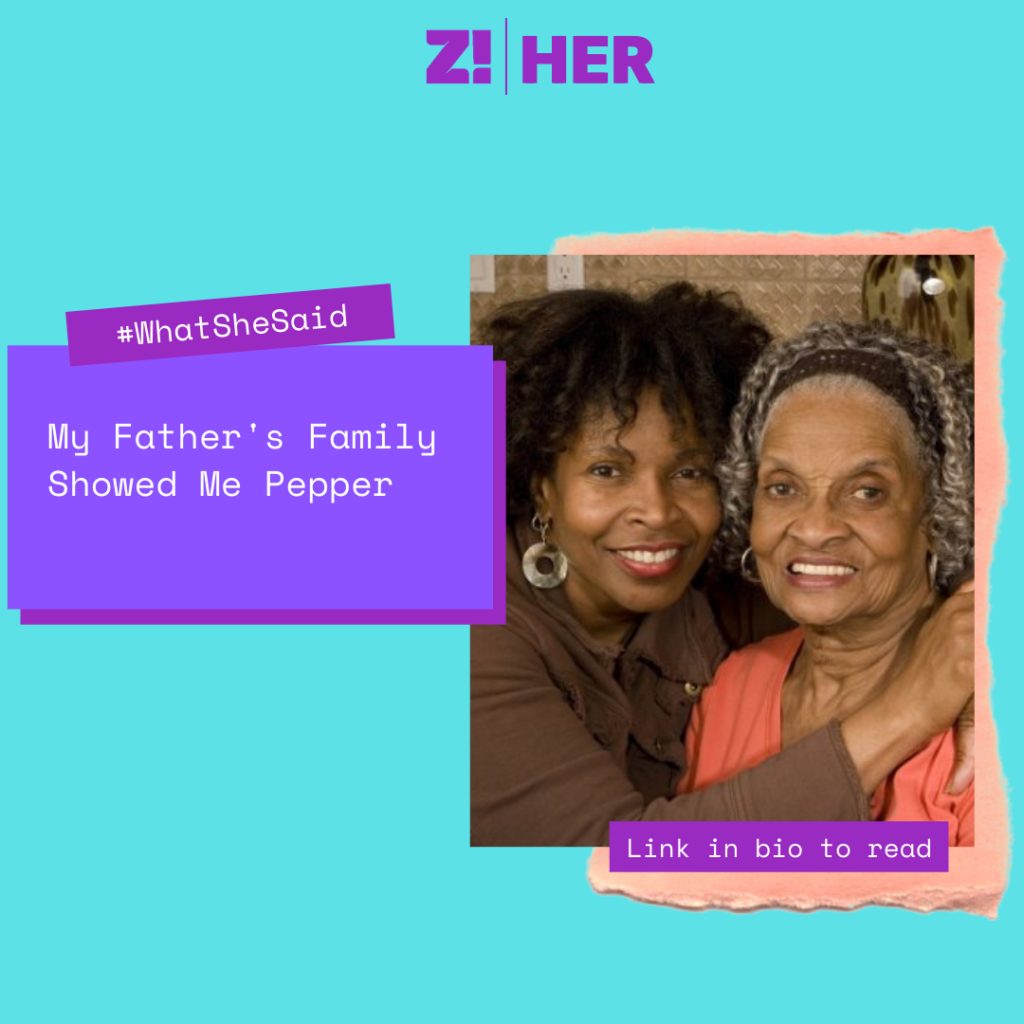
  • What She Said: My Father’s Family Showed Me Pepper


    The subject of today’s What She Said is a Nigerian woman in her 50s. She talks about her difficult experience living with extended family, her relationship with her father and managing her mother’s mental health until she died. 

    What’s the earliest memory of your childhood?

    It’s of my father. He had me on his lap in a gathering. I don’t know if it’s a real memory or it’s based on a photo I used to have. I’ve lost it now. I was maybe three or four, and I had the look of shock on my face. Someone joked that I was supposed to be a boy, the way I was glued to my dad. That’s all I remember. 

    What was it like growing up?

    There were good days and bad days. I grew up in Lagos. Both my parents were tailors, so they made me lots of nice clothes. That was one thing I was very proud of as a child. I had a lot of fashionable clothes, and it went on to inform my fashion sense. 

    I was an only child for the longest time. My mother tried to have more children and that didn’t happen. Before she gave birth to me, she had a son, but he died after a few months when they made a trip to our village. The narrative I heard was that evil people on my father’s side of the family killed him. 

    My father, after being pressured, slept with two other people at different times and they had a boy and a girl, respectively. 

    He didn’t marry them?

    No. He was very much in love with my mother. At least, that’s the reason I think he didn’t marry them. For him, it was just to have more children. My mother was very accommodating with them. In fact, my sister and I are close till today and it’s mostly because my mother made us see each other not as step sisters, but as sisters. 

    What about your brother?

    We didn’t grow up together, and I haven’t heard anything about him till date. I just know I have a brother. Whether he’s alive or not, I don’t know. My sister and I have tried to find him on Facebook, but that didn’t work out. 

    Do you know why you didn’t grow up together?

    It was my extended family’s fault — my father’s siblings. My father was a bit well-off. He had lands and buildings around Lagos. His siblings were not that well-off. They lived with us — with their families o. For some reason, we lived in the boy’s quarters, while they lived in the main building. They were wicked to my mother and made all kinds of demands from my father. My father was a kind man — too kind, maybe. So he often bent under their whims, although he did try his best to stand up for us. It was because of his siblings, my uncle and aunt, that he had two children out of wedlock.

    They believed it wasn’t right to have just one child. They said that my mother’s womb had spoiled because she could only have one child for him. When when my step brother was born, they had issues with his mother and so didn’t accept him. That’s why I think we never grew up together.

    Wow. I guess what they say about your father’s side is true. 

    Hmm. Well, in my case, it was. I do have family members on my father’s side who I’m very close with. Like my father’s cousin’s children. But his siblings and their children were terrible. They tried to sow discord between my sister and I, saying we weren’t really sisters because we didn’t share the same mother. 

    How did your mother cope with all of these?

    It was a lot for her and she eventually became mentally ill. Back then, we all believed that my father’s siblings had done something to twist her mind. This was the 80s. A lot of people recommended churches to go to for deliverance — pentecostal churches were becoming popular then. Now, I believe that it was psychological. The stigma associated with mental health issues didn’t allow us to seek the help she needed, although a few doctors suggested this. It wasn’t like she was parading the street naked. That was what a lot of us believed was mental illness.

    I can’t really describe the kind of behavior she exhibited, but one thing I’m sure of is that she started believing everybody was against her, even me. She would talk endlessly to herself, often in a loud voice, about how bad everyone was. This affected my relationship with her. 

    Wow. What was your relationship with her before this?

    We were not very close. She was always very reserved and quiet. I was closer to my father. He was the one who taught me to drive, taught me to fix my car, made all my clothes. In primary school, he was the one who picked me and dropped me off. When it was time to decide what next to do with my life after secondary school, he was there to help me out. When I started work, he drove me to work and advised me. We were that close. Then a few months after I started work, he fell sick. No one knows what illness it was. After a few weeks, he died. I was devastated.

    I’m so sorry 

    Thank you. When he died, after the burial and everything, my first instinct was: leave home. But I couldn’t leave my mother with those people. I got an apartment on Lagos Island, but my mother wouldn’t come live with me. She insisted her husband’s house was her house and she had no reason to leave. My sister was still living there, so my mind was at peace, a bit. But that’s when properly wahala came up. My father’s siblings were claiming rights to his properties. I didn’t really care about any of it, but another faction of my family wanted me to fight for the building where my mother and my father’s siblings lived. That went on for years. Even when I went back to celebrate my 25th birthday, they were still fighting for it. When I got married, I just told myself I was done. Lucky for me, I started having children almost immediately after I got married, so my mother came to live with me. 

    That’s good.

    It was good. But, my mother didn’t accept my husband. She thought he was evil. My husband was very understanding. He understood what my mother was going through and didn’t let anything she said affect him. She lived with me until she died. She died in my house. It was very challenging to take care of her, especially since I didn’t exactly know what was wrong. There were moments where she was great, but there were other times where it was bad. Luckily my mother had sisters who were great women. They loved each other and took care of each other. I remember once, her sisters came to my house to see her and they all slept on the same bed and gisted about everything. Even though I was close to my sister, I didn’t really have that with anyone until I got married and had children. 

    When my mother died, I was sad for many reasons. I felt she had gone to rest but was sad because it felt like I hadn’t taken care of her to the best of my capacity. I couldn’t take her on trips because she was suspicious of them. I couldn’t buy her things for the same reason. In fact, she continued to make her own clothes and cook her own food into her late 70s because she was so antsy about everything and everyone. 

    She loved my children and was there for them even when I couldn’t be. 

    Nice. Now that you have your own family, what’s that like? 

    It’s great, thank God. I should add that the relationship with members of my dad’s family affected me too because I’m very wary about family members. I protect my children, maybe a bit too much. I often say that they’re my siblings, my friends and it’s true. While I had friends that were helpful during the bad periods in my life, friends that have become family, I’m also very happy about my own children.

    What are some things that helped you cope?

    Food. When I eat, I’m happy, I temporarily forget everything. This started back when I was younger and lived in my father’s house. There was a bakery just by the house. They sold all kinds of bread. I went there nearly every day to get bread and peanut butter. Place a bowl of ikokore in front of me and I’m fine for like an hour. 

    God also helped. I grew Anglican. In my 20s when it felt like the world was collapsing on my head — the period when I was supposed to be enjoying life — I wasn’t a Christian in the born again sense. I was going to church seriously then and cramming the bible but had no real understanding of it. God was always good to me. Till today, he helps me cope. He’s my peace. After going through all that, I know there’s nothing life throws at me that I can’t handle with the help of God. 

    For more stories like this, check out our #WhatSheSaid and for more women like content, click here

  • I Attended a Wedding and Didn’t Eat Jollof; Here’s Why

    Remember that video that went viral which featured a groom slapping his new bride at their reception? I never thought I would see such a thing live in my lifetime but I’m pretty sure Mother Nature was snickering somewhere in her heavenly villa at my belief.

    So, get this, I was invited to a traditional wedding and I was ready to slay. I mean, facebeat was on point, my tribe were in place–we were gonna be the life of the party, dance to our hearts desire and of course, eat jollof and dodo. Because that mix is ever important.

    The ceremony was well underway when we got in and as per friends of friends of the couple we had the best seats in the house, you know, levels.

    Anyway, I was busying waiting for my food while watching the emcee do his thing, basically asking the bride and groom to do ridiculous things that got the guests laughing. Then thunder struck! Bride was told to narrate how they first met; she gave her account but an argument ensued between the couple, which we all thought was just a lovey-dovey thing going on until it turned serious. Groom was having none of what the bride was saying and we were all laughing at his serious expression until-gbas gbos! He slapped her.

    Say what! We knew it was no longer play; everyone was frozen with shock for a moment and then, pandemonium! Bride’s father went for the guy, emcee was in the midst of it all trying to calm everyone down, getting his suit jacket torn in the process. Me? I was just there looking confused, wondering what the hell was going on.

    Did that just happen?

    I decided it was a family problem, wondered what the newly joined family was gonna do about such a sticky situation. Asides from handling the scandal-you know there are just some nitwits that are waiting on the sidelines to victimshame people-what will the bride do? Will she stay or leave? What will her family do about the whole thing? Has he been hitting her before and she hid it until the volcano erupted?

    Anyway, there was no one to answer my questions at that moment, guests were scurrying away like antelopes and the women in the groom’s family had removed their gele’s, tying it around their waist, in order to focus on the gbege at hand.

    The bride’s family were having none of it. I figured they had a lot on their hands and couldn’t bother about who got served at their party or not. There goes my jollof rice

    Later on, rumor had it that the groom had mental illness which had been left uncured because his parents thought seeking psychological help was just not done, especially as an African. That led to his manifestations on the D day, which apparently shocked everyone except his family, who were trying to get him off their hands and basically make him another person’s problem.

  • Making My Way Through Life With Low Self-esteem

    We want to know how young people become adults. The question we ask is “What’s your coming of age story?” Every Thursday, we’ll bring you the story one young Nigerian’s journey to adulthood and how it shaped them.

    The 22-year-old man we spoke to this week is an accomplished sales manger. Getting there wasn’t easy. Still, with his history of low self-esteem and agoraphobia, characterised by bouts of anxiety and panic attacks when speaking to people or speaking in public, he’s somehow managing to breakthrough and record milestones

    I grew up in a small neighbourhood in Lagos that had highly ambitious and curious kids. Our parents weren’t restraining; we were allowed to partake in the fads of our time: we collected comics like Supa Strikas and Occultic, followed the life of superhero characters, stayed up to speed with Hollywood and vibed to the latest music videos on Channel O. We also went to summer camps. Because my family was religious, we always went to the ‘Deeper Life Success Camp’. It was never exactly my thing, but it was a good opportunity to meet new people and create new friendships.

    Despite the varying belief systems and cultural backgrounds, the neighbourhood was closely knitted. It was the quintessence of communal living. I liked it, even though I wasn’t always up to going out and hanging out with friends. At such a young age, I was something of a recluse. I had more interests in academic books than any other thing. I read encyclopedias on science and technology, the timeline of historic inventions, theology, etc. I had a neighbour who collected encyclopedias about everything. Most of my time outside of school went into reading. These books served as some sort of safe space for me.

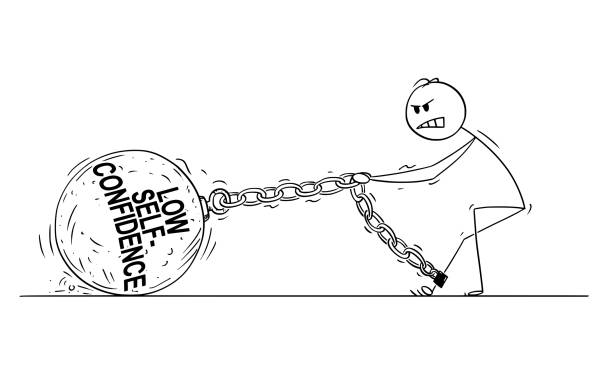
    Concept of low self-confidence limiting affected person .

    The truth is, I had, and I have very fragile self-esteem. I was always the nervous jelly in class — the pushover. Unlike a lot of stories I’ve heard about parents not caring about these kinds of things, my mum did; she still does. Given her experience with disadvantaged children, while working in public education, she understood my problems and was always helping out — teaching and nudging me to accept my inadequacies and revel in my strengths. There was never a time when my problems were referred to as a spiritual issue or treated as one. She made me realise it was all in my head: “Breathe some more and relax your muscles,” she’d say.

    Introversion, agoraphobia, public spaces phobia. Mental illness, stress. Social anxiety disorder, anxiety screening test, anxiety attack concept.

    What’s even worse is that I had a terrible case of agoraphobia: always overestimating public situations. I remember one particular situation; I must have been four or five. It was children’s anniversary in church and I had been apportioned a memory verse to recite. I can never forget it, Isaiah 60 vs. 1. Such a short passage. Once on stage, I kept stuttering and hyperventilating, even though I knew what to say. It might sound crazy to you, but expressing myself before a litany of faces was beyond me. Thanks to my mum’s prodding, I aced my recitation that day.

    Things are a bit better these days, though. While adulthood was never something I consciously envisioned, it’s turning out to be a bewildering milestone. I like to think that I’m an emerging adult, not a fully formed one. I mean there are times I draw upon the defense mechanism of regression, where I try to revert to an earlier stage of development, all in a bid to escape the responsibilities at hand. But I’m learning to accept it as a perpetual state of mind as opposed to a temporary action. I do this by being more responsible and taking initiative.

    Speaking still gets me flustered; I’m almost always losing my train of thought. But as I come of age I realise I have to outgrow this irrational fear. I mean, I currently work in sales. For a 22-year-old who grew up with fragile self-esteem, I’m currently a SALES MANAGER. It’s where I’ve found myself, even after studying psychology for four years. In this position, I’m required not to drop the ball in communicating our value propositions to clients and consumers.

    I don’t always acknowledge my accomplishments, or give myself credit for anything I do. It boils down to this fragile self-esteem. But I’m learning to do otherwise. I recently volunteered to support my mom with 50% of my brother’s tuition fee this new school session. I think it’s one of my biggest accomplishments as an adult.

    With my career, there have been a lot of accomplishments. Yesterday I thought to myself, for a kid your age you aren’t doing so bad, so I took to WhatsApp and shared a recent milestone. The status read: “Can’t seem to shake this feeling… but at 22 I have single-handedly closed a sales transactions of one million naira…” The client emailed me last night again for a repeat order. All transactions were done via email and they paid upfront.

    It’s been over a year in sales, but this baby boy has been doing senior-level numbers. I love the work I do, even though the salary is shit and there are no benefits or structures in the organisation. I’m consistently motivating myself to deliver. And even though I’m scouring for jobs elsewhere, this small beginning must count for something. I mean, I have burgeoning skills in data analysis and visualisation, market forecasting, product management, content creation and sales. I am some badass asset and my self-esteem can’t tell me otherwise.