Notice: Function _load_textdomain_just_in_time was called incorrectly. Translation loading for the wordpress-seo domain was triggered too early. This is usually an indicator for some code in the plugin or theme running too early. Translations should be loaded at the init action or later. Please see Debugging in WordPress for more information. (This message was added in version 6.7.0.) in /home/bcm/src/dev/www/wp-includes/functions.php on line 6121
living with pcos | Zikoko!
  • 6 Nigerian Women Share Their Experiences Visiting Male and Female Gynaecologists


    Women are very intentional about who they trust with their health and quite a number of women have talked about their different encounters with male and female gynaecologists. For this piece, we asked a few Nigerian women to share their experiences with male and female gynaecologists and here’s what they had to say:

    Kim, 26

    I have visited both male and female gynaecologists and the experience was the same with both of them. I felt comfortable enough to trust them with my body. There was no fear or judgement; both of them were kind and patiently answered all my questions. 

    Both visits weren’t in Nigeria. I visited the first gynaecologist in Ghana because I was experiencing irregularities with my period. A female gynaecologist attended to me on that visit to the hospital. The second visit to the gynaecologist was in Nigeria and I was attended to by a man. I was met with the same patience and kindness by both of them.

    Sarah, 20

    I was 12yrs old when I first visited a gynaecologist. I had menorrhagia and my mum was scared. My male gynaecologist was really nice and welcoming. I have been attended to by another male gynaecologist and he was also very nice. He also made me feel very comfortable. 

    I still look forward to being attended to by a female gynaecologist.

    Racheal, 25

    Personally, I had mostly good experiences with female doctors than I did with male doctors and I always picked female doctors over male doctors. A few years ago, I had to do a surgical abortion at a teaching hospital and chose a female gynaecologist for the procedure. She was mean to me, she insulted me and was really rough with me. I cried all through the procedure. The male gynaecologist in the room held my hand and was consoling me throughout the procedure.

    She was to insert an anal antibiotic pill in my anus after the procedure, and it wasn’t a small pill. She kept shoving it forcefully into my anus without lube and tearing me up till I started to bleed from my anus. The pain was so intense I cried a lot. She continued to insult me,  saying when I was enjoying the sex I didn’t cry. When she couldn’t get the pill in, she just threw it away and stormed off. A nurse helped put the pill in more gently. I couldn’t sit well on my butt for 3 days after that experience. 

    I was 20yrs old at the time of the procedure and the procedure was a manual vacuum aspiration. 

    Nora, 23

    When I was 17yrs old, I found out I had appendicitis and had to go for an appendectomy. I was advised to see a gynaecologist before going in for the procedure. I was met by a male gynaecologist before proceeding with the appendectomy procedure. The visit was very uncomfortable. It was my first time seeing a male gynaecologist and having to take all my clothes off for the medical examination. Midway into the medical examination, another male gynaecologist walked in. The second gynaecologist was a student. 

    I was still barely dressed and on the bed when the first gynaecologist started to teach the second gynaecologist. I was obviously very uncomfortable with what was going on, but he still continued. I was hoping he was going to read my body language, but that unfortunately didn’t happen. I eventually voiced out my discomfort to him, he didn’t apologise, he even wanted more time with me to continue teaching his student. 

    A few years after that, I was diagnosed with PCOS and had to visit a gynaecologist again. This time, I was attended to by a female gynaecologist. She was warm and very kind. It was a far better experience than my first visit.  

    Kike, 18

    Two of my friends got diagnosed with ovarian cysts and womb cancer within a short period of time and that prompted me to visit the gynaecologist. When I got to the gynaecologist’s office, he immediately told me to take off my clothes and underwear, lie on the bed and spread my legs. This made me very uncomfortable and the manner in which he said it was always not helping. His tone sounded very commanding and brusque. I had to lie to him that I was on my period and I was going to come back another day for the medical examination. I have not been back to his office since that day.

    Tosin, 25

    When I was 16yrs old, I had to go in for a pelvic ultrasound and it was done by a male gynaecologist. He was patient with me, however, he dismissed the other symptoms I complained about and reduced them to stress.  A few years later, I had to visit another gynaecologist and I was diagnosed with PCOS. It was another male gynaecologist. He immediately told me to lose some weight and prescribed oral contraceptive pills. His approach also felt very dismissive. I opted for a second opinion and went to see a female gynaecologist. She was more patient, she recommended a different treatment and she shared her experience treating other women with PCOS. I felt a lot more comfortable with her and I have been hesitant to visit male gynaecologists after seeing her.

  • 7 Things Women With PCOS Can Relate To

    PCOS (Polycystic Ovarian Syndrome) is a hormonal disorder that is common in women of childbearing age. PCOS has different side effects, varying from obesity, to irregular periods, fatigue and so many other symptoms. Here are a few things many women with PCOS can definitely relate to.

    1. Always needing a tweezer.

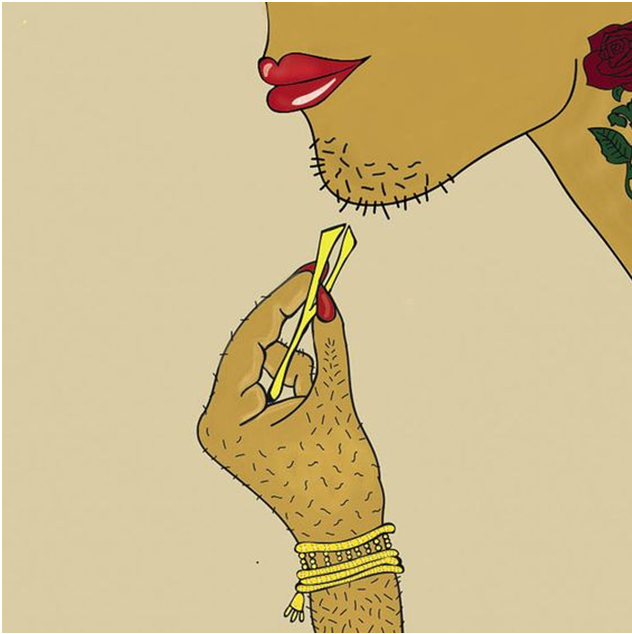
    Hirsutism is a common side effect of PCOS which oftentimes occurs as facial hair. Women with PCOS understand the struggle of always needing to have a tweezer nearby to pick out hair from their chin or the most random spots on their faces.

    2. The weight gain.

    Gaining weight due to PCOS is not such a fun experience, especially for women who battle with weight loss and self-image issues. Some women gain so much weight and struggle to lose it.

    3. Getting told to lose weight.

    A common remedy that is often recommended to a woman with PCOS is being told to lose some weight or try out a new lifestyle regimen. A lot of gynaecologists suggest weight loss like it’s the balm of Gilead.

    4. Trying out different supplements and hormone treatments.

    One thing women with PCOS are definitely going to do is try out supplements. They don’t care for the price of the supplements and they are always willing to pay for hormone treatments and period inducers.

    5. Dealing with fatigue from nowhere.

    Fatigue is one of the main symptoms of PCOS. You don’t have to do so much more work before you are hit with fatigue from nowhere. Sometimes you wonder if the fatigue is from your funny working uterus or if you are just a lazy person. It’s not you, it’s your uterus.

    6. Having to deal with different bouts of sadness.

    See, one of the most confusing things has to be sadness. You can be sitting by yourself and get hit with bouts of sadness from nowhere.

    7. Trying out different meal plans and diets.

    From KETO to any other meal plan you can think of; PCOS babes have tried out all of them.

  • 8 Things About PCOS You PROBABLY Did Not Know

    For PCOS awareness month, we talk to Doctor Opeyemi , a medical doctor, graduate of Obafemi Awolowo University, social activist, sexual and reproductive rights advocate, a healthcare manager and administrator who has been practicing for three years.


    1) What PCOS stands for

    PCOS stands for Polycystic Ovarian Syndrome. It is called a syndrome because there are different parts of it.

    2) Who it affects

    PCOS can be had by woman between reproductive ages. Basically, any woman that has experienced menarche (the beginning of menstruation).

    3) How common it is

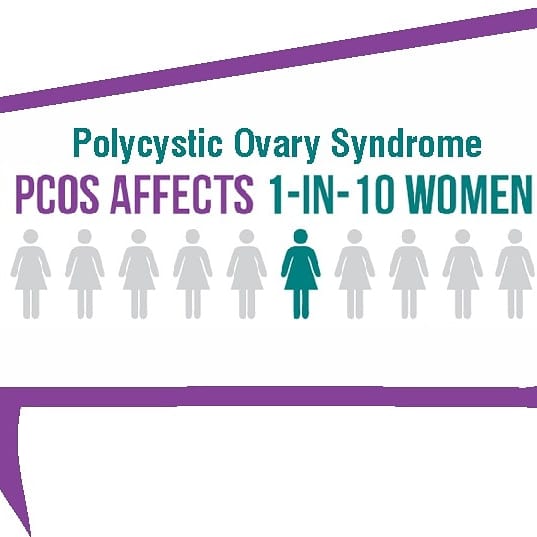
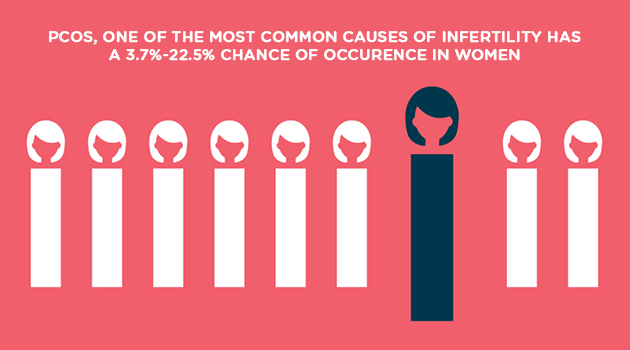
    PCOS is a fairly common illness. Studies that say that ten percent of women who see their gynaecologist are diagnosed with PCOS. If 1 in 10 women walk into a gynaecologist clinic, they get diagnosed with PCOS.

    Globally, 1-in-10 women are diagnosed with PCOS

    In Nigeria, there are studies that show that 16% of women are diagnosed with PCOS.

    4) Some of the common symptoms

    a) Menstrual irregularities

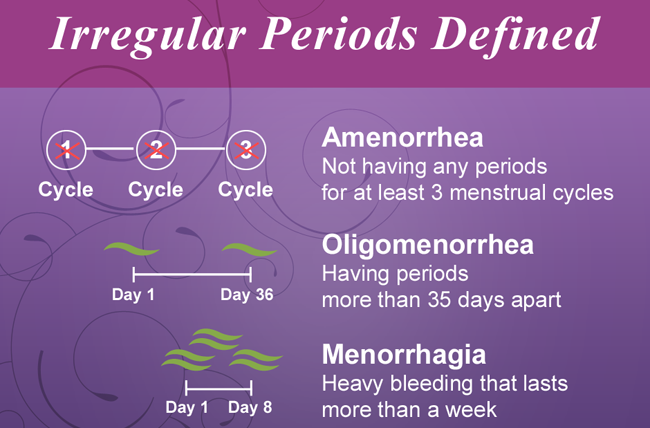
    It could be reduced menstruation or no menstruation at all. Irregular periods manifest due to the lack of ovulation, or the irregular occurrence of ovulation

    Definitions of irregular periods

    b) Infertility

    In fact, a lot of women do not know they have PCOS until they go to the clinic due to their inability to conceive.

    c) Excessive hair growth

    This is as a result of the excessive accumulation of androgens

    Woman with excessive hair growth as a result of increase in testosterone

    d) Obesity

    Many of them are obese, and are at risk of getting diabetes later in the future.

    5) What it takes for a doctor diagnose you with PCOS

    It is important to note that PCOS is a syndrome, so it is not just about the Polycystic ovary. So, there are three main things doctors look out for, and diagnosis is usually made when at least two are present. They are: excessive production of androgens, polycystic ovaries or cysts in the ovaries, or menstrual irregularities.

    6) When to get diagnosed

    Once you notice any of the symptoms, it is important you go see a gynaecologist to get treatment. Also people that have had other close relatives have it, or those with diabetes.

    7) Why a lot of people do not know they have it

    Nigeria has a poor approach to healthcare, and an even poorer approach to reproductive healthcare. There are not many people talking about it, or trying to raise awareness on this issue. So, they do not know the right places to go to, or people to ask. Also, seeing as it is not a well known disorder yet, there will be a lot of misdiagnoses.

    8) The best way to raise awareness for it:

    More people talking about it and having conversations about it. Improved sex education will also help raise awareness for it.

    For more PCOS articles click here, and for more general women’s stories, click here

  • What Is It Like Living With PCOS: The Woman That Has Had PCOS For 8 Years

    September is Polycystic ovary syndrome (PCOS) awareness month, and after our interview with ten Nigerian women on what it is like living with PCOS, we interview Karina, a Nigerian woman that has had PCOS for eight years.


    Can you tell us something about you?

    My name is Karina, and I am a 26-year-old project engineer. 

    How did you know you needed a PCOS diagnosis?

    I was doing my A levels and had had stomach issues for a few months. People kept giving excuses for my pain and I let them until one Sunday in the study room where I was in so much pain I could not move.

    A levels?

    Yes, I was in the UK when I got my first cyst.

    Oh, okay. What happened next?

    I made them take me to the hospital, and after some tests, they found an ovarian cyst.

    Was that when you got the diagnosis?

    No, because having a cyst doesn’t automatically mean you have PCOS so, they just counted it as a cyst. Even though the usual cyst is about 2-3 cm, the one they found in me was 8 cm.

    That’s about four times the average size…

    It is. The doctors told me they could cut off blood supply to the ovary or it could rupture. So, I needed surgery done. 

    How did the surgery go?

    I did not have it.

    But I thought? What changed?

    The cyst was gone a day before my surgery. 

    Miracle?

    Maybe. I do not know. 

    Any more cysts since then?

    Yes, a year later I had a 6 cm cyst that ruptured. 

    Ruptured sounds so painful

    Well, this was. I was awake at 5 am, just tired. So tired. That was when I actually got my first diagnosis, after the rupture. The diagnosis was polycystic ovary, ovarian cyst and hormonal imbalance. 

    What happened after the diagnosis?

    I was put on birth control pills for a few years and then I stopped taking my meds after discussing with my gynaecologist.

    Why did you stop? Were they not helping?

    They were, but I was so tired of being on medication, and I felt I had no time to actually understand how my body worked or what was wrong with me. So, I stopped after talking to my gynaecologist extensively. After that, I learnt about symptoms like amenorrhea. I also found out I was at a higher risk of getting cancer. 

    What happened after all this discovery?

    I went back on birth control.

    How did birth control work the second time around?

    My body took a long time to adjust. I kept gaining weight. Doctors will tell you to lose weight so you can feel better and manage this better, so you are trying to lose weight, but your body does not want the weight to leave.

    That must have been a lot, considering how young you were

    It is a lot for anyone honestly. It messed with my mental health so much. I felt like my body was going through trauma every day. The bleeding, pain, weight gain. It was a lot. 

    Is that why you decided to start raising awareness and pushing body positivity?

    I was already a really big advocate for body positivity and mental health awareness, but then PCOS allowed me to intersect all of that with this condition. There is not much information out there, and the more I talked about it on social media, the more people came out to tell their story, and people got curious enough to want to get tested as well. 

    Have you considered pushing this to more offline spaces?

    Yes, I was to start a support group and even some awareness walks with some doctors and mental health professionals, but Corona. 

    Why do you think there is not that much information about it?

    It could be because it is considered a woman’s sickness, and society does not care much about women’s illnesses as much. There aren’t enough studies done, and no two women work the same. Maybe because women’s bodies are different, and not all the things that work for one might work for the other.

    You have had treatment in two different continents, would you say there is a huge difference?

    When it comes to information, what the doctors in London told me was what the doctors in Nigeria told me as well. The main difference was that I did not have to pay for birth control there because it was free. Here, I pay about 17-20k for medication that lasts about three months. Also, accessibility. Doctors that are knowledgeable about these things are not as many or easily accessible, but when you find them, they know their stuff. 

    How do you cope with all of it?

    I see a therapist, rest as much as I can, and try to live a healthy lifestyle. I exercise, do yoga, and rest. 

    That seems like an expensive lifestyle, especially since you are back in Nigeria now.

    It is. Pills, tests, scans alone are expensive enough as they are. I am grateful I have my parent’s support, and my sister is a doctor, so that also helps.

    What advice will you give someone that just gets diagnosed with PCOS?

    Take each day one at a time, try to figure out what works for you and take breaks. It might feel like this will define you, but it won’t.


    For more women centered stories, click here

  • 10 Nigerian Women Tell Us What It Is Like Living With PCOS

    September is Polycystic ovary syndrome (PCOS) awareness month, and to do our part in raising awareness for this very common illness, we asked ten Nigerian women, to tell us what it is like living with PCOS.


    Amaka, 24

    One day in Secondary school, I stained all my underwear and dresses. We had to go out for some activity and I was just crying. I couldn’t sit down, and I was bleeding down my thighs while standing. I kept running to and from the hostel while dodging seniors, so I wouldn’t get beaten. The matron was annoyed with me. I ran out of pads and dry panties, because they all got stained. I was changing pads and pants every hour and a half. My dresses were also wet because I washed them. I just had to stay in the hostel and get ready for my punishment. The seniors increased my punishment, even after I tried explaining to them. It was apparently my fault for not knowing how to take care of myself during my period.

    Sylvia, 23

    I was first diagnosed at 16 and one of my symptoms is amenorrhea, absence of periods. The year I turned 18, I did not see my period for nine months. My mother finally dragged me to the hospital after that. I was put on Combination 3 for about three months, and my period was like clockwork for five months or so. I just had to deal with the side effects of the drug; nausea, mood swings, weight gain, fatigue, stretch marks. After three months, I refused to take the pills anymore. These days, all I do is research to try to make my life easier. 

    Amanda, 27

    My grandma died of cancer, so I already have genetics to worry about, but finding out that PCOS increases those chances even more rocked me to my core. I cried for days. It has been a year since my diagnosis, and I have my will planned out, and a bucket list I am crossing. People are telling me it is not a death wish, but I do not want to be caught unawares. 

    Kikelomo, 18

    I was 15 around the time I got pregnant. I did not see my period for a few months, and I though it was just like the previous times. Nine months later, and I have a child. PCOS usually means there is a rare chance you get pregnant. Rare. That was why when I did not see my period again for three months, I went to the hospital. It consisted of a lot of fake details, seeing as I was still a minor.  At some point, one of the doctors I saw congratulated me on my pregnancy. I almost spat in her face. Four doctors later, and I finally had a diagnosis. 

    Beatrice, 32

    Travelling, visitations, events, all of those things terrify me, because what if my period just starts? Then what? I once travelled to Lagos to visit a friend. I was to spend a week there. My first night, my period came. It was hell. I bled for a month at that time.

    Sandra, 21

    I used to be a size zero, but now I am currently a size twelve. Rumours started spreading that I was pregnant, that I got a butt job, others said I used Apetamine. People would see me and spend the entire conversation talking about my body. The growth was gradual, so I had to change my entire wardrobe more than once. Now, I just buy bigger clothes and adjust. 

    Adaobi, 20

    When I first missed my period in late 2018, I had this boyfriend then. We never had sex. The guy and I only dry humped. I just wanted to remove what was inside of me. So, I got a pill from the black market and voila, I saw my period. It continued for the next two days and that was it. I cannot ovulate. I do not know why I am terrified of being pregnant. Some women with PCOS can, but I do not. With PCOS, it is not a one size fits all manual. 

    Chukwuka, 24

    Last year was the worst year of my life. I bled from June till November. Nonstop. When I tell people, they think I’m some ridiculous liar. I probably wouldn’t have believed it myself if it didn’t happen to me. I just noticed my period wasn’t stopping, I was cramping terribly in the beginning and I was in a very bad place physically and mentally. The strange thing is that I went to the hospital so many times, and saw so many doctors. They all misdiagnosed me. I took so many drugs, injections and diets, nothing worked. I tried praying and fasting, nothing. They ran tests on me, and they wouldn’t find anything wrong with me. My life was just buying pads and drugs. I passed the thickest blood clots of my life at the time. I read things on the Internet I did not understand (before then, I was told that it was an inherited thing and that was just how it was for some women in our family). If I could afford it at the time, I’m fairly certain I would have had a hysterectomy. I jokingly called myself the woman with the issue of blood. I was living alone in a rural town, with no finances for better health. This was a battle I was fighting by myself and I didn’t  know what to do. Then it suddenly stopped.  20th November last year, I couldn’t believe it. I didn’t know how to feel. It just stopped.  

    Ibukun, 34

    Every night before I go to bed, I check my chin for hairs to pluck. I feel very insecure about it, the chin and chest hair. I wax my chest hair. When I cannot, I do not wear clothes that have a lot of cleavage showing. The place I work in relies on appearance a lot. It stresses me out because my normal hair is thinning out, but this hair on my chest and chin are thriving. 

    Hafiza, 21

    Regular painkillers don’t work for me, so I’ve always had to ride my pain out. Some also mess with my ulcer, so the amount of affordable drugs I have is limited. Nobody takes me seriously once I present myself and my weight. During the consultation, instead of focusing on fixing the current pain, they were telling me to exercise. Please how? If I can’t stand or sit, how do I exercise? I was forced to go on a lot of diets, because the doctors said weight loss was the key to solving it, but it did not work. Honestly, I just take my drugs and wait. I’ve been dreading going back to the hospital because I have to do other tests, but I can’t even find the time or the mental strength to start searching for affordable hospitals, and teaching hospitals irritate me because they have zero tact. 

    For more women centered stories, click here