Notice: Function _load_textdomain_just_in_time was called incorrectly. Translation loading for the wordpress-seo domain was triggered too early. This is usually an indicator for some code in the plugin or theme running too early. Translations should be loaded at the init action or later. Please see Debugging in WordPress for more information. (This message was added in version 6.7.0.) in /home/bcm/src/dev/www/wp-includes/functions.php on line 6121 japan | Zikoko!
If you watch a lot of anime, and you call yourself an otaku, chances are, you probably learnt these Japanese words while watching anime and now you use them to terrorise people in your day-to-day conversations.
1. Ohayo/Ohayo gozaimasu: Good morning
Bonus points if you shout this loud enough for your entire neighbourhood to hear. To be fair, it is a much sweeter way to say good morning and everyone should use this more often.
2. Sayonara: goodbye
Nothing beats a character saying this when they are about to die. It’s usually one of the top two worst things you’ll ever hear in an anime series and it’s not number two.
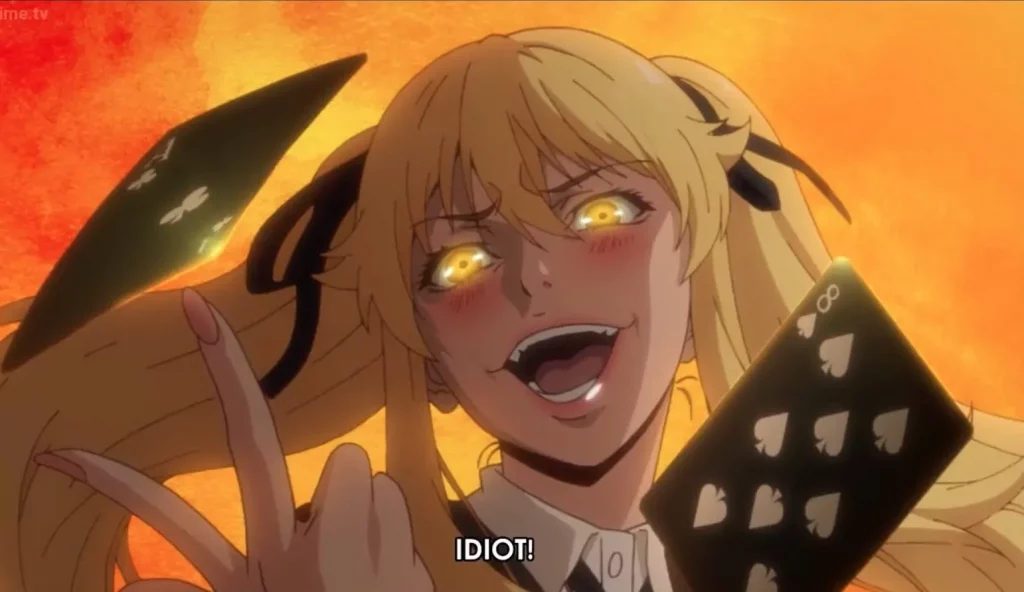
3. Baka: stupid
You use this one playfully to describe a character that behaves foolishly or is an idiot. Shout while using it or it doesn’t count.
4. Nani: what?
Two distinct characters use this word: the softhearted, concerned side character that will most likely die soon, and the loud comic-relief character that almost always wants to kill the main character.
5. Senpai: senior
A senpai is someone who is your senior, mostly at school. In many ways, Japanese people are just as notorious as Nigerians in hunting for respect. If you are watching any anime where this is said a lot, I dare you to watch it with your parents. I’m not saying it has sexual undertones, but, “Notice me, senpai!” is popular for a reason.
6. Hai: yes
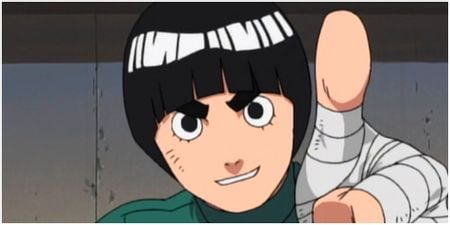
This word is only popular because in some movies, their sensei will tell them to run one million meters and the character will just shout yes, no question asked. Could never be me. Rock Lee, I’m looking at you.
7. Okasan: mother/Otousan: father
You’ll probably learn this Japanese word first because they are usually the first characters to die in every anime. What sort of hero will you be if the deaths of your parents do not motivate you?
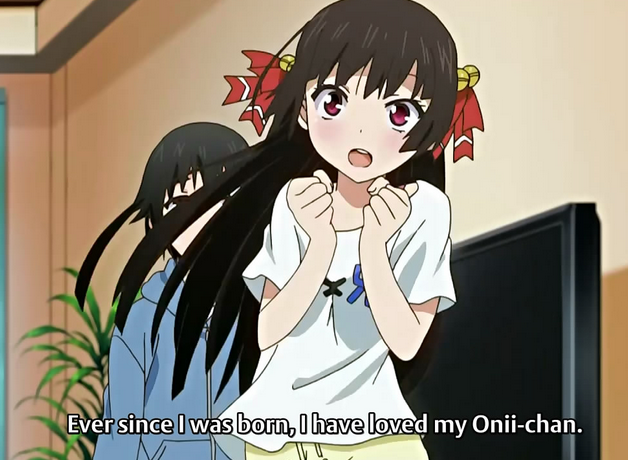
These words are almost always used by the little sister character in the show, and their Oniichan and Oneechan are usually the sweetest older siblings you’d ever see on TV. Many anime writers must have been the only child in their households because people that grow up with siblings know that if they are being too nice, something bad is about to happen.
9. Nandemonaiya: nothing/nevermind
Anime characters will have their guts spilling out and when a character that cares about them asks, they will still lie with their full chest and say nandemonaiya. I’m not saying otakus lie a lot, but….
10. Arigato gozaimasu: Thank you
I can’t explain how simply saying thank you in Japanese can sound so wholesome, but it is a thing. Just try it and you’ll see what I mean.
11 Gommenasai: I’m sorry
Name a character from Naruto that didn’t say this before they died and I’ll name ten that did. Why the writers always make characters who are about to die to say this, I’ll never understand. But, if anyone ever uses this Japanese word to apologise to me, I will 100% accept their apology.
How else do you explain girls between the ages of 9-13, actively anticipating a river of blood coursing out of their bodies for days on end? I remember feeling downright robbed, but having to fake excitement when everyone else got their first period.
When mine finally came, I only half-heard what my mother said about being responsible now that my ‘menses’ had started. I was already happily three-tap texting the news to my friends on my little Nokia 6230i.
These days, the only thing I feel when my period arrives is dread
When I get that first tell-tale pimple or crink in my back, I take 5 minutes to seriously consider getting pregnant – just so I don’t have to bother with my period for 9 months.
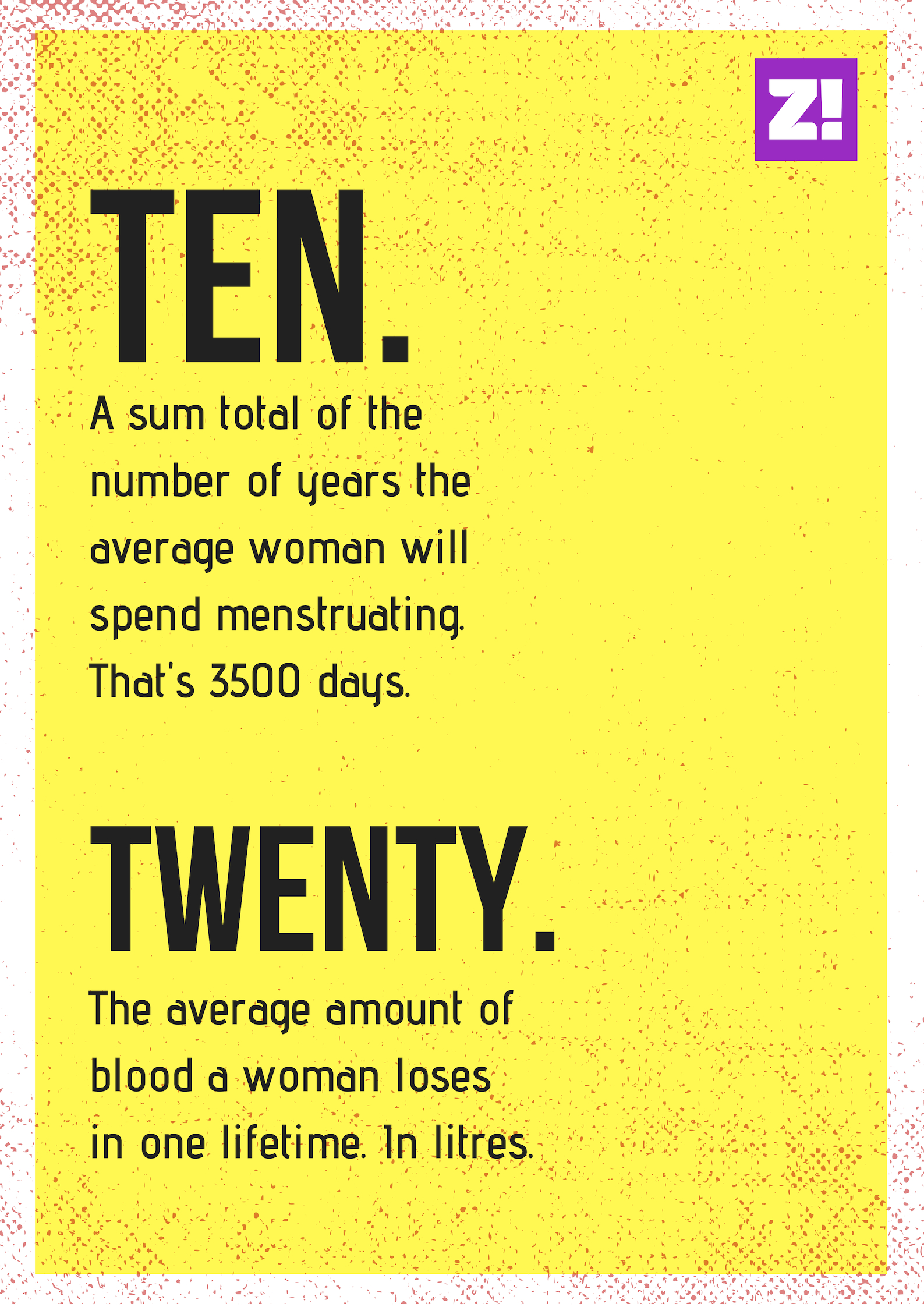
But then I remember my very Nigerian, very Yoruba mother and I’m forced to await my punishment for being a responsible, celibate adult – pretty much. Most times, it feels like my period is looking for the most innovative way to off me, trying out a different pain metric every month until it finds the one. Seeing as women have on average 500 periods in a lifetime, I need to survive about 360 murder attempts till I’m off the hook.
Great.
Periods have always been tough for me.
I remember a dreary day when I had to get my Bencher’s Form signed (a requirement to write the Nigerian Bar Exam). It felt like someone had shackled an anchor to my hip-bone, just so they could intermittently practise puppetry with my insides. All pain meds refused to stay down and I remained affixed to the floor. That floor was a toilet’s – fervent diarrhoea and vomiting are just some of the goodies in my menstrual package.
Hours later, with the pain unrelenting, I was forced to drag myself — back pain, cold sweats, diarrhoea and nausea in tow, to get my form signed.
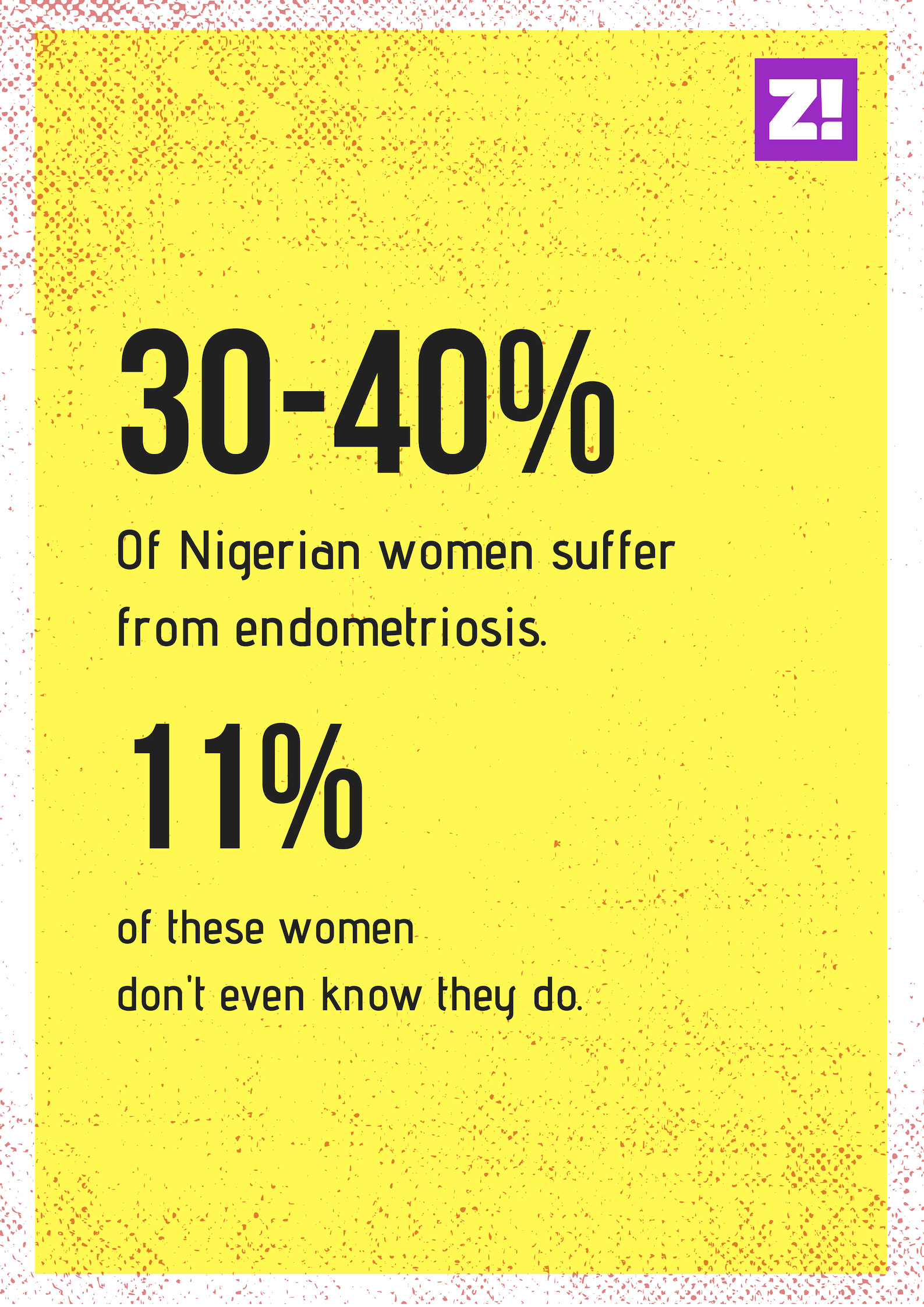
While my dramatic pain is symptomatic of dysmenorrhea – a condition affecting almost 72.5% of female students in Southern-Nigeria alone – another condition that is nothing but horror to live through while being on your period is endometriosis.
Endometriosis is a condition in which the tissue lining the uterus grows outside of it, resulting in terrible pain during periods, intercourse and in certain instances – infertility.
To get an idea of what the pain of endometriosis feels like, one woman described it saying: “it feels as if someone took a pickaxe to my uterus and is trying to break out”
With many women, pain during periods is the rule and not the exception.
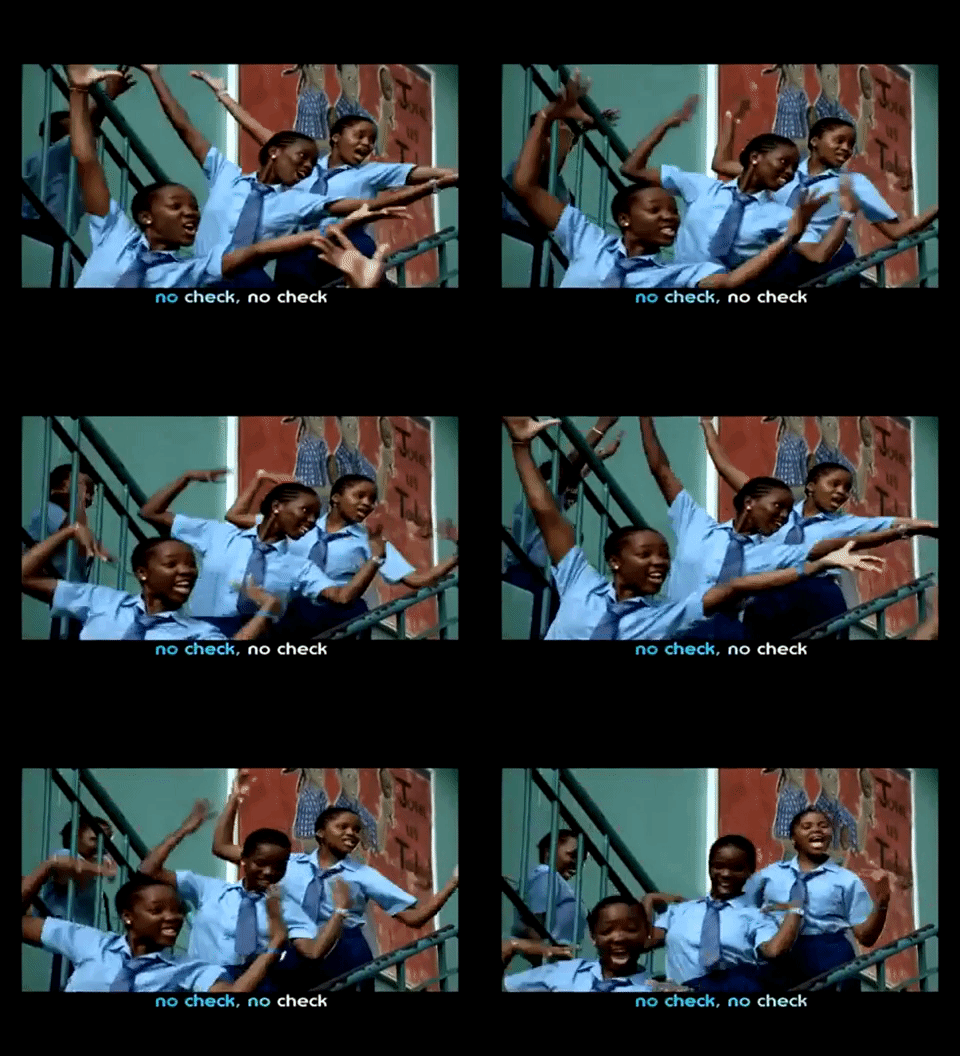
It’s maddening how little talk there is about it. Not in the media — where the most period representation you’d get is a bunch of school-girls just frolicking in glee at the thought of their periods, merrily check-checking each other for stains.
And most certainly, not in the workplace.
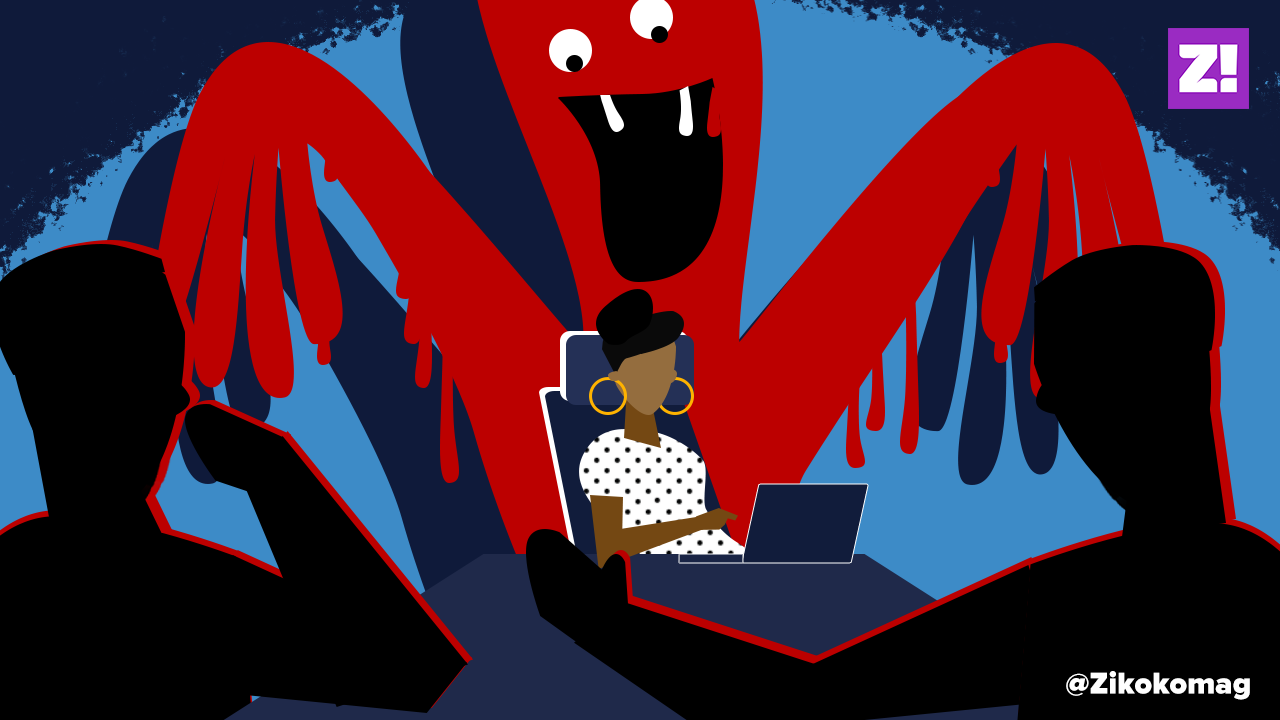
I’d always wondered how to handle the monstrous duo of work and having periods thrown in the mix.
With secondary school, I’d always been able to contain the worst of my period pains by befriending the school nurse (she still sends me the best parental Whatsapp BCs) and turning the sick-bay into a second home of sorts. Uni, I could dip at the first sign of period troubles.
With work, there was no telling what would happen – there’s a whole other energy.
The whole purpose of your presence is productivity. Work in Nigeria involves people dodging queries and doing their best semblance of productivity while sneak-watching the fifth season of SGIT. It’s the last place you’d want to display weakness or vulnerability, even if it is beyond your control.
In the third month of my service year, I was attacked by the period Chimera.
I was having the worst cramps in recent memory, I had no painkillers and 0 pads on me. In my defence, my period was uncharacteristically late, so I thought the universe had done me a solid and skipped my period that month. I was wrong.
After twenty minutes of being doubled over and performing my usual period theatrics in the office toilet, my God-sent colleague brought back sufficient pads and painkillers to stave off an army.
While attempting to commiserate and drown out my groans, she told me of past period experiences around the office. There was the lady who slept in her car during lunch-break just so she’d have the opportunity to lay down. There were ones who had to make up family emergencies to leave work. And those who grudgingly told the truth in order to be excused from work. And though we laughed – or at least she laughed while I waited for the meds to kick in – I couldn’t help but consider the very bad hand women had been dealt.
Despite making a significant part of the nation’s workforce, no concessions are granted to women for their monthly dispositions. I’d be almost impossible to find an office that stocks up on pads and painkillers for women, yet every toilet has tissue paper and hand wash.
We’re guessing HR is yet to receive the 3000-year memo that women are susceptible to involuntary bleeding every month.
While I was all too eager to enjoy the trappings of being a Corps member, with more leniency allowed for missing work, my current full-employment prospects have me weighing my options
Do I ask for days off when my period strikes and risk being pegged dramatic (not that I’m too bothered by that)? Or do I go the way of my forebears, grinning and bearing the pain like many colleagues before me?
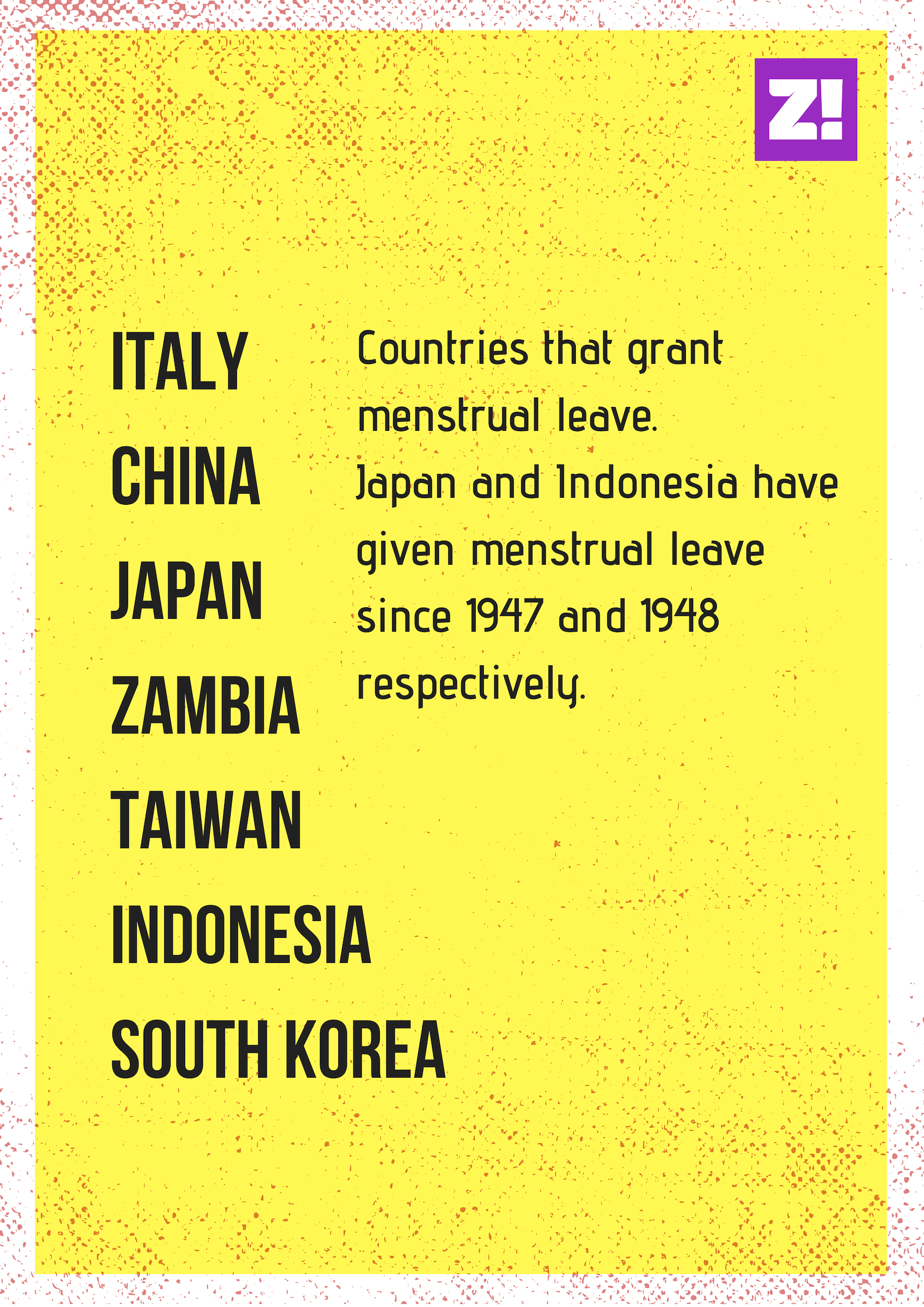
Times like these, I wish I were born in a country like Japan or even Zambia – where period leaves are called Mother’s Day.
While this is no sure fix-it for the woes women bear with menstruation and the workplace, at least they understand the import of a pain that has made me Google, at my worst; ‘how to perform a uterus autonomy’.
Back to pregnancy as a solution.
My friend – who read an early draft of this story – said to tell you that you can, in fact, get pregnant and still see your period.
So, there goes my plan –haemorrhaging away, like my next period.
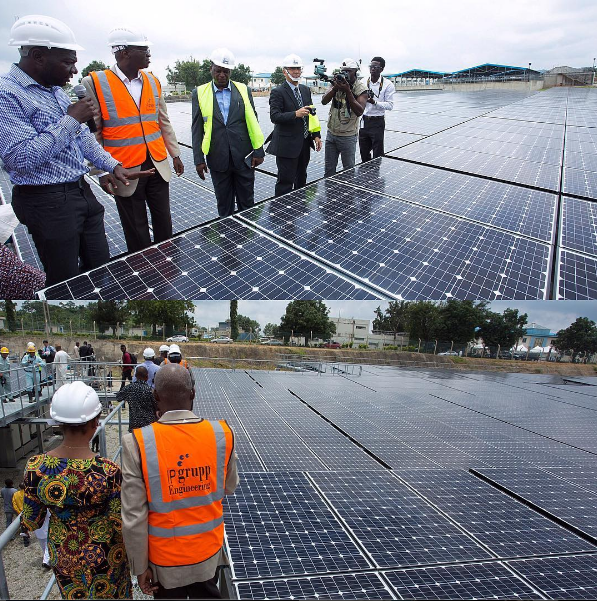
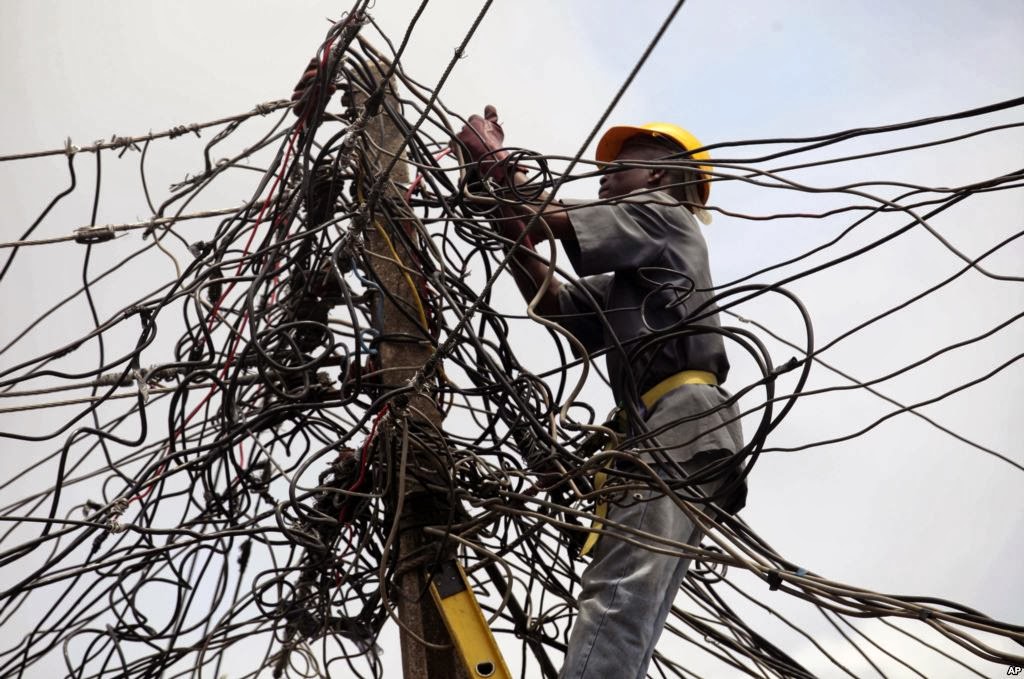
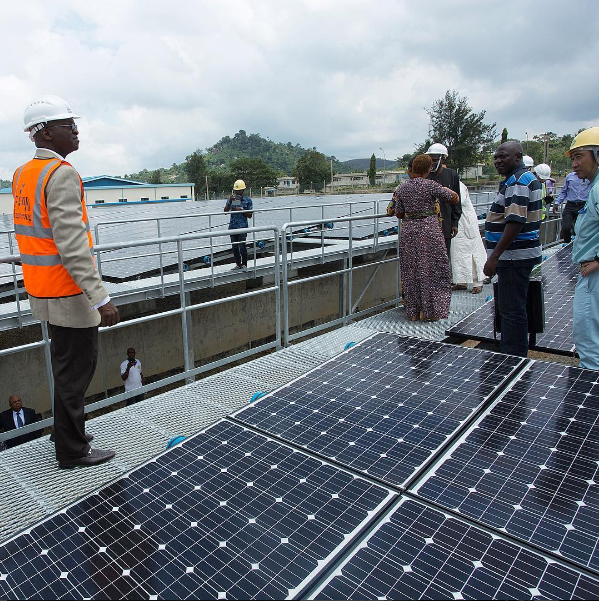
The Nigerian power situation has been especially bad this year, due to militants’ sabotaging gas pipelines up east of the country. In March, power generation capacity actually fell from 5000 MW to a miserable 1,580.6 MW. With the help of the Japanese government however, light, it seems is now at the end of this very dark tunnel.
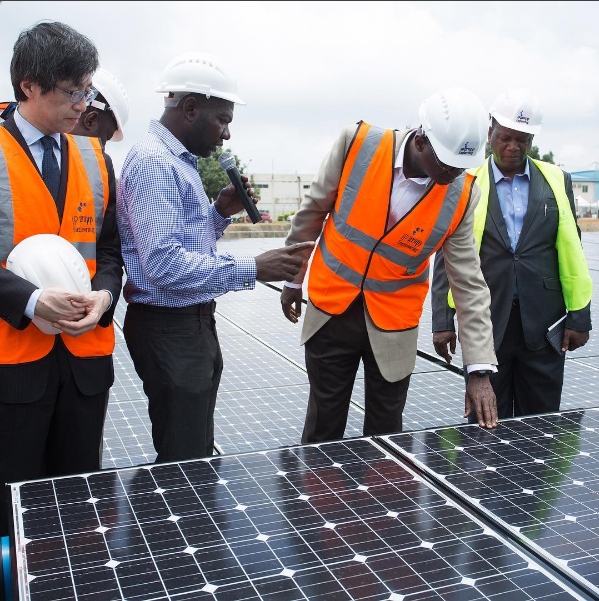
Brethren, it looks like our situation is finally about to change for the better! Minister of Power, Works and Housing, Babatunde Fashola is seen here inspecting the brand new solar-panels at Usman Dam, Abuja.
The panels were donated by the Japanese government, through the Japan International Cooperation Agency, and are worth a whooping $9.7 million dollars!
We think it’s time to actually fast and pray for this country called Japan, because these guys must be angels of the good Lord.
The newly donated solar panels are expected to generate 1,496WH of power, and reduce electricity payment by N31.5 million per year.
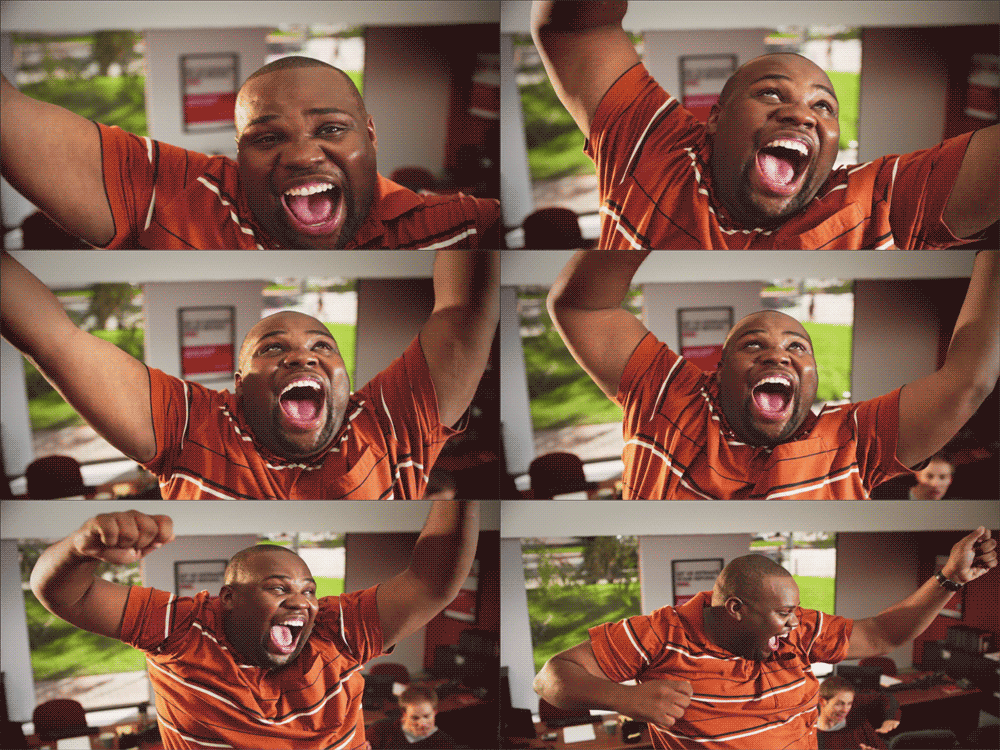
The implication is that you and I will now pay less for more electricity-we hope!
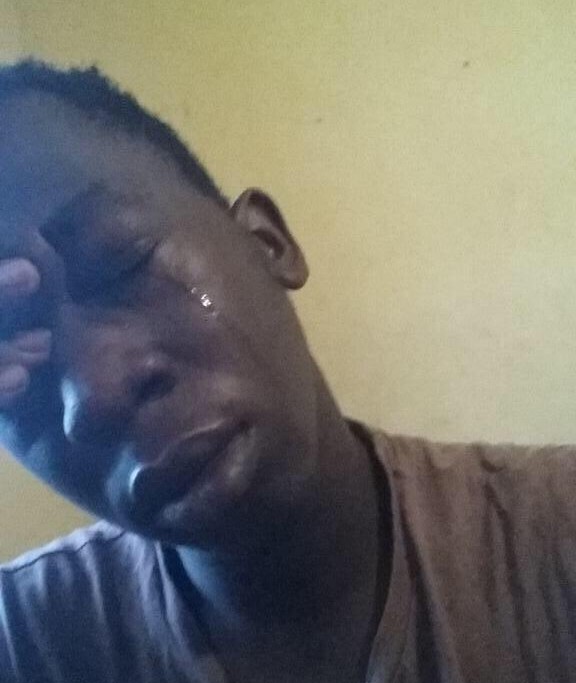
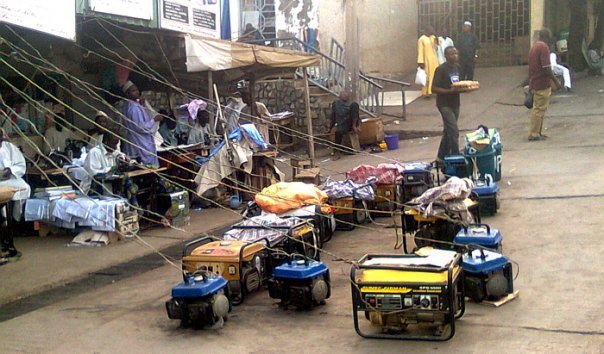
To be honest, we are getting really tired of the NEPA wahala! Every time no light! We can’t charge phones, we can’t iron clothes for work and we can’t even watch Telemundo in peace!
So we really hope this donation translates to tangible, visible results; a lot of companies are finding it difficult to continue operations in Nigeria because of the mess that is our power situation.
We can’t wait for a time when we get to use clean, stable energy, and finally throw these annoyingly loud, pollution-inducing demons away.