Notice: Function _load_textdomain_just_in_time was called incorrectly. Translation loading for the wordpress-seo domain was triggered too early. This is usually an indicator for some code in the plugin or theme running too early. Translations should be loaded at the init action or later. Please see Debugging in WordPress for more information. (This message was added in version 6.7.0.) in /home/bcm/src/dev/www/wp-includes/functions.php on line 6121
INEC | Zikoko!
  • Why Did INEC Announce A Fake Result in Adamawa?

    The 2023 general elections had many surprises, and for Adamawa state, more election drama is set to unfold in the coming weeks.

    Adamawa’s governorship elections caught the interest of many Nigerians because of its potential to produce Nigeria’s first female elected governor if Aishatu “Binani” Dahiru of the All Progressives Congress (APC) emerge victorious. However, her opponent is the state’s incumbent governor, Ahmadu Fintiri of the People’s Democratic Party (PDP).

    On the D-day of the March 18 governorship elections, Fintiri was in the lead with 421,524 votes, and Binani trailed behind with 390,275 votes. But, the election was declared inconclusive for two reasons:

    • The vote margin (i.e. 31,249 votes) between Fintiri and Binani exceeded the cancelled votes.
    • Due to electoral violence and overvoting, elections were cancelled in 69 polling units which affected about 37,016 potential voters.

    On March 27, 2023, the Independent National Electoral Commission (INEC) announced that supplementary polls would be held on April 15, 2023.

    However, it’s unfortunate that the supplementary elections conducted in Adamawa can be described as a show of shame. We will break down some key things that happened during the elections.

    Journalists weren’t allowed to observe the collation process

    It’s customary for journalists to cover the collation process in every election, but armed security officers prevented journalists from entering the collation centre during the supplementary elections in Adamawa state. When asked why, the security officials said it was “an order from above”. 

    A winner was declared before the conclusion of the collation process

    The results of the elections started trickling in, and it showed Fintiri in the lead in 10 out of 20 local governments. But, the Returning Officer suspended the collation process at 1 a.m. and said the results announcement would resume by 11 a.m. the next day, April 16. 

    However, the state’s INEC Resident Electoral Commissioner (REC), Hudu Ari, shocked Nigeria when by 9 a.m., he announced Aishatu Binani as the winner of the governorship elections. 

    According to Sections 64 and 65 of the Electoral Act, the winner of an election can only be announced by a Returning Officer appointed by INEC, but it looks like Hudu decided to take matters into his own hands.

    Aishatu Binani gave an acceptance speech

    While many Nigerians were still trying to figure out the magic happening in Adamawa, Binani hurriedly gave an acceptance speech thanking the people for electing her. She also said her win would encourage other women to participate in politics. 

    INEC annuls the declaration

    As we already said, only a Returning Officer has the right to declare the winner of an election. INEC condemned the action of the REC and described it as a “usurpation of the power of the returning officer”. The declaration of Aishatu Binani as the Adamawa state election’s winner was rendered null and void, and the election process was suspended.

    Hudu Ari might be looking at jail time

    The seemingly rogue REC, Hudu Ari, has been summoned to the INEC headquarters in Abuja. According to Section 120(4) of the Electoral Act 2022, he might be sentenced to 36 months imprisonment for announcing a false result.

    On April 18, 2023, INEC announced that it hopes to close the controversial chapter on Adamawa’s governorship elections by Thursday, April 20, 2023. Nonetheless, the 2023 general elections have shown us so far that there are a lot of internal issues INEC needs to work on because it’s almost as clear as day that they’re too compromised to trust with conducting free and fair elections in Nigeria. 

  • I Was a Presiding Officer in the Presidential Elections. This is my Experience

    Over 200,000 corps members were deployed as INEC ad-hoc staff during the 2023 general elections. They play a crucial role in the process, manning polling units, handling electoral materials and making sure every vote counts.
    This story is a first-person account of events from one of these corps members, who worked as a Presiding Officer in the February 25 presidential election in Osun state.


    I’m a big fan of accountability and good governance. I believe elections matter. I don’t have a Permanent Voter’s Card (PVC), but I figured it shouldn’t stop me from participating in the 2023 general elections. As a serving corps member, I could sign up as an INEC ad-hoc staff. This way, I could ensure votes cast mattered at my polling unit. So I registered, did the mandatory training, and like everyone else, I looked forward to the elections. 

    INEC promised ad-hoc staff three things — welfare, security and due process. They barely delivered on any. On the eve of the elections, I found my way to the Registration Area Centre (RAC) per instructions. All electoral officials would spend the night there, get the election materials the following morning and make for our polling units.

    The RAC was a secondary school. But I didn’t imagine all the rooms in the school would be mosquito-infested. The least INEC could’ve done was fumigate one or two rooms in the building they kept us in. And it didn’t help that the closest thing to sleeping materials the commission provided were a bunch of mats. They weren’t even enough for the corps members who signed up to work during the elections.

    We survived the night, but this was a sign of things to come. 

    On election day, I got my materials and set out to the polling unit. One of the first things I noticed was my polling unit was short of an electoral officer. During the training in the months leading up to the election, they told us each polling unit would be managed by a Presiding Officer (PO) and three Assistant Presiding Officers (APOs).

    However, we didn’t have an APO 3 – whose role is to control the queue of voters – in my polling unit. As I found out hours later, the same thing happened across other polling units in my ward. This was interesting because when I checked the ad-hoc staff directory, each polling unit had an APO 3 assigned to them. 

    Something had happened.

    It turned out the names I saw didn’t exist. The Supervising Presiding Officers (SPO) filled the APO 3 roles with ghost workers. Essentially, the government will pay for people who don’t exist and didn’t do any work.

    I wonder where the money will go.

    Back to my polling unit. 

    An APO 3’s job is to manage the conduct of voters and maintain orderliness in the polling unit. Without one, we were short-staffed. Thankfully, the party agents and young people in the unit helped us to control the queue. It could’ve been worse. 

    Remember that they promised us security, too. We got an elderly policeman who couldn’t do much, and we felt exposed the whole time.

    One of my friends at a different polling unit had a scarier experience. Some thugs came, fired a few shots in the air and asked her to think through returning for the forthcoming House of Assembly elections. 

    If anyone wished to attack us, they would’ve been successful. 

    At different times during the election, the party agents came in clusters to discuss with the voters. They asked the voters for their account numbers, promising to send them some money if they voted for a particular party or candidate. It looked a lot like vote buying. 

    INEC instructed us to look out for vote buying and stop it, but only if it happened close to the voting area. If it didn’t, they asked us not to interfere in the process, especially if it might put us at a security risk. 

    With this in mind, all we could do was stay on the sidelines and do our jobs — the only thing we could control. 

    In my friend’s polling unit, someone came and distributed prepaid ATM cards — they work the same way gift cards and vouchers do — to the voters. Each card was loaded with a sum and whoever got one only needed to activate the card at an ATM machine to access the money. 

    By the end of the voting process, I knew one thing — the cash scarcity didn’t stop vote buying. 

    But this wasn’t the last of the irregularities I witnessed. 

    I’ve seen a couple of complaints online about manipulated results and people blaming us corps members for it. From my experience, Presiding Officers are pawns in whatever chess game INEC staff are playing. It’s not far-fetched to say that some Presiding Officers were forced to countersign fabricated results. 

    In my polling unit, we accredited 288 people, but 287 people voted, which meant someone left without voting. I didn’t think this was a problem. The rule states that the number of votes cast cannot exceed the number of accredited voters. So we were good. 

    However, the INEC official I reported to at the collation centre didn’t think so. They asked me to stamp an unused ballot and record it as an invalid vote. Subsequently, they adjusted the numbers so that we could have equal numbers of accredited voters and actual voters. 

    While this didn’t mess with the actual results, it rubbed me the wrong way because I was forced to sign off on the change they made. 

    I’m glad the federal part is over. I signed up to participate in the next set of elections, but now, I’m wondering if it’s a good idea. I hope INEC is more prepared this time around.


  • QUIZ: Take This Quiz and We’ll Tell You What to Postpone

    If INEC can do it, so can you. Take this quiz.

  • What to Expect in Nigeria’s Tenth National Assembly

    The Independent National Electoral Commission (INEC) has now made available a partial list of legislators-elect based on the February 25 National Assembly (NASS) election. 

    The NASS comprises two legislative houses. The upper house is the Senate, with 109 seats: three for each of the 36 states of the federation and one for the Federal Capital Territory (FCT). 

    The lower house is the House of Representatives (HOR). There are 360 available seats in the HOR, varied unevenly across constituencies. Lagos and Kano have the most seats, with 24, while the FCT has the least; two seats. 

    By May 29, when a new administration takes office, they too will reconvene to constitute Nigeria’s tenth national assembly. Here are a few things to look out for:

    Fewer ex-governors than usual

    [The Nigerian Senate / Arise]

    The Nigerian senate is perceived as a retirement home for term-limited governors. Since 1999, many past governors have found the senate a lucrative cash cow to fund their baby boy lifestyles. However, that trend is about to change.

    Several outgoing governors lost their bids to transfer to the senate, including Ben Ayade of Cross Rivers, Simon Lalong of Plateau, Okezie Ikpeazu of Abia and Samuel Ortom of Benue. Only two out of nine outgoing governors successfully transferred to the senate.

    Upsets in the national assembly

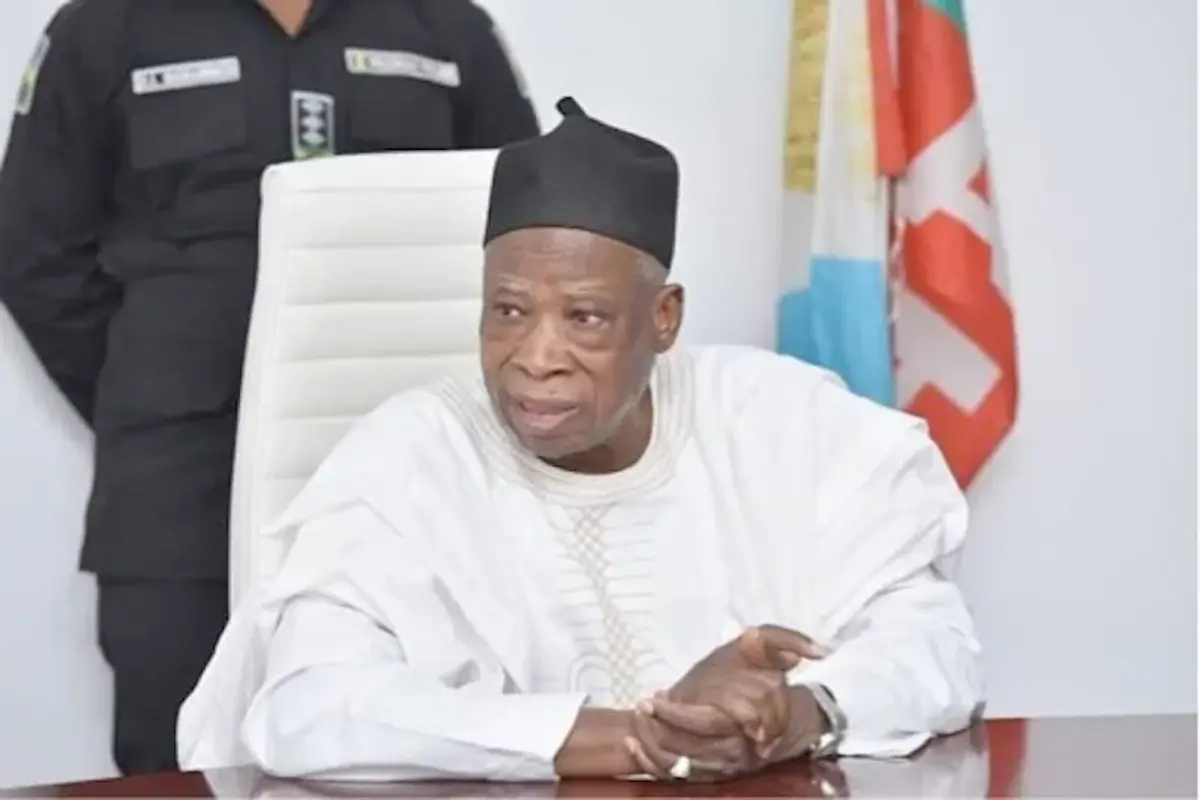
    There were a few shocks from the national assembly elections. The All Progressives Congress (APC) chair, Abdullahi Adamu, who vacated his seat (Nasarawa West) upon assuming the position of party chair, lost his senate district to Aliyu Wadada of the Social Democratic Party (SDP).

    [APC chair, Abdullahi Adamu / Vanguard]

    The senate spokesperson, Ajibola Basiru, a former attorney general of Osun representing Osun Central at the senate, lost to the People’s Democratic Party’s (PDP) Fadeyi Olubiyi.

    In the HOR, the deputy chief whip, APC’s Nkeiruka Onyejeocha from Abia, lost her re-election bid as she bowed out to Amobi Ogah of the Labour Party (LP).

    Fewer women seats

    While INEC is yet to release a full list of legislators who won seats in the national assembly, we can infer, based on the ones seen so far, that women’s representation in Nigerian politics still has a long way to go. Only three women made it to Nigeria’s senate.


    It’s disheartening as 378 women contested for office at the national assembly. We can only hope results from the March 11 elections boost better returns for women running for elective offices at the state level.

    Oshiomole and other familiar faces make their senatorial debut

    Former labour union chair, Edo governor and APC chair, Adams Oshiomole, has completed the quadruple as he clinched a seat at the senate. Oshiomole defeated the PDP incumbent, Francis Alimekhena, by some distance to earn a seat in the red chamber. 

    Oshiomole is not the only new entrant. Ned Nwoko of Delta North district, who has had his fair share of controversy, defeated the APC incumbent, Peter Nwaoboshi, who finished third. Jimoh Ibrahim, another controversial businessman representing the Ondo South district, is another new entrant to the senate running under the APC’s banner.

    Labour Party makes significant inroads into the national assembly

    [Labour Party Supporters / Bloomberg]

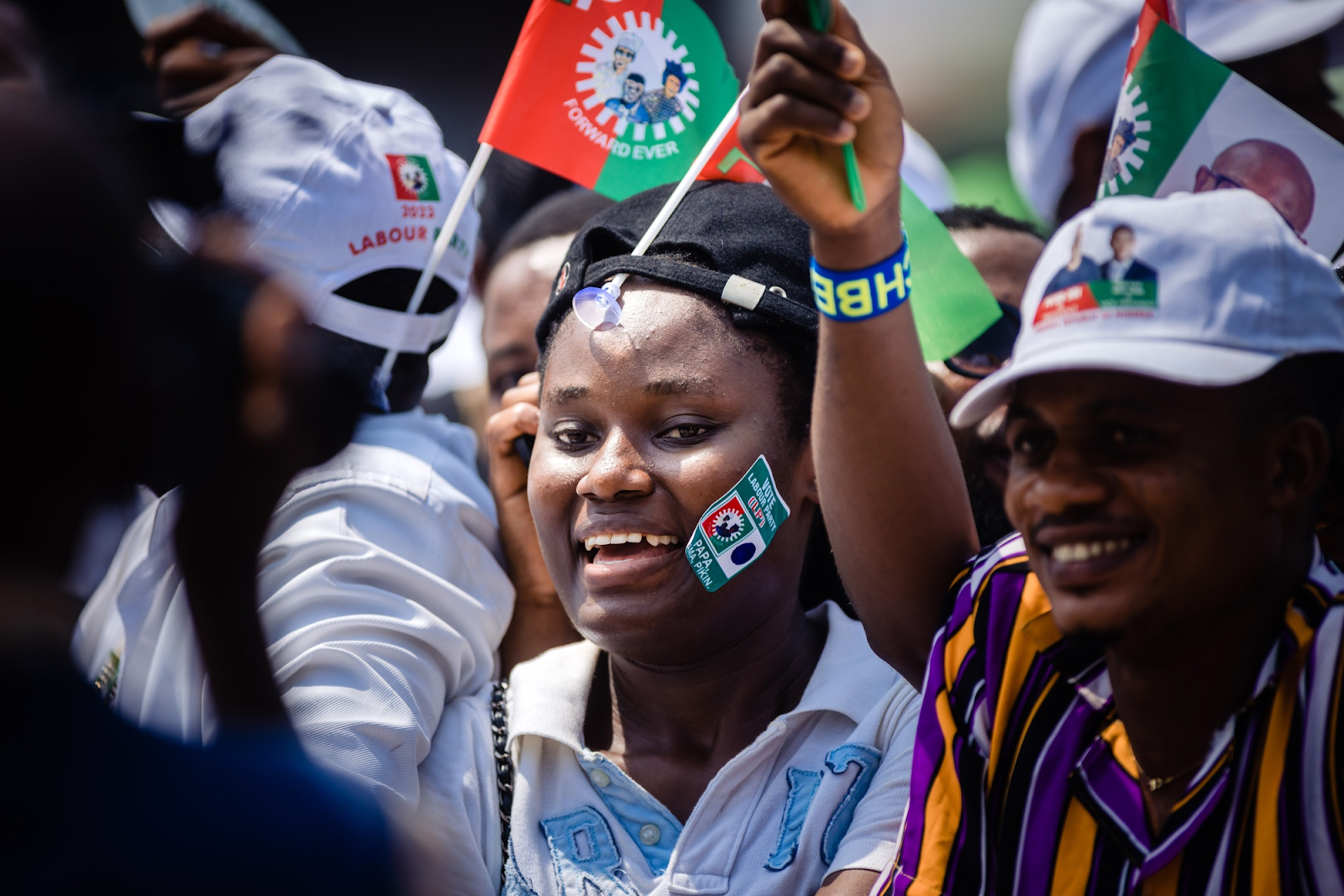
    Off the back of the Obidient movement, the LP can count itself as one of the big winners at the just concluded general elections. While the top position didn’t materialise, yet, the party can boast 40 out of 469 seats in the national assembly. These include six in the senate and 34 in the HOR. This is an impressive feat, given that the LP won zero seats in the 2019 elections. The tenth assembly is taking on a different structure now. Let’s see how it performs over the next four years.

  • Don’t Throw Away Your PVCs Yet. Here’s Why

    Millions of Nigerians, us included, believed the Independent National Electoral Commission (INEC) when it said it would adhere strictly to the Electoral Act, deploy the use of the BVAS and upload results in real-time to the INEC Result Viewing Portal (IReV). 

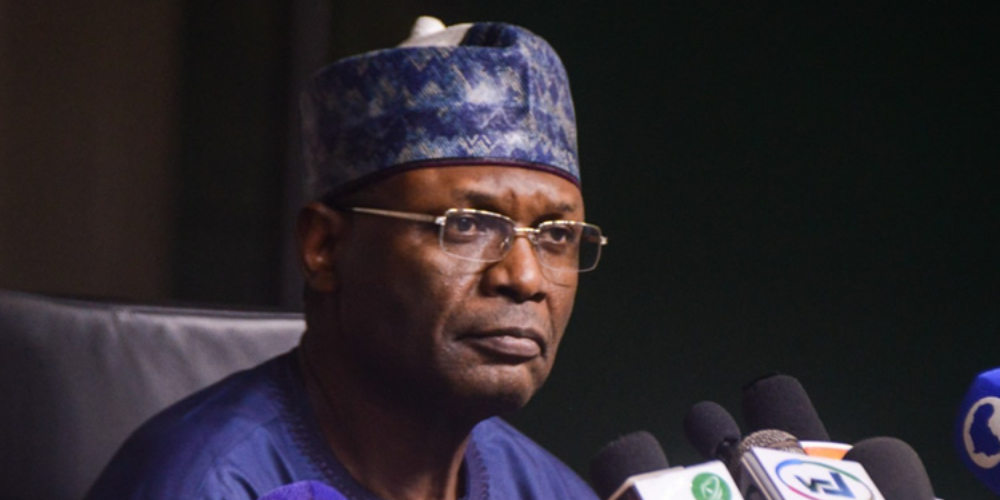
    [INEC chair Mahmood Yakubu / Punch]

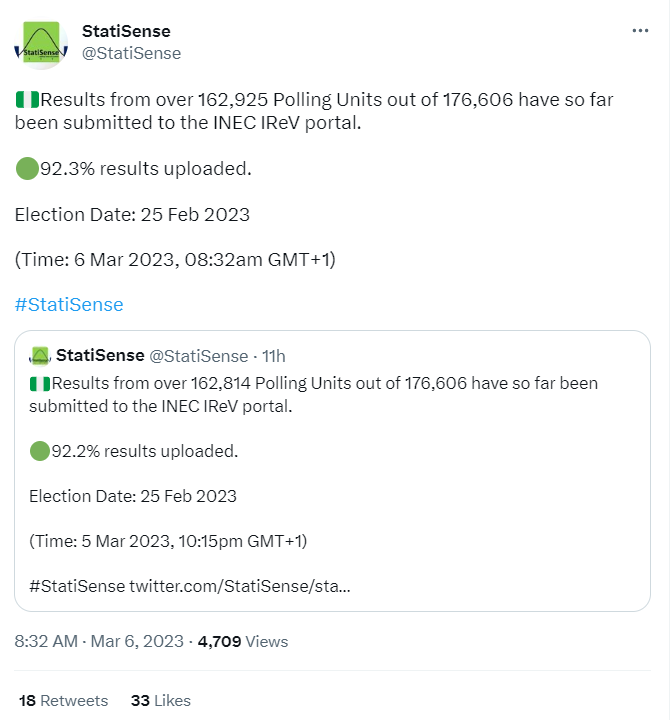
    What played out was the opposite. Across the country, results were not uploaded in real time as promised. Nine days after the general elections, results are still being uploaded to IReV, calling INEC’s competence and integrity to question as it has already declared a winner.

    INEC’s failings have led to an atmosphere of distrust and may have the effect of creating voter apathy. There’ve even been reports of people destroying their Permanent Voters’ Cards (PVC). 

    https://twitter.com/youngskidmusic/status/1630697781957476356

    Destroying your PVC is the wrong approach. In a few hundred words, we hope to convince you why you should still use your PVC to vote on March 11.

    You are in the majority

    There’s a common expression, “majority carries the vote.” It means that in a democracy, the people’s choice of a leader should reflect whoever gathers the most votes. While the president-elect, Bola Tinubu of the All Progressives Congress (APC), has been declared the winner, the victory is disputed in court following protests by the opposition parties over election irregularities.

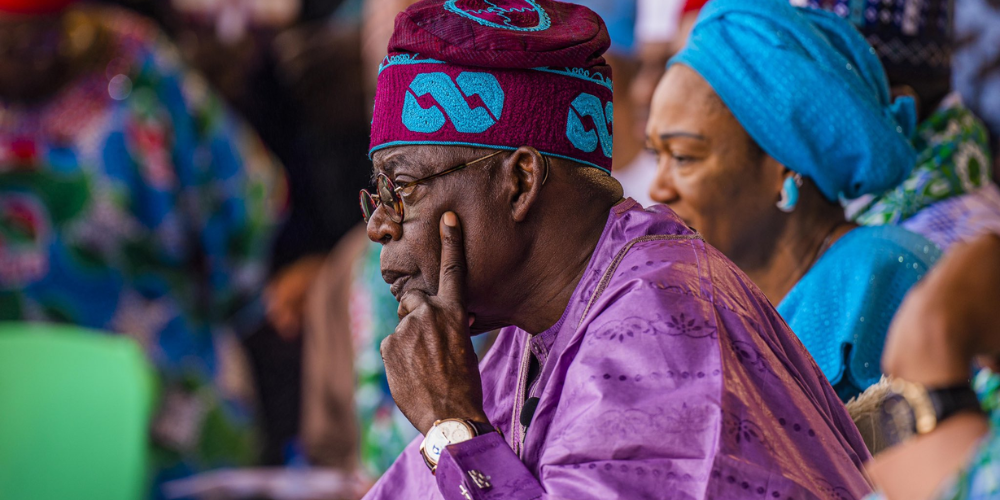
    [President-elect, Bola Tinubu]

    Opposition votes combined outnumber the winner by nearly 6 million. The importance of this should be evident. It sends a message that despite irregularities, the people can still have their say with their ballots. Abstaining from elections because they don’t go as planned is the equivalent of cutting your nose to spite your face. Remember, the matter is still in court. Whether you turn up or not, elections will proceed. 

    Higher voter turnout reduces the chances of rigging

    You’ve heard this one before, and it’s true. The more people turn out, the less likely the possibility of rigging elections. The saying that there’s strength in numbers carries more weight than you realise.

    The 2019 elections had a 35% voter turnout. This meant 65% of eligible voters didn’t vote. When INEC planned the election, it did so with the assumption that everyone would come out to vote. Millions of unused ballot papers are susceptible to manipulation when the majority don’t come out to vote.

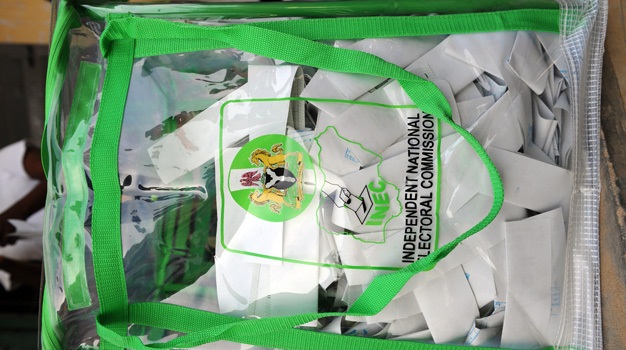
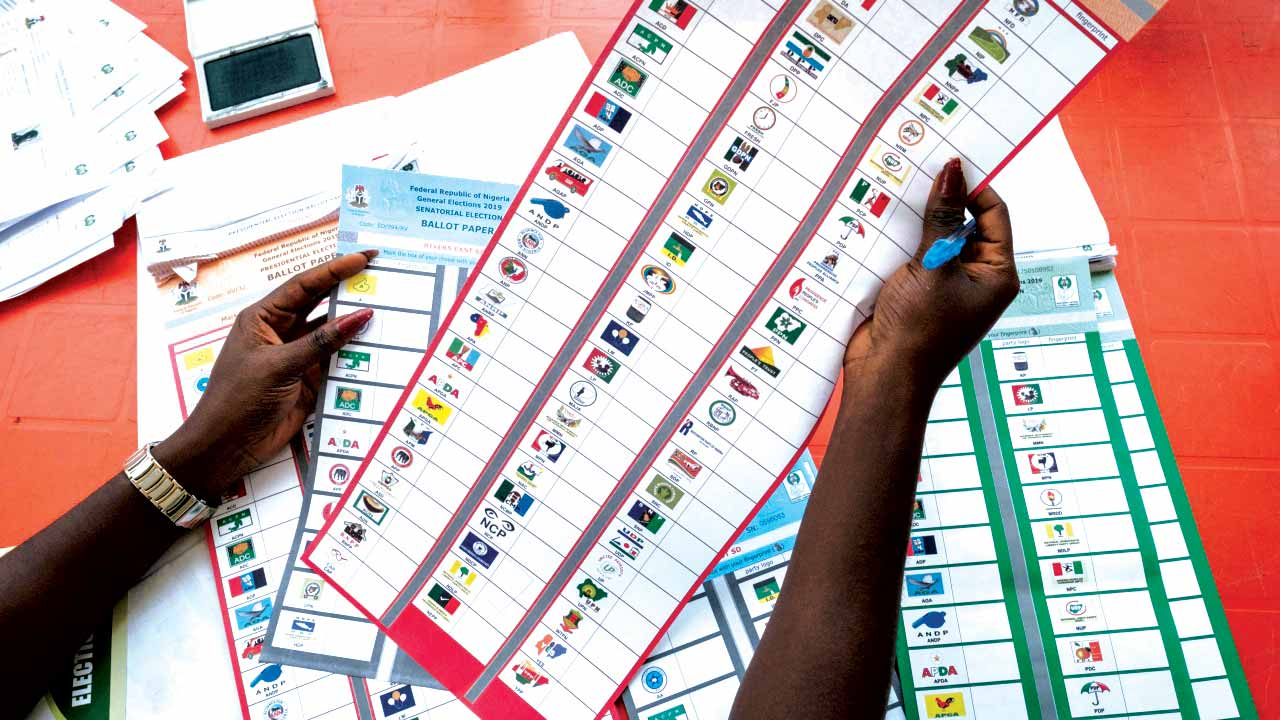
    [Ballot papers / Guardian Nigeria]

    If, on the other hand, voter turnout is in the high eighties or nineties, there’ll be fewer available ballots to swing the election in favour of any one candidate.

    Higher voter turnout is also a thug’s nightmare. A determined voter populace keeping watch at their polling unit will be tough to intimidate because how many people you fit beat? Besides, citizens are better informed and prepared based on how things played out in the February 25 election. So don’t be afraid. Go out and vote.

    State elections are more important than you realise

    All eyes were on the February 25 elections, and understandably too. It’s the top job, and you want whoever gets that seat to merit it because leading Nigeria today is not a job for the fainthearted. 

    However, it’s a mistake to think it all starts and ends with who gets to be president. Arguably, governorship elections are just as important. Your governor can wake up one morning and ban okadas rendering thousands of people jobless. Governors can increase tuition fees of state universities on a whim. They can decide that local government elections won’t hold.

    They are also, as we’ve seen now, very capable of using the powers of their office to sway elections in “interesting” ways. As citizens, it’s in your best interest to vote for candidates not based on ethnic considerations but also based on their character and competence. If a candidate has a history of owing salaries or pensions, for example, a vote on March 11 will make clear that such impunities will no longer be tolerated. Coming out to vote on March 11 will send a message that citizens won’t be dissuaded.

    We’re all learning lessons from the conduct of our elections, but the critical point is that regardless of everything, you should come out to vote on March 11. It’s hard, but it’s necessary. You won’t get this chance again for another four years.

  • What Happens After a Candidate Is Declared President?

    The journey to Nigeria’s presidency has been long, starting with the presidential primaries in May 2022

    On March 1, 2023, the Independent National Electoral Commission (INEC) declared Bola Tinubu (BAT) of the All Progressives Congress (APC) winner of a tumultuous electioneering process marred by pockets of violence across the country. 

    [Buhari and Tinubu shake hands / Twitter]

    The electioneering saw voter suppression, violence, allegations of vote buying, and lack of transparency, among other failings.

    While many young Nigerians are still absorbing the outcome of this news, it might be helpful to understand what the coming days will look like for Nigerians and the president-elect.

    The transition committee

    On February 14, the Secretary to the Government of the Federation (SGF), Boss Mustapha, unveiled the presidential transition committee. This followed an executive order signed on February 7 to facilitate and manage the presidential transition.

    This committee is responsible for facilitating the handover process. They also provide security briefings and set up personnel for the president-elect and his transition team.

    Lawsuits

    The opposition parties including the Labour Party (LP), the People’s Democratic Party (PDP) and the New Nigeria People’s Party (NNPP) have called for cancellation of the elections fraught with irregularities. It takes no genius to see that the election tribunal has a busy schedule ahead of it.

    The certificate of return

    INEC will issue a certificate of return today, March 1, to the APC flag bearers BAT and his running mate, Kashim Shettima. INEC chair Mahmood Yakubu declared earlier that the duo “satisfied the requirements of the law and are returned elected.” 

    Swearing in on May 29

    May 29 used to be Nigeria’s Democracy (and swearing-in) Day because it was when Nigeria returned to democracy in 1999 after years of military rule. In 2018, President Buhari changed Democracy Day to June 12 in honour of MKO Abiola, who was widely regarded as the annulled June 12, 1993, presidential election winner.

    Still, on May 29, 2023, a new president will be sworn in after being administered the oath of office by the chief justice of the federation. 

    This is officially the beginning of the new president’s tenure.

    [Buhari taking the oath of office in 2015 / Nigerian Observer]

    Change of guard

    The president is heavily protected by a set of guards across military and intelligence services attached to him. However, as the outgoing president leaves, the incoming gets fresh protection. 

    In 2015, it took a month after Buhari’s swearing-in to have a new set of bodyguards. According to a report by Vanguard, 150 bodyguards were rendered redundant as they were all posted out of Aso Villa following Buhari’s emergence.

    Setting up of ministerial cabinet

    Buhari earned the title “Baba go slow” for his slowness in naming his cabinet. He was inaugurated into office on May 29, 2015, but only had his ministerial cabinet ready by September. We hope the new president doesn’t take a leaf from Buhari’s playbook and, instead, hits the ground running.

    Now you know what happens after a winner is declared. 

    Thank you for following the Zikoko Citizen live coverage of the presidential election. Tune in to our web page and WhatsApp for coverage of the gubernatorial elections on March 11, and tips on how to hold the new President’s agbada through his tenure in office. 

  • How Is the INEC Chair Appointed?

    Up until this week, many Nigerians never knew the name Mahmood Yakubu. In the last few days, though, he has taken centre stage. Yakubu has been cast as a villain for what may go down yet as Nigeria’s most controversial election

    [INEC Chair, Mahmood Yakubu/Punch]

    If anyone doesn’t know, Mahmood Yakubu is the Independent National Electoral Commission (INEC) chairperson. The position of the INEC chair is sensitive, and it’s a requirement that whoever holds that office must be nonpartisan. Typically, and for reasons unclear, INEC chairs tend to be academics. 

    In a joint press conference on February 28, opposition parties called for the removal of Yakubu for conducting what they described as a “sham” election.

    One then begins to wonder how he got there in the first place. Here’s how.

    What the Constitution says about appointing the INEC chair

    The Nigerian Constitution guides how an INEC chair is appointed. We start with section 153, which provides the basis for such an appointment. Fourteen federal commissions and councils are backed by law under this section, including, among others, the national judicial council, the council of state and INEC. Make a note of the last two.

    Section 154 goes into detail on how the INEC chair is selected. Here’s what the Constitution says in subsection 3:

    “In exercising his powers to appoint a person as chairman or member of the Independent National Electoral Commission, National Judicial Council, the Federal Judicial Service Commission or the National Population Commission, the President shall consult the council of state.”

    Is that it?

    Not quite. After the president picks their nominee following consultations with the council of state, the president’s nominee is subjected to the Senate for screening. Only after they pass the screening are they confirmed for the position. The screening process can be tough as it often requires bi-partisan support for nominees to scale through. 

    This is usually the case if the ruling parties and opposition have equal representation. You want to make sure whoever you’re picking has no political allegiances. Former INEC chair, Attahiru Jega, faced tough scrutiny before securing the position.

    Remember, the president has the power to appoint the INEC chair, but only after consulting with the council of state — before the Senate confirms. So who makes up the council of state?

    Council of state

    The council of state is an organ of the government whose role is to act in an advisory capacity to the executive, that is, the presidency. It comprises the president, who is the chair, the vice president who is vice-chair, former presidents and heads of state, senate president, speaker of the house of representatives, minister of justice, attorney general of the federation and all state governors.

    The whole house. But remember, the president is the chair of this council, so their say is final.

    Should the president have such powers?

    It’s clear now that being president of Nigeria is a big deal. This explains why 18 people are vying for a seat that can only take one person.

    [Seat of the president. The Cable]

    That said, there have been debates in the past on whether the president should hold the power to appoint the INEC chair. The chief argument against it is that INEC, by definition, should be independent. It is, therefore, unfair if the president sets the chair of this commission, especially when they can still contest. It’s like a football team getting to pick the referee that officiates their match.

    Then again, a counter-argument was made in 2015 when Attahiru Jega, the INEC chair handpicked by President Goodluck Jonathan, oversaw the election that kicked Jonathan out of office. 

    Ultimately, it comes down to the president’s will and generosity in allowing the INEC chair to perform their duties without undue interference or pressure. As the Nigerian Constitution allows, the president reserves the right to appoint or replace the INEC chair as they see fit.

  • Key Points to Note From INEC’s List of Polling Unit Agents

     [countdown date=”Feb 25, 2023 7:00:00″]

    We’re four days away from the 2023 presidential election, with as much anticipation as the Game of Thrones final season – hopefully it’s not as underwhelming. 

    On February 20, 2023, the Independent National Electoral Commission (INEC) released the list of polling unit and collation centre agents submitted by the political parties for the upcoming 2023 general elections.

    But before we go into the details of the list, who are polling unit agents?

    A polling agent is someone appointed by a candidate or political party to oversee the conduct of the polls on election day. This is important because it enhances the transparency and legitimacy of the electoral process. 

    So, what are the significant highlights of INEC’s polling unit agents list?

    There are 1,574,301 polling unit agents

    INEC revealed 18 political parties and over 1.5 million polling unit agents would participate in the upcoming 2023 elections. 

    Further breakdown of the list showed that the Peoples Democratic Party (PDP) had the highest number of polling unit agents at 176,588, followed by the All Progressives Congress (APC) at 176,223, the New Nigerian Peoples Party (NNPP) at 176,200 and the Labour Party (LP) with 134,874. The other 14 political parties have a combined total of 910,426 agents.

    68,057 collation agents will be present at the registration centres (area, ward, local government area and state)

    The report also showed that 68,057 collation agents would be at the registration centres. On further review, you’d see that the NNPP has the most collation agents at 9,604. They were closely followed by the APC with 9,581, the PDP at 9,539 and LP with 4,859 agents. 

    There will be 27 agents at the National collation centre

    The APC, LP and PDP have two agents each, the NNPP has one, and the other political parties have 20 agents.

    Kano has the highest number of polling unit agents

    Kano has the second-highest registered voters, with about 5 million voters. And it’s once again pulling great numbers as it has the highest number of polling unit agents with 145,393. Lagos, Rivers, Kaduna and Katsina are other states with high polling unit agents. 

    Hopefully, this election will turn out to be as free and fair as possible because the last thing Nigeria needs now is another unqualified leader not deserving of his political seat. 

  • Why There’ll Be No Elections in 240 Polling Units

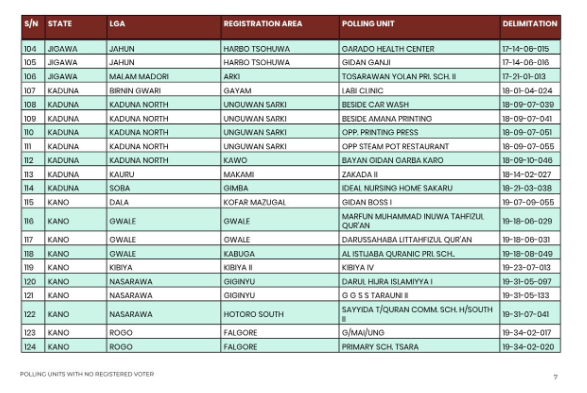
    On February 13, 2023, the Independent National Electoral Commission (INEC) announced that 240 polling units (PU) nationwide would be excluded from voting. However, don’t worry. It’s not for the usual reasons.

    The commission explained that there’d be no elections in these 240 PUs because between June 2021 and July 2022, when the Continuous Voter Registration (CVR) was on, no single voter chose those polling units as their preferred voting point. There was also no transfer to these affected PUs.

    Which polling units are affected?

    The polling units cut across 28 states of the federation. INEC shared the complete list via its Twitter page. Here are a few screenshots of some of the excluded PUs.

    What else should I know?

    The INEC chairman Mahmood Yakubu explained that polling units increased in 2021 from 119,973 to 176,846, adding over 56,000 PUs to the existing number. This process is called delimitation

    In simple terms, this refers to the drawing of electoral boundaries by dividing them into wards and polling units. The last time such a thing happened was in 1996.

    The chairman also spoke on the mock accreditation exercise on February 4. He said the feedback INEC got from it was that many Nigerians weren’t aware of the location of their PUs. He promised that a phone number would be available soon for people to send texts to confirm the location of their PUs.

    INEC also said voters whose PUs have been changed would receive text messages from them.

    How can I locate my PU?

    If you’re a registered voter unsure where to vote, visit this link here. All you’ll be required to provide is your name, date of birth, and state and local government of registration. Oh, there’s a captcha test too, but that’s easy. Alternatively, you can locate your PU using your voter identification number (VIN). 

    A comprehensive list of PUS by name, code number and their locations by state, local government and registration area will be made available by INEC soon.

    Join the Citizen Situation Room and Helpline on WhatsApp today to get real-time gist and drama on the 2023 elections.

    You should also sign up for our Game of Votes newsletter. We help you make sense of news jargon and keep you up-to-date, especially with election news. Make the subscription of a lifetime here.

  • Should INEC and MC Oluomo Work Together?

    I bet the Independent National Electoral Commission (INEC) can’t wait for the elections to be over. The pressure on them has increased several notches with the elections less than three weeks away. From having to extend PVC collection deadlines more than once to allegations of misconduct with the use of BVAS and, recently, calls for the removal of one of its resident electoral commissioners (REC).

    But the last hasn’t been heard of controversies involving INEC. The latest that has tongues wagging is that the Lagos chapter of INEC might enter into a partnership with the notorious MC Oluomo. What could go wrong, eh?


    What’s the gist?

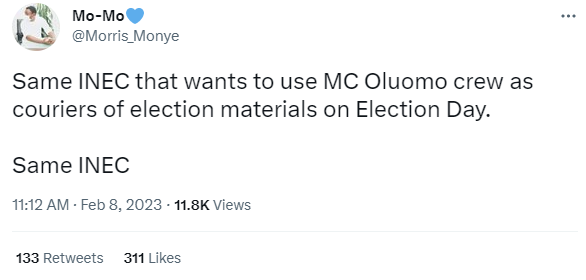
    On February 7, 2023, INEC held a consultative meeting at its Lagos office. The Lagos REC, Olusegun Agbaje, disclosed that it had no option but to work with Musiliu Akinsanya (aka MC Oluomo) to distribute election materials on election day. His reason was that the Lagos state government had banned road transport unions.

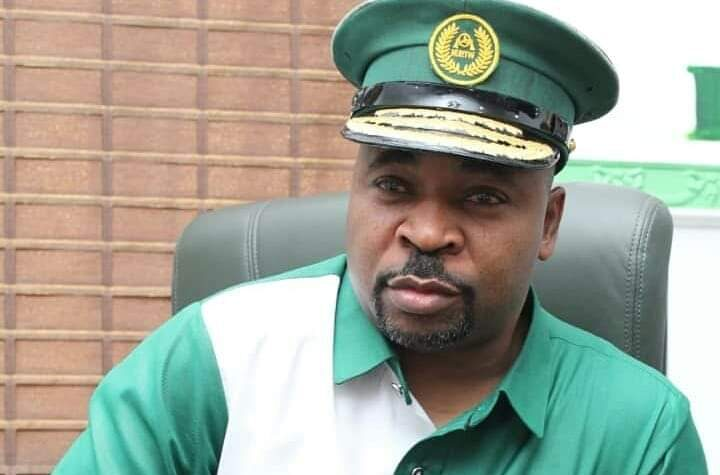
    [MC Oluomo. SocietyNow]

    These include the National Union of Road Transport Workers (NURTW) and the Road Transport Employers Association of Nigeria (RTEAN). As a result, he said he had no choice but to work with the Lagos park management system and the National Association of Road Transport Owners (NARTO), alleged to have links with MC Oluomo.

    Naturally, members of the opposition aren’t happy with the development.

    The People’s Democratic Party (PDP) has also kicked against it.

    Before we get into why there’s opposition to this move, what possible “benefits” could INEC get from working with the Oluomo-led parks management committee?

    Pros of working with transport workers 

    Caveat: this isn’t an endorsement 

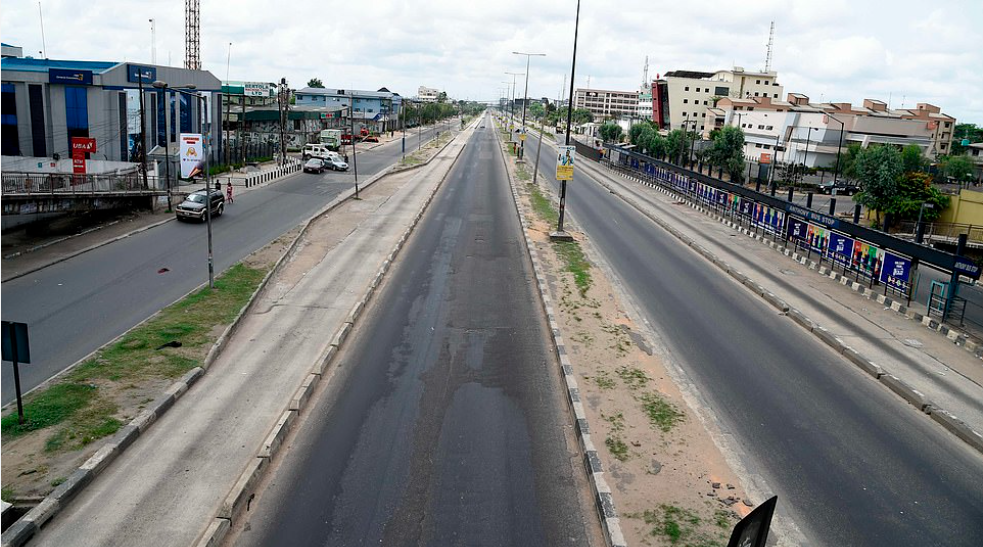
    For starters, movement is heavily limited on election day. The only vehicles permitted to ply public routes are security vehicles, observers, and those with special status to transport sensitive and non-sensitive election material. Here’s where transport workers come in.

    [Empty Lagos roads on election day. AFP]

    They belong to the transport union and understand the terrain. This means they can swiftly dispatch materials on election day faster than usual by taking shortcuts and avoiding troublesome areas. They are also practical, logistically speaking. Ride-hailing services are obviously out of the question, bikes are banned, and even if they weren’t, they wouldn’t be suitable. INEC doesn’t have enough vehicles to dispatch to over 13,000 polling units in Lagos. 

    Based on personal experience from the last election, what often happens is that INEC works with select members of the transport unions to move these materials. They assign buses to wards, and the drivers work with the supervisory presiding officers, who transfer several presiding officers to these buses. One bus could carry ad-hoc INEC officials to polling units within the same vicinity, saving time. 

    As a rule, the buses must be accompanied by security agents wherever they go. The same applies to reverse logistics after elections have been conducted and the materials are being transported for collation.

    Cons of working with transport workers

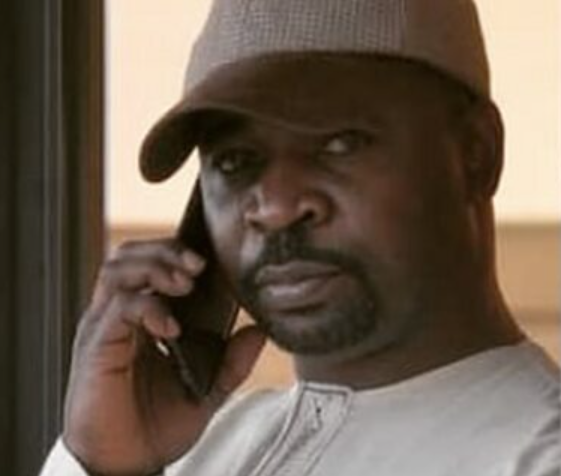
    Yo, it’s MC Oluomo. The MC Oluomo. Here’s a guy notorious for thuggery and has claimed to be mentored by the All Progressives Congress (APC) presidential candidate, Bola Ahmed Tinubu (BAT). 

    [Remember when Teni said she’d call MC Oluomo for your case?]

    The optics aren’t great for INEC, which is supposed to be an unbiased umpire. Although INEC has said it’s not dealing with him in particular, it’s not very reassuring and raises fears that trouble might be brewing ahead.

    INEC should address these concerns publicly because Lagos will be contested keenly in the coming election. Security agencies must remain on high alert to stem any potential threats of violence. This means INEC’s policy of attaching security agents to these vehicles must be followed strictly. The names of these drivers must be publicly available so they can be identified if they try anything funny.

    Haveyou signed up for our Game of Votes newsletter yet? We help you make sense of news jargon and keep you up-to-date, especially with election news. Make the subscription of a lifetime here.

  • In case you missed it, February 5, 2023 was the “final” deadline for collecting permanent voters cards (PVC) ahead of the general election. The Independent National Electoral Commission (INEC) twice extended this deadline from January 22 to January 29 and, most recently, February 5. 

    It’s unclear if there might be another extension. So far, INEC has been silent on whether there’d be another extension, but word on the street is not many Nigerians are thrilled about this.

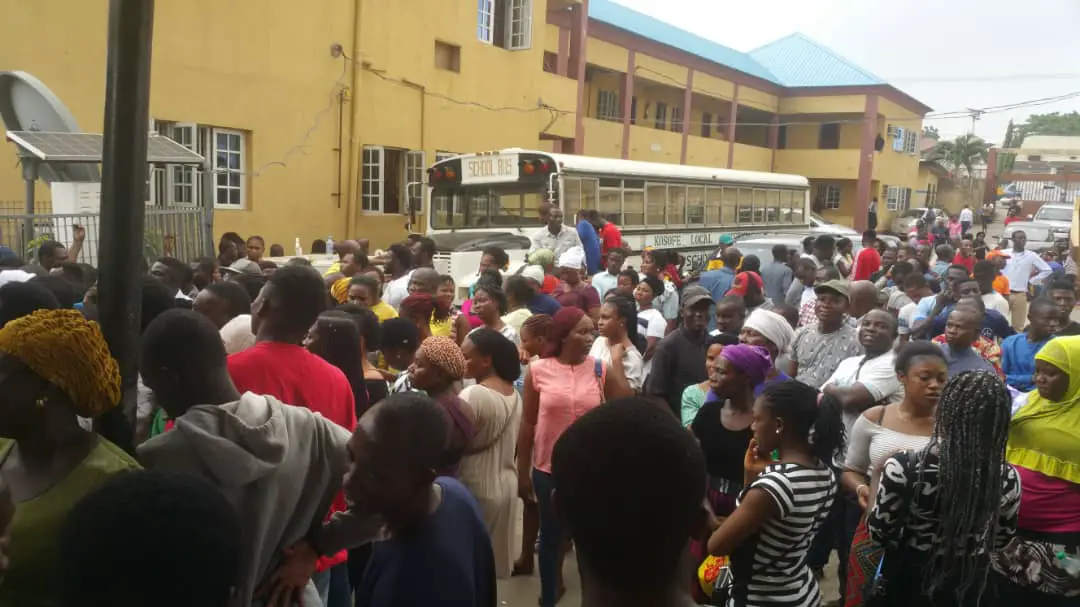
    [Crowd at a PVC collection centre in Abia state. The Sun]

    Citizen spoke to a couple of young Nigerians asking why they hadn’t gotten their PVCs, and we got some interesting responses ranging from apathy to frustration with the process. 

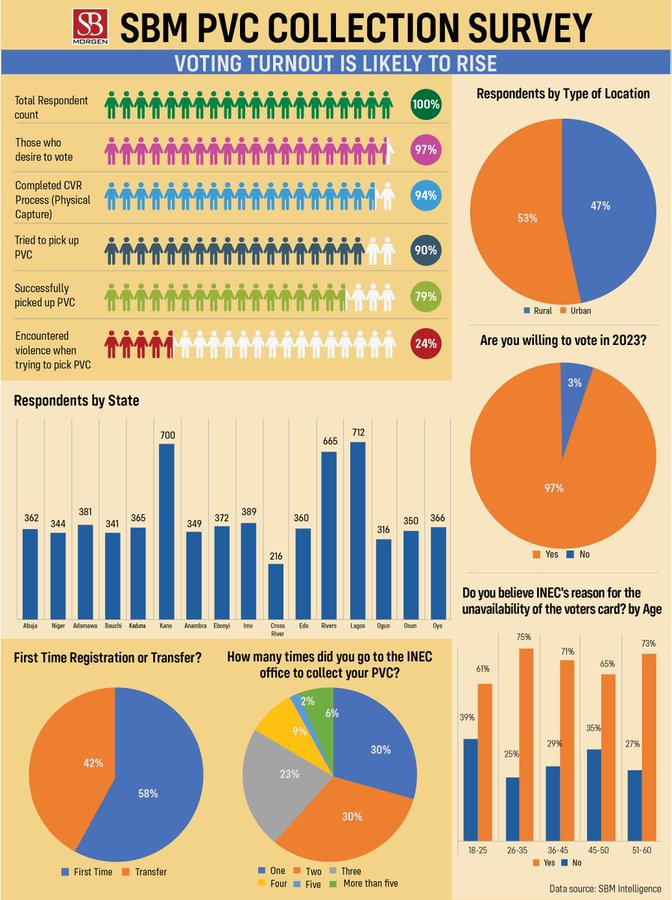
    [PVC collection survey summary. SBM Intelligence]

    Here’s what they said.

    Deborah*

    “I don’t have a personal voter’s card and did not register for one during the registration period. I suffer from an intense form of voter’s apathy, unconcerned about the electoral process and its likely outcomes. Perhaps, I hold a pessimistic attitude towards Nigerian elections, but I have no faith in the system to provide the leadership that Nigeria requires. 

    “I find all the candidates who are currently forerunners to be largely underwhelming. There’s the APC candidate with his failing health, there’s the PDP candidate clueless and capitalising on the goodwill from past positions held, and there’s the Labour Party’s candidate whose claim to fame is his appeal to millennial and Gen Z voters. 

    “If these are my options, I’d rather sit the elections out. Whatever the results — and it is one of the hardest to call in the history of elections in Nigeria —, we will live with the consequences. Above all, I pray for a peaceful transition of power. We deserve to catch a break.”

    Feyisayo

    “When the announcement first came out for PVC registration, I registered on my browser. I even asked around about how to go about it and in the beginning I was dedicated towards getting my PVC. I was in Akure when I started my registration. 

    “Unfortunately I wasn’t sure where I’d be during the election period, I had relocated to Lagos and had to think about the process involved with transferring my PVC or even registering again at another local government. I settled for Kosofe local government at the time. I took time off work to go there to register. 

    “The INEC officials had given me an exact date to come around and I thought it would be better organised because I had an appointment. But when I got there, I saw a crowd of people. I was like, ‘no way.’ The last time I did this was during NYSC and I’m not subjecting myself to this hassle without knowing anybody at INEC. That was basically what discouraged me. I don’t think I waited more than 30 minutes before I went back home.

    “Now though, I kinda regret it. I feel bad and maybe I should’ve waited for a few hours to get my PVC.”

    Vera

    “God knows I tried. I couldn’t get my PVC because it wasn’t found physically at the INEC office even though it reflected on INEC’s portal that it was available. Between November and February I went to their office in Oshodi ten times. Of course I feel bad I couldn’t get my PVC but I know I tried my best so my conscience is clean.”

    Tolu

    “After I finished my online registration I was supposed to go to the local government office on a given day. Unfortunately, I couldn’t go and I just lost track of the whole thing. The process seemed too complicated and wasn’t easy so I just didn’t bother anymore. I don’t feel anyhow about not getting my PVC. I don’t know if that’s the right answer but I just don’t feel anything.”

    Korede

    “I registered online early last year in Abeokuta. I went to the INEC office once to ask about my PVC. They told me it wasn’t ready. I asked a contact at their office to help me confirm the status of my PVC and he kept telling me it wasn’t ready. I was surprised, how can it not be ready? I’ve registered since. I feel bad that I wasn’t able to get my PVC but life goes on. We go still vote, anyhow.”

    * Respondent chose to remain anonymous

    Are you signed up for our Game of Votes newsletter yet? We help you make sense of news jargon and keep you up-to-date, especially with election news. Make the subscription of a lifetime here.

  • Will Adeleke Dance Out of Osun State Gov’t House?

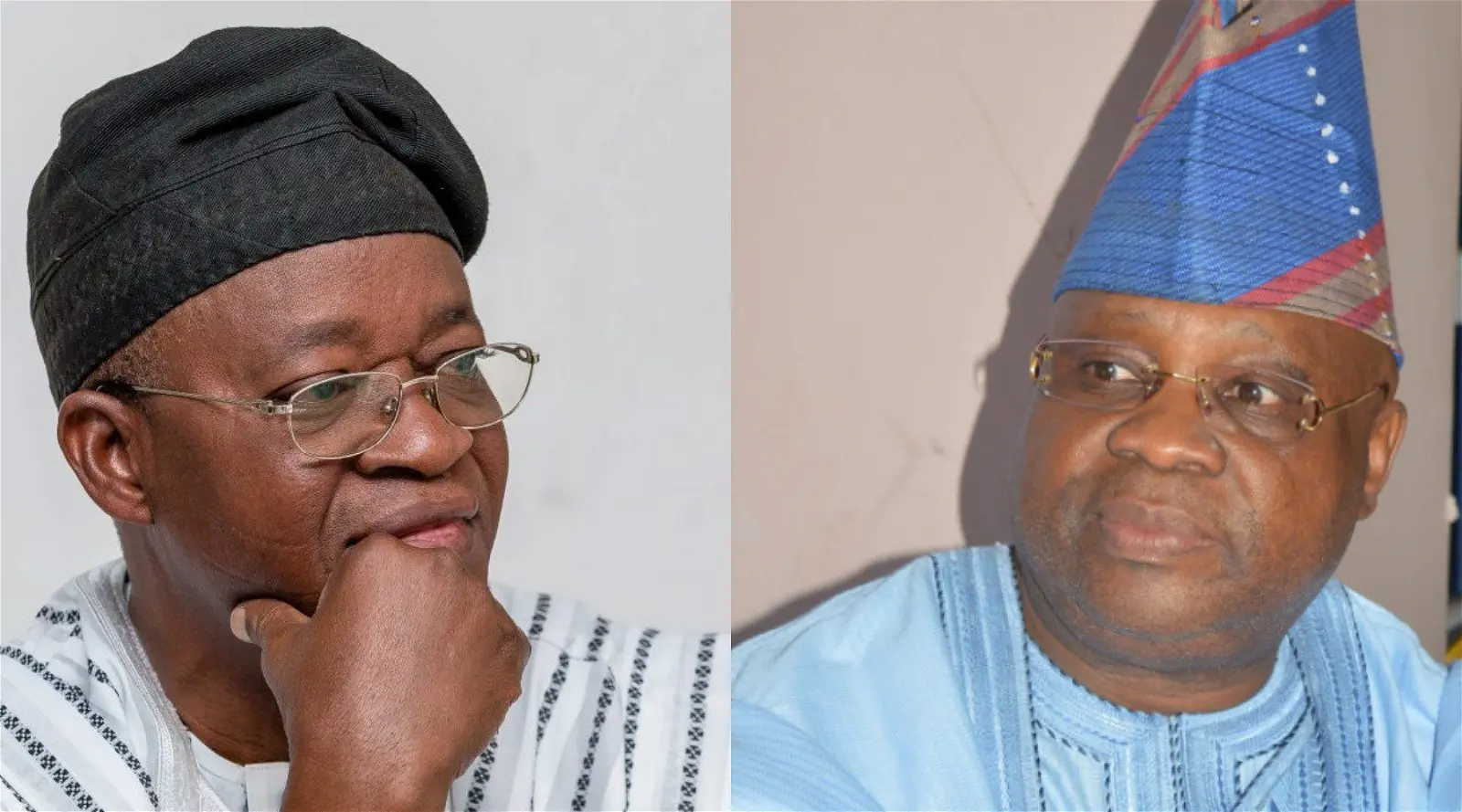
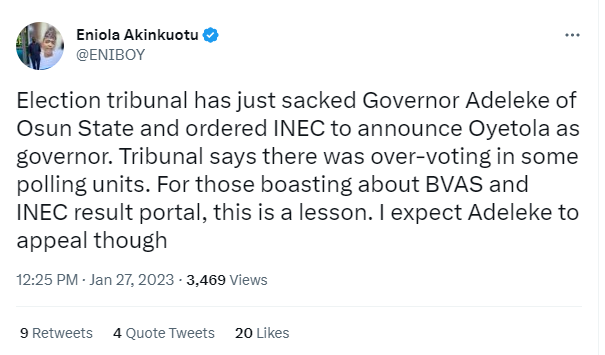
    Now’s not a good time for Davido, the People’s Democratic Party (PDP) and  supporters of Ademola Adeleke. An election tribunal sitting in Osun state on January 27, 2023, annulled the governorship election result of July 16, 2022, in which the Independent National Electoral Commission (INEC) subsequently declared Adeleke winner.

    The initial victory, which came over the incumbent All Progressives Congress (APC) governor, Gboyega Oyetola, saw Adeleke win with 403,371 votes to defeat Oyetola, who got 375,027 votes — a 3.5% margin of victory.

    However, the three-person tribunal led by Justice Tetsea Kume voted 2-1 to overturn the result.

    What was the ruling?

    The tribunal declared that INEC did not comply substantially with the Constitution and the provisions of the Electoral Act. The tribunal ruled that there was “overvoting” and declared that Oyetola won the election, polling 314,931 votes, while Adeleke got 290,266.

    Justice Kume ordered INEC to withdraw Adeleke’s certificate of return and issued another to Oyetola, who he declared the lawful winner.

    How did things play out in court?

    Emmanuel Ujiadughele, a source in court when the ruling was read said:

    “The tribunal ended its proceedings today after the petition was filed on August 5, 2022. There were five parties to that petition. The first and second petitioners were the APC and Gboyega Oyetola. The first, second and third respondents respectively were INEC, Ademola Adeleke and the PDP.

    “There were three grounds on which the APC challenged the election. The first was that Adeleke wasn’t qualified and that he forged the certificates he submitted to INEC when he contested in 2018. The tribunal ruled that although forgery was proven especially with his secondary school certificate issued by Muslim High School in Osun state — at a time when the state hadn’t been created— his other accompanying certificates exonerated him from the issue of forgery. The tribunal ruled in favour of the respondent.

    “The second however, was on grounds of overvoting. The third was on grounds that INEC didn’t conduct elections in compliance with the Electoral Act. The tribunal ruled that overvoting occurred as stated by the petitioner. It also said that both parties benefited from overvoting. The tribunal ruled that INEC’s actions amounted to tampering with official records by producing multiple results and manipulation of the Bimodal Voter Accreditation (BVAS) machines.

    “According to the tribunal, INEC’s defense was erroneous. This was in respect to the terms of the sections of relevant laws they quoted. APC had challenged the results in 749 polling units in 10 local governments of Osun state. 

    “After deliberations, the tribunal deducted from places where there was overvoting. Former governor Oyetola scored 314, 931 votes while Adeleke scored 290,266 votes. The tribunal ruled that Adeleke didn’t score enough votes to be declared the lawful winner of the election. It ordered INEC to withdraw the certificate of return issued to Adeleke.

    “There was a minority judgment which noted that the petitioners failed woefully to prove their case and ruled in favour of the respondent.”

    What does this mean?

    History appears to be repeating itself, and it’s two times unlucky for Adeleke against a familiar foe. In March 2019, a three-person tribunal declared Adeleke winner over Oyetola after a September 2018 governorship contest that Oyetola narrowly won. However, the victory was nullified by a court of appeal, and Oyetola was reinstated. 

    The silver lining for Adeleke is that he can challenge this ruling in court and hope for Oyetola’s good fortune. Still, this spells even bigger worries for INEC, who initially basked in the success of BVAS in conducting the election. A claim that overvoting still occurred is a reality check for INEC, with presidential elections less than a month away.

    Adeleke has called for calm. All’s not lost yet. Perhaps they could get a favourable ruling at a higher court and hopefully, look forward to a better time.


    We write the news and track the 2023 elections for citizens by citizens in our weekly newsletter, Game of Votes. Make the subscription of a lifetime here.

    Starting next week (January 31st, 2023)
  • Will Visually Impaired Nigerians Be Able to Vote in 2023?

    People with disabilities in Nigeria have especially tough lives. Many of them find it difficult to get good jobs, they suffer from discrimination and stigma and can’t access many public places or facilities like banks, transport buses, hospitals or supermarkets.

    Unfortunately, this exclusion spreads into civic activities like voting as many visually impaired Nigerians are unable to effectively exercise their civic rights. 

    What guidelines has the law made for blind and visually impaired voters?

    According to Section 56 of the Electoral Amendment Act 2015: “ (1) A voter who is blind or is otherwise unable to distinguish symbols or who suffers from any other physical disability may be accompanied into the polling unit by a person chosen by him and that person shall, after informing the Presiding Officer of the disability, be permitted to accompany the voter into the voting compartment and assist the voter to make his mark in accordance with the procedure prescribed by the Commission.”  

    Simply put, visually challenged people are allowed to bring someone to help them. But, this undermines the entire voting process because they could be cheated or influenced into voting for candidates they do not support.

    However, there is another provision of Section 56 of the Electoral Amendment Act 2015 which states: “The Commission may take reasonable steps to ensure voters with disabilities are assisted at the polling place by provision of suitable means of communication, such as Braille, large embossed print or electronic devices or sign language interpretation, or off-site voting in appropriate cases”. 

    So, has INEC taken any steps to make the voting process more inclusive?

    On May 3, 2018, during a campus outreach at the University of Abuja, the Chairman of the Independent National Electoral Commission (INEC), Mahmood Yakubu, announced that measures had been taken to ensure visually impaired people could vote unaided. These measures were:

    • Braille Ballot Guide: This envelope-like leaflet, would help voters identify the names of all the political parties immediately a ballot paper is inserted into it. 
    • Magnifying glasses for persons with albinism.

    Was this effective in the 2019 elections?

    When these measures were put in place for the 2019 elections, many visually impaired people were happy at the long-awaited inclusiveness and at the chance to have 100 percent confidence in their votes. 

    Unfortunately, their hopes were dashed as many of them reported that the INEC officials themselves were confused when they asked for a ballot guide. Some officials said they didn’t know what a ballot guide was while others said it wasn’t available in the polling unit. 

    Visually impaired vote elections inclusiveness INEC

    It’s almost like the talk of inclusiveness had been a fool’s dream. So, once again, voters with visual impairment may rely on the help of others to cast their vote. 

    Consequences of the lack of inclusivity 

    Voter apathy

    One of the issues facing our electoral system today is voter apathy and this time, INEC might be the one encouraging this. Many visually impaired voters are getting tired of a system that isn’t considerate of their situation. As a result, many of them have sworn to not vote again till a lasting solution is found. 

    Visually impaired vote elections inclusiveness INEC

    Political candidates are at a disadvantage

    Statistics show that there are about 7 million visually impaired people in Nigeria today with a significant fraction being adults of voting age whose votes can be the determining factor to push a candidate to victory. However, if the right medium isn’t provided for them to carry out their civic duty, we shouldn’t really call the elections a free and fair one.

    Although INEC has promised again that people with disabilities would be able to vote in the upcoming general elections without issues it’s difficult to take their word for it after the 2019 disappointment. 

    Are you signed up to our Game of Votes newsletter yet? We help you make sense of news jargon and keep you up-to-date especially with election news. Make the subscription of a lifetime here

  • Why a Presidential Candidate Can Be Disqualified in Nigeria

    It’s one month until the presidential election. Almost everyone’s giddy about the prospect of choosing Nigeria’s next President. 

    So it’s fascinating to learn that the two leading parties, the All Progressives Congress (APC) and the People’s Democratic Party (PDP), have commenced court proceedings seeking the disqualification of their opposing principals. 

    This led us to ask, what needs to happen for a candidate to be disqualified from contesting for president? But, before we answer that, let’s see if something like this has happened.

    Is this the first time this is happening?

    No. In the lead-up to the 2015 presidential election, the current president Muhammadu Buhari was at the centre of a certificate scandal

    Section 131 of the Nigerian Constitution covers the qualifications for becoming President

    Subsection (d) reads, “A person shall be qualified to the office of President if he has been educated up to at least school certificate level or its equivalent.” The problem was, despite Buhari’s claim at the time that his school leaving certificate (WAEC) was with the military, they initially denied having it. After much back and forth, Buhari’s academic records were released to the public. However, their authenticity remains an open question.

    What are eligibility requirements to become president?

    The essential requirement needed to be President, not stated in the Constitution or the Electoral Act is money. Lots of it.

    Beyond being a joyful spender, section 131 of the Constitution provides four personal requirements, namely;

    1. You must be a Nigerian citizen by birth
    2. You must be at least 40 years old
    3. You must belong in a political party and sponsored to the office of the President
    4. You must be educated up to at least school certificate level or its equivalent

    So what needs to happen to be disqualified from becoming president?

    Section 137 of the Constitution provides grounds for disqualification to the office of President. Unlike the qualification requirements, this one’s a longer list. A person shall not be qualified for office of the president if they;

    1. Have dual citizenship, although this is subject to the provisions of Section 28 of the Constitution.
    2. Served two terms as President already which excludes Buhari and former president Olusegun Obasanjo.
    3. Have been declared to be a lunatic or of unsound mind by any law in Nigeria. Sounds fair. Nigeria’s hard enough as it is and we don’t want to worsen things by electing a mentally unfit person.
    4. Are under a death sentence, or sentenced to prison for fraud. 
    5. Are convicted of fraud or dishonesty less than ten years before the election date.
    6. Have been declared bankrupt. Because someone who can’t manage their own affairs shouldn’t be trusted to manage that of a country.
    7. Haven’t resigned from any public office at least 30 days before the election.
    8. Belong in a secret society. Because why?
    9. Have been indicted for embezzlement or fraud by a judicial commission or tribunal.
    10. Present a forged certificate to the Independent National Electoral Commission (INEC).

    How likely is it for anyone to be disqualified at this point?

    There have been allegations of corruption and forgery levelled against the top two parties both within and outside. Aspirants have the right to challenge the results of primaries as provided in Section 29 of the Electoral Act.  

    However, INEC, as an umpire, has limits on how it can intervene. For example, in 2019, a federal high court in Abuja in a case between the Social Democratic Party (SDP) in Kogi State and INEC, ruled against INEC saying it had no power to disqualify a candidate that its party has cleared. 

    There’s good reason to believe that despite court cases springing up this late, the presidential candidates may still have to slug it out at the polls on February 25. 

    Ultimately, the people will pass judgment with their ballots.

    We write the news and track the 2023 elections for citizens by citizens in our weekly newsletter, Game of Votes. Make the subscription of a lifetime here.

  • What Did INEC Boss Say to Nigerians at Chatham House?

    It’s 38 days to the start of Nigeria’s 2023 elections. The Independent National Electoral Commission (INEC) has been involved in a lot of recent troubles. This includes the attack on seven INEC offices in the last four months, the near removal of Mahmood Yakubu as INEC chairman, amongst others.

    This is why Yakubu decided to use his Chatham House outing on January 17, 2023, to reassure citizens of the commission’s credibility. He also gave some updates regarding the 2023 elections and future laws. Here are some of them:

    The 2023 elections are for the youth

    Yakubu has confirmed that the winner of the 2023 elections would be determined by the youth. This is simply because they have something going for them this year — their high numbers.

    According to Yakubu, “the 2023 election is the election of young people because they have the numbers. Even the majority of PVCs collected are by young people. Out of the 93.4 million, 70.4 million registered voters are between the ages of 18 and 49.”

    This is a solid increase from the last four years. The total number of registered voters in 2019 was 84 million, with 51.1% of these voters as youths aged 18-35.

    The 2023 elections will hold despite reports of insecurity

    It is no longer news that Nigeria’s insecurity numbers keep rising at a worrisome level. 

    This is especially felt in regions such as the North-East with Boko Haram, North-West/North-Central with the onset of banditry, and in South eastern Nigeria with violence from the Indigenous People of Biafra (IPOB)

    However, Yakubu has assured Nigerians that the elections will hold no matter what. He also said that the commission would take the insecurity bull by the horns through the use of two tools:

    • Election Violence Mitigation and Advocacy Tool (EVMAT), is a research and diagnostic tool for predicting and reducing the risk of election violence before elections. 
    • The Election Risk Management Tool (ERM) tracks and reports general risks to elections.

    People who have been displaced by these conflicts are not left out. The INEC boss has plans to make registered Internally Displaced Person camps (IDP) camps into polling units. 

    INEC supports diaspora voting, but lawmakers are against it

    With several questions from the audience about diaspora voting, Yakubu reiterated that the commission is in full support of Nigerians in foreign countries being able to vote from wherever they are.

    However, the bill to include diaspora voting as part of Nigerian law was refused by lawmakers in the National House of Assembly (NASS) in March 2022. Therefore, Nigerians should continue to beg the NASS lawmakers to make a diaspora voting law.

    INEC may introduce body odour as a means of voter accreditation in future

    Yes, you read it right, body odour. The INEC boss is open to having machines that can detect individual body scents/aromas to verify genuine voters in polling units in future elections. It’s very similar to how dogs can identify house residents by smelling their scent.

    The use of cell phones and cameras would be banned to avoid vote buying

    Dirty party agents will have a tough time with vote-buying this year, as Yakubu has mentioned that voters will be prohibited from using cell phones and cameras in voting cubicles.

    This is because of the recent “mark, snap, and show” tactic. Here, a voter will go into the voter cubicles, mark the ballot and snap it with their phones for later payment by the party agent.

    Every voter in the queue before 2:30 pm will vote

    Previous experiences in past elections show that there are instances where voting closed for the day in the evenings. This is to the dismay of voters who had not yet cast their votes.

    Yakubu assured Nigerians that as long as a voter shows up at the polling unit between 8:30 am and  2:30 pm and is in the queue, they’d be allowed to cast their vote. Even if it takes all night to do it.

    He also mentioned that this usually happened due to the separation of voter accreditation and the casting of votes. 

    To counter this, there will be simultaneous voter accreditation and ballot casting. This is so that you, the voter, can attend to any other business at hand.

    We write the news and track the 2023 elections for citizens, by citizens in our weekly newsletter, Game of Votes. Make the subscription of a lifetime here.

  • Could A Party Alliance Be Tinubu’s Last Card?

    This is Zikoko Citizen’s Game of Votes weekly dispatch that helps you dig into all the good, bad, and extremely bizarre stuff happening in Nigeria and why they’re important to you.

    Subscribe now to get the newsletter in your email inbox at 8 am every Friday instead of three days later. Don’t be LASTMA

    Doyin Okupe Resignation Sanwo-olu Meffy

    In the popular Game of Thrones series, power was obtained and kept through alliances. And regardless of the lies, betrayals and deaths, people did everything to maintain these alliances because of the benefits attached to them. We can easily say Nigeria’s political sphere is a game of thrones. 

    For 16 years, the People’s Democratic Party (PDP) dominated the political scene; until, in 2013 the major opposition parties: the Action Congress of Nigeria (ACN), the All Nigeria Peoples Party (ANPP), the Congress for Progressive Change (CPC) and a faction of the All Progressives Grand Alliance (APGA), assembled to form the All Progressives Congress (APC).

    Tinubu Alliance Brymo INEC

    Bola Ahmed Tinubu (BAT) –the Presidential candidate of the APC for the 2023 elections– was one of the brains behind this merger. To ensure his victory at the 2023 polls, he is again rumoured to be seeking an alliance with other parties. Tinubu’s presidential campaign can be described as “interesting”. 

    Although he has repeatedly proclaimed himself as Nigeria’s long-awaited saviour, some team members aren’t turning a blind eye to the many holes in his campaign. For instance, the absence of some APC members from his campaign and lack of endorsement from APC chieftains. So, to boost his chances, they plan to form alliances with smaller parties. 

    Some political parties, such as the African Action Alliance (AAA) and the All Progressives Grand Alliance (APGA), have said a big God forbid to the possibility of such an alliance. 

    However, a faction of the Social Democratic Party (SDP) is more than ready to accept Bola Tinubu with open arms. 

    Tinubu Alliance Brymo INEC

    I wonder how their presidential candidate, Prince Adewole Adebayo, feels about this.

    What Else Happened This Week?

    The Cancel Train Is Here For Brymo

    The election season is known to bring out the absolute worst in people, and sadly, the Nigerian singer Brymo finally let his intrusive thoughts win. 

    Brymo, over the years, has made himself known for more than just the music. From showing us how well he can rock a g-string to self-proclaiming himself “Nigeria’s artiste of the decade”. Unfortunately, over the past few days, his actions have left a bitter taste in many people’s mouths. 

    Brymo kicked off this year by claiming Igbo people aren’t ripe for the presidency, and against better judgement, he is yet to refute this statement. Instead, he has continued what seems to be an endless rant justifying his views, even going as far as cussing the entire tribe out.  

    Tinubu Alliance Brymo INEC

    Many people, including celebrities like Paul Okoye, have called him out on his comments, but we’re in the cancel era and just talking isn’t enough. A petition has been filed to ensure he doesn’t win any award in the 2023 All Africa Award Music Award (AFRIMA), and so far, it has over 12,000 signatures. 

    Everyone is entitled to their choice of candidate, but we should draw the lines on bigotry. 

    Video of the week

    Question of the week

    With less than three weeks till the old naira notes become illegal, have you gotten a hold of the new banknotes yet?

    Ehen, one more thing…

    On January 10, 2023, the federal government dispelled all doubts and reassured us that the 2023 general elections would definitely be held. But here are some of the issues INEC’s been facing so far. 

  • INEC Has Extended PVC Collection to January 29. Here’s Why

    If you have registered for your Permanent Voter’s Card (PVC) but there has been no time to pick it up, we bring good tidings. The Independent National Electoral Commission (INEC) has pushed the deadline for PVC collection from January 22 to January 29, 2023! This was announced by the INEC National Commissioner, Festus Okoye, in a statement released on January 12, 2023.

    But why was the deadline extended? 

    INEC gave two specific reasons why they gave Nigerians more time to get their PVCs. They are:

    Massive Voter Turnout 

    Since January 6, the number of voters who have collected their PVCs has risen dramatically to as high as 100,000.

    The deadline extension is simply a pat on the head for the turnout of Nigerians so far in collecting their PVCs. It is also a gesture to encourage defaulters to pick theirs.

    To investigate extortion by officials

    Asides giving Nigerians a second chance, Okoye has decided to use the extension to play ‘Sherlock Holmes’. This is to fish out INEC officials guilty of demanding bribes from voters for PVC collection.

    According to Okoye, “the Commission is investigating allegations of extortion by officials at some of the collection centres and inducement by some unscrupulous voters to circumvent processes in order to obtain their PVCs. Those found culpable will face disciplinary action and/or prosecution.”

    INEC officials better watch their back now. Otherwise…

    How would the PVCs now be collected?

    Due to the deadline extension, a few things have changed about the timelines and locations for PVC collection:

    • PVC collection at the registration area (Ward) level is extended by one week from Monday 16th – Sunday 22nd January 2023.
    • PVC collection at the local government level will resume on Monday, 23rd – Sunday, 29th January 2023.

    How to pick up your PVC

    To make your PVC collection less stressful, we made a 4-step list of what you should do so you don’t have to:

    • Go to the state where you did your registration.
    • Locate the local government area (LGA), LGA code with the registration area name (RA Name and code), and the collection centre/ward. You can find the addresses of these wards here.
    • Show up at the collection centre with either your temporary voter card, photocopied driving license, photocopied National Identity Card or passport photo 
    • And voila! You now have your PVC to vote for your favourite candidate in February!

    Good luck!

    In our weekly newsletter, Game of Votes, we write the news and track the 2023 election coverage for citizens, by citizens. Make the subscription of a lifetime here.

  • Why INEC Wants to Cancel The 2023 General Elections

    If there’s one thing the Buhari administration has taught us over the years, it’s always to expect the worst possible outcome. Due to several reasons, such as the unreasonable high costs of living, insecurity and corruption in public offices, many Nigerians have feverishly waited for 2023 as they’d finally have a chance to hopefully kiss the current administration goodbye and bring a new one into power. 

    INEC 2023 elections

    This is why the recent statement on January 9, 2023, from the Independent National Electoral Commission (INEC) Chairman, Mahmood Yakubu, of the possibility that the 2023 general elections might be cancelled or postponed may push many people into a season of prayers, fasting or sacrifices in hopes that this doesn’t happen.

    INEC 2023 elections

    What’s their reason for possible cancellation/postponement?

    Insecurity

    Over the past years, INEC has faced different trials and tribulations. From dealing with arsonists targeting their offices to being unable to operate in over 40 local governments as they are under terrorist control

    INEC believes that this issue hinders the chances of a free and fair election and till a solution is found, the upcoming elections are at risk of being cancelled. 

    We’ve seen this before

    2011 

    Unfortunately, we can’t call this the first time elections have faced the threat of cancellation and postponement. On April 2, 2011, former INEC Chairman Attahiru Jega called off the voting process in some areas and postponed the elections altogether. His reason was the logistics issue they encountered, as some parts of the country couldn’t get electoral materials on time. 

    2015

    In 2015, INEC postponed the national elections (National Assembly and presidency) initially scheduled for February 14 and 28, 2015, to March 28, 2015, and the state elections to April 11, 2015. This was mainly due to security reasons as some parts of the country, particularly in the northeast, were being ravaged by Boko haram insurgents. So, INEC thought it was best to give security bodies time to secure the area well enough to hold elections.

    2019

    Sadly, 2019 wasn’t different from other election years as the elections were also postponed, but this time due to logistics issues caused by bad weather and arsonists’ attack on INEC offices.

    Although INEC has come out to say they are ready to deal with possible challenges, it’s not difficult to see that a pattern has developed through the years. Regardless, we can only hope that INEC finds a way to clear every hurdle in its way, as the people are ready now more than ever to exercise their electoral rights finally.

  • This Nigerian Voter Saw Shege During Her PVC Collection

    The Nigerian Voter is a series that seeks to understand the motivations that drive the voting decisions of Nigerians — why they vote, how they pick their candidates, why some have never voted, and their wildest stories around elections.

    The subject of today’s The Nigerian Voter is Motunrayo*, a customer service executive in her late twenties, residing in Lagos, Nigeria. She told us about her bad experience collecting her Permanent Voter’s Card (PVC) at the Eti-Osa local government ward and her expectations for the 2023 elections.

    Is this your first time registering for your PVC?

    No, it isn’t. I’ve had my PVC since I first registered in 2014. I know I had my voter’s card before the 2015 and 2019 elections.

    Did you vote in the 2015 and 2019 elections?

    I couldn’t vote in 2015 because I wasn’t in Uyo in Cross River state, where I first registered. However, I was back in Uyo in 2019, so I voted then. 

    Who did you vote for in 2019, and why?

    I voted for Atiku Abubakar of the People’s Democratic Party (PDP) and Peter Obi as vice president. 

    I voted for him then because I liked that Obi as his running mate. With him on the ballot, they seemed like the “lesser evil” out of all the candidates for me. Buhari was contesting for a second term, and comparing his military and democratic tenure combined, he didn’t make a good option for me as a president then. 

    However, I had heard many things about Peter Obi and his experience with the economy and his tenure as Anambra State governor, and thus, I had hope in him to change the country.

    With the PVC you did in 2022, was it a transfer or fresh registration?

    I transferred online because I remember moving from Akwa-Ibom to Lagos state. I had to change the location. 

    Can you remember your first PVC registration? How did it go?

    I remember seeing a huge number of people at the Independent National Electoral Commission (INEC) office. I spent nearly two days collecting my PVC. The first day, I left out of frustration because they were not attending to people fast enough. The second time I ensured I stayed until evening to collect my card. 

    I think the crowd was much because Akwa Ibom is a PDP state, and it is always more than enough sensitisation for people to vote. However, I only registered for my PVC because my dad literally chased me out of the house to do it, not because of any sensitisation. The experience wasn’t any different from now. 

    Can you remember this 2015 PVC collection experience in detail?

    I remember that at some point, they locked the gate because the crowd was so much. People that had connections to the INEC officials bribed their way through the gate. You could see a man and his entire family pass you by from behind and jump the queue, after waiting for hours. I remember coming as early as 6 am on the first day and still not being attended to at 1 pm. 

    I couldn’t even get angry because there were others that had been there for 3 days. There was a lot of harassment from officials, as they would try to beat you if you came too close to the day. 

    Funny enough, the INEC official that attended to me the next day was a really nice person. We even exchanged contacts and she assured me that she’d call when ready. 

    But aside from her, others were just rude and were requesting tips. I wouldn’t have given them, even if I had the money. 

    Did you have to do anything PVC related in 2019? 

    No, I didn’t have to. I just followed my friends to do theirs, and the experience for them wasn’t any different. In fact, one of my friends was so tired that she said she’d go home. But thankfully, she finally got to do her PVC registration in 2022.

    How would you describe your experience with PVC transfer and collection in 2022?

    For the transfer of location, the process was easier because it was online. 

    However, the collection was way more stressful because it was physical. I couldn’t believe that one still had to go through the same process in 2014 — queueing up for long hours and being harassed by security men. I was hoping the PVC collection would be easier for me, but it wasn’t. It turned out to be absolute hell. 

    At first, I thought all would be well because I was tracking the crowd volume in my LGA ward from home through real-time tweets on Twitter. A man then announced that his LGA (Eti-Osa) didn’t have any crowd, and that spurred me on to go and get my PVC almost immediately. 

    But to my surprise, there was a large crowd outside. We were then asked to write our names and polling unit codes on a sheet of paper and submit it. After writing, I couldn’t even find an official to submit to. They had this habit of going inside and staying in their offices for long hours before coming out. I don’t have an idea of what they were doing but when they eventually came out, it’d only be with 5-6 cards. People were angry and astonished at the slow rate at which the cards were shared. 

    You’d expect that Eti-Osa, as a popular local government area, would be more efficient, but I only spotted 6 INEC officials that day in an entire local government—

    Wait, just 6?!

    Yes, only six people in an entire local government. I know I saw only 3 of them with official INEC cards, while the rest were probably volunteers or ad-hoc staff.

    That’s crazy. What else happened? 

    I know many people had left by late afternoon because of frustration with the slow rate of distribution of cards. But what was even more frustrating was the fact that they always seemed to call people that had already gone. Like, move on to the next batch already. 

    At 2:30 pm, they announced that it was time for them to close, and everyone was pissed. I know a guy that has been there almost 9 times and his friend (who was also present) confirmed it. I couldn’t finish that day but I was able to collect mine at 10 am the next day with the help of an official. 

    For some reason, there were quite a number of people whose details were omitted and were directed under a tree where the officials would attend to them. Up until the time I left, those officials never came out. I don’t know if they ever did. There was a lady that broke down and cried just because her details were omitted. There and then, I knew that Nigerians were really ready to vote this time. 

    I can also remember the time they locked the gate on the first day after a long period of time. I remember people shouting and yelling, “Give us our cards.” There was a particular security official wearing a Tinubu-Shettima cap on his head (I believe he’s an All-Progressives Congress (APC) supporter). He stayed on the inside and was forcing people out of the gates and wasn’t very courteous. 

    When people started to complain, he went inside, brought out some wires, and started beating people with them, from the inside. The officials on his side of the gate were trying to restrain him and managed to control him after some time. I was amazed that he had the guts to do such a thing in an INEC office. 

    And he wasn’t the only one. With the amount of people wearing Tinubu merchandise, I had to start asking neighbors if I was truly in an INEC or APC office.

    The Eti-Osa local government is highly disorganized and they need to do better. I hope people can still collect their cards because there were so many that were yet to be collected. 

    So sorry you had to witness that. Would you say anything has changed about Nigeria’s electoral system from 2019 until now?

    I’d say the only significant one is the Bi-Modal Voter Accreditation System (BVAS). I hope the Nigerian politicians will let this work. If BVAS is allowed, there would be a decrease in electoral violence like ballot box snatching and all. There’d be more chances of a free and fair election, like what happened in Osun State. 

    I’d also say Peter Obi’s candidacy has changed the political atmosphere this season. Everyone is trying to act like an intellectual and showcase their plans. 

    What would you say is your least favourite part of the electoral process? 

    I hate the fact that they’ve to count the votes manually. I feel technology has come a long way for Nigeria to still use manual processes in vote collation or PVC registration. It should be very simple because most adults have their Bank Verification Numbers (BVNs) and National Identification Numbers (NIN) which they can use to vote. I’d appreciate it if we could move to online voting in the coming years and make voting more seamless with BVN and NIN. 

    Who do you want to vote for in 2023 and why? 

    I am voting for Peter Obi of the Labour Party (LP) because he just seems like the only candidate without a lot of controversies. One of his rivals said he built a particular state. How can one person do that, please? It was the capital city of Nigeria for such a long time before it was changed, so how did you build it? There are so many issues going on with the APC candidate.

    We also need to look at health as a factor for these candidates. Buhari has travelled out of the country so many times, he should be named the “Ajala of Africa”. We don’t need a repeat of that again. Healthwise, Tinubu is not sound enough. His health has deteriorated so he can’t make sensible statements. How would he represent us properly in global events? I feel he is an old man who needs to enjoy his old age and stop running for president. 

    For Atiku, I only voted for Atiku because Obi was on the ticket. But the fact that he has now joined forces with Ifeanyi Okowa is horrible. That’s another disaster waiting to happen. Okowa is one of the worst governors Nigeria has ever had. With the amount of money Delta State gets monthly, it is supposed to be a destination spot for tourism. But it has now become nothing but an eyesore to look at. If you can’t manage a state properly, how would you be trusted to manage a nation?

    With Atiku, he claims to be a unifier. This unifier meanwhile did a lot of fraudulent activities in Customs and illegally sold a lot of companies. And this was a Vice-President then, but how can we trust you with such a past? He definitely doesn’t get my vote for me. 

    With Obi, I love the fact that he is passionate about the issues affecting Nigerians. I love his clean track record as Governor of Anambra state, with no bribery or embezzlement of funds whatsoever. Obi made sure he did a lot of work on the rural roads in Anambra and he rehabilitated and currently visits the hospitals for medical checkups. Obi represents the common man, and that’s why I am rooting for him. 

    Do you know any candidates for the governorship or local government elections?

    I’d say Bankole Wellington for House of Representatives for the PDP and Gbadebo Rhodes-Vivour for Lagos State governor in the People’s Democratic Party (PDP).

    Wait, no one from Labour Party?

    Yes, to be honest. I’ve searched up on governorship, National Assembly and local government candidates from the party, and I don’t think they’ve so much of a strong chance to win this election. They don’t have much political work on their portfolio.

    What are the top three issues you’d love Obi to fix if he is president?

    Security is definitely foremost. I find it hard to travel because the roads are dangerous and flight tickets are expensive. This hurts because I’m someone that really loves to travel. 

    The second is the high rate of unemployment. I graduated in 2015, and I had to stay a year without a job since it was hard to get a job in government parastatals. There should be more opportunities for job creation, and I’d like Obi to fix that. 

    The third is the economy, especially with inflation. I’m so happy I’m a single woman without a family because only God knows how much I’d be paying for foodstuff then. 

    Have you mobilised people to vote for the 2023 elections?

    Yes, in my own small way. I called my cousins, who were at least 18 years old to vote and register for PVCs. I make noise about it all the time on social media. Even in my estate, I’ve earned the nickname of “Peter Obi” because there’s no conversation I’d be part of that I wouldn’t chip him in.  I always love to showcase my interest in politics and the 2023 elections wherever I go.

  • A happy new year to you all. While you’re adjusting to life after Detty December, now’s a good time as a registered Nigerian voter to make it your new year resolution to pick up your Permanent Voters Card (PVC), before January 22, 2023.

    What’s so special about that date? Well, that’s the last day set by the Independent National Electoral Commission (INEC) for anyone to get their PVCs, no extension. We did an explainer here on how to collect your PVC.

    That leaves you with just 18 days to get your PVC if you haven’t already. 

    Here are a few things to know.

    6.7 million PVCs are yet to be collected across 17 states.

    According to a report by Punch, 6.7 million PVCs are locked up in INEC safes across 17 states and the FCT. That’s a lot and INEC is begging you all to go and claim them. 

    On December 29, 2022, INEC disclosed that in Lagos State, 5,816,528 PVCs have been collected while 1,693,963 PVCs remain unclaimed. 

    In the same time period, Edo state had 661,783 voter cards uncollected. Ondo and Ekiti states had 300,000 and 205,127 unclaimed as at December 8. 

    Other states with a high number of unclaimed PVCs include Oyo, 700,000; Osun, 437,454; Kwara, 120,602; Ogun, 400,000; Cross River, 409,604; Kogi, 160,966; Imo, 300,000, Gombe, 231, 900; Anambra, 132,623; Niger,150,988 and over 200,000 in Adamawa. 

    Borno and Plateau States have had decent collection rates with only 80,117 and 49,000 PVCs unclaimed respectively.

    Ride hailing apps are offering 50% off on rides to and from PVC collection centres.

    If you’re in the urban centres of Lagos, Abuja and Port Harcourt, Uber is still in Detty December mood. 

    The ride hailing company is offering a 50 per cent discount on all rides to and from PVC collection centres in those locations. The promo commenced on December 15, 2022 and will continue for up to five weeks from that date. Rides are on weekdays, between 8 am and 5 pm.

    Between January 6 and January 15, PVCs can be picked up at RACs

    The way INEC has designed the collection process is to have PVCs picked up either in all the 774 INEC local government offices, or in the 8,809 registration area centres (RAC), aka wards, in the country. 

    From January 6 to January 15, 2023, PVCs will be available for collection at the RACs.  After then, pickup reverts to the LG offices till the deadline on January 22, 2023. A list of all RACs nationwide is available here

    So there really is no excuse for you. If you decide not to get your PVC because the process is “stressful”, then you’ve lost the right to complain if the wrong people take charge of Nigeria. Choose your stress wisely.

  • This Election Official Is Scared of Doing Her Job in 2023

    The Nigerian Voter is a series that seeks to understand the motivations that drive the voting decisions of Nigerians — why they vote, how they choose their candidates, why some have never voted, and their wildest stories around elections.

    This week’s subject of The Nigerian Voter is Stephanie*, a fashion designer in her late twenties who has served as an INEC official in the 2015 and 2019 elections. She shared her experiences on the job and what next year’s elections for her would be like.

    Why did you decide to become an election official? 

    The money — I didn’t do it for patriotism or anything of the sort. For both elections, I remember I was paid around ₦40,000 for the job, which is some nice spare change to have.

    How does one become an election official?

    There are people who work for INEC full-time, but for elections you can be trained to become an adhoc staff, which is temporary.

    What’s the process like?

    You have to register online and follow the procedures like providing your details including your name and phone number. They’d then send a text to let you know the dates for training which normally happens for a couple of days.

    Wow, sounds cool. So what were your responsibilities?

    I was in charge of voter accreditation for both elections. In the morning, people would come with their Permanent Voter’s Card (PVC) to authenticate their identity as valid voters. There’s a register of voters in each polling unit, and the smart card reader would detect if your name is in the register of that polling unit. The accreditation process usually stops around noon, just before voting starts.

    Are there other adhoc positions?

    I know we’re four workers per polling unit — there are people in charge of ballot boxes and thumbprinting. NYSC corps members are also used because they can easily retrieve their details. It’s been a while so I’ve forgotten some of the other roles.

    Any memorable experiences from working as an election official?

    I can’t say I’ve had experiences that stood out for me, but I remember the smart card reader was always faulty and there was hardly ever any power supply or good data connection for it. I also know there were always representatives from APC, PDP and other parties who make election workers feel comfortable with food and drinks.

    Can you elaborate on that?

    Not really. Their job was to make sure elections and ballot counting are fair. As a rule of the thumb, election officials count their ballots in everyone’s presence for transparency. I believe the party agents might have had ulterior motives like currying our favour towards their side, but I’m not a mind reader.

    Did you have any bad experiences?

    I can’t say I have, because all I needed to do was voter accreditation, and that’s usually in the mornings. I’d mention, though, that the places election officials sleep in are usually unguarded schools. You’d usually also have to sleep with one eye open, as you are sleeping with strangers and you need to safeguard your property. Fortunately for me, I’ve not suffered any bodily harm or loss of property. It’s mostly just discomfort from mosquitoes and sleeping on a chair or table.

    You certainly have a choice to come from home, but it’s usually not advisable because of the restricted movement during elections.

    Are you going to be an INEC official again in 2023? 

    I definitely won’t be, and that’s because I’m scared there’s going to be a lot of blood on the streets with the 2023 elections. Plus, I really just want to vote and do my part as a citizen this year.

    Why are you scared?

    I’ve seen a candidate who feels entitled to the presidential seat and would do everything possible to get there.

    Do you have anyone you’d like to vote for in 2023?

    For governorship and local government, I must confess I don’t know who to vote for yet. For the presidential election, it’s most likely Peter Obi of the Labour Party (LP).

    Why Obi for president?

    I’m just tired of power belonging only to the APC and PDP in this country. They’ve both not taken the country to the greener pastures they’ve frequently promised and the presence of a third force is quite unique. I’m willing to try them and see how it goes. I also believe we can vote Obi out if he doesn’t perform anyway because he doesn’t seem to be power drunk. Let’s make the APC and PDP know we can put anyone in charge, not them. That’s the purpose of a democracy.

    What problems do you want Nigeria’s next president to solve? 

    I would say insecurity. People have been dying from the attacks by Boko Haram and the Indigenous People of Biafra (IPOB). I’d like to travel to my nativeland and feel safe.

    Poverty is another thing. The inflation has gone so crazy with the prices of food going up daily. I’m so lucky I don’t have kids because the bills I currently shoulder would have tripled. Everything is not okay in general.

    Would you recommend that people should be election officials? 

    No, because I feel it may be risky. With agberos roaming around and causing mischief, it’s not the safest of jobs at all.

    Are you encouraging people to vote this year?

    Whenever I see anyone complain of the price hikes in transportation and food, I always remind them it was the incompetence of our present leaders that caused the negative change in things. Therefore, they should take their PVC and make a conscious decision to elect the right people into power in 2023.

  • What Are The Biggest Threats To The 2023 General Elections?

    Every four years, Nigerians make the life-changing decision of who gets into power. We trust the Independent National Electoral Commission (INEC) to ensure the voting process is as fair and seamless as possible. 

    However, there’s a lot of skepticism and tension in the country right now because we’re less than 100 days from the 2023 general elections, and INEC is still facing different trials and tribulations. 

    Arsonists

    Early on December 12, 2022, unknown gunmen attacked an INEC office in Owerri, Imo State using a firebomb. This happened eight days after a similar attack on another INEC office.

    Threats INEC 2023 general elections

    Since the 2019 general elections, INEC has been attacked over 59 times in 29 states, resulting in the loss of thousands of Permanent Voter Cards (PVCs) and ballot boxes and damage to buildings and office equipment. 

    Underage voters

    In 2018, pictures and videos of children voting in Kano’s local government elections flooded the internet. And although a panel was put in place to look into this incident, nothing came of of it. 

    Threats INEC 2023 general elections

    Since then, Professor Mahmood Yakubu has promised Nigerians a clean voter register, especially with the Automated Biometric Identification System (ABIS). 

    Unfortunately, this promise held no water because on November 17, 2022, despite the use of the ABIS, underage voters and multiple registrations were found on the preliminary voters’ register released by INEC for review.

    Threats INEC 2023 general elections

    This brings the credibility of INEC under question. Did the ABIS simply experience a malfunction, or is INEC itself complicit in our problem of electoral fraud?

    Insecurity

    A key issue confronting INEC now is the declining state of our security, particularly in the North. The Speaker of the Borno State House of Assembly recently said Boko Haram terrorists had overtaken two council areas in Borno. This implies that until something changes, the chances of voters’ registration or voting occurring in these areas are zero. 

    Although INEC has tried to solve this issue by relocating polling units and registration areas to safer locations, insecurity will continue to threaten a smooth 2023 election.

    Political Apathy

    INEC has repeatedly complained about political apathy, especially among Nigerian youths. Millions of PVCs are sitting in INEC offices uncollected. This directly translates to a low turnout of voters in certain areas, which completely undermines the efforts of INEC to carry out a fair and credible election. 

    Many people have called the upcoming 2023 general elections one of the most important elections in our history. Therefore, INEC and the government must work together to eliminate any threats or problems we might encounter. 

    Proper security measures must be put in place to protect voters and tackle the attacks on INEC offices. The voter’s register must be cleaned to avoid electoral malpractice, and voter education should be organised to encourage more participation by the people. 

  • The Youth Party Is Fighting INEC for Its Life And Winning

    When young Nigerians rallied together to form the Youth Party, it seemed to be the long-awaited third force to challenge the old order of politics. But suddenly, to most people, it disappeared into thin air after the 2019 general elections.

    However, what many don’t know is the Youth Party has been fighting for its survival and its main opp is the Independent National Electoral Commission (INEC).

    What actually happened?

    The Youth Party commenced the process for its registration in 2016 but couldn’t complete it till August 2018 due to INEC’s red tape. The late registration prevented the party from fully participating in the 2019 general elections.

    What happened next?

    With registration sorted, you’d think the Youth Party’s woes were finally over, but INEC had even more cards up its sleeves.

    After the general elections in 2019, INEC threatened to deregister parties that underperformed. In January 2020, the Youth Party filed a case against the commission at the Federal High Court, Abuja to prevent deregistration. But INEC went ahead anyway to deregister the party and dozens of others in February 2020.

    In October 2020, the court ruled in favour of the Youth Party and condemned INEC for enforcing deregistration while the case was in court. The commission appealed the decision at the Court of Appeal, but the Youth Party won there too in an unanimous judgement on May 11, 2021. The court ruled the party’s deregistration as “illegal, null and void”.

    Still unsatisfied, INEC  refused to list the party as registered on its website and appealed the judgement again at the Supreme Court. The continuous drag prevented the Youth Party from proper preparations for the 2023 general elections. 

    And at this point, we can’t help but wonder if INEC’s beef with the Youth Party is personal. 

    When the Supreme Court delivered judgement on December 2, 2022, the court handed the Youth Party another resounding victory that finally closed the chapter on this battle because there’s no court left to appeal to. 

    What does this mean for the Youth Party?

    Hopefully, with this judgement, INEC’s witch hunt of the Youth Party is finally over, and the party can field candidates for the 2023 general elections. 

  • We Need to Talk About Aisha Buhari

    This is Zikoko Citizen’s Game of Votes weekly dispatch that helps you dig into all the good, bad, and extremely bizarre stuff happening in Nigeria and why they’re important to you.

    Subscribe now to get the newsletter in your email inbox at 8 am every Friday instead of three days later. Don’t be LASTMA.

    We Need to Talk About Aisha Buhari

    If Aisha Buhari was a fruit, she’d be a strawberry — wonderful aesthetics on the outside, but you’re not always quite sure what you’ll get when you dig your teeth in. 

    As Nigeria’s first lady since 2015, she’s had a reign no one would be able to accurately describe as uneventful.

    We Need to Talk About Aisha Buhari

    Aisha Buhari’s first true moment in the spotlight came in 2016 when she criticised her husband’s running of the Nigerian government. In response, while standing next to Angela Merkel, one of the world’s most powerful women, Buhari said his wife belonged in the kitchen and the bedroom. 

    The episode painted the president as an ancestor from a forgotten ancient past and endeared many people to his wife — the public figure unafraid to speak truth to power in service of the people. But the first lady’s character development arc since that episode is the stuff of an Oscar-worthy film.

    In 2018, many Nigerians had questions when Aisha Buhari accused her aide of collecting ₦‎2.5 billion cash gifts on her behalf only to keep the loot for himself. Even her occasional anti-government rants started to look suspicious when some of them appeared to be fuelled by her frustrations about her brother’s political issues with her husband’s ruling party. And how can we forget the video clip of her fight with her in-laws in 2019, and another off-camera fight with another in-law that led to gunshots inside Aso Rock?

    We Need to Talk About Aisha Buhari

    The year is 2022, and Aisha Buhari’s capacity for attracting ugly news headlines is stronger than our national grid’s willpower. The first lady became a dinner table subject this week when she allegedly ordered the arrest of a university student, Aminu Muhammed, who used Twitter to call her a fat freeloader feeding on Nigeria’s wealth. I’m paraphrasing here.

    The first lady’s action proved counterproductive because now the internet is littered with a multitude of mean-spirited jokes at her expense. This barbaric overextension of state powers to deal with a personal slight that’s a civil case of alleged defamation is the kind of thing that tells you Nigerian politicians don’t exactly understand the times they live in. Have you met the internet, bro?

    We Need to Talk About Aisha Buhari

    What else happened this week?

    Protect INEC at all costs

    As the gatekeeper of what we call democracy in Nigeria, the success or failure of the Independent National Electoral Commission (INEC) is tied directly to the country’s future. So, seeing another INEC office go up in flames this week was a dreadful sight. The latest attack in Ebonyi is the fifth on an INEC local government area office in the past four months.

    Attacks on INEC facilities have become a trend in Nigeria and are designed to either damage the agency’s capacity to conduct elections or scare even more voters away from exercising their voting rights due to the threats of violence. 

    Election candidates may want to use their voices more to ensure this doesn’t become a more common sight.

    Have you seen this video?

    Question of the week

    Fuel scarcity was back in full force again this week. How have you been navigating the latest crisis?

    Click here to tweet your answer to @ZikokoCitizen on Twitter.

    Ehen, one more thing…

    Three Nigerian men caused an international incident when officials found them hiding on the rudder of a ship that travelled for 11 days from Nigeria to Spain.

    The country is hard, but things can always get worse if you don’t seek greener pastures with a clear plan.

  • How to Collect Your PVC Before the 2023 Elections

    Dear Nigerians, the moment you’ve been waiting for has finally arrived. The Independent National Electoral Commission (INEC) has officially announced the date for Permanent Voter’s Card (PVC) collection.

    When’s the collection? 

    INEC has given us exactly five weeks for PVC collection — from December 12, 2022 to January 22, 2023. 

    But Nigerians aren’t too pleased with the time period, as most feel the window is too short. 

    How’s it going to be collected? 

    Voters can collect their PVCs at registration centres between  December 6, 2022 and January 15, 2023. 

    After January 15, you’d have no choice but to go to an INEC local government office to pick up your PVC until January 22. Take it from us, you don’t want to wait until that time because the queues will be crazy. 

    What time can citizens pick up their PVCs?

    Citizens can pick up their PVCs between 9 a.m. and 3 p.m. every day, including Saturdays and Sundays.

    What happens if there’s an error?

    Despite the review process of the controversial voter register being closed, INEC has got you covered. Electoral officers will be available to assist registrants with complaints during the PVC collection at help desks.

    Drop the locations please

    Starting from December 12, 2022 to January 15, 2023, you can collect your PVCs at any of these registration area centres nationwide

    From January 15 to January 22, all PVCs would then be collected at INEC local government offices here.

    Remember to mark the dates in your calendars. Good luck!

  • How Does Campaign Fundraising Work in Nigeria?

    Everything in life comes with a price tag — especially elections in Nigeria. It’s very expensive to run election campaigns and you may have to beg people for money. It’s why crowdfunding campaigns are a common sight during elections. 

    The All Progressives’ Congress (APC) and the Labour Party (LP) recently launched donation websites for their loyal stans to send them urgent ₦‎2k. The APC has gone as far as setting a target of ₦5 billion for donations while the LP’s diaspora gang set a target of $150 million which is more than ₦66 billion. Those are some pretty hefty funds.

    Nigerians have already expressed their concerns over these parties’ crowdfunding tactics and accused the APC of using the app as a disguise to collect funds from state governors. Critics also accused the LP of the illegal use of the Nigerian diaspora to raise funds. 

    With all this going on, it makes one wonder — are there any laws around political crowdfunding during elections? Or are the complaints for nothing? Let’s find out.

    What does the law say about campaign funding?

    In February 2022, President Muhammadu Buhari signed the Electoral Act of 2022 which had quite a lot to say about campaign funding. Some of them are: 

    • Political parties aren’t allowed to hold any funds or keep funds sent to them from outside the country. Looks like a certain candidate needs to read that part carefully.
    • Political parties have to keep accurate receipts of their donations and make these available to INEC on request. The agency must also make these audited returns available for the public to inspect. 

    Now would be a good time to drop the fact that it’s been three years since the 2019 elections, yet none of the parties that participated have submitted their reports. Make of that what you will.

    • Parties must publish all excesses in at least two national newspapers within six months of the election. 

    Are there any limits?

    The new law has increased the total amount a presidential candidate can spend on their election campaign from ₦1 billion to ₦5 billion.


    However, the maximum donation an individual or organisation can make to a political party is pegged at ₦50 million. If it’s more than ₦50 million, the party has to disclose the source of the contribution to INEC. 


    What are the penalties for exceeding limits?

    Candidates who exceed the electoral act’s spending limits could be convicted and imprisoned for 12 months or pay a  fine of 1% of the limit amount. For a presidential candidate, this 1% would be ₦50 million.

    Donors who violate the law can also be imprisoned for nine months or pay a fine of up to ₦500,000 if found guilty. 

    However, these laws have merely been on paper and INEC has often struggled to impose penalties

  • INEC Should Do These Things to Clean the Voters Register

    In November 2022, we reported how the Independent National Electoral Commission (INEC) made the voters register available online for the first time ever for public reviews.  The review process shut down two weeks later on November 25, 2022.

    In that time, we also highlighted some of the issues observed in the register — underage voters, double registrations and suspicious delisting of voters. With the process concluded, we have some useful ideas on how INEC can sanitise the voters register.

    INEC needs to clean up its own house

    Underage voting remains a criminal offense in Nigeria. Yet, more worrying is that INEC officials allowed these infractions to take place at scale. Even by using the eye test, one can tell if someone is up to the required age of voting which is 18 Nigeria. The officials responsible for registering underaged voters are yet to be prosecuted even though the  mess goes all the way back to 2011. If INEC is really serious about cleaning the voters register, it needs to start by cleaning its own house. Charity begins at home.

    INEC should rely more on technology

    Technology doesn’t solve all problems — even football that introduced the Video Assistant Referee (VAR) to reduce refereeing errors still struggles with controversies. Yet, the benefits outweigh the challenges. For example, we know the extent of the discrepancies in the voters register only because INEC went digital.

    It’s a good step in the right direction, but the commission can do more. At least that’s what the Lawyers for Peter Obi, a group that supports the Labour Party (LP), seem to think. In a statement on December 1, 2022, they urged INEC to employ modern software and artificial intelligence (AI) to help in cleaning up the register. INEC already uses the Bimodal Voter Accreditation System (BVAS) to verify voters’ identity on election day. But it must also explore other options to stop underaged registeration fraud.

    Consolidate database with the NIMC database

    In September 2022, the National Identity Management Commission (NIMC) said over 89 million Nigerians had registered for their National Identity Number (NIN). That number is about four million shy of the 93 million voters that INEC has in its register. 

    It might be a good idea to consolidate those two databases into one. One, it would resolve fake identities. Two, it could also be helpful in purging names of deceased people who still exist in the voters register.

    Republish the voter register online more frequently

    Admittedly, this is an issue that goes beyond INEC and may have to be amended in the electoral act. Still, it makes sense for the voters register to be subjected to continuous scrutiny instead of the current two weeks. It improves transparency and extends the time for reviews, claims and objections for a register with over 93 million names.

  • Everything We Know About the Attack on INEC’s Office in Ebonyi

    One unfortunate feature of Nigerian elections that has refused to go away is violence in varying forms. It’s the kind of baggage no one wants, but everyone has to deal with it because some people still treat elections as do-or-die. 

    What’s happened now?

    On November 27, 2022, unknown people set fire to the office of the Independent National Electoral Commission (INEC) in Izzi Local Government Area of Ebonyi State. The incident happened around 10 a.m. 

    Did anyone get hurt?

    Fortunately, no one was hurt in the attack. But INEC lost some materials, including:

    • Unknown number of Permanent Voters’ Cards (PVC)
    • 340 ballot boxes
    • 130 voting cubicles
    • 14 electric power generators
    • Large water storage tanks
    • Office furniture

    We’ve seen this before

    On November 10, 2022, arsonists attacked INEC offices in Abeokuta South, Ogun State and Ede South, Osun State. You can’t help but notice the sad trend in these events. 

    Over the past three years, similar attacks have occurred in different parts of the country: Abia, Rivers, Anambra, and Imo. According to the INEC chairman, Mahmood Yakubu, about 50 INEC offices have been attacked by arsonists in 21 states.  

    What does this mean for the 2023 elections?

    The electoral process is sabotaged

    One of the critical things needed for a free and fair election is the availability of important things like PVCs and ballot boxes. The attack on the INEC office in Abeokuta South destroyed 65,699 uncollected PVCs. This creates a problem for INEC to reproduce new cards which we can’t say always works out. If those PVCs aren’t replaced it would deny some Nigerians their rights to vote. 

    Political apathy

    Attacks on INEC offices are designed to heighten tensions and keep voters away from polling units because they seem unsafe. Nigeria already has a big issue with low turnout of voters and apathy caused by threat of violence will only make it worse. After all, who wants to be an unwilling martyr? 

    Hopefully, the Nigerian security forces will take appropriate measures to secure INEC offices better and find a way to arrest the criminals. The fate of the country being decided at the polls depends on it.

  • Why You Should Care About the BVAS

    Just three months to the start of the 2023 elections, the National Chairman of the All Progressives Congress (APC), Senator Abdullahi Adamu, started a beef with the Independent National Electoral Commission (INEC). It wasn’t about electoral violence or vote buying but rather a new feature of the 2023 elections.

    The APC national chairman believes Nigeria isn’t ready to use the Bimodal Voter Accreditation System (BVAS) for elections because we have unresolved network and power supply issues

    But what exactly is the BVAS, why’s Adamu pressed about it and why should Nigerian voters care about its existence? 

    BVAS eliminates voter identity fraud

    The BVAS is an electronic device that exists primarily to authenticate the identity of voters. It has a fingerprint and facial detection sensor to limit voter fraud which is a big problem in Nigerian elections.  

    BVAS is an upgrade on the smart card reader which was used to authenticate voters with only their fingerprints in the 2015 and 2019 general elections. Unlike the smart card reader, BVAS also helps INEC officials to electronically upload election results from the polling units.

    The smart card reader is being phased out in 2023 [Source: Daily Post]

    What are the benefits?

    According to INEC, BVAS is the solution to all problems regarding electoral malpractices. In 2018, for instance, there were cases of Permanent Voter Cards (PVCs) being cloned and sold on Alibaba Express before the 2019 elections.

    With the BVAS, such occurrences would no longer be the case, as every voter can be accurately verified and accounted for. It also makes PVC selling unwise, as party agents can no longer rig an election with the use of fake or illegitimate PVCs.  

    But how efficient is this BVAS?

    BVAS may seem like the answer to INEC’s prayers, but it’s not flawless. The device needs a steady 4G data connection to run seamlessly and we all know how erratic data connection is in Nigeria.


    BVAS malfunction caused hitches during the Anambra governorship election in 2021. The glitches forced INEC to extend the voting time by an extra hour and a half. Using BVAS also caused challenges during the Federal Capital Territory (FCT) Area Council Election of February 12, 2022.

    Does BVAS help Nigeria in the long run?

    BVAS is a welcome addition to Nigeria’s electoral process as it eliminates voter identity fraud which is a big problem. But it still doesn’t completely address identity fraud issues as we recently saw with scores of underage voters on INEC’s register

    So, what if it verifies an illegitimate voter or allows a voter to cast his or her votes more than once? That defeats the purpose of the device to completely eliminate identity fraud.


  • Why INEC May Disobey Court Order to Resume PVC Registration

    On November 22, 2022, the Abuja division of the Federal High Court ordered the Independent National Electoral Commission (INEC) to resume the Continuous Voter Registration (CVR) exercise. The ruling was based on a lawsuit filed by four Nigerians who accused the commission of depriving Nigerians the right to register to vote ahead of the 2023 general elections. 

    Here’s what you need to know about this latest drama. 

    This isn’t the first time INEC is getting sued

    The Socio-Economic Rights and Accountability Project (SERAP) also sued INEC in June for planning to end registrations on June 30, 2022. INEC extended the deadline to July 31 to accommodate the case until the court ruled in the commission’s favour on July 13.

    In the ruling, the court noted that INEC was at liberty to pick a deadline of its choice as long as it’s not in conflict with the law.

    But what does the law say??

    The 2022 Electoral Act stipulates, “The registration of voters, updating and revision of the Register of Voters under this section shall stop not later than 90 days before any election.”

    In its defence in the SERAP case, INEC said the registration ended in June because it needed time to update and revise the register of voters before the 90-day deadline set by the law. That’s why the judge in that case ruled that INEC can set its own deadline as it deems fit to accommodate all other processes involved in voter registration.

    Since the registration ended in July, the commission has cleaned up the register of voters and even posted it online for public review.

    But the July court ruling didn’t stop other Nigerians from suing INEC over the same issue of ending the registration early. The new November 22, 2022 ruling is a result of one of such lawsuits.

    What will INEC do?

    Now that INEC has been served with a fresh court order to resume PVC registration, Nigerians are expecting to see the commission’s reaction. If INEC obeys the order, there are only four days left for Nigerians to register before the 90-day deadline in the Electoral Act is activated.

    We’re monitoring the situation closely and will spill the tea as soon as it drops!

  • Unless you’ve been living under a rock, you’d know that the 2023 presidential election is on course to be the tightest race in recent history. Forget the bluster from partisan supporters, no one knows for sure which way it’ll swing.

    At The Candidates town hall series, which we’ve been covering, the presidential candidate of the New Nigeria Peoples Party (NNPP), Rabiu Kwankwaso, on November 19, 2022, said he’s not a spoiler in the presidential race. 

    To substantiate his point, he mentioned a report by the Independent National Electoral Commission (INEC) that disclosed that it was printing 187 million ballot papers — twice the number of 93.5 million eligible voters, as it anticipated that the election might go into a runoff. 

    With this background, we’ve decided to break down what a runoff election entails, and what it could mean for voters.

    What is a runoff?

    A runoff describes a voting system that selects a winner after two rounds of voting. It happens when no candidate is able to meet the requirements needed to be president at the first round of balloting. The idea behind it is to ensure that whoever is elected president gets broad acceptance from across the country.

    What laws guide the conduct of a runoff in Nigeria?

    INEC is empowered by the Electoral Act 2022 (as amended) to conduct runoff elections in Nigeria. Section 134 of the Nigerian Constitution explains the conditions for this to occur. 

    To be elected as president, “A candidate for an election to the office of President shall be deemed to have been duly elected where, there being more than two candidates for the election –

    (a) he has the highest number of votes cast at the election;

    and

    (b) he has not less than one-quarter of the votes cast at the election of at least two-thirds of all the states in the Federation and the Federal Capital Territory (FCT), Abuja.”

    The summary of the above is that a candidate needs to get a simple majority of votes, and 25% of votes in 24 states to become president. When this doesn’t happen, we go into a runoff.

    ALSO READ: Do Opinion Polls Matter in Nigerian Presidential Elections?

    Who qualifies for a runoff?

    Section 134, subsection 3 defines who qualifies as, “(a) the candidate who scored the highest number of votes at any election held in accordance with the said subsection (2) of this section; and

    (b) one among the remaining candidates who has a majority of votes in the highest number of states, so however that where there are more than one candidate with majority of votes in the highest number of states, the candidate among them with the highest total of votes cast at the election shall be the second candidate for the election.”

    The summary here is that two candidates will go into the runoff. One is the candidate with the highest number of votes in the first round. The other candidate is the person among the rest that wins the most states. If more than one candidate in this group has won an equal number of states, then the tiebreaker is the candidate who won more votes.

    Could the 2023 election go into a runoff?

    There’s a possibility that a runoff might happen given the respective strengths of the four leading candidates. Different election polls have shown that they all possess strong support bases. INEC spokesman, Festus Okoye, said printing extra ballots has been a tradition of the commission since 1999.

    How soon after the main election can we expect a runoff?

    The Electoral Act gives INEC a maximum of 21 days to conduct a runoff. The timing is not unusual. INEC has said it’s a logistical nightmare printing another 93.5 million ballots within three weeks, hence the proactive move.

    What could it mean for voters?

    If you’re unlucky and one of your faves doesn’t make it to the next round, you may find yourself having to vote for a “lesser of two evils”. This often means that the candidates who scale through will do some serious mobilisation and have to reach out to fringe voters to gain their support. 

    Overall, this is very good for democracy. It leads to robust coalitions and helps keep candidates on their toes. For Nigeria with a history of poor leadership, a runoff, even though expensive, might be a small price to pay for good governance.

    ALSO READ: It’s 100 Days Until the 2023 Elections. What Has Happened?

  • It’s 100 Days Until the 2023 Elections. What Has Happened?

    Today, November 16, 2022, makes it exactly 100 days till the general elections scheduled for February 25, 2023. A lot has happened since campaigns officially kicked off on September 28, 2022. 

    Here are some interesting things that have happened so far, and what you can expect in the coming days.

    PDP flags off campaign with Obi chants

    Despite the many internal squabbles happening in the People’s Democratic Party (PDP), the party’s campaign took off in Uyo on October 10, 2022 and there were reports of a massive crowd. However, the standout moment came when PDP supporters were singing Obi kerenke chants at the rally. A truly forgettable moment for PDP’s Atiku Abubakar.

    Labour Party kicks off campaign with low turnout

    It was the turn of the Labour Party (LP) to kick-start its campaign which it did on October 29, 2022, in Nasarawa state. While the PDP had Obi supporters turn out in good numbers at its rally a few days earlier, they somehow managed to hide their faces where they were truly needed.

    Doyin Okupe, an LP spokesperson, said the state government employed tactics designed to frustrate its supporters, including scheduling an environmental sanitation on that day to limit movement. 

    He claimed that this was the first time in seven years that the state was doing such a thing, reducing its available supporters by 90 percent. Looks like there’s enough breakfast to go around.

    APC gets a hostile reception

    APC kicked off its campaign on November 15, 2022, in Plateau state. While other interesting things took place, there was also the unfortunate matter of boos and stones being reportedly hurled during the campaign.

    To be fair though, the APC in 2015 asked us to stone them if they fail to perform. So there’s that.

    What can we expect in the next 100 days?

    Things are bound to get very exciting. Expect funny soundbites, epic fails, more gaffes and mudslinging. 

    Meanwhile, the Independent National Electoral Commission (INEC) has said that while all that is happening in the background, it remains loyal to Nigerians. Already it has published its voter register online for Nigerians to make claims and objections. You can head over here to learn more.

     ALSO READ: Embarrassing Moments from 2023 Presidential Candidates so Far

  • Underage Voters and Other Highlights in INEC’s Voter Register

    Nearly four months after the Independent National Electoral Commission (INEC) ended its last batch of voter registrations, it has released the official register of confirmed voters. 

    I have taken a closer look at the register so you don’t have to. To help you, here are some of the major highlights, with context.  

    An explanation of Nigeria’s voter count (2019-till date)

    During the last election year (2019), Nigeria had 84 million voters.  The 2023 INEC voter register shows that the voter count has increased by 9,518,188, bringing the new count to  93.5 million

    It was also announced in October 2022 that 12.29 million voters had successfully completed their registration while 2.78 million voters were removed as ineligible voters. 

    Now that you know the basics, let’s look at what stood out for us in the register:

    Delisted southern voters

    When we looked at the register, the math was not ‘mathing’ for the South-South and South-East regions.

    In the South-South

    Bayelsa, a state with a small population of about 2.5 million people, had the highest number of deregistered voters in the country with 307,513 out of 444,652 new voters.

    That means 69.2 percent of the people in Bayelsa committed some “registration crimes” as stated by INEC. But this is a huge number for any state with such a small population. How true could this be?

    Rivers 

    With the population of Rivers State at 9.5million, almost half of the state was recorded as new voters with 3.5 million voters as of October 2022. But when INEC decided to clean up its data, 33 percent of that voter population was cut. 

    In the South-East

    Abia state has a population of 3.7 million people. According to INEC’s voters’ register, 72, 657 registrations were invalid out of 196,683 total registrations. 

    If there was a second position prize for deregistered voters in Nigeria, it would go to Ebonyi with 240,063 invalid registrations. Only  161,447 voters made the cut.

    In Enugu, 61,261 out of 243,656 were deregistered.

    Northern voters were hardly deregistered

    The North seems to have it great, as they have the lowest percentage of invalid voters

    In Zamfara, only 11.2 percent of voters were invalid out of 238,649 new voters. Overall, the total number of new voters in the north was 12.2 million, with 9.5 million valid voters and 2.7 invalid voters. 

    There were some errors with Northern voter registrations

    States like Jigawa had some clearly underage voters in the register with fake dates of birth, like this Hajara that was born in 1996 for example.

    There was also double counting with some of the voters, as some appeared on the list 3 times.

    What are people and INEC saying about this?

    On the streets, it seems like INEC and the people have two conflicting ideologies. 

    Public opinion isn’t having this, as they believe that there are conspiracies. Some don’t trust INEC to conduct a free and fair election.

    https://twitter.com/lumi_dee7/status/1591928511656300544?s=46&t=x8bJItLYYaOzfY5Vv_zLZA

    INEC has stood its ground, noting that the registration process was thorough as removals were due to double/multiple, underaged and fake registrations that failed to meet the rules of the last Continuous Voters Registration (CVR) exercise. 

    INEC chairman, Mahmood Yakubu, said: “At the end of the exercise, 12,298,944 Nigerians successfully completed the registration as new voters. All along, we have repeatedly assured Nigerians that our process of cleaning up the register is robust.”

    But would you see this after a “robust” voter registration exercise?

    The commissioner for information and voter education of INEC, Festus Okoye, backed up his buddy Yakubu to emphasize that the point of releasing the register online. This was for citizens to make their “claims and objections.” 

    How can the errors impact the 2023 elections?

    Errors such as double-counting give the voter the opportunity to vote twice for a candidate, which is considered electoral fraud under the 2022 Electoral Act

    Underage voting is also a crime, as it could lead to one region having more representation for a candidate than others. The law states that a person must be 18 and above before he/she is considered eligible for voting. Section 117 of the 2022 Electoral Act also gives a punishment of 12 months imprisonment or a minimum of N1 million for unqualified citizens who apply for registrations.

    What to do if you spot errors in the register

    When the name of a registered voter has been omitted or needs corrections, pick up the complaint forms at registration areas and Local Government Area (LGA)

    Wards

    To know your preferred LGA according to location, click the link here

  • PDP Wants INEC to Disqualify Tinubu and Here’s Why

    It has been rough days for the presidential candidate of the All Progressives Congress (APC), Bola Tinubu, aka BAT. Old allegations of his links to narcotics sprung up and forced his spokesman to go on TV to defend him. We wrote about that in our newsletter here

    While the BAT was still trying to get some breathing space, a documentary on his shady past was released, adding more fuel to the fire. Then the opposition party, the People’s Democratic Party (PDP), released a strongly worded press release urging Nigerians not to vote for him. 

    These are tough times for the BAT and he might decide to hibernate till the storm passes.

    What did the PDP say? 

    The PDP had a lot to say. The party accused the APC of “creating tension and inducing violence”. It said that the APC, having realized they have an ineligible candidate for 2023, is choosing violence to frustrate the conduct of the 2023 elections. 

    It went on to reference BAT’s forfeiture of funds over links to drug-related offenses in the United States. The PDP warned Nigerians that a vote for the APC will ultimately be voided and called on the Independent National Electoral Commission (INEC) to intervene.

    Why is this significant?

    The PDP cited section 137 (1d) of the Nigerian constitution which deals with grounds for disqualification. As pertaining to the BAT, they highlighted the following: 

    “A person shall not be qualified for election to the office of President if he is under a sentence of death imposed by any competent court of law or tribunal in Nigeria or a sentence of imprisonment or fine for any offence involving dishonesty or fraud (by whatever name called) or for any other offence, imposed on him by any court or tribunal or substituted by a competent authority for any other sentence imposed on him by such a court or tribunal.”

    The PDP is saying that the BAT’s forfeiture in the US constitutes a fine imposed on him by a court. In this case, the Northern District of Illinois and as such, is disqualified.

    How could this play out?

    There has already been a fake report attributed to INEC saying it would look into it. While INEC has come out to debunk it, there’s no denying that it is under immense pressure to do something as the umpire.

    On the other hand, BAT’s camp says there’s no case and that the PDP’s statement is just that — a press statement.

    It is unlikely that INEC disqualifies the BAT given his high-ranking status in the APC. So just like the last election, the PDP might take up the matter in court if the BAT wins.

    Whether things will escalate to that is a question that can only be answered by February 2023. 

    So sit tight, it’s a long hard ride ahead.

    ALSO READ: Five Big Moments from the Presidential Town Hall

  • INEC’s Voter Register is Now Online for the Next Two Weeks

    For the first time in the history of Nigerian elections, the Independent National Electoral Commission (INEC) has announced that it will be publishing its voter register online. If it isn’t obvious by now, that’s great news.

    INEC previously published hard copies of its voter register in its offices across the 774 local government areas (LGA) in Nigeria. You’d have had to physically go there to confirm that your details were correct. 

    Thankfully, that era is over.

    What led to the change?

    Continuous calls from individuals and even political parties urging the commission to make the switch to a digital and easily accessible register has been on for some time now. 

    The amended Electoral Act 2022 now includes this change. Because of this, INEC won’t only publish the register at its offices, it must now upload on its website.

    The lesson here is that exercising civic rights by applying pressure does pay off.

    How can I check my voter registration details?

    The online register is available for a two-week period starting from today, November 12, 2022 till November 25, 2022. Visit www.inecnigeria.org/display_register and follow the instructions.

    What else do you need to know?

    The new voter register has been cleaned up to account for double and invalid registrations. At the end of the continuous voter registration in July, 96.2 million Nigerians had been registered. After the cleanup, that number dropped to 93.5 million.

    The point of this exercise is to scrutinize the register for errors. If you notice something off about your details, note it instantly and lay a complaint at the INEC office in your LGA of registration. You’d be given a form where you can note down the things you’d like corrected.

    Remember, you have just two weeks. Good luck.

    ALSO READ: How You Can Work For INEC During the 2023 Elections

  • How Flooding May Affect the 2023 Elections

    In a little over 100 days from today, Nigerians will head to the polls to decide who their new president would be. And while it is campaign season now, it is easy to forget that Nigeria is caught in one of its worst flooding crises ever. 

    As at October 24, 2022, 612 lives had been lost, 3.2 million people directly affected, 123,807 houses totally damaged and over 392 thousand hectares of farmland destroyed. 

    The government’s response has sadly been largely inadequate. We hate to add to the piling list of things the flood has affected but can we talk about the pending impacts on the 2023 elections for a minute? 

    You should be worried about these things ahead of the elections: 

    20 INEC offices damaged by the flood

    The Independent National Electoral Commission (INEC), led by its chairman, Mahmood Yakubu, appeared recently before the House of Representatives. He disclosed that the floods had already destroyed at least 20 of its offices across the country.

    INEC office in Edo State [Image source: Eagle Online]

    He said, “We have office rent and residential rent. So many of our offices were attacked and some actually flooded after the recent floods. We have 20 offices in that situation. 

    “For others, we just have to look for a facility to rent. From Jigawa, there was a request for us to look for three offices, following the damage caused by flooding of the offices that we occupied.”

    Inaccessible road networks

    Last month, the Minister of Works and Housing, Babatunde Fashola, lamented that the full extent of the flood’s damage on road infrastructure cannot yet be known. He said it would have to recede before they could make any meaningful assessment.

    Flooding in Lokoja [Image source: NAN]

    Still, it’s not difficult to imagine how severe the damage is, with the floods having affected 34 out of 36 states. It is also unlikely that any large-scale repairs can take place between now and the 2023 elections. This could mean that some major road networks might remain in a bad state even when the flood abates. 

    This might discourage voters from traveling long distances to vote ahead of election day.

    Disconnected communities and difficulty in transporting election materials

    Flooded community in Nigeria [Image source: Abraham Achirga/UNICEF]

    Beyond major roads, the road networks in many remote communities in Nigeria may pose challenges. The INEC chairman has already voiced this concern. 

    At an event hosted by the Centre for Democracy and Development (CDD), he said one of the greatest problems it faces in the conduct of elections is poor transportation systems. This can hamper the distribution of election materials, create delays and affect the integrity of the elections.

    Displacement and disenfranchisement of voters

    While INEC promised in early September that three million Internally Displaced Persons (IDP) will be able to vote, the flooding emergency may make it difficult to live up to that promise. 

    Voters at an IDP camp in Borno [Image source NAN]

    Many more people have been displaced, with their polling units no longer accessible. Also, INEC has closed all registration for the 2023 election meaning that the newly displaced may unfortunately get disenfranchised.

    What can be done?

    For the electoral body, they’re in a tough position. Despite their best intentions, many people will find it difficult to vote. Unless a fast-tracked bill is passed by the national assembly making special allowance for newly displaced voters. 

    Also, the government needs to commit more to ensuring that more roads are fixed before 2023 to encourage higher voter turnouts than in 2019. And on the individual end, just try to stay alive. Only the living can vote.

    ALSO READ: 2.5 Million Nigerians Are Affected by 2022 Flooding Crisis

  • INEC Has a James Bond Plan for the 2023 Elections, Sort Of

    This is Zikoko Citizen’s Game of Votes weekly dispatch that helps you dig into all the good, bad, and extremely bizarre stuff happening in Nigeria and why they’re important to you.

    Subscribe now to get the newsletter in your email inbox at 8 am every Friday instead of three days later. Don’t be LASTMA.

    Anyone who envies the job of the Independent National Electoral Commission (INEC) is a bloody liar. Every four years, the commission coordinates a national election involving tens of millions of voters spread across 774 local government areas in Nigeria. 

    And considering the dire consequences of messing up an election, we’d say INEC’s job isn’t the easiest in the world. Some of us can’t even organise a house party without a guest peeing in the kitchen sink.

    INEC Has A James Bond Plan For The 2023 Elections, Sort Of

    [Image source: Shutterstock]

    With the scale of INEC’s task, it’s unsurprising that there are problems. For example, Nigerian elections have suffered from violent acts like ballot snatching and voter intimidation for as long as anyone remembers. 

    But another problem that has prominently hampered Nigerian elections is vote-buying. Party agents target vulnerable voters at the polls and pay them to vote for their candidates. 

    This culture cheapens the democratic process and boosts the victory chances of only the unworthy and desperate. But INEC has a solution for that vote-buying problem ahead of the 2023 elections: secret agents.

    INEC Has A James Bond Plan For The 2023 Elections, Sort Of

    [Image source: Zikoko Memes]

    One of INEC’s core strategies to clamp down on vote-buying is to unleash spies on polling units. These James Bond wannabes are plain-clothed security officers deployed to catch vote-buyers and sellers. But INEC won’t stop there. 

    The agency is also repositioning voting cubicles to make it easier for voters to cast secret ballots. This creates a trust issue between buyers and sellers as a vote-buyer can’t confirm that the seller is voting in the direction agreed between both parties. And if you’re thinking, “That’s what phone cameras are for, duh,” INEC also plans to forbid voters from taking their mobile phones into the voting cubicles.

    INEC Has A James Bond Plan For The 2023 Elections, Sort Of

    [Image source: Zikoko Memes]

    Vote-buying is a very serious problem for Nigeria’s democratic process. The nation’s laws already criminalise the buying and selling of votes with a maximum fine of ₦500,000, 12 months imprisonment or both. But this isn’t enough to deter politicians from buying the conscience of voters.

    However, INEC’s James Bond plan won’t be enough to limit vote-buying. As a voter on election day, when you see something at a polling booth, say something. Your future depends on it.

    What else happened this week?

    Ethiopia withdraws red carpet treatment for Nigerian travellers

    [Image source: Zikoko Memes]

    Nigerians must be crowned the eighth wonder of the world with all the shege that we use our eyes to see as citizens of Nigeria. This week, the Ethiopian government announced that Nigerians have to apply for a visa before they hop on a plane to visit their — let’s not forget — very war-torn country. Before this announcement, Nigerians could jump on that plane first and get a visa on arrival there.

    Ethiopia didn’t even dignify Nigeria with an explanation for why it made this decision, but the same restriction applies to 41 other countries mainly in Africa and South America. At least we can say it’s not only us, but this isn’t about just Ethiopia. The country’s action continues a worrying trend of visa restrictions hurting Nigerians.

    In September, the United Arab Emirates (UAE) reviewed its visa regime and stopped issuing tourist visas to Nigerians under the age of 40 years, except for those applying for family visas. Earlier in July, Turkey also barred Nigerian applicants from accessing the e-visa provisions and they didn’t even bother to announce it. Nigerians need answers as their movement around the world is made harder by the colour of their passports.

    INEC Has A James Bond Plan For The 2023 Elections, Sort Of

    Let my people go! [Image source: Zikoko Memes]

    In times like this, you have to wonder what the Minister of Foreign Affairs is doing, and we assure you his name isn’t Abike Dabiri-Erewa.

    Have you seen this video?

    Question of the week

    What’s the single most important thing you think Buhari needs to do before he leaves office next year?

    Click here to tweet your answer to @ZikokoCitizen on Twitter.

    Ehen, one more thing…

    It’s only months until the 2023 general elections and Governor Babajide Sanwo-Olu announced salary increments for civil service workers in Lagos State. You’re not sleek Cousin Jide. We know vote-buying when we see it.

  • 2023 Campaigns Have Started and Nigerian Politicians Want to Buy You

    Competition is an undisputed pillar of any democracy, and every four years, Nigerian politicians compete for a limited number of seats. 

    Vote-buying is a problem in Nigeria

    And just like in most competitions, there are hard and fast rules that apply to elections when politicians apply for political office.

    Persuading voters is an essential part of a political campaign and this is how candidates attempt to convince voters to win their votes. In typical Nigerian fashion, electoral candidates make promises to deliver heaven on earth, turn water into wine and remove fuel subsidy

    Vote-buying is a problem in Nigeria

    Candidates also get to push their campaigns through adverts, theme songs and TikTok videos just to connect with the voters. The road to pulling this off is long and exhausting and has an unclear guarantee of success, so Nigerian politicians found a shortcut called vote-buying.

    What’s vote-buying?

    Vote-buying is an illegal transaction between representatives of a candidate and voters. These representatives show up at polling units on election day and use monetary inducements to secure their votes. Even though the rewards range between a measly ₦5,000 and ₦20,000, vote-buying is effective in Nigeria because agents target the most vulnerable communities in a country with millions of extremely poor people.

    Vote-buying is a problem in Nigeria

    Section 121 of the Electoral Act 2022 defines vote-buying as “bribery and conspiracy” which means anyone who directly or indirectly offers to buy votes is guilty. Voters that accept this bribery are also guilty according to the law, and both parties in the transaction are liable to pay a maximum fine of ₦500,000, 12 months imprisonment or both.

    Vote-buying is a problem in Nigeria

    The Electoral Act’s definition and much of the vote-buying conversations in Nigeria focus on the buying and selling that inevitably happens on election day. But there are other types of vote-buying that occur before election day that are also quite common without receiving the same level of scrutiny.

    Stomach infrastructure

    Stomach infrastructure is one of the most prominent building blocks of political campaigns in Nigeria. Candidates try to curry favour with voters by providing them basic food items in exchange for their votes at the polls.

    Vote-buying is a problem in Nigeria

    While critics usually consider stomach infrastructure as just another silly thing Nigerian politicians do, it’s vote-buying. Stomach infrastructure is captured by the definition of “bribery and conspiracy” in Section 121 which stipulates that the inducement can happen “before or during an election”.

    Providing free services

    Nigerian candidates also tend to do things like this:

    It’s not text-book vote-buying and the police won’t arrest anyone for it, but it falls within the realm of the definition of “bribery and conspiracy” defined by the Electoral Act 2022. 

    Any offer of reward designed to alter the electoral behaviour of voters before and during an election is vote-buying. And we’ve seen enough to know Nigerian politicians don’t care.

    Vote-buying is a problem in Nigeria

    As 2023 elections campaigns kick off…

    On September 28th, 2022, the Independent National Electoral Commission (INEC) fired the starting gun for candidates to officially start campaigning for the 2023 general elections. 

    On your mark…

    Many things are going to start happening: more campaign drama, more campaign promises and a dash of vote-buying here and there.

    As campaigns start, it’s your responsibility to pay attention to the real tangibles that matter for an election and pass that education on to everyone else around you. Allow good ideas to lead, not stomach infrastructure that can land you in prison. 

    Vote-buying weakens electoral discipline and fosters a culture of the most undeserving sneaking into important public positions. The only way a candidate should be buying your vote is by presenting their best ideas on how they’ll solve problems that are most important to you.

    Politicians that buy your vote will compromise your integrity and won’t act for the common good if they win. Say no to vote-buying.

    Vote-buying is a problem in Nigeria

    ALSO READ: One of These 18 Candidates Is Nigeria’s Next President

  • Nigeria Should Adopt These Election Laws from Around the World

    More than the freedom of speech and protection of your right to have terrible opinions about anything, elections are one of the status symbols of a functioning democracy. 

    Since no system is perfect, it’s important to always improve them. And if there’s an electoral system in desperate need of improvement, it’s Nigeria’s gbedu.

    It’s going to need more than an oil change

    What are some of the electoral laws from around the world Nigeria could take some notes from? We found a few useful ones.

    Automatic voter registration

    Every election season, Nigerians cry about how the registration process is too frustrating and millions are denied their right to vote. In the last continuous voter registration (CVR) exercise, more than seven million people started their registration but couldn’t finish it when the Independent National Electoral Commission (INEC) shut the door on July 31st, 2022.

    This situation can be avoided if Nigeria decides to automate the registration process. In Sweden, the electoral commission extracts information from the country’s population database. The names of all qualified citizens are included in the voter register 30 days before every election, and eligible voters receive their voter cards by post three weeks before the election

    Argentina, Chile, Hungary, Israel and the Netherlands also automatically register their citizens to vote.

    If Nigeria decides to step into the 21st century and adopt this, the PVC registration process can stop looking like this:

    Flexible polling units

    If a voter in Nigeria relocates from the region they registered to vote, they have to apply for a transfer of polling unit to vote in their new location. This process can be quite tedious, and some people prefer to travel to their former location just to vote, even when it’s inconvenient. Most people don’t even bother.

    But in Australia, voters are allowed to cast their votes at any polling unit in their state or territory. If they’re out of the territory where they’re registered to vote, they can cast their ballot at designated interstate voting centres. Mobile polling teams also move around residential care facilities and remote areas to ensure more people get to vote.

    “Can we have a minute to discuss the gospel of voting?”

    ALSO READ: The Most Dramatic Moments of the 2023 Election Campaign… So Far

    Compulsory voting

    More than 20 countries across the world have compulsory voting laws for their citizens. Eligible citizens are required to register and vote in elections or face penalties like monetary fines or jail time. 

    These laws, practised in countries like Argentina, Australia, Belgium, Brazil and Luxembourg, are intended to stimulate political interest and participation.

    For a country like Nigeria where the voter turnout rate has been dropping since 2003 despite an increase in the number of voters, a compulsory voting law wouldn’t be the worst idea. No longer would youths be playing football in the streets on a day they could be deciding the fate of the country.

    Diaspora voting

    Nigerians in the diaspora have been itching to be a part of the electoral process for years, but the Nigerian electoral system hasn’t warmed up to the idea yet.

    Nigeria can look to countries like Sweden and Australia for lessons on how to make elections more inclusive. Swedes outside Sweden are allowed to cast their votes in advance of election day as long as they’re on the electoral roll. All they need to do is send their vote by post or vote at Swedish embassies and consulates.

    Countries that don’t allow diaspora voting globally are in the minority, and Nigeria is one of them. That can change if we figure out a system that works.

    Electronic voting

    Electronic voting is one of Nigeria’s most prominent electoral battles, but countries like Brazil have hacked the process. Brazilian voters have been using electronic ballot boxes since 2000. An obvious advantage is the speed and transparency. Voters in Estonia also have the option of voting via the internet.

    There are security concerns around electronic voting processes, but it’s not rocket science when we’re ready to commit to it.

    Just gotta figure out all the buttons

    ALSO READ: How You Can Work For INEC During the 2023 Elections