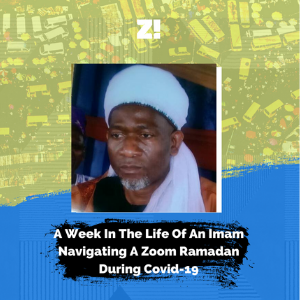
In this week’s Navigating Nigeria, Citizen speaks with an imam from Bauchi who shared his wild tale about visiting sex workers and encountering a trigger-happy police officer who boasted about ending his life. Through it all, the Imam believes everyone should be allowed to share their story without being judged. For him, reality is a spectrum, and morality is a construct.
Editorial Note: Navigating Nigeria is a platform for Nigerians to passionately discuss the Nigerian experience with little interference from individual opinions. While our editorial standards emphasise the truth and endeavour to fact-check claims and allegations, we are not responsible for allegations made about other people based on half-truths.
Walk us through your experience
This was in 2018. I lived in a large house in a Government Residential Area (GRA) in Bauchi. Our compound had six huge mango trees. It was also very close to the Government House. There’s this abandoned airport down the road, which also has an old air tower. It’s a fantastic spot. People come there on weekdays and weekends to play football. Some play around, go on trains or drive their cars. Nothing else happens around the area during the day.
One night, I was at home watching TV, and they told the story of a lady who got into prostitution. I remembered thinking then about how we were all part of some equation. It’s like calculus. Our environment influences what we become in the same way that deriving the function of a function changes the equation’s outcome.
I come from a society that tends to be hypocritical about sexuality. They talk about modesty so much you’d think we’re the standard. But there’s a lot of hypocrisy. You see people hiding who they are. I don’t have any trouble with homosexuals, as I understand it’s biology. I’ve seen gay men and women kissing in Bauchi. Yet there’s a lot of preaching against it as if it’s not part of the culture here. The TV documentary on prostitution inspired me to see it for myself.
I guess this is where your story takes off
I’d heard of this place called Bayan Gari. Bayan Gari, in English, means “behind the city.” It’s not really behind the city in reality. It just happens to be a place dominated by Igbos and people who aren’t core Northerners.
In the northern setting, there’s segregation between Christians and Muslims. They tend to live apart even though they’re in the same state.
I grew up in Lagos, but when I came to the North, I began to really observe this dichotomy. However, this isn’t to say that Lagos didn’t have its issues, particularly with the derogatory way of referring to anyone of Northern extraction as aboki.
Anyway, after that documentary, I decided to visit Bayan Gari to learn about and document it. I planned to immerse myself there to fully understand what was going on.
At the time, I was an imam at a local mosque. One afternoon, I drove down there using a friend’s car. It looked like a regular market, with people going about their lives and businesses. The stories I’d been told about it were that it was filled with naked prostitutes, but that’s not the picture I saw when I initially went there.
What was it like?
I debated whether I wanted to do this on my first night there. We live in a world where people get judgmental. They somehow think they’re better than others because of some norms they hold on to. But this highlights what Chimamanda has described as the danger of a single story. What about those people there? What about their lives? Do you know what they’re going through and why they’re doing what they’re doing?
I left around 9 p.m., donning a face cap and sneakers while presenting myself as what I presumed a person visiting such a place would look like. Bauchi has a cool club culture but also has other cultures, like Bayan Gari, which they don’t like to talk about.
The first thing I saw on my first night was the presence of almajiris. The term comes from Arabic and means “traveller.” Originally, almajiris were young folks supposed to grow in the way of scholars. But the whole system has been upended and now borders on exploitation everywhere in the North. I believe the practise should end.
The almajiris—young boys—were smoking cigarettes, weed, and gambling while dancing to a club banger. During the day, you’d see these kids on the streets, begging. At night, they’d come down here to flex. I was surprised to find that these happen in Bauchi.
I sat close to some guys selling porno CDs. There were ladies in their hijabs who were prostitutes. It felt like I was in a whole new world. The guys around me asked me to join them in gambling, but I didn’t answer. I felt like I didn’t belong there, so I walked around. There was a ghetto-like feel to it. Some areas were filthy. Some of the ladies there carried offensive scents.
I contrasted this with when I lived in Lagos. Then I stayed on the island.
When you go along Obalende at night, you’ll see prostitutes on the road pulling your clothes as you walk past. I didn’t see that sort of thing here. The Fulani ladies here don’t call out to you. You’d just see them drinking and smoking, ready to get in on the act.
I got back home around 11:30 p.m. No one knew where I went, not even my friends. As an imam, it would’ve been difficult to deal with the judgmental stares of folks if they’d known that I’d been to Bayan Gari.
How were you able to reconcile being an imam with visiting Bayan Gari?
Understanding science, philosophy, and history helped me navigate that.
Also, there is a verse in the Quran where Allah says, “Verily, in the creation of the heavens and the earth, the changing of day and night are signs for those who reflect.”
That verse alone doesn’t restrict what one can explore.
I went to that place to get answers to my questions and to understand why people do what they do. There’s a talk I listened to about the psychology of evil that has a lot to do with some of the answers most of us are looking for. The key realisation here is that we all have stories. And while we think our stories are valid, others think the same about theirs too.
That sounds deep
I visited again the next day because it had stories I believed should be told. It was the same experience as the previous day. I walked around as usual and saw this very pretty Fulani girl who was a prostitute. I’m Fulani myself.
I tried to have small talk with her, but it was apparent she was high on something. I asked how much she’d charge me per hour. She told me there was no hourly payment. It was simply a matter of having sex with her till I cum. Once that happens, I’ll pay her ₦500. I didn’t know if this was a uniform rate across the board, but this was what she charged for her services.
So I asked why she was doing this. She was reluctant to answer at first, but she eventually did. She said she needed to care for her parents and fend for herself because no one could help. She’d come down to Bauchi from her village in Jos.
I felt pity for her and offered her some money. She asked if I was taking her to my apartment in Bauchi, but I had no intention of doing so.
Then I left.
When I returned home, I was in deep thought, replaying everything in my head. People have different stories, yet it’s so easy to pass judgement when you haven’t listened to them. I walked around the old tower and was in a serious philosophical mood. The old tower used to be a bubbly place used by the rich but has now become a relic of the past.
And it hit me how the past and the present are interwoven. I never asked the girl’s name, but I kept thinking about how her past and her history with poverty had shaped her present situation as a prostitute. When I left her, she returned to her friends in her high state, laughing and going about her business.
She was so pretty. I considered asking her hand in marriage to get her out of there and giving her a new slate. I wrote about it but lost it. My mind kept returning to her, and I wanted to visit that place again. I didn’t know why I suddenly wanted to become her saviour—maybe because of her story. Or because she was pretty? Or because she had an innocent look? Her face was gentle, and she had large eyes.
Hmmm
I went there again three days later. After searching for and finding her this time, I asked her name. She told me it was Aisha. I tried following her around to talk to her, but she wasn’t listening, perhaps high on some substance. She kept telling me to let her be. She left me and went to a dark corner, where another guy followed her. I kept waiting for her and hoping the guy would be done with her to make my case.
While waiting, I saw another tall, pretty girl who looked like a Shuwa Arab. I was gobsmacked.
I’d found another potential story in my head, so I approached her to ask the same questions I had asked Aisha. She told me to give her ₦5,000 for the whole night. I was only interested in hearing her story. She insisted on that amount regardless, which made me realise she was old in the game.
In the bargaining process, I sensed that ladies were clustering around me, so I removed myself. As I left, I saw the ladies come around with two policemen, who accosted me. I’d seen policemen smoking and touching girls on my earlier visits.
The policemen told me I had to pay that amount. That was unexpected; I had nothing with the lady except a discussion. I was almost outside of Bayan Gari at this point.
When they saw that I refused to pay, one of them brought out a chain and started wiping me with it.
Wawu
They had guns with them. At one point, one of them left while the other continued assaulting me. The girls, meanwhile, were laughing at the whole thing. They queued up behind the policeman while he kept beating me. I fell on my knees, pleading that I had done nothing wrong.
Some people gathered around to intervene on my behalf, but the policeman escalated matters. He lied to them, saying I was a Boko Haram member.
Ahhhh!
He said I was one of the leaders of Boko Haram in Jos and that he knew my face very well. I don’t know if I mentioned this, but I have beards. He told them I ran to Bauchi when security agents tried to track them down.
The policeman took out his gun, pointed it at my head, and said he’d shoot me, and no one would know what happened. He said no one would question him. See, my body went cold.
Fortunately, I’d withdrawn some money earlier that day, which I had on me. He put his hand in my breast pocket and took out the ₦5000 there. People started pleading with him after seeing me battered, saying he should let me go. It was after he extorted me that he eventually left with the girls.
Narrow escape
I started trekking alone that night. It was around 12:30 a.m. No bikes were on the road, and I was going to a GRA. I was thinking about everything that had happened and started laughing. When I got to Wunti market, I saw a bike man and explained my encounter with the police to him. He laughed at me and zoomed off. I wondered why no one cared to listen to or help me. In my mind, I was a good person and didn’t deserve what was meted out to me.
I walked further until I got to a mosque, where I saw another bike man sympathetic to my plight. He carried me to my gate.
What was the aftermath of your experience?
When I got in, I took off my clothes. My skin was tender with bruises, and my back was swollen. I was still shocked by the thought that a policeman was willing to pull the trigger because of ₦5,000. I was pursuing a story, but another story came at me.
None of my friends knew about this because they wouldn’t understand why I chose to go to a place known for prostitution and drug use. Many would judge me, and only a few would appreciate why I did what I did. It was only in 2020 that I shared this story with a few open-minded friends.
There are other places where people go for cheap sex, like Gwalla-meji where the federal polytechnic is located. So when I see Northerners go online to bash people for engaging in sexual activity, I consider it collective hypocrisy because it happens in our backyard.
My takeaway is that beauty exists in different formats; people experience it differently and call it different things. I see those young boys in Bayan Gari as having embraced hedonism in their own way, even though the rest of the world frowns at it.
But we should ask, how many people who frown at these things indulge in them in one way or another? People do things for reasons best known to them. We shouldn’t be too quick to judge until we hear their stories. To my mind, reality is a spectrum, and morality is a construct. This is how I choose to see the world.