Official reports place Nigeria’s population at over 200 million. Of these 200 million people 48.3% prescribe to Islam and 49.2% to Christianity. Both doctrines discourage same-sex relationships. A natural conclusion might be that 97.5% of Nigerians are conservative and therefore intolerant of homosexuality. But is that the case? Or are Nigerians more accepting of LGBT rights than we think? We took a look at two surveys conducted in 2017 and 2019 to find out.
“Why are you gay?”
Though offensive, the average Nigerian asking a homosexual this question may mean no offence. Homosexuality is a difficult concept for most Nigerians to understand. Is it innate? Something you are born with it? While a number of scientific studies suggest that being gay might be genetic, there has been no conclusive research to confirm that there is a biological reason behind being gay. There are also no conclusive studies to suggest that it’s a choice.
The 2017 report from a series of surveys* conducted biennially, showed that 91% of Nigerians were of the opinion it was simply impossible for you to be born gay. That number has now dropped in 2019 to 89%. Could the drop be attributed to the ever-growing Millenial and Gen Z generation who have proven to be more accepting or does that number cut across all generations of Nigerians? While 2% might not seem like a significant number, in a country where 97.5% of its population is conservative, it’s a start.
“Mum, Dad, I’m Gay”
‘Mum, Dad, I’m Gay’. This is the opening line for dozens of prank videos on Nigerian YouTube. This opening gambit plays on the fear and anger that most young Nigerians know to expect from the older generation. In real life scenarios, this cocktail of emotions often leads to violence, possible disownment and rejection of children who come out as homosexual to older generation parents.
As young Nigerians become parents, YouTube hopefuls will have to come up with new video openers. Based on a recent survey, it turns out that Nigerian families are a lot more accepting of same-sex relationships than these videos will have you believe. The results from the aforementioned study show that 30% of Nigerians will accept a homosexual family member. A significant jump from the 13% number gotten from the same survey conducted in 2017. Respondents aged between 18 and 40 made up a greater part of the 30%, which shows that Millenials and Gen Z’s are more accepting of homosexual family members than their parents’ generation.
Looking beyond the law
In 2014, The Same Sex Marriage Prohibition Act, which criminalizes marriage, witnessing a marriage, registration of ‘gay clubs’ and public show of ‘amourous’ same-sex affection was signed into law. Any public show of affection between two people of the same sex was also banned and punishable with up to 10 years in prison.
It’s been 5 years since the law was passed. While no official number exists, dozens of arrests have been made. In July 2017, a hotel in Lagos was raided and 42 men who claimed to be attending an HIV testing and counselling outreach programme were arrested and charged (without evidence) with the offence of performing homosexual acts on each other. In August 2018 another raid was reported in Lagos. This time 57 men attending a birthday party were arrested and again there was no evidence to back up the police charges.
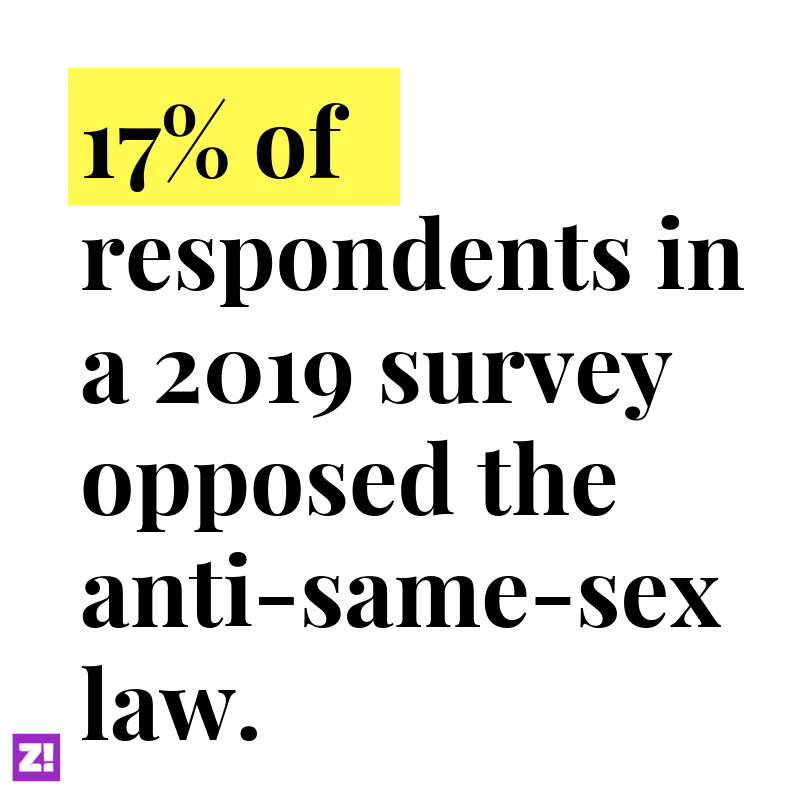
Despite the gloomy numbers above, there’s conclusive evidence that fewer people are currently in support of this law. 17% of respondents in a 2019 survey opposed the anti-same-sex law.
How well do you know your neighbour?
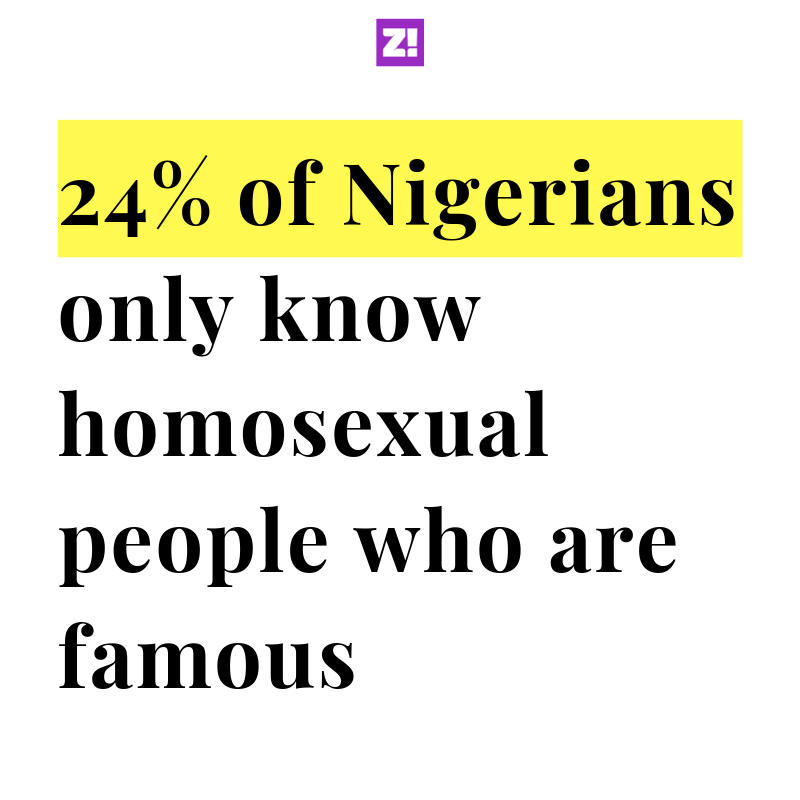
The most popular gay person you know is probably a celebrity, like Ellen Degeneres. You may also know Bisi Alimi, a Nollywood actor who was the first Nigerian man to come out on television in 2004 and has been a very vocal LGBT activist since then. So it’s unsurprising that 24% of Nigerians only know homosexual people who are famous. Only 19% of the respondents in the study said they personally knew someone who identified as a homosexual. Maybe it’s because we mind our business, or because many LGBT people in Nigeria do not feel safe disclosing their sexual orientation. As attitudes to the law change, it is expected that this percentage will increase.
Are LGBT rights human rights?
Have you ever thought about being shunned for your sexuality? Or living with the fear of being harassed, beaten, arrested or killed simply for being who you are? These are the realities of LGBT people in Nigeria today.
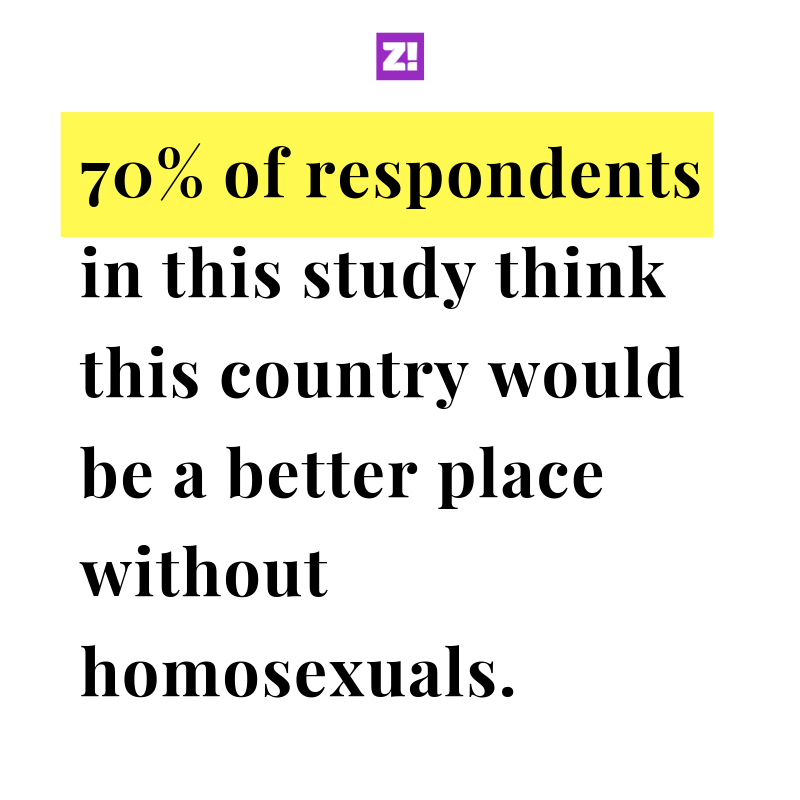
Despite this, 70% of respondents in this study think this country would be a better place without homosexuals. 40% don’t mind them so long as they don’t have to see them. Let’s not even talk about their thoughts on same-sex marriages. Again gloomy numbers, but we must remember that in 2017, only 17% of the respondents thought homosexuals deserve the same rights as “regular” Nigerians. Today, that percentage has increased to 27%. These numbers indicate that Nigerians are gradually accepting the fact that LGBT rights are indeed human rights.
So are Nigerians more accepting of LGBT rights in the year of Burna Boy and our baby boy National Assembly? Numbers show that acceptance is on the increase and this is important to our sense of humanity as a people. Change may not come in the form of marches and parades but in our attitudes and social acceptance of persons who are not exactly like us.
*The surveys referred to in this article were conducted by The Initiative for Equal Rights (TIERs). You can find more on the results of this year’s survey here. TIERS is a Nigerian-based registered not-for-profit organisation working to protect and promote the human rights of sexual minorities nationally and regionally.