Notice: Function _load_textdomain_just_in_time was called incorrectly. Translation loading for the wordpress-seo domain was triggered too early. This is usually an indicator for some code in the plugin or theme running too early. Translations should be loaded at the init action or later. Please see Debugging in WordPress for more information. (This message was added in version 6.7.0.) in /home/bcm/src/dev/www/wp-includes/functions.php on line 6121
france | Zikoko!
  • “The French Have Beef With People Who Speak English” – Abroad Life

    The Nigerian experience is physical, emotional, and sometimes international. No one knows it better than our features on #TheAbroadLife, a series where we detail and explore Nigerian experiences while living abroad.


    Today’s subject on #AbroadLife is the main character in a tale of three countries. After deciding to study abroad nine years ago, he was finally able to in 2021. He talks about being the only black person in an English town, having a fun time living in Greece, and dealing with the language barrier in France.

    Where are you right now?

    I’m in Nantes, France.

    How did you get there?

    I got an Erasmus Mundi scholarship to study for my Master’s degree in Europe, and it’s taken me through three countries so far. It’s a joint Master’s degree programme and it’s administered by three universities in three different countries, with full tuition paid.

     Wild. When did you decide to leave Nigeria?

    In 2013. I got into a federal university in 2012 and was admitted to study Fishery and Aquaculture. I wanted medicine, but that’s what they offered me instead. So, I spent my first year trying to be serious and get good enough grades to help me cross into Pharmacy at the very least. 

    I didn’t know anything about scholarships at the time. The people who ran printing centres in school would come to class and tell us to apply for scholarships. But I always thought it was a scam just to collect the ₦1,000 registration fee. 

    The following year, I started seeing my friends get some of the popular scholarships at the time; MTN, NNPC, Agbami, etc. These people didn’t have grades as good as mine, but they still got scholarships worth around ₦100,000 to ₦200,000 every year. 

    That’s when it really hit me that scholarships were a thing. I made the decision that I would get a scholarship to study abroad for my Master’s degree. The first reason was that I wanted to become an expert in my field, and the second reason was that I knew I could do it. I started researching and documenting things in my final year. 

    When did you start applying for scholarships?

    In 2019, during my NYSC in Akure. I applied for two scholarships in the Netherlands and the UK. I was actually hopeful because my grades were stellar, but I was served breakfast on both sides.

    LMAO. What did you do next?

    I got a job upon completion of my NYSC, and I started thinking about ditching my scholarship dream because I was making enough money from it. On the other hand, I had nothing to lose if I didn’t get a scholarship, so I decided to try again. The only difference was, my motivation wasn’t as high as it was before. Money can distract you from your dreams, to be honest.

    The next year, during COVID, I applied for two more scholarships. One of them was the Commonwealth scholarship administered by the UK government, and it was the one I eventually got. I was selected to get funding to study in the UK, but sadly, it didn’t happen then.

    Why?

    Because of all the economic damage COVID caused, the UK government decided to cut funding for that year. So, I received an email saying I still had my scholarship, but I’d have to defer my scholarship till the next year. The following year, I reapplied for the other scholarship that rejected me. This time, I was successful. Now, I had two scholarships and could weigh my options.

    The commonwealth scholarship offered me full funding to study in the UK for a year, after which I must return to Nigeria to develop it. But the other scholarship didn’t have that clause. Even better, it was for a joint Master’s programme to be administered by three schools in different countries: Scotland, Greece and France. This meant I’d get to see more of Europe. I chose the second scholarship and started the process of migrating.

    What was the process like?

    Even though it was my first time leaving Nigeria, I found the process pretty easy. I got a letter from the scholarship office stating that the scholarship would cover 100% of the tuition and a monthly stipend. I didn’t have to worry about providing proof of funds and other things like that. I was granted a visa within three weeks of applying, and I moved to the UK in September 2021.

    Walk me through your journey across Europe

    I arrived in London first. COVID was still on at the time, so I couldn’t move to Scotland immediately, and my classes were online. I had many friends in the UK already, so I stayed with one of them. I was there for about three months before I moved to a town called Oban in Scotland.

    I expected the UK to be cold, and it was. I expected it to be beautiful; it also was. But my God, the apartments are tiny! My room was smaller than my room back in Nigeria, and I had to pay £450 every month in rent, my yearly rent back in Nigeria.

    To make things worse, I had to share a kitchen with other people in the building. So all I really had to myself was a room and toilet. And the buildings weren’t so modern because they try to preserve their architectural history. To top it all up, I was the only black person in the town.

    Wait, what?

    It’s a really small town. If there were any other black person there, I’m very sure I’d have met them at some point. But I never saw any other black person throughout my stay. 

    It wasn’t weird at all though. The people were very welcoming, and I’d sometimes go to bars and get them to play afrobeats. They loved it. I had a good time, but I only spent three months there before I had to move to Greece for the next part of my programme.

    What was Greece like?

    Honestly, Greece is like Nigeria Pro Max. When I got there, I thought, “Did they bring me to Lagos by mistake?” People were blaring horns so loudly, and no one respected zebra crossings. It was giving Ojuelegba-level chaos. 

    One time, I tried to use a zebra crossing, thinking the cars would wait for me the way they would in the UK. Come and see swerving. I was the one dodging cars. At that point, I knew I’d found Nigeria’s twin. It’s a very interesting country and naturally beautiful too sha. 

    I lived in a city called Heraklion, and it has a beautiful landscape, beautiful beaches and many historic sites. Things were also cheaper in Greece than in the UK. Their economy was worse, which meant the stipend I was getting translated into a lot more cash for me. The buildings were not that pretty, and you could tell the country was battling sapa at the time.

    Tell me about the people

    The people in Greece are friendlier and more laid back than those in the UK. Back in London, everyone was about their hustle and didn’t really give a shit about you. But no one knows how to have fun as much as the Greeks. 

    About 70% of the people in Greece speak English, so I could get by very well in social circles without knowing any Greek. The families are bigger because they don’t migrate very often. 

    How long were you there for?

    Six months, before having to move to Nantes in September.

    Where?

    Nantes, in France. It’s a student city, so I met more people from different parts of the world there. For the first time since London, I saw a lot of black people. It’s a lot like the UK actually. But the main difference is language. One annoying thing is how snobbish French people are about their language. It’s almost as if they have a long-standing beef with English speakers. 

    The first thing I learnt to say in French was, “I don’t know how to speak French”. The whole point was to get the person to speak English with me, but nine out of ten times, their countenance would change the minute I said it. French people aren’t as friendly as the Greeks, but they’re even less friendly if you don’t speak French. They’ll say they can’t speak English and air you, even when they actually can. 

    It’s so bad that even in the hospitals, the doctors only talk to you in French. The country is also very bureaucratic; there’s a lot of unnecessary paperwork you have to deal with, and they’re all in French. Emails from the authorities come in French, and when you call to ask for clarity, they’ll speak French. So, language is a real social barrier for me here. The lucky thing in all of this is that my classes are in English. If not, I’d be in trouble.

    How are you dealing with it?

    I’m currently learning French sha, so these people can stop airing me anyhow. I have French classes twice a week, and it’s helping. The good part is my coursework across the countries has been in English, so language isn’t affecting my studies in any way.

    What do you love about France?

    First of all, it’s very multicultural. In the other countries, the diversity came from the people in my own class. But we’ve been the same people moving together from place to place for the past year. In Nantes, there are people from all over the world. One time, I went to a church and saw so many black people, I thought I was back in Benin, Nigeria. 

    Another thing I love is the fact that it’s a welfarist state. The government cares about the people who don’t earn very much. My stipend is around €1,000 per month. But because I’m a student, I get up to 60% off my €450 rent, financed by the French government. The same goes for food and a bunch of other things I need to stay alive. 

    And what’s school been like so far?

    Moving from school to school across different countries is very tough. Not only is the system of education different from Nigeria, but each country has a different system of their own. In the UK, we didn’t have proper exams; we wrote essays that would count towards the assessment grade. Most of my classes were online, and there’s only so much one can learn without being in a classroom. In Greece, I had proper exams and the classes were in-person. It was a better learning environment for me as I could interact directly with my classmates and ask questions in class. I’d say my semester in Greece has been the easiest so far.

    France basically combines everything. Essays, exams, assignments, field trips, you name it. We do everything.

    So, where will you go from here?

    Back to Greece to finish my programme. It’s a two-year master’s programme. I did the first semester of my first year in the UK and the second one in Greece. The third one is what I’m currently doing, and the last will be in Greece. I can’t wait to leave the stress of this place and get back to my second Nigeria.

    LMAO. Your love for that place is really something

    Yes. It’s like Nigeria but with constant light.


    Hey there! My name is Sheriff and I’m the writer of Abroad Life. If you’re a Nigerian and you live or have lived abroad, I would love to talk to you about what that experience feels like and feature you on Abroad Life. All you need to do is fill out this short form, and I’ll be in contact.

  • “The French Are Big On Respect and Nepotism Like Nigerians”- Abroad Life

    The Nigerian experience is physical, emotional, and sometimes international. No one knows it better than our features on #TheAbroadLife, a series where we detail and explore Nigerian experiences while living abroad.


    Today’s subject on Abroad Life talks about how her love for French from a young age helped her decision to move to France 8 years ago. She talks about the culture shock she experienced her first few months there, how the French society is classist and the similarities between the French and Nigerians. 

    When did you leave Nigeria?

    I left Nigeria in 2013. I moved straight to France. 

    Why France?

    My relationship with French grew over the years. I remember being interested in the language straight from primary school even though it was just “Bonjour” and “Ça va”. In secondary school, I was one of the few people that chose French as my elective. Though I didn’t really like my French teacher, we used a projector and had media elements like music and movies, so the classes were less boring. I became more interested in the language over time and started summer lessons.

    I never really thought about moving to France. 

    What changed?

    I worked in a telecommunications company shortly before I left Nigeria, and we had some clients in Brazzaville. Everyone knew I could speak French to some extent so when we had to send a representative for a two-month program, they sent me. When I was there, I realised that my knowledge of French was better than I’d imagined and decided to move to France for my masters in telecommunications. The culture shock when I did move was… well, shocking. 

    How so?

    My expectations of “abroad” were the things I’d seen on TV about the UK and America, so I expected lights and loud noises and bling-bling everywhere. I was wrong. I moved to Paris, and once I got past the awe of the Eiffel Tower and all the other stuff and settled in, I realised that the French are classy. No loud colours or over-energetic scenes, just people going about their business. 

    How was settling in?

    It was hard. It took me a few months to transition from my expectations to my reality. Learning things about the new culture was tough. For example, in Nigeria, you go to a bank and someone attends to you. Even if they’re not solving your problems immediately, they’re making you feel important because you’re a customer. Here, you get to a bank and they tell you to book an appointment with your account manager before you can be attended to. If you don’t know who your account manager is, they’ll tell you to book an appointment on the website to find out who your account manager is.

    Here, the customer isn’t king. The service provider is king and the customer adjusts to whatever they do. 

    In restaurants, they take their sweet time. You can’t go to a French restaurant and expect to get food quickly like you would in a Nigerian restaurant. And you have to wait. If you complain, you could be asked to leave. 

    Ouch…

    All of these new experiences helped me understand that I was seeing the entire world through the same lenses. I had to quickly learn that different countries have their different behaviours, cultures and accepted ways of doing things. I couldn’t say “Oh, this is how Europeans behave.” or “This is how Africans behave.”

    Was it easy for you to integrate into society after your master’s?

    After my master’s, I had to quickly unlearn the Nigerian “go-getter” attitude. People don’t want you to be in their faces, introducing yourself, throwing around your CV and putting yourself out there. You have to do things subtly. They’re not even friendly with people they don’t know in the first place, so you have to build their trust. 

    What did that mean for you in the job market?

    It wouldn’t have changed much because there’s already a system in place that decides the types of jobs you get based on the school you went to. In France, the school you go to and the course you study are two major important things that every employer takes into consideration. 

    No matter how skilled you are in a field, if you don’t have a university degree in that field, nobody will hire you. If you like, show them all the amazing things you’ve done, they’ll ask for your CV that shows you got a university degree in that field. If you can’t provide one, you’re wasting your time.

    Wow.

    That’s not even the most interesting part. In whatever industry you are, there are top three to five schools that are recognised. What this means is that if you didn’t go to one of the top five schools that offers your course, you probably won’t get a good-paying job. 

    What? 

    It’s a society run very largely on classism. Everybody already knows where they stand based on the school they went to. So you know that if you went to a top-five school, your salary falls within a specified range. If you went to the next five rated schools, you can’t get jobs in certain places, and it’s impossible to earn a salary as big as the people who went to better schools. These things aren’t probabilities. It’s the official way things are done. Years of working experience in France also count for better pay. 

    How did that play out for you?

    I didn’t go to the top 3 schools overall in the country. However, lucky for me, I went to the top 3 in my field but even at that it was a difficult 3 months looking for an internship.

    In the three months when I was searching, I considered a change in career paths but that wasn’t possible as I had to have studied whatever career I wanted in school.

    In the end, I got my first job – a compulsory internship when a friend took my CV and dropped it on her boss’ table and told him to hire me. Nepotism is also big in France. 

    How’s the Nigerian community there?

    Although there aren’t as many Nigerians here as there are in Germany and even Spain, the Nigerian community here is growing. When I came here in 2013, I didn’t meet many Nigerians. But now, more of us are choosing France as a study destination. There’s also the older generation of people that do informal jobs like selling stuff like hair extensions. 

    It’s been eight years since you moved. Are you now a permanent resident?

    I’m a citizen. France isn’t big on permanent residency. They’ll give you one-year extensions on some visas, talent visas and 10-year stay visas but not permanent residency. You have to go through a long process to apply for citizenship. I did, and now I’m a French citizen. 

    What’s the best part about living in France?

    The beauty and peace that comes with living in Paris is pretty nice. People have a romantic idea of France about Paris and a lot of it is true.  The food? The food is top tier especially the pastries. I’m at the point in my life where I can’t imagine living without access to a nice croissant or a nice baguette. 

    What about the people?

    I think the French are very similar to Nigerians. Hearing their H-factor makes me laugh. It just jumps out. 

    Another thing is respect culture.  The way some Nigerian languages have words that indicate that you’re speaking to someone older than you, French has the same, and the French take it very seriously. They demand respect for both age and class difference. 

    The French are also very proud of their country. You hear them complain about the government and the country all day every day, but the day someone from outside tries to trash-talk them, they’ll attack the person. It’s the same way Nigerians always complain about Nigeria until someone from another country says the same thing. 

    Is there anything you don’t like about living in France?

    There’s a lot of pretences especially with issues like racism. People say, “You can’t say ‘Blacks’” or ‘Asians’, just address everyone as human”, but there’s a lot of lowkey racism that goes on. 

    I don’t like that people don’t have room to diversify; they can only stay in career paths they’ve chosen. It makes us feel like robots. 

    People say Paris is the capital of love and sex. Is that true?

    Omo, there are streets where you see rows and rows of sex shops– both shops that sell sex toys and shops where “things” go down. The French are very romantic and sensual. Even in French movies, the sex scenes are much more real than in American movies. 

    It was in France I first saw a gay couple expressly displaying love. The Nigerian in me was shocked, but I soon realised that things like that are normal here. 

    What’s your social life like?

    I like experiencing things, so I go to museums, exhibitions and all that kind of stuff. Sometimes, I go to restaurants and theatres. The highlight of my social life in France was when Falz came here to perform, and because my friend was close to him, we all went out after his show. It was fun club-hopping and having a nice time. Falz is a fun guy. 

    Must be nice. What’s one French experience you can’t forget?

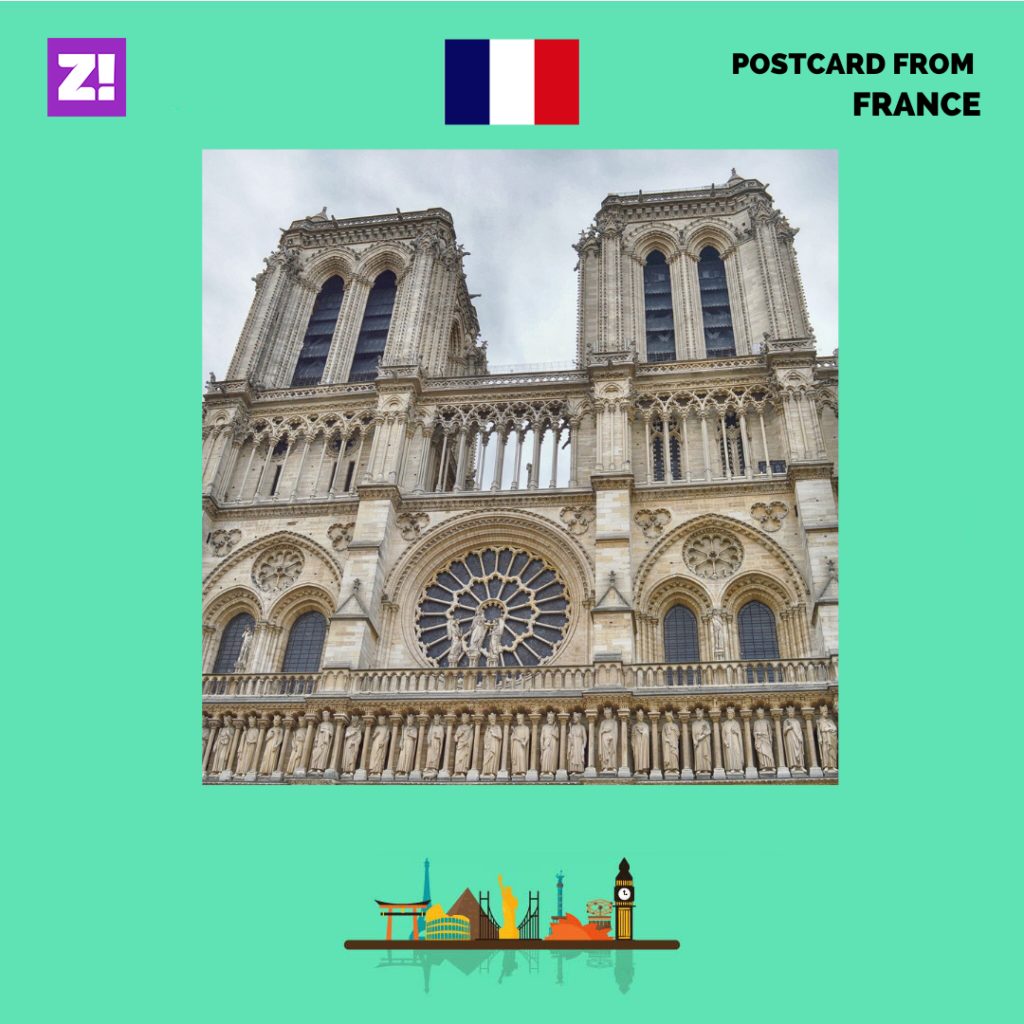
    The day the Notre-Dame cathedral caught fire. I was headed to the metro station when I saw the smoke. Everyone thought it was a terrorist attack but then we started hearing some banging. We ran towards the sound and when people saw that it was the Notre-Dame on fire, they threw themselves on the floor and wept. It was so painful to see. For me, it was a tourist attraction that had caught fire, but it was much deeper for them. We stood there for a couple of hours and just watched. It was truly heartbreaking. 

    Want more Abroad Life? Check in every Friday at 9 A.M. (WAT) for a new episode. Until then, read every story of the series here.

  • We can all say that Croatia played the game of their lives against France. But the thing about football is this;

    If you like play with your heart and soul, if the ball doesn’t enter the post, there’s no point.

    So, Croatia might have played a great game, but France scored more goals. Now, what I have to say might sound a bit wild.

    But I want to point out the fact that France didn’t really win the World Cup.

    When half of your team consists of Africans, who does the cup really go to? Be honest o.

    Africa? Yes! Africa. All of us.

    I could decide to give an analysis of every single African player on that team.

    But we are going to sleep here. I promise you.

    The most important thing you need to know is that from Mbappe to Pogba to Kante and Lemar, Mendy, Matuidi, Rami, Umtiti, Mendy, N’zozi, and many others are all Africans.

    Infact, Lemar is half Nigerian. I’m so emotional right now

    So we can also say that somehow, Nigeria won this Cup too.

    Oh, I’m so proud to be Nigerian.

    Infact I’m sure if we dig deep, we would find out that Pelé has African genes somewhere somehow.

    Just think about this, what is Pele in Yoruba? I won’t say more than that.

    Let me tell you the bitter truth, it’s okay to disagree. But just know that almost every legend in the history of legends comes from some part of Africa.

    I can start mentioning names, but I don’t want us to divert.

    Let’s place our focus on what is important for today. Africa borrowed France the World Cup.

    Not only are we skilled, we are also generous. Wow. A whole continent.

    On a serious note, whether we like it or not, Qatar 2022, Nigeria is bringing that cup home. I’m saying it with my chest.

    Okay maybe just half of my chest.

    I think before we end this, it’s important that we congratulate France properly.

    So dear France, congratulations.  You have done well.

    But if you actually think Africa deserves all the accolades raise your hand.

    Now let us know your reason below.
  • 1. Visit the queen

    Do we even have to tell you this?

    2. Feed the pigeons in Trafalgar Square

    Do it for world peace, sir.

    3. Take a train to Paris and go to Disneyland

    Age is just a number, no one is too old for Disneyland, please.

    4. Marry an English wife for papers

    So you can escape the wahala that is Nigeria, forever!

    5. Go for a short internship with the English parliament to see how things actually get done

    Since we’re all being childish.

    6. Go to Oxford Street and do shopping for all of us

    All I want is a fine handbag, please and thank you sir.

    7. He shouldn’t forget to go out and catch some good old British fun

    Don’t let your aides keep you inside the house to be eating jollof.

    8. Enter the buses and trains and let’s compare notes with the rubbish we’re doing here

    Shebi you too can see the difference?

    9. Watch plenty TV before he comes back and NEPA starts showing him pepper

    They don’t care if you’re president or not o, you will still use generator.

    10. Not worry too much about us

    In fact, if you like don’t come back sir. VP is taking care off us. Kisses!
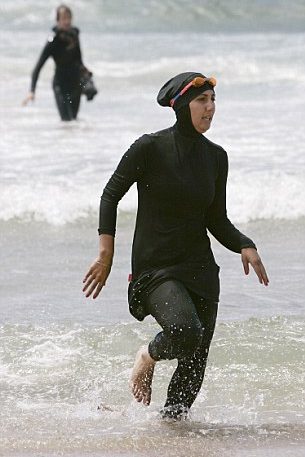
  • Armed Policemen Made A Muslim Woman Take Her Clothes Off And The Whole World Is Outraged
    In the light of the terror attacks that have plagued France in 2016, the French government decided that banning a piece of clothing, the Burkini, is the most brilliant way to end terrorism in the country.

    On August 23, some armed police officers in France went as far as making a Muslim woman take her clothes off which resembled a Burkini, while she was on the beach with her little son.

    https://twitter.com/jane__bradley/status/768202258018369536

    This action was only in enforcement of the ban on the Burkini, which is supposed to be swimwear for Muslim women who want to cover their bodies.

    The pictures of the policemen humiliating the woman have gone viral.

    As expected, it has sparked interesting conversations across all parts of the world.

    https://twitter.com/stopbeingfamous/status/768405679140929536

    Some believe this could even increase acts of terrorism.

    There isn’t kuku a dress code for the beach.

    https://twitter.com/_hunieybunch/status/768226141270265856

    Does this mean hijabis are excluded from the fight for human rights and equality?

    How does banning a piece of clothing actually stop terrorism?

    It’s an irony that the policemen in question were fully clothed.

    https://twitter.com/stephjkd/status/768210189241704448

    Some people however, think the Burkini is a symbol of oppression.

    https://twitter.com/SomiEkhasomhi/status/768415839968194560

    And seriously what is the difference between a Burkini and a scuba diving outfit? Why is one legal and the other illegal.:

    In spite of this development, we believe women have the right to choose whatever they want to wear.

    Let’s know your thoughts on this controversy in the comments section.