Notice: Function _load_textdomain_just_in_time was called incorrectly. Translation loading for the wordpress-seo domain was triggered too early. This is usually an indicator for some code in the plugin or theme running too early. Translations should be loaded at the init action or later. Please see Debugging in WordPress for more information. (This message was added in version 6.7.0.) in /home/bcm/src/dev/www/wp-includes/functions.php on line 6121
Fatherhood | Zikoko!
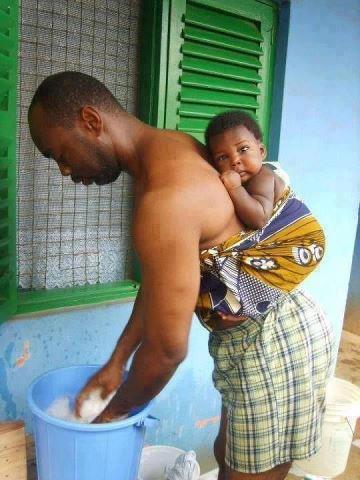
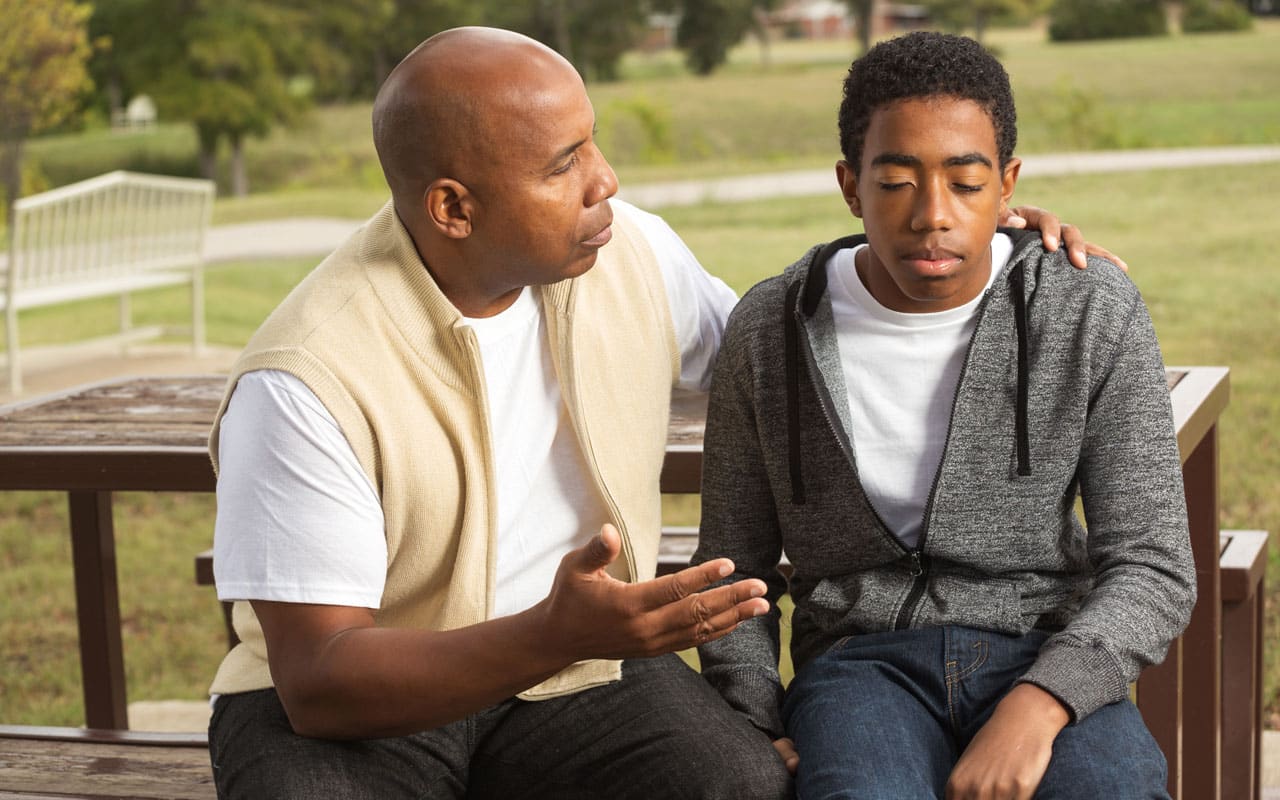
  • All the Reasons Why You Should Be A Stay-At-Home Dad

    Don’t let your 9-5 or business make you miss out on the softest parenting experience. If you’re considering being a stay-at-home dad, and you need convincing, this is the right place.

    PS: Points work best when your wife is a millionaire.

    Overcome patriarchy

    When you become a stay-at-home dad, you can stop crying about being the breadwinner. Slowly, you’ll break-free from the shackles of societal expectations of men.

    Let your woman breathe

    Take the role, and let her finally have time to focus on her dream job or having several girls night outs.

    No more paying bills

    No more school fees, housing or feeding bills resting on your shoulders. Let your breadwinner wife worry about those things.

    Submit your contribution here.

    Free from capitalism

    If you’re so damn good at your stay-at-home dad role, you might never worry about working for capitalism again. You get to work for your family instead, and what’s more fulfilling than that?

    You won’t miss milestone moments

    Work trip on kids’ birthdays? No more. Meetings during family events? Bye-bye.

    You’ll be present now and can finally stop complaining about how you miss important events because you’re grinding for what they’ll eat.

    Learn basic life skills

    You never know when actually knowing how to cook can make you a world record holder. You also have all the time in the world to learn how to clean up after yourself and other people, nurture a child and sing/produce nursery rhymes.

    Become a full-time video-gamer

    You get to play your video games during school time. And you could even make some money and recognition on the side. Win-win.

    Fill a special content creation gap

    Use your rich wife’s money to buy a mic, camera, ring-light and everything else vloggers use these days to create TikTok and YouTube shows. Then wake other men up to this new life with your stay-at-home chronicles.

  • 8 Nigerian Men Share How Father’s Day Went For Them

    As people flooded social media with heartfelt personal stories on Father’s Day 2023….

    https://twitter.com/zikokomag/status/1670377622113603585?t=dey2wlrcImAy1-MvA3UnwA&s=19

    …eight Nigerian men share how they marked the special day.

    “I spent time gisting with him (my father)” — Ayodeji, 27, Lagos

    I visited my dad with fruits and spent time gisting with him — he always gives me the tea around stuff going on in the family, life advice and just general gist. I also spent a good part of the day on Twitter and Instagram, where I saw some people’s negative and positive experiences with their fathers. Reading the stories made me appreciate mine more and cherish the moments spent with him.

    “I celebrated at home” — Feyisayo, 40, Akure

    I’m an introvert, so I was indoors with my family after Sunday service. In the morning, my wife and children presented a gift to me and told me how much they appreciate me. That’s perfect for me.

    “My wife spoilt me with food” — Opeyemi, 32, Lagos

    I went to church. Then, my wife took me to get a burger. At home, she made white rice and turkey stew for me. Even though I thought I was just doing my thing, my family and friends said I’ve been killing it, and the kind words got me emotional.

    “I spent the day at work” — Ifeanyi, 37, Port Harcourt

    I was at work, where I posted my kids’ pictures on socials, like I do every Father’s Day. I got some lovely messages from friends and family too, and it felt awesome.

    “I spoke to my kid and had some wine” — Imoh Umoren, 40, Lagos

    I video-called my kid; I work in Nigeria, and he’s in the U.S. He wished me Happy Father’s Day. Then, I opened a bottle of wine because it’s not easy. My father died when I was a teenager, so I had no chance to buy him anything. The day made me a bit sober as I contemplated the efforts I’ve put into fatherhood.

    “It was a reassuring day of love for me” — Vikky, late 30s, Lagos

    Unfortunately, my wife and daughter travelled on the day, but we spent the whole time before the flight taking memorable pictures. My wife’s passion and vibe mean so much to me. She made sure to tell me she appreciates my effort, reassuring me of how much she loves and cares for me. It was awesome, special, and I felt like a baby.

    “I was in class for most of the day” — Femi, 29, Lagos

    I had to attend my postgraduate lectures that day. But there was a huge outpouring of love for my dad in the family group chat. It felt warm, and I’m glad. I think I might’ve underrated how much I love my dad.

    “I enjoy fatherhood now” — Nath, 26, Ogbomoso

    I tried to run away from fatherhood — I had my kid when I was still a child myself, and it was strange for me — but it’s a thing of joy now. There was little or no time for us because I just started uni. Now, we spend more time together, and I’m happy about it. We didn’t do anything special this Father’s Day, but seeing fathers get their annual flowers was great.

    Take our survey here before you go.

  • 7 Nigerian Men Share How They’d Like to Be Celebrated on Father’s Day

    Father’s Day comes once a year. To celebrate 2023’s edition, seven Nigerian men talk to Zikoko about their ideal Father’s Day celebration.

    “All I do is put up pictures of my kids on socials” — Ifeanyi, 37, Benin

    Celebrating Father’s Day has always been something my wife and kids do for me rather than me doing anything for myself. They wish me Happy Father’s Day, and sometimes, get me gifts. All I really do is celebrate fatherhood by putting up pictures of my kids on some socials. That’s the ideal Father’s Day for me. It’s worth noting and celebrating the life of a father or man with responsibilities, and I appreciate it.

    “I’d likely be a father myself before I celebrate one” — Yinka, 30, Lagos

    I’ve never really cared about Father’s Day or how it’s celebrated. I was raised by a single mum; my dad wasn’t present at all. So it’s a normal day for me, especially since it doesn’t get a lot of buzz like Mother’s Day and special celebrations for women. If I ever consider celebrating, maybe I’d be a father myself first. But right now, it’s just another day for me.

    “Sometimes, I don’t want to be a father at all” — Vick, 23, Ilorin

    Let me begin by saying fathers are not celebrated well enough. Everybody knows, but we never complain. Just check how many songs we have for mothers and match it to the ones for fathers.

    I don’t have anything planned for my father on this less anticipated day. But God knows I’m trying my best to make it big and give this man the best life. He has dream cars, houses etc., but he prioritises my demands and works hard to meet my needs. I pray to God to spare his life so he can reap the fruit of his good labour. I think of him and cry sometimes. Being the head of a family isn’t always joyful. Sometimes, I don’t even want to be a father at all. It’s a lot.

    “It’s a mellow day for me” — Juwon, 34, Sagamu

    Oh, I miss my dad. It’ll be a mellow day as usual. I’ll write a song as I’ve done in the last three years, call his wife and relive great moments. God bless his soul.

    “Fathers shouldn’t be neglected in their old age” — Folasayo, 59, Ogbomoso

    A father should celebrate having kids and his ability to train them to be better people. It’s an important day, and it should be spent with family, love and gifts. Especially older fathers, they shouldn’t feel neglected in their old age.

    “I’d love to surprise my dad with a visit to the spa” — Maleek, 27, Ilorin

    I don’t really have anything planned, but here’s how my ideal father’s Day would look.

    My dad works really hard. Even when you tell him to take a day off, he’d start fixing broken stuff around the house. On Father’s Day, I’d love to surprise him with a visit to the spa. We’d both get a full body massage, relax in one of those hot rooms with thick, white towels around our waist, get haircuts and some facial treatments and get our feet and nails cleaned too. 

    Next up, we’d go for a medical consultation. He’ll get the best recommendations on natural supplements to boost his immunity and overall health. Then, we’ll go and buy some expensive native clothes. I know he likes lace materials a lot. We’ll get those and go over to the tailor’s shop. Finally, we’ll buy all sorts of chops and drinks to be enjoyed at home with everyone. 

    I’m one of four boys, so I know I might not have him for a full day. But that’s how I would love to spend Father’s Day with my dad.

    “If possible, I’d get him a gift” — Abisola, 32, Lagos

    We no really send Father’s Day, but I like the fact that we have a day that celebrates men who’re fathers. I think it makes a lot of sense. Regardless of the hard guy thing, I think we all want to be celebrated. Well, I’ll call my dad to wish him a Happy Father’s Day, post him on all socials and make him feel good about himself. If possible, I’d get him a gift.

    RECOMMENDED: 9 Father’s Day Gift Ideas for Broke Kids

  • These 7 Anime Dads Aren’t Going to Win Father of the Year

    As an anime fan, I admit that there are some anime dads I once wished would adopt me. For example, Jiraya technically isn’t a dad, but he counts, even if he motivates his protégés by turning into naked women, which is actually not okay. 

    In fact, there are a lot of anime dads who did weird shit that anime writers sold to us as normal. As a kind person, I decided to share their evil deeds with you in this article because why not? Shalom. 

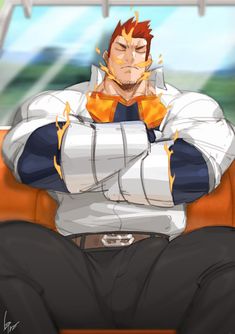
    Endeavor (My Hero Academia)

    You know how Nigerian parents motivate you to work hard, and don’t let you rest, then you start thinking it’s normal not to rest? That’s this man. All he cared about was training his son, Todoroki because he was the only one of his four children to have both parents’ quirks. Endeavor neglected his other children and trained Todoroki tirelessly. I mean, was the training for a good cause? Yes. Did Todoroki learn to be a better hero and person? Yes. But that’s not the point. To be fair, if my name was Endeavor, I too would move mad sha. 

    RELATED: Annoying Conversations That Happen in Every Nigerian Anime Group Chat

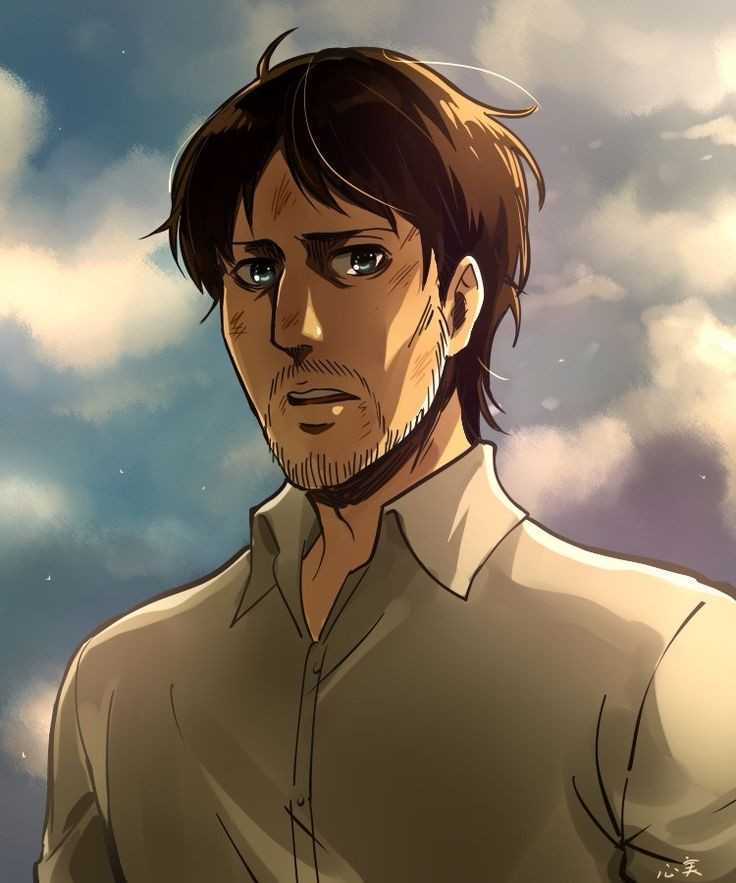
    Grisha Yeager From (Attack on Titan)

    It’s hard to say whether any character in Attack on Titan is good or bad because sometimes you have to make selfish decisions when your country is at war. Grisha trained his first son to be a spy and turned his second son into a flesh-eating monster to protect them. While the thought was sweet, why did he make Eren eat him just for plot development? Why would he traumatise him like that? Oh, and the best part? Turning Eren into a titan reduced his lifespan to 13 years. I present to you the father of the year. 

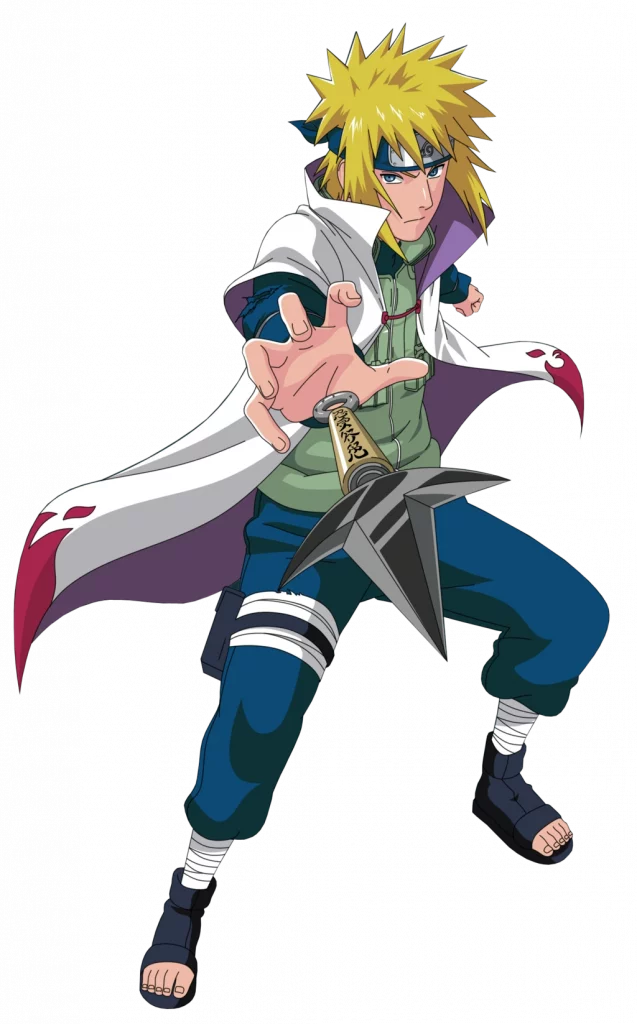
    Minato Namikaze (Naruto)

    I wanted to cut him some slack at first because he died before Naruto was born, so he couldn’t have been that bad. But, Minato sealed the nine-tailed monster that killed him in his newborn baby, Naruto, without even thinking twice. The least he could have done was write Naruto a letter preparing the boy for the amount of hate the villagers would have towards him, but did he do that? No, Minato waited until Naruto turned 16 to meet him through Ninja magic. He got punched in their first meeting as he deserved. Minato is a good guy, but what was he thinking? 

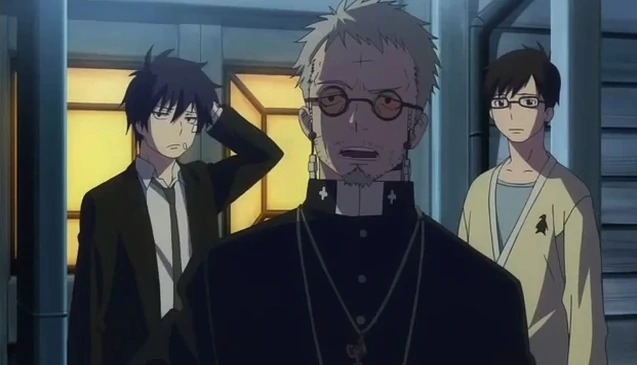
    Shiro Fujimoto (Blue Exorcist)

    This man was a paladin, a fancy name for a pastor specialising in exorcisms. This man saved the lives of Satan’s twin babies, Rin and Yukio, and adopted them, which was nice. But the least he could have done was tell Rin he had inherited the devil’s power. Instead, he told Yukio and trained that one to be a paladin to “protect” his demon brother. On top of all this, he still had the audacity to die with many unanswered questions. If I see this man? It’s on sight. 

    RELATED: Why Watching Anime With Nigerians Is Always Hilarious

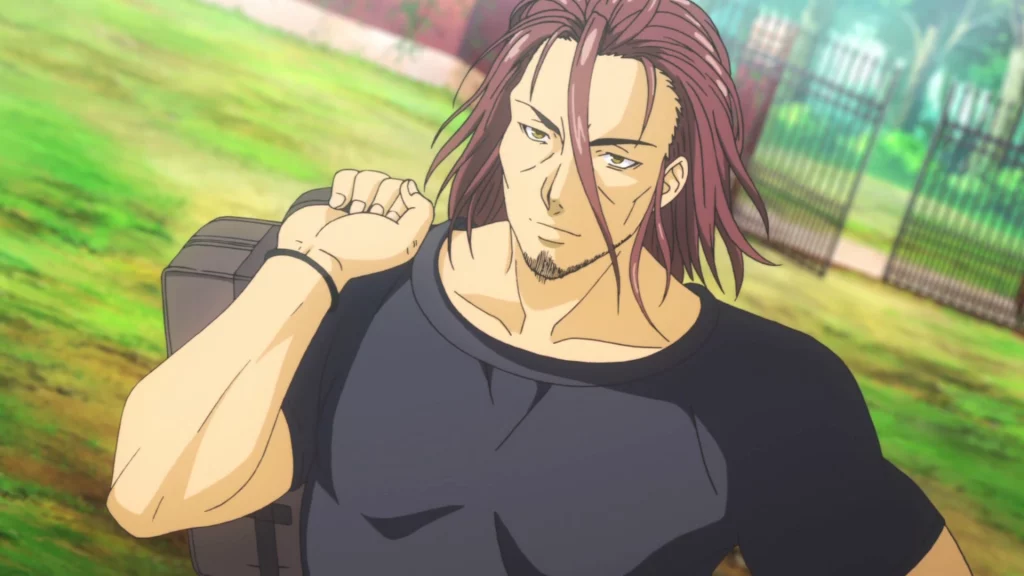
    Jouichirou Yukihira (Food Wars)

    Jouichirou is a professional chef, the best chef in this anime world. He made cooking with his son Soma look so fun, teaching him life lessons on the side. It was cute until he woke up one day and abandoned Soma, and their small food kiosk, to supposedly make him self-reliant! Then, he sent a letter asking Soma to apply to the chef school he finished from without preparing the poor boy for how shitty those rich kids can be. He’s just lucky he fathered an “aspire to perspire” son who thinks he can win anything with friendship on his side. If not? Poison straight.

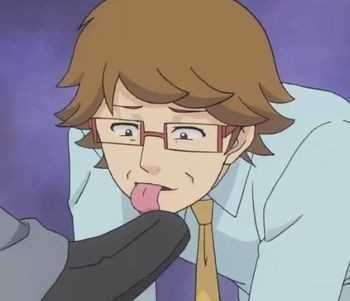
    Kuniharu Saiki (The Disastrous Life Of Saiki) 

    This man is probably one of the funniest anime dads. He was also super sensitive to his kid’s needs and loved his wife. But did he make his psychic son fix all his problems, including the work and marriage-related ones? Yes, and that’s totally not normal. I need this man to find shame and borrow it from wherever he found it. 

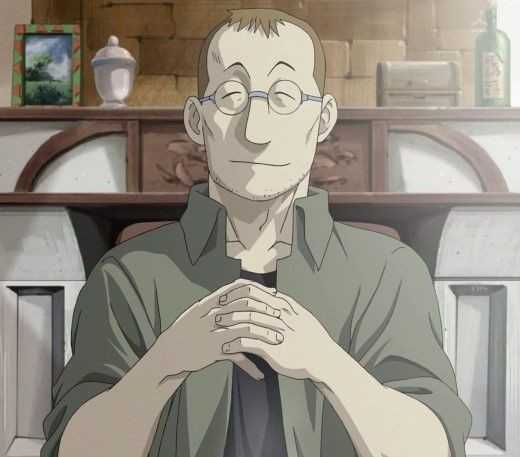
    Shou Tucker (Fullmetal Alchemist)

    If ththere’sne thing the anime community agrees on itit’shat this guy is the worst dad in the history of dads. At first, they made him seem like this nice guy who loved his daughter and dog and was just trying to make it in the world of science magic (aka alchemy). His alchemy career wasn’t working out, so the state took his license away. This man of sane mind now decided that the best thing to do was to use alchemy to merge his daughter, Nina, with their pet dog, turning them into a chimera. After doing this, he still tried to gaslight the creature, talmbout how no one understands him. Uncle, even satan will not understand you. Rest.

    ALSO READ: Don’t Watch These 9 Anime Series Before Going to Bed

  • My Goal Is To Become A Father and Husband — Man Like Obafemi Onwochei

    What does it mean to be a man? Surely, it’s not one thing. It’s a series of little moments that add up. Man Like is a weekly Zikoko series documenting these moments to see how it adds up. It’s a series for men by men, talking about men’s issues. We try to understand what it means to “be a man” from the perspective of the subject of the week.


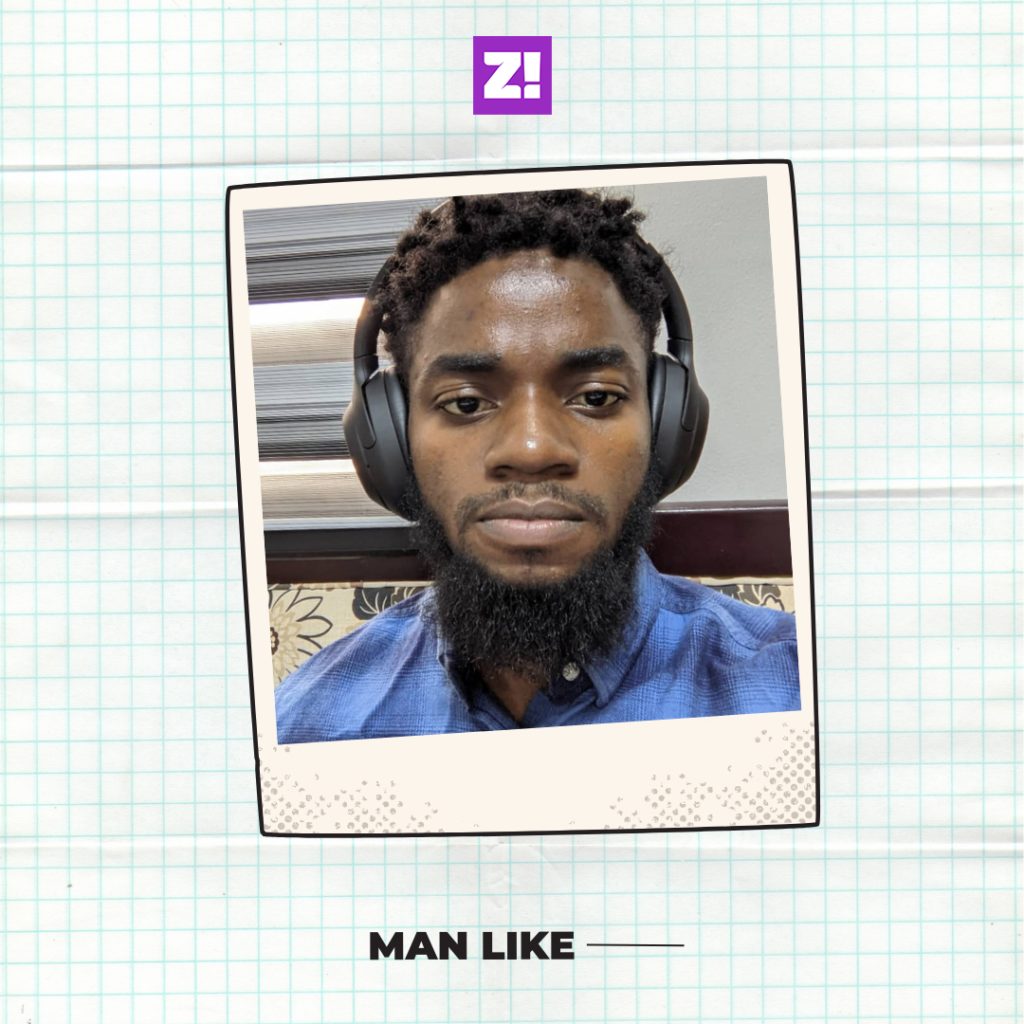
    Today’s Man Like is Obafemi “TheGrandVezir” Onwochei, a doctor and 2D animation generalist. He talks to us about how an unhealthy work environment made him decide to switch careers, how growing up in a close-knit family inspires him to create one of his own and how being vulnerable in romantic relationships is difficult but necessary.

    Tell me something interesting about yourself.

    My name is Obafemi Onwochei. At this point, people usually say, “Oh, you’re half-Yoruba, half-Igbo,” or “Your dad is Igbo and your mom is Yoruba.” Neither of these things are true. It’s also not an adopted name nor is it because I’ve lived in Lagos all my life. Both my parents are Igbo. My dad just decided to give my brother and me Yoruba names. 

    Interesting. What’s your relationship with your dad like?

    I had more books than toys growing up and that was because of my father. He also made me very good at picking up skills and mastering them in very short periods. When I went along with his decisions, our relationship was quite smooth. 

    He’s, however, that brand of Nigerian parents who think they’re right about everything and their opinion is the fact.  As I got older, we started to have conflicts on more and more issues. Presently, our relationship is all right but strained partly because of my career change decision. 

    What decision?

    I’ve been a video content creator focused on animation and motion graphics for the past three years. I originally trained as a medical doctor, but Nigeria happened.

    How?

    From my induction, I was already disillusioned by the health care system. It took me ages to get a house job, and I should have taken that as my cue to leave this country. By the time I decided to leave, the damage had been done. I was no longer interested in practising medicine. The meagre doctors’ salaries, the lack of infrastructure and the low morale made me lose interest in being a doctor, so I latched onto the next thing I was interested in — design and 2D animation.

    From medicine to design and 2D animation. That’s a big career jump. Why?

    I’ve always been amazed by creativity — what goes into creating something out of nothing. From making several ingredients into one soup to turning a bunch of shots into videos and movies, creativity inspires me. It wasn’t a big jump. I just elevated a hobby to a career in video making.

    Safe to say you left your job for your passion?

    I don’t think I can call any job my passion, per se. My only goal in life is to be a good father and husband. Every other thing, such as practising medicine or video making is just a means to an end. I’m not a husband or father yet, but I’m going to take any means necessary to make sure that I’m in a good position to provide for those that I love. It doesn’t matter if it’s by saving lives or by animating pictures. My passion is to successfully run a close-knit family.  If I end up not being a good father or husband, I would be unfulfilled.

    Is your family close-knit?

    My family is small. I have just one brother in addition to my parents. Growing up, everyone was involved in the success and progress of the others. We always supported each other. I helped my brother with his academics, my father provided what we needed financially, and it worked. This is why I want a close family. 

    Interesting. At what point did you realise you were your own man?

    I think it occurred in small milestones. The first point was leaving my parents’ house just before my youth service in 2016, in Onitsha. I believe every man should take that leap of independence at some point. 

    The next point was when I became a doctor and realised that my decisions were crucial to saving lives. I watched life leave the earth and watched it come into it. That gives you a sense of confidence in your decisions. 

    A random question: what kind of person are you in relationships?

    When I’m in love, I’m fully at my partner’s service. I draw an insane amount of happiness from satisfying my partner’s needs and making them happy. Everything I do is geared towards making their life easy. I’ll do anything they want to make them happy, as long as it’s not illegal.

    There’s a general belief that men should not be vulnerable. People say what you share can be used against you. But I can’t help being open. I’m a very emotional guy, and I don’t try to hold back my emotions, especially with people in my close circle. An ex almost made me regret this and it really hurt.  I didn’t see the end of the relationship coming, so I was devastated and tried to find an outlet for my emotions. . But I won’t be stopped.

    It helps that I have support systems that are accepting of my vulnerability. 

    I’m big on crying too. Men and women both have tear ducts. There’s no reason not to cry if you’re feeling overwhelmed. I cried when I saw movies like Coco and Moana. Bottling things up inside you might cause you to act out in some unhealthy way like lashing out. It’s better to process emotions healthily.

    Interesting. What does it mean to be a man?

    I don’t subscribe to the many tropes of toxic masculinity, but one I find trouble letting go of is being a provider. In yesterday’s, today’s and tomorrow’s world, being a man means being a provider.

    What does a relaxing weekend look like for you?

    Flying out to Uyo on a Friday night to see my madam. Stay in with her at night and all day Saturday. Then I’d go get fisherman soup from my favourite restaurant in Uyo. Absolutely amazing. Then I’d fly back on a Monday in time for work.


    Check back every Sunday by 12 pm for new stories in the Man Like series. If you’d like to be featured or you know anyone that would be perfect for this, kindly send an email.

    Are you a man who would like to be interviewed for a Zikoko article? Fill this form and we’ll be in your inbox quicker than you can say “Man Dem.”

  • I’ve Always Struggled With My Identity — Man Like Seni

    What does it mean to be a man? Surely, it’s not one thing. It’s a series of little moments that add up. Man Like is a weekly Zikoko series documenting these moments to see how it adds up. It’s a series for men by men, talking about men’s issues. We try to understand what it means to “be a man” from the perspective of the subject of the week.


    Today’s Man Like is Seni Oremodu, a 27-year old digital marketer. He talks about how his mother’s death and secondary school experiences made him lose his faith and interest in religion and dealing with an identity crisis.

    What did you see yourself doing when you were younger?

    I wanted to be a pastor. Everyone thought I was going to be a pastor. Then I started asking questions about religion no one could answer. I moved on to science. I wanted to be a nuclear scientist, but Nigeria has a way of narrowing the scope of your dreams. I opted to study chemical engineering instead. When I was 18, I visited a friend and met someone making beats. I picked up an interest in music production, and I made beats to make extra money in uni. In 300-level, I teamed up with a drummer friend and formed a boy band named Publiq.

    When I graduated, someone asked me to manage a couple of social media accounts because my tweets were funny. I had no idea how to manage accounts. I flopped my way through that job, so I took courses in digital marketing to learn it. Digital marketing wasn’t what I had in mind since I studied chemical engineering, but when I get involved with a topic, I become completely obsessed with it. That’s what happened with digital marketing. I worked as a digital marketer for a couple of years. Now, I’m the head of growth at Onboardly, a startup.

    Wow. That’s quite the professional journey. Tell me all about losing your religion.

    Ah. Well. I grew up in Port Harcourt. I wasn’t aware at the time, but we were poor. I couldn’t afford certain things, but my parents did their best to provide. I only realised that I wasn’t in the same social class as other kids when they showed off toys in school.

    My mom died when I was 12 and that sent me down a spiral.  Answers were not forthcoming when I asked questions, I read the entire bible, and it did little to satisfy me. I went on to read books about atheism by authors like Richard Dawkins, and I think it was in my teenage years that I swung into my agnosticism. 

    When I got into secondary school, which was a military school in Uyo, I completely disconnected from religion due to the abuse and bullying.

    Wow.

    My dad sent me to a military school because he had the idea that it would make me stronger. I was beaten every day. It was so bad that the junior students used to fantasise about how they would beat juniors when they were promoted. 

    Did it make me stronger? In a twisted way, yes. For example, I’m not afraid of soldiers. They beat us every day, so I don’t feel threatened when a soldier comes on the scene.

    Did it affect your relationship with your dad?

    I love my dad. I’m a lot like him. Because I was young when I lost my mother, my father’s character was heavily imprinted on me. He’s a very funny guy, and I got my sense of humour from him. I also got a lot of my morality from my dad. He used to make us do morning devotion every day, we always learnt something new. 

    I inherited his just-do-it attitude, and I’m really proud of that. He had a fixation on ensuring my siblings and I learnt the multiplication table. He forced us to learn it by heart, claiming that if we knew the table, math would be easy. True to form, math and chemistry became my favourite subjects, hence my obsession with nuclear science and later, chemical engineering. He made me understand that it’s not too late to chase anything that interests you. To him, when you stop experiencing new things is when you stop living. He actually went back to school six years ago to study law, at 62 years old. He’s due to be called to the bar this year. 

    He also taught me to be responsible. During my IT in 300-level, I was working in an oil company in Port Harcourt. My dad called one day and advised me to save up my money. When I was to resume 400-level, I asked my dad for money to pay my school fees. He laughed and said, “What did you think I was telling you to save for?” I paid my final year fees from my pocket.

    LMAO. Who had the biggest impact on your idea of masculinity?

    I’ve always struggled with my identity, having been born to Yoruba and Rivers parents. On one hand, I am a Rivers boy who spent my formative years in Port Harcourt, but I never really acclimatised because I was an indoorsy child. On the other hand, I’m a Yoruba boy in Lagos who can’t speak Yoruba. People often want to put me in a box and when I don’t fit neatly into any one, they’re not quite sure what to do with me. 

    I was still unsure of my identity when it was time for university. Then I met my cousin, Niggydip in UNILAG. He was the older brother I never had. He’s the one who advised me to study chemical engineering instead of electrical engineering, given my mathematical talents. He always looked out for me and made sure I was fine in school. He actually introduced me to puns. He took me under his wings, took me to shows and concerts while I was in school. He’s the kind of guy to make sure everyone around him was taken care of. I looked up to him for everything and actively tried to model my life after his.

    In my final year in uni, he had a cardiac arrest while he was out jogging and slumped. Bystanders, instead of helping him, robbed him of his personal effects instead. I cried. I also missed his burial. On the day of his funeral, I had an exam scheduled. I rushed through the exams to try to make the ceremony, but I was too late.

    I’m sorry man. How did you deal with that?

    You learn to move on.  Life just has a way of going on, no matter how heavy the grief is in your heart. You grieve until you can talk about the person without breaking down every time. Life just has a way of going on, no matter how heavy the grief is in your heart. I learnt to move with the times because one minute, people are consoling you for your loss, the next, they’re back to tweeting about Lai Mohammed. 

    My support system also helped me get through it. 

    I’m glad. What are you looking forward to?

    Because I didn’t grow up around a lot of money, I’ve been a content person. I can be stingy to myself. My career gradually went on an upward trajectory, and I started making more money but didn’t have much to spend money on. I’ve decided that I work too hard to deny myself things, so I’m trying to learn to buy things for myself and give myself treats like vacations. Like my dad, I believe the moment you stop experiencing things is when you start dying, so I intend to experience as much as I can. I want to travel and find things that I enjoy. 

    Check back every Sunday by 12 pm for new stories in the Man Like series. If you’d like to be featured or you know anyone that would be perfect for this, kindly send an email.

    Are you a man who would like to be interviewed for a Zikoko article? Fill this form and we’ll be in your inbox quicker than you can say “Man Dem.”

  • Seeing My Dad Cry Devastated Me — Man Like Ikoyi

    What does it mean to be a man? Surely, it’s not one thing. It’s a series of little moments that add up. Man Like is a weekly Zikoko series documenting these moments to see how it adds up. It’s a series for men by men, talking about men’s issues. We try to understand what it means to “be a man” from the perspective of the subject of the week.


    This week’s Man Like is Temitayo “Ikoyi” Ogundare, a lawyer and actor. He talks about his devastation when he failed his bar exams, living up to his father’s expectations and finding his feet again after an unfortunate business decision.

    Lawyer and actor. How did that combination happen?

    I’ve always had a passion for the stage. While studying law at Obafemi Awolowo University, a group of friends and I created a troupe called Pigment Theatre. We used to go around the South West enacting stage plays. I also used to star in skits. You’ll find me in skits with Agba and MC Lively. During my NYSC year, I got my little big break when I was invited to join the crew of a social commentary talk show on Red TV. That was when I started getting a bit of attention. I didn’t grow up thinking I was going to be a lawyer because I come from a family of actors, such as Taiwo Obileye. I grew up watching him do his thing alongside his colleagues and I was very attracted to the lifestyle. Getting to meet movie stars in real life made me want to become an actor.

    Nice. What was growing up like?

    I came from a small family of my parents and a young brother and grew up in the city of Ibadan. I had quite a strict upbringing. I went to a Catholic school and my father was quite the stern man, but I was still mischievous. My childhood was simple. We were a small family who didn’t go out a lot because my dad is obsessed with security. He didn’t let us mingle with neighbours and he never used to take nonsense. My mom has always been my guy. She’s one of my best friends.

    I imagine you must have had quite a number of conflicts with your dad.

    It was complicated. I admire my dad a lot; he’s a smart and diligent man. However, our personalities are very alike and we tend to clash often. I didn’t like the fact that he wanted me to mature much quicker than my age just because I was the firstborn. I wanted to be like every other kid but he had a lot of expectations for me and when I struggled under the weight, we’d have problems. He had big dreams for me I struggled to live up to. I’m glad he was hard on me because I can now appreciate that he was training me for a world that’s cold and tough. Many of the things I learned unwillingly are now useful for me in my journey.

    I wrote the bar exams for the first time in 2017 and failed. That was the first time I ever heard that my dad cried. I was already going through so much emotional and mental torture from the feeling of failure but hearing that my dad cried just tore through me. I knew I had disappointed him. The fact that my failure broke his heart broke my own heart. I felt like I couldn’t face him. 

    Aww. What’s the most awkward moment you’ve ever had with your dad?

    In my final year of university, I was home during a break. The night before I was due to return to school, he found a box of condoms under my bed.

    A whole box? Sir…

    LMAO. I had been involved with an NGO in school that gave out free condoms to students to help prevent the spread of sexually transmitted diseases. There was some leftover, which I took with me when I went home for the break.

    Sure. Let’s go with that story.

    LMAO. Anyway, the next day, he decides to drop me off in school, which was in the next state. In the middle of the trip, he parks on the shoulder of the expressway. He turns, looks at me dramatically  and says, “I know you’re an adult now, but that doesn’t mean you should go about having sex with everybody.” I was shocked. I asked him what he meant and he told me about his discovery in my room. It was then I explained to him about my activities with the NGO. I’m not sure he believed me.

    I’m not sure I believe you either.

    LMAO.

    Who do you consider your role models?

    I don’t believe in having just one role model because no one’s perfect. The ideal thing, which I practice, is to pick positive traits in different people who you admire. I’ve had a number of older people who I’ve learned from. One of them is my dad. He taught me how to be a gentleman. He’s also not a man of many words but he carries such a gravitas that you have to take him seriously. Another person is my boss, Femi Wright. He’s a brilliant man and someone I look up to. I also admire Richard Mofe-Damijo. He’s the image of the man I want to be like. He’s aged like fine wine, hasn’t he? You’ll find women falling over themselves for him.

    Speaking of, what’s your relationship with women like?

    I think women are amazing people. I have more female friends than male friends because I find it easier to relate with women and they feel comfortable around me.

    Have you had your heart broken before?

    As a legend once said, “Gbo gbo wa la ma je breakfast.” We will all eat breakfast. As long as you interact with women, you will have a heartbreak story. I’ve eaten breakfast, back to back. The most memorable, however, was this girl I dated. It was all nice and rosy until she told me she couldn’t continue the relationship. We were at a mall when she told me this and, right there and then, in front of hundreds of strangers, I knelt to beg her not to leave me because, honestly, I was crazy about her. It was heart-wrenching because I had no idea why I was being broken up with. It’s still one of the most embarrassing memories I have ever had, but it’s all water under the bridge.

    How do you combine showbiz with practising law?

    It’s not been easy but I’ve been able to make it work. When I failed the bar exam the first time, I decided to undergo my Youth Service. I still wanted to practice law but I was also interested in trying out as an actor. Since I had hit an obstacle in my law career, I wanted to strain myself to my limits to see what I could make of my other talents. That year, Red TV reached out to me that they’d like me to join a reality talk show called Red Hot Topics.

    After I re-wrote and passed the bar exam, I got a job at a law firm. I was giving both my job at the law firm and my reality TV show my all and doing the best I could. I worked at the law firm for a year. I didn’t think my gig with Red TV would be a problem, after all, I wasn’t doing it on company time. I was wrong. Immediately they found out I was on a reality TV show, the partners summoned me before I disciplinary panel and I had to give a presentation on why I should keep my job despite being on a talk show. By the time the show aired on YouTube, I was fired.

    It was quite challenging. I considered ditching law to focus on entertainment full time, but having written the bar exam twice, I wasn’t willing to come this far to give it all up and lock my certificates in the wardrobe. I applied to law firms and companies trying to get other jobs, but they weren’t forthcoming. Having to navigate life as a man during that period required me to do some growing up. I was a young man, trying to hustle in Lagos, away from home in Ibadan. Bills were piling up and I wasn’t getting a lot of income. I eventually got my current job at a professional services firm.

    Did you have a support system?

    I was able to survive that period thanks to my brother and my friends. They came through for me so many times and I’ll never forget what they did for me. It’s why I place a lot of importance on friendships. I don’t take them for granted. My parents also helped me out from time to time.

    Tell me about the time you’ve been the most afraid in your life.

    LMAO, it was actually very recent. You think one challenge is the greatest until you face another one. This challenge was the one that made me realise that all my previous challenges were child’s play.

    Sometime last year, I had a business idea to buy some products from the US and re-sell them here in Nigeria as a way to diversify my income stream. After solidifying my plans and making sure they were water-tight, I took a loan to start the business. Unfortunately, I did business with the wrong person. After sending the money, my business partner ghosted me. Soon after, the creditor came knocking, asking me to repay the loan. Together with the interest, it was a huge sum. 

    The moment I realised I had been scammed, I wanted to take my life because I had no idea how I could repay a loan running into millions. I was depressed for weeks and couldn’t tell anyone what was wrong because I was too embarrassed about the whole thing. I eventually told them and, again, my friends and my brother came through for me and rallied round to repay the loan. Tobi, Chris, Yemi, Tope and others will forever be in my heart. I’ll never forget what they did for me. I’m not over it but I learned a lot from the experience. We move.

    Damn. When was the last time you cried?

    I’m an emotional guy so I cry when I need to. My favourite artist is Drake so I know how to cry,  LMAO. I don’t think crying makes you less of a man. Being a man means being good to people and to yourself. A man never has to prove that he’s a man. It comes from within.

    What does a relaxing weekend look like for you?

    After a long week, I wake up late on Saturdays. There’ll probably be an owambe somewhere, seeing as all my friends are getting married. I don’t know where they are seeing the money. If there’s no wedding, I like to go to the beach to unwind by the seaside, my feet in the sand, the wind in my hair. In the evening, I’ll play soccer. On Sundays, I go to church, because it’s always nice to start the week with God. In the afternoon, I’ll watch the Premiership and prepare for a new work week. That’s pretty much it.


    Check back every Sunday by 12 pm for new stories in the Man Like series. If you’d like to be featured or you know anyone that would be perfect for this, kindly send an email.

    Are you a man who would like to be interviewed for a Zikoko article? Fill this form and we’ll be in your inbox quicker than you can say “Man Dem.”

  • Losing My Parents And Two Siblings Scared Me Shitless — Man Like Imoh Umoren

    What does it mean to be a man? Surely, it’s not one thing. It’s a series of little moments that add up. Man Like is a weekly Zikoko series documenting these moments to see how it adds up. It’s a series for men by men, talking about men’s issues. We try to understand what it means to “be a man” from the perspective of the subject of the week.

    Check back every Sunday by 12 pm for new stories in the Man Like series. If you’d like to be featured or you know anyone that would be perfect for this, kindly send an email.

    Today’s “Man Like” is Imoh Umoren, an indie filmmaker. He talks about losing both his parents at the age of 15, surviving a tough divorce and fathering his nephew and his son.

    When did you realise you were a man?

    When my mum died when I was 13 and my dad followed at 15. 

    Before then, growing up had been fun but religious. My mum was a university lecturer while my father was a businessman. My mum made me read a lot of books from the library to keep me out of trouble. Then my parents died.

    After they died, my siblings and I grew up rough and learned things the hard way. We had to live with relatives who weren’t the best people to grow up with and adjust to a certain lifestyle we weren’t used to. You can’t complain about things to your relatives the way you would with your parents. They didn’t take kindly to rebellion. I remember one argument I had with my aunt which led to her throwing me out of the house when I was in the university.

    I was quite rebellious. I think a lot of it came from losing my parents and not knowing how to deal with grief. Our society doesn’t treat grief properly. I didn’t know how to deal with it and my relatives didn’t either. So I became a very cold kid.

    How did you deal with the grief, eventually?

    Did I really deal with it? I don’t think so. Now that I’m an adult, I still struggle with it because I later lost my sister and brother within three months of each other in 2010. 

    I’m sorry.

    It’s life. You just deal with it. God gives his toughest battles to his strongest soldiers.

    At what point did you realise you were responsible for yourself?

    I got my first apartment when I was 16 from money I got working with my cousins. I realised I had to make money and stop depending on my relatives, so I talked to some cousins . My cousins in Port Harcourt used to drill boreholes, lay interlocking stones and other construction jobs. I’d help them out at the sites and they’d pay me. But my biggest break came by chance. I was in a bar having a drink when I overheard two South Korean expatriates talking about how they needed to drill some boreholes for their company. I seized the opportunity and jumped into the conversation, telling them I drilled boreholes. They asked me to send a cost quotation the next morning. Mind you, I had never drilled a borehole by myself.

    I ran to my cousin, Alex, and told him everything. He helped me draw up a cost quotation and followed me there, though I fronted as the “main guy”. We landed the contract and I got the lion’s share of the proceeds. That was how I made my first million at 18.

    How did you get into filmmaking?

    Growing up, my mom used to make me read a ton of books. I also watched sitcoms like Cheers and decided I wanted to be a sitcom writer. I wrote a few scripts and somehow that evolved into me directing. I did a course on television and film and that cemented me as a director and producer.  I made my first film in 2009. It was called Lemon Green. I was 26.

    There weren’t a lot of experts in Nigeria producing shows, so there was a demand for Nigeria TV producers. I produced an MTV show, Malta Guinness Street Dance and a bunch of other shows.

    What was your relationship with your dad like before he passed?

    He had a heart attack when I was 15. We weren’t very cool because I think I reminded my dad too much of him — stubborn and headstrong. We also looked very much alike and talked the same way. 

    My mother’s family were more well-to-do than my father’s family. He was a tough guy who roughed it up and single-handedly made his wealth. He always felt some type of way so he was constantly trying to prove himself and get some respect. There’s a certain disdain for people with new money. People will still ask you, “Who is your father?” No matter how successful you are.

    I wasn’t cool with my dad. Perhaps because I looked just like him, he used to talk and treat me like I was an adult. Still, I regret that I wasn’t able to spend enough time with him. I think the cold aloofness comes from the tough upbringing men went through in his generation. So perhaps I shouldn’t judge him too harshly. He had his odd ways of showing affection, like telling me to come and sit beside him or give me a piece of meat from his plate. 

    How did you handle your mum’s passing?

    Oh man, I was broken. I didn’t speak for three days.She had been dealing with diabetes, and we knew she was dying. On the day she died, I was coming back from school with my siblings. I felt something strike me and I fell. Immediately, I knew something had happened and I told my siblings, “Mum is dead.” We continued home in silence, and the news was broken to us by an uncle.

    My religious faith was affected by her passing, which I think she saw coming. Before she died, she asked me, “If I die, what are you going to do about your faith?” We had prayed and prayed and she wasn’t getting any better, so I didn’t even know what to believe in anymore. After she died, there was a disconnect from God and everything else. I just went cold.

    How’s your relationship with your son different from the one you have with your dad?

    My son will be seven this year. He lives with his mother in the UK, so most of my parenting is done via video calls. He looks exactly like me and I’m so proud of that. Sometimes, when he’s frustrated, he reacts the exact same way I would.

    Tell me about getting married.

    We were married for about three years before we split. We grew up together and were very tight friends before we got married. 

    What went wrong?

    There’s enough blame to go around but on my part, I think I was too hyper-focused on my work to pay much attention to anything else, including her. Things deteriorated and the marriage ended. We’re still very good friends..

    There’s a mentality among African fathers that once you’re providing for your family, that should be enough. When we don’t provide, we feel like we’re not responsible enough or deserving of love.

    I didn’t know the importance of spending quality time with the people who loved me. I’m learning now that providing for the family, as important as it is, isn’t all there is to be a husband and a father. Paying for family vacations or buying new cars are important, but so is making time for your loved ones. 

    I had always dreamed of having my family. So it was a rude shock because I thought everything was going great till it all came crashing down on me. When we got divorced, I became suicidal.

    I think people need to cut men some slack; we’re working so hard trying to make a good life for the family.

    How did you handle the divorce?

    Man, I was devastated. After the marriage ended, I lived in a hotel for a year, talking to myself. I was barely functioning. I loved her very much. I wished it didn’t happen. I thought my life was over at that point. My work suffered and I had to be laid off from some projects I was working on.

    I had always dreamed of having my family. So it was a rude shock because I thought everything was going great till it all came crashing down on me. I was suicidal.

    How did you get past it?

    It was women, bro. Women got me through the toughest times. I was getting affection from women, being nursed back to life, bringing me food at the hotel and cheering me up.

    How did the divorce affect your son?

    He was three at the time, so he wasn’t aware of everything going on. It wasn’t until recently that he asked me why I wasn’t married to his mom and why I was always alone. Imagine your own son taking shots at you. It really be your own blood.

    LMAO. What do you tell him?

    I tell him to focus on his dinosaurs.

    LMAO. What’s it like parenting from a distance?

    It’s hard as fuck. I wouldn’t recommend it to anyone. I can’t see my son often enough. I can’t help him with his homework as I would love to. Due to COVID-19, I wasn’t able to go see him for almost a year and that was so hard for me. There’s also the disconnect between our accents, him with his UK accent and me with my Nigerian one. We’re always saying “come again?” on our calls because we’re both struggling to hear each other’s accents. Parenting like this isn’t easy but it’s something you must do. I’ve not been the best at it but I try.

    Interesting. Tell me about your biggest fear.

    My biggest fear would be not doing anything I intend to do with my life. I have really big dreams, and I’ll be very pissed if I die before I fulfil them. I don’t want to die early because there’s so much I want to do. My art is improving as the years go on and dying without getting to that god-level of creativity will pain me o.

    You’re really all about your work.

    That’s my Achilles heel. I’m obsessed with filmmaking. I was blessed with that talent so that I can improve myself and go further.

    How’s your romantic life now?

    It’s been a difficult time for me dating. I’m very focused on my work and hardly have time outside of it. Ideally, I’d want to date someone who’s just as ambitious so they don’t feel ignored. Iron sharpeneth iron, not wood.

    People want someone who’ll be there all the time, but that’s my weakness. I’m still trying to 

    work hard and focus on my career, which might take a lot of time and that could lead to different issues. I really can’t say that working all the time is a problem. I was poor. I don’t want to ever experience that again. That’s why I work the way I do. I’m not going to compromise my hustle because of love. When everyone leaves you, all you have left is your hustle. I don’t want my kids to go through what I went through. I want to create a very soft life for them, and if that involves me working my ass off 24/7, so be it. 

    Do you think you’ll have a family again?

    Definitely. This hoeing life is not for me. Do you know how hard it is to talk to ten women a day? It’s too stressful. Seriously though, the whole family-in-the-suburbs-with-the-white-picket-fence idea has always been my dream. Hopefully, I get to settle down soon. 

    When was the scariest moment of your life?

    There are several moments in my life I’ve been scared to shit. When my brother and sister died, I thought I was going to die. There was a time my son was ill during a trip to Portugal. I was scared to death. I’ve already suffered so much loss. I can’t bear anything happening to him. I still get scared sometimes when my nephew, who I’m raising, goes out and doesn’t come back on time. 

    Oh, you’re raising your nephew? How’s that like?

    I’ve been raising him for 10 years and being a father figure is a struggle oh. We always have big fights because he doesn’t pick up his phone. He also has that young teenage arrogance and is just as rebellious as I was when I was his age. Teenagers are just weird, man. I’m worried every time he goes out whether he’s going to come back alive because of the current security climate. I have a constant fear he’s going to get in trouble with the police or something.  I’m definitely not looking forward to my son becoming a teenager.

    Check back every Sunday by 12 pm for new stories in the Man Like series. If you’d like to be featured or you know anyone that would be perfect for this, kindly send an email.

    Are you a man who would like to be interviewed for a Zikoko article? Fill this form and we’ll be in your inbox quicker than you can say “Man Dem.”

    Check back every Sunday by 12 pm for new stories in the Man Like series. If you’d like to be featured or you know anyone that would be perfect for this, kindly send an email.

    [donation]

  • 5 Fathers Discuss What They Love About Raising Daughters

    Modern-day fatherhood is no mean feat. Have you met children? Raising daughters is doubly difficult because of a culture and society that’s mostly unfair to women. Still, being a father to girls has its rewards in the small, unexpected moments. I discussed with five young fathers about their favourite things raising daughters.

    Ken

    Daughters aged 2 and 4.

    My favourite part about raising them is observing them play and listening to the conversations they have with each other. I love reading with them because I like to teach.

    My babies are young so the hardest part about raising them right now is settling their incessant squabbles when they fight over toys, getting them to eat and lulling them to sleep, which is the hardest. On a broader level, it’s difficult raising children right now because they need to play outdoors and with other children but can’t right now because of the pandemic. I don’t think there’s a significant difference in the challenges in raising girls compared to boys that can be pinpointed on their gender.

    Zaid

    Daughters aged 5 and 6.

    They were born so close together, they look like twins. I’d always wanted daughters because I grew up without an older sister. Raising them has been fun and I have a very tight bond with them. They’re thoughtful, inquisitive and always need attention, like their mother. I’m only afraid of bad habits they might pick up when they’re older.

    Tex

    Daughters aged 13, 11 and 7.

    It has to be the hugs, kisses and “I love you’s”. It’s warm, open and expressive. I also love when we spontaneously gather around the piano to sing together. It’s really cute.

    I feel like the world is kinder to boys and men so I feel a constant tension between letting them be and feeling like I have to make them tougher for the challenges ahead.

    Bruce

    Daughter aged 2.

    I love the fact that having daughters has given me the chance to understand women’s growth and dynamics from the onset. It’s been a powerful and insightful experience. Girls are forced to grow up too fast. Their childhood is cut short earlier than boys’ because, from an early age, we have to teach her not to trust strangers. I’m avoiding forcing adulthood on my baby by being part of her growth as possible to ensure we can always talk about anything. I run a community of Dads who are looking to exchange ideas on how best to navigate fatherhood.

    Osas

    Daughter aged 2

    My daughter likes to talks a lot and very well for a two year old. She’s always making conversation with me at her young age. She loves music and is very vocal about her choice in music.

    There’s this unadulterated, raw feeling of love in the eyes of my daughter when she looks at me. There’s absolutely nothing I won’t do for her when she looks at me that way. It’s difficult to disappoint them. It is very difficult keeping up with daughters. What they want is what they want and they won’t let you be until they get it.

    If you enjoyed this, you’ll love this too: 4 Nigerian Men Tell Us What It Is Like Being A Single Dad 

    Want to disappear down a rabbit hole of men-focused content? Click here.

    [donation]

    [donation]

  • 6 Nigerian Men Share The Hardest Parts About Fatherhood

    Parenting has never seemed like an easy task. I’ve heard many people talk about how life-changing it is to become a parent. Last week, I decided to talk to a few Nigerian fathers of different ages and backgrounds to know what the hardest parts of fatherhood are.

    Here’s what they had to say:

    How 'The Talk' Between Black Fathers and Sons Has Evolved

    1. Yemi, 58.

    I have five children. My oldest child is 37, and the hardest part about fatherhood is struggling to make sure, day in day out that everything is all right. By everything, I mean food, clothing, shelter, health, schooling, protection, safety, etc. You are always praying for things to turn out well for the family. You’re always afraid to receive bad news that something has gone wrong with your wife or children. Even when you’re asleep, they’re on your mind.

    2. Uche, 31

    On Father's Day, recognize that being an active black father is a  revolutionary political act of love

    My son is three years old. On the arrival of your child, you lose your lifestyle and maybe a bit of your personality. Children also alter the relationship you have with your partner. You have to do everything to protect and provide despite all odds being against it. You may have to break many standards. The feeling of not being able to provide enough to take care of the family is one thing that drains the energy of a responsible father. All that busyness can make a father miss out on the key developmental parts of their child’s life and when you look back, you realise that you were out hustling when you should have been there to see your child grow. It’s a terrible feeling.

    3. Frank, 37

    Understanding the Positive Impacts of African American Fathers | Crown  Family School of Social Work, Policy, and Practice

    Generally, fatherhood is fulfilling, but because it comes with responsibilities, it can also be tasking. Based on personality, resources and experiences, people experience varying difficulties when they become fathers. For me, the hardest part about being a father to my children is the provision of basic amenities. As a father, you have to constantly provide. There are no breaks. Today it’s food, tomorrow it’s school fees, another day it’s clothes. Another thing is watching your children being sick and not being able to do anything about it. It’s draining. When your child is in pain, you feel the pain too.

    I travel a lot for work, so I miss my children a lot. I know fathers who are out hustling and don’t express that they miss their children because they’re working to provide for them anyway, but when I’m not with my children, I terribly miss them.

    4. Fatai, 46

    I have three children. My first child is 19. The hardest part about being a father is that you have to create a path for your children. The thing is, you’ve never been a father before, so you’re doing these things for the first time and you’re scared that you aren’t doing the right thing. Will I be able to lead my children onto the right path for their lives? You can’t leave your child at any point in their life. You’re their father forever, so you have to keep going. As your children grow, they develop different needs, so you have to adapt your fatherhood to your children’s needs at different points in their lives.

    5. David, 27

    August 2015 – The World According To Guyer

    I’m a new father. My son is two months old and the hardest part about being a father is having to work a bit harder to provide for both my wife and son. My wife can’t work right now because of our son, so I have to put in an extra shift. Putting in an extra shift means I don’t have as much time for my family as I would love to. So I’m more drained because I have to work more, and I also want to spend more time with my family. It’s about finding a perfect balance.

    6. Oba, 55

    Being a father is a task that continually needs wisdom. You can’t take breaks. It’s a fully immersive lifelong journey that you have to constantly learn from. One thing many fathers don’t know is that they need to learn from other fathers who have done it before them. Fathers need to ask questions.

    The way you raise your child should be determined by your culture. I’m from Kwara state, and my father was polygamous so he never had time for us. The only lesson I got from him was “Remember the child of whom you are”. Even though I didn’t receive so much training from him, I know that my children must also remember where they come from and that helps me determine how to train them. It’s hard figuring out all these things at once because I have three children with completely different personalities, and I have to be a father to every single one of them.


    QUIZ: What Kind Of Parent Will You Be?

  • The Fear Of My Mom Prevented Me From Joining Gangs — Man Like Godwin Tom

    What does it mean to be a man? Surely, it’s not one thing. It’s a series of little moments that add up. Man Like is a weekly Zikoko series documenting these moments to see how it adds up. It’s a series for men by men, talking about men’s issues. We try to understand what it means to “be a man” from the perspective of the subject of the week.

    Check back every Sunday by 12 pm for new stories in the Man Like series. If you’d like to be featured or you know anyone that would be perfect for this, kindly send an email.

  • 11 Daughters Talk About the Best Things Their Dads Have Done for Them

    Fathers aren’t usually in the news for good things. From buying the wrong diaper sizes to forgetting birthdays, some men clearly need to do better as fathers. Still, there are some solid fathers out there, doing the work, both as men and as fathers. I spoke to 11 women about the best things their dads have done for them.

    Tosin

    My dad has been dead a while so I have no real adult memories of him. However, one memory that stands out was him making deals with me. If I scored above a particular mark, he’d buy me a thing that I want. In JSS 3, he knew I wanted my own laptop so he said if I made all A’s, he’d buy me one. Needless to say, I studied really hard.

    On the day results came in, I excitedly opened the envelope only to find out I had gotten A’s in all subjects but one. He said, “Too bad. We had a deal.” While I was dejected, he asked me to get him something from my room, only for me to find the laptop there. He had bought it way before I even wrote my exams. It was never conditional and he would have bought it for me anyway.

    Tolulope

    As a 7-year-old, I preferred toy cars to dolls. I’d break the cars into pieces and try to put them together and my father would get mad every time I did that. When I didn’t stop, he noticed the trend and decided to try another method.

    He bought a set of screwdrivers, sat me down and taught me how to look for screws and clips. He showed me how to use screwdrivers and how to carefully remove parts and put them back together again. That education propelled me to learn to repair anything that has a screw in it — from phones and TVs to laptops and microwave ovens. I’m forever grateful for my dad.

    Young black girl sitting on dad's knee playing ukulele Stock Video Footage  - Storyblocks

    Tofunmi

    TW: Suicide

    I live in the UK while my parents live in Nigeria. At the beginning of my second year of uni, I was dealing with depression. Suicidal, I sent a goodbye note and recording to my Dad’s email, knowing he won’t see it on time. Luckily, my Dad saw it and began to frantically call the police in the city I lived in and the one I travelled to. They searched till they found me, took me home and got me the help I needed. He’s been there for me ever since, gives me space when I need it and doesn’t judge me. I love him so much.

    Deborah

    When I was still in secondary school in 2013, I was beaten and sent home by my class teacher because I hadn’t paid my end-of-the-year party fee. The beating I received gave me a bleeding cut on my thumb. My dad was so furious when he saw the injury that he changed into his military uniform, took me back to school and asked me to point out the teacher. 

    He went to the man, held him up by his trousers and said, “I’ve risked my life to protect and serve this country and I won’t have a civilian do this to my child.” He beat the shit out of him till people came to plead on his behalf. He then made the teacher call back all the students he sent home. I know what he did wasn’t ideal but I love him for doing that for me.

    Adedayo

    Everything my dad has done for me is the best. He literally sacrifices his wants for our happiness. If I were to be more specific though, I would say being there for us as kids. He would always play games like Monopoly and Scrabble with us and take us to parks and game reserves and for me. Buying me my blue Raleigh mountain bike (that I still have today) was the icing on top of the cake. My dad is just amazing.

    Strengthening Father-Daughter Relationships

    Inumidun

    My Dad has done a lot of things I can’t even remember. The one I do remember was when I was supposed to travel back to school. The bus park was crowded and there were very few buses. One finally arrived and it was a physical struggle to get in. My father, without minding his pride or his clothes, struggled with the other passengers to get me a seat in the bus. It really touched my heart and I will never forget it. I will do anything for that man.

    Moyo

    His ever-constant presence is the best thing about him. He’s always just a phone call away to fix any of my problems. He does cute stuff like randomly bringing me foodstuff to emptying his wallet for me whenever we run into each other in town.

    The best thing he’s ever done for me has to be when I was supposed to travel to the Philippines for my masters. The agent who handled my admission process made an error and got me the wrong course. I complained about this but the agent said I could change the course when I arrived there. My father saw how sceptical and scared I was of being stranded in the wrong course in a strange country so he told me I didn’t have to go if I didn’t want to. He didn’t mind forfeiting all the money he had spent on the process. Overall best guy.

    Bolutito

    My dad always sacrifices his needs for my siblings and I, even if it means he has to borrow. The best thing he’s ever done for me was staying with me in the isolation center when I had COVID-19. He had come all the way from Ibadan to Abuja where I schooled. He risked catching COVID and dying just to make sure his baby girl was fine.

    Uju

    He always remembers to buy me Ribena. It’s a big thing for me because most of the time it feels like he only cares about my education. I like that he noticed my favourite drink and keeps getting it for me

    Ada

    My dad introduced me to books and cultivated my love for literature. His library was my library and there was no book to big for his baby to read. He’d take his time to teach us math after work. It’s all because of him I love math.

    Most importantly, he introduced me to music. He listened to a wide variety of genres and that helped me appreciate music. Lastly, he taught me that there was nothing wrong with being soft even though he’s the toughest man I know.

    Ope

    He went to Ife to process my admission. At the time, admissions were processed manually. He took all my documents to ensure they were submitted properly. I love that man.

    Are you a man who would like to be interviewed for a Zikoko article? Fill this form and we’ll be in your inbox quicker than you can say “Man Dem.”

    [donation]

  • Crying Doesn’t Make You Less Of A Man — Man Like Timileyin

    What does it mean to be a man? Surely, it’s not one thing. It’s a series of little moments that add up. Man Like is a weekly Zikoko series documenting these moments to see how it adds up. It’s a series for men by men, talking about men’s issues. We try to understand what it means to “be a man” from the perspective of the subject of the week.

    Check back every Sunday by 12 pm for new stories in the Man Like series. If you’d like to be featured or you know anyone that would be perfect for this, kindly send an email.


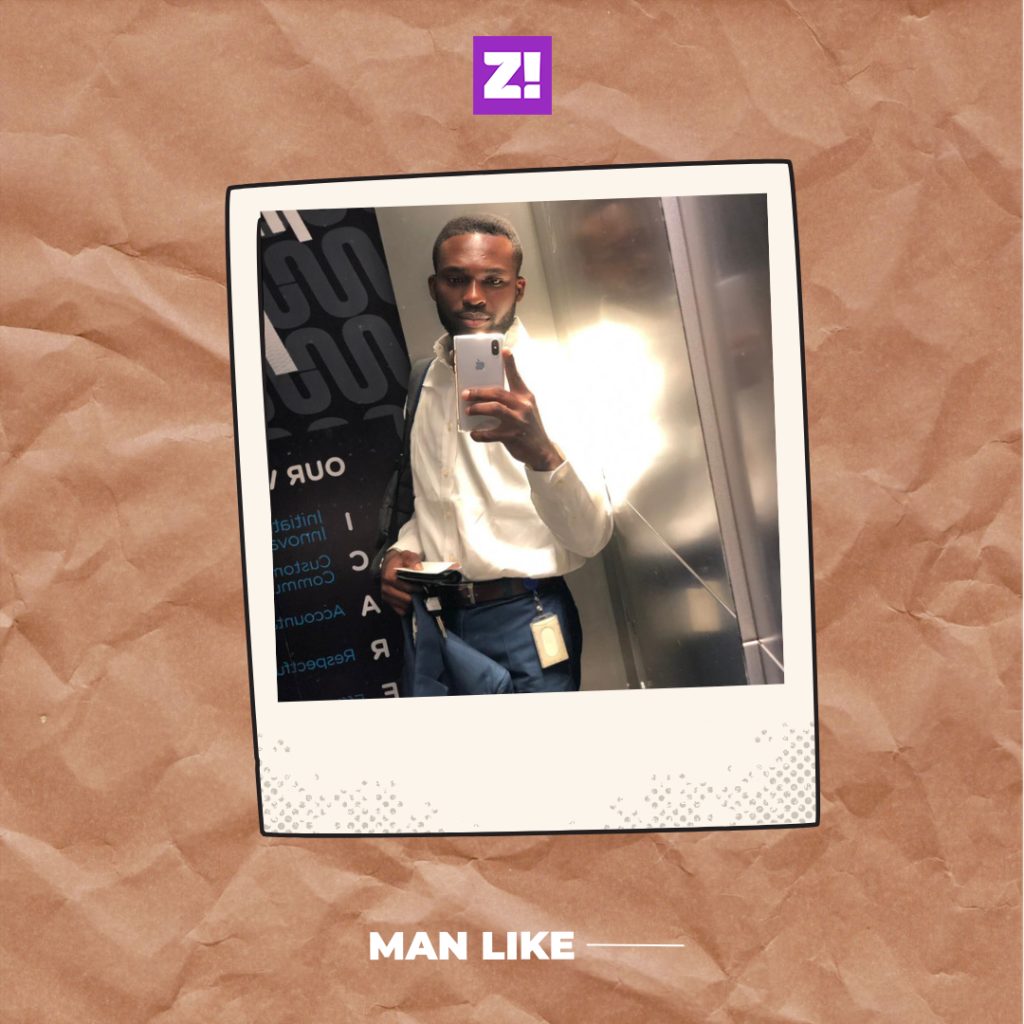
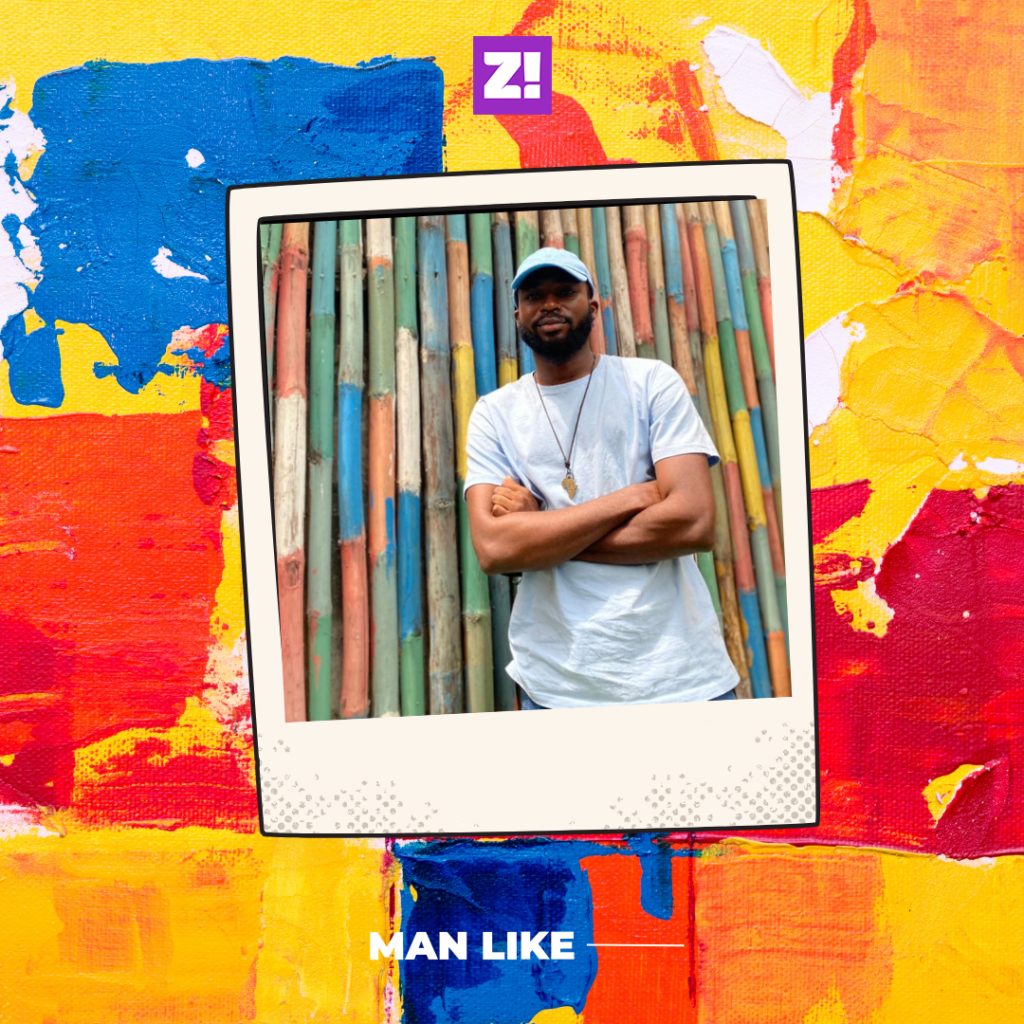
    The subject of today’s Man Like is Timileyin, a project and facilities manager. He talks about his father’s imprint on his character, how his parents’ marriage guides his approach to romantic relationships and why crying is therapeutic.

    When did you realise you were a man?

    Every time I open an episode of ‘Man Like‘ and see this question, I always wonder if I’m a man yet. When does one become a man? Is it when you move out of your parents’ house or when you get your first job and stop depending on pocket money? Is it when you start giving your parents an allowance? 

    However, some of the experiences that shaped me as a man happened when I was in university. In my third year, I was out of school for a year. Instead of being idle, I decided to work for my dad’s construction company. I worked every day, Mondays to Saturdays. It was the hardest I had ever worked. The experience made me realise what my dad went through to put food on our table. It made me realise that raising a family, providing and trying to set your kids’ up for success no easy. I realised that combining all those things shouldn’t be just one person’s job — it’s a heavy burden.

    Every young man needs that kind of experience so they start to think, early on, “How am I going to provide for my family? How will I make enough money to raise kids.”  

    Taking a lead cue from my father, I realised that taking care of family is paramount. Seeing what my dad did, I wanted to do even better. Apart from my five siblings, we had two or three cousins living with us at any given time. My father had to provide for about ten people in the household, whether his business was going well or not.

    He sounds like a stand-up guy.

    I recently received a call from my younger sister who’s in her final year of university. She told me that my dad asked her to send me her school fees invoice. I definitely didn’t see that coming. For context, I have two older brothers ahead of me. So asking me to pay her school fees was a big leap. It was a “wait, I’m really getting old” moment. It was the first time I was responsible for someone.

    What was your relationship with your father like?

    One of the most important things about my father is that he always showed up. Perhaps owning his own business made him wiggle room to always make time for his kids. Along with my mom, they were very present in our lives and we never lacked support from either of them. However, I feel like we could have had a better relationship.

    How so?

    As I said, he always showed up. School events, matriculations, graduations and prize giving days (because, you know, I’m smart like that), he was always there with my mother. In a way, it felt like he owed that to us as part of his promise to give us the best education he could afford. 

    However, I think there were some points in my life where I could have used a good father-son conversation. But we didn’t have a relationship like that. The only time we had a semblance of that was when I was working with him during the year I was out of school. We mostly just got along and vibed with each other on the peripheral, but I think it could have been a more rewarding relationship. 

    Our relationship has evolved now and we have more conversations about my plans but that’s pretty much it. Sometimes I feel like he could have been closer to us, his children. The typical African parent approach of punishing every transgression might have driven a wedge between us.

    What other lessons did you learn from your father?

    Diplomacy in relationships. I learned this from my mother and father. In the 20+ years I lived with them, I only saw them quarrel three times. Hours after they fight, you’ll find them laughing with each other. Their relationship gives me joy. They were always in each other’s spaces and faces and you could tell that they loved each other deeply. My parents are my blueprint for approaching relationships.

    So how do you approach relationships?

    Communication is very important to me. I need to know that a romantic partner puts all their cards on the table. Things you hide invariably begin to fester and that causes animosity and resentment. That’s a death sentence for any relationship. There will be fights but that’s natural because you’re different people. The approach to that should be “us vs. the problem”, not “me vs. my partner.”

    That’s a wholesome way to handle romantic relationships. What about platonic relationships?

    I handle my platonic relationships just the same way. I am up-front about the relationship and make sure fights don’t linger. I ensure there’s an open line of communication at all times. To me, the bro code means being present in your friends’ lives. It means that your friends know that there is always a safe space with you. It’s not about encouraging or covering up bad behaviour for your friends.

    Not unrelated – what are your thoughts about how Nigerian men handle toxic masculinity?

    I don’t think toxic masculinity as a concept should even exist. I don’t believe people should cage themselves and not do what comes naturally to them, regardless of their gender. It doesn’t matter what people think. It doesn’t matter if people think you’re being “feminine.”

    Interesting.

    One time, I was hanging out with a female friend. A male friend called and after the conversation, I ended the call with “I love you, my guy.” She was shocked and asked if I was gay. This is the same mentality older Nigerians have about how men should act. We claim to be smarter and more exposed than the older generation but still hold on to harmful views. We tell men to be strong, not to show emotion, not to cry. Men owe it to themselves to unlearn such harmful views and teach the younger generation that it’s okay to show emotion. Crying doesn’t make you less of a man. It’s therapeutic and really eases the tension you’re feeling. 

    Toxic masculinity also makes it difficult for men to seek help for mental health issues despite the immense trauma we go through as Nigerians. It’s also the reason Nigerian men don’t look after themselves because they think skincare is feminine. Is it only women that have skin?

    Speaking of women – what was your most memorable heartbreak?

    LMAO, ah! I don’t think I’ve experienced heartbreak a lot but the most memorable one had to be the person who broke up with me because I was too broke. Fresh out of school, I had just started working. I had small change in my pocket so I didn’t think I was that broke. Omo. It shook me to my core. I guess she had expectations I wasn’t meeting.

    Did you cry?

    Nah. The last time I cried was when I had a fight with someone I was dating. It was a long-distance relationship and it just seemed very frustrating. Not having your person by your side and fighting them at the same time was just overwhelming. I don’t cry a lot but I found it therapeutic.

    Check back every Sunday by 12 pm for new stories in the Man Like series. If you’d like to be featured or you know anyone that would be perfect for this, kindly send an email.

    Are you a man who would like to be interviewed for a Zikoko article? Fill this form and we’ll be in your inbox quicker than you can say “Man Dem.”

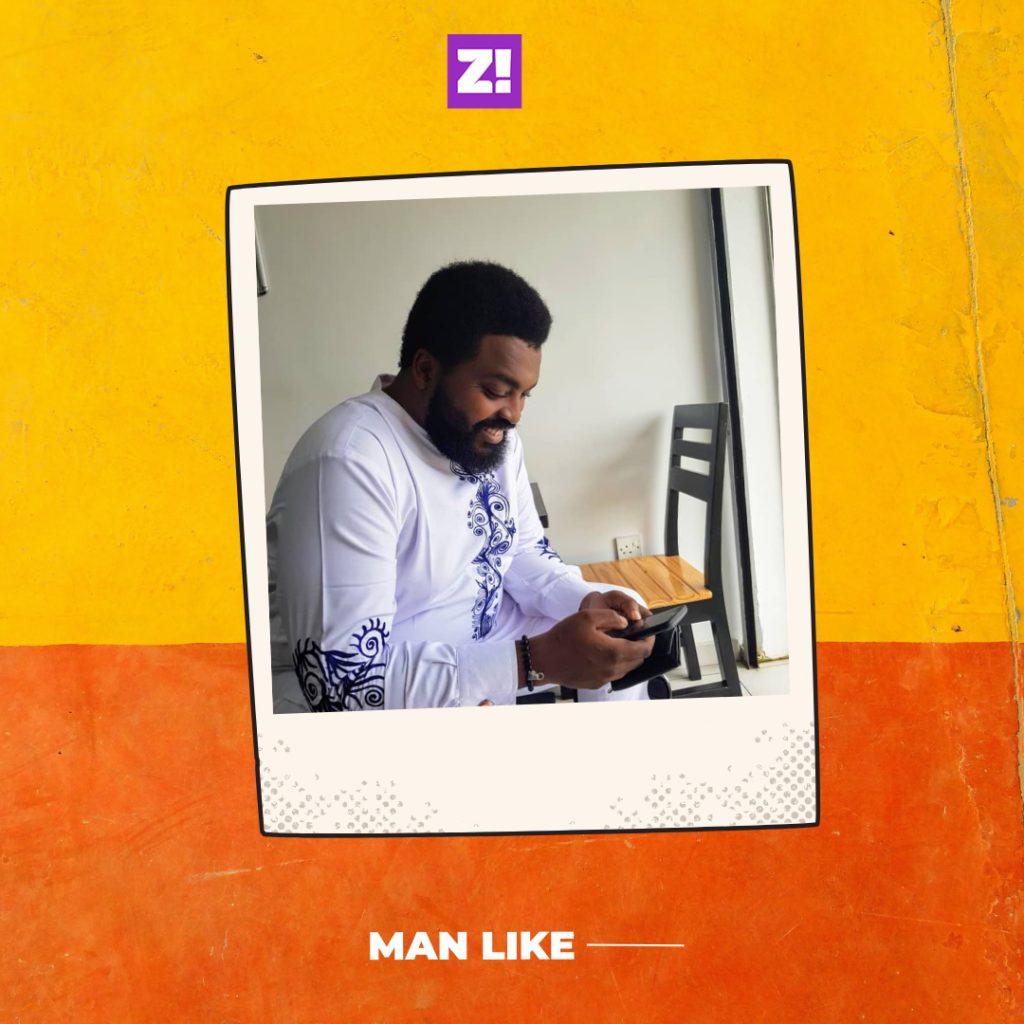
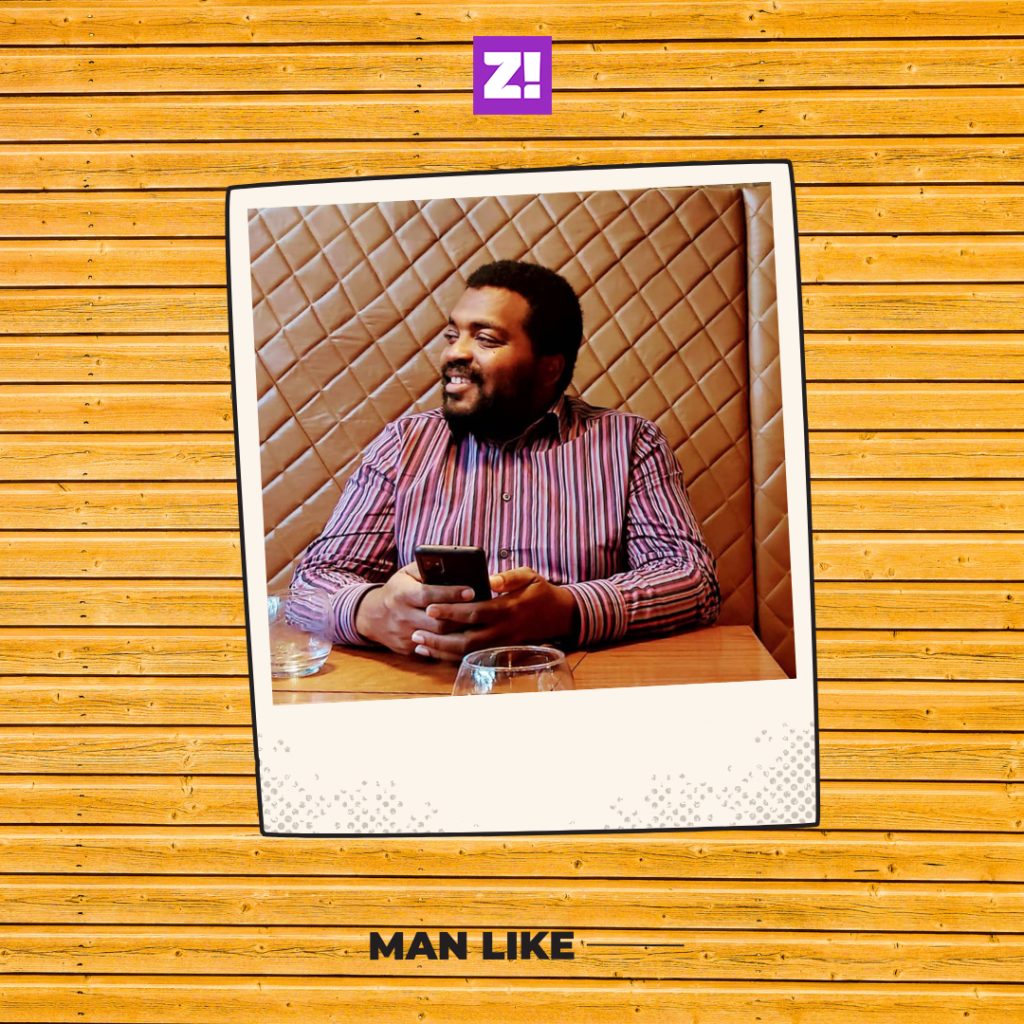
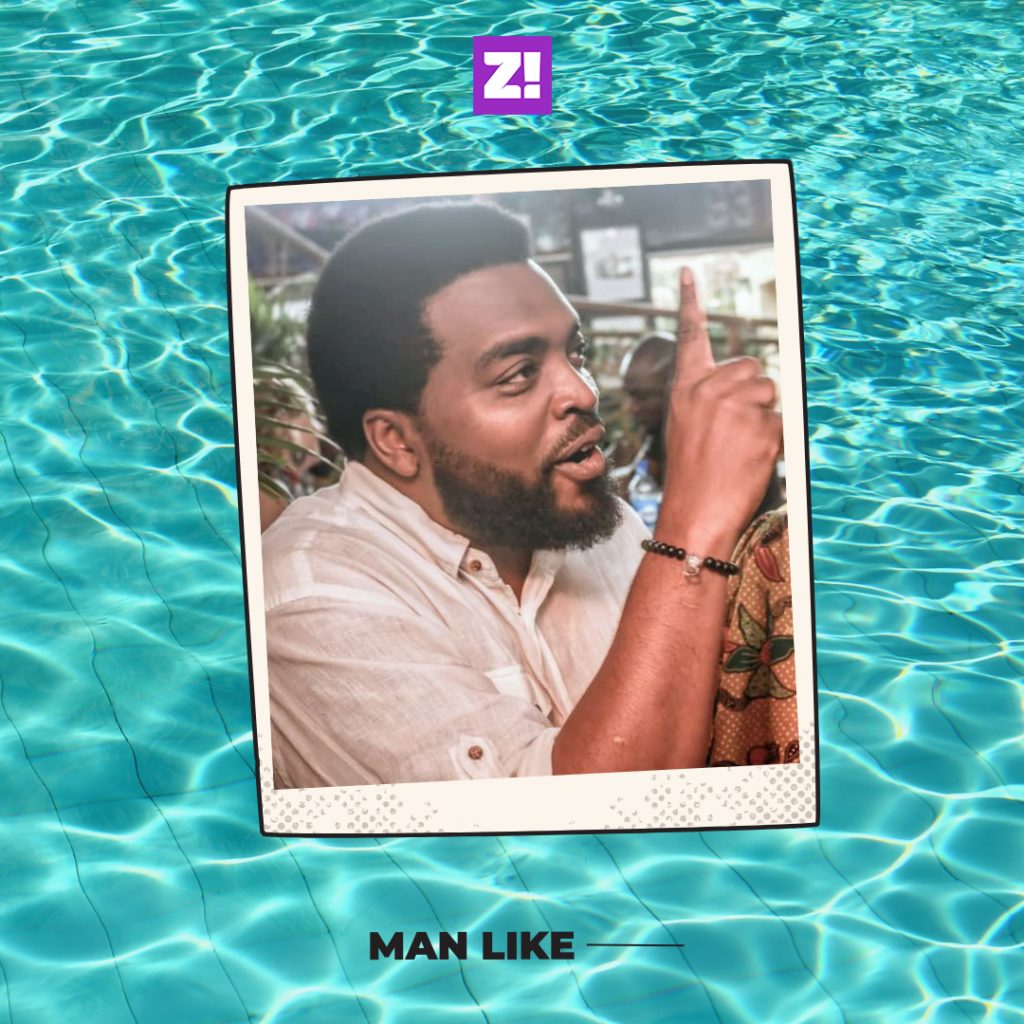
  • My Father’s Warmth Taught Me How To Be A Man – Man Like Andy

    Today’s Man Like is Andy Obuoforibo, a 40-year-old politician and product manager. He tells us about how his father’s warmth and work ethic taught him the real meaning of masculinity, how his mother’s foray into politics influenced him to participate in politics and why he supports the LGBTQ+ movement as a Nigerian politician.

    When did you realise you had become “a man”?

    I don’t think it was in a single moment. There have been times in my life when I felt like I scored some “man points” — like when I got my first job at a Safeway grocery store as I turned 18. Or when I took my first student loan, signifying that I was now responsible for my own education. 

    As I grew older, it became less about external accomplishments and more about my show of strength, like the first time my father asked me for advice.

    Nice. Speaking of your father, what was your relationship with him like?

    I was blessed with a good father. He was warm, affectionate and very present in our lives, even for the most trivial things. When I was 14, I had pretty fringe tastes for a Nigerian kid: I loved heavy metal and role-playing games. My dad went on a trip to the US and he came back with Metallica’s Black album and some role-playing game guidebook. He taught himself how to play Dungeon Master so he could play with me.

    As I got older, we started to disagree on two fronts: political ideology and career. He wanted me to become a doctor — a professor of medicine — like him. So he taught me a lot about medicine — much of which I still know today. But I realised from the onset that I was more interested in computers. We had a bit of friction there, but during my college years, we mended fences and found our way back.

    Would you say your father’s relationship with you influenced you as a man?

    Very much. The biggest lesson I learned from him before his death was that strength isn’t in rigidity, because that makes you brittle. He knew how to be warm and soft in his strength. Now that I have fewer things to prove,  I’m starting to understand the value of that. It helps me interface with my sons and other people better.

    On the flip side, I picked up some bad things from him too that I wish I accessed closely and earlier. I learned from him to take on everybody’s burden. I learned that duty comes first. These are all good things, but when taken too far, they can cage and destroy, and this is what we often see happen to men. My father was very dutiful to his work, to his family, to his church, to his God. I never saw him miss work out of illness, and I try to emulate that. But it can be detrimental. You think you must accept everything “as a man,” you must be the rock and centre. You think you must be the one everybody leans on, but this makes it hard for you to lean on people. 

    Hmm. Is there anything about your upbringing you’d change with your kids? 

    A big thing I’ve learned to not do is to try and predict and hope for what they’ll become. I’m all for Project Mbappe and I’m hoping it works out in that direction, but I’m learning to think, “These kids are going to find their way. They’re going to figure it out.” They were born into a world I’m too old to understand. I need to be aware of that. I’m learning to be okay with figuring it out —not telling them where they need to go, but being able to detect their destination quickly enough to help them get to it. That’s really the job —  to give them all the tools you can. 

    My parents really did a great job of giving me a lot of tools. When I was young, they exposed me to a lot of things. I think that that’s something that I also want to be able to do. I’ll tell you a story about my father.

    My popcorn is ready.

    We moved to Uganda when I had just started JSS2 in Nigeria. My father had gone back to work with the World Health Organisation. He was working all over eastern Africa, but he chose Uganda as our primary base. When it was time to choose a school for me, he looked at all the international schools and everything and said, “You’re going to a French school.” 

    I didn’t speak French. I only knew “comment ca va”. But my father said, “Not knowing a second international language has limited me in my career. I could have gotten to the very top of the UN, but there’s a limit to where I can get to because, in terms of international languages, I’m monolingual. You’re not going to have that same limitation. You’re going to be bilingual or better.”

    So he put me in this school where I could not speak a single word of the language of instruction. I was in JSS 2 when I left Nigeria. Because of the language barrier, they moved me back to Primary 3, and it was the most horrifying experience. Just imagine this 12-year-old black kid in a class of eight-year-old white children who thought he was stupid because he couldn’t talk. You can imagine what that was like. My father was like, “Well, it’s really that simple. You will learn French, or you will fail and keep repeating.” 

    Omo.

    It worked. I learned the language. It was tough, but my dad was there every step of the way. Every time I would complain that some kid made fun of me, he didn’t just brush it off. He’d say, “I’m sorry you’re going through that. But you know why you’re going through this right now.”

    When my mates were learning English, the school made me take Spanish because why learn a language I was already fluent in? Somewhere in there, it turned out I had a knack for languages, so after learning French and Spanish, I learned German, Italian and Portuguese. Speaking Spanish and French made it easier to learn the rest. 

    It taught me early that life is not always easy, that things can be difficult and even unfair. But if you have a plan, you stick to the plan. That’s something I hope I can do for my children — expose them to experiences that teach them grit while showing them that when they come home, there’s always going to be a warm hug waiting.

    Profound.

    Life can be brutal. I try to be fair to men of previous generations. The toxic masculinity system exists because no one thought of a better way to help men navigate this cruel, unforgiving world while taking care of their responsibilities. Now we know better. We’ve learned and we’re learning. The danger is in overcorrecting. We still have to find a way to prepare sons and daughters for a tough, unforgiving cruel world without making them unforgiving and cruel themselves. That’s the balance we have to strike, the holy grail. I think that’s the real tough job of parenting.

    Looks like you have this parenting thing down to a science.

    LMAO. Not even close.

    I hear you’re into politics. What’s that about? 

    My mum was one of the first women who ran for governor in the old Rivers State during the Third Republic. Civics was as much a part of my life like the way going to church on Sunday was. 

    One striking thing about history is that change is always made by normal people. In societies that work, there is no sense of separation, that the “civic space or politics is for some people, so I’m not bothered.” Getting involved in our community, getting it to work the way it’s supposed to work was a given in our house. 

    Facts.

     The more active you’re in a particular space, the more likely it is that eventually, something in that space will connect for you. A series of events snowballed me into politics. I got really involved in activism. The government at the time wanted to demolish a waterfront community in the Niger Delta, where I was from, and I got very involved in the protests to stop that. Because of that, people from the community were like, “Hey, come and run for political office.”  After a while, I eventually left politics to become a chief. It’s still that same relationship I have with my people that has moved me away from politics into chiefdom.

    You’re one of the few, perhaps the only Nigerian politician, who openly supports the LGBTQ+ community. How do you balance keeping the people’s support and standing for what’s right?

    There is no balance when it comes to justice. There is either justice or no justice. As long as there is a single law or rule in Nigeria that discriminates against LGBTQ+ people, we don’t have justice. If the only way to succeed politically in Nigeria is to bend to that injustice, maybe others can do that, but I’m not one of those people. 

    When I had to go to college in the US, I had to write TOEFL because I never took English in secondary school. One of the essay questions stated: Electorate politicians have to carry out the will of their electorate. But elected officials also have a duty to do the right thing by conscience. So what should the politician do when the demands of the electorate clash with their conscience or what is morally right? My answer, which hasn’t changed since I was 17, was that if it’s a question of fundamental issues of morality of justice, the politician has a duty to say, “On this issue, you are wrong. Let me give you a compelling argument why.” His next duty is to make those arguments. 

    If he fails, he fails. They vote him out, he goes home, and that’s okay. I believe that completely. I believe people have a right to have sexual and romantic relations with any consenting adult they want to.   If people choose not to vote for me because of that stance, then guess what? I don’t want to be elected in Nigeria. I don’t want to be elected by people who will only vote for me if I support injustice and oppression. For most parts of my life I’ve been a minority. I’m from the Niger Delta, I’m oppressed. As a black man in America, I was oppressed. So I will die before I become part of the system that extends that oppression to any other human being. Oppression thrives because people who know better turn a blind eye simply because it’s more convenient for them or the personal stakes for them are too high. I can afford not to be elected to office. I have the skills and other ways to influence policy and influence my society. If elections are the one thing I can’t win because I support gay rights, so be it.

    What are the biggest challenges with masculinity in Nigerian men?

    I’d split this in two: the things that hurt us as Nigerian men and the ways we hurt others.

    I think men, men in general, but Nigerian men in particular (because of the pressures we find on ourselves), just have to learn that there’s no single way to be a man. It has already happened. You can’t lose your masculinity. The status cannot be revoked so you have nothing to prove. Knowing that and having that pressure taken off you reduces a lot of things that we do that can harm us: the way we don’t share our problems, the way we put impossible standards on ourselves which we may be able to live up to in one moment but we’re bound to fail in the next.

    When it comes to how you treat other people, I think there, again, it comes down to allowing yourself to be vulnerable. You know, and I don’t mean allowing people to harm you. We have to learn better ways of communicating our wants and feelings in ways that allow people a chance to make conscious decisions on how to relate with us. We don’t have to just be reactive. 

    Your dad seemed like such good vibes so one last question about him: When you think of him, what memory comes to mind?

    My favourite memory was raiding the fridge at midnight with him, and then when my mother was shouting about food missing in the fridge, he framed me for it and said, “You know you have a teenage son in the house.” I turned to him in shock and he winked.. We were quite conspiratorial like that.

    Check back every Sunday by 12 pm for new stories in the Man Like series. If you’d like to be featured or you know anyone that would be perfect for this, kindly send an email.

    Are you a man who would like to be interviewed for a Zikoko article? Fill this form and we’ll be in your inbox quicker than you can say “Man Dem.”

    [donation]

  • Nothing Prepares You For Fatherhood — Man Like Olanrewaju

    What does it mean to be a man? Surely, it’s not one thing. It’s a series of little moments that add up.

    “Man Like” is a weekly Zikoko series documenting these moments to see how it adds up. It’s a series for men by men, talking about men’s issues. We try to understand what it means to “be a man” from the perspective of the subject of the week.


    The subject of today’s “Man Like” is Olanrewaju, the head of TC Insights — a research group that gathers data on startups in Africa, and uses the data to provide insights for stakeholders. He talks to us about the sacrifices of fatherhood, the influence of his parents in his life’s journey and what men should know before getting married. 

    When did you get your “Man Now” moment?

    I’d say that there hasn’t been one single moment. I feel that because I’m constantly evolving, it has been several moments. The first time I discovered I was “a man” was when I hit puberty and discovered changes in my body. In my head, I was like, “I’m becoming a man with my physical features.”

    Another incident was going to boarding school in another state and having to fend for myself against hungry seniors. That was a lonely experience that also made me sit up. 

    Marriage has been the biggest level up for me because I’ve had to learn new things about myself and my partner, and make sound decisions. After trying to balance marriage, fatherhood hit me. I’ve mostly just been discovering different “man now” moments as I progress from one level to another. 

    Tell me about your fatherhood experience.

    Ah. Bro. Lmaoooo. 

    Fatherhood is a huge responsibility. You can try to prepare yourself by learning and reading from other people, but nothing prepares you for the actual job. From the change in your schedule — blocking out your schedule so that you can spend meaningful time raising a child — to combining work and family, to even being responsible for someone.

    Fatherhood adds a layer of complexity to your life and exposes new things about you. Even though it’s a mixed bag of experiences, nothing replaces the joy of watching your kids grow. 

    What have been the challenging parts of fatherhood?

    On one hand, there’s the physical stress of waking up at night to take care of a baby. Then there’s the psychological part where I’m hyper-aware that I’m now responsible for another human being and I have to do right by them. I’m constantly asking myself, “Am I setting the right example for my boys?” “Have I sent my kids to the best schools ?” It’s a whole different type of performance pressure. 

    Growing up, we’d say that our parents put a lot of pressure on us to perform, but the reality is that parents are also under pressure. Even if kids don’t say, there are certain expectations that are placed on you to make them happy. 

    Have you ever had to trade personal fulfilment for the sake of fatherhood?

    I’ve worked two to three jobs at the same time before just because I couldn’t shake off the internal pressure to do right by my family. I was so worried that I took on a full-time job alongside side gigs that required the effort of full-time jobs. It didn’t end well because I eventually had a breakdown. 

    I’m sorry. 

    It’s fine. 

    What are the joys of fatherhood?

    It’s everything from watching your child cry to taking their first step. It’s also hearing my two-year-old son tell me: “Daddy do you know I love you?” followed closely by a warm hug. Other times, it’s me melting when my older son says, “Mummy and daddy are the best.” One of the most priceless things in life is watching your kids come from nowhere and grow to become an integral part of your life. 

    So cute. I seek refuge against the spirit of baby fever.

    Hehe.

    Does anything scare you though?

    I recently lost my mum, so I find myself thinking more about the reality of death. The concept of here today and gone tomorrow is a lot to take in. No matter how much we accept that death is a constant factor in life, we’re never truly prepared for loss. The finality of death is scary, but my faith in Jesus keeps me going.

    Asides from the finality of death, I can’t think of anything that really scares me. This is because my approach is to constantly try to solve a problem, no matter how daunting. After all, I’ve been through the worst mentally, and I’ve come out more emotionally mature. 

    Tell me about the worst mental experience.

    During that period where I was working three jobs, things went south. I broke down and suffered from a bout of depression coupled with suicidal thoughts. It was one of the most difficult points in my life — I had to go see a doctor for help, I was out of a proper job for almost a year, and I was just going through the motions.  

    Sometimes I look back and there’s a tinge of regret, but I’m just glad the worst is over. I’m in a better place now with my career, and I have a better grasp of things. 

    What are some things that have changed in your approach to work between now and then?

    I’ve come a long way from crying at a job to being more centred in my current role. One thing I learnt from my breakdown is that energy management is greater than time management. I’ve learned to manage my bandwidth for projects because spreading myself too thin would make me unhappy, stressed out and unfulfilled at jobs. 

    I’m jotting things. Tell me about your current job.

    I work at TC Insights where we do deep research and analyse various sectors. A lot of my job involves coming up with fifty-page briefs on particular topics. The best part is that because I now utilise energy and bandwidth management, I can work hard and still go home to have a good night rest. You could say I’m living the best of both worlds.

    Love it. Where do you find joy these days?

    It’s not one thing. Today I might find satisfaction from a project I’m working on. Tomorrow it might be from watching CNN pundits analyse American politics. Some other day I’d find satisfaction in watching Bridgerton on Netflix with my wife. About three weeks ago, I found a lot of joy in teaching and watching my son trace number 2. Seeing him go from zero to hundred was so satisfying to observe. 

    I repeat: I refuse to fall for this baby fever agenda.

    LMAO.

    You’ve spoken a lot about work and family, is there a place for friendship in your life?

    I don’t keep a lot of friends because between working and raising a family, I’m constantly struggling to maintain friendships. For the few people I’m friends with, I try to show up whenever they need me.

    Hmm. Who do you go to for advice?

    Because of the way my life is set up, I don’t have a single person. What I have are a series of people depending on the topic I need advice on. For marriage, I sometimes talk to my closest friend and we discuss openly all the nuances of marriage. For work stuff, I approach people who have been through similar challenges for advice. When I need an older perspective, I talk to my dad. 

    Interesting. Who are your role models for what it means to be a man?

    I’d say, my parents. 

    From my dad, I learned to take responsibility for my life and family. He taught me to wake up every day and show up for the people who matter to me. He also showed me how to use tools like emotional intelligence and diplomacy. 

    My mum taught me the value of hard work and the importance of family. Outside of these two people, I’ve had different people influence me in little ways, but there’s no single person that has influenced the entirety of my experience. 

    Love it. What advice would you give young men considering marriage? 

    I’d encourage them to run their race at their own pace and not give in to the pressure to tick some societal boxes. Marriage is a lifetime decision and it has to be treated as such. It’s important to ensure that your partner is someone you gel with in every area of life [Shout out to my wife, Princess].

    Men should also break out of the stereotypical definition of being a married man. Marriage is a partnership. I think that if all these are followed, then peace will follow in the marriage. 

    Amen.


    Check back every Sunday by 12 pm for new stories in the “Man Like” series. If you’d like to be featured or you know anyone that would be perfect for this, kindly send an email.

    [donation]

  • How To Become A Father Of Two At 21

    In certain cultures, adulting is marked with rituals, tests and celebrations. But when you’re Nigerian, adulting often comes at you without warning. Adulting comes in different forms; bills, family, responsibility, and you guessed it, a child. 

    Everyone who’s crossed that bridge has a unique story. Stories that can help you see you’re not alone. That’s why every Thursday at 9am, we’ll bring you one Nigerian’s journey to adulthood, the moment it happened and how it shaped them.

    The question we’ve been asking is, “when did you realise you were an adult?” 

    The guy in this story is a 29-year old digital marketer and writer. He lives in Lekki and has for a few years now, but that’s not the real thing. What’s important is he is a workhorse. Two things push him, or rather two people. You see, when he was a child, he wanted to be everything. Then he became a father of two at the ripe old age of 21 and found out there are no manuals for this thing.

    As far back as I can remember, I always dreamed of being a family man. But it wasn’t the only thing I wanted to be. My ambitions as a kid always changed. I had different goals at different stages, from wanting to be a pastor, to an astronaut, to an engineer, to an actor, to a business mogul and finally a musician. I did become that final one for a few years.

    I like to think certain aspects of childhood are the same for everyone. As a kid, I did what all other kids did. We lived in a suburb of Lagos with many other tenants in the compound. I remember playing with my siblings and going to school. Nothing eventful.

    I woke up from my childhood when I was 7. My dad and mom had a falling out and separated for more than a year. You don’t need telling that things are not the same when your parents no longer live together so I had to start understanding certain things from that age. Things change, people fight and make up. But you can only do that when you both have time. A year isn’t an eternity.

    My dad died when I was 20. It was a major point. I was in a university in Nigeria’s East at the time. I quickly realised I had to step up to some family responsibilities. It wasn’t unusual, to be honest.

    Then I had kids the next year. Not a kid, kids. Two. A set of twins. Of course, it wasn’t planned. We were both young and typically, we’d met on Facebook. We weren’t in a steady relationship per se. You know how these internet dating things are. It was a very convenient arrangement until one particularly night ensured it wasn’t.

    I was 21 and still in school. I had just lost my dad, but he was also the one who often said, “If a problem comes your way, it means you have the ability to solve it”. The details of how the babies happened matter little in retrospect – we weren’t married obviously and there was little planning in that regard but there I was, 21, with two babies and a father-shaped void at home.

    I had to take a break from school and life. I went to Benin for several months to clear my head and get ready for the rest of my life.

    It wasn’t easy. It’s still not easy. I fought the urge but I knew I had to tell my mom. The Good woman, she didn’t react in alarm. She took the news calmly and planned our next moves. First, certain protocols have to be observed for these things. My baby mama lives in Abuja but we had no plans to have a life together so my mum had to go and see her people first without me. You want to know why? Well, her father (who’s considerably well-to-do) was threatening me with fire, brimstone and prison walls. When she had doused the fires a little, she came back to Lagos and I and a few relatives for the Abuja trip.

    Having kids meant I stopped thinking about myself. I had twins – two mouths to feed, the needs of two people must be met, for the foreseeable future (at least 20 years). With my dad late, I was already shouldering some bills for my younger siblings. If I had to make it simple, having kids just meant looking for more money. I dropped out of university without a second’s thought after lecturers attempted to keep me in school for an extra year.

    From that point, every decision had to be the financially smarter one. This mindset made me fearless. I took any job regardless of experience. From blogging to artist management to PR and Media to Photography to Journalism to Social media/digital marketing, I took on any job as long as it would pay me more than what I was earning at the time.

    The reminders were constantly there; School fees must be paid every three months. Child support must be sent every month. My younger ones have to be taken care of before I think about my own problems and chop the small life I can chop.

    My kids are 8 now. They live with their mother’s family in Abuja and come to Lagos often to visit. They live comfortable lives there, and I’m determined to do what I can to make that happen.

    Nowadays, having extra jobs is par for the course for me. At any given time, I have three to four jobs. Right now, I have a new job, it’s a 9-5, and I have 3 and a half other jobs on the side. One of them is half because they haven’t exactly agreed to my proposal yet.

    The way I look at it, I could be hung up on how things turned out but I’m really grateful for the experience. The biggest lesson I have learned over time is nobody has this adulting thing figured out. We are all winging it. Also, Kids are expensive. Use a condom if you are not ready for the non-stop paper chase.