Notice: Function _load_textdomain_just_in_time was called incorrectly. Translation loading for the wordpress-seo domain was triggered too early. This is usually an indicator for some code in the plugin or theme running too early. Translations should be loaded at the init action or later. Please see Debugging in WordPress for more information. (This message was added in version 6.7.0.) in /home/bcm/src/dev/www/wp-includes/functions.php on line 6121
Ekiti | Zikoko!
  • The Market Women in Ado-Ekiti Don’t Give a Damn About You

    If someone had told me interacting with market women would be the biggest culture shock I’d experience when I relocated to Ado-Ekiti, I’d have laughed in their face.

    I’d lived in Lagos — a mostly Yoruba-speaking city like Ado-Ekiti — for more than two decades before love uprooted me from everything I’d grown to know when I had to leave after my wedding. 

    I assumed settling into my new environment wouldn’t be too difficult. You know how they say, “Anyone who survives in Lagos can survive anywhere”, right? I’m surviving, but boy, is it more different than I imagined.

    I moved here in December 2021, fresh from my honeymoon, ready to relax and be taken care of. You see, I’d been told Ado-Ekiti is calmer than what I’m used to, and I convinced myself I was ready to leave the hustle and bustle of Lagos behind.

    It started great, too. Contrary to what I’d expect in Lagos, the people in Ado-Ekiti aren’t determined to catch you slacking. They’re laid-back. No one tries to snatch your phone or bag just because you’re holding it on the side of the road, and most people won’t even pay attention to your backpack. I had to unlearn the Lagos-induced instinct to grip my phone and belongings tight at all times while assuming everyone around me was a potential pickpocket.
    But then I quickly realised being laid-back isn’t always dodo and sunshine. The first time I ventured into Ọjà Ọba, the king’s market, alone, armed with my best impression of my Nigerian mother and ready to beat down all the prices, I met a shocker.

    If you’ve been to any Nigerian market, you know it’s an unwritten rule that the first price the seller gives you is never the last price (the price you eventually pay). And according to Haggling 101 by Nigerian mothers, you must start the haggling process by cutting the initial price by at least 50% and then work your way up from there. If the seller refuses to beat down the price substantially, you walk away, silently hoping they call you back. Most of the time, you will be called back.

    That method doesn’t work in Ado-Ekiti, and I only got the memo by the time I’d walked around the entire Ọjà Ọba. First of all, the first price is almost always the last price, and I’m not even kidding. If a market woman tells you a piece of ponmo costs ₦500, don’t even bother “pricing” it, that’s the last price. You may get lucky and find one willing to remove ₦50 or ₦100 off the price, but that’s as far as it’ll ever go.

    Secondly, these market women no send you, for lack of better English. In Lagos, the seller may try to cajole you to part ways with your money, and sometimes even tell you half-truths like, “My sister, na only ₦50 be my gain for this market”. But here, they know your options are few. The prices are basically standard throughout the market, and you’d have to travel a considerable distance to find another major market. So, just swallow your pride and buy.

    If you’re thinking, “But foodstuff should be cheaper in Ado-Ekiti”. Please, stop it, respectfully.

    I believed the same thing when I came here. I figured since a large part of the population are farmers, food should be much cheaper here. It’s not. I can even say food is cheaper in Lagos. The only way you’d live here and enjoy cheap food, or afford to eat pounded yam — the city’s famous staple —  every hour of every day is if you’re growing it out of your own farm. For the rest of us without green fingers, we’re left to the whims of IDGAF market women.


    Also read: All the Many Different Ways You Can Get Free Food in This Economy


    It’s been eleven months since I moved here, and I don’t see myself getting used to how the market works anytime soon. You know one other thing I still haven’t gotten used to? Having to take okada to get to any darn place.

    I don’t know if I should also attribute this to the laid-back nature of the people, but alternative means of transportation, like cabs and keke are so few and far between within streets and not-so-major roads that you have to use an okada, whether you like it or not. 

    For someone who absolutely hates motorcycles — I basically hold my breath every time I have to take one — I always wonder if I need to just come to terms with the constant torture. Does it mean no one in Ado-Ekiti has ever woken up and considered the large market for transportation? Over 500,000 people live here for chrissakes! I may never get satisfactory answers to these questions, but it won’t stop me from constantly wondering.

    My okada misgivings and beef with the market women aside, I’ve come to love my laid-back Ado-Ekiti. Sure, most parts of the town go to sleep at 8 p.m. and there’s zero nightlife and minimal recreation options, it’s where the love of my life is, and I’ll be here for as long as he stays. 

    It doesn’t hurt that traffic, Lagos conductors and the odd stolen-penis gist are now a thing of the past. I wouldn’t change a thing.


    You’ll like: A Zikoko Guide: How to Steal Without Getting Caught

  • We Asked 6 Corpers How They Are Surviving During The COVID-19 Pandemic

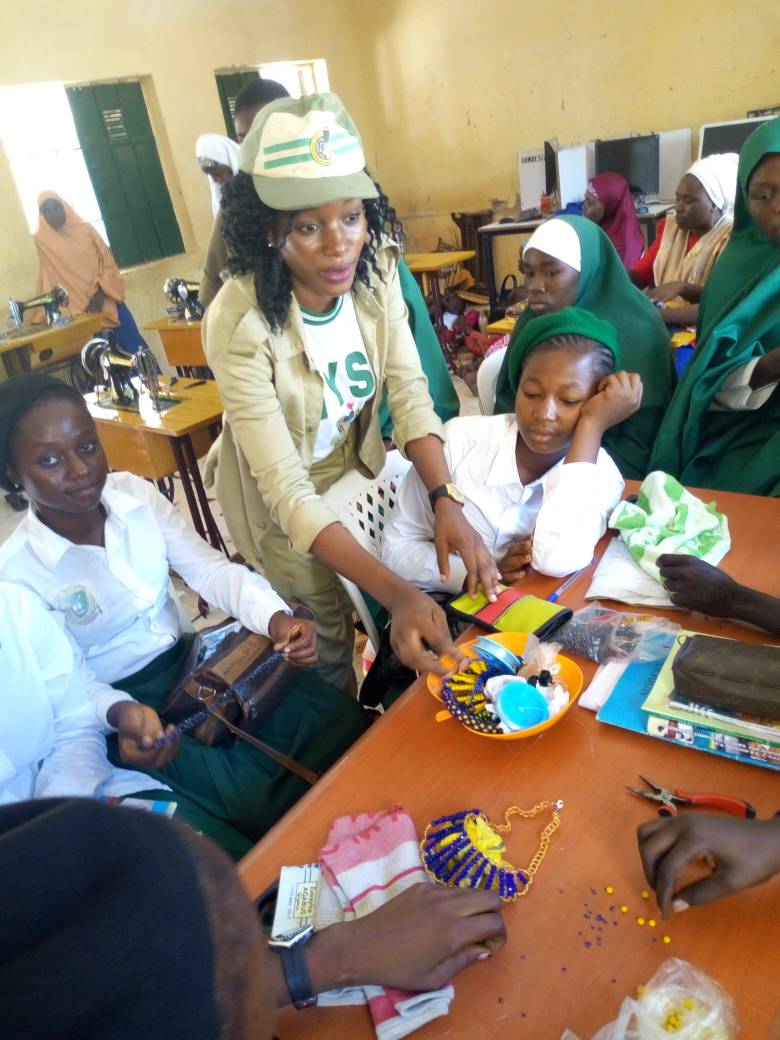
    Since COVID-19 hit Nigeria, a lot of corps members have been affected. Some were sent back home without completing the orientation camp, and those already serving were asked to stay at home. In this post, we spoke to 6 corps members in different states on how they are surviving this Coronavirus period.

    NYSC and Covid

    Hamdalat, Corper in Kano state.

    My family lives in Osun state. When it was confirmed that COVID was in Nigeria, I wanted to travel, but I considered a number of things. First of all, the distance: Kano is about 18 to 19 hours to Osun state. The journey is not a child’s play. And then the transportation fare. If I decide to travel, I will roughly #17,000 to and fro excluding feeding expenses.

    Besides, I feel it’s more dangerous to travel during a period like this because you don’t know the medical records of other passengers that will be in the vehicle. One might actually get infected in the vehicle if care is not taken.

    What then happens if I become infected? And I’ll be mingling with my family which might spread the disease further. So I decided to stay back.

    It has not been easy though. Especially if you consider the situation of things in Kano right now. These days, I go out once in six days to buy water, pepper and other essential items. Each time I go out, I make sure I’m obeying all the basic rules of hygiene. I try as much as possible to avoid physical contact too. When I’m bored, I turn to my phone for gist. There is no greater gist partner.

    NYSC and Covid

    Rachael, corper in Ogun state.

    My whole family is in Lagos, but I haven’t gone home since January. Ogun state is very peaceful and I like it here. Food is not a problem. Even my parents send money to get food stuffs for them via bus. Besides, by staying back here, my respect is intact. Nigerian can frustrate you and as I am like this, I am not ready for that.

    I own a sewing machine and it has been a reliable source of income for me. There are so many guys in this area who like to do big boys. They always meet me to slim-fit clothes and I charge #300 per cloth piece, something that I don’t spend more than 10 mins on each adjustment. In one day, I can do 20 of such jobs. Calculate that. I also coach about 4 kids on my street. Another source of extra cash. I haven’t touched my allowee in a long time.

    I miss my family, but life happens and we all must learn how to cope. In my four years of university, I visited home only four times, so I think I can withstand not seeing them for a longer period. We video chat regularly, though. That’s one way I’m keeping up with them.

    One thing I’m concerned about right now is that NYSC should not call us back. Me I won’t answer. They should keep paying, sha. That money is necessary. When it’s time for Passing Out Parade, they should let us do it online. No more no less.

    16 Ways To Make Money During Your NYSC Year

    Oyeniyi, corper in Zamfara state.

    I intentionally chose to stay back in Zamfara. Lagos is really hit by the pandemic and the Lockdown is heavy there. If I had traveled home, I would have been forced to sit at home all day, and I can’t afford to do that. But here in Zamfara State, movement continues though work has since stopped. I can cope with that.

    It’s boring though; many of my friends have travelled so there is no possibility of hanging out or anything. Instead, I read, surf the internet and work on my system. I miss CDS. I miss our discussions and presentations. I can’t wait for the world to return to normal.

    NYSC and Covid

    Ezinne, corper in Niger state.

    I was initially posted to Ekiti, but I am married, so I redeployed to Niger state, which is where I’m based. Everything is quite normal here, but it is almost impossible to go out of the area, and things get more expensive by the day. For example, if you buy a mudu of rice for N500 today, expect it to be around N550 the next time you buy it.

    I have a baby, and she takes most of my time, so I don’t worry about being bored. I try to read a book sometimes, too. Because Niger state is home, I am around my family. My elder sister’s street is not far from mine and she just gave birth, so I often go there. My mother is there with her too. She came for the naming ceremony and got held back by the lockdown. And then my twin younger sisters, are home from school, so it’s all like a big family reunion. With all these people around, it’s hard to do anything useful.

    I really want to go back to work. Staying at home without doing anything is strange for me. Plus, I feel somehow getting paid for doing nothing. I hope this thing of ‘an idle mind is the devil’s workshop’ does not happen.

    Jonathan, corper in Ekiti state.

    Before the Coronavirus pandemic, I had been planning to organize tutorials for students here. But I kept holding back, because I had doubts about the whole thing. When Corona happened and everything went on hold, I decided not travel home to Ogun state. Ekiti has reduced number of cases, compared to Lagos. It is safer here, and I chose the safer option.

    When I realized that things are not showing signs of being reduced anytime soon, I decided to organize the lessons I had been planning to. Right now, it is the third week, and I must say it is very profitable. I charge N50 – N100 daily, and we start by 9AM and end by 12PM. As at today, we have realized about N10,000. COVID-19 makes it easy for parents to take it seriously; besides, they need a way to keep their children occupied in this period.

    Asides the lessons, I am trying to study binary and bitcoins. When I am not doing my studying, I sleep.

    Sofiat, corper in Rivers state.

    If I had known that things would turn out this way, I would have traveled home to Kwara since. In Port Harcourt, the border is closed, so nobody can travel. Lockdown is also in effect, so it’s like double wahala. And then the governor is acting like a dictator. Everybody is living in fear. You dare not step out anyhow. Once they catch you, it is straight to the isolation centre. A few days ago, he demolished two hotels for not adhering to the lockdown order. It has not been funny at all. Nobody can say anything or confront him.

    NYSC and Covid

    Food stuff has become very expensive. 10 pieces of tomatoes for N500. Even garri has become gold. The least amount you get plantain for is N400. And it’s not the big size. Very tiny plantains.

    As much as we can, my roommate and I try to stock up and minimize costs. We miss work, but what can we do. Thank God for Ramadan, it is the one way we are keeping sane. Everyday, we seek Allah’s mercy on the world at large. We hope things go back to normal soon.

    NB: Pictures used for illustrative purposes only.


    Hello! Thanks for reading, as always. We are trying to create more NYSC posts for you, and we would like it very much if you can take one minute to fill this form: NYSC SURVEY. It would help us to know the kind of things you’d like to read. Thank you!

  • Building A House Big Enough For Your Dreams

    We want to know how young people become adults. The question we ask is “What’s your coming of age story?” Every Thursday, we’ll bring you the story one young Nigerian’s journey to adulthood and how it shaped them.

    The guy in this story is not your regular guy. He lived all his life in one small town till his early 20s and graduated from university at 32. You may be tempted to assume he waited too long to make things happen, but when you’re building a house big enough for your dreams, it tends to take a lot of time.


    I don’t think people realise how small the average mud house is. I would know, I spent most of my childhood inside one. Our house was boxy — the kind you see in clusters when you’re travelling through the South-west, Nigeria. Those huts are so small, you can’t fit regular furniture in most of them. At some point in my life, just after I finished secondary school, I decided that houses were big enough to contain the ambition of the people who lived inside them. 

    I was born a farmer, not unlike the way Trevor Noah says he was born a crime. My father’s people have always lived in Aisegba, a small town in Ekiti where I was born. They’ve always been yam farmers. They’ve always taken wives from the town, or nearby. They’ve always raised their sons to be like them. I was supposed to follow in their footsteps.

    It takes a lot of patience to farm; I think that’s where I got mine from. From early childhood, my younger sister and I walked from our community grammar school to a fork in the road. She’d go home to my mother and I’d continue to the outskirts of town to meet my father. Sometimes, we had nothing to do. Sometimes, we did basic things like take the husks off new maize. When I was 18 and in the final year of secondary school, I got my own half-plot with my seedlings.

    Walking home from the farm at night, my father talked about his childhood and how he walked the same roads with his own father. He was proud of that legacy. I was too, for a while. 

    When I was in Primary 6, I took an interest in my English teacher, a youth corps member from Port Harcourt. Unlike the tired middle-aged women and men who filled our halls, she seemed to enjoy her job. Somehow, she also took an interest in me, enough to notice that I couldn’t string two sentences together in English. She gave me extra classes in the evenings, mostly for free. Sometimes, my parents gave her foodstuff. 

    She left at the end of the year, with a place in my heart and more words in my vocabulary. The most important thing that she did — and all the other youth corp members who came to our school after that — was to show me that there was another world outside my own.

    One of them, Olamiotan, was my government teacher in SS3. I ran errands for him, lost his books, got him angry and spent his change more than once. When he passed through Ekiti and chose to visit Aisegba four years after, I wasn’t surprised that he came to check on me. By this time, I was frustrated. After secondary school, my friends and I had slotted into this mundane existence, like everyone around us. All of a sudden, I was 22 and I’d never gone out of Ekiti. For most of my life, I’d been satisfied with living within my means and taking the mantle of ‘breadwinner’ from my father, but in 2009, the same year that Ola visited, something switched.

    Even though I don’t believe in such things, maybe Olami’s visit was predestined. My father used religion to defend his lack of ambition so many times that it turns my stomach. Olami advised that I should pursue tertiary education, but I didn’t have the compulsory 5 credits in my O’ levels. I had no idea what UME looked like, but I realised that I also had no choice. It was university or a life spent wondering what could have been.

    My dad wasn’t as ecstatic as I’d hoped. Maybe it was fear of the unknown or just sheer impudence, I’ll never know. Within a week, we went from an innocuous conversation about universities to a family meeting that no-one told me about. I still wonder about how he managed to frame my desire to go to university as some sort of cross-generational rebellion. Maybe it was. I sure didn’t make things easier by walking out on him and the whole family. My mother and sister cried while we exchanged choice words. It hurt, but I couldn’t care. I was done. 

    Later that month, in August 2009, I gathered what money I had — borrowed from friends and Olami — and got on a bike to Ado-Ekiti. The joy of taking that leap overshadowed the fact that I didn’t have anything I needed to get into university. With Olami’s help, I got a job as a sales boy in a cassette shop near the centre of the town. When night fell and other salesboys closed their shops, it was also the place I called home. I did this for nearly a year while I tried to get into school. I wrote WAEC again and UME for the first time. My results were so bad, I considered going back home.

    In 2010, we began to hear that the federal government was setting up a new university in Oye, another town in Ekiti. The gist was that indigenes would get preference and people like me would find it easier than if we’d applied elsewhere. I knew this was my only shot. So I paid a student at the nearby university to write WAEC and UME for me. It’s something I’m ashamed of till this day but I know I wouldn’t have gotten in otherwise.  

    I’d saved up to 50,000 naira from my salary and other sources to get me through my first year in school. I ended up using it to pay the student.  I got my results; and soon enough, there it was. I got admitted to study Political Science Education at Federal University, Oye.

    The next five years were heavy. I earned a living as an indigene while I mixed with people from all classes from around the country in university. It was hard; I started off by running errands for students with cash to burn. When I had enough saved up, I bought a used motorcycle from Ado and became an okada man. Most people had no idea that I paid 1500 naira a month for a room with a dirt floor and no electricity so I could afford my fees.  That was all my life revolved around — books and money. Olami was very helpful; he paid my first and second year fees and visited when he passed through, especially after he got married and moved to Akure. 

    I don’t know what it says of me that my strongest memories of university were the days I spent trying to explain why I went there. Not the time I ran for PRO in my department and got two pity votes. Not the day that one of my lecturers offered to pay my fees. After my first year living in Ado, I figured I’d go home in case my parents thought I was dead or worse, an unemployed junkie. Let’s just say my dad didn’t care. 

    I began to send money home shortly after through drivers. My mother always sent back things too: my dad’s old clothes and later when I got into university, foodstuff. I even got my sister a small internet-enabled Tecno phone so we could stay in touch. It’s how I learned that my dad found out about the money and began collecting it from my mum as household income.

    The next time I returned to Aisegba in June 2012, something about the way he sat — lonely and tired — made me feel hollow inside. Then he noticed me walking close, waited for a while and said he assumed I’d died in Ado. It was the last time I saw him.

    I finished from FUOYE in 2017, at32. Between heavy reading and my endless displays of overzealousness, I got up to speed with the rest of my colleagues so well that I became the resident class analyst. By 400 level, my nickname among friends and my frequent customers was Elder. I’m built like a labourer and I have a weird tendency to sound weighty when I talk about the most mundane things. I know where it comes from so I wore the moniker with pride. 

    Service year was next. You’re probably wondering how a 32-year-old got into NYSC. I was  advised to falsify my age in 2010 to help my chances of admission. By the time I finished, my papers said I was 27 so I got posted to a state parastatal in Kwara. It was the first time in my life I tasted real money. My superiors had their hands deep in the state coffers and sometimes, crumbs would fall at our table. I began to send more money home. When my sister decided to move to Ado and learn a trade, I was able to support her. When service year ended, I applied and got into the state civil service.

    Adulting to me is not being afraid to go beyond the reaches of what you think you know. I’ve heard kids from wealthy homes talk about the pressure of parental expectation. I had to live with the pressure of zero expectations. My entire life has been a case of wanting more and convincing myself that I deserve it. 

    This year, I got married to my fiancée, a colleague from work. Sometimes, I joke that if she’d met me 10 years earlier, she’d have given me money out of pity. She often laughs it off but to me, it’s a reminder that while my English may still need work and I’m terrible with technology, I can continue to improve.

    That’s what being an adult is: getting better than all the challenges that will inevitably come your way and building a house big enough for all your dreams.


    Did you enjoy this? You should sign up for our weekly pop culture newsletter, Poppin’. You’ll get to know what we’re up to before anyone else + insider gist, reviews, freebies and more. If it sounds like your deal, sign up here.

  • We Need To Talk About Those Drones Now.

    I have been nursing a headache since June Saturday, drone-delivered to me by the Nigerian army and I fear it may never go away.


    On June 22, the Nigerian Army, did something with the bag that I can not even begin to classify as fumbling, by spending an exaggerated portion of their budget on an ‘anti-kidnapping’ drone device, better suited for taking those super-slow angled shots of the Lekki-Ikoyi bridge upcoming artists so desperately love in their music videos.
    Or could it be that? An under-cover empowerment program for future Zanku artists?

    At this point, I’d be willing to take any explanation apart from the fact that the military really thought a DN 415 drone, better suited for music videos better suited for taking those super-slow angled shots of the Lekki-Ikoyi bridge upcoming artists so desperately love in their music videos.
    would be a solid investment for Nigeria’s worrisome security situation.

    So Here’s What Happened.

    Following increased incidents of kidnappings in Ondo and Ekiti State, the Nigerian Army decided to make a tactful decision, by spending out of its N5,965,596,744 Security budget in the purchase of drones.

    Now, you hear a figure like that and your mind definitely goes to them purchasing something of this sort —

    Type of tool to have any kidnappers den alight with fear, this device . These military drones are invaluable for reconnaisance, surveillance and targeted attacks. They’re also known for their quietened sounds whose importance cannot be over emphasisied when you’re trying to smoke out kidnappers lurking about for unsuspecting victims.

    But instead, we got this.

    This straight out of Jumia’s children’s section looking drone, complete with loud sounding blades and perhaps multi-coloured glow in the dark features was proudly launched by Brig. General Zakari Logun Abubakar of Owena Barracks, Akure, complete with a press team to survey the bandit-infested forests of Ondo State.

    This drone, which I am very sure can be bested by a mid-level gust of wind, was described as “the latest in aerial technology” , and complete with its loud whirrings, will be deployed immediately there is mention of any kidnapping in the state. In his words, “Once there is issue of kidnapping they will immediately launch it, particularly in places that cannot be easily access.” (sic)

    And we get not one, but two of these (why Lord?).

    This Clarence Peters cast-off drone will also be available to save all the inhabitants of Ekiti, from cunning kidnappers and bandits, suing its loud whirrings.

    Did anyone notice it is remote controlled, and most probably restricted to only close radius flying with said remote? We’re sure the kidnappers will be understanding and give the military the time to catch up to them when their remote controller runs out of batteries during a close-cornered chase.

    Anytime from today would be good for your return Lord.