There’re 47 five-letter words that can be made from “DEMOCRACY”. You have two minutes to name as many as you can.
Let’s see how you’ll do:
Questions
This is a question
Type all the Five letter words you can make from “DEMOCRACY”
wordpress-seo domain was triggered too early. This is usually an indicator for some code in the plugin or theme running too early. Translations should be loaded at the init action or later. Please see Debugging in WordPress for more information. (This message was added in version 6.7.0.) in /home/bcm/src/dev/www/wp-includes/functions.php on line 6121


There’re 47 five-letter words that can be made from “DEMOCRACY”. You have two minutes to name as many as you can.
Let’s see how you’ll do:

It’s Democracy Day. Major operational institutions are closed. If you tune in to radio and TV stations in the country, everyone is talking about the significance of June 12. This is a day that has come to represent Nigeria’s democracy.
How did Democracy Day become such an important public holiday in Nigeria?
First, you must understand the rise and fall of the 2nd Republic as the catalyst for the demand for democratic governance in Nigeria. You also need to know the backstory of the annulled June 12, 1993 elections, and the journey of Moshood Kashimawo Olawale “MKO” Abiola, who became an emblematic figure in Nigeria’s democratic history.
To better understand the significance of the Nigerian clamour for democracy in 1993, we must rewind thirteen years to when Shehu Shagari, a civilian president, was in power.
His election into power led to the rise (and fall) of Nigeria’s 2nd Republic from 1979–1983.
Shagari’s election into power resulted from a military-to-democratic government transition model initiated by then Gen. Olusegun Obasanjo in 1979.
The initiation resulted from Nigerians’ displeasure with the military’s involvement in the 1966 Biafra Civil War and the dictatorship of Gen. Muritala Mohammed, his predecessor
But with Shagari’s entry into power, Nigeria didn’t enter a season of political utopia but plunged into its existing problems.
Oil prices crashed, riots occurred in Northern Nigeria, ministers became more corrupt, and massive electoral malpractice and rigging occurred during the 1983 general elections.
This led to Gen. Muhammadu Buhari overthrowing the Shagari administration in a coup during the same year. However, Buhari’s government didn’t fare any better either.
Buhari was particularly unpopular with citizens for his Decrees No. 2 and 4. These gave the state security power to ban strikes and popular demonstrations and censor media outlets perceived as posing a threat to the government’s interests.
By 1985, it became clear to the political elite in the country that Buhari had no plans of ever giving back power to Nigerians. This resulted in the Ibrahim “IBB” Babangida-led coup in August 1985.
Upon resuming power, Babangida implemented measures to reduce governmental influence over the press. His government also released a number of individuals detained during the previous regime.
Nevertheless, he encountered similar economic challenges as his predecessor, Buhari, including the devaluation of the naira, which led to social unrest.
To address this, he dissolved part of the Nigeria Labour Congress (NLC) and ordered the temporary closure of universities.
With the perception of being labelled as “just another military dictator” in Nigeria’s history, Babangida needed to achieve something remarkable that would leave a positive legacy in the eyes of Nigerians. You can consider it as him “doing better”.
For him, the solution was clear—to restore democratic governance.
To achieve this, he embarked on significant reforms. This included:
With these structures in place, the only thing Nigerians needed to do was elect a new president as the final phase of the transition. This is where this story becomes more intriguing—so grab your popcorn, and let’s dive in.
The June 12 elections witnessed a head-to-head battle between SDP’s business mogul, MKO Abiola, and NRC’s Alhaji Bashir Tofa. The election was scheduled for Saturday, June 12, 1993.
This election was critical, as it would determine Nigeria’s first democratically elected president since 1979, marking the start of the 3rd Republic.
At the end of the election, MKO Abiola emerged as the winner with over eight million votes, winning in 19 states. His opponent, NRC candidate Tofa, received over six million votes and won in 10 states.
Out of the total votes cast, which exceeded 14 million, Abiola secured nearly 60 per cent. This made him the clear winner of the election. This election is widely regarded as the most free and fair in Nigeria’s history.
MKO emerged as a prominent figure and continues to hold significance. Hailing from the South-West region and having Babagana Kingibe, his running mate, from the North-East made them a preferred choice for most people during the elections. Interestingly, despite both candidates being Muslims, they had wide support.
The election was annulled, which led to MKO—considered as Africa’s most successful businessman—not becoming president.
It was Babangida. After the initial results were posted on June 14, 1993, no additional election results ever appeared on the National Electoral Commission (NEC) board.
On June 16, the government-run Radio Nigeria announced that NEC was suspending the official results announcement due to “developments and action pending in courts.” The announcement cited irregularities observed during the elections.
The announcement triggered widespread protests and civil unrest across Nigeria, leading to the resignation of Babangida. This was followed by Ernest Shonekan’s brief interim civilian government and, ultimately, the Gen. Sani Abacha military coup of 1993.
Abiola was placed in detention following the annulment. Under Abacha’s leadership, the military regime in power at the time accused him of treason. They had him arrested after he declared himself the winner of the June 12 elections.
Abiola died the day he was set to be released from detention, on July 7, 1998. The circumstances surrounding his death remain unclear. The claims of assassination as the cause of his death are also uncertain.
In 2018, former President Muhammadu Buhari changed the date of Democracy Day from May 29 to June 12.
The commemoration of Democracy Day on June 12 is now in its 6th year. For many Nigerians, particularly those from the South-West states, today is marked as significant for the outcome of the election.
But for Buhari, June 12 is a way to nationally acknowledge the man who lost his life in the quest for democratic governance in Nigeria.
Undoubtedly, the 1993 general elections and MKO Abiola will forever be etched in Nigeria’s history as the pinnacle of its democratic revolution.

There’s no need for caution, but you must know: This satire tale is a work of fabu, yet it encapsulates the essence of Baba Tinubu’s momentous day as Bubu relinquishes power. Only a select few are privy to the inner workings of Tinubu’s morning on such an occasion. Consider me fortunate, for I am a chosen to witness this morning when this septuagenarian ascends to the presidency.
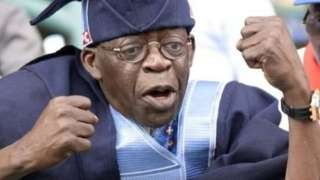
For Tinubu, the kingmaker, this marks the fulfilment of a long-cherished aspiration, born from his years as a senator, a governor, and the revered Godfather of Lagos, bestowing his blessings upon the selected but, in a way, elected governors since his tenure as governor ended in 2007.
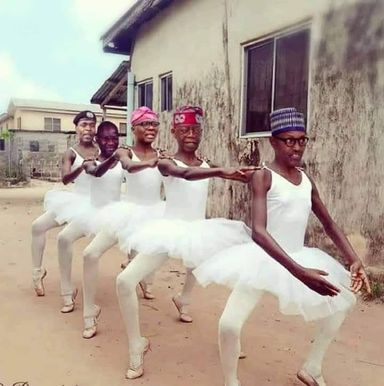
Today is May 29, and at long last, his moment arrives. He will assume the title of President of the Federal Republic of Nigeria. The meticulously planned schedule unveiled to the press reveals that the oath-taking ceremony to serve Nigeria commences at 10 a.m. in Abuja.
Earlier this morning, the air was different within the State House (presidential villa) confines, where Tinubu slept over after the inauguration dinner. This is the day Baba has been waiting for. Tinubu, from his bed, rises from another world, calling his wife to support him as he tries to sit down. It has been a while since their lips met, so Madam Tinubu playfully plants a kiss on Baba’s cheek. A smile graces his face; his eyes shimmer, and he moistens his lips while Madam Tinubu showers him with adoration, saying, “Ọkọ mi, à kú orire o” (My husband, victory is finally ours).
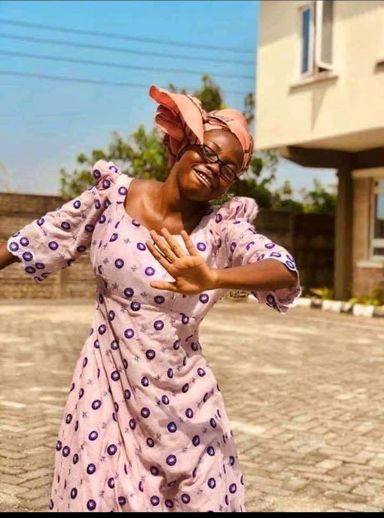
Tinubu stood up, clasped her hands, and they gazed into the nearby mirror. Baba expresses his gratitude to Madam, “Ọse gàn,” implying her unwavering support throughout their arduous journey. On the cusp of assuming the role of First Lady, Madam realises she will never return to the room where senators sparred and the office that invited mockery from the media. As a senator for over 10 years, they often labelled her a bully, a dramatic queen—you name it.
Moments as extraordinary as this are scarce, and nobody wants to jeopardise the arduous journey that led them here. Those close to Baba Tinubu have chosen to remain discreet, mindful of the media’s hunt for sensational stories while avoiding any association with negativity. Being on good terms is paramount, above all else. Loyalty must be proven.
Phone calls start pouring in as Baba and Madam continue to revel in anticipation of the events unfolding this morning.
The first call was from the state governor, who delivered significant numbers for Tinubu during the election. Then, the calls come one after another, with politicians at different levels of governance, even those considered adversaries by the public, showering him with praise and hailing him as Jagaban, Asiwaju, their revered leader. Who would have imagined the inauguration would unite them in a chorus of admiration?
Meanwhile, Madam Tinubu, seated on the room’s sofa, swipes through congratulatory messages on WhatsApp, beaming with joy as she responds to each one. She adjusts her underdress, which she had repurposed as a nightgown, still smiling when Aisha Buhari’s call comes in.
Aisha has been playing nice fr. She had taken Madam Tinubu on a tour of the presidential villa before this day, displaying excitement about assisting her with the transition and ensuring her settling in went smoothly. With the phone on speaker, Tinubu, just finishing up one of his calls, overhears their conversation.
When Aisha asks, “How are you feeling?” Madam Tinubu responds candidly, “I’m a bit nervous, but we will handle it. We’ll have breakfast quickly and be on our way to Eagle Square.”
Recognising the feeling, Aisha advises her not to let nervousness consume her and encourages her to draw strength and courage from her husband. Tinubu smiles and expresses gratitude, saying, “Aisha, thank you o. I appreciate this your support. I’m really happy that you two are jelling.” He also mentions their plans to meet later at the party to celebrate this new transition with other members of the All Progressives Congress (APC).
After Aisha’s call, the incoming president and the nation’s first lady-to-be both had a brief moment of solitude when they heard a knock on the door. It’s Madam’s assistant. She has been charged with coordinating their clothes for the inauguration. Madam Tinubu collected them from her assistant and placed them carefully in the wardrobe area. As she was about to nag about hunger, another knock interrupted her, hailing to be a waiter with their breakfast. They both shared a chuckle, realising the fast-paced nature of the morning. And it’s early morning; who knows what might happen to Tinubu if he doesn’t eat breakfast?
Breakfast was a simple affair but filled with warmth and anticipation. Baba Tinubu savoured each bite, relishing the flavours of the dishes; who cared anyway whether the food was made with love? Madam Tinubu, with her nerves subsiding, engaged in light-hearted banter, adding a touch of levity to the room. They reminisced about their journey, the challenges they faced, and the triumphs they achieved.
As they finished their meal, the room buzzed with the final preparations. The assistant reappeared, carefully arranging their outfits and ensuring every detail was perfect. Baba Tinubu’s attire exuded regality, symbolising the weight of the responsibility he was about to shoulder. Madam Tinubu’s ensemble radiated grace and elegance, befitting her role as the nation’s soon-to-be First Lady. The gele (head attire) is one to admire. The assistant tied it beautifully and added a graceful makeover to her face.
With their attire donned and maybe a sense of purpose in their hearts, Baba and Madam Tinubu made their way towards Eagle Square. The energy outside was palpable; the air was excited and hopeful. Their spirits soared as they stepped out, greeted by enthusiastic supporters and well-wishers. The streets were adorned with banners of Tinubu’s face and APC flags, a vibrant tapestry celebrating the dawning of a new era.
Amidst the cheers and chants, Baba Tinubu’s gaze met Madam Tinubu’s, a silent exchange of love, gratitude, and determination. They clasped hands in the car, drawing strength from one another, ready to embark on this historic journey together.
The inauguration ceremony will happen. Baba Tinubu will take the oath; his voice might not be steady, but we hope it’s resolute as he pledges his commitment to serve the people of Nigeria. The crowd will likely erupt in applause, and even if they are not impressed, voices will echo across the square. If Tinubu follows the script, he will spill words and fill hearts with renewed hope and belief in a brighter future.
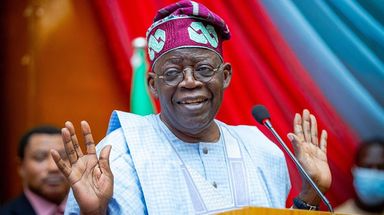
However, in Tinubu’s mind, grudges are not easily forgotten; those who have crossed him should prepare for the weight of his retribution. The kids on social media, taunting him with jibes about his age, academic history, background, and physical fitness, will soon feel the sting of his response. Controversy may surround his win, but he doesn’t care. While the Supreme Court is still occupied with those challenging his presidential victory, the reins of justice in Nigeria are not far from his grasp—what is beyond his reach? What can he not do? He is the Jagaban, and even the spectre of terror trembles in Baba’s presence.

The history of Nigeria is an epic story fit to give Game of Thrones a run for its money. Nigeria’s story is missing dragons, but there’s enough drama to fill the books, from cover to cover, for a best seller.
Even though Nigeria, as we know it, wasn’t fully formed until 1914, it was in 1960 actual Nigerians took charge of its destiny. And when that independence came, our leaders had the chance to drive the country to the Promised Land or off the nearest cliff. They chose the nearest cliff.
The original idea was to be a democratic nation, but that master plan would be interrupted many times by military men with their own hard-ons for power.
To celebrate the International Day of Democracy, we compiled a brief history of how each period of democracy in Nigeria died brutal deaths since 1960.
Nigeria became an independent country in 1960 but retained Queen Elizabeth II as head of state until it became a republic in 1963. The country adopted the parliamentary system of government practised by its recently-departed British colonialists.
Ethno-religious tension coloured much of Nigerian politics at the time, as it still does today. The administration of the Nigerian government was split along Western, Eastern and Northern regional lines, each with its own separate premiers. Abubakar Tafawa Balewa retained his post as Prime Minister, and Nnamdi Azikiwe became Nigeria’s first president in 1963.
The regional infighting and tension escalated when Nigeria’s first coup d’etat took place in January 1966. Soldiers overthrew the government and assassinated Balewa, as well as Ahmadu Bello and Samuel Akintola, the premiers of the Northern and Western regions respectively.
It was the first fall of the Nigerian republic, but it wasn’t the last.
One bloody counter-coup, a bloody civil war, a bloodless coup and a failed coup attempt later, the military government of Olusegun Obasanjo transitioned Nigeria back to democracy in 1979.
This time, the parliamentary system of government from the first republic was dumped in the trash, and Nigeria opened its doors to the presidential system we still practice today.
Five parties contested the elections and won seats in the National Assembly. Shehu Shagari of the National Party of Nigeria (NPN) won the presidential election that defined the second republic.
He served his first term, as Nigeria’s first democratic president, without much hassle. But it was when he made the inevitable push for a second term that wahala started.
Shagari was re-elected for a second term in 1983, but his opponents accused him of ojoro. They insisted the election was marred by violence and contested the result in court. Military actors used the instability caused by this conflict to stage a coup that ended the second republic in December 1983.
The man who took over from Shagari as a military dictator was Muhammadu Buhari.
Nigeria’s third republic is the shortest of them all. Buhari’s post-second republic reign lasted for 20 months before he was overthrown by General Ibrahim Babangida in 1985. Babangida promised to hand over to a civilian government as soon as possible, but he conveniently lasted in office for eight years.
Babangida’s military government conducted gubernatorial and legislative elections in December 1991. The winners took office in January 1992, technically setting off the third republic. But the presidential election was where the key spoilt the dog’s mouth.
After much drama, the government scheduled the presidential election for June 12th, 1993. MKO Abiola of the Social Democratic Party (SDP) and Bashir Tofa of the National Republican Convention (NRC) were the main candidates for the election.
Even though Abiola was widely considered the winner of the election, Babangida cut his victory dance short by pausing the counting of votes and annulling the election over allegations of electoral fraud.
Nigeria was scheduled to return fully to democratic rule on August 27th, 1993, but Babangida stepped down a day earlier with the mess of annulment still hanging about. He handed over the government to an interim team headed by Ernest Shonekan who was tasked with completing Nigeria’s transition to democracy.
Babangida created a mess, failed to clean it up and said:
Shonekan’s government lasted only three months before General Sani Abacha overthrew it and became Nigeria’s new military dictator in November 1993.
That was how Nigeria’s third republic ended before it even began. But Abacha died suddenly in 1998, paving the way for an Abdulsalami Abubakar-led team to transition Nigeria to the fourth republic in 1999. And Nigerians lived happily ever after.
May affliction not rise a fourth time.

If you have been active on social media, you must have noticed the trending hashtag #June12Protest. In this article, we explain what the June 12 protest is, why it is happening, and what to do if you will be joining it.
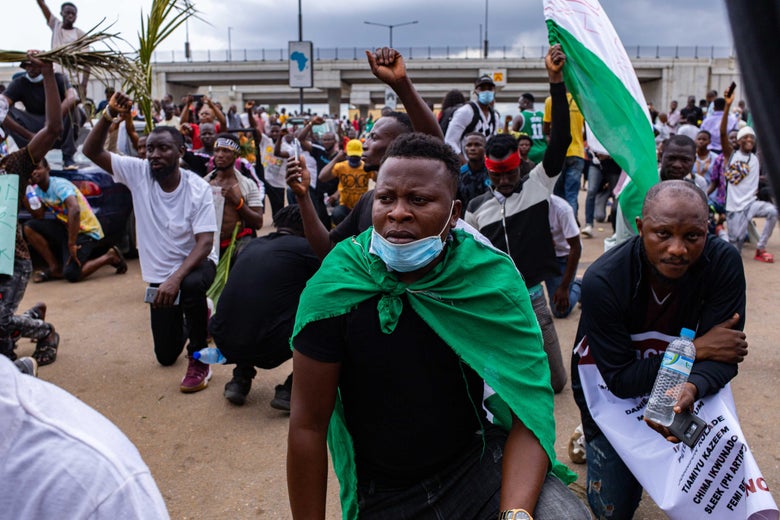
Today, June 12, 2021, Nigerians will take to the streets to protest against bad governance, abuse of human rights, worsening insecurity, and other forms of maladministration and mishandling of democracy in the country. This is coming a week after the Nigerian government banned Twitter for “the persistent use of [Twitter] for activities that are capable of undermining Nigeria’s corporate existence.” This suspension was announced through a Twitter thread.
This ban has been deemed unconstitutional, especially because it is a restriction of the rights of Nigerian citizens to express their right to freedom of expression. The provision for the Fundamental Human Rights for Nigerians can be found in Chapter 4 of the Nigerian Constitution. Section 39, under this chapter, details our right to freedom of expression and the press, and Section 40, our right to peaceful assembly and association.
By coming out to protest, Nigerians are exercising this fundamental human right and demanding for better governance and protection of the Nigerian citizen, among other things.
The protests are proposed to happen nationwide across all 36 states in the country, and in a few other states outside the country.
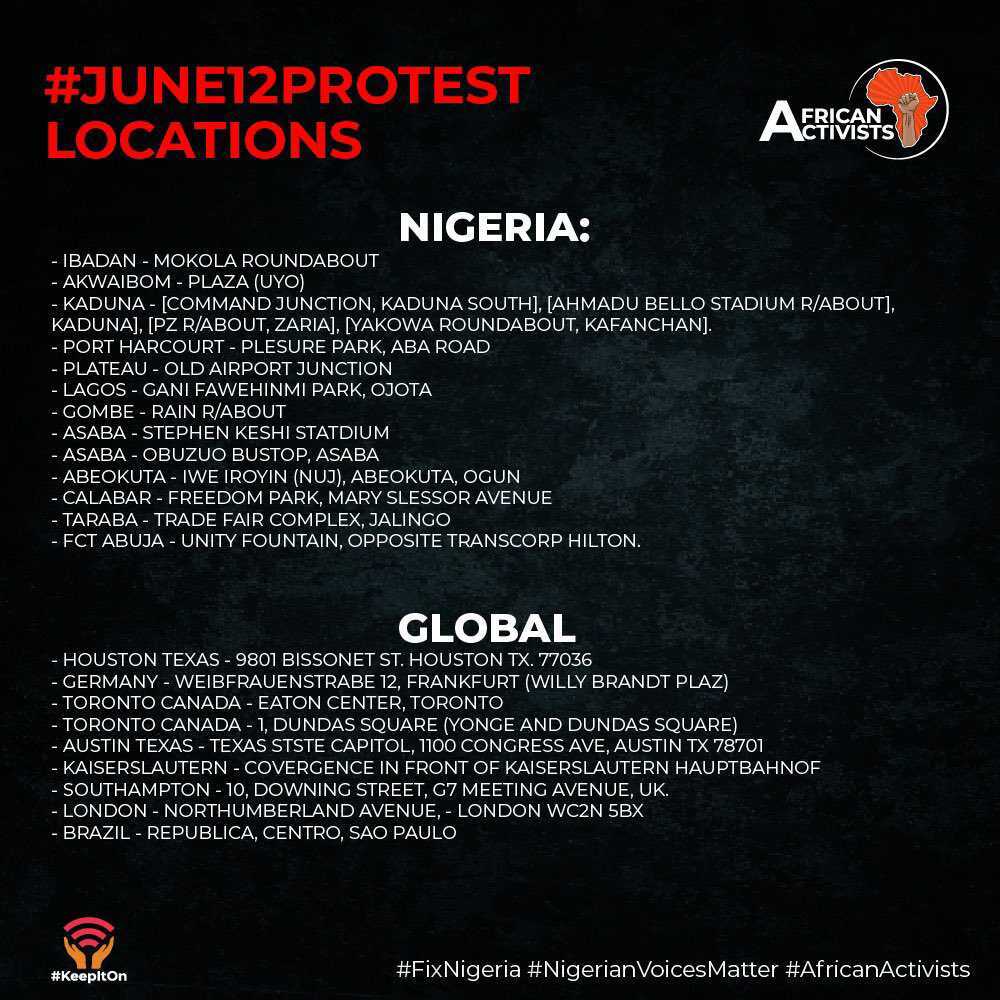
Here is a thread to follow for updates on other protest locations:
Just like the #EndSARS protests of October 2020, there is no central leadership for this protest. It is simply Nigerians gathering together to speak against things which are affecting the quality of their lives as citizens.
June 12 is a significant day for democracy in Nigerian. This day is believed to be the “real” Democracy day when Nigerians came out enmasse to vote for a democratic government, and free themselves from the shackles of a military regime.
If you are going for the June 12 protests, here is a list of things you should take note of:

Since time immemorial, well 1999 actually — Nigeria has celebrated its escape from pasty colonialists and military berets with a grand Democracy Day celebration. This day is usually characterised with a much needed public holiday, parades and the inauguration of successful candidates in the year’s elections.
May 29th, 2019 was no different, only it kind of was. Tuning things a little south of regularly scheduled Democracy Day programming, we couldn’t help but ask a couple of much-needed questions:
So, May 29th is no longer recognised as Democracy Day. Instead, it is now the day set aside to mark the transition into a new government. June 12th will now stand as Democracy Day, to commemorate the fairest election Nigeria ever held. But fret not, you’ll still get a break. Perhaps guilt-ridden by how hard things are in Nigeria, the federal government has set the day aside for yet another public holiday! Aren’t we the luckiest.
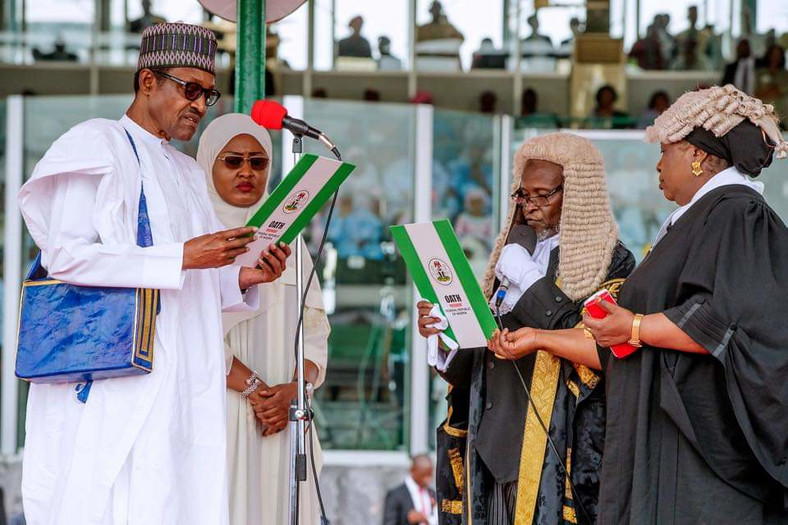
His flight itinerary for his next two holidays, sorry official visits? The speech he didn’t give to us on May 29th? Perhaps it’s a metaphor, ‘another presidential bag secured’. Guess we’ll never know.
Always one to switch things up, President Buhari broke a long standing tradition that sees newly sworn in presidents, address the nation on inauguration day. Why he chose to break tradition, we don’t know. Perhaps he thought this would suffice. Well, he thought wrong.
“You sef look, do you see any other Safari suits on this line?”
“Were you not at rehearsals yesterday? Make like Beyonce and move it to the left… or right, whatever. Just go”.
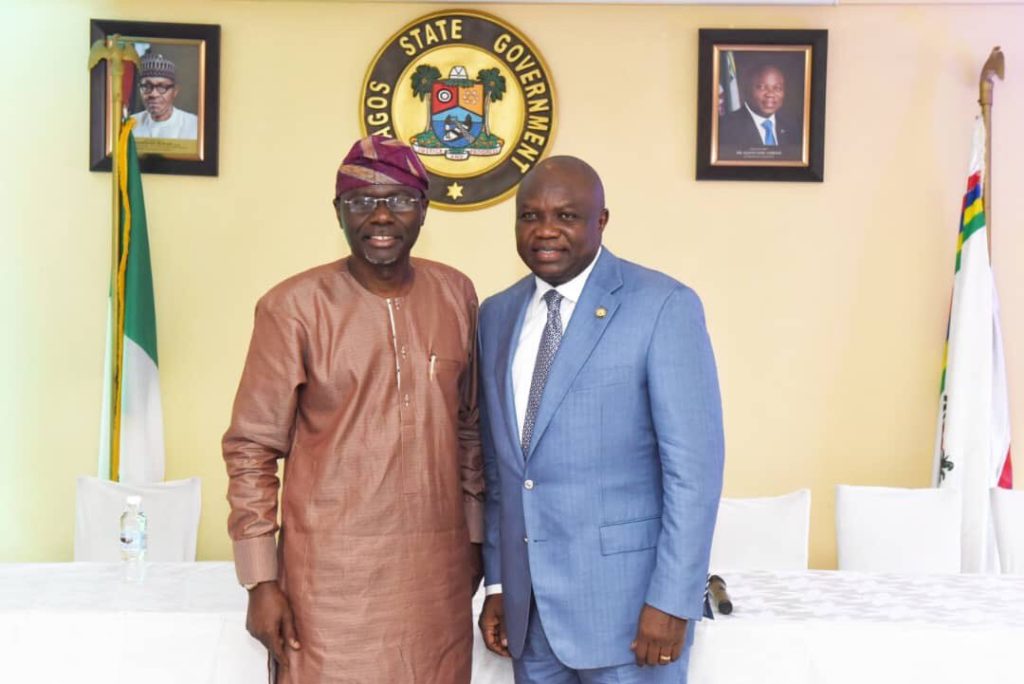
Conspicuously missing from Sanwo-Olu’s inauguration was no other than the outgoing governor of Lagos State, Governor Akinwunmi Ambode. Was he taking time off to recover from the damage 4 years of waist training might have done? Was he relishing in not having to suck belle to make shirt fine? None of that it would appear, he just didn’t want to steal any of Sanwo’s spotlight with his dashing figure. How kind.
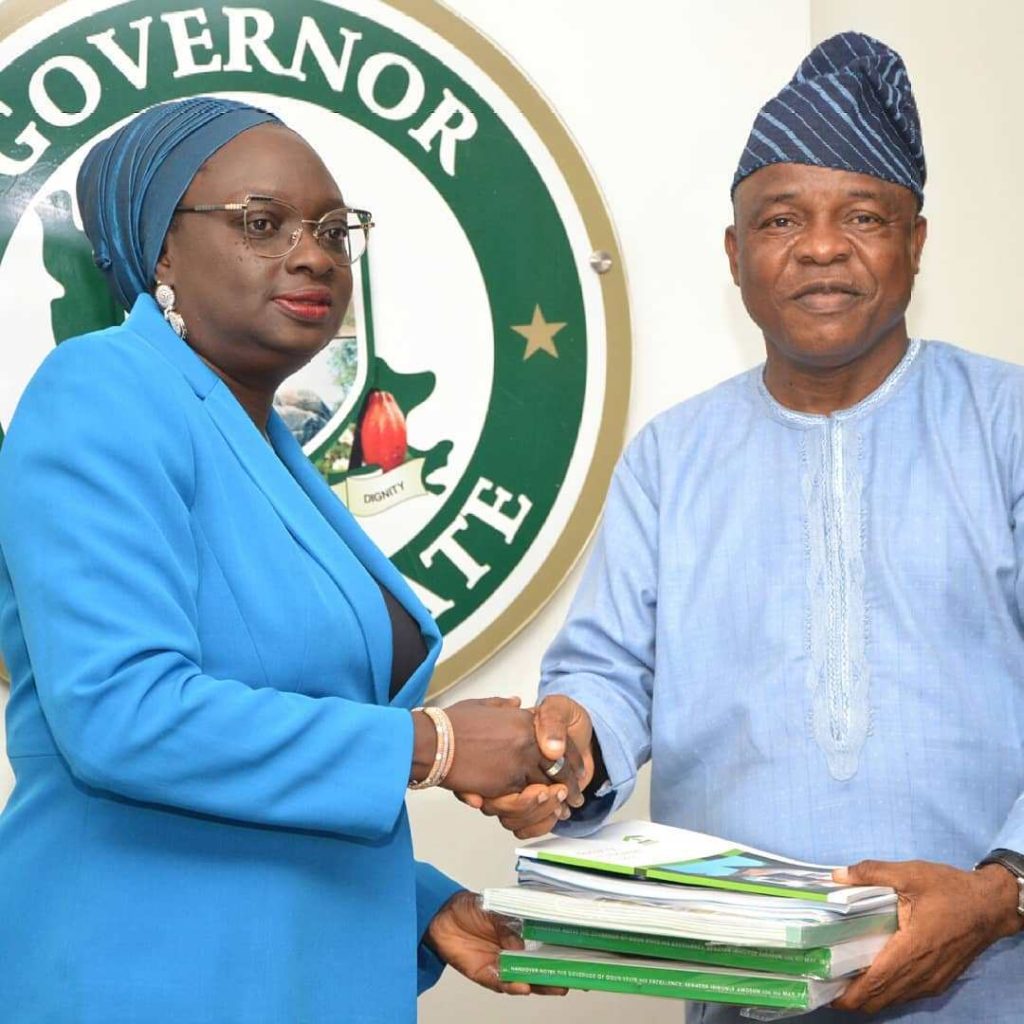
ICYMI, for the handover program, Governor Amosun sent his SSG to represent him, while the incoming governor, Dapo Abiodun sent his Deputy-elect — Engineer Noimot Oyedele-Salako to receive the formal handover. What’s with the beef guys?
If a row was set aside for former heads of states, things would have been real lonely over there. No Obasanjo, not a peep from Shonekan; the only person Pres Bubu had to share jokes about having to run Nigeria with was no other than Gowon. Where did the love go?