Notice: Function _load_textdomain_just_in_time was called incorrectly. Translation loading for the wordpress-seo domain was triggered too early. This is usually an indicator for some code in the plugin or theme running too early. Translations should be loaded at the init action or later. Please see Debugging in WordPress for more information. (This message was added in version 6.7.0.) in /home/bcm/src/dev/www/wp-includes/functions.php on line 6121 creatives | Zikoko!
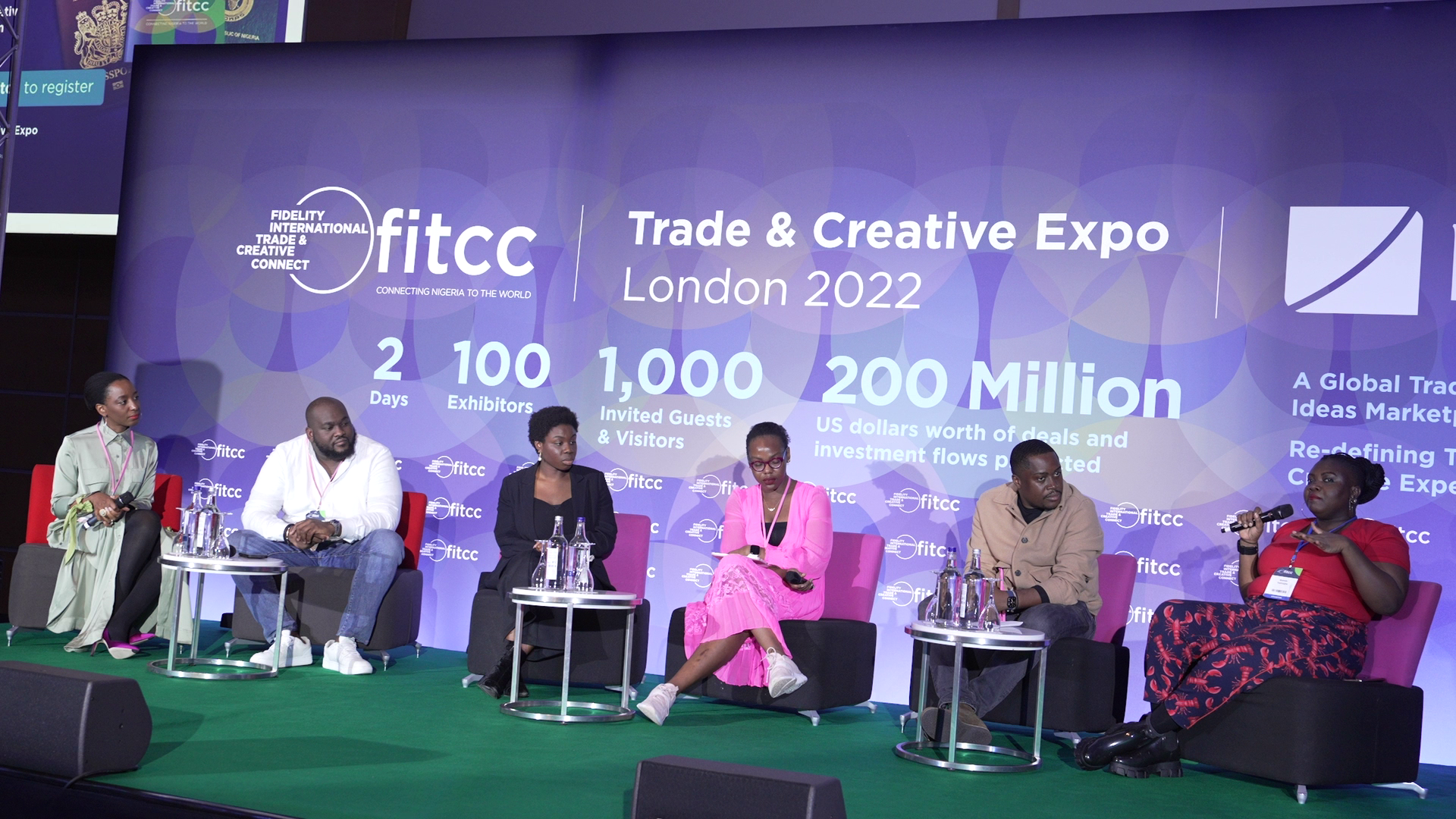
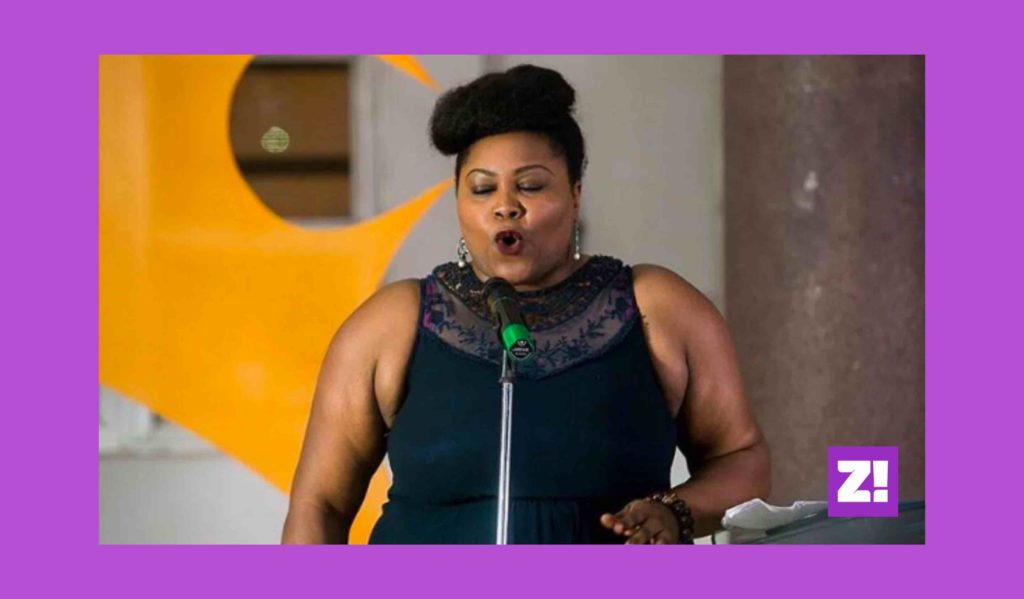
Last year November, the Fidelity International Trade & Creative Connect (FITCC) created a panel of Nigerian creatives, to discuss:
-Exploring Co-creation and Partnerships with Nigeria-Diaspora Creatives
-Tapping the Diaspora Resource Pool to Unlock Opportunities in the Nigerian Creative Economy
These are seven important lessons we learnt during both sessions:
Continue to put yourself out there
Promote yourself, shoot your shot, share your work everywhere you go etc. According to Oreka Godis, “It’s important that people are aware of you.”
Don’t underestimate the power of partnerships
With partnerships, you get the opportunity to collaborate with people that’ll introduce you to new skills, new resources and new perceptions. Many opportunities exist for Nigerians to collaborate with people in the diaspora. You just need to find the right one.
Conversations on royalties are very important in the creative industry
If you’re planning to work with any person or brand, make sure to have important conversations such as how much you get paid, who owns what, and who gets to do what. These details have to be ironed out, written down and signed by all relevant parties before any partnerships and collaborations happen. If not, one creative may end up getting ripped off.
Continue re-inventing yourself
There was a time when people were listening to music on cassettes and CDs and the only way to make money was by selling these CDs. Now we have multiple music streaming platforms where musicians can share their songs with millions of people across the world. Find out how your industry is changing and change with it, if not you’ll be left behind.
Social media is an important distribution tool
Social media is one of the fastest ways for your work to be distributed. During the panel session, Brenda Fashugba emphasised the importance of creatives putting their content online. The internet is basically the new “word of mouth for creatives,” and that’s why you should consistently post your work. Every share counts.
Information is power
A lot of the things we achieve today aren’t just because of the talents we have but also because of the information we’ve acquired. Adedotun Soyebi said there need to be more platforms like FITCC which bring together creatives from Nigeria and the diaspora. You need to be part of these types of platforms so you can get the chance to exchange ideas, learn new skills and network with people that’ll be essential to your growth.
Create value in the way you understand
As an artist, writer, filmmaker, musician, video producer etc., how do you create value in your industry? This is what will make you unique and get people to notice you. What’s different about your work that’ll people want to engage with it?
Local content is beginning to outcompete international films in Africa as rapid smartphone penetration and an affordable and expanding internet bring African creatives closer to audiences.
By Seth Onyango, Bird Story Agency
African creatives are finding a new audience among the youth, who according to the latest Africa No Filter report have grown their proclivity for local content.
The narrative change organisation’s report indicates Africans are consuming African films equally as much as they consume the US or international content.
“Most respondents watched films every week, whether local/African films (67%) or US/international films (66%). Among respondents who had watched between one and seven films, slightly more respondents had watched local or African films (57%) than international or US films (53%),” the report reads in part.
Regionally, North Africans were the least likely to have watched a film (45%) but were equally as likely to have watched local/African and US/international films (51%).
West Africans were marginally more likely to have watched local/African films (70%) compared to international films (67%).
“International films received a marginally greater audience in East Africa (78%) and Southern Africa (73%) compared to local/African films. Respondents from Côte d’Ivoire were most likely to have watched a film, whether local/African (86%) or international/US (76%),” Africa No Filter, a donor collaborative that supports African narratives, reports.
“Given the minor discrepancies, it seems that audiences are as interested in watching local/African films as they are in watching international ones.”
Recent studies also show that Africa’s young population is helping to drive video subscription business revenue for streaming services as content on the go shakes the African media market.
Digital TV Research’s figures now show the continent will have 13.64 million paying Subscription-Video-on-Demand (SVOD) by 2027, up from 4.90 million at end-2021.
Household SVOD subscriptions will still remain low compared to more mature markets like Europe.
Digital TV Research further shows some 6.6% of TV households will pay for at least one subscription by 2027 – up from 3.9% at end-2021.
International streaming services like Netflix have also taken note of the shifting trend in Africa towards local content and are now co-producing both films and reality series like the popular Young, Famous & African.
Tellingly, Netflix now has a category of “Made in Africa” and “Nollywood” which highlights how serious it conceives the African market.
While Africa’s ballooning youth population and growing middle class could represent a profitable niche for streaming services, this could also be a big opportunity for African production industries.
However, Nigerian film critic Wilfred Okiche, warns that Nollywood may, for now, have lost its shine and that the Netflix “opportunity” should be handled with care.
“For independent Nollywood filmmakers, the Netflix relationship is a lifeline to an industry badly in need of structural uplift, having hit something of a plateau with both video and theatrical, its two primary distribution models,” Okiche argues.
Netflix, Showmax, Disney, and Amazon have been studying consumer habits on the continent to appeal to its one billion-plus audience.
Netflix has about 2.6 million subscribers in Africa and wants to grow that number to 5 million by 2025. The number of people watching movies on the platform is said to be much higher, factoring in family sharing by its premium subscribers.
Netflix’s chief rival, MultiChoice’s Showmax, which has invested heavily in original African content, is beginning to reap the reward as African content now accounts for 40% of its viewing.
MultiChoice is Africa’s largest pay-TV group, available in 50 African countries. Its streaming service launched in 2015 and is available in 46 African countries, as well as in Britain and France, where it targets the African diaspora.
In April this year, the streaming service said it will double its investment in creating movies and shows set in its biggest markets of Nigeria, Kenya, and South Africa.
Meanwhile, the Africa No Filter report further found that African writers are not writing for local audiences, the continent’s readership also hardly reads for pleasure.
Hardly any respondents had also read a book in the month before the interview; 75% with 71% had not read any African authors.
“This indicates that African authors are not attracting an African youth audience. We also compared the respondents’ reading habits, asking how many books by African and/or international authors they had read for pleasure over the last month,” Africa No Filter notes.
Hi, I’m Wetalu Obi, the 22-year-old co-owner of W’s Bakeshop. I never wanted to work. I always wanted to be a hippie, but here I am. I’m obsessed with smelling like food, so if anything is vanilla, mango or cocoa scented, that’s my shit. Want to hear something wild? I baked my first cake when I was eight.
You were eight? What made you interested in baking?
I loved watching Nigella Lawson bake on BBC’s food network. She’d mix up a bunch of stuff, put it into the oven, and it always looked delicious. That’s my earliest memory of wanting to bake.
I was obsessed with how it looked and unaware of the actual work behind it. But I was already in too deep by the time my eyes opened.
Tell me about that first cake you baked
Also, I was eight when I baked my first cake, so it was awful. It was supposed to be a basic vanilla butter cake, but it came out as one big, dense pancake. It was still special to me, but it was pretty horrific.
This sounds like you have supportive parents. Has that helped?
I do and it helped initially because they didn’t have gendered expectations for my sisters as kids and me. So if I wanted to bake, cook, sew or knit — and I did all that — they didn’t make a fuss about it and that opened my mind. I felt like I could do or be anything I wanted. They were pretty supportive until I got into university. From then on, they wanted me to focus more on my studies than on my “hobby”, and that’s when we clashed. They are pleased because I’m out of school and went straight to managing a bakery with my sister after graduation. I think they are happy.
Did they have a specific reason to worry?
They did. I studied chemical engineering. It was very demanding, and my parents feared I’d spread myself too thin. They wanted me to just focus on school and get a good GPA. I told them I wouldn’t do that because time wasted is hard to get back. I knew if I started working after school, I would never get back to baking, so I didn’t listen, and they didn’t like that.
I graduated from uni this year and co-own a bakery, so these problems are a thing of the past.
What does it mean to co-own a bakery?
Yes, I do. The bakery is co-owned by my sister, Ella, and we get help from our sister Buogo. We are a close-knit family of seven. Running the bakery together is a family love effort. For instance, whenever I was in school or things were too much for me, Ella would just step in to run day-to-day operations until I was back.
Nobody is fighting about running it because we both share the sentiment that we can’t do it alone. So we show up every day.
As for the day-to-day operations, we have a manager and ten employees, so things would be okay without us, but we still show up every day. But managing a business in Nigeria is tough. There are always power issues and spike in market prices, but that’s life as we know it.
What’s your favourite thing about baking?
I think my favourite thing about baking is how whimsical it can get. I love the feeling of putting my AirPods in and getting lost in my world for hours. I worked for eight hours straight when I made my sister’s wedding cake. I was so happy and relaxed that I could cry. I could never get sick of cakes. They’re so soft and texturally enjoyable.
Have you ever been in a baking slump? How did you get out of it?
When I was in year three, required to take courses from other engineering departments and had like a million units. I was so uninspired and heavy, so I didn’t bake for a whole semester.
One day, I went to a cafe, ordered four desserts to-go, went to a park and sat on a bench to eat them and people-watch. It was such a good day, so I took a sky picture. I returned to the bakery and tried to recreate that colour palette on a cake, and that was it. I can’t find a picture of the exact cake I made, but I have a version of it we modified for the bakery’s cake design catalogue.
I’m weirdly glad about that slump; it’s a beautiful cake. Do you remember your first positive review?
I was invited to a birthday party and asked to bake the cake. It was a double chocolate fudge cake. People would take a bite, and I’d watch them open their eyes in disbelief and smile. It was amazing to witness. I think that’s my favourite thing about baking; sharing the finished product with people and watching them act like happy children.
What’s the weirdest ingredient you’ve baked/wanted to bake with?
I’ve baked with mayonnaise. It’s a moisture/flavour enhancer, so it’s an excellent substitute for fat/eggs in most recipes. I only experiment with our personal recipes because I can’t experiment with other people’s food.
I want to bake with chilli pepper one day. I still haven’t wrapped my head around the sweet/spicy combination, so it’ll take a while.
This is a safe space. What are the worst cake flavours, and why is it chocolate and/or funfetti cake?
Right?? Chocolate is not my favourite. I love a good vanilla cake, maybe a red velvet, but I can’t eat chocolate. It’s ironic because it’s our most requested cake flavour, so it’s our most done recipe.
But funfetti? No, please. I love a good funfetti! Especially with creamy white buttercream frosting. Such a classic!
I’m judging you, but go off. Would you be willing to share an easy cake recipe with your fans?
I don’t have “fans”, please, but I have a recipe I learnt from our grandmother’s Betty Crocker book that’s burned in my brain.
It’s the 1-2-3-4 vanilla butter cake recipe:
1 cup butter
2 cups sugar
3 cups flour
4 eggs
2 tsp baking powder
1 tsp vanilla extract
1/2 tsp salt
1/2 cup milk
Knock everything into a mixer and whip for six minutes. Batter into a pan and bake for 30/45 minutes.
You make the type of cakes I see on Pinterest. Do Nigerians appreciate them? E.g., your mini cakes and the strange planet cakes?
When we started on those cakes, this was our initial worry. Did it seem too minimal/quirky to catch anybody’s attention? But surprisingly (and fortunately), people like them. And we made the snack cakes with a very special set of people in mind. People who wish they had a whole birthday cake to themselves. I love the idea of a single-serving birthday cake. It’s so practical.
In all of this, how fulfilled do you feel?
Baking is my life. I always knew I would do something pastry related, so ending up where I am now is something I expected. The bakery is where I love to work. I love the relationship my sisters and I have with each other. It’s our safe space. Yes, I feel fulfilled.
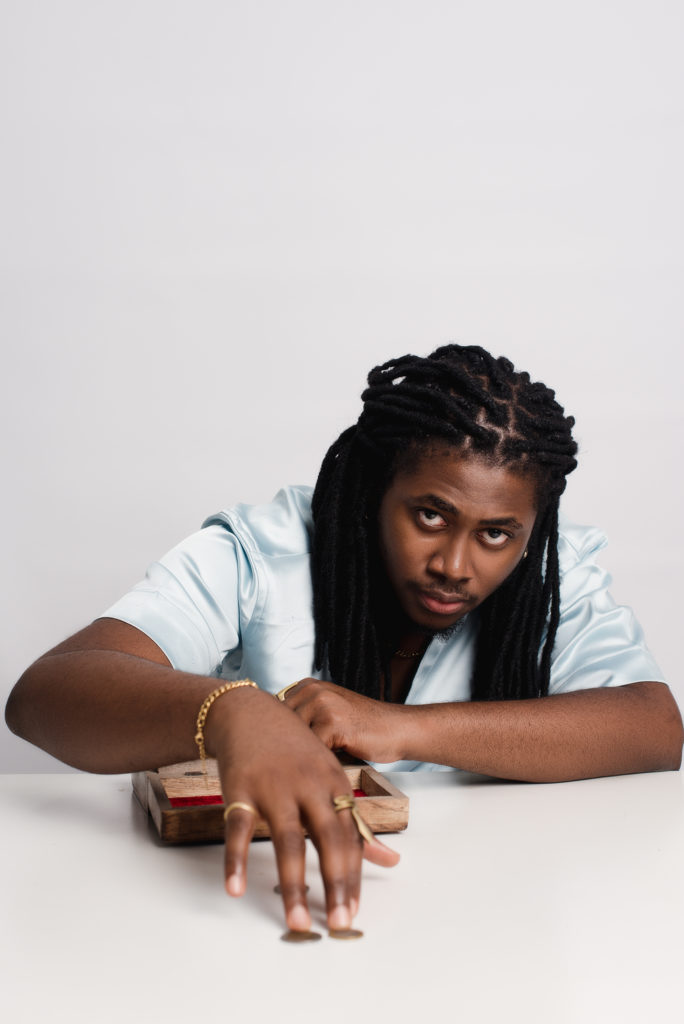
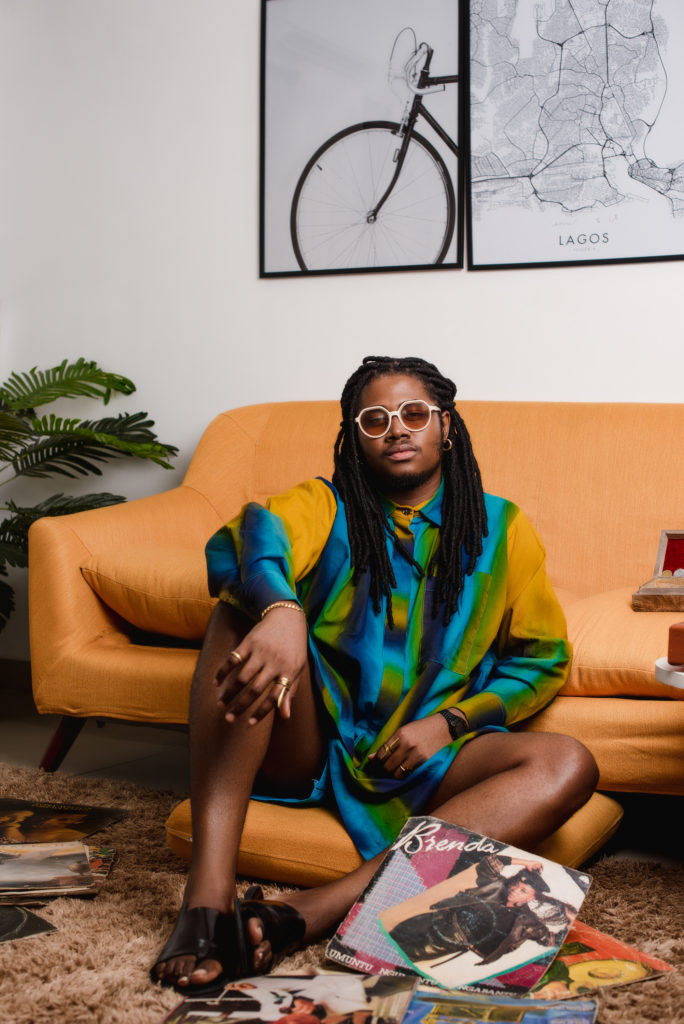
My name is Dwin, The Stoic. I’m a singer, songwriter and performer, which is interesting because I wanted to be a Catholic priest for the longest time. Some fun facts about me are that I collect coins and I’m a cancer. Apparently, that’s why my emotions influence my sad songs. (laughs in millennial)
Coins? How is that fun?
Okay, it’s not like I don’t have other hobbies. But it’s something I like. It’s my thing. That’s a fun thing about me.
Dwin, that’s 40+ hobby, but let’s talk about that priest thing you mentioned
Like every other boy that grew up Catholic, I wanted to be a priest. I convinced myself it was my calling until I turned 15. The year I discovered women.
So, from potential priest to musician that sings about heartbreak? How did we get here?
I’ve always been singing, but it was something I did with friends. It started in secondary school with a record label my friends and I started, but that didn’t last long. I’ve also made music with my friend 3rty. We’ve been friends since high school, and we went to Covenant university together. Besides that, I’m also in a band with a friend. It just makes sense to work with close people you know are talented. Officially, I put up my first album in 2017, and I haven’t looked back since.
So your name wasn’t always Dwin the Stoic?
Nope. in secondary school, it was Ozone and then Nu Maestro. The Stoic just started as my Twitter handle. I picked it up from a song by Mumford and Sons, they are an enormous influence on me. And Dwin is a shortened version of my name, Edwin. I’m not stoic, but I sing about sad shit and emotions, which is the opposite, but I like the name. Plus, a musician named Dwin exists, so it stuck.
Speaking of you singing sad shit, who was that person that got away? Are you doing okay?
I can see how they feel that way. I’ve listened to my songs. It’s not like I’m getting heartbroken left and right out here. I’m just a talented songwriter, and it’s because I am an excellent writer as well. So, all my sad short stories and poems became songs. Sometimes, it’s direct heartbreak. One person inspired Heavy Heart after all, but sometimes it could be three heartbreaks that my brain would turn to one song.
So you combine the heartbreak into one song, so none of them feels special?I love it.
Sometimes it’s one person wicked enough to give you heartbreak to sing about, but sometimes it’s just inspired conversations with people. In my next album, there is a song called Mad It’s probably my saddest song.
As sad as my music can be,I think that’s why people are drawn to it. When you listen to me, you can feel all those feelings you can’t explain with words because I’ve done it for you.
It’s your confidence for me. I love to see it.
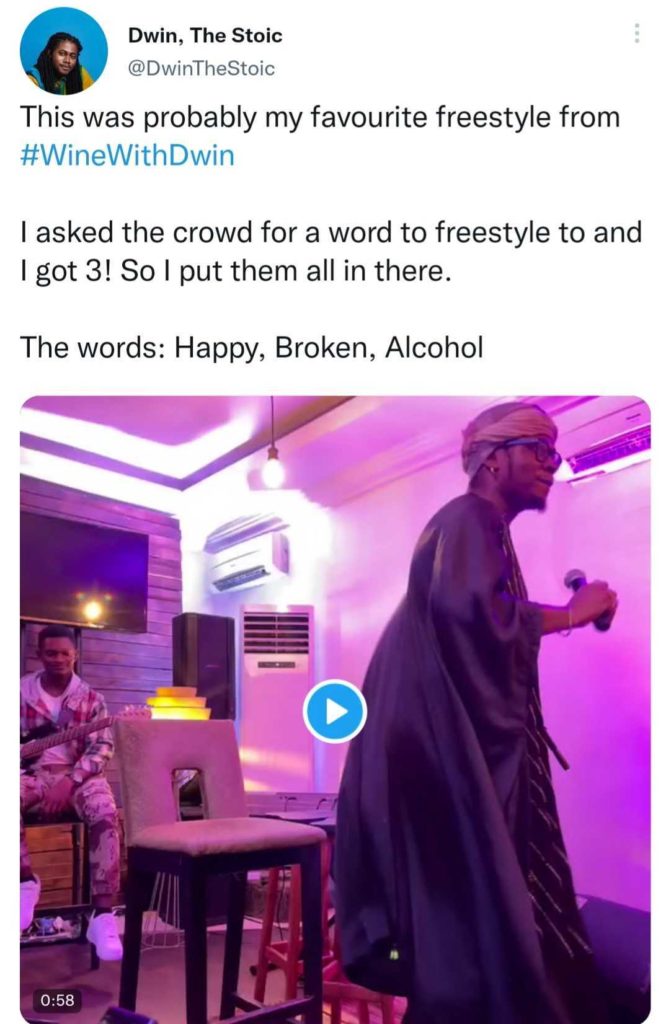
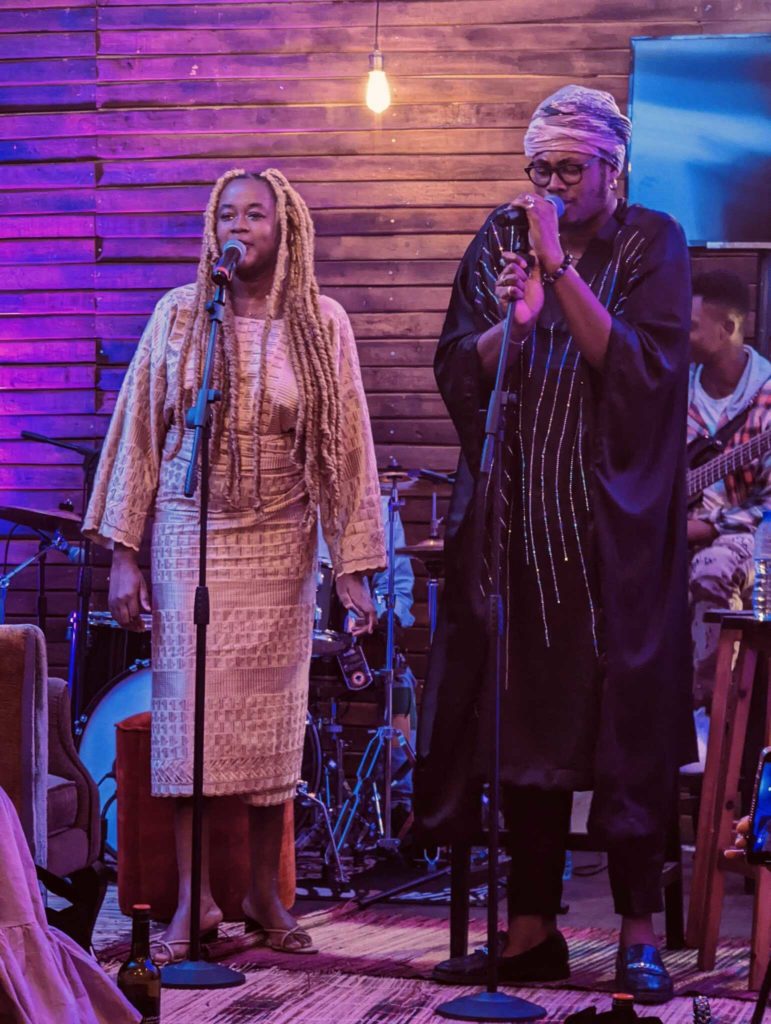
Well, I’m at a place where this music thing has gotten effortless for me. For instance, I’ve made songs on the spot at some of my shows. At first, it was nerve-racking. I never knew what would come out of my mouth, but it always ended up good. At my last show, I did a freestyle where people gave me the words like, “Happy” “Broken”, and “Alcohol”, and I came up with a freestyle that was so nice the producer asked to produce it, and now it’s the final song on my album.
On a scale of 1-10, how fulfilled do you feel doing what you do?
I’m about to sound braggy, but quite good at this music thing. My album and the next two EPs are ready. I want people to hear this because of how much range they showed, so I would say that I am pretty fulfilled in music-making. I enjoy it and can do it in my sleep. If I don’t write another piece of music for the next three years, I’ll be fine.
I’m looking forward to writing music for other people. I loved writing for Adekunle Gold. Hopefully, I will get to work with some fantastic people this year.
Are there some specific people you’d love to work with?
I want to work with Asa. We would have the best of times because her vibe is excellent. I think I would write killer songs for Sam Smith. I have a piece ready for the Cavemen. We haven’t spoken yet; I just have plans to work with them. Hopefully, I’ll release stuff with other people. Long term, I want to work with Labrinth. He has a solo career outside his group, LSD, and I have Ignis brothers. So, we are very similar.
If you’re done recording, can I send a voice note you’ll use in one of your songs so I can say I’ve made it?
You know what, just freestyle. If you can think of something cool, send it to me. And I might even make a song around it.
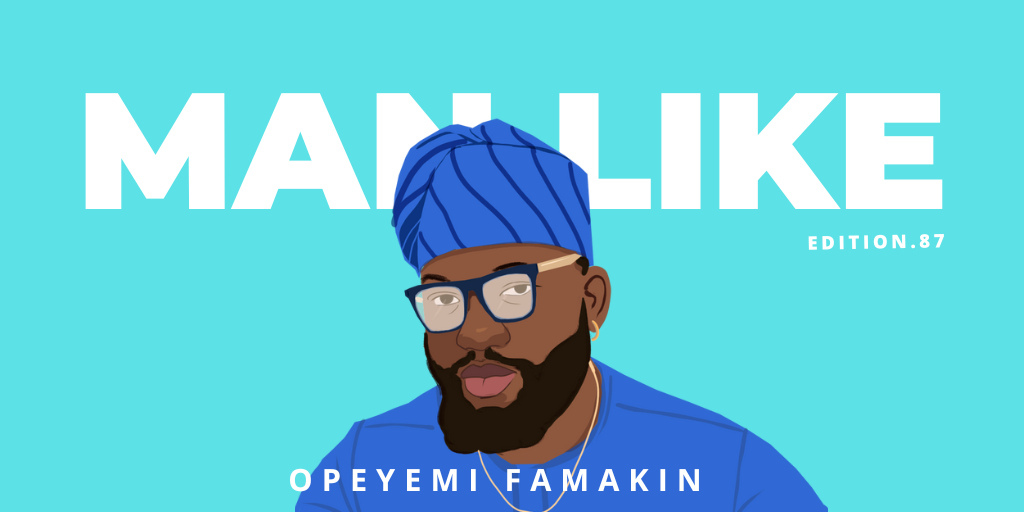
What does it mean to be a man? Surely, it’s not one thing. It’s a series of little moments that add up. Man Like is a weekly Zikoko series documenting these moments to see how it adds up. It’s a series for men by men, talking about men’s issues. We try to understand what it means to “be a man” from the perspective of the week.
Opeyemi Famakin prides himself on being Nigeria’s biggest food critic and he wants you to know it. Throughout our conversation, he mentions the title more than once, but what initially seems like bragging slowly reveals itself as a burden — to not just be the best, but remain the best. How has this title affected him and does he really enjoy the fanfare that comes with it? Well, Opeyemi has a lot to say.
In this episode of Man Like, he tells us why he’s no longer interested in gender wars, the weird thing that drives him and why he’s unhappy with making it this early in life.
Was there a time in your childhood when you struggled with the concept of being a man?
I don’t think I’ve ever struggled with that. But in the past three years, I’ve started to understand what it means to be a man in Nigeria and the male privilege that comes with it. I grew up in a family without gender roles. Sometimes, I cooked, and sometimes, my sister washed the car. Chores weren’t assigned based on sex, so I just assumed that was how the world worked. I was wrong.
I can go on a long walk in the middle of the night and the only fear I’d have is I might get robbed. Even that is unlikely because I’m really tall and intimidating with a deep-ass voice. Women can’t do that because the dangers they face are much worse. But I never understood these tiny privileges as a teenager.
What sparked this realisation?
I stopped arguing and started listening to women more. I never really had female friends outside of classmates or women I had sexual relationships with. Because of this, my conversations with women were limited to banter and nothing deep. We were all catching cruise. I’m older now and less inclined to argue with women when discussing their experiences. This year, I discovered women were scared to take Uber at night. Me, if an Uber driver says nonsense, we’ll throw hands.
Has this changed your relationship with women?
Yes. I shut up and listen when women are talking. Even though it’s reduced now, I remember when we had gender wars on Twitter, and I felt like women were painting men as villains. Because I had a dad who always told me he loved me and friends who were real stand-up guys, I just thought the generalisation that Nigerian men are scum was a lie. I was in a bubble. But now I know that everyone is entitled to their truth. I was doing all lives matter for a black lives matter situation.
It’s not like I’m a fan of the bad rep Nigerian men get, but these days, when conversations like that come up, I know there’s a reason behind it.
This bad rep you talk about, has it affected you personally?
Yes. So there was this girl I really liked a while ago. She had just come from Abuja to Lagos for NYSC, and just like everyone, she’d heard of Yoruba demons. Looking at me with the beard, the trad and the gold chain, I fit the description. And because of that, she was hesitant about being with me.
It affected me because, during our interaction, I hadn’t done any Yoruba demon activity. LOL. I was a total gentleman, but this girl wouldn’t go forward with a genuine relationship because of the stories she’d seen on Twitter. We all laugh about it online, but some people take these jokes seriously.
Damn. Do you try to prove you’re different?
I don’t bother with that anymore. If I like you and you think I’m a Yoruba demon then, OK. It is what it is. I try to pursue relationships with open-minded people because I don’t like stress abeg.
Talking about proving things, when did it hit you that you were a man?
When I paid rent for the first time. All my life, my parents covered me financially, and even when I moved out, they paid my first rent. But when it was up and I paid the next one myself, omo, it changed how I looked at money.
How?
I realised I wasn’t really approaching money the right way. My parents brought my sister and me up as savers, not investors. They were civil servants, so they expected us to work for somebody else and save from our salaries. This is a good and bad thing because saving a lot means I don’t struggle financially, but not investing means I’m unable to grow my money like I could. It’s the one thing that keeps me up at night. With the way the naira is losing value every day, I might wake up one day and see that all I’ve saved has lost its value.
These days, I’m looking into investing in forex sha. I’m not proud that I don’t have financial investments, but I’ve invested in myself, and now I’m the number one food critic in Nigeria.
Big flex. How did this food critic journey even start?
I’ve been prepping to be a food critic all my life; I just didn’t know it. While most families travelled to Disneyland and the likes during holidays, my parents took us on trips to try out food from places like the US and Asia. This is how my love for food started because it broadened my palette. I started posting about my food experiences at university, but I didn’t take any of it seriously.
In 2019, I started working in advertising, and one time, a food brand asked my company to work on a campaign. I noticed that we compiled mostly fashion and lifestyle influencers. For a food brand? It didn’t make sense to me. When I realised we didn’t have food influencers in Nigeria, I pitched myself to my colleagues, but they laughed at me because my engagement was low. I took that ginger, studied the market for three months and created a strategy for how I could blow as a food influencer.
Another thing that motivated me was when I DMed Eat Drink Lagos, asking if I could work for them for free, and they aired me. Now that I have many followers, I understand there’s a chance they never saw it. But I took it personally, and that animosity fueled me. LOL. I told everyone I’d be one of the biggest food influencers in the country before the year ran out, and look at me today. I fucking did it.
How do you feel now that you’ve gotten what you wanted?
Good and bad, but more of a bad feeling. It’s like saying you want to be a billionaire and actually becoming one in your early twenties.
I’m sorry, where is the problem here? LOL
I’m not a billionaire or anything. It’s just that I had planned to do so much over time, and now, it looks like I’ve achieved most of it. I’m going to expand my plans. But there’s this initial question of “What next?” and the emptiness that comes with checking everything on your checklist. It’s almost like I’m floating around.
Most of my problems sound dumb to non-food influencers. Unlike social media comedians who make skits, I don’t have a community of colleagues to talk to or collaborate with. So to an extent, I’m also very lonely. But I’ll pick this problem over going back to my 9 to 5.
Interesting. All of this must come with a lot of pressure
It does because now, I have to look for ways to do more and reinvent myself constantly. I’ve also built a brand as the number one food critic in Nigeria, and I have to work twice as hard to maintain this post with many aspiring food critics popping up. That’s a lot of pressure. To other people, it’s a thing of “You’re making money and eating up and down. Why should the number one spot mean so much to you?” But omo, it’s my entire brand.
Fun fact: I still recommend these new influencers to brands that can’t afford me. It’s almost like I’m giving them the ammunition to take my spot. LOL.
Not so random question. Do you ever deal with imposter syndrome?
I struggled with imposter syndrome as recently as last year. I would go to events with big celebrities and stay in a corner because I didn’t think I deserved to be in spaces like that. After all, all I do is eat food and tell people whether or not it’s good. I used to question myself and what I brought to the table with my job, but I don’t do that anymore.
Please, give me tips on how to overcome imposter syndrome
Fake it until you make it. People assume I’m a celebrity, so I lean into it and play along with the script. Over time, I’ve gotten more confident and comfortable with my job and social interactions. I did it so well the first time I tried that someone flew me out to Abuja for work based on my networking that night.
Scrim. Talking about identity, in your own words, what does it mean to be a man?
Where I am right now, I’d say being a man means taking on a lot of responsibilities. This ideology might change in three years, but right now, it’s how I understand the concept of masculinity.
Using your definition, grade your manliness from 0 — 100%
Hmm. I’ll say 75%. My idea of responsibility is financial, and I think I have that covered.
Funds! With this confidence, I’m curious if anything scares you.
I have an irrational fear of failure. Nothing points to me heading in that direction, but I’m just scared of it. I’m also scared of being a bad father and husband because my dad set a standard I must meet. He was the best dad.
On the flip side, what drives you?
Competition. I thrive when I feel like I’m competing with someone else. After I surpassed Eat Drink Lagos’s numbers on social media, I remember I was bored for a while because they were my driving force. Now, there are new guys coming up, and I’m like, “Yes, finally.”
Sir, why do you like violence?
Some people have self-motivation, but I don’t. I need to have someone to compete with all the time. Maybe I need to see a shrink. It’s not a negative competition. It’s just someone to keep me on my toes.
So what’s next for Opeyemi Famakin?
To be the biggest food critic in Africa. Now that I’ve conquered Nigeria, I want to colonise African countries and make them my bitch.
Please, put me in your travelling bag when you’re ready to go
Wana Udobang is the definition of good vibes. Popping up on my screen with the biggest smile and carrying our conversation with laughter and jokes, it’s hard to believe she’s only days away from trying something new with her career — organising her first poetry installation. But when you think about it, Wana is no stranger to trying new things.
Over the years, Wana, popularly known as Ms. Wana Wana has done everything from performing poems in Europe to making documentaries and hosting her radio shows in Nigeria. But despite all of this, trying something new still scares her.
I recently caught up with her to talk about being a badass multitasking queen, why she didn’t feel intellectual enough for poetry, why we all need to be shameless, and why her new installation, Dirty Laundry, might be her most important work yet.
Writer, poet, director and radio host. Wana, abeg, how do you juggle all these things?
It sure sounds like I’m doing a lot when you list them all out like that. But the truth is, it’s never that much work because they’re all the same thing to me — storytelling. I always tell people I’m a storyteller, and I work using different mediums. So it doesn’t matter if I’m writing a podcast, an investigative journalism piece, a poem or a show. They’re all different forms I use to tell stories.
It also helps that I’m very organised and try not to do all these things at once. I might do two or three this year and another batch next year.
So which one came first?
My primary degree is in journalism, but I’ve always done poetry since I was about 16. I didn’t know what it was, but I just knew I was depressed, and I would write these things that didn’t rhyme, and cry my eyes out. I’d do this and immediately feel better. Somehow, my best friend in university saw it and was like, “Wana, this is some poetic shit”.Me, I couldn’t see it. I was an art student in secondary school, and my idea of poetry was from the work I had access to back then. I didn’t think my work could be defined as poetry. My friend later got me a journal to write all my work and I guess that’s when poetry actually became a thing for me.
I started consciously researching poetry, but I didn’t understand or emotionally connect to most of the things I read at the time. I was young and deep in my teen angst, so the emotional connection was important to me. I eventually discovered Def Poetry Jam and realised poetry could be performance art, which I loved.
I moved back to Nigeria after university, and with my degree, I started working in radio but still wrote poems for myself on the side. During that time, Gbogobiri opened, and they had poetry readings that allowed me test my poetry with an audience and build a community. And because I was on the radio, I started hosting events which led to TV gigs and then writing columns. Honestly, everything in my career happened organically. If something interested me and the opportunity came, I took it.
I’m curious about how your approach to storytelling changes when it moves from being a hobby to an actual source of income.
One of the things I try to do is always be grateful. While it’s great that I have this skill and can make a living out of it, I’m also privileged that I get to work on projects I genuinely care about. They’re meaningful to me. Most of the things I’ve done have been personal projects I enjoyed, so it didn’t really feel like work to me.
How are you able to make poetry that connects with a large audience?
I don’t write because I want to sound smart. I write what I know and what I can relate to. I was also part of the audience that didn’t feel intellectual enough for poetry for the longest time. Connection is essential to approaching my work, and I rate it above the craft or the structure. I want people to feel something soulful.
I remember thinking one of my poems, Catfish, was lame when I wrote it because it didn’t feel deep. My friend convinced me to perform it at Gbogobiri and everyone loved it. When it got published on Brittle Paper, someone commented that it was “simple.” To the literary community, your work has to be complex and hard to understand for it to mean something. LOL. These people don’t know that it takes a lot of effort to simplify complex ideas. The poetry that saved my life did so because they were honest and not because they were deep. If I can maintain honesty in my work, then I’m good.
I stan. So talking about honest work, tell me about your latest work, the Dirty Laundry installation.
I’m taking 20 of my poems — a lot of them connected to women’s issues, gender violence and feminist agency — and printing them on these big ass canvases that will be displayed in an art space. I’m also hanging them with a peg on a line, so it’s like putting out your dirty laundry in public.
The idea came to me 12 years ago. My brother watched one of my poetry performances and said that while my poetry reminded him of our childhood, it felt like I was hanging out our dirty laundry in public. It stuck with me and I knew I had to use it. The problem was that I didn’t see myself as an artist. I was just a poet. That doubt held me back. I finally decided to do it two years ago, but the pandemic hit, and production shut down. While I took this as a sign to kill the project, things kept happening to remind me of its importance.
Things?
Yes. I’d try to shelf the idea and then hear someone killed their wife, or a girl was raped in church. All these unfortunate events proved that it was still timely and important. It’s really about how our shame is hoisted at us as women. We’re victims, but they still want us to be silent. There’s a part of the exhibition where people can write down what brings them shame and purge themselves.
Why do you think we need to face our dirty laundry?
Because shame is something that kills us. I told someone recently that I’d take pain over disgrace any day. That’s how we’re wired as Nigerians. We’re ready to stomach pain over being disgraced or publicly embarrassed. And the things we find shameful are not even that serious. In school, you’d see a girl get her period, and all the other girls would run around covering her up because God forbid anyone sees that she’s menstruating. Why? I’m interested in removing this veil of shame because we’re more connected than we are disconnected. See ehn, left to me, we should all be shameless.
#YouCantShameTheShameless! What was the most challenging part for you putting this together?
Planning. I’d prefer just to show up and do my thing, but I had to coordinate all the moving parts like location scouting. This experience has taught me that I don’t have to be in control all the time. I hired people to do their job, so I needed to let them do it.
There’s also the fear that people wouldn’t show up. I mean, it’s one thing for people to hype you on social media, but will they come? I also want them to receive and understand the work. It means so much to me that people experience my work and something shifts in their life, even if it’s temporary. I always want people to leave with something. And of course, I’m always nervous about that.
And the best part?
Seeing all I’ve worked for come to fruition. I feel like it’s not real until I enter that room and see everything hanging. I’m also proud of myself for securing the funding to do this. Support from the Ford Foundation doesn’t validate my idea; it just affirms it and reiterates that it’s important. I also get to collaborate with Naomi Edobor, my brilliant curator.
Describe the installation in three words
Immersive, glorious and joyful.
We exist in a time where women like you, Eloghosa Osunde and Titi Sonuga are killing it. Why is it important for women to tell stories and occupy space?
It’s magnificent to be existing at this time. Not just because other brilliant women like me are telling their stories, but because we’re building worlds for ourselves. That’s powerful. Even though we’re standing on the shoulders of women before us, we’re still creating something new and true to who we are. Eloghosa is fucking things up with her stories, and Titi is doing the same with her spoken word and plays. I feel like we can stand on the shoulders of our elders and still build expansive worlds. That’s what makes it so gorgeous. I’m in awe of our audacity and our world-making.
What does legacy mean to you?
I want my work to outlive me. That’s a big deal for me. I want people to reference my work in their thesis and use my processes as a study. I also wish to be able to leave tangible legacies like funding and support for young artists. The legacy I want is that people encounter my work, and there’s a shift for them. Someone can say, “I listened to that, and it changed my relationship with my mother.”
What’s next for you?
I can sit here and talk about everything I want to do, like write a Nike ad or perform on a world stage with an orchestra. But the truth is, our dreams can sometimes be limiting. I don’t dictate what happens anymore. I just open my mind and let the opportunities present themselves to me. My goal is less about what I’m doing and more about being free to do anything I want.
Are you a creative? Then you understand how frustrating it can be when you face the dreaded “creative block.” As in, you’re tired, and cannot can with new ideas.
Not to worry, your brain will be revived by the time you visit the following places.
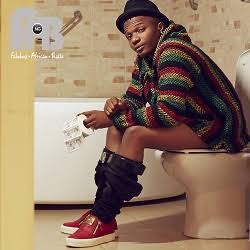
1. In the toilet
Right on the seat while you’re doing the deed.
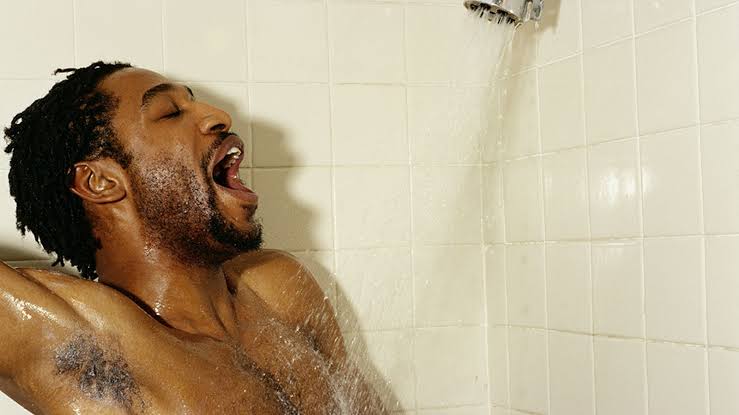
2. In the shower
immediately the water hits your head ideas should begin to flow like oil.
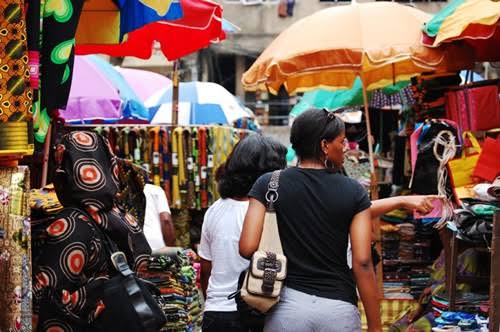
3. In the market
By the time you rub body with twenty people and inhale different odours, you will be inspired.
4. On the road
Make sure you have a pen and paper ready to joff fings down.
5. In the bush
If all else fails, nature won’t. Go with a mat in case you need to spend the night there.
6. In your dream
Just close your eyes and sleep. The ideas will appear to you in a dream. Wahala for doesn’t remember their dreams sha.
7. Someone else’s brain
You just need to pick it. There’s love in sharing.
8. Social media
You see that bird app? Carry yourself there. Ideas will hit you left, right and centre.
After going to these places and ideas don’t begin to flow like a river, then you’ll need to wash your head. Maybe your village people have cooked your brain in a big pot.
The regular dating pool is a mess and all the people in it are various levels of terrible. But that is nothing compared to the gutter that is dating creatives. If you need a reason why you shouldn’t date a creative, here are 11.
1. They are either overdressed or underdressed
Or sometimes, a weird mix of both. These people are very mannerless. You can’t tell if they are running late for an 8 a.m. work meeting or a beach day with friends. They are always dressed wrong for every occasion, except when they want to upstage their “enemies.” My dear, burn those cargo pants today and just be ready to be single.
2. They will break your heart into a million pieces
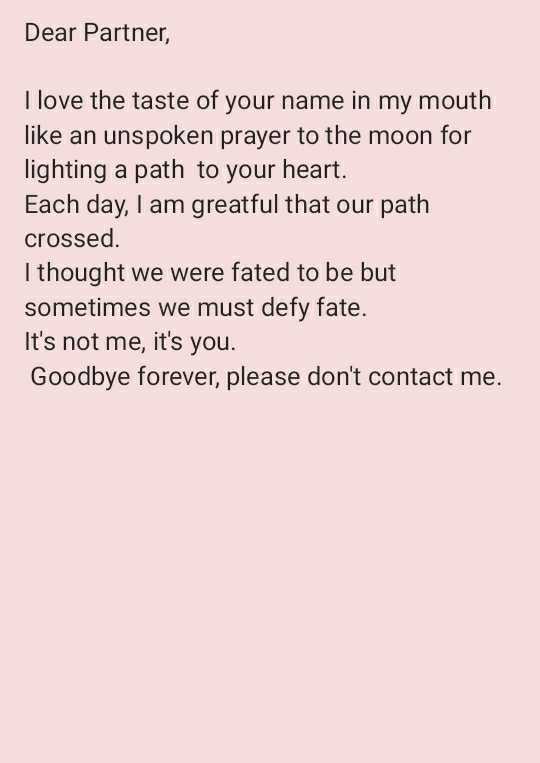
For example, if you have the misfortune of dating a poet, you need to go for deliverance and book therapy sessions ahead. You were probably thinking that they will write you cute poetry every morning, but what you will get is a beautifully written break-up letter that will destroy you forever.
3. You’ll hardly have anything in common
I know this sounds like a bad thing but it’s not. If you are committed to dating a creative person, not having anything in common is good but only for them. They get to spend hours talking about the stuff they like. Like convincing you that you’ll like some terribly made movie they think is groundbreaking
4. Anything you say will end up in their book
Or whatever piece of media they eventually put out. If you have decided to date a writer, I pity you sha. You think your partner is attentive because they listen to you rant and ask questions but the truth is they are simply taking notes in their head for when you two inevitably break up and they use you as a villain in their book.
5. They are unnecessarily petty
You can’t argue with your musician boyfriend because the next thing you know, he has used the voice note where you told him that he will never blow for his album intro. Dating a creative is a nightmare.
6. They are spontaneous on their own terms
Don’t bother trying to take a cute unawares picture with your photographer partner because If they don’t edit it to perfection how will people know that they are good at their job? At least you’d have good pictures after you break up except they watermark it out of spite.
7. They are overly dramatic
Have you ever told an artist that they put too much pepper in their food? Next thing, they will say that you called their painting ugly. There is nothing like constructive criticism with them.
8. You are an amusement to them, not their muse
They might be interested in you today, but for how long? Don’t let them sell you dirty lies. It takes a lot to keep these people. Is it even worth it? Break up today for your peace of mind.
9. You’ll realize that you can’t speak English
You think you know English, my dear you know nothing. It’s bad enough that they have the creative license to create words, they also know words you’ve never heard of. Do not be swayed by good English. That’s how we got colonized the last time.
10. They spoil everything
You can never enjoy anything artistic with them because they always have notes. The lighting could have been better in that scene. The camera angles are wrong. That song is wrong for that scene and other stories. They will ruin everything you love.
11. They have terrible vices
Creatives like to lie to themselves that instead of addictions, what they have are creativity boosters. Meanwhile, they have vices that have vices. Dating a creative is an extreme sport that is not for the weak-minded. Be ready to see them at their worst.
Thanks to the internet, a host of careers that previously didn’t exist now do. From vlogging to digital influencing, to UX designing, and so much more in between, it seems there is an endless list of professions that didn’t exist when our parents were young that many young people have created for themselves and are flourishing in.
It doesn’t come as a surprise then that many parents either do not understand or care for what their young millennial/Gen Z children do for work especially when those careers are non-traditional. There are also, of course, the parents who understand and even those who don’t but still give their unwavering support. We asked six Nigerian creatives who are working in non-traditional jobs to interview their parents on what they think their kids do for work.
Here’s what Immanuel’s dad has to say about Immanuel’s job as a social media strategist and event planner.
‘‘When you told me you wanted to be a creative I thought of your school fees (laughs) and wished you had made the decision earlier. I probably wouldn’t have allowed you major in creative arts as your only major. We’ve always allowed you to choose your path but we also know how uncertain the world can be. It’s always important to have a tangible degree in an established field – then you can do you extracurriculars. Anything that doesn’t make you money is extracurricular! I think you’ve had some moderate success and are much more certain in what you want to do than you were when you moved back. I would still want you to get a monthly salaried job and do all this media stuff on the weekends. But I will support you as best as I can – within reason.’’
Here’s what Fidel’s dad has to say about Fidel’s job as a product designer.
‘‘You said you are a something designer. All those words, UI oh, Uniport oh. They don’t mean anything to me. But I know you said a designer and when I asked when you started designing clothes you said it’s in computers and phones. So I don’t know. But you work with companies to do stuff and some of the companies aren’t in the country sef. I am happy and proud because you are doing what you like and you are making money. I am happy too that you have moved out.’’
Here’s what Mikey’s mum has to say about Mikey’s job as a photographer.
‘‘I am so happy for Mikey because he went to Law school and finished but has a passion for photography. I can remember days when we went for a summer holiday and my other kids were buying clothes but Mikey said ‘Mum, I just need to buy a camera.’’ And I would ask ‘What do you want a camera for?’ When he finished law school, he was so interested in taking pictures and I have seen his pictures, they are all so good. I remember that I had to buy an Essence magazine when I was in the US when his shoot for them came out and I had to show it to everybody and they were all saying ‘‘He is good!’’. Initially, my husband was like ‘‘Mikey is a lawyer and he needs to go to the court and this and that.’’ but when we saw the pictures he had taken and how far he had gone, we knew we had to support him. When I came back to Nigeria last month, I told him that you can not sit down on your bed and edit. I have to create an office for you. Now I tell him, when it comes to your work don’t joke but still tidy your room.’’
Here’s what Sogie’s dad has to say about Sogie’s job as a photographer.
”There are several roads and paths to a successful life. If you have chosen yours, I am only interested in you giving whatever you have chosen a 101% commitment and continually improving yourself at whatever you have chosen. Since you are enjoying and feel good about what you are doing, as a parent I feel okay.”
Here’s what Steph’s dad has to say about Steph’s job as a writer.
‘‘You are a writer. I’m not sure why you waited till we had to pay Babcock law fees before you found out that you don’t need a degree sha. But you are doing what you like so that is what is important. I like it better now that you are making better money from it too so let’s thank God that it has gone beyond a hobby.’’
Here’s what Dami’s mum has to say about Dami’s job as a social media strategist.
‘‘You have a job? I thought people pay you for being on the phone every day. I don’t entirely understand what you do, all I know is that you make money from being on your phone and laptop. I was worried that you were doing online fraud when you started talking about making money online then you said it wasn’t online fraud and I haven’t seen police come so I thank God. I am happy because this country makes it hard for young people to find employment so I am glad to see that young people are making their own jobs up and are doing it from their houses.’’
Seeing as we’re in the Digital Age, it is no surprise that more artists are embracing digital tools to explore their creative process. That is not to say the tradtional medium doesn’t still bang.
On that note, if you’re a digital artist, we can bet our five fingers that you will identify with more than one of the things below.
1. People coming to you for free art
They see how awesome your art is, and want something similar for themselves but expect you to work for free. When you protest, they offer you publicity or whine about your fees being exorbitant and how they know someone who can do it cheaper. Ehn go and meet them nau.
2. Creative ideas swimming in your head
Call it the creative’s curse or blessing depending on how you look at it. There’s always one new creative concept or the other, some so urgent that they wake you up at odd hours.
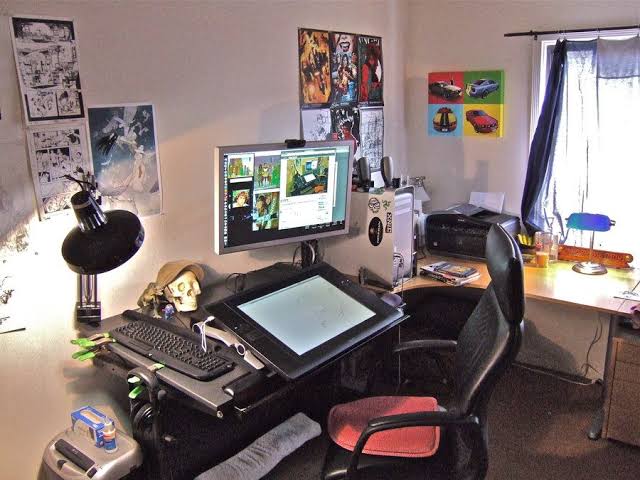
3. Obsession with digital tools and softwares
Since your work is largely dependent digital tools, there is a likelihood for you to get obsessed with the next cool thing. After all, it’s for the sake of efficiency. Your room would probably look like this.
4. The fulfillment that comes from your completed work
Nothing beats that feeling of working on a particular art project for hours, days, or even weeks and seeing how lit the end result is. It even slaps more when other people genuinely give you feedback like “You sabi work” and “burst brain”.
5. You see the big picture – even when others don’t
There are some big ideas or concepts whose end results which you can envision in your mind’s eye, but others might not relate. Some will laugh or call you crazy, don’t mind them jare. Carry on.
(Preferred image will be here)
Follow these steps to participate:
No matter where we are from, we are all human
Everyone should be free to express themselves
All genders are equal
Everyone deserves to feel safe
Everyone deserves an opportunity to
Choose one of Abolut’s 5 brand beliefs listed above
Download the Absolut bottle outline and brand logo tagline here (link here)
Create your vision of a better Nigeria using your selected brand belief and incorporate the Absolut bottle outline.