Notice: Function _load_textdomain_just_in_time was called incorrectly. Translation loading for the wordpress-seo domain was triggered too early. This is usually an indicator for some code in the plugin or theme running too early. Translations should be loaded at the init action or later. Please see Debugging in WordPress for more information. (This message was added in version 6.7.0.) in /home/bcm/src/dev/www/wp-includes/functions.php on line 6121
Citizen History | Zikoko!
  • The Nigerian Army: A Century of Service

    In Nigeria, the nation’s land force arm of the Nigerian Armed Forces is known as the Nigerian Army. Since its inception in 1863, it has been known for both challenges and achievements—from successful terrorist raids to the most inhumane human rights abuses.
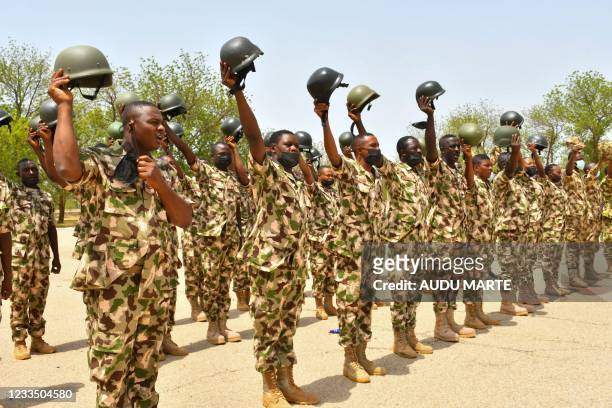
    Soldiers gesture while standing on guard during Nigerian President Muhammadu Buhari’s visit to the Maimalari Barracks in Maiduguri on June 17, 2021. Photo by Audu Marte/AFP via Getty Images

    Recommended: Bad Since 1999: The Nigerian Army Needs Reform From Wickedness

    But how did they get here? What’s the Nigerian Army origin story? How have they evolved time?

    To answer these questions, we need to take you all the way back to 1862.

    The Pre-Colonial Era 

    “Glover’s Hausas” And the Rise of Constabularies

    The first mention of an armed force in Nigeria dates back to June 1, 1863. 

    On this day, a unit of 80 former slaves was established by the then Administrator of the Lagos Colony, Lt. John Glover. This was during his trip back to Lagos from Jebba in Kwara State, where he had a shipwreck. Their crew became known as the Hausa Constabulary (a police force covering a particular area or city).
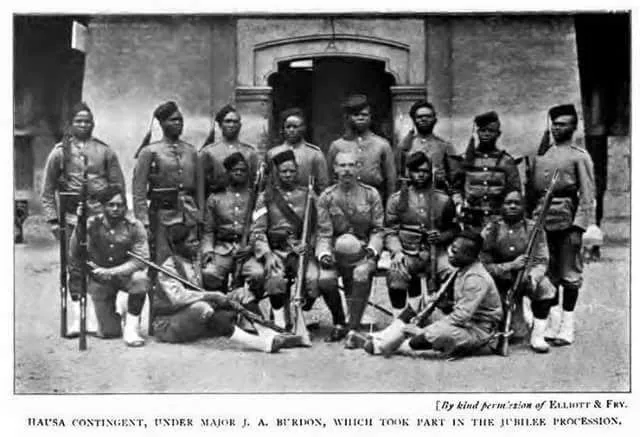
    The Hausa Contingent, Under Major J.A. Burdon, Took Part in the Jubilee Procession [Elliott and Fry/Pinterest]
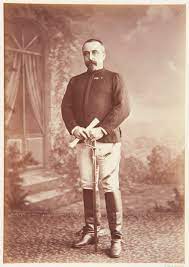
    Sir John Hawley Glover (1829-1885) [Heritage. nf.ca]

    A detachment of the Hausa constabulary was assigned for their first military operation in the Asante War of 1873-74 on the Gold Coast (Ghana). 
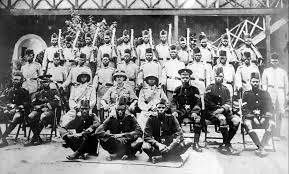
    The Gold Coast Constabulary of 1873 [Great War Forum]

    This was because the Gold Coast once administered the Lagos colony. The detachment was deployed at Elmina and would later form the Gold Coast Constabulary in 1879, giving rise to the Ghana Army and Police.

    As for the remainder of the Hausa Constabulary, they became recognised as the Lagos Constabulary in 1879 due to a formal ordinance by a new administrator, Sir Alfred Moloney. 
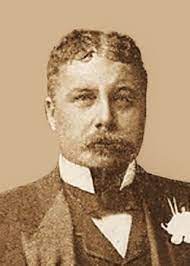
    Sir Alfred Moloney [Find A Grave]

    But the Hausa and Lagos Constabularies would not be the only ones created.

    There were other constabularies too

    In 1886, following the 1885 proclamation of a British protectorate over the “Oil Rivers” of Eastern Nigeria, the Oil Rivers Irregulars (made up primarily of Igbos) came into existence. 

    During the same year, the Royal Niger Company Constabulary was created as the private militia for the Royal Niger Company (RNC) and became the Northern Nigeria Regiment. The Royal Niger Constabulary set up its Headquarters at Lokoja.
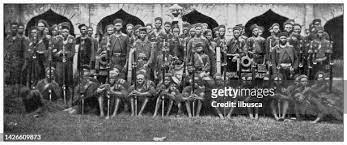
    Hausa Soldiers, members of the Royal Niger Constabulary in 1895 [Asiri/Getty Images]

    In 1891, the Oil Rivers Irregulars were rechristened the Niger Coast Constabulary (NCC) as a result of a change of province name from “Oil Rivers Protectorate” to “Niger Coast Protectorate.” 

    It was later regularised in 1893 under the command of British officers based at Calabar and formed the Southern Nigeria Regiment. It is here that we first know that the indigenes of the NCC force were made up of “one-third Yorubas and two-thirds Hausas”. The Yoruba component was a result of indigenes that were captured from previous wars in Yorubaland.

    From 1893-1897, these constabularies would continue to exist separately until war made the British rethink their military strategies.

    The Creation of the West African Frontier Force

    France’s invasion of Ilo in the Borgu emirate in 1897 forced the British to make plans for military conflict, as they perceived the French invasion as a means of halting their trade relations. 

    Hence, the first battalion of the West African Field Force was created by Colonel Lugard on August 26, 1897. It expanded from a core of draftees drawn initially from the Royal Niger Company Constabulary. Two additional battalions, the 2nd and 3rd, were created in 1898.

    Despite their preparations, there was no military conflict. However, there was already a demand for consolidating all British constabulary forces in West Africa from the War Office in London. 

    They argued that one central military force would lead to better coordination, an economy of force, and military efficiency in the scramble for West Africa. 

    This resulted in the establishment of a committee under Lord Selborne that formally separated Police (irregular) from Military (regular) functions. 

    It also consolidated all colonial forces—the Lagos Constabulary, the Gold Coast Constabulary, the Niger Coast Constabulary, the Royal Niger Company Constabulary, and the West African Field Force—into what became known as the West African Frontier Force under an Inspector General.

    In January 1896, a “Lagos Police Force” was created, separated from the more military “Lagos (Hausa) Constabulary.” Subsequently, as part of the new Frontier Force arrangements, in 1901, the “Lagos (Hausa) Constabulary” formally became known as the Lagos Battalion, West African Frontier Force. 

    The remnants of the Niger Coast Constabulary and the Royal Niger Company Constabulary companies were merged to form the Calabar Battalion, West African Frontier Force.

    The Split of the Northern and Southern Nigeria Regiments

    In late 1899, the Niger Coast Constabulary, the 3rd Battalion West Africa Field Force, and the Royal Niger Company Constabulary were merged to form what became known in early 1900 as the Southern Nigeria Regiment, West African Frontier Force.

    In May 1900, the consolidation of the 1st and 2nd battalions of the West African Field Force and Royal Niger Constabulary companies based in Northern Nigeria, led to the formation of the Northern Nigeria Regiment, West African Frontier Force, under Lugard.

    The Gold Coast Regiment, West African Frontier Force, was not formed until August 1901. The Gambia Company, The Sierra Leone Battalion, and the West African Frontier Force were not formed until November 30, 1901. Therefore, the Southern and Northern Nigeria Regiments were senior to the others in order of precedence.

    Colonial Era 

    The Origin of Present-Day Battalion Names

    Due to the amalgamation of January 1914, the Southern Nigeria Regiment was merged with the Northern Nigeria Regiment to form one Nigeria Regiment, the West African Frontier Force. 
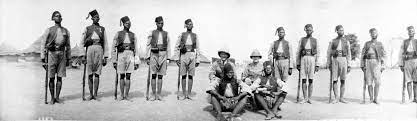
    Remembering the soldiers of the West African Force [Norwich Art Gallery]

    From this point on, the various colonial battalions (initially comprised of eight companies each) took on new designations with specific numbers, which they have retained to this day, with minor modifications:

    • The 1st Battalion of 1914 was the former 1st Bn. Northern Nigeria Regiment. 
    • The 2nd Battalion of 1914 was the former 2nd Bn. Northern Nigeria Regiment. 
    • The 3rd Battalion of 1914 was the former 3rd Bn. Northern Nigeria Regiment. 
    • The 4th Battalion of 1914 was the former 2nd Bn., Southern Nigeria Regiment (and thus the former Lagos Battalion, former Lagos Constabulary, former Hausa Constabulary, former Hausa Militia (or Guard) and original “Glover’s Hausas.”) 
    • The 5th Battalion of 1914 was the former 1st Battalion, Southern Nigeria Regiment.

    Various re-designations have occurred since then. However, the 4th Battalion retained its number as part of The Nigeria Regiment.

    The Legacy of the 4th Battalion

    During World War 1, when the number of battalions was expanded to nine, it was known as the 4th Regiment, West African Frontier Force. This was attached to the King’s Lancaster Regiment. 

    In 1920, after the war, the number of battalions was reduced to four but then expanded to five, several years later. The West African Frontier Force became the Royal West African Frontier Force in 1928. 
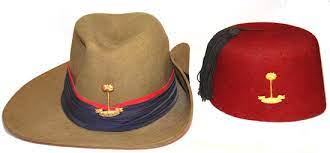
    Headdress of the Royal West African Frontier Force [Military Sun Helmets]

    Prior to World War II, the unit was known as the 4 Bn, Nigeria Regiment, Royal West African Frontier Force. During World War 2, it was known as the 4th Battalion Nigerian Rifles.

    The last colours of the RWAFF used were reportedly presented in 1952 by Sir John Stuart Macpherson, GCMS, then the Governor General of Nigeria. The colours were retired in 1960, when Nigeria became independent, and remain preserved in the Battalion Officers’ Mess to this day.

    The Nigeria Regiment became The Queen’s Own Nigeria Regiment, the Royal West African Frontier Force in 1956, the Royal Nigerian Army in 1960, and The Nigerian Army in 1963 (when Nigeria became a republic).

    Independence Era 

    The Effects of the Nigerian Civil War on the Army

    The Nigerian army’s troops rapidly expanded with the start of the Nigerian Civil War (or Biafra War) in 1967. Troops of 8,000 in five infantry battalions and supporting units rose to around 120,000 in three divisions by the end of the Nigerian Civil War in 1970. 
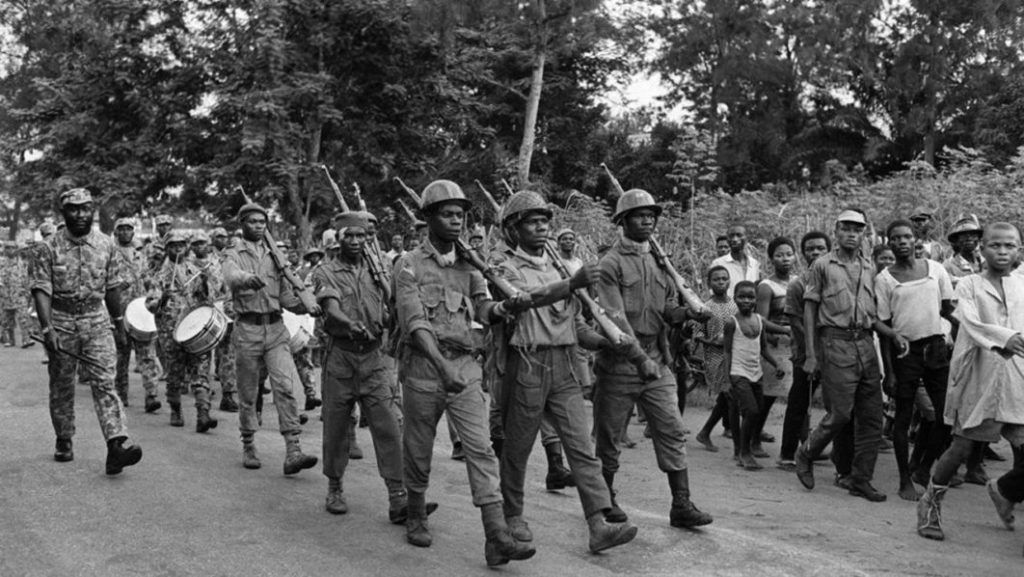
    Soldiers in the Nigerian Civil War [Peter Williams/Wikipedia]

    This also led to an extreme shortage of commissioned officers for the right positions. Newly created lieutenant-colonels commanded brigades, and platoons and companies were commanded by sergeants and warrant officers. The effect of this was the 1967 Asaba Massacre, which led to the murder of 1,000 civilians of Igbo descent.

    At the end of the war, the Nigerian Army was reorganised into four divisions, with each controlling territory running from North to South to deemphasise the former regional structure. Each division thus had access to the sea, thereby making triservice cooperation and logistical support easier. 

    The Impact

    Later, sectors for the divisions took its place in place of the 1973 deployment formula. 

    The Nigerian Army, as of 2019, consists of 223,000 enlisted personnel. The Nigerian Army Council (NAC) oversees the army itself. 

    It is organised into combat arms, which are infantry and armoured. The combat support arms are artillery, engineers, signals, and intelligence. The Combat support services, which comprise the Nigerian Army Medical Corps, supply and transport, ordinance, and finance. Others include the military police, physical training, chaplains, public relations, and the Nigerian Army Band Corps.

    The 1 Division is allocated to the North West sector with its headquarters in Kaduna. The 2 Division has HQ at Ibadan South West Sector, the 3 Division has HQ at Jos North East Sector; and the 82 Division has HQ at Enugu South East Sector.

  • Aba 1929 Riot: When Nigerian Women Stood Up to Colonial Rule

    “Thanks to these women, we do not pay tax to any British monarch who has no jurisdiction on our God-given corner of this globe.” — Ndanyongmong H. Ibanga

    The last episode of Citizen History, marks the beginning of our historical exploration of Nigerian women and their fight against British colonialism. We started with the Egba Women’s Tax Revolt. The mass protest lasted three years, with arrests and assaults by British police on Abeokuta market women. Funmilayo Ransome-Kuti was the leader until their demands were met in January 1949.

    Egba women were indelible forces of anti-colonial resistance. UNESCO.

    Read More Here: The Women’s War: Egba Women’s Tax Revolt

    This week, we travel back to a similar event in Eastern Nigeria. The year is 1929.

    This year, women in southeastern Nigeria rose up in protest against British colonial rule. The uprising, known as the Aba Women’s Riot, was sparked by introducing direct taxation on women.

    Scholars have referred to this protest as West Africa’s first women’s revolt.

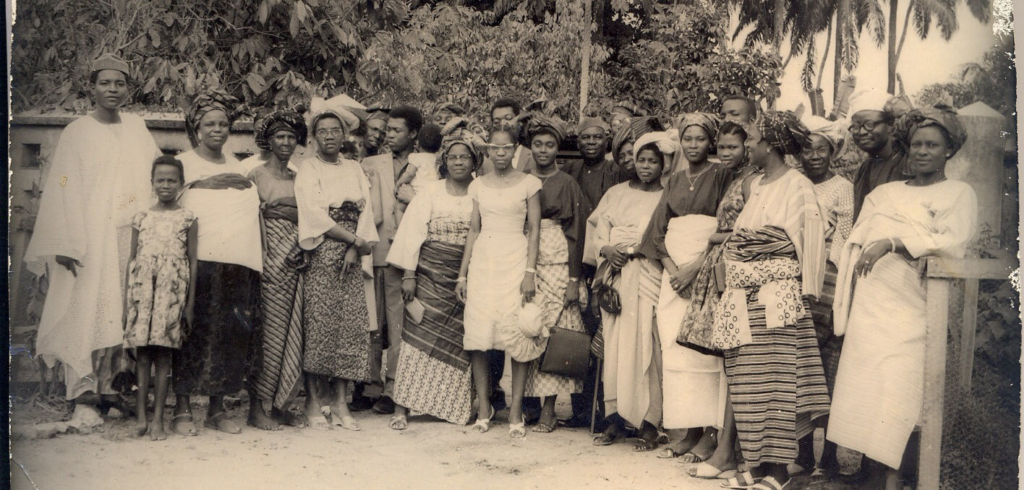
    Aba Women of Nigeria in the first half of the 20th century. Archival photograph

    What birthed the Aba Women’s Riot?

    Two words come to mind—indirect rule. We’ve discussed indirect rule as the default mode of governance in colonial Nigeria, but for those who missed it, let’s do a quick recap of the key details:

    The Recap

    • Indirect rule is a system of administration in the colonies where local leaders—although front-facing with the people and ruling with native politics—dance to the British tune and follow all orders the administration gives.
    • Britain adopted this system of governance because they didn’t have enough personnel for Nigeria’s enormous land mass.
    • Applying this method in Eastern Nigeria was troublesome because the ethnic groups (Igbo, Ibibio, Efik, Ekoi, Ogoni, and others) did not believe in the existence of one ruler but rather lived in autonomous communities. To solve this problem, the British devised a solution in the form of “warrant chiefs”.
    • The colonial administration made warrant chiefs tax collectors and used them to conscript youths as unwilling labourers for the colony and oversee judicial matters. 

    To add more context, men and women had important roles in a typical Igbo home and worked collaboratively. Women could even participate in political movements if married to elite husbands. 

    However, the British colonial officers couldn’t comprehend this practice. They considered male-dominated political organisations but ignored female ones. Combined with the extortion of the warrant chiefs, the women eventually became dissatisfied with the increased school fees and forced labour.

    Now that we understand the full context, let’s visit a major event that made everything go from bad to worse for these women—the introduction of direct taxation.

    The Native Revenue Amendment Ordinance of 1927

    In April 1927, Lord Lugard commissioned a colonial resident, W.E. Hunt, to enforce the Native Revenue Ordinance in the five provinces of East Nigeria. 

    Under this ordinance, taxes or tributes were paid to the “Chief” (warrant chief). The “Chief” thereafter was to pay a portion of the tax into the General Revenue and the remainder to the Native Treasury. This was the first official tax documented in the East and was used to prepare the people for direct taxation in 1928.

    When direct taxation was first launched, only men were obligated to pay taxes. That is, until an assistant District Officer, Captain James Cook, entered office temporarily in September 1929.

    Cook’s Tax Revision As A Catalyst of War

    In September 1929, the serving district officer, Hill, went on leave. Cook was sent as his substitute until November. 

    Upon taking over, he saw the ongoing direct tax roll count as insufficient because it didn’t include the number of wives, children, and livestock in the household, and he set about correcting this. 

    With his revision, women now had to bear the brunt of paying taxes alongside men. Combined with their other obligations, was too much for them. The tax for women became effective on October 14, 1929.

    This tax revision led to a fight between a widow and a census worker—the legendary moment that set the tone of the Aba Women’s War.

    The Nwanyeruwa-Emeruwa Fight 

    Madame Nwanyeruwa [BlackPast]

    On the morning of November 18, 1929, a representative of the Warrant Chief of Oloko town, Mark Emeruwa, had one duty—to count or take a census of the people for taxation. However, he didn’t know that the women had already decided not to have themselves or their property counted! 

    This was due to severe hyperinflation in the late 1920s, which affected women’s trade and production. But let’s get back to the story.

    When Emeruwa reached the house of a widow, Nwanyeruwa, he asked her to “count her goats, sheep and people,” (which meant that she would be counted based on her people and livestock). In response, Nwanyeruwa sarcastically asked if “his widowed mother was counted.” This led to a serious fight between the duo, which made Emeruwa choke Nwanyeruwa by the throat.

    In anger, Nwanyeruwa went to the market square to meet other Oloko women discussing the issue of taxation and told them about the incident. When they heard of it, they decided they would no longer accept the leadership of Warrant Chief Okugo. 

    They used palm tree leaves to call nearly ten thousand women from other areas in the Bende District, Umuahia, and Ngwa to protest Okugo’s resignation and trial. 

    How Aba Women “Sat on Men” In The Riot 

    Under the leadership of Nwanyeruwa and the Oloko Trio (Ikonnia, Nwannedia, and Nwugo), the women protested Okugo’s resignation by “sitting on him.” 

    This is a traditional practice where women chant war songs and dance around a man, making his life miserable until demands are met. The protests eventually spread to the factory town of Umuahia, which sparked fear among the colonial officers. 

    The British District Officer jailed Okugo for two years to appease the women, ending the Oloko riot.

    But that wasn’t the only protest 

    Another protest began in the Owerri district of Aba. This was after another census taker, Warrant Chief Njoku Alaribe, knocked down a pregnant woman during a fight. It eventually led to a miscarriage of the pregnancy.

    Like the Oloko women, the women of Owerri would not take the matter lying down. 

    On December 9, 1929, the women protested in Njoku’s compound, during which two women were killed and many others wounded in an encounter with British police. This also led to the arrest and detention of their leader in Aba City.

    On December 11, 1929, ten thousand women went to Aba City to protest against their leader’s arrest. On their way, a British medical officer was driving on the road when he knocked down two protesters, fatally wounding them. These made the women raid the nearby Barclays Bank and the prison to release their leader. They also destroyed the native court building, European factories, and other establishments. According to reports, soldiers and policemen killed about one hundred women in Aba. 

    The Women’s War then spread to the Ikot Ekpene and Abak divisions in Calabar province. Government buildings were burned, and a factory was looted at Utu-Etim-Ekpo on December 14. These left eighteen women dead and nineteen wounded. Thirty-one dead and thirty-one wounded women reportedly died on December 16 at Ikot Abasi near Opobo, also in Calabar province.

    The Aftereffect

    Until the end of December 1929, when colonial troops restored order, ten native courts were destroyed, houses of native court personnel were attacked, and European factories at Imo River, Aba, Mbawsi, and Amata were looted. Women attacked prisons and released prisoners.

    When order was restored, the colonial troops killed about fifty-five women. The last soldiers left Owerri on December 27, 1929, and the last patrol in Abak Division withdrew on January 9, 1930. By January 10, 1930, the revolt was regarded as successfully suppressed.

    The Rise of Female Eastern Movements 

    The position of women in society was greatly improved. Once only allowing the wives of elite husbands to participate in politics, the protests allowed women of lesser backgrounds to join native politics. Women were appointed to serve in native courts; some even became warrant chiefs.

    The Aba Women’s Riot also inspired many other female movements in the 1930s and 1940s. This includes the Tax Protests of 1938, the Oil Mill Protests of the 1940s in Owerri and Calabar Provinces, and the Tax Revolt in Aba and Onitsha in 1956.

  • Britain Invaded Benin. Then Called It An Expedition

    Have you ever experienced a friendship betrayal?

    If you have, you can relate to the eighteenth-century Benin Kingdom and how they must’ve felt when British soldiers invaded their land, looting over 2,500 artefacts and calling it an expedition. 

    But how did it all start? Let’s dive in:

    The Benin-Britain Bromance

    In 1553, British merchants sent out two ships to the Benin River under the command of Captain Thomas Windham. 

    A portrait of Thomas Wyndham in 1508 [Hans Eworth]

    The then Oba of Benin, Orhogbua, welcomed them and agreed to sell pepper to them. However, almost 100 people in Windham’s crew caught malaria and eventually died between 1553-1556.

    As a result, Queen Mary I prohibited all voyages to the Benin Kingdom. 

    Queen Mary I of England [The Print Collector/Getty Images]

    Time passed, and voyages resumed, but only the crew of James Welsh could withstand the fever. From January to April 1591, they carted away valuable resources back to their country, including 589 servings of pepper, 82 barrels of palm oil, and 150 ivory tusks. 

    Thus began a prosperous British-Benin trade relation of trading pepper, gold, ivory, and later slaves, which lasted for many years.

    But it didn’t last forever 

    Their breakup happened in several stages, which are all important to know:

    A shaky trade agreement 

    The amount of power the then Oba, Ovoramwen Nogbaisi, had over trade in 18th-century Benin was, naturally, massive

    Ovonramwen, Oba of Benin [Edo State Archives]

    The British needed his permission to use the trees in the village to collect palm kernels and tap rubber, which was a difficult process for them, and even export goods across the Benin River.

    In 1892, Deputy Commissioner and Vice-Consul Captain Henry Lionel Galway tried to negotiate a trade agreement with Oba Ovọnramwẹn Nọgbaisi to allow for the free passage of goods through his territory and the development of the palm oil industry. 

    The treaty was signed, and there was free trade for the British, but Ovonramwen still collected customs duties. Major Claude MacDonald, Consul General of the Oil River Protectorate, saw the tax as a hostile act. 

    To make things worse, Ovonramwen then halted the trade of oil palm produce to the British due to price fixing and the refusal of Itseriki men to remit the customs duties.

    Britain, not used to being told no, did not like this. But it was one murder they piled behind.

    The Ambush and Slaughter of Phillips’ Crew

    In November 1896, Phillips, the Vice Consul of a trading post on the African coast, decided to meet with Oba Ovonramwen to discuss the customs duties discomfort

    He formally asked his superiors in London for permission to visit Benin City, claiming that the costs of such an expedition would be reimbursed by trading for ivory.

    In late December 1896, Phillips got tired of waiting and took a crew of 18 men, 180 Jakri Porters, to carry supplies and 6 Kru labourers to Benin. He sent an envoy to discuss trade and demand entry into the territory, while bringing numerous gifts for the Oba. 

    At this time, the Binis were celebrating the Igue Festival, and strangers were forbidden to see the Oba. Oba even sent a message to Phillips saying he wasn’t allowed and would send word in a month or two. But for impatient Phillips, that was time that he simply couldn’t afford.

    On January 4, 1897, Phillips and his entire party were ambushed on their journey to Benin City at Ugbine village near Gwato. This was done by Iyase, a warlord who saw the British advance as a slap in the face despite Ovonramwhen’s warning not to harm them.

    1897 [Agefotostock]

    That day, both British officers and African porters were slaughtered. Only two British survived their wounds, Alan Boisragon and Ralph Locke. 

    Within a week, news of the massacre had made it to London, and the colonial officers were filled with rage

    For Britain, they needed to teach the Oba and his ‘savages’ a ruthless lesson not to kill their own. This singular event led to the invasion of Benin, also known as ‘the Punitive Expedition’.

    The Punitive Expedition 

    Towards the end of the first week of February 1897, about 1,200 men, including marines, sailors, and protectorate troops, were assembled and prepped for war. This was under the leadership of Sir Harry Rawson.

    Admiral Sir Harry Rawson [Historic Houses Trust]

    They aimed to “divide and conquer” by advancing on three fronts. The first column was to take Ogbologbo Creek; the second was to advance through the Jameson River Line up to Sapomba; and the third was to maintain a joint attack through Uguto Creek.

    On February 9, 1897, the invasion started, and by February 18, the Benin Kingdom fell and ceased to be an independent entity. The Bini soldiers put up a brave front but were no match for Britain’s superior war weapons.

    The Aftermath

    The city was later set ablaze, although the British later claimed it was ‘accidental.’ 

    Members of the ‘expedition’ surrounded by objects from the royal palace [British Museum]

    Benin was later annexed to the Niger Protectorate.

    Many buildings were also burned down, including the famous King’s Court. Oba Ovonramwen was deported and exiled to Calabar until he died in 1914. 

    Ovonramwen on board the Niger Coast Protectorate steam yacht, Ivy, while the Oba was on his way to exile [Jonathan Adagogo Green]

    The Benin Native Council was established to replace the monarchy. It also helped to absolve the kingdom into the colonial rule. 

    The Looting of Benin

    The British expedition force looted and carted away Benin’s precious artworks. An estimated 2,500 wooden, bronze and ivory artefacts were stolen. 

    A photograph of the interior of Oba’s compound being burnt during the punitive expedition, with bronze plaques in the foreground and three soldiers from the punitive force in the background [Reginald Kerr Granville c. 1912]

    European and American art collectors sell most of these artefacts at auctions. It is also exhibited in Western museums, mainly in Germany.

    In recent times, however, there have been efforts to recover these artefacts. In December 2022, Germany returned 22 Benin Bronzes, while the United States of America returned 30.

    Looted Benin Bronzes that Germany returned to Nigeria are examined during a ceremony in Abuja on Tuesday. Nigerian officials said that more than 5,000 ancient artefacts are estimated to have been stolen from Nigeria, the majority by British colonisers. [Olamikan Gbemiga/AP]

  • How Britain Bought Lagos with Blood and £1,000

    If you asked a Nigerian in the 15th to 19th centuries to describe their version of “oil money”, two words come to mind — slave trade.

    British traders were at the heart of the slave trade before the UK government abolished the trade [BBC/Getty Images].

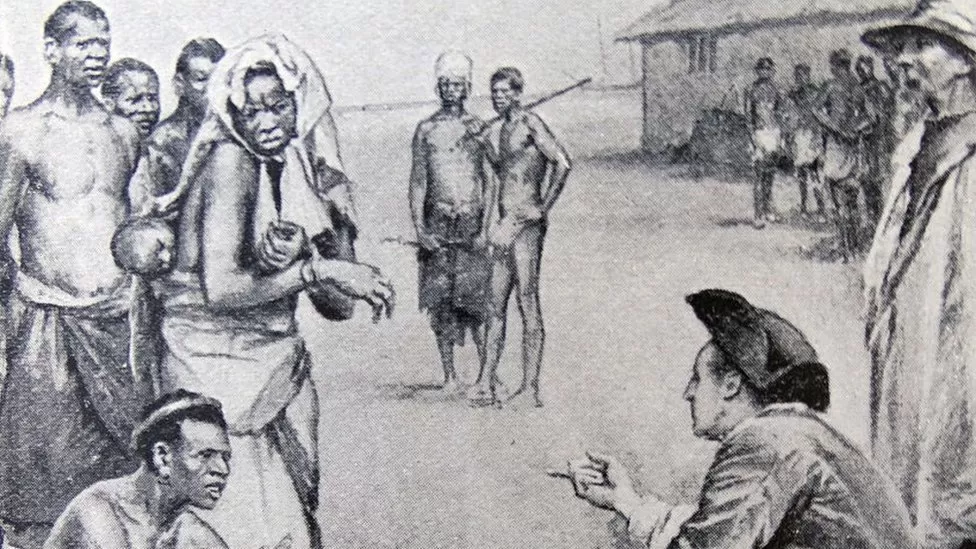
    Popularly known as the Transatlantic Slave Trade or Euro-American slave trade, this involved selling enslaved Africans to the Americas and Europe, usually by other Africans. 

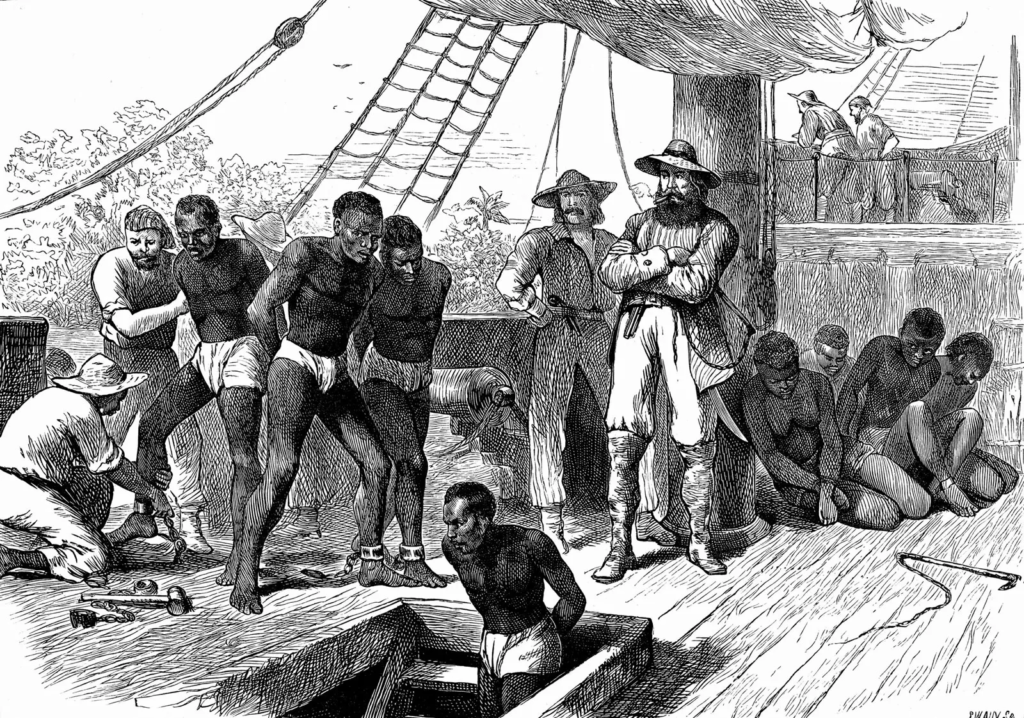
    The first slave traders in Nigeria were Portuguese, who sold over 3.5 million Nigerians to the Americas and the Caribbean, primarily as cotton plantation workers. More than a million died from disease and starvation during the voyages. 

    Captive Africans being transferred to ships along the Slave Coast for the transatlantic slave trade, c. 1880. [Photos.com/Getty Images]

    Despite these deaths, these amounted to exponential economic growth for the nations involved. 

    The USA grew to provide 60% of the world’s cotton and some 70% of the cotton consumed by the British textile industry. 

    Profits made in the slave trade provided money for investment in British industry, with banks and insurance companies offering services to slave merchants. 

    Local chiefs enriched themselves with guns, mirrors, and other profitable income due to the trade-offs with these Western powers. 

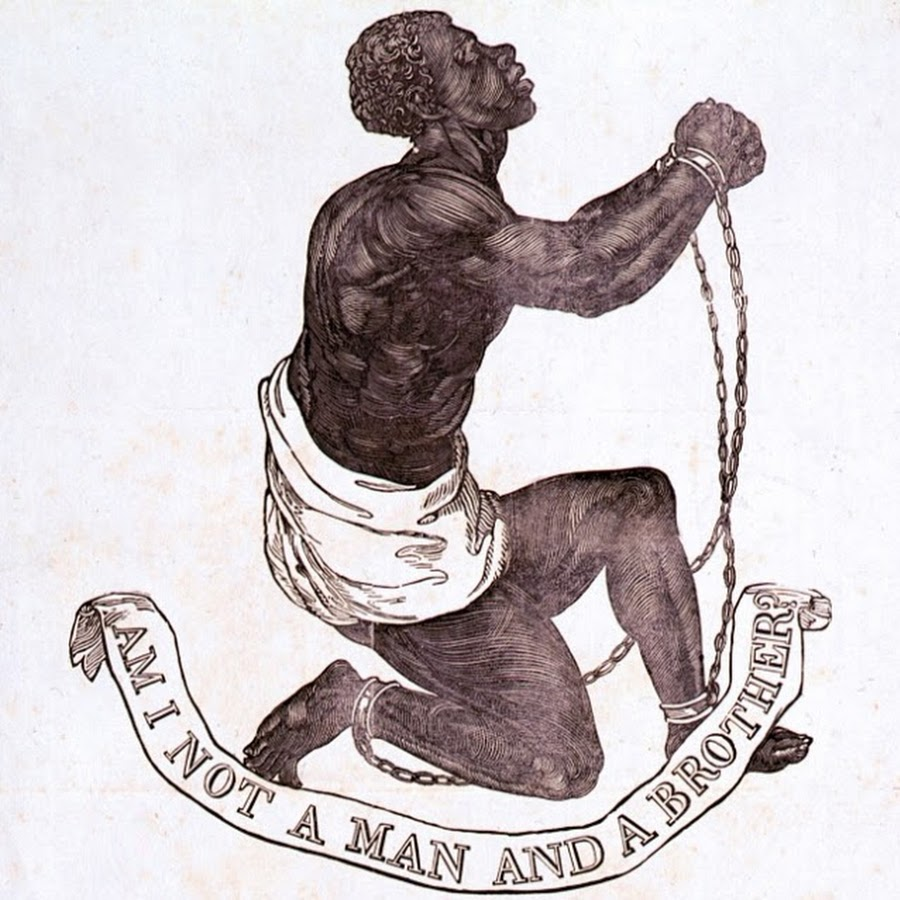
    All this happened until the abolition of the slave trade in 1807 with the Slave Trade Act by William Wilberforce.

    The official medallion of the British Anti-slavery Society [Wikimedia Commons]

    Once slavery was abolished, Britain needed a legitimate means of exploiting resources conducting business. One of the largest slave ports came to mind — Lagos.

    This is where the story of Oba Akintoye and Prince Kosoko comes to light.

    The Akintoye-Kosoko power tussle 

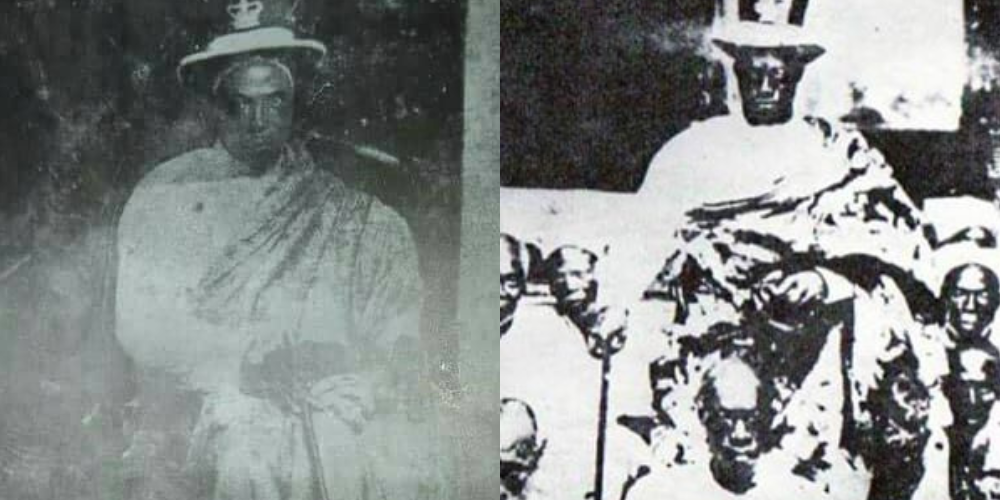
    Obas Akintoye and Kosoko.

    After abolishment, slavery didn’t just disappear from Africa until 1852, especially in coastal places like Lagos.

    Trading at that point was so bad that the British Royal Navy had to establish a Task Force called the West Africa Squadron to pursue Portuguese, American and French slave ships and prevent local chiefs from selling more people.

    This affected local politics as some chiefs and kings wanted to keep trading, while some thought quitting was reasonable.

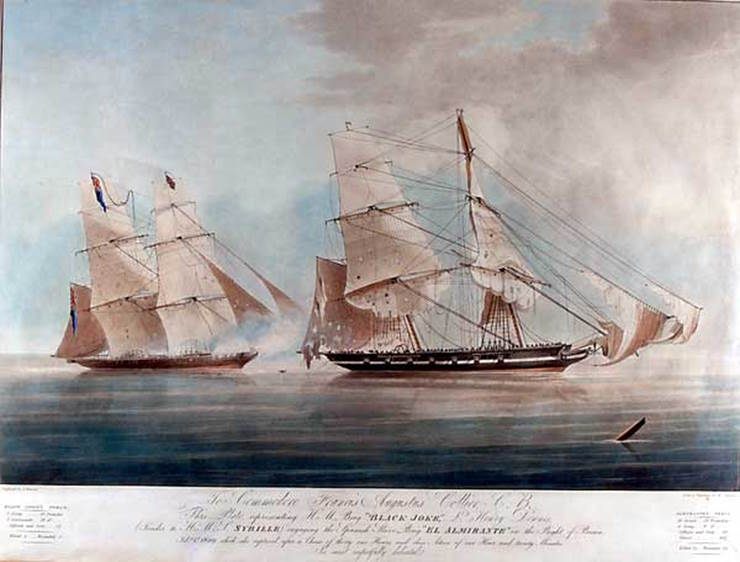
    A West Africa Squadron ship, HMS Black Joke fires on the Spanish Slaver, El Almirante [HistoryUK].

    In 1841, Oba Oluwole of Lagos died from a gunpowder explosion triggered by lightning. This left a vacancy on the throne that was contested between Prince Kosoko, the rightful heir, and his uncle, Prince Akintoye.

    Prince Kosoko was pro-slave-trade, making him popular with the chiefs and slave traders. However, Akintoye was a populist, a friend to the British and anti-slave trade, which made him unpopular with the local leaders.

    With these factors against Akintoye, it was easy for Kosoko to establish a coup against Akintoye and oust him from the throne into exile in 1845. With Kosoko’s ascension to power, the slave trade heightened. Lagosians became domestic slaves or chattel slaves for export. 

    Kosoko grew in wealth, with the ability to purchase guns, velvet robes, umbrellas, gunpowder and other valuable items from the proceeds of the slave trade. 

    With all this going on, Lagos looked more like a lost cause for the British anti-slave trade movement despite negotiations with Kosoko, and they didn’t like this. 

    They sought counsel on their next steps from a formerly enslaved person and first Black Bishop, Samuel Ajayi Crowther.

    The Revenge of Bishop Samuel Ajayi [Adjai] Crowther

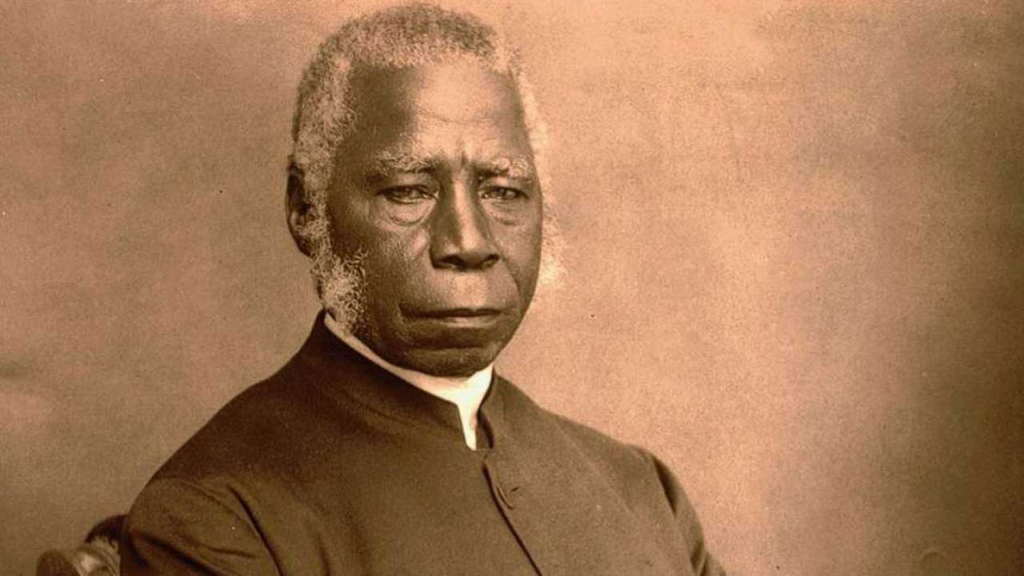
    Bishop Samuel Ajayi Crowther [Guardian Nigeria]

    Samuel Ajayi [Adjai] Crowther is a familiar name in Nigerian history. 

    Many of us know him as a child from Osogun sold into slavery at 13 and traded several times before being rescued by the Royal Navy West African Squadron in Sierra Leone. 

    We also know him as the first Black Anglican Bishop and the first person to translate the Bible from English to Yoruba. 

    How was he then involved in the Lagos tussle? 

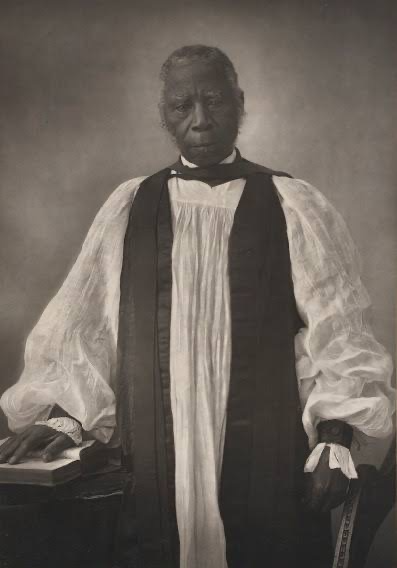
    Samuel Ajayi Crowther, 1890 [Slavery Images]

    Eight years after being admitted to the ministry as a priest by the Bishop of London, Crowther was received by Queen Victoria and Prince Albert in November 1851.

    Both the Queen and the Prince studied a map showing Lagos and Abeokuta and displayed great interest in the country’s trade. Ajayi described his enslavement and the state of slavery in Lagos at the time. 

    When Queen Victoria asked what the solution could be for slavery on the West African coast, Ajayi replied, “Seize Lagos by fire and by force”. He also argued that if Lagos were under Akitoye instead of Kosoko, the British commercial interest would be guaranteed and the slave trade suppressed.

    On November 20, 1851, a team consisting of the British consul in Lagos, Lord Beecroft, and other officers negotiated with Prince Kosoko one last time to end the slave trade, but he refused. 

    And with that, Beecroft sent the word to the senior officer of the Bights Division, Commander Forbes, to expel Kosoko and wage war on Lagos.  

    Preparation for war 

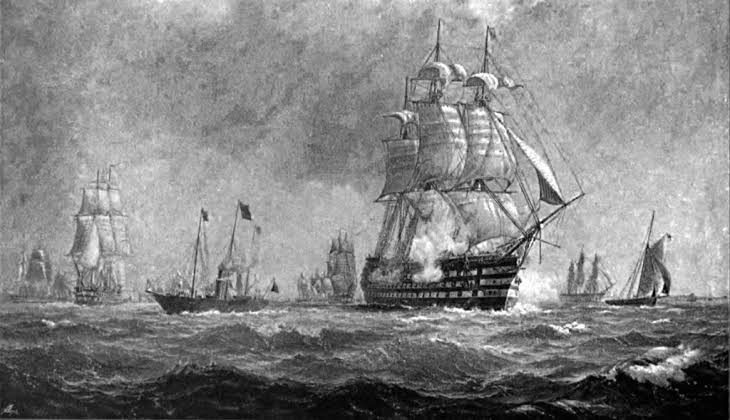
    “British Men o’ War Attacked by the King of Lagos” [James George Philip, 1851]

    One month later, in December 1851, the British Naval Forces travelled to Lagos for warfare. 

    On the part of the Lagosians, they had two concerns — the safety of their gunpowder, which was essential for fighting, and the effectiveness of the artillery forces, which were cannons, rockets and muskets. 

    For the British, their problems lay with the lagoon’s shallow waters. This made movement more difficult for their larger warships (HMS Penelope and Samson). Therefore, they had to make do with the smaller warships, HMS Bloodhound and Taser. 

    You will enjoy this story about the Ekumeku War: How Igbo Vigilantes Resisted Britain for 31 Years

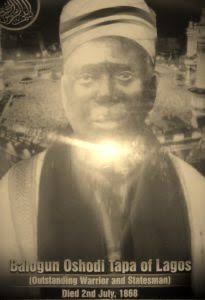
    This was good news for the Lagos Army Commander, Oshodi Tapa. The Lagosians would not have been able to withstand 32-calibre cannons firing at them per minute. But that didn’t mean they were going to take chances. 

    Obituary poster for war chief, Oshodi Tapa [Sahara Weekly]

    Two rows of spiked coconut tree stems were placed underwater as an engineering technique to prevent the big warships from moving towards the shore. Then they placed long cannons on piles above sea level. 

    Now, the Lagosians were ready for the British. 

    A bloody Christmas 

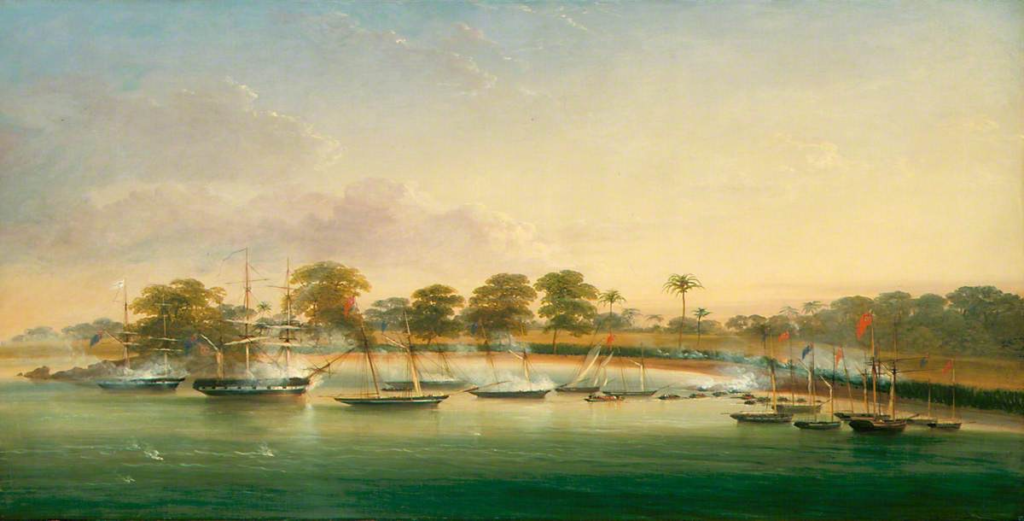
    1851 Bombardment of Lagos by the British Naval Forces [Guardian Nigeria]

    On December 25, 1851, Oshodi Tapa attacked British ships that had gathered at the ports for weeks in disguise of a truce. Tapa planned to lure them into the traps they had set as soon as possible.

    The British fleet, which had 306 soldiers under Commander Forbes, sailed inward the following morning, and the Lagosians fled.

    However, this was a decoy, as the British were ambushed by Lagosians who murdered one officer and 13 soldiers and wounded four officers and 60 soldiers, including Lieutenant Corbett. They also captured one of their warships. 

    But the British retaliated 

    The Royal Navy were furious with the battle’s outcome and retaliated on December 27, 1851. They decided to go the route of an artillery storm because they knew they’d lose with infantry combat. 

    Captain Jones led the attack party consisting of HMS Bloodhound, HMS Teaser, and a flotilla of boats, including The Victoria and The Harlequin, equipped with overwhelming firepower.

    They engaged Kosoko’s army in a battle lasting three days. Kosoko put up a stiff resistance, but the Royal Navy’s superior firepower won the day. Kosoko and his leading chiefs fled Lagos for Epe on December 28, 1851.

    The aftermath

    A group of Lagosians managed to escape the blaze of the war and ran to the city’s northern outskirts. 

    They created a community called Agindigbi, which signifies the deafening sound of the cannons. This still exists as an area in the now Ikeja part of Lagos.

    Modern day Agindigbi in Ikeja [PropertyPro]

    The British chased away the remaining indigenes to spread the word upon arrival. 

    They found 48 letters in Kosoko’s palace corresponding with Kosoko and European slave traders. These can now be found in the British National Archives. 

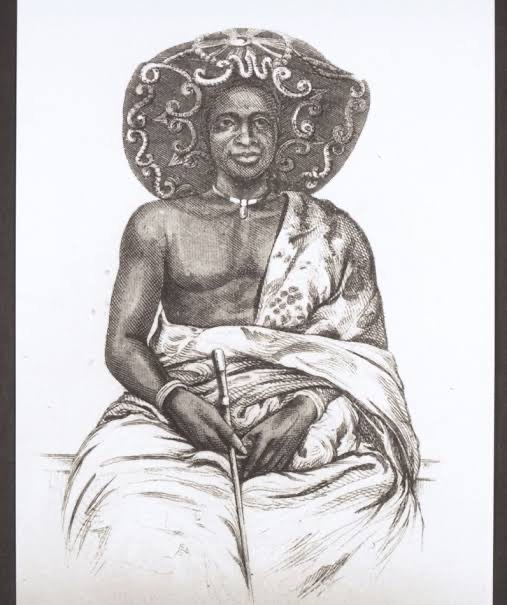
    On December 29, the British installed Oba Akintoye as the Oba of Lagos. After Akintoye’s death on September 2, 1853, his son, Dosunmu, succeeded him as king. 

    King Dosunmu, King of Lagos [Alubarika]

    Under Dosunmu, the slave trade was revived briefly until the British convinced him to exchange the ports of Lagos for a yearly pension of 1,200 cowries (equivalent to £1,000). This was known as the Treaty of Cession in 1861. 

    From then on, Lagos was annexed to become a colony under the British.

    The impact 

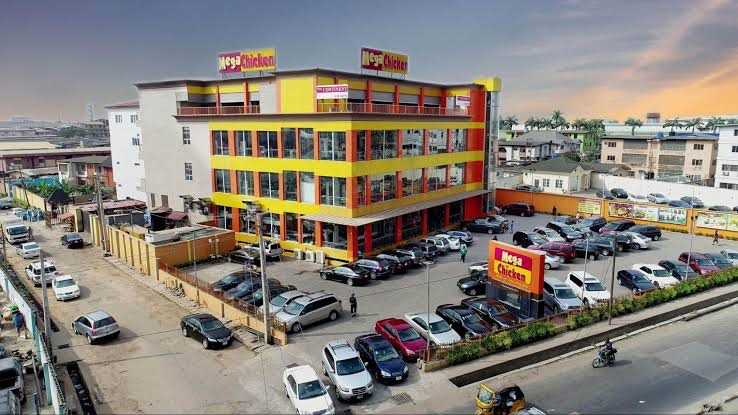
    An aerial view of CMS in modern-day Lagos [Council on Foreign Relations]

    Britain’s conquest of  Lagos and its commercial activities made Lagos an economic hub. By 1872, Lagos was a cosmopolitan trading centre with a population over 60,000

    Since then, it has become one of the largest cities in West Africa, with an estimated metropolitan population of over 15.9 million people in 2023. Lagos is also the most profitable state in Nigeria, with a $136.6 billion GDP

  • Ekumeku War: How Igbo Vigilantes Resisted Britain for 31 Years

    Welcome to Citizen History, your weekly time machine to Nigeria’s political past. It’s all about the facts: where we’ve gone wrong and how we can fix it today. 

    When the British Empire (through the Royal Niger Company) came to Nigeria and started gaining influence in 1807, they only had one mission — to gain control of all of Nigeria’s economic resources. 

    And they did get control of these resources— mostly through force. This brute force was applied across the protectorates and colony later known as Nigeria. 

    This is the story of how one tribal group resisted the British army, in a way they had never seen before.

    From the Rev. R.H. Stone’s memoir ‘‘In Afric’s Forest and Jungle, 1899. [Schomburg Center for Research in Black Culture, the New York Public Library]

    The rarely documented struggle between the British and a united, underground Igbo resistance group called the Ekumeku lasted for 31 years. 

    The origins of the Ekumeku Movement 

    In the late 1880s, shortly after the Berlin Conference of 1884-1885 —where European superpowers partitioned African countries— the Royal Niger Company (RNC) —a British firm trading in the Niger area— was expanding their domination from Lagos towards Western Igboland, which included the Niger Delta and Asaba. 

    While British traders were doing business with locals before the Conference, the power dynamics shifted even further in the coloniser’s favour after the Conference.

    They made all the laws, determined trading; with whom to trade, how much to trade, and lived as overlords in places where they were only welcomed through the force of their guns.

    There were claims that “RNC exploited its monopoly far in excess of what it could have made in a free-trade situation, and spread terror, visiting the slightest whiff of local dissent with venom.

    “In 1888, half of Asaba was decimated, and Obosi (a day’s walk away in what is now Anambra state) was razed to the ground the following year. In both cases the RNC alleged that the Asaba and Obosi people were involved in human sacrifice, hence the high-handed treatment.

    “To ‘stop human sacrifice,’ the soldiers lived off the people’s livestock and food crops, and sexually assaulted the women. This led to a lot of resentment.”

    Why was the Niger Delta special in the 1800s?

    The British were attracted to the Niger Delta —then called the Oil Rivers Protectorate—because of its resource: palm oil. But why was it such an asset?

    In the 19th century, Palm Oil was useful for many industrial processes. It was used as an industrial lubricant in tin-plate production, street-lighting, and as the fatty semi-solid for candle making and soap production. Palm oil made certain breakthroughs in soap chemistry and production possible.

    Igbo men in the Oil Rivers area of present-day Nigeria bring calabashes full of palm oil to sell to a European buyer, c. 1900  [Jonathan Adagogo Green / The Trustees of the British Museum]

    A palm oil factory likely in either Opobo or Bonny of Niger Delta, c. late 19th century [Jonathan Adagogo Green / The Trustees of the British Museum]

    Now, let’s get back to the story

    Despite their brash treatment of locals, the British were surprised to meet resistance from locals. These were located across the country and far into Igbo land in the east. But the ones that stunned the armed Brits were the Anioma people of present-day Delta State.

    The Aniomas had gotten word of how the British established courts, introduced Christianity, and even selected local chiefs against the people’s will in other places. For the Aniomas, this was unacceptable. And they were not going down without a fight. So they went to war.

    A British attack on Ndoni village in 1870 and Onicha-Ado in 1897 set the pace for the rest of the war as one of guns and bloodshed. The war would last in two waves: 1883-1902 when the locals first organised and fought back, and from 1904-1914. 

    The Ekumeku Movement of 1883 [Google Sites]

    The Ekumeku movement (meaning “don’t speak about it”) was comprised of the “otu okorobia”. These were young men from various Igbo villages and the nearby Niger Delta communities. They formed the Ekumeku secret organisation, the vigilante group which fought the British. 

    The name was given due to the stealth which the men used to fight. Unlike the British soldiers and mercenaries, who had great firepower, the locals were limited in the scope of weaponry. They instead devised guerrilla attacking styles: which took the Brits by surprise, leading to a series of defeats.

    The strength and downfall of the Ekumeku

    The strength of the movement simply lay in unity, skill and numbers. Before 1883, the Aniocha had a dispute with the Igbuzo clan, which had lasted for decades. 

    But seeing the power of British arms and ammunition, they decided that they could not fight the war individually. The tribes instead decided to make an alliance. 

    Other kingdoms such as Onicha-Ado (now present day Onitsha), also joined the movement. 

    Ekumeku Warriors [Opinion Nigeria]

    However, Britain’s superiority in firearms would eventually come to play as the war protracted. 

    In December 1902, the British laid a preemptive strike which destroyed a large number of towns and imprisoned their leaders. As British officers were burning villages accused of taking part in the resistance, the resistance cooled off at this point. This was presumably to regroup.

    In 1904, the Ekumeku rose again, but they defended their towns instead of fighting together as they once did. Despite their skills in combat, the British found it easier to destroy their homelands. 

    European Weapons of Imperialism [Google Arts and Culture]

    In 1911, a roundup of Ekumeku leaders led to imprisonments. By 1914 when Nigeria’s Northern and Southern Protectorates and the Colony of Lagos were joined as one country, the Ekumeku fire had only started to die. 

    There are no official record on locals killed during the resistance, but it was one of the most devastating resistance to British occupation in Nigeria, leading to the death of a commander; H.C. Chapman. 

    The colonial government’s Collective Punishment Ordinance (CPO) – a law to punish an entire village suspected of entertaining the activities of the Ekumeku, was pivotal to ensuring the resistance did not return a third time.

    The impact of the Ekumeku Movement

    It served as an inspiration for other countries. Many historians believe that the Ekumeku Movement inspired the Kenyan Mau Mau Rebellion of 1952.

    While it is not often spoken of, the Ekumeku Movement proves that the ancestors didn’t take their chains lying down.