Notice: Function _load_textdomain_just_in_time was called incorrectly. Translation loading for the wordpress-seo domain was triggered too early. This is usually an indicator for some code in the plugin or theme running too early. Translations should be loaded at the init action or later. Please see Debugging in WordPress for more information. (This message was added in version 6.7.0.) in /home/bcm/src/dev/www/wp-includes/functions.php on line 6121
chibok girls | Zikoko!
  • #BringBackOurGirls: Nine Years After

    Do you remember this interview? 

    That was former First Lady, Dame Patience Jonathan, commiserating with parents shortly after April 14, 2014, when Boko Haram terrorists abducted 276 girls from the Government Secondary School in Chibok, Borno state. 

    Over the past nine years, these schoolgirls have been assaulted and forced into “marriages” with their abductors; the Christians were also forced to convert to Islam by the terrorists. While over 100 of them have been released and some placed on scholarship, the whereabouts of others are still unknown.

    How everything started

    The attacks on Northern Nigeria by the Boko Haram terror group reached a head in 2014, with about 7000 deaths recorded between July 2013 and June 2014. Schools were not exempt from these attacks as this terrorist group believes Western education is forbidden. As a result, many schools in the region were shut down. 

    However, Chibok hadn’t been attacked before and was therefore believed to be safe, so the West African Senior School Certificate Examinations (WASSCE) were going to be held as planned. But, in a sad turn of events, on April 14, 2014, the town was attacked late at night; the school’s dormitories were raided, and 276 girls were kidnapped and loaded into lorries. 

    57 of these girls managed to escape by jumping off the lorries and running into bushes, but 219 were taken away. 

    What has the government done so far?

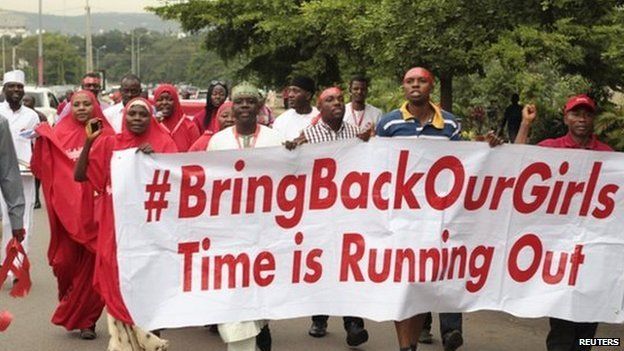
    The incident sparked local and international outrage from world leaders, human rights activists and advocates. A series of protests were held under the hashtag “#BringBackOurGirls”, and the Safe Schools initiative was launched in Abuja to provide and promote safe zones for education.

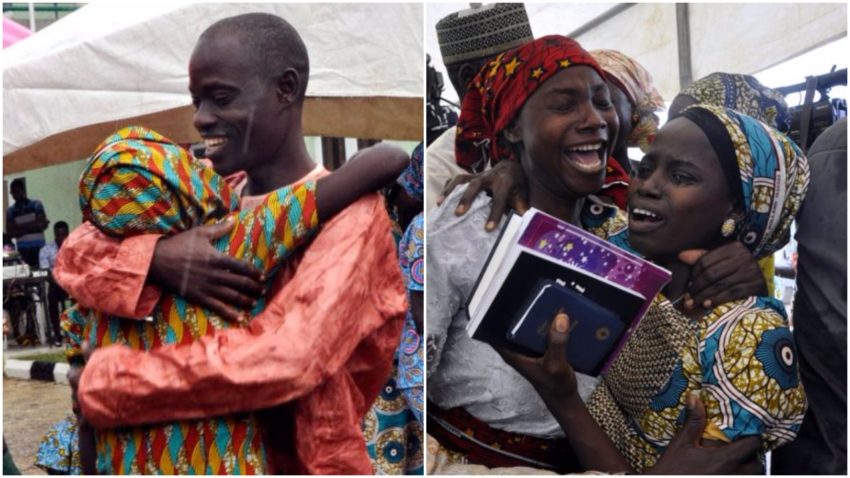
    It wasn’t until nearly two years later, in October 2016,  that we saw the first mass release of just 21 girls following negotiations between the terrorist group and the federal government. Between October 2016 and January 2017, three more girls obtained freedom from their captives; in May 2017, another 82 girls were freed. And on June 22, 2022, the military recovered two more girls.

    While we await the return of these girls, to mark the nine-year anniversary of this tragedy, a short film titled “Boy Meets Girl” premiered on April 13, 2023. This film, written by Kaelo Iyizo and co-produced by Conrad Omodiagbe and Adnan Ali, showed how Boko Haram uses the abducted schoolgirls as suicide bombers. 

    What has happened to the girls who have been freed?

    According to a report by HumAngle Media, about 106 of the released girls received a scholarship from the federal government to study at the American University of Nigeria, (AUN), and about ten girls are also studying in the United States. 

    At the AUN, the government covered the cost of tuition, accommodation and feeding with a monthly allowance of ₦25,000 (formerly ₦8,000). However, given Nigeria’s inflation, the allowance was hardly enough. Other essential needs like books and levies placed by student associations weren’t covered. Also, they struggled to participate in class and keep up with assignments as they had no access to good phones or computers. 

    Even more, the girls struggled with cultural barriers and had to face segregation from students and lecturers. 

    These issues made it difficult for most of them to continue their education and pursue their dreams, and so, about 28 of these girls dropped out. 

    Tragically, this incident wasn’t a one-off. Since then, other students have also fallen victim to mass kidnappings, for instance, the Dapchi girls in Yobe state, 2018 and more recently, the 80 children abducted on April 7, 2023, in Tsafe Local Government, Zamfara state.

    The safe return of the girls still in Boko Haram custody should be prioritised. The federal government should double its efforts to ensure children in the North can safely exercise their rights to education, as this is one way to safeguard that region’s future.
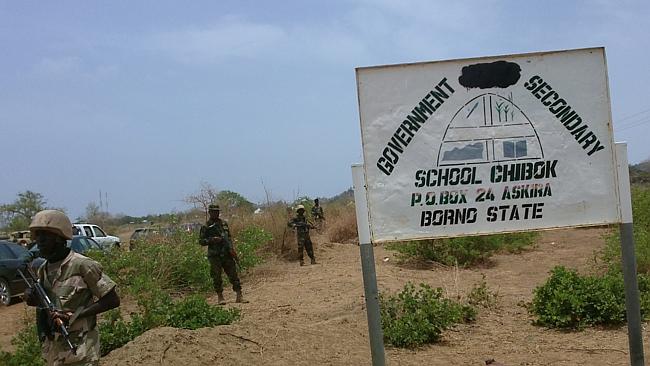
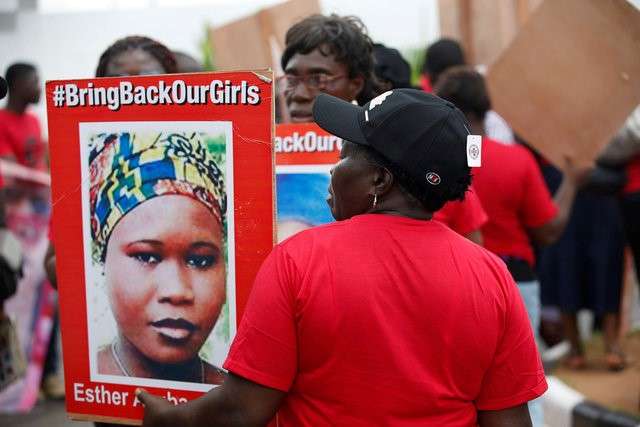
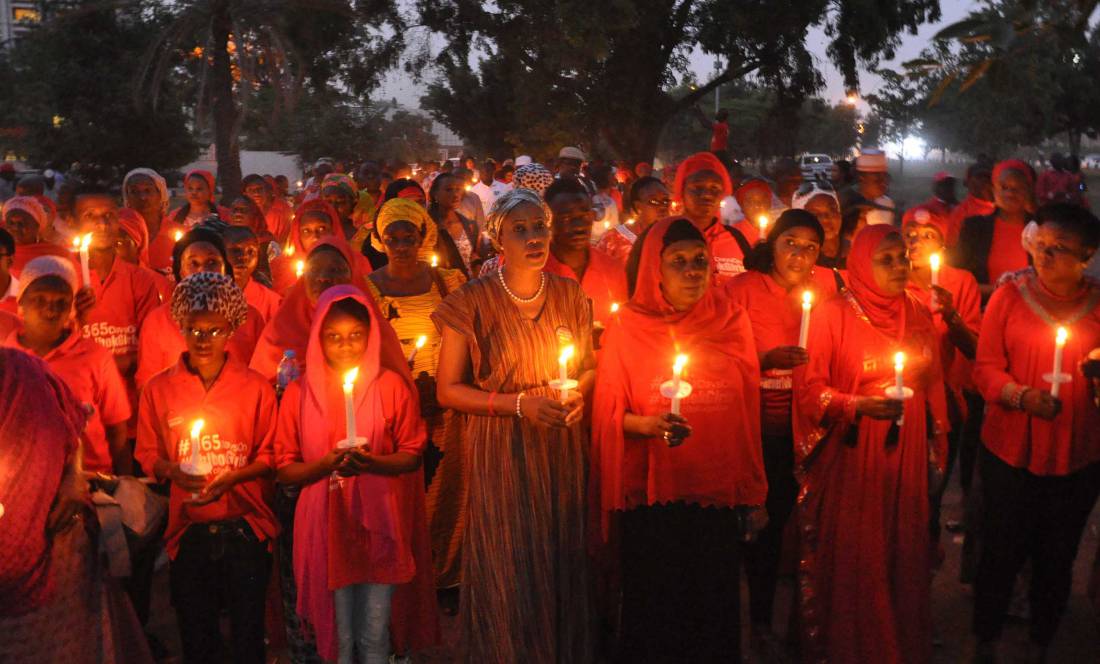
  • A thousand nights ago on April 14th,2014, Boko Haram members stormed a Girls only college in the small town of Chibok, Borno State. That night, 276 girls were rudely and forcefully taken from their dorms, loaded into trucks and driven away- deep into the heart of the dreaded Sambisa forest. They would later be the basis for a worldwide condemnation of the Nigerian Government and lead to the birth of the  #BringBackOurGirls (BBOG) Movement.

    Despite several calls on the Nigerian Government to rescue the girls, about 196 Chibok Girls still remain in with their Boko Haram captors.

    On the 13th of October 2016, the Nigerian Government was able to secure the release of 21 Chibok girls from the Islamic extremist group.

    And while that is commendable, there is still work to be done.

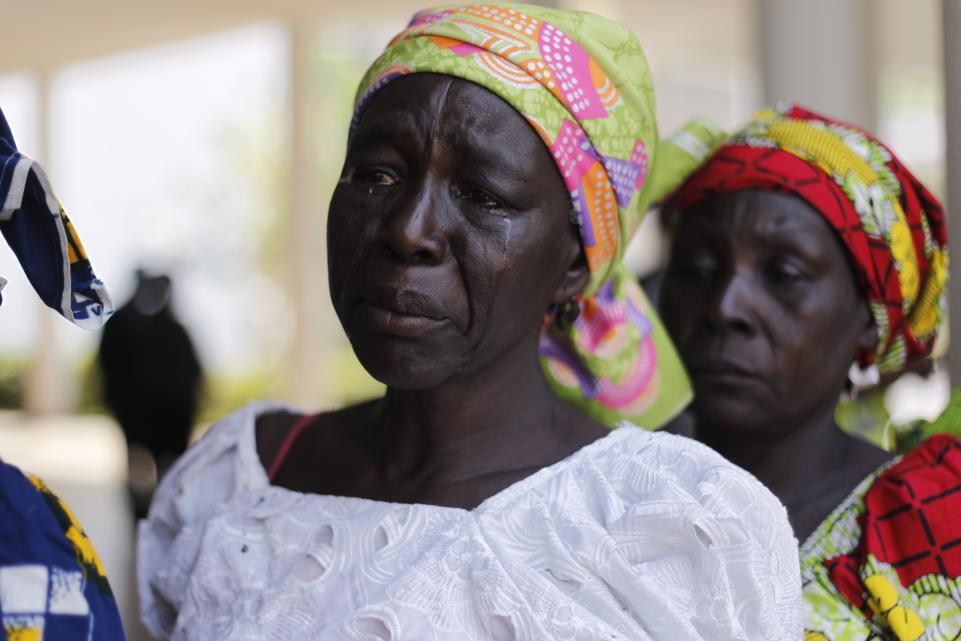
    As the world watches, the parents of the girls hold on to a tiny thread of hope that one day, they will see their daughters again.

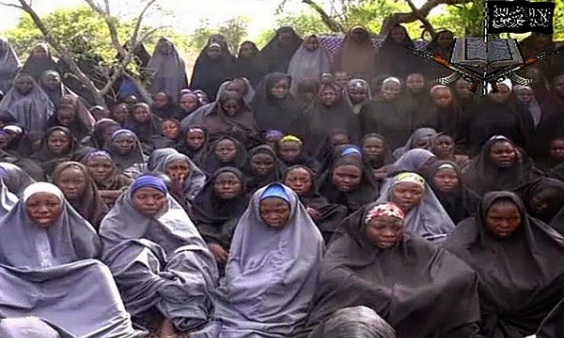
    The sect has shown the girls several times in propaganda videos, so there is reason to believe they are still alive. The charge is on the Nigerian Military to rescue them on time.

    The BBOG Movement continues to keep hope alive and demand for the girls to be released.

    And Nigerians continue to demand that the government #BringBackOurGirls!

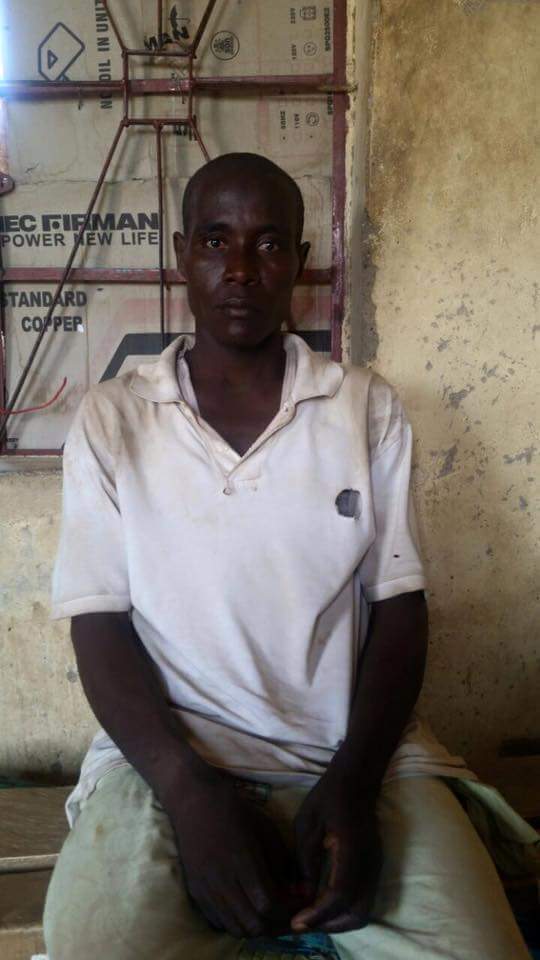
  • Who Is The Man Who Claims To Be The ‘Husband’ Of Rescued Chibok Girl, Amina Ali?

    It has been two years since the Chibok schoolgirls kidnapping of April 2014 which sparked campaigns worldwide.

    On May 17, one of the schoolgirls , Amina Ali Nkeki, was found by a local vigilante task force in Sambisa Forest and then handed over to the Nigerian troops. The 19 year old was found with her child and a suspected Boko Haram member, Mohammed Hayatu, who claimed to be her “husband”. It brings a bit of relief to know that some of these girls are alive, and faith in the Nigerian Army has been restored to an extent. What makes  her being an under-aged mother more outrageous is the fact that media publications are referring to him as her husband despite the fact that she was kidnapped and “married off” against her own will.

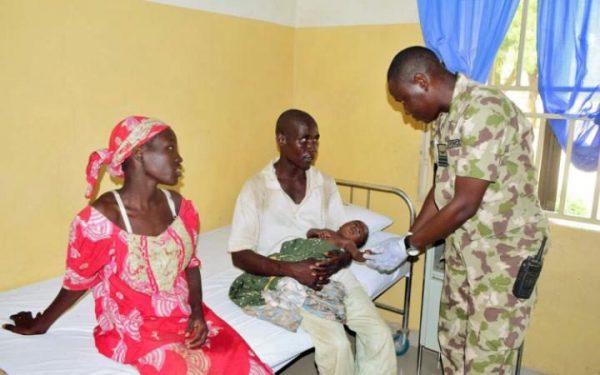
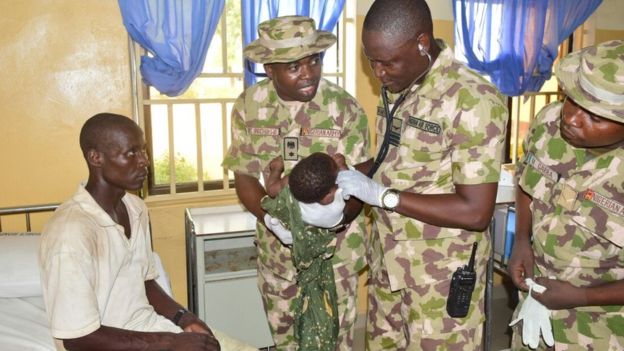
    This “cozy” picture of her and Mohammed Hayyatu was taken while they were going through medical checks at the Air Force medical facility.

    It begs the question of why this picture went public in the first place. Even if Mohammed Hayatu isn’t a Boko Haram member but  a husband as he claims to be, did he suddenly become best friends with the terrorists that they just let him marry one of their captives?

    Amina’s rescue, without doubt, has to be the most talked about topic considering the fact that she’s one of the Chibok girls.

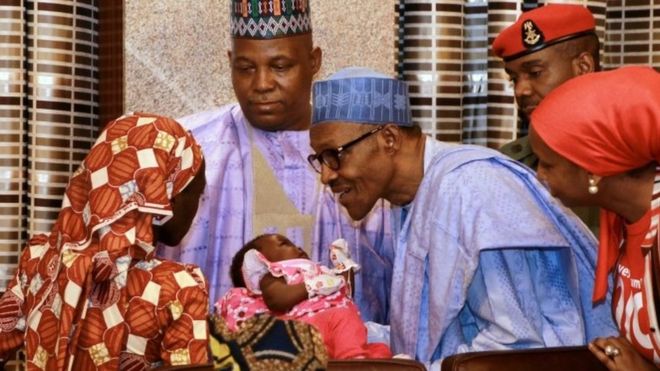
    She and her child met with President Buhari which is an impressive show of concern from the president. The most uncomfortable part of Amina’s rescue is the disregard for her privacy. Her meeting with the President turned out to be a press conference and her HIV test results have been plastered all over the internet, thank God it came out negative.

    While Amina’s privacy hasn’t been respected, not much is known about Mohammed Hayatu. How did he become a Boko Haram ‘captive’? And if they were both prisoners of Boko Haram, how were they allowed to get married and have a child in captivity?

    Mohammed Hayatu’s story just isn’t adding up. And the circumstances around their rescue is suspicious at best. Understandably, Amina has been unable to confirm or deny the numerous speculations being thrown about by various media outlets. Which is why the media circus around her since she was rescued should not have occurred in the first place.

    For someone who has been in captivity for two years when other girls her age probably made it into university, one would think she would be undergoing psych evaluation and rehabilitation.

    Mohammed Hayatu is currently in the custody of the Nigerian Army but proper investigation and prosecution ought to be carried out immediately. Although there are some other unanswered questions  from this story, we hope the other girls return home safely and justice gets served.