Notice: Function _load_textdomain_just_in_time was called incorrectly. Translation loading for the wordpress-seo domain was triggered too early. This is usually an indicator for some code in the plugin or theme running too early. Translations should be loaded at the init action or later. Please see Debugging in WordPress for more information. (This message was added in version 6.7.0.) in /home/bcm/src/dev/www/wp-includes/functions.php on line 6121
Campaign | Zikoko!
  • Wait First: Are Politicians Allowed to Carry ₦‎70 million in Cash for Campaigns?

    On February 16, 2023, Nigerians were all over the place regarding a claim made by the House of Representatives Majority Leader of the All Progressives Congress (APC), Alhassan Doguwa.

    Doguwa, speaking after a meeting with President Muhammadu Buhari, addressed the issue of the scarcity of the new naira notes.  
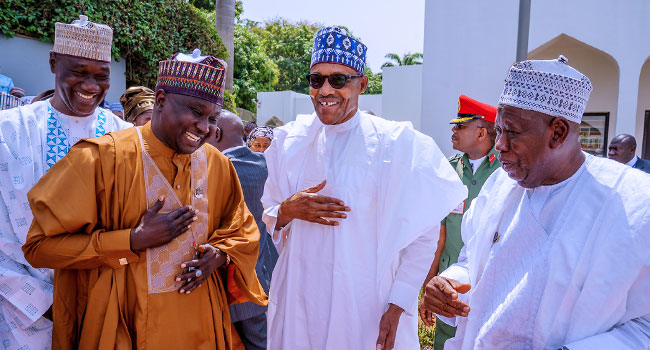
    [Alhassan Doguwa, to President Muhammadu Buhari’s right. Channels TV]

    He said, “A member of the House of Representatives is expected by law to have not more than ₦70 million to conduct his elections and whatever logistics and other things. ₦70 million cash, by law.”

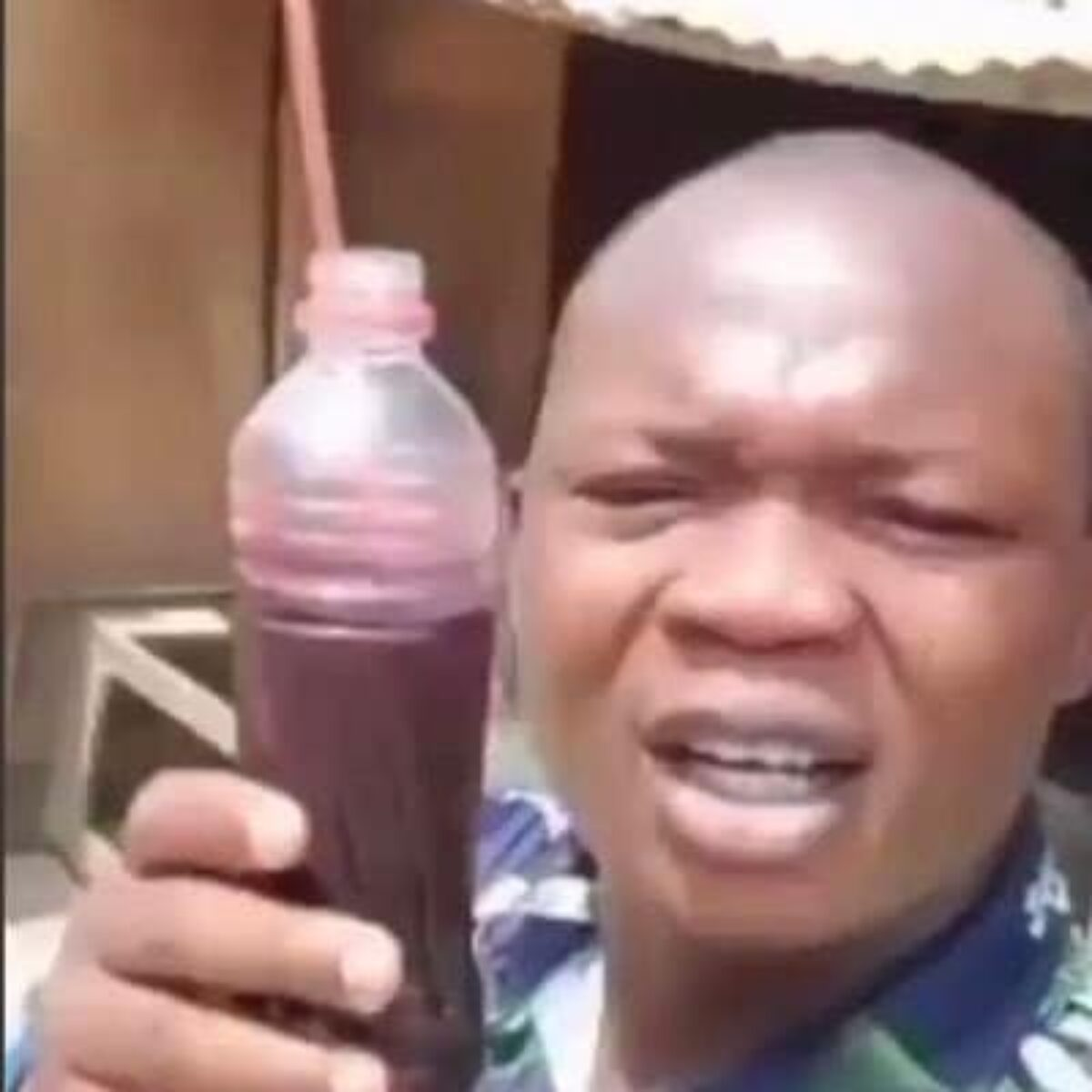
    On the Wait First flagship, we rate claims into three categories. We rate a valid claim as fresh banana. We rate a false claim as burnt dodo. A misleading claim is cold zobo.

    What’s the status of this claim?

    To answer that, let’s look at the Electoral Act 2022, which guides the conduct of elections in Nigeria.

    The relevant section that pertains to campaign financing is Section 88, titled “Limitation on election expenses.” See the screenshot below:
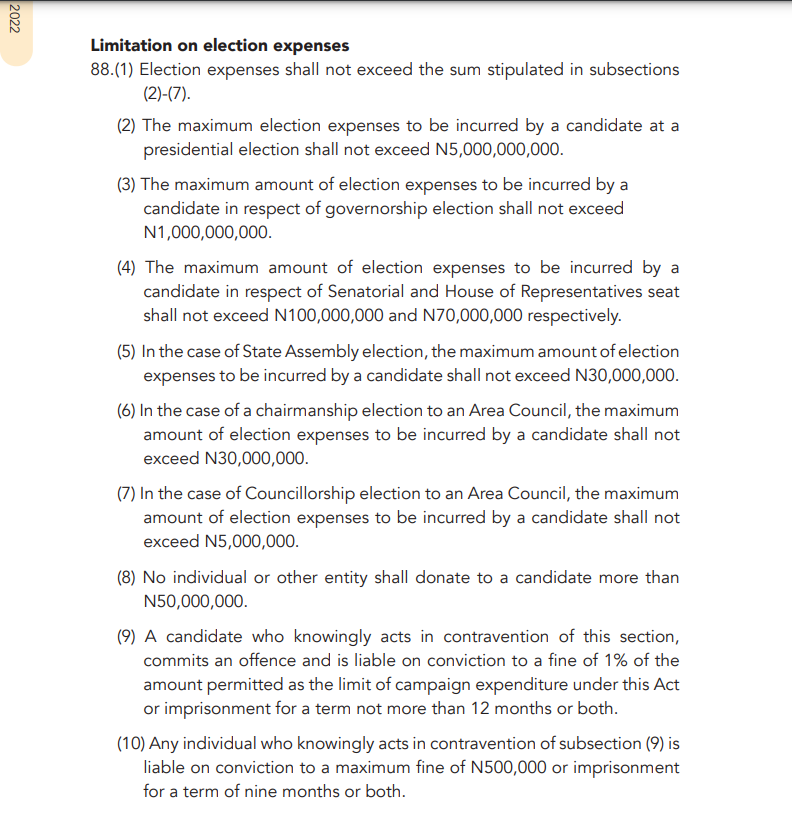
    The part that concerns us is subsection 4. “The maximum amount of election expenses to be incurred by a candidate in respect of Senatorial and House of Representatives seat shall not exceed 100,000,000 and 70,000,000 respectively.” 

    However, there’s nowhere in the Act that says a candidate must have “hard copy” cash to do this.

    Verdict: The law provides a ₦70 million limit for campaign expenses related to House of Representatives positions, that is, from the commencement till the end of campaigns. However, Doguwa’s claim that it must be in cash is misleading. You’ll not find colder zobo anywhere else.
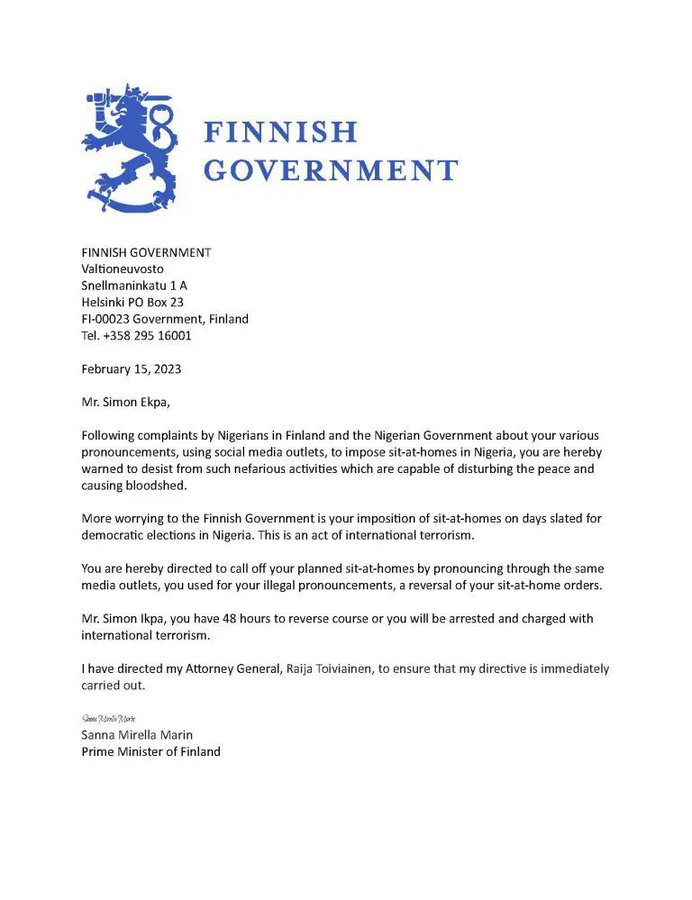
    Did the Finnish government issue a letter to Simon Ekpa regarding the Nigerian elections?

    A viral letter made the rounds recently on social media. It claimed to have come from the Finnish government. The letter targeted Simon Ekpa, a Nigerian secessionist based in Finland. Ekpa has links to the Indigenous People of Biafra (IPOB). It said the Finnish government would charge him with terrorism if he didn’t cease a sit-at-home order in the South East on election day.

    ALSO READ: Who’s This Simon Ekpa Guy Running IPOB?
    So how true is it?

    The fact checkers at the Centre for Democracy and Development (CDD West Africa) looked into the letter. Here’s what they found:

    “CDD War Room contacted the Finnish Embassy in Nigeria, and we were informed that the letter is not an official correspondence of the Finnish government.

    “An official spokesperson of the Finnish government in Nigeria said the embassy has contacted Twitter to remove the letter from the micro-blogging platform.”

    Verdict: Do you still need us to spell it out? Na burnt dodo. We hope you didn’t fall for it.

  • Does Bola Tinubu Want More Foes Than Friends?

    This is Zikoko Citizen’s Game of Votes weekly dispatch that helps you dig into all the good, bad, and extremely bizarre stuff happening in Nigeria and why they’re important to you.

    Subscribe now to get the newsletter in your email inbox at 8 am every Friday instead of three days later. Don’t be LASTMA

    Doyin Okupe Resignation Sanwo-olu Meffy

    In another universe, Nigeria’s a hit reality TV show with no boring moments; from actors who say their only mortal flaw is unfaithfulness to their partners, and socialites attending yacht parties in aso-ebi, to election candidates making more enemies than friends.

    During the campaign rally held in Uyo, Akwa Ibom for the All Progressives Congress (APC), their presidential candidate, Bola Tinubu, once again made scathing remarks that had everyone wondering if the APC’s being serious with their choice of candidate. And at this point, the APC’s public relations team should probably ask for a pay raise because they’ve done more damage control and quenched more fires than Nigeria’s Fire Service.

    But what exactly happened? 

    Rather than do his campaign peacefully in a state ruled by the opposition People’s Democratic Party, Tinubu insulted the state’s governor, Emmanuel Udom, referring to him as “a boy” who lives in his backyard in Lagos. And that, if not for his graciousness, he’d have driven Udom out of his mansion with reptiles. 

    Governor Udom, trying to be the bigger person, brushed off the comments by saying Tinubu has nothing to offer the country. But a Coalition of Civil Society Organisations (CSOs) in Awka Ibom wants to defend their governor’s honour and has given Tinubu seven days to retract his statements, apologise, or face the almighty legal actions. 

    Well, people have always referred to Bola Tinubu as a “master tactician”, so maybe making enemies is one of his strategies for winning the election, and the rest of us can’t see it because we aren’t eating enough corn.

    What else happened this week?

    Bola Tinubu Campaign Udom ISWAP insurgents Akwa Ibom

    ISWAP Does Giveaway For Borno Passengers

    It’s weeks until the 2023 general elections, but it’s starting to look like the country is on airplane mode. The impossible is now becoming a reality as the naira is now so scarce Nigerians are spending naira to buy Naira, and insurgents have started giving money away to people.  

    Bola Tinubu Campaign Udom ISWAP insurgents Akwa Ibom

    On January 28, 2023, Islamic State West Africa Province (ISWAP) insurgents dressed in camouflage and stood under a tree with bags of money on the Maiduguri/Monguno highway in Borno State. Then, they stopped vehicles along the route and gave each passenger ₦100,000. But that wasn’t all; they also instructed them to swap it for new naira in banks if possible and then let them go with a prayer saying: “May Allah make it beneficial for you”. 

    At this point, one would think this is a skit.

    Have you seen this video?

    Question of the week

    Many people this week have had to pay ridiculous charges to withdraw money at POS centres. Is it time to go back to the trade-by-barter system? 

    Ehen one more thing…

    A freak accident happened this week at the Ojuelegba bridge, which claimed the lives of 8 people. But this isn’t the first time. Here’s a timeline of accidents that have occurred on the same bridge.

  • What Buhari Promised Us Versus What We Got

    President Buhari went into Aso Rock Villa in 2015 with a promise to change everything bad about the country. Nigerians, at this point, were tired of the rising level of insecurity, corruption and the dwindling state of the economy. Also, the combination of an ex-military general with a Senior Advocate of Nigeria (SAN) seemed like the perfect answer to tackle all our problems. 

    However, it’s been seven and a half years, and the headaches we suffered before have become migraines under the current administration.

    What Buhari Promised Us Versus What We Got

    With only six months left for Buhari to leave Aso Rock Villa, many Nigerians are starting to wonder if they got what they ordered. 

    Unemployment

    Unemployment was one of Nigeria’s biggest problems in 2015, and Buhari promised to tackle it by creating three million jobs every year. When he became president, the unemployment rate was  8.19%, but has now climbed to a record 33% under him. No wonder insecurity is getting worse and the people who can afford to japa are running out of the country.

    Insecurity

    This is one of the significant issues that hit the nail in the coffin of the Peoples’ Democratic Party (PDP) government. With the deadly attacks on public places becoming more frequent, Nigerians wanted nothing more than to kiss Jonathan goodbye. Buhari capitalised on this and promised to crush the preparators completely. But it’s been seven and a half years and the situation isn’t any better.

    Instead, we’ve seen kidnappings become rampant, roads even more unsafe, and terrorists are forgiven and rewarded with gifts

    What Buhari Promised Us Versus What We Got

    Economy

    In Jonathan’s era, one dollar was equivalent to ₦196, and many of us, including Buhari, cried about the country’s economic state. Buhari promised to return the naira to its glory days, and Nigerians believed him. Unfortunately, the naira has been going in the opposite direction of its glory days and lost even more value under Buhari. 

    The president’s administration has also left millions of Nigerians poorer. According to the National Bureau of Statistics (NBS), over 133 million Nigerians currently live in poverty which is a sharp contrast to seven years ago when Nigeria was described as the largest and fastest growing economy in Africa. We were sold dreams of a revitalised economy, but  the only thing we’ve gotten is debt and high inflation rates.

    What Buhari Promised Us Versus What We Got

    Corruption

    President Buhari is the kind of man whose reputation precedes him, and for those of us who weren’t born in the military era, we heard many tales of his fight against corruption. But have you seen the level of corruption by public officials under his administration? 

    One would expect these officials would at least face severe penalties when caught but, more often than not, their crimes are swept under the rug and forgotten. So maybe Buhari’s hate for corruption was nothing but an old wives’ tale?

    What Buhari Promised Us Versus What We Got

    Medical tourism

    Before he won, Buhari promised to upgrade the health sector to stop Nigerian leaders from taking wasteful medical trips abroad. However, since he came into power, he’s become a tourist, flying overseas to treat cases such as ear infections despite having over 200 Ear, Nose and Throat (ENT) specialists in Nigeria. 

    Clearly, despite his promises, President Buhari found it challenging to fulfil many campaign promises. Perhaps, he got there and realised the job was harder than he thought it would be, or maybe he just wasn’t the guy for the job.

  • How Does Campaign Fundraising Work in Nigeria?

    Everything in life comes with a price tag — especially elections in Nigeria. It’s very expensive to run election campaigns and you may have to beg people for money. It’s why crowdfunding campaigns are a common sight during elections. 

    The All Progressives’ Congress (APC) and the Labour Party (LP) recently launched donation websites for their loyal stans to send them urgent ₦‎2k. The APC has gone as far as setting a target of ₦5 billion for donations while the LP’s diaspora gang set a target of $150 million which is more than ₦66 billion. Those are some pretty hefty funds.

    Nigerians have already expressed their concerns over these parties’ crowdfunding tactics and accused the APC of using the app as a disguise to collect funds from state governors. Critics also accused the LP of the illegal use of the Nigerian diaspora to raise funds. 

    With all this going on, it makes one wonder — are there any laws around political crowdfunding during elections? Or are the complaints for nothing? Let’s find out.

    What does the law say about campaign funding?

    In February 2022, President Muhammadu Buhari signed the Electoral Act of 2022 which had quite a lot to say about campaign funding. Some of them are: 

    • Political parties aren’t allowed to hold any funds or keep funds sent to them from outside the country. Looks like a certain candidate needs to read that part carefully.
    • Political parties have to keep accurate receipts of their donations and make these available to INEC on request. The agency must also make these audited returns available for the public to inspect. 

    Now would be a good time to drop the fact that it’s been three years since the 2019 elections, yet none of the parties that participated have submitted their reports. Make of that what you will.

    • Parties must publish all excesses in at least two national newspapers within six months of the election. 

    Are there any limits?

    The new law has increased the total amount a presidential candidate can spend on their election campaign from ₦1 billion to ₦5 billion.


    However, the maximum donation an individual or organisation can make to a political party is pegged at ₦50 million. If it’s more than ₦50 million, the party has to disclose the source of the contribution to INEC. 


    What are the penalties for exceeding limits?

    Candidates who exceed the electoral act’s spending limits could be convicted and imprisoned for 12 months or pay a  fine of 1% of the limit amount. For a presidential candidate, this 1% would be ₦50 million.

    Donors who violate the law can also be imprisoned for nine months or pay a fine of up to ₦500,000 if found guilty. 

    However, these laws have merely been on paper and INEC has often struggled to impose penalties