Notice: Function _load_textdomain_just_in_time was called incorrectly. Translation loading for the wordpress-seo domain was triggered too early. This is usually an indicator for some code in the plugin or theme running too early. Translations should be loaded at the init action or later. Please see Debugging in WordPress for more information. (This message was added in version 6.7.0.) in /home/bcm/src/dev/www/wp-includes/functions.php on line 6121
Benin Republic | Zikoko!
  • Four Cheap “Soft Life” Travel Destinations for Nigerians – Abroad Life

    The Nigerian experience is physical, emotional, and sometimes international. No one knows it better than our features on #TheAbroadLife, a series where we detail and explore Nigerian experiences while living abroad.


    Nigeria’s economy may be hard, but you don’t need to abandon your travel dreams. In this week’s Abroad Life, we gave you the cheat code for five cheap countries you can visit on a budget.

    The life of a Nigerian ‘9-5er’ is not an easy one. From hustling in traffic to meeting up with crazy deliverables and KPIs, it could be a stressful life.

    Hence the need to sometimes spoil yourself with some elements of a “soft life”. And how else can you do that but by travelling? 

    For today’s Abroad Life, we have curated a list of affordable countries to consider for vacations, so you don’t have to.

    But first, you need to know the following:

    Factors Considered in Choosing Travel Destinations 

    When analysing the cheapest countries to travel to from Nigeria, many analogies must be considered.

    1. The country concerned’s standard of living.

    2. Ease of transportation to and within the country.

    3. Possibility or opportunity to get a job

    4. Ease of setting up a business as a startup.

    5. Easiest way of getting a visa to the country, better still, if it is a visa-free country

    Now, let’s dive into the list:

    Benin Republic 
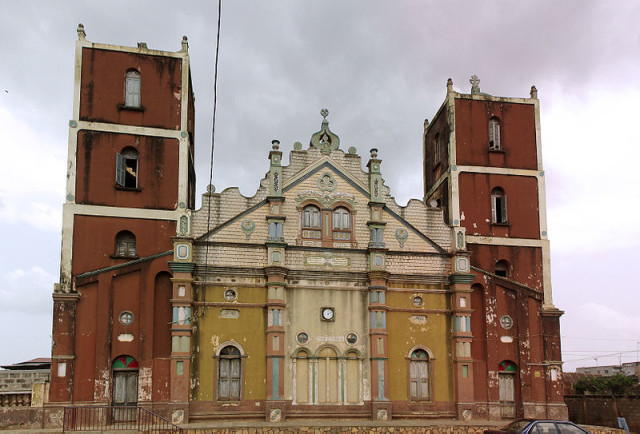
    Grand Mosquee de Porto Novo, Benin Republic [Guardian Newspapers]

    A cheat code to getting cheap travel destinations is to look out for any of Nigeria’s neighbours, especially the Benin Republic. If you use Lagos as your taking-off point, getting to most of the Benin Republic’s towns is easy and cheap. It has some downsides, however, and you can learn more about this through the lens of this Nigerian living in Benin here

    Because you’re living in an Economic Community of West African States (ECOWAS) member country, you can enter and stay for 90 days visa-free. Afterwards, you can apply for a residence permit if you continue your stay. However, if you’re smart enough, just move across the border and get an entry stamp, and you will have another 90 days visa-free.

    Morocco
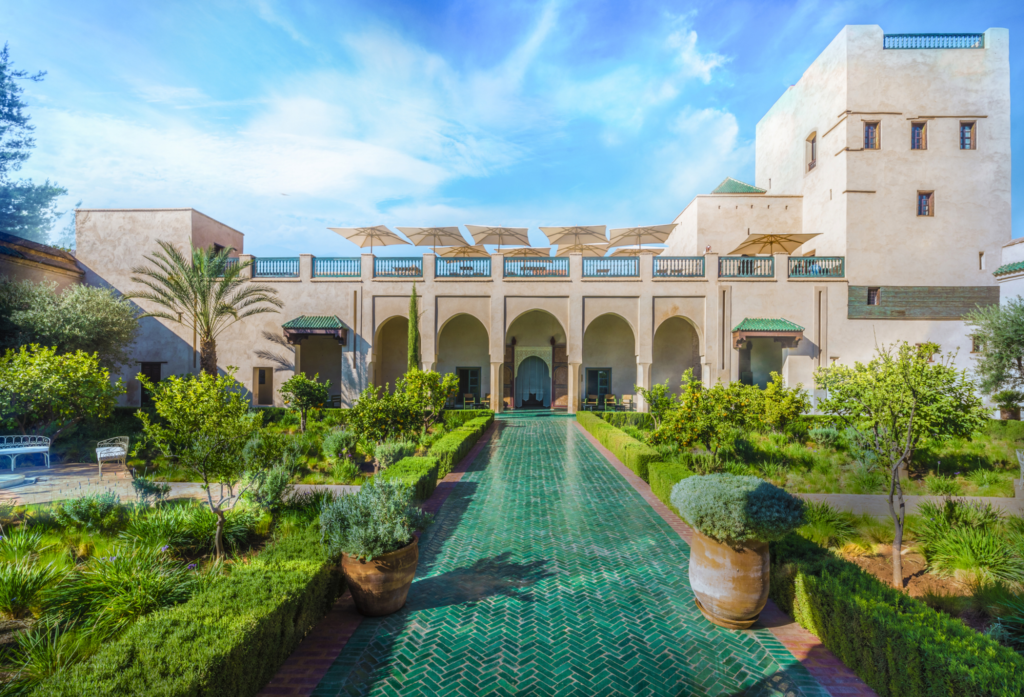
    The Le Jardin Secret, a botanical garden in Marrakech, Morocco

    According to the World Bank, Morocco’s standard of living is comparatively European. The cost of living here is much lower than in almost all European countries. Morocco is one of the cheapest countries with good facilities in the world.

    By African standards, Morocco is not a poor country, and it’s on record that it enjoys a stable economy and government. Morocco is one of the few northern African countries you can travel to by road from Nigeria with little-known fears.

    The beautiful aspect of travelling to Morocco is that getting an entry visa as a Nigerian is not difficult. When you enter and intend to stay, you have the freedom to extend your stay by applying for a residence permit.

    Rwanda
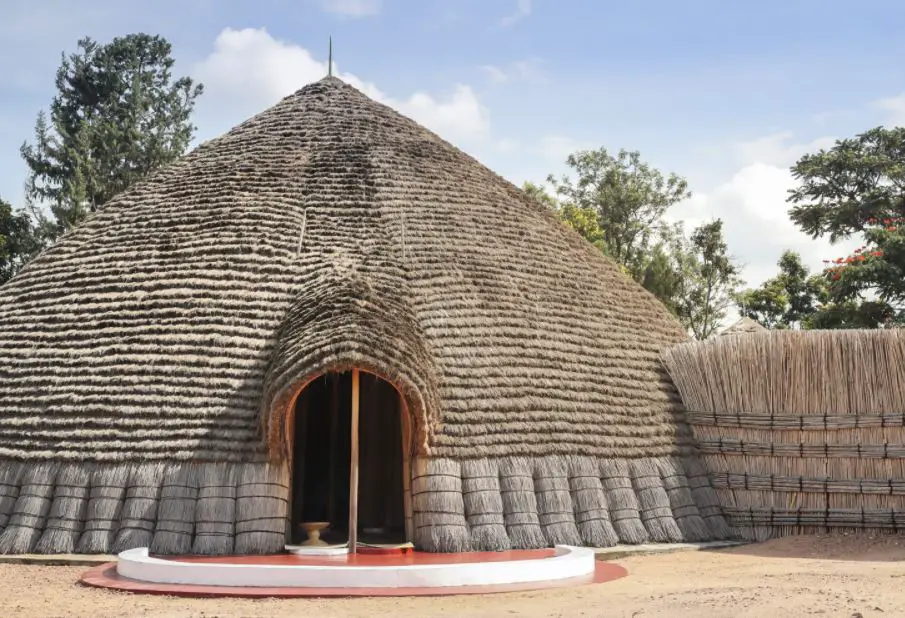
    King’s Palace Museum, Rwanda

    If you love wildlife, you’d love Rwanda. It is popular for its volcanoes, waterfalls, and rainforests, home to wildlife animals such as mountain gorillas and hippos. 

    An all-expense paid trip from Nigeria to Rwanda costs nothing less than N600k online. 

    Turkey
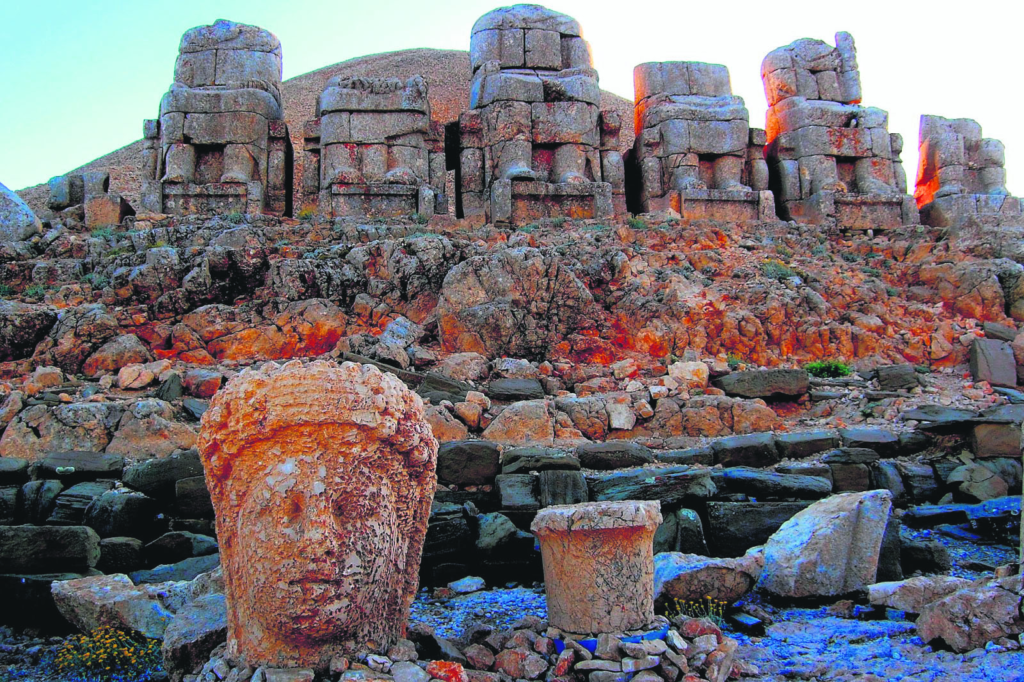
    Mount Nemrut, Turkeyo

    Turkey is gradually becoming a preferred destination for many Nigerians, and if you’re looking for the cheapest country to travel from Nigeria, Turkey, a gateway country to Europe, Asia, and the Middle East, is a place to go.

    The country is immigration friendly, with many budget flight providers you can approach to do it for you, depending on your needs.

    In most Turkish cities, goods and consumable items are relatively cheap and readily available.

  • Navigating Nigeria: What Do You Do When Someone Scams You of Your Tuition? Cry for Help

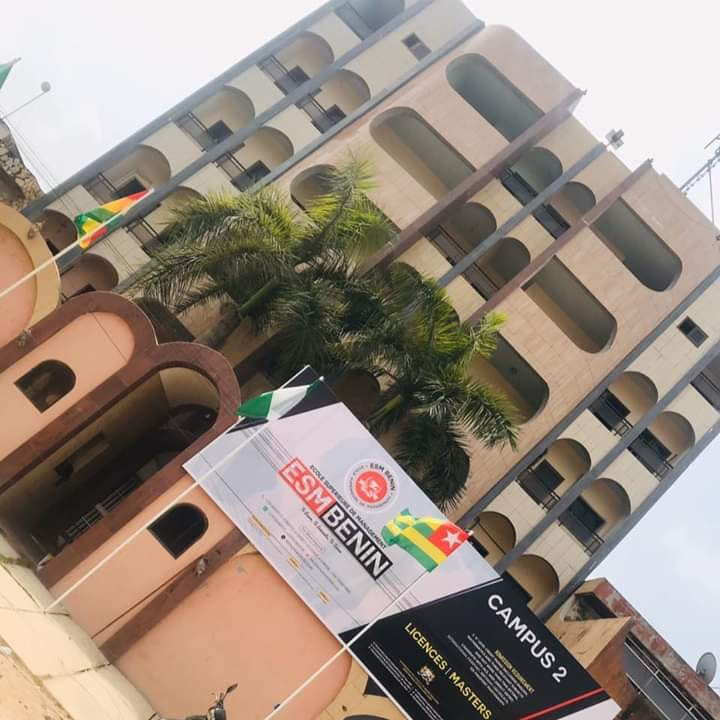
    For Navigating Nigeria this week, Citizen spoke to Nanretdeng, a Nigerian student who had to leave schooling in Nigeria for the Benin Republic after a lengthy ASUU strike. Her story shows that leaving Nigeria doesn’t always insulate you from trouble, as it can find its way back to you. Here’s the sad experience she and her colleagues are currently facing at the hands of a dubious man named Shehu. If this were a movie, it would be titled “The Good, The Bad, and the Shehu.”

    Editorial Note: Navigating Nigeria is a platform for Nigerians to passionately discuss the Nigerian experience with little interference to individual opinions. While our editorial standards emphasise the truth and we endeavour to fact-check claims and allegations, we do not bear any responsibility for allegations made about other people founded in half-truths.

    My name is Nanretdeng. Let me tell you my story.

    I used to study at the University of Jos (UNIJOS), but a strike by the Academic Staff Union of Universities (ASUU) in 2020 disrupted my studies for almost a year. I started thinking about going to school outside Nigeria. Before the strike, I had a friend who left UNIJOS to study at École Supérieure de Management (ESM) in Cotonou, Benin Republic. So I asked her how she did it, and she referred me to this guy named Shehu, who was part of the AP Usman Foundation and had links with ESM. 

    When she referred me to Shehu, I had no idea that the foundation offered scholarships. All I knew was that he had helped my friend process her admission to the university. I contacted him, and he asked me to visit Jos’s AP Usman office.

    I met him there, which was when he showed me my options. Before issuing a form, he asked me about the course I wanted to study and other relevant information. I still wasn’t aware at this point that this was a scholarship. I wasn’t honestly looking for that. All I wanted was enlightenment on attending school in Cotonou, but then Shehu later told me that the foundation had provided half scholarships for students applying.

    That must have felt like good news at the time

    The tuition was ₦430k thereabouts. The foundation promised to take on some of that fee while other colleagues and I were to pay ₦‎150k each with an additional ₦‎20k bringing the total payment to ₦‎170k. So that’s what I paid to the foundation. I still have the receipts. This was in October 2020. We were 14 and were told to prepare to leave either in December 2020 or, at the latest, by January 2021.

    Instead, we went in February of 2021 since they kept postponing our resumption date. On the day we were to leave, a few of us were at the AP Usman office in Jos. We all took off from there and arrived in Cotonou.

    When we got to Cotonou, we started school activities. Things were going okay until it was time for exams, and we needed clearance. We realised that we hadn’t received receipts from the school confirming that our tuition was paid. Shehu had only remitted about 60 per cent of the payments to the school, even though we thought it was all taken care of. I ended up tweeting about it to draw attention to our situation, and we found out that it was the school that offered the scholarship. Crazy, right?

    [ESM Benin / Facebook]

    Crazy

    It came as a surprise to us all. We tried reaching out to him, but a back-and-forth amounted to nothing. The school was generous and let us write the exams and participate in other activities. They were aware that we had made payments to the foundation. We finished our first year with nothing productive coming out of the talks with Shehu.

    Before the commencement of our second year, Shehu still reached out to people asking them to make payments. This was after he hadn’t remitted first-year tuition fees. 

    At the time, I’d resolved to make all payments directly to the school going forward. When the second year began, Shehu referred other students using the foundation as cover to pay tuition fees to ESM through him without remitting our outstanding payments. 

    That’s audacious

    That went on for a while. At one point, the school admin that had been in touch with Shehu told us that Shehu had stopped responding to his messages and calls. Shehu had gone MIA. The second year rolled by with these issues unresolved.

    In our third year, we agreed that no one would make any payments to Shehu or the AP Usman Foundation but to the school directly. At this time, I was the university’s president of the Plateau Students Union. I was picked for this because I was bilingual, and the Benin Republic is a francophone country. It helped, too, that I studied foreign languages at UNIJOS.

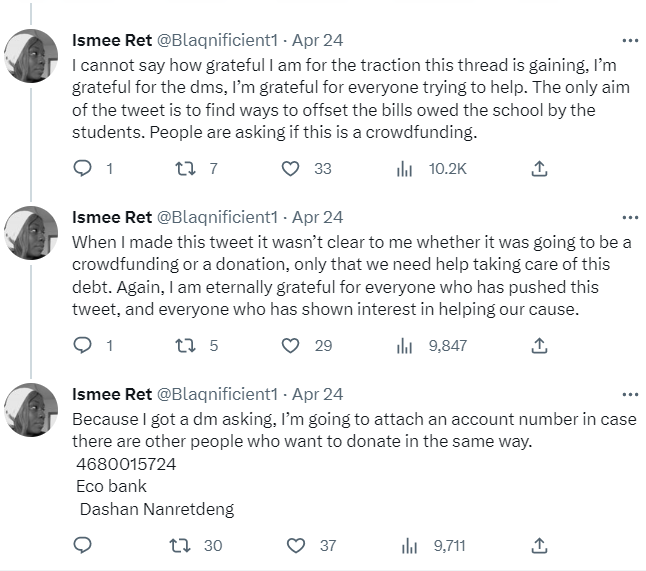
    After our joint resolution, students from the union began making tuition payments to another bank account I own — different from my primary one. I was then remitting payments to the school from my end. The amount I paid to the school was around thrice what Shehu sent. Despite this, we still have some ground to cover, which explains why I put up that Twitter thread. There are some people among us who Shehu believed were only making a one-time payment. These people are stranded with no hope of getting financial support from home. 

    We need all the help we can get because we’re in the last lap. It’s a three-year degree. The school has been gracious enough up until now, but that can no longer last. I’m grateful that my story is getting enough traction. Hopefully, it translates to financial help to offset our outstanding bills.

    Sounds like this Shehu guy is fraudulent. What has the school done about it?

    The school has done their best. It has tried to maintain contact with Shehu. But the school is in Benin Republic while Shehu is in Jos. By the time Shehu decided to stop taking calls, there was nothing anyone from ESM could have done about it. When I returned to Jos, I tried to swing by the office only to find out it was no longer there. It’s not a lack of effort on the part of the school per se. I know the school’s various efforts to get Shehu to remit our fees. They’ve not been successful.

    How do you hope this ends? Do you want to see Shehu apprehended, or are you content with settling the outstanding fees?

    My priority as the student representative isn’t Shehu getting apprehended. I mean, that would be nice, but what I’m hoping for is that we offset all our debts. The means to that end don’t matter to me. Whether through crowdfunding, a donation, or a charity that notices us and decides to help, it doesn’t matter to me now. If Shehu gets caught and is made to pay, that would be the icing on the cake. But to be honest with you, I’ve taken my mind off of Shehu. 

  • “I Was Homeless In Benin Republic”- Abroad Life

    The Nigerian experience is physical, emotional, and sometimes international. No one knows it better than our features on #TheAbroadLife, a series where we detail and explore Nigerian experiences while living abroad.


    Today’s subject on Abroad Life moved to Benin Republic in 2012. He talks about how the exchange rates and money problems with his family back at home affected his four-year stay there. 

    When did you move to Benin republic?

    I had to go to Benin Republic in 2012. It was the only option for my family financially. My JAMB scores weren’t good enough for Nigerian public school cut off marks, and we didn’t have enough money for a private school. I’d heard a lot about Houdegbe North American University and how it was a good school so I decided to go there. I had cousins in Benin Republic, so it was an opportunity to bond with them, learn a new language and experience a different culture. I like to see things from a cup-half-full perspective; that helped me quickly move past mental barriers. 

    How was settling in?

    Communication was difficult at first. I had to learn French on my feet, especially for quick everyday conversations with bike men, market women and people who provided essential services. The number of Nigerians you’ll find in Benin Republic will blow your mind. In my time there, I encountered more Nigerians than Beninese, and if someone told me that the Nigerian population is higher than the local population, I’d believe without thinking twice. At some point, my landlord was Nigerian and even my lecturers were Nigerians.

    So apart from communicating with providers of essential services, I was mainly communicating with Nigerians, and that made things easier for me. 

    I stayed with my cousins for a year and a half, and then we split. We didn’t have any problems or anything, we just found new people we wanted to move in with. 

    Did that turn out well?

    At first, it did. It was super exciting. I had adult responsibilities for the first time: getting an apartment with my friends, getting some furniture, speaking with landlords. I felt powerful. I knew If I’d stayed in Nigeria and gone somewhere like UNILAG, I’d probably stay in a hostel or come from home. Co-owning an apartment in Benin Republic made me feel powerful. 

    Nice. Why did you say “at first”?

    Finances started waning. The exchange rates were super fucked. I was getting an allowance of ₦10,000 a month and that was about 30,000 CFA. Things are much more expensive in Benin Republic than in Nigeria, so it got difficult to live from day to day. When I look at the exchange rates now and see that one naira is just 1.38 CFA, my heart breaks for Nigeria. 

    Did the finances get better?

    Rent started getting expensive too. Most landlords were cashing in on the fact that school hostels were more expensive than apartments, so they increased prices so that apartments would still be cheaper than school hostels but only slightly. 

    My rent expired just as I was about to begin my final year. I called friends and tried to organise a system where we would all live together and pay rent, but nobody was interested. I didn’t have enough money to rent on my own and I couldn’t talk to my mum about it because she was struggling with my fees– I was even owing school fees. 

    I had to talk to some classmates to let me keep my stuff in their apartment. In the mornings, I would go to their houses, freshen up and get out of their hair. Whenever they asked where I was sleeping, I’d just laugh and brush it off. The truth is that I was sleeping in the classrooms. I’d wait for everyone to go home — sometimes I’d leave with them — before coming back to settle in one of the classrooms. It was very lowkey. 

    Were there any dangers of living in the classrooms?

    Apart from the mosquitoes and the fact that it was uncomfortable as hell, I had to stay alert every night so that the patrolling security men wouldn’t find me. My body clock knew that by 2 a.m., they would do their regular checks and I would get in trouble if they caught me so I had to hide, and sometimes move around while they were doing their searches. Terrible stuff.  

    Damn. How did it work out?

    Some classmate who was also my friend found out and told me to move in with her. I didn’t ask her initially because she was a woman. I didn’t see myself living with a woman. But I moved in with her and her flatmates, and I slept on the couch in the living room. That was nice. 

    What’s one thing you regret about your stay in Benin Republic?

    It’s definitely the fact that I couldn’t live as much as I wanted to. I couldn’t find a job, so I had to live on a meagre allowance for four years. That means I couldn’t go out, have fun, and experience all the things that I wanted to. I remember seeing the rich kids that would not go to class and just stay in their rented four-bedroom apartments and chill and thinking, “Why isn’t this my life?” 

    One of the few times I tried to have fun, my friends and I almost got arrested by the police. 

    Tell me the story.

    We were returning from a party, and it was past curfew so the police were everywhere. After running from one set that was patrolling, we ran into another set. Thankfully, they didn’t arrest us. They just queried us. We lied that we went to buy food in party clothes. The Nigerian in me was already calculating how much I’d have to pay to free myself from this mess. When they finally asked us to “give them something”, I said I didn’t have money and the shock on the man’s face surprised me. 

    “Money?” he asked. “Shebi una talk say you go buy food. Ehn give us food na.” 

    We didn’t have any food, so we just told them we didn’t find anything. They let us go. 

    Is Benin Republic police different from Nigerian police?

    Oh, they’re much better. At least they were when I was there. They were very much more civilized and organised. They wouldn’t just go around arresting people unjustly or causing havoc. 

    Were things better when you left?

    I left in 2016, but things hadn’t gotten better. By the time I left Benin Republic, I was still owing school fees. I couldn’t pay it off fully until about a year later. 

    I like to see my time in Benin Republic as something I’ll talk about when I become successful. It was a dark place in my life. 

  • Quiz: How Well Do You Know The Republic Of Benin?

    The Republic of Benin is Nigeria’s next door neighbour. Although we have so much in common, a WHOLE LOT of us do not know anything about the country.

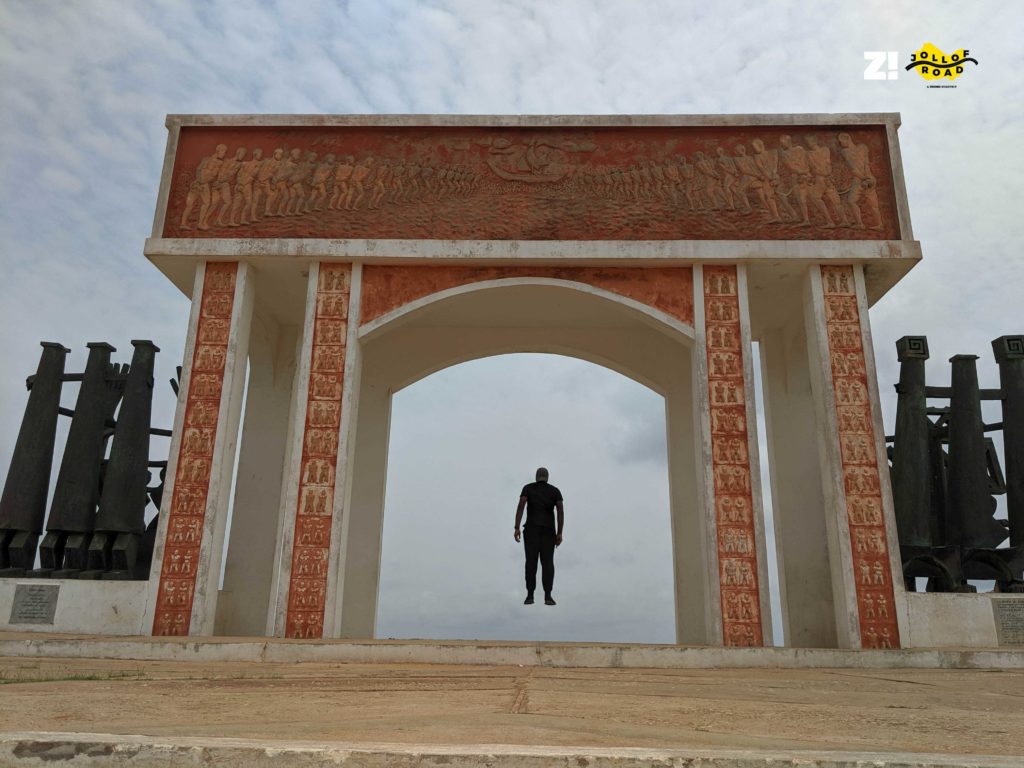
    The Jollof road team was in the Republic of Benin for a short time. While there, we got so immersed in the culture that we can now call ourselves experts in it. Take this quiz so we can school you a little.

    Watch the Jollof Road team during their time in Cotonou, Benin Republic and visit jollofroad.com to learn more about Benin Republic.

  • Five Meals To Try In Benin Republic

    Benin Republic is one of the closest to the sister from another mother that Nigeria has. Even though it’s official language is French and ours is English, there remains a strong connection that even the language barrier can’t break.

    The bond is so strong, even our culture, Pidgin English, and food are similar! Don’t believe me? Just try these meals when you visit Benin and you’d know.

    Igname Pile:

    This swallow dish is so similar to Pounded Yam even Google sometimes shows results of the latter when you search for Igname Pile. It’s just as white and tasty. Perhaps even tastier.


    Pate la maize:

    Think of Tuwo and you’ve got an idea of how this tastes like.

    Pate de manoic:

    This is really similar to lafun, white amala. It goes with basically any soup you can think of.

    Massa:

    This is basically a pancake meal, with millet flour and rice mixed in the dough being the only difference.

    Tapioca:

    This is a pudding made from tapioca seeds. It’s basically a staple breakfast meal. Add in sugar and milk to it and you’re good to go. Think oatmeal or maybe ogi and you’ve got an idea. It’s actually really amazing.