Notice: Function _load_textdomain_just_in_time was called incorrectly. Translation loading for the wordpress-seo domain was triggered too early. This is usually an indicator for some code in the plugin or theme running too early. Translations should be loaded at the init action or later. Please see Debugging in WordPress for more information. (This message was added in version 6.7.0.) in /home/bcm/src/dev/www/wp-includes/functions.php on line 6121
America | Zikoko!
  • How “Grad School Buddy” Helps Graduates Navigate Life After College – Abroad Life

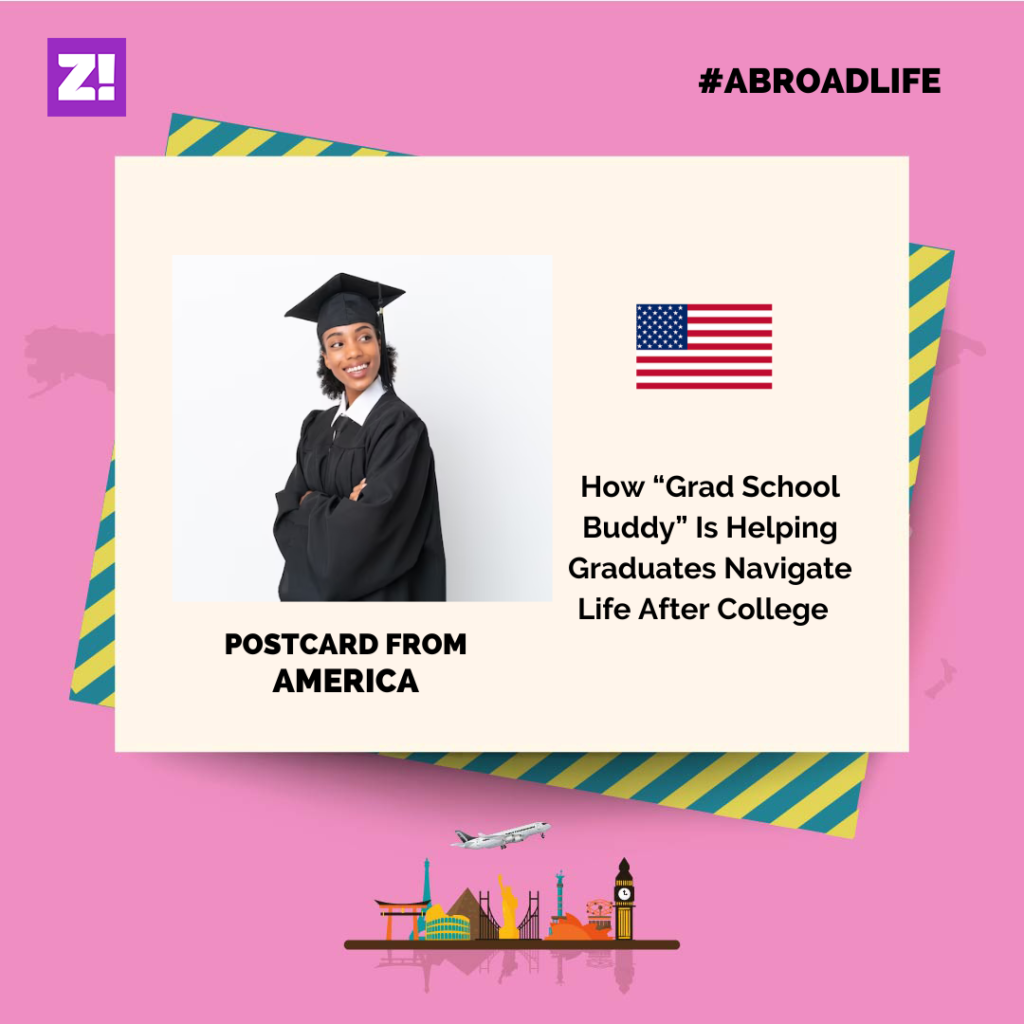
    How do you navigate life after graduate studies? How do you get jobs? These are questions that today’s feature on #AbroadLife answers with Grad School Buddy, a  podcast and carefully curated digital companion that helps simplify the grad school application journey. She shared her migration journey into Washington, D.C., and her inspiration for the podcast with us.
    How did you migrate to the United States?

    While studying for my undergraduate degree in Economics back in Nigeria, I became very certain that I would study Development Economics. I believe that if the world is going to become a better place in the long run, we’ll definitely need to go through some policy changes. During my National Youth Service Corps (NYSC), I was posted to a primary school. I did a project to help sponsor kids who were out of school in Nigeria. These experiences then motivated me to look for the best places in the world where I could learn more about policy change.

    Initially, I wanted to go to school in the United Kingdom. However, my friend then suggested Washington, D.C. This was because D.C. is a policy-centric location where I could meet with other policymakers and interact with organisations to get these policies done. So it was a step-by-step process. I first understood the course I wanted to study, and second was the location—where would I be most suited to study the course? I chose D.C. because of the people [policymakers], the jobs, and the exposure.

    What was the process like?

    So I applied on my own for my visa, admission, and all that because I had others who had gone through the same process, and they didn’t use agents. I had to do a lot of research. I had to check out which school in DC I wanted to apply to and why. How were the professors? What kind of funding does the school have, and what sort of funding do they have too?

    Once I figured these out, I had to look at their requirements. I had to take the TOEFL to fulfil the language requirement and the GRE exam for proficiency. There was an analytical piece of writing where I was asked a policy-related question, and then there was also a Statement of Purpose (SOP) where I had to write about my own motivations for applying to the school. I also had to get my undergraduate transcript from my university, and I got a half-merit scholarship. I applied in 2018 and started in the fall of 2019.

    Sweet! How was grad school for you?

    So the first semester of my first year in grad school was all about focus. I really wanted to know more about the educational system and how to navigate life in America in general before water go carry me go. But by my second semester, I noticed that many students around me were “badass” and could do the things I was doing better, with brilliant projects. I also saw that some students had started having jobs since my first semester. I asked them more about their jobs and the professors they were working with, especially on impact evaluation across the world.  

    With this, I was able to start working in my second year as a research assistant, and I continued working with them until I finished. I had surveys, large data sets, survey designs, etc., which helped me get great internship or job opportunities outside school. Working gave me both the skills and the money.

    How did you then get a job after grad school?

    A lot of students abroad have probably heard of the use of networking to find jobs. It could be annoying and may be a bit out of my comfort zone, but I realised that this was something that had to be done if I eventually wanted an international career for myself. I had to meet people that I never knew to have coffee with me or meet somewhere just to get myself acquainted with them and keep me top of mind.

    My first job was with a professor who I had worked with on a short-term project. After school, she introduced me to the very first job I got, which was a six month project. While working there, I was already looking out for the next job. I knew that I didn’t want to ask her for another job yet again.

    So I started networking like crazy before I ended the project. I had to check organisations I wanted to work with and people in the sector I wanted to work in, as well as look at their previous projects to see if I had any affinity with them. I then asked my friends if they had emails on some of the people I had researched and started cold mailing them and setting up meetings with them. After these meetings, I only followed up with people that I felt I could work with.

    Through these people, I was able to get recommended jobs from them. There were periods of rejection and tears. However, I had friends in my corner who served as a great support system for encouragement. I eventually reached a point where I could turn down jobs because there were so many.

    What was your inspiration for the Grad School Buddy podcast?

    So firstly, the Grad School Buddy is a podcast and carefully curated digital companion that helps simplify the grad school journey in an unconventional way. It started as a podcast, but now we have a newsletter and social media pages where we share information. What led me to start was that when I was going to grad school, I had people around me that had been through this process, including my siblings and friends. There was specifically one of my male friends who knew that I was very big on development economics in terms of education and financial inclusion policies. He was the one who made me start thinking of grad school beyond just the degree. But also about the importance of life after grad school. I had never really thought about what life after grad school entailed until he spoke about it.

    Basically, I had knowledge of these things, but it wasn’t until I moved abroad to Washington, DC, and started school that people started to ask me questions about life after grad school. Then I realised that this information wasn’t accessible to everyone else out there. That’s how I got started. I wanted the podcast to encompass graduates from every walk of life, both the ones that paid tuition through scholarships, family income, or what have you. I also wanted to highlight alternatives to going abroad for a Masters. These included an online Masters or even having their Masters’ degree in Nigeria, how to get great internship opportunities, and so much more. If someone is trying to navigate problems surrounding their Masters’ degree and stumbles upon the podcast or newsletter, I’d love for them to get their answers via the Grad School Buddy Platform.

    Why did you record your very first episode?

    I recorded my first episode from a sad place. I was broke, and I needed an outlet to let out my feelings and thoughts. Then, I was starting to understand the process behind the “rejection before acceptance” process of getting job opportunities. I wanted other people who were like me also to experience what it felt like. There were friends who had different circumstances with grad school, and I felt like my friends and everyone else needed to share our grad school limitations and also share their solutions as well.

    What’s the structure of Grad School Buddy like?

    So, I initially started by myself, but now I have 5 people on the team. We plan the whole season to decide on a theme, then break down the topics and decide on profiles that could fit into these topics. For guests, it’s either have people call us requesting a feature or we contact them. We then interview them, and it gets to post-production where we edit the audio, send it to the guests for feedback, and once it’s approved, we start adopting and publishing it for different media.

    Aside from this, Grad School Buddy also aims to get people of different nationalities, sexualities, and experiences to come together and share their thoughts. I would always like people to listen to the podcast or read the newsletter and find an episode or two that is for them.

    What are your challenges with the podcast?

    So I won’t necessarily call it a challenge, but I have noticed that some admission officers or counsellors request a fee when I reach out to them, and I feel that kind of demand doesn’t always serve the greater good. That’s the “challenge” in quote. Besides, Grad School Buddy is privately funded, and it’s not like we have the cash to blow. There are also the usual production glitches that I believe everyone else experiences, but there are always alternative episodes that we can always post in place to stay afloat.

    What is next with the Grad School Buddy?

    We are looking to launch Season 3 in October or November. I also hope to allow the team to handle more processes of the podcast in the long term as well as bring in more diverse voices.

  • From Nigeria’s 7.0 GPA to Stanford’s Struggles – Abroad Life

    The Nigerian experience is physical, emotional, and sometimes international. No one knows it better than our features on #TheAbroadLife, a series where we detail and explore Nigerian experiences while living abroad.


    What does it mean to get a CGPA of 7.0 in your undergraduate degree in Nigeria only to struggle academically at one of the world’s top universities in post-grad? With two weeks to graduation, this week’s #AbroadLife subject, narrates how she eventually attained a “perfect” CGPA studying for her master’s in Computer Science at Stanford University, California, USA.

    Disclaimer: This interview is being published based on anonymity (without name) to protect the confidentiality and privacy of the interviewee.

    How and where did you get a 7.0?

    So I schooled at the University of Ibadan (UI), and from the beginning until 2017, they’ve been using a 7.0-grade point average (GPA). They only changed it to 5.0 recently to meet up with international standards.

    As to the “how”, my goal when I entered university was to get a first-class degree; I wasn’t targeting a 7.0 in the first place. In the first semester of the 100 level, I was so scared of falling behind that I was always eager to study. After the first semester, I finished with a 7.0. I was so excited, but it wasn’t groundbreaking for freshers to finish with a perfect GPA in the first semester. It was quite common. I wouldn’t say it was easy, but it was attainable.

    At the end of my first year, my CGPA was still 7.0, and I began considering the possibility of maintaining that grade to the very end. I wasn’t too optimistic because I knew the courses would get harder as I advanced, but it motivated me to do my best. In my class, two other people also had the same GPA as me, which made me subconsciously accountable to someone. 

    My parents were people who could provide what I needed, and I didn’t have to find money to care for my siblings or parents. I was just a regular college student. I wasn’t a social butterfly.  

    Interesting. What was your inspiration for travelling abroad?

    I wouldn’t say that I was always dreaming of going to Stanford. Once I graduated from UI in 2019, my major goal was to make enough money. I wanted to make money so bad. 

    After making a 7.0 CGPA, news about my achievement quickly travelled. Someone contacted me from Canada and persuaded me to apply for graduate school or a doctorate. But I wasn’t feeling it. I wanted to work, and I wanted to make money. 

    If not for my Aunty, who made a compelling case on how my skills wouldn’t be fully appreciated without passing through graduate school, I may have never made a move. 

    By then, I had already had a full-time job in Nigeria as a product manager in a tech firm immediately after school. I started to research what it takes to get admitted. 

    Tell us more about the process.

    I then discovered that I needed to write the Graduate Record Examination (GRE), reach out to professors, get recommendation letters etc. 

    The process seemed quite challenging at first, but I found people who were also on the same journey as me, and we just motivated each other by solving past questions etc. Sometimes I returned from work late at night and started studying. I was targeting 320 as my GRE score, as it would ensure my entry into an Ivy League school. 

    Sometime in October 2019, I got 318 as my GRE score, two marks shy of my original target, which wasn’t bad for me. I then got my letters of recommendation from my professors at school, wrote my statement of purpose, and submitted most of my applications by December 15. 

    I got admission and full funding at Stanford University by April 15, 2020, during the COVID-19 pandemic, but I couldn’t resume school until the US Embassy reopened for my interview in November 2020. The choice of attending courses virtually wasn’t there because I got admission as a graduate teaching assistant. This required me to be physically present in the U.S. Hence the long wait.

    Wow, sorry about that. How did the interview go?

    Thank you, and it went well. That interview was seamless. I know how often people get rejected trying to get US visas, but thankfully that wasn’t the case for me. The interviewer didn’t stress me out at all. I just gave him my I-20 (a document you receive as proof of admission). 

    When he saw that I was going to Stanford, he just returned my documents and told me to go, that the F-1 visa (student visa) would be ready in about two weeks. The visa also had a two-year validity clause.

    Why do you think the process was so easy?

    I think it’s because I was going to an Ivy League school, and it was even Computer Science I studied and the full funding I received. I was shocked and happy because I had prepared so hard, and they never asked the questions I had prepared for. By December 2020, I travelled to the US.

    What were your first experiences in America like?

    As mentioned, I left Nigeria for California in December because I was so excited to leave and wanted to have at least 3 weeks to settle and prepare for school. I travelled with a friend because we would attend the same school and be placed in the same apartment. 

    The first thing that shocked me was the seriousness of foreigners regarding the COVID-19 pandemic. By June 2020, Nigerians were beginning to get much more lenient with precautionary measures such as face masks, and I began to get used to pulling down my face mask a lot. 

    However, on my Turkish Airline flight, I needed something from my friend, who was some seats away from me. I decided to stand up and walk towards him without my face mask. Suddenly, one of the passengers shouted at me to return to my seat because I was not wearing a face mask. It was so embarrassing, and I did not get the item from my friend again. I felt like a “bush” or uneducated girl. It then dawned on me that the pandemic was real here, and this wasn’t Nigeria, where precautionary measures weren’t taken seriously. 

    Also, people tended to cross to the other side of the road whenever I walked by, and I didn’t understand why. I wasn’t a monster, was I? I believed (and still believe) that I was a petite and pretty lady. Someone then explained that they were either trying not to contact the virus or get too close to people because of the COVID season. It was only then that I understood their actions.

    Another thing that happened in my first week was falling sick –

    Wow, how did this happen?

    I didn’t like the vegan meal given on the plane, and even at the stop in Istanbul, I didn’t like much of the $15 pasta I bought because it was so bland. Coupled with the fact that it was a 14-hour flight, I got ill from the stress of travelling. 

    Some Nigerians had to take me to the hospital. I asked the nurse for water in the emergency room, and she didn’t understand. Only when I rolled the “t” in “water” did she finally understand what I requested and give me water. The doctor later discovered that I had malaria, but since it’s not a prevalent disease in the US, they didn’t have the test kits and equipment to treat me. They also had to take my blood sample from California to Atlanta before they could figure out if it was malaria. 

    I was also in the hospital for three days; it was the best time ever. I ate free food, received free Wi-Fi, paid my bills with insurance, and spent my days watching Bridgerton. It was an interesting time. The weather was cold but not too cold, which is one of the advantages of residing in California.

    Nice! Could you please describe your experience as a master/teaching assistant?

    Everything was virtual at first because of the pandemic. I did have to teach courses as a teaching assistant and then get paid a stipend. I remember the first class I taught on web application development. 

    There was an idea of the course but didn’t know what to expect because I had never taken the class before. I remember introducing myself and telling them to ask me questions, but after the class, I thought, “How can I tell them to ask me questions when I just started this?” 

    My teaching assistant experience started with me just “winging it,” more like a “fake it till you make it” sort of thing. I remember taking three artificial intelligence (AI) classes during my first office hours. After seeing these classes’ syllabi and weekly assignments and discussing them with a friend, he advised me to drop one class. As a graduate teaching assistant, you don’t just teach; you also have to attend the classes and do the assignment before handing it out to the students so that you can help them with whatever problems they encounter. 

    The magnitude of the content for my first class was enormous. I can remember us covering in two hours almost half of the entire semester syllabus of that same course in Nigeria. 

    Wow, how did you manage to juggle all those classes with your coursework?

    At the end of the day, I dropped all those 3 big AI classes because I really couldn’t do them. I then stuck with the web application development class because I felt it would be a good refresher, and then I picked a lighter class regarding the coursework. This was so that I could cope with my coursework. Three of my new friends knew the courses, so I could rely on them for help and guidance. Not knowing these courses, I couldn’t afford to do office hours as a teaching assistant. It took more than 20 hours daily to focus and grade papers as a teaching assistant, talking less about being a master’s student.

    Part of what helped me was belonging to a community of students to rely on if I needed any help with my own courses. My school also offers a quarterly or 10-week system to do assessments, teach, and wrap up with exams. This made the pace of work fast. You could always expect the course assignments to take 10-20 hours alone. Coupled with my workload as a teaching assistant, I was always stressed and tired, and I had nightmares in my first quarter. 

    I could wake up as early as 3 a.m. because I’d remember I had something to do that wasn’t even close to completion. I was sleeping for only 3-4 hours daily. My teaching was non-negotiable, and I couldn’t look like a fool. I was also to be reviewed at the end of the quarter, with students rating me, and I didn’t want a bad review because it could attract penalties. 

    Wow, THAT hard?

    Yes. People say that if you survive in a Nigerian university, you will thrive in foreign universities. This is a lie because it is harder because of the weekly assignments; you’re either teaching or doing research, unlike in Nigeria, where you just need to show up. 

    I can remember a social computing assessment that I took for my coursework. I didn’t finish because I was a slow typist and wasn’t a fast thinker, and it was the same in many of my courses. Along the way, I asked for accommodation, which helped me gain three extra days for submitting assignments and 1.5x the time for assessments. If the standard time for an assessment was 3 hours, they could give 4 hours and 30 minutes due to the accommodation or special consideration I signed up for. I always felt below average regarding my set because this experience differed from the Nigerian educational experience. 

    I also learned to ask questions, but I noticed that they never gave straightforward answers. They gave hints and pointers, but never the answers. There was a lot of mental shift and tons of academic realisations in a year and a half. But I wouldn’t trade these experiences for anything.

    What was your social life like at Stanford?

    So I had my course for two years. The first part of the year was still about the COVID scare, and no one had much social interaction. The campus was quiet, and there wasn’t much activity. People still met in groups, but they wore face masks. Every Nigerian I met seemed willing to accommodate a new Nigerian, so that was chill. 

    It was a bit tricky mingling with other nationalities, but one way I did this was through assignments. I was the only African in my cohort, with the rest being African-American, Asian, or Indian. Only in September 2021 did things start to open up with physical classes. My attempts at socialisation came in the 2nd quarter because I knew the coursework now and how to go around things. I was also able to take harder courses. 

    We had departmental hangouts from time to time, and it was always just a bowl of food on a table (usually pizza), with people talking about research and no music. It was always boring, but at the same time, I could appreciate Americans and their zeal for research and hard work. They are so passionate about what they do and very cooperative.

    There’s a memory that stands out for me. It was this Black, African-American event, and there was no music, which was very weird. Then, whenever I introduced myself, they’d almost always ask, “Where are you from?” 

    I wondered if my Nigerian accent was so obvious and if it was that easy to spot that I wasn’t part of them. Because of this, I felt more at ease being at a departmental event than one organised by black students. The cultural difference creates subtle tension, making you feel out of place.

    What were the costs and quality of living like at Stanford?

    Firstly, I’d say that healthcare is very expensive. Paying your bills would be extremely difficult if you didn’t have medical insurance. 

    I can remember a time when I attempted to do long-distance running and had tummy aches. My roommate felt I was in bad shape and called 911 (the emergency hotline). The roommate also confirmed that I wouldn’t pay out of pocket before I went to the hospital. The ambulance that the insurance company paid for amounted to $1,200 (N553,500), and the medical bill was $2,000 (N922,500), making a total of $3,200 (N1,476,000) for an ailment that I knew wasn’t serious and would have gone away in a couple of hours. If you don’t have medical insurance here, you can go bankrupt. Thankfully, I only fell ill once.

    The cost of living in California is extremely expensive. Therefore, the average salary of a worker here is much higher than in the rest of the country. This also affected my stipend, and I receive $1800 as disposable income (after taxes and other charges have been deducted). This helps me pay rent on my housing, which costs $1,000 monthly, the cheapest I could find. What I have as a balance is usually enough for me. I can afford to send money home to my parents or upgrade my iPhone. You’re not rich, but you’re not broke, either.

    What are the best parts and challenges of living at Stanford?

    The best part was being part of an environment that motivates you to do great work. If you enter the campus, you’d feel like its heaven, with the infrastructure, alumni network, state-of-the-art equipment, etc. They’re also some of the world’s brightest people from all over the world, which makes learning so diverse. I also like that I can support my family without being affected negatively. $100 is like N73k here, and it won’t shake me here. However, it’s a significant amount to the average family or person in Nigeria. Every family should have one person abroad. 

    As to the challenges, adapting to a new environment with no family and friends can get lonely. There is also the pressure of moving to a new environment and being burdened with the expectation of succeeding immediately. 

    People here also tend not to be hospitable and mind their business too much, unlike in Nigeria. Unlike Nigeria, where I can randomly call a friend and visit that day, you always have to schedule visits here. You also have to be very intentional about cultivating friendships here, unlike in Nigeria, where you don’t have to stress how to make friends.

    How are your grades now that you’re graduating?

    Well, it’s not a 4.0, lol, but at least it’s definitely above the 3-point mark. I wasn’t crazy about getting the perfect grade, but I needed a good enough grade to maintain my teacher assistantship. Also, no one cares about CGPA here. Your skills and your GitHub account are what matter. And schooling at an Ivy League college already shows that you are smart, and that’s an endorsement of you.

    What’s your next plan after graduation?

    I plan to start working right away. I have a job waiting for me in a few months, but until then, I’d like to gain some extra cash with part-time tech gigs. I’m not looking forward to getting a PhD, though. This master’s degree is enough.

  • “I’ve Been to 34 Countries, But D.C. Feels Most Like Home” — Abroad Life

    The Nigerian experience is physical, emotional and sometimes international. No one knows it better than our features on #TheAbroadLife, a series where we detail and explore Nigerian experiences while living abroad.


    This week’s subject on #TheAbroadLife received a trip to London as a birthday gift when she turned ten. Since then, she’s been to 34 countries, from Namibia to Eswatini. At the moment, the US is her home. But will it be her last stop? 

    Where are you now?

    I’m currently living in Washington D.C. in the US.

    What’s your travelling history?

    Interesting question. The first time I travelled was when I was ten years old. It was the first birthday I was celebrating without my brother having a party too. Our birthdays are really close, so we usually had our birthday parties together. When I learned we’d be having separate birthdays, I was really excited about it. I was expecting a party, but my mum came up to me one day and asked if I’d like to go to London for my birthday. I was like, “Of course”. 

    It was my first time out of Nigeria, but only one of many.

    What was the experience like?

    The memory is somewhat faint right now, but I remember going to a toy store with an entire floor dedicated to Harry Potter. My mum wouldn’t let me touch anything because, in her words, Harry Potter was witchcraft. I hated not being allowed to even look, not to talk of buying a book. It sucked more because I really loved books. But the fun part came when I found out that my cousin with whom we were staying had a library card. I could use it to visit the public library and read as many books as I wanted. I also remember being fascinated by the buses and trains, how chill they seemed. Growing up in Lawanson, Lagos, I wasn’t used to that.

    We stayed the whole summer and I came back to Nigeria with enough clothes and “stuff” for me to be hip in school the following week, and it wasn’t until five years later that I was able to leave Nigeria again. This time, to the US.

    Your family must really love travelling

    Yes. Everyone is very well-travelled and it’s actually encouraged to travel as much as we could. The London trip wasn’t something we could afford on a whim, but my mum squeezed out resources, and it was worthwhile.

    Tell me about the trip to the US

    My mum wanted us to have the Disneyland experience, so she planned it out. The park experience was golden. I think I threw up at a point because I had motion sickness sha. But it was a lot more “outside” than the trip to London.

    Where did you go next?

    My mum got a job in Namibia, and because my siblings and I were in boarding school in Nigeria, we had to travel every holiday to see her. We did that for about a year and a half, till I graduated from secondary school.

    After that, I went for an international baccalaureate at a boarding school in Swaziland — now Eswatini — and I was there for about two years.

    Eswatini? What’s it like?

    It’s one of the last two Kingdoms left in Africa, and it opened my eyes to just how diverse Africa really is. The school is quite international, so I was able to meet people from different countries in the same place. I became popular very quickly for being a  “loud” Nigerian, as I was tagged. It’s because everyone else was so chill. The only people who had my energy were the Mozambicans. I’d say they’re the Nigerians of Southern Africa. My stay at the school helped me learn how to identify different African countries based on their accents.

    There was also a sharp contrast between the food in Namibia and Eswatini. Namibia has a lot of wildlife, so they tend to eat a lot of meat, while Eswatini is more lush and green, so their food is heavy on vegetables. After graduating, I went to America for college.

    What did you expect from America, and what did you find?

    I wasn’t expecting anything I hadn’t already seen in some form. But this time was still different. My school was in a small town in Indiana, so it was very Midwestern. I’d been to New York before then, and the contrast is huge. The town was a lot more country-like, and the population was older and much more white. 

    Because it was a small town, there was really no public transportation. Unless you had a car, it was hard to go anywhere far for the things you wanted to enjoy. It wasn’t until much later that this student couple started a delivery service that really saved our lives. A while after, someone opened an Indian restaurant, so things got a bit better.

    I got pretty cooped up very fast, so I started taking any chance I could get to catch a break. I did everything from exchange programmes to internships and volunteering. Eventually, my degree programme ended, and I moved to Washington.

    Why Washington?

    Because of my travel history, I’ve always wanted to work in international policy affairs. So, I got a job in that area, and it required me to move to Washington. Also, my mum had moved to the US by this time. She was staying in Maryland, less than an hour from D.C. by train. 

    Tell me about D.C. 

    Coming here was a breath of fresh air, to say the least. First, it was a lot more culturally diverse for my travelling spirit. There were a lot more black people. In fact, Washington D.C. used to be called “Chocolate City”  back in the 70s by many black people because it had a predominantly African-American population. But the black population is not as high as it used to be because of the high price of houses.

    I have a lot more food options here than I did in Indiana. There’s Thai, Mexican and Indian food, so I no longer need to carry pepper around. I also love that even though it’s metropolitan, it’s not as bustling and crazy as New York. The roads are bigger and cleaner, there’s a lot more greenery, and the people are a bit laid back.

    Tell me more about the people of D.C.

    Washington is a transit city for most people because of its political nature. There are many diplomats or people who work in important government positions here. In fact, you could meet someone who works for the president in a park and have a chat with them without realising who they are. Their stay often changes with the political seasons, though. But for me, D.C. is home now. 

    What’s your favourite thing about the place?

    I’d say the greenery. Maybe it’s just the part of D.C. I live in, but it’s just so beautiful. You need to see it for yourself to appreciate it.

    Will this be your last stop? 

    Even though D.C. really feels like home, I can’t say for sure because that travelling spirit hasn’t left me yet. I’ve been to 34 countries, and I still want to visit many more. I actually have a list to track my travel. I haven’t been anywhere in South America and some parts of Southeast Asia, so they’re definitely in my travel plans.


    Hey there! My name is Sheriff and I’m the writer of Abroad Life. If you’re a Nigerian and you live or have lived abroad, I would love to talk to you about what that experience feels like and feature you on Abroad Life. All you need to do is fill out this short form, and I’ll be in contact.

    Starting next week (January 31st, 2021)
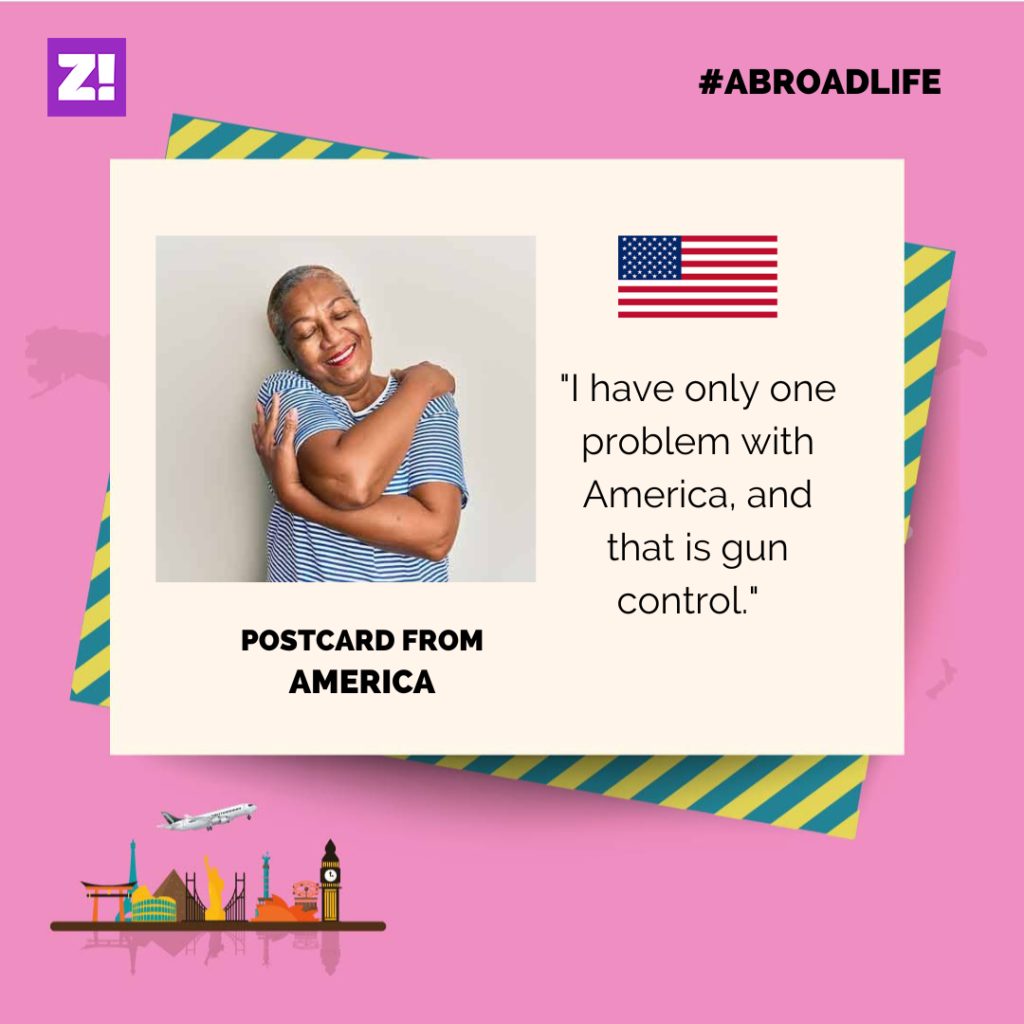
  • “I Have Only One Problem with America: Gun Control” — Abroad Life  

    The Nigerian experience is physical, emotional, and sometimes international. No one knows it better than our features on #TheAbroadLife, a series where we detail and explore Nigerian experiences while living abroad.


    This week’s subject on Abroad Life is a medical doctor who has lived in America for eight years. She says she’s fallen in love with everything about the country, except for one thing — the lack of gun control. 

    When did you decide to move abroad?

    Years before I finally made a move in 2001. Life was beginning to get unbearable. Imagine a medical doctor trained in Nigeria and a pharmacist trained in America not being able to make a good standard of living combined. Either I couldn’t get a good job or I did a job and wasn’t paid. I also had four kids and thus, had to look out for the future. I’m glad I finally got some help by leaving the country. 

    How did you manage to migrate with four kids?

    The way it happened, it was almost like we won the lottery. There’s a category of visa called H1-B. Sometimes in America when labour is low, they grant H1-B visas to immigrants to come in and work. After five years, you can regularise your visa and become an American citizen. 

    My husband was able to get this H1-B visa because a pharmaceutical company in the United States wanted to hire him. The company provided lawyers that helped us with the entire process. With that H1-B visa, the rest of the family could accompany him on an H4 visa. I couldn’t work on the H4 visa, but my kids could go to school. 

    In 2005, the company regularised his visa to permanent residency with a green card. Five years later, he became a full citizen of the United States. The kids and I were also able to regularise our visa into America after some years with a green card and got our full citizenship. 

    What was the US like?

    I will talk about one culture shock which embraces everything. What I noticed right from the plane going to America is that the white man likes to be his brother’s keeper. Everyone was so concerned for my well being because of the shock of seeing me with four kids— 

    Wait, can you tell us about your flight experience? 

    First, we missed a connecting flight. LMAO.

    We were supposed to be in the plane from France to Fort Myers, Florida. However the flight was cancelled due to severe weather conditions. We had to wait a couple of hours to catch the next one and boarded in a hotel for the night. They accommodated us so well. They gave us food and everything else that we needed while waiting. When we finally got on the plane, the kids were so exhausted that some of them sat on the floor. Every time an air hostess or even a passenger passed by, they always checked on us.

    And when you got to Florida?

    On our first night in Fort Myers, we boarded in a hotel, and I immediately met this lady that was so in love with my accent. She asked where we were from, how we got there and also introduced us to her church. It was that church family that helped us from time to time with meal coupons and made us comfortable when we moved into our new home. One lady even used her truck to help us move.

    Then during Christmas, they gave us free furniture and gifts for the children. That was heartwarming. I, thankfully, didn’t experience any form of racism.

    Nice! Have you had any encounters with a racist since you settled in?

    Let me say what I’ve observed. I will not say I’ve encountered racism. My kids came to this country and two of them are now medical doctors. Where is the racism in that? If you work hard in the United States of America, whatever you deserve would be given to you. Unlike Nigeria, where the more you work, the less profit or gain you’d see. The minorities here are the intellectuals. I live in my own fully paid house now in the U.S., something I was never able to do in Nigeria. 

    I won’t say there is or isn’t racism. But I can say that I’ve benefited from America, and thus, can’t really say that there is racism. 

    What else do you enjoy in the US apart from constant electricity?

    Well, a whole lot. Prices don’t skyrocket uncontrollably. Even if it goes up, the government is trying their best to bring it down. We breathe fresher air here. The quality of the healthcare system here is one million times better. This is because the government spends millions of dollars on research, medical equipment and training of medical staff. Hence, you can be at least 90% sure that you will be treated by capable doctors and not quacks. You can always do checkups here with the insurance you paid for.

    The only thing I’d say they’re yet to hack with their healthcare system is the high costs, and that’s because of the lack of regulation when it comes to medical insurance. Most of the medical insurance companies are owned by private shareholders, and they add so much profit to the prices of medical services, that it’s crazy to think about. Even with Medicare (the US national healthcare insurance scheme) you’re not assured of getting all your medical needs covered. 

    But if we’re talking about the quality of education and food, it’s definitely up to par and highly regulated. For instance, health and safety officials always check on the quality of food one eats at restaurants. Every skill here is certified, even down to hairdressing. And those certificates need to be on display. Here, you are held accountable for your actions. 

    I can go on and on. As long as you stay in your lane, you can live a qualitative life.

    How do you navigate tax?

    If you cut your coat according to your size here, you should be okay. Even though I am getting taxed, I know how much I earn and how much I’d be left with at the end of the day, and I live within that bracket. 

    Is there anything that’d make you leave? 

    I’d say it’s the issue of gun control. In America here, so far as you’re of legal age you can purchase a gun. This, for me, is bad. Guns can now get into the hands of people who shouldn’t have them. If they can come up with some legislation on who can own a gun, then everything about America is okay. 

    Have you ever experienced gun violence?

    I haven’t, but everyone is allowed to own guns here. There are pros to this, though. Thieves won’t be so eager to break into your house as the resident may most likely own a gun. However, it has caused so many store robberies that I’d like for it to stop. 

    Do you have plans to return to Nigeria?

    Yes, I’m looking to settle down in Nigeria after retirement. I’m just praying that the country would be better so that I can retire in peace. 

    Do you miss anything about Nigeria?

    Oh, I miss Nigerian food. Food like ukwa, ube, and even snails are sorely missed here. I also miss my hometown in Anambra too, but there’s no safety there. I wish that the country can be secure so that I can come back home. 

  • “Leaving Nigeria Helped Me Accept My Sexuality”-Abroad Life

    The Nigerian experience is physical, emotional, and sometimes international. No one knows it better than our features on #TheAbroadLife, a series where we detail and explore Nigerian experiences while living abroad.


    Today’s subject on Abroad Life is a 21-year-old woman who discovered she is pansexual after moving to the US. She talks about leaving Nigeria, leaving religion and the journey to discovering and accepting her sexuality. 

    What was growing up in Nigeria like for you?

    I grew up with my parents and three brothers. There isn’t a significant age gap between my siblings and me, so we’ve always been close. My parents are religious and so we did a lot of church growing up. This affected me in many ways, but the most significant was that I was hypersexualised. Church members, teachers and adults took everything I did out of context and reported to my parents. If I talked to a guy, even in primary school, my parents would find out, so I was scolded and monitored a lot. 

    Damn.

    When I started using a phone, my parents would search my phone at every opportunity. I got smarter and began deleting messages, but they would notice. I remember one time when a guy texted me, “Good morning, my darling sister,” and I got in trouble because my mum saw it and got angry because someone was calling me “darling”. 

    How did all of this affect you?

    I started to question a lot of things. When I finished secondary school, I decided I didn’t want to go to church anymore and told my mum. She gave me one month to figure out why I made that decision. When the one month was complete, she asked if I knew my reason for making the decision, and when I said I didn’t, she said, “As long as you’re under my roof, you will keep going to church.”

    When did you decide to move to the US?

     I was in SS 1 when I decided to take the SATs. Thankfully, I started the process early because I took it twice before I completed secondary school. In 2017, my admission was ready, and that was when I left. 

    Did you go alone? 

    My brothers and I moved to the US in the space of four years. We came here for school. I live in the northern part of the US, and they all live in the south. I like being away from them. I’ve been closely monitored all my life, so being away from them is a relief.

    I’m curious, was it easy for your parents to let you leave Nigeria to live in another country on your own?

    It was. It was easy for them to let me go because I got a full scholarship with accommodation, books, feeding and all that. My uncle lived about an hour from my school, so they concluded that I’d have someone to watch over me. 

    What was it like moving to the US?

    I used to come here for holidays a lot when I was a kid, so it wasn’t new. But this time, I was free. In my final year of secondary school, I joined Twitter and started unlearning and learning many things. I unlearnt my homophobia and became a feminist. Moving to the US gave me more freedom to be more open-minded. 

    Young black woman texting with her smart phone in urban background. ⬇ Video  by © javiindy Stock Footage #283475646

    What were some of the things that you explored?

    When I got to the US, I became very religious. I went to church three times a week. One day, I was sitting in church and I thought to myself, “Everything this pastor is saying is cool, but do I believe any of it? Do they align with my values?” My answer was no, and I just decided to stop going to church. 

    Just like that? 

    Yes. And since I’d stopped going to church, I was free to do the things that church was seemingly against. 

    What were those things? 

    Getting tattoos, piercings and exploring my sexuality. When I was younger, I struggled with my sexuality. I remember having dreams where I was with girls and praying the spirit of homosexuality away. Even in the US, before I stopped going to church, I realised I had a huge crush on a girl in my dorm. When it got to the point where I couldn’t hold back the feelings anymore, I blocked her. That’s how scared of I was of being queer. 

    The freedom I now had was amazing. But it was also very dangerous. 

    Dangerous?

    Yes. The way I approached exploring my sexuality was dangerous and unsafe. I was very shielded in my background, so freedom meant that I could do whatever I wanted. I didn’t have any community to guide me in the exploration of my sexuality, so I fell prey to a lot of weird and predatory people. I remember the first girl I was with. In that relationship, she made me do things that I would now consider as passing my boundaries, but there was no way I could tell that I was being taken advantage of. I was trying to be sexually liberated. 

    The messaging behind the concept of sexual liberation needs to be worked on because a lot of the time, it’s targeted at people in their late teens. These people need guidance. They need to take it slowly and understand themselves. But there’s a lot of pressure on them to try everything. That’s what I did. 

    After a while, I got into a safer community. At the end of 2018, I discovered that I am pansexual

    Are you openly pansexual?

    When I was in school, people knew. I don’t try to hide it except I’m in Nigeria or at my uncle’s place here. 

    How often are you at your uncle’s?

    I’m there every holiday. He can’t know because they’ll tell my parents. I even have to take out my piercings and wear long sleeves to cover my tattoos.

    Do your brothers know?

    They do. I was so excited to tell them. But my older brother thinks it’s because I’m now in America and woke that I decided to be pansexual. My twin brother and younger brother just said something like, “Okay, do you want us to clap for you”?

    Damn. Do you think you’ll ever tell your parents?

    I think my dad was on to me the last time I went to Nigeria. He kept asking me if I liked Bobrisky and supported what they did. We’d have arguments about the concept of homosexuality, and he’d tell me that everyone he knows that was queer when he was young is dead now. That they died of AIDS because they were gay. It is always so intense. One day, he called me to sit with him at 2 a.m. and told me that if I ever got caught with a woman, he’d disown me. 

    Oh, wow. What about your mum?

    She’s getting better. She’s going to therapy now. When I went to Nigeria last year, she apologised for being invasive and abusive to me when I was a child. We’re having better conversations now. I got out of a terrible relationship with a guy and was really sad and she was the only one I could talk to about it. She’d call me every day to ask how I was feeling. 

    That’s nice. Do you think you’ll ever tell her?

    The last time I saw her, I talked about supporting queer people and she said, “It’s only you that will support people like that o.” So, we’re not there yet. 

    What do you miss the most about Nigeria?

    Nothing. I can’t say the food because I can find Nigerian food here, and I can’t say family because my brothers are here. I don’t like being in Nigeria. Nigerians are a bit too aggressive. I’m soft; I cry easily. 

    What do you like about being in the US?

    Freedom from judgment. Here, I can be myself. I don’t have to edit bits of myself to fit into anybody’s book. Recently, when I graduated from university, my mum called me to thank me for not “disappointing” them after they trusted me to go abroad on my own. That’s probably because I graduated with a perfect 4.0 CGPA and got multiple scholarships. But would she still be proud of me if she found out I am pansexual or that I have tattoos and piercings?


    Want more Abroad Life? Check in every Friday at 9 A.M. (WAT) for a new episode. Until then, read every story of the series here.

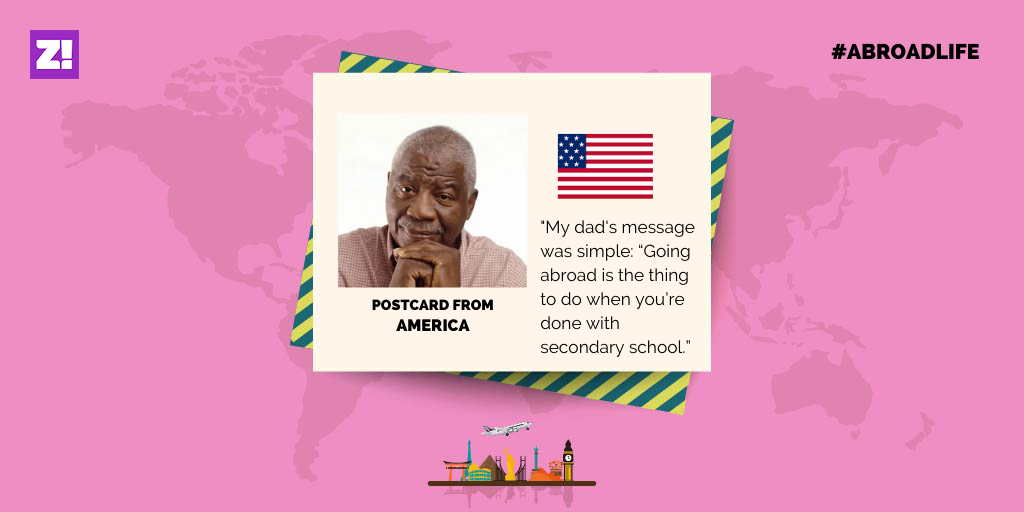
  • “Nigeria Destroyed My Expectations, But I Chose To Stay”- Abroad Life

    The Nigerian experience is physical, emotional, and sometimes international. No one knows it better than our features on #TheAbroadLife, a series where we detail and explore Nigerian experiences while living abroad.


    The subject of today’s Abroad Life went to the United States of America for school in 1979. He talks about leaving to get an education so that he could return for a better life, and meeting a completely different Nigeria when he returned in 1983. 

    When did you decide that you wanted to leave Nigeria?

    As a child, the message about leaving Nigeria was constantly ringing in my head.  My dad used to tell us stories of people that went abroad for university, came back and automatically got good jobs, cars and houses. His message was simple: “Going abroad is the thing to do when you’re done with secondary school.” 

    When did you eventually leave?

    1979. I finished secondary school in 1976. Shortly after, I got a job in the ministry of education as a teacher and then I crossed over to the ministry of information to work as a cleric officer. By 1978, I was already a level 4 officer earning ₦96 after tax. That money could take me to London and back comfortably. I was only 19. 

    Then in 1979, I met a man that changed my life forever. 

    Tell me about him. 

    I was working at a government catering restaurant in Ondo state at that time. I was young, energetic and hardworking, so I would always get to work super early — even before my resumption time. My job was to book people into the government guest house. 

    One morning, a man in his 50’s, let’s call him Mr G,  walked up to me and presented me with a piece of paper. There was a name written on it. Whatever the amount that the person had spent at the guest house, he would pay it. I just had to send him the cost.

    At that time, many people had outstanding debts, and I assumed that this would be a case like that, so I brought out my book, found the name and discovered he owed ₦1.50k. I told him that it would be better if he paid upfront, and he agreed. Our conversation about money brought up the subject of tipping and he told me about how he used to tip waiters in the US. 

    Immediately he mentioned the US, I said, “Sir, I want to go to university in the USA, but I don’t even have a passport”. 

    He looked at me, smiled and told me to meet him in Lagos in four days. 

    Wow.

    When I got to Lagos, he gave me a letter to deliver to a military officer in Bonny Camp. I got to Bonny Camp, but I didn’t find the office, so I took it back to him. He was furious. I needed to be smarter if I wanted to go to the US. 

    The next day, he followed me to Bonny Camp, and the office was right there. When we met the officer, he said, “This is my brother. He’s following me to the US in one week. Make sure his passport is ready.” In less than one week, my passport was ready. 

    Whoa. How did you get a US visa though?

    A few days after I got my passport, I was back at my job in Ondo state when Mr G came and asked me to give it to him. He said he was going to Lagos to get my American visa for me, and I didn’t have to follow him. 

    That sounds sketchy.

    That’s what I thought, but I didn’t have a choice. I gave him the passport. Some days later, he was back, but he didn’t have the visa. He said the embassy asked him to bring me along. 


    The deal was that he’d say I was an employee that he was sending to America for business. That’s why he thought he could get the visa in my absence.

    Did you follow him?

    Yes I did. It was my first time at an embassy. As we approached the end of the queue, he showed me the officer that requested my presence. He’d hinged all his hopes on the probability that it would be that same person that attended to him so they could just pick up where they left off. 

    We got a different person. 

    Damn.

    Mr G was so visibly frustrated. He was opening his briefcase to bring out the documents he’d need for the process when two American passports fell out. 

    Oh God…

    The interviewer was puzzled. Why did a Nigerian have two American passports in his briefcase? When he asked to look at the passports, I was terribly scared. But then I saw a smile on the interviewer’s face when he opened them up, and that got me a bit more relaxed. They were Mr G’s children’s passports. They were little kids. The interviewer was deep in his feelings, so the only question he asked was, “Do you want to travel with this boy?”

    The answer was yes, and my visa was approved. 

    That’s mind blowing. 

    My flight from Nigeria to the USA took 27 hours and three flights. It was ₦280. I took ₦700 as cash to the US and changed it to $1000. My older brother was already in school in San Francisco, so I joined him there. We went to the same university. 

    Damn. What was the US like?

    It was really good. School was good, but I also made some good money there. I got my first job as a busboy. From busboy, I became a dishwasher, then a prep cook and then a chef, all in that same restaurant. By the time I was leaving the US, I was earning $10/hour and working at least 40 hours a week. 

    I was the restaurant’s top chef across its 18 branches in San Francisco, so, many times, I had to work extra hours because someone always needed me. 

    I had my own car, apartment, and everything. It was really good. 

    San Francisco 1979-07 007 | A balanced diet . . .
    San Francisco, 1979

    When did you leave?

    1983. Immediately after university. 

    Why?

    For the same reason I went: I knew a good life was waiting for me in Nigeria. When the restaurant owner found out I was leaving, he tried to beg me to stay. I told him it wasn’t about the money, but about the fact that I was going to get an amazing job as a bank manager in Nigeria. The government would give me a car and I would get a free house. 

    He told me that I was going to get my job back if I ever decided to come back. I laughed and said I wasn’t going to go back. 

    What was Nigeria like?

    I got back in October 1983. In December 1983, Buhari overthrew the civilian government. That was when the trouble started. I remember looking for bank jobs with my NYSC and getting the same response: “There are no more jobs.”  

    1983 Coup: Dasuki facilitated putsch that brought Buhari to power - Jokolo  | Premium Times Nigeria
    General Muhammadu Buhari, 1983

    Why didn’t you go back to the USA?

    I had met my wife in NYSC camp, and we were in a serious relationship. My US visa had also expired, so we both would have needed to apply for visas. It was a much easier choice to go to the UK, get a nice job in London and settle there. As a Nigerian, you didn’t need a visa to go to the UK then. 

    Is that what you did?

    Nope. My wife had never travelled, so we just decided to stay. We thought about starting a family and decided it would be better to start ours in Nigeria. We thought things were going to get better. I started a janitorial business that failed, and did some other stuff along the way including becoming a general manager somewhere. The economy kept getting worse every day until it became what it has become today. 

    So you’ve been in Nigeria ever since?

    I’ve travelled a lot since I got back. My job as a health and safety officer makes me travel around Europe and go to Canada a lot. I haven’t been to the US since I left though. 

    Why?

    I just don’t want to go there.

    Have you met Mr G since you got back to Nigeria? 

    I didn’t want to go back looking for him when things were not good. I wanted him to see that I’d made it thanks to him. So, in 1992 when things had settled for me and I was doing better in life, I bought a Mercedes Benz and thought, “Now would be a good time to visit him.”

    He was old when I saw him, so I had to reintroduce myself. When he heard my name, he screamed. He was angry at me for coming back to Nigeria. He couldn’t stop saying, “What are you doing back at home? The country is destroyed. Why are you here?”

    So I reminded him that on the day he handed over my passport to my parents in 1979, he, like my father, also advised me in front of them to get an education and come back home to get a good life. I told him that the reason I’d not seen him for the nine years that I’d been around was that I was waiting for things to become better, so I could impress him. 

    I asked about his two children and he told me that just the day before I got there, they’d left the country with their mother to live in the US permanently. I would have met them if I came a day earlier. 

    I haven’t seen him since then.

    Do you regret staying in Nigeria?

    I probably would have had a better quality of life somewhere else, but I don’t think I would have had the quality of family life and family time I have in Nigeria. I was able to raise my children very well and build a lovely family. 

    I don’t regret staying.


    Want more Abroad Life? Check in every Friday at 9 A.M. (WAT) for a new episode. Until then, read every story of the series here.

  • “I Don’t Have To Be In Nigeria, But I Choose To”- Ndo’s Abroad Life

    The Nigerian experience is physical, emotional, and sometimes international. No one knows it better than our features on #TheAbroadLife, a series where we detail and explore Nigerian experiences while living abroad.


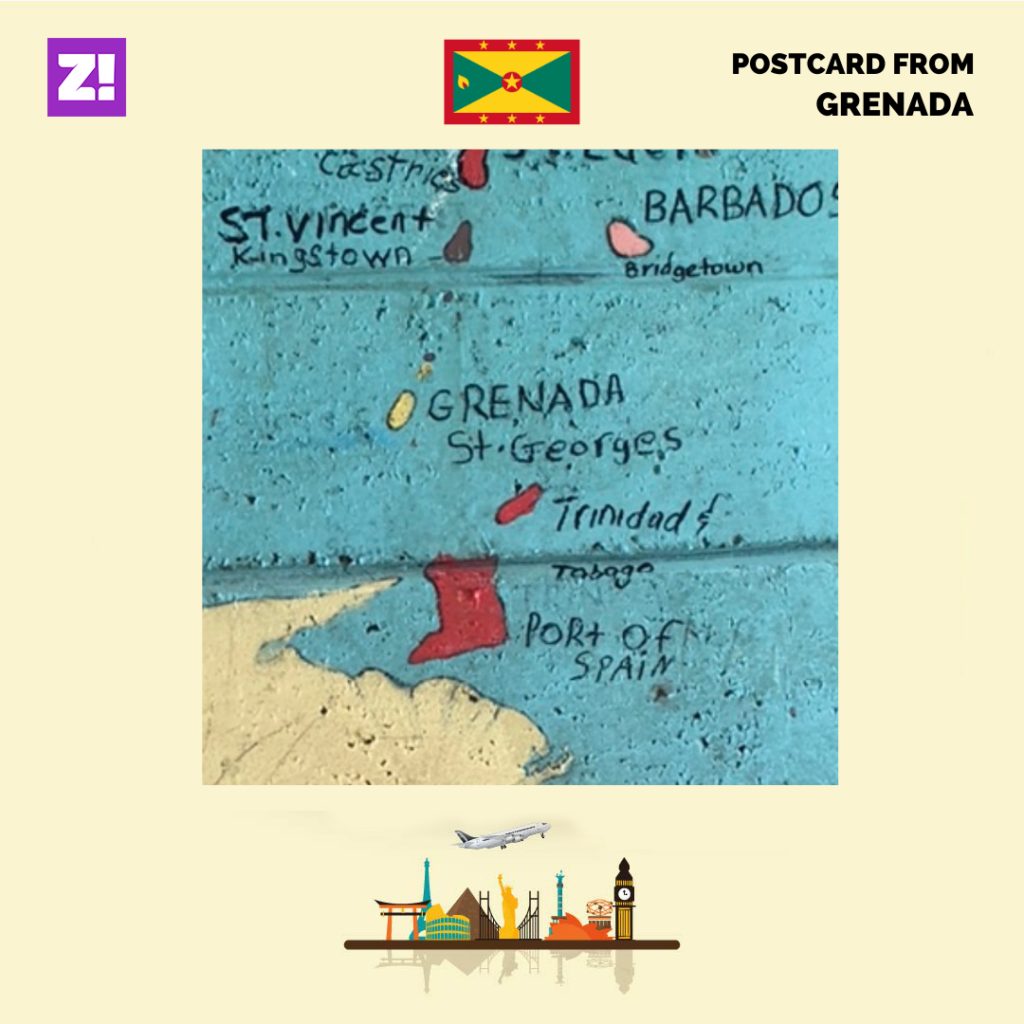
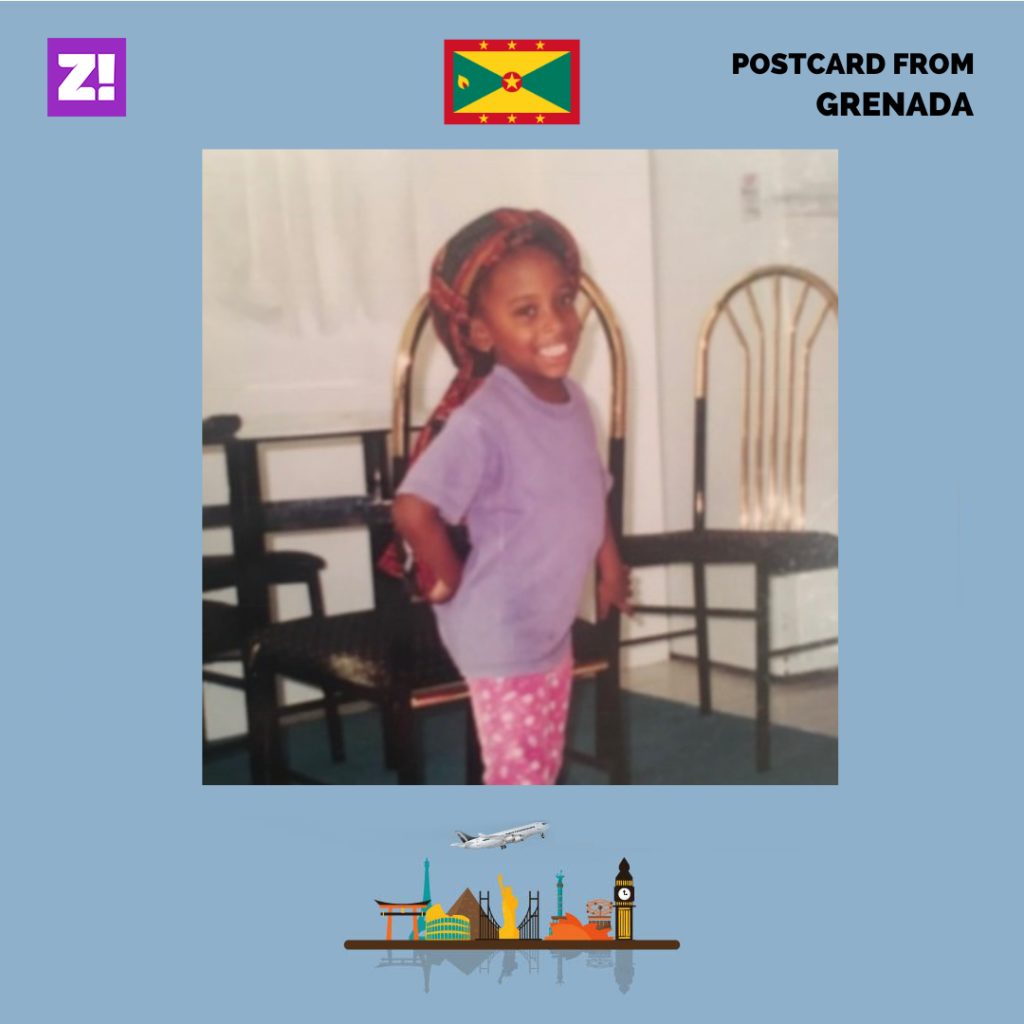
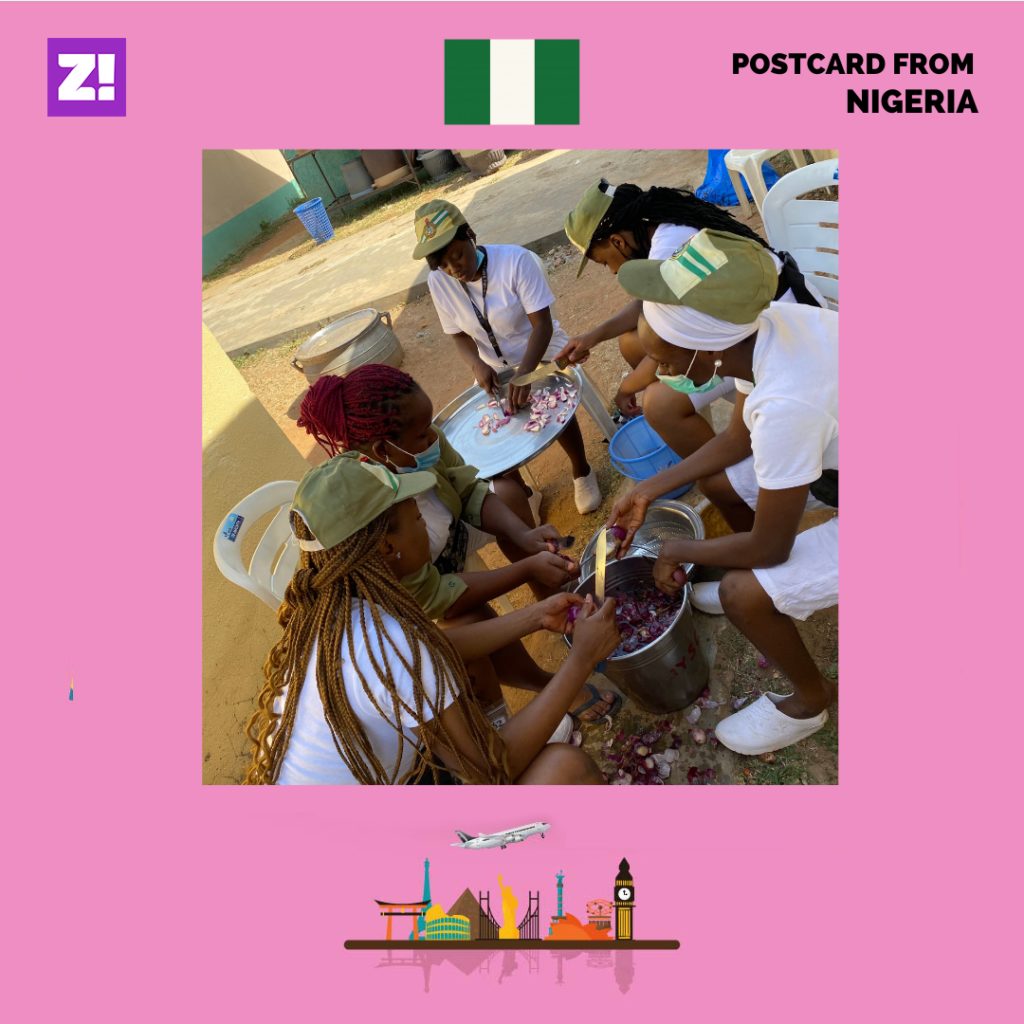
    Today’s subject on Abroad Life was born in Grenada and then moved to the USA when she was five years old. She talks about what it’s like living with triple citizenship and why she has decided to live in Nigeria and do NYSC.

    So where were you born?

    I was born in St George’s, Grenada, which is in the Caribbean. My parents moved from Nigeria to Grenada in 1997 after they finished studying medicine at the University of Nigeria, Nsukka. I have three sisters and one half brother. I’m the first born and I was the only one that was born in the Caribbean. The rest were born in the US.

    How long were you in the Carribean for?

    I stayed in the Caribbean for five years. We shuffled between Grenada and Trinidad because my parents were teaching in one of the medical schools in Trinidad. My mum would go to the US to have my younger siblings and then come back to Grenada, but we finally moved to America in 2003 after my mom gave birth to the third child. 

    So my dad, my younger sister joined her and the baby in Minnesota. We stayed for a few months, then moved to Pennsylvania for a couple of years then moved to New Jersey for six years and after that, we’ve been in Virginia. 

    Do you know why you fully moved to the US?

    The US was always the plan. They moved to the Carribean first just to get out of Nigeria. I’m not sure about the specific countries, but many countries in the Carribean were and are still visa free for Nigerians. So while they were stacking up for the US, they moved to Grenada. It was also a great place for them to do their residency and medical training. I like to call it an interlude. 

    Do you have any memories from Grenada? 

    We have a lot of photo albums. I remember that it was always very fun. My parents’ family and friends stayed with us both in Grenada and Trinidad, so I had a lot of love around me. Being surrounded by family was beautiful. My sister and I were always together and with our parents.  I value those moments because they were the most serene moments of our lives. 

    Then you started moving around. . .

    Yes. That’s because of my parents’ profession. For residency and fellowship, you have to apply to different places. Apparently, to become a top doctor you have to work in different places. 

    We weren’t always with our parents, but we had to make sacrifices so they could get the career they wanted.

    Did it affect you in any way? 

    Well, because we had to move a lot, I was always the new girl starting over. I got bullied. My name isn’t easy to pronounce except you knew the Nigerian pronunciation, so students and teachers were deliberately and mistakenly butchering my name.  I became very shy and started keeping to myself because I didn’t want any trouble. 

    There’s only so much you can tell your African parents, and there’s only so much they can do for you. Many times, they’d tell me to get over it. It’s not like they didn’t care. It was just what it was. I had to learn to survive and adapt. 
    Sorry you had to go through all of that. Did any of this affect your relationship with your parents?

    I’ve lived with my mom longer than I’ve lived with my dad, but I wouldn’t say I’m closer to her because of that. Maybe the thing that makes us closer is that we’re both women. I have a pretty balanced relationship with my parents. 

    That’s nice. So how did citizenship happen?

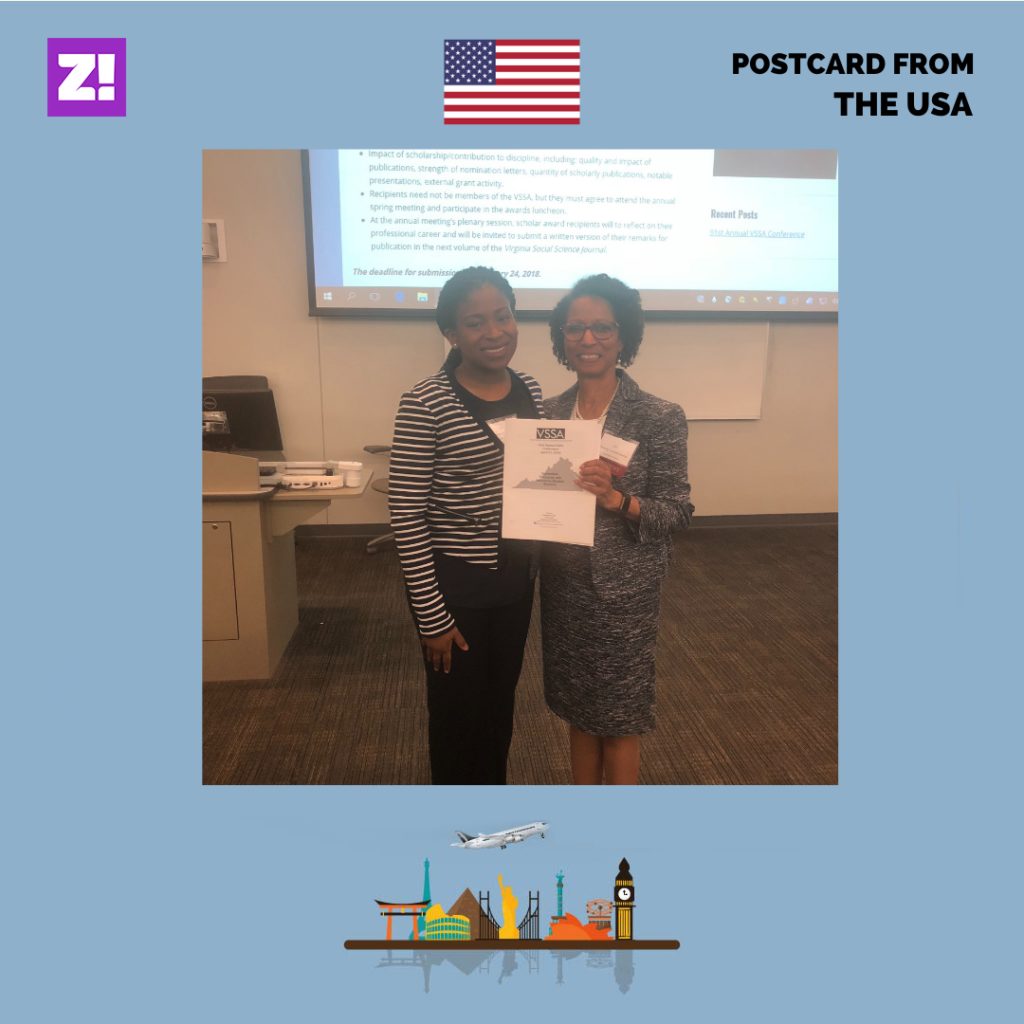
    I got it through my mum. If you are below 18 and your parents get citizenship, you are automatically a citizen. My mother went for the test and got it when I was 17. If I was already 18, I would have had to go through the same process she went through. I’m glad I didn’t have to. 

    Have you been back to Grenada since you left?

    No. I’ve been coming to Nigeria though. 

    How often?

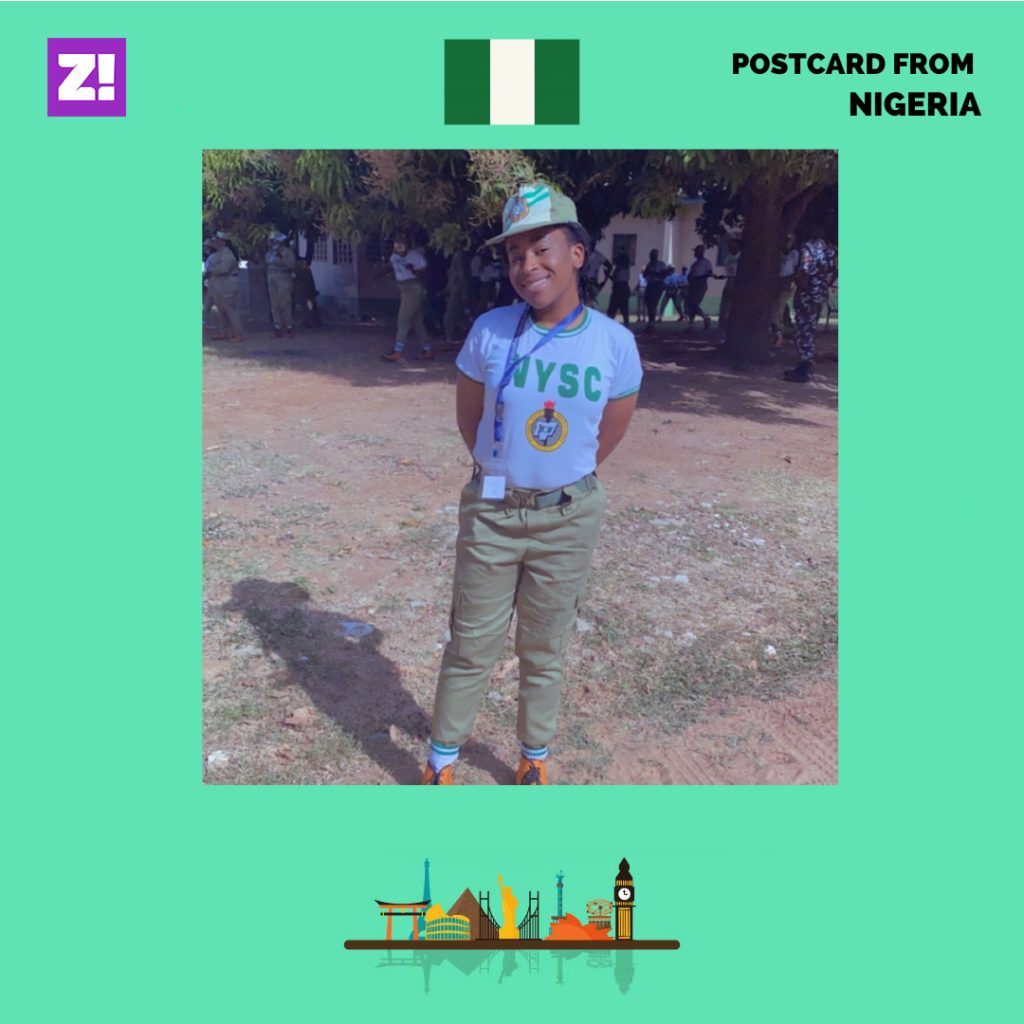
    The first time I visited was in 1998. But I’ve visited Nigeria every year since 2015. In 2019, I came three times, and now I’m here for NYSC. 

    Personal choice or…?

    Yes. I don’t think I had any expectations of Nigeria, but as I started to learn about the mannerisms of Nigerians, the danger and the history of the country, I started to feel more connected. Most people like me who have the option of leaving Nigeria would leave permanently, but I kept coming back, and I think it’s because I wanted to stay close to my roots. I’m not Caribbean by blood, it’s just by nationality. I want to be more in tune with Nigeria despite how it has been and how it is right now. 


    Those visits to Nigeria have made me more appreciative of what Nigeria stands for. 

    Did your visits change anything about you?

    First things first, I’ve definitely become more street smart. I’ve also learnt so much more about my family. Since I started coming back, I’ve been trying to incorporate Nigeria into my education. I did a couple of projects in the University of Virginia just to learn more about the people and appreciate what I have in the US. Right now, I’m doing NYSC even though I don’t have to, just so I can at least relate with a holistic Nigerian experience. 

    Or you want to run for president. . .

    Haha. . . not necessarily. I just want to experience Nigeria like a Nigerian. My dad wanted me to do NYSC, but he never persuaded or forced me. I finished my masters in September and decided I would do NYSC and figure out where next I want to go in life.

    Has that become clearer? 

    I feel like things are evolving, but I may want to stay here after service as an opportunity to learn more about Nigeria with a business and humanitarian mindset. 

    That’s great. Let’s divert a bit and talk about NYSC camp.

    Haha… In a nutshell, it was a rewarding experience. It taught me discipline, humility and I saw things in more “Nigerian ways” than I’d ever seen. 

    But I won’t lie. It was super stressful. The strict soldiers, staying in the sun for hours, waking up and going to bed early and barely having any time for yourself, getting in trouble with the police for not obeying social distancing, kneeling down for the smallest things, and basically complying with all these rules, ah! I’m not used to any of that, but I learnt to live outside my comfort zone. That’s one of the reasons I’m here anyways.

    You got in trouble with the police in camp? 

    Yes. That day, I had given someone my AirPods and wanted to get it back. I went to meet him in the kitchen (he was on kitchen duty) to collect it. I just wanted to collect my thing and go, but he held on to it and we started gisting. There was no chair, so I sat on his knee and in like two seconds, everyone started acting really weird like they’d seen a ghost. The head of police on camp appeared out of nowhere and whisked us away to his station. 

    When we got there, he started trying to scare us with camp court and punishments, talking about how we were breaking COVID-19 protocols. He even asked us what punishments we would like, and I was like “Sir, please let us run laps around the field.”

    Then one of my roommates came to beg for us, saying stuff like, “Sir, she’s oyinbo; she doesn’t know all these things. Just leave her.”

    After some time, he let us go and made us promise never to do anything like that again. 

    Considering the fact that some people got into camp court for hugging, I consider myself lucky.

    LMAO. After all this time in Nigeria, what’s one thing you can’t wrap your head around? 

    The tribalism. One tribe is always tagging the other as the problem. There’s just always division. We call ourselves Nigerians but I don’t understand why we are always against each other. 

    When Nigeria turned 60, the president gave a speech that encouraged peace and unity. Then EndSARS  happened, and it took him a long time to respond. How can you say there should be peace when even you can’t be a peace agent? There’s just so much division. 

    I feel you. What nationality do you identify with?

    I either call myself a Nigerian or a Nigerian-Grenadian. I don’t call myself American unless I’m supposed to, like maybe on a school application or when I’m in America. I don’t call myself just Caribbean because I’m not Caribbean by blood, so it’s either Nigerian or Nigerian-Grenadian. 

    You must be hot cake in the “marriage market”.

    I’m probably staying in Nigeria for a while, but entries are not open for people who want to marry and japa.  Many people will leave you once they get the visa. 

    Is this a fear you constantly have?

    No, because I’m very careful with the people I surround myself with. That said, I wouldn’t oppose marrying someone that was born and raised in Nigeria, but it goes way beyond that and unto character, ambition and future goals. I take everything into detail when considering a friendship or romantic relationship. People in my shoes need to set boundaries early on. You have to be careful because some people disguise themselves as genuine, and then you later find out that you were played. You just have to be careful.

    I feel you.

    Want more Abroad Life? Check in every Friday at 9 A.M. (WAT) for a new episode. Until then, read every story of the series here.

  • If All Else Fails I’ll Marry A White Woman So I Never Return To Naija – David’s Abroad Life

    The Nigerian experience is physical, emotional, and sometimes international. No one knows it better than our features on #TheAbroadLife, a series where we detail and explore Nigerian experiences while living abroad.


    The subject of today’s Abroad Life is a 22-year-old man who moved to the United States four years ago for school. He talks about how he went from being homesick, to never wanting to return to Nigeria, his plan to marry a white woman if all else fails and how he would’ve landed in Unilag after having sex in a public park.

    First things first, what are you doing in the United States?

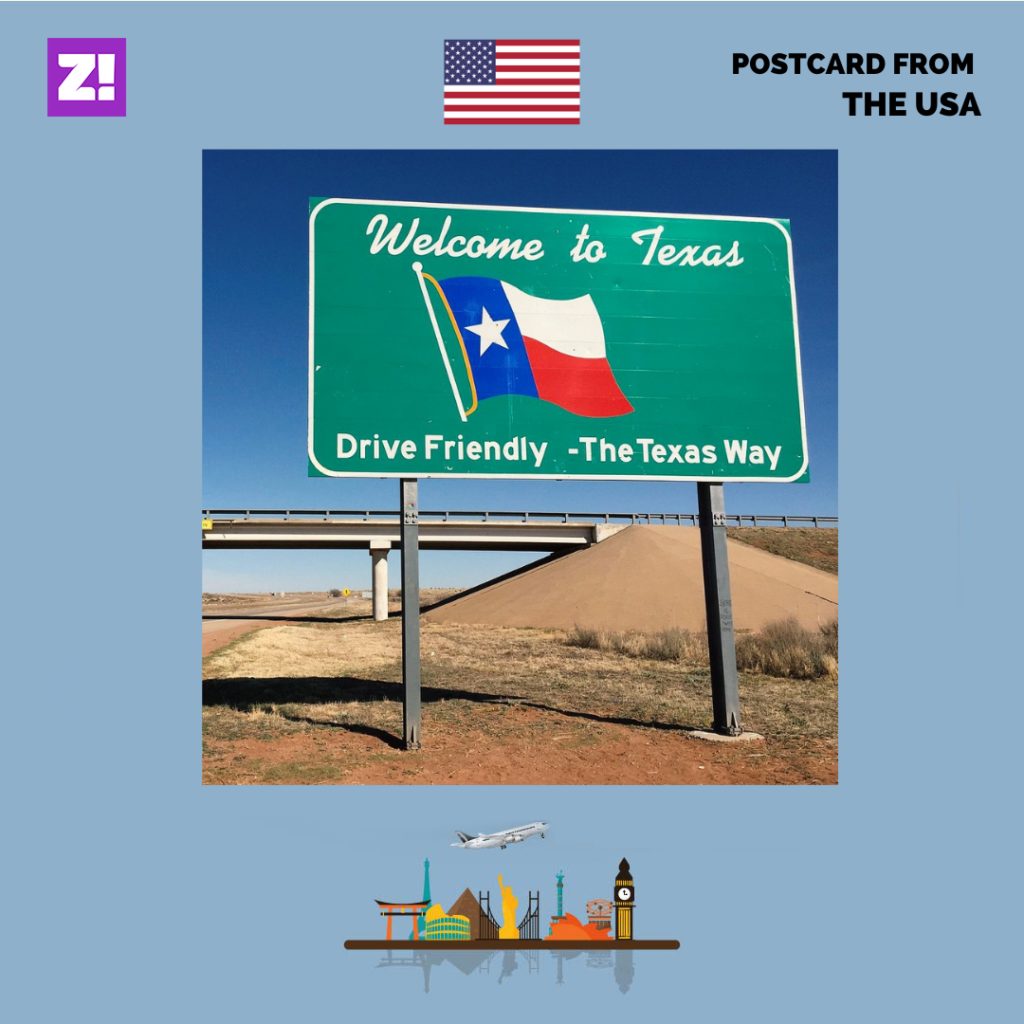
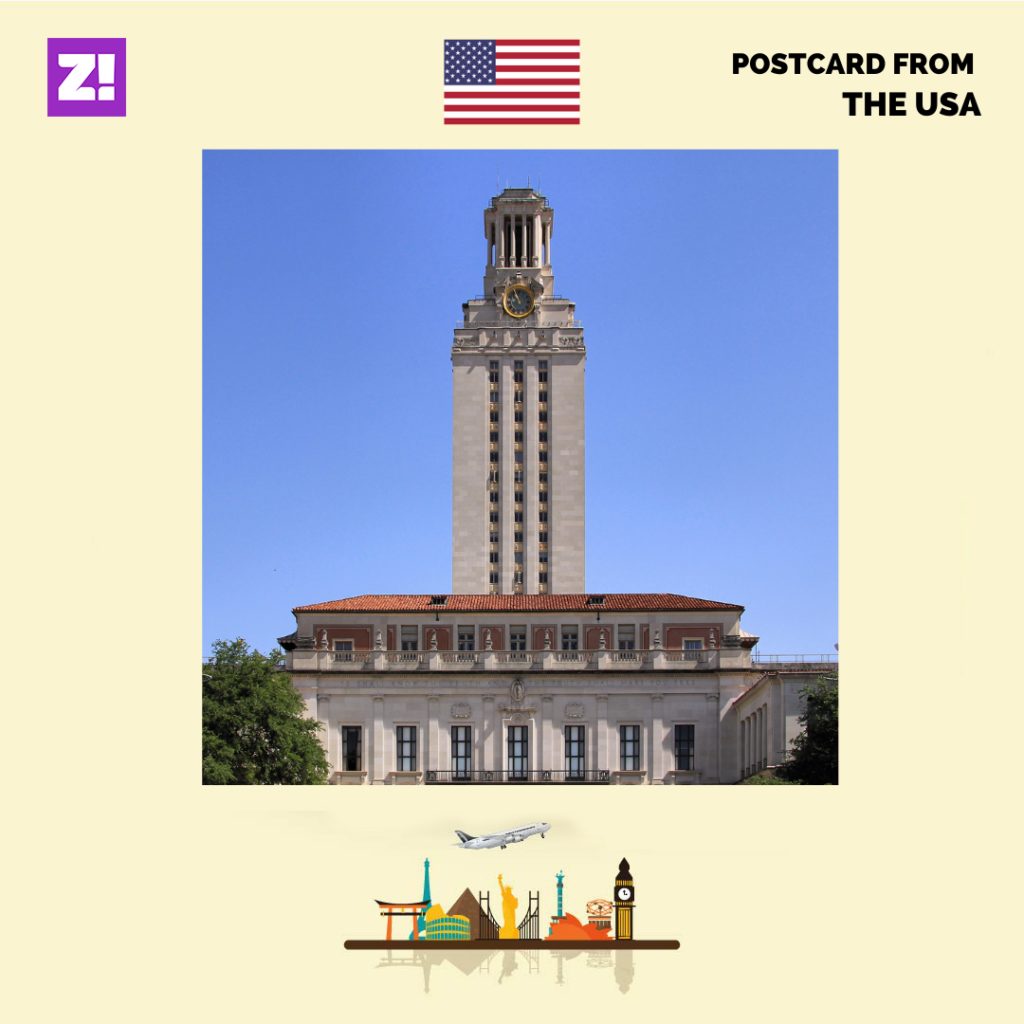
    I came to Texas to  study about five years ago. I graduated last year, and now I work at an insurance company. I’m trying to gain some experience, some money, and enjoy my life. I wanted to come back to Nigeria, but I’ve decided against that. 

    Why?

    Don’t get me wrong, I’ll come to visit, but Nigeria is a mess right now.

    Why do you think Nigeria is a mess?

    We see what is going on, the country is a cruise. There aren’t a lot of opportunities for young people to find well paying jobs. I know that it’s a struggle. I want to work and see results. I feel like a lot of people here also complain about jobs not valuing them, but I’m pretty sure it’s better than in Nigeria. If you genuinely put in the work, you’ll see results. I can’t say the same about Nigeria. 

    At what point did you know you didn’t want to come back to Nigeria?

    2018. My first year here was really tough for me because I was really far away from my family. I got homesick a whole lot but I met a lot of new people, and I started feeling at home, so I  adapted.

     I went back to Nigeria in 2018, and that’s when I realised I couldn’t come back. I spoke with my friends about their experiences and they weren’t very nice. I realised I cannot come back and suffer. 

    The picture I have of Texas is one where everyone is wearing cowboy hearts and have smoking pipes. The roads are dusty, everyone moves around with horses. Am I correct?

    No you’re not correct. Texas is really big. Almost as big as Nigeria. There are some parts where you get the countryside vibes like you describe, but most of Texas is advanced, just like the rest of the US.  

    There’s a lot of racism. They’ll smile with you and all but they can kill you at your back. I haven’t had any wild experiences like getting attacked or something, but I just know it. I see the way people act. Many white people don’t like black people. 

    Do you have any white friends?

    When I was in college, my group of friends was diverse, we had people from everywhere like Africa and Argentina, Colombia and even France. Naturally, there weren’t a lot of black people in my school so my group of friends had to be diverse. It’s always nice experiencing different cultures and how they live their lives.  

    What do Nigerians need to know about coming to get an education in the US?

    There are schools and programs here that will pay you to go to school. I feel like enough people don’t know about this and it’s really annoying to me. All people need to do is some research and you’ll find that there’s so much opportunity here. For some schools and programs, you might not even pay anything, but they’ll pay you. After graduation you can work up to three years here without a work permit, so that’s your time to prove yourself to a company to show that you can bring them value. If the company sees that you add value to them regardless of where you’re from, and you have a good work ethic, they’ll apply for you to stay. Many people don’t know that, so they miss opportunities like that.

    So what’s the dating scene like?

    I’m not rushing into that. I want to secure the bag first. A lot of people have rushed into dating and marriage and they realize that they married someone crazy, and everything turns on its head. I want to be happy with the person I settle with. I think I should mention though, that if any of my plans to solidify my stay here don’t work, I can just decide to marry an American woman. It’s like Plan E. If none of the plans work, I’ll just go back to Nigeria. I’m kuku from there. Maybe our future leaders will have made it better. 

    So you’re not even seeing anyone?

    Oh I have been with a couple of women here. It’s just never been serious. I noticed white girls like white guys. But African American and Mexican babes? God, they love me, and I love them too. God, University was wild. 

    What’s the wildest experience you had in University?

    It was just a lot of those house parties that you see in movies. I loved it. Partying is really huge here. But an experience I can never forget is when one night, me and this babe were fucking in car, in a public park and the police pulled up. The thing is, the park was closed and nobody was meant to be there. So that’s one crime. Another was apparently indecent exposure, because what if some kids also decided to come to the park? I could have been registered as a sex offender.

    The cop came over, told me to wear my shorts and move to the front seat, and then asked for our ID’s. At that point, I could already see myself in Murtala Mohammed Airport, and in UNILAG. 

    She ran our ID’s in her car and then came back and asked us why we were doing that in a public place. We told her we just got caught up and then she said “Next time, just find a hotel”. 

    I pray for her whenever I remember the incident because if she wanted to be wicked, she could have proceeded to land us in trouble. Anyways, I went back home that night to reflect on my life. I asked myself “Is this why my parents sent me to school?”

    As a black person living in the US, what was the atmosphere like, when George Floyd was killed?

    The George Floyd time was crazy.  I felt angry and worried because it could’ve been me. But I didn’t protest because some of the protests turned violent, and I didn’t come here to die. The police were also arresting a lot of protesters and as a foreigner, the repercussions would have been worse for me if I got arrested. 

    I hear of a lot of natural disasters in Texas. Ever experienced one?

    As far as natural disasters and shootings go, I’ve never directly experienced any of it. Maybe I’m lucky, maybe I’m blessed. The koko is,  I’m alive and looking forward to the next day. 

    Want more Abroad Life? Check in every Friday at 9 A.M. (WAT) for a new episode. Until then, read every story of the series here.

  • A Story About Luck And Chance: Aly’s Abroad Life

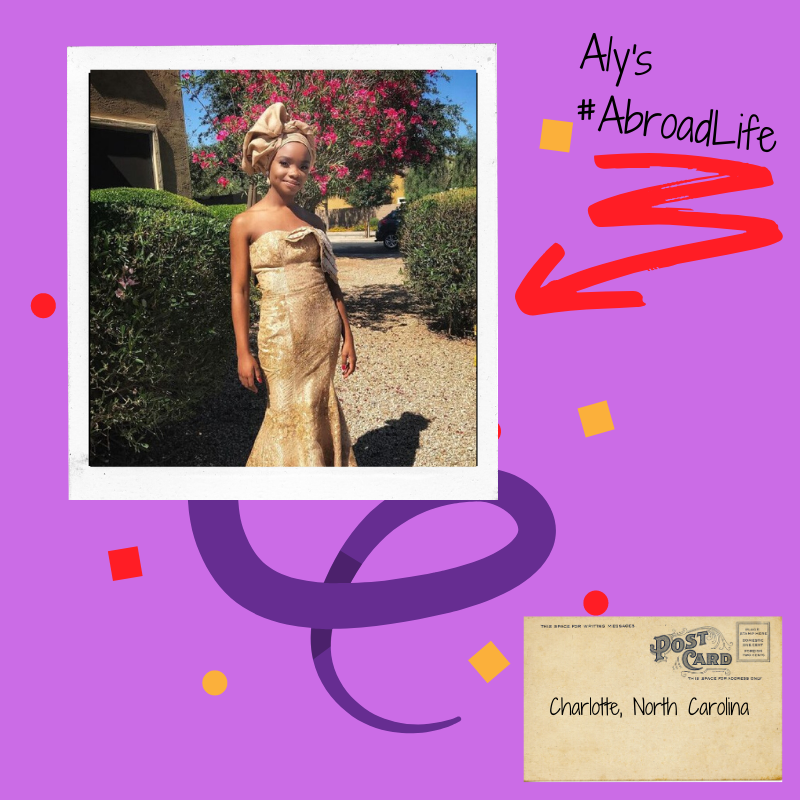
    Today’s Abroad Life is about Alafia Olutimehin (Aly), a 24-year-old consultant living in America. She went to uni in North Carolina with the belief she’d return to Lagos to work after school. Nigeria changed, she changed and one lunch granted her access to working in corporate America. Here’s how it happened:  

    When did you move to America?

    I moved here seven years ago in the summer of 2012 for undergrad. Before then, I lived in Lagos. When I finished undergrad, I got admission into grad school and started working afterwards. I’ve been working for about two and a half years in America. 

    Yooo. Slow down. In seven years, you went from being a student to being a member of the working class in a foreign country? 

    Hahaha. I know, it’s ridiculous how quick time flies. I can’t believe it’s been seven years already!

    So was this always the plan? Leave Nigeria for America, start with school and then go on to get a job?

    When I was leaving, I definitely didn’t think or know I was going to stay long term. I was 17 when I moved and in my head, I was going to return to Nigeria. But Nigeria just kept breaking my heart day by day. Midway through undergrad, I started to ask myself, “Where am I really going back to?” I realised that I definitely wanted to work in America where the job market seemed very promising. So I started looking for internships here. By the time I graduated, I had made up my mind about not moving back. I was like, “It’s not me and them, I’m not doing.” And as each day goes by, I’m less likely to move back home. Not until I have the option of coming back when I want to. 

    I see you sis. That’s like the plan of every other lazy Nigerian yoot living in Nigeria or that has gone abroad. The Nigerian dream is to japa. What was it like leaving for America at such a young age?

    I was excited to leave home. It didn’t dawn on me until a semester after that I was in a fucking different country. I didn’t realise what I was getting into. After my first semester, I went back home for the Christmas break and I was around for about three weeks.  When I was returning, I was like hay, I’m going back to the cold. 

    Other than just wanting to leave, the move was easy for me because my sister was an alumnus. So I didn’t really have the international student experience at my school, a small private school in North Carolina — I had the answers to all my questions through my sister. 

    It however got difficult when I realised how alone I still was. My school was also not very diverse. 

    Ooh. So like no fellow Nigerians?  Africans? Black people?

    I was actually the only international student from Nigeria in my school. From Africa, we were like five or six. The larger population of international students were from Asia —  about 200 of them. I think there were 5% black students across the whole school out of about 5000 students. My first year at the school marked 50 years since since the school got integrated. Which is wild considering these numbers. 

    So was racism an issue?

    It’s crazy but before I moved to America, I was very ignorant about racial relations in America. I was one of those people who thought racism was just a thing in people’s heads. But going to school in the south helped me to see differently because I also became a minority.  I thought I was an international student from Nigeria, but when people saw me, they saw that black student in their class. There were occasional stupid remarks; the microaggression you had to deal with every now and then, nothing major. I had a good experience there.

    Do you still live in North Carolina?

    Yes, but in Charlotte which is a bigger city. It is a lot more diverse than uni. 

    So you applied for internships and got them when you were in uni. How did that even happen? Tell us your secrets please. 

    So interesting story: I wasn’t into accounting or anything related when I was in school. When I moved here for undergrad, I got a very random email from a random woman from the business school saying, “Hey, if you want to learn about the different majors we have, I’d like to get lunch with you and talk.” I was like NOPE, thank you, I’m good please. The plan was to major in chemistry or ECON. But she persisted, so I went to lunch with her. She told me about the business school and the different majors. From there, I met the company that I currently work for. A bunch of different interactions encouraged me to try out accounting. 

    So in my sophomore year, I took accounting and I fell in love with it. From there, I got an internship with the company I work for now. I got another internship for the summer, another internship for the winter… and then after grad school, they gave me a full time offer. 

    I’m just wondering how this story would’ve been different if you never responded to that email, or ignored that woman’s persistence. 

    I actually always wonder about this. Because I’ve realised that my experience is very different from the experiences of several international students. If I had studied ECON, I’d probably be back in Lagos. It would have been difficult to find jobs that would be willing to help me figure out the immigration process especially with the current process and given what’s happening now with the current president. It’s my company that’s helping me with the immigration process. I think it was a combination of luck and responding to the email from that woman.

    What’s work for you?

    I work in consulting. When I started, work was scary because I didn’t know what I was doing, I felt like I was messing everything up. But I’m learning and gaining new experiences everyday. The coolest thing is looking back at my projects and seeing how much I’ve grown. I’ve been lucky to have a good mix of local and international projects. I like my coworkers and It’s a good working environment. They’re compensating properly, but they could really step it up. Hahaha. 

    I know you said that it’s very very unlikely that you’ll move back to Lagos, but I’m just wondering is there something that can provoke you to want to move back? 

    The cold is so uncomfortable. It’s currently got very cold. Thankfully, my current project is pretty flexible, so I can work from home. I only need to go in when I absolutely need to. If you see me outside once it reaches 50°F, then something must be wrong. I really don’t like it. Seasonal depression is real.

    Secondly, no matter how comfortable life here is — I mean, I’m not dealing with the incompetence of Nigeria all the time —  it’s not home. Your entire life in a different country sometimes feels like you’re not your complete self: You have to adapt to the environment that you’re in. I have to adapt to be the best version of Aly that can work in corporate America. When I’m working with my coworkers, I can’t talk the way I’m talking right now. 

    I really look forward to being back home every year, even though I know that I’ll complain two weeks in about the traffic in Lagos. But I know that in Lagos, there is no filter. 

    That makes me wonder about the Nigerian community in Charlotte.

    You know how Nigerians are everywhere? Yeah, they are here, but very few, so the Nigerian community is almost nonexistent. It’s not prominent in the way it is in Atlanta and Houston where you can basically build your life around other Nigerians. We don’t have this thriving big community. The only time I’ve seen a lot of Nigerians at once was when I went to Redeemed church. 

    So you want to eat Jollof rice or pounded yam now, where do you go? 

    Mehn, I’m suffering in this city. Anytime I’m in DC, Houston,  that’s when I get to eat Nigerian food. I mean there are a few places here, but they’re not that good. The other alternative is to go to the store, get my ingredients and cook for myself. I’m really suffering. 

    So how do you cope in Charlotte? No good Jollof rice lurking in the nearest restaurant; no community; December when you’ll return to Traffic land is still far away. How do you have fun?

    When I want fun, or community or food — if I can afford to, I park my load and I’m off to DC or Houston. Charlotte is a good city if you’re working in finance. It’s a good career city. It’s not very expensive. You can live very comfortably here. But it’s not the place you’re coming to for excitement except you’re white. 

    Honestly sha, I am tired of having to buy a ticket anytime I want to have a good time. 

    Are you open to moving?

    I’m very open to moving elsewhere. I’m still in my 20s, I should enjoy myself a little. 

    Speaking of moving, when you first decided to stay back in America, what were your parent’s thoughts? I mean you were pretty young.

    My parents don’t force down their opinions on me or my siblings. Initially, they wanted me to work in America for a couple of years and then return. But seeing how Nigeria is going,  they are less likely to push for that. In fact, If I say I’m coming back to Nigeria today, they’ll come and check if I’m okay. 

    Hahaha. Hilarious, but true. The life of the average Nigerian girl is quite linear in the eyes of their parents: finish uni, do NYSC, get married, have kids. Are there any expectations from your parents?

    Definitely not my parents. If they’re thinking about it, then they are not telling me. Maybe family members who joke about the fact that they were married around my age. Remember that Redeemed church I said I went to?

    Yeah?

    I met a Nigerian woman who considered all my accomplishments and said the next step was marriage. Seriously?

    Nigerians Eh. Smh.

    My parents are pretty conservative and my family is pretty traditional, but I don’t get a lot of that. Maybe it’s because I have older unmarried cousins they’re still bothering, so my time has not come yet. And I’m grateful for that. Please I have not enjoyed my life yet. So I’m not settling down soon. 

    Dating scene in Charlotte?

    Nonexistent for me tbh. Tears. 

    What’s your advice for Nigerians in American schools right now, or about to start?

    Pick a field/major that have companies filing for their international employees. Like finance or accounting. It’s key because if you don’t, staying back in America would likely not work out. You’re allowed to stay only a year after your degree and the only way to stay in America is through employment. 

    What’s the future like for you?

    I think I’m definitely going to be here for the next couple of years. When I get my green card, which is soon, thanks to my company, I can be pretty flexible with where I want to live. So I’m not leaving until I get my green card and even then, I still need to maintain residency in America for a bit. And man, I need a second passport in my life. The Nigerian passport will disgrace you. 

    AH LMAO. What’s the worst thing that has happened to you because you have the Nigerian passport? 

    I had to renew my passport in the embassy recently, and let me just tell you; all of them are mad. First they were out of booklets. Booklets o. As if it’s natural resources that are scarce Next thing, the printer was not working and they were calling Abuja. And I was like what the hell is Abuja supposed to do? I’m tired of the disrespect. 

    But that’s not even the experience. I’m supposed to go to Thailand for a wedding. It’s super easy to get a visa if you’re from any other country. But if you’re Nigerian, you have to get a clearance from NDLEA. So me that I’m gainfully employed with proof of that, I’m a drug dealer abi? I sha somehow got it, thanks to my parents. But that’s not all, you’re also supposed to take that clearance to the ministry of foreign affairs to get it authenticated. Then you’ll take it to the Thai embassy in Abuja, before flying that paper to America. For what? I told my friend about the process and she was shocked. I was like you dunno my life, sis. 

    We are rooting for you Aly. Get that green card, and live your best life!

    Want more Abroad Life? Check in every Friday at 9 A.M. (WAT) for a new episode. Until then, read every story of the series here.

  • Dammy Krane Just Got Arrested In America For Credit Card Fraud And Nigerians Are Dragging Him Mercilessly

    Brethren! Dammy krane has been arrested in the US for credit card fraud!

    Chai!

    Apparently, He tried to hire a private jet with a stolen credit card and the private jet service, Tapjets, figured this out and called the cops on him.

    The funny thing about this is, his recent posts on Instagram show him living large and taking pictures in private jets, with some of his followers even hailing him in the comment section.

    Which just proves that this young man got involved in credit card scams just so he could show off for the gram.

    Because this is another case of a person who felt the need to project a lifestyle he obviously can’t afford, Nigerians feel no pity for him and are dragging him online.

    Let’s start with this girl that listed out all his crimes

    This person that gave Nigerian artistes sound advice.

    This person that gave all Nigerians sound advice.

    This tweet by EFCC’s official account.

    #WordsToLiveBy

    Then of course the jokes started. There was this tweet that had a plot twist.

    This tweet about his mugshot.

    This freaking hilarious video that has the most appropriate soundtrack ever.

    https://t.co/1AFZyG3tR6

    This tweet about inner demons.

    This tweet that contained advice for Dammy Krane.

    Dammy Krane once posted a picture he took with rapper, Sauce Kid (who has also been in trouble with the law for grand theft) and referred to him as “his mentor”. Because of that, someone tweeted this.

    We’d watch this tbh.

    This person concerned about Dammy’s career.

    After the news of his arrest got online, Dammy Krane tweeted this……..

    …….so someone tweeted this.

    This person that put the pieces together.

    This person that spoke a sad truth.

    Someone even made this.

    Where is the chill?! Lmao!

    Then there was this person that looked on the bright side of everything.

    We wish we had her optimism.

    People please, learn something from this.

    Cut your coat according to your size. You should not feel the need to show off for anybody.

    More Zikoko!

    10 Times In Life When It’s Better To Be A Fat Person
  • 1. Since Trump became President, Americans have not allowed the rest of the world hear word.

    2. Everyday one palaver after another.

    3. Are they the first?

    4. Today they say he wants to ban everybody.

    5. Tomorrow, it’s that he wants to use his office to make money.

    6. So are they too good to manage corruption and incompetence?

    7. The rest of us around the world doing it, do we have two heads?

    8. Then they started complaining that Russia interfered in their election.

    9. But hasn’t America been interfering in all the elections in the third world since 19whatever?

    10. Did we die?

    11. Okay many people died, but we are still here!

    12. But wait, did they not vote for the Trump man?

    13. So what’s all this crying and shouting?

    14. This is all of us, laughing at the fact the we don’t have the monopoly on bad and nonsense leadership.

    15. Welcome to the club, America!

  • The shocking results of the US elections has sparked several conversations all over the world which would’ve been incomplete without our very own Chimamanda’s voice.

    In an interview with BBC, Chimamanda schooled Emmett Tyrrell Jr, founder and editor of The American Spectator, who blatantly refused to acknowledge Donald Trump’s racist comments during his electoral campaign.

    She basically said, a white person cannot define what racism stands for- which is only right, considering that fact that racism in America was created and perpetuated by white people.

    But Nigerians are just angry about her statement sha.

    https://twitter.com/OgbeniDipo/status/797423037788422144

    When you’re trying to be woke, but sleep is lowkey catching you.

    https://twitter.com/SomiEkhasomhi/status/797352120693522432

    This hater that was speaking plenty oyinbo.

    https://twitter.com/Thatyorubachic/status/797421426512904193

    This person that needs to read the textbook definition of racism.

    And this person that doesn’t even know the actual meaning of prejudice.

    https://twitter.com/akintonmide/status/797355380577812481

    Apparently, shutting down a racist is now a crime in Nigeria.

    This person that was just too pained by Chimamanda’s awesomeness and greatness.

    For the people that still don’t understand, maybe this little lesson on racism will help sha. Don’t forget to share your thoughts in the comments section.
  • In the heat of the just-concluded US elections, controversial Nigerian pastor, TB Joshua, claimed to see a

    But while we all hoped this prophecy would for once come to pass, the universe dealt us all a big fat ela.

    1. And Nigerians are dragging TB Joshua for his predictions.

    2. Even politicians are chooking mouth in the matter.

    https://twitter.com/JimohIbrahimOFR/status/796314043174842368

    3. Is TB Joshua a spiritual armed robber?

    4. Maybe the vision wasn’t clear sha.

    https://twitter.com/TheOnlyIBK/status/796304162040397824

    5. When Nigerians in America catch TB Joshua.

    https://twitter.com/DONHALOGEN/status/796256712466440192

    6. Maybe we didn’t hear him clearly sha.

    7. At least he’s sha good at something.

    https://twitter.com/MisturrSam/status/796242496598769664

    8. Abi was it God that gave TB Joshua ela?

    9. Perhaps the prophecy made Hilary lose the election.

  • The U.S Presidential Debate Was Yesterday, And Of Course Nigerian Twitter Chooked Mouth
    In case you just got back from Mars, the USA Presidential Debates kicked off at New York’s Hofstra University yesterday, and it was one tense moment! Republican candidate Donald Trump, who is widely known for his aggressive approach towards well, everything, was on the attack against Hilary Clinton, the Democratic candidate. Polls show Clinton is currently ahead of Trump, and financial markets are cheering her for the victory. Nigerians even stayed up to watch the show, and apparently, a few people took notes.

    1. First of all, we are very surprised Nigerians actually stayed up to watch the debate.

    2. This person was just awed at the technology that was used; should Nigerians look forward to this at the 2019 polls?

    https://twitter.com/farouqzaib/status/780604428613214208

    3. To be very honest, we need to demand more from political aspirants.

    https://twitter.com/Don_Kane/status/780656089767485440

    4. Even though we let the last Nigerian presidential debates slip, it really should not happen again.

    https://twitter.com/TillyTillie/status/780657562156994560

    5. This person was just here to drag Trump sha, even though we should be dragging the cheats in our own backyard.

    6. And one more person hates Donald Trump.

    7. It appears the US Presidential elections will set the tone for the polls in 2019.

    8. And all institutions must be ready to participate, even our universities.

    If you’ve not seen the Debate, let’s bless you with this.

  • This Twitter user thinks some celebrities have multiple personalities; the resemblance between them is really too much.

    1. We actually can’t even tell who is who.

    2. Wait, so this is not the same person?

    3. Even Jordin Sparks has a doppelganger.

    4. But these ones don’t really look alike sha.

    5. Maybe they are Taiye and Kehinde, but they just don’t know.

    6. These ones are like photocopies.

    7. Just look at these ones too.

    8. These ones are not aware that they’re family members.

    9. This resemblance transcends gender boundaries sef.

    10. Even John Snow made the list.

    11. Wow, just wow.

  • If you don’t know who Donald Trump is, we have no words for you. For those who do, you must be aware of all the controversy the U.S Republican presidential candidate has steered in the course of the elections campaign. His disturbing and unconventional suggestions in dealing with Islamic terrorism and the Migrant crisis facing 1st world countries have earned him biting criticism worldwide. These reactions to the billionaire businessman are more than hilarious.

    1. Little Miss Flint, Amariyanna ‘Mari’ Copeny met with President Obama in May, after penning a viral letter to him about the contamination of water sources in Flint, a city in Michigan.

    2. But look at Mari’s reaction when she met Donald Trump, who visited Flint as part of his campaign tour.

    3. Americans hilariously summed up Mari’s reactions on twitter, and of course dragged Donald Trump too.

    4. It appears it’s not only Democrats and Little Miss Flint that are scared of Trump, this eagle he used as a prop for an interview seems to want a piece of him too.

    5. But just look at calmly President Obama handled this photo session with another bald eagle.

    6. Even these babies could not seem to stand Trump, while he held them for photo ops at the republican rally in Colorado.

    7. But see our Uncle Barack here handling another set of babies like a PRO!

    8. Still wondering why people just don’t like Trump? Check out when he didn’t care about the lady beside him, versus Obama who braved the rain and left the umbrella for First Lady Michel.

  • These Nigerian Athletes Competed For Other Countries At The Olympics
    If you’re Nigerian, and you don’t live under a rock then you are most likely aware of the Nigerian government’s poor treatment of Nigerian athletes. It was actually quite surprising that our U-23 team was able to bag a bronze at the Rio Olympics. Considering that, it’s no wonder these athletes of Nigerian descent  did not represent the country.

    1. Kemi Adekoya

    23-year-old Adekoya switched nationalities in 2014, after failing to qualify to represent Nigeria at the 2012 London Olympics. She represented Bahrain in 400m at the Rio Olympics, although she didn’t make it to the finals.

    2. Femi Ogunode

    Born in 1991, Femi moved to Qatar in 2009, and began competing for the oil-rich nation in 2010. He previously ran for University of Ibadan, and even qualified for the 2008 Olympics in Beijing. For unknown reasons, he never actually went on to the event. He represented Qatar in both 100m and 200m races in Rio. Femi is currently Asia’s fastest man.

    3. Morolake Akinosun

    Born in Lagos in 1994, Akinosun represented and won gold for America in the  2015 Pan-African Games in Toronto. She also represented the country in 4x100m relay in Rio, winning another gold.

    4. Ezinne Okpaerebo

    Ezinne represented Norway at the 2008 Olympics in Beijing, and again in the 2012 London Olympics. The 28-year-old Norwegian who was born in Nigeria and who originally hails from Imo State, is currently Norway’s fastest woman.

    5. Ayomide Folorunsho

    Born in Abeokuta in 1996, Folorunsho represented Italy in the World Championships in Beijing (2015), and the European Championships in Amsterdam (2016). She competed for Italy in the 400m hurdles and 400 x 100m in Rio.

    6. Abubakar Abass

    Born in Kano State in 1996, Abbas has won a silver medal in 400m for his adopted country Bahrain. He also represented the country in 400m race at the Rio Olympics.

    7. Francis Obilekwu

    This sprinter got injured representing Nigeria at the Sydney 2000 Olympics, but didn’t get any support from the government for his surgery in Canada. However, he went on to represent Portugal at the 2004 Olympics in Athens and won a silver medal for his adopted country.

    8. Marlilyn Okoro

    Born to Igbo parents, Okoro is a British track and field athlete. She represented Britain in the 2008 Beijing Olympics as well as at the IAAF and World Athletic Championships.

    9. Edidion Efonime Odiong

    This incredibly fast Nigerian sprinter represents Bahrain, and  won the 200m race at the IAAF U-20 Championships, 2016. The 19 year old was also at Rio to represent Bahrain, but unfortunately did not make it to the finals.

    10. Barbara Udoezi Nwaba

    Born to Igbo parents in 1987,  Barbara ran track for her school: University of California, Santa Barbara. She represented America at the Rio Olympics in Shot put, javelin and 800m race.
  • The Differences Between Growing Up In A Nigerian Home And Growing Up Anywhere Else

    1. When you misbehave anywhere else:

    When you misbehave in a Nigerian home:

    How will they now ground someone they don’t even allow to go out?

    2. The washing machine anywhere else:

    The washing machine in a Nigerian home:

    Your clothes oh, your parents’ clothes oh, your neighbour’s clothes sef, all join. You will wash.

    3. When your parents see you resting anywhere else:

    When your parents see you resting in a Nigerian home:

    What have you done that you are resting?

    4. The dishwasher everywhere else:

    The dishwasher in a Nigerian home:

    That big pot on the stove is sha your worst enemy.

    5. Saturday mornings anywhere else:

    Saturday mornings in a Nigerian home:

    You will clean the house till it’s time to go to church the next day.

    6. The car wash everywhere else:

    The car wash in a Nigerian home:

    You will wash under the car join.

    7. Before you go to bed anywhere else:

    Before you go to bed in a Nigerian home:

    Bedtime stories ke? Read your bible and sleep biko.

    8. The TV remote anywhere else:

    The TV remote in a Nigerian home:

    Which one is remote when you are there to change channel.

    9. How your parents wake you up for school anywhere else:

    How your parents wake you up for school in a Nigerian home:

    Better wear your uniform and be going to school.

    10. The vacuum cleaner anywhere else:

    The vacuum cleaner in a Nigerian home:

    Oya go and carry that broom and packer.
  • 15 Things That Are Too Accurate For Nigerians That Grew Up Abroad

    1. When you misbehave and your parents threaten to send you to school in Nigeria.

    Hay God!

    2. You, watching your neighbours with their costumes and free candy on Halloween.

    The devil holiday.

    3. Your house during Halloween:

    Na wa.

    4. When your father calls you to tell your friend to come back and greet him well.

    Is it me that one is telling “hi”?

    5. When you ask your mother if you can go for a sleepover.

    Better sit in your house.

    6. Whenever your relatives from Nigeria call.

    “Mummy, who is that?” “Just take the phone.”

    7. You, whenever a teacher doesn’t pronounce your name correctly.

    Better fix up.

    8. When someone asks if you have an easier name.

    You can pronounce Schwarzenegger, abi? You gon’ learn today.

    9. Your class, when the teacher says something about Africa.

    Face your front, abeg.

    10. When someone asks you if you can speak African.

    Don’t be unfortunate.

    11. When you’re surrounded by restaurants but all you eat is:

    There is always rice at home.

    12. When your family goes for a “short visit” to Nigeria.

    Hian! What is it?

    13. When your mother knocks your head in public and people start staring.

    See my life.

    14. When you see your white friends talk back to their parents.

    Jisos!

    15. Your parents, whenever you brought home a Nigerian friend.

    “Thank God!”
  • Donald Trump Has Done It! A Nigerian Was Thrown Out Of His Campaign Rally!
    Everybody — well most people — knows that Donald Trump is bad news. And though he wasn’t taken seriously when he decided to run for president, the whole world is watching his campaign trails and rallies and debates with morbid fascination.

    He is anti-Muslim, anti-Black, anti-Latinos. In fact, he is anti-everything!

    The man is so dangerous that the possibility of his winning the U.S. presidential election is as big a threat to the global economy as Islamist terrorism, according to Global Forecasting Service.

    He’s against what America stands for, a country built with the sweat of immigrants.

    Even Trump’s ancestors are immigrants. His grandfather was born in Germany and came to New York as an immigrant. But it seems he’s forgotten that. Even his wives were not born in America.

    Trump’s rallies are known for his hate-filled speeches where he incentivizes his followers to be violent.

    <!– // (function(d, s, id) { var js, fjs = d.getElementsByTagName(s)[0]; if (d.getElementById(id)) return; js = d.createElement(s); js.id = id; js.src = “//connect.facebook.net/en_US/sdk.js#xfbml=1&version=v2.3”; fjs.parentNode.insertBefore(js, fjs);}(document, ‘script’, ‘facebook-jssdk’)); // ]]>
    Trump vs. Obama: Dealing With Protesters
    Posted by BuzzFeed News on Monday, March 14, 2016 And he offers to pay for their legal fees. So it wasn’t surprising when this happened at his rally recently. But it hit close to home, because it happened to one of us. A Nigerian.

    Adedayo Adeniyi, a 20-year-old student at East Carolina University, attended Donald Trump’s rally in Fayetteville, North Carolina. out of curiosity.

    But he was randomly targeted and thrown out of the event by police, because he’s Black!

    The shocker happened as he was being escorted out of the event.

    A middle aged white man, looked him directly in the face and said, “F you” three times, right before slapping Adedayo hard in the face! This happened while he was being bundled out like a bag of beans.

    The gall. The effrontery.

    These are scary times, if this is happening in his rally, imagine what will happen if this man actually becomes president! That is enough to give anybody nightmares.

    We really hope that this man doesn’t become president, because if he does, this quote perfectly captures what will happen.

    We’re also sure that the population of people living in the African continent will definitely increase.

    [zkk_poll post=24352 poll=content_block_standard_format_12]
  • QUIZ: What is The Probability of You Getting an American Visa?


    I know you want to leave Nigeria. But before you go for that Visa interview, you might want to take this quiz. Seriously, no stress. Just sit back, answer and let us calculate for you: