Notice: Function _load_textdomain_just_in_time was called incorrectly. Translation loading for the wordpress-seo domain was triggered too early. This is usually an indicator for some code in the plugin or theme running too early. Translations should be loaded at the init action or later. Please see Debugging in WordPress for more information. (This message was added in version 6.7.0.) in /home/bcm/src/dev/www/wp-includes/functions.php on line 6121 Zikoko!
My struggles started when the prices of transportation options went up. I have a cab guy I use to make runs, and I pay him between ₦15k and ₦30k per trip. In July, this cost jumped up to at least ₦50k.
Then, the jobs stopped coming. Between August and November, I made zero income. It was very jarring because, in the previous years, I made up to ₦500k to ₦600k in profit if I had three to four jobs a month.
I understood the situation, though. My clients have wedding budgets of ₦5m – ₦10m. When things became more expensive, funnelling what they’d pay an event planner into something else made sense. Unfortunately, that wasn’t good news for me — no clients mean no pay.
Thank God I had my parents and some savings. They saved my life
Akinola, Photographer, 29
I’ve gone from making about ₦300k in an average month to almost nothing in some months. I’ve made zero in the past two months.
I didn’t become mediocre at my job; my clients have more things to worry about. I’ve gotten multiple enquiries in the past 1-2 weeks, but they have yet to get past that. They all said the same thing: “Sorry, I’m looking for something cheaper.”
My prices are okay; they’ve worked until now. But every essential thing is now so expensive that people must prioritise. They would rather spend money on things related to their survival. While food is on this list, photography services are not.
I have been forced to cut back on things and watch helplessly as my standard of living has gone down. It was a minor deal to buy takeout every day. Now, I can barely afford to cook food, which is considered the cheaper option. I hope that paints a picture.
I don’t know a lot about policy and governance, but I know enough to know that their decisions directly affect my quality of life. Unless a miracle happens, I worry it will be suboptimal for the next few years.
Shola, 30, fashion designer + other gigs
God knows I work hard. I’m a fashion designer, translator and researcher, but I’m not swimming in disposable income. With the rising cost of living, my ₦300k monthly average feels like nothing. It’s almost like it’s ₦3k when reviewing the bills I have to settle. I’ll be broke three days later if I receive a bulk sum today.
I realised this was a long match a few months ago. My wife took ₦20k to the market and came back with food that barely filled a bag. We spent ₦30k extra on food that month.
We recently found out my wife was pregnant with our second child, and we went into a shock silence. We were like, “are we really bringing a child into this?”
Who would have thought we’d get to a point when a married couple would be scared of having another child? I’ve always been bad at mathematics, but I’ve become a master calculator at this point. A few things have had to change: I could conveniently dash several people, but now, everyone should mind their business.
Ah, let me talk about my business. My fashion design setup consistently brings the most money, but my income there has taken a hit. I used to do embroidery design for ₦3500 and a monogram for ₦5k — they are now ₦10k and ₦15k, respectively. Many customers swear that my charges are now excessive, and some have even stopped coming to me.
Ten years ago, the least I charged for a piece was ₦3k, approximately $10. Now, I can’t do anything below ₦5k. Guess what, that’s about $4. I can’t tell if my business has grown or not.
Yet the price of machines and other equipment keeps skyrocketing. Before I can save up for a piece of equipment, the cost will have gone up again. It feels like I’m constantly catching up.
The plan is simple: keep my head above water and survive. It’s my savings that’s keeping me afloat.
Susan, 34, Travel Agent
When you’re an adult with two kids, any increase in the price of things feels like a threat to your life. Sadly, I wake up to new threats every week now.
My kids are growing so fast and need new things. One day, we woke up, and my eldest daughter’s school shoes did not fit. She had to manage it for school that morning, and I went to the market. What did I find? The price of school sandals had gone up.
There’s also their cravings. My younger daughter loves marshmallows, and we try to indulge her as often as possible. But Marshmallows used to be ₦2k and is now over ₦4000. How do you manage this when they have more critical needs?
Anyway, my savings have taken a severe hit. Before now, I could save from my salary. But now, I’m like, “Let me make sure my family eats first.” I need to earn more, but I’m curious how much I’ll need to earn to feel a sense of balance no matter what Nigeria does.
Nathaniel, Digital Marketer, 28
I was out to shop for some food supplies last week, and I couldn’t get over how prices have jumped significantly from the previous time I shopped two months ago. I planned around a ₦50k budget, ended up spending ₦60k, and it didn’t feel like I got the most value for money. You now spend so much to get little.
Food is not even my most significant monthly expense; transportation is, and it was the first thing that jumped up. One minute, I spent between ₦1900 and ₦2100 on a trip to work. The next minute, the prices rose to ₦3200. It comes up to a significant sum at the end of the month. Thankfully, my income has increased to cushion some of these effects.
I’ve had to be more calculative and intentional with my finances, but I’d like it to move the needle more. For the most part, this means finding [cheaper] alternatives. At the same time, however, I don’t want to compromise so much that it affects my living standards. More than ever, it’s all about finding the sweet spot.
Debt is just like the proverbial shege — it touches everybody. Almost everyone has had to deal with debt at one point or another, either due to money mistakes or urgent needs. I asked six Nigerians to share how they handled debt and what they learned from the experience. Here’s what they said.
I’m a mechanic, and in 2022, one of my regular customers dropped his car in my garage for repairs. His car’s AC system had issues. It wasn’t the first time his car — or even other cars — would spend the night in the garage, but that night, thieves broke into my garage and stole car parts. This customer’s engine — worth about ₦500k — was stolen.
The man refused to hear any explanation and insisted that I had to replace the engine. We finally agreed that I’d pay him ₦300k in instalments over six months. I paid twice but was broke by the third month and begged for an extension. He refused and got me arrested. I spent four nights in jail before a family member borrowed me money to pay for that month.
I still went into more debt during the remaining months because I had to keep borrowing from loan apps to meet the customer’s payment and avoid another prison episode. I finally finished paying all the money I owed to several apps in January 2024.
I don’t pray to experience that kind of situation again. I now try to be careful with the type of cars I allow to sleep over in my garage. If they steal a Benz, what will I do? I also pay for vigilantes in my street for added security. More importantly, I’m now avoiding loan apps. They’re easy to get, but the interest rates will keep you in a borrowing cycle for a long time. It’s better to ask friends and family for loans.
Charles*, 39
I was one of the people who lost their money to MMM in 2016. The worst part was that it wasn’t just my money; I had borrowed people’s money, too.
I was trying to double my profit, so I took my ₦300k life savings, borrowed ₦500k from two other people, and put it into the scheme. When it crashed, I started running away from my creditors. Omo, there’s no swear these people didn’t send to me. I kept blocking their calls, but they always used new numbers to send texts filled with swears and curses.
I only got to pay one of them back in 2019. The other person had died, and I still feel guilty about it today. It’s a bad sign to owe a dead person money. I’ve even seen the person in my dreams a couple of times. I’d have given the person’s relatives the money if I knew any of them. Unfortunately, I don’t, so I just have to live with the guilt.
The experience has taught me never to borrow money for any investment again. There’s always risk in investment, and losing money is easy.
Titi, 24
I borrowed ₦100k from my mum’s ajo contribution money to buy sneakers to sell online in 2021.
Before then, I’d been seeing people post items to sell on their WhatsApp and thought it was a good idea. I didn’t know these people didn’t own everything they posted o. They just posted pictures and only bought the items when people paid for them.
My mum kept the contribution money with me for safekeeping, and I thought I could quickly use it for business before she needed it in about six months. That’s how I bought about ten sneakers and started posting on WhatsApp. The business didn’t go as well as I’d hoped, and when the six months came, I only had ₦40k to pay.
I had to come clean with my mum, and she was very disappointed. She had to borrow money to meet up, and I eventually paid her back after some months, but I know I destroyed her trust in me. I should’ve involved her right from the start. She’d have even warned me about the foolishness of using that much money to start a business I’d never tried before.
Joseph*, 22
I used to have a bit of a gambling problem. I don’t gamble as much now, but the dumbest thing I did was gamble ₦80k out of my school fees on a ticket I thought was “too sure” in 2023.
I lost the money, and instead of telling my parents, I borrowed ₦10k from a loan app and bet it on another ticket to triple the money. I lost that one, too. I was too scared to tell my parents, so I kept going to school like everything was okay. I missed four exams because of non-payment of school fees, but I still didn’t tell anybody.
My parents only found out when the loan app called them and told them to make me repay the loan or risk going to prison. I had to tell them everything. They’ve settled the debts now, but I automatically have four carry-overs. Even me, I know I made a series of terrible decisions.
Lizzy*, 29
I went into debt in 2020 after I trusted a close friend and agreed to stand in as a guarantor for him to collect a ₦700k loan from a microfinance bank. He used the money to japa without telling anyone. We only met his apartment completely empty.
Of course, the bank came to hold me when they didn’t see him. I had to repay that loan monthly for the next two years. Thinking about it still annoys me but I know I’ll catch this “friend” one day. He thinks he’s run away, but hand will still touch him. I can’t stand in as a guarantor for anyone anymore, though. I’ve learned my lesson.
Israel*, 33
I got scammed trying to japa in 2019 and lost about ₦1m. I had borrowed that money from a friend who works at the bank with the promise that I’d repay the money once I started working abroad.
But my agent ran away with my money. I was right back at square one, and I had a debt to settle. Fortunately, my friend was very understanding and told me to pay any amount I was comfortable paying monthly. I used a year to finish repaying that money, and he never once stressed me. He even returned ₦300k to me after I finished paying.
When I later asked him why he was so relaxed, he said it wasn’t the first time I’d borrowed money from him, and I always repaid. He said, “I know this situation isn’t your fault, but I know you and trusted that you’d do the right thing”.
That left me with something. We can’t always avoid unforeseen situations like debt, but having a good reputation might just make all the difference in how your creditor treats you.
Every week, Zikoko seeks to understand how people move the Naira in and out of their lives. Some stories will be struggle-ish, others will be bougie. All the time, it’ll be revealing.
What was your first “I have to make this money” moment?
It was after one small nail killed my younger sister in 2000. We were playing outside when she stepped on it. The people we lived with just put bandages on her leg and left her like that. A week later, she started jerking like someone who had convulsions.
They called my father, and he took her to elewe omo (herbal medical practitioners). Those ones asked him to buy something, and he started pursuing some of his debtors to get money. To cut the story short, my sister died.
I was 13 years old, and she was 10. If there was money, she’d have been treated faster. We wouldn’t even have had to live with other people in the first place.
I’m so sorry. Which people were you living with?
I don’t know how to describe the relationship. They were probably distant relatives. But I called the man and his wife Mummy and Daddy.
My parents had seven children — apart from the other children from my dad’s two other wives — and they sent us to live with different family members when it became tough to raise us. My father earned little from his carpenter income, and my mother also made small change as a hairdresser. That’s why my sister and I were sent to live with those people. We’d only stayed a year when the incident happened.
Did you continue living with them?
I didn’t have a choice, even though I was angry. I’m sure they wouldn’t have left their own children like that, but you can’t tell someone who’s feeding you that the meat in your food has too much bone. Also, the man was the one paying my school fees. The only thing I could do was to make some money, so I wouldn’t have to wait for anybody to do something again.
What was the first thing you ever did for money?
I sold empty soft drink bottles in SS 1. This was around 2001-2002. One woman sold soft drinks to my school’s teachers and rich students. She was always at the school’s gate, but I didn’t have money to buy from her. I noticed she always came inside the school to look for empty bottles to exchange with her soft drinks suppliers.
We had plenty of those bottles at home because Mummy also sold them. So, I approached the woman and told her I’d sell them to her. I can’t remember how much we agreed on for each bottle, but she paid me ₦5 weekly for the bottles. I sneaked bottles from the house in my big school bag for six months.
Mummy eventually caught me with the bottles one day. She’d noticed the missing bottles, but there were always plenty of people in the house, so I could say it wasn’t me. The beating I got when they caught me ehn? Ah. it was serious gan. I still carry the scar on my back. After the beating, they called my father to come and take me.
Was that the end of living with them?
Yes. It was also the end of school. My father said, “Since you’ve decided to become a thief, you better start looking for money.”
First, I did labourer work at a construction site near our street. My job was to pack the blocks from where they were spread to dry to the place where the bricklayers used them. At one point, I was also pushing a wheelbarrow filled with stones. For all of this, I got paid ₦50/day.
I only worked there for three weeks because the oga stopped paying after the first week. He was always talking story.
What did you do next?
I started helping a market woman sell poly bags. She’d give me five bags, and I’d walk around the market to sell them to women who were buying things. I think each poly bag was like ₦5. If I sold ten, she gave me ₦1.
The money was too small, so I decided to buy my own poly bags to resell. The profit didn’t make sense so I abandoned it too.
After that, I became a sales boy at a poultry. The owner paid me ₦500/month to stay in the shop and sell eggs. They pursued me after three months because I almost stole all their eggs.
Ah
They beat me and reported me to my father. After he also beat me, he told me I was going to learn carpenter work under him so I’d stop disgracing him up and down.
How long did you learn carpentry?
I’m not sure how long it took me to learn, but I worked with my father from 2003 to 2014. He didn’t pay me, so I made money by adding small small change to the price of materials whenever he sent me to buy them. That’s what I used to hold body.
From 2010, I was the one who did the work for his customers because he started having health issues. Whenever that happened, he allowed me to take the payment. It was a good arrangement. I didn’t have to pay for shop rent and was making money — sometimes ₦10k for a one-week job, sometimes ₦50k.
I even thought I was going to inherit the shop, but I had to run away in 2014 after an issue with a cult group in my area.
What happened?
Woman matter o. I was dating one girl who didn’t tell me she was dating a cultist. When the cultist and his friends came to warn me, I was forming strong man. I said they should let the woman make her own choice.
I realised they were serious when I found a human finger in front of my father’s shop. On the same day, they went to see my mother and told her to warn me to disappear if she didn’t want to bury me. I left Lagos and went to live with an uncle in another state.
What was that like?
Hm. There is broke, and there is — what do you people call it? Sapa, abi? I was deep inside sapa. My uncle had a fish pond, and I started helping him for free.
But unlike the previous places I’d worked where I managed to remove small change, I couldn’t do anything like that because my uncle was always around. If he wasn’t at the shop, his wife and children were there. I was so annoyed. They were feeding me o, but as a man, you should have small money in your hand.
I managed for a year before I convinced my uncle to let me go and learn mechanic work.
Why mechanic?
I didn’t want to learn any work jare. I just wanted to find a way to leave his house without causing a fight. I told him that one of my friends in another state knew a mechanic who didn’t charge a lot of money. He agreed and allowed me to go. He even gave me ₦20k. That’s how I returned to Lagos in 2015.
What about the cultists?
I didn’t go back to my family house. Instead, I went to squat with a friend who lived far from our house. I concluded that Lagos is big, and it’ll be hard for them to find me. Also, one year had already passed. Didn’t they have other people to fight?
Anyway, the friend I stayed with was a yahoo boy and I also wanted to learn the work. I think I have bad luck because police raided my friend’s house and arrested all of us just one week after I started living there.
Ah. They knew he was a yahoo boy?
They suspected. It was one of his neighbours who gave a hint to the police. You know when boys have big generators, sound systems and POP ceilings, everyone begins to suspect them.
My friend settled the case with the police and was released, but I spent four months in prison — they wanted me to bribe them, but I kept saying I didn’t have money. In the end, I had to call my father to look for ₦80k so they’d release me. That was how he even knew I was back in Lagos. Looking for the money took another two weeks.
I was sick for several months after my release. Prison is not a good place. It’s just God that said I won’t die.
Phew. Sorry you went through that
At this point, I was just ready to calm down in one place, make small money and live peacefully. I returned to stay with my uncle in 2016, and he allowed me to use a small space in front of his house to work as a carpenter.
Small small, I started getting clients. The first time I made big money was in 2018. Someone was building a new school and called me to make 250 chairs and tables for her. I made ₦200k in profit. I could’ve made more, but the woman can price ehn. I just took the work because it was my first big job.
I used the money to rent a ₦100k/year apartment and used the balance for my wedding. I also got married that year.
Nice
That was my first and only big job. But I was still doing quite well and making small money — at least ₦40k – ₦50k monthly.
2020 was a bad year because of the lockdown and everything becoming more expensive. But I was still surviving small small.
Towards the end of 2022, I started considering finding something else to do.
Why?
The market became somehow. One time, I charged a customer ₦60k for a dining table, thinking I’d use like ₦40k to buy wood and other materials. By the time I reached the market, everything I needed cost ₦55k, and I couldn’t go back to tell the customer that I wanted to increase the money.
I had to buy less quality materials to deliver, but even that caused problems because the customer kept complaining. I started telling customers to buy the materials themselves, but I had to stop when they started trying to make me collect ₦10k-₦20k for workmanship.
I’d also moved from using my uncle’s space to my own shop back in 2019, and paying the ₦80k/year rent became difficult.
I shared my troubles with one of the alhajis in my local mosque, and he asked me to think about a business I could do and get back to him. I decided on okada. It seemed profitable.
Everyone in my town uses okada, and I won’t have to think about looking for money to pay shop rent or buy goods. I told the alhaji and he bought me an okada in 2023.
Has this been more profitable?
It was profitable at first. I made up to ₦6k/day after removing ₦1500 for fuel and ₦300 for tickets. I gave my shop to my wife, and she turned it into a salon. Things were going fine, and I was happy.
But Tinubu came and removed fuel subsidy in May 2023. I first parked my bike at home for one week because fuel became scarce. There’s a filling station near my house, but as early as 5 a.m., you’d see plenty of okadas already lining up. Being first in the queue didn’t even mean you’d see fuel to buy because the filling station people could come at 8 a.m. and say they didn’t have fuel.
I can relate like mad
Even when I finally found fuel, finding customers was another thing. Like other okada men, I had to increase the amount I charged because of the fuel matter. But people were more interested in trekking than paying ₦500 for a journey that usually costs ₦100.
I’ve been riding okada for just about a year, and I’m already regretting it. If not that someone gave me this okada, I would’ve sold it. I’ve just been moving from one wahala to the other. If fuel is not scarce, it’s expensive or even fake.
My okada started having issues late last year because of one fuel I bought from the black market. The mechanic said they mixed the fuel with something. I used about ₦30k to fix the engine when the problem started. Since then, I return to the mechanic to fix another problem at least once every month. That usually takes between ₦10k – ₦15k.
What pains me about this thing is that the alhaji bought the okada new. I should’ve still enjoyed it for a long time before having to repair it every time.
How much do you make these days?
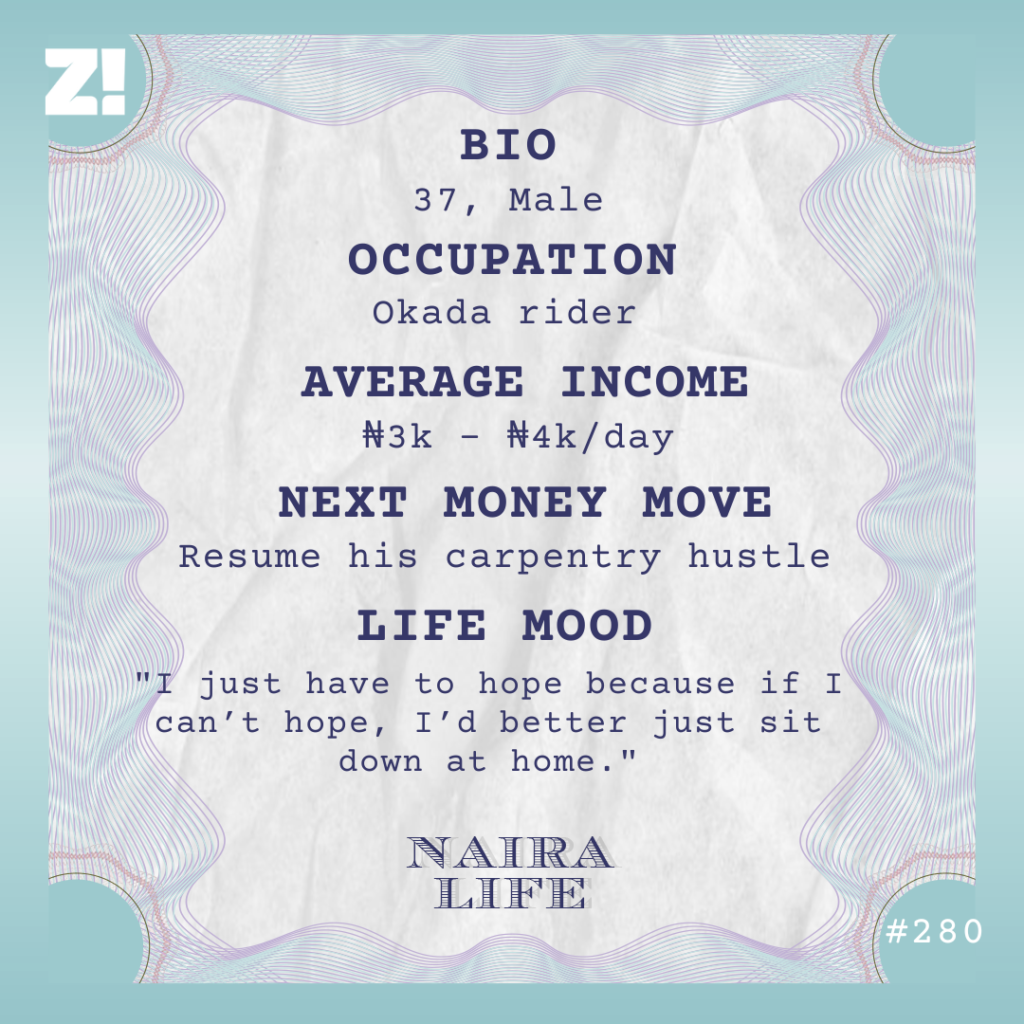
Now, I struggle to make ₦4k daily. Most times, it’s ₦3k — after removing fuel and ticket money. I can’t go long distances because my okada can just start misbehaving. It’s tough, but I’m just trying my best.
I’m considering restarting my carpenter work on the side so I can earn extra cash. I need another income now, especially since I’m marrying a second wife soon.
A second wife?
Yes. She’s pregnant, and I can’t let my child be born as a bastard when my religion allows me to marry more than one wife. I didn’t intend to remarry so soon, but God has a way of doing things.
I hope to sort out the wedding plans within the next three months — I’m spending more money because she’s not living with me. I have to send her own feeding allowance separately. There’s also money for antenatal and medicine. I had to pay half of her ₦80k house rent in January. When we get married, those costs will be reduced.
I’m curious. What are your expenses like right now with your current home?
God is helping us because I don’t really calculate how much I spend. I just spend. But I give my wife ₦3k every two days to cook. We have one child who just started nursery school last term, and I paid ₦14k for his school fees and uniform.
I mentioned my wife has a salon, so she helps to pay for small things in the house like water and the NEPA bill. I pay the ₦150k rent for our two-bedroom house. I thank God for ajo. I make a ₦3k weekly ajo contribution, and it’s what I use to save for rent.
Why do you think carpentry would work now when it wasn’t profitable a few years ago?
Someone advised me to go into making bed frames. I heard it’s easier to make more money on them. Before, I focused on just tables and chairs. If I see ₦100k now, I’ll just make like two or three bed frames and display them in my wife’s salon. I’m sure customers will come.
Have you considered what would happen if they don’t come?
Ah. Are you wishing me bad? I just have to hope because if I can’t hope, I’d better just sit down at home. But if the business picks up, I may consider selling my okada and investing more in it. Let me just get my wedding out of the way first.
Let’s rate your financial happiness on a scale of 1-10
5. I’m not happy with my finances at all, but there’s hope.
If you’re interested in talking about your Naira Life story, this is a good place to start.
Love Life is a Zikoko weekly series about love, relationships, situationships, entanglements and everything in between.
What’s your earliest memory of each other?
Teju: We met at work when I just got to the states in September 2019. We’re both nurses in a state hospital. She and one other Nigerian guy were the only Africans at the time. She’d been here for close to two years before me. So she took me under her wing, helping me to navigate and survive in the new environment.
Malin: I liked him immediately I met him because I have a thing for Nigerian men. But we started off platonic. I’d been happily married since I was 23.
We started working closely together for long hours, so we got to talking and oversharing stuff about our lives. From day one, we both knew the other was married. I’d say loneliness brought us together.
How did you both find yourselves in the US without your partners?
Malin: We planned to relocate together very early on in our relationship before we got married. But I got my master’s visa, and he didn’t. They’ve consistently denied him one, so he’s still in Dar es Salaam. Now, he’s working on Canada. Once that works out, we’ll figure out how to unite… if we still want to.
Teju: I didn’t come in the most straightforward way, so I couldn’t bring my family — my wife and two kids. I’m supposed to put things in place then send for them. But it’s becoming much more expensive to plan that. And I’m no longer in a hurry.
Why not?
Teju: This will get me in trouble.
I’m just comfortable with the way things are now. I love being with Malin. Things had gotten dry between me and my wife when I left Nigeria. I won’t lie that we were about to break up, but we weren’t the most passionate couple.
Malin: For me, the fact that he hasn’t been able to get his visa approved for so long is a red flag. I’m tired of waiting and hanging on to that hope.
Do they know you guys are together?
Malin: No. Why would I want to start that kind of drama?
Teju: I’ve considered telling my wife, but I think it would be cruel. I know she wouldn’t understand. It’ll just break her.
Let’s go back a bit. How did you get into this relationship?
Teju: We went from working closely together to her helping me get a better place to stay, figure out the subway and commute. In that first month, we were always together — at work, on the road, at home. She also helped me figure out my meals. In between all that, love happened.
Malin: Like I said, I was lonely. And it helped that he wasn’t a creep. I met a decent, likeable Nigerian guy when I was at my lowest point, and it felt good helping him out. I knew staying so long in his space and being so accessible would lead to something else, but I couldn’t stop myself.
If you want to share your own Love Life story, fill out this form.
What happened next?
Teju: COVID came, and being essential workers, we worked even longer hours, wearing PPEs and moving around when everyone else was stuck indoors. That was the highpoint of our friendship. Just constantly exhausted while making jokes with our other coworkers. We slept most nights in the hospital.
October 2020, the lease was up on my apartment, and we somehow started talking about being housemates so we could pool money together and get a decent two-bed.
Malin: We ended up getting a three-bed with a third girl I knew from my former building. That’s when we technically moved in together. It’s also when we started sleeping together. He ended up spending most nights in my room.
Were your spouses aware you had housemates of the opposite gender?
Teju: My wife found out.
I was originally supposed to live with my aunt when I moved here. Malin convinced me I could get a cheap flat closer to our workplace, and I was so excited to not have to squat with a relative at my age.
My aunt eventually came to visit when I’d moved into the new apartment. She met Malin but didn’t say anything. Next thing I knew, my wife brought it up on one of our video calls. My aunt had called to tell her. She wasn’t happy at all, but I assured her not to worry about it.
Malin: My husband knew we were housemates then. He didn’t think too deep into it. Maybe because there was another girl with us. But he doesn’t know we have a small house on mortgage, and we’ve moved in together.
When did that happen?
Malin: In July 2021, and we’ve lived there together since. Our relationship levelled up after that. We started talking plans and finances because we wanted to move our life forward.
Teju: We’d spent too long in one place, struggling to reunite with our partners. We were ready to move on, at least in our careers and personal development. We took courses so we could get promotions and so on.
Malin: The bulk of his money goes to his kids’ education in Nigeria. I’m happy he does it, but it’s also a constant reminder of his external responsibilities and what that means for our future.
Have you discussed the future yet?
Teju: Not much.
But some months after we moved in, one of our coworkers suggested that we declare a common-law marriage so we could get some benefits. So we did.
Malin: To all our friends and colleagues and the state of Texas, we’re married.
And your actual spouses don’t suspect a thing?
Teju: They don’t. I talk to my wife once a week and still send her money. We’re also still saving up for them to join me here. We decided the best way is for me to get a PR then invite them over.
Now that Malin and I did the common-law thing, it might not work. She doesn’t know that. We’ll cross the bridge when we get there.
Malin: I don’t think my husband suspects. He’s still hyper-focused on Canada. That’s all we talk about now. He’s working towards relocating in 2025. Fingers crossed for him.
We try not to talk too much about our marriage because I think we’re both trying not to trigger sadness and regret.
So what happens when they finally make it out of Africa?
Malin: I don’t know yet.
I love Teju, but I’ve confided in him that I might still have feelings for my husband. He was the love of my life before the whole unfortunate split. And Teju has his kids to figure out.
Teju: I don’t see it happening anytime soon. I see Malin and I staying together until then. We’re a good team, and I can’t imagine figuring out life in this country with anyone else.
How have you managed to build a working relationship on the back of infidelity?
Teju: Ahh. We don’t think about it that way. We just did our best with the circumstances life gave us.
Malin: Our relationship works because we don’t focus on guilt and regret. It’s about being each other’s support system in this lonely world.
We work together as well, so it’s been much easier to have someone to do everything with.
[ad]
You guys give “work spouse” a whole new meaning
Malin: Yes. I suppose you could call us work spouses that took the name seriously.
I don’t feel like I’m cheating actually. My husband and I can’t be together, and I’m supposed to just put my life on hold?
Teju: The only thing I feel bad about is I know my family would’ve been here much faster if I didn’t get together with Malin. There are some things we could’ve done by now if I was a lot more excited for them to be here.
Malin: Yeah, it’s tough because if his kids were here, we wouldn’t have to spend so much on school bills.
Do you see yourself continuing to send money home for as long as they’re there?
Teju: Yes. One thing I’ll never do is default on my responsibilities as a father. My dad was an absent father, so I feel bad enough that I’m putting my kids through that.
Malin: That’s the only thing that brings friction to our relationship. His kids might be the only people he loves more than me.
And how do you feel about that, Malin?
Malin: Sometimes, it feels like baggage I didn’t bargain for. But I know it’s insensitive to say that given the circumstances.
Teju: Yeah, there’s no way around that.
Have you ever thought about having your own kids?
Malin: I’m not sure I want to with him yet.
Teju: We decided we’d wait till we figured out where we stand with the people back home first. But it’s not completely off the books. At least, not for me.
Malin: It’ll be a huge step. I don’t want to bring a baby into too much drama. We could get discovered at any moment. It’s both exciting and terrifying.
Discovered by your spouses?
Malin: Yes.
Have you had any major fights yet?
Teju: Not really.
Malin: We argue a lot about very many things. But it’s always chill. I don’t think we’ve ever been genuinely angry with each other.
Teju: We’re almost always at work anyway. So between that, sex and sleep, not much time to fight.
Sweet. How would you rate your Love Life on a scale of 1 to 10?
Malin: 9. We just get each other, and the way we support each other‘s rights and wrongs without judgement is so precious. The uncertainty makes things exciting too, but I know we’re not in la la land and shit can hit the fan at any moment.
Teju: I guess I’ll say 9 too. I love being with her. I love that I’m doing life in the states with her. She’s helped me achieve way more than I ever imagined.
The 1 will probably be for the fact that she still loves her husband and I still love my kids.
Check back every Thursday by 9 AM for new Love Life stories here. The stories will also be a part of the Ships newsletter, so sign up here.
Until July 2024, not many people had heard of the name Olufunmilayo Oluwawemimo. She was a sickle cell warrior and a mother who passed away on May 18 2024. Her husband, Damilola Oluwawemimo, is a person of interest in the case.
The news first became public on July 2, 2024, following a post from the X account (@abiolaak). She mentioned that the Minister for Women Affairs, Barr. Uju Kenedy-Ohaneye was involved in the case, and there would be an autopsy.
— Dr Abiola Akiyode-Afolabi (@abiolaak) July 2, 2024
Olufunmilayo’s family has since accused Damilola of allegedly murdering his wife, referencing past incidents of domestic abuse.
In a series of X posts on July 9, 2024, Tobi Beckley, Olufunmilayo’s brother, attempted to piece together details of the incident. He accused Damilola of shirking most of his responsibilities and showing a repeated pattern of nonchalance towards his wife’s health.
Tobi stated that he took responsibility for his sister’s health, which Damilola allegedly didn’t like. He also didn’t like being called out for showing little care about his wife’s health.
The most troubling detail was that Damilola was reportedly physically abusive. Funmi’s brother recalls an event where Damilola allegedly beat Funmi up with a phone cable.
My late elder sister was a sickle cell warrior and a victim of an abusive marriage where her husband on several occasions physically abused and assaulted her knowing fully well about her condition. You want full story, I’d give you all story. This is a thread.
Tobi says one of Funmi’s friends called her older sister, asking her to check on Funmi on the evening she died. Her sister immediately notified the family, but they couldn’t reach Funmi. When all attempts to reach Funmi failed, they tried Dami, but he didn’t pick up his calls either.
To confirm everything was all right, Funmi’s sister went to their home the following day to check on her. When she got to Funmi’s home, she met dozens of people in their compound. They told her Damilola had locked himself and his wife inside since the previous evening, and he’d threatened to kill himself and anyone who attempted to gain access to their apartment.
Subsequently, the police gained entry into the apartment and subdued Dami. Funmi was in the apartment, too, but she wasn’t breathing. She was rushed to the hospital, where she was confirmed dead.
What has happened after?
On July 8, 2024, an X account (@HonMichaelson) provided an update about the incident. He questioned the Beckley family’s motive for detaining Damilola and appearing in interviews to accuse him of murdering his wife when the autopsy result wasn’t out. Also, he said that Damilola was subjected to physical abuse during the two weeks he spent in custody.
Update on Damilola:
Recall there was a smear campaign ignited by some women rights activists about a week ago, accusing Damilola of murdering his wife and fleeing?
Today, autopsy result confirmed the immediate cause of her death to be “Haemorrhagic stroke” due to sickle cell. pic.twitter.com/nhB4bjdWK9
According to him, the autopsy results have now been released, confirming the cause of Funmi’s death to be a “Haemorrhagic stroke due to sickle cell.” He claimed that there was no foul play.
However, Funmi’s brother has contested this. According to him, a traumatic head injury is associated with bleeding in the brain and death, especially when the victim doesn’t have access to immediate medical care.
Autopsy findings revealed bleeding into the brain. Do you know that traumatic injury to the head could result to bleeding into the brain and eventual death if no prompt medical care if administered which Dami obviously refused to take his wife to the hospital? https://t.co/plWjEtpz1b
Details of the autopsy results are not public, and there’s been no comment from the police yet.
*This is a developing story.
Why is #FreeAyo the number one trending topic on X today? Who’s Ayo? Why are X users clamouring for his freedom? What’s the role of Toyin Abraham in this situation? This is a full explainer.
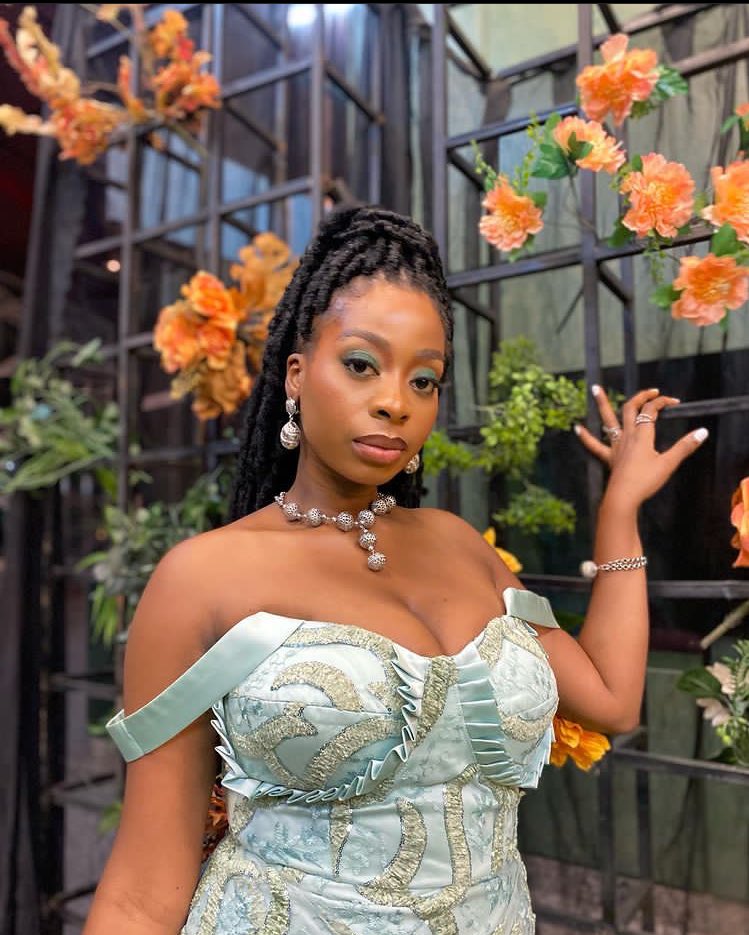
(L) Toyin Abraham, (R) X user @47kasz (AKA Ayo)
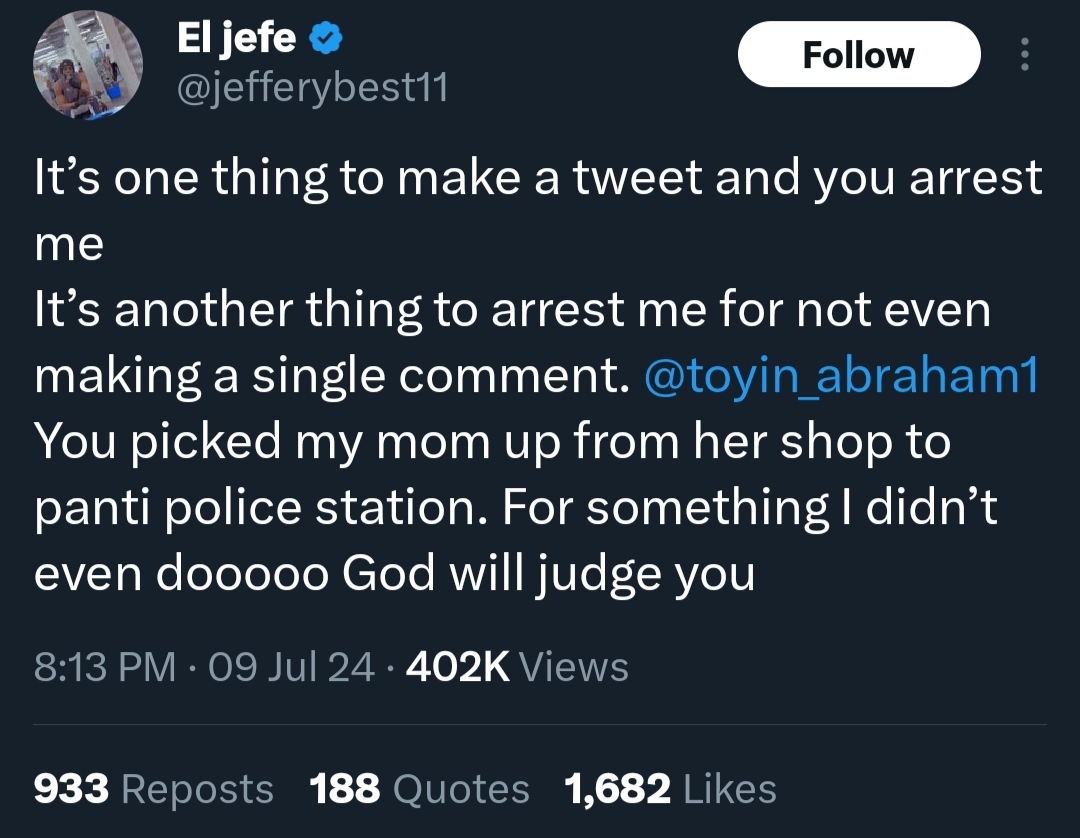
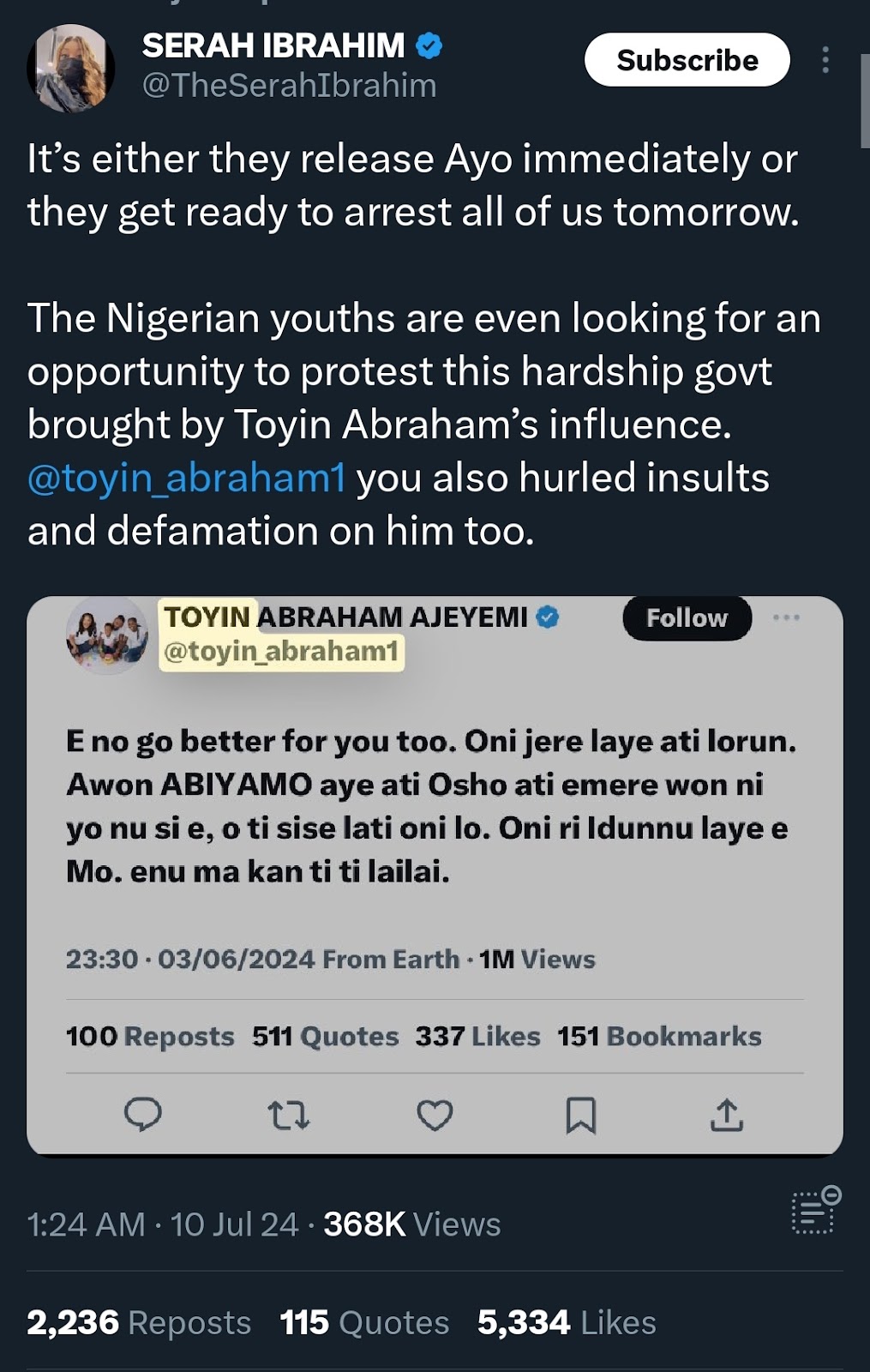
Around 8 PM on June 9, 2024, X user @jefferybest11 tweeted that Nollywood actress and film producer Toyin Abraham sent some Nigerian police officers to arrest his mum over a tweet he claims to know nothing about. They took his mum to the Panti police division.
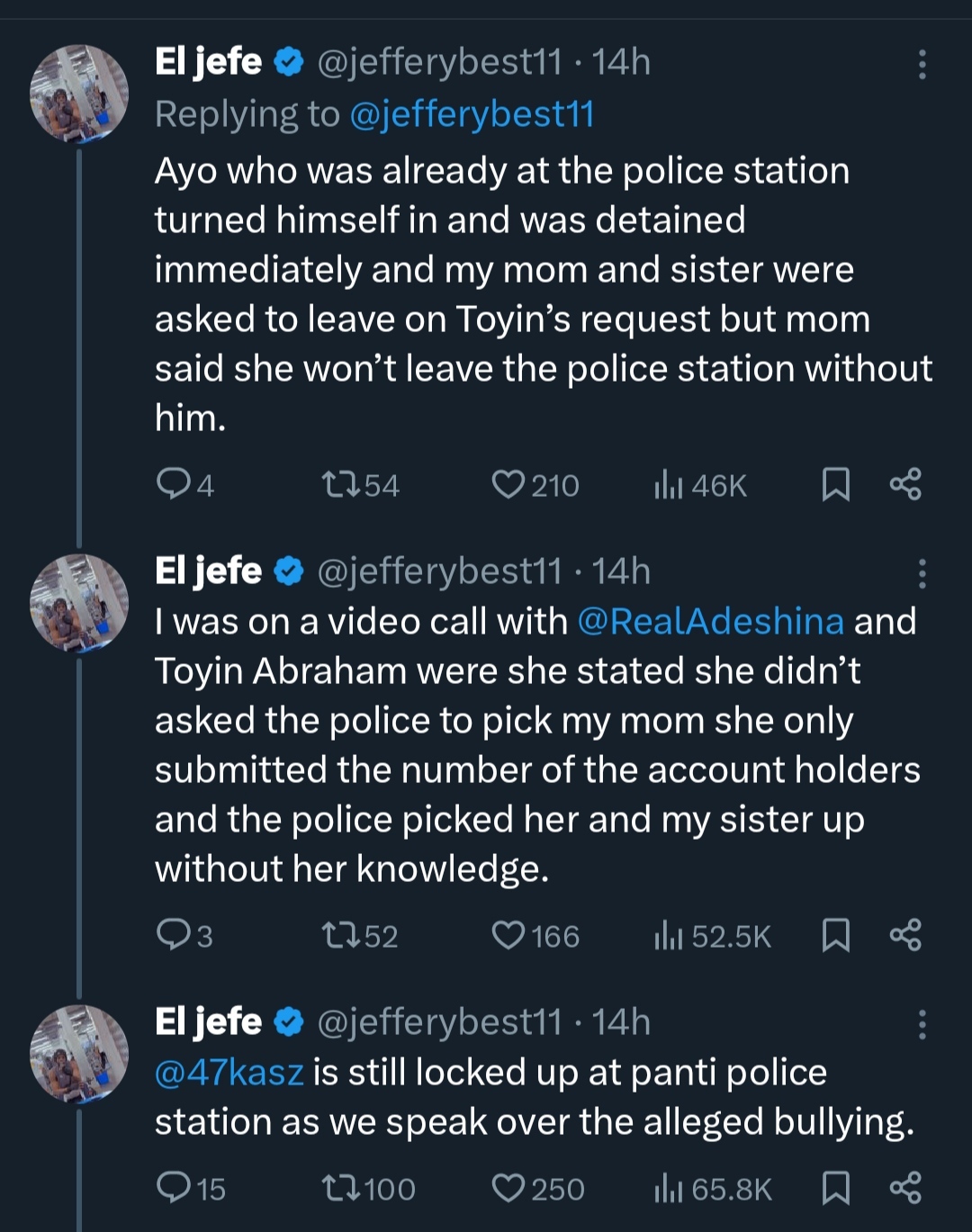
In subsequent tweets, user @jefferybest11 stated that the police came to look for him on account of Toyin Abraham’s statement that he bullied the actress. The police didn’t find him, so they arrested his mom and sister instead.
As the situation unfolded, @jefferybest11 contacted a friend and another X user, @47kasz, to share the confusing details. @47kasz went to the Panti police station to verify the story. While there, actress Toyin Abraham called the station to clarify that @jeffreybest11 wasn’t the bully but @47kasz. The story becomes unclear as @jefferybest11 tweeted that @47kasz turned himself in as Toyin Abraham’s bully. The actress requested the police to release the arrested mom and sister, but the mom refused to leave unless the police released @47kasz, whose real name is Ayo.
Toyin Abraham also said that the arrest of @jefferybest11’s mum and sister wasn’t her intention. She only gave the police @jefferybest11’s phone number, which was traced to a phone held by his mum, and they apprehended the woman without her knowledge.
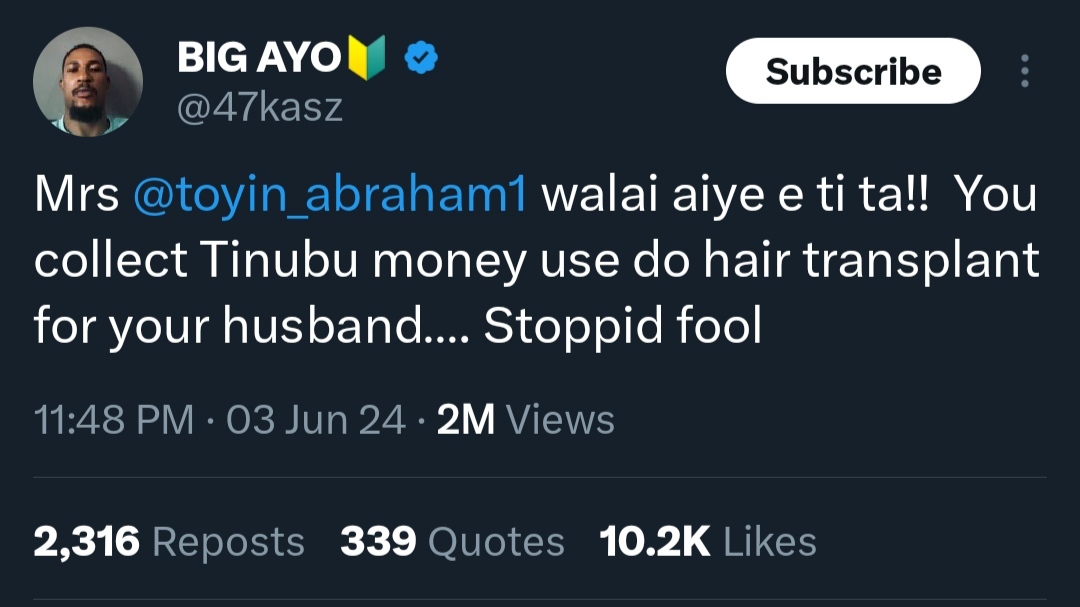
A tweet Ayo (@47kasz) made about Toyin Abraham on June 3, 2024, has now come up. He accused the actress of collecting Tinubu’s money to make her husband’s hair grow again. It’s still unclear if this tweet is evidence of cyberbullying he’s been held for.
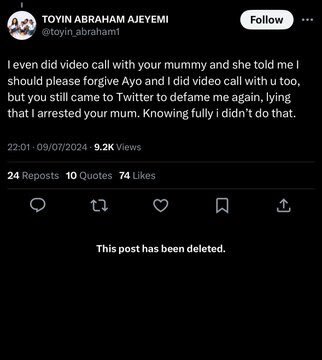
In a now-deleted tweet, Toyin Abraham said she planned to forgive Ayo and let the issue go until @jefferybest11 took it to X.
Since this news broke, his mutuals and some other X users have been using the hashtag #FreeAyo to highlight the injustice of his illegal arrest and detainment. They aim to create awareness and garner support for Ayo’s plight. This is what Nigerians are saying about the situation.
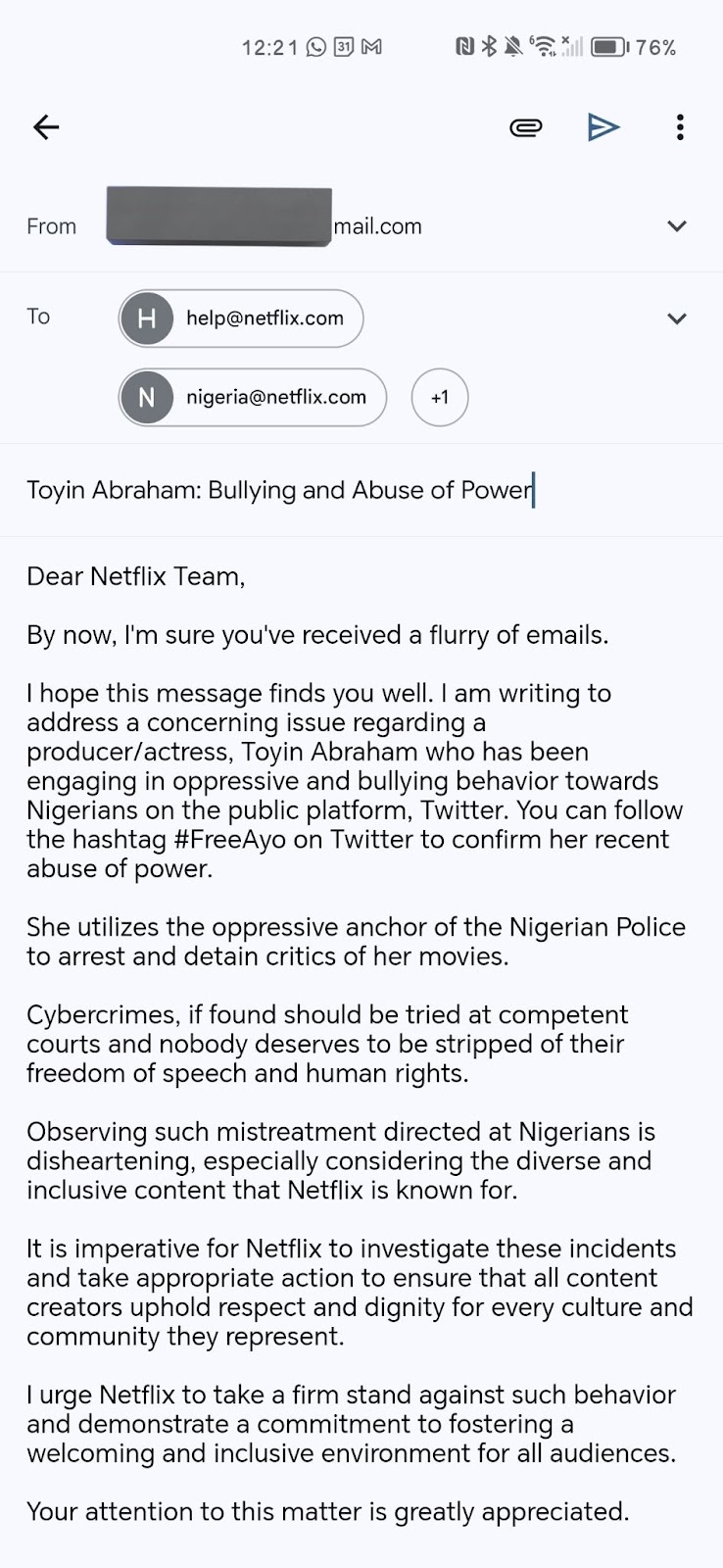
Some furious X users took it further and sent emails to Netflix and Prime Amazon, reporting Toyin Abraham’s abuse of power to the streaming giants and asking to remove her films.
Today, Toyin Abraham took to her Instagram Live to debunk arresting @jefferybest11’s mom. In the same breath, she vowed to make the “bully” face the law’s wrath; if she goes down, she’s going down with all her bullies. “I want to kpai, I’m ready to kpai, and all my bullies will kpai with me,” she said on IG live.
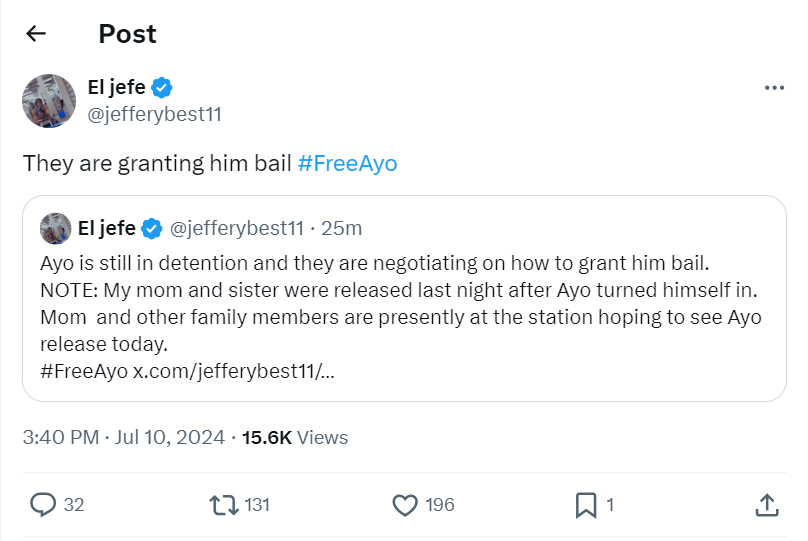
At 3:40 PM on June 10, 2024, @jeffreybest11 tweeted that a bail process for Ayo (@47kasz) is ongoing.
This is a developing story.
Afrobeats rising songbird Tonye Garrick has stepped with a vibrant new tune dubbed, “Mr Jegede”. For all the right reasons, the song, tapping Rwandan chanteuse Neza, is a breath of fresh air in Nigeria’s nascent music scene.
“Neza and I started our journey when I reached out to her in 2020 to collaborate. Since then we have become best friends and a team. I’ve worked with other people but she and I just have an amazing synergy,” she tells Zikoko Pop, brimming with smiles. Her music is a coastal ride through her experiences, especially her Bridgerton-esque love memoirs like “Mr Jegede”. The song mirrors the lives of two women entangled with an insincere man.
Neza, whose emotive voice adds a layer of vulnerability to the track, adds, “‘Mr. Jegede’ is a song that will resonate with anyone who has ever been in a situation where they questioned someone’s intentions. It’s about the power of self-love and knowing your worth.”
The duo also announced that they are working on their first collaborative album, as Tonye highlighted that, “Neza and I are currently working on our EP as well as our individual projects. Our focus right now is Us as a DUO and it’s been so amazing sharing this journey with her.”
This amazing synergy captures the importance of intra-African collaborations in the music industry. Tonye is a Nigerian singer whose 2010 a capella ‘What About Us” shot her to the limelight. In 2013, she made a full transition from corporate business to music, shortly after her debut single, ‘Insane (Wèrè Nìyẹn),” dropped the year before. Her marriage-themed bop, “Ari Belema”, also received a nomination at the 2015 Nigeria Entertainment Awards. Neza is a Rwandan-Canadian singer who signed to MC Galaxy’s MCG Empire, in 2017, the same year she bagged the award for the Most Promising African Artist at the All Africa Music Awards (AFRIMA).
Media personalities on radio, television and the internet are some of the most impressionable people. They bring real-time news, entertainment, and real-life issues closer to the masses. They’re the voices accompanying our information and documenting our society. They’re not just exciting, they’re culture.
In today’s look into women in media, we compiled a list of seven female presenters who are killing it from television to radio, YouTube to TikTok, Instagram, and X.
Top Female Digital/Online Presenters
Chinasa Anukam
Abuja-based Chinasa Anukam, the host of the popular YouTube show Is This Seat Taken? has a casual but intentional way of interacting with her guests. It’s a first-date setting. She draws out her subjects’ playful side without skipping details about their professional and general lives.
Top Female TV Presenters
Nancy Isime
Nancy Isime is one of the most famous faces on Nigerian TV. From presenting a gossip show called The Squeeze to handling the backstage segments of MTN Project Fame Season 7, presenting HipTV’s #Trending segment (2016 – 2023) and co-hosting The Headies award shows in 2019 and 2020, she’s put herself in faces. She also has her TV show, The Nancy Isime Show. Exclude her blooming acting career; you’ll see she remains one of Nigeria’s top female presenters.
Ojy Okpe
Ojy Okpe has continually evolved around cameras from modelling to film to journalism. She is a co-host on Arise News’s The Good Morning Show. She hosts her segment known as What’s Trending With Ojy Okpe. If you want verifiable updates on the conversations in the Nigerian socio-political and economic space, don’t miss her segment every morning.
Folu Storms
Earlier in her career, Folu Storm did radio at 92.3 Inspiration FM. Not long before she became a presenter and content producer for NdanniTV’s award-winning The New Africa documentary, she was an MTV Base Africa’s top-three VJ finalist. She’s in more movies and series these days, but TV and radio still serve as Folu Storm’s medium.
Toke Makinwa
In 2010, Toke Makinwa made her first major media appearance as a co-host on Rhythm 93.7 FM’s The Morning Drive Show. Since then, she’s appeared as co-host, host, and presenter on 3 Live Chicks, HipTV’s #Trending, EbonyLife TV’s Moments, and her Talk With Toke Makinwa Show. Through her vibrant television host and radio personality career, Toke Makinwa has built one of the biggest brands in the Nigerian media space.
Top Female Radio Presenter
Kemi Smallz
Kemi Smallz’s career began at 14 as a kid presenter for old Nigerian TV programmes like Tales Africa, Kiddies Island, and Generation Next. She was an OAP at CIty 105.1 FM (2013-2017). She co-hosts the Good Morning Nigeria show on Cool 96.9 FM every weekday (5 AM-10 AM). She also officially hosts Basement Gig if there’s a Nigerian on-air personality (OAP) to ring about music commentary. The person is Kemi Smallz, AKA Radio Rat.
Toolz
Tolu Oniru, AKA Toolz, is a radio personality, talk show host and presenter. From The Juice talk show to hosting the X Factor West Africa (2013) to the Midday Show she hosts on The Best 99.9 FM, Toolz has stayed a top voice in the African media space—little wonder she’s now a director of programmes at Megaletrics, the company that owns Beat FM.
Adenike Lanlehin
Adenike Lanlehin’s journey into the media industry started with a three-month internship at Ogun State Broadcasting Corporation during her Polytechnic days. Since then, she’s worked at Splash FM and Cool FM. Adenike brings all the front page news and reviews to radio listeners on Fresh FM’s Freshly Pressed programme.
The gender gap in the African tech ecosystem manifests in various forms, including leadership representation, funding disparities, and pay gaps. To combat this gender bias, Lagos Startup Week has been dedicated to fostering a community for African female innovators over the past nine years, providing them with opportunities to grow, learn, and connect in the tech space.
One significant initiative is the inclusion of a track focused on showcasing trailblazing female founders who are redefining success in the tech ecosystem. “Women Who Launch” celebrates inspiring women who, against all odds, have achieved incredible feats while paving the way for future generations. Lagos Startup Week is committed to changing the gender ratio at all of our events and empowering women through networking opportunities and mentorship programs.
This year’s focus is on enlightening attendees to the essentials of becoming limitless in business while remaining relevant in the constantly evolving startup ecosystem. Speakers at this year’s event include:
Somachi Chris-Asoluka (CEO, Tony Elumelu Foundation) – Fireside Chat: Supporting Founders of the Future
These women are at the forefront of driving change and have championed women-focused funds, fostered inclusive work environments, and advocated for policies that empower women to thrive in tech. They will share their insights, experiences, and actionable strategies to help women break barriers and achieve their full potential in the tech industry, across two days of the event – Thursday and Friday.
Past events have featured notable speakers such as Tosin Faniro-Dada, Surabhi Nimkar, Ifeoma Uddoh, Bilha Ndirangu, Kendra Nnachi, Yoanna Pepper Chikezie, Ketura Ovio, Oare Ehiemua, and Ife Durosinmi-Etti, covering topics on building more inclusive organizations where women can thrive and achieve their full potential.
This year, Women Who Launch is sponsored by the Aurora Tech Award, an annual global prize for women founders of tech startups powered by inDrive. The Aurora Tech Award is dedicated to breaking down barriers and promoting equality in tech entrepreneurship.
Nadeen Hossam, Partnerships Manager, EMEA at Aurora Tech Award, said, ‘We are thrilled to partner with Lagos Startup Week 2024 to expand our outreach and empower women founders across Africa. Over the past year, we have received more than 650 applications from 90 countries spanning the Middle East, Africa, Latin America, CIS, and Asia. Last year’s winner, Folake Owodunni from Nigeria, exemplifies the incredible talent and potential within Nigeria’s vibrant tech scene. We firmly believe in the power and potential of the entire African region.
The Aurora Tech Award is steadfast in its commitment to empowering tech women founders worldwide by providing them with invaluable resources, global media and publicity, mentorship, and access to a global network of like-minded peers, investors, and mentors. Our goal is to become the leading technology award for women entrepreneurs globally continuing to address the global gender gap in tech entrepreneurship and foster a more inclusive industry.”
According to Isioma Utomi, Lead Organiser of the Women Who Launch summit, “The African startup ecosystem has grown in leaps and bounds in the last decade, but this growth hardly reflects where the female-led startups are concerned. The H1 report card by Africa: The Big Deal, and the limited allocations made to female-led startups, underscores the challenges around female founders funding in the ecosystem.”
Reiterating Utomi’s call for female founders support, Olumide Olayinka, Co-founder, Prime Startups, the governing corporate company driving Lagos Startup Week in the last nine years said that the firm’s approach to female participation in the ecosystem has been very intentional and strategic.
“Limitless, the theme for this year strongly resonates with women. We have seen this in the way that they have broken through barriers, taken a seat at every table across the globe, built and scaled their businesses with limited access to funding and support. Yet, they still keep at it. This is why women’s participation is at the core of Lagos Startup Week.”
Olayinka stated that in 2023, Lagos Startup Week realized 45% female participation, and there are plans to increase this number in the ninth edition.
“Last year, we had over 4500 females register and attend Lagos Startup Week. This year, we have seen even more interest from females through their registration and we are positive that we will surpass our record of female participants. We are intentional about leading this year’s event with women, including them in panels other than the ‘Women Who Launch’ track. There are so many stories to be told about these women shaping new narratives in tech, and we are excited that our audience will get to hear it all in a few days from now.”
Data shows that organisations which have women in leadership and on boards are more successful and show better financial returns. So this is a great time to invest in women in the tech space.
It’s important to continue to drive an inclusive startup ecosystem where women are not only represented, but also take on key leadership roles as founders and funders.”
The agenda for LWS 2024 includes inspiring keynote sessions, engaging panels, workshops, and exciting speed networking opportunities! Afterwards, enjoy networking with like-minded individuals over drinks.
Whether you are an aspiring tech entrepreneur, a seasoned professional, or someone passionate about gender equality in tech, this track promises to provide valuable perspectives and inspire you to contribute to an inclusive and supportive tech ecosystem. Come prepared to share the room with world-class women in your organization and circle of influence to help us empower more African female founders and possibly funders.
Ghana has always been popular for its thriving Hip-Hop and rap scene on the African continent. In 2020, the wave of drill music crashed on the Gold Coast, specifically Kumasi, and birthed a local sub-genre of rap music called “Asakaa” or Ghanaian Drill. It’s a blend of drill music and hiplife, characterised by red bandanas (an imitation of Los Angeles’ Blood gang), gang signs, streetwear, and the Indigenous elements of Kumasi.
Drill music is a youth-driven culture. Much like street-pop music, drill dives deep, painting a vivid picture of street life and activities.
Although many collectively refer to the music as “Asakaa”, the sub-genre shouldn’t be mistaken for the nine-man group and pioneer known as Asakaa Boys. “Asakaa”, coined by DJ and producer Rabby Jones, comes from the “Saka”, an informal pronunciation of “Kasa”, the Twi word for “talk.” Heavily influenced by the US culture and lifestyle, Asakaa Boys americanised their hometown Kumasi with a code name: Kumerica. It became a movement for these Kumasi drillers and inspired other famous Ghanaian artists like Black Sherif and Yaw Tog.
Ghanaian drill music became viral with Asakaa Boys’ Akatofoc single in 2020, a year after the group made Big Flex, their first drill jam. Drill music soon became trendy across cities, and more young Ghanaian artists started to hop and dragon-glide on it.
Four years after Asakaa, once considered underground, gained ground in Ghana, it has produced promising young music exports. It’s received global stars’ support from the UK’s Stormzy and Headie One. Ghanaian drill or Asakaa’s now also included in the popular genres in the new Grammys’ Best African Performance category introduced in 2023. So far in 2024, Asakaa playlists on Spotify have over two million streams and feature over 38 million user-created playlists.
Just like the 234Drill movement is growing to be the next big thing in the Nigerian music scene, Asakaa is gaining momentum in Ghana. If you want to get familiar with it, here’s a highlight of drillers making waves in the Asakaa movement.
reggie
reggie, AKA Reggie Osei, introduced drill music to Asakaa Boys, the Kumerica group credited for pioneering Ghanaian drill. With four projects (“Straight Outta Kumerica 1-2”, “2 TIMES A GUY”, and “Most High”) to his name, reggie has built a reputation as one of the most consistent drillers on the scene.
Black Sherif
Black Sherif went mainstream, singing about emotional pain on drill beats. “Of course, I fucked up / Who never fuck up, hands in the air” is arguably one of the most quoted lyrics in Nigeria and Ghana in 2022. Second Coming (original and remix) by Black Sherif buzzed so much that it won the Best Hip-Hop Song of the Year at the 2022 Vodafone Ghana Music Awards (VGMA). His successful “The Villain I Never Was” (2022) debut album is a bag of emotions and melodies— a proper introduction to Black Sherif’s music.
Yaw Tog
One of Ghana’s youngest music stars is Yaw Tog. Fame found him at age 17 in high school in 2020. Directly influenced by the Asakaa Boys, he became one of the Ghana drill’s torchbearers. Yaw Tog’s breakout single, Sore remix, features Kwesi Arthur and Stormzy. He’s witty, fierce, and unapologetically Ghanaian.
Jay Bahd
Jay Bahd’s strongest lyricism is street tales, youthful exuberance and new-found successes. If you dig that, add his music to your playlist. One of his recent singles, Hate, features African Hip-Hop legend Sarkodie.
O’Kenneth
O’Kenneth was featured on Yaw Tog’s Sore and Kawabanga’s Akatofoc, the records which helped propel Ghanaian drill to prominence in 2022. Since then, he’s released four albums and put himself in conversation. Spotify recognises him as one of the top five most streamed Ghanaian drillers on its platform.
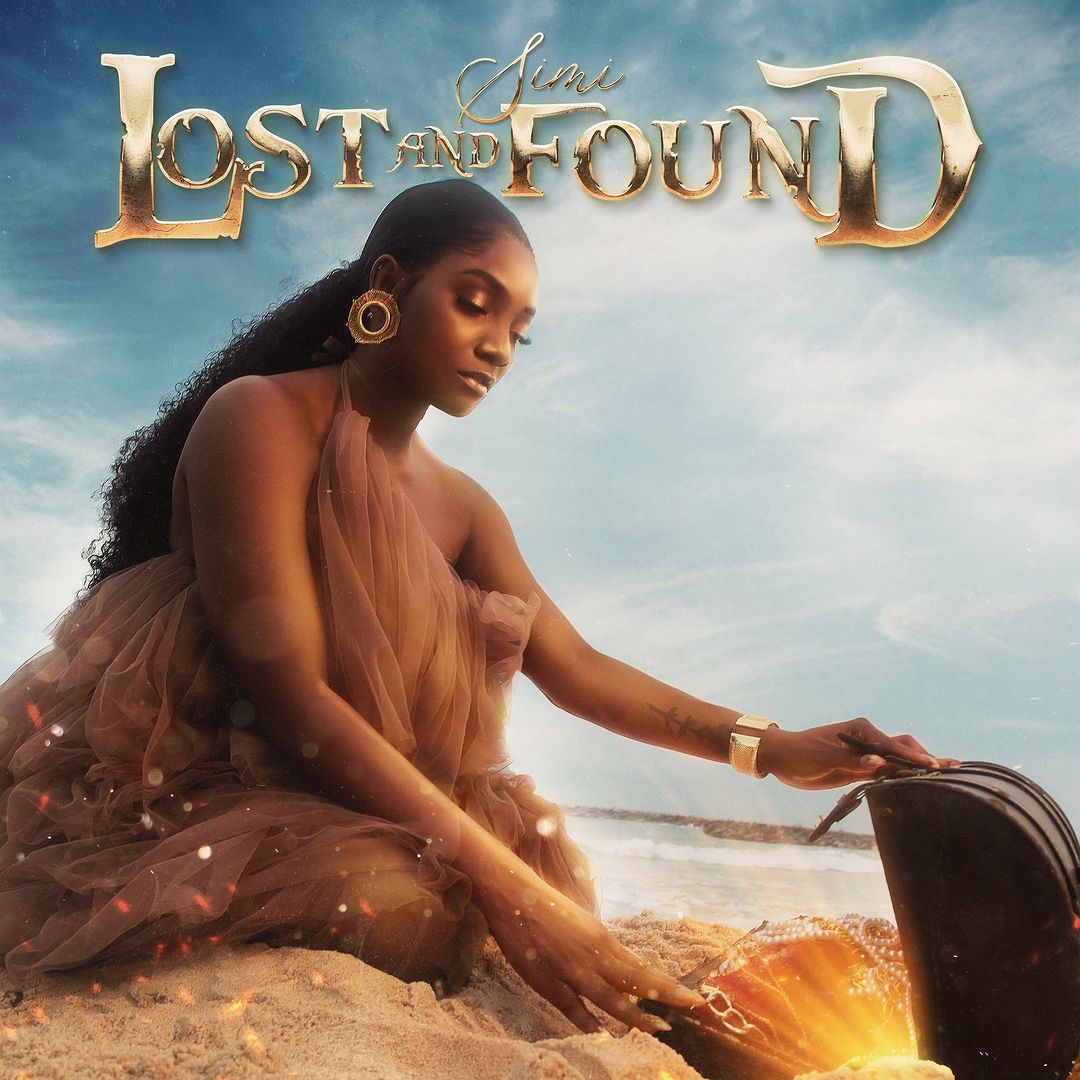
Thanks to the baddies movement and Simi’s “Lost and Found”, the vacancy for a new Afropop girl-next-door is temporarily closed. Since the “Ojagu” days, Simi owned that bubbly space that Nigerians kink for its humble and friendly traits. Now, her OG artist and motherhood statuses outclass that. Simi said her new album “Lost and Found” is a tribute to things we continue to find and rediscover. The cover of her sixth album interprets that premise with a fantasia of Simi opening a rediscovered magical treasure chest, reclaiming her chemistry with music, melody and love stories.
The party starts in earnest with a reflective performance of the album’s title track. Lost and Found is a sobering, honest ballad that corresponds with the confessions of a regular Christian repentant. “Who am I not to count my blessings one by one, by one, by one? / And I’ll learn my lessons ‘cause I was lost, and now I’m found,” Simi sings. “Who knows freedom like someone who was once a slave?” Simi has some ruminative rhetoric to launch at herself and us. “Grateful for wisdom when I remember my foolish ways,” she continues to sing. “Na person wey fall go fit to rise.”
She’s known for producing and mixing her songs and featuring one or two collaborations on her previous projects. But she brought more hands on deck this time, from the Afropop-centric melodies of rising producer LOUDAA, who produced nine tracks on the album, to the sultry r&b of Estarlik Big Fish to FUNWON’s juju-inflected r&b. Their well-tempered productions maintain the consistent laid-back tempo associated with Simi’s music. The sound direction explores nothing unfamiliar; only a songwriter of Simi’s skills, scope and indigenous interpretations would dare walk aboard it, with familiar experiences, and strut away.
This is Simi’s rejuvenation from the absence her music created during the two years she was away, primarily catering to motherhood. If we’re talking cheesy, funny, real lover girl content and currency, Simi has r&b relevancy on “Lost and Found” although it may not resonate much beyond core listeners. On Know You II, she relishes and recreates extends the magic handed in Know You, her first collaboration with Ladipoe. This magic is nowhere as spellbinding as the refreshing, for-the-new-skool jam with Lojay on Miracle Worker.
The naughty girl-next-door Simi plays on Gimme Something and All I Want. Without losing sight of romance, the music gets more playful on One of One. Romance Therapy is an appreciation of a (finally) understanding lover. Borrow Me Your Body with Falz should’ve made it to the archives. It’s a leveller in comparison to the “Chemistry” they created. The bad-girl tactic assisted by Tiwa Savage on Men Are Crazy hits the goal on social listening and patriarchal capitalisation. It’s not a bad song, but it’s the type to get skips. [ad][/ad]
Words of affirmation are prevalent in Simi’s songs. She needs assurance on RnB Luv and its screams for a seductive Seyi Shay verse. Woman to Woman is a beautifully orchestrated salute to the women folk. The album’s zinger comes in the form of Alafia with Bella Shmurda. “Baby, ma j’oju mi o, baby ma j’oju o / Ma je kaye riwa / Oun a ni lan na ni / Baby, ma j’oju mi o, baby ma j’oju o / Funmi lalaafia, funmi lalaafia o.” Simi asks for lifelong commitment and peace, not emotional hurt, betrayal or messy drama. It catches Simi in her most honest form. Bella Shmurda’s tenor rings through the song with a romantic Afrobeats glossary.
Messiah is an exciting collaboration between Simi and Asa, who has inspired the former since she was a youngin. The song’s a mellow rejection of the weighty burdens of others, a bob-and-weave track. It’s every man for himself. Call it selfish, but no one gives others what they need for themselves. Jowo featuring Ebenezer Obey could have been another beautiful track if it worked with the original material or takes a bite of the guitar instead of recording the Juju legend’s vocal decline.
From self-searching to lifelong commitment and feisty Men Are Crazy, Simi explores different versions of herself. Although it feels like a reinvention, the girl-next-door narrative remains and has yet to age well in her biography. It makes the music feel like she’s comfortable with the victories delivered in the past. “Lost and Found” is reminiscent of her previous works, “Simisola” (2017) and “Omo Champagne Volume 1” (2019).
“Lost and Found” is a dizzying package of unfiltered love confessions and unapologetic romanticism, young-wifey melodies, subtle girl-next-door vibes, Owambe special numbers, and comeback attempts: Simi gives no power to let consumerism dictate her music choices. She finds comfort in her strength again, then makes another good album out of her rediscovery.
Volume 88
Brought to you by
Good morning,
It’s been about 14 months since President Tinubu’s administration “removed” fuel subsidy, but transport workers are struggling to adjust to the aftermath.
Last year, I spoke to an Uber driver who swore he could draw a straight line between the fuel price hike — an effect of the subsidy removal — and the debt he was now in. He said dryly, “This business died the day that man was sworn in.”
A few months later, a Danfo driver I talked with echoed the same thought: “These new fuel prices have spoiled this business. “People are not going out like they used to,” he told me. “I used to go on 3-4 round trips a day. These days, it’s a miracle if I go on two.”
As with these two, the okada rider in this week’s Naira Life has seen a sharp reduction in his earnings since May 2023, making an average of ₦4k/day. Yet, he has two families to feed. What does all of this mean for him?
Let’s get into it.
In this letter:
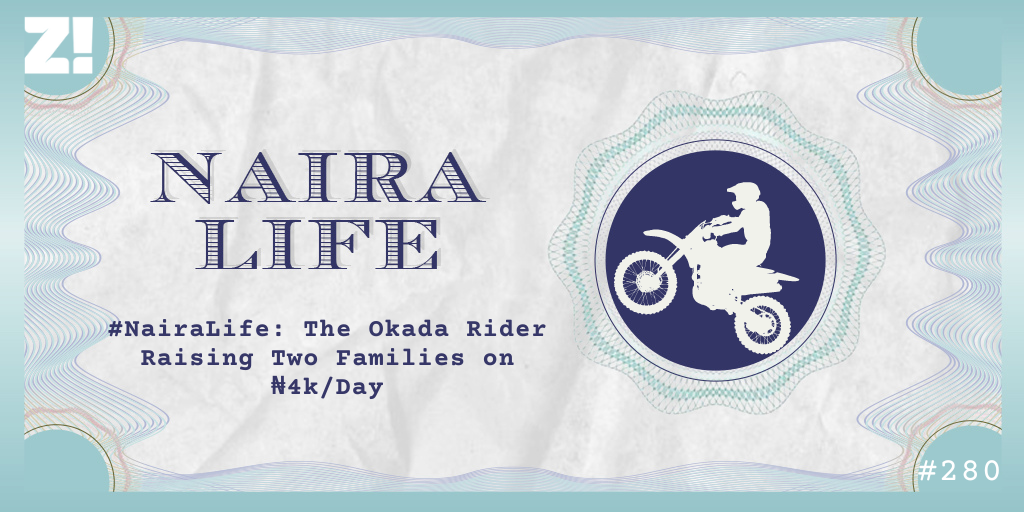
#NairaLife: The Okada Rider Raising Two Families on ₦4k/Day
How to Avoid Wahala When Buying Land in Lagos, According to a Realtor
Aunty M: How Can I Strike a Balance Between Investing and Living my Best Life?
QUIZ: Spend $1m on and We’ll Guess the Right Job for You
Where The Money At?!
#NairaLife: The Okada Rider Raising Two Families on ₦4k/Day
This 37-year-old thought he’d received a lifeline when he started riding okada for a living in 2023. But one year later, he’s barely surviving on ₦4k daily with his family and a new wife on the way.
Jollof+ is a cutting-edge savings app providing up to 21% net interest rate with no hidden charges. Designed to help combat inflation, Jollof+ offers personalized saving features, ensuring steady financial growth for users.
How to Avoid Wahala When Buying Land in Lagos, According to a Realtor
Buying land in Lagos can be an extreme sport, but it’s still a valuable investment. So, we got a realtor to share tips to help you avoid using your money to buy wahala.
I currently earn ₦1.1m, and I have divided my income into two: ₦600k for savings and 500k for expenses. Based on my monthly expenses, ₦250k is enough to cater for myself and I really want to use what’s left for meaningful things like investment but I’m stuck. One part of me wants to be able to afford a luxurious lifestyle, but I’m scared of being broke again. I need financial tips on how I can invest my money and also afford beautiful things. – CandyZee, 28
Hi Candyzee, Great job — you’re doing so well. You’re already budgeting in a way that puts most of your money towards the future, which is excellent. It will help if you have some goals around the money you’re putting away. You’re saving ₦600k monthly — is there a specific purpose for the funds or just general savings? Emergency savings, car savings, house fund, etc.
I would advise you to start an emergency fund to cover six months of expenses – this would be ₦1.5 million saved. If six months isn’t enough, you can save for 12 months and have ₦3m in emergency savings. This will provide you with a safety net, reducing any anxiety about unexpected expenses. Once you have your emergency fund, move on to other goals. Do you want to buy a car? If so, how much is that car? Work backwards to figure out how much you need to save monthly.
You can put 20% of your income towards investing. ₦220k – every month, you will put this amount in the stock market to purchase some US stocks. Over time, you will really see your money grow.
I am big on value-based spending. Spend money on your goals and also the things you value. If you want a luxurious lifestyle, you need to plan for that. For me, luxury is travelling at least four times a year. Every time I get paid, I put a certain amount into my travel fund so I can afford to go on a trip if I want to.
With this system, you don’t have to deny yourself good things and don’t have to worry about going broke because you are constantly putting money towards your savings, investments, and your dream life.
Remember, this system applies to anything you value. Do you want to buy luxury purses? Start a purse fund. Do you want to be able to eat out at any restaurant without blinking? Start a food fund. Do you want to be able to go to five concerts a year? Start a concert fund. Money is for spending, and it’s OK to spend as long as we take care of our responsibilities and future selves.
You’re on the right track; keep going. A good use of your money would be to take an investment course to feel comfortable and confident in your decisions.
We can’t say we’re about the money and not actually help you find the money.
So we’ve compiled a list of job opportunities for you. Make sure you share this with anyone who might need it because in this community, we look out for each other.
Last Sunday’s Nigerian Idol was incredible. With a legendary guest judge, double performances, a surprise proposal, and a shocking goodbye, Nigerian Idol gave it all.
MI Abaga brings the heat!
Renowned rapper MI Abaga joined the judges’ panel, adding his iconic Mr. Incredible energy to the judge’s corner as the contestants upped the stake, giving us two performances each. A soulful R&B number, and Naija Gbedu.
The journey ends for Maio.
In the show’s usual fashion, you know that once IK gets serious and requests that the lights go dim, it is time for a contestant to go home, and sadly, it was the end of the road for Maio as he amassed the lowest number of votes.
Naija Gbedu takes centre stage.
The show kicked off properly, with the remaining four contestants showcasing their favourite Naija Gbedu tracks. Chima took the stage first, serenading the audience with Wizkid and Tems’ hit “Essence.” Lammy took us on a trip down memory lane with a performance of the timeless love song “Olufunmi” by Stylplus. Mira Clear kept the vibes flowing with a smooth performance of Fave’s infectious tune, “Baby Riddim,” and Chioma closed out the segment with a show-stopping performance of Chike’s “Hard to Find,” leaving everyone breathless.
Love takes the spotlight.
While the contestants prepped for their next round, host IK surprised everyone by bringing audience member Joseph on stage to perform. However As his girlfriend, Rose, joined him on stage for supposed moral support, Joseph stole the spotlight. He dropped down on one knee, pouring his heart out to Rose in a surprise proposal. And yes, she said yes!
The R&B Round
Contestants returned for the second round, performing their preferred R&B number. Chima, riding on his impressive performance streak, gave an impressive performance of Chaka Khan’s powerful ballad “Through the Fire,” earning high praise from the judges. Lammy poured his soul into John Legend’s “Ordinary People.” Channelling her inner diva, Mira Claire delivered a show-stopping performance of Beyoncé’s “Broken-Hearted Girl.” According to Omawumi, Chioma maintained her steeze and composure with her performance of Rhianna’s “Man Down.”.
If you missed the last episode or any previous ones, you can download the DStv or GOtv Stream app to catch up on all missed episodes. You can also tune in to Africa Magic Showcase (DStv ch 151 & GOtv ch 12) and Africa Magic Family (DStv ch 154 & GOtv ch 7) at 7 pm every Sunday to enjoy the live show. To subscribe, reconnect, or upgrade your package, dial *288# and stay connected to not miss any moment.
Tokunbo’s* first marriage began to crash barely a year after the wedding due to infidelity and constant arguments. He married his current wife while processing his divorce in 2017 and thought he’d finally found a shot at happiness.
Seven years later, he’s struggling with regret and hopes to reunite with his first wife.
I married my first wife, Yetunde* when I was 27 years old, but I’d loved her since I was 10.
We were childhood friends. Actually, she was my childhood bully. We lived in the same estate and we met when my dad bought me a bicycle as a reward for getting the first position in JSS 1. I rode the bike to the farthest part of my street that day, and as expected with children, other boys came up to me and asked me to let them ride for a bit.
I allowed a few boys, and Yetunde came to ask for a turn, too. I refused — not because she was a girl, though. I had a very small stature growing up, and Yetunde, who is two years older than me, was taller and generally bigger than me. I was scared she wouldn’t return my bicycle. She thought I was just being mean and forcefully dragged the bicycle from me. She did return it later, but we became sworn enemies after that day.
Like I said, we lived in the same estate, so we always ran into each other. Whenever Yetunde saw me, she either mocked me by calling me “Stingy koko” or knocked down whatever was in my hands. I’m not even sure how we later became friends. I just know I reported her to my elder sister, and she made her stop bothering me. We became inseparable, and I thought she was the prettiest girl ever.
We started dating in SS 3 and tried continuing in university, but we schooled in different states, and our love didn’t survive the distance. We only communicated occasionally via Facebook and only saw each other thrice over the next nine years. We always had a one-night stand kind of “reunion” each time we saw. One of these reunions led to Yetunde getting pregnant in 2014.
The pregnancy came with serious issues for both our families. Yetunde’s family insisted we had to marry because it was taboo in their village to give birth outside wedlock. My own family said she was older and physically bigger than me, and that meant she’d control me in the house. In the end, Yetunde and I felt we still had feelings for each other, so we married.
It’s safe to say both of us didn’t know what to expect in marriage. We didn’t even really know each other. We’d loved each other as kids and were attracted to each other sexually, but that was about it. Living together opened our eyes to the fact that it took more than childhood love and sex to keep a home.
We fought over the smallest things. I remember how we kept malice with each other for three days because I farted in the sitting room, and it led to a huge fight. Parenting strained our relationship even more. I spent long hours at work, and Yetunde expected me to take over the baby’s needs once I returned because she’d done it all day. But I didn’t think it made sense for me to come home tired at night to start babysitting.
Yetunde resented me for that, and we fought endlessly. We also stopped having sex after our child was born. She just stopped letting me touch her. This was barely a year after marriage.
So, I started cheating. I know I should’ve put in more effort to solve our issues, but I took the easy way out. It was just casual sex, honestly. There was this babe at work who I knew liked me. We got closer when Yetunde and I stopped being intimate, and things just got out of control.
Yetunde found out six months later after going through our chats. She threatened to leave, and I begged for weeks. She only agreed to forgive me if I tested for STDs. I did the test and came back clean, but she said we’d still have to abstain from sex for three months so she could confirm I didn’t have HIV.
I was annoyed at that. It was like she thought I was a child who didn’t know how to protect himself. I still did the test again after three months, but I decided I wouldn’t approach her for sex again. If she really forgave me, she should also make the first move. She didn’t make any move.
I couldn’t cope, so I went back to having affairs. I think Yetunde knew, but she never confronted me again. We grew apart even more, and our conversations reduced to ordinary greetings or if she needed to ask me for something our child needed. I still sent her monthly allowances to care for the home as she wasn’t working. I wasn’t completely irresponsible.
In 2017, I met the woman I’m currently married to — Comfort*. I initially intended to keep her as a girlfriend, but I fell in love with her and stopped seeing other women. Comfort didn’t know I was married.
By now, I was tired of my marriage with Yetunde. I came up with every excuse possible to convince myself we weren’t meant to be together. I thought, if she hadn’t fallen pregnant, I wouldn’t even have had to marry her. Did I have to resign myself to a sexless, loveless marriage just because of one mistake?
I decided to put myself first, so I told Yetunde I wanted a divorce. Surprisingly, she didn’t argue. She just said she wouldn’t move out of the apartment, and I had to keep paying the rent. She also said she’d never give up custody of our child, which was more than fine with me.
So, that same year, I married Comfort. I had to convince her we didn’t need a court wedding because I was still in the middle of divorce proceedings (which she didn’t know), and I heard I could face jail if I tried to remarry legally while still married. We even did the traditional marriage quietly because I didn’t want Yetunde to know and probably tell the court. My family knew about my issues with Yetunde, so it wasn’t difficult telling them of my choice to remarry and keep the whole thing quiet.
I only told Comfort after the court finalised the divorce in 2019. She was angry, but my family joined me to apologise to her, and all went well. I also tried to introduce her to my child, but Yetunde relocated out of the country with her.
I’m still shocked that she didn’t tell me beforehand. If I hadn’t texted her to inform her of my marriage and ask to see my child, she probably wouldn’t have told me they’d left. I mean, I still paid the child’s school fees for the previous term, so it wasn’t like I wasn’t doing my part. I wanted to drag the issue out, but I just told myself it was for my child’s benefit.
In my head, I was finally getting a new shot at happiness. I’d tried marriage, and it didn’t work out, but I had a second chance. I was also on civil terms with my ex and didn’t need to hide anything from Comfort again. I could now be happy without feeling guilty or thinking of another woman outside.
And I was happy. Comfort even encouraged me to attend church more, and I gave my life to Christ in 2021. Since then, I’ve been serious with God and feel like a new person. But I’m now navigating a new kind of guilt: regret over divorcing Yetunde.
I listened to a sermon in 2022 about how God hates divorce, and since then, I’ve been struggling with feeling like I made a grave mistake. The Bible says, “Whoever divorces his wife and remarries has committed adultery — except the wife was unfaithful”. Yetunde wasn’t unfaithful. She didn’t even do anything to me.
No matter how I try to reason it in my head, I feel like I’m constantly living in sin by staying married to Comfort. It’s even affecting my walk with God. I feel like I call myself a Christian, but I’ll still go to hell because of this one mistake. I’ve never discussed this with Comfort.
Some church elders I’ve spoken to about my concerns have suggested reconciling with Yetunde and probably letting Comfort go since we don’t have children together yet. But first, I don’t even know if Yetunde wants to come back. I know she isn’t married, but she might not want to have anything to do with me again. Second, what do I tell Comfort and our families?
I wish I’d made better decisions and generally been a better person, but I can’t turn back the hands of time. I just know I need to make a final decision soon because I can’t continue living like this. Comfort already thinks I’m cheating because I’m constantly acting distant. Maybe I’ll gather the courage to beg Yetunde and hope she forgives me and returns. Or maybe I should just let Comfort go and live alone for the rest of my life. I don’t know.
*Names have been changed for the sake of anonymity.
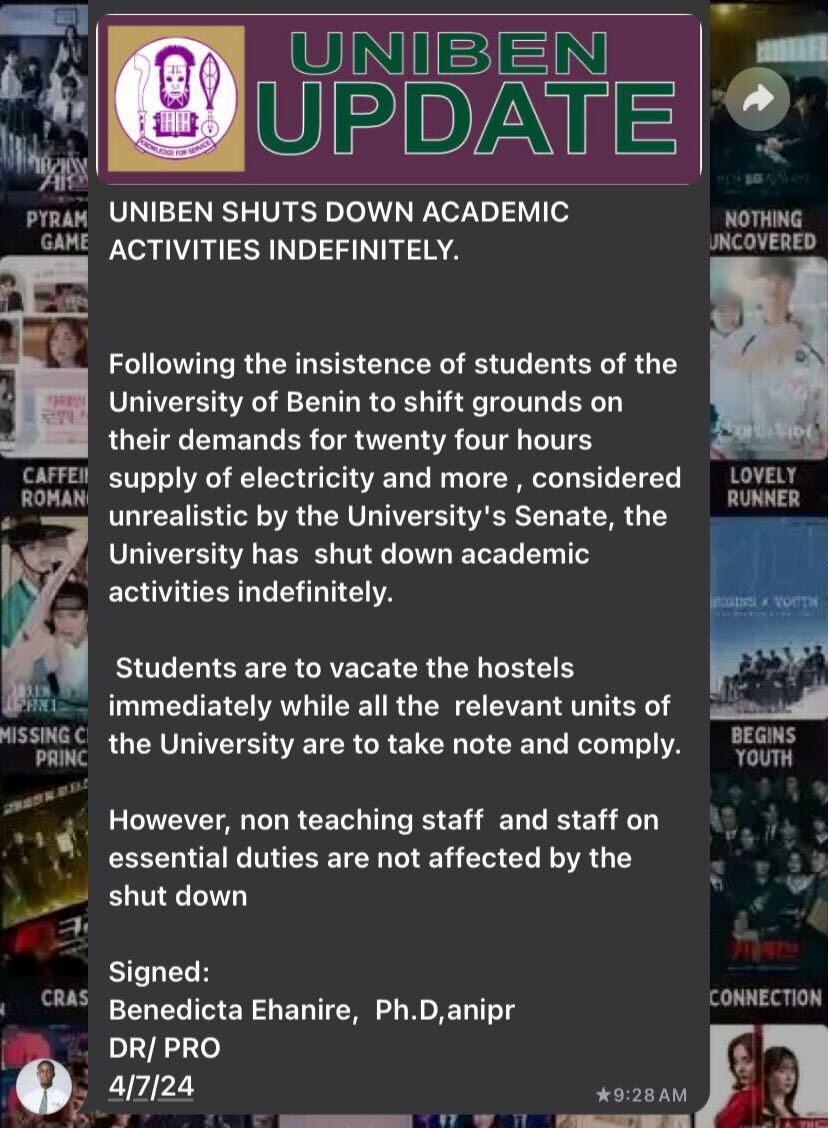
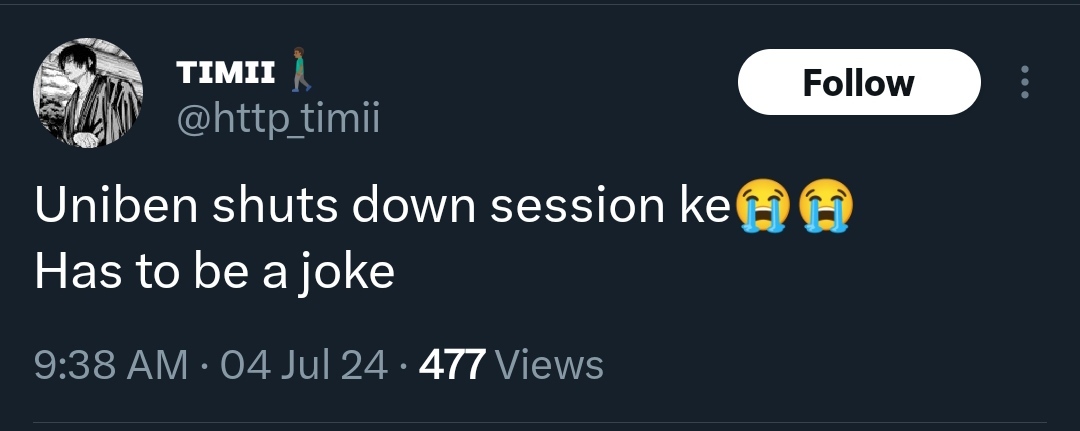
Academic activities at the University of Benin have been suspended indefinitely following an announcement from the school’s Public Relations Officer, Doctor Benedicta Ehanire.
Why did this happen?
On July 3, 2024, Uniben students seized the Benin -Ore highway to protest a power outage and lack of water in their hostels and campuses. The university has been struggling with power cuts, thanks to a new 200% increase in its monthly electricity bill — from 80 million to ₦200-280 million. This new energy cost came after the Benin Electricity Distribution Company (BEDC) cut the university’s power supply over a ₦300 million debt, forcing the university to work with power generators.
The students say they took to the street because light now comes up for only an hour a day, compared to the 20 – 22 hours they usually got. As a result, studying without electricity has become unbearable for them.
Image source: ChannelsTV
The university statement, announcing the closure, states that the university’s senate considered the students’ demand for 24-hour electricity and stable water supply in their hostels and the two campuses unrealistic. It instructed all students to leave the school hostels immediately. Academic and non-academic staff on primary duties are unaffected.
Power outages aren’t limited to Uniben alone. In a report by Punch, rising energy costs are crushing Nigerian universities.
“Some of the institutions have been disconnected from the national grid owing to millions of unpaid electricity bills to DISCOS while others who are still connected are currently grappling with huge amounts of debts running into millions of naira.”
The College of Medicine, University of Lagos, is struggling with its migration to Band A, which has increased energy costs to ₦253 million. The University of Ilorin’s electricity bill jumped from ₦70 million to ₦230 million. Kano Electricity Distribution Company (KEDCO) disconnected the power supply at the Aliko Dangote University of Science and Technology due to a ₦248 million unpaid debt. The University of Jos has an electricity bill debt close to ₦126 million.
For Uniben, this isn’t the first time it’d shut down over students’ protests. In 2021, the university closed for 24 hours following a protest over a ₦20,000 late registration fee.
What Nigerians are saying
This is a developing story.
The streets are crazy, so if you’re getting to know someone romantically, here are a couple rules you might want to follow.
The do’s
“Remember, you’re not exclusive.” – Martins
You and your partner in talking might like each other a lot, but you need to remember that you’re still in the talking stage; nothing is set in stone, and you’re just getting to know each other. This means you can talk to as many people as you want.
“Get to know each other.” – Obiageli
The entire point of a talking stage is to learn more about each other, so actually do that. Talk to each other about the simple things — your likes, dislikes, hobbies — anything that won’t have them wondering how you haven’t spoken to a therapist or been declared clinically insane.
“Remember that you can always run.” – Mariam
If they’re unkind, homophobic, misogynistic, or just don’t have the same values as you do, pack your bag and run. It’s the talking stage, not prison.
“Remind them to give you space when you need it.” – Rhema
It’s the talking stage, which means you need to spend some time with this person and get to know them. However, that doesn’t mean they can call you out of the blue whenever they want or demand things from you. They need to know if you have boundaries you do not want to be crossed.
“Meet up” – Angel
It might be tempting to spend half your time talking over the phone, but at some point, you’ll have to put the phone down and meet in person. This way, you know if they’re actually your type, and they match your vibe.
[ad]
The don’ts
“Your family and friends don’t need to know them.” – Damian
Sure, you can tell the people in your life about this person you’re talking to, but why would you want to formally introduce the person you’re in a talking stage with to the people that have known you for years? What title would you even introduce your talking stage with?
“Don’t go second base.” – Somto
A little peck here and there is cute, but no heavy over-the-clothes petting and no sex. It might cloud your judgement and have you feeling things you shouldn’t.
“Don’t do pet names or nicknames.” – Damian
If you can’t formally introduce them to anyone in your life, why should they give you nicknames and call you “baby” or “sweetheart” outside? If people ask why they’re being all sweet on you, what would you say?
“Don’t force shit.” – Rue
Don’t act out of character or do things you think they’ll like so they’ll make the relationship exclusive, and you can become a boyfriend or girlfriend.
“Don’t be touchy.” – Ij
Everybody should keep their hands to themselves. You don’t need to hold someone’s waist or touch their shoulder just because they’re getting to know you. That’s not how things work.
Love Life is a Zikoko weekly series about love, relationships, situationships, entanglements and everything in between.
What’s your earliest memory of each other?
Aliyu: We met through family in 1988. Our fathers knew each other, and one day her father came to visit mine with her in tow. They stayed for about an hour, and we were introduced. She was shy and barely said a word. She just sat in a corner, and I remember me and my brothers watching her from the corridor to our rooms and talking about how beautiful she was.
Mariam: I was so self-conscious to be in a strange house with nothing to do but watch my father talk with his friend. I wasn’t supposed to accompany him there; he’d just decided to stop by on our way to getting the things I needed for school.
After that, we met more often during family and religious gatherings, and we just got close.
When did you start to like each other?
Mariam: After he kissed me in my father’s compound when no one was looking. It was the day after Ileya in 1989. I’d only ever been kissed once before, and it was nothing like his own.
Aliyu: My brothers and cousins had discovered I liked her sometime before that. They saw that I’d sometimes stare at her. So at this gathering, they teased me into kissing her and telling her how I felt. I didn’t tell her how I felt. I just kissed her and disappeared.
What happened after?
Aliyu: We went back to our lives.
She was still in school, and I was trying to get into the family trade of poultry farming. Not much happened until the next year when she was back from ABU for a long break and we met at the water factory her brother worked at. We talked a bit, and after she left, I told her brother I wanted to marry her. Imagine me with no money saying something like that.
Mariam: My brother came back home and told me about it. I just laughed. I crushed on him since the day he kissed me without regard for my father’s house. But I didn’t want to believe he liked me back. I returned to school and thought about him for weeks, imagining us married.
Why was marriage the first thing that came to mind and not dating?
Aliyu: Maybe it was the times, but that’s what I wanted when I saw her. I wanted her to be my wife. So I worked hard while she was in school. I did everything to make more money. I started buying and selling goats and rams. I did deliveries briefly. I saved most of the money I made.
Mariam: In school, I had a few other suitors, but I chose to wait for the possibility of being with Aliyu. I used it as a catalyst to focus on my studies.
He waited till 1992, my last year in school to go to my father and ask him about me.
And then, you got married?
Aliyu: No, we courted for another year. I wanted her to finish first. I didn’t want to rush or scare her.
Mariam: During this period, he’d send me money and gifts all the time.
A lot of my friends were getting married while in school, but I appreciated the wait. The truth is I was scared of the responsibility of marriage. Learning from my friends’ experiences helped me feel prepared after graduation.
What was the wedding like?
Mariam: It was big. Our parents invited every single person they knew. We had three different ceremonies, and by the end of it all, I was exhausted. In fact, whenever I think back to my wedding, I associate it with tiredness.
Aliyu: We didn’t get the time to bond before and during the ceremonies. Then after, we consummated and moved in together. The excitement wasn’t really there anymore.
If you want to share your own Love Life story, fill out this form.
What d’you mean?
Aliyu: I’m not sure what I thought would happen, but I wasn’t prepared for how dull living with one person was. Everyone just avoided us because they didn’t want to intrude on our brand new marriage.
But we just continued on with life. She got a job, I ran my businesses, and we performed our duties.
Mariam: I think we were fine until the kids started coming.
I had our three children in the space of four years and that was really hard for me. Once the third one was out, I got on family planning, and he didn’t like that.
Aliyu: I understood why she had to, but she didn’t consult me first. What if I wanted one more child? I also didn’t like how it affected our sex. It became like a chore trying to get her in bed.
How did you navigate this period in your marriage?
Mariam: Taking care of the children mostly on my own was hard. I had to quit my job after I had the first one, but I was still always tired. Even with my mother and younger sister’s help.
Our communication was zero at this time, but he always provided, so I was content.
Aliyu: In my mind, I was giving her space and time to focus on motherhood while I focused on making us comfortable. Running the businesses was no piece of cake.
Fair
Mariam: Once the children were all old enough to go to school, we were never able to build our relationship. We were fully adults with adult worries and responsibilities. There was no time for gisting and jokes like I saw my friends do with their husbands.
I’m not sure how everything went so wrong.
Aliyu: I found out she was sleeping with someone else.
Sorry, what?
Mariam: After I’d just had our third baby, I got close to one of my old friends from ABU, one of the “suitors”. He was still unmarried. So we met a lot when Aliyu was away at work and I wanted to get out of the house and the chaos of crying babies. We never had sex, but we got intimate sometimes.
Aliyu: I was also sleeping with my secretary at the time. But it didn’t stop me from being angry. Instead of telling her I found out, I just held it in and resented her.
Did it eventually come out?
Aliyu: Yes, when I saw her with another man different from the first one.
We moved to Abuja from Kaduna in 2004, and I spent less time at home because I had to travel more. I had a new girlfriend, and most times, I’d take her on these trips with me. I was considering making her a second wife.
One day, I saw Mariam leaving our house with this man when I’d just returned from a trip.
Mariam: A trip with his “girlfriend” I’m sure, but he had time to judge me.
Aliyu: Later that day, I confronted her about it and she just apologised. I couldn’t say anything again.
You just let it go?
Aliyu: Yes. I didn’t want stress, and I didn’t want to chase her out of my house. So what was the point of pushing it? I also thought it’d make her more agreeable to my bringing in a new wife.
Mariam: Him not getting angry made me realise he didn’t care what I did. He didn’t care about me. He just wanted someone respectable to bear him children. And since I’d given him two sons and dared to do family planning, he was done with me.
Aliyu: That’s not true. She was cold and that surprised me after we got married. I could never really get her to ease up and have fun with me.
[ad]
So what happened after this second bout of infidelity?
Mariam: This is when I feel we separated without separating. We just started leading different lives even though we still lived under the same roof — and slept in the same bed for nearly ten more years.
Aliyu: I continued travelling constantly and we hardly talked. In 2007, I married a second wife, we had a son, and things were peaceful. But in 2012, the second wife left me for another man.
Mariam: When he went to marry someone half his age. Guess who had to take care of an additional child for him.
You?
Mariam: Yes. The woman left her son. I recently heard she’s relocated overseas with her new husband and their children.
Aliyu: I’d never have let her take my son to another man.
After this, I just decided I wouldn’t take another wife.
But did the affairs continue on both sides?
Mariam: Yes. I’m not proud to say it, but I’ve found other men I’ve felt more committed to than my husband. I considered remarrying once. In the end, I didn’t want all the drama and stigma. And I didn’t trust that the new man wouldn’t disappoint me. I also had three growing children to think about.
Aliyu: I didn’t date anyone for years after my second wife left. It felt irresponsible of me to do so. Every woman I was with after, I only had sex with.
Do you think your children feel any type of way about you living separate lives?
Mariam: Probably when they were younger, but they’re now all grown with families of their own.
My daughter often calls me to try to force a reconnection between us because she’s feeling righteous. But I tell her off. She thinks it’s my fault the marriage isn’t “working well” because I never treated her father with respect. Imagine.
Aliyu: There were times you could’ve been more humble.
I think the children understand how hard life and marriage is now, so they’re fine.
Do you think you’ll ever divorce?
Aliyu: No, I don’t believe in that. Even the prophet said that of all things permitted, divorce is the most hated by God.
Even though you’re both committing adultery?
Aliyu: I believe marriage is for life. And I still love my wife. She’ll always be my first love. I do everything I can to treat her right. She’s also given me three beautiful children.
Mariam: If I didn’t do it when I was maybe in my 30s, I don’t think I’d ever divorce because there’s no guarantee that what’s outside is better than what’s here. Aliyu is my partner in many ways, even though God did not permit that sex and companionship be one of them.
Today, we’re friends and we’re each other’s confidants.
Right. What was your first major fight about?
Aliyu: When she suddenly wanted to start using condoms during sex.
Mariam: He never agreed to use them. That’s why I had to get the implants in secret. When I later told him, he was angry but placated that at least he didn’t have to put on a condom.
Aliyu: Condoms are for laying with harlots.
On a scale of 1 to 10, how would you rate your Love Life?
Aliyu: 5
Mariam: 5. Average.
Check back every Thursday by 9 AM for new Love Life stories here. The stories will also be a part of the Ships newsletter, so sign up here.
The rejuvenation of Hip-Hop music has been visible across Africa in terms of sound evolution, more diverse styles and unique voices, and newer stories and perspectives. But it’s still redundant in proper representation of some of its contributors—the women in the genre. As popular as this issue is, it won’t remedy itself without intervention from the industry, fans, and the media.
For this week’s Zikoko coverage of women in pop culture, we introduce ten female artists who’re popping with the Hip-Hop art form, from Nigeria across Africa to the rapping African babes in the diaspora.
Reespect (Nigeria)
As you discover Reespect‘s music, keep in mind that you’re getting raps with soul. Human emotions and fragility laid down at her mic check. Although Reespect’s music connects primarily in reflection when noises are dead, and the party’s over, jams like Jungle, Twinkle and Hotline highlight her unboxed artistry.
Rosa Ree (Tanzania)
I found Rosa Ree, a Bongo Flava rapper, on my radar after watching her on the 2020 BET Hip-Hop Cypher. Her single One Time is a message and shot sent through the rung of the Tanzanian music industry that women also exist in Hip-Hop. Staying true to her voice and image, Rosa Ree takes a clear stance on I’m Not Sorry (2023). Aside from discussing women’s experiences in her music, she’s skilled to go bar for bar with any challenger. Peep her latest In Too Deep (2024) to catch in her emotional bag.
Elisabeth Ventura (Angola)
Elisabeth Ventura is also among the rappers I watched at the 2020 BET Hip-Hop Cypher, and what stood out to me were her switchable flows and breath control. Her music concept prides itself on femininity and her natural hair. In 2023, she teamed up with Cage One to release a collaborative album titled “King Raising a Queen,” on which she explores various sounds like Afropop and Drill and showcases her singing abilities.
SGaWD (Nigeria)
If there’s a popular word to describe the energy that jumps out of SGaWD‘s music, it’d be “hot girl.” Her sound selection, wardrobe choice and choreography are proof of that. Since she left her legal career and released her debut EP “Savage Bitch Juice” (2021), she wields her art form as a unifying tool of comfort, sexuality and the female experience. SGaWD’s music is experimental and the nuanced details of her romance and sex life are enjoyable flows on her list of singles including POPSHIT, Boy Toy, Dump All Your Worries On the Dance Floor and Juicebox.
Eno Barony (Ghana)
Accessible wordplays, punchlines, storytelling and versatility are the major components that make rap music pop. Eno Barony has all these and has distinguished herself with them. Songs like Wats My Name and Argument Done prove she’s battle-tested. Her women-focused “Ladies First” album exemplifies her hit-making and braggadocious abilities. With significant music awards like the 3Music Award and African Muzik Magazine Awards, Eno Barony sits in conversations with the best rappers in her country. [ad][/ad]
Eno Barony may not be a familiar name outside of Ghana, but she’s held down the Ghanaian rap scene as strongly as her male counterparts. Get familiar.
FEMI ONE (Kenya)
Straight out of Nairobi, FEMI ONE’style of Hip-Hop style sports, humourous and fire-breathing bars, football references and fun production. From being one of the first female rappers to win the best rapper award at the AFRIMMA 2022 to performing at Boomplay’s Boomfest 2024, FEMI sets herself aside as a wavemaker in Kenya’s music scene. Are you looking to hear something different and fierce in African Hip-Hop? Her albums “Greatness” (2021) and “Dem Kutoka Mwiki” (2023) will serve you.
Ami Yerewolo (Mali)
Ami Yerewolo is a conscious artist: check her album titles and lyricism. Gender equality and the fight against violence and oppression are messages in her music. In 2014, she got significant attention with her sophomore album, “Naissance” (meaning “Birth”). The album is considered the first female Malian rap album, and it cemented her as the first female Madinka rapper. Since then, she has made her third and fourth albums, “Mon Combat” (meaning “My Fight” (2018)) and “AY” (2021). In 2018, she also started a festival called “Mali a des Rappeuses” (meaning “Mali has female rappers), giving a platform to younger female rappers on that side of the world. She remains consistent, giving her voice to African rhythms and social causes.
Maryama Cham (Gambia)
Maryama Cham is a rising, diverse artist and activist from Gambian. When she’s not doing soul music or mixing Gambian traditional elements or Reggae, she’s rapping about societal issues like female genital mutilation, climate change and human trafficking. We don’t see a young, cool musician conscious of her world and generations-deep in her ancestral history.
ZuluMecca (South Africa)
If you call ZuluMecca a rapper’s rapper, you aren’t wrong. Her grasp on conscious messaging, braggadocious lyricism and emotive topics is outstanding. Get Mecca on boom-bap beats; she’ll deliver head-knocking performances. Put her on trap, alternative or any sound, and it’s a toast for that instrumental. If you’re searching for soulful raps with street confidence and fashionista swag, ZuluMecca says yo.
Pongo (Angola)
Although Pongo was born in Angola, she lives in Portugal. Her music is hip-hop perfectly blended with Kuduro (Angola dance music), pop, dancehall and electronic dance music. With a sensitive voice and passion for African stories and her diaspora experiences, Pongo invokes impressive and breathtaking sounds.
We asked AI to share a full guide, and it’s response? “Sure, here’s a humorous take on staying in a marriage with a cheating partner in Nigeria.”
Master the art of selective hearing
When your friends start whispering about your partner’s escapades, develop the skill to only hear compliments. “Did you hear he was with that girl?” magically transforms into, “Did you hear he bought you a new car?”
Enroll in advanced detective training
Become Nigeria’s next Sherlock Holmes. Follow clues, check phone messages, and decode cryptic texts. You’ll be so good that even the local police will ask for your help in solving cases.
Perfect your poker face
No matter what bombshell news comes your way, keep a straight face. Channel your inner Nollywood actor. Your reaction should be so composed that it makes news anchors look like they’re overacting.
Join the “don’t ask, don’t tell” club
Adopt the policy of blissful ignorance. If you don’t ask about their whereabouts, they won’t tell you lies. Ignorance is bliss, after all.
Become an Instagram detective
Who needs private investigators when you have social media? Check tagged photos, comments, and new followers. Be the Sherlock Holmes of Instagram stories.
Develop an appreciation for bad excuses
When they come home late smelling of unfamiliar perfume and mumble something about a “late-night office meeting,” smile and say, “Of course, dear. Those office meetings must be really aromatic.”
Keep a diary of creative excuses
Document every outlandish excuse they come up with. One day, you’ll publish a bestseller: “The Encyclopedia of Spousal Excuses.” It’ll be a hit, especially in the humor section.
Turn to Nollywood for inspiration
Watch Nollywood movies for strategies. See how the characters deal with cheating partners. Dramatic confrontations, fainting spells, and breaking plates are all valid options.
Create an imaginary friend
When things get tough, talk to your imaginary friend about your troubles. They’re always there to listen, never cheat, and have excellent advice like, “Have another slice of cake.”
Keep a stash of comfort food
Always have your favorite comfort foods on hand. There’s no problem that pounded yam and egusi soup can’t solve, even if it’s just for a little while.
Plan elaborate fake business trips
Whenever you need a break, plan a fake business trip. Post pictures from random locations, and enjoy your “me time.” Bonus points if you can get your partner to believe you’re actually on a work trip.
Join a support group
Find like-minded people who understand your plight. Meet regularly to share stories, tips, and a good laugh about the absurdities of life with a cheating partner.
Embrace the power of prayer
Attend church services and pray fervently. If nothing changes, at least you’ll have a direct line to divine wisdom. Maybe your prayers will even inspire a miraculous transformation in your partner.
Learn the art of subliminal messaging
Subtly leave books like “Faithfulness for Dummies” around the house. Play songs with lyrics about loyalty. Perhaps some of it will seep in through osmosis.
Develop a sense of humor
At the end of the day, laughter is the best medicine. Laugh at the absurdity, the drama, and the ridiculousness of it all. After all, if you can’t laugh, what can you do?
ChatGpt’s Disclaimer: This listicle is meant for humor and entertainment purposes only. Cheating in a marriage is a serious issue, and it’s important to seek professional advice and support when dealing with such situations.
Your partner might stain your white at some point in your relationship, but while some white-staining moments are bad, some will have you crawling on the ground, begging for shelter from the humiliation your partner has dumped on your head. Believe it or not, these are some of the most embarrassing things your partner can do to you and your relationship.
Beg their side piece
It’s one thing to beg the person they’re cheating on you with. It’s another thing for them to wear strawberry pajamas, get on their knees, and beg for God knows what on camera.
Crop you out of a picture
It’s one thing for your partner to dislike public displays of affection. It’s another for you to post a picture with them, gushing about all the butterflies they put in your belly, only for them to turn around and post the same picture, without you.
If the supposed love of your life needs you to look like an upcoming armed robber before they can take you out in public, they aren’t the one for you. As a matter of fact, they’re your opp.
Get curved when they try to cheat
We’re not saying creating is good. All we’re saying is that if your partner tries to get with someone else and the person tells them to hug a transformer, both you and your baby should be embarrassed, and you need to dump their ass swiftly.
[ad]
Owe someone money
We’re not saying it’s a good thing to do, but even the Nigerian government owes people. If your partner is a chronic onigbese all you can do is bow your head in shame and follow these tips.
Wash your dirty linen in public
Some people don’t know how to keep their mouths shut and keep information to themselves. If your partner is like this, chances are when you get in a fight, they’ll run to the internet and spill all your secrets to whoever cares to listen.
Take back things they’ve bought you after a breakup
If your partner ex asks for everything they ever bought for you just because you get into a fight or end things, then they should be ashamed and embarrassed, not you.
Your wedding is a very special day in your life and the people you surround yourself with on that day and the days leading to it are very important. When choosing your bridal train, you’ll need planners, jokesters, and everything in between to make sure your day goes smoothly. Here are the types of people you’ll need as you walk down the aisle.
The bestie
They probably know you better than you know yourself and would ensure you have everything you need, when needed throughout the day.
The laid-back one
People are going to try you on your special day. Someone will try and rush you while you get read, a vendor might act like there’s bomb in their head, and a million other things might try and stress you, which is why you need someone on your bridal train that is laid back and chill, so they can remind you to breathe and pass that stress to the planner or fighter in the group.
[ad]
The planner
They know what’s supposed to happen, when, and how it’s supposed to happen. They’ll most likely spend half their time dealing with annoying vendors or the actual wedding planner and making sure your special day goes on without a hitch.
While the planner would have a more diplomatic method of handling any issues that may arise on your big day, the fighter won’t. They’ll most likely stand guard beside you through the day and stare daggers into anyone that tries to upset you through the day.
The party animal
You’ll need someone who knows how to have the time of their life so you can remember to have fun on your special day.
The wannabe photographer
You’ve hired a photographer and a videographer, but this bridesmaid would still pull out their phone to record every move you make throughout the day.
The comedian
This person fancies themselves a comedian, so if things get a little tense, you can always trust them to lighten the mood with a joke or two.
This is debatable, but the most dangerous venture, apart from dodging a Nigerian mother’s slap, is investing in land — especially in Lagos. If it’s not the fear of getting scammed, it’s navigating “omo onile” and hoping you aren’t buying land in an area that’ll be demolished by the government in the future for one reason or another.
However, land remains a valuable long-term investment option, and you can invest safely by following these tips I got from discussing with Grace Ogunlaja, the lead consultant at I-Brow Properties.
Check for the type of land
Not all land in Lagos is for residential purposes. Some have been earmarked for agricultural, commercial, or even mixed use. Buying a residential land and using it to produce pure water may earn you visits from the authorities, and you’ll probably lose ownership. Some lands can even be in locations under territorial dispute. You can verify the type of land at the state Ministry of Lands (or Lands Bureau).
Does it have a title?
You should always confirm the land title with the land seller or real estate developer. Do NOT purchase any land without a title.
A title can be the Certificate of Occupancy (AKA, C of O) or Governor’s Consent. The C of O is a state-provided document demonstrating land rights to an individual; It proves ownership. Governor’s Consent is given when someone buys land that already has a C of O and wants to notify the Governor and the general public that the land has a new owner.
Land title differs from the deed of assignment or receipt the land seller gives after purchase. Those documents just indicate that you’ve bought something. You still need to confirm you didn’t buy stolen property, or worse, land that’s been mapped out for government purposes. Like a coastal road project, for instance.
Run away from “freehold”
Some real estate agents in Lagos will try to sell you land and claim it has freehold rights, meaning you own the land in perpetuity (or forever) and can use it for anything. This doesn’t exactly work because all land belongs to the government. Also, freehold isn’t exactly a land title, and chances are that the land isn’t free from government acquisition. When in doubt, always verify at the Ministry of Lands.
Go with your own surveyor
The seller may try to convince you that the land already has a registered survey plan approved by the State’s Surveyor General, but those can easily be falsified. You should always go with your own surveyor to pick the land coordinates and verify them at the ministry.
Get familiar with the authorities
When buying land, you must verify everything with the Ministry of Lands because land issues quickly become complicated in Lagos state. If proper verification isn’t done, you risk losing your investment.
Also, verification doesn’t end with buying the land. You also need to obtain building approval from the state government before doing anything on the land. If you build something different from what was stated on the approved building plan, the government has the right to demolish it without giving any compensation.
Remember: The government can come for your land
It’s important to make peace with the fact that the government can claim land for major projects at any time, even if the owner has a C of O or Governor’s Consent. The only difference is, having the correct land titles gives the owner the right to sue the government or collect compensation. The owner has no compensation or fighting rights if it’s untitled land.
From unexpected call-outs to headline-grabbing feuds and a crypto scam, the landscape of Nigerian pop culture has been anything but a whirlwind of controversy in the first half of 2024. As the year breaks into its second half, here are the craziest events that have shaped the scene so far.
Teezee owed money
In January 2024, singer Prettyboy D-O accused the Native Record label boss of owing a videographer $200-$300. Although the situation got messy and turned into a back-and-forth between Prettyboy D-O and OdumoduBlvck on X, Teezee never addressed the issue.
Portable became a Spiderman
It’s wild to think that after making music and shooting a video with Skepta in London, Portable was back in the country getting in trouble. Portable flew over the gate to escape the police’s arrest over a debt case. He even made a song titled Spiderman out of the situation.
If you see your future in jumping fences, the viral Portable’s video should be a top watch.
Bobrisky’s imprisonment
On April 3, popular socialite Bobrisky was arrested for mutilating some naira notes, AKA spraying money. By April 12th, she was sentenced to six months in jail without an option of a fine. October is so far away, please return our “Mummy of Laygus.”
Davido on his knees begging
After a photo of Davido and a US model known as “pinknative” on IG went viral, the lady grew uncomfortable with the harsh comments. She retaliated with a funny and weird video of Davido on his knees. He was begging for what some online users thought was sex. It’s all speculation, and we don’t know what happened. But it has served the public as a meme.
Wizkid and Davido beef
Even Wizkid posted that Davido’s video to troll Davido during their back-and-forth on X. Davido suggested that Wiz is a sick man after Wiz called an unnamed songwriter of Davido a pant washer and bragged they couldn’t match him musically. I thought they would finally have their Kendrick Lamar vs. Drake moment, but they fumbled it. It’s only banger tweets they have.
Don Jazzy is an “influencer”
Wizkid possibly tweets according to the strain he’s smoking. In June 2024, he called Don Jazzy an amazing human. But less than a month before then, he was a banger boy on X who delighted his Wizkid FC with a mockery attempt at Don Jazzy.
An overzealous fan tagged Wizkid to reply to Ladipoe trolling Afropop artists for going through a hit recession in H1. Wiz replied with a shot at Don Jazzy, saying he’s “never chatting to anyone signed to an influencer.” The public, in turn, praised Don Jazzy and listed out his impacts and achievements.
Portable vs. Zlatan Ibile
A video of an angry Portable ranting that Zlatan told him to behave and not act dramatically around Davido during a dinner went viral. Portable felt offended and warned Zlatan not to mess with him or speak to him like a kid.
Davido’s crypto scam
As if the Racketerli business Davido endorsed in 2019 didn’t hurt people enough, he recently promoted a cryptocurrency meme coin called $DAVIDO, which severely dipped without 24 hours of launch. Immediately, Nigeria’s Securities And Exchange Commission (SEC) flagged it as a “rug pull” and issued a disclaimer to alert investors about the coin. This situation would make part of the public wonder if he needed money for his concluded wedding.
Nollywood and Oliver Twist might as well be the same person because they never know when to stop. Whenever we get a movie or series the general public likes, they return in 10 years or two with a sequel or a prequel.
It’s been five years since Oloture – the story of a journalist who went to look for what wasn’t missing and ended up in the hands of murderous human traffickers – came out. The movie ended with a weird cliffhanger, so EbonyLife decided to give us a sequel. I’ve watched it, and naturally, I have questions.
Does Netflix pay more for series?
I just want an explanation for why I sat down to watch a 3-episode limited series that ended up being an hour and 45 minutes long (yes, I did the maths) and ended with a ridiculous cliffhanger. They could have just given us a film so we know what we’re actually signing up for.
Who pissed off continuity?
Someone on the production team has to come out and say what they did to continuity this season because the lack of fucks given is shocking.
Oloture has on a new and not-so-improved wig. Beauty somehow took down her cornrows and cut her hair on her run from the Benin border into Lagos. They must have swapped buses because the girls who entered the Benin Republic are not the same girls who left Nigeria. Something must have happened to the continuity team. This is too much.
Where did Sandra disappear to after one day?
One minute, Sandra was running the hostel with an iron fist; the next, she had disappeared from Lagos and put her sister in charge of her affairs. Either something was pursuing her, or she was pursuing something; we want to know where she disappeared and how.
I know it’s hot in Nigeria, but why was Chuks always shirtless?
It’s hot AF in Nigeria, and Chuks was having money issues. Still, if he had enough funds to fuel his car and buy the food that gave him the energy to disturb all the women in his area, he had enough to buy a shirt, even if it was okrika.
When did Beauty’s mother move?
One day, Beauty’s mother lives on a desolate, dry land. Two days later, Beauty returns to the house, and everywhere is filled with vegetation and fertile soil. It’s either the people that were sent to kill her mother are Grade A gardeners, or someone just called us foolish.
How did Chuks kill Ade so easily?
Yes, I know he used a knife, but did you see how Mr. I-can-send-an-army-of-men-to-shoot-up-your-coaster-bus walked into the scene? He looked like someone with serious money and power, only for Chuks, the pimp, to take him down that easily? Where were his bodyguards? How didn’t he hear Chuks’ heavy boots walking so closely behind him? I need answers!
She said she was doing it for her sister, but why? Her sister’s dead, and so is her mother; the people who killed both of them are in Lagos, Nigeria. What is she going to Europe to look for?
[ad]
Why is Oloture so foolish and naive?
In the history of foolish characters doing foolish things, I fear Oloture might take the cake. She kept her secret hidden from Lagos to Libya, but she meets a fine man named Femi, and that’s who she thinks she can trust?! Not Peju, not Ben or even Victor, but a strange man in a strange land? She should clap for herself.
Will they ever get to Europe?
At first, it was cute, but now I’m getting upset. Oloture better teleport to Europe, remain in one of those African countries, or return to Nigeria before the next season. She’s a danger to herself and her travel companions, and if she makes one more foolish mistake, I will take matters into my own hands and fight her.
July is a special month for Infinix Nigeria, as it’s their anniversary, and the smartphone and accessories brand has decided to celebrate with their awesome customers by giving whooping discounts, amazing prizes, and fun activities.
Running from July 1st to 31st 2024, Infinix Brand Month will provide customers with opportunities to win amazing prizes when they purchase Infinix devices in-store and partake in weekly live sales on social media hosted by celebrities like Bisola Aiyeola, Timini, Stan Nze, Neo Energy and Daniel Etim-Effiong.
Here’s All You Need To Know And Do:
Instant Gifts: Throughout July, customers who buy ANY Infinix device from authorized retail stores will receive instant gift items.
The excitement doesn’t stop there!
Special Raffle for Infinix GT 20 Pro, Note 40 Series and Hot 40 Series Buyers: Customers who buy the Note 40 series, Hot 40 series, or GT 20 Pro smartphones will also get a raffle ticket that qualifies them to win amazing home electronic appliances, like Smart TV, Generators, Microwave, Refrigerators, Air Fryers, Washing Machine, Vacuum Cleaners, etc. Raffle draws will be conducted weekly on Infinix’s social media pages to select winners across regions.
Special Gift for GT 20 Pro: Customers who purchase the Infinix GT 20 Pro from Infinix authorized retail stores will also get the Infinix XE30 Earbuds for free.
There’s still more:
There will be weekly live sales every Friday in July hosted by your favourite celebrities on Infinix’s Instagram and TikTok accounts (@infinixnigeria) where customers will get discount codes of N40,000 to shop select Infinix smartphones from Slot, 3CHub, Xpark and Pointek.
So start shopping for your Infinix devices at authorized retail stores across Nigeria this July, and stay tuned for the weekly draws and live sales on social media.
For updates, announcements, and more opportunities to engage with the Infinix community, follow Infinix Nigeria onInstagram, Facebook, X, andTikTok.
[ad]
Trigger Warning: Sexual assault
On June 30, 2024, X user @Theariaspeaks posted a Twitter thread to raise awareness about an epidemic of sexual assault at the University of Lagos, sharing anonymous texts from victims and the university’s unwillingness to punish the offenders. In the hours that followed, perpetrators who’d escaped punishment for this act were called out.
This is everything we know about the reported time and dates of the sexual harassment cases flying around the College of Medicine, University of Lagos, and some parties involved.
March 2024 — Oluwagbemileke Otokiti
Image source: @Theariaspeaks (X)
On June 29, 2024, Oluwagbemileke Otokiti, a 200-level pharmacy student, was called out for allegedly sexually assaulting a 200-level female medicine and surgery student. According to the anonymous messages sent to X user @Theariaspeaks, Oluwagbemileke had been involved in another incident in March 2024. He got caught, and Unilag’s House of Lords — the student legislative council — fined him ₦5000, asked him to write an apology letter and provide a guarantor to “vouch for his conduct”.
The victim reported that Oluwagbemileke assaulted her in the early hours (2:55 AM and 3:05 AM) of March 10, 2024, while studying in a classroom. During a conversation with Oluwagbemileke, he hugged her from behind without consent. Despite her expressed discomfort and attempts to get away from the situation, Oluwagbemileke persisted, “making inappropriate sexual comments and exhibiting aggressive behaviour.” She reported to the House of Lords later in the day.
According to a statement released by the House of Lords, upon the report of the assault incident, a committee was formed to investigate the situation. During one of the meetings, Oluwagbemileke confessed to the crime and issued a recorded apology. The victim asked for a written apology letter to be sent to all group chats of the College of Medicine and Pharmaceutical Sciences Students (COMPSSA), stating what happened while keeping her anonymous. At the time, she didn’t want the matter to get to the school authorities.
As of March 20, Oluwagbemileke had paid the ₦5000 fine and asked for a week extension to find his guarantor. However, he eventually failed to do so, and the matter escalated to the Dean of Student Affairs (DSA).
The victim stated that Oluwagbemileke is a repeat offender and something similar and non-consensual had happened between them in 100 Level.
On March 22, 2024, the Pharmaceutical Association of Nigerian Students, Unilag Chapter, wrote to the Dean of the Pharmacy faculty about Oluwagbemileke’s sexual misconduct.
Oluwagbemileke, however, participated in a faculty sports event despite several complaints from women who didn’t feel safe around him.
June 26, 2024 — Samuel Adigwe
Image source: @OlajumokeHera (X)
On June 28, 2024, another male pharmacy student was reported for sexually harassing a female radiography student.
At approximately 1:00 AM on June 26, when the victim had fallen asleep in a Cold Room where she was studying, Samuel inappropriately touched her. The victim pushed Samuel away and called her friend, who confronted him, but he wasn’t bothered. He allegedly claimed that “it was mutual”.
She reported the case to the House of Lords, and an investigation was launched immediately.
In response to the sexual assault report, Unilag’s Sub-Dean sent a warning message directed at the male students in the 400 Level pharmacy group chat.
A 300-level male Pharmacy named Ajibola was also reported around the time for the same crime. Many of his victims have come forward to report incidents where he flashed his penis or inappropriately touched them. Although he was once reported to the faculty, he’s yet to face any consequences.
October 2023 — Chibueze Nwanmah
One of the messages sent to @TheAiraspeaks also exposed Chibueze Nwanmah, a 600-level male medical student, as an abuser who has allegedly assaulted over thirty female students. Under the guise of checking on his victims’ academic progress severally, he allegedly takes advantage of them, forcing them to hug him and rub his penis against them.
In October 2023, Chibueze was reported to the school authorities over sexual assault involving at least eleven female classmates and an unknown number of students in younger classes. A petition was written and signed by fifty-four people. The authorities formed a panel, but there has been no update.
Currently, the University of Lagos and the Faculty of Pharmacy are yet to address the issues. Meanwhile, Lagos State parastatal and organisations like Lagos State Domestic and Sexual Violence Agency (DVSA) and Stand to End Rape (STER) have picked up the case.
In an effort to mandate accountability for sexual harassment cases at the College of Medicine, Unilag, a petition has been launched, trending with the hashtag #EndSACultureInCMUL.
On July 2nd, X user @Theariaspeaks announced in a tweet that she and another X user, @BigBadReni, had a meeting with Unilag’s Vice Chancellor, Professor Folasade Ogunsola. The VC has agreed to the demand to punish the perpetrators, and she has pledged to create a safe space for students to report issues of abuse anonymously and make a new sexual abuse policy for the College of Medicine, Unilag.
This is a developing story.
The highly anticipated seventh edition of the Lagos Leather Fair kicked off in grand style, setting the tone for an exciting and insightful two-day experience. Starting out this Saturday, June 29 at The Balmoral, Federal Palace, Victoria Island. The first day was a perfect blend of creativity, innovation and connection across leather and fashion enthusiasts. The fair’s 2024 edition was packed with elegant designs that set a strong tone for the future of the African leather industry. High points of the event featured a VIP cocktail with leading creative minds and thought leaders such as Waridi Wardah, Ugo Monye, Femi Olayebi, Hon. Akinyemi Ajigbotafe, Commissioner Ministry of Wealth Creation and Employment, Toke Benson-Awoyinka, Honorable Commissioner of Tourism, Arts and Culture, and others, as well as a stunning runway showcase from leading brands like Femi Handbags, HankerandReech, Nene Yaya Sarl, Mhose, Blarkmate, and Aaboux.
Prior to the artful display, the day began with an informative workshop titled “From Inspiration to Execution: Leveraging the Power of AI From Design to Production, Marketing and Customer Engagement”. The session was moderated by Dara Olayebi and shared insights from the industry leaders, Scott Eneje and Malik Afegbua, on how AI can revolutionalize every business journey. This session was a significant opportunity for leather designers and entrepreneurs to gain valuable insights and practical tools to improve their craft and scale their businesses.
Following the workshop, the first conversation of the day delved into the intricacies of the leather supply chain. Industry leaders addressed the challenges and opportunities within the supply chain, emphasizing the need for efficiency and sustainability within sourcing, manufacturing and market access solutions. The second conversation of the day held between Waridi Wardah, and Tokunboh George-Taylor, CEO/Founder of SKOT Communications who focused on brand positioning and visibility. This session was particularly beneficial for emerging designers looking to make a mark in the leather industry. The insights provided were invaluable, offering practical advice on how to stand out in a crowded marketplace despite economic variables.
Overall, day one of the Lagos Leather Fair 2024 was a resounding success. The workshop, cocktail event and runway showcase highlighted the fair’s commitment to promoting excellence and innovation in the leather industry. Attendees left with a renewed sense of inspiration and anticipation for what the rest of the event will bring.
As we look forward to the second day of the Lagos Leather Fair 2024 on Sunday June 30, excitement for the creativity and innovation continue to build. A high standard has been set, and we can’t wait to see what the rest of the fair has in store.
The BET Awards 2024 took place on June 30 at Los Angeles’s Peacock Theater. R&B icon Usher received the Lifetime Achievement Award.
Hosted by Hollywood actress Taraji P. Henson, the award ceremony celebrates the best performances in music, TV, film, and sports. South Africa’s Tyla bagged the Best International Act award. Here’s a full list of winners.
Album of the Year
Chris Brown, 11:11
Gunna, A Gift & A Curse
21 Savage, American Dream
Usher, Coming Home
Drake, For All the Dogs (Scary Hours Edition)
Victoria Monét, Jaguar II
Killer Mike, Michael(WINNER)
Nicki Minaj, Pink Friday 2
Best Female R&B/Pop Artist
Beyoncé
Coco Jones
Doja Cat
H.E.R.
Muni Long
SZA (WINNER)
Tyla
Victoria Monét
Best Male R&B/Pop Artist
Brent Faiyaz
Bryson Tiller
Burna Boy
Chris Brown
Drake
Fridayy
October London
Usher (WINNER)
Best Group
¥$, Ye, Ty Dolla $ign (WINNER)
2 Chainz & Lil Wayne
41
Blxst & Bino Rideaux
City Girls
Flo
Maverick City Music
Wanmor
Best Collaboration
“All My Life”, Lil Durk feat. J. Cole (WINNER)
“America Has a Problem (Remix)”, Beyoncé feat. Kendrick Lamar
“God Problems”, Maverick City Music, Naomi Raine & Chandler Moore
“Me & U”, Tems (WINNER)
“Try Love”. Kirk Franklin
[ad]
Viewer’s Choice Award
“Agora Hills”, Doja Cat
“All My Life”, Lil Durk feat. J. Cole
“Fukumean”, Gunna
“Lovin on Me”, Jack Harlow
“Made for Me”, Muni Long
“On My Mama”, Victoria Monét
“Rich Baby Daddy”, Drake feat. Sexyy Red & SZA
“Sensational”, Chris Brown feat. Davido & Lojay
“Texas Hold ’Em”, Beyoncé (WINNER)
“Water”, Tyla
Best International Act
Asake (Africa)
Aya Nakamura (France)
Ayra Starr (Africa)
Bk’ (Brazil)
Cleo Sol (UK)
Focalistic (Africa)
Karol Conká (Brazil)
Raye (UK)
Tiakola (France)
Tyla (Africa) (WINNER)
Viewer’s Choice: Best New International Act
Bellah (UK)
Cristale (UK)
Duquesa (Brazil)
Holly G (France)
Jungeli (France)
Makhadzi (Africa) (WINNER)
Oruam (Brazil)
Seyi Vibez (Africa)
Tyler Icu (Africa)
BET Her
“16 Carriages”, Beyoncé
“Blessings”, Nicki Minaj feat. Tasha Cobbs Leonard
“Commas”, Ayra Starr
“Fly Girl”, Flo feat. Missy Elliott
“Hiss”, Megan Thee Stallion
“On My Mama”, Victoria Monét
“Saturn”, SZA
“Yeah Glo!”, GloRilla
Best Movie
American Fiction
Bob Marley: One Love(WINNER)
Renaissance: A Film by Beyoncé
Spider-Man: Across the Spider-Verse
The Book of Clarence
The Color Purple
The Equalizer 3
The Little Mermaid
Best Actor
Anthony Mackie
Colman Domingo
Damson Idris
Denzel Washington (WINNER)
Donald Glover
Idris Elba
Jeffrey Wright
Lakeith Stanfield
Best Actress
Angela Bassett
Ayo Edebiri
Coco Jones
Danielle Brooks
Fantasia
Halle Bailey
Issa Rae
Regina King (WINNER)
YoungStars Award
Akira Akbar
Blue Ivy Carter
Demi Singleton
Heiress Diana Harris
Jabria McCullum
Jalyn Hall
Leah Jeffries
Van Van
Sportswoman of the Year Award
A’ja Wilson
Angel Reese (WINNER)
Coco Gauff
Flau’jae Johnson
Juju Watkins
Naomi Osaka
Sha’carri Richardson
Simone Biles
Sportsman of the Year Award
Anthony Edwards
Gervonta Davis
Jalen Brunson (WINNER)
Jalen Hurts
Kyrie Irving
Lebron James
Patrick Mahomes
Stephen Curry
Every week, Zikoko seeks to understand how people move the Naira in and out of their lives. Some stories will be struggle-ish, others will be bougie. All the time, it’ll be revealing.
When did the hustle start for you?
1987. I was 17 and had just run away from home. I squatted with a friend whose mother sold ice water, so I started helping her hawk, too. Although she didn’t pay me, she fed and allowed me to live in the one-room apartment she shared with my friend.
It’s not like I hadn’t hustled before sha. My mother had a restaurant, and I always helped her cook and serve guests. But hawking ice water was the first thing I did on my own to survive.
Why did you run away from home?
I was a young, stubborn woman who wanted to experience life by making her own mistakes. I grew up in Ajegunle — a popular slum community in Lagos — and it was easy to follow the wrong crowd. You know, the type that drank and partied with area boys.
My stepfather always tried to discipline me. To me, it was like the man just didn’t want me to shine or was only trying to prove seniority. This led to us fighting a lot, and my mother was always on his side. So, I left home immediately after finishing class 5 — what you people call SS 3 now.
Did you have a plan, though?
Freedom was the only thing on my mind. I squatted with my friend for a year before her mother brought someone she was seeing to live with us. It was obvious that time had come for me to leave.
I squatted with another friend and got a job at a nearby canteen. My job was to keep the place clean and wash the plates. I can’t remember how much I earned, but it may have been around ₦200/month. ₦200 was enough to buy foodstuff — for me and my friend — to last at least three weeks.
Ah. Why wasn’t I born in the 80s?
Funny enough, we also complained about things getting expensive, but things were so much better then, compared to what our eyes see now. I was living well on that ₦200. I even saved out of it to pay to learn nursing in 1989.
Like nursing school?
Nursing school, ke? It was auxiliary nurse training. I paid a doctor some money, and he trained me in his clinic for two years.
Why did you decide to go into nursing?
I was tired of working at the restaurant, and nursing seemed like a more distinguished job. So, I asked around and found the doctor who trained me. I also worked for him during those years at his clinic. He saw that I was a fast learner and retained me after the training, paying me ₦1k/month.
Was that good money for 1991?
Somewhat. It was a small clinic, and I wasn’t an actual qualified nurse, so I was earning quite well at my level. It was enough to move out of my friend’s house and rent my own apartment.
Also, I mended my relationship with my family around this time. My mother reported me to one of my aunties in the village, and the woman appeared in the clinic one day to talk to me. Since I was now on good terms with my mother, I started sending money home once in a while. I wasn’t making money only from my job, though. I also started selling okrika (thrift clothes) in 1992.
How did that work?
You know I mentioned that I worked in a small clinic? Well, it’s not every time we had patients. The clinic had a verandah at the back that opened up to a major street. People always passed by, and I thought it was a great spot for an okrika business.
I used to buy the clothes I sold from Katangua market and display them on the verandah when work was slow. Thankfully, the doctor didn’t have a problem with it. I made roughly ₦4k in profits monthly from the clothes. That time you could buy up to ten shirts with ₦100.
My salary was ₦3k/month when I left the clinic. I spent five years there. I sold okrika throughout the years I spent at the clinic.
Why did you leave the clinic?
The doctor married a new wife who started complaining about my okrika business. I think the woman just didn’t like me. She helped her husband run the clinic, and one time, she put me on night duty for a month. I got angry and resigned. After I left, the woman started selling okrika at my spot.
What did you do next?
I got married and moved out of the area in 1997. I tried to continue selling okrika, but it was difficult to manage during pregnancy. There was one time I went to the market to buy more clothes to sell during my third trimester, and I fainted at my customer’s shop. She warned me seriously not to show my face until after I’d given birth.
While at home, I found another business idea.
What was that?
Jewellery. I lived close to a local government office and noticed that the staff loved owambes. I used to take my okrika to the offices to sell to them, but most of them either wore corporate clothes or ankara. However, they all wore jewellery. So, I decided I was going to sell that.
I started with watches and costume jewellery sets. I’d load them in my bag and go from office to office. The good thing about the business was that I could sell a ₦800 or ₦1k watch for ₦3k. The more expensive, the better. Office people like to dress well, and these ones thought that “expensive” meant quality.
Most of my customers bought on credit because they were salary earners. They only paid me at the end of the month. But it wasn’t hard to collect my money because the local government paid in cash then. The staff would all line up at the bank on salary day to withdraw money, and me too, I’d wait outside for them. Immediately I saw any of my customers come out, I’d go meet them to collect my money. They couldn’t tell me stories because we were in public.
Hehe. I love it
That was a good period for me, and I made a lot of money. My husband and I bought our first land for ₦100k in 2000. Unfortunately, we lost it years later to a land grabber — I mentioned it so you have an idea of how well the business was going.
In 2001, I bought my first mobile phone and SIM card. I think it was a Nokia 3310, but I know it cost ₦18k. The SIM card was also ₦18k. It’s hard to believe that these telecom companies basically give out SIM cards now.
2001 was also the year I started considering other business opportunities.
Did jewellery stop being profitable?
Something like that. The debt became too much. Some of my regular customers were transferred to other local governments, and I think the government also changed how it paid its staff. Or maybe the bank they used. I can’t recall well now. I just know it became more difficult for me to pursue my debtors and collect my money on time. So, even though I was still making some money, I was close to broke as most of it was tied up in bad debt.
I thought about it for a bit and decided it’d be best to get a shop and expand into shoes, bags and other accessories. That way, I wouldn’t limit my customer base to the local government office.
I found a small kiosk close to the local government office in 2002 and rented it at ₦12k/year. Then, I used all the money I had at the time from my jewellery sales to stock shoes and bags. It was a risk, but I knew I couldn’t start with two bags. No one would enter an empty shop.
Did the risk pay off?
It did. I was already popular in the area, so it wasn’t difficult to get customers. But I still couldn’t avoid credit buyers, so I tried to make up for delayed payments by increasing the cost for people who wanted to pay later. For instance, if I wanted to sell a bag for ₦2k, but the buyer wanted to pay later, I’d sell it for ₦3k. On average, I made ₦20k- ₦50k monthly.
My income went into assisting my husband to provide for the house and our three children. His mum also lived with us from 2000 to 2005, when she passed away. She suffered from a stroke, and a good part of our income went towards her medication too.
In 2006, I moved from the kiosk to a bigger shop where rent was ₦36k/year. I also added ankara and lace to the list of items I sold. Those were the days when people could just buy fabric and sew. I could buy six yards of material at ₦1k and sell it for ₦1800 or ₦2k. I stopped selling these in 2010 and faced my shoes and bags because people were no longer buying.
Do you know why?
It got more expensive — six yards of ankara fabric increased to ₦3k upwards without profit — and more people had more aso-ebi than they knew what to do with. It didn’t make sense to just buy fabric to sew when you’d get a new aso-ebi for someone’s wedding or burial by the next month.
But even though I stopped selling fabrics, I was comfortable. I still sell shoes and bags till now, but I really enjoyed the business during those early years. Some friends offered to help me land a job at the local government, but I laughed it off. Why should I sit in an office for ₦30k/month when I made up to ₦200k in two weeks during the Christmas season in 2015?
Now, I sometimes wonder if I should’ve taken the job because things started changing in 2016.
How so?
Buhari entered, and everything just scattered. I think 2016 was when the dollar first entered ₦300. I buy most of my goods from wholesalers in Lagos Island, who import them. With the rising price of the dollar, everything became more expensive. Fuel prices also increased.
I remember I had this bestseller that my customers really liked: a half-shoe that cost ₦1200 from the market. I always sold it at ₦2k. Then, this shoe moved from ₦1200 to ₦2k in a matter of weeks. People didn’t understand why I was suddenly trying to sell it to them at ₦2500. I was charging even less profit, but my customers still struggled to pay. I went from going to Lagos Island twice a week to restock to once every two weeks.
I began thinking of more ways to make money to cushion the decline and decided to try a business that grew popular in that period.
What business was that?
It was like a mini-provision business. People could no longer afford to buy tins of milo and milk or even full packs of cornflakes, so sellers started selling these provision items and cereals the same way they sell rice — with measurement cups. So, instead of spending ₦2k on a tin of milk, you could ask them to sell ₦500 worth for you, and they’d measure it with those tin cups and tie in a nylon.
I wasn’t too sure about the business — I heard some of the sellers buy these cereals in unmarked bags from factories — but the business was moving, so I decided to try it. I took ₦50k and used it to buy a few 50kg bags of milk, cornflakes, chocolate powder, and sugar. Then, I arranged them in one corner of my shop. This was 2017.
Was it profitable?
Profit is a different matter. It was selling fast because people needed to buy these things in small quantities, but the profit wasn’t much. I could sell a whole bag of milk and only make ₦2k in profit. The profit only made sense when I sold plenty of bags quickly.
But everybody likes good things, and soon enough, almost everybody was selling measurement cereals. It made sales even slower. I didn’t bother at first because I still had my shoes and bags to sell.
However, in 2019, I noticed that I was practically making nothing from it. The cereals got more expensive, and I couldn’t raise my prices too much because of competition. The last straw for me was when the bag of milk I usually bought for ₦16k increased to ₦30k in two days. I decided enough was enough.
So you returned to focusing on shoes and bags
I did. They were still expensive, but at least I didn’t have to sell my whole shop to make ₦1k profit. But business gradually grew worse as inflation grew worse. You don’t expect people looking for what to eat to think about getting a new bag. There were weeks in 2019 when I sold only one bag for the whole week.
Business was far worse in 2020 due to COVID. No one was going anywhere, and for a while, I returned to selling the measurement cereals. I was hardly making anything in terms of profit; I just sold it to have something to do.
In 2021, I decided to start selling ready-to-wear boubou gowns too. They were popular then, and I thought, “At least, if people don’t want shoes, they’ll buy gowns.”
How did that turn out?
It was a saving grace. People loved the gowns. I’d buy them for ₦1500 and sell them at ₦3k or ₦3,500. In addition to the few sales from the shoes and bags, I returned to making at least ₦30k monthly. In good months, I made ₦50k.
But good things hardly last in Nigeria. I began recording a slump in sales in 2023 after the whole fuel subsidy issue. Again, people were looking for how to survive, not how to look good.
As if that wasn’t enough, prices kept skyrocketing. The gowns moved from wholesale prices of ₦1500 – ₦2k to ₦3k, and then ₦4k. Now, wholesalers sell these gowns for ₦6k – ₦8k. By the time I add my profit, it’s around ₦10k. How many people are ready to buy simple boubou gowns for ₦10k? I’m so tired.
I can relate. What’s your income like these days?
My dear, I honestly don’t know. I went to the shop all through last week and didn’t sell a single item. Sometimes, I sell one pair of sandals, make ₦1k profit, and not sell anything again for the week.
It was much easier to make a good profit by selling bags. I could buy a bag for ₦5k and sell it for ₦9500. But when quality bags now cost ₦25k from the market, how much do I sell them for? I can’t even remember the last time I sold a bag.
I’ve been racking my brain about what I can add to my business to make money. I’ve considered a food business, but do I really want to try that with food prices going up every day? I just bought four pieces of shombo pepper for ₦500. Imagine doing that on a large scale.
I’m tired of the whole thing. It’s like I’m always trying to fight inflation, but it keeps beating me back. I’m not sure how long I can continue trying to keep my business afloat. Nigeria doesn’t even look like it’ll get better. My children have advised me to stay at home and rest. But I also don’t know if I’m ready for that. What will I be doing at home? I can’t sit idle.
What takes your money on a monthly basis?
Basically, feeding and transportation. I lost my husband in 2022, so it’s been just me and my last born in the house. My eldest is married, and my other one is in university. I pay school fees for the children still in school, but thankfully, my husband’s family also supports us. I don’t know how I’d have managed otherwise.
God is just good. The economy can be doing its own thing, but I’m not homeless or begging for food.
What’s something you want right now but can’t afford?
I want to send one of my children out of this country. At least, with one abroad, the other siblings can find ways to go too.
How would you rate your financial happiness on a scale of 1-10?
5. Things are tough, but I’m alive with my children. There’s hope.
If you’re interested in talking about your Naira Life story, this is a good place to start.
There’s no easy way to say it: running a business in Nigeria isn’t for the faint of heart. I know this, and you do, too. But every time something points to this, I’m reminded again of the sheer scale of business owners’ difficulties.
Here are a few examples from the past year: the cash scarcity, fuel subsidy removal + scarcity, epileptic national power grid, and multiple naira-dollar price fluctuations. Also, just a few months ago, the Landmark beachfront and the Good Beach in Lagos were demolished, effectively ending the businesses operating in the space. And of course, the biggest bottleneck business owners face: Inflation.
The ease of doing business (or the lack thereof) forms the basis of the stories in this week’s dispatch. From small to medium-sized businesses, it takes a lot of work to catch a break.
Let’s get into it.
In this letter:
#NairaLife:The Trader Who’s Tired of Fighting Inflation
“The Nigerian Market Is Pure Chaos”— Lola Akintola on Running a Tech-Enabled Food Business
Aunty M: How Do I Convince My Dad to get a Job?
#ZikokoMoneyVideo:How Long Will ₦100k Last You With Your Current Lifestyle?
QUIZ: How Much Will Your Wedding Cost?
Where The Money At?!
#NairaLife: The Trader Who’s Tired of Fighting Inflation
The 54-year-old clothes trader in this #NairaLife has been hustling since she was 17. Her business efforts have been relatively successful, but recently, she’s struggled with a common enemy: inflation.
Jollof+ is a cutting-edge savings app providing up to 21% net interest rate with no hidden charges. Designed to help combat inflation, Jollof+ offers personalized saving features, ensuring steady financial growth for users.
“The Nigerian Market Is Pure Chaos”— Lola Akintola on Running a Tech-Enabled Food Business
Lola Akintola, arrived in Nigeria in 2014 ready to impact the country. She soon found an opportunity to do so by launching a tech-enabled breakfast business.
But four years later, she packed up and left and doesn’t see herself returning again.
Hi Reni.
This isn’t exactly a personal problem, but it affects me. Short story: my dad’s business has been affected by modernisation, and he is too Gen X to adjust, so he has basically been useless at home. My mum has been picking up the slack, but it’s telling on her. My dilemma is that he is a stubborn Igbo man and I’d like suggestions on jobs he can take, where I can possibly find them and how I can approach him with said suggestions.
PS: Driving and dispatch are out of it because he had a terrible accident while learning how to drive many years ago and never went back. Thank you so much for your time
– Emmanuel, 23
Hi Emmanuel.This one is a bit tricky; I can’t lie.
First, you and/or your mum (ideally both) need to converse with your dad. Knowing how he is, you need to approach him with the utmost respect and compassion, empathising with him about his business struggles and highlighting that it is getting hard [for your mum] to support the household with the rising costs.
For other jobs he can do, I’d suggest something similar to what his business does. Maybe he can do something similar for another company that has modernised. You need to look at his skill set and interests and find roles based on that. He could also take on some sort of advisory role or consulting role for business owners if he is open to that. But honestly, if he doesn’t want to do anything, he won’t, no matter how many jobs you push his way. Someone he respects needs to talk to him.
Weddings had a terrific PR run last week, thanks to #Chivido and Sharon Ooja. So, we have a question for you: if you haven’t married yet but plan to, how much do you think your wedding will cost?
We can’t say we’re about the money and not actually help you find the money.
So we’ve compiled a list of job opportunities for you. Make sure you share this with anyone who might need it because in this community, we look out for each other.
Every day, the double lane in front of the Sabo-Yaba Police Station buzzes with speeding tricycles, cars and buses controlled by Inspector Justina. And when school children cross the Sabo-Yaba intersection, her two steady hands reach out to guide them.
Since she was transferred from State Traffic, Ikeja, to the Sabo-Yaba Police branch in 2022, Inspector Justina Rita Omogbai has served the children in the area alongside her pledge to the badge.
“When you get to the police station, ask for Too Sure, that’s me,” she reminded me over the phone the day we set to meet.
Two weeks before, a youth corp member had told me about an outreach his Community Development Service (CDS) did in Sabo-Yaba to sensitise school kids about cleanliness. They planned to raise funds for a police officer who supported underprivileged children with school items. I was intrigued; not because it’s new, but the presence of Nigerian police is widely known to inspire panic not admiration.
To the Sabo-Yaba community, Inspector Justina is a disciplinarian and hero. “This is my calling,” she says, “To assist and improve living, especially for the needy.”
The Inspector ties her earliest memory of service to her secondary days at Shasha Community High School, Egbeda. She’d list the concerns of underprivileged fellow students to her parents, making them buy items like socks and notebooks to give to her mates when they could afford to. That concern for others turned into decades-long benevolence for the “leaders of tomorrow”.
When Inspector Justina arrived at the Sabo-Yaba division, she noticed kids in clothes and school uniforms loitering around newspaper vendor joints, food canteens and game houses during school hours. One morning, she couldn’t overlook how much they played and made noise around where she controlled traffic, so she decided she had work to do.
“Inspector Justina sees past busy roads, moving vehicles and lawless drivers. She’s on the lookout for disadvantaged school kids.”
Her first step was to kick them out of these places that indulged them. She began to push them to return to school; the use of canes made the persuasion faster than word of mouth.
Inspector Justina earned her nickname, Too Sure, at her former station. The drivers there grew to depend on her kindness to avoid getting into trouble with her colleagues. Even when they did, she always applied empathy to their cases. Road users who got into trouble for driving offences in Ikeja could count on her to not extort or treat them unnecessarily harshly, just like the kids in Sabo-Yaba do now.
On duty, Inspector Justina sees past busy roads, moving vehicles and lawless drivers. She’s on the lookout for disadvantaged school kids.
In the morning, she’s on the road with motivational charges and school items for the kids. On sunny afternoons, she shares biscuits and cold bags of pure water to quench their thirst on their way home. “Most of these kids go to government schools. Many live with relatives or fictive kin. They’re disadvantaged, but they deserve a chance at life,” she says.
Sometimes, all people need is a push to do better. Most of the kids she provides for now take their education seriously. They pass her route and say their greetings when going to school and coming back.
Inspector Justina’s intervention cuts from their education to personal hygiene. Not only do some of the kids wear neat uniforms now, she makes sure they don’t run out of deodorants.
Yet, serving the community inevitably invites ridicule.
“I’ve had challenges from vendors who feel I’m pushing away their customers. My colleagues have lodged complaints and reports to my Divisional Police Officer (DPO) for disciplining these kids.”
Cane is an enforcer in the Nigerian setting, and though Inspector Justina isn’t one to use it on the kids, she holds it because it makes them behave.
She’s not bothered about the criticism, and fortunately, her boss (the DPO) supports her work. Her conversation with the man was more a commendation than a query.
“He also believes that children need guidance, and if there’s an opportunity to provide it, so shall it be.”
Financially, this little mission is mostly Inspector Justina. After one-third of her salary is enveloped to her church as tithe, she divides the remaining into two: one for her family and the other half (with an addition from her husband) for the kids of Sabo-Yaba. Sometimes, people contribute. Some even join her on the road to share items with the kids who pass by.
12 years to her retirement, Inspector Justina Rita Omogbai hopes to do more for these kids. She admits there’s been a notable reduction in the quantity of items she distributes due to the nation’s current economy. But she’s determined to continue ensuring there are fewer torn uniforms, polythenes disguised as school bags and haggard-looking students on the road.
Credits: Photographer: Francis Alagbe (SNKFA Films)
Illustrator: Keziah Bassey
Editor: Lolade Alaka
Nigeria is currently in the middle of a cholera outbreak. On June 24, 2024, the Nigeria Centre for Disease Control (NCDC) announced an emergency centre to manage the epidemic.
To support these efforts, two Nigerians have built a microsite with a primer on Cholera and the information people need to stay safe and protect themselves.
Every effort to manage a disease outbreak starts with a public alert. The health agencies (Think: the Nigeria Centre for Disease Control (NCDC) and the respective Ministry of Health) sound an alarm. They say, “Hey, you should know we’re dealing with this thing. It’s dangerous, and here’s how you can protect yourself.”
Naturally, there’s always a response to this. People, highly aroused by this information they’ve received, want to know more. They want to learn how to stay safe. So, they ask, “How do I ensure I don’t get this thing? After this thing goes away, there will be a life; I want to be alive and well for it.
Depending on your age, you’ve probably lived through a similar scenario at least twice. Let’s start with the 2014 Ebola outbreak. As health workers worked quickly, around the clock, to control the spread of the disease, someone decided that salt water was the cure and passed the “information” on. Many people believed it, and it was all they drank for a period.
As we found out, that was untrue.
Then, in late 2019, another threatening you-know-what disease broke out. Again, the alarm sounded, and people searched everywhere to find out how to stay safe. But when a vaccine was developed, scores of people hesitated to take it, fearing that it contained microchips and could make you magnetic. This was also untrue.
Now, it’s 2024, and Nigeria is going through another outbreak — cholera this time. Although it’s not on the scale of the previous ones, it’s an outbreak nonetheless. In less than three weeks, over 1000 suspected cases and more than 300 deaths have been recorded.
It is ironic, though, and even dangerous that during these times, misinformation tends to become rife: a present and persistent danger — the opp of all outbreak management and control efforts.
There are consistent patterns in people’s behaviours and interactions with misinformation during emotionally-charged periods like this. There is no better time to have sources of truth represented.
Hassan Yahaya remembers the (mis) information frenzy of the 2014 Ebola outbreak. He also remembers a helpful tool he found — EbolaFacts. Built by Big Cabal Media, the microsite had credible information Nigerians needed to protect themselves from the virus[ the company also built a similar tool in the wake of the COVID pandemic].
Driven by the space Ebolafacts.com occupied in the world at the time, Hassan wondered what a version of that might look like in the context of the ongoing Cholera outbreak. He got to work with Dipo Ayoola, a designer, and built cholerafacts.com.
Cholerafacts does the same thing every guide does: provide valuable information. The microsite includes everything you need to know about the disease — how to prevent it, how to recognise the symptoms, and what to do if you have it — and is optimised for anyone to sift through its content in less than five minutes.
Additionally, as this is an ongoing public health issue, Cholerafacts has been built with a feature that tracks suspected cases and recorded death tolls using data from the NCDC. A list of contact numbers also leads you to the proper health agencies you need.
And if you’re wondering where to get a vaccine (yes, there is one), the Cholerafacts.com links to Famasi, a pharmacy infrastructure platform that connects you to pharmacies across Nigeria.
Hassan hopes the microsite will help people take action, and that every time they interact with it, they have a “better knowledge of how to prevent, care for, or identify the signs of cholera.”
For Pride Month, I was looking to speak with queer people who have found solace, community and enriching relationships when I found Jason*.
He shares how he found love in the village on a trip to bury his mother and how distance dashed the hopes of his budding love story.
As Told To Adeyinka
It’s hard to find love when you’re vulnerable, broken, and grieving. During this time, people want to take advantage of you. But this wasn’t the case with my partner.
I met my Femi* during one of the darkest periods of my life. I’d had several depressive episodes, but this felt different; it was triggered by grief. I’d just lost my mum and travelled from Lagos to our village for the funeral arrangements.
Burying my mum was hard on me. It took me a while to come to terms with her demise and come out of my state of mourning.
Initially, the plan was to attend the funeral, which would last a few days, and then return to base. But because of the scale of the preparations, I ended up spending about three weeks in the village.
During one of those days in the village, I needed an escape from the grief that had overcome me, making me numb to what was going on around me. I was on social media to mindlessly scroll my sorrows away and landed on a dating app. The idea of interacting with a stranger seemed like a good distraction. A few minutes after I logged in, an account viewed my profile and texted me, and I responded.
As with most interactions I’d had on the platform, the chat dragged. This wasn’t surprising because a lot of people came on the platform for different reasons. People came seeking sex, companionship, relationships or the thrill of meeting new people. I was there seeking an escape from the grief I was feeling, so a part of me was largely indifferent.
Shortly after we started talking, he broached a topic that piqued my interest, and that was how we hit it off. We talked about different things until the interaction fizzled out.
After that first encounter, I fell back into my shell; I was still deep in grief and wasn’t keen on making new friends. Even though it felt refreshing to have random, interesting conversations with a stranger, it was all I had strength for.
But in a way, that first encounter with him also stayed with me. I’d not felt that free and unburdened to live life since my mum died. For starters, he wasn’t a reminder of what I was going through, unlike the relatives around me. Soon, I found myself coming online more frequently to text him. We’d also moved the conversation from the platform since we exchanged phone numbers. Our interactions were a rich mix of shared interests and life in general.
We texted for hours between days, and soon enough, I was hooked. I was deeply fascinated by this person who had the range to converse in a way that pulled me out of grief. It wasn’t like I didn’t have other people around who’d tried to talk me out of my sadness, but they just didn’t hit the mark like he did.
Fast-forward to a few weeks after we met, I started getting a weird vibe from him. It felt like he was giving me an attitude, and I wasn’t sure why. The truth is, I’d been inconsistent at some point. Grief is weird. There were days I came alive and days nothing interested me, not even the charm of this person who, on many occasions, had successfully yanked me from the claws of grief.
But was this the reason why he was giving me the cold shoulder? Was it because we hadn’t defined what we were doing? A friendship, relationship, or just two horny guys? It wasn’t clear. Whatever it was, his attitude wasn’t what I needed, so I also stepped back and withdrew. I stopped texting as frequently and didn’t bother to reach out.
I’d expected him to return the same energy and keep his distance. However, instead of withdrawing, he became more present. He reached out as often as he could.
Soon, we decided to meet in person.
During the early stages of our interaction, we’d both mentioned our love for taking long walks. So, we decided to walk the first time we met. We both agreed it would give us the opportunity to know each other even better without the pressure of sexual expectations.
Unfortunately, I was held up on the day and couldn’t make the agreed-upon time. I didn’t show up until 8 p.m., and even though I expected him to be mad, he kept his cool. By that time, it was pointless to take a walk, so we decided to hang out at his house since I was already in the area. When I arrived, he was outside to receive me and even offered to pay my cab fare.
[ad]
When we got to his room, I realised he didn’t have chairs, so we had to stay on the bed — which wasn’t the ideal situation considering we wanted to avoid sexual tension.
We spent the whole night talking just like we used to while texting, and the conversation was just as good. While all this was happening, I expected him to make a move. Yes, we didn’t want to smash on our first date, but I was already in his house and on his bed. I thought we might as well get down to business.
Surprisingly, he didn’t make any sexual advances toward me. He kept it casual and even got me contemplating that he wasn’t attracted to me. With other people I’d met in the past, they’d try to make a move and only stopped when I refused. With him, we carried on as usual until I left his house. That whole experience made me see the potential of what we had brewing in a different light. It felt like we were laying the foundation for what could be a true and genuine relationship.
After the first visit, I visited his place thrice and spent the night once. We still didn’t get intimate; I especially needed cerebral conversations, laughter, and companionship at that point in my life. He was attentive when I went on and on about my mum and always knew the right things to say when I was near breaking point.
I remember crying one night while reminiscing about my mum, and he simply pulled me closer, rocking me into a peaceful calmness.
I’ve met quite a handful of queer men, and sex is always on the table for most. Deep connections or genuine friendships are simply add-ons that aren’t guaranteed. It was refreshing to find someone different. He only offered solace as I struggled to reclaim the shattered pieces of myself from the grip of loss.
About five weeks later, it was finally time to return to Lagos. I paid him a visit to say my goodbyes, and I still remember how his eyes swelled with tears as he muttered, “I love you.”
I honestly felt the same way about him. On the day I left the village, I was as heartbroken as the day I arrived to bury my mum. I’d found love but knew it was one I couldn’t keep because we were almost a thousand miles apart.
We both value the physical quality of time spent together, so a long-distance relationship was out of the question. We still text like lovers even though our relationship remains undefined.
With few remarkable projects churned in the year, Nigerian music’s first six months of 2024 ended with an impressive note of the underground sound. Some of our favourite songs so far have come from up-and-coming artists. So, we shortened our listening history to ten of the hottest jams released from January to June by rising Nigerian artists.
My Dealer — Kaestyle feat. Omah Lay
The culture of smoking in Nigeria now perches class with an expensive cannabis strain called Canadian Loud. Kaestyle and Omah Lay crush their inner thoughts, feelings and stress into a blazing escape. My Dealer is more of than a stoner anthem; it’s about vices and escapism.
Dealer — Ayo Maff feat. Fireboy DML
Whether it’s a youthful exuberance, drug epidemic or mental awareness, Ayo Maff and Fireboy DML beautifully portray the emotional wreckage of the average Nigerian youth. They can’t wait for a new day to break; their first to-do is to call their dealer to fix what they think is broken. This song’s popularity among young Nigerians is all you need to know about our culture of substance indulgence. Sweet jam still.
Instagram — Muyeez feat. Seyi Vibez
Muyeez’s self-titled EP is still pulsating in the streets. But his first single Instagram is where the heart is. It’s cute, holla-at-your-boy-esque and stuns with a Seyi Vibez verse. The song gets one in a hyper sing-along mode; then an afterthought hits that Muyeez would likely serve punishments for being too young to say these lyrics in an African household. But it’s playing everywhere and will be in steady rotation throughout the year. He has his talent, distinctive voice, and charisma to thank for this.
https://youtu.be/pViYv9qwVLk?si=qEcVGFOor546kdK8
Wells Fargo — TML Vibez
TML Vibez released Wells Fargo the same day Muyeez released Instagram, both as part of the rollout for the “Vibez Incorporation Mixtape Volume 1” project. Wells Fargo is a hustler’s anthem, echoing the ethos of street hustlers and scammers on a grand, slowed-down, pop-kissed Fuji production dangling in Maracas.
DWS — TDB feat. VRSD and Droxx
This Drill music collaboration is nature-threatening. DWS (short for Don’t Want Smoke) shells out a smug hook and three rounds of shootout verses by rappers TDB, VRSD and Droxx. Their delivery is potent; it’s fade-to-black for whoever looks for these guys’ smoke, AKA trouble.
Better — Bizzonthetrack feat. Malik Abdul
In Better, Bizzonthetrack and Malik Abdul remind us that there’s no life better than yours, but you mustn’t forget you’re not as special as the next man. Life lessons and a good time all in one song—inject it.
Sakura — ShineTTW
On Sakura, ShineTTW sings in a self-possessed and breathy soprano about devotion to romance and intimate bedroom activities in Afrobeats. He’s a rising Afropop artist currently popping in the Lagos music scene. With Sakura, Hiiii and a few other definitive tracks on his EP, “THE CHOSEN ONE EP”, ShineTTW shows readiness for a bigger audience.
Left Right — Keys the Prince
Although Yinka Ayefele’s Tota E Mole, the interpolated song on Left Right, is about fighting spiritual warfare, Keys the Prince’s song stomps on haters just to flex on them. It’s a bop.
Life of the Party — oSHAMO
It’s a turn-up on oSHAMO’s Life of the Party. From signal to the opposite gender to money-spending and subtle broke-shaming, this jam’s an active Friday night for ballers in an audio form.
Quarter Life Crisis — Toyé
If you’re stagnant and left behind or worried about your progress and life trajectory, Toyé speaks for you on Quarter Life Crisis. Instead of making the song an extension of your brooding, Toyé’s single lightheartedly lifts the spirit in optimism.
Listen here:
Image: Canva AI
In 2014, Omolola Akintola left the US for Nigeria with a dream. She’d spent the last seven to eight years getting her degrees — a BSc in Economics, an MBA and an MSc in Marketing — and knew she didn’t want a long-term banking or consulting career.
“I wanted to do something different, something that didn’t already exist,” Lola tells me. “I wanted my own startup so I could solve a problem and impact Nigeria.”
She decided on greenhouse farming. Nigeria’s fine dining scene was on the rise and with it, the need for fresh produce. Lola predicted that it’d be difficult to keep up with importing produce like fresh strawberries and herbs, necessitating a need for all-year-round cultivation — the perfect market for a greenhouse farm.
But setting it up isn’t a small investment. The cost of a small 250 square meter-sized greenhouse averages ₦3m now, and Lola had big plans. Bigger than just one greenhouse.
“I knew what I wanted to do would involve a lot of money,” Lola says. “I planned to stay and work in the US for a few more years to raise capital for the farm and then return. But I fell in love with my partner and returned to Nigeria much earlier — let’s hope my dad doesn’t read this. Greenhouse farming was still the plan — specifically, a 10-year plan. I just needed to work for some years in Nigeria before that could happen.”
Soon after returning to Nigeria, Lola found a job at Access Bank, one of the country’s big four banks.
“I enjoyed my time at Access. I worked in the strategy department, and I felt useful. I loved the fast-paced, exciting environment. I was going to stay at the bank for years so I’d have saved enough for my greenhouse farm.”
However, Lola only spent a few months before she resigned to pursue another business idea.
A “breakfast for the skilled middle-class” business opportunity
Working at the Access Bank head office in Victoria Island opened Lola’s eyes to two things.
First, the 9-5 life for young professionals in Lagos is hard. She had to leave her home in VGC before 6 a.m. if she hoped to beat traffic and get to work by 8 a.m. Returning home wasn’t easier as long hours at work meant she often had to leave the office at 10 p.m.
Secondly, her new lifestyle meant she never had time to grab breakfast or prep food. This wasn’t a problem peculiar to her.
“My colleagues had the same problem. The higher-ups could afford to get in-house chefs or maids to bring them food. Married guys didn’t have to worry about food because they had someone else doing that labour for them. But the single men and women — mostly millennials — didn’t have time to cook their own food.”
Lola also noticed something interesting. The skilled middle-class wasn’t willing to rely only on roadside food.
“It was 2015 in Lagos, and people had disposable income. There was always a concert or show happening during the weekend, and people could afford to go. I had 9-5 friends in different industries too, and I knew that the average millennial Lagosian liked going to cafés on the Island to treat themselves to brunch on weekends. What if they didn’t have to wait for the weekend to treat themselves? What if they could have nice, fancy breakfasts delivered to them daily?”
“In business school, we discussed how businesses are gradually going online,” Lola says. “Buildings are disappearing, and people are exploring new ways of doing business. When I got the idea for a breakfast business, I knew I didn’t need to invest resources in a physical restaurant.”
It made economic sense to run her new idea as a subscription-based service, where customers could subscribe to a meal plan, pay and get their food delivered daily. This way, Lola didn’t have to worry about buying ingredients in bulk and hoping that the power supply was regular enough to store them.
She did a trial run with her sister and some friends first. “I’d close from work and prep the meals I wanted to send to them the next day. My menu included local and international (mostly American) cuisine. Most of what I did was self-taught and by reading recipe books. I already had a passion for cooking and wanted to attend culinary school to get professional skills, but that would’ve meant sponsoring myself and an additional two years of study. So, I decided to just start.
I’d wake up really early to cook and send the meals through my sister’s driver to save costs. Interest grew when other colleagues at work noticed my sister and friends having meals like tortilla wraps and quesadillas for breakfast.”
The referrals flew in, and Milk and Honey became a full-fledged business in 2015. Lola offered different meal plans, from the Bronze subscription plan (breakfast-only) at ₦7,500 weekly to the Platinum plan (including lunch) at ₦20k/weekly, with customised recipes designed to replicate the fine dining experience.
She did that for a few weeks before deciding she could no longer juggle it with her 9-5 at the bank.
“But I was wary about leaving because I had senior colleagues who loved me. Fortunately, I had to report to the NYSC orientation camp soon after, and I used the opportunity to resign. I couldn’t bring myself to do it face-to-face.”
Without the distractions from her 9-5, Lola could now give her full attention to building her business. And she did exactly that, but there was a lot to figure out.
“I was new in the country with a lot of theoretical knowledge. But I didn’t know how to get the right people to bring my vision to life. I was building a tech-enabled startup, so I needed to know where to find experienced website developers. Also, I knew the kind of packaging I wanted, but I needed someone who knew how and where to get materials to make it happen. My lawyer-sister helped with filling me in on legal registrations and regulations, but I needed someone who knew how to run a business specific to Nigeria — a partner.”
Olumide Akinsola became that person. Introduced through mutual friends, Olumide was the key to connecting Lola to everything she needed for her new startup.
“Olumide had a guy for everything,” Lola says. “We discussed the brand image, website and operations. It was like a meeting of the minds. He immediately saw the vision and ran with it. We created a system and knew it would work. We were creating the next big thing.”
Slow and steady [and expensive] growth
Naturally, running a business involves spending money. While Lola didn’t have to invest in a physical restaurant, she had to spend on chefs and kitchen assistants, branding, digital marketing and delivery bikes.
“I didn’t get external funding, and my parents’ support only extended to them allowing me to cook out of the home kitchen and using my dad’s car for delivery initially,” Lola explains. “I get it, though. My dad didn’t understand why I left my US degrees to come and cook.”
However, as Milk and Honey’s clientele expanded to over 300 subscribers, running the business out of her parents’ kitchen became impossible, so she had to rent a ₦1.1m/year kitchen space and office.
“I’d saved about $20k over 7-8 years working summer jobs in the US, and most of it went into keeping the business running between 2015 and 2018. It shouldn’t have cost that much, but like Temple Run, Nigeria kept bringing us new hurdles to jump over.”
Inflation and the adverse effects of government policies
In 2017, the Lagos State government announced a ban on commercial motorcycle (okada) and tricycle (keke) movements on major highways, bridges and roads. This wasn’t the first time the state would restrict bike activities — the last ban was in 2012 — but the new ban affected hundreds of routes, including Yaba, Surulere, Ikeja and the entire Lagos Island. These areas were the major hotspots for Milk and Honey’s activities.
Image: Tribune Online
“We initially bought two bikes for delivery,” Lola says. “But when the government impounds one, you have to go and beg, which affects delivery time. At one point, it was like we had to buy proper motorcycles that didn’t look like okada.
We did that, but we still ran into problems. When it became too much, we partnered with Gokada — the government allowed their bikes on the road. That cost us an extra ₦5k/day for each bike.”
With Nigeria’s age-long power supply problem and the need to keep generators running to preserve ingredients, Lola also had fuel price increases and scarcity to worry about. In 2016, fuel prices rose from ₦87 to ₦145 and maintained the same price between 2017 and 2018. However, frequent scarcity increased the price slightly at several points in the same period.
“It was just hard. I had to maintain relationships with several fuel station managers because no one knew when fuel would suddenly become scarce again.”
On top of all that, the naira kept falling against the dollar. By 2017, it had fallen to ₦300/dollar as against ₦197 to the dollar in the previous year. For an importation-heavy country like Nigeria, this led to a steep rise in the cost of packaging material Lola needed to keep her business going.
“We tried multiple things to keep our costs low. We started a recycling drive and encouraged our customers to return their plates for a discount, but it didn’t do much to minimise expenses,” Lola explains. “I also never paid myself a salary — even though I made sure my eight regular staff were never owed, but it was a lot of money. We had no choice but to increase the prices of some of our plans.”
Even as Milk and Honey was fighting for its life, the customers were fighting for theirs, too.
“People could no longer afford to pay ₦7,500 weekly (without delivery) for breakfast. It wasn’t like they were moving to different brands. There were just more important things they had to pay for or prioritise. When I started the business, I argued that people would always eat. Now it became clear that, yes, people would always eat. But what they ate was a different question. Bread and eggs could fill them just as much as a BLT sandwich.
For most of my bronze plan subscribers, the service was initially a small price to pay for luxury. But when the economy took a nosedive, it became a luxury they couldn’t afford. There just wasn’t as much disposable income to work with. We lost 70% of our bronze subscribers in 2017”.
Trying to stay ahead of the curve
In a quest to stay afloat and reinvent the wheel to continue serving her customers, Lola started offering health-based meal plans in 2017.
“I got a dietician, and we started offering nutrition consultations to create meal plans for people with dietary restrictions who wanted to stay healthy.”
Of course, this service was mostly used by the richer middle and upper-class who could afford to care about what they put in their mouths. The problem? This target audience was a tiny portion of Milk and Honey Gourmet’s initial customer base.
“I had to gradually abandon the idea that our service would be for the global millennial. I had to focus on older rich people, and this category isn’t necessarily online. I needed to re-invent Milk and Honey if we wanted to make enough to keep running. That would involve a new form of branding, marketing and the whole works.”
Making the difficult decision to exit the business
By 2018, it became clear that the economy was deteriorating faster than it was trying to improve, and everyone was struggling. Even Lola’s husband, who’d initially refused to leave Nigeria, had decided it was time to leave.
“At the end of the day, I didn’t really leave Milk and Honey. I left Nigeria,” Lola says. “I’d already calculated that the pivot to an older market was what we needed, and we could turn profitable in the next two to three years so I could take a step back and let the business run on its own.
But Nigeria just wasn’t working. Did I want to stay because of all the time and money I invested or because I thought Nigeria would get better? What if the upper class also have to make tough decisions and decide our services are an unnecessary luxury?”
Lola left Nigeria for the UK in December 2018 after giving her customers a month’s notice to shut down operations. She sold the remaining bikes and donated most of her cooking equipment.
“I rarely talk about Milk and Honey because giving it up was so sad. I’d invested everything into it; my finances and my mental and physical health, and for a while after it ended, I lost my confidence. I did everything by the books, and while that always resulted in success, I was suddenly introduced to the possibility of failure. That fear followed me into the other dreams I tried to pursue.”
As our conversation ended, I asked Lola what the experience has taught her about doing business in Nigeria and what other prospective business owners might benefit from knowing.
“Nigeria discards economic principles. I have a degree in marketing and knew all the fun things to do to make a business work, but one plus one was no longer equalling two. The government can announce a new policy, and you may think it’ll have a positive effect. But it doesn’t because they don’t follow through with all the other things that should make the policy work.
For instance, the government can announce it wants to tackle inflation by releasing funding. That should work, right? At the same time, the same government can decide to stop importation and allow only one person to produce an item. Or they sell forex cheaper to that person. It causes chaos. The word for the Nigerian economic market is just chaos. Some businesses are still making it work regardless, but it’s exhausting. All your permutations and projections can mean nothing at the end of the day.”
On what she thinks might help, Lola says, “So many businesses would do much better if the electricity and transportation problems were solved. If someone comes and solves just those two problems, I’d say they did a wonderful job.”
Ten years later, Lola isn’t the same person who stepped into the country with big dreams.
“I don’t think I’ll return to Nigeria. Many people are doing greenhouse farming now too, so no one needs me. I might consider returning for a vision that has to do with the girl child. If I’ll be helping save a million lives, then I can come back. Otherwise, I’m fine where I am.”
Let’s face it: with most men, it takes a major health scare to get us to prioritise our well-being. At least, this is exactly what happened to these six guys who share the experiences that made them ditch public clippers and invest in their own personal grooming tools.
Ademola*
My barber wasn’t around, so I tried this new guy who just opened a spot on our street. Everything seemed brand new, making me less insistent on watching him sterilise the clipper. Two days after the cut, I started having a terrible itch on my head. Initially, I ignored it. I thought it was just a regular itch that would go away. Then, the rash started spreading and became painful to touch. Eventually, I had to go to the hospital when over-the-counter medication didn’t work. I felt embarrassed when the doctor asked if I had a personal clipper, and I said no. I bought one on my way home from the hospital.
Dayo*
I got my clipper during COVID. I went to my barber’s to cut my hair, and he got into a heated argument about how the coronavirus was propaganda and just a way for the government to embezzle money. Something about the way he argued made me doubt if he took any health and safety precautions in his salon. The next time I went to the shop, I had my clipper.
Ibrahim*
My barber’s sterilising kit fell off the table, and I helped him pick it up. In the process, the content spilt, and I found out this guy only had water and soap in the container. I was so livid and went into a long argument about how he was endangering customers’ lives. This guy didn’t seem remorseful at all. He said something along the lines of, “If you dey fear, buy your own clipper.” It was a sub, but it was also the call I needed to buy a personal clipper.
[ad]
Jerry*
I once had a deep cut while my barber was shaping my hair, and blood was all over. The barber sterilised the clipper with mentholated spirit, but it didn’t seem like it was enough. Something about getting injured by an object that had been used by so many other people was deeply unsettling. In that moment, I kept wondering how many other customers had had similar accidents and if the wishy-washy sterilising process was all the barber did. I eventually gave him money to help me buy a brand-new personal clipper.
Johnson*
I watched this HIV sensitisation programme on TV, and there was this guy who recounted how he’d gotten infected with the disease from a haircut. I realised how stupid and careless I’d been not to have a personal clipper. I didn’t have money to buy one then, so I went without a haircut until I saved up enough to buy a clipper.
Adekunle*
I went to cut my hair, and the guy before me had a terrible rash on his head. It was such a disturbing sight, and I almost walked out of the salon to come back another time. After the cut, my barber sterilised the clipper, but I wasn’t satisfied with how he did it. I told him to also use a lighter to burn the clipper blade for proper sterilisation, but he said there was no need because the spirit had done the job. After my cut that day, I knew I had to get a personal clipper.