Notice: Function _load_textdomain_just_in_time was called incorrectly. Translation loading for the wordpress-seo domain was triggered too early. This is usually an indicator for some code in the plugin or theme running too early. Translations should be loaded at the init action or later. Please see Debugging in WordPress for more information. (This message was added in version 6.7.0.) in /home/bcm/src/dev/www/wp-includes/functions.php on line 6121 yoruba | Zikoko!
Considering the state of Nigeria, the hospital is the last place you want to end up because you got into an avoidable physical fight. I mean, Davido and Wizkid are prime examples that online gbas gbos is where it’s at right now. So how then do you deliver lethal blows that’ll have your opps begging for mercy? Start with these 25 insults in Yoruba language.
Abi ori nta e?
You’re basically asking if the person has their mental facilities intact.
Elenu gbogboro
Use this if the person is a gossip with a loose mouth.
Tribal marks are a unique Yoruba tradition passed down generations. They’re face tattoos done without the consent of the carriers, often infants. In the past, people would mark their newborns so it’s easy to tell which tribe, family or town they belong to.
But they’re less popular nowadays thanks to civilisation and the Child Rights Act ex-President Olusegun Obasanjo’s government enacted in 2003: “No person shall tattoo or make a skin mark or cause any tattoo or skin mark to be made on a child”. Violations could attract a ₦5,000 fine, jail term of one month, or both.
These are some of the common ones that still exists, and what they mean.
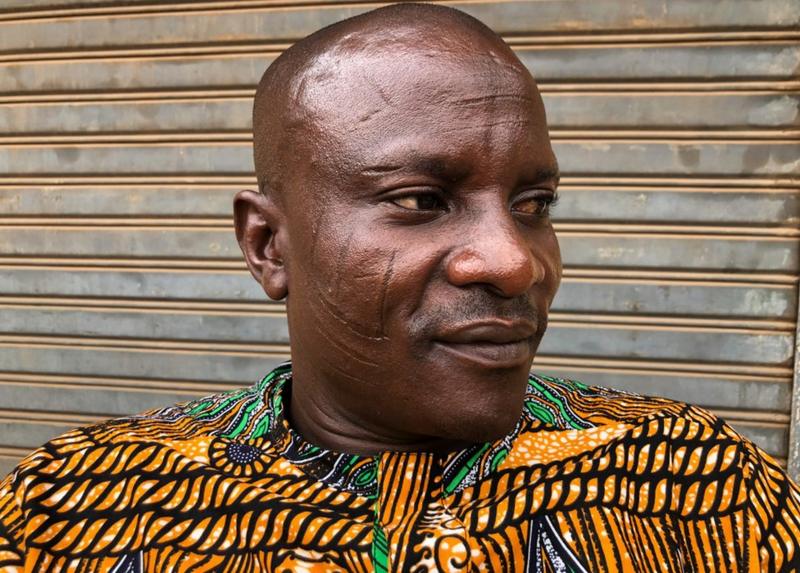
Abaja Olowu
Image source: BBC
Three vertical lines over three horizontal lines. It’s associated with people from the Owu Kingdom.
Gombo
Image source: KnowNigeria
Also known as “Keke”, this Yoruba tribal mark is four to five perpendicular lines and three vertical lines on both cheeks. In some cases, it also features a stroke across the nose. Gombo tribal marks are prominent among people from Oyo and Egba land.
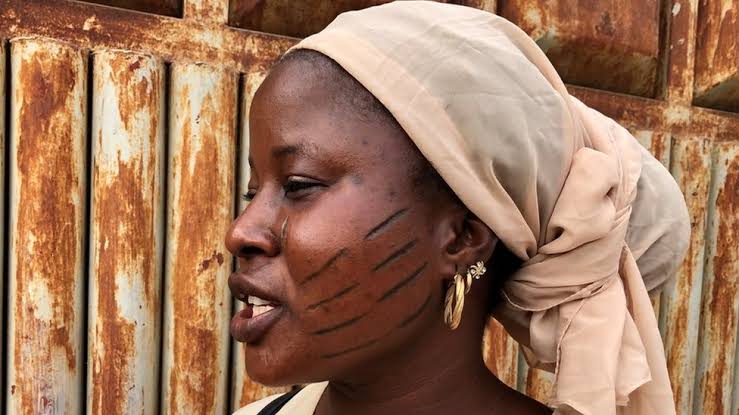
Double Abaja
Image source: BBC
The Abaja marks once distinguished the noble families of Oyo. But these days, they’ve been adopted by many Oyo-oriented groups. Abaja tribal marks come in variations of threes and fours.
[ad]
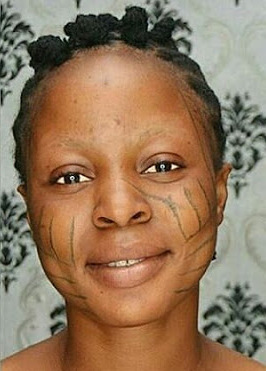
Pele
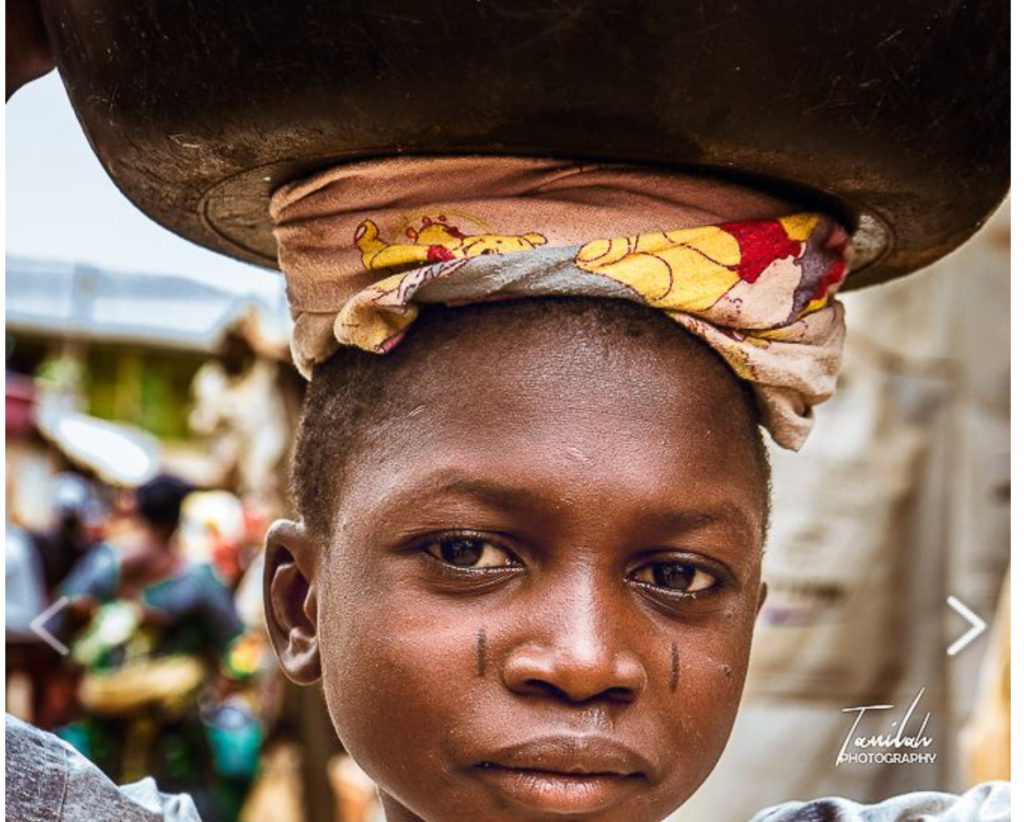
Image source: TamilahPhotography
Pele is a generic tribal mark in Yorubaland. It varies in size and number of strokes according to tribe. Some pele marks are tiny and barely noticeable, while others are long and prominent on the face.
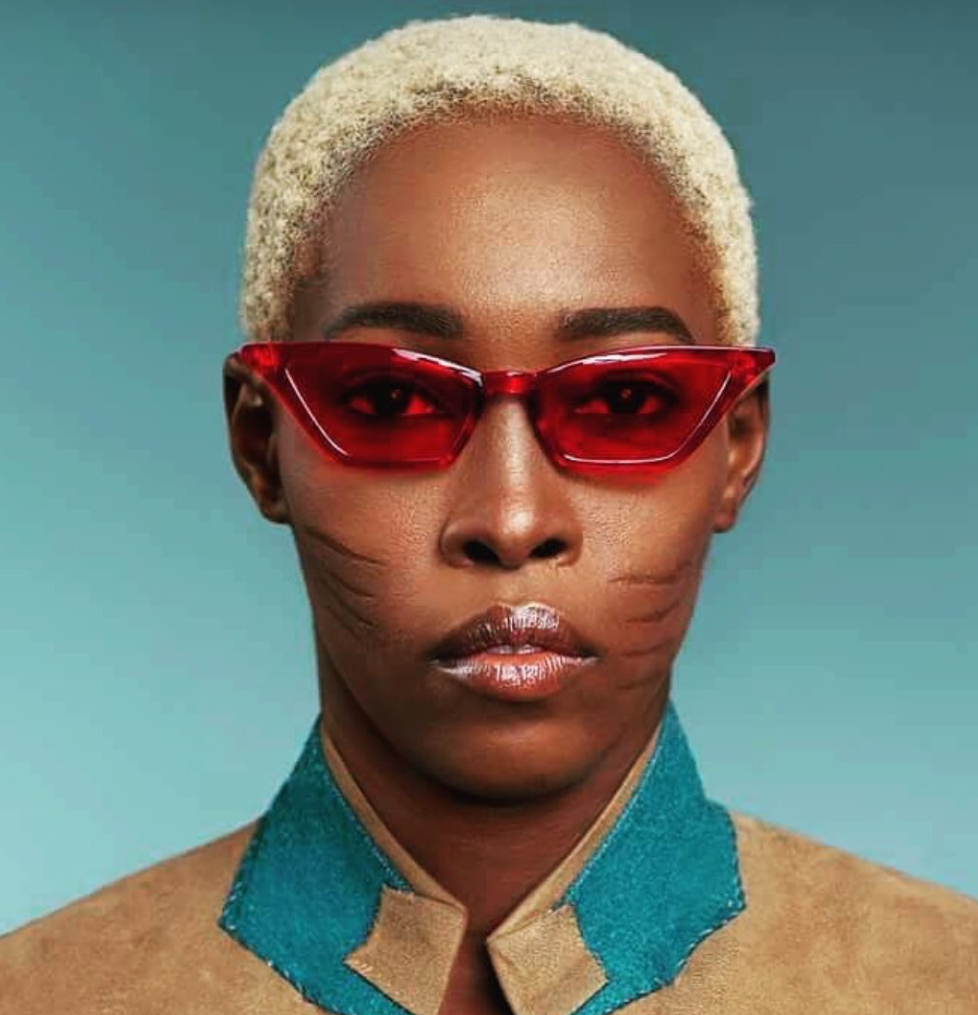
Single Abaja
Image Source: X/@adetutu_oj
This is a single set variation of the Abaja tribal mark, common among people from Oyo state.
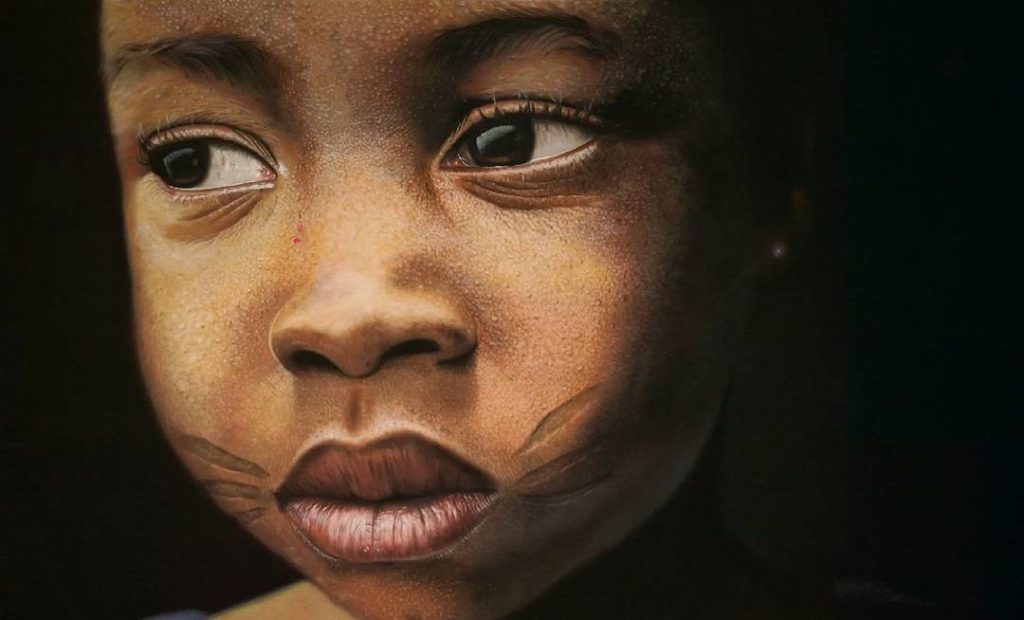
Soju
Image source: Facebook/MichaelTubesCreations
Soju marks are single vertical lines on both sides of the cheek. They’re common among natives of Ondo state.
Jaju
This is another tribal mark common among people from Ondo state. But unlike Soju, the lines are horizontal.
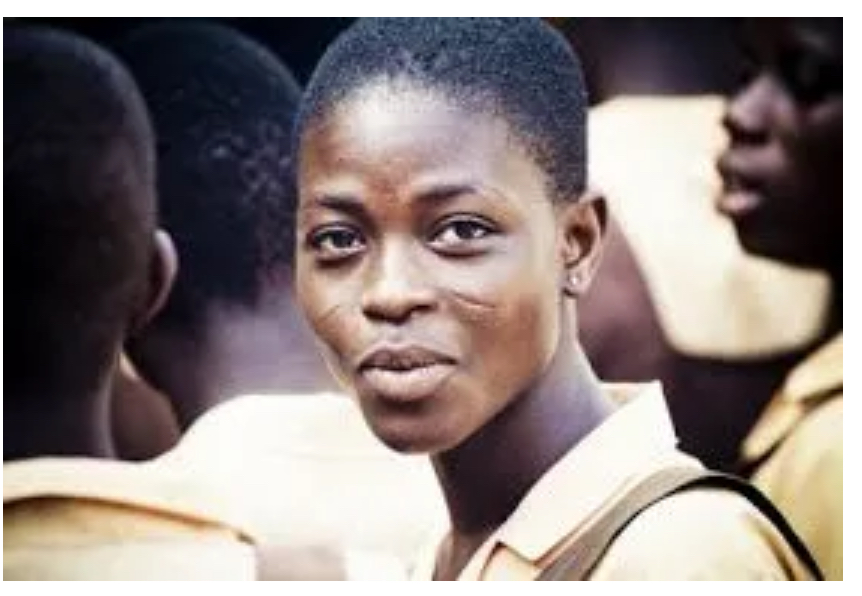
Yagba marks
Image source: Nairaland
This tribal mark style is fairly less common than the others. With three converging lines at both corners of the mouth, it’s common among the Yagbas — Yoruba people from the north.
Seen our Valentine’s Special yet? We brought back three couples we interviewed in 2019 – one now with kids, one now married and the last, still best friends – to share how their relationships have evolved over the previous five years. Watch the second episode below:
If you spend enough time on social media, it wouldn’t take you long to find a video of Nollywood’s Kunle Afod getting his colleagues to mention ten Yoruba proverbs and their meaning. He’s had veterans like Yinka Quadri, Saheed Balogun, Lere Paimo, racking their brains to provide these proverbs — a trade in stock for their type of work.
But if these guys don’t have Yoruba Nigerian proverbs on speed dial, the rest of us are in trouble. We took the trouble to compile a comprehensive list just in case we’re ever put in a similar spot. Grab a notepad, class is in session.
Adie funfun ko mo ara re lagba
Translation: A white chicken does not realise its age.
Meaning: Basically, respect yourself.
Ile oba to jo ewa lo busi
Translation: A king’s palace that gets burnt has only added more beauty
Meaning: Make the best of any situation you find yourself in.
Bami na omo mi o de inu olomo
Translation: A parent who wants you to beat their child doesn’t mean it
Meaning: Don’t go around disciplining other people’s kids.
Iku npa alagemo to yole nrin, kambelete opolo to ngbe are re shonle
Translation: A chameleon that approaches with caution dies, talk more of a toad that slams its body with every step.
Meaning: Tread carefully.
[ad]
Ibi ti a ba pe lori, a ki fi tele
Translation: Whatever you name as the head, you don’t tread the floor with it.
Meaning: If it truly matters to you, you’ll hold it dear.
Ile la ti n ko eso re ode
Translation: Charity begins at home.
Meaning: Your good or shitty behaviour is a reflection of your background.
Orisa bi o le gbemi, se mi bi o se bami
Translation: A deity that can’t help your situation should leave you in your present state.
Meaning: Who go help you no go stress you.
Gbogbo oro ni nsoju eke
Translation: A gossip is privy to all matters.
Meaning: Only busy bodies have an opinion on everything.
Omo to kawo soke lo fe ka gbe oun
Translation: It’s the child that lifts its arms that asks to be picked.
Meaning: Don’t be quiet when you have problems that need solving.
Banidele la mmo ise eni
Translation: Going home with a person is how you know his or her ways.
Meaning: You can only see the true version of a person when you visit their home.
Labalaba fi ara e weye, ko le se ise eye
Translation: A butterfly can liken itself to a bird, but it can’t do what a bird can do.
Meaning: No go dey do pass yourself. Know your limits.
A ki gbe sara koja a mosalasi
Translation: One does not carry alms beyond the mosque.
Our working theory is that Yoruba men get inspiration for their sweet-talking abilities from their daddies’ social circles.
These men have the most-hilarious nicknames for their friends, and the monikers add a certain spice to the bromance. Your Yoruba daddy definitely has a friend or two that goes by these names.
Ojii (pronounced or-ji)
This is the comedian of the group. He knows how to crack everyone up and is always the life of the party.
Isalu
Is your daddy even Yoruba enough if he doesn’t have an Isalu in his friend group? Isalu is the custodian of history in the circle.
The law
He needs no introduction. He’s the one friend that shows up late to every function because he’s too busy settling court cases. He’s also always available to give free legal counsel.
Oloye
This is the one friend that has a connection to the royal family but isn’t quite certain of his ascension to the throne. He wears his beads and bracelets to every function.
Doki
Usually the family doctor, Doki knows the medical history of everyone. He also gets special treatment at family functions because he’s often watching his weight or what he consumes.
Wadee (pronounced way-de)
He’s the street-smart guy in the group. He often makes comments like “This your child is not sharp”, but no one takes offence because he always comes through when there’s trouble.
Alagba
He’s the Christian spiritual father of the group. Only makes appearances at important functions like weddings, naming ceremonies and round-figure birthdays.
Yalufa
He’s the Muslim spiritual father of the group. He shows up at every function but never takes a drop of alcohol.
Alhaji
Alhaji is a businessman who doubles as a polygamist. He’s often the butt of jokes like “Ah, Alhaji, is that a bottle of stout I see in your front?” The other guys tease him because he’s been on Holy Pilgrimage but doesn’t adhere to the Islamic laws of avoiding alcohol.
Colonel
He’s the retired military official that doesn’t take nonsense; not from his friends, definitely not from their children.
Anyone who has a Yoruba mother or Yoruba mother-in-law will know we are capping with this list.
1. A box filled with geles she has forgotten about.
This box is usually filled with geles from 200 years ago. You’ll probably find the gele they tied at your naming ceremony in that box. No one really knows why they can’t give out those geles or throw them away.
2. Souvenirs from parties she attended 200 years ago.
Since Yoruba mums attend parties every weekend and sometimes 2 parties per day, they tend to forget about all the souvenirs they received and just dump them in random places. If you look through your Yoruba mums stuff, you’ll find a souvenir from 1985.
3. Souvenirs from parties she threw 200 years ago.
The same way Yoruba mums like attending parties is the same way they like throwing them. A lot of souvenirs from the party are forgotten about and left in the house. The lucky leftover souvenirs are sometimes repacked and shared at the next party. There will surely be the next party.
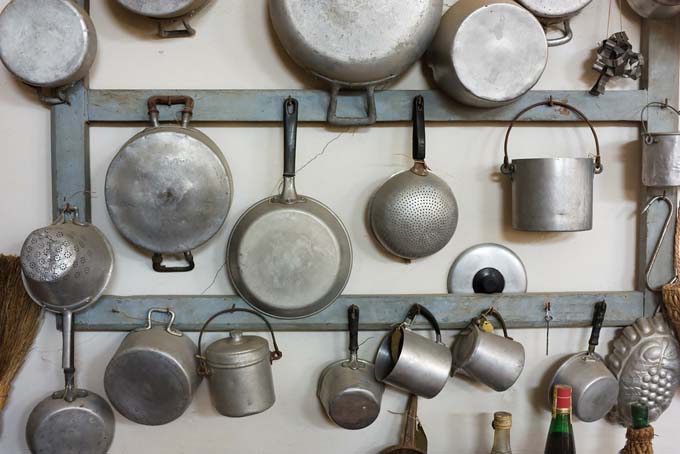
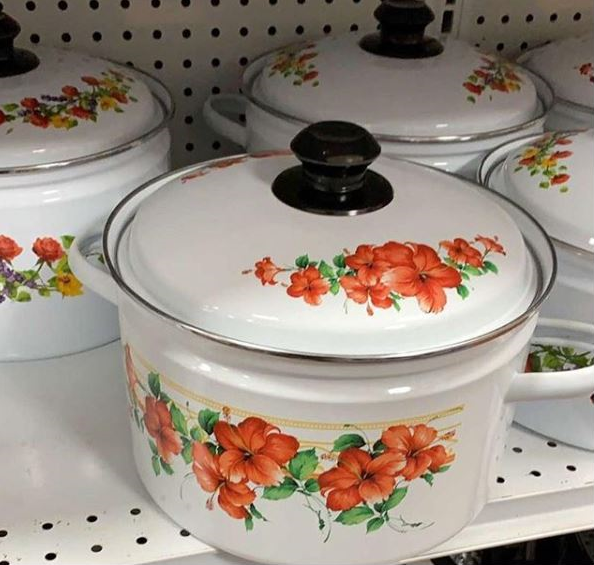
4. Pots from before you were born.
No one really knows what the sentiment is, but Yoruba mums can pass out if they let go of those pots. They’ll keep buying new pots, but still, refuse to let go of the 50year old pot they’ve had forever.
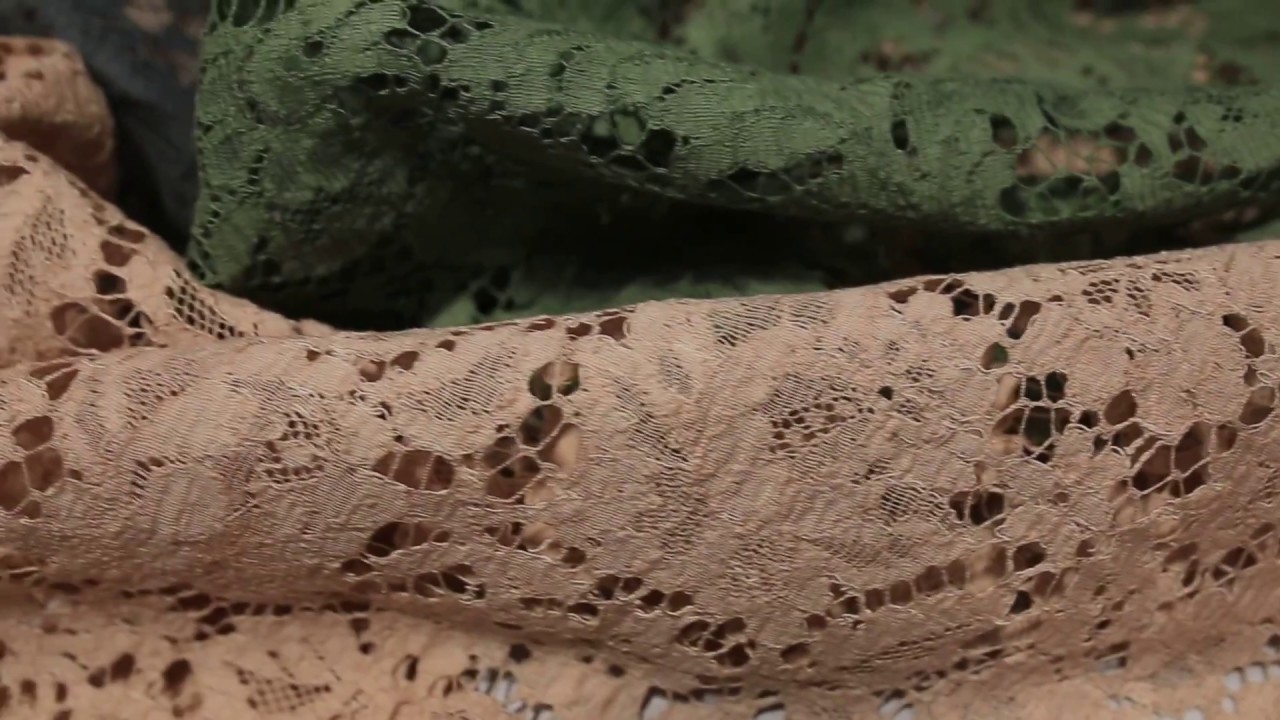
5. A box filled with Iro and Buba she no longer wears.
This is very similar to the box of geles, atleast Iro and Buba can be restyled, but Yoruba mums usually don’t restyle their Iro and Bubas. They probably want to give the Aso-Oke in the box to their great-grandchildren.
6. Jewellry hidden in the most confusing places known to man.
You’ll randomly go through Yoruba mums stuff and see jewellery in it. No one knows if it’s the paranoia that makes them hide stuff in the most confusing places ever, or they just like to do it.
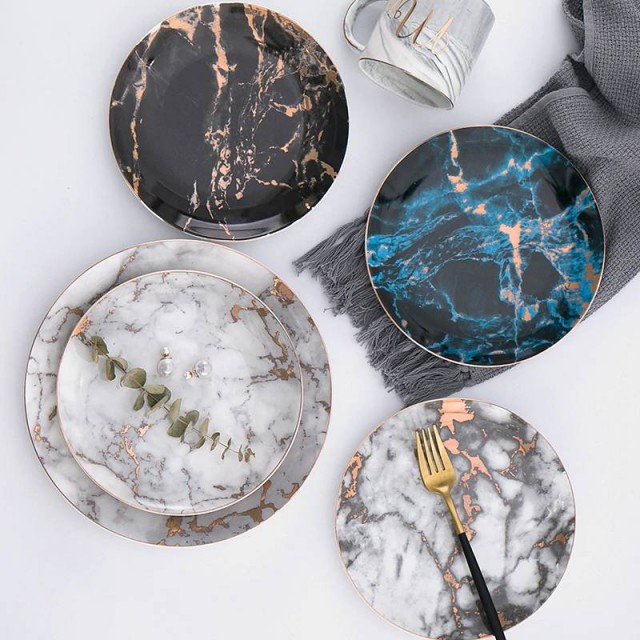
7. Abo Ajase or ceramics plates and teacups that she inherited from her own grandmother.
There are high chances you’ll also inherit that same set of plates, depending on how much your mother loves you. The abo ajase has probably been part of your family since Shehu Shagiri was president.
8. Coal iron.
The fact that you haven’t seen it doesn’t mean she doesn’t own one. Except you don’t live in Nigeria.
9. A set of fancy plates that she never brings out unless there’s a special occasion.
No matter how rich your Yoruba mum is, she’ll always have those fancy plates that only come out of hiding when there’s a special occasion. You have probably tried to convince her to stop behaving like that, don’t worry, she’s never going to listen.
10. Eyepencil.
Black eye pencil producers are still in business because of Yoruba mothers. That’s all we are going to say.
11. This tray
If you look hard enough, you’ll find it somewhere.
Interview With… is a Zikoko weekly series that explores the weird and interesting lives of inanimate objects and non-human entities.
When you hear of H-Factor, your mind automatically goes to a particular Nigerian tribe and its people. Today, we decided to sit and speak with H and have them explain why they are so powerful and unavoidable.
This is Interview With H-Factor.
Zikoko: Can we meet you?
H-Factor: Oh there’s not so much to know about me. I’m just an ordinary letter H that Yoruba people have given a lot of power.
Um, could you please explain?
I am usually summoned when certain words are pronounced as if they had ‘h‘ in them. This would have been a nice thing oh, but the problem is that ‘h’ is now removed from the words that begin with ‘h’. Which is why, Can her hair earn her an A will become Can er hair hearn her han A?
I won’t even lie, Yoruba people are the ones who fall victim the most.
Is there a reason for this?
I think its because there’s no “H” in the Yoruba language so they try to compensate one way or the other.
I see…
But again, many of them try to form phonee, and because I know their background, I intentionally appear to disgrace them. Imagine Mufutau from Abeokuta trying to sound like he is an American stranded in Nigeria. Mufutau that went to Kobomoje Nursery and Primary School? I cannot stand for that kind of deception, please. Immediately such kind of a person opens their mouth to form any kind of suprisupri English like this, I manifest. Yam and egg becomes Yam and hegg. I hate her becomes I ate her.
There are no buts. You play sneaky games, you win sneaky prizes. I see a lot of you people trying to imitate foreigners. How come you ignore their own factors? French people have R-factor, but you will open Duolingo and be doing Garçon, garçon. Why did you not laugh at them?
You that grew up in Omole, you want to sound whiter than the whites. Oya nau, go ahead let me be watching you.
So what you’re saying is that…
Dear Yorubas, accept your H-Factor in peace and be proud of it. Haccept it.
You people should embrace whatever factor you have, please. Haccept it. Don’t attempt to sound whiter than white. Otherwise I will keep on appearing and disgracing you.
Ah…
It’s not as if I’m wicked oh, but Yoruba people got what they wished for. They are the ones who shout “Ha” on every single thing and each time they do that, I enter their life bit by bit until the day of reckoning.
What is the day of reckoning?
That is when I appear in flesh and blood. The day of reckoning manifests in different ways for different people. For some people, it is when they become drunk that I tumble out of their mouth. “One bottle of Eineken!”
For some others, it is when they are trying to impress their crush. I can even make them spoil their own names. “I, my name is Hadeola.” And just like that, true love is gone from them.
And you don’t think this is wicked?
No. Hide me too much and I’ll jump out to destroy everything you have worked for.
That’s all.
Check back every Friday by 9AM for new Interview With episodes. To read previous stories, click here.
Love Lifeis a Zikoko weekly series about love, relationships, situationships, entanglements and everything in between.
Audio: My Father Does Not Want Me To Marry A Yoruba Man
Tunji*, 32, and Ezinne*, 28, knew they wanted to get married a week after they met. Now, they are engaged, but Ezinne’s father refuses to give his blessing to a Yoruba man. For today’s Love Life, they discuss how their faith has helped them through it.
What’s your first memory of meeting your partner?
Ezinne: It was a Saturday in June 2020. I was heading to work, and I sat at the back of the bus.Before I got down, he tried to strike up a conversation. It was a very hot day, so I was wondering how anyone could still have the energy to be toasting someone.
Anyway, we spoke for a bit, and he asked for my number. It’s not like he wowed me or anything, but I gave it to him. I honestly didn’t think it would lead anywhere.
Tunji: I will never forget meeting Ezinne for the first time. Some might call it coincidence or chance, but I know it was God’s divine orchestration. I was meant to go for an early meeting that day, but I ended up delaying it. We wouldn’t have met if I didn’t.
I can’t even call what we had love at first sight. It was more than that. After we exchanged numbers, we spoke non-stop; our connection was undeniable. We knew exactly where the relationship was going within a week.
Omo. Ezinne, was it this intense for you too?
Ezinne: At first, no. I wasn’t really looking for anything serious at the time; I just wanted to focus on God. After just a week of talking, however, I knew I wanted us to be together forever.
I’ve spoken to guys for months without it going anywhere, but in a few days, Tunji proved to be everything I’d been looking for. We also bonded over our Christian values, so it was very easy to go from there.
Where exactly did you guys go from there?
Ezinne: After that first week, the next move was telling my pastor about him. We had previously prayed about me meeting my spouse; I just didn’t know it was going to happen so soon.
It wasn’t even about meeting our parents for us, it was about meeting the spiritual authorities in each other’s lives. Then we started praying together. We’ve been doing that every night since July, except when we have a fight.
Tunji: After we met each other’s pastors, we went to meet our parents. This all happened within a month of meeting each other. It was an eventful couple of weeks, but we knew we wanted the relationship to go all the way.
How did your parents react?
Ezinne: Meeting his parents was awesome. They were so nice, I wished they were mine. Meeting my dad, on the other hand, was horrible. Tunji would never say that because he loves my parents, but my dad was awful to him.
He came alone for the normal “I saw a flower in your garden” visit, and my dad began to lecture this 32-year-old man that marriage is not for kids. Then when he found out Tunji is a teacher, he asked how he would be able to feed me and afford school fees.
My dad insulted his life and destiny. He seemed offended that Tunji would even come to indicate any kind of interest. It was hell, but Tunji was cool throughout all of this. He just promised to come to see my dad again.
Tunji: I really didn’t think his initial reaction was out of the ordinary. It’s something any father could do to protect his daughter. At some point, I thought the questions were becoming a little too personal for the first visit, but I still didn’t feel bad about it.
I figured he wanted to know if I was ambitious enough to take care of his daughter.
Ezinne: LMAO. Do you see? My fiancé is too nice about all of this. He is as cool as a cucumber. He’s the peace in the storm, while I am fire and brimstone. I think that’s why we fit together so well.
Wait. Your “fiancé”? You guys are engaged?
Ezinne: LMAO. Yeah. We never actually dated. There was no “Will you be my girlfriend?” moment. It was more like, “I want to plan my life with you.” If you ask him, he’ll probably say he proposed to me since July, less than a month after we met.
There was no ring at first. He didn’t see the need. He had made his intentions clear, so he didn’t think there was a point to all that extra fanfare. On my end, I had also started behaving like I was engaged.
Then for my birthday, about three months later, he planned an official proposal with my very close friend. He went on his knees, pulled out a ring and asked me to marry him. I honestly didn’t know I needed a ring until I got one.
Wow. Did your family think things were moving too fast?
Ezinne: To be honest, my father has given every reason under the sun as to why Tunji isn’t the right man for me. He was still using, “You just met this guy,” even after seven months of constant visits, but the real reason is clear: he isn’t Igbo.
Tunji: My family didn’t think it was too early. At the time, our plan was to get married between February and March of 2021, about nine months after we met, and they were in full support of that.
Ezinne, when did you find out what your dad’s real issue was?
Ezinne: If I remember my dad’s story correctly,he started out in one tiny room with no money. So, he was broke in the beginning — broker than my fiancé — but my mum still gave him a chance. That’s how I began suspecting money wasn’t the real issue.
Then one day, he called me to say he is just trying to protect me. He said Yoruba people don’t like us, and he isn’t going to be responsible for what happens to me if I marry one of them. That’s when everything became clear.
Damn. So, what about the plan to get married around March 2021?
Ezinne: LMAO. Plan? In fact, Tunji and I just came out of a very big fight because of this date. I was really looking forward to getting married in March — I had even started sewing my dress — but it’s not happening.
The last time Tunji went to see my dad, he ran to the bathroom. He didn’t come back out.
Tunji: I’ve lost count of the number of times I’ve gone to see Ezinne’s father. I remember he was really upset the second time I brought up marriage, so I gave him a bit of space.
The most receptive he’s ever been was when I went with my brother. He wasn’t feeling well that day, but he was quite accommodating. That made me optimistic that he was finally coming around.
Wait. Ezinne, why did you and Tunji fight over the date?
Ezinne: I hate remembering the fight because it’s not like we’ve settled it; I just had to move on. Tunji had promised me that even if my parents didn’t consent, we would go ahead and get married in March.
So, I brought it up at the start of January, and he said we would still have to wait until my parents agreed. I was like, “If you love me, you should be ready to go to court and marry me without our parents.” I mean, we are both over 18.
He said he can’t kidnap me from my dad, and I was just there like, “KIDNAP ME, SIR!”
Tunji: I really believe we will get their consent in due time. I have faith that we will. I don’t want it to get to that point where we get married without their approval, but Ezinne and I will make that decision if the need arises. I just don’t think it will.
Ezinne, do you think your dad is warming up to the idea?
Ezinne: LMAO. That’s the funny thing about all of this. It’s almost like there is demonic activity going on. For Igbo families, there’s something called “knocking on the door” — the Iku Uka — before the introduction, and Tunji already did that with his brother.
My dad seemed very open that day. They even laughed and watched TV together. Everything seemed fine, but for whatever reason, he is back to being difficult. So, no, I don’t think I can say he is warming up to the idea.
Na wa. How has all of this friction affected your relationship?
Ezinne: It’s been tough, and the fact that we are celibate isn’t making it any easier. Whenever I’m in pain and crying about this whole issue, I just want to jump on him and have sex.
Oh? You guys are celibate?
Tunji: Yes.It’s a decision we made together.It’s been tough, but we know it’s necessary for the kind of relationship we are trying to build. Ezinne is a beautiful woman, and I’m very attracted to her, but I know it’s going to be worth the wait.
Ezinne: Before Tunji and I met, I had been celibate for a little over a year, so sex was the last thing on my mind. I had just gotten closer to God, and I was no longer interested in having sex before marriage.
Thankfully, he was on the exact same page as me regarding the whole celibacy thing. It was refreshing that I didn’t have to convince him to wait until marriage. That doesn’t mean it’s not been hard oh.
We used to make out at first, but we started counselling in my church and one of the rules is that we cannot go over to each other’s houses. That has definitely made it easier to stay in check, but it’s still tough.
What are the other rules in counselling?
Ezinne: They are pretty annoying rules to be honest. I mean, how can you tell me not to visit my man? LMAO. Basically, we are not allowed to be alone together. If we want to see, we have to go out on a date.
One time, I asked, “What if we don’t have money to go to a restaurant?” They were like, we should buy Coke and meat pie and sit down. Their major concern is that we avoid anything that could lead to temptation.
We also have to pray together often and listen to our pastors. They are currently praying with us that my dad will soon give consent, so that’s great. To be honest, the only hard rule is the celibacy one.
LMAO. Fair enough. How is this relationship different from your past ones?
Ezinne: It’s different in the best possible way, but I’m thankful for the past ones. All those failed relationships helped me realise what I wanted, so I wasn’t forming hard to get or being childish when Tunji came along.
He is also dependable and very sure of me, so I feel secure. I feel like if someone tells him that my nudes are trending on Twitter right now, he’d just shrug. I never have to question how he feels about me. It’s the best thing.
Tunji: I can’t even compare Ezinne to any of the women from my past, but I can say how I’ve changed. I’ve gotten wiser, and I now know how to appreciate and accommodate a lot more in relationships.
What are your plans for the future?
Ezinne: This question is making me smile because, for the first time in years, I’m excited about the future. I look forward to us having a beautiful family, great jobs, a nice house and premium nacks. Yes. I’m ready to unleash the dragon in the bedroom.
Tunji: LMAO. We hope to build a godly home where friendship, trust and respect are the top priority; where we can raise godly children and be of great support to those around us.
That’s really sweet. What do you love the most about each other?
Tunji: I love so many things about Ezinne, but let me try picking a few. For starters, she’s God-fearing — she has an unmistakable fire for the things of God. She’s also a go-getter. I just love how driven and passionate she is about her desires.
Ezinne: He is the kindest, most thoughtful person I’ve ever met. This isn’t even about how good he is to me, it’s about how kind he is to those around him. He cares about helping others.
He is also a hard worker. He is so dedicated to his students, and even though teaching isn’t the job he envisioned for himself, he still gives it his all. That’s why I know I’m marrying the right person. He doesn’t let his frustrations weigh him down.
He is also my biggest cheerleader. Honestly, I don’t know how I got so lucky.
Check back every Thursday by 9 AM for new Love Life stories here. The stories will also be a part of the Ships newsletter, so sign up here.
If you want to share your own Love Life story, fill this form.
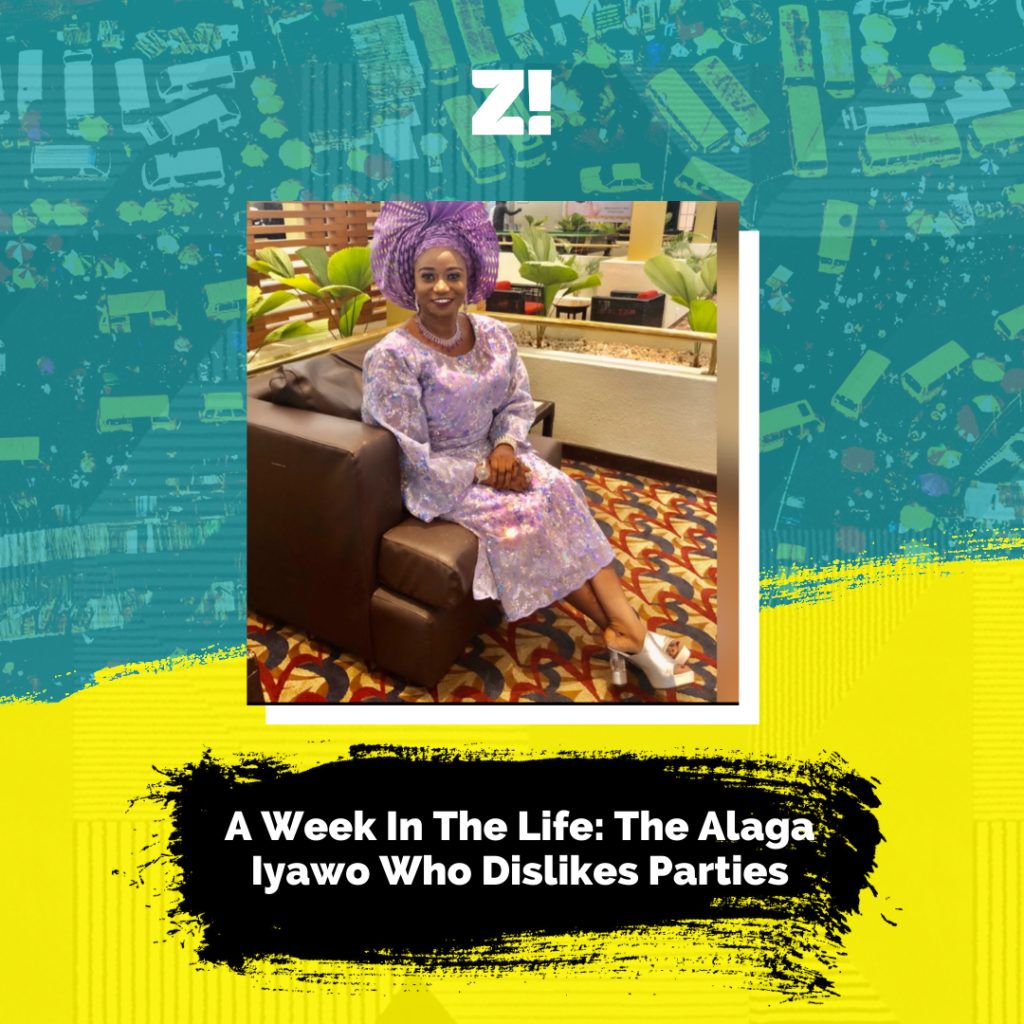
A Week In The Life is a weekly Zikoko series that explores the working-class struggles of Nigerians. It captures the very spirit of what it means to hustle in Nigeria and puts you in the shoes of the subject for a week.
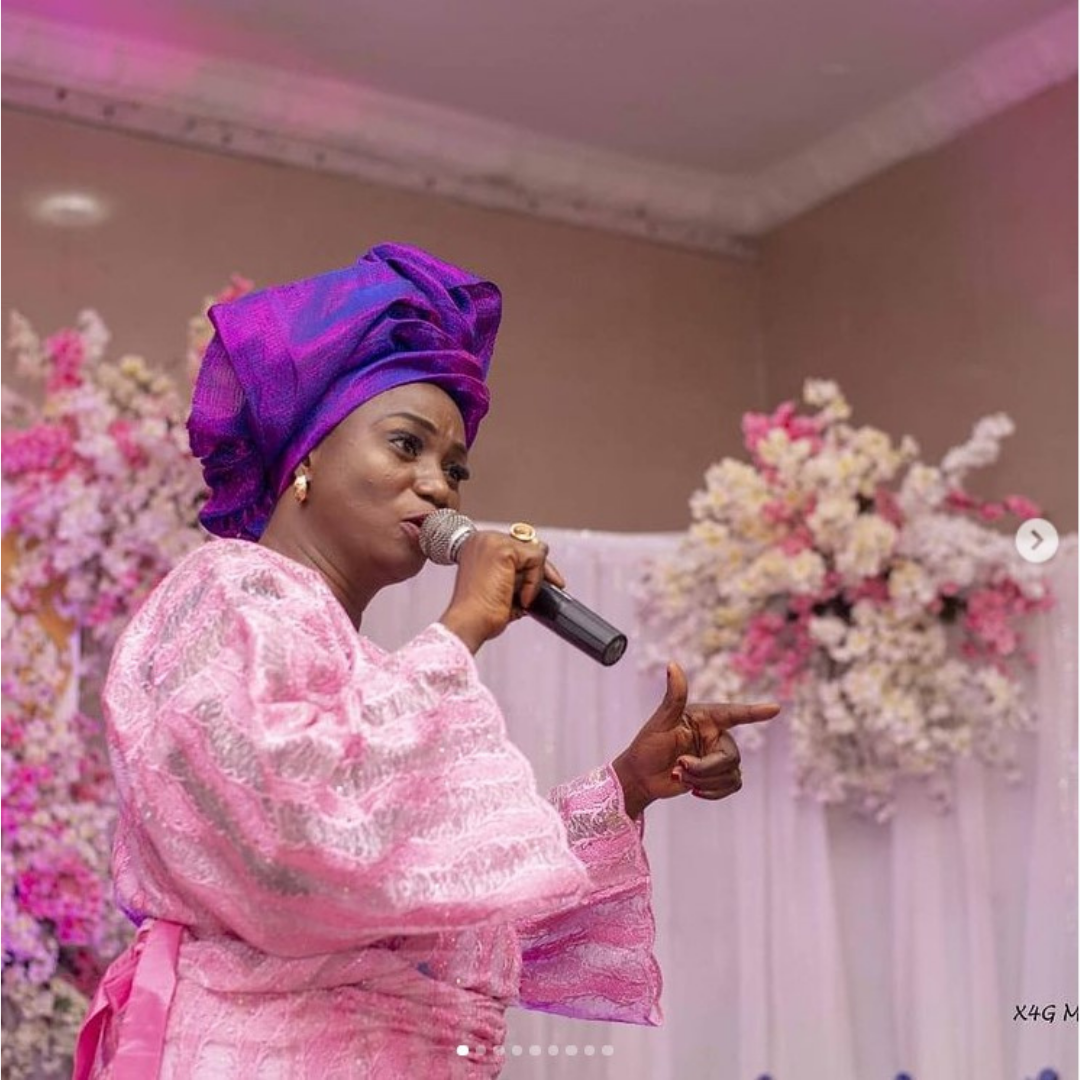
The subject of today’s “A Week In The Life” is an Alaga Iyawo. These are women who host Yoruba wedding ceremonies, sing songs of praises, double as MC’s and serve a host of other functions. She talks to us about not liking parties even though her job revolves around them, the challenges she faces in day to day life, and what a perfect retirement looks like for her.
MONDAY:
The first thing on my mind when I wake up today is that I’ve been an Alaga for weddings for close to 22 years. And that feels unreal. It feels like a lifetime ago when I stumbled into this job. Becoming an Alaga for me was by luck/chance because I didn’t go to school to learn neither was I trained; it just happened.
In those days, as a youth in church, we used to rally round to help members of the church getting married — planning, declaration, coordination and any other thing. It was during one of these moments my journey started. There was a particular sister we helped out with planning her wedding, and it is wasn’t until the day of the wedding that we knew we were supposed to get an Alaga. The only reason we even knew was because the groom’s family came with theirs. In the midst of all the confusion, all the other sister’s pushed me forward saying: “Sister Bisi, you can do it. You can talk very well.” I mean this was true; I was an interpreter in church, I sang in the choir, and I was also a teacher in the children department, but the fact remained that I had never done something like that before. As if it was ordained by God, I now wore one very fine cloth that day. Grudgingly, I stepped up to represent the bride, and that was the beginning of my journey. It wasn’t perfect and I’m thankful I had help from someone who guided me on what to do and say. I was also lucky that it was a small church event, so we just said opening prayer, praise the Lord, let the bride come in, let the groom come in and we were done.
However, my second time on the job was intentional. After witnessing my performance, one of the sisters in church said she was not going to pay what the professionals were asking for, and I had to be her own Alaga. Her argument was since I had done it for someone else, I could also do hers. I told her I was scared and that event was impromptu but all she told me was to go and prepare. Because I was unmarried at the time, I spent a lot of hours watching videos from my sister’s wedding to learn the mannerisms, songs, routines etc. Thankfully, I pulled it off. After the success of the second wedding, I officially became the church’s Alaga. Couples would come in for marriage counselling and the church would provide options for them to save money, part of which usually involved my services.
That’s how I began full time with no prior training or anything. God just showed me that this is a calling, and ever since then, I’ve been able to train at least over 120 people who are doing well. That alone is enough reason for me to get out of bed every morning.
TUESDAY:
One question people ask me is “What do we do with all the money we collect at weddings?” I try to break it down for them. Firstly, the money is for the family. We share the proceeds into like thirteen envelopes which are then distributed to the family members on the paternal and maternal side. The money is a token to appreciate people who took off time to attend the wedding. It’s not as if the money will change their lives, because some people get as low as ₦200 or ₦500, but it’s for them to say that during so and so wedding, they went home with something.
We also collect specific money like money for unveiling the bride, which goes to the bride. There’s money for reading letter which goes to the person who reads the letter the couple writes to each other. We also have “aeroplane” money for people who bring in the wife to the venue.
I make my own money from being sprayed during the programme. Or after the groomsmen finish prostrating to both families, I ask them to bless me with anything they have. The reason why it seems like some of my colleagues charge a lot of money from the groomsmen and bridesmaid is that they probably collected a cheap amount for their services. Parents usually boast about the calibre of people coming to the wedding to make sure we don’t charge a lot. In cases like that, the Alaga has to make up for the difference in fees. That means that everyone present at that ceremony will pay through their nose. I charge a fixed fee before the wedding, and that’s why I don’t collect money more than once at the venue, and I remit the money for the family to the family.
There’s a class of people called “no bowl show”, where the family instructs us not to collect any money at the venue. In cases like that, we charge them two times the fee.
WEDNESDAY:
Every job has challenges, and my own is not an exception. Sometimes, the other side [bride or groom] might also have their own Alaga, and the person is trying to show off their talents or skills while you’re working on a fixed time, and that can be frustrating. It can cause a lot of issues when both of you are not the same page. You just have to pray to meet someone who is understanding.
Also, Nigerians do not keep to time. Sometimes they know an event won’t start till 2 p.m., but they’ll tell you to come by 8 or 10 a.m. So I end up spending time I could have used on other productive things waiting for the event to start. I went for an event on December 24th that was supposed to start by 8 a.m. In my head, plus Nigerian time, we’d start at 10 a.m. and be done by latest 2 p.m — I’d still have ample time to get home and make Christmas plans for my family. This event didn’t start until some minutes before 1 p.m. When I wanted to introduce the groom, I was told that he was stuck in traffic. Thank God I went along with one of my colleagues that day because after waiting for a few minutes and no show, I just picked up my car and left the venue. My colleague was the one who anchored the rest of the event.
Another issue that is now “normal” is men making advances at me during this work. It’s always annoying when some father of the groom or bride makes advances at me because most times, I get close to the mother of the bride or groom first. Imagine talking to someone for months and planning a wedding with them; there’s a form of friendship that occurs from spending a lot of time together. Then suddenly on the day of the event, her husband is making a move on you. It’s very somehow. I just chalk it up to men’s nature, ignore and face my work. I know my worth, and I know what the men are doing is all noise.
THURSDAY:
A good Alaga must have a very good dress sense. They must also smell nice, look nice and have a good voice. They should be able to coordinate themselves. If you can’t control your temper you can’t do this work. Mostly because people will step on your toes intentionally or unintentionally. To succeed in this job, you also need to learn time management — don’t waste people’s time and make sure you finish early enough for the family to entertain their guests. These are the things any exceptional Alaga must know.
I’m always training people. In fact, I’m starting another training in February. Today, I’m counting the number of students who have enrolled for the class, and ten slots have been filled out the twenty I planned for. I’m glad that people are interested in learning about this job. It’s very lucrative to use your voice and talent to make money. All you have to do is transport yourself to the venue and you’re good. I call my tribe the “Exceptional Alagas” because we train them on how to sing, coordinate events and not be greedy. The beauty is that the training happens over WhatsApp, so it accommodates my busy schedule. After the online class, we have an internship period where people shadow professionals for six months to a year. I’m always excited to pass on knowledge to the younger generation.
FRIDAY:
Without my husband, I wouldn’t be anything at all and I’m not even joking. If I didn’t marry him, I don’t see any man who could have married me. Because of how demanding my job is, it’s not easy combining it with family duties. But my husband is so understanding. In fact, he’s unique. In addition to my Alaga work, I also run a jewellery and Aso-Oke store, and my office is quite a distance from my house. What this means is that I leave the house from Monday, and I don’t return home until Saturday. My husband holds down the house until I’m back. It helps that I have grown-up children and always make arrangements before leaving the house, but there’s just something about a man who supports your career no matter what you choose. My husband and I both started our careers as teachers until I decided to pursue this work full time. When I told him, he agreed. And ever since then his okay has been okay. I don’t know how many men can do that for a woman.
SATURDAY:
I have an event today, so I’m up early to prepare. People ask me how I’m always in the mood to perform my duties. Maybe because they think it requires so much energy. I tell them that there’s no dull moment as long as it’s work. The only thing is that I don’t party outside of work. If I’m not with the mic at an event, it’s rare to catch me attending a party. I get fed up and pissed easily at parties. Even when I’m working, once I’m done with my duties, I’m out. I always want to retreat into my shell and go to either my house or the office.
I know I can’t do this job forever and that’s why I’m planning for retirement. All these other businesses [Aso-Oke] are my retirement plan, God willing. When I look back at my life, I see that God has been able to do what us men can’t do through this job. At least I can say that through this job we’ve gotten houses, we’ve gotten cars, we’ve started a business and we’ve trained our children. I want to retire by the time I turn 60, 65. At least by then, my kids will have given me grandchildren. At that point, all I want to do is focus on my family.
Check back every Tuesday by 9 am for more “A Week In The Life ” goodness, and if you would like to be featured or you know anyone who fits the profile, fill this form.
Everyone hears Yoruba and automatically assume the speaker is from Nigeria. You couldn’t be wronger. Most Yoruba people are from Nigeria, but there are estimated to be about 47 million Yoruba people worldwide.
1. Benin Republic
Yup. Our quiet French-speaking neighbors to the West have a large Yoruba population. Of Benin’s 11.5 million people, 1.7 million of them share the Yoruba heritage.
2. Ghana
Yeah. The guys you’re always fighting over jollof. There an estimated 500,000 Yoruba people in Ghana’s 30million-strong population.
3. Sierra Leone
The Oku people, with an estimated population of 25,000, are an ethnic group in Sierra Leone and the Gambia primarily the descendants of educated, liberated Yoruba Muslims from Southwest Nigeria, who were released from slave ships and resettled in Sierra Leone as liberated Africans or came as settlers in the mid-19th century.
4. Togo
The Atakpame people of Togo speak Ife, known by scholars as Ife Togo, which traces it roots to Ile-Ife, Nigeria. The ancestors of the Atakpame people were Yoruba people who fled inter-tribal wars in the 17th Century.
5. Ivory Coast
There are about 120,000 Yoruba speakers in Cote d’Ivoire, despite being 2000 kilometres away.
6. Cuba, Puerto Rico, Dominican Republic, Venezuela, Saint Lucia, Jamaica, Brazil, Grenada, and Trinidad and Tobago
No thanks to the trans-Atlantic slave trade which saw millions of slaves taken from the Western coasts of Nigeria to islands all over the Americas and the carribeans, there’s a thriving Yoruba culture in these countries.
So I asked a few people “What’s the most Yoruba father thing ever?” and this list shows the absolute best way to identify a Yoruba father.
1. He’s always shouting on the phone
No matter how personal the conversation is, they’ll shout at the top of their voices, and if you tell them to reduce their voices they’ll five you the meanest look ever.
2. He hoards the remote to “watch news”
They’ll collect the remote from you because they’re trying to watch network News and they’ll sleep off. But don’t even bother trying to be sleek and collect that remote. They’ll wake up and give you that same mean look.. Don’t try it.
3. He has 3 phones
Just so he can shout on more than one phone, he’ll buy three. And he’ll get about 10 different calls on each phone every hour.
4. He’ll never say “I love you too”
Bayo: I love you dad Daddy Bayo: Go and fetch me a cup of water
5. He’ll eat amala at lease once everyday
If he doesn’t eat amala at least once a day, something bad might happen to him. He must also have about 7 pieces of meat. A man has to be a man.
6. He’ll have a wardrobe full of native attires he never wears
Full, as per, full to the brim. And he’ll keep sewing new ones because somebody’s daughter is getting married, or because his friend’s 60th birthday party is coming up.
7. You’ll go on errands “tire”
Every Yoruba father has Acts of Service as their love language. Know this, and know peace.
Originally published four years ago in November 2015, The Complete Guide To Being A Yoruba Demon is a Zikoko classic that we’ve brought back due to popular demand.
Lagos big boy =/= Yoruba** Demon; But they do share some similarities. And contrary to popular opinion, anyone can be a Yoruba Demon.
**Yoruba: (adj) Yoruba, as used here, does not refer to the tribe. The Term ‘Yoruba’ describes a heartless, cheating, lying person. Usually male.
1. The White Trad.
If you don’t have a white trad – Agbada, Buba and Sokoto – starched with tears and broken hearts, you’re honestly not ready to undertake this journey.
2. The Black Trad.
Wear it. Look devastatingly hot in it. This is for the elite club of lucifer’s henchmen. The Black Trad is for the higher ranking Yoruba Demons.
3. A main phone…usually an iPhone.
Always the latest iPhone. I’ll explain the reason in coming numbers.
4. A supporting phone…Usually a Samsung Galaxy Mobile.
Also always the latest model. I swear there’s a reason why.
5. Dark shades.
Aviators or Ray Bans. These are to protect your eye movements. You can be talking to one girl and impregnating scoping like 4 others.
6. A Plush Ride…Toyota Camry and Above.
Now, Lagos Big Boys can just show off their car keys. That’s not enough for a Yoruba Demon. You have to have the actual car. Girls have to see you in that car. How else will you convince them that you can take care of them?
7. A main chic…an actual main girlfriend.
The girl you show to the world. This is the person whose number you store on the iPhone. The one you love and plan to marry. Almost always an Igbo* girl. She can match you heartlessness for heartlessness.
*Igbo: (adj) Igbo, as used here, does not refer to the tribe. The Term ‘Igbo’ describes a heartless – sometimes cheating – person. Usually female.
8. Like 23 Side Chics.
You populate the Samsung Galaxy contact list with these ones. They’re the ones you spend all your money on. But you never, EVER get photographed with them. That never ends well.
9. A sincere smile.
This is how you melt all girls’ hearts. When you smile, panties should drop, hearts should open, intestines should sing!
10. A lying tongue.
You cannot let them suspect you. You have to be a smooth operator. Lie circles around them. It’s your legacy.
11. A gaping hole where your heart should be.
See, this is the only way you can justify what comes next. You didn’t honestly think you could do this and remain human did you?
12. Roaming eyes.
Your eyes are constantly scouting for the next target. It’s a hard knock life, really.
13. A Cheating Spirit.
When you have no heart, a cheating spirit settles into where your heart should be. And you take your final place as a Yoruba Demon.
14. A string of broken hearts in your wake.
Break them! All of them. 10 broken hearts is nothing to a true Yoruba demon. Break them and walk way like a superstar!
15. A long line of willing hearts in your future.
As a Yoruba Demon, your work is never done. So you keep moving forward. Break more hearts and don’t look back.
You’re welcome.
Last, last sha, it’s you guys we will still marry.
For this to work, you have to pretend that you’re watching a cooking show with me as the host.
Hi. 👋
Welcome to the first episode of the weekly series named Grandpabbychuck’s Recipes. In this first (and probably last) episode, I’ll be teaching you about the ingredients you need to make Yoruba tomato stew, even though I’m equal parts Igbo, Benin, and 1/16 Hausa. (Don’t think too much about it.)
Let’s get a-cooking.
1) Pepper
A constant.
2) Tomato
Because your stew absolutely has to have tomatoes in it. To do otherwise would be insane, right?
RIGHT?!
3) Onions
For flavour. If you don’t cook with onions, your food is trash. And that’s that on that.
4) Pepper
5) Any dead animal of your choice.
Chicken, turkey, rabbit, horse, etc.
6) Pepper
7) Curry & Thyme
I’ve come to the conclusion that no one knows what these things do in food but we use them anyway because they make us feel fancy.
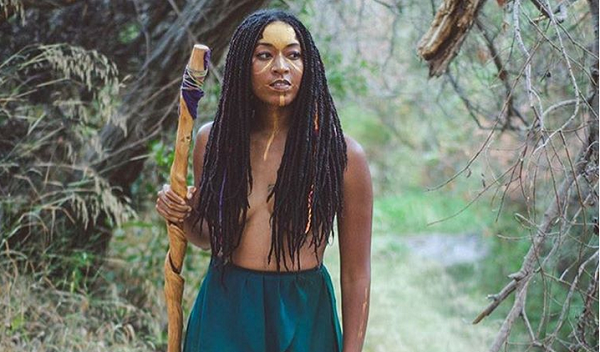
Despite the shade African traditional worship gets on the continent, many foreigners, especially African Americans, are extremely interested in traditional divination and deities. As a result of the unfortunate trans-atlantic slave trade, slaves were disconnected from their languages, culture, religions and ultimately, their identity.
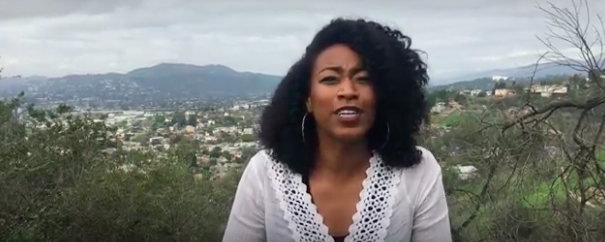
Recently, a video of a young African -American woman, Siana aiti-Moirae, who wants to travel down to Nigeria to train to be an Ifa priestess, went viral.
Armed with a GoFundMe account and a lot of tears in her eyes, she appealed to viewers, sharing her thoughts on how Ifa is her purpose and calling in life.
Apparently, she believes her roots are Yoruba and wants to show everybody how Ifa represents blackness.
Perhaps her research omitted the fact that there are thousands of diverse African languages, tribes and spiritual practices that also represent blackness.
While we’re wishing her all the best in her expedition and hope she actually reads on Africa while at it, watch the video below and share your thoughts on this in the comments section.
Despite the depth and importance of our ancestry, African deities are sadly, still viewed through post colonial lenses as primitive and satanic. It’s however uncanny to note that Yoruba deities especially are even more appreciated overseas than right here at home.
Case in point, Beyonce’s repeated reference to Sun through out her visual album, Lemonade.
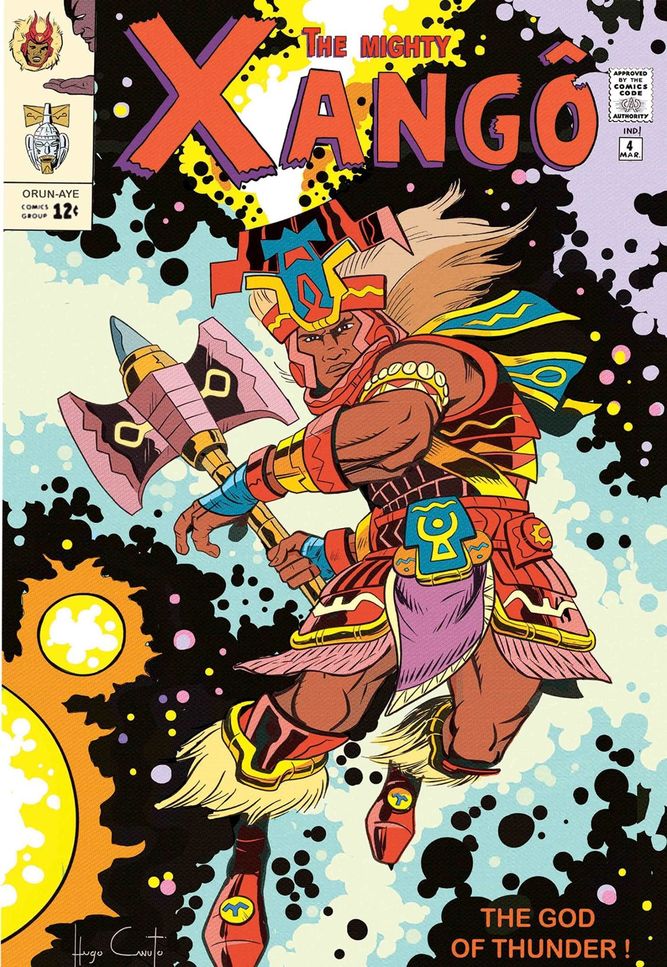
Be that as it may, Nigerians familiar with the superhero comic universe can relate Marvel’s Thor to Sango, the badass Yoruba got of thunder.
Sango would have taken Thor’s place in the avengers. But it’s not today visa started being a problem.
How Nigerians have been DC and marvel to include Yoruba Orishas into their comic universes.
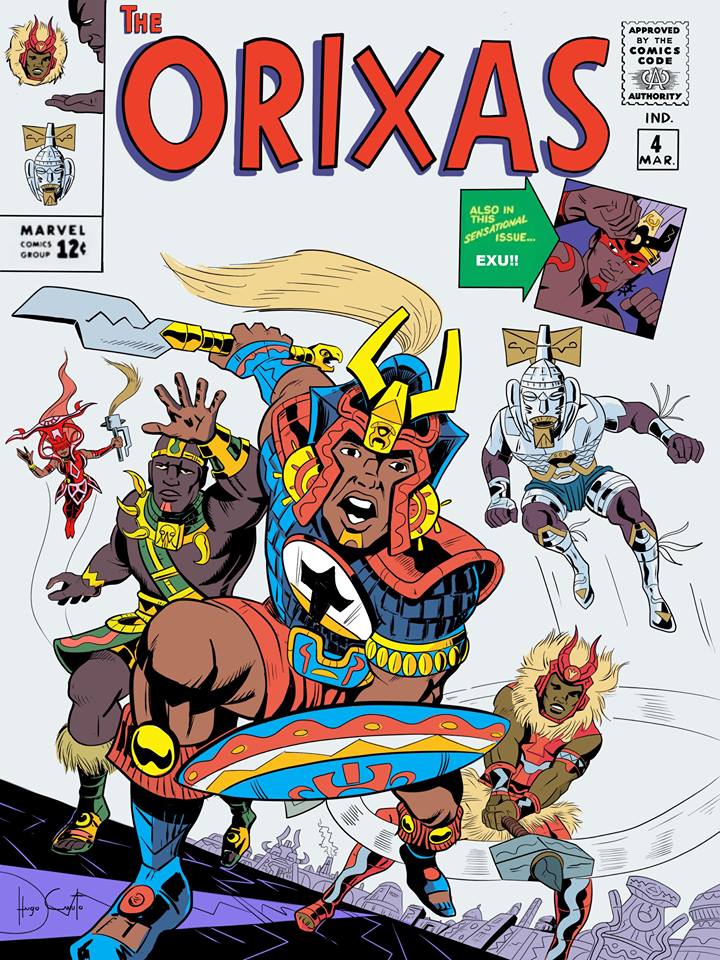
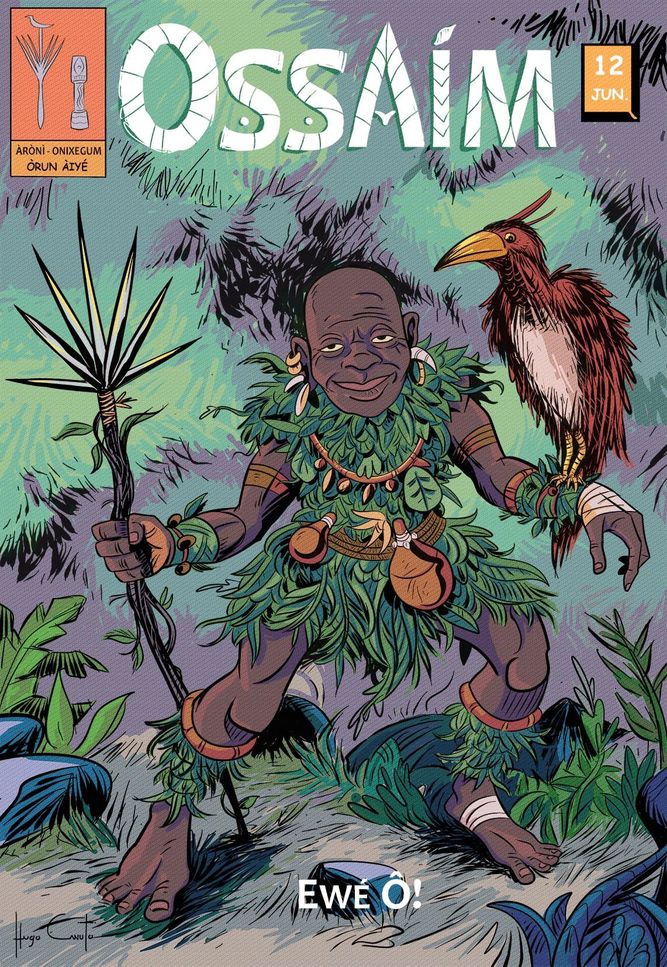
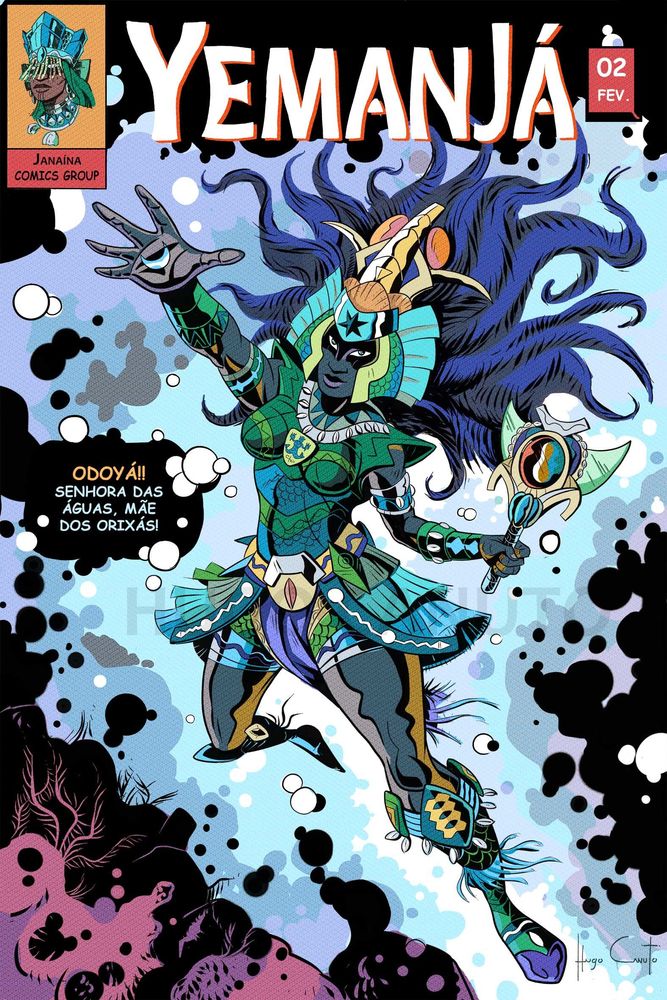
Doing it for the culture, in 2016, talented Brazilian artist, Hugo Canuto, reimagined The Avengers as Yoruba gods, The Orixas, and his depiction is absolute perfection!
And Antman is none other than Ossain (Osanyin), the god of the the forest and healing.
He created this spin-off titled, ‘Tales of Orun Aiye’ mixing Portuguese and English throughout, to celebrate African culture and its influence on his Brazilian roots and religion.
After setting up a crowdfunding campaign, Hugo plans to use the proceeds to publish at least 2 comic books this year.
We hope to see more of this brilliant work, especially African artists real soon!
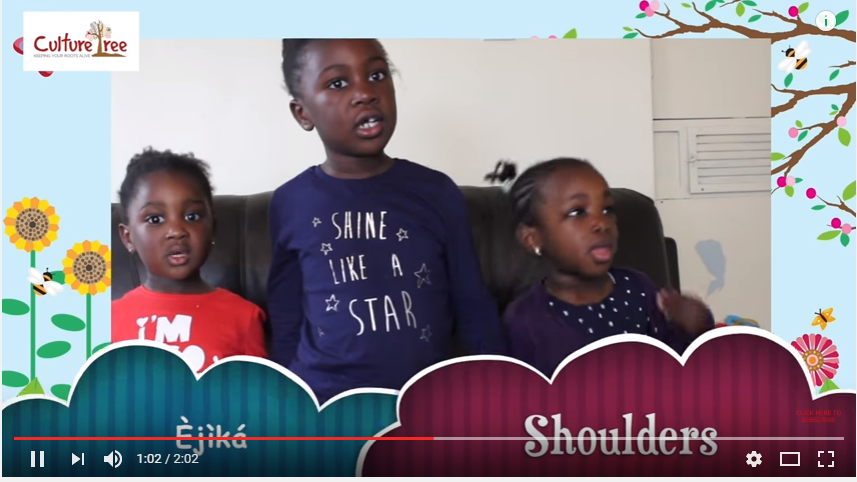
If you live abroad and have pondered on how to keep your kids interested in Nigerian culture, this brilliant mother of two has come up with a solution.
Gbemisola Isimi came up with a fun show idea when she realized that her 3-year-old daughter who loved to watch videos on her iPad, was not being exposed to Yoruba rhymes for kids, because there weren’t any available on Youtube. She started by translating the English nursery rhymes her daughter liked into Yoruba.
Culture Tree TV (available on Youtube) aims to teach youngsters Yoruba by translating old English nursery rhymes and children stories into animated videos in Yoruba. Just look at these cute kids go!
We hope Nigerian parents all over the world will take advantage of this fun platform to train their kids. We also hope to see Culture Tree Tv expand to accommodate as many Nigerian languages as possible.
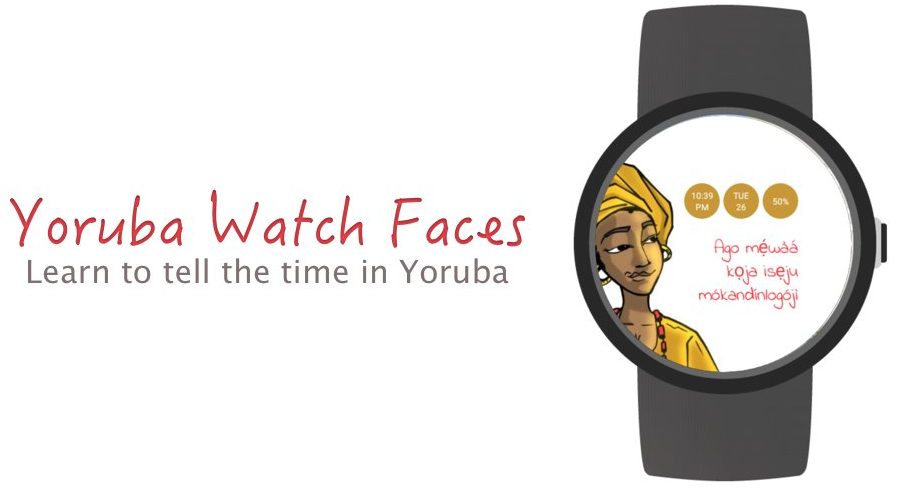
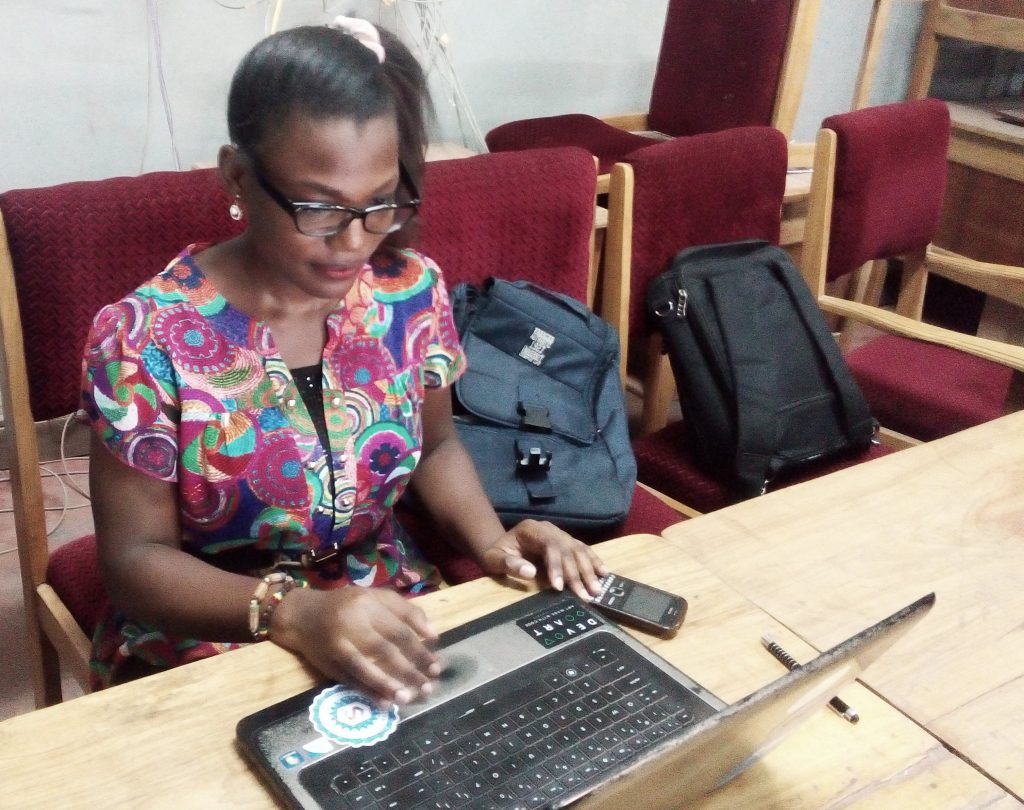
Have you ever imagined being able to tell the time in Yoruba? Well, now you can with the Yoruba Watch Faces created by tech enthusiast and Software Engineer, Moyinoluwa Adeyemi.
This Computer Science graduate who has created a sizeable number of Android Watch Faces became inspired to create a way to tell the time in Yoruba after looking at a clock on a Friday evening after work.
Soon after, she started working on this idea, and began gathering all the knowledge she gained from the Natural Language Processing classes she took while in school.
Moyinoluwa has been doing awesome work even before her Android Watch Faces became popular. In 2013, she was the event developer of TEDxIfe that held in OAU, and was also on the 14-member team that helped improve the ranking of the university from 6th to 1st in Nigeria at the Webometrics ranking of universities.
Moyinoluwa is currently the Software Engineer at Swifta System and Services International.
Two of these Watch Faces are currently available for free download on Google Play Store, with each of them depicting a man and woman in Yoruba attire.
PS: Baby boy here means he’s winning at life a.k.a ‘chopping life’.
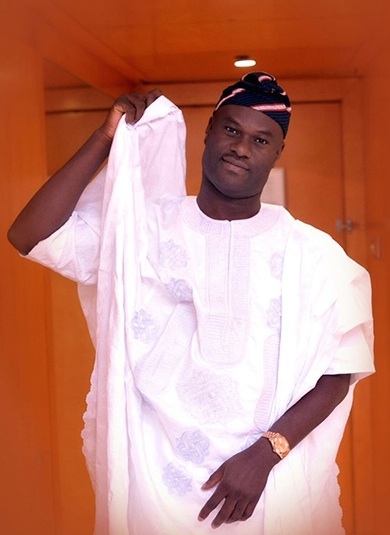
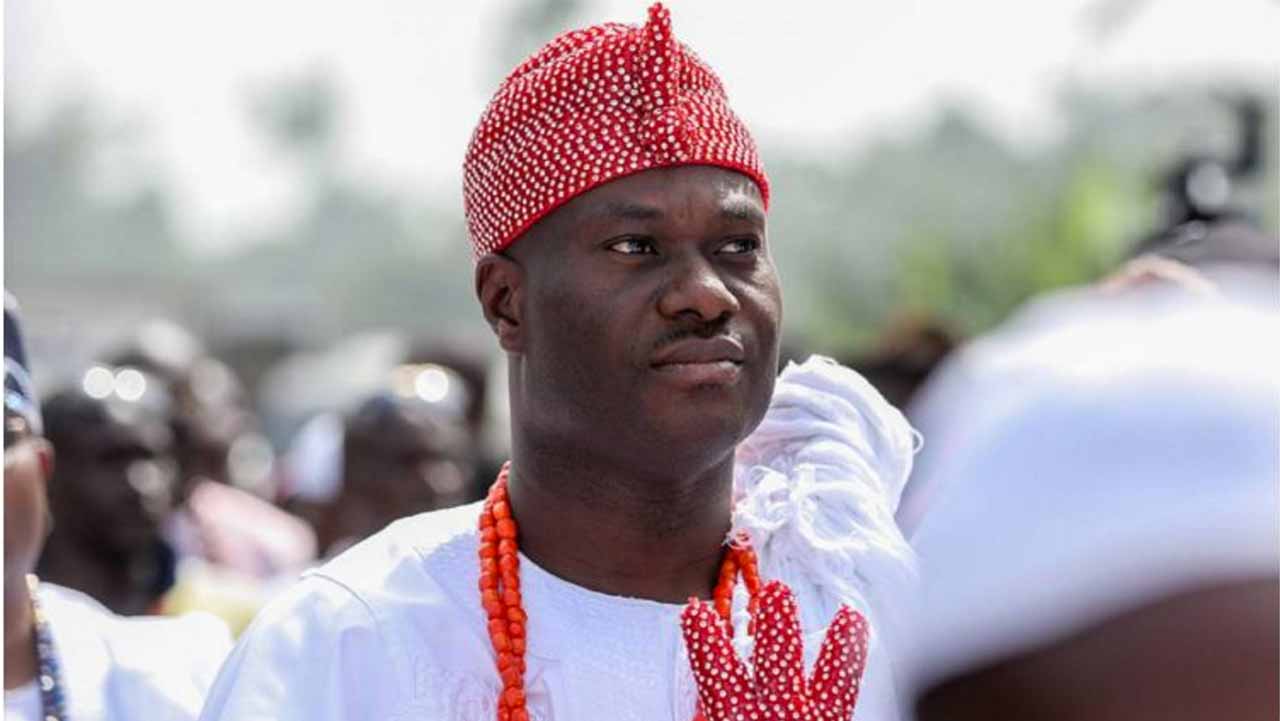
Ooni of Ife, Oba Adeyeye Ogunwusi, who is on a visit to the U.S, will be hosting the Odunde festival which celebrates the Yoruba race in the U.S annually.
Here are 10 reasons why he’s an awesome Nigerian monarch:
1. He is an established accountant and a member of professional bodies such as the Institute of Chartered Accountants of Nigeria (ICAN) and an Associate Accounting Technician.
2. He is forty and still living the royal baby-boy lifestyle.
3. He runs a chain of successful businesses including Inagbe Cocowood Factory, a home furniture brand which makes use of local raw materials for production.
4. He made efforts to squash the notorious Ife/Modakeke beef and even started a fund to develop both towns and their environs.
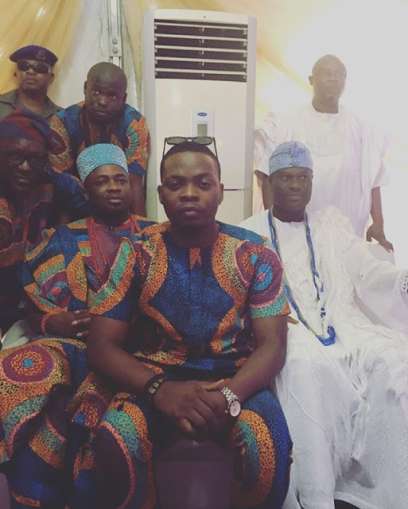
5. Celebrities like Olamide aren’t shy to sit with him.
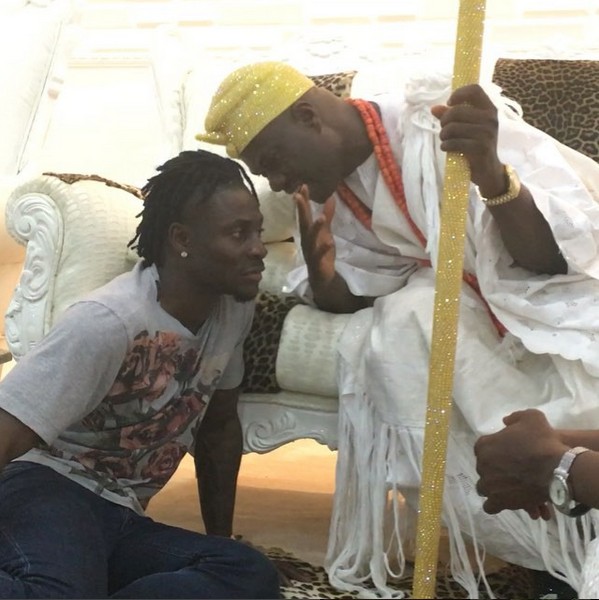
6. He even paid Super Eagles player, Obafemi Martins a visit.
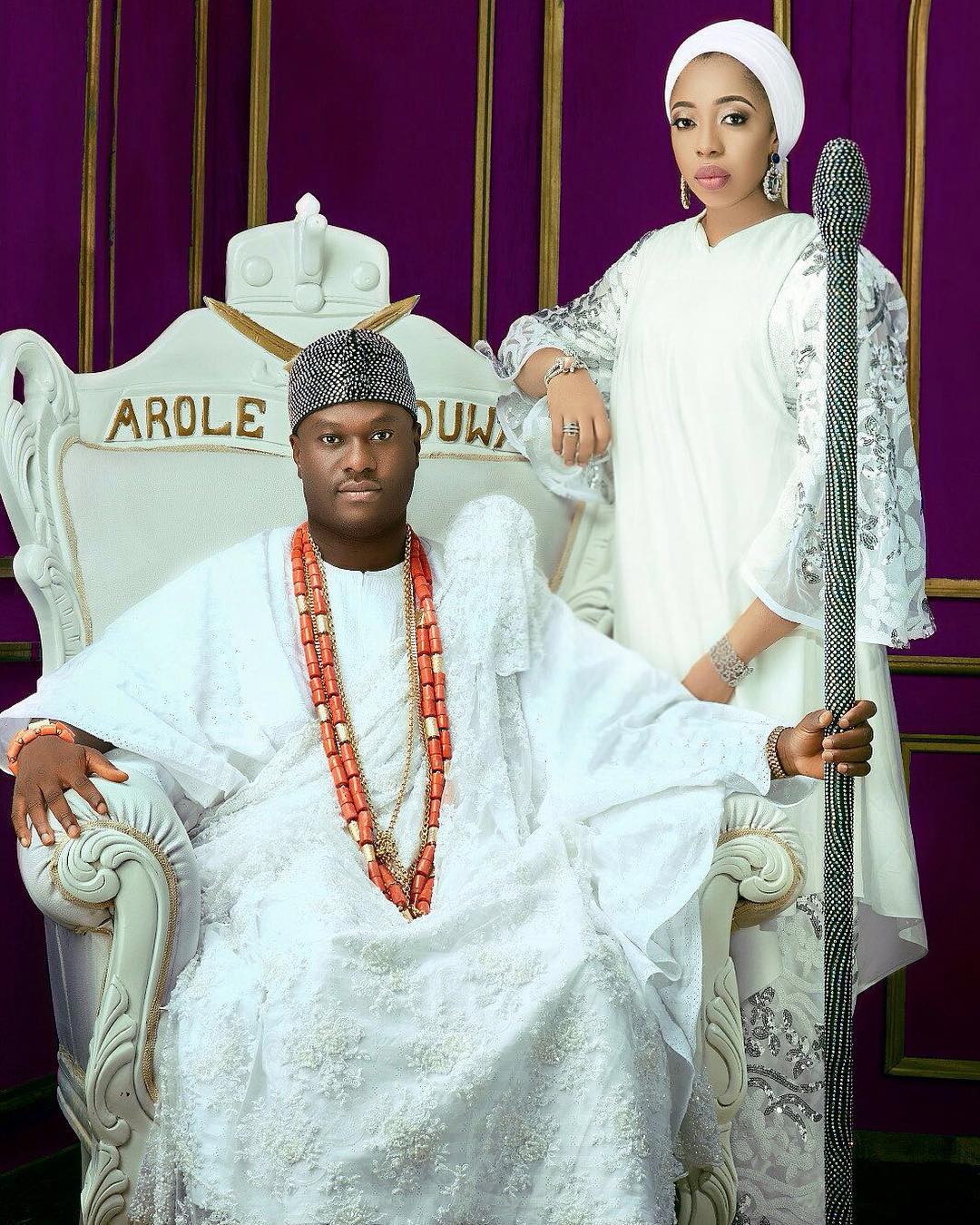
7. He and his wife, Olori Wuraola, only know how to slay.
8. To add to his feathers, he was recently appointed as the Chancellor of University of Nigeria, Nsukka
9. During his visit to the U.S, he will be visiting President Obama at the White House and is set to receive a honorary award.
10. In his honor, New York senator, Kevin Parker and Brooklyn Borough President, Eric Adams, secured permission and declared June 13 as Yoruba day.
This post isn’t here to bore you about how Nigeria has the highest rate of twins in the world. No, seriously, it’s not news.
It’s about a video that will definitely leave you in shock.
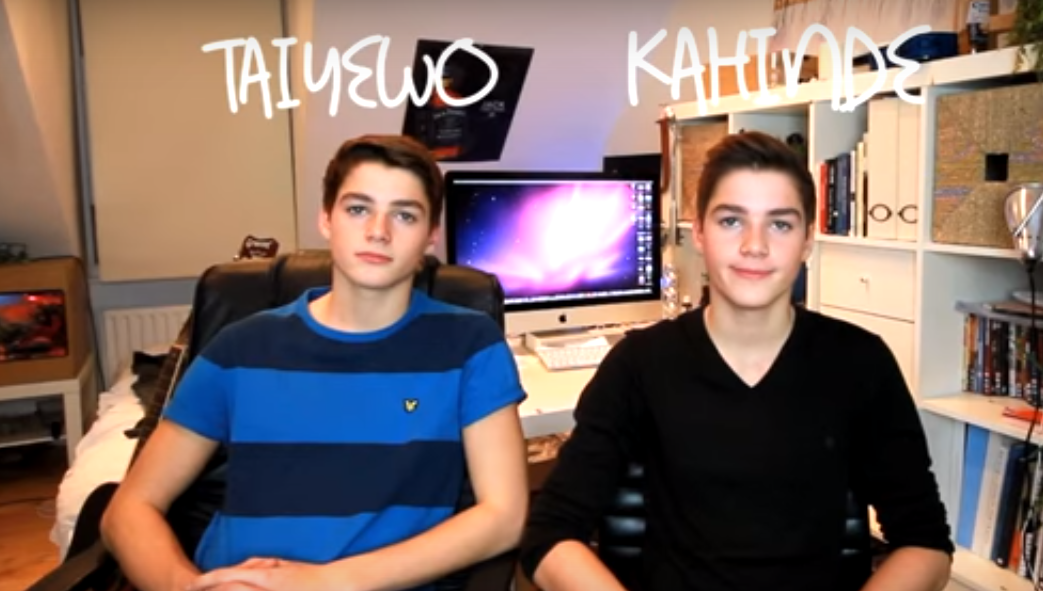
According to these British twin vloggers, there’s a “little place called Yoruba” which has the highest birth rate of twins in the world. Wait what?
After trying to explain how/why the Yoruba people name twins and pronouncing the twin names, Taiye and Kehinde, in the most ridiculous manner…
They ended the video with some “Yorubian folk music”.
What’s all this yama yama?
When foreigners try to explain African culture but fail at it.
In all honesty, they almost had it sha. But their reference to Yoruba as a place and description of Orlando Owoh’s music as “Yorubian folk music” is just unbearable.
On the evening of April 23rd, Queen B blessed the world with her visual album titled Lemonade, which premiered on HBO.
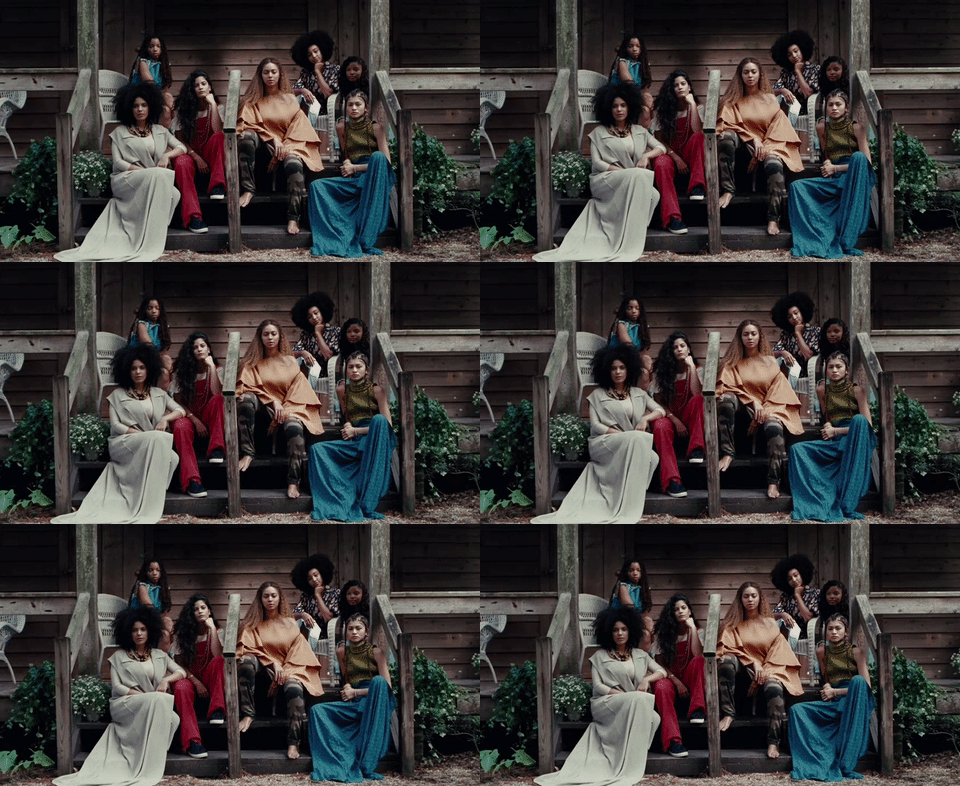
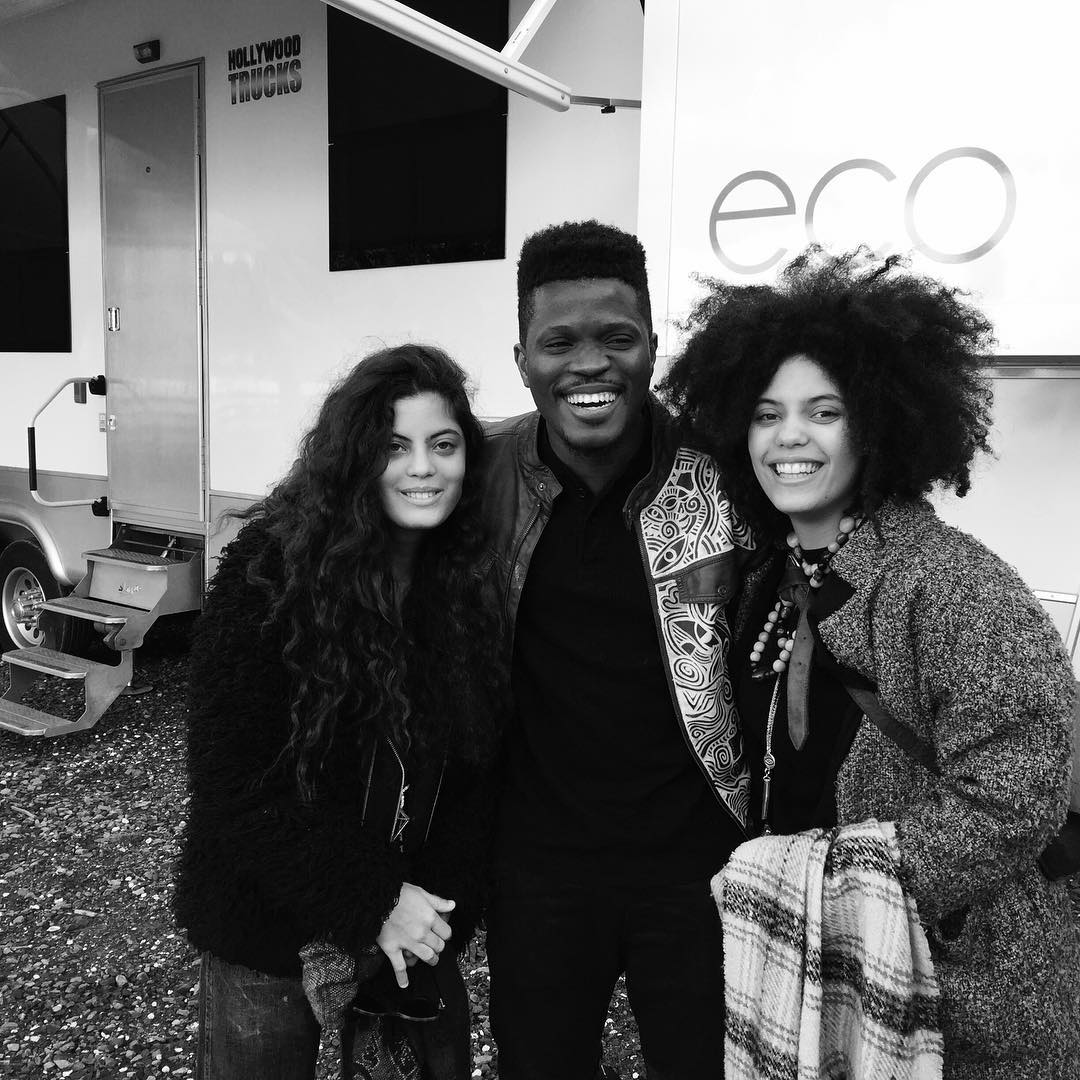
As if she wanted to kill us with slayage, she featured several awesome people such as Ibeyi (the French-Cuban twins), Zendaya, Amandla Stenberg…
And even Serena ‘Slayrena’ Williams.
Beyonce also featured Nigerian Afromysterics artist and Nike ambassador, Laolu Senbanjo.
He channeled his “Sacred art of the Ori”, which is his own way of expressing Yoruba spirituality through art, in Beyonce’s album.
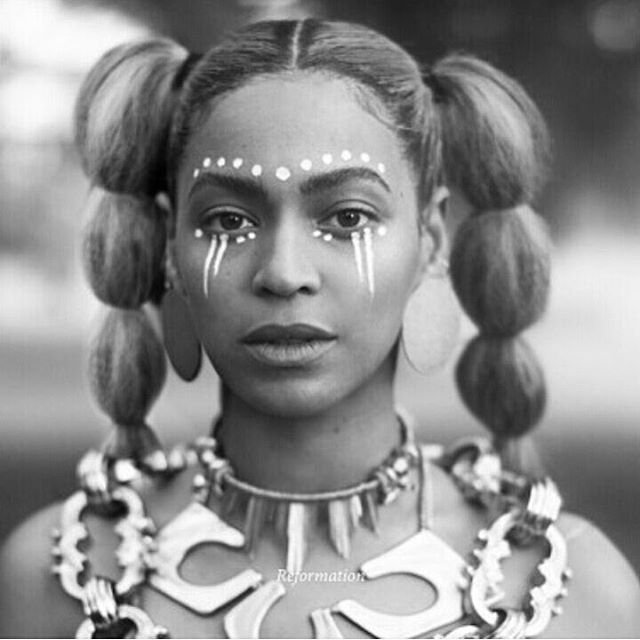
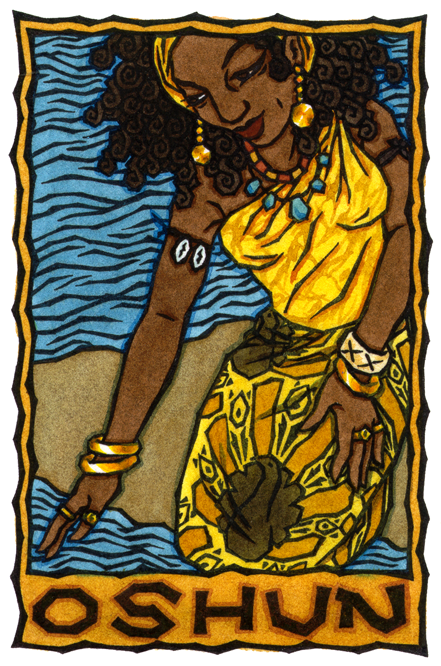
Beyonce just had to recognise the fierceness of Yoruba goddess, Osun and channeled the goddess with her yellow dress and by opening these golden doors with water gushing out of them.
Beyonce wore a mischievous smile while breaking car mirrors and water hydrants.
Osun is also known for her unpredictable temperament, and is associated with beauty, femininity, twins and water.
Although most Nigerians are not exactly familiar with our indigenous culture, it shouldn’t always take “foreign exposure” to make Nigerian culture and customs appreciated locally.
One of the things that has accompanied Nigeria’s vast cultural diversity is stereotypes.
Naturally, stereotypes aren’t necessarily true and can draw lines of division. Sometimes they are hilarious and this artist brought the hilarious side of some of these common stereotypes into his art.
The 22 year old graduate of Geophysics from Covenant University uses the Japanese animation, Chibi art style, to create his art pieces.
The Chibi art style originated from the appearance of the Japanese anime characters and has been used to create several other graphic art.
Ajoku David Uchenna shares tribal bonds from the Igbo and Yoruba tribes of Nigeria and got inspired by the common cultural stereotypes on Nigerian Twitter.
He aspires to create more art in preparation of a comic series similar to Archie and Juggle head, done Naija style, of course.
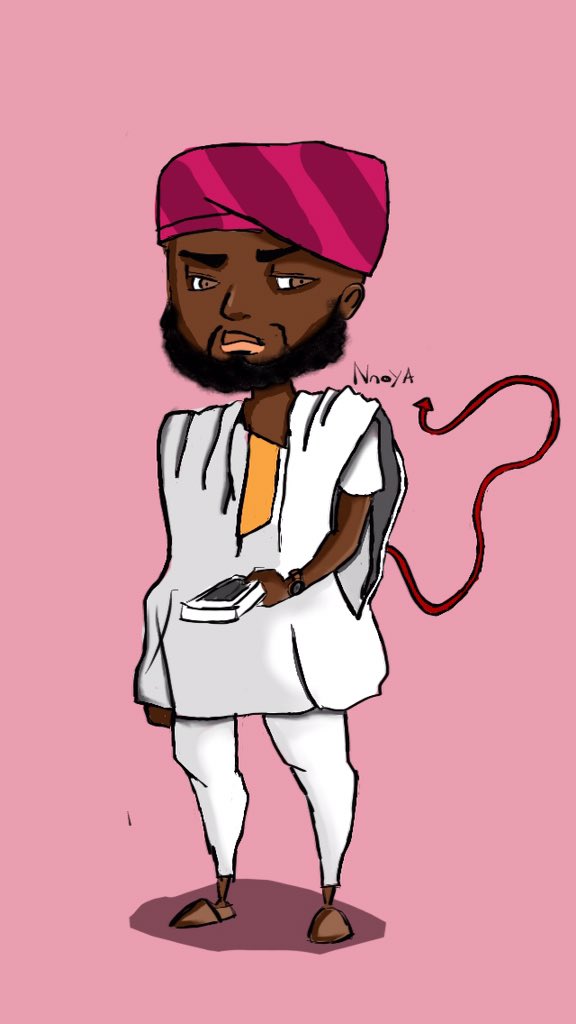
Bayo, The Yoruba Demon.
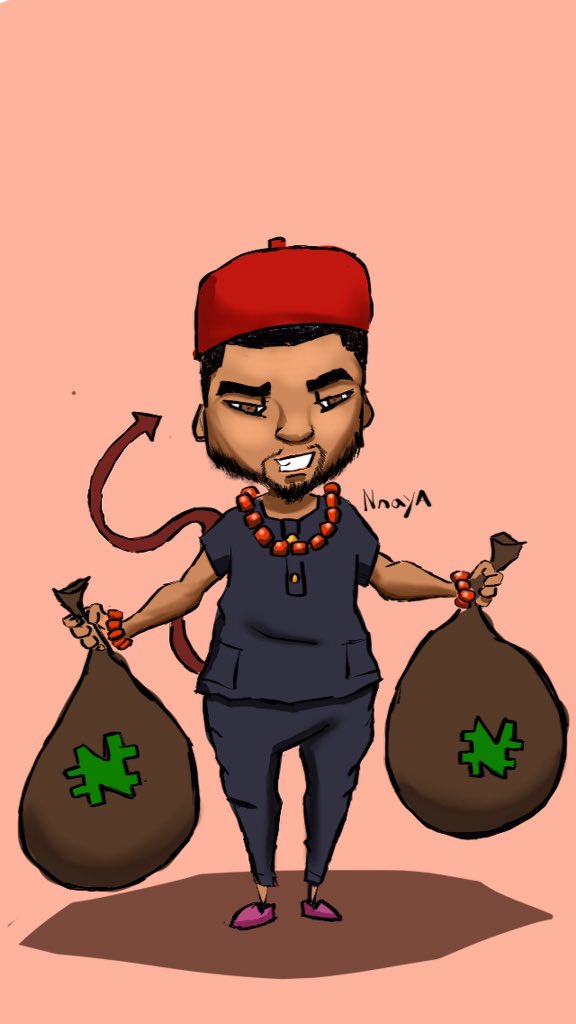
Emeka, The Igbo demon.
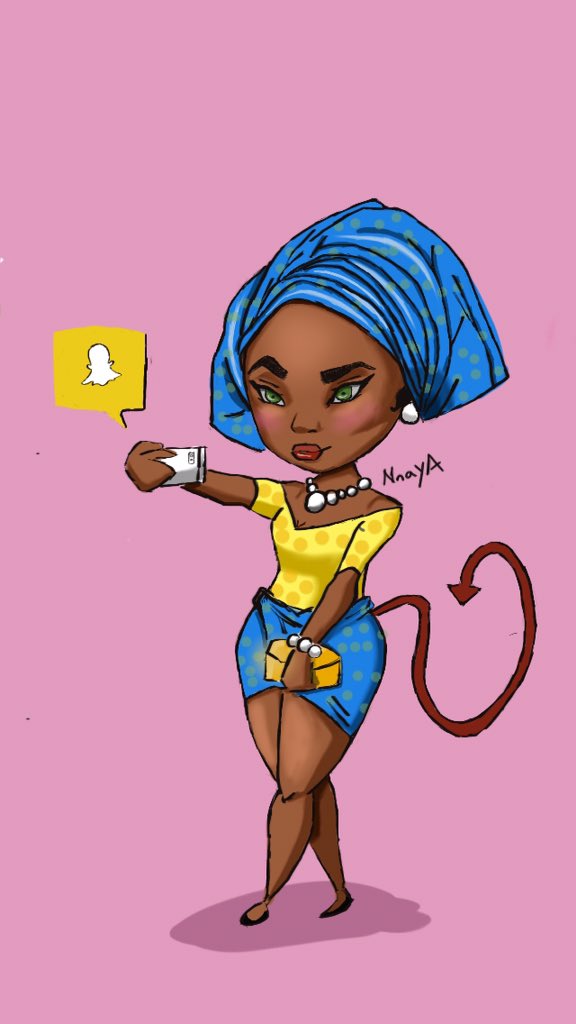
All his characters bear tails because he believes that demons aren’t necessarily Yoruba and that Nigerians generally love to live the baby boy/girl lifestyle, wearing nice trad and turning up at Owambe parties.
.. And this one for Owambe lovers.
David also doubles as a photographer and works at a Nigerian NGO ACSI when he isn’t creating art.
If you like Nigerian songs, you’re in good company. In addition to the millions of fans across Africa, Nigerian music has garnered fame in the white man’s land. ^_^
White people love AND are really trying to sing these songs. So get comfortable and lose yourself in these hilarious videos of instances when they try.
1. When this Greek-German dude, @NikiTallMusic Sang Olamide’s Shakitibobo While Wearing an ‘IGWE’ Shirt