|
-

In January, I packed two bags, hired a cab for ₦110k and moved to Cotonou with a friend. We’d had a couple of rough months and needed a break from Lagos.
Lagos wasn’t a city interested in my needs. I needed electricity, it gave me an anorexic power grid. I asked for an apartment close to work, and I lost my rented apartment to new house owners. Lagos was like a lover who ghosted once you started to want things. I needed better. Enter Cotonou.
I would’ve gone anywhere – as long as I had electricity and the air was cleaner. But I chose Cotonou because it was four hours away by bus and I could finally use my dusty passport.Cotonou offered me three things in the first week we moved: 24/7 electricity, a clean city, thanks to cleaners who wiped the city at 2 a.m., and an apartment by the beach for the same price you’d get a boxy mini flat in the heart of Lagos mainland.
At a party, weeks later, when I explained this to a new friend who asked why I was in her city, she contemplated my analysis for a few seconds, then said, “Nigerians used to come to Benin Republic for trade or school… now they just come.”
It was my turn to contemplate. She wasn’t wrong. Nigerians at Dantokpa market, the biggest market in West Africa, may have settled in Cotonou for trade, but I’d learnt about a growing community of Nigerians with mostly flexible jobs, who, like me, had just come. What were their reasons? How did they decide?
Jite, a friend of mine, is one of these Nigerians. She’d spent her 20s in Awka and Nnewi, and loved their “small-townness”. Cotonou reminded her of those places. Friendly, quiet, with a passion to do very little.
“That jet feeling you get in busy cities doesn’t exist. If you go buy something and they don’t have change, you better just stay and wait. If the woman selling fruits has three people buying something, she’d attend to each person one after the other, not at the same time. Everyone is fine with that.”
During a five-minute stroll the evening I arrived, she told me to tone down my “Lagosness”. We’d been tearing through the street as though we were being chased, and she’d realised she was starting to pant. We laughed about it.
In her late 30s, Jite’s priority was peace of mind. Since 2020, before the move to Cotonou, Jite had been considering moving out of Nigeria. She, however, knew she didn’t want to move to a “white people country”.
EndSARS, the protest against police brutality was the trigger. “Something broke in me,” she said. She’d been a managing editor at a publication in Lagos for three years, and she quit. Six months later, she was in Cotonou for a friend’s birthday party, where she fell in love with the city. When she did make the move, she settled in quickly.
Networks
To enjoy a city, you need to understand how it works, and Jite had lived in Cotonou long enough to build a network. She had a guy and hack for everything. A guy for changing money into her Mobile Money (MoMo) account, which she used for transactions in shops on the streets; she knew what fruit seller spoke Yoruba, the fastest way to get to Lagos and back, how much internet data would last the month (25k, 75gb unlimited, the data cap lasts two weeks at best).
In my first week, Jite pointed out places and people I should know to have a good time: Her group of friends with whom she met once a month and checked out new places with, KaleBasse for the sensual, soft, Kizomba classes (we never went), the restaurant by the beach with tasty Bissap and a grilled Barracuda that melted in your mouth. She reminded me not to dress like a hippie when we prepped for a night at the hotel rooftop where a Nigerian singer named Gracia hosted live sets. “If you are black, you need to look wealthy in certain places to avoid disrespect.”
Loneliness is a byproduct of relocation, and people find moving to new cities or countries difficult because of the distance it creates between loved ones. When I asked Jite how she stays connected to her friends and family in Lagos, she told me she saw them more now than when she was in Lagos.
Since Jite started as a comms manager in a hybrid company in February 2022, she has visited Lagos once a month; she only has to be at the office once a month, so she takes a boat ride from Porto-Novo to CMS. The trip is two and a half hours. On these trips, she visits her mum and friends.
On our first night at the hotel rooftop, Jite introduced me to Ade, and the first thing I noted was that he spoke French to the waiter when he ordered a Mojito. For a second, I wondered if I could trust Cotonou bartenders with a glass of Moji baby, but I gestured for a Beninoise instead. As we drank and listened to Gracia belt Adele songs, he told me he’d lived in Cotonou for three years and knows the best spots. I’d meet Ade at various times in the following weeks. Twice at Jite’s for an evening of enjoying her meals and once at Erevan, the biggest supermarket in Cotonou. On one of those meets, we planned to visit one of his favourite spots: La Pirogue.
27-year-old Ade didn’t find settling into a new place with no friends as simple as Jite. Born in Shomolu to a strict dad who didn’t allow him to spend the night at anyone’s house – friend or family — he was shocked by his decision to move to a new city. He’d visited Cotonou for a short trip, a four-day work retreat in September 2021, and on his first night, he fell for the city.
“The time was 11 p.m. and everywhere was alive. I got to learn about the culture. For example, how it’s completely normal to have kids before getting married.”Ade wasn’t averse to big decisions. He dropped out of the University of Ilorin in 2016 because he hated his course, taught himself to create websites with a friend’s laptop, and started an unsuccessful coaching business. Moving to Cotonou would be the fourth biggest decision in his life.
When I asked why he came, his reason was that he felt alive in Cotonou.
“I remember the moment I decided to move. I returned for another work retreat in December and found myself extending my trip. It was supposed to be for a weekend, but I stayed for two weeks. One night at a Sodabi joint, I immediately texted my mum, ‘I’m moving here.’ She freaked out. Had I considered the language, people, all the barriers? I hadn’t, but I didn’t tell her this. In fact, I had just paid rent for my apartment in Lagos.”
Where to live in Cotonou was easy to figure out. His boss ran their office in his home, and there was space for Ade. But the next three months tested him.
Building new communities
The idea of moving to a new city comes with the daydream of choices unaffected by previous folly. Everything is fresh, exes are not one Friday night-out away from tearing open new wounds and the prospect of getting to know yourself some more is electrifying.
You meet new people, find new spots. There are decisions to be made about everything from your hair salon down to your biscuits.
In reality, all of this was work, hard mental work that Ade, who hadn’t stayed longer than two weeks in a different country, was unprepared for.
“My first week was great. I was excited, checking out everywhere, taking pictures of everything. Second week was also great. I was working with my colleagues face-to-face as opposed to using virtual conferencing tools. From the third week, I started struggling.
“I realised I had to make new habits. If I felt low or had to talk, who would I go to? Living at work also didn’t help me. Even when I was done with work, it felt like I was still at work — the office was four doors away from mine.”
The skill that proved most useful to Ade was his ability to just get into things. Just like he decided to move after a shot of hard liquor, once he knew he had to learn French, he spent time outside till it made sense; he wanted to try new food, so he did.
“I’d jump on a bike and tell him to move. He’d be like, “Quel quartier?” I’d say just go. If I saw a place with a lot of light, I stopped.
“Paying attention to how places made me feel also helped. I found Luxury Lounge, the beach restaurant that helps me when I’m feeling overwhelmed. I also made friends to help me with my struggles here. They have context about how the people here are like and can give me contextual advice when I need help.”
In three years, Ade now had a network of Nigerian friends he met at places like Jite’s rooftop, friends from work and an aunt he found had also moved to Cotonou. These people, finding new places to visit and work keep him grounded. It took Ade about a year to settle fully into Cotonou.
When Life Gives You A Beninoise Passport
27-year-old Eli was born in Cotonou and moved to Nigeria when his dad’s trading business started to fail. We were eating bowls of ice cream from Ci Gusta, the best ice cream spot in Cotonou when he told me about his parents, a dad who moved to Cotonou in the mid-80s to expand his business and a mum who moved with his dad to build a family. Eli’s voice was soft and measured, unlike mine which was loud, competing with the music playing above us.
Eli’s dad left his import-export business in Abia, a state in South Eastern Nigeria when the Benin Republic opened its ports in the mid-80s. This is the story Eli was told to explain his Beninoise passport. His dad imported fabric from Gabon to Benin Republic, then exported them from Benin to the Netherlands. His business grew, and he built a house. He switched to importing clothes, towels, and fabric from Europe and selling them in Benin. When Eli was two, they moved to Lagos, and a year later, his dad was back in Abia State to continue his business.
“It was too late to be ‘Nigerian’. I was already in love with Cotonou,” Eli told me. He was back at the Cotonou house every school break, and once done with secondary school, he decided it was time to return. Eli had a plan.
“I told my mum we should come back, and she agreed. She also missed the calmness of Benin, and we still had a house. She moved back with me.”
Eli loved the city and the opportunities his passport affords him. “It’s very easy to get admission into universities here. Once you have 5 C’s in your O’Levels, you pay for a form, fill it, and you’re in. The quality of education is good, but the discipline is poor. No one will tell you to attend classes or punish you for not attending. So the bright students are very bright and the dull students are very dull. It’s entirely up to the students to succeed.
“I was a serious student. I studied Economics, and now I want to do a Masters in Social Work. I’m trying to transition because I want to travel. I’d like to do social work in a clinical setting, vulnerable people – giving care to people who need it. I’m working in a clinic now so I can do that.”
Johnny Just Come
Most Nigerians I met in Cotonou are fond of Jite, and that’s because she’d either convinced them to move down or they tasted her cooking. Jite hosts a once-in-a-while hang-out on the rooftop of her house. I’m eating yam and palm oil sauce on this rooftop when I meet Runor, who’d been in Cotonou for three months and was house hunting. He told me he came for the quiet.
Runor preferred not to think about Lagos, where he ran his generator daily because his apartment belonged to the section of his estate with low current electricity, and he had to pump the entire compound’s water daily because no one else would do it.
From him, I found out how much it cost to get a place. “The way these people build their houses can be very funny.” We watched a video of an apartment where the restrooms are outside and there’s no roof from the living room’s door to it. “What if it rains?” He bends his mouth in disapproval, but his forehead isn’t creased. It’s almost like he’s been enjoying the hunt. Runor knew he was very picky, and also knew that was a privilege he could only have in this city.
“I found a 2-bed with a small bathroom for CFA 85k. I found a two-bedroom place with a balcony. It costs CFA 20k per month. CFA 1.4m a year. One agent sent me a 3-bedroom flat for the same ₦120k. They showed me a one-bedroom with the toilet and kitchen in the same space, so I don’t ask for a one-bedroom again.”At the time, CFA 1k was changing for ₦850 at Ajali, Dantokpa market area.
Runor was waiting to settle down to really experience the city, and with the options he found weekly, he’d be ready soon.
There are many reasons to enjoy Cotonou during a two-day work retreat, a month or three years. Everywhere is 20 minutes away, there’s 24-hour electricity, and close to the airport is an Amazonian statue I never visit because what if it falls on me?
For me, it’s my apartment.
My apartment is a two-storey white building which houses tenants I don’t hear or see. Security is a man in his late forties with whom I practise my bonjour, bonsoir, a demain. Francis is also the cleaner, gardener, and upholsterer of things.He tries to teach me basic French, and I fail most times.
“Bonsoir madame, ça va?”
“Bonsoir…”
“No no. You say “ça va bien, merci. Et tu?”
I repeat, and I’m rewarded with a smile, then disinterest. I cannot bear to fail him.
Two months of this, and I still stutter between je vais bien and ça va bien, et tu and et toi. I’ve been religious with Duolingo, but tongue-tied in actual conversation. I know what it means to be happy — contente — but have no idea what conversation would lead to me saying I was happy, and if anyone would be kind enough to place one word after the other so I could follow. Very unlike the Duolingo owl, I chicken out.In the middle of March, a week after Nigeria’s gubernatorial elections, we have a soiree on Sunday evening. There’s poetry, clinking glasses filled with zobo wine, a charcuterie board by Lara, my landlady; and art installations to mull over. Runor tells me he’s found a place. My struggles feel a globe away, even though I could get to them in four hours by road and two and half by boat.
I contemplate the people in the room, some here to fill or assuage something, each looking for a sense of balance or just a space to dream — a space that fosters dreams. I wonder how long it’d last, how long just until the stain of being Nigerian became a difficulty they had to contend with even here. We focus on the lull of the beach, Dwin the Stoic’s “God Knows Where”. Now is not the time for wondering; it’s for being contente.
Do you have a story about Nigerian communities around the world? You can contribute to this series. Click here for our guidelines.
-

Your japa dreams have finally come to pass, and it’s time to leave Nigeria. It’s also time to sell all your properties for extra cash.
When I say “property”, you might be thinking cars and family land. No, that’s for bastardly-rich people. For ordinary citizens like you and me, these items are the sellable property.
Plastic “takeaway” plates
We all still have a giant pile of takeaway plates dating back since 2005. Some people call it hoarding, I say it’s saving the environment from plastic pollution. So what if they now look like a fair Igbo babe? They still work, right? Sell them.
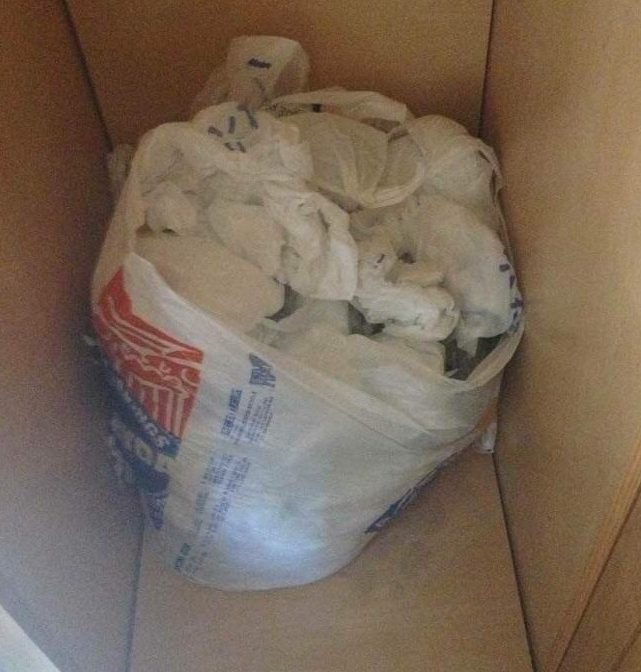
Plastic bags
Why throw away what you’ve spent years accumulating, when you can just pass on the tradition to someone else for a fee? If you think no one will buy because they have their own stash of plastic bags, just try it first. There’s no such thing as too many plastic bags.
Power bank
There’s no NEPA where you’re going, so you might as well sell your power bank to those who still need it.
Hand fans
Sure, the sun is everywhere, but the one abroad sun-kisses people.
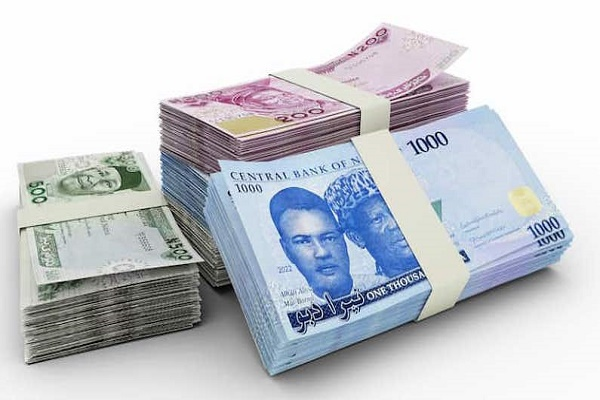
Cash
Specifically, the new naira notes. It’s now worth more than dollars in Nigeria, so you’ll be smiling to the bank.
Body parts
Wherever you’re relocating to, the odds are their medical system is better than Nigeria’s. I’m sure they can keep you alive even without a heart or liver.
Wi-Fi devices and data
You can even throw in your sim cards as a bonus. Considering how much these internet service providers have disgraced us, I say it’s good riddance to bad rubbish.
Your glucose guardian
Unless they’ll be sending you funds in foreign currency, sell them. What do you need naira for when you’re already in a new dispensation?
NEXT READ: Everyone in Nigeria Is a Victim of These 10 Scams
-

The Nigerian experience is physical, emotional and sometimes international. No one knows it better than our features on #TheAbroadLife, a series where we detail and explore Nigerian experiences while living abroad.
This week’s subject on #TheAbroadLife received a trip to London as a birthday gift when she turned ten. Since then, she’s been to 34 countries, from Namibia to Eswatini. At the moment, the US is her home. But will it be her last stop?
Where are you now?
I’m currently living in Washington D.C. in the US.
What’s your travelling history?
Interesting question. The first time I travelled was when I was ten years old. It was the first birthday I was celebrating without my brother having a party too. Our birthdays are really close, so we usually had our birthday parties together. When I learned we’d be having separate birthdays, I was really excited about it. I was expecting a party, but my mum came up to me one day and asked if I’d like to go to London for my birthday. I was like, “Of course”.
It was my first time out of Nigeria, but only one of many.
What was the experience like?
The memory is somewhat faint right now, but I remember going to a toy store with an entire floor dedicated to Harry Potter. My mum wouldn’t let me touch anything because, in her words, Harry Potter was witchcraft. I hated not being allowed to even look, not to talk of buying a book. It sucked more because I really loved books. But the fun part came when I found out that my cousin with whom we were staying had a library card. I could use it to visit the public library and read as many books as I wanted. I also remember being fascinated by the buses and trains, how chill they seemed. Growing up in Lawanson, Lagos, I wasn’t used to that.
We stayed the whole summer and I came back to Nigeria with enough clothes and “stuff” for me to be hip in school the following week, and it wasn’t until five years later that I was able to leave Nigeria again. This time, to the US.
Your family must really love travelling
Yes. Everyone is very well-travelled and it’s actually encouraged to travel as much as we could. The London trip wasn’t something we could afford on a whim, but my mum squeezed out resources, and it was worthwhile.
Tell me about the trip to the US
My mum wanted us to have the Disneyland experience, so she planned it out. The park experience was golden. I think I threw up at a point because I had motion sickness sha. But it was a lot more “outside” than the trip to London.
Where did you go next?
My mum got a job in Namibia, and because my siblings and I were in boarding school in Nigeria, we had to travel every holiday to see her. We did that for about a year and a half, till I graduated from secondary school.
After that, I went for an international baccalaureate at a boarding school in Swaziland — now Eswatini — and I was there for about two years.
Eswatini? What’s it like?
It’s one of the last two Kingdoms left in Africa, and it opened my eyes to just how diverse Africa really is. The school is quite international, so I was able to meet people from different countries in the same place. I became popular very quickly for being a “loud” Nigerian, as I was tagged. It’s because everyone else was so chill. The only people who had my energy were the Mozambicans. I’d say they’re the Nigerians of Southern Africa. My stay at the school helped me learn how to identify different African countries based on their accents.
There was also a sharp contrast between the food in Namibia and Eswatini. Namibia has a lot of wildlife, so they tend to eat a lot of meat, while Eswatini is more lush and green, so their food is heavy on vegetables. After graduating, I went to America for college.
What did you expect from America, and what did you find?
I wasn’t expecting anything I hadn’t already seen in some form. But this time was still different. My school was in a small town in Indiana, so it was very Midwestern. I’d been to New York before then, and the contrast is huge. The town was a lot more country-like, and the population was older and much more white.
Because it was a small town, there was really no public transportation. Unless you had a car, it was hard to go anywhere far for the things you wanted to enjoy. It wasn’t until much later that this student couple started a delivery service that really saved our lives. A while after, someone opened an Indian restaurant, so things got a bit better.
I got pretty cooped up very fast, so I started taking any chance I could get to catch a break. I did everything from exchange programmes to internships and volunteering. Eventually, my degree programme ended, and I moved to Washington.
Why Washington?
Because of my travel history, I’ve always wanted to work in international policy affairs. So, I got a job in that area, and it required me to move to Washington. Also, my mum had moved to the US by this time. She was staying in Maryland, less than an hour from D.C. by train.
Tell me about D.C.
Coming here was a breath of fresh air, to say the least. First, it was a lot more culturally diverse for my travelling spirit. There were a lot more black people. In fact, Washington D.C. used to be called “Chocolate City” back in the 70s by many black people because it had a predominantly African-American population. But the black population is not as high as it used to be because of the high price of houses.
I have a lot more food options here than I did in Indiana. There’s Thai, Mexican and Indian food, so I no longer need to carry pepper around. I also love that even though it’s metropolitan, it’s not as bustling and crazy as New York. The roads are bigger and cleaner, there’s a lot more greenery, and the people are a bit laid back.
Tell me more about the people of D.C.
Washington is a transit city for most people because of its political nature. There are many diplomats or people who work in important government positions here. In fact, you could meet someone who works for the president in a park and have a chat with them without realising who they are. Their stay often changes with the political seasons, though. But for me, D.C. is home now.
What’s your favourite thing about the place?
I’d say the greenery. Maybe it’s just the part of D.C. I live in, but it’s just so beautiful. You need to see it for yourself to appreciate it.
Will this be your last stop?
Even though D.C. really feels like home, I can’t say for sure because that travelling spirit hasn’t left me yet. I’ve been to 34 countries, and I still want to visit many more. I actually have a list to track my travel. I haven’t been anywhere in South America and some parts of Southeast Asia, so they’re definitely in my travel plans.
Hey there! My name is Sheriff and I’m the writer of Abroad Life. If you’re a Nigerian and you live or have lived abroad, I would love to talk to you about what that experience feels like and feature you on Abroad Life. All you need to do is fill out this short form, and I’ll be in contact.

Starting next week (January 31st, 2021) -

There’s some good news for you if you use Nigerian airports a lot. The Nigerian Civil Aviation Authority (NCAA) has reviewed the COVID-19 health guidelines for the aviation industry and lifted restrictions on face masks and mandatory testing for travellers.
What’s the full gist?
On December 12, 2022, the Presidential Steering Committee on COVID-19 made an announcement. President Muhammadu Buhari had approved the immediate relaxation of COVID-19 safety measures and travel advisory.
In September, the World Health Organisation (WHO) had announced a global decline in COVID-19 infections. Between February and September, the number of weekly reported deaths dropped by more than 80%.
The Nigerian government’s announcement means all aviation service providers for domestic and international operations must cancel the COVID-19 Polymerase Chain Reaction (PCR) test for all categories of passengers, regardless of whether they’re vaccinated or not.
Face masks are no longer mandatory at airports, although the NCAA still advised that people aged 60 years and above, those whose immune systems are compromised and those with comorbidities should stick to safety measures, including avoiding large gatherings.
What does this mean for travellers?
No more do you have to go to the airport looking like a masked avenger. Most importantly, you can pocket the thousands of naira spent on compulsory COVID-19 tests and save it for Detty December.
It’s also good news for the aviation industry which hopes to rebound from the last couple of years in which restrictions seriously affected profit margins. It’s wins all round for those who want to japa, the IJGBs, and the airline operators. All in all, it’s a good note to close the year on.
-

As I prepare to write my final exams, I reminisce on my time shuttling between Lagos and Benin city the last five years. Even though I’m from Edo state, I was born and raised in Lagos, so living in Benin was a chance to connect with my people. However, as much as I like to deny it, I’m a Lagos babe through and through. I like the hustle and bustle that comes with Lagos. As much as I complain about the traffic, a traffic free life scares me. I love
The culture shock I first experienced in my first year in 2018 hasn’t ended since. If you’re a Lagos babe like me and you want to know what to prepare for if you ever have to come to Benin city, first of all, never wear white shoes out. Benin and red sand are like Lagos and traffic — joined together, never to depart from one another. Your shoes will change to shades of red and orange, and you’ll hate yourself and the person who brought you to Benin.
Of course, not everywhere in Benin is covered in red sand, but most of it is. Especially the places that require you to walk. That brings me to my second culture shock. There are parts of Benin where you forget that okadas exist. In Lagos, I’ve watched various governors try and fail to ban bikes. They bring their little task forces and impound lots of people’s okadas, but one week later, they are back on the road.
My cousin told me there were no bikes in Benin, and I thought she was joking. When Oshiomole decided to ban them, he banned them for real. Lagos state governors should come and learn work from him. Edo state has mostly expressways and bikes are a big no-no except within specific streets. Even then, it’ll take a while to find one. If we’re being honest, finding anything in Benin city will take a while. The early morning grind culture I grew up with in Lagos? Non-existent in Benin city.
Benin people do not like to stress. They do things at their own pace, especially if those things are running a business. You go to a shop to buy something, and the owner sits while you attend to yourself. If you finish and don’t have the exact change, they can’t be arsed. Get out. I’m used to sellers in Lagos offering to at least find change for me. I can’t forget when a woman shouted at me for trying to buy a sachet of milk with ₦200, like I’d committed a crime. I had to return to my streets milkless and annoyed. It was even worse because I had to walk a long while to find a shop open by 8:30 a.m. on a weekday. They open their shops late and close them early. Do you want to order a Bolt by 7 a.m.? Better use that time to fill up your water bottle and start trekking. Anything that relates to stress? Benin people can’t take it. They don’t care if you’re paying them. Their gist, their peace, their rest come first.
If these business owners eventually answer you, language might be a barrier. If you’re like me and don’t speak Benin fluently, I’ll advise you to brush up on your pidgin. The pidgin they speak here is unlike the one they speak in Lagos. Dem fit use am sell you for your front, and you go just dey shine teeth. Your 32 go dey sparkle but dem don call price for your head. Better go and hire a pidgin lesson teacher. Make e no be like say I no warn you before. At least, if you narrate your story give another person, you go include say I warn you. If you no include am, the thunder wey go fire you dey warm up for Oba palace. Dem no dey talk too much give wise man.
RELATED: Dating in Benin on a ₦400k Income
If you get the language part down and have to deal with the business owners behaving anyhow, you might feel tempted to interfere. You might want to raise your shoulder and shout at them to prove a point because you’re now a superstar, shey? The insults they’ll rain on you will humble you. I’ve not met a group of people with a worse mouth than Benin people. They curse you to say hello, and if you complain, you chop some more.
Last week, I offered to do something for my roommate, and she ignored me. I told her, “I don’t blame you; it’s me that wanted to do good.” Tell me why one of my Benin roommates replied, “Instead of the good you want to do to kill you, it will kill the person you wanted to do it for.” The scream I let out could’ve been heard from the gate. What did I start? What did she finish? And she said it so casually, like it was an everyday phrase. After the initial shock wore off, I added it to my dictionary. Benin has taught me a lot of interesting and colourful statements. When I unleash them in Lagos, they’ll gather and beat me.
Benin isn’t all bad. I think my favourite thing about the place is the electricity timetable. Every street has a particular time they “bring light”, which is helpful to plan your day. If they bring your light by 6 a.m., you know it’s there till 9 a.m. Anything you want to do should be done by then. When they take it, it’s till 12 p.m. It’s very consistent; they hardly bring light when it’s not yet your turn. Unfortunately, when rain falls, it can take two to three business days for the wire to dry, and in that period, nothing for you. Just zukwanike. Rest.
Benin is for people tired of the hustle and bustle of places like Lagos. Rent is not as expensive, but that’s rapidly changing. With the rate at which fraudsters are pumping money into the shortlet apartment industry in Benin, if you want to come, come fast.
There’s a lot of time to just relax and take it easy. If you enjoy a vibrant nightlife, omo, nothing for you. Except you don’t mind peppersoup and beer joints. That one, Benin has in abundance. You’ll eat grasscutter so much you’ll start growing it on your head. If you’re trying to find clubs, whatever they show you there, better close your eyes and collect it. Lounges? Same thing. Whatever you use your eye to see, your mouth might be unable to say.
The people who were born here or moved willingly don’t have a bad thing to say about Benin city. If they could, they’d choose to be born here over and over again. Me, on the other hand? I’m dipping the first chance I get.
RELATED: 9 Things You HAVE to Know if You Are Leaving Benin to Lagos
-

Nigerians are doing everything to escape the actions of a failing government which has produced the japa trend taking the country by storm. Migration is nothing new, and humans have always been on the move.
However, we’re seeing people quitting their well-paying jobs, their education, and even their families, hoping a better life awaits them anywhere but here.
This belief has driven even people who can’t afford to leave legally towards irregular means of migration. And while we can’t discourage anyone from seeking greener pastures, we can safely tell you some ways to not japa.
Don’t be a stowaway
A stowaway is someone who hides in a ship or plane to travel without paying. On November 29, 2022, three Nigerian men were found in the rudder of a ship when it arrived in Spain. The men sat on the ship’s rudder as it made its 11-day voyage from Nigeria to Spain, with their feet just a few centimetres from the water. By the time they were found, they already had symptoms of dehydration and hypothermia and had to be taken to a hospital.
They were fortunate to still be alive, but this isn’t the first time this has happened. On September 4, 2022, a 14-year-old boy was found unconscious, passed out from the drugs he took, in the wheel of a packed aircraft. The boy said he hoped to be anywhere but Nigeria. Stowaways like him face numerous health risks: hypothermia, frostbite, tinnitus and, more often than not, death.
Don’t cross the desert
Nigerians are hustlers and this can get us into serious trouble sometimes. Many people try to cross the Sahara Desert to get to Libya and make their way to Europe. They’d even sell off their businesses and properties to raise enough money to get to Agadez, Niger, where they pay an additional fee of about $500 to cross the desert. Unfortunately, not many survive this trip due to the brutal weather conditions and those who manage to get to Libya can end up in slave camps.
Don’t cross the ocean on bad boats
Most people in slave camps end up sold to different slave masters, and for people lucky enough to not end up in these camps, they meet so-called connection men who take them to board boats to cross the Mediterranean Sea. Unfortunately, these boats are very rickety and usually end up capsizing or just stopping in the middle of nowhere.
This leaves the migrants stranded at the mercy of the coast guards who throw them into prison or deportation camps till the International Organization for Migration (IOM) steps in, and this can take a long time.
Don’t swear an oath
Not all Nollywood movies are just fiction; some are based on real-life stories. As you might have seen in the Netflix movie, Òlòturé, most women who have fallen victim to sex trafficking abroad are asked before the beginning of their trip to swear an oath. This prevents them from reporting their traffickers to the police.
These women live in fear of the consequences of breaking this oath even after being freed from the sex traffickers. So, if a family “friend” is promising you a better future overseas under the condition that you see a baba first, run.
Nigerians’ desperate need to japa by any means reflects a failed system. People can hardly picture themselves living better lives while still in the country, and seeing as this might not be sustainable in the long run, it shows how much of our future depends on the coming 2023 general elections.
-

Before you dream too much about your japa plans, you should know there’s such a thing as a visa interview, which determines if your japa dream will become a reality.
In other words, you can do everything right, but your village people can still jam you at the interview. Not on our watch, though. Take note of these clever answers to all the most-asked questions.
“Have you been to this country before?”
Yes, I have, actually. In my dreams. That’s why I’m here to make my dreams a reality. Please, help me.
“What will you do if you run out of money there?
Nigeria has taught me how to hustle. I run out of money here, so it’s nothing new. I also like fasting. It’s my best hobby.
“Do you have health insurance for this journey?”
I don’t really used to fall sick like that.
“How long do you plan to stay?”
As long as God is on the throne. Besides, only God knows my tomorrow.
“Do you currently have relatives or friends in this country?”
I can make friends easily. Don’t even worry.
RELATED: If Your Friend Is Doing Any of These 10 Things, They’re Going to Japa Without Telling You
“Can you show us your bank statement?”
See, officer, I don’t want to offend you by showing you something that’ll spoil your mood. Let’s just be thanking God for life.
“Why do you want to leave your country?”
Shey you dey whine me ni? I love your sense of humour, officer.
“What do you do for a living?”
I wake up every day determined to leave this country. My japa dream is all I live for.
“Who will take care of your properties in Nigeria while you’re away?”
It’s someone who has properties that’ll be thinking that one. Just let me go, make money and come back first.
What’s your opinion of this country?
I know my destiny helpers are there. Just let me pass.

-

The japa wave for Nigerians seems to be getting some pushback recently in the form of visa bans, visa restrictions and even deportations.
While these actions won’t stop Nigerians from making their japa plans, it’s important to flag some countries you should probably cross off your destination lists. These countries are either historically hostile to Nigerians with inhumane treatments or have shown us shege in recent times.
Consider this a travel advisory.
United Arab Emirates (UAE)
The United Arab Emirates (UAE) used to be the go-to spot for premium enjoyment for Nigerians, but they appear to be sick of hosting Nigerians these days. On October 21, 2022, the UAE banned Nigerians from applying for visas and even canceled already submitted applications without refunding applicants.
When a Nigerian raised alarm about the maltreatment of other Nigerians trying to enter the country in August 2022, the UAE jailed her for violating a cybercrime law.
No one really knows UAE’s reasons for the visa ban so it’s best for Nigerians to find another vacation hotspot.
ALSO READ: Why Nigeria’s Relationship With the UAE Is Hitting the Rocks
Libya
In 2018, the United Nations (UN) released a report that detailed the horrors Nigerians face in Libya — ranging from unlawful killings to gang rape, arbitrary detention, torture, unpaid wages, slavery, human trafficking, racism, and xenophobia.
Between April 2017 and February 2022, 19,452 Nigerians voluntarily returned home from Libya. So if anyone ever suggests Libya as a japa option, run, please.
Indonesia
In March 2022, Nigeria’s House of Representatives moved to address the violation of the human rights of Nigerians in Indonesia after Arinze Igweike died in the custody of immigration officials. The officials arrested him with two other Nigerians and brutalized them until he died.
In August 2021, Indonesian officials were filmed assaulting Abdulrahman Ibrahim, a Nigerian consular officer based in Jakarta. In the film, they held him down inside a vehicle while he begged for air as he couldn’t breathe. Indonesia apologised for the maltreatment but the incident put the spotlight on how the treatment of Nigerians in Indonesia could be better.
South Africa
In September 2020, thousands of South Africans marched on the streets with plaques and banners, demanding that Nigerians and other foreigners leave their country.
The protesters claimed foreigners are taking away their jobs and committing crimes — the same narratives used to attack foreigners in the past.
[Image source: Ewn]
In August 2022, the Nigerian High Commission to South Africa warned Nigerians of imminent attacks on foreign nationals due to the recent utterances of a group, ‘’Operation Dudula”. As a Nigerian, to live in South Africa is to always dread the next wave of xenophobia.
India
The reality of what’s happening to Nigerians in India isn’t always the song and dance you see in Bollywood movies. In 2021, a Nigerian activist in New Delhi shared how Nigerians were victims of inhuman treatment — ranging from illegal experimentation for COVID-19 vaccines to the death of a 43-year-old Nigerian, Leohand Lyeanyi after a police officer allegedly assaulted him.
In October 2022, 60 Nigerian students fled Genoka University after Indian students beat and abused them on the football field and in their hostel.
Northern Cyprus
The Nigerian government has flagged Northern Cyprus many times as hostile to Nigerians. At least 100 Nigerian students studying there died under questionable circumstances between 2016 and 2020 but nothing has been done to address their cases.
What’s worse about Northern Cyprus is it’s not a country recognized by anyone in the world other than Turkey. This means the Nigerian government can’t have direct diplomatic engagements with them to help Nigerians when they run into trouble there.
The government’s message is clear: whatever happens in Northern Cyprus, you’re on your own.
Do you know of any more countries we missed that should be red flags for Nigerians? Let us know.
ALSO READ: Why You Should (Probably) Remove Northern Cyprus From Your Japa List
-

Friends may choose to japa without telling you, but here are ways you can find out about their plans. All you have to do is pay attention and see if they’re showing any of these ten signs.
Eating too much Nigerian food
Only people that know they won’t get to taste food from home will suddenly switch from duck prosciutto and alfredo pasta to amala and ewa agoyin. Or from medium rare steak to roadside suya.
Not eating enough Nigerian food
Because they’ve been eating Nigerian food all their lives, they need to prepare for what outside food will taste like. They’re suddenly interested in eating mac and cheese.
RELATED: Even My Siblings Didn’t Know About My Japa Plans
Buying suitcases
No Nigerian wakes up one day and decides they want a new suitcase unless they want to travel. If your friend suddenly starts looking for new boxes to buy, japa plans are in order and they don’t plan on telling you.
Selling all their property
If your friend suddenly needs a buyer for a couch, television or mattress, they’re gathering money to buy these things in their new country.
RELATED: Sunken Ships: My Best Friend Lied About His Move Abroad
Getting durable hairstyles
When your friend makes braids that can last up to three months or suddenly chooses the loc life, they’re going to a country they know haircare is expensive and they may not quickly see a proper hairdresser or barber.
Speaking with a new accent
If your friend suddenly starts speaking in a new accent, they’re practising for their real country and are starting now to adjust their tongue.
RELATED: Abroad Life: I Hid My Japa Plans From My Parents
Converting to foreign currencies
If you say something is ₦30k and three suddenly start converting that amount to dollars or euros, they’re about to leave. Why else would someone turn to a currency converter overnight?
Sudden interest in the price of coats
Why will a Nigerian need a coat? Which version of our weather makes it necessary for anybody to own a coat? Even in harmattan, we used to have heat If they buy a coat, they’re planning to leave to places where people need them all the time.
RELATED: QUIZ: How Desperate Are You to Japa?
Making plans to hangout
They’re trying to make sure the last memories you have of them in Nigeria are good ones
Not making plans to hangout
They want you to miss them, that’s why they’re not making efforts to meet up.
RELATED: QUIZ: How Will You Japa?
-

Sunken Ships is a Zikoko series that explores the how and why of the end of all relationships — familial, romantic or just good old friendships.
The subject of this Sunken Ships is Sarah* (28), who woke up one morning to find out her best friend was no longer in the country.
Tell me about how you met
Sarah: I met Kunle* in church when we were 12. It was his first time in the church, but I’d been going there since I was in my mum’s womb. I think that’s why the children’s church teacher chose me to welcome him to church. We spent a lot of time together that day.
We talked about ourselves, our families, and our life plans. Because they were new, his parents stayed back after the church service for prayers and all. My parents never left on time, so I was grateful to have his company. I think I knew at that moment that we’d be great friends.
So you only saw on Sundays?
Sarah: Yes, we did. I didn’t have a phone then and neither did I. Plus, he’s a guy. My parents would not have been okay with me going to see him. So it was Sunday or nothing. It wasn’t enough time, but we tried to compensate for it. From the moment we see each other at the beginning of service, we’re together whispering about how our schools were, what we watched and what happened in our various houses. At one point, the teacher tried to separate us, but we always found our way back together.
This was our routine for the next three years I stayed in that church. When I was 15, my dad got a job in a new state, so we had to move. The week before we did, we went to church for prayers and anointing. After the service, I spoke to Kunle. I cried a lot because he made church service so much better. We promised that once we got phones, we’d keep in touch.
When was the next time you saw him?
Sarah: University. One day, while I was walking around my faculty, I saw someone that looked exactly like him. I hadn’t thought about him seriously for a couple of months after I moved. I shouted his name and lo and behold; he turned around.
We spent the rest of that day reconnecting. I was entering university, but he was already in his second year. He took me out to eat and we spent the entire afternoon catching up on what our lives had been like. We also exchanged numbers.
Meeting up at that spot became our thing. We’d meet there every afternoon after classes and since we both stayed on campus, we’d take walks in the evening. We did everything we could together, and sometimes when we dated other people, they found our friendship a problem. We were that close.
He graduated a year before me, but we still kept in touch. When I moved back to Lagos and was looking for a place to live, he linked me up with his agent and even gave me some money for my first year’s rent. It was essential for both of us to constantly show up for each other. We did gifts, friend dates and occasional chores. He’d pay for my house to get cleaned, and I’d take his car to the car wash. It was just our way of reminding each other we were there.
RELATED: Sunken Ships: What’s Friendship Without Trust?
Did you notice any changes before he left?
Sarah: Yes. He started keeping more distance and working even harder. Kunle worked hard, but this time he was moving with a vengeance. He was barely eating and sleeping because of all the work he was doing. I’d send him meals because he’d forget to eat, and I’d even have to do his laundry. I was worried about him, and when I brought it up, he’d say the economy was hard and he wanted to be prepared.
Did you believe it?
Sarah: Not at all. I felt he was hiding something from me because he stopped telling me his plans for the day. I’d ask a question about where he went, and he’d try to manoeuvre around it.
What made me realise something was wrong was when he started selling off things. It started with clothes he said he no longer wanted, then appliances he didn’t use as often, like his toaster and microwave.
I even bought his iron because mine stopped working. When I asked why he was selling, he said the things were not so helpful, and he wanted to use the money for something useful.
He never even hinted at it?
Sarah: A week till he left the country, I was making plans with him. He told me we’d see Black Panther together when it came out. He knew he was going and chose not to tell me anything about it.
RELATED: Sunken Ships: I Lost My Best Friend and I Blame Nigeria
How did you find out he had travelled?
Sarah: I don’t know if he did it on purpose, but his trip coincided with a work trip I had. I was in Abuja for two weeks. I couldn’t see him physically. We had video calls and texted. When I asked why his location looked different, he said he went to an Airbnb because the light in his area was terrible.
A week into my stay in Abuja, I saw his sister post a picture of him in a place that wasn’t Nigeria. When I replied to ask her if it was a recent picture, she told me it wasn’t. So I texted him. I think that’s when all the behaviour he’d displayed started making sense.
He told me he didn’t tell me because his mother’s pastor told him not to tell anyone about the trip, that evil people would stop it.
I couldn’t believe my ears. Kunle was hardly a religious guy, so to hear him say things and do things like this? I was confused.
I haven’t even had the chance to deal with the fact that my best friend is no longer in the country because I can’t stop thinking he lied to me repeatedly.
I’m so sorry. Do you think you’d ever forgive him?
Sarah: No. I don’t pick up his calls or reply his emails. Since I’m evil, he should stay away from me.
More stories about ended relationships: Sunken Ships: My Mother Never Loved Me
-

It kinda feels like the migration gates have been thrown open, and folks are jumping on flights like it’s the last bus to Owerri Main Market on a rainy Friday.
If you’re also planning (or just hoping) to leave the country, you should have these in mind.
The passport office is a scam, and airport staff will tax you
Timilehin, 19
My passport expired while I was in secondary school, so I needed to get a new one for university abroad. I got to know from my mum that the passport office had this system where people were divided into two — priority list, and those they don’t give a fuck about.
Luckily, my parents knew someone at the office, so we were bumped up. I know so many people who had to turn down admissions because they couldn’t get their passports. It’s crazy.
Also, please don’t be seen carrying money up and down at the airport. I left in 2021 but was naive and held dollars openly while trying to check in, and all the customs guys were like, “Drop something for us nau.” Guy, I’m literally your child’s age mate.
Be well informed ahead of your flight
Lara, 25
I left Nigeria in 2021, and this was around the time when COVID-19 was still serious-ish. I had gotten a negative test one week before my departure and assumed I was good to go.
Imagine my shock when I got to the airport and learnt the negative test had to be done 48 hours before my flight. To cut the story short, immigration delayed me for a while, and I had to pay (almost double what I paid for my previous test) to get tested again, plus the tips I had to give the airport guys to help me make sure I didn’t miss my flight. I still had to quarantine when I arrived at my destination.
Always ask questions while planning; don’t let the fear of village people make you keep everything to yourself, only to end up spending extra like I did.
RELATED: How to Japa: Migrating From Nigeria
Prepare to be delayed
Wole, 24
Especially if you’re carrying loads of foodstuff and luggage. I moved to the US in 2019 for my master’s degree. Trust Nigerian mothers, my mum loaded me with foodstuffs sufficient to open a mini Walmart in Texas.
Although we correctly labelled everything and packed everything like our folks abroad had advised us to, these immigration guys delayed us by checking every single thing. Thankfully, my mum made sure I arrived the airport four hours before my flight. If not, I would have cried.
If you’re carrying a lot, make sure to make ample time for any kind of delay.
Corruption is very alive
Chichi, 28
I left the country in 2021, and listen, while I’m all for not pushing certain stereotypes, please still hold cash when dealing with immigration.
I had done the whole passport application process myself online. I remember it was ₦17,500, and all I needed to do afterwards was go to a passport office for my interview and other biometrics. It was supposed to be really straightforward.
Spoiler alert, it wasn’t. I had to pay an officer ₦12,000 extra to “release” the passport. That’s not all. On the day I was leaving, the immigration guys at the airport kept asking me to “bless them”. Be ready to drop something small, so you don’t get delayed unnecessarily.
Start processing your passport six months ahead
Imelda, 30
In a sane world, getting your passport shouldn’t take more than two weeks after completing biometrics and other requirements. But when my mum had to visit me in New Jersey around 2021 to help with my newborn, we saw hell. We had foreseen a delay, so we started the process when I was seven months pregnant. It didn’t change anything.
My mum and siblings kept going back and forth the passport office for about five months before the passport was ready. If it wasn’t an issue with finding her details on the system, it was some information suddenly becoming incorrect. We eventually overcame, and she got here when my baby was three months old.
The passport situation may have improved now, but always start the process early.
NEXT READ: Not Every Time UK, Nigerians Can Visit These Countries Visa-Free
-

The Nigerian experience is physical, emotional, and often international too. Every week, we talk about the experience of Nigerians who have settled in other parts of the world. Their relationship with where they currently are, the journey getting to that point, and where they hope to go from there.
This week’s abroad life subject is an 18-year-old student who’s experiencing Hungary while trying to figure out what to do with his life. He talks about his struggles with solitude, cultural differences and an educational system he was ill-equipped for.
When did you decide to move abroad?
It wasn’t up to me per se. My parents wanted me to study abroad, so it was just natural.
What’s your travelling history like?
Before I came to Hungary, I’d only been to two countries — the Benin Republic and Ghana.
How did the process of moving to Hungary go?
I was in SS3, in 2020, when my dad came home one day and gave me an admission letter to study software engineering, from a school in Canada. It turned out he’d applied to one of those schools in Canada that didn’t require the usual exams. I told him I wasn’t doing it.
LMAO. How did you guys get to that point?
It was in early 2020. I couldn’t write WAEC because of the pandemic. But I’d written GCE the previous year and passed. So he’d done the entire application process himself. Hence, the admission letter.
Classic African parents
I didn’t want to study software engineering because I wasn’t interested in anything related to computers. I told him I wanted to study biomedical engineering, and he said he knew this school in Russia that was very good for courses like that. In my head, I thought, “From Canada to Russia? Jesu”. But I was like, “Let’s have it”.
LMAO. How did that go?
Omo. We started applying to the school and there was nothing they didn’t ask for. They asked for my WAEC certificate, my school results and even my JAMB score. I’d written JAMB by then, so I just sent everything over.
Mad. You weren’t even thinking about Nigerian universities?
Most of my relatives studied abroad. So it was only natural for us to do the same thing. I actually applied to the University of Ibadan. But because we didn’t know anything about how Nigerian universities worked, we missed the deadline for the submission of WAEC results. So I changed my institution of choice to the University of Jos. I was offered admission a day before I left for Hungary.
Okay, let’s roll it back a bit. How did the Russian plan go?
I was asked to write a math and physics exam. It was an online test because of the pandemic. That was the hardest exam I’d ever written in my life. I was like, “They didn’t teach us all this one o”. It was so strange. I knew I’d flunk it, and I did. So they told me I’d spend my first year doing something called “foundation”.
It was meant to help me bridge the gap between what I’d been taught in Nigeria and what I actually needed to know. And it was a lot. What was even more interesting was the first semester would be a language immersion programme. COVID was still on so I was going to school online. I spent the first semester learning the Russian language. It was hell.
How so?
I had Russian classes from 5 a.m. till 6 p.m. every day for three months. When the second semester eventually started, I started taking math and physics classes, and they were teaching us in Russian. I just knew I couldn’t do it because I literally just started learning the language. I told my parents I’ll just end up failing school and I didn’t want to study biomedical engineering anymore. This was in February 2021.
We started looking for schools in different parts of the world. There was no country I didn’t research for schools. I even found one in South Africa and applied to it, but I forgot to upload my results. In April, my mom remembered that we have a relative who was a student in Hungary. She asked the person to link us up with their agent, and that’s how we started making plans for Hungary.
What was the application process like?
It was just me sending my personal and academic documents over to the agent. I was offered admission to the same school my relative was in and I was going to be studying physics. I got invited for the visa interview at the Hungarian embassy in Abuja. They asked me Hungarian current affairs questions. I got my visa approved in August 2021 and moved a week later.
Expectation vs Reality: Hungary edition
I honestly wasn’t expecting much because I just wanted to get to school and start sha. But I expected some of that European ambience. The architecture and all that. But it’s very mid. It’s probably the “middest” place I’ve ever seen. Everything about it is mid. The economy, the buildings, the roads, the social life, everything.
It’s even worse in my city. My school is in Debrecen, and the city is dead. Literally nothing happens there. No parties, no crime, nothing. I can’t even remember ever seeing the police. I don’t know where the police station is. Also, not even sure they have prisons at all. But on the other hand, the quiet helps me focus. Coming from Nigeria where there’s so much bustle, the quietude is what I really need for school.
What culture shocks did you experience?
Everyone here smokes like they’re drinking water. Whether you’re a man or woman, young or old, and even pregnant, or carrying a toddler. It was wild for me at first. Another thing is this liquor they have. It’s called Pálinka. It looks and smells like diesel. I find it disgusting, but they drink so much of it, and it doesn’t even get them drunk.
The last thing would be the educational system. When I got my admission, I was told I didn’t need to do a foundation year. It was odd because most Nigerian students have to do a foundation year to bridge the gap in our terrible curriculum.
I wanted to do a foundation year, seeing how I’d flunked my Russian test. But I was also glad I only had to spend three years instead of four. When I started, I saw shege.
What happened?
School here is really hard. I literally lost weight after my first semester exams. People lose their minds over how difficult it is. Also, even though they teach in English, there’s some communication bypass that just makes things weird.
One time, I had an oral exam, and the examiner asked a question in English that made no sense to me because of how the sentence was constructed. I kept asking him to clarify, but he was repeating the same thing. He eventually called someone else who understood what he meant and answered correctly. He said he’d have no choice but to fail me. I was happy because I hadn’t prepared well for it, so I now had more time to prepare and retake the exam another day.
In my second semester, I realised that physics really wasn’t for me. I had chosen it because it was the only subject that I enjoyed studying in school. But what I was doing here seemed very different and I wasn’t learning much. So I wrote a letter to the dean of my school, requesting permission to switch to Computer Engineering. In the end, I went back to what my dad had suggested. I just started studying it, and I’m looking forward to what it holds for me.
What’s your social life like in Debrecen?
It’s almost non-existent. I don’t make friends easily so I have a very small circle of Nigerians here. I also have one Hungarian friend, but that’s about it. As for going out, Hungary is a dead place. I wasn’t kidding at all. It can be 7:30 p.m. and the streets will be empty. Nothing goes on here, so I just stay in my room and chill.
Also, Debrecen is a really small city. It’s smaller than Gwarimpa Estate, the biggest estate in Abuja. I think that size influenced the population, which could be a reason why nothing ever happens there.
Do you see yourself staying back after school?
LMAO. No, please. I want to leave this dead place and go somewhere else. I don’t want to start my career in Nigeria sha. Affliction shall not rise again. Maybe when I’m much older and rich enough to start businesses, I’ll consider it. Even as an undergraduate, I don’t think I’m going back to Nigeria anytime soon.
LMAO. Why?
Because I like my freedom here. I can actually do what I want. I recently got piercings on both ears, and I know once my parents see me, I won’t get a return ticket to this place. So, no, thank you.
Hey there! My name is Sheriff, and I write Abroad Life at Zikoko. If you’re a Nigerian who lives or has lived abroad, I would love to talk to you about that experience and feature you on Abroad Life. All you need to do is fill out this short form, and I’ll be in contact.
-

We support your japa plans 100%, but are you mentally prepared to give up Nigerian foods? In this article, nine Nigerians living abroad confessed how costly it is to get their favourite Nigerian meals abroad.
Joan, 37
I moved to Alberta, Canada, 11 years ago. My older siblings thought it would be great to get a master’s degree and work my way into the system. They were right, but no one prepared me for how much things would change, particularly with food.
I went from eating fresh fruits literally plucked off my father’s farm trees to eating mushy canned fruits.
The fruits that weren’t canned (e.g. mangoes) tasted odd to me. I can’t explain how, but they didn’t taste as fresh as the ones I used to eat back in Nigeria. It was later I learnt some of the fruits here are genetically modified to get bigger.
Meye, 40
I’ve been in Canada for 10 years, and during the dreary winters, all I crave is pounded yam and banga soup littered with bush meat, kpomo and dried fish. Since I left Nigeria, Chinese food has been my staple because it’s the cheapest food option I actually enjoy.
I can’t even imagine trying to shop at the African stores in Calgary. And trying to get my siblings to ship foodstuff from Nigeria is so stressful. The ones they sent at the beginning of the year [2022] still haven’t arrived, so, until I’m back in Nigeria, I’ll have to manage Chinese food.
RELATED: 9 Nigerians Share Their Experience With Foreign Food
Steven*, 39
I moved to Rwanda in 2019 to start a pepper business. It’s been the best decision I’ve ever made. But the food? Not so much. I went from having aunties, nieces and a sister who’d cook for me to figuring out how to cook my own meals. The culture is very different — the women I dated in Rwanda weren’t bothered about cooking the typical soups I liked. Once they served me fried potato chips, that was it. No one was stressing.
To be fair, Rwanda doesn’t have a lot of food options. I’ve gotten used to it though. I eventually started cooking meals for myself and the Rwandan woman I’m currently dating. I still miss having someone whip up a nice plate of banga and starch sha.
Elly, 26
I moved to Boston, Massachusetts five years ago for my undergraduate degree in 2017. Amala and ewedu from Lagos is something I really miss. I hate that I have to make it on my own when I could’ve easily walked into a buka back home. Imagine spending $10–$20 for only ewedu here. Luckily, I still get to beg my mum to send amala flour to me.
Kamni, 28
I moved to Dubai in 2017 for my master’s degree. The list of things I miss getting on a regular basis from Nigeria is plenty, but one thing I can fight someone for right now is ipekere and elegede soup. Ipekere is like akara made of corn and fried into shapes like churros — it stays crunchy for days. Elegbede is a native soup from Ondo state.
It’s not like I don’t get local food in Dubai. I tend to cook more than I eat out, but foodstuff here is so expensive. Takayama for instance. The last tuber I got cost like 30 or 35 AED. That’s about ₦4,500–₦5,000 for one small skinny tuber. Even ata rodo (habanero pepper) is around ₦10k for 2kg. At this point, I go to the store once a month to get everything I need because even transportation to the store is another wahala.
Uche, 28
I moved to Germany for a PhD in 2018. Nothing tastes the same over here. I have to cook a lot of things myself and even then they don’t bang. Maybe it’s because I use an electric cooker and not a gas cooker and I’m tired.
I just stopped being able to cook Nigerian staples like jollof rice because every time I tried, it was just underwhelming. Now, I pay someone in Berlin ₤60 to deliver jollof rice to Braunschweig which is almost three hours away.
But what I miss the most is soups like oha. Getting that in Germany isn’t quite as easy.
RELATED: 9 Nigerian Meals We Love to Eat but Never Cook Ourselves
Ovo, 56
I moved to Cardiff in 2000 as a Chevening scholar. I was married at the time with one kid, but my family couldn’t come along with me. I liked the idea of trying new foods in England, but when it came down to it, nothing felt as satisfying as waking up to pounded yam and egusi back in Nigeria. The English chicken soups, mashed potatoes and nuggets didn’t compare. And as someone who’d never had to cook my own food, the transition was hard.
The first time my wife and son visited me, I had to beg her to bring soup. I don’t know how I expected that to work, but I was desperate for any kind of Nigerian swallow after six months in Cardiff.
Peace*, 42
When I was 30, I got into a master’s program and moved to Scotland., where I’ve lived since 2008. I’m not crazy about Nigerian food, but the one thing I miss is our spices. Pepper soup spice has to be on the top of my list because I still ask my sisters in Nigeria to ship them to me at least once a year.
Grace, 29
Since I moved to Alberta, Canada, four years ago, I haven’t had cereal. Finding good powdered milk has been a struggle for me because the liquid milk here makes me feel bloated. The taste isn’t my favourite thing either.
It’s not sustainable to have powdered milk delivered from Nigeria so I don’t bother. Hopefully, I’ll find something I can sustain, but for now, no cereal for me.
READ ALSO: How to Find Nigerian Food Abroad
-

Ladies and gentlemen, the weekend.
As the singles plan out their weekend filled with K-dramas and yet another owambe, we’re here for the couples catching flights and feelings tonight. Yes, you over there with a bae, here are 13 things to spice up your weeken getaways.
A bae
Some of you have this relationship thing going on in your head and that’s not what we’re here for. I’m also talking to the people dating themselves. Okay? No bae, no trip.
Your bible
How do you begin a journey without the anointing of God? Ahahah. That’s why your enemies are succeeding in your life. Try and be doing bible study and prayers so all will be well with you and your relationship, dears.
Sexy underwear
Try and help yourself. All that “Baby turn off the light” is format. Change your pant and boxers, dears. Don’t carry those underwears you’ve been wearing for the past five years.
RELATED: All the Things Guys Do When Preparing for Sex
Your own duvet and pillow
If your partner is a woman, you know all they know is wickedness, especially when they’re asleep. So for your sanity, carry your duvet or freeze to death, because she’ll hug everything.
Extra clothes for your partner
This is just in case your village people want to disgrace you through your partner’s horrible sense of style. Always be one step ahead of the game.
Modest clothes
You have to be ready to show your parents that you’re on a godly trip. And if your partner’s parents call, do you want to greet your in-laws unprepared? It’s best you pack a broom to add to the aesthetics too.
Everything you own
Nigeria is in the trenches, so before you leave, please, pack everything and be prepared to never return. Note that you can stay back without your lover. If they can’t do long distance, then they’re the enemies your village people sent.
RELATED: 7 Ways To Find Love Once You Japa
A manicure set
Ladies, don’t allow that proposal catch you slacking. I urge you to be ready to slay at all times.
Money, lots of it
There’s nothing as important as having vex money in case your partner is moving mad during the trip. But there’s also the possibility of paying for an extra room in case you need to cheat.
Cane
Call it BDSM or whatever. But in case you need to flog sense into your partner, carry koboko with you.
An extra partner
Again, you need to be forward-thinking in case your partner messes up. You don’t need to spend extra money on this extra partner. All you have to do is prepare him to be your standby babe.
A photo of all your exes
Hear us out. Sometimes, you have to look back at where you’re coming from to appreciate where you’re going. Think about it.
The blood of Jesus
One or two drops, and you’re good to go. You must be protected from unexpected pregnancies at all times.
READ ALSO: Where Will Go On Baecation?
-

Navigating life as a woman in the world today is interesting. From Nigeria to Timbuktu, it’ll amaze you how similar all our experiences are. Every Wednesday, women the world over will share their experiences on everything from sex to politics right here. This is Zikoko’s What She Said.
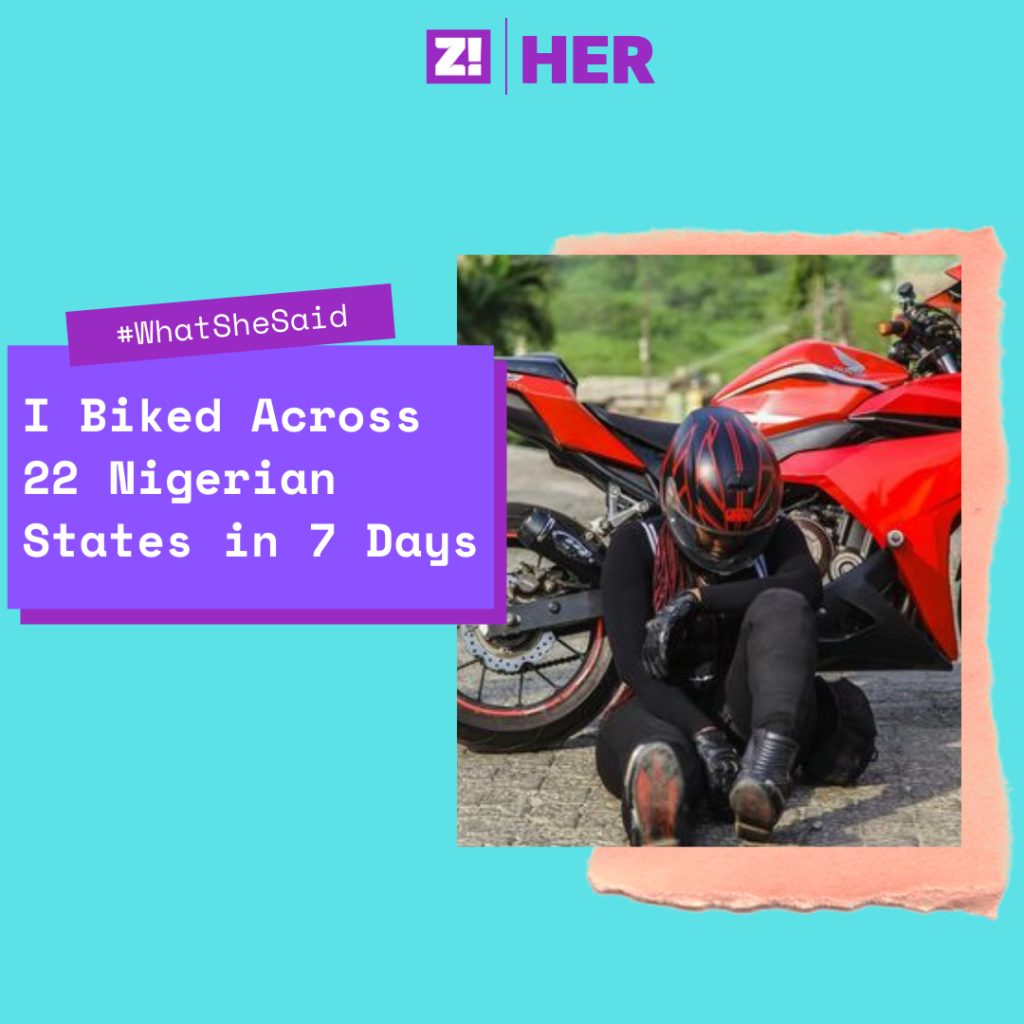
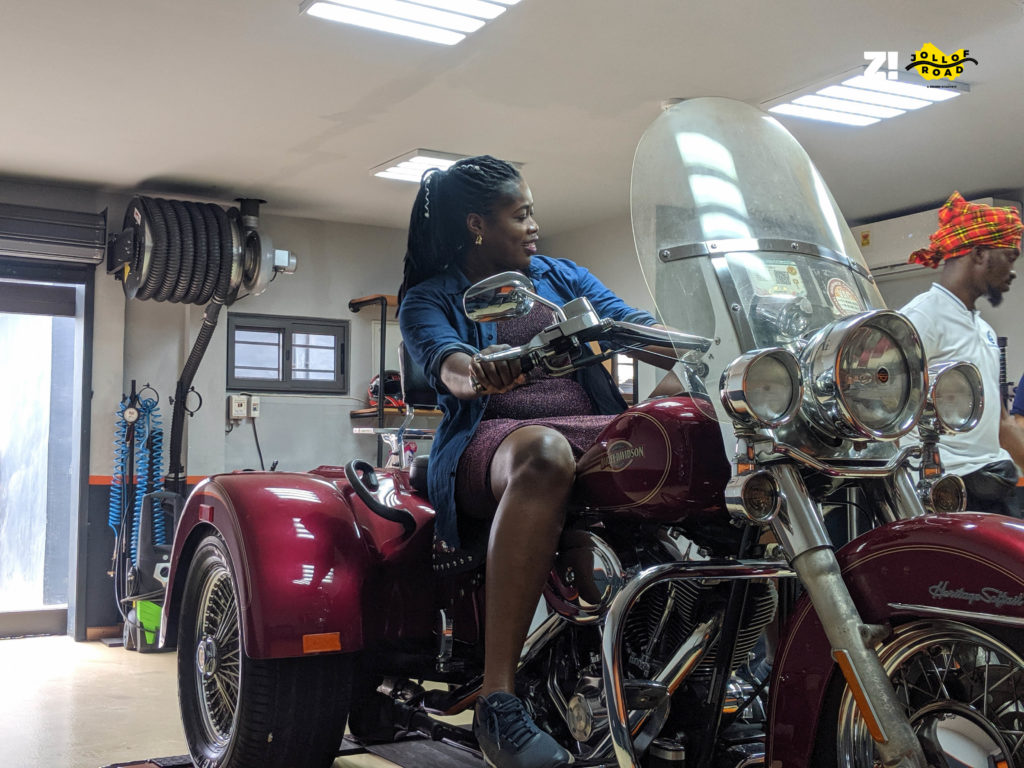
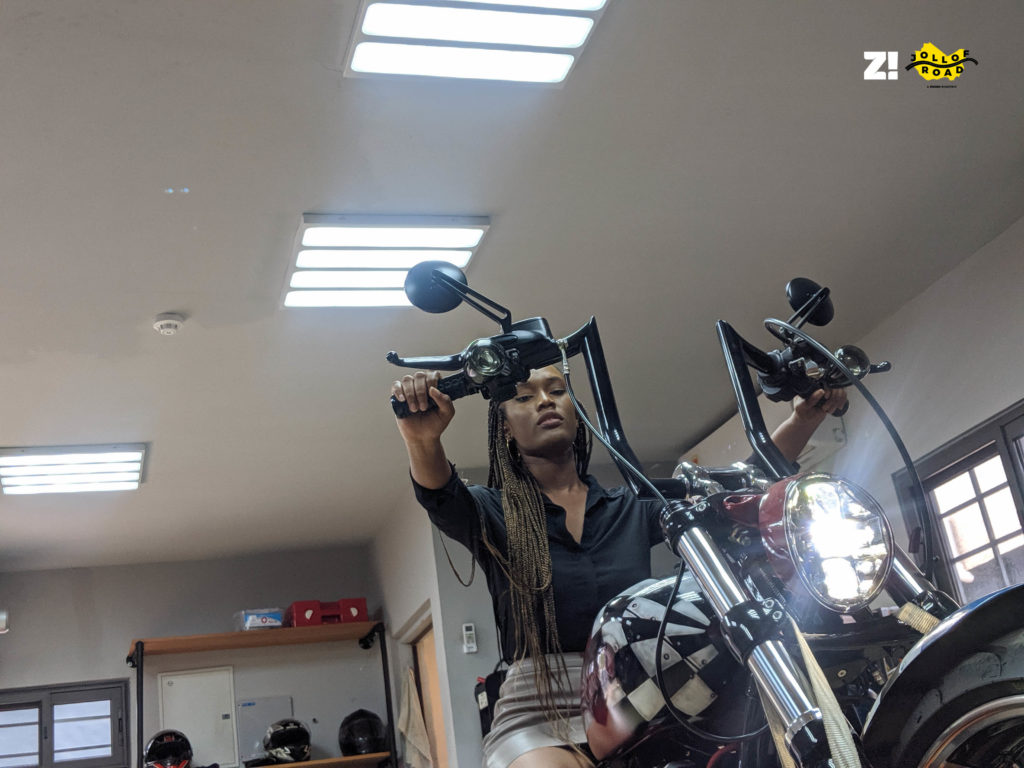
Today’s subject on #Zikokowhatshesaid is Fehin Okegbenle, a 30-year-old Nigerian woman. She talks about her childhood love for motorcycles, why she waited until she was 28 to ride one and handling the stares when people realise she isn’t a man, on her biking trips across the country.
What’s something you’ve always wanted to do?
Biking. I can’t remember what age I was, but I know it started with watching people ride motorcycles in movies, and video games like Need for Speed. I always thought it would be cool to ride one too. I brought it up a few times, but my mum wasn’t having any of that talk. To her, biking was a dangerous sport. I eventually had to settle for basketball and swimming, but I knew I wanted to bike.
I didn’t circle back to that conversation until I was 28 though.
What happened before that?
Life. I had to focus on earning money after I decided to leave uni early. I got in for physiotherapy in 2009 because I thought I’d love the idea of taking care of athletes. But I realised it wasn’t for me, so after my first year, I left. Hustling to make money took centre stage from then on.
Did not having a degree at the time hold you back?
Not really. I didn’t feel the need to go back to uni until 2016. Figuring things out didn’t feel daunting because I’d always taken care of myself. When I was eight, I’d learnt how to cook for myself, wash my clothes and generally survive without needing any help from my parents or two older siblings. The post-dropout phase was no different. I just needed to make money.
I’d taken up a few jobs, like ushering, but the first one that had me travelling a lot was in 2013. I worked as an amplifier, marketing the company products from state to state. I loved travelling, but it was stressful to always be on the road with no breaks. When I saved up enough money, I rented my first apartment and quit the job at the end of that year [2013].
But did you have a plan though?
I thought about biking again, but my mum still wasn’t having it. I didn’t exactly have a plan, so when Valentine’s Day was around the corner, I decided to sell gift boxes.
I was selling out at first, but everything crashed barely two months in, when I was scammed by the guy I paid to develop my website. I didn’t have money for myself or the business to keep going after that, so I ended up moving into my sister’s house. She’d just had a baby, and it made sense to be there to help out.
It was great not thinking about bills, but after being independent for so long, depending on someone else for everything was hard. That was the first time I couldn’t figure things out alone.
I’m sorry.
Thanks. To get by, I sold bottles of zobo at my old university. It wasn’t easy, but I enjoyed having something to do while I thought about what I really wanted. Other than biking, I loved fashion.
As a kid, my mum sold clothes for women her age. She loved fashion, and I remember always loving it too. While I’d been a sporty kid, dressing up was something I enjoyed. So when I thought about setting up a clothing business in 2015, it made sense to try it out. I saved up about ₦7k selling zobo and ordered my first batch of clothes from online stores abroad. The exchange rate wasn’t as horrible as it is now. I made enough profit to keep buying and selling, and I’ve stuck with it ever since.
So, biking?
LOL. Not yet. Biking is an expensive hobby to get into. My release at the time was still basketball. If I wasn’t at the court, then I’d be home. Fast forward to 2018, and my brother-in-law wondered why I didn’t go out more. I was 26 and still enjoyed my time alone.
Since my family wanted me to socialise more, I joined a Telegram group for foodies in Lagos. Back then, everyone was on Telegram, and I liked the idea of hanging out to eat food. I started going out more and connected with a biker group at one of the foodie hangouts.
How?
The event was called Jollof and Palmie. Lagos bikers attend the show too, riding around and displaying their bikes throughout the event. Actually, that’s why I decided to go. Coincidentally, I met a family friend there, who’d been riding bikes for a while, and he introduced me to other bikers at the event. One of the guys let me get on top of his bike to ride with him.
After the event, I had people in my DMs calling me “engine burster”.
LOL. Why?
It was an inside joke. The guy’s bike had probably been revved above the Rotations Per-Minute (RMP) recommended for it. That means it had been used for a longer time than it should have without getting checked or serviced properly. Either way, they joked about it being my fault his engine burst. Next thing, the group was asking me to join their Telegram group for bikers and biker enthusiasts. Since I had a family friend in the group, I felt comfortable saying yes.
I followed them for a race in Benin City. When I got back and told my mum about the bike ride, she didn’t seem so bothered by the idea. I’d only been on the bike for a short distance to the track, but I didn’t feel the need to clarify since she didn’t ask. She practically said nothing. I took it as my cue to get into biking.
Sweet.
I paid for biking lessons for four weekends in 2019. My family and friends were concerned about safety, but once I had my helmet on, the rest was about taking control of the bike. Paying for the bike wasn’t cheap, but I was making enough profit from selling clothes to cover it. Besides, I had other bikers on the road with me. They eventually stopped stressing because this was a passion I really wanted to pursue.
How did biking on your own for the first time feel?
Freeing. It was a moment of escape from thinking about anything other than just driving. I can’t fully describe what it feels like to move at 90km/h on the freeway, but I’m sure nothing beats that rush of adrenaline.
Lagos traffic gets in the way sometimes, but like driving a car, I’ve learnt to manoeuvre it. My first solo trip out of Lagos was about three months after my first ride. I took a trip to Ibadan with the biker group. At first, I was scared of being on my bike alone because I thought I wouldn’t make it all the way.
When I got to Shagamu, I realised I was doing alright and the rest came easy. The fear wasn’t unusual. Even more experienced bikers feel the same way whenever they’re exploring new places or taking long rides. After Ibadan, Ile-Ife was my next trip outside Lagos. I was alone on that trip, so imagine the anxiety I felt. Getting to Shagamu calmed me down. It was some kind of safe zone for me.
Beyond your solo trips, what’s a milestone you’re proud of?
It’s hard to pick because I did about 10 trips after Ibadan. But biking to Onitsha and back to Lagos alone in 15 hours in 2020 was an important achievement for me. I’d never biked that far. I covered my longest distance — 1000km — in less than a day.
That’s crazy.
It was. My next milestone was a trip around the country, but before then, I had one of my toughest experiences at Mambilla Hills in Taraba. It was hilly terrain, with so many turns, and cattle obstructing the whole place. Definitely a tough ride, but making it through was amazing.
In 2021, I biked across 22 states in seven days with my team. It’s called Across the Nation, and we do it every year. That was my first time, and it wasn’t exactly great because my bike had issues, but the stress was worth it. The best part was how the terrain switched from trees in the west to miles of hills and mountains as we moved up north.
On the first day, we went from Lagos to Ogun. The next day, we moved to Oyo and stopped at Kogi. We went on through the north, Kano to Kaduna, and kept going until we circled back to Lagos.
Mad! I’m curious. What’s it like to ride a bike as a woman in Nigeria?
A lot of stares. Until I take off my helmet, people assume I’m a man. Sometimes, people are rude when they realise I’m not. For instance, when I was in Taraba in 2021, a fuel attendant didn’t agree to sell fuel to me. Not until one of the guys on the trip asked him to fill up my tank. So yeah, some Nigerians haven’t evolved past the “only men can do this and that” narrative.
After that incident, I stopped taking off my helmet on trips. Even when I do, I make sure I’m stern with my approach. I’ve also learnt that it’s important to never let anyone tell me I need a man to feel safe on my trips. I can take care of myself.
Love it. And how about your fashion business?
It’s grown to the point where I don’t always need to be present. It took time, but I’m happy I get to make money from what I love while turning a childhood passion into a brand.
In four years, you’ve been to almost all the states in Nigeria. What’s next?
I’ve been to the borders of Togo, but I want to take a tour around West Africa. After that, I’m aiming to be a part of the European Bike Tour.
If you’d like to be my next subject on #WhatSheSaid, click here to tell us why
-

Navigating life as a woman in the world today is interesting. From Nigeria to Timbuktu, it’ll amaze you how similar all our experiences are. Every Wednesday, women the world over will share their experiences on everything from sex to politics right here.
Today’s #ZikokoWhatSheSaid subject is Omotoke Fatoki, a 29-year-old Nigerian woman. She talks about how growing up with her grandmum and dad spiked her curiosity for Nigerian cultures, falling in love with the north during her tour across Nigeria, and tips on travelling with a broke girl budget.
Tell us how you decided to go on a trip across Nigeria.
Culture is important to my family. Most of my childhood was spent with my grandmum and dad. My grandmum was pretty old-school. If we weren’t using firewood and cooking with clay pots in the backyard, she was sewing her aso-oke into new dresses for me. My dad stayed true to his origins in Ogun state. Our surname — Fatoki — was the strongest link to his Yoruba roots. Even while we lived in Lagos, he stayed connected to his family and roots.
Although my grandmother raised me as an Anglican, experiencing their different beliefs made me open-minded and curious. I wanted to explore how people lived. But that couldn’t happen until I figured life out.
What did you do?
By 2016, two things had happened: I was done with uni and the 9-5 life wasn’t for me. I started a music career and eventually moved on from it because it wasn’t working out. On the side, I did other things to get by. I worked as a brand manager for artisans, a personal shopper for families during the weekends and managed a few social media accounts. Lagos was stressful, but in between all the hustle, I tried to explore its different parts.
I visited a few restaurants, but I was more interested in museums and art galleries. Nike Art Gallery was one of my favourite places because the artwork showcased Nigerian culture. Beyond that, Lagos didn’t have a lot of places that captured my interests. Eventually, I got bored. I was tired of living in a bubble.
There had to be more, but when Nigerians talked about travelling anywhere else, it was always Canada. I mean,I couldn’t blame them. A part of me also thought I’d end up getting married and moving to Canada.
But you didn’t…
Yeah. Spending all those years with a father that talked about origin and roots made me appreciate home. I definitely wanted to see outside of Nigeria, but first, I wanted to explore my immediate environment. So in July 2018, I decided to take a road trip. Osogbo was the cheapest place I could swing.
Sweet. What was it like being outside your bubble for the first time?
Revealing. Unlike Lagos, Osogbo had hills. The waterfalls were my favourite part to see. I didn’t plan it, but I also got to experience the Osun-Osogbo festival. It reminded me of my father’s practice with Ifa, but this procession was for the Osun goddess. After that, I had questions: What did other Nigerians believe? How was religion shaping lives? I wish we were taught this in school.
I decided to take a trip around Nigeria and that’s how I mapped the next year out on the road. I made a plan to document my trip and called it “Toke on the move #36of36.” As I hopped on buses, trucks and bikes between states, I captured everything online — food, festivals, people. 2019 was quite an adventurous year.
Tell me about the adventure.
From Lagos, I travelled to Ibadan, Ogun and went through the southwest. Beyond the waterfalls in Osogbo and Kwara, the culture in the west is similar across the states. I could sense some of the fast-pacedness of Lagos and religion was also diverse. There were Christians, Muslims, traditionalists and, this one surprised me, people who worshipped trees.
As I moved out of the west, the people became slower, chilled. The south-eastern states didn’t have many waterfalls or hills, but the culture was rich. The market squares always had a celebration. Walking down a street, I could find myself in the middle of a festival with masquerades running around. It was odd but fascinating.
If you had to pick a favourite place from the south, what would it be?
Akwa-Ibom. It felt like everything Nigeria should be — a place with clean roads, nature, access to clean water and constant electricity.
I’m curious, how were you able to fund this baby girl lifestyle?
Hm. I was making ₦25k–₦30k from managing social media accounts, which covered very little of my expenses. I had to pay for transport, accommodation, feeding and a bit of sightseeing. A girl was broke. I had to learn a few tricks. The first was staying with the locals rather than hotels. There were always families kind enough to let me stay for a few days, and I never had a bad experience.
As my waka waka continued and I documented it online, I slowly became a brand. My audience began to call me “Alárìnká”, someone with no direction.
Why does this sound like a curse?
LOL. I rebranded it to fit my identity. Alárìnká became “the ones who love to see the beauty of the world”. As I shared my journey, the community grew. I got donations to explore more places. Who am I to say no to money? When that didn’t come in and I was low on cash, I took money from loan apps to fund my travels.
Loans?
I wasn’t worried. There were brand partnerships on the table. Africans in the diaspora were already booking me as a tour guide in Nigeria. Things were looking good.
By 2020, I was in what became my favourite region — the north. It was the last leg of my journey and I was running on money I made from selling out Alàrìnká t-shirts.
So the north. What was that like?
Huge! In Taraba alone, it took six to seven hours to get to another locality. There was so much to see. I called it a magical land.
When I decided to go, I wasn’t sure what to expect. People said so many things. “The north is unsafe,” “It’s under duress.” “How can you travel alone as a woman?” Honestly, I didn’t care. One morning, I set out for Kano. Like Lagos, it was a huge commercial town. I visited the city without a hijab and walked around freely — no harassment, nothing. Just like other states, I stayed with the people, and they were kind. Then the street food? Masa was amazing — efo riro made it even better.
The north seemed like a beautiful ruin.
Why?
There’s a lot of suffering Nigerians don’t see.
For instance, Ikyogen in Benue State was an attraction I wanted to hike and explore. When I arrived, the reality was different. Right beside Ikyogen, there’s a refugee resettlement camp. People fleeing from Cameroon or Boko Haram attacks ended up there. It was sad to see.
In Taraba, I met kids paddling people across the Taraba river to make money. Some were selling rice to tourists, but how many people travel to Taraba?
That’s sad.
Yes. The north is very isolated from development.
Besides interesting food combinations, what’s the craziest thing that happened on a trip?
In Bayelsa, I was almost abducted. I was going around taking pictures and didn’t know it wasn’t allowed in certain communities. Next thing a group of people rushed up to me and tried to take away the camera. I explained I was just a traveller. For some reason, they suspected I was a spy. After a few hours, they sha let me go.
And that didn’t stop your journey?
They let me go, didn’t they? Call it coconut head, but you only live once.
I hear you. So how was the rest of the trip?
Amazing. I made so many friends along the way. Bike men were my OGs because they always knew the affordable spots to see and it was the cheapest way to move — there’s still one from Taraba that calls me all the time. I ate good food and explored more cities. I lived life on the edge and loved it. The last state I visited was Kebbi. The best part was finishing the trip on International Women’s Day in 2020
When my trip ended, I had big plans for Alàrìnká. Sadly, the pandemic shut things down.
Aunty Rona did us dirty. What happened?
Omo. First, I lost the files on my camera. Everything went to shit from there. As countries shut down, brand deals went off the table. Eventually, I had to sell my phone to get some money. I still got by on managing social media accounts, and then in 2021, I started learning web development.
A travel and tech babe
LOL. Travel can’t fund itself.
So financially, are you in a better place?
Yeah. Things got better in 2021. I’ve hacked the travel life on a budget, so I got into travel consultation for NGOs.
Now, I’m focused on travelling for impact. I want to connect more communities like what I found in Benue and Taraba to NGOs with the resources to help. I’m really passionate about educating more Nigerians. There’s a lot more we can do for each other.
Any plans on travelling outside Nigeria?
Yes! I’ve ticked Ghana and Cote’d’Ivoire off the list. In 2019, I was sponsored as a tour guide to Benin Republic. I don’t know where’s next. Everything outside Nigeria is expensive.
Any interesting food?
I tried rice and okra in Cote’d’Ivoire, but the Yoruba girl in me was screaming.
LOL. Never again.
In 29 years, you’ve experienced so much. What’s next?
Honestly, I’m still figuring it out. There has been some clarity since 2018, but there’s still so much to do. For now, I’d call this chapter Alàrìnká: A woman living on the edge.
-

After exploring a bit of Kigali in this week’s #ZikokoWhatSheSaid, it was only right to see other African countries we need to have on our bucket list. We want you to live vicariously through these five Nigerian women as they share some of the African countries they’ve visited.
1. “My first solo trip was to Tanzania”
I spent 2021 saving for my first solo trip to Tanzania. It was my first time on a plane, so of course, I tried to play it cool, but I couldn’t figure out the belt. Luckily, the cute lady beside me showed me how to buckle it in. A few minutes after takeoff, I slept off until we landed in Tanzania. I had paid to spend the week at a resort before heading to Zanzibar the next week. Tanzania was beautiful. There were trees, vast lands of green and hills. The most exhilarating moment was the hike up Kilimanjaro — I almost peed my pants as we got higher up. To be fair, I was slightly drunk on that hike. The next day, I took a ride on a hot air balloon and it’s the most freeing thing to experience. Looking down at the lush greenery and slowly floating into the clouds made me feel like I was finally living life. And oh, the food. Everyone needs to try Urojo soup.
2. “ There’s nothing as elite as a VIP lounge”
In 2014, I went on a school trip with a friend to Ethiopia. It was a conference, and we were expected to deliver a speech on youth empowerment. I had been on international trips before, but it was the first time my destination would be in an African country. The best part was that I didn’t have to travel with a teacher. Well, at least I thought that was the best part until we connected with a minister and his special advisor on the flight. They ok it upon themselves to be responsible for us since we didn’t have a guardian tagging along. There were other complications with our accommodation for the trips, so they paid for our meals and hotel bookings. We arrived in Ethiopia in the middle of the night and it looked so beautiful flying in. We went into the VIP lounge and waited for the car to get us. I felt so elite. There were top guys in politics and we got to mingle for a bit.
Surprisingly, Ethiopia was quite chilly. I didn’t expect that. Other parts of the trip kind of went by quickly. The food looked great, but I was keen on sticking to familiar things like rice and meat — I’m not adventurous with food. I did try a dish called injera and it wasn’t for me. It felt like moist bread with meat. So yeah, not for me. Another thing, the women in Ethiopia are gorgeous. I’d love to go there again.
3. “Waakye and shito is everything”
I was in Ghana for a week in 2019. First off, there are traffic jams in Accra o. Yes, the type you sleep and wake up in. But I loved Jamestown and its colonial buildings and taking a tour at the Kwame Nkrumah Memorial Park. The night scene was amazing as well — drinking, eating waakye and shito. Trust me, when Runtown said, “Hope your love go sweet pass shito,” he knew what he was talking about. Shito bangs with everything. I filled a bag with it when I was leaving.
4. “Drunk nights in Morocco were the best”
In 2018, I was on a trip with my girlfriends to Morocco. One of them was getting married and we wanted one last trip as single pringles together. We were all in our thirties and every night was insane. The beaches are incredible — the water is as blue as what you see on TV. And the coconut cocktails were everything. I’d kill to have those drunk nights on the beach again. Let’s not forget the food. Brocadillos and macaroons were my favourite things to eat. I can’t lie, Morocco is expensive to enjoy, but I need to go there again. I need another drunk night on the beach, dancing in a bikini.
5. “ I loved yovo doko”
I was in SS2 and went on an excursion to Benin republic. I lived in Benin state and the school bus drove the class to Lagos. Our bus driver got lost on the way. I remember eventually getting to Marina and then Badagry. We spent three nights at Whispering Palms in Badagry before continuing our journey to Benin. The first thing I noticed from the border was how clean Benin Republic looked. CFA franc looked really cool, and the spending coins felt like I was spending UK money. I went to Dantokpa market in Cotonou and wanted to get some souvenirs. I felt I could have haggled the seller for a cheaper price — the Benin babe in me is still screaming. The rest of the trip was a lot of food. They were hard to pronounce but I remember trying yovo doko and it tasted like puff puff. Then there was amiwo with the mojo sauce and fried chicken.
-

Traveling around Africa isn’t for the fainthearted, between the logistics of finding direct flights to the exorbitant ticket prices, it can be a daunting task travelling across the continent.
However, with a decent savings plan like Letshego’s LetsGo save and knowledge of what your trip costs, travelling in Africa is an awesome experience, as Letshego is improving lives through diversified lifestyle travel opportunities and exploration of their customers.
If you need any more convincing that you should be doing a little more travelling in Africa, these 5 beach destinations would nudge you in the right direction:
1. Ponta Mamoli – Mozambique

Located between two national parks—Mkuze Game Reserve in South Africa and Maputo Elephant Reserve and about a three-hour drive from the capital of Mozambique, Maputo is Ponta Mamoli a strip along the Indian Ocean of glittering glittering turquoise waters shielded by miles of dry savanna, swampy forest, and floodplains of reed beds and papyrus. There’s lots to do and see here, from snorkeling, scuba diving to safaris, Ponta Mamoli offers a diverse range of activities to suit your taste and the best part about it is that it is never packed with tourists.
2. Lamu Archipelago – Kenya
First off, Lamu town is a UNESCO World Heritage site, so it hardly gets cooler than that. Located off the Northern coast of Mombasa, this cluster of islands has beaches with clear waters perfect for excellent The town itself has quiet, narrow streets that are fascinating to explore and with no cars available you can explore the archipelago’s secret beaches on a traditional dhow.
3. Trou-aux-Biches – Mauritius
One of Mauritius’ best beaches is located in the town of Trou-aux-Biches. What’s awesome about Trou-aux-Biches is that it is a mile of fine sand of public beach. Its west coast location means that it is largely sheltered from the weather during the rainy season, while local restaurants serve cuisine that reflects Mauritius’ multicultural heritage. Watersports keep children and adults entertained, and the southern end of the beach offers a range of accommodation options to suit all budgets.
4. Umzumbe, KwaZulu-Natal, – South Africa
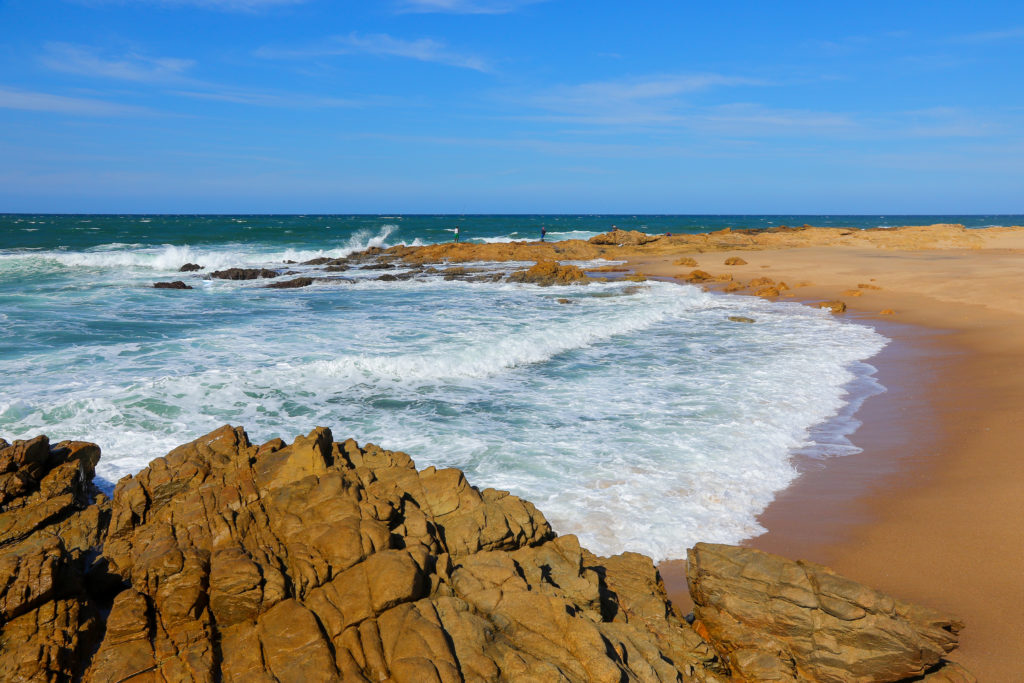
This secluded part of the lush and untouched South Coast of KwaZulu-Natal is one of the destinations in the area which has managed to keep clear of development and retain its country charm. Situated not far from Durban, the biggest city in KwaZulu-Natal, this is another great surfing and swimming destination.
5. Anse Source D’Argent – Seychelles
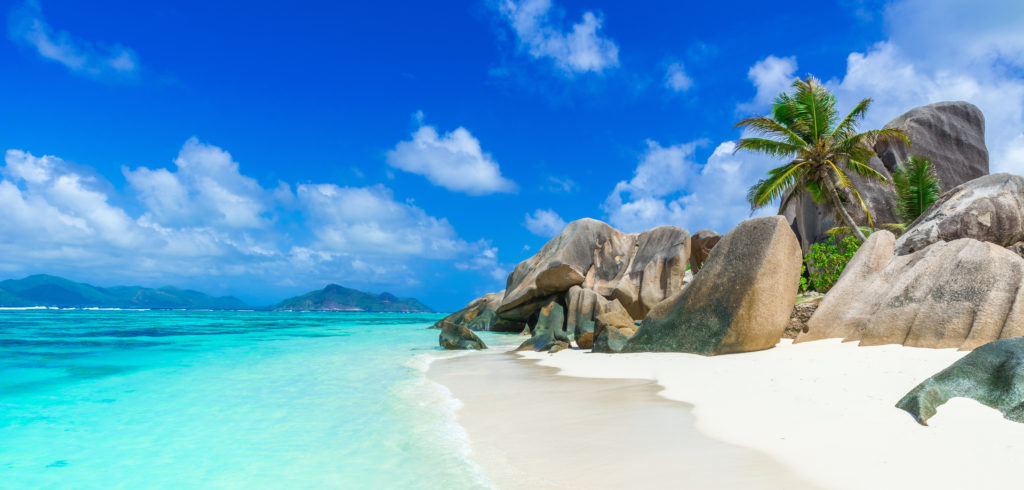
The Seychelles archipelago has long been one of the world’s most romantic destinations and its beaches feature frequently in global Top 10 lists. One of the island nation’s most famous beaches is Anse Source D’Argent, located on the island of La Digue. This stretch of pure white sand is perhaps the archetypal paradise beach, with dramatic boulders, shallow turquoise waters and gently curving palm trees. It’s a great place to soak up the sunshine or go snorkeling, making it a popular stop for visiting day-trippers.
-

You can’t deny the fact that leaving Nigeria a.k.a to japa, is definitely on your to-do list. But there are some crucial things you must do before you travel if you want peace of mind.
Here are six of them.
1. Ensure you are fit to travel
COVID-19 is not a respecter of persons. Before you shake your ass to board a plane, know your health status to determine if you are fit to travel. Thankfully, you can ditch queues and get tested from the comfort of your home with OneHealth. Book here now. You can also get self test Covid Kits with zero stress here.
2. Eat like a thief
You always complain eating the same thing day in day out in Nigeria. But once you japa, you’re going to miss the tatse of homemade Nigerian food. So eat all you can now.

3. Keep quiet about it
You don’t want to jinx your chances of finally escaping to the abroad. So don’t tell a single soul till you alright from the plane.

4. Cut ties with your village people
Get rid of whatever links them to you ASAP and keep the yourself free from the interference of village people your life.

5. Tattoo “Nigeria” on your back
If for whatever reason you need to remember where you are from, this will remind you.

6. Wash your head
This may be the last on the list, but it’s definitely not the least. Make sure you use a good soap to waah off all the suffer you suffered for nineteen years from your head.

We know you can’t wait to travel out and pepper your enemies. Just make sure you have a Covid self-test kit from OneHealth for when you expose yourself to all the enjoyment.
-

Everywhere you go, there are different interesting characters, and a vacation is one of them. If you observe closely, here are 7 types of people you’ll find at any vacation spot.
1. The foodies
Code name: FFO. They live unapologetically for food, and visit every available restaurant around them. Of course, it is not complete if they don’t share bomb food pictures on the gram.

2. The nature lovers
These set of people love beautiful sceneries, and they document them through pictures. If you want them to love you forever, just build house for them on the vacation spot.
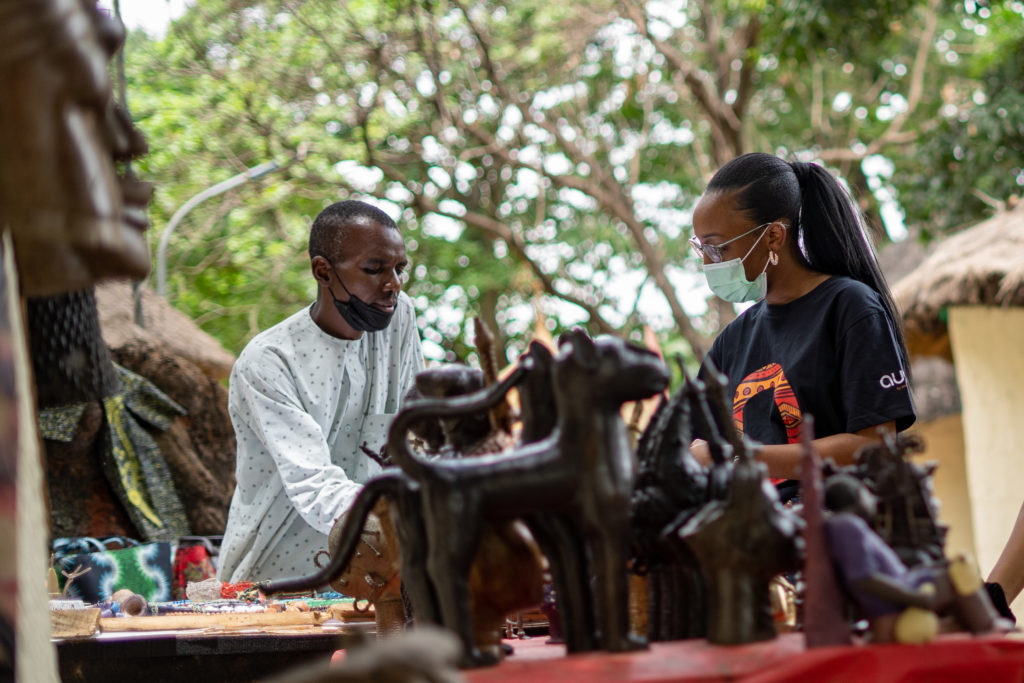
3. The art lovers
These ones are not in your mood, except you’re talking Art. Before you think of asking for their number, just take a seat and paint with them.

4. The vloggers/photographers
No moment escapes these ones; they’re always snapping or videoing away. Don’t lose your guard around them too much, before you see yourself trending for the wrong reasons.
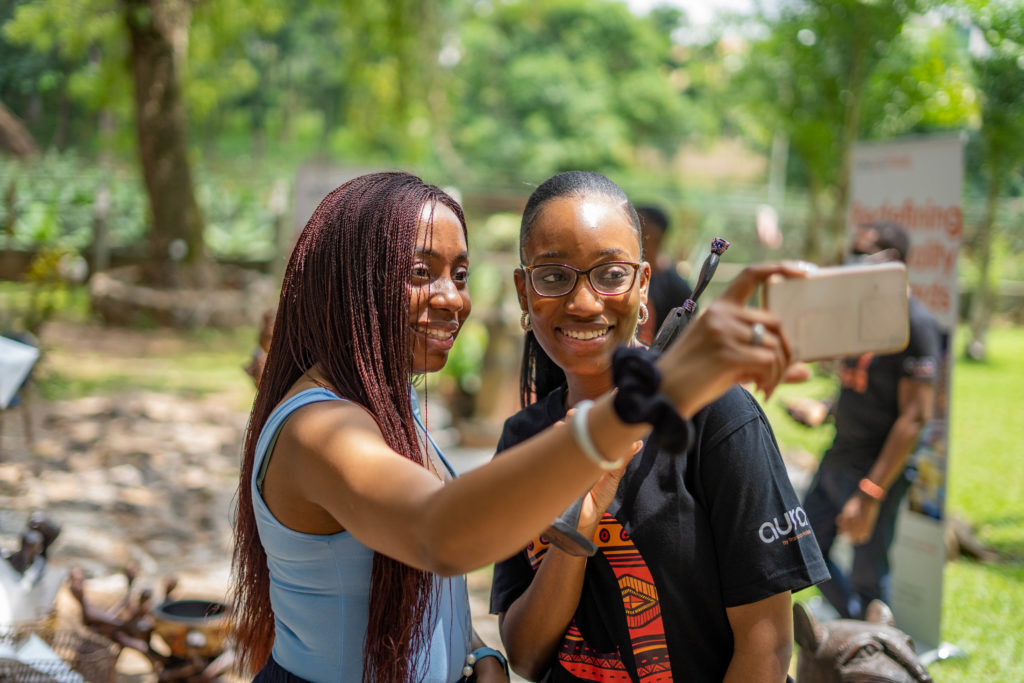
5. The enjoyment ministers
These ones order room service and stay in their room with bae all day enjoying their life because problem no dey finish. Kpk.
 6. The fit fam
These ones aren’t about to add an extra pound even on a vacation. They come ready with their gym wear and are at the sports centre first thing in the morning and last thing in the evening.
7. The adventurous
For these people, taking a tour of the whole vicinity – bar, lounge, backyard sef – is a must. Maybe it’s money that elephant swallowed they are looking for or their legs just can’t stay one place.
Which one are you?
Find your aura and get all these experiences with the Aura by Transcorp hotel app – an online app that helps you book accommodation, order great food and everything you need for a memorable lifestyle experience.
Aura is Africa’s best platform for connecting travellers to unique accommodation, great food, and memorable experiences. The platform is also an avenue for people with unoccupied homes, hotels, restaurants, or different skill sets that may interest others to earn an income by becoming hosts.

You can book accommodation and other fun activities on the @aurabytranscorp hotel platform.
Visit the website aura.transcorphotels.com or download the Aura app on Google play store or Apple App Store to get #TheAuraExperience.
-

Press Release
- A raft of events, festivals, and seasonal celebrations are planned to allow holidaymakers to ring in the New Year safely and enjoy the best of the destination in 2021 in style
- Greater booking flexibility, automatic multi-risk travel insurance coverage with every flight, a waiver of change fees on Emirates tickets and a one month visa extension enable visitors to extend their trip to Dubai
- Visitors from across the globe continue to enjoy Dubai’s leading attractions, facilities, and amenities in a safe and protected environment with stringent health and safety protocols
Almost six months on from reopening its borders to international visitors on 7th July 2020, Dubai has reaffirmed its commitment to ensuring the safety and wellbeing of its residents and holidaymakers, whilst preparing to ring in 2021 in style.
Dubai continues to take effective steps under the guidance of the visionary leadership of His Highness Sheikh Mohammed bin Rashid Al Maktoum, Vice President and Prime Minister of the UAE, and Ruler of Dubai to build on the strategic initiative to reopen the city to tourists and facilitate travel while maintaining stringent health and safety protocols. With the New Year approaching, Dubai’s Department of Tourism and Commerce Marketing (Dubai Tourism) and Emirates have partnered to offer all those who have already travelled to Dubai the opportunity to extend their trip until 31st January 2021 with fees for date changes waived on flights when issued in the same travel class. Emirates is also offering a host of special fares for international travellers for bookings made by 3rd January 2021 and automatic multi-risk travel insurance coverage with every flight including cover for COVID-19 medical and in-trip quarantine costs extended for flights until 31st January 2021. In addition, tourist visas for all nationalities will be extended for one month free of charge. Now is the time for holidaymakers to make the most of their trip and experience even more of Dubai.
RING IN 2021 IN STYLE
When it comes to New Year’s countdowns, Dubai never falls short of expectations. Burj Khalifa’s breathtaking fireworks and light & laser show will be synchronized to The Dubai Fountain Show, and promises to reflect a true celebration of Dubai. Performances by international artists such as KISS at Atlantis, The Palm, Dubai as well as DJ sets promise something for everyone to enjoy.
HEAD TO THE BEACH FOR WINTER SUN
With January temperatures hovering in the mid-20s, Dubai’s beaches are perfect for those seeking winter sun. From untouched shorelines ideal for family escapes to active watersports hubs populated by windsurfers, kitesurfers and bodyboarders, Dubai has a beach for everyone.
SHOP TILL YOU DROP
Dubai Shopping Festival is now in its 26th year and is held until 30th January 2021. Malls and shopping destinations come alive with family fun and entertainment, live concerts, unique markets, art installations and stage shows. With super sales, unmissable promotions and chances to win life-changing prizes it is the perfect place for those that want to enjoy retail therapy and exciting events all set against a backdrop of stunning light and fireworks shows.
COMEDY, CULTURE AND FESTIVALS GALORE
From comedy events to retail therapy to sporting activities, Dubai offers an exciting calendar of events all held in line with the highest safety standards. During the first quarter of 2021, renowned comedian Jack Whitehall hits the stage at Dubai World Trade Centre on 13th and 14th January, whilst breakout artist Calum Scott performs hits from his debut album ‘Only Human’ at Dubai Opera on 20th January as part of Dubai Shopping Festival. Art buffs, literary fans and culture connoisseurs are also well catered for with seasonal exhibitions at trendy Alserkal Avenue as well as Emirates Airline Festival of Literature commencing on 29th January 2021.
STAY, PLAY AND WORK FROM DUBAI
If 2020 was the year of working from home, then 2021 will be the year of virtual working. With Dubai having announced the new virtual working programme, now is the time to take the plunge and work from one of the world’s most connected cities. Entrepreneurs and flexible workers can extend their holiday and experience great quality of life and have access to convenient facilities and resources to help them further their career or grow their business.
His Excellency Helal Saeed Almarri, Director General, Dubai’s Department of Tourism and Commerce Marketing (Dubai Tourism), said: “The remarkable vision and leadership of His Highness Sheikh Mohammed bin Rashid Al Maktoum, Vice President and Prime Minister of UAE and Ruler of Dubai has been a huge inspiration to us, leading to the decisive and effective management of the pandemic. With 2021 on the horizon, we look forward to continuing to welcome first time and repeat visitors to Dubai, with stringent health protocols and precautionary measures firmly in place. We are pleased to continue to work closely with our strategic partners Emirates, as well as our hospitality partners, allowing holidaymakers to experience the vibrant energy of Dubai and all our iconic attractions, fantastic culinary and shopping experiences, and exciting festivals and events with added reassurance and flexibility.”
Adnan Kazim, Emirates’ Chief Commercial Officer said: “Emirates has worked closely with all Dubai stakeholders to gradually restore our network and signature services, with all bio-safety measures in place. Since Dubai re-opened for international visitors, we’ve been seeing an upward trend in enquiries and bookings which reflects the confidence that travellers have in Dubai and in Emirates. Today, Emirates is flying to nearly 100 cities across the world, providing easy access to Dubai for international travellers and offering a world class travel experience. Together with our strategic partner Dubai Tourism, we’re extending that experience with even more attractive offers, and the assurance of travel flexibility and care. We look forward to welcoming more visitors to Dubai in 2021.”
Alexander Lee, Jumeirah Group’s Chief Commercial Officer said: “The opening of Dubai in July 2020 to international visitors had an incredibly positive impact on Jumeirah’s bookings from a number of overseas markets, a trend that has continued ever since. We are attributing this to both the breadth of offer we have here in Dubai, particularly our 2km private beachfront with its extensive pool, dining and spa offering, but also the certified health and safety measures in place for guest peace of mind, including Dubai Tourism’s Dubai Assured programme. Six of our hotels in Dubai have furthermore received the prestigious Bureau Veritas Safeguard Label, which we believe has gone a long way in helping to restore confidence for international travelers. As we move into 2021, we are looking forward to welcoming more international guests to experience our renowned hospitality, in particular our culinary experiences, such as French Riviera, our French Mediterranean concept on the beach at Jumeirah Al Qasr, and most recently SAL, a chic new beach concept and striking Southern European dining destination on The Terrace at Burj Al Arab Jumeirah.”
Tim Kelly, Executive Vice President and Managing Director, Atlantis Dubai said: “His Highness Sheikh Mohammed bin Rashid Al Maktoum, Vice President and Prime Minister of UAE and Ruler of Dubai’s directive to extend tourist visas for one additional month without any government fees, represents a clear reflection of Dubai government’s generous support to help tourists to spend a stress-free new year’s holiday in Dubai.”
“At Atlantis, The Palm we are ending 2020 with a bang with the world’s largest ever live-streamed event by rock legends KISS, together with a record-breaking firework and pyrotechnic display – the likes of which have yet to be seen – while, of course, maintaining stringent health and safety protocols. In line with Emirates’ special January fares, and the events lined up by Dubai Tourism across the emirate, Atlantis is also unlocking a host of exclusive offers for guests staying five nights or more from 2nd January to 30th April 2021 with its January sale. These include an array of adventures for guests to start ticking off their bucketlists for 2021, with international guests also benefitting from complimentary in-resort PCR tests.”
Mark Willis, Chief Executive Officer, Accor India, Turkey, Middle East & Africa said: “It is clear that 2020 has been a year of challenges for the tourism and hospitality industry, however, as it comes to an end, it is very encouraging to see some positive business levels during the past few months, especially in the Dubai market. With a portfolio of more than 45 hotels in the city, brands ranging from economy, with Ibis and Novotel, to luxury with Raffles and Fairmont, Accor properties in Dubai have seen a positive trend from local tourism with an increase in demand for “staycations”, as well as a positive increase in stays from a number of regional and international visitors. The uptake in both of these markets has been mainly possible due to the vision, planning and quick implementation by the Dubai government, which quickly established Dubai on the map, even more than before, as a safe and secure destination for tourists to visit.
We are confident that with the ongoing safety precautions, which are being strictly implemented throughout our hotels and the city, alongside the large number of events and attractions that will be taking place in 2021, Dubai will continue to see positive signs in the market, which will also enable us to continue to open more hotels throughout the year, including the Rixos Dubai Hotel & Suites Jewel of the Creek in Deira and the SLS Dubai Hotel & Residences to name a few”.
Going into 2021, Dubai will continue to strengthen its offering for leisure visitors with new attractions and hotels in the pipeline. In addition, Dubai will see the return of world-class events and festivals including Dubai Shopping Festival, Dubai Food Festival, and in October 2021, Dubai will play host to the first ever World Expo to be held in this region.
About Dubai’s Department of Tourism and Commerce Marketing (Dubai Tourism)
With the ultimate vision of positioning Dubai as the world’s leading tourism destination and commercial hub, Dubai Tourism’s mission is to increase the awareness of Dubai among global audiences and to attract tourists and inward investment into the emirate. Dubai Tourism is the principal authority for the planning, supervision, development and marketing of Dubai’s tourism sector. It markets and promotes the Emirate’s commerce sector and is responsible for the licensing and classification of all tourism services, including hotels, tour operators and travel agents. Brands and departments within the Dubai Tourism portfolio include Dubai Business Events, Dubai Calendar, and Dubai Festivals and Retail Establishment.
-

If you live in Benin City and have ever considered coming to Lagos, then this is for you. Even if you live in Lagos, this is for you. Consider it a reminder of how things are in the state.
1) You will fight for bus
Yes, that thing where people form queues and enter buses quietly is not a Lagos thing. I am sorry in advance.

We wish you well
2) Street HawkersThey sell everything on the road in Lagos. From matress to camping gas, they have it all. You can even furnish your apartment while in traffic. Benin doesn’t have that, but I think it should.
3) Price
You will not see a thirty naira bus in Lagos. Just forget about it please. If you even want to see one for fifty naira, you have to pray.

Us in church praying for #50 transport 4) Ọwá
You know how you have to just say “driver stop”, or knock on the bus and they stop? Do not try it here. A lot of Lagosians have coconut head, they will not hear at once. You have to use all your power and strength to scream “Ọwá”.
Your face as you’re preparing to shout “Ọwá” in the bus
5) You don’t share lightThere is no light time-table in Lagos. Take it as it comes dear. Whatever you see is yours.

6) Saturday trafficLook, nobody likes enjoyment more than people living in Lagos. That is why every Saturday, they will block road. Wahala for who no get magic carpet because they are “cousin traffic ear and dear”.

That’s their slogan 7) Regular traffic
Yes, there’s regular traffic and Saturday traffic. It’s absolutely terrible.
8) Pepper
There’s pepper in everything here. I’m sure you’d find peppered ice cream if you search hard enough.
9) Turn-up spots
The best part about Lagos is that there’s always enjoyment for everyone. No matter what you like, you’d find a spot for it.

Hey you, if you like the kind of content we make, would you consider supporting us? We’d love it!
[donation]
-

The Erin-Ijesha Waterfalls is located in Erin-Ijesha, which is in Oriade local government in Osun state. It is also called the Olumirin waterfalls.
There are three stories about its origin.

Photo Credit: Cassie Daves 
Photo Credit: Wikimedia Commons There are two stories about its origin. The first reports that the waterfalls was discovered in 1140 AD by one of the daughters of Oduduwa. The second claims it was discovered by hunters in 1140 AD, while the third story claims it was discovered by a woman called Akinla, who is the founder of Erin-Ijesha town and a granddaughter of Oduduwa, during the migration of Ife people to Erin- Ijesa.
It is a seven-level waterfall: it has seven layers with three major waterfalls at the first three levels. Tickets are said to cost N500 for adults.

Photo Credit: Wikimedia Commons 
Photo Credit: Wikimedia Commons The waterfall is said to have medicinal properties which is one of the reasons why people come from all over to drink from it and be healed.
Photo Credit: Wikimedia Commons 
Photo credit: Cassie Daves Here’s a short video:
If you are planning to take a holiday trip, you might want to consider Jos. Here’s why:
13 Exotic Fruits And Vegetables That Grow Only In Jos
-

Port Harcourt is the capital city of Rivers state, Nigeria. It is also called Pitakwa, and is the largest city of Rivers state. From what we hear, the bole and fish in Port Harcourt is legendary, but you know what is more legendary? The names of some areas in Port Harcourt. Here’s a list of them. Tell us if you’re not confused.
1. Rumuodomanya
2. Rumuolumeni
3. Rumusunwo
4. Rumuomoi
5. Rumuola
6. Rumukalagbo
Photo Credit: PH Drones 7. Rumunduru
8. Rumuobiakani
9. Rumuapara
10. Rumuorosi
11. Rumualogu
12. Rumuokwuta
13. Rumuagholu (Not to be confused with number 11, please).
14. Rumuche
15. Rumudara
16. Rumuosi
17. Rumuigbo
18. Rumueme
19. Rumuji
Now tell us, were you confused or not?
If you live in Port Harcourt, this one is for you: 14 Pictures That Will Make Sense To People Who Live In Port Harcourt
-

The subject of this week’s What She Said is a 32-year-old Nigerian woman who grew up resenting her mother for marrying and divorcing three times. Now that she’s older, a feminist and has been divorced once, she says she understands.
Let’s talk about growing up. What was that like?
We moved a lot. It was a bit adventurous, but it also didn’t feel good. I never felt rooted in something and I still don’t. Not friends, not places, not things. One minute we were in the North, the next, we were in Oyo, then we came to Lagos.
Why were you moving around a lot?
Hmm. We were moving for or because of men o.
Let me start from the beginning. My mother married early. I think she was 18. The man she married was twice her age. This was way before I was born. She was a Muslim then and lived in the North with her husband. She had two children for him. Then she converted to Christianity and the extended family said that she can’t be married to their son and be Christian.
The man too did not defend her. They divorced and she moved to another town. They didn’t let her take her first two children though and that really broke her. I was born about 8 months after she moved to the new town. Immediately after I was born, she moved to the South.
Now, here’s the thing, I don’t know if I was conceived before she left her first husband or if she was seeing someone after she left him. I don’t think that she herself, she knew. So, where did I come from?
You don’t know or you’re not sure who your father is.
My dear, I really don’t. Sometimes, I just tell myself that I fell from heaven. That one is sweeter to hear.
LMAO. Did you ever ask your mother about this?
A ton of times. She’d say I should leave her jare.
But that’s not even the problem. The problem was that she was always seeing or marrying someone new and each time, we’d have to move for them. I don’t remember much from before I was 5, so I can’t say if there were any male figures around and there are no pictures to prove this, but I know that she married again when I was five. I know because she did a church wedding and I was the flower girl or something.
That marriage didn’t last a year. They used to fight about money. My mother used to sell gold and at the same time teach in a school. By some standards, she was rich. He used to ask her for the money in order to help her save it. Savers club. My guy spent the money on drinks and women. Sharp guy.
What?
It pained my mother and she didn’t hide her pain. She was very vocal — she’d say what was on her mind, so when she found out, she gave it to him rough.
My grandmother who lived with us didn’t want her to leave this marriage because she didn’t think that the problems they had were bad and because my mother was ‘getting older’ — she was in her late 20s at this time o. My mother in addition to being vocal has strong-head. So she did what she wanted and left the marriage. We didn’t even have anywhere to go. One day, she just packed our things and we hit the road.
You know the plot twist?
What?
My grandmother left my grandfather for something similar. She told me this recently. They were never married, but they lived together, and he used to sell stuff from her farm for her. He was typically supposed to remit the full money to her, but would only remit some and pocket the rest. My grandmother was okay with this. She felt it was her contribution to the home. A few years later, she found out that he had another family elsewhere and that it was her money he was using to feed them.
Omo.
That’s the only reaction I could think of when she told me about it.
Did she leave him?
Yeah. Not immediately. It was when my mother started having children that she left. She hasn’t turned back. She doesn’t even know where he is right now.
You come from a line of women who know their rights.
Back then, this was known as ‘waywardness’.
Fair point.
I can tell that my grandmother was trying to protect my mother from the public backlash that came with marrying, divorcing and remarrying.
And she did get a ton of backlash from the catholic church she attended because she was single. Then she moved to protestant and she got backlash there for remarrying. Do you know that this woman eventually just gave up on her religion. She still sent me to church, but I never saw her go to church except for weddings for the rest of her life.
That sounds reasonable. When did the third husband come in?
Ah before the third husband, there was a love interest. They fell in love in one day oh. My mother went to the market and came home to tell us that we were moving. We were still settling into life away from her ex when this guy came into the picture and carried us to Lagos. My mother was a beautiful woman, premium hotcake so I can see why these men didn’t leave her alone. He promised her the world. Gold oh, silver oh, diamond oh. When they got to Lagos, tell me where this man was living.
Where?
Face-me-I-slap-you.
NO.
This was the 90s self. Those houses weren’t so bad back then. The worst part was that he had four children and expected that my mother would take care of the children in their one room and parlour.
Wow.
This man did nothing but sit at home, watch TV and make demands of my mum. He was annoyed that my grandmother and I were in the picture, but he was generally nice to us. We didn’t have anywhere to go, so we stayed a few months before my mother uprooted our lives and took us away.
This move particularly pained me (as a child) because I was finally among children my age and it was fun. Uncomfortable, but fun. I used to pray for us to never move. My grandmother used to pray for us to leave. When we finally left him, my grandmother gave serious thanksgiving in church.
During this time, my mother had a good job working in a school. We were somehow able to get a space in the school to stay. That’s where we went until she found husband number three. I told her that if we left, I’d kill myself. We had a big fight.
Yikes. That must have caused a dent in your relationship?
If I’m being honest, we didn’t have a great relationship before or after then. So this one was just drama. On my end, it increased my resentment. It made me more inclined to believe what people said about my mother, that she was good for nothing.
Was that her last husband?
Yup. He was emotionally abusive and used to threaten her a lot. Of course, I didn’t know this at the time. I just felt that my mother was the problem. I believed anyone who has left two husbands and couldn’t maintain stable relationships needed to examine themselves. I was too young to really understand the peculiar relationship between womanhood and marriage.
What kind of things did he do?
He’d compare her to other women, laugh at her, call her names — things like that.
That sucks. How long was she with him?
Quite a long time. The longest she had been with any man. Maybe 5 years. I know that I was about entering university when she left him finally. And it was because he called her a prostitute. She just packed and left with us again. She was able to afford to leave because her previous marriages had taught her to save. She moved into her uncompleted building — a bungalow that she had been building for years — when we left. I’m not even sure if she ever got officially divorced from him. But they separated and a few years later, my mother died.
Now that you’re older and you have more context, what do you think of your mother’s life?
She lived. I still don’t think that I like that her life revolved more around her men than herself or her career. But for a woman who wasn’t all too educated or empowered, she seemed to be quite knowledgeable. She made mistakes, but she didn’t let that determine her outcome.
You know the most import thing I learned from my mother?
What?
Don’t be afraid to say ‘no’ or to gather yourself together and move on after you fail or make mistakes. Life is too short to be doing anyhow. This was her outlook towards her failed businesses, her failed marriages and relationships. It was her outlook towards religion too.
Solid. What about you, how’s your love life?
Nonexistent right now. But I used to be married.
What happened?
We were in love — sometimes, I think I still love him self. One day though, we had an argument about something and he threatened to kill me. I realised, even though we forgave each other and move on from whatever caused the fight, that I became very scared of him and it affected my mental health.
When I had my daughter, I was diagnosed with postpartum depression and was suicidal. I woke up one day and decided I had to leave. Even my grandmother was supported me too. She thinks that my mother’s marriages and relationships with men killed her. She doesn’t want me to die young. Me self, I no wan die.
What would you have done differently if you were your mother?
I’m not sure if I would have done anything differently. I can only assume.
But one thing is, I wish I had a better relationship with her. I wish I was more empathetic. I wish we spoke more and I had more context. I’m still unearthing several things about her life from letters, other documents and through my grandmother.
Now I just do my best to be a good mother to my daughter. I’m not afraid to instill some of the lessons I learned from my mother’s life. Two major things I’m teaching her: it’s important to be a feminist. Secondly, you don’t have to get married or be into men.
Aww. How old is she?
Three. If you don’t get them started early, you’ll regret it.
If you’d like to share your experience as a Nigerian woman, send me an email.
-

So you live in Lagos, or somewhere in Nigeria and you feel like you need a break from the stress of being Nigerian or living in Nigeria, you don’t have to look far out when you’re thinking of places to run to and hide for a few days or weeks.
The Jollof road team has been travelling through West Africa for the past 55 days. They’ve been telling a lot of deep stories about what it means to be West African in West Africa today, meeting people from Marlians to foreigners who can zanku better than the average Nigerians. But importantly, they’ve been chronicling some of the places you should go to for your next vacation. If beaches are your thing, then this article will recommend five beaches you should consider putting on your travel wishlist.
1. Grand Popo, Benin Republic

Labadi Beach, Ghana

Robertsport Beach, Liberia
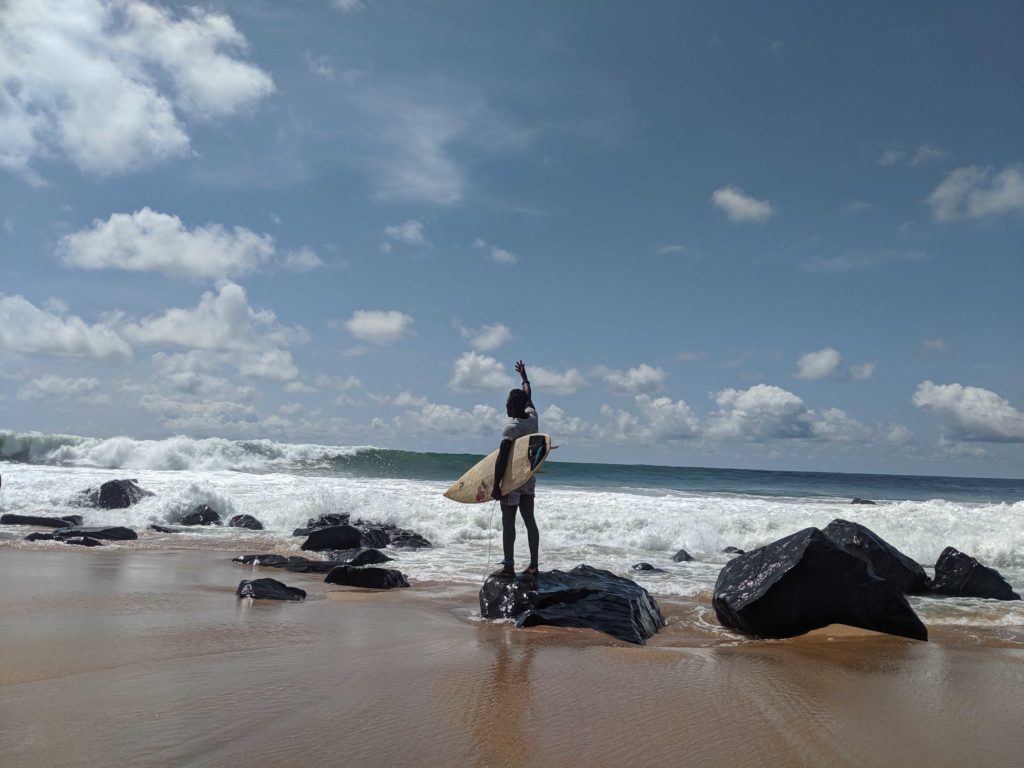
Kotu Beach, Gambia
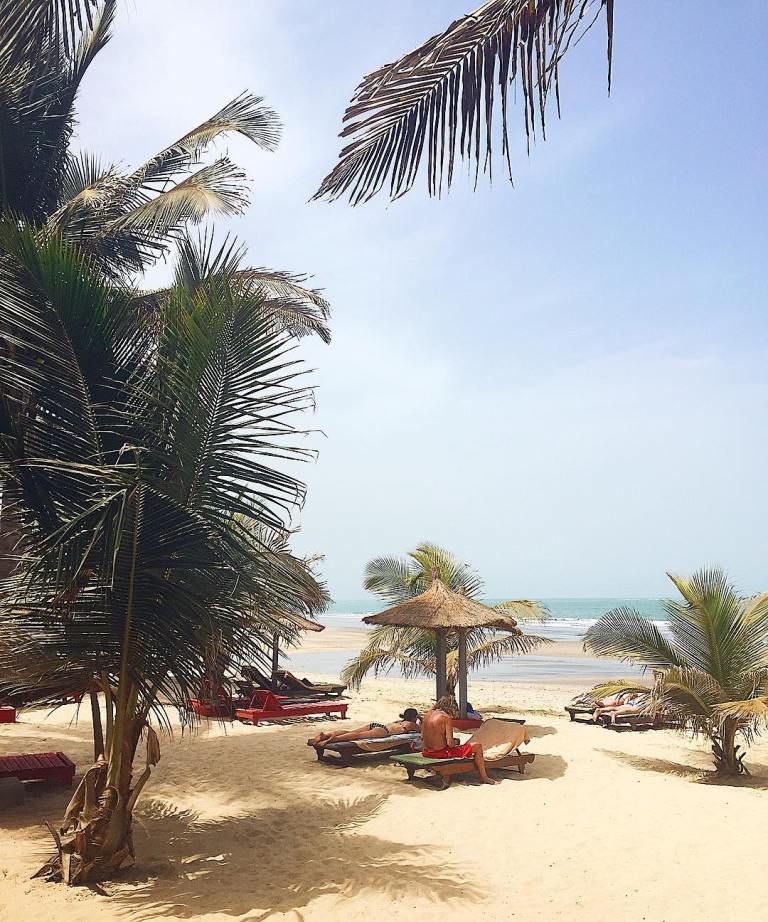
Ile De Ngor, Senegal

-

When planning a vacation, no one ever really thinks of Sierra Leone as a holiday destination. But I’d like to change that.
Sierra Leone is a small country with a population of about 7 million people. It is famous for “blood diamonds” that were mined and sold during a civil war in order to purchase armaments. Fascinating, right?
There are also many cool attractions that would leave you in awe of the country’s beauty. Here’s a list of things to do while in Swit Salone:
Experience Nature & Wildlife at the Tacugama Chimpanzee Sanctuary
Let your inner History buff out at Sierra Leone National Museum
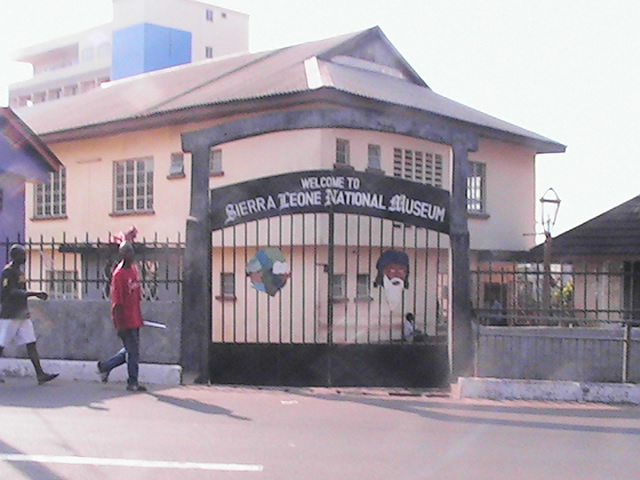
Take a dip in the ocean at River Number Two Beach
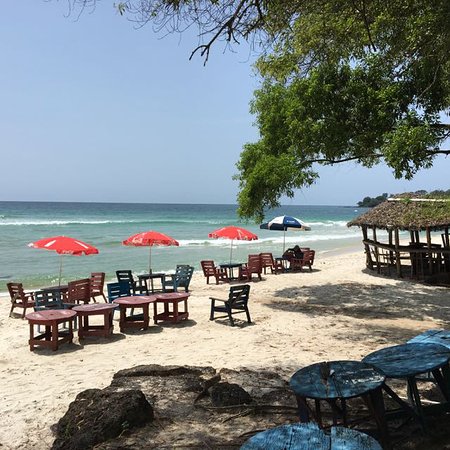
Stock up on some Salone souvenirs at Big Market
Be plunged into the world of bomb rice at Crown Express
Unwind after a day of exploring at The Warehouse
The Jollof Road squad was in Sierra Leone for a few days. Find out what they got up to here.
-

Everyday by 12pm for the next 21 days, I’ll be telling you what life is like at NYSC Camp. I was posted to Borno State, but the camp holds in Katsina state due to Boko Haram insurgency in Borno. You can read all the stories in the series here.
DAY 1.
6:35 AM
I wake up in an NYSC lodge in Katsina on the first day of camp. I’m not supposed to be here, that much I can tell. My memory is a bit foggy, but when it all returns, I remember how I got here. It starts with getting my posting on a Friday and seeing that I had been posted to Borno, which means I would be camping in Katsina since Borno is a no-go area. Then packing my things with a twinge of dread and excitement, blocking out all the varied reactions from friends and family on what to expect. And then making the longest trip ever only to end up in the wrong place.
After arriving in Katsina, my friends and I picked up bikes to take us to NYSC camp. The bike men heard “NYSC” alone and brought us to the wrong place — this NYSC lodge where corps members who have their primary place of assignment (PPA) in Katsina stay.
Just as the sun is beginning to light the skies, my friends and I head out of the Lodge to continue our journey.
Let me tell you about my friends. There’s F who was a course mate. We left Lagos together. Then there’s A, the third party we met during the course of the trip. He studied Pharmacy at Cyprus, and for me this is quite a wonder. A foreign-trained person going to the same NYSC with me? As we head out of the Lodge, he tells me he is going to camp to make money.
Me? I came to chop the life of my head.
10:20 AM
It takes us four hours to get to camp from the lodge. We first enter a cab driven by a Hausa man. What’s supposed to be a quiet journey becomes a tour of sorts. An Alhaji in the backseat points things out to us even though we don’t ask:
“Katsina is farther than Kano.”
“If you’re coming through Zaria, don’t trust those parts under the bridge that look dry, they actually contain water.”
After the cab drops us, we take motorcycles and arrive at the NYSC camp on them.
Katsina is cold. Too cold. Alhaji had warned us about this before we got off.
At the gate, NSCDC officials accost us. They ask us to open our bags and provide all our documents. They ask us to upend our bags so they can be sure we’re not carrying sharp objects, metal spoons, or other objects they perceive to be harmful.
Beside them are confiscated items: spoons, extension boxes, etc. I wonder if they will confiscate condoms too. After all, sex is not allowed on camp. But take your mind out of the gutter, please, I am not carrying condoms. My grandmother packed my bags.
When they are satisfied, I am asked to write my name in a book and allowed to go in. I wait for my friends who are still being checked. In the meantime, I decide to take photos for this diary. The soldier takes offence.
“Go inside!” he barks and I’m gone before he can say another word.
Look where friendship got me.
12:00 AM
Registration: If you’re posted to Borno state, then it’s very likely that you’ll camp at the Peace and Disaster Management Centre, NSCDC, Barbar-Ruga road, Batsari, Katsina. This, to a large extent, is what will happen:
After the soldiers allow you in, you’ll meet two guys claiming they own a coverage business. They’ll tell you that they will take pictures of everything you do in camp from day 1 to the end, all for N1,000. If they notice a reluctance, they’ll tell you to pay half of the money; you can pay half later. Ignore them. That’s what I did. Because why pay a coverage business to follow you about, are you Kim Kardashian?
Here’s a picture of the things you can take to camp. Photocopies are essential, so you don’t enrich the hungry pockets of those people at Mammy Market.
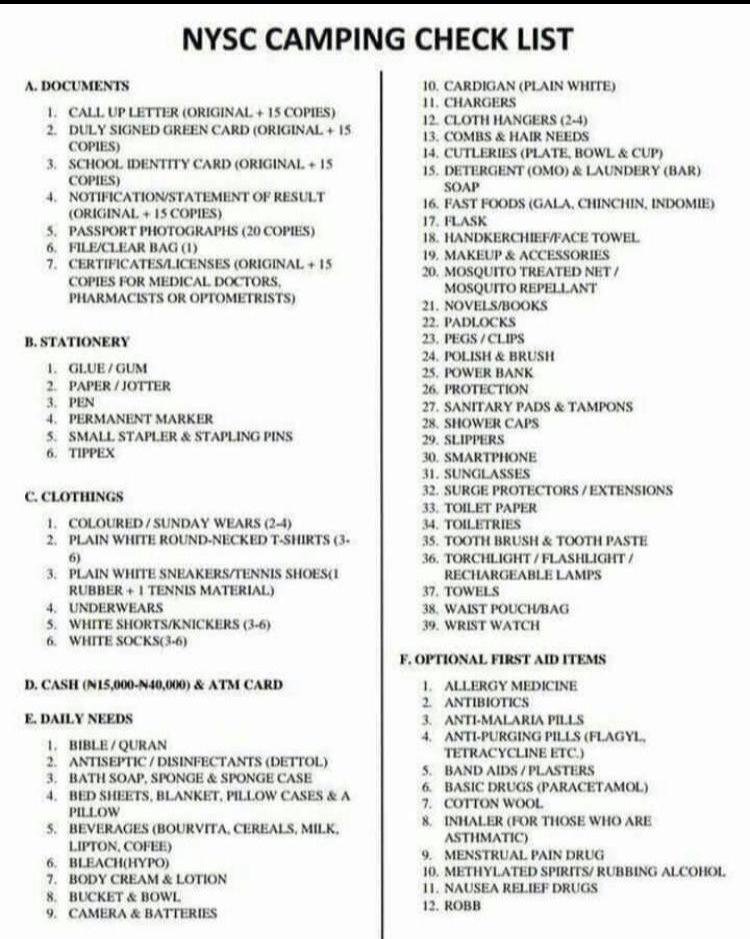
When you get to the registration point, a soldier will give you two forms to fill. One is for bio data, the other is the oath form. After filling, you take it in to a man who asks for your certificate, call up letter, green card, NYSC ID card. He’ll stamp your call-up letter and direct you to another table. Here, your details are entered into a computer, and a printout is issued to you.
With this printout, you’re given an office file with a serial number on it. Assuming you are number 197, then you’ll fall under Platoon 7, according to the last digit of your serial number. There are 10 platoons. Now that you’re in Platoon 7, find the spot of Platoon 7 and submit originals of the documents requested: medical and school certificates, call up letter and green card, print out page, bio data and oath form.
Here, they’ll give you your kits (which will NEVER size you, my dear, forget that NYSC asked you for your size during registration), a handful of booklets (camp rules, etc) and your meal ticket which will serve you throughout your stay. Lose it, and Mammy Market traders will rejoice. A new customer. Relax though, a plate of white rice and meat is N300. Sharon, the sales girl, assures me it’s big meat, but maybe she does not understand big things, sha.
Before or after you open your bank account, you’ll need to go to the admin block to get your mattress. It’s not a tug of war, but you’ll have to dig deep to find a good one. Most mattresses there are as flat as pancakes.
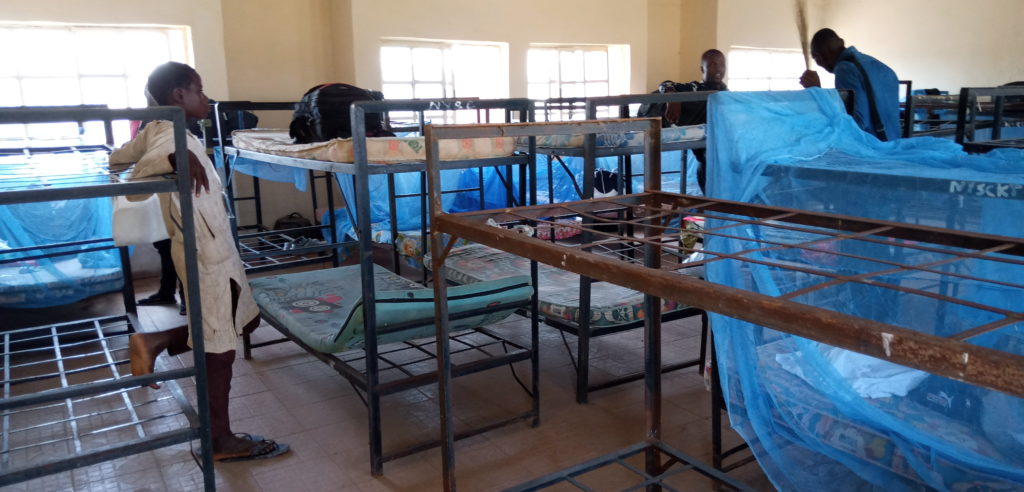
This is quite a process, and with the Harmattan, dust and sun, be prepared to look like an abandoned child by the end of it all.
But think about it: only you in Borno, no true love holding your hands, patting your back and saying “It’s gon’ be fine, love.” Are you not abandoned?
4:00PM
PARADE! This is shaping up to be my scariest moment on camp. One minute, I am looking peng, selfie-ing, and the next moment a soldier is yelling, “Double up!” and coming to our hostel with a kondo. Mans had to flee to the camp ground.
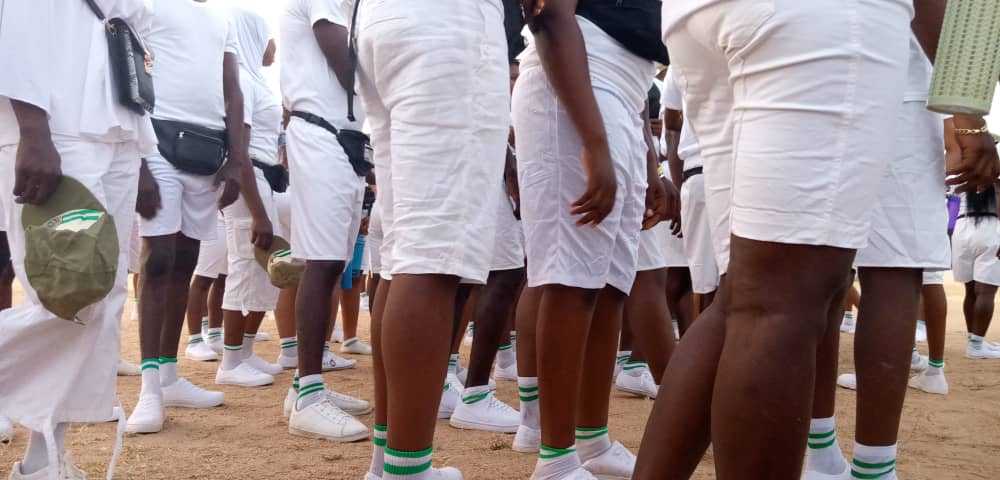
6:00 PM
Lowkey, there’s a little bit of ignoramus in everybody: After the soldiers explain what to do and dish out instructions (raise your left leg! Shout hurray! Don’t touch your cap! Stop saying Catch), many people still do the wrong thing. It becomes so bad, a guy is called out and told to keep shouting “Hurray.”

Fainting/falling down/collapsing is a sure way to escape marching: Now this requires tact to pull off, so you don’t jeopardize yourself. In the heat of the instructions, my dear, just give up like you are giving up on Nigeria. Drop. If you can fall on the person next to you, do it. If your wig can fall, do it.
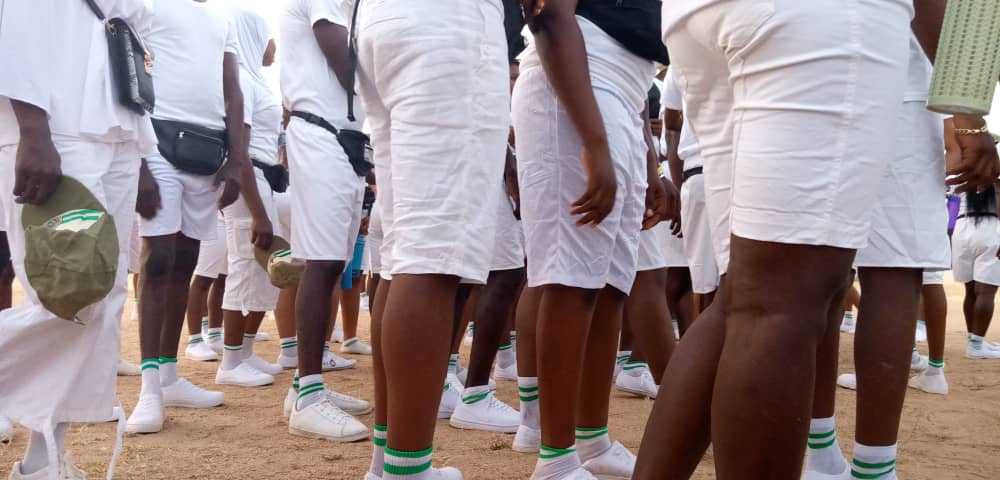
Like that like that, you’ll be taken to Red Cross, pampered, like the queen/king that you are. Hold on a sec, in your fainting, don’t invalidate the true fainting of people who are truly weak and can’t cope. A friend who I met during registration fell down twice. A girl in my platoon fell down too. Another one gave up the struggle and went to beg soldiers. I considered fainting too, but before I could finish plotting/planning the logistics, the parade was dismissed.
Well, there’s always another day.
-

Crossing any border can get very tedious, but West African borders rank the highest on the spectrum because the process can drive you up the wall (most times). We’ve been travelling around West Africa by road and so far, we’ve had 9 border crossings. I decided to rank them from the most stressful to the least one.
- Ivory Coast to Liberia
For us (the Jollof Road team), this border crossing wasn’t difficult in terms of the bureaucracy. The problem was the bad roads. We couldn’t continue the journey into Liberia because the roads were unmotorable. So we returned to Ivory Coast, and then followed the guinea route in order to get into the country.
If you ever want to visit Liberia by road from Ivory Coast, avoid the Gbinta border route. But if you think you’re Dominic Toretto, go ahead!
- Liberia to Sierra Leone
Crossing this border was a bit of a breeze, but there was one thing. Bad roads. So bad the team had to sleep overnight in Black (the bus) because it got stuck in
mud . Make sure you’re driving a jeep wrangler with 45-inch tires if you want to be able to weather the storm that is bad roads.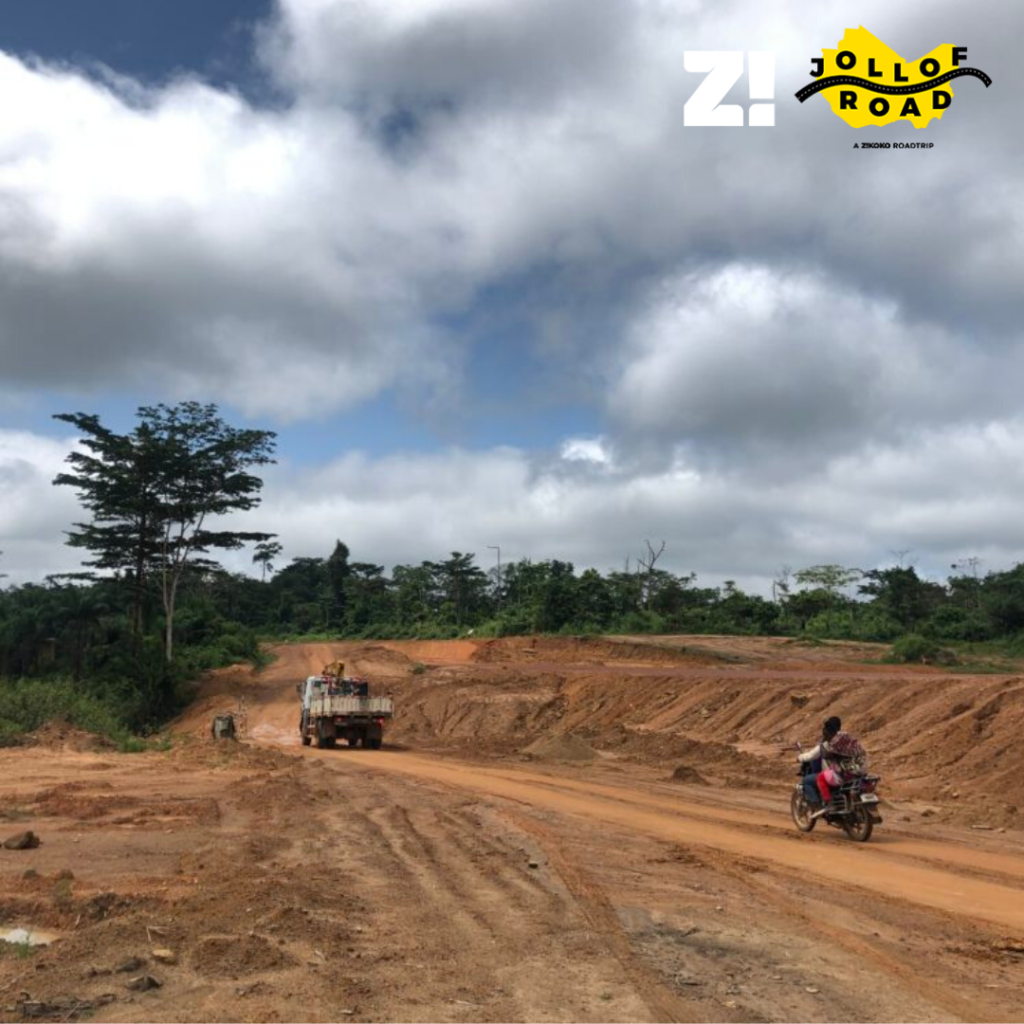
- Togo to Ghana
You will need argent and an “agent” for this one. Why? Z. However, this is not enough to help ease the long process. It will still take about 3 hours to sort out paperwork and to do a vehicle inspection. That’s enough time to reduce your brain cells, but don’t be grumpy, time flies while you’re having fun.
Ps: If you’re still trying to figure out what argent is, I’ll help. It’s French for money.

- Benin to Togo
With the help of an “agent”, it only takes about an hour to cross the border into Togo. But don’t get too excited, because you will have to make some unnecessary payments. Like 1000 XOF, if you have a “virgin” passport.

- Ghana to Ivory Coast
The process is simple if you ignore the rude border officers. They follow due process. No fee required. No palms to grease.

- Nigeria to Benin
Thanks (but no thanks) to Bubucakes, crossing this border was a walk in the park for us. About two months ago, he ordered the closure of the border to clamp down on illegal trade. And as a result, traffic congestion has reduced.
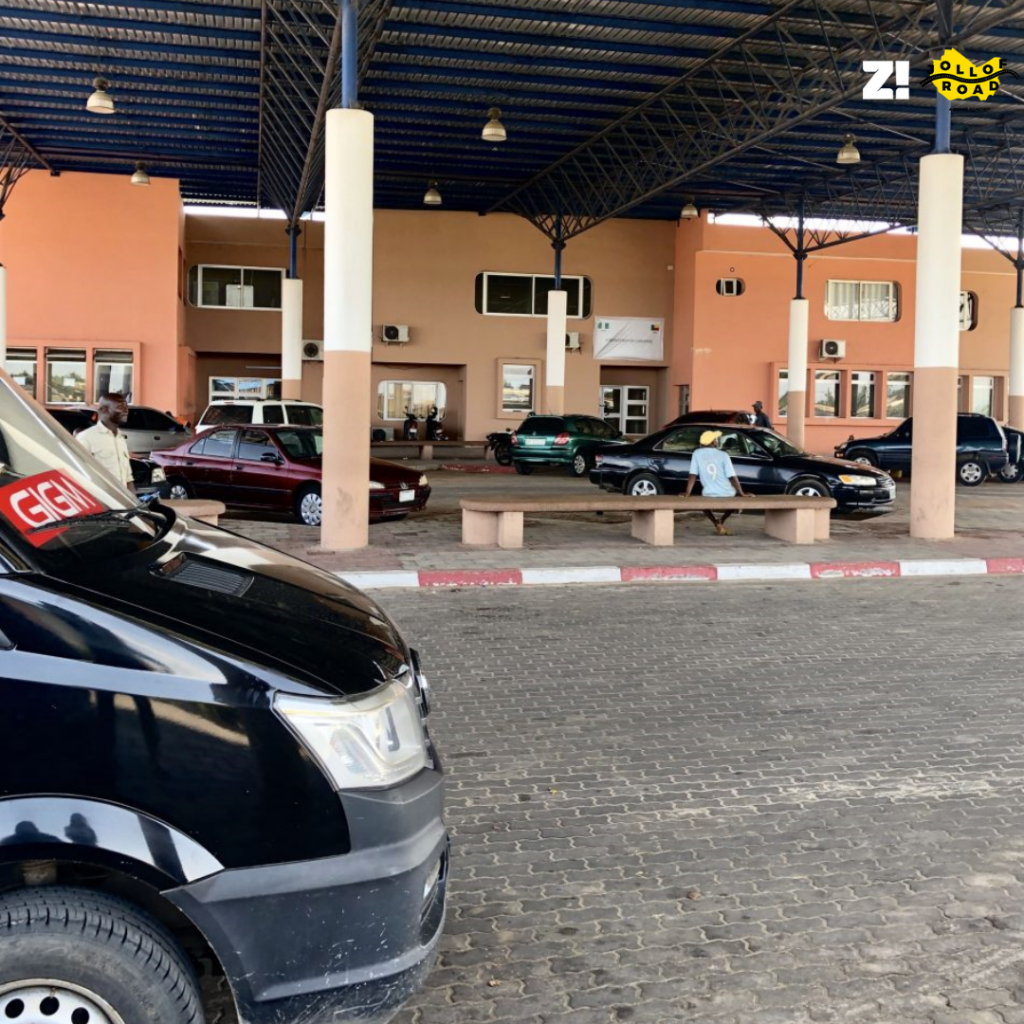
-

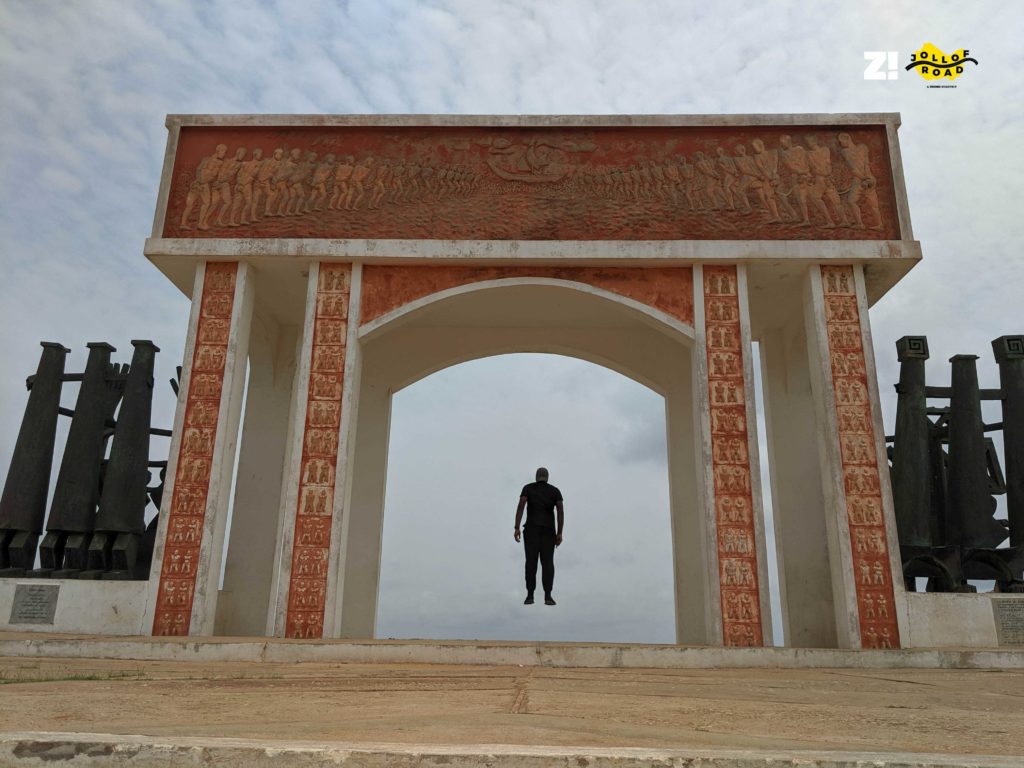
The Republic of Benin is Nigeria’s
next door neighbour. Although we have so much in common, a WHOLE LOT of us do not know anything about the country.The Jollof road team was in the Republic of Benin for a short time. While there, we got so immersed in the culture that we can now call ourselves experts in it. Take this quiz so we can school you a little.
Watch the Jollof Road team during their time in Cotonou, Benin Republic and visit jollofroad.com to learn more about Benin Republic.
-

So far on Jollof Road, we’ve visited four countries. But nothing comes close to the dynamic experience we had while we were in Ivory Coast aka Cote d’Ivoire aka land of Jesus’ 13th disciple.
So here are four places you should visit if you’re ever in the coastal city. Do it!
Our Lady of Peace Basilica
If you don’t stop by this monumental beauty, your trip will be incomplete. Why? Because it’s the largest church in the world. It is located in Yamoussoukro – the political capital of the country and birthplace of Felix Houphouet-Boigny, the first Ivorian president.

Waterfall in Man
If you enjoy the view of water cascading down layers of rock or are just a Mami water, this is the place for you. However, to avoid getting overwhelmed by screaming teenagers, pick a weekday to visit.
Pont De La Victoire
In English, Pont de la Victoire translates to Bridge of Victory. It is located in Grand Bassam. In 1949, the bridge was constructed to memorialise a women-led march that fostered the rescue of Ivorian nationalists.
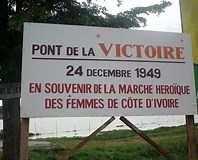
Tai National Park
This national park was established in 1972. It is located in Bas-Sassandra. It preserves one of the last areas of primary rainforest in West Africa. And in 1982, the park was marked as a World Heritage site.
Rainforest Comptoir Des Artisans
Comptoir des Artisans is both a restaurant and concept store selling art, jewellery etc. It is located in Abidjan. The restaurant can transport you to France with its fancy cuisine. And most importantly, it’s the perfect spot for the hippies.
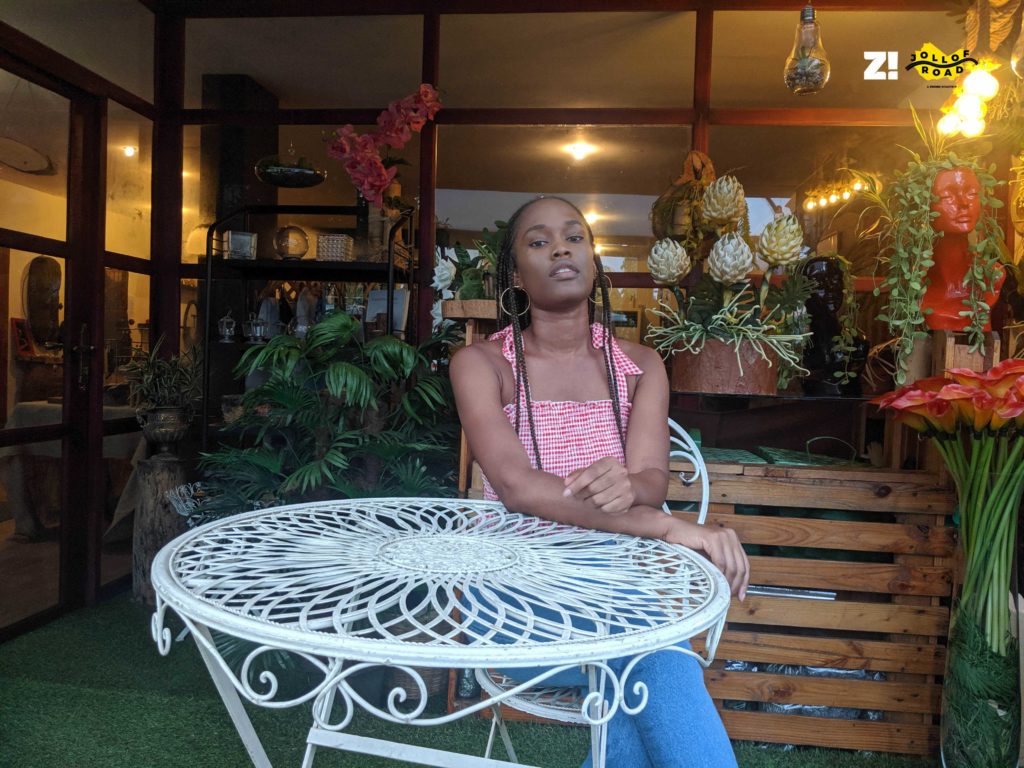
-

On October 7, we (the Jollof team) headed to Abidjan, Côte d’Ivoire from Cape Coast, Ghana. Our experience in Ivory Coast started off on the wrong foot – arrogant officials at the border at Elubo and then, rude staff at the hotel we lodged at. It felt all too familiar; Abidjan reminded us of Lagos with its striking similarities – from the food to mad drivers, the city had it all.
In case you missed it, here’s a rundown of everything that happened while we were there:
We discovered Attieke!
Attieke is a staple food in Cote d’Ivoire. It is made from Cassava and looks just like Eba, a staple food in Nigeria.
The q uadtried it with some chicken and you bet it was so good.
We met so many cool people!
There was Francis, who let us use his concept store to film; Frederique, who was kind enough to provide us everything we requested – from a bottle of water to contacts in some countries we’ll be visiting; Stephanie, who was very cheerful and ready to supply us with hot cocoa; and Awa Sanoko – the supermodel whose beauty caused Toketemu to quake in her boots.

Awa Sanoko, the model DJ Arafat fans are the most loyal.
We attended a memorial for DJ Arafat, the singer who died in a bike accident two months ago. There, we met a super fan who quit his job and now lives at a shrine where he keeps a candle burning for the deceased Ivorian star.
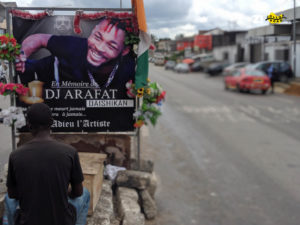
Comptoir Des Artisans the Restaurant Cum Concept Store
You should visit Comptoir Des Artisans if you’re ever in Abidjan. It doubles as a restaurant and a concept store. We had an interesting conversation with our hosts about the Fashion scene in the country and compared it to other West African countries.

Nearly died when we saw the price list at one restaurant:
The price menu for Aboussouan – a fancy restaurant, nearly gave some of us heart attacks, so the gang opted for street food.
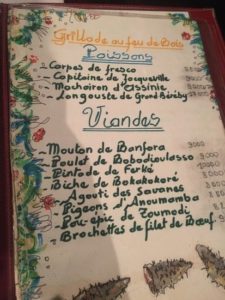
Aboussouan’s price menu A Neighbourhood Called Biafra:
In a neighbourhood in Abidjan called Biafra, Fu’ad went on a mission to find an Igbo speaking Nigerian that could tell him the history of the district, but was unsuccessful. How frustrating!
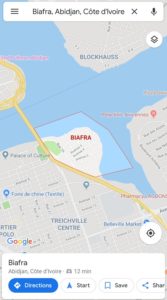
At the Basilica of Our Lady of Peace…
Toketemu wasn’t allowed in here, the largest church in the world located in Yamoussoukro, for wearing a “short” dress, so a good Samaritan gave her a headscarf to tie around her waist.

Before 
After Jesus’ 13th Disciple lived in Yamoussoukro
We discovered that on a stained glass window at the Basilica, Félix Houphouët-Boigny – the first Ivorian president, had himself painted at the feet of Jesus.
What’s a trip without going close to a body of water?
Our visit to the Waterfall in Man, Cote d’Ivoire, was a bit of a damp squib as some teenage rascals made lewd comments at Toke and Tosin.
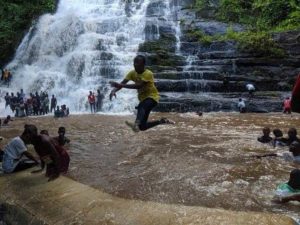
Mann Waterfalls That’s it, folks! If you don’t want to be diagnosed with a severe bout of FOMO, keep following the #jollofroad journey on our website, Telegram Channel and Youtube.
-

Ghana is known for its warm people. Don’t believe me? Ask the Jollof Road gang! Are you visiting Ghana soon? You probably are. Literally everyone is visiting Ghana in December. Here’s a list of recommended places to visit while you’re there:
1. Black star square
The black star square is a public square located in Accra. In 1957, Kwame Nkrumah – former Prime Minister and President, commissioned the construction of the square to celebrate the country’s independence. It was finally completed in 1961 to honour the visit of Queen Elizabeth II. Interesting, right? I know! We visited this beautiful monument and had fun taking pictures.
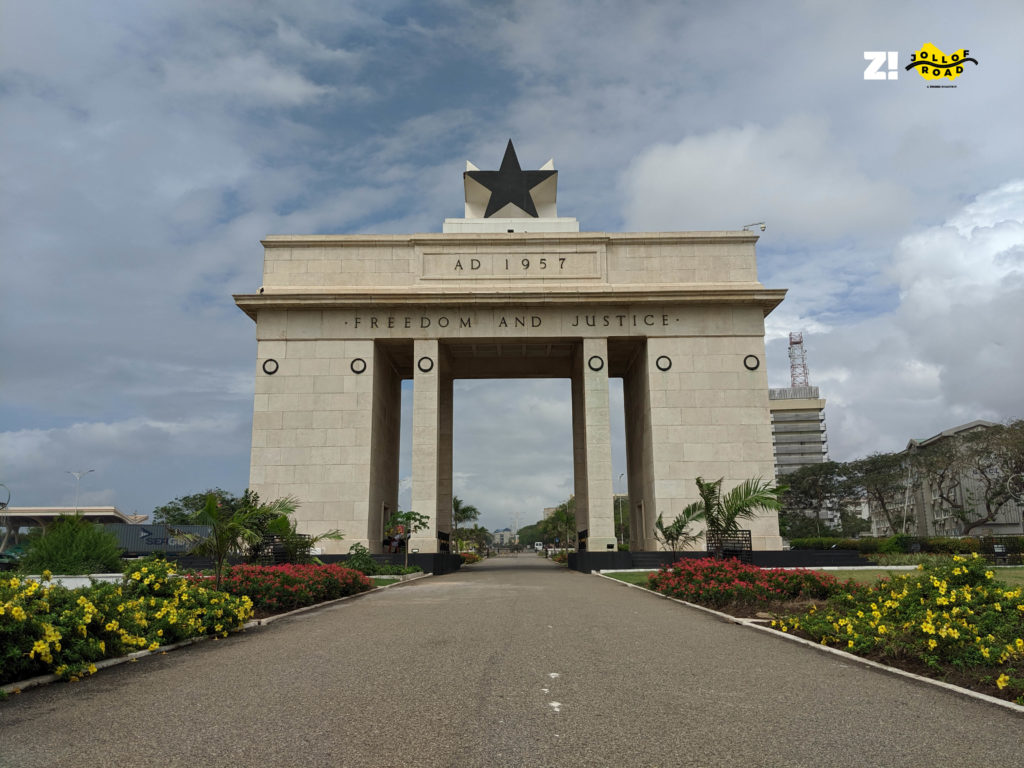
2. Osu Castle
The Osu Castle – also known as Fort Christiansborg, is located in Osu, Accra. It was built around 1659 by the Danes to initially serve as a site for trading activities. It also served as the seat of the Ghanaian government until 2013. The tour is free and only open to visitors on Fridays.
Fun fact: Barack Obama was here during his visit to Ghana in 2009 3. Harley Davidson
Harley Davidson is an American owned motor company with a showroom in Accra, Ghana. It is the only showroom in Western Africa. If you love motorbikes and are familiar with this iconic brand, you should definitely visit to get rad photos and have a test ride.

Fun fact: you can find a community of bikers in Accra 4. Starbites Restaurant
A sage once said that the best things in life are free. Well, guess what? They lied. Good food isn’t always free. This intercontinental restaurant is located in East Legon, Accra. You should definitely stop by this restaurant if you want to try some bomb ass food that can solve all your life problems.
5. Bloombar
For my nightcrawlers, you weren’t left out. This is a good place to unwind after a long day of sightseeing and doing tourist-y things. You get live music, yummy food and great drinks all in one place.

-

Nigeria is a country where many mysteries abound. Stranger move a little too close to you on the street? That could be your reproductive abilities walking away with them. Dare to pick unclaimed money from the floor? You just might be toying with being a major component of this afternoon’s pounded yam and egusi.
Genitalia thievery and human pounded yam supplements aside, there is another major mystery that just won’t let up in Nigeria – the mystery of the Presidential Airport Greeting (PAG ™ ).

You see, for a reason, I’m going to need divine guidance on, our president when travelling, totes around ministers, Governors and Special Assistants, all of whom before making the journey with him, line in front of the aircraft to congratulate? appreciate? or perhaps worship him.
I mean, take a look at this and note the people welcoming him aboard the aircraft to South Africa on October 2nd:
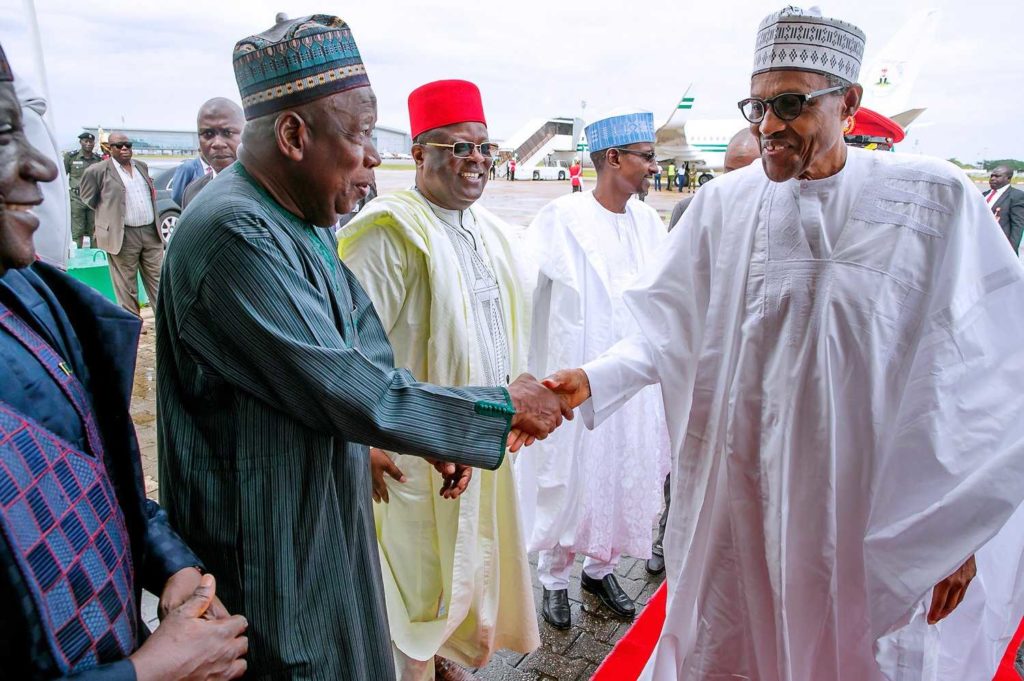
Notice Mr. Dollars and the guy in the red cap? Good.

Ah yes, all smiles, aboard the aircraft they all stood outside to welcome the Prez into. They’re probably happy they’re headed to a country that has light.
So let’s imagine this, they’ve spent hours on the ride to South Africa, making jokes about tissue paper or whatever TF has them so waved in front of that box. Some time has been spent learning tips from and discussing Ganduje’s Dollar stuffing prowess. Plus, Buhari has given a quick master class on working the best angles for the gram.

At the end of 5 hours, when it’s time to de-plane, do they:
a. Clap and thank God for journey mercies?
b. Line up outside the plane and welcome President Buhari, who they literally just spent five hours with, to a country they are all visiting together?
c. Oh God, it’s B isn’t it?

See your guys.
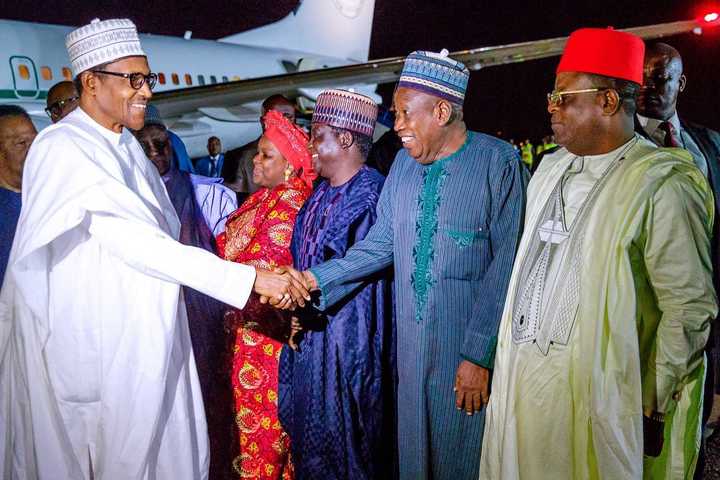
I will pay really, really good money to understand the logistics behind their filing out. Does Buhari unlook when they all stand up to ‘welcome’ him to another person’s land? Probably makes this face while everyone is getting up around him.

Then how long does he wait after they’ve all gone out? 5 minutes, 10? These are questions I need answers to, and fast.
If you have any theories, or can shed any light on this very pressing issue of the Presidential Airport Greeting ( PAG ™ ), let us know in the comments.