What does it mean to be a man? Surely, it’s not one thing. It’s a series of little moments that add up. Man Like is a weekly Zikoko series documenting these moments to see how it adds up. It’s a series for men by men, talking about men’s issues. We try to understand what it means to “be a man” from the perspective of the subject of the week.
Check back every Sunday by 12 pm for new stories in the Man Like series. If you’d like to be featured or you know anyone that would be perfect for this, kindly send an email.
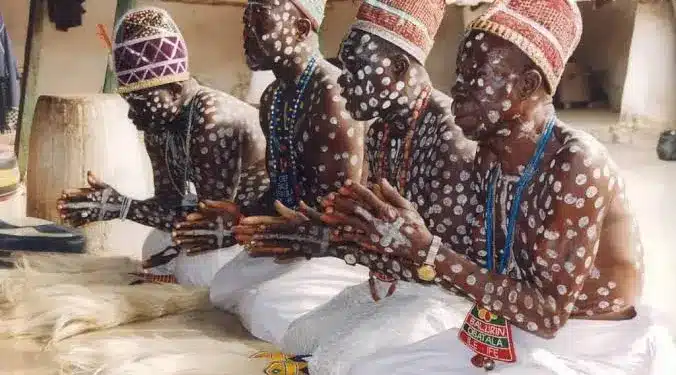
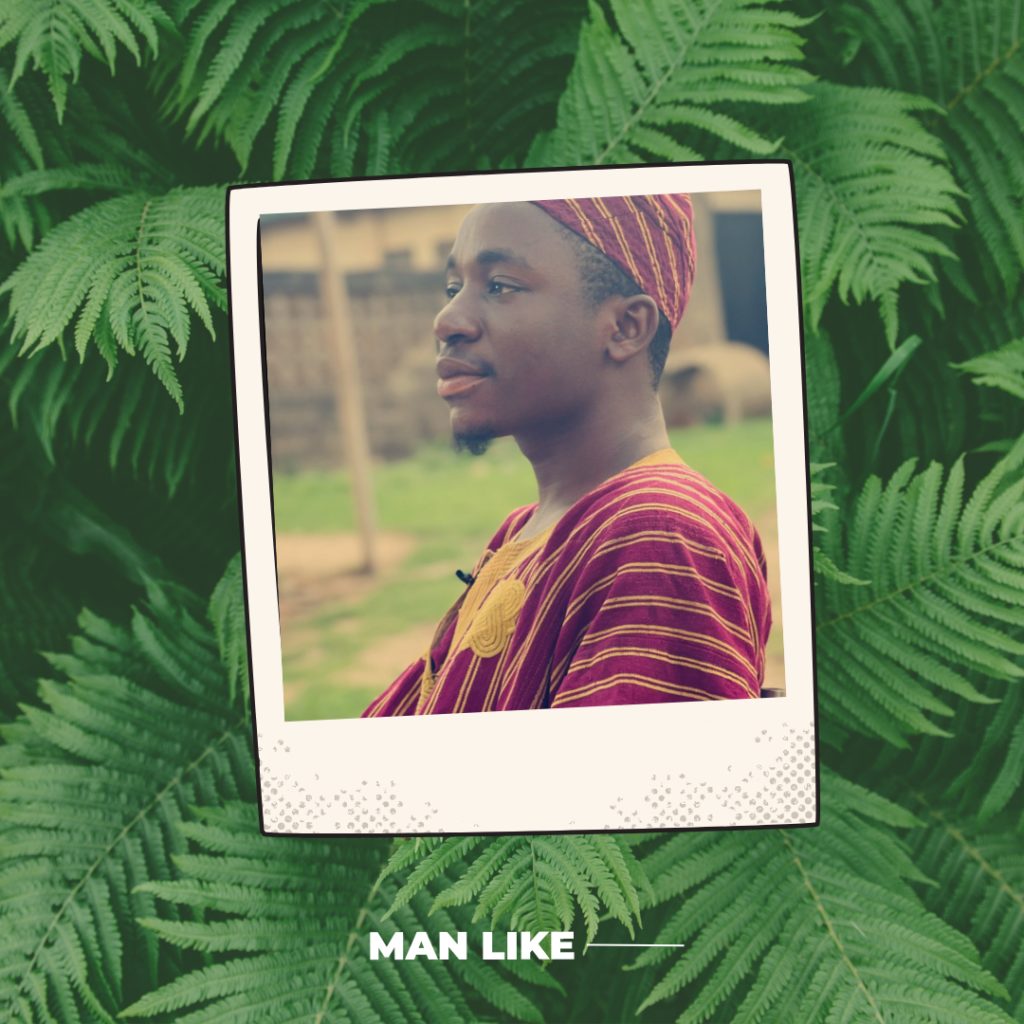
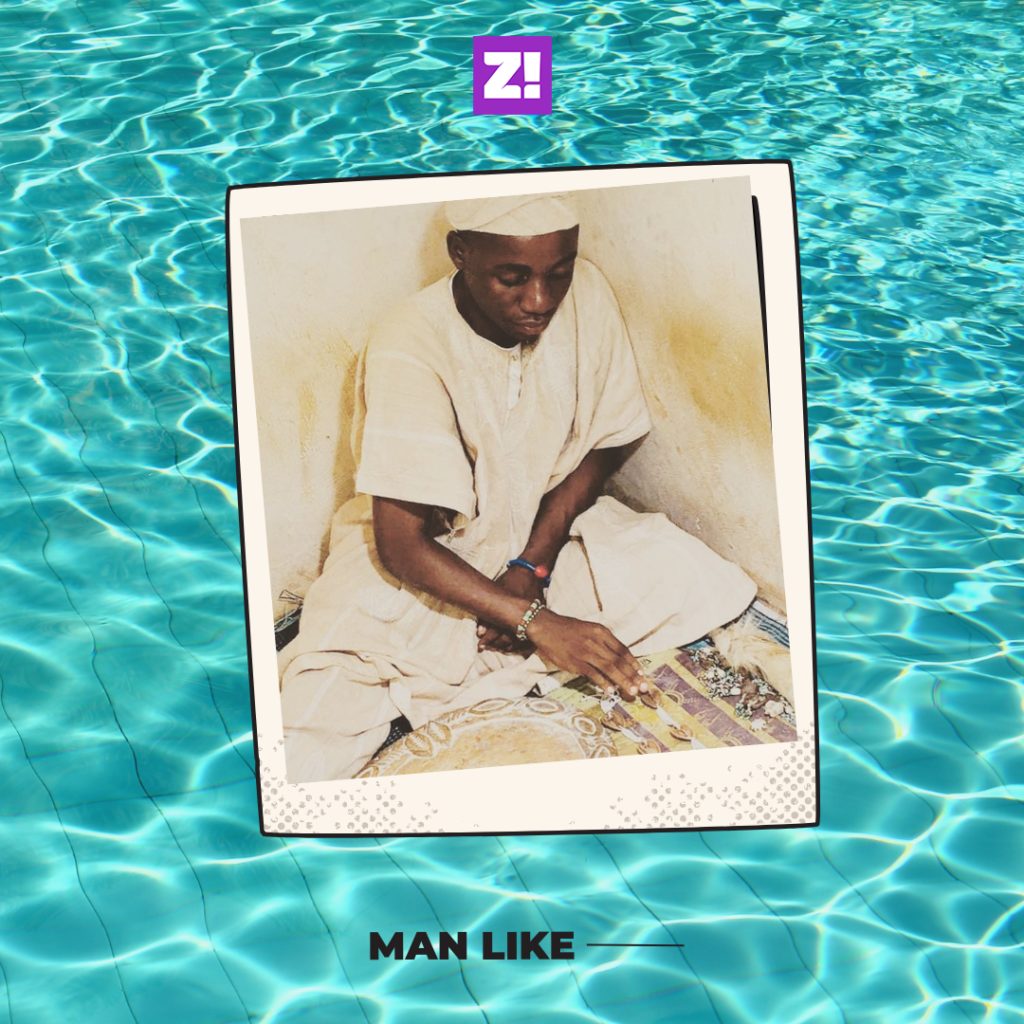
Today’s Man Like is Osunniyi, a 30-year old Ifá priest and the Oluwo (Chief priest) of Ile Oluwo Idingbe Temple. He discusses growing up with his grandfather, how he became the youngest-ever Oluwo at the age of 23 and the stigmatisation of traditional religions in Nigeria.
Tell us a bit about yourself.
My name is Osunniyi. I was named after my grandfather. I’m from Oyan in Osun State and an Oluwo (Chief Ifá priest) in Ibadan. I studied at Oyan Grammar School before proceeding to the University of Ibadan. Now, I run my temple and also work at Ibadan’s city temple.
How did you become an Ifá priest?
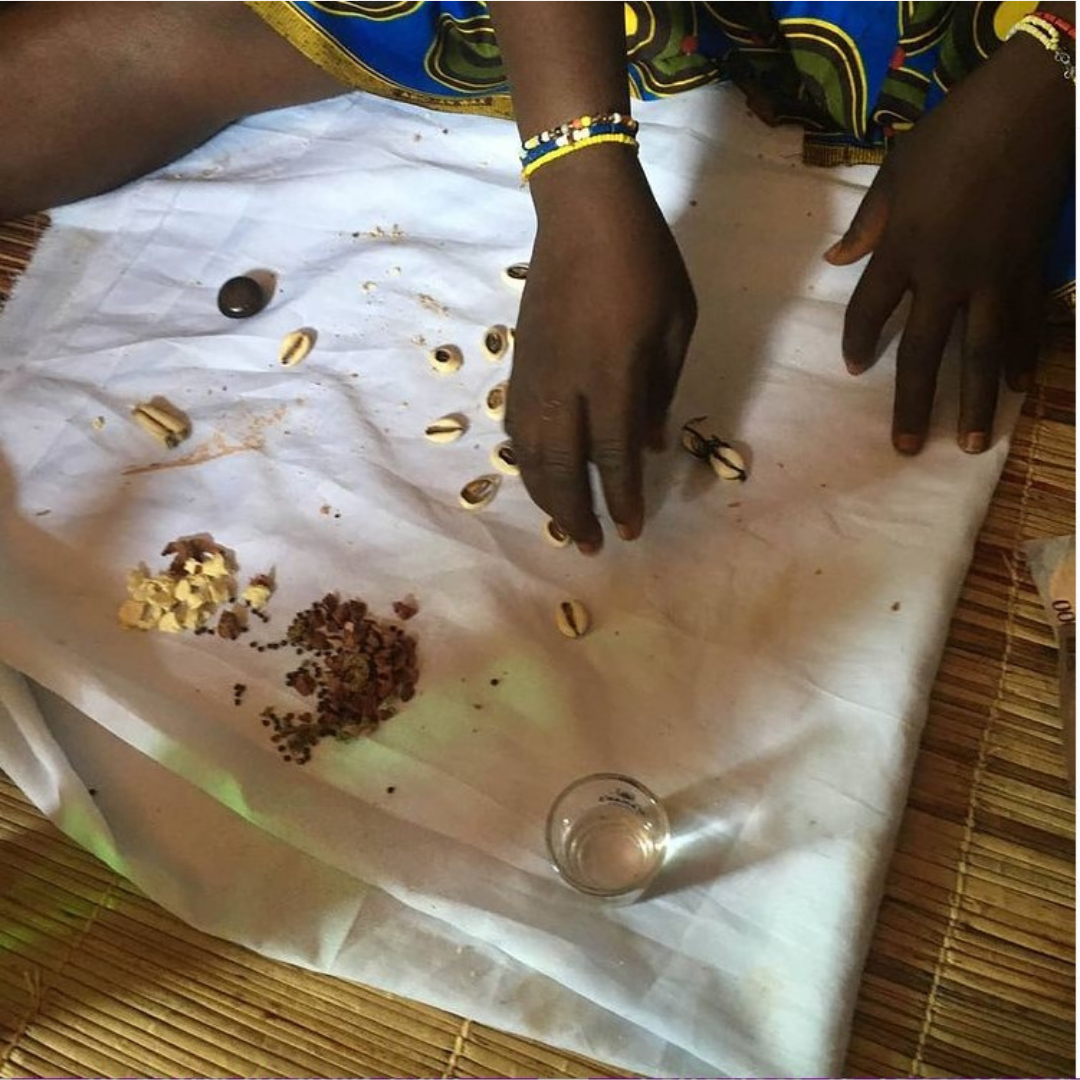
Ifá has been in my family for centuries. Unlike other Yoruba people, we never converted to Christianity or Islam. When I was 7, my family left Ibadan to visit my grandfather who was an Ifá priest. While there, I watched my father cast Ifá divination beads. I was fascinated by what he was doing and watched.
I told him that Ifá divination was like mathematics. He agreed, saying Odù Ifá was a lot of things; math, language, religion, philosophy, history, and many other things. I asked him to teach me. He was surprised that I was so young, yet so interested. He showed me two of Ifá’s 16 Odù’s, and I correctly interpreted the remaining 14 Odùs, without any prior knowledge. He was amazed but not shocked.
He told me a story when I was older: when my mother was carrying me, she had no apparent belly bump. After casting Ifá, it was revealed that I had gone on a journey. I was born on the day of the Odùn Ifá (Ifá Festival). It was no shock to him that I had such an affinity for Ifá.
It took my grandfather six months to learn the 16 Odù from his father. I learned it in three days when I was just 7. After that, I started learning the verses. Each Odù has 16,000 verses (which is similar to the scripture). There are 256 Odù. It’s passed orally from Oluwo (Chief priest) to Omo-awo (trainee priest) and has been so for generations. That’s the beauty of it.
When my family was set to leave for Ibadan, I insisted that I wanted to stay with my grandfather. My parents were perplexed but my grandfather also wanted me to stay. And that’s how I came to live with him. It was love at first sight.
What was growing up with your grandfather like?
Growing up with my grandfather was such an invaluable experience because it gave me insight into how the world works. When you grow up with an old wise man , you’re bound to learn a lot of things. He also taught me how to farm and I’m quite knowledgeable about agriculture because of him. Beyond that, I learned about important herbs and plants and also how to hunt game in the forest.
We travelled a lot and met a lot of important kings (such as the late Ooni of Ife, Oba Sijuwade) through my grandfather’s role as a revered Ifá priest. I learned a lot about Yoruba culture in its purest form.
You seem nostalgic about those times.
That was probably the happiest time of my life. I realised that you don’t need money to be happy. He was an old man with no money, yet he was very content and happy with his life, and so was I.
We were so close that my siblings and cousins were always jealous of our relationship. My uncles used to call me ologbo baba (baba’s cat) because I followed him everywhere. He died in 2013.
His death must have been a blow. How did you take it?
When I was 22, he was worried about my lack of travelling and told me to go to Ibadan for a few months. On the day he died, I was playing football with friends when I received a phone call from my dad who informed me of his death. I was shell-shocked. I couldn’t wait till the next day to go with my family so I took the next bus to Oyan. During the long trip, a woman on the bus tapped me to ask if I was okay. Apparently, I had been crying without realising it.
On the day he was buried, I couldn’t bring myself to watch. I sat in his room until the ceremony was over. He was my father figure and it was worse than any heartbreak I would experience.
I’m sorry.
He lived a long life. I’ve been working to preserve his memory ever since. When I opened my temple, I named it after him. I became an Oluwo (chief priest) the year after he died. I wished he had lived to see that.
You’re a chief priest?
Yes. I became when I was 23, the youngest ever in history.
What was it like, growing up as an Ifá trainee?
There was a lot of stigma. In secondary school, when I was called to give prayers, my classmates would taunt me when I prayed Ifá prayers.
Being an Ifá priest has its challenges. By virtue of your position, you’re privy to some secrets. We try to uphold the culture through the changing times. We’re responsible for holding up the cities we’re in charge of. It’s like being the Pope of the Vatican. You can’t just do what other people do because it’s a position that comes with a lot of power. It’s a big responsibility for a young person.
I’m sure there’s a lot of misconceptions about practising a traditional religion.
Thanks to corruption by foreign religions, people think Ifá is the devil or is used for bad things. Just the same way there are good and evil pastors and Imams is the same way Ifá can be used for good or evil purposes. Good and evil are fundamental to the binary system. It’s like a gun; it can either be used to protect or to destroy. It’s not inherently evil. All we have are bad people. Christians fought wars, pillaged, took slaves and destroyed entire lands in the name of Christianity. There are many Muslims who commit atrocities in the name of God. Shall we now call those religions evil?
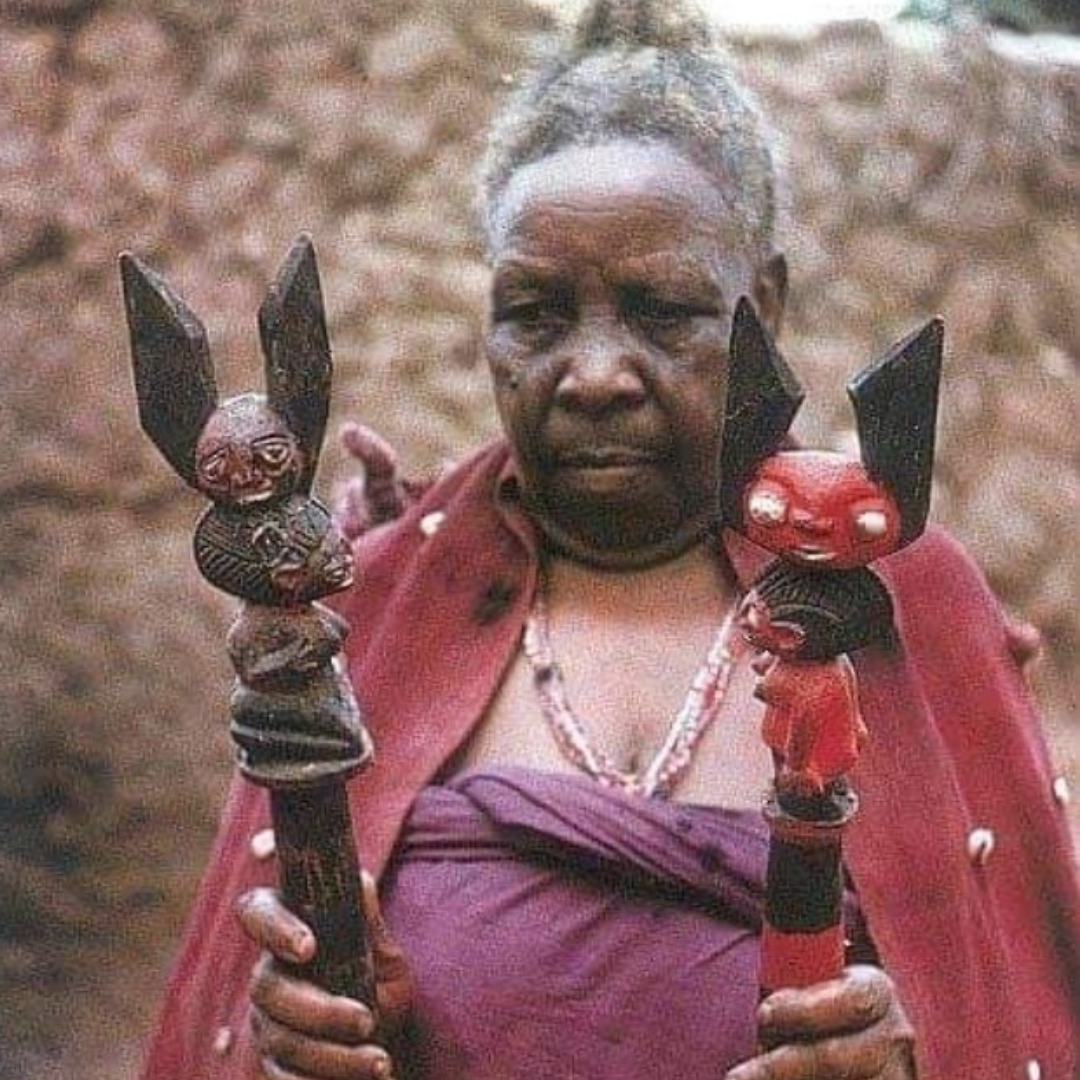
Christians are fond of calling Yoruba deities “smaller gods”. Apart from the fact that this is condescending, Yoruba people have only one God, Olodùmare. The rest of them are òrìṣà (chosen ones), primordial forces who control the elements. Sango is the chosen one, who was also a human being, but is also the deity of lighting. Oya, the seas, Osun for the waters and so on. Think of them as Catholic saints. They aren’t gods, but you pray to different saints to intercede for you to God, right? That’s exactly who the òrìṣà (chosen ones) are. People are just afraid of what they don’t understand and won’t stop demonising it.
Interesting. So what goes on in an Ifá temple?
Like I said earlier, Ifá is an embodiment of many things — philosophy, moral instruction, history, religion, and others. Oftentimes, people come for divination to discover their purpose in life. Others come for prayers. Some come to learn from the many stories in the Odù Ifá (verses). You can learn the entire history of Yorubaland from the stories.
How does the fact that you’re an Ifá priest affect people’s interactions with you?
People, especially on social media, are mostly very rude. They say all sorts of things to me. They think it’s okay to attack me because I practice a traditional religion. I can’t do mundane things like post pictures of myself clubbing or having fun without someone making a snide comment about, “Oh, Babalawo too drinks?” They don’t realise that I’m well-travelled and internationally educated. I’ve worked for BBC and Harvard University. I face a lot of ignorant comments like this. Nollywood plays a big part in the demonisation.
I enjoy listening to rap — 2Pac is a personal favourite. Still, people will make fun of me for doing even the smallest normal things like watching football, wearing designer brands, visiting a fancy restaurant or even dating.
I bought a car recently and people make snide comments about babalawos having cars. When I give people rides in my car and they realise I’m an oluwo, they begin to worry and ask if they are safe. They don’t know they are the safest when they’re with me. The major work of the babalawo involves going the extra mile to help people you don’t even know, just to keep the world safe. In Nigeria, the Abrahamic faiths get all the juice and pieces of the national cake while traditional religions get nothing but ridicule and blame. Foreigners are more receptive to traditional religions but once people see a white person interested in learning about Ifá, people are quick to shout “cultural appropriation”.
How do you handle these?
I ignore. If a dog is barking at you and you stop to throw a stone at it, you’re only slowing down your own journey.
How does being an ifa priest affect your dating life?
Eventually, I decided not to talk about my religion to people I was dating if I wasn’t getting serious with them. I also preferred to date within my circle of people who understand me. Explaining myself to everyone is just a lot of work.
Are you dating someone right now?
Yes, I am. We met about eight years ago through a mutual friend. We were all hanging out when she mentioned she wanted to have a party for her birthday. I jokingly said I was an event planner and would plan it for her. She took me seriously and gave me the list of things she wanted for her party so I went ahead to book a restaurant, a poolside, a DJ and arrange food and drinks. She had a great time.
When she tried to pay me later, I told her not to worry about it. Although she was dating someone at the time, she was really impressed with me. We remained close friends for a long time. She’d talk to me about her relationship and I’d give her advice. When they broke up, we became even closer friends and after a while, started dating.
What’s the general reaction to her dating an Ifá priest?
She comes from a Muslim family and they are accepting of me. People try to discourage her, as expected. I want to protect her from all the vile attacks I receive online, so I keep my relationship with her under close wraps.
Do you hope to pass on the knowledge of Ifá to your children?
If they grow to show interest, definitely. I’m not going to make any one of them. If they prefer to practice an Abrahamic religion, that’s alright too.
What does your average day look like?
My days are typically very busy. I like to sleep in till later in the morning because I’m usually up till late. When I wake up, I drink some water and pray. Next, I take a bath. I have about six different soaps I use, all made by me from different herbs and formulas, ranging from the ones for good health to looking young. I’ve never used white people’s soap before.
Next, I drive down to the temple and teach my students. I also conduct consultations and appeasements for people who come to the temple. I also run a botanical shop at my temple with various herbs and formulas for different purposes. I’d work all day till evening. If I have time in the evening, I’d go to a club because I love to party. When I get home, I play a video game or two.
Check back every Sunday by 12 pm for new stories in the Man Like series. If you’d like to be featured or you know anyone that would be perfect for this, kindly send an email.
Are you a man who would like to be interviewed for a Zikoko article? Fill this form and we’ll be in your inbox quicker than you can say “Man Dem.”