Notice: Function _load_textdomain_just_in_time was called incorrectly. Translation loading for the wordpress-seo domain was triggered too early. This is usually an indicator for some code in the plugin or theme running too early. Translations should be loaded at the init action or later. Please see Debugging in WordPress for more information. (This message was added in version 6.7.0.) in /home/bcm/src/dev/www/wp-includes/functions.php on line 6121 The Elevator | Zikoko!
Calling all the hotties who are working hard at figuring out their shit and moving towards the next step on their journeys. You inspire us — so much that we created a flagship dedicated to celebrating your success.
In case you missed it, The Elevator is a mini-series dedicated to chronicling the journey of exceptional women in their careers as they make their way to the top. This year, in line with the official International Women’s Day theme, “Breaking The Bias”, we decided to expand the definition of ‘the top’ from corporate, white-collar jobs to less conventional careers.
We chose the women in this series because they stand out in their fields, with award wins and features in international events and magazines as proof. Most of them found their passion at a young age and continued on their paths despite pushback from their parents.
For each of them, that path looks different. For Kiss, becoming an all-round international producer is the top she aspires to, while Chigozie Obi wants to be able to provide opportunities for other visual artists, especially women. One thing everyone featured in the series agrees on is that the top of their careers is a place they haven’t reached yet, but they know their way there.
The top is a shapeshifting place defined by whoever is there or close enough. The world we aim to build is one where women can embark on the journey to success in their own ways, without the distractions posed by misogyny. The Elevator will lead that conversation with real-life examples.
Now that The Elevator is over, HER still has a few special things lined up for the rest of the year. In May, we have ToHER, a series of letters written by women to the women in their lives. Also in May, us hot girls will be meeting up at some fun place to shake our asses. You don’t want to miss what we have planned for you. To stay tuned, fill out this form.
If there’s one thing Zikoko does, it’s support women. We have an entire category of our website dedicated to women where we tell the stories of African women from all walks of life. We also have the HER Newsletter where Itohan gists about being a 20-something-year-old woman living in Nigeria along with awesome recommendations every woman needs in her life.
So it’s no surprise we’re excited about March, which is officially Women’s Month. At Zikoko, every month is women’s month, but this month, we have something extra special planned for the ladies.
Let’s get into it.
For this year’s Women’s History Month, we’re bringing back The Elevator, a short, crisp series that profiles women turning the needle, breaking biases, and showing the world (especially women) how to do the damn thing. Expect inspiring stories of African women working in different fields talking about how they rose to the top. And in line with the theme for this year’s International Women’s Day (#BreakTheBias), we’re redefining what the top looks like.
Last year, we spoke to Odunayo Eweniyi, Co-founder of PiggyVest; Arit Okpo, host of CNN International’s African Voices Changemakers; Blessing Abeng, Co-founder of Ingressive for Good amongst other women about their work but also their lives. This year, we’re continuing the theme of exploring the journeys of female writers, artists, activists who push the boundaries in their work.
The drop is every Tuesday, starting from 8th March 2022 at 12 p.m., which is also International Women’s Day.
But that’s not all. On the 4th March 2022, the first letter from our To Her series will be dropped. What’s that you ask? It’s a miniseries celebrating the love women have for other women. Dead guys say women are their own enemies. We’ll be putting that to review by showing the various ways women come through for each other.
In covering women’s stories, you learn the following truths: women’s lives are exposed to a lot of trauma, and women’s identities tend to be tied to other social identities. We’re putting out this series to show other ways women can be celebrated: Through women looking out for themselves, finding love, affection, companionship in other women, but most importantly, themselves. Expect softness, cuteness, and expression.
There’s one more thing in the works. If you follow the HER newsletter, you’ve probably gotten a scoop of it already. This thing shall be revealed to the world in due time. Till then, sit back, grab a bottomless glass of your favourite beverage, and let us entertain you.
The Elevator is a limited Zikoko series that details the growth of young successful Nigerian women. We tell their stories every Monday by 12 p.m.
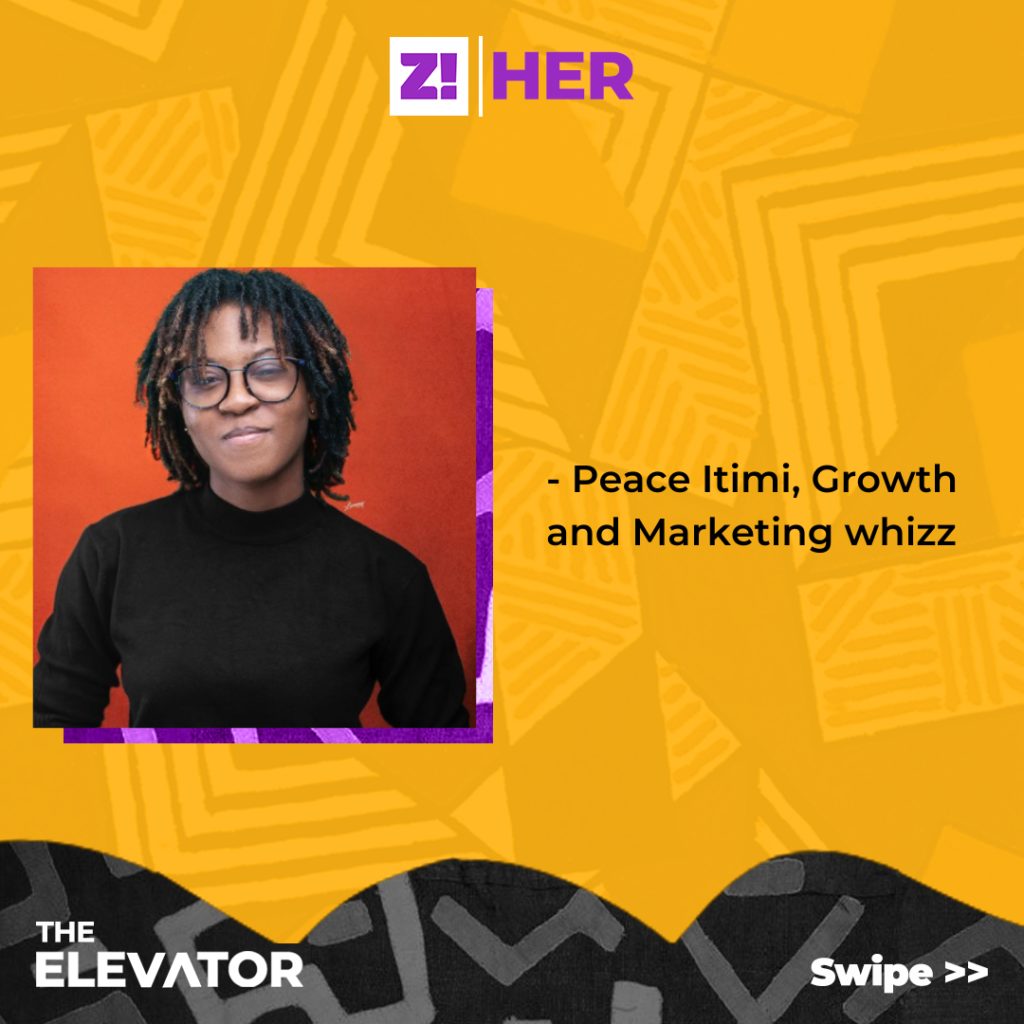
Peace wanted to become a medical doctor but ended up studying biochemistry, however, she has never had to use her degree to get a job. Peace Itimi is a 25-year-old digital and growth marketer. In today’s episode of The Elevator, she talks about her journey from becoming the first Google Student Ambassador at her school to becoming a digital and growth marketer that works with multinational companies.
What did you want to be as a child?
When I was growing up, I wanted to be a medical doctor. My brother was studying to be an engineer. It made sense for me to study medicine so my mom would be “mama engineer” and “mama doctor”.
How did that change?
I applied to study medicine at DELSU but I got medical biochemistry. So my mom was like, “Yeah, go do it. You would transfer to medicine in 400 level.” The worst-case scenario was that I would graduate at 19 and still be young enough to start medical school from scratch.
I studied biochemistry for one year and in that year, all the science students took their courses together. In the first semester of year 2, I got the form to transfer to medicine, but there was no space in medical school for new students. I was depressed about it because I already saw myself as a medical doctor. That’s how I started writing. I was on Twitter one day and I saw someone say they had a blog. I was curious, so I visited her blog. I scrolled to the end and saw that it was a WordPress blog. It also said, “click this link to create your blog”. I did and started posting my writeups about my life on my blog.
About a year later, I went to an event in Benin City. A friend walked up to me and said, “Oh my God, I’ve been reading your blog.” I was pleasantly surprised by that. He thought I was cool and techie. Then he said, “There’s this thing called Google Student Ambassador (GSA) programme — I think you would like it. ” I didn’t think I was a techie, but he connected me to the ambassador in Uniben, Alex, who said he would let me know when the application opened the following year.
The next year, I applied and they picked me. I became the first Google Student Ambassador in DELSU. This was in 2014. Shortly after, we went for a summit where Google representatives spoke to us about programming and digital marketing, and I fell in love with digital marketing. We went back to school, did some lessons and started training people. When I graduated, I said to my mother, “This your medicine plan no go work.“
What happened after?
As a GSA, I taught people digital marketing. Someone told my pastor that she had a small business and needed someone to run ads for her. My pastor reached out to me.
I charged her ₦5k. The gig ended as a disaster because the results I gave her were likes and impressions, but she wanted sales, not metrics. In hindsight, I could have done better at converting those impressions to sales.
My first full-time job was at a US company called GTech designs. A friend of mine worked for them as the designer developer and needed someone to handle marketing. I remember wondering if I was going to get the job because of my medical biochemistry certificate. I imagined she would ask for my CV and be displeased with my degree. But when we had the interview, she didn’t ask me anything about school. I don’t think she cared about whether I went to university or what I studied. She just asked me about marketing and writing, and a sample blog post. I got the job and it paid ₦25k monthly.
I worked there for a while before getting another job at WebCoupers. I moved to Lagos to work at WebCoupers for my NYSC. There, I developed strategy and executed campaigns. I handled client meetings, SEO & social media. It was a lot of work. While I was still working there, my friend, Joyce and I created our agency called Rene digital hub. We helped businesses with digital marketing and content strategy. It helped me develop entrepreneurship skills. We ran it from 2016 to 2018 and eventually decided to dissolve it because we didn’t give the business the attention it needed due to our full-time jobs.
What happened next?
I went deeper into digital marketing. I worked with Imaginarium Marketing Communications and with Kora Pay, as Head of Marketing. Eventually, I decided I wanted to do something different from digital marketing. I chose growth marketing because it was similar but more technical and I realised that a lot of international companies were looking for growth marketers to scale their regional branches. I researched the role and took some courses. I also knew I wanted a 100% remote job and a job that paid in foreign currency — mostly because I want to travel more.
I had a friend I used to visit at QuickCheck in ParkView Estate Ikoyi. Seedstars, a global venture capital fund, was also in that estate. I was interested in what they did, so I went to their website. I remember reading about their work that evening and thinking, “This is exactly where I want to be.” I went to their website and found the role for growth marketing lead in Africa was open. It took me four months to get the job — from the application, the technical interview, a case study, assignments, another interview to the offer. I resumed in February 2020.
What was working at SeedStars like?
Working at Seedstars has been the best time of my career. We did impact programmes for people and the culture of the company aligned so much with my vision for myself. The challenges pushed me to be better at my job. I met new people and worked on projects across the continent. I had colleagues in different countries. Now, if I ever wanted to travel to Cairo or Colombia or anywhere, there’s most likely someone there that I could reach out to. It was an amazing experience, and I would always remember it.
Right now, I enjoy making YouTube videos about brand marketing. I have been putting out videos since 2018, and I’ve seen the impact. I don’t have up to 10k subscribers, but I’m grateful for the kind of jobs I’ve gotten from it and the kind of people I’ve met. It’s something I want to do for a long time.
What lessons have you learned along the way?
My favourite lesson of all time is to do it afraid and don’t let the fear of looking stupid stop you. I have gotten so many rejections in my life. They hurt, but I’ve learned to move past them to the next thing that might be a yes. Sometimes, I find that the things I least expect to work out end up working out fine.
I always ask for help. I am always willing to reach out to someone to talk me through a particular issue. I also take my time to research the problem and possible solutions. If it’s something I need to outsource, I do that as soon as I can. As long as it’s something I want to do, I will find a way.
Who are some of the women you admire?
Adaora Mbelu. There was a point in my life when I had a bit of identity crisis, especially because of how I dress. Looking at Adaora made me know that there is nothing wrong with how I dress. I did a lot of training in 2018 where I wore feminine clothes that made me uncomfortable. But then I saw pictures of Adaora on social media rocking suits to board meetings. I thought, if Adaora can do it, then Peace Itimi can.
What’s next for you?
I think I am leaning towards entrepreneurship for now. I will always be interested in solving problems and easing processes for people.
The Elevator is a limited Zikoko series that details the growth of young successful Nigerian women. We tell their stories every Tuesday by 12 p.m.
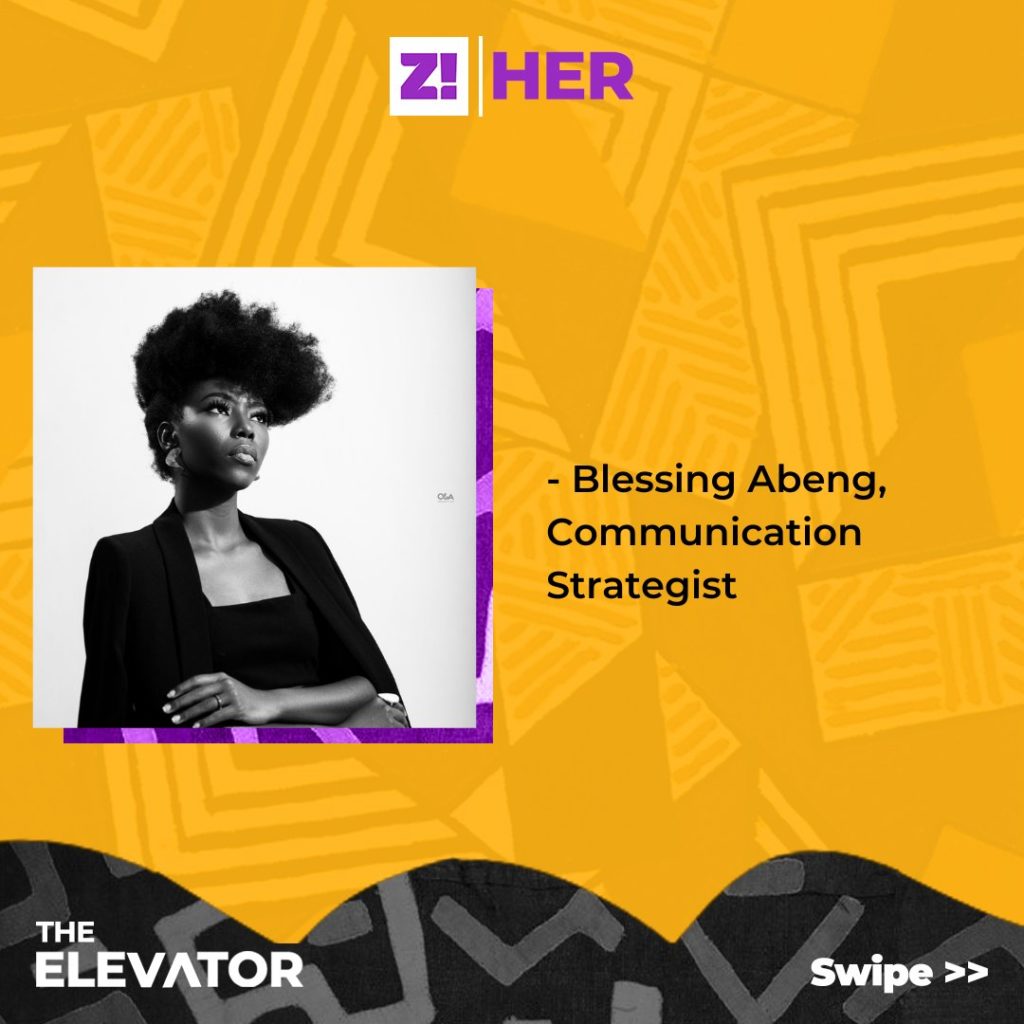
Blessing grew up dreaming of being a medical doctor because she wanted to save lives but while studying for her first degree as a Biochemist, she discovered that Medicine wasn’t the only path to that dream. Blessing Abeng is a 26-year-old Communications and branding expert who works centres community building. In today’s episode of The Elevator, Blessing talks about her journey as a communication strategist with a goal to impact the lives of those around her.
What did you want to be as a child?
A medical doctor.
How did that change?
As a child, I was really enamoured by the idea of being a medical doctor. I liked the idea of being able to treat people. My parents got me lab coats when I was a kid. I read Ben Carson’s book like my life depended on it. I didn’t want it to be a basic medical doctor — I wanted to be a neurosurgeon because there weren’t many neurosurgeons in Nigeria at the time. It was like a superpower to me. Shonda Rhimes’ Grey Anatomy also played a part. Christina Yang was my favorite character — I loved how passionate she was.
In secondary school, I was in art club. I featured in plays. I was always part of the team that represented our school in writing competitions. I was also in science club. I also joined the school team for Mathematical competitions. When it was time for us to pick between science and art class, my choice was science but my teacher was not having it. Eventually we had a conversation with the principal, who agreed that I could do both science and art classes.
When it was time for me to go to university, my dad thought I was too tiny to go to the US alone so he suggested I go to Covenant University first to study biochemistry.He said when I was done, I would now go for my medical career. In my head, I was like Medicine is a long path. It didn’t make sense that I would finish biochemistry and go for another four years plus of schooling. One day, I was in one of my Biochemistry classes and I just knew that this wasn’t for me. The teachers didn’t seem interesting to me. It felt like there was nothing more to it and being a doctor in Nigeria can be very limiting. So I started asking myself of other ways to save lives.
One of my friends who knew I was a writer asked me to try writing business plans and I did. Most of the business plans I was seeing at the time were boring and looked similar so I used to add my own creative flair to it. I had such cool ideas for marketing and positioning. There was this club in Covenant University where we learned business writing. The facilitator would give us cool tasks like pitching products to attract investors. That’s how I wrote my first business proposal and it became a thing I did.
One day, another of my friends reached out to me. She said, “This thing you do, people make money from it. How about you try going to a branding school called Orange Academy?” I looked it up and I liked what I saw. I planned that it would be the first thing I did once I finished school.
During my NYSC, I was working hard to get the money required for the school fees. I asked my dad but he said I wasn’t going to be a doctor so why would he pay for that? I started looking for jobs in Lagos so that I would be able to go to the school there. I knew my dad would not let me move from Abuja to Lagos except it was for educational purposes so I knew I had to get a job. When I did, I was able to negotiate with my boss that he would pay a percentage of my house rent. That’s how my father let me move.
What was your first job?
I was looking for social media related jobs. At the time, social media was just getting popular in Nigeria. This was around the time where people still used to greet each other good morning on Twitter and tweet fights were sweet. I was good at mine so I thought managing a brand’s social media couldn’t be that hard.
I found a couple of openings and I applied. One day, a guy called me that they had received my CV and wanted me to come for an interview. I remember taking a bus from Imo state, where I was serving because I couldn’t tell my father where I was going and I couldn’t afford a plane ticket because I was still saving for branding school.
When I got to Lagos for my interview, me and the guy were just talking like we have been friends for a while. Personally, I have never had a bad interview. I always end just gisting with whoever is interviewing me because the worst that can happen is that they will tell me no and I would move on. Funny enough, I have never gotten a ‘no’.
At the interview, the guy told me about his company which was giving an afropolitan angle to things happening around the world. He was very passionate about changing the African narrative. He was doing that through films but I knew they could do more. He was so impressed by my ideas. He said, “Your vision for my company is bigger than what I even have in mind.” He promised that if I did well within the next six months, he would promote me to assistant manager. It felt good.
I took the course at branding school. I did really well at it that many agencies wanted to hire me afterwards. I kept getting better at my job and I realised saving lives doesn’t just mean holding somebody’s heart or brain in your hands. Business is a source of people’s livelihood. If you can help people’s businesses scale, you are saving lives because you are helping people make a living and improving the quality of their lives. Branding school changed my mindset and afterwards, I pursued branding and communications like my life depended on it.
When I joined the team, I was the only woman and I thought my colleagues were mad at me for coming from nowhere but we did amazing things together. That’s how I got my first business client.
Tell me about it
So at my job, I was the presenter, assistant manager and the business development person. I was to interview Lemi Ghariokwu, who was the album art designer for Fela for our program. Before the program, I researched him to know more about him but I found that he didn’t even have a website. All the conversations around him on the internet were by journalists. I found him really interesting for someone as old as he is. The day we met, I asked him, “Why don’t you have a website?” It led to a long conversation about how he had been scammed in the past and I convinced him to try again. My partner, who I am now married to bought him a domain name and web hosting. We didn’t ask for anything. I became his handbag. He took me everywhere and introduced me to a lot of people. Later when I was focusing on my business, all those people became my clients.
That’s interesting. What was your first project?
It wasn’t my first per se considering that I had done a lot of things at school but it was the first time my company did a website for a client.
Nice! Tell me about your company
It was a branding and communications company. I wanted to register it as a publishing house but my dad advised against it. He is a businessman so he liked to give me advice on how best to navigate issues. He advised me to register the company as a communication company that could do digital training as well as publish. Then, the only thing I wanted to do was publish and I did. I wrote my first book and published it as an experiment. I like to experiment with things I don’t fully understand — that’s how I learn.
I knew that I had a lot to learn as a business owner. I wanted to grow, which is why I started looking for jobs. I even told my first boss that I would be using his company to practice everything I learned from school and he was super excited about that. The company eventually went defunct after I left. They couldn’t find someone who could replace me and so the company lost that direction. I feel bad because I think I should have groomed someone to take over for me.
I moved on to work at an agency and I learned so much from that experience. That was the period a lot of people wanted to work with me but I didn’t want to commit to just anything in the name of side hustle so I decided to test my company. My company offered the same services that the agency I worked at offered — branding and communications for businesses but instead of going for big clients like the agency did, my company went for smaller brands.
My friend who was a top staff member at a big company asked me to take over the communication manager role at the new company he was setting up and I did. He also set up a microfinance bank and I handled communications there as well. For my company, I ensured that I didn’t hire full time staff so it was a flexible schedule for everyone. It was a great experience — I put all the things I had learned over time into my work. But after a while, I got bored and started toying with the idea of becoming a housewife so I could chill and travel.
LOL. What happened next?
In 2019, I quit every single thing and focused on my business. In under one year, I built the business of my dreams. We had a rule where we would never take more than a certain number of clients so we can give the best possible services to the brands under our clientele. It was really successful. People reached out to me to join their teams but I really didn’t want anything else at the time.
But then towards the end of 2019, Disha reached out to me and I liked what they had planned so I joined their team. I became the Co-founder and Chief Marketing Officer of Disha. Before I joined Disha’s team, I made sure I had set my business up in a way that it could run without me. I automated a lot of processes and changed the services we offered. Instead of a hands on service, we offered short term services that didn’t require a lot of our attention. For example, instead of taking on content creation for a brand, we would create content strategy plans that they could employ someone else to execute.
A few months later, my friend Maya, who had been chasing me for two years to work ]with her, told me about a social project she was working on. I really loved the idea and I had never worked in nonprofits before. I thought it would be interesting so I joined the team at Ingressive4good as Director of Communications, which is where I work currently. Unfortunately, I had to resign from Disha.
Your journey has been exciting so far. Do you have a favorite project?
One of my first loves was Heritage Bank. It was one place where I broke rules and did things brands weren’t doing at the time on social media. This was around the time Jon Snow just woke up in Game of Thrones. I had a fun idea to use Game of Thrones to teach people about their finances. We did that for a while and it trended.
I also really loved Disha. When I joined the team it was easy to build the business because I loved the business, I loved the idea and I loved the people in the team. In the short time I was there, I was able to help the business grow from 1000 users to over 20,000 users and increase revenue by 5,900%. It was such a lovely company that even the users knew that it was a gift.
That’s amazing. How do you deal with stumbling blocks along the way?
I am never afraid to ask for help. I also borrow from other industries. When I have a problem, instead of researching that problem, I could read other things like architecture or engineering. I realised that the most innovative solutions came from marrying two entirely different things together.
What have you learned so far?
My favourite hack to set structures that ease your process. For example, whenever I have a bad experience with something, I would create a structure to ensure it doesn’t happen again. I also do this when I have a good experience — i replicate it and make it even better. That way, I am not brainstorming every time I have to do something similar. I do that by documenting the process every step of the way.
Are there any women that you admire?
I like Ellen DeGeneres. I think she’s a marketing genius. I know she has a team but I know she also has to sign off on a lot of things and I think her campaigns are always super interesting.I also love Shonda Rhimes and Chimamanda. They share something in common, which is independent thinking. They can think for themselves irrespective of whatever backlash they’re going to get. I like women who are fearless and confident. That’s something they all have one thing in common.
With everything you’ve done, what’s something you’ve learnt along the way?
One of my biggest lessons has been about consistency. One day during the lockdown, after brushing my teeth, I had a light bulb moment. I realized that when we forget to brush our teeth one day, we don’t associate shame with it and stay away from brushing our teeth forever. Instead, the next day, we brush harder and that is consistency.
What’s next for you?
One of the key things I’m focused on is finding ways to directly impact members of my community beyond what I have done now. I’m passionate about ensuring every single person I meet is better than when I met them. I often think of how I can help the people around me and right now, I’m thinking of pivoting my communications careers towards helping individuals with personal branding. I can’t wait to see what I come up with.
The Elevator is a limited Zikoko series that details the growth of young successful Nigerian women. We tell their stories every Tuesday by 12 p.m.
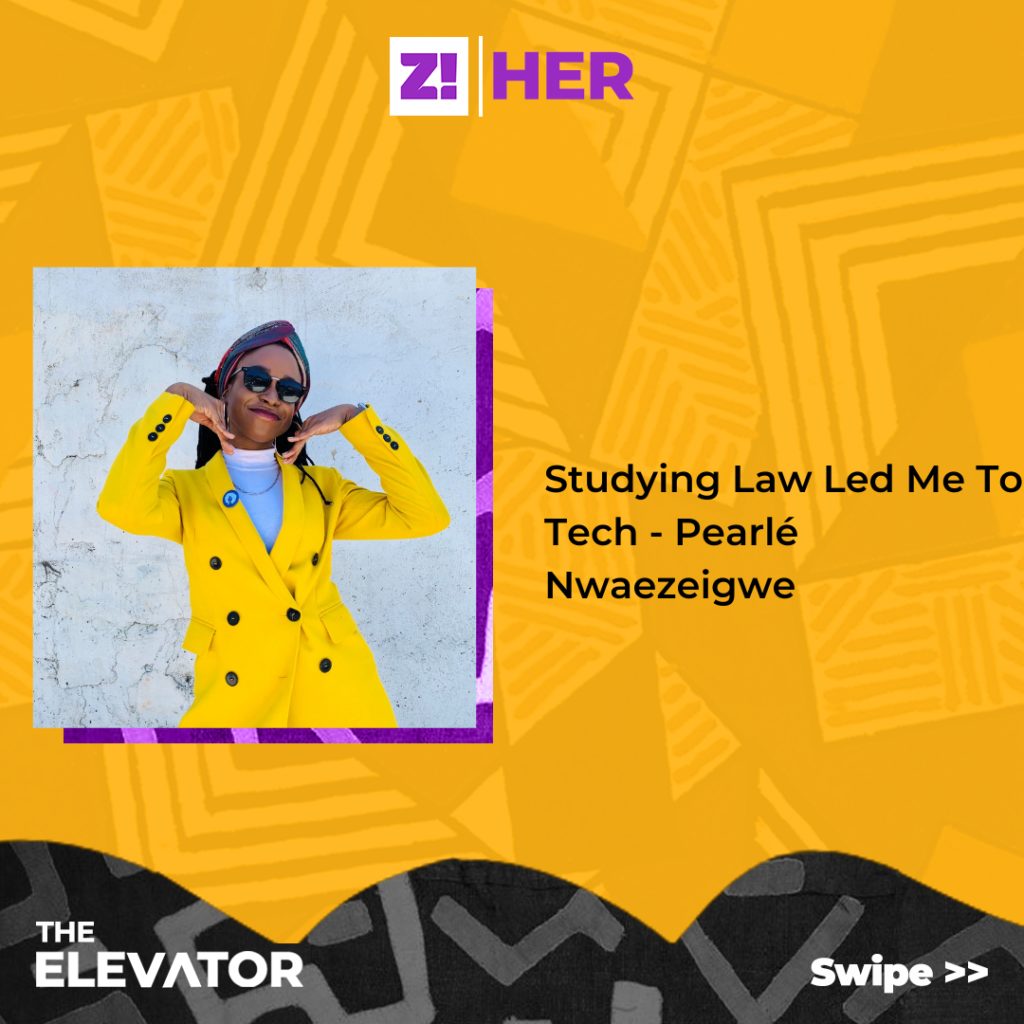
Pearlé Nwaezeigwe always knew she wanted to be a lawyer, but she did not know that law would lead her to tech. Now at 26-years-old, Pearle works at TikTok, where she creates policies that protect TikTok’s African users.
What did you want to be when you were younger?
A teacher. I was obsessed with teaching, so I would steal chalk from my class and take it home to teach imaginary students. Down the road, I still plan to be a professor.
I also wanted to be a lawyer and was inspired by my dad, who’s a lawyer. He would stay up all night reading big books, and I wanted to do that, to advocate for people and be a voice to the voiceless. I wanted to be the attorney general for the Federation of Nigeria. I wanted to do something very ambitious, and I thought studying law was the way forward.
So, you studied law in university?
Yeah, I did and it was intense but at the same time, I knew I was meant to do it. I am grateful I went to University of Lagos because that’s where I joined the Mooting Society. I would go for competitions, mock court cases, and I got to travel to the US for conferences. This exposed me to things a lot of my classmates were not exposed to, and I realised that my life was beyond Nigeria. Unilag’s hustle spirit helped make me who I am today.
What was your first job?
I was an intern at Chocolate City. I was interested in intellectual property law, so my aunt spoke to the general manager of Chocolate City at the time, and I got an internship. It was an interesting experience. Sometimes you would come to work and MI will be beside you writing songs. I was there for a couple of months.
Nice. What did you do there?
Well, it was a lot of reading contracts and trying to be sure that artists didn’t get screwed by companies. Also, creating contracts that kept artists comfortable and engaged. I worked with a lawyer who walked me through the process.
My experience at Chocolate City helped me see the deficiencies in the music industry and how much of a long way we need to go to protect artists rights. It was really exciting going back and forth and feeling like I was a part of something. Initially I was not supposed to get paid, but they were really impressed with my work ethic, and they paid me. I also got VIP tickets and backstage passes.
What happened next?
Law school. Law school is a place you can’t survive without resilience. The program, the grading, the back to back exams, was a lot. I stayed up long nights studying for the bar exam and made really good friends, but I won’t wish law school on my worst enemy. You have to be sure you want to study law because Nigerian law school is not for the weak.
After law school, I worked at a law firm and I didn’t really like it. Usually, a lawyer is useful at any firm they find themselves in, but the law firm I worked in was very litigation centric. I was at the court all the time filing documents that did not make sense. After I left the law firm, I went to get my masters in International Law and International Human Rights in UC Berkeley. I was 24.
What was UC Berkeley like?
Well, I wouldn’t say it was an Ivy League university, but our major competition was Stanford. It was nice being in that space and having classmates that have worked in major companies. The school was in Silicon Valley so we were surrounded by Facebook, Google and so many tech companies. My plan when I got there was to work in the UN, but I found myself doing research on the impact of human rights on technology.
Do you think Silicon Valley had anything to do with that change?
Definitely. UC Berkeley is known for human rights, civil liberties and technology. For my project, we collaborated with Microsoft and Google. They wanted to know the impact their products were having on human rights, specifically on children’s rights. I was able to understand that there was an intersection of human rights and technology. After my degree, I got my current job and moved all the way to Ireland.
What job, and why Ireland?
Well, I work for TikTok where I create policies on behalf of the company to ensure that the rights of users are protected. My focus is to create policies that protect African users on the African continent.
On why Ireland, Dublin in Ireland is like the Silicon Valley of Europe. TikTok has its own office here and most of the African activities in these tech companies usually happens in Dublin.
How Do You Protect African Users at TikTok?
We create policies on behalf of the company to ensure that while people can say whatever they want online, they cannot abuse that power and spread homophobic, sexist or racist content and fake news. So, we create policies that protect people’s freedom of expression and safety. Those are the kind of hard things we have to do on the policy team— we ask, how do we create policies that protect Africa?
Were there any major stumbling blocks you faced along the way?
One of my challenges was getting this job. A whole year after I finished from UC Berkeley, I was searching for a job. I went for more than thirty interviews with all the big companies like Facebook and Twitter. The rejections really affected my self-esteem. People who knew me kept asking why I did not go into legal counsel or work at a law firm and do what everyone else was doing, but I just knew that tech policy was what I wanted to do. I realised that people these tech companies hire are those that have a lot of experience and then there was me who was fresh out of graduate school. So, I went to a lot of conferences and studied my ass off because I had to prove myself. One thing that helped was that I was also very good at cold emailing. There was nobody I would reach out to that would not respond — I even got to speak to the vice president of Twitter.
Well, I ran into her on an elevator during a conference, so I decided to tweet at her. I also mentioned in my tweet that they had a job opening, and I really wanted to join the team. She sends me a job link and I told her I had already applied for the job and I even tagged the job recruiter saying I was waiting for his reply. The next day, I got a call from the recruiter. He said, “the vice president of Twitter sent me a dm and told me to have an interview with you.” Unfortunately, it was difficult to get a work permit in the US because my role wasn’t that popular and the country didn’t rate me. I cried.
How were you able to move from that?
I had come too far to quit on myself. There were very few black women in these roles and I did not want them to remove one less black woman, so I kept going. I wanted to succeed in that one thing people thought I was not going to be able to do.
I also had other challenges, like my health. They found lumps in my breasts and I was dealing with severe migraines. Coupled with the fact that I was so far from family, it was very hard.
What are some lessons you learned in this journey?
Well, I learnt that every dream is valid. Society wants you to be one thing, but you can be so many. You are allowed to shift and be whatever you want to be. Another thing is that you have to believe in yourself. It is easier said than done, and it is hard to not compare yourself with others, but I had to snap out of it. Also, I learnt to be extra. I do not want to be in a crowd and blend in. I always want to stand out. Lastly, you need to learn balance. You need to balance friends and school and work and life in general.
Are there any women you look up to?
Beyoncé. Her work ethic is amazing and she keeps beating her own standard. She reinvents herself every time and she is black excellence personified. Before my interviews, I would play a Beyoncé song and take in some of that energy. She goes 100 and inspires me to be extra. Another person is my mum. My mum taught me humility and that had helped me get some opportunities I know I would not have gotten. She is like my best friend. My headmistress was also important to my development. She taught me almost everything I know when it comes to creativity and allowed us to be expressive. She made me feel like I could do anything if I put my mind to it. She passed away when I was 10 from cancer, and it was very hard for me.
What is something you are really proud of yourself for doing?
When I was in Unilag, I founded the first Model UN conference in Lagos. Trying to raise funds and asking people to register was very rocky. I also had to train my friends on how to be directors and secretary generals etc., but it all paid off. The dean was super impressed and gave us three days off from classes; he also gave us free WiFi. Now the conference is six years running. The second thing is that I wrote a book about my life last year. I am really proud of myself for doing that. I plan to be more intentional about promoting the book this year.
How do you rest with all of these things going on?
I rest by sleeping. I actually do not joke with my sleep and I keep my weekends open for me. Sometimes I play loud music and just dance in my living room.
Nice! What’s next for you?
I have always had structure in my life, but for the first time, I can say I do not really know what is next. What I do know is that I am destined for greatness.
The Elevator is a limited Zikoko series that details the growth of young successful Nigerian women. We tell their stories every Tuesday by 12 p.m.
The series was initially to run through just the month of March, but we decided to extend it to April, and maybe even May. So, here’s what happened in March incase you missed it.
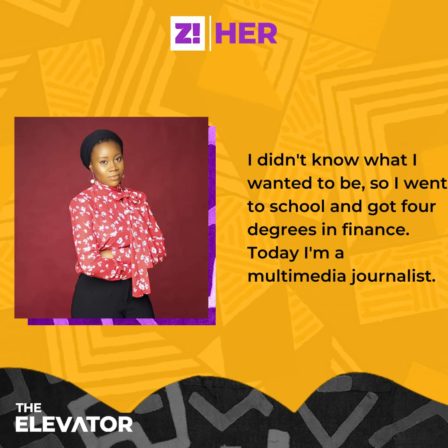
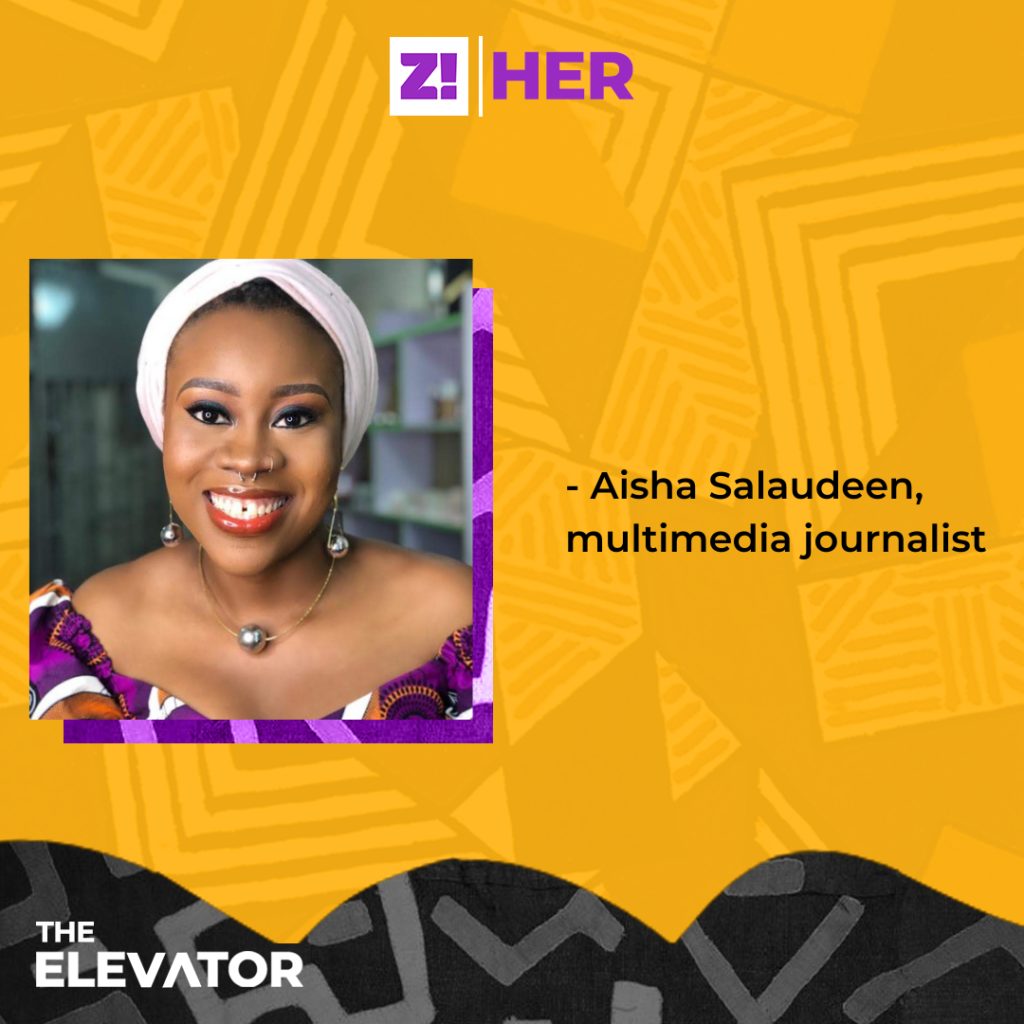
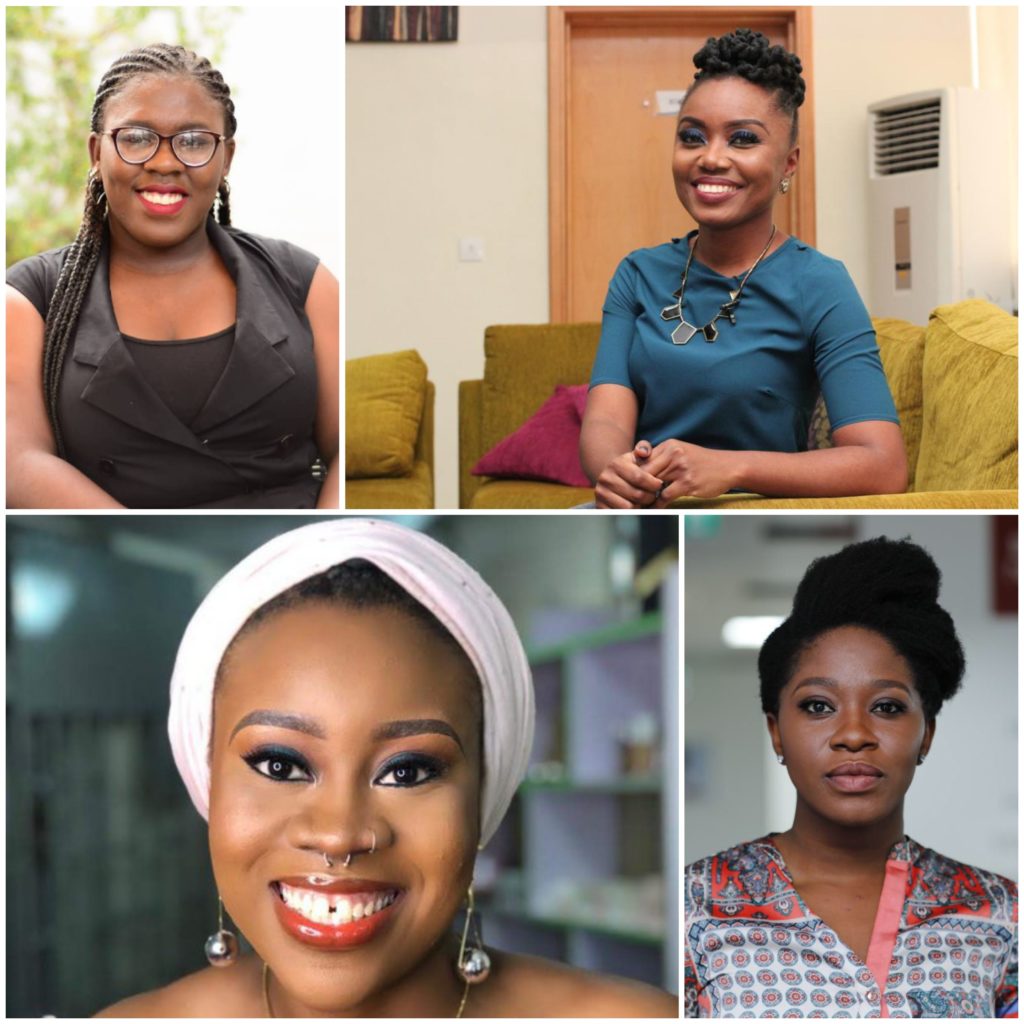
In this story, Aisha Salaudeen talks about how she was uncertain about her career path. She then channelled that uncertainty into getting more degrees. She talks about quitting her job as an account and pursuing journalism.
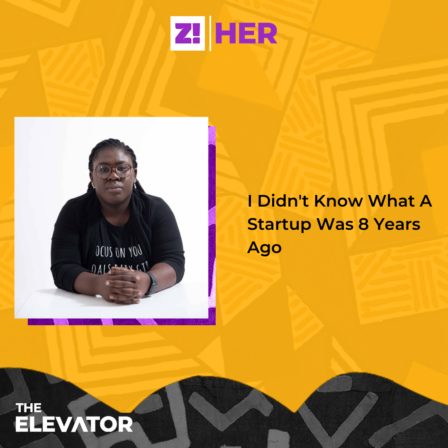
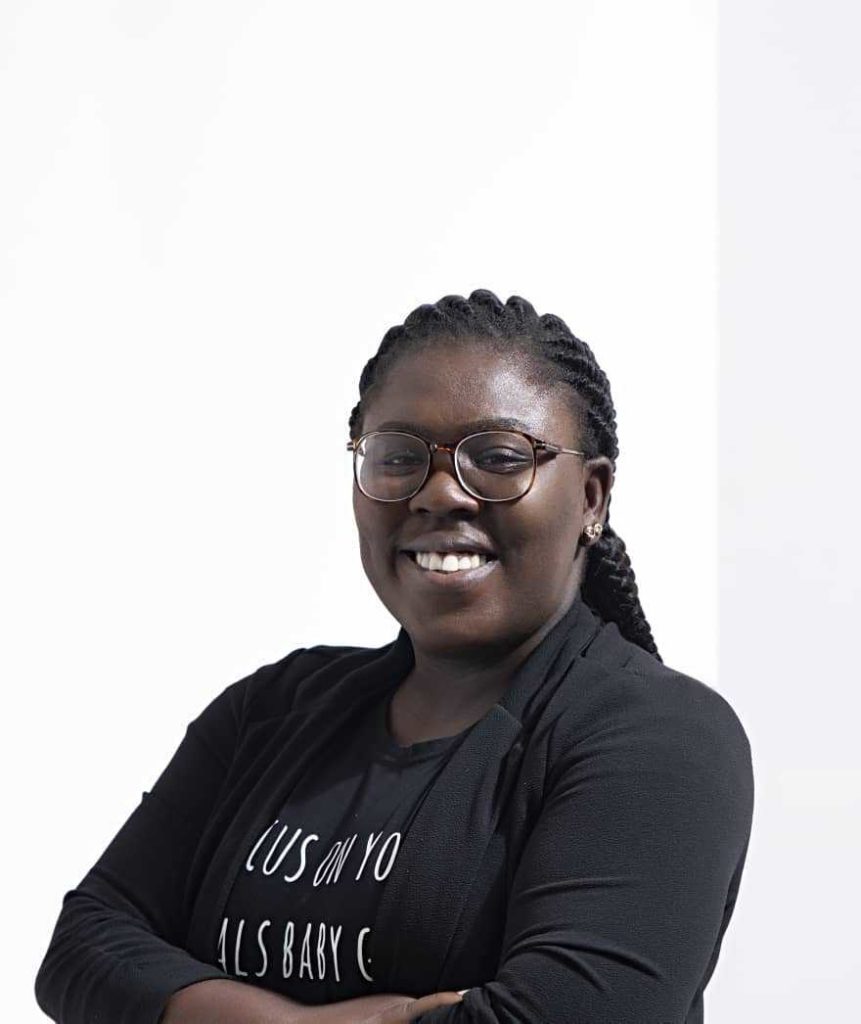
PiggyVest is one of the largest online saving platforms in the world. Who would have thought that 8 years ago, one of its cofounders and the COO, Odun Eweniyi did not even know what a startup was. In this episode of The Elevator, she talks about joining her first startup when she was 19, and all the ones that failed before PiggyVest.
Sometimes, things do not always go according to plan. Arit Okpo had a 25-year plan that included her being the Minister of Education. This story talks about how a call from Mo Abudu and a lot of opportunities helped her become a leading Media Personality.
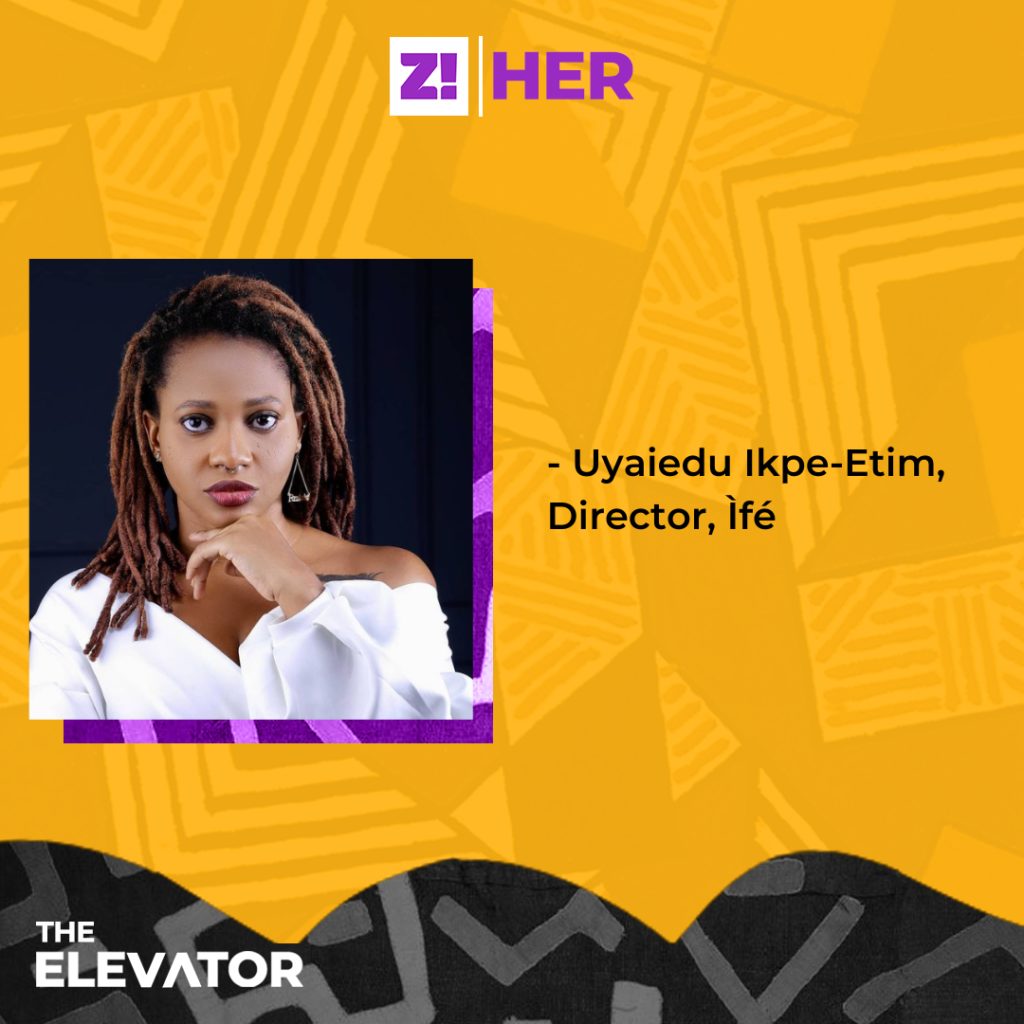
Have you ever had the urge to just fix something? Well, Uyaiedu Ikpe-Etim had that with filmmaking. She was tired of watching films that portrayed women as one-dimensional characters, so after working on a film set at the age of 19, she decided to tell the kind of stories she wants.
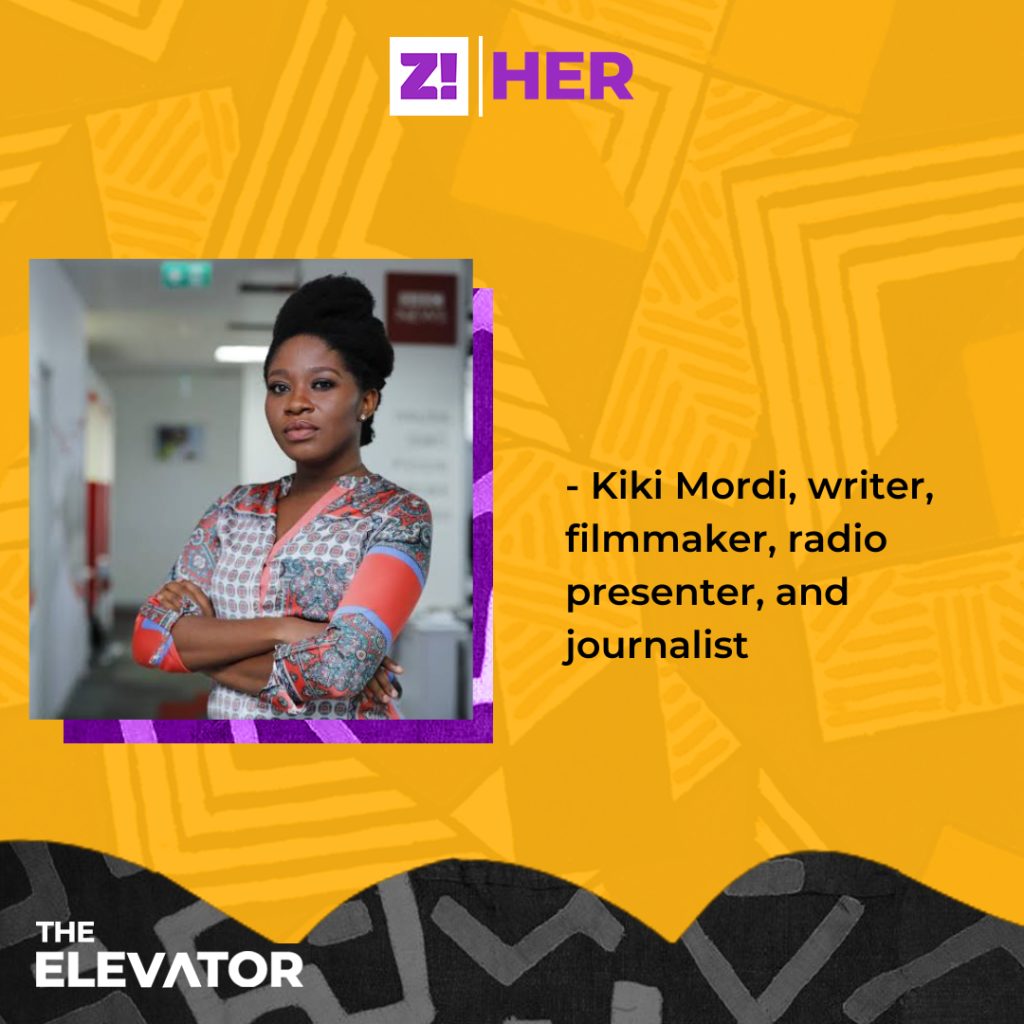
In this episode of The Elevator, Kiki Mordi shares her experience with sexual harassment in University and how it led to her dropping out. She also shares how one dm on Twitter led to her being an investigative journalist.
The Elevator is a limited Zikoko series that details the growth of young successful Nigerian women. We tell their stories every Tuesday by 12 p.m.
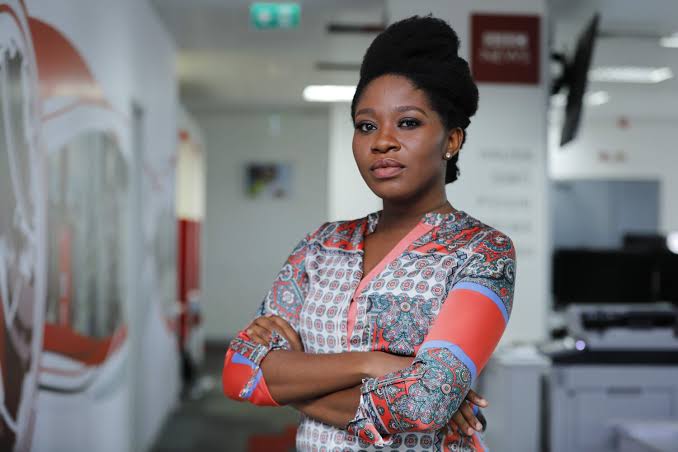
After dropping out of the University of Benin where she studied biochemistry, 29-year-old Kiki Mordi went on to become a radio presenter, TV producer, presenter, writer and lead investigator in the Emmy nominated documentary, Sex for Grades.
What did you want to be when you were younger?
A doctor. I like doctors. My eldest sister got sick a lot, so we were always at the hospital. The doctors I saw, with their white coats, had some kind of charisma. They looked really important, and I wanted to be as important.
Did you study medicine at uni then?
No, actually. I studied biochemistry. In Nigeria, what you want is secondary to what is available to you and that’s what happened. People told me not to go for medicine because it would be hard to get admission, and at the time I was applying, I was also second-guessing my choice for studying medicine.
Many things started to make studying medicine look bad. As I heard stories of medical students who committed suicide in Uniben, medicine started to look less and less attractive. I also didn’t consider myself mentally strong enough to handle more challenges — I had just lost my dad. I decided to go for the easier option and for something smaller. I was going to study pharmacy, but I ended up with biochemistry.
I know you wanted something smaller, but why pharmacy?
I felt it was a saner aspect of medicine. You still get to help people but you don’t have to deal with the blood or the horror. Honestly, by the time I was in secondary school, I didn’t think I wanted to be a doctor anymore. I only went into the sciences because I had good grades and the guidance counsellor in school told me I would be good in the sciences.
What was university like?
It felt like I was just launched into this flowing river channel and I wasn’t paddling; I was just letting the river decide where I was going. When I started university, I met new demons that I had to battle: friendship, love, heartbreak, sexual harassment, misogyny, patriarchy, inequality.
It was substantial and occasional growing up. The misogyny was something that I could easily forget because I was protected by layers and layers of privilege, but out there in the real world, everything was thrown in my face. I learned you have to take a stand, find a place and own it. In the course of fighting various battles in my university, sexual harassment being one of the primary headlines, I dropped out and found myself a radio job.
How exactly?
I was really just bored. School was terrible to me, and I was depressed. I didn’t care about anything they wanted to tell me in class and my classroom reminded me of the lecturer that was making my semester a living nightmare. I was just floating around and looking for hobbies. One day I followed a friend to a reading audition. At the audition, the head of the programme said I had an interesting voice and told me to try out. I tried out and I got the job. It was not a paying job, but it was a job nonetheless. It came at a point where I wanted to leave Uniben and go back to Port Harcourt where I grew up, so since I had something new and exciting, I didn’t have to go back to Port Harcourt.
Did you like the job?
I fell in love with it. I would sleep in the studio, not because they were overworking me, but because I was overworking myself. I wanted to do more, and learn more. It was all so exciting to me. I’m so grateful because the team gave me a chance. I had spoken to people who worked before me and it took them a while to get their own live programs, but I think they just found me exciting, and were also affected by my excitement so they gave me my own live program.
What was it about?
It started out as a weekend program because I was not experienced enough to handle weekdays, but eventually, I started working weekday shows. Sometimes when people were out sick, they asked me to come up with a program or read the news and I would happily do it. I did that for about two years until a new radio station came into town and poached me. They offered me a salary of 100k. So I went from zero to 100k.
Wait, even with all the excitement and shows, they never paid you?
They didn’t. They kept promising that they would start me off with a salary of 50k, but it never happened. I wasn’t so bothered because I had started making money from voiceovers. Brands would come and specifically ask for my voice, and I was getting paid about 15k. Then I found out I could get paid 150k.
Wow. They were really cheating you.
When you’re new in the industry, nobody wants to tell you the real amount you can be paid for things. Even now, people still try to cheat me. It’s Nigeria, we’re all trying to maga each other.
Okay, so back to your new job
When the offer came, I didn’t even think twice before accepting it. It was a new space, and we were the ones going to grow the radio station. The ideas were going to be ours, and we would carve out what we wanted. I was sold. It was the most seamless team I had ever worked with. We were all really good at different things. They put us in one location where we were constantly bouncing ideas off of each other. Everything from the radio programs to the structure was things we created by ourselves. One of the things that made working here so great was that we were all the best. I had worked in offices where I was so obviously the best, and it felt very annoying. It was a very beautiful three years for me.
What did you talk about on the radio?
I could talk about whatever I wanted, and I found myself always talking about women’s issues. I had things I was passionate about like startups, tech, and women’s issues. Women’s issues, however, really stood out. It was one of the most listened to radio programs. It helped me to build a strong voice — people always wanted to call in and challenge me on my own radio program. They always wanted their voice to be louder than mine.
How did you not break down with all of that?
It could be because I was more excited than anything, or maybe the comfort I got from the fact that I had a lot of control. If I didn’t like what they were saying, I could control it. The control gave me safety.
What happened next?
I had to leave the station. I had outgrown the city. The only reason I came to Benin City was because of school. So, I took a leap of faith and decided to try new adventures. Plus, we no longer had competition. We were the best, we won all the awards and it got boring. I wasn’t even the only one that left. A lot of us from the pioneer set did too, and I think that is the downside of hiring very passionate, talented people. If you do not keep them excited all the time they’d leave you and run away. It was a great working condition, but I was getting bored.
Well, since I was promoted and was in charge a lot, I found myself jumping from one place to another, trying out different things. I tried to see if I could make money off of social media. I have been on social media for about 12 years, and to an extent, I started to know how it worked. When businesses approached for adverts for radio, I would talk to them about brand identity and social media. I worked with a graphic designer, and we were a really strong team. We helped some start-ups polish their business. I enjoyed working on that. I always knew it wasn’t only radio I could do. I was always a hustler.
Does that mean radio was not your first-ever job?
It wasn’t. I used to write. I did a bunch of writing gigs. I didn’t keep track of all the things I wrote for people. I just know I did research for newspapers, wrote jingles, and got paid chicken change. Sometimes 1k. I could have contributed to an article and when the article dropped, I wouldn’t even know. I wasn’t following up with it. Radio was my first actual thing. The writing was just money for snacks and transportation to the job that didn’t pay me. I also used to buy things from Lagos to sell in Benin when I was a student to get extra pocket money.
Why do you think never pursued writing as much as you did radio?
I didn’t pursue it at the time because it did not sound like something that was supposed to fetch money. I just thought it was something I did when I was bored, excited or heartbroken. It did not look like something that was a lucrative career path. However, I’m trying to write more. I had my first writing attributed to me last year. It’s like now that I started writing, more opportunities started coming. I truly envision that the bulk of this year will be split equally between writing and filmmaking. Less of radio and less of TV. I’ve always found myself jumping from one place to another.
Where did you go after leaving radio?
I found a radio station online called women’s radio, and one of the engineers that worked on our radio station was the one that drew my attention to it. He said I would be a perfect fit for the place. So I reached out to them and sent out an audition tape and in a couple of months, I moved to Lagos. It’s funny because they had just promoted me at the time I had to leave, and that made me almost not leave.
What was it like working in Lagos?
In Benin, the amount I paid for a three-bedroom apartment was what I paid for my one-bedroom apartment in Lagos. It was like I was starting afresh and finding my own voice, but this time it wasn’t by accident. I would leave my house around 4 am in the morning, and not return till around midnight. My neighbours used to gossip about me, about the kind of work I did.
Was the job worth all of the Lagos stress?
Yes, it was. I had a lot of doors opened up for me, and I have my boss to thank for that as well. She saw that it was not just a job for me, that it was more than that. It was special. So, when people needed someone for jobs, she would confidently recommend me. She just wanted me to get out there, open my wings, and fly. It was not coming with money at first, but it was part of the reason I was able to encounter organisations like United Nations, UN Women, and I started getting more and more visible in women’s spaces while building a network of women who saw me as a person that was relatable.
How do you mean by relatable?
We did a survey and found out that women do not trust the media, that they do not trust the press. Luckily, they saw me beyond being a journalist, beyond someone that just wanted to take their story and use it for clicks and views. They saw me as part of the community, and I was. I was a woman that went through the same things they went through. I would happily share my story, and talk about taboo topics. I decided to grow that network on Twitter. A lot of people used to dm me. Someone from the British High Commission once messaged me about a women’s focused event they thought I would be a great addition to, and I wondered how they saw me because I felt like I was drowning. Lagos has a way of making you feel like you are not doing enough. Anyway, my community on Twitter was very instrumental in how I moved from radio to investigative journalism.
How did that happen?
My first introduction to investigative journalism was by a person who DM’ed me on Twitter. Someone reached out to me and said they were looking for leads for the story they were doing on sexual harassment in Nigerian Universities. We set up a meeting and I met with some people from BBC Pidgin and BBC Africa, and I worked with them solely as a researcher for a couple of months, but along the line, they felt like I had more to offer than research. We trained for going undercover, and secret filming. For me, it was not just the journalism, it was sexual harassment that plunged me into this place, and it was like I was confronting my past. Everything I did was on autopilot. Unlike every other person at the time, some of who were full-time staff of the BBC or were freelancers, I had a day job.
How did you cope with two full-time jobs?
My job with the radio was failing because you cannot have two fully packed full-time jobs. So, I had to come clean with my boss at the radio station, and tell her the truth about the investigation. She was so proud of me and told me about her own sexual harassment story, and we cried and hugged and she gave me her blessing.
It was such a sensitive case and I could not give her details, but she just understood and made up excuses for me at work. I would get queried a million and one times. She tried to do what she could do, but she also did not want to seem like she had a favourite staff that was messing up and she kept covering for. She did this for almost a year. For the first part, I could manage, but then it got too much. I had to take time off and at a point, I asked them for a sabbatical, which was something they gave to senior staff which I wasn’t at the time, but my MD approved it. I was dealing with a lot of mental health issues and had months of depression that I was able to pull out from.
I was beginning to have panic attacks, and I also had a chronic eye disease that required lots of tests. My ophthalmologist wanted to monitor my eyes every day, and my office was basically in Ogun State while my doctor was in VGC. So, they gave me the time off on the basis of that. I had moved closer to the BBC office and was investigating sexual harassment while also taking care of my eyesight.
That sounds a lot for one person to be handling.
I mean in hindsight you can say it, but when you are in the middle of it all, all you can keep thinking about is how close you are to finish it, and how you just have to keep going.
What would you say was your motivation to keep going?
It was like a drug, or like an external force. It was no longer in my hands. There was a day I even said I was going to quit. I had nightmares and when I woke up, I just started working on the thing I was supposed to quit. I just had to finish it. Not just that, but it was a promise to all these people I had spoken to, and a promise to myself. I had gotten really close to addressing my past. I had gone to my school, my department, and stood outside my lecturer’s office. That day was too much, it was hell.
Is there something you want to try that you haven’t tried?
Well, actually, I wanted to get into tech, but it was just for the money. I was not interested in writing code and other technical parts of tech. I really just wanted to build something that would fetch me money for the rest of my life. I want to be rich, and I want to invest in something that will help me be that. I don’t think I’ve seen any rich journalists before.
You mentioned going into TV at the beginning of this interview
Oh yes, TV. The only terrestrial TV station I worked on was Silverbird, and it was when I was still working for free. I didn’t even know what I was doing was production. I eventually worked for an online TV that did not have a long lifespan.
At women’s radio, I did documentary filmmaking. I keep saying Life At The Bay is my first documentary, but it actually is not. The one I did for women’s radio about family planning where we interviewed a woman in Ogun State who had so many children, and her only means of family planning was getting an abortion, and her husband would not wear a condom. .
With all of these many things you do, how do you rest?
I’ve tried various methods. I’ve tried working for a long stretch and then resting, but that did not work because while I was supposed to be resting, I remembered work. The other method I think is working is that I work and rest simultaneously. I take breaks every week. It could be spending the weekend at the beach, or just relaxing indoors watching Netflix. I also work on vacations, and I do not beat myself up a lot about it because I still rest.
What do you do now?
Well, radio is no longer my full-time job. I had a contract with The Initiative for Equal Rights for a radio program called chapter four, and that is done. Chapter four in the constitution is focused on human rights, so on the radio show, we tore about that chapter into digestible bits so the ordinary people on radio can understand. It was a very interesting job to do while simultaneously working for the National Human Rights Commission.
National Human Rights Commission?
So, they set up a panel to investigate gender and sexual-based violence across Nigeria. What we did was travel across Nigeria gathering data, documenting, researching, and following up. All of the information went to the National Human Rights Commission, so technically I am a government worker.
So, what’s next for you?
There was a time I used to be scared of that question because I was not sure of the next step, but now I am scared of the question because what’s next is a lot. Well, a lot of the things I will be doing will not be visible until it is visible. Like how nobody heard about sex for grades until it was out. I have a documentary coming out with an organisation, and it’s very Nigerian centric. I also have a platform I had been building called Document Women. I’ve also been working on a series of podcasts and doing some work with the BBC. I’ve also been educating myself on filmmaking, and I will definitely make more films. When I graduate from my filmmaking course, I’ll go into filmmaking full time. I have also started to put my name on bylines, and beyond these articles, I have started to write a book.
The Elevator is a limited Zikoko series that details the growth of young successful Nigerian women. We tell their stories every Monday by 12 p.m.
Think about all the stories about women in the media. Most of the stories follow the same trail: women should be one thing and when they fail, they are punished for it. Uyai grew among women who challenged these stories, and after working on a movie set at 19, she was eager to tell different stories about women by writing the kind of characters she wanted to see. Uyaiedu Ikpe-Etim is a 31-year-old film producer, screenwriter and filmmaker. In today’s episode of The Elevator, Uyaiedu talks about her journey as a filmmaker challenging the status quo.
What did you want to be as a child?
I remember clearly that I wanted to be a surgeon because I read Gifted Hands by Ben Carson.
Lmao. How did that change?
I was young when I had that dream. When I got to senior secondary school, where you have to choose between arts, business or science, I wanted to pick arts because I loved reading and writing. I imagined that literature and history classes would be interesting, but my mother wasn’t having it, so I went to science class.
I was already writing before I went to university, so when it was time for uni, I studied radio, television and film because no one could impose on me.
How did you get into writing?
A lot was happening in my life so I went to university pretty late. A while before university, my sister, Nse, was writing a query and I had so many ideas for what to record. Eventually, she got tired of me chipping in and said, “Why don’t you write it?” I was a bit confused, but she encouraged me to go ahead with it. That was my first script. I think I was 17.
A year later, I met her friend, Jetta Amata, a Nollywood filmmaker. I told him that I wrote scripts, which was a funny thing to say because I didn’t have any to show at the time. He told me he was working on a series, Queen Amina of Zazzau, and I could be a part of the group of writers on his team. I was the youngest person in that group. It was a very exciting experience. I learned how to use the software and things like lead character development. I worked with really experienced writers and read a lot. After working on that project, I wrote a few things for Emem Isong. The first film I wrote for her was Guilty Pleasures.
How long did you do that for?
Three years. Thenwhen I was about 20, I went to university in South Africa. I didn’t spend a long time there because there was a lot of crime and I didn’t like living in South Africa. I am a person who always welcomes change, so when it was time to leave, I didn’t fight it. I continued writing stories until I went back to university in Cyprus at 24. That was when I studied radio, television and film. I enjoyed being a student — I graduated top of my class. During this time, I had several projects I was working on — apart from the short films I made while I was in school, I was also doing a few jobs for filmmakers in Nigeria.
At this point, were you confident you’d pursue a career in filmmaking?
Yes. Working on Queen Amina of Zazzau opened my eyes. It was very different from how women were portrayed in films, and I’m not talking about just Nollywood. I had seen films where husbands would throw their wives out, and I would always ask why the women did not own their own homes. I was raised by a single mother who owns hers, and my eldest sister was living on her own in her late 20s.
I knew that the stories I saw on TV were inspired by real women who live these lives, but I wanted to tell stories about women that were not being told. I feel like it’s easy to keep young girls in that cycle when those are the only stories they know and so I started writing the kind of women I wanted to see in films.
So that’s one motivating factor. Was there anything else?
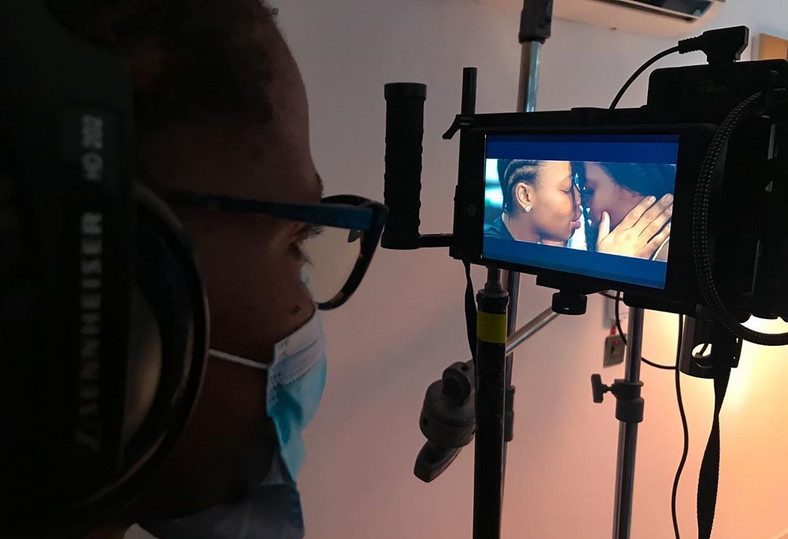
With time, I started to see another lack. I was looking for black women in love. Every time I go on Netflix, it’s difficult to find films with two black women in love with each other. There are films of white women in love with other white women or black women but hardly any black woman in love with another black woman. I started to nurse the idea of telling a story like that, and that’s how Ìfé came about.
What was creating Ìfé like?
I remember sitting in a coffee shop with the executive director of the Equality Hub, Pamela Adie, who also wanted to tell these kinds of stories. She already knew my work, and we were talking about making a film. Honestly, I don’t know if I had the story before we sat down in that shop or if it came to me while we were there.
For Ìfé, I wanted to play with a lot of stereotypes that we joke about, like how lesbians say they are going for a date and end up spending three days at their date’s house. It could be cheesy or cliche, but I was going to do it anyway. I like seeing cliches in romance. When it’s done right and you can relate to it, you will have special moments connecting to the story and that’s what I wanted. Two women meet up for a date and fall in love. I think I was in love with a woman at the time, and I wanted to see that on TV. Pamela was like, let’s do it and so we did.
Creating a film centred around queer women in a country like Nigeria. How did that happen?
The experience taught me that you have to tell the stories that the heads of production companies want to tell until you get the opportunity to write the story that you want to write. This means that if I had stopped doing the work because I wasn’t able to tell the stories I wanted to tell, I may not have been ready when Ìfé came along.
This is what I always tell writers — keep doing what you need to do to pay the bills and prepare yourself for the real thing because I strongly believe that it comes eventually. This also helped me get ready for directing because I spent a lot of time with filmmakers doing the work.
Did you experience any pushbacks?
To be honest, none of the backlashes was directed at us — the people who created the film. So, I never felt the need to react. Also, I was too focused on the collective joy of the LGBTQ+ community to think about anything else.
If you could talk to your 10-year-old self, what would you tell her?
Five years ago, you wanted to be a princess. Two years ago, a nurse. Now you want to be one of the characters from Enid Blyton’s Famous Five. In three years, you would want to be a neurosurgeon. What you want will keep changing and that’s okay. Ignore the pressure from the adults who want you, a child, to know what you want to be. Welcome the changes and welcome all the women you will be. You do not have to be one thing.
What’s next for you?
More storytelling — whatever form that takes. Whether it’s films, series, documentaries or speaking engagements, I plan to put women at the forefront.
Click here to read the previous Elevator story about Celebrity DJ Kiss.
The Elevator is a limited Zikoko series that details the growth of young successful Nigerian women. We tell their stories every Monday by 12 p.m.
What do you do when you have several opportunities that could shape the rest of your life? For Arit Okpo, it’s creating a 25-year-plan, but still taking leaps of faith and learning to say yes, even when things don’t go as planned. Arit Okpo is a 38-year-old journalist, voice actor and television host. In today’s episode of The Elevator, she talks about wanting to be a teacher as a child, studying biochemistry in University, working for N20,000 after university, and now, defining success on her terms in her career in media.
What did you want to be when you were a child?
It’s very interesting. As a child, when people asked, I would always say I wanted to be a teacher or an actress. I’m neither of those right now but I’m doing okay.
How did you go from wanting to become these things to working in media?
In secondary school, I was, unfortunately, assigned to the science and technology class. I have no technological aptitude but I used to be a good crammer. I would cram my notes and give them back to the teacher during exams. This gave my teachers the impression that I was a better student than I was. Sometimes when I walked past the art class, my mates would call me to analyse their literary texts and I would do it effortlessly. Looking back, it’s funny how it never occurred to me to be a part of that class.
That’s how I ended up applying for medicine as my first choice and biochemistry as my second choice in JAMB. I see now that those were not the best options. I got admission to study biochemistry and in my third year, my mom brought up the option of transferring universities to go study English language. This was another divine sign to get my life on the right track but I was consumed by the fact that I was already in year three. I couldn’t imagine starting from the beginning so I said no. I graduated with a biochemistry degree and set out to live my real life.
What was your first job after graduating?
I worked as the PA to a school administrator, which is how I spent some time in education. This was 2005, I had just finished NYSC. I was waiting for my master’s admission, where I was going to study immunology. Maybe if I had stayed on this path, I would have made the COVID vaccine a while ago.
I got the job through my friend’s mom who told me her niece’s daughter was starting a school and needed an assistant. I agreed to do it because it gave me something to do while I waited. I was working on a salary of N20,000. My father was mortified that his child was going to work every day for that amount. He refused to speak to me for a month.
By the time my admission came out, I had been promoted to the school administrator and I realised that I was not only good at what I was doing but I also enjoyed it. So I decided to stay and continue on that path.
How did you eventually make the move to the media?
I’ve always been the sort of person that has multiple jobs at a time. I have been an artist manager, I have worked in a PR firm, I have helped to organise a conference and many other things. I left the school because I had peaked in my journey there and I needed to move to the next level. In May 2013, I wrote a 25-year plan. I wanted to become a school consultant — teach people how to set up schools. While I was at that, I also wanted to study film production because I realised I wanted to get into media. That was supposed to be my side hustle while I continued to set up schools for people. The goal was to become the Minister of Education. By August that year, the plan had turned upside down.
Anyway, I got a call from Mo Abudu. Mo was the executive producer of a reality show that I had been on, called ‘The Debaters’, where we had to pick topics and argue either for or against from the perspective of a skilled observer. I didn’t win that reality show — the judges said I was too conversational. I had chats instead of giving debates. Mo was setting up a news show and she thought I was a good fit as the host. I was about 31. She invited me over to Calabar for a screen test. There, she asked me when I could start and just like that, I had the job.
I had to choose between working as the host of this news show or taking up an offer to head the communications team for an NGO. Also, I was trying to decide if I wanted to go into full-time school consulting. Many times, I think of how any of those options would have led me on an entirely different path. I am someone who is led by my intuition so I chose the EbonyLife TV job because something about it felt right. That’s how I found myself in the media.
What was working at EbonyLife like?
EbonyLife was a challenging yet motivating experience. The channel was strongly women-led, which was very affirming for me. I was encouraged to function with both imagination and drive – nothing was considered impossible, so even when I was overwhelmed or afraid, I still was expected to push through. It was a valuable lesson in pushing past fear. At the same time, I could always talk to my colleagues, line managers and the CEO to work through ideas, so there was a lot of feedback and support in bringing ideas to life. For the first year or so, I don’t think I had work hours, you were likely to see me just leaving the office at 9pm or exchanging emails with the CEO at 1am.
I had the opportunity to work in front of and behind the camera as a producer and presenter. I carried out interviews and did voiceovers — EbonyLife is where I did my first voiceover. For me, there was a strong sense of being a pioneer where African television was concerned, and I was very excited about that.
How did you move from EbonyLife TV to CNN African Voices Changemakers host?
I worked at EbonyLife from 2013 to 2016. In 2016, I got the point where I realised that I was ready to explore my skills in a different context. So I resigned and decided to go freelance, which was an interesting experience. In 2017, someone reached out to me to do a voiceover for a documentary. I did it and a year later, he reached and said he had submitted my name for the African voices’ voiceover artist role. I didn’t think much of it for some reason, maybe because I’ve never thought of voice-overs as the main part of my career. They were more of a minor aspect of my work.
The producer sent me a script and when I did a recording, he said I was exactly what they were looking for. I had been recording the voiceovers for almost a year when my producer told me that he had found out that I was a TV host. He asked if I would like to do a screen test for the role of African voices host. I was nervous about it but it went well and in 2019, I became the host of African voices. This is also a hallmark of my journey that my biggest opportunities have come from simply saying yes.
How do you mean?
In 2005, when my friend’s mum asked if I wanted to work in a school while I waited for my Master’s admission, I said yes and gained the important administrative and project planning skills that I apply in my work as a producer.
My first experience in production was with a friend who needed an associate producer for a documentary. I said yes and it opened my eyes to the possibilities in storytelling.
When Mo Abudu asked me to come to Calabar to do a screen test, even though it wasn’t in my plans, I said yes and that was my entry to presenting on TV. When I was asked to try doing voiceovers for the channel, I said yes – that yes took me to CNN African Voices a few years later.
When my producer at CNN asked if I was interested in doing a screen test for the host position, I said yes and the rest is history.
I work very hard and I always give my best, but there is also space in my story for recognising opportunities and taking chances. As much as possible, I want to be able to say that when life asked me to jump, I took my leaps of faith. So far, every leap has been yet another opportunity to take flight and soar.
What’s a day like as the host of African Voices?
It’s difficult to talk about a typical day because my work on one day can be different from the next day. We usually do the interviews way before the episode airs. Those interviews have to be edited and scripted so on some weeks, I do the voiceover for the scripts. Other weeks, I do the links – the parts where you hear, ‘Welcome to African voices. In today’s episode, we’re going to do this and that’. Depending on my schedule, I do those two or three days a month while voiceovers could take three weeks. It’s not hectic in the sense that I always have to be on the go but I do have my busy days. This is great because I do a bunch of other things like making documentaries and moderating events.
Do you have any favourite projects?
I’m one of those people who don’t have favourites. I think that I’m very fortunate to have identified my skills, my areas of strength, and to be able to deploy them across several projects. My favourite thing about CNN African voices is that we get to tell so many important stories. Many times, the people aren’t necessarily looking for publicity but are doing great work by themselves. I love that when we tell their stories, they can get a boost that comes from being on a platform like CNN.
I’m very measured in how I express myself. I love that voiceovers challenge me to intentionally communicate emotion. Whenever I do a voiceover and I’m pleased because it has been a journey for me. For me, stories are ultimately about people and making documentaries challenge me to think about those people. I like the perspective of being outside a story and bringing it to life. I’m very passionate about what could be turned into a story. There are many things in life that might not seem like a big deal but are nonetheless the realities of a lot of people. Those are the kind of stories I like to tell.
One of my biggest aspirations is to be able to tell women-focused stories and also stories about LGBTQ people, from the context of everyday life. I love the work I have done in telling LGBT stories so far — I hosted a show called Untold Facts for three seasons. I want to continue to do work like that. This is significant for me because, in the stories about LGBTQ people on the continent, there’s either a tendency to represent them purely as victims or to other LGBTQ people. It’s all othering. We talk about LGBTQ rights like they’re these exotic gifts that we are granting to a sub-segment of the population. I want to present LGBTQ conversations as part of our everyday conversations because then it forces people to think about the people in the stories being told. For instance, affirming medical care for LGBTQ people can be alongside reproductive health options. Many times, LGBTQ stories are on an individual platform — which is also important. I enjoy being able to tell LGBTQ stories or to provide opportunities for LGBTQ people to tell their stories. I like that, I get to challenge myself in different ways.
How do you deal with stumbling blocks along the way?
I try to be patient with myself. We tend to measure progress by ease and while ease is important, it’s also important to remember that your path by its very nature will have difficulties. I recognise that sometimes stumbling blocks are a function of where we are. I allow my journey to be a process rather than a destination. This means that I will be patient when it’s difficult and enjoy it when it’s easy.
I feel like “saying yes” or taking leaps of faith is an important lesson from your journey. What else?
I don’t know that I will ever be that camera ready person with a million followers, who is always in the thick of fashion and that’s okay because that’s not who I want to be. So the lesson for me is asking myself what success looks like to me. Identifying that has helped me to be patient when I haven’t gotten certain opportunities because I would ask myself why I want it — is it because I think it’s where I am supposed to be or because it is right for me. I want to be the kind of person who keeps people’s stories safe. People are rarely one thing or the other — people are a collection of things. I want to tell stories that represent the spectrum of human existence — the variables, nuances and texture. I want to do those things as myself and that means being somebody who is at home in the work that she does. I will always be an informal, everyday person who recognises herself in many of the stories that I tell. I also know I will never be one of those TV hosts who stands outside of a story. I will always have feelings and that’s okay. Recognising these details are the things that will make me successful in my way.
If you could talk to your 10-year-old self, what would you tell her?
I think I was ten when I realised that people could be cruel, for no reason other than the fact that they could and it’s a hard lesson to learn as a child. I would say people are going to hurt you and for the longest time, you will let them because you don’t know better but you will find that your softness is its kind of strength, its weapon and its safe place. You will learn how to live in a world where you refuse to let your softness be taken for granted. You will learn how to use that softness to care for those you love. You will learn how to exhibit the fullness of everything that you are. You will recognise that if people are not kind it’s not on you so keep being soft, kind and loving. It will all make sense.
What’s next for you?
I’m in a very interesting place in my life. I have a lot of clarity right now about who I am and how I want to show up in the world. I’m excited about exploring all the ways that will continue to happen. I want to make more documentaries, telling stories I feel are important. I want to make sure I have more agency in the work I do and the opportunities I get. It’s very funny because I know that this is supposed to be where I talk about my work goals but if there’s anything life has shown me, it is that you make plans and God laughs. But I do want to be able to tell stories that people think are not important or noteworthy. I want to make documentaries that reflect women’s histories, LGBTQ people’s realities. and the intricate details of our culture. I want to hold interviews with people who have made small choices that add up to a big life and sometimes a big life might not mean that you are a popular person. I want to continue to identify stories that need to be told and get better at telling them in my most authentic voice. I also want to be able to give back.
Click here to read the previous Elevator story about Celebrity DJ Kiss.
The Elevator is a limited Zikoko series that details the growth of young successful Nigerian women. We tell their stories every Monday by 12 p.m.
After starting and failing at more startups than she can remember, 27-year-old Odun Eweniyi, founded Piggvest, one of the most successful fintechs in Nigeria. In today’s episode of The Elevator, she talks about working in a male-dominated industry, the lesson’s she’s learned from leading startups and why she’s interested in creating safe spaces for women.
What did you want to be when you were little?
When I was little, I was sure I wanted to become a university professor or researcher. My parents are university professors. They were also both writers and wrote a lot of academic books. I really liked watching my dad work. So, the plan was to do something academic.
What did you eventually study?
Computer engineering. People tend to classify the course as extremely serious, but a lot of my thinking about the world is informed by the fact that I read computer engineering. I am always inspired to find solutions to problems. I have about eight tattoos, and four of them are about physics.
Did you ever do anything related to computer engineering?
Well, yeah. In August of 2013, I was coming back from an interview where I had just turned down a job offer to write for a fashion blog. They were offering to pay me #20,000 to work Monday to Saturday from 9 a.m. to 6 p.m. on the island; meanwhile, I lived in Ogba. While I was walking home, my friend, Somto, who lived in the same estate as I did, leaned out of the window and called me into his house. He told me about a project he was working on with a few other people. That was how I started working for Parolz. I didn’t even know what a start-up was, but here I was joining one at 19.
Omo, an entrepreneur at 19.
Technically, it was six months to my 20th birthday, but yes. An entrepreneur at 19.
And what did Parolz do?
Well, Parolz was a company that tried to get discounts to the customers that registered under us. I worked as a social media manager for the Parolz team for three months, then we got the idea for PushCV, a startup to help people get jobs.
So your second startup.
Yes. While we were running PushCV, we started some other companies like 500dishes and 99staff. These start-ups failed. There were a lot of factors that affected the failure of each start-up, but we tried to not let it get to us too much, and just used it as learning points for the next one. It motivated me to keep pushing. In 2016, we got the idea for PiggyVest.
Amongst these startups, Piggyvest seems to be the one that stuck. Do you know why?
For PiggyVest, it was the right place, right time, the right idea and a healthy amount of luck. We were also able to apply all the things we had learnt from the other failed start-ups into running PiggyVest.
In the first year, we funded the start-up with our own money. Then in March of 2017, we got the first injection of funding with $50,000 from BH capital.
Like every venture you go into, you hope that it is successful, but you really never ever know. I did not know it would be as big as it is now. We built it for young Nigerians. We want to help young people manage their funds so they can get financial freedom. I think one of the things that makes it so popular is the fact that it’s really easy to use.
If you want to create your own start-up, just go for it. We had a lot of failed start-ups because we just went for it. It’s also the reason we have PiggyVest right now.
What’s your role in the company?
Well, I am the COO. My daily activities change depending on the position the company is in at the time. My job as an operations person cuts across operations, finance, people operations, fundraising, investment management. If we are in fundraising mode, my job will be to liaise with investors. It sounds like a very vague job description, but, a COO’s job is optimisation and making sure there are enough resources to go around, and it’s a very interesting job for people like me that do not like sitting down in one place.
“Male-dominated” fields like yours usually come with a lot of sexism. How do you navigate that?
I call out a lot of sexist behaviour and I use my platform to call it out as well. I don’t allow sexism to get to me enough to derail the focus and the goals. I think that representation matters, and I want young girls to be able to look up and see women like them trying — because we’re here to stay.
It is very important that you do the work for all the women that are coming after you. My advice for young girls who want to work in tech, no one can stop you. Aim very high, work very hard and care very deeply.
Was your need for representation a core decision in co-creating Feminist Coalition?
Dami and I felt that the fight for women’s rights needs to, at its core, be focused on money and legislative power for women, so we invited more women and Feminist Coalition came to be. Both things are central to the advancement of women in any society, and at the moment, in Nigeria and across Africa, men rule both. For women to achieve equality or anything remotely close, we need to consolidate both. We want to move the needle for the progression of women’s rights in Nigeria by focusing on three pillars: women’s rights and safety, financial equality for women; and legislative power for women.
Have you and Dami created anything else?
Wine and Whine. I walk around with so much anger and resentment sometimes, and I know that I’m not alone in this. I also couldn’t randomly complain, so the idea of a safe space for women like me to get together, complain, have fun and then brainstorm practical solutions sounded great. Dami and I started it together.
All of these projects must have come with various hiccups, how did you deal with them?
My dad always told me “You’re all you have; no one is coming.” That stayed with me, so when I fall, I get up and keep pushing. And it is incredibly hard. I’ve come close to giving up several times but I’m all I have so I always move forward.
What did you fall back on when things got hard?
I had a lot of helpers along the way. I have supporters like Mr Olumide Soyombo, Editi Effiong, Eloho Omame and some really incredible people in my corner whom I can go to when things get hard.
My safety net has always been in journalism and writing. When I started as a social media manager, that was my only source of income until Bankole and Seyi of TechCabal hired me as a junior editor. When PushCV initially began, I still worked for TechCabal, but I had to leave to focus on PushCV. As we started PushCV there was need for another safety net, so Adewale Yusuf of TechPoint hired me as the editor-in-chief. I did that for a couple of months till I came back to Big Cabal again to work for Zikoko as a writer.
If you are not creating startups or NGOs, what do you do for fun?
I read a lot of fiction, biographies and autobiographies — especially of people in Wall Street or in tech that committed fraud. I am always trying to get into the psyche of these people. Before Covid, I used to go to the cinema every Friday to watch whatever new movie was out which were mainly Marvel and DC movies. I also play video games — like Sims 4 not like FIFA 21. My social activities are low effort and it is perfect for me.
Are there any lessons you learnt on this journey?
The biggest lesson I’ve learnt and probably the one that has paid off the most: be yourself, the world will adjust. It took me a while to be comfortable in my own skin and who I am, but you see, the world did adjust. I’m glad I didn’t succeed at changing. I admire Hillary Clinton, Stacey Abrams and many others. I love to see grit in women. Both of them are very different and yet in so many ways so similar. They both didn’t stay down, didn’t stay quiet. They both experienced heavy career setbacks, but they got right up and kept fighting. There’s so much grit in both of them. Neither of them fit any conventional stereotypes of what a woman needs to be or aspire to.
What are you most proud of?
The way I look at wins is that you get one, you celebrate, and you move right on. The biggest thing at the moment is that as of today, I am one of the board members of a pretty sizable VC firm in the US. This is the one I can remember.
As someone who does not like “sitting in one place”, how will you handle retirement?
Nobody wants to work till they die, and I do not know how I will adjust to retirement seeing as I just like moving and doing things. I see myself retiring and doing something of a slower pace maybe, like going back to become a professor. I do not think I can survive being idle, because my mind is constantly going. Retirement for me will contain a lot of writing, teaching and researching.
What is next for you?
Right now, Netflix and a glass of wine. In the future, conquering fintech, education and so much more while doing the right thing always.
If you want to read the previous Elevator story about Aisha Salaudeen, please click here
What do you do when you do not know what you want to be? For some people, they take time out to figure out what it is. For Nana, it was to go to school and get degrees. Nana Aisha Salaudeen is a 26-year-old woman with four degrees in finance who works as a multimedia journalist, telling stories. She talks about going from wanting to be an automobile aeronautics engineer, to studying finance, to becoming a journalist.
Let’s start from the beginning. What did you want to be when you were a child?
I wanted to be many things: an actor, a newscaster. The wildest thing that I wanted to be was an automobile aeronautics engineer.
Omo. Automobile aeronautics engineer?
Honestly. I really did not know what I wanted. It changed depending on what I thought was cool.
Did this change by the time you were supposed to go to university?
Nope. I studied business economics, but within me, I knew I did not find the courses interesting. I did not hate it; I just did not find the courses exciting.
I actually did not figure out what I wanted to do until I got my master’s in Finance Accounting and Management in 2016. I was 22 at the time and was honestly jaded. I just did it so I could say I got a master’s degree. I was still exploring and wanted something completely different from business economics. Finance Accounting and Management was one of my options. I did really well in my BSc, so I got a scholarship, and although I did not know if I was going to like it, I was not going to turn down a scholarship. Who says no to a scholarship in Bradford, UK? At the end of the day, I figured out I hated it. My BSc was tolerable. My master’s? I completely hated it.
During this time, was there anything you did that you actually enjoyed?
Well, I loved radio. When I was in school, one of my friends who worked in the school’s radio station told me that since I was still trying everything out, I should try radio. I registered, did the training and loved it. People loved listening to the show, and they gave me feedback. This made my undergraduate year interesting. I would say that was the beginning of my journey into media. I also loved writing articles. I used to send my articles to Nigerian newspapers.
Since you loved radio, why didn’t you get a master’s in a media-related course?
My university had a rule that stated if I wanted to get a media degree, I had to get a post graduate diploma in a media-related field. I eventually ended up getting a post graduate diploma in Islamic Banking and Finance, and another one in International Business.
Also, when the scholarship came, it was for Finance Accounting and Management.
Was becoming Nigeria’s Finance Minister in your plan, because these are a lot of degrees.
LMAO. I guess this is what happens when you have privilege and are confused. You try everything in your way. My parents thought I wanted to be an accountant or work in the World Bank. They did not know I did it because I was confused.
Why do you think it took you so long to figure it out?
I loved and hated many things. When I went to college for my foundation program, I thought I was going to become an economist, but within me, I knew I did not find the classes interesting. It was a race to figure out what I liked before it became too late. It took joining the school’s radio team and writing articles for me to find storytelling.
Maybe all of this happened because I am an unserious person. I did not find many things interesting, and I used to sleep off in class. Even when I got my first job, I used to sleep off.
LMAO. What job was that?
After my master’s, I went for NYSC. My first job was at my place of primary assignment — an accounting job. I resigned after three weeks because it was incredibly boring. I would be on my chair typing, and I’d fall asleep. I hated the idea of balancing books.
What was your plan after resigning?
After resigning, I felt I had to prove myself. I had decided I wanted to go into storytelling, be a journalist, but my parents were not too happy about it. They were confused because I had four degrees in finance-and-accounting-related courses, and suddenly, I wanted to be a journalist. The Nigerian parent in them felt I wasted their money. I had to explain how much I hated the job. After this, I had to prove I knew what I was doing.
So what happened after resigning?
I went online and said, “I want to be a full-time journalist, can someone help me with ideas?” Honestly, I didn’t care what anyone thought. I was messaging all the journalists I followed and asking them to help me. I was desperate.
And did they help you?
Yes. People were so nice to me. There was this particular journalist, Mercy Abang, who carried my matter on her head. She was telling me how to pitch stories to international media organiszations and was linking me up with her friends. With all the help, I started freelancing for international media organisations. My very first was Aljazeera.
WOW. Straight for the big guys.
LMAO. Well, not straight. I mentioned I used to write before, so I already had writing samples. It helped that it was an article on #EndSARS in 2017, about the first time the hashtag started popping up. I pitched it as a trending story that was important. I don’t think any editor would have said no to it. When I finished, I went straight to my parents’ house to show them. It was proof that I knew what I was doing. It was at that moment they decided to let me do my journalism.
Eventually, I realised that freelancing was not sustainable for me because it did not come all the time, except you are really familiar with editors. I was struggling. You might think you have a very great story, but you pitch it to about ten people and only one person will reply. The reason for their reply might even be to turn you down.
How did you deal with all the rejections?
The rejections were not my problem, and I say this from a place of privilege. I lived with my parents, so I did not have to worry about food, rent and all the important stuff. My problem with rejections was that I did not know why they were rejecting me. If I did not know why they were rejecting me, I could not improve my pitch or my storytelling. It was frustrating. So, I started adding to my pitch that they should please give me feedback if they are not satisfied with it. They actually started responding.
So what did you do next?
I started looking for a full-time job. Luckily for me, around the time I was looking for a job, Stears Business was hiring. A journalist I had become friends with, Eromo, messaged them and told them about me. I didn’t even know he was doing that until I got a message one day from Stears. I applied and it was such an excruciating application process, and that was what made me like them. They asked the difficult questions that made me think. I’m really grateful because it gave me the training I did not have in editing, writing, identifying good stories and talking to people. Because Stears was new at the time and trying to figure out what they wanted to be,, it meant I was always writing articles. Since I was writing everyday, people kept seeing my articles. It helped people know who I was, and that’s how my former boss at CNN found me.
Aljazeera? Stears? CNN? OMO.
LMAO. She told me she saw my articles and asked if I wanted to work for CNN. When someone asks you if you want to work for CNN, you don’t think twice. I did a test and a couple of interviews, and that was how I started working for CNN.
Writing for CNN was incredibly frustrating but amazing at the same time. I say amazing because I came from a place of writing strictly for Nigeria, but now I have done work in more than twenty African countries. It gave me leverage. I was not limited.
I say frustrating because sometimes it was not as niche as I wanted. For example, if there was something happening in Katsina and I wanted it to be covered as quickly as possible, I may not be able to because CNN has such an international audience. The stories would be too local for them.
The Devil works hard, but you work harder. You also have a very healthy amount of luck.
Yeah, and I met a lot of the right people. My journalist friends kept mentioning my name at places I didn’t even know about. I’m glad I was not ashamed to ask for help. I messaged every single journalist I thought was doing amazing, and I kept disturbing them. I think disturbing them was so frustrating that they kept mentioning my name. I am glad it worked.
So step one is to abolish shame. Taking notes.
Yes. Do not be embarrassed to ask. A lot of times people are scared of rejection and being ignored, and honestly, it will happen, but do not be afraid to ask. I did not know anything about journalism in Nigeria and asking got doors opened for me. I tell journalists now to ask.
Also, people shouldn’t be afraid to blow their own horn. There is this lie about how your work will speak for itself, but it is not true. Your work will not speak for itself unless you let people know about it. If you don’t blow your own horn and share your work everywhere, nobody will know you exist. When I just started, I had a couple of stories in the PUNCH, but I spoke about it like it was the best thing since sliced bread.
The last thing I’ve learnt is that you should always develop your skills. You can ask for help and blow your own horn, but if there is nothing to back it up, then it’s counterproductive — you are making noise about things that do not exist.
You spoke a lot about not having a degree in anything media-related. Do you see yourself changing that?
Yeah, I am actually thinking of getting my PhD in Media and Gender Studies merged together. I do not know what I am going to research on, but I know I’m going to figure it out.
Unlike during my masters and undergraduate, I actually enjoy and care about media and gender studies. I feel like when you care about what you are studying, it’ll be bearable.
Women-related stories are really important to you.
Yes. Women’s related stories mainly because I am a woman, and I think it is also sentimental because it was the story that started my career as a journalist was about the trauma of another woman. I spoke about police brutality a particular woman had endured. Since then, it has been sentimental to me. I think the stories I have enjoyed the most or have been super impactful are women-related: abortion rights, sexual violence, etc. Those are stories I feel like I should be telling more because they are a major part of my life.
If you are not writing about women’s stories, what are you writing about?
I kind of write about everything. Before I became a TV producer, I wrote about business and culture.
TV producer?
I did some digital articles for about eighteen months and got tired. I was getting to a point where it was getting too easy, and I wanted to call myself a multimedia journalist with my chest. I wanted to do more than just writing articles, I wanted TV. I started taking courses in TV production, and I made a very bad mini-documentary that I haven’t deleted from my Instagram because I want it to remind me of where I am coming from when I become a really big TV producer.
I told my former editor to let me know if they see any TV-related openings. So when CNN was hiring for a TV producer, they sent it to me and I applied.
What is your favourite project you have worked on?
I can say the very first video I produced for CNN. It was my favourite because it was my first, and it has sentimental value. It was about a nine-year-old boy who had created over thirty video games. It was one of the best at the time, and it did so well.
If you could talk to your 10-year-old self that wanted to become an automobile aeronautic engineer, what would you tell her?
I’d tell her not to have shame. There are so many things having shame has taken away from me. I’ll tell her to always ask questions and go for what she wants.
What’s next for you?
Well, what I just started is what’s next for me — being a multimedia journalist, moving a bit slowly from writing articles to TV. What’s next is producing and filming TV shows, writing scripts for them. Doing voice-overs, getting in front of the camera. I’m doing all of these things, but I’ve just started. What’s next is being able to say I’m a full-blown multimedia journalist with my chest. Maybe write a book even. The book will definitely be before my PhD because I still haven’t figured out what I want to research. Maybe this book will help me with that.
A few weeks ago, Dr Ngozi Okonjo-Iweala became the first woman and the first African to be chosen as director-general of the World Trade Organisation. Last year, during the End SARS movement, the feminist coalition and other women did excellent work in raising funds, releasing protesters who were unlawfully arrested and protesting online. Every day around the world, Nigerian women are breaking boundaries in and out of the workplace. Safe to say that Nigerian women are superstars.
However, when we talk about glass ceilings, it’s usually within the western context. It’s hard to find a wide range of entertaining and enlightening stories about Nigerian women who are just doing the damn thing.
With more young women at the helm of innovation, technology, business and in the corporate world, there’s a lot of documenting that we’re not doing, a lot of stories that we’re not telling. As a platform that documents and tells important stories, we are well positioned to find female leaders and tell their stories.
To celebrate the wonderful work that women are doing, in this women’s month, we have put together a series of stories about women excelling in tech, media, law and so much more.
It is important to tell these stories, not just for posterity sake but to gleam light into what it’s like to be a Nigerian woman in today’s world. This series will show how far we have come and how much more is left to be done.
You reading this, this series is for you. For young women all over the world and especially in Nigeria, this series is a reminder that there’s enough room at the table!
Every Monday at 12 noon in March and in April, expect a new Elevator story. Subscribe to our Her newsletter to get these stories and more stories about women right in your inbox.