Notice: Function _load_textdomain_just_in_time was called incorrectly. Translation loading for the wordpress-seo domain was triggered too early. This is usually an indicator for some code in the plugin or theme running too early. Translations should be loaded at the init action or later. Please see Debugging in WordPress for more information. (This message was added in version 6.7.0.) in /home/bcm/src/dev/www/wp-includes/functions.php on line 6121
Tax | Zikoko!
  • Tinubu Wants to Tax Pepper Sellers

    The one thing we might need to get used to quickly with this new administration is the endless billing. 

    Last week, we discussed the newly introduced annual vehicle ownership verification fee, set at ₦1,000. For today, we’ll be looking into the recent partnership between the Federal Inland Revenue Service (FIRS) and the Market Traders Association of Nigeria (MATAN) to collect Value Added Tax (VAT) from traders. 

    On July 3, 2023, the FIRS announced the VAT Direct Initiative to facilitate collecting and remittance taxes from this informal sector using unified systems technology, and traders will also be given identity cards to track their turnover. Nigeria currently has one of the lowest tax collection rates in the world at 10.8%; according to MATAN, there are about 40 million traders across the country, and this tax collection would help improve our tax base. Traders will also benefit from this, as the FIRS plans to work with security agencies to stop the illegal collection of taxes in the markets by thugs and self-appointed tax collectors. 

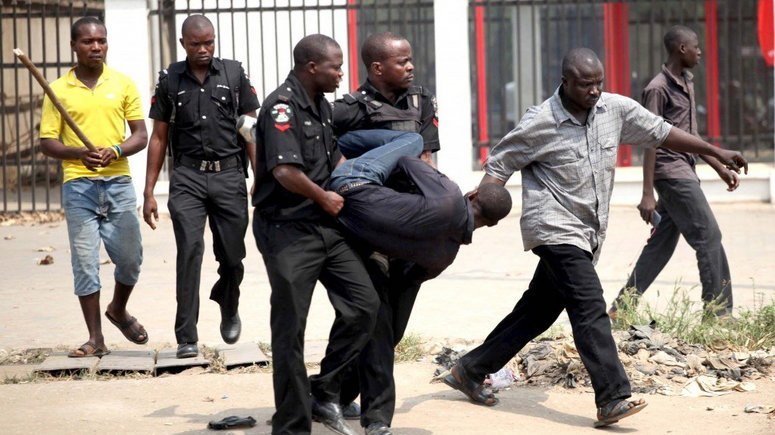
    Lagos thugs when they hear this

    This is all part of President Bola “T-Baby” Tinubu’s plan to improve our revenue generation and fund more infrastructural and social projects. However, we all know that Nigeria is cursed with a corruption problem. So, once again, it looks like citizens struggling to make ends meet are being asked to make sacrifices with little to no assurance of tangible rewards. 

    What else happened this week?

    Diphtheria Outbreak in Abuja

    On July 3, 2023, Sadiq Abdulrahman, the director of the Federal Capital Territory (FCT) Public Health Department, confirmed in a press briefing that the outbreak of diphtheria has already claimed the life of a four-year-old boy. 

    Diphtheria is a deadly bacterial infection that affects the mucous membranes of the nose and throat. It can lead to breathing difficulties, health rhythm problems, heart, kidney, and nervous system damage, and death, especially in children. 

    The recent outbreak in Abuja is said to have spread from Niger state, and so far, there have been eight reported cases. To combat the spread of this bacterial infection, residents are advised to take personal hygiene very seriously and to get vaccinated at any of the 400 vaccine outlets around the FCT. Also, the Public Health Department has started collaborating with states to prevent the further spread of this disease. 

    Video of the week

    Question of the week

    With Elon Musk channelling his inner Lex Luthor, our days on Twitter might be numbered. Is it time for Nigeria’s tech space to create an alternative social media platform? 

    Ehen one more thing…

    The initial six months of 2023 are done and dusted. What should we expect as we step into the second half? Find out here

    To ensure you don’t miss out on the next edition of Game of Votes, subscribe to the newsletter here.

  • #MoneyByZikoko: Did You Miss These #NairaLife Stories?

    Vol 10 | 26-12-2022

    Brought to you by

    Merry Christmas (in arrears),

    I hope you had a great weekend and are currently enjoying a slow Monday.

    In other news, the new year is only a few days away. I know we all roll our eyes at new year’s resolutions but one thing I definitely want to get better at is tracking my expenses. I can’t wait to share any tips and learnings as I go along.

    This is the last edition of the Money by Zikoko newsletter and I really appreciate your opening, reading, and sharing.

    This week we have handpicked some really great Naira Life stories from this year that we think you really need to read. I enjoyed them and I hope you do too.

    In this letter:

    • #NairaLife: Most-Read stories of 2022
    • #LoveCurrency: Dating in Abuja on a ₦700k Influencer Monthly Income
    • Money Meanings: “Tax”

    #NairaLife: You Should Read These Stories

    Last week we showed you all the stories you loved from the year. Now we are bringing you the ones you will love – you just don’t know it yet.

    Our compilation takes into account the types of stories and what you should expect from them. We try our best to explain why the stories made our list.

    Read The Stories Here

    Banking made easy

    Gomoney simplifies money for everyone. No need to bother with long calculations. It’s banking made easy!

    This is partner content.

    Click here to bank without stress

    #LoveCurrency: Dating in Abuja on a ₦700k Influencer Monthly Income

    After COVID, Julia* quit her insurance job to focus on being a food blogger. In this article, she tells us how her boyfriend influenced her decision, going from earning ₦30k to ₦700k monthly and her plan to be financially independent.

    When asked about their plans as a couple, she says: “I don’t know as a couple — I feel like anybody can still serve you breakfast, so I’m trying to focus on my own plans.

    This story was brought to you by Fluid Finance

    Read This Article

    Money Meanings


    Share this newsletter

    All good things must come to an end. But not this good thing. We’ll be back next week.

    In the
    meantime, keep reading Zikoko’s articles and be sure to share the love.

    Till next week…

    Yours cashly,

    Dwin,

    Mr Money With The Vibe (Sometimes)

    Did someone awesome send this to you?

    Subscribe to this Newsletter

    18, Nnobi Street, Surulere, Lagos,
    Nigeria

  • Buhari Wants You To Pay More For Your Soft Drinks

    2022 will be a memorable one for many Nigerians even if they’re trying to forget. We saw the price of items double, our naira had a makeover, our national grid died and resurrected more than a few times, schoolchildren will now be taught in their native languages, and Meffy rolled out new cash withdrawal restrictions as a Christmas gift. 

    But to end the year with a bang, the federal government is proposing adding a 20% tax on non-alcoholic beverages.

    Buhari soft drinks policy

    What does this mean for Nigerians? 

    Because soft drinks make up the bulk of non-alcoholic beverages, if the 20% tax is implemented, there’d most likely be an increase in the prices of these drinks soon. However, this isn’t the first time the government is taxing the soft drinks industry.

    What happened before? 

    Earlier this year, there was an increase in the prices of some drinks — a bottle of Coke sold formerly for ₦200 became ₦250. Unknown to many of us, this increase was because of the ₦10 per litre tax the federal government placed on Sugar-Sweetened Beverages (SSB).

    Buhari soft drinks

    What’s their reason?

    Statistics show that nearly 40 million litres of soft drinks are sold annually in Nigeria, the fourth highest in the world. This puts many consumers at risk of diseases like stroke, heart disease and type 2 diabetes. So, the government imposed the ₦10 per litre tax to reduce our consumption of these beverages. The extra revenue from the tax is channelled towards treating sugar-related diseases

    What happens now? 

    Beyond the price hike, if the 20% tax is implemented, there are other possible side effects.

    People will lose their jobs

    Since the ₦10 per litre tax has been added, many beverage companies have found it challenging to make a profit. A study showed that there had been an 8% decrease in revenue between July and August this year, and this decline is expected to reach 25% by December. 

    Buhari Wants You to Pay More for Your Soft Drinks

    If the 20% tax is further implemented, revenue figures could be further affected  and would eventually lead to the loss of jobs. 

    We’ll scare off foreign investors

    During a stakeholders’ meeting discussing the effects of the proposed government tax on December 6, 2022, it was noted that the tax discouraged one of the bottling companies from proceeding with its £300 million investment plan. And if the tax is finally implemented, we can expect more stories like this.

    The government’s plan to help reduce the consumption of carbonated soft drinks isn’t bad. Still, they must try to strike a balance instead of frustrating manufacturers and increasing our already high cost of living.

  • Buhari Wants You to Pay More Tax for Phone Calls

    If there’s one thing the Buhari government knows how to do, it’s to keep taking without giving enough back. That’s exactly how he’s driven Nigeria’s debt profile from ₦12.1 trillion in 2015 to ₦41.6 trillion in 2022

    For his next trick, he’s raising taxes on the telecommunications industry that’s going to make life a bit harder for everyone. 

    Buhari needs more of your tax

    How’s he gonna do it?

    The Minister of Finance Budget and National Planning, Zainab Ahmed, announced on August 4th 2022 that a 5% inclusive excise duty is about to fall on telecom services in Nigeria. 

    Buhari needs more of your tax

    This tax didn’t just come out of nowhere. In fact, it’s in the Finance Act of 2020 but remained dormant like a tumour just cooking to fuck up your life when you least expect it.

    Ultimately, the decision to fix the rate on excise duties was on President Always Take, and he’d been taking his time to do that, until now.

    Why’s Buhari doing this?

    Buhari needs more of your tax

    The truth is Nigeria is broke. The country’s income isn’t even enough to take care of settling its debt, not to talk of other things you need money to run. 

    Like TGIF

    And since Nigeria’s oil revenue isn’t vomiting nearly enough money, the government is looking into non-oil sectors to pull their weight. That’s why the president is turning to the telecom sector to squeeze some more revenue out of it for the government to spend.


    ALSO READ: What Nigeria Can Learn from Kenya About Cutting Politicians’ Salaries


    But how does this affect your pocket?

    When the government announced the imminent implementation of the additional 5% tax, operators didn’t waste any time in passing it on to their customers. The Chairman of the Association of Licensed Telecom Owners of Nigeria (ALTON), Gbenga Adebayo, said operators already pay too many taxes to the government and can’t shoulder another one. And what’s even crazier is that this tax is rare in a sector like telecom.

    Excise duties are indirect taxes placed on the manufacture of non-essential, potentially harmful products like alcohol and tobacco. You can call it a “sin tax” in the sense that it exists to discourage the consumption of such products.

    YOLO

    But in this case, Buhari has extended the sin tax to something as essential as talking to your family and friends as this will affect the prices of things like recharge cards and vouchers. Why would he do this? Maybe because he hates your enjoyment. Or he needs all the revenue he can get to send more exotic cars across the border to his first cousins in Niger Republic.

    Buhari needs more of your tax

    Is anyone fighting this?

    Telecom operators aren’t happy about the excise duty, but they’re passing the burden of it to their customers like it’s an STD, so it may be naive to expect them to put up a spirited fight. But someone else has offered to do that. 

    Resident terrorist sympathiser who’s also the Minister of Communications and Digital Economy, Isa Pantami, is a surprise objector to the tax.

    The minister said more taxes on the telecom sector makes no sense as it’s already one of the government’s hottest honeypots

    Buhari needs more of your tax

    Pantami feels so strongly about the tax that he’s vowed to fight it by any means necessary so it doesn’t destroy the digital economy sector.

    What’s the damage here?

    Only a handful of countries place excise duty on telecom services. And the danger is that consumption levels may drop because Nigerians are already seeing shege with the state of the economy. If demand drops, the revenue generated from the telecom sector may start to shrink and ultimately worsen Nigeria’s revenue headache.

    Right now, it’s still unclear when full implementation of the excise tax will commence, but if it does, communication is about to get more expensive for you.

    ALSO READ: Buhari Is Using Exotic Cars to Fight Insecurity in Niger Republic

  • Rivers State Tax: VAT The Hell Is Going On?

    Rivers VAT not for Abuja people, I don’t care if heaven falls!”, Wike insists

    If you’re wondering why governors seem to be in a stand-off with the federal government, we have the tea. The situation is about a type of tax called Value Added Tax (VAT) and which level of government has the power to collect it — the Federal Government of Nigeria or the state governments.

    Whoever wins this battle is certainly going to get richer by about ₦1.5 trillion.

    The Federal High Court Ruling

    On August 10, 2021, in a lawsuit marked FHC/PH/CS/149/2020, Justice Stephen Dalyop Pam of the Federal High Court ruled that it is the Rivers State Government, not the Federal Inland Revenue Service (FIRS), that should collect Value Added Tax (VAT) and Personal Income Tax (PIT) in Rivers state.

    The judge granted all of Rivers State’s requests over the matter, and it agreed with the state’s argument that the Federal Government of Nigeria, through the FIRS, cannot collect VAT because it does not have the power to do so under items 58 and 59 of the “Exclusive Legislative List” of the Constitution and items 7 and 8 of the “Concurrent Legislative List” of the Constitution.

    The Federal Government of Nigeria has been collecting VAT across Nigeria since 1993, but Rivers State has basically said “enough”.

    What Is VAT?

    The Value Added Tax is a tax that is collected at every stage of production of an item or service, from the beginning of production to when the item or service is finally sold. 

    In Nigeria, VAT is charged on all goods and services except on medical products, basic food items, books and educational materials, baby products, fertilizers, farming machinery, medical services and a few other goods and services in the first schedule of the VAT Act.

    Nigerians pay a 7.5% VAT on everything we buy, including recharge cards, wines, cars and many other things.

    What This Means

    VAT is the second-highest generating tax in Nigeria after the Companies Income Tax, and Nigeria made about ₦1.5 trillion from VAT in 2020 alone. But it is not the amount of money that is provoking emotions, it is the way the money is shared.

    Under Section 40 of the VAT Act, 15% of the VAT pool must go to the Federal Government, 50% to the states and 35% to the Local Government. 20% of the entire money must also be shared according to where they are gotten from.

    But Rivers State is not happy with this arrangement. According to the governor, Nyesom Wike, the state generated ₦15 billion from VAT in June 2021 but only got ₦4.7 billion when the VAT pool was shared according to the current sharing formula, whereas Kano State generated ₦2.8 billion naira from VAT in June 2021 and got the same ₦2.8 billion naira it made.

    If states begin to collect their own VAT following the new court ruling, it would mean that every state in Nigeria gets to keep the VAT money it makes, and states like Lagos, Rivers, Oyo, Kaduna, Delta and Katsina where up to 80% of VAT is collected will get to keep their fair share without giving it to the federal government.

    Rivers State, for instance, would be able to keep its VAT money and use it to develop the state, something in the range of the ₦15 billion it generated from VAT in June 2021 alone. Already, Lagos State House of Assembly has passed the state’s VAT law to ensure that it starts keeping the VAT money it makes.

    But there’s also a downside to it. Many states who don’t make as much money from VAT rely on the national sharing pool. Because Nigeria’s 36 states and 774 local governments all share 85% of the total VAT money, it means that many states get allocation from the VAT pool even though they contribute less than 20% to it. This is the reason why Gombe’s governor has pleaded with other states to be their “brother’s keeper,” because if each state begins to collect its own VAT, about 30 states in Nigeria will suffer a significant decline in their revenue. And this is because there is little production and consumption activity going on in those 30 states, so there’s only a little VAT to collect.

    The Federal Inland Revenue Service (FIRS), the agency that collects taxes on behalf of the federal government, has already filed an appeal to overturn the judgement of the Federal High Court. We’ll have to wait and see where this case leads. But one thing is certain: the question about who has the power to collect VAT in Nigeria is far from over.

  • 8 Reasons Why Nigerian Dogs Should Pay Tax

    Sometimes it feels like there are more dogs than humans in Nigeria, so they should be required to pay tax. If you need to be convinced, here are eight reasons why.

    1) They are constantly roaming the streets

    The streets of Nigeria were made with taxpayers money. So, why are freeloaders using it more than the people that paid for it? Sometimes, they’d even chase taxpayers off of the streets. This is unacceptable. If they want equal access to the roads, they should open their doggy wallets.

    How tax collectors should pull up to those dogs

    2) Destruction of property

    Dogs need to stop getting away with chewing up shoes and knocking things over. The time has come for them to learn about the consequences of their actions. The owners should not pay so the dogs can learn to be responsible. This is why I propose a new government body called Dog Income Collection Service. Puppy dog eyes won’t work for the law.

    3) Feeding

    Manna will not always fall from heaven, and these creatures need to realise that. If they want to continue enjoying food to their hearts content, they need to open their purses.

    4) Every Nigerian must pay tax

    These dogs are basically Nigerian citizens at this point. Either by birth, naturalization, etc. The time how now come for them to perform their basic civic duty. Citizenship is not free.

    5) Retirement homes

    If they do not pay tax, how do they plan on retiring? The tax can also serve as a retirement fund for when they just can’t be as agile as they used to be.

    This kind of life is not cheap

    6) Healthcare

    Any small thing, they need to go to the vet. Since vets are so expensive, imagine if dogs paid their own way? you know how expensive vets are? Imagine if dogs paid tax and healthcare was covered by the government? #freeuniversalhealthcareforall

    7) Tough times are lasting

    Nigeria is broke. It is time for man’s best friend to give back to man. We’ve been there for them, they need to be here for us.

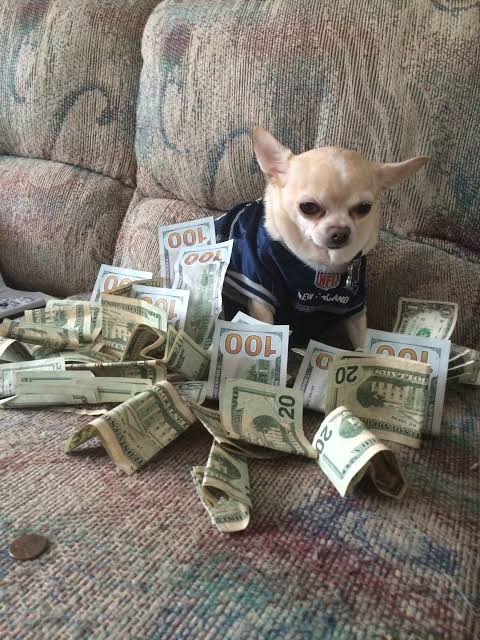
    8) They are wealthy

    Since the plan is to tax the wealthy, that should also include dogs and their endless generational wealth. If you didn’t know dogs are wealthy, ask yourself, what are they always hiding/burying? It’s funds.

    I hope with these few points of mine, I’ve been able to convince you and not confuse you that Nigerian dogs need to be taxed

    For more on what’s inside this life, click here


  • The “Self-Certification” Form Is For Tax Residency Information

    Citizen is a column that explains how the government’s policies fucks citizens and how we can unfuck ourselves.


    In case, you slept yesterday afternoon and suddenly woke up this morning, well, good morning. But a lot has happened.

    The Federal Government directed that all Nigerians should go to all the banks they have an account in and fill something called a “Self Certification Form”. They say the BVN, National ID, Voter’s Card, Drivers Licence, National Passport and all the other data we have in this country is not enough to help them find what they are looking for.

    In case you are still confused, we wrote about it in a series of articles.

    The Real Purpose of the Self-Certification Form

    Taiwo Oyedele, a foremost tax expert has revealed on Twitter that this form is for the exchange of tax information between Nigeria and other countries. Financial institutions would know the tax residency of customers and be able to share the information with other countries.

    In other words, the government (through banks) wants to know the countries you live and where you should be paying different taxes to.

    He also stated that for companies, the government would know who has the controlling interest in a business, commonly known as “beneficial ownership.”

    Other Opinions

    1. It is a self-enforcement tax issue, not an identification issue.

    2. Tax residency is for 0.00001% of the population.

    https://twitter.com/Ambrosia_Ijebu/status/1306738570716229632?s=19

    The Thing About Tax Residency

    For tax purposes, a resident of a country is any person that is subject to tax under the domestic laws of that country by reason of residence, place of incorporation, or any other criteria.

    Because different countries have different ideas on what it means to be a resident, countries generally enter into agreements (or treaties) with one another, so that a person living in say, the US, might still be paying Nigeria’s income taxes.

    It is this exchange of information that Nigeria has entered into with other countries. And that is why this new tax information is needed, so that the government can trace them.