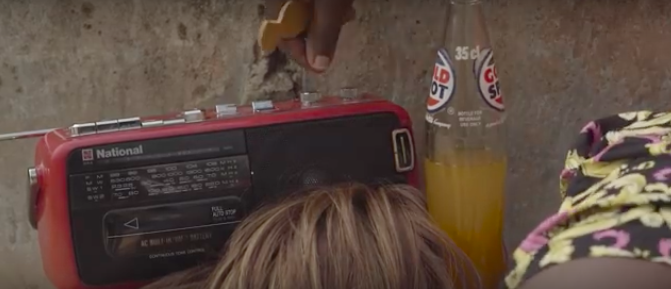
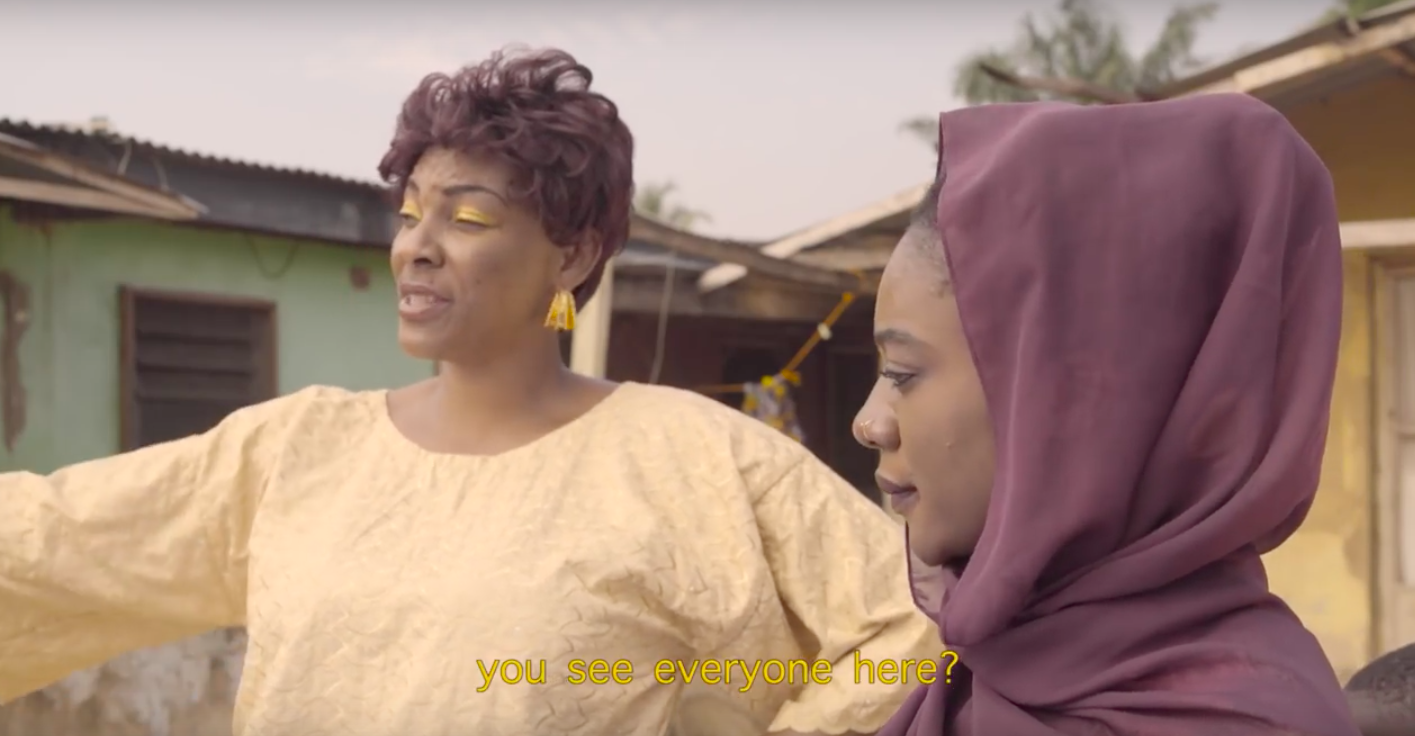
In December 2022, Daniel Orubo, content marketer, strategist and Head of Content at Piggyvest, wrapped up his animated short, Hanky Panky. A month later, he submitted the independent wuruwuru-produced project to the New York Animation Film Awards. By September 2023, Daniel’s film had appeared on the festival’s nomination list for Best Animation Short Film, eventually emerging as a semi-finalist.
Daniel shares how a heated conversation inspired Hanky Panky, the power of storytelling and rich queer stories. He also cites his influences and what comes next for him.
How does it feel to be recognised for your first short film?
I was shocked to be a semi-finalist at the New York Animation Film Awards. But it felt validating. I’ve always cared about being good, not just “good for a first-timer” or “good for a Nigerian”. I want anybody anywhere to recognise the quality of my work.
I’ve done some editing to tighten up scripts for friends in the past, but with Hanky Panky, I got to decide what I wanted — from the look of the characters to the score — and it was fun. Although it didn’t win the award, it got that far, and for my first film, I’m very proud of that.
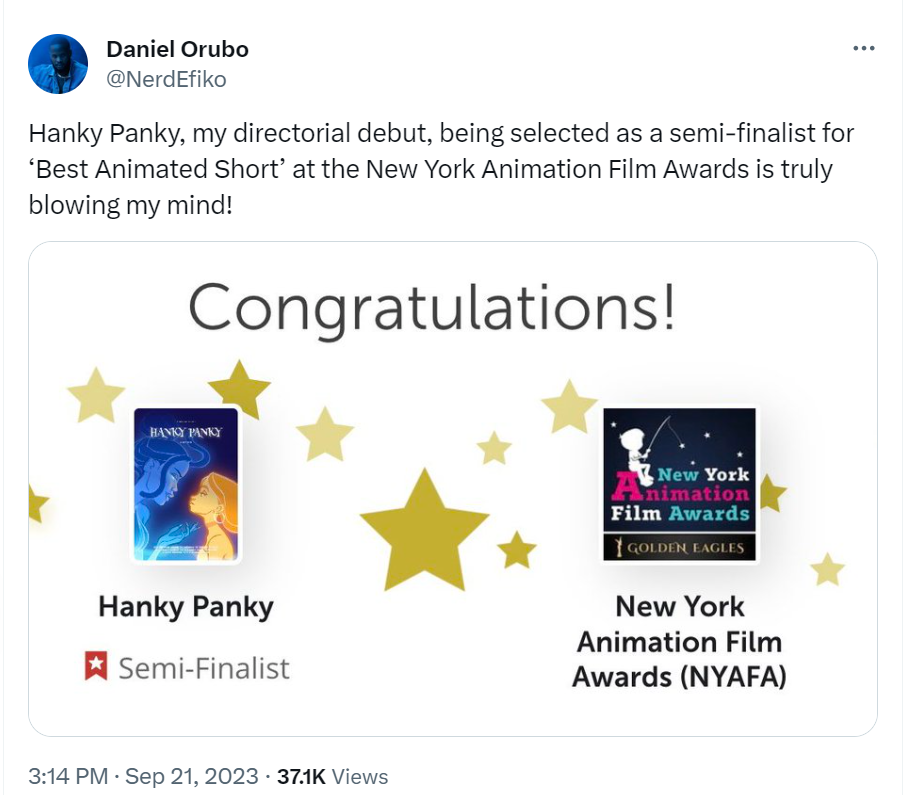
What’s Hanky Panky about?
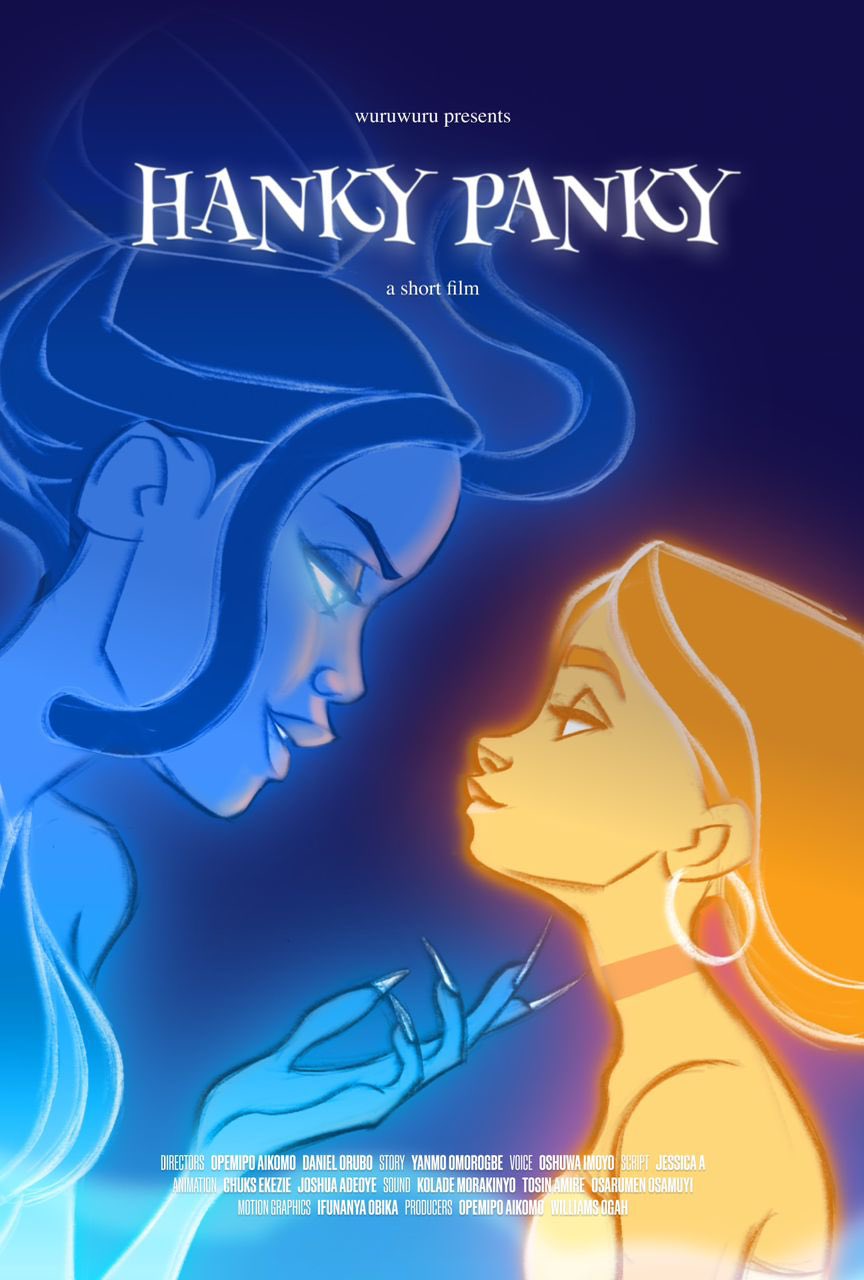
It’s about a phone call between an aunt and the niece she suspects is a lesbian.
It’s based on a conversation that happened while my friends were hanging out. They’d had a joint birthday party the night before, where they danced together like friends do. The next day, an aunt called one of them with “What was that?” and “What’s going on with you two?” questions. The conversation stuck with my friend, Opemipo Aikomo (producer and co-director of Hanky Panky), who was in a car with them when it happened. He told me the story and the idea to turn it into a film.
The friends whose story inspired Hanky Panky aren’t queer. What matters about this storyline is how the mere perception of queerness was enough to generate such animosity. But in my storytelling, I don’t feel the need to spell everything out for the audience. I allow them to decide what they want the story to represent.
How did the story come to life?
At the time, Ope wanted to make an animated film and just needed a story. He really loves animation and wants to see more Nigerian stories expressed through the medium. So he took it upon himself to make this film and document the process.
For me, I’ve always wanted to direct a short film, but when he sold it to me to direct, I wanted to refuse. I consider animation one of the highest levels of art, and I didn’t think I could pull it off on my first try. I was scared, but I trusted myself because Opemipo, who has excellent taste, trusted in my ability to do it. I did a lot of studying. Jessica A., our excellent scriptwriter, worked with what Opemipo recollected of the story, and I did some script editing.
We took some creative liberties. The real event didn’t happen in a traffic jam or at Falomo. Those were added to make the film feel very “Lagos” and Nigerian. Osas, the main character, went from vibing to Odunsi to being angry and stuck in unending traffic. That felt very Lagos to me.
The dance scene stood out
In my head, their dancing wasn’t nearly as provocative as the aunty described, but that was what she saw. That’s why the scene feels almost otherworldly.
In my experience, when Nigerian adults see something they disagree with, their minds don’t see reality. When they see an earring on a young guy’s ear, it quickly escalates to “you must have joined bad gang”. I wanted to capture that tendency to exaggerate.
Is Hanky Panky anything like what you expected of your first work?
For one, I always knew my first work would be a queer story. The initial plan was a live-action short about a guy discovering his sexuality. But Opemipo’s enthusiasm sold Hanky Panky to me. I found the story exciting, and I thought making an animation would be cool.
How long did production take?
I started working on the character profiles in December 2020. That took two days.
We began filming in 2021. The whole production took two years to complete because we were obsessed with nailing details like the sound of traffic and the music they’d be listening to. There were periods when nothing happened because we had to juggle our day jobs. We’d never done it before, so we were all learning on the job.
And it wasn’t cheap or easy. Opemipo, the producer, put money into getting it made. We had to pay to get the rights to use Odunsi’s Wetin Dey, for example. Our music director, Osarumen Osamuyi, AKA Skweird, facilitated the process. We met the payment requirement, and it was approved.
How much does filmmaking mean to you?
It means the world. I have a deep love for storytelling in films.
One of the most significant examples of how important storytelling is to me is how my parents unlearnt homophobia because of Mitch and Cam in Modern Family. They watched it without me, and suddenly, gay marriage was normal to them.
Storytelling is powerful. I had a similar experience as the creator of Zikoko’s Sex Life — a written series. A married woman DMd me on X that reading Sex Life made her realise she was queer. She saw herself in someone else’s story that I’d written for the series. She realised it was too similar to hers, and it made her think about things she’d never considered. She eventually left her husband. That’s how powerful stories can be.
I want to make a Nigerian TV series that follows young people in Lagos — think of a show like Insecure. Lagos is an exciting place, and Lagosians are the most interesting people on earth. I’d love to work on that.
What’s the most important aspect of storytelling in your opinion?
I’m huge on realism and believable dialogue. Nothing throws me off more than hearing someone in movies or books say things I’ve never heard anyone say in real life.
So whenever my friends say something clever, funny or exciting, I write it down in my notes. I’m like, I’ll use this in something someday because it’s just so great. Whenever I read a script, I do it out loud to hear how it sounds to the ear, not just in my head. “Does this sound real?” “Does this sound believable?” I always strive for realism.
I also want to be entertaining. It doesn’t need to be the world exploding. Sometimes, just watching somebody go through something stressful can be entertaining — like Squid Game. I think it was popular for that reason. Even the spin-off game show is a hit.
Who are your filmmaking influences?
I like filmmakers with distinct styles. I like Barry Jenkins. He has only two films out, but they’ve been impactful. I like Denis Villeneuve too — Arrival is my shit. Georgios “Yorgos” Lanthimos is also an influence; he’s a weird and interesting filmmaker. I look for weird and interesting films, and if I really like them, I look out for the director and watch all their work. That’s how I got into these three.
Did you ever attend a film school?
Daniel: No, not yet. It’s expensive. I actually picked up content writing to save up for film school. My friends have encouraged me to keep learning independently and do what I can before film school falls into place.
I agree with them because I wanted to find my voice first. Working on Hanky Panky has made me recognise my passion for telling relatable queer stories. Now, I’m ready to attend a film school with some experience.
How would you describe your style
I’m not sure I’ve fully formed a style yet, but I’m drawn to telling queer stories, real queer stories. Besides Hanky Panky, I’ve produced Feel Good, a written anthology of happy queer stories available online. Schitt’s Creek inspired it. There’s a queer couple in it, and they’re one of my favourite fictional couples because they’re so happy and healthy from start to finish. The other shoe never dropped; I’m not used to that.
But at the same time, only showing the positive side isn’t rich enough. It doesn’t give you the whole story. In Hanky Panky, we showed that moving into the world as a queer (or queer-presenting) person also comes with unnecessary stress.
Will you ever make a film out of “Feel Good”?
A lot of people are already saying they need more. That’s validation, and if a studio wants to help us fund a film adaptation, who are we to say no?
We did Hanky Panky on our own and put it on YouTube. It’s a passion project. We didn’t sell it to any production house. Opemipo’s independent studio, wuruwuru, made it happen. Making another film requires an adequate budget.
So, as a burgeoning Nollywood guy, what was your favourite Nollywood production of 2023?
Breath of Life.
I don’t watch many Nollywood films where a very internal or deep emotion drives the story. Breath of Life gave me that. As much as I love spectacle, a good human drama will always do it for me.
What’s next for you?
I’m still trying to gauge how Hanky Panky performs. If there’s an opportunity, I want it, but I also try to be realistic. I want to see what I can do career-wise, maybe make some money to continue making passion projects. I’m leaning more towards making more money as a content strategist.
Your content writing career is just to raise money for your future films?
Everybody needs money. But I’ve never done a job I wasn’t passionate about. Being a multi-disciplinary creative has allowed me to try my hands at writing, content creation, content marketing and more. I’ll never see it as only raising money.
[ad][/ad]