Notice: Function _load_textdomain_just_in_time was called incorrectly. Translation loading for the wordpress-seo domain was triggered too early. This is usually an indicator for some code in the plugin or theme running too early. Translations should be loaded at the init action or later. Please see Debugging in WordPress for more information. (This message was added in version 6.7.0.) in /home/bcm/src/dev/www/wp-includes/functions.php on line 6121 Religion | Zikoko!Religion | Zikoko!
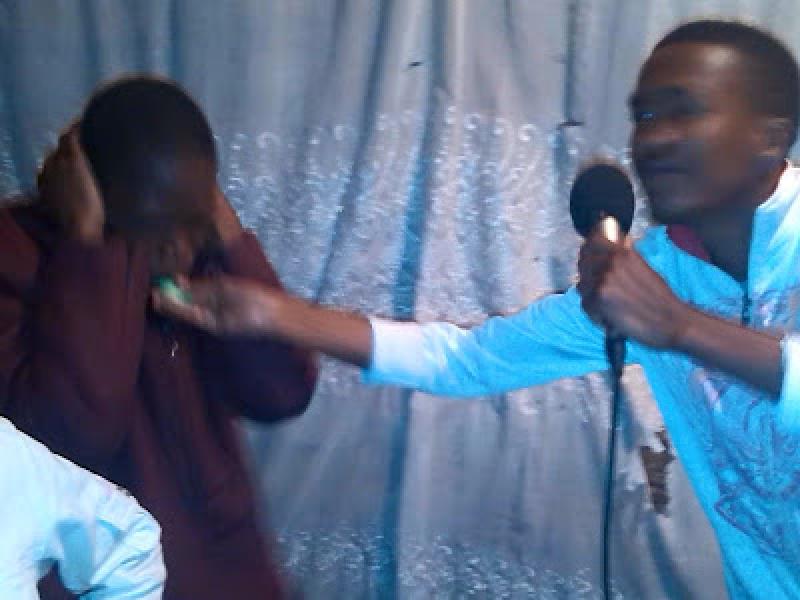
Over the weekend, the senior pastor of Dunamis Gospel centre, Paul Enenche, publicly embarrassed a congregant who shared a testimony about her new law degree. The woman who seemingly lost her composure due to stage fright described herself as a “BSc graduate of law”. For Enenche, this was all the evidence he needed to shut down her testimony as a blatant lie.
In the hours that followed, pictures and documents surfaced on social media confirming the woman’s claims to be true. Enenche released an apology statement but not before the aggrieved woman lamented the treatment on Facebook saying: “How shattered I must have felt to be disgraced by my spiritual leader in such a manner?”.
The entire exchange got me curious about the complexities of navigating conflicts with spiritual leaders who are often held in high regard by their followers. I found these people to share their experiences with their religious leaders.
Habib*, 30
In 2021, I returned to Quranic school because I had some free time on my hands. I was 26, but the Qur’an instructor always moved like no one was beyond ass-whooping. I didn’t like that but he had a way of teaching that made it easier to learn the Quran.
One day, I missed a recitation and this man gave me six hot strokes of cane on my butt. I’d never felt that embarrassed in my adult life. I stopped attending the classes and ignored him on the streets. He soon noticed my absence and visited me at home. He tried to avoid the topic and asked why I’d not been coming. This was when I gave him a piece of my mind about how he humiliated and physically assaulted me. I don’t know if he was genuinely remorseful or just wanted another student back, but he apologised. I returned to school a few weeks later and we’ve built a mutual respect since then.
The biggest women-only festival in Lagos is BACK. Get your tickets here for a day of fun, networking and partayyyyy
Dami*, 28
Back in uni, I once had a clash with our campus fellowship pastor who was a final year student at the time. I can’t remember the details of what happened because it’s been so long but I know it had something to do with me refusing a directive from him. He didn’t like that I disobeyed him in public and things got physical. Some other church executives settled us but this guy refused to apologise for raising his hand against me. I attended church after the weeks that followed and the pastor carried on like nothing happened. He limited his interactions with me and I returned the same energy. That incident lifted a scale off my eyes and till today, it’s a constant reminder not to place men of God on any high pedestal. They err, too.
Kaffy*, 35
I had the bitchiest fights with the Ameerah (leader of female Muslims) when I was in uni. I only wear scarves or hijab during prayer times but somehow this person thought she could change me. I mean, my parents didn’t even try to enforce the head-covering rule, but you, whom I only met in school, thought you’d change that? She’d give me the coldest shoulder when I wasn’t covered and try to warm up when I showed up covered in the mosque.
I wasn’t cool with the pretence and called her out on her bullshit during one of the Muslim sisters’ Sunday meetings. She didn’t see it coming and didn’t like it either. If she didn’t like me before, calling her out doubled the dislike. In my mind, I was like “You won’t make a malice-keeping sinner of me”. So, I met all her cold shoulders with loud greetings of “Salam alaikum sister” or asking her for help when I didn’t need it. More than six years after school, we’re still friends.
Victor*, 40
We moved from Lagos to somewhere in Sango Otta last year, and it wasn’t easy to keep up with the travel time to my church on the island. So I decided to scout for a church in the area and found one. It was a new fellowship and the head pastor seemed like a nice woman. I attended for a couple of weeks, but somehow the service didn’t feel like my former church. I decided to start alternating visits between my new and old church. The pastor at the new church noticed this and asked why I’d missed previous services. When I told her about my arrangement, I noticed a look of betrayal on her face. Her response also hinted that she wanted me to choose between both churches. In the following weeks, she reduced her niceties and barely regarded me on the days I attended. I was slightly disappointed but I didn’t let it deter me from attending. I’m there for God and not her.
Johan*, 32
I didn’t really have conflict with my former pastor but I left his church because I didn’t agree with some of his ways: He was anti-women. When my parents once had issues in their marriage, I shared it with him and I left that conversation feeling hurt because he outrightly put the blame on my mum, calling her a witch.
He was also the “I know it all” type of pastor who felt his ministry was the beginning and end of salvation. At some point, I evaluated all of these experiences with him and knew it was time to leave. I’m now at a place of forgiveness so I find it hard to recount some of the things I encountered.
BBC’s investigative documentary on TB Joshua is unhinged for many reasons, but one thing is crystal clear, the clergyman’s ministry ticks all the boxes of a cult.
A cult is a religious organisation with unusual spiritual and philosophical beliefs. Followers are often brainwashed to embrace extreme teachings and practices, and would often need external intervention to get separated from the institution.
We recently asked people who’ve found themselves in cults in the past, and if your church or mosque exhibits most or all of these signs, it might be time to pack it up and run for dear life.
The spiritual leader is called “Daddy, Mummy”
When you call a person who isn’t your parent “mum or dad”, it means you respect them a lot. In the case of a religious leader, you hold them in high reverence. They, in turn, see you as a child who needs guidance at all times. You’ve probably now been placed in this perpetual state of childhood, forever dependent on them.
The institution is heavily tied to the founder
On the websites, it’s quotes and pictures of the founder. You’re bombarded with posters and stickers of the founder often touted to offer some form of protection. Recommended texts are books written by the founder. Can you see the pattern at play? Please, dust your slippers and run away.
“We’re one big family”
We’ve already established this as a corporate workplace red flag, but if you didn’t know, you should also run if your church casually throws the statement around. The idea is to ostracise you from your actual loved ones to form new relationships with fellow brainwashed members.
Every call-to-action comes with an ultimatum
When you start getting messages like: “If you’ve not paid your tithe by XYZ, God won’t be happy with you or If you miss this vigil, you’re not ready for blessings.” If you go against their directives, you’ll be met with subtle hostility, and sometimes, ostracism.
Punishment for missing activities
A normal religious institution understands your spiritual activities are just one section of your life, and as such, there’ll be times when you’ll miss things. But if these lapses are greeted with penalties of any kind, there’s probably a huge problem that needs escaping from.
[ad]
Donations that tie your worth to money
A religious institution is the one place that should be open to everyone regardless of social class or financial standing. If you’re constantly asked to donate, if rich members are given special treatment, if donations are ranked according to frequency and amount given, you really shouldn’t wait to find out the worst.
You must recruit new members
While it’s not bad to want to spread the gospel and get more people to join your cool church or mosque, it becomes a problem when this takes the form of an aggressive sales pitch. It gets more suspicious if the special department carved out for those saddled with this responsibility are given a monthly quota of new recruits.
Repetitive drills
This is probably the most important sign to look out for. Sometimes, you don’t know when you’re being brainwashed, and you’re far too gone when people around you find out. But try your best to look out for repeated drills that take the form of chanting or constant recitals. According to Anneka, one of the late TB Joshua’s victims featured in the BBC Africa documentary, they’re trying to make you lose cognitive clarity so you can obey and take orders without question.
In response to this tweet, I was on the lookout for people who actively practice non-mainstream religions when I found Chuka* (28).
He talks about growing up as a member of the Brotherhood of the Cross and Star, believing their teacher is the returned Christ and the misconceptions people have about his belief.
You know how people say they only realised they were Black when they relocated abroad? I only realised my religious beliefs were “strange” when I was seven years old.
I was returning from a Brotherhood outing with my family, when a middle-aged man sitting by the road spat in my mum’s direction and said something like, “God is patient for keeping these occult people alive.” I asked my mum the meaning of what he said when we arrived home, but she brushed it off.
It stayed with me.
I’m a member of the Brotherhood of the Cross and Star (BCS), but outsiders typically refer to us as “Olumba Olumba Obu”, which is the name of our leader. My family has been members of the Brotherhood for as long as I can remember, and we’ve faced accusations of our religion being a cover for “evil occult” practices for even longer.
Our doctrine isn’t that far off from mainstream Christianity. We teach from the Bible, emphasise practising love, eschew sin and even have well-structured “church branches” we refer to as Bethels.
We don’t view ourselves as a church, but rather as the New Kingdom of God on Earth. We also don’t believe Christ is coming back to Earth because he is already with us. Our founder and supreme father, Leader Olumba Olumba Obu, revealed his son, His Holiness Olumba Olumba Obu, to be the second coming of Christ. We call His Holiness the “King of Kings and Lord of Lords,” and we know and believe him to be the returned Christ.
This is supported by the Bible because it affirms that the second coming of Christ won’t be like the first. Plus, His Holiness wasn’t born by intimacy but by prayer.
The spitting incident isn’t the only case of intimidation I’ve experienced. In primary school, we were asked to write an essay about our holidays, and I mentioned the Brotherhood. From then till I left the school, they called me “Obu’s child”. I even had two teachers call me aside to try to “convert” me to the light, saying I’d go to hell.
By the time I was 16, my mum made us start removing our white garment immediately we left Bethel because we’d heard cases of people being stoned and drenched in water because of the regalia. We had a neighbour who always prayed loudly in the night for occultic people (AKA my family) to meet their end.
But interestingly, all that made me even prouder of my kingdom. Even the Bible says many won’t believe in the returned Christ, and people will always persecute the truth.
In uni, I stopped trying to hide and became vocal about my beliefs. Whenever people tried to argue with me, I’d tell them to visit a Bethel or listen to any of our everlasting gospels online to hear the truth. People fear what they don’t understand. We pray in Jesus’ name, sing spiritual choruses, love each other and live a peaceful life. We’re core vegetarians because we don’t believe in killing animals, and it’s even healthier.
When someone recently asked me why it’s called “Brotherhood” if it isn’t evil, I referred to our Leader’s teachings, which explain that we’re one in spirit. “Brotherhood” simply means “oneness”. It’s why we don’t kill animals; we’re all one, and love is universal.
I briefly dated someone who ended the relationship because she saw a comment I made on social media, along the lines of, “May the blessings of our father, Olumba Olumba Obu, remain with you.” It’s funny because I’d already told her that I was a member of the Brotherhood. Maybe she didn’t think I was serious. Another ex even told me to my face that “darkness has no place with light.”
Mainstream Christians are the most intolerable, and sometimes, hypocritical. In uni, one fellowship president tried to convince me that my beliefs were blasphemous and I’d be condemned if I continued. But the same person was fornicating on the low.
I still get strange stares today when people hear about my beliefs, but I largely ascribe it to the misconceptions about our Leader. I’ve heard stories about how we always use candles and other strange things to pray, but it’s not true. Some even say our Leader performed miracles by witchcraft, that he’s long dead, and his son just “took over.” If people can only look past pre-conceived notions and listen to the teachings with an open heart, they’ll come to the light of the Father.
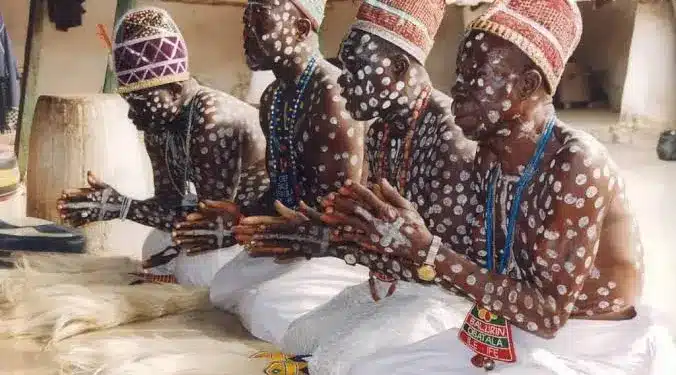
The Lagos State Government recently declared August 21 as a public holiday in commemoration of Isese Day; a special day dedicated to traditional worshippers in the state. Here’s all you should know about the traditional celebration.
What is Isese Day?
Isese is the Yoruba word for “tradition”. Isese Day is essentially an umbrella term for different festivals celebrated by traditional worshippers in Yorubaland and in the diaspora. Some of the activities include singing, praying, chanting and offering sacrifices. Common colours worn on the day include white, red and black.
Is it a national public holiday?
It is observed as a regional holiday in some southwestern states. Ogun, Oyo, Osun, and recently, Lagos, have officially named August 20 as the day set aside to mark the traditional celebration.
When was it declared a public holiday?
Isese Day was first declared as a public holiday in August 2014, in Osun state during Governor Rauf Aregbesola’s administration. According to the then Commissioner for Information and Strategy, Mr Sunday Akere, the United Nations (UN) celebrates indigenous religions across the world on August 20.
On August 18, 2023, the Lagos state government followed suit as Governor Babajide Sanwo-Olu declared Monday, August 21, a work-free day for public servants in the state. According to Lagos State Head of Service, Mr. Hakeem Muri-Okunola, Governor Sanwo-Olu’s decision was taken “with a view to promoting our indigenous culture and tradition while preserving our heritage.”
What festivals are celebrated in honour of Isese Day?
Ojude Oba, Olojo, Oro, Sango, Eyo, Osun Osogbo and Igogo are popular festivals which are celebrated in the weeks leading up to August 20 which is the grand celebration known as Isese Day.
I grew up in a Muslim family of five. We were moderately religious, at least when I was younger.
My father had grown up in a staunchly religious family but left home early, so he couldn’t learn so much about the religion before going off to boarding school. He didn’t want the same thing for me, so I started learning about Islam very early on.
I was five years old when I was first enrolled in a Madrasa — an Islamic school, where I learned about the basics of Arabic and Islam itself. I spent two hours at the Madrasa after school on weekdays and five hours during the weekends.
By the time I was eight, I’d memorized the entire Quran. It was a flex; many people in the area and in my family thought it was a cool thing to achieve at such a young age.
I didn’t stop attending the Madrasa after this, so I was able to go deeper into my studies. At this point, I was in the high school equivalent of Islamic Studies. I learned about Islamic Law, Arabic Grammar, theological thought, and even how to write poetry in Arabic. When I was ten years old, I was already speaking fluent Arabic.
A female childhood best friend recently told me she always thought I’d become a Muslim cleric. But I did not.
At the time, though, I was the model kid for my dad and my extended family — well-learned in religion and doing great at school, too. It was the best of both worlds for them.
But there was one problem — I was too inquisitive. It started off as a harmless thing my dad indulged, but it eventually took on a life of its own.
I’d question everything I didn’t understand, and I’d debate you until I got a satisfactory answer.
In early secondary school, I got into religious debates with my Christian classmates about which religion was “more correct”. Now that I think about it, I must have been quite insufferable. To me, I knew everything, and my religion was perfect. There were no flaws in what I’d learnt, and I had sound logical explanations for everything. Not that the interreligious conversation ever went beyond harmless debates, but I derived pleasure from proving that I was right.
I was 13 when I first realised that I might be wrong. It started when I asked the cleric I’d learned from a question about the concept of destiny. In the Islamic doctrine, belief in Qadar (destiny) is one of the articles of faith.
But the explanation I got from my cleric just didn’t make sense.
As a Muslim, you’re meant to believe that everything that happens is ordained and destined by God. Both the good and the bad stuff. And this doesn’t apply to just the broad strokes of our lives alone. Even the tiny details like the choice of food you had for breakfast on a certain Monday happened because God said so.
My question was simple: if this was the case, why does God still need us to pray, have faith, do good, or even do anything? Since it’s simply all His will playing out in everyone’s life.
For the first time, I was told that some questions are inspired by the devil. But this event was the start of my search for answers. I asked every adult I knew for answers, and while they all saw how inconsistent the idea was, it made them sick to their stomach that someone pointed it out. They were always shocked at the realization of what the logical conclusion is. So, they’d ask me to stop asking questions and stick to my faith, because some things are beyond the knowledge of man.
Since I couldn’t get answers from the people in my life, I turned to books. My dad never censored the kinds of books we read, and luckily, my school had lots of them. It had books that had no business being in the library of a secondary school. It had novels that explored the history of religion, and even a copy of the Bhagavad Gita. It was there I read a lot about other religions and the doctrines they’re built upon. I also learned about Abrahamic religions through the lens of history and started to see things really differently.
For example, I read about how the collation of the Qur’an was completed many years after the prophet passed, and how the formation of the Qur’an formed the basis for standardised Arabic today, as the tribes had different dialects at the time.
So, how could I even be sure that what I’d memorised actually meant what I was taught that it meant? It all started to seem a lot less divine at this point.
Also, with the thousands of religions that exist, and the documented reports of metaphysical experiences from each of them, how can I ever be sure that mine is the right one?
I suffered cognitive dissonance for a while, but I just kept learning outside of what I’d always known. When I went off to university, I was finally able to be open up about my views with the friends I made. Some of them were shocked that I’d say such things, while others admitted that they had their doubts, but they’re choosing to believe. With time, I realised that I didn’t really care so much about the faith anymore.
I started missing prayers because I thought, “What’s the point anyway?”. I also got tired of asking questions because I mostly didn’t care anymore. At home, my parents noticed that I’d stopped praying altogether, but they thought it was just a phase. They still forced me to do it anyway, but it was all for show.
A year ago, I had an existential crisis that shook me. I felt like I needed some sense of meaning since I didn’t believe that anyone up there was guiding my life anymore. I was somewhat depressed because it felt like my life had no meaning whatsoever. I thought, “Why not just go back to the safety of having faith in God? Does it really matter if any of it is true?”
I started praying often and doing all the things I’d normally do as a devout Muslim, but it felt like I was only going through the motions.
I’ve made my peace with it now — I’ve outgrown faith, and I doubt that anything can change it. But I don’t intend to come out publicly about my disbelief, at least not in real life. So, I’ll carry on and hope something changes and makes it feel right again.
Navigating life as a woman in the world today is interesting. From Nigeria to Timbuktu, it’ll amaze you how similar all our experiences are. Every Wednesday, women the world over will share their experiences on everything from sex to politics right here.
When I was about four, my father donated his compound for a friend to use when he was starting a church, so you can say I lived in church growing up. I was immersed in the culture around church, religion and spirituality, and I loved it so much.
My childhood friends were children of ministers and workers who were also always in church — my home. I wasn’t as close to my primary school friends because I was always excited to get back home and hang with the church kids all evening. I was also excited about Sunday School and the Bible stories and lessons we were taught.
The church had all these activities for the kids: drama, dance, singing and competitions. I used to win all the Bible-related competitions like Bible sword, reciting memory verses, etc.
Sounds so nostalgic
Yes. My favourite things about that period were the beautiful Christian picture books I owned, with vivid illustrations of the creation story, the nativity. I especially loved the depictions of Egypt — the stories of Moses and Joseph.
I’m a digital artist today because I fell in love with art while replicating those picture book scenes with my paper and crayons, and later, watercolours. I’d paste my replicas all over the walls of my room. I found art through Jesus.
I grew to love Jesus because He was so good, kind and caring. I still love the idea of being connected to and loved by such a divine figure. I had such a beautiful, happy childhood. I didn’t really notice anything missing until I entered secondary school.
If you’d like to be my next subject on #WhatSheSaid, click here to tell me why
What was missing?
I discovered what it meant to be poor or rich, pretty or ugly, lonely or popular.
I always felt my parents were comfortable because they’d give stuff away and help people with money when they were in need. But they weren’t really; we were just getting by. Before secondary school, everyone hung out with everyone because the concept of being popular wasn’t a thing. But my church friends made new friends at their own schools and didn’t attend church as much. A lot of them even japa’d with their families or went to boarding school, or just weren’t as outgoing as we were when we were younger.
And how did you navigate all that?
I found singing, again, through Jesus.
While my school was secular, the owner was a devoted Christian, so there was strict assembly and devotion every morning with at least 30 minutes of praise and worship. In JSS 2, I volunteered to lead those. I did so well the first time that I was selected to lead the morning assembly once every week. I eventually became chapel prefect in SS 3.
Having that, and of course, studying to get good grades, gave me purpose, but I still struggled with loneliness.
Why?
Things happening at home made me terribly sad.
My parents were constantly fighting abusive and violent fights at this point. They’d leave me and my siblings alone at home until nighttime. And as the middle child of three, I felt scared and neglected. I wanted to kill myself all the time. I’d lie in bed, seriously considering it because I didn’t have anything to look forward to. I wasn’t happy anymore.
But Jesus, and the thought of continuing my suffering in hell, stopped me from doing that.
Did adulthood help these feelings?
Adulthood comes with its own struggles — from family drama to work pressure to money wahala. There’s also the depression that comes with not achieving your dreams or goals. I find that I’m always struggling to find joy in the little things just to get by. And then, finding that I wasn’t straight didn’t help matters.
How did that happen?
In secondary school, I crushed on up to ten different guys, especially in senior school. I felt I was really attracted to these guys. I’d stare at them and some ended up being my friends.
But I only dated one guy towards the end of SS 2. We broke up in SS 3 first term because I didn’t know how to commit. I “liked” this guy, but I didn’t really want him in my personal space. I didn’t want to always hang out with him, which makes sense because I was 16 then. I think back to my classmates now and wonder how they could be so committed to their boyfriends at that age.
Exactly. But then for university, I went to a Christian private school, so it was more church culture, and I immersed myself in it. It was my comfort zone, after all. I joined the choir and was generally at peace until I realised I didn’t like any of the guys. It’s not like I was caught up in dating, but you know at that stage in life, it’s a huge focus for most.
At one point, I thought I was a misandrist, but I didn’t have a problem being friends with guys. In fact, I get along with guys a lot. Most of my friends are guys today. But once they try to get romantic or remotely sexual, I get turned off. I’d just literally switch off and freeze up before I even notice.
How did your church preach about sex? Do you think that affected your perception of it?
I don’t think so.
My alma mater was strict regarding sex and relationships: if you were caught alone with a guy or even holding hands walking down the streets, you could get anything from a warning to suspension from school. But that didn’t stop anyone.
I wouldn’t say my church affected my perception of sex, but maybe my personal relationship with God did.
All right. How did you figure out what the problem was?
Towards the end of 100 level, someone told me I behaved like a lesbian, and I was so confused. Until that point, I thought lesbians had to be tomboys. I’m quite feminine in my dressing and behaviour. Well, actually, I’m in between. I’m quite sporty and tend to be assertive, things people wrongly associate with being manly. But other than that, I wouldn’t consider myself a tomboy.
In 200 level, I realised I had a crush on my roommate. We were roommates for three years, and we’re still friends today, but she still doesn’t know I like her. In school, I wondered how boys weren’t falling over themselves to date her because she was so attractive.
So you’re not attracted to men at all?
No. I can’t stand them romantically, TBH.
How they talk once they’ve decided they want to date you or get in your pants? It’s off-putting to me. They aren’t all like that, of course. Some are actually serious about liking you and being committed, but on a fundamental level, I don’t really connect to how men think or process things.
Even their build and essence turn me off. When I think back now, all the guys I ever crushed on — secondary schoolmates, celebrities — were all almost effeminate. I know my friends would never be able to wrap their heads around this, but it really just feels natural.
For more stories like this, check out our #WhatSheSaid and for more women-like content, click here
Got it. And how’s it been since you discovered your sexuality?
Uneventful. I haven’t had the nerve to approach women sexually or even search for communities where I’ll be welcome. I’m still very much in the closet. No one knows. Not one single person I know knows I’m gay.
Not even your family?
My mother and siblings know I’m a pride ally and speak up against homophobia and for gay rights, but that’s it. I’ve tried to hint it to my mother because we’re like besties, and I’ve noticed she’s been much more respectful of the gay community, but she just zones out anytime I try to connect myself directly to it.
One time, while we were having a conversation, I told her I sometimes understand lesbians because I can’t stand men romantically, and it was like I didn’t even say anything. She just went on with what she was saying beforehand.
She’s a Nigerian mum after all
True. And I’m not really upset with it. But finding my sexuality in university brought back that feeling I had entering secondary school. I felt and still feel lonely, alone with my thoughts and wishes. Oh, and guilty because Jesus doesn’t love gay people.
About that. How do you reconcile your faith with your sexuality?
By not trying to date women? I don’t know. I don’t really reconcile it, and that’s why I’m so miserable right now. I’m not exactly active in church, but I never miss Sunday service. I find my relationship with Christ ironically uplifting when I temporarily suspend my interest in women.
Do you have an escape this time, at least?
My art and listening to music still. But I know I’m going to break and find a woman who’ll love me soon because I’m dying of loneliness.
How do you plan to find someone?
I’ve reached an age where my worldview has expanded, especially with work and social media.
During COVID, I found out one of our freelancers was gay when my ex-boss told me about it in this scandalous tone as reason for cancelling her contract. My ex-boss never would’ve guessed I, too, was a lesbian. Through the freelancer, I’ve discovered a couple of other people like us. Honestly, I feel relieved because Nigeria can be so homophobic, right?
Right. Would you ever come out to your friends and family?
I don’t want to think that far. I have no idea. I’m so sure they’d just not get it.
I have this feeling I’d elope with a woman one day and leave my parents to believe I chose spinsterhood. Or maybe I’ll do nothing and just try to conform to being straight and a proper Christian. I’m not sure I’ll ever let go of the guilt otherwise. I’ll always think of how Jesus is disappointed with me.
He saves me from taking my own life every day, so maybe my sexuality is a small sacrifice to pay to show gratitude?
What’s it like to grow up with deeply religious parents who believe the world’s most celebrated holiday is a “pagan ritual”? Sophia* shares why she still feels guilty about Christmas, as a 25-year-old adult who no longer attends her parents’ church, but still lives with them.
As told to Boluwatife
The first time I remember hearing the word “Christmas” was in December 2006. I was nine years old, and my new primary school was organising a Christmas party. I’d just transferred to the school some months before when my military dad was posted to the state. My teacher had mentioned the party in class as she handed us letters to give our parents.
She talked about picking pupils to star in a Christmas play during the party, and I remember my best friend, Chidera, being all excited about it. Even at nine, I knew Chidera was dramatic, so it only made sense she’d want to act in the play. I had no interest in acting, but seeing her excitement made me look forward to attending the Christmas party. I never did.
I took the letter home and handed it to my mum — it was an invitation to the party, including details of how much each pupil was to pay. My mum went berserk, and the next day, she was at my school shouting at my teacher and headmistress. I didn’t really understand the problem at the time, but now, I know too well.
You see, my parents are staunch members of a conservative church whose doctrines deeply frown against things like make-up, female trousers, drumming in church, hair extensions, and most importantly, celebrating Christmas. They believe the Bible never mentions celebrating the birth of Christ or even the date he was born. According to them, the star that led the wise men to Christ could’ve been engineered by the devil to help King Herod find and kill the baby.
In conclusion, Christmas was a no-no in our house, and it became even more apparent after this Christmas party incident. I’m an only child, and since my dad is the stereotypical hardly-around, leaves-child-training-to-the-mother kinda father, my mum made it her duty to drill into my head the dangers of taking part in a “pagan ritual” and going against the will of God. It didn’t help that I suddenly became aware of all the lovely things other children in the barracks enjoyed during the festive season.
On Christmas day, you’d see them match around the barracks in new clothes, with money in their hands to buy sweets and biscuits. The stubborn ones would even buy banga when it was considered contraband in the barracks.
I desperately wanted to wear nice clothes and buy sweets too. But on Christmas Day 2008, I made the mistake of suggesting it to my mother. She beat me so much I still have a scar on my right elbow to remind me of my foolishness.
I never mentioned Christmas at home again. I moved out in 2014, when I got admission to the university, and stayed on campus throughout my five-year degree period, only visiting home during the holidays. My school was in a different state, and it was expensive to travel, so it only made sense to limit my visits.
Living away from home, especially when you have strict parents, opens you to a level of freedom you never had before. It was in school I started using makeup and wearing trousers. I also experimented with relaxers and hair extensions before I decided I hated it and went fully natural in my final year. I had freedom, but I was still religious. I don’t think it’s possible to just throw away everything you’ve known all your life.
I still regularly attended church, but not my parents’ church. I attended the campus branch of their church once, then my roommates invited me to their church. I went with them one Sunday and never looked back.
It was one of these new-generation churches I’m sure my parents would rather die than attend, but fellowshipping with young believers helped me experience religion in a different light. I learnt that God isn’t just the “all-consuming lion” my parents project him as, but he’s also a loving father. I loved that church, but never got used to the ladies praying with uncovered hair. What’s that they say about leopards never changing their spots?
Maybe it’s the reason why I never got comfortable during December activities at the church. They didn’t share my home church’s Christmas-is-a-sin beliefs, and from the very first day of December, you could tell Christmas was in the air. They’d decorate the church hall and stuff every service with Christmas messages and carols. We even did secret Santa and exchanged gifts during the Christmas Day service. I loved it, but I never got rid of my mum’s voice in my head, shouting, “Don’t participate in pagan rituals!”
For the December holidays I spent at home, it was just easier to follow the status quo and attend my parents’ church. They didn’t do any special December activities, of course, so it was just like old times. My mother did notice my relaxed hair once — I never wore makeup or trousers at home — and might have killed me if our neighbours didn’t interfere. She didn’t talk about it again, which is surprising, but I think she feared I might do worse in school.
After finishing university around 2020, I returned home for what was supposed to be a brief stay before National Youth Service Corps (NYSC) posting, but COVID happened, so I basically served from home, and I’ve been here ever since. I got a job close to home in 2021.
Even though I no longer attend my parents’ church since I started working in 2021 — I refused to give in to their demands to go with them — I still have to respect them by toning down my fashion, and of course, never mentioning Christmas. It doesn’t mean I don’t miss the carols, decorations and gifts, but to be honest, I’m not entirely sure my current anti-Christmas stance is out of respect for my parents or a nagging feeling that I’m sinning against God.
Maybe I’ll grow out of it one day, but I don’t see it happening while I still live under my parents’ roof.
*Subject’s name has been changed to protect her identity.
The Nigerian Voter is a series that seeks to understand the motivations that drive the voting decisions of Nigerians — why they vote, how they pick their candidates, why some have never voted, and their wildest stories around elections.
The subject of today’s The Nigerian Voter is Safiya, a Muslim lady from Kaduna State in her twenties. She moved to Lagos in 2018 in search of greener pastures. She told us about her past experience voting in the North, and her views on religion and tribalism when it comes to the voting process.
What made you come from Kaduna to Lagos?
I moved here in 2018. The economy is very poor there in Kaduna and farmers are not making ends meet. Here in Lagos, I am making more money than my secondary school teacher and I can employ him, even with my mama put business.
So that being said, I came to Lagos to get what I want, which is a better life for myself. Kaduna was just too poor and it is not safe with Boko Haram attacks here and there. Most people living in the North are just branching out to different parts of the country.
Have you ever voted before?
Yes, I have.
In 2019, I went to Niger State to vote (since that was where I registered), but it was a terrible experience because the INEC chairmen there did not allow one to vote.
It’s only the people that settled them with money (bribes) that they allowed to vote. If you don’t settle them well, the vote will not count.
Have you ever faced any form of harassment during voting?
Yes oh, very well.
I can remember an INEC guy slapping me across the face because I was arguing with someone that jumped the queue. Unknown to me, the person had already bribed this guy with N20,000, which back then, was a lot of money in the North.
Even a pregnant woman nearly lost her baby in my presence because she was pushed down with violent force. It was a really tough time.
Who did you vote for then and why?
That time, I voted for Buhari, because I was scared that nobody else would win if I voted for them. I know that with these elections, if someone is running for office a second time, it’s that person that will win.
So since 2019 was for Buhari’s second tenure, I just voted for him anyway.
Do you regret voting for Buhari now?
Ah, well, sometimes I wish I had the courage to vote for someone else.
Atiku may not be the best person for Nigeria, but he is better than this Buhari. Anyways, I’m just hoping that 2023 will be different with the right person, insha’allah.
Who would you vote for in 2023 and why?
Peter Obi, because we need an educated person that can develop the country financially. People know that supporting businesses will reduce the financial pressure on them as a government, instead of simply encouraging the usual employment by people.
Peter Obi has these ideas. And you know Igbos, they’re quite skilled with this business thing. So I know he would create financial freedom for businesses. We would also have our own Nigerian-made stuff instead of importing. I don’t trust men like Tinubu to deliver, and Atiku should go and rest. The man has been running for president ever since I was in primary school.
Igbo men are always very successful in business, so I know that if I vote for Obi, he will create ways for businesses to grow. Maybe I can get a restaurant instead of this mama put.
But would you say religion should be a big part of your criteria for a candidate?
Look ehn, Nigeria is the way that it is now because we are all voting based on tribe or religion. In 2015, my people voted for Buhari because he is from the North, but look at how that turned out. If I was ever told that my own Northern Muslim brethren could treat us this way, making us become refugees in other parts of the country, I would never have believed it.
Election is not about religion or tribalism. We need to vote for the right person. It is religion and tribalism that made us vote for Buhari the first time, and look at where that turned out. I can’t vote for Tinubu because he extorts people, and he doesn’t care.
Look at this flooding crisis for instance that happened in Kogi State. Did Tinubu ever go to visit any of those victims? How many days passed before Atiku visited? It was only Obi that had enough sense to go to those places and sympathize with them, and help them. Why would I not vote for that kind of leader?
Tinubu said emi l’okan and they’re playing with the presidential seat as some sort of royal seat that is turn by turn. Is it a royal family thing, that you’re saying emi l’okan? Rubbish. This time, we need to all vote and our vote has to count!
Who are the people you know voting for?
It’s still Peter Obi oh, even in the North.
I can’t say I know a single person that wants to vote for Atiku or Tinubu. It’s because my own people are all into a business and they’ve seen that Peter Obi is their man. They will go to the polls en-masse in 2023 and cast their vote!
Navigating life as a woman in the world today is interesting. From Nigeria to Timbuktu, it’ll amaze you how similar all our experiences are. Every Wednesday, women the world over will share their experiences on everything from sex to politics right here.
This week’s #ZikokoWhatSheSaid subject is a 28-year-old Nigerian woman. She talks about writing as a form of therapy, being a Christian in a staunch Muslim home and raising 17 cats.
What’s one thing that makes you happy right now?
Right now? Writing.
It was a huge part of my life until I had a four-year writer’s block. A few weeks ago, I started writing again, and I can feel myself becoming lighter. I still haven’t gotten my groove back, but knowing that writing isn’t completely lost to me makes me happy.
Of course, being around my family makes me happy too, but writing adds a layer of self-fulfillment.
How so?
When I had writer’s block in 2018, I almost prayed for death because I was tired of living. I’ve started writing again, and it gives me something to look forward to when I wake up. Sometimes, I hate getting sleepy because it means I have to stop.
I don’t even write to get my books published or anything. I just have so many stories in my head, and I love bringing them to life. It’s like I get to create my own world, and even if it’s just for a little while, I can live in it.
What do you write about, and how did you get into writing?
I started out of boredom. It was the first week of senior secondary school in 2007, and I was sitting in class doing nothing. I picked up a pen, took one of my school books and started writing a story. It was romance, but there were some elements of my life in it. When I was done, for some reason, my classmates liked reading it. So I wrote more.
After a while, it stopped being about boredom and became my every waking and sleeping thought. I would dream storylines and be inspired by everything and everyone around me. I even wrote a three-book series about my best friend that I hope will become a TV series someday.
You were on a roll. So when did the writer’s block happen?
After I met Christ in 2012, I wanted my writing to include my faith, but it was so difficult. I was used to writing your typical romance so switching to gospel was like learning how to drive an automatic car and suddenly having to go manual.
I refused to write anything else, but what I wanted to write seemed beyond me. Coincidentally, I was really busy with university, and then law school. A lot of things were happening at the same time, so writing sort of fell away from me. By the time I settled into adulthood, I realised I couldn’t write like before. I’m so glad that’s over now.
Me too. How did you shake the block?
I prayed about it a lot. I told God why I wanted to write, that I believe He gave me the talent as a means to tell people about Christ. I apologised for burying my talent because of my law pursuit and just let Him know I was desperate. After some time, the characters started speaking to me again.
Were you always Christian or did you just convert in 2012?
I was born into a Muslim family, so I’ve always been religious. I even used to represent my Arabic school in competitions. But I attended a Catholic primary school so I also had a deep knowledge of the Christian faith. I was okay with both religions.
When I was 16, I started spending time with a girl who lived in my area, and we talked about God a lot. She opened me up to things I thought I knew about Christ, and when I realised the difference between Islam and Christianity, I had to make a choice. I chose Christ then, but it was years before I truly understood what it meant.
What do you mean?
I later had the opportunity to study several religions at OAU. I literally got accepted for a degree in religious studies instead of the law I applied for. So I studied Islam, Christianity, Hinduism, Buddhism, Taoism and many others, and it was just one religion that had a God who loved me so much He was willing to die for me.
Others kept asking me to do things to attain “paradise”, but Christ was the only one saying, “You don’t have to do anything. In fact, there’s nothing you CAN do, so I’ve done it all. All you gotta do is believe me.” Only one religion had a God who called me His own child. The choice was between sonship and servanthood, and I chose to be a son.. Or daughter, in my case.
And how did your family take it?
I haven’t officially told my parents I’m a Christian yet, but they know. Everyone knows. My actions, words and very life reflect Christ. My big sister also attended OAU, so some people told her about it.
I’ve told my younger siblings because we have a close relationship, and I can tell them anything. At first, they were confused and wanted to know why I couldn’t just “be a Muslim”, but I explained how I felt, and they cheered me on.
What about your parents?
In the beginning, it wasn’t funny. They were all over me all the time like, “You were born into a Muslim family. It’s only someone who’s greedy and wants what other people have that’ll decide they want to step out of their own religion.” They would sit me down, and pray and fast.
So what’s writing post-block been like?
I finally found a balance. I still write romance, but now, every word is a conscious effort to reach out to someone and say, “You’ll be okay.” I’ve finally gotten to the point where the ideas that swim in my head are the ones that’ll heal people. And I can finally breathe.
Do you write for a living now?
No. I haven’t gone into it because I’m scared. I’ve been writing for a long time, but I just enjoy sharing my books with friends and discussing them. Lately, they’ve been pushing me to “let the world see”. I’m scared the world won’t be as kind as they are.
I’m scared of the day someone will tell me, “Your books aren’t actually that good” or “This is trash”. I’m scared I won’t recover from it, and it’ll take away my love for writing. Right now, I hear a lot of “This is good. This is great. You write well. The storyline is perfect”. And that’s good enough for me.
A while ago, I published the first book I wrote after my writer’s block, but I refused to post the link so people won’t see it. I just like going back to the site to look at it. Maybe as a birthday present to myself at the end of the year, I’ll finally share.
What do you do at times like this when you’re unsure of yourself, or just sad?
I think of a bright future. Lately, I’ve been thinking I want to settle down, get married and have two to five kids. I’d like to move into my own house with my husband and start living my own life. Apart from that, in the presence of God, there’s fullness of joy. So when I start to feel sad, I remember I dwell in His presence. I listen to music and play with my cats.
Cats?
Yes, I have cats. I have a lot of cats. Well, not anymore. I’m down to two now, but once upon a time, I had 17 cats at once. My dad was going to send all of us out of the house like “I can only live with one: human beings or cats.” Lol.
Oh wow. How did you handle 17 cats?
It was overwhelming but also easy because cats are fiercely independent. They love to do everything themselves unlike dogs. They clean themselves and some of them love to stay outside. They also don’t make noise at all. The only problem is when you have kittens and they start to pee on your couch. My parents tried to kidnap and give out one of my cats once, and it actually crawled all the way back home the next day. The older cats started dying, and we started selling off the kittens.
Omg. Do you feel alienated from your family at all?
My whole life revolves around my family. I work for my dad so we spend a lot of time together, and we’ve gotten closer. I’m his lawyer. I handle the administration of his real estate company. He likes to involve me in the construction side, so I visit his sites too. Then I go from work back home.
When I go out, I go with my siblings. We go everywhere together. Last time, we went to this Korean festival, and it was so much fun. We had Korean food, drank boba tea and sang K-pop songs. We all love to hang out together, and our differing religions don’t affect that. We are our own friends and sounding boards. If something happens at work with my dad, I report to my mom and siblings, and he reports me to them too.
Most people don’t like working with their parents. What’s it like for you?
I mean, some people ask if I intend to leave. But I don’t want to. I think of it as a permanent job, you know, a family business. At the end of the day, my dad hopes to retire and wants to have someone who already knows the business. I’m learning a lot really fast. I think it’s giving him the confidence that if he decides to take a break, everything will be okay.
I’ve been working with him for almost two years now, and I’m used to almost everything. The workers and staff, everyone is used to me. We hope the rest of my siblings join too. My youngest sister is studying architecture, but if she doesn’t want to come into the business, that’s fine too.
Why do I feel like your parents made you study law because you wanted to write?
Funny thing is I didn’t always want to be a lawyer. In primary school, I was called “small lawyer” because I was good at debates. I won all of them. I was small, but I spoke well, so they always involved me in anything to do with speaking. In secondary school, I was put in any competition that involved oratory skills even though I was in science class.
So what did you want to be?
I wanted to be a gynaecologist. I loved pregnant women and the whole process of pregnancy. I have three younger ones, not to mention many nephews and nieces. I’ve seen the pregnancy process from start to end a lot of times, and it amazes me.
I watched my sister move around in the womb and then move around the same way after she was born. My baby brother moved slowly and rarely in the womb. And when he was born, he was so quiet and gentle. I figured our characters are formed from the womb, and I found that fascinating.
I agree. So from gynaecology to law? How did that happen?
I didn’t have the skills to achieve that dream. Oh, my God, physics was hard. After graduation, I didn’t get admission for medicine; I got microbiology. I would’ve had to study microbiology for four years before I could switch to medicine.
Then my dad told me to take GCE for art class because, for some reason, he thought I was a genius and my only options were medicine and law. He also never really supported my decision to be in science class in the first place.
How did you manage such a shift after graduating?
I had to start reading and teaching myself government. Thank God, I did literature throughout secondary school because I loved reading, so it was easy for me. I wrote a second WAEC and did GCE for two different classes in the same year.
I got another admission for microbiology at the same time that I passed my entrance examination into art class pre-degree at OAU. I had to choose between “Microbiology then Medicine” and “pre-degree then law”. I chose pre-degree because it was shorter.
Law, finally, right?
Nope. After the one-year period, I got religious studies and English, which is how I learnt about so many religions. I was going to transfer to mass communication, thinking I would combine my love for writing and speaking. But during my second semester in religious studies and English, ASUU went on a strike that lasted months.
When will ASUU change?
At a point, it seemed there was no end in sight. My mom was like, “Look, all my kids are stuck in school.” My elder sister had been in OAU for years because of the strikes. My parents didn’t want the same thing to happen to me. So my dad said we should move to a private university.
He told me to write entrance exams for law and mass communication. We went to the law department first, I wrote the exam and passed. My mum just said since I’d entered for law, I didn’t need to write the one for mass comm., so we went home. That’s how I ended up studying law.
Talk about fate
In the beginning, I hated it because I had so many friends in OAU. I even had a boyfriend there. I was sad, lonely, and I felt old; I was almost 20 starting over in 100 level where my classmates were 16. But I found the NIFES fellowship, and after a while, I wasn’t sad again.
I learnt a lot while studying law. I saw so much injustice in the cases we had to study, and I told myself, “I would love to do something about this and make sure the people around me don’t suffer this kind of injustice.”
I feel like something changed
In law school, our lecturer made a statement once: practice is not the same thing as theory. I thought he was just being philosophical. But when I graduated, I realised he was right. I thought with my law degree, I could stand up to policemen in the face of police brutality.
But in Nigeria, when a lawyer goes to challenge the police, they can’t go with the confidence and power they taught us in school or you see on TV shows. They have to be subservient. If you want to get anything from the police, if you want your clients to be treated well in custody, if you even want to get police bail, you must be subservient and bribe them.
When I saw this, I was shattered. It wasn’t what I signed up for or imagined when I studied law for how many years of my life? I honestly don’t want to be a lawyer forever. I plan to practice for five years.
What about the family business?
My legal skills will still be applicable there. Right now, I go to court and deal with cases, all of which I’ve won so far. But after some time, we’ll hire a company lawyer for those. I really wish there was more I could do. I feel like a weak lawyer because I don’t have the power and experience to do most of the things I would like to.
I can’t stand up in court to speak against injustice because there are too many rules, from the way you dress and speak to the colour of your hair. While rules are good, people will always mismanage them, and many lawyers and judges do.
Right
Because I don’t have enough backing to get away with whatever, I have to be very careful and tiptoe around the law. I don’t enjoy doing that. I’ve practiced for two years so far. If in three, I can get some footing, I’d continue. If not, I’d just hang up my robe and wig, and do other things.
Navigating life as a woman in the world today is interesting. From Nigeria to Timbuktu, it’ll amaze you how similar all our experiences are. Every Wednesday, women the world over will share their experiences on everything from sex to politics right here.
Photo by Good Faces on Unsplash
This week’s #ZikokoWhatSheSaid subject is a 23-year-old Nigerian woman. She tells us about discovering her feminism, pansexuality and atheism through books while living with her close-knit conservative family.
What’s something about your life that makes you happy?
I’m enjoying being single right now. I don’t have commitments to anybody, and I don’t need to make weird decisions based on what society expects in relationships.
My last serious relationship was in 2018 when I was in year two at university. Right after that, I got into a toxic and demeaning situationship with an older guy, that went really bad. I was 19, and he was manipulative, so it was difficult to get out of it. Those two years were a character development phase for me, and I’ve only been in situationships since then.
Since the first situationship was so toxic, why did you enter more of them?
I’m scared of being in a proper relationship. And this is because I just don’t like most of the people who’ve approached me, or they’re misogynists. Or I don’t like them because they’re misogynists.
How do you know they’re misogynists right away?
Through conversation? The last time I met someone who wanted to be in a relationship with me, we had a very telling conversation. And I have some red flags that make knowing easier for me. One of them is if you’re anti-LGBTQ.
For me, feminism and freedom of sexual and gender identity are inseparable. If you claim to be a feminist man, you need to understand people can make choices on who their partner should be too. When you meet some men, they’ll say, “I’m a feminist, but….” Just know the ‘but’ will reveal how they’re not feminists because they’ll give an excuse. It’ll be “but you should understand….”
No, I want someone who understands the basics of equality.
And the guy you met?
He wasn’t LGBTQ. He said, “I don’t have a problem with them, but….” He might as well have said, “I’m a feminist, but….” Apart from that, he randomly asked me, “Do you know how to cook?” I said no, and he was like, “It’s a lie because if you grew up in an African home, every mother teaches their daughter how to cook”.
He started talking about how he knows it’s not compulsory, but he thinks a woman should know how to cook. Meanwhile, he didn’t know how because his mom didn’t teach him, and his daddy didn’t like men entering the kitchen. He was obviously not a feminist. That turned me off immediately.
Understandable. So how do these casual relationships work?
I’m a fool because I expect exclusivity in them. I think it’s the boyfriend-girlfriend tag I don’t want. I just want a go-to person I can see regularly, who’s not my boyfriend. And I’m terrible at casual relationships for someone who always finds a way to enter them because I always end up catching feelings.
There’s no avoiding those, I fear
I know. In my last situationship, the person was my G. We were just friends who started liking each other, and something happened. I was scared he would want something serious after that, so I told him I didn‘t want us to continue since I wasn’t ready for that. He assured me he didn’t want anything, and that’s when I caught feelings.
This only ever happens when I know the other person is not interested. Once it looks like the person likes me back, I run away. I don’t even know what my problem is, but I’m not interested in any kind of dating right now. And of all the new people I’ve met, none of them is giving.
What was growing up like for you, considering your progressive beliefs?
First of all, from JSS 1, my parents sent me off to boarding school, and I hated all the flogging and shouting there. But back home on holidays, my family was pretty close. Like most girls in the average Nigerian family, I was an omo get inside. I wasn’t allowed to go out. Once I’m home for even a midterm break, I’m locked in. I wasn’t allowed to attend my friends’ birthday parties. I wasn’t even given a phone until after I graduated from secondary school.
This is probably why I prefer to stay indoors now; I’m so used to it. I was always monitored, and I was never given a reason why. I got no allowance, so I couldn’t even sneak out, and if I was caught outside, I’d be flogged. It was just my siblings and me, reading books and watching TV indoors, all day every day, while our parents went to work. My mom would usually be home earlier than my dad; he was hardly available except on Sundays and some Saturdays. So I wasn’t comfortable with him because he was like a guest in our home.
Were you religious like the average Nigerian family?
Yes. We went to church every Sunday and for some weekday services too. When I was younger, we attended MFM, so we would always go to camp. Then we moved to Redeem and continued the trend. We never missed crossover services in particular.
We always had to go to church to cross over into the New Year and have the pastors pray over water and oil to rub on our heads. My parents would always remind us that God doesn’t like this and that, you’re supposed to do this as a child, and this is a sin.
And how did you feel about all that?
It felt normal, actually. I mean, I didn’t know any other way. And it wasn’t in my face that we were religious or my parents were restrictive. I enjoyed some things about my childhood. Like, on Saturdays, my dad would take us to the tennis club. On Sundays, we would go to restaurants.
We went to Apapa Amusement Park a lot because my dad worked in Apapa. We also visited my extended families, and I enjoyed seeing my cousins and gisting with them. Every December 25, my parents threw Christmas parties, inviting our extended family, and my cousins would stay over for a week or two. I enjoyed that a lot.
So I’m curious. How did you go from this everyday Nigerian daughter to having the strong beliefs you have now?
It started with feminism. When I was 17, and in secondary school, I read Chimamanda’s book, We Should All Be Feminists. I liked her definition of feminism and understood why ‘We Should All Be Feminists’. Growing up, I remember feeling cheated when I heard men say you’re supposed to do this and that.
I think every woman has some gender rules they’re uncomfortable with, but they’ve just gotten used to them. They’d say things like, “What can I do? It’s a woman’s place.” Early on, I decided I wouldn’t accept it. Feminism formed my understanding of the LGBTQ community and also led me to atheism.
In university, I studied sociology and learnt that society shapes who we are. The kind of family we come from, the environment we grew up in, the religion we were born into and the type of school we went to, all shape us. People aren’t a certain way because they were born like that; society shapes them. People are different because of how they grew up and the values they picked up as children and adults.
If that’s true, why didn’t you remain conservative as your family shaped you to be?
Family is the primary agent of socialisation, but my family sent me to boarding school.
I learnt a lot through books I read in the hostel and when my parents locked me up at home. We Should All Be Feminists was probably the first non-children’s book I read. Then A Woman Is No Man by Etaf Rum, and another Chimamanda book, The Thing Around Your Neck, which spoke about how the British colonised us through religion. It’s one of the vital moments I’ve had when I started asking questions about religion. Why didn’t God help black people when they were mistreated?
Then, I started Googling things. I found out the Bible contained more chapters, and the King James Version was shortened by an actual King James; a British King. I learnt that Christianity was infused with politics; the church was the state, so they made religious decisions and wrote their version of the Bible to take advantage of people.
That must’ve been a lot to discover so young. How did you process it?
As a sociologist, you ask questions like, is this book objective? And you find out there’s no book in the world that’s objective. The Bible is an account of people, their ways of life and the ideologies of society in those ancient times. When I read the Bible in secondary school, it was like it was against humanity and was meant to subjugate women.
People give their different interpretations of it — “No, it means you should love” — but it’s clear with words like ‘submission’, ‘subjugation’, ‘a woman should not climb the pulpit’, ‘she should not preach’. At that time, I wasn’t even an atheist. I just thought the Bible was ancient, and the people in it were practising the culture of their time. Times have changed, we’re civilised, so we’re not supposed to follow what happened then.
But as I read more and more about how women were not allowed to go to the market during their period because they were considered dirty, and in the New Testament, Matthew, Mark, Luke and John have different accounts of Jesus’ life, I realised the Bible is different people’s biased perspectives. I was about 20 years old when I decided I won’t take directions from it anymore.
Big decision
Yes, but it was strangely an easy one to make knowing the things I knew. I went to the root of Christianity and how it came from older religions, read about the evolution of religion itself and about our own gods. Then I formed a theory that maybe God exists; people just serve him in different ways because we’re from different societies.
When I read how Chinua Achebe and Chimamanda wrote about traditional prayer in the olden days, it’s similar to how Christians pray now. So when I see Nigerian Christians pray, I’m like, “You’re just praying to a foreign God.”
So why did you become an atheist instead of a traditionalist?
Because I realised nobody’s coming to save you.
There were points in my life when I was really down. I was in a toxic relationship, like I mentioned earlier, I was so young, and it was terrible for me. My self-esteem had gone to shit, and I felt very bad about myself.
I prayed and I cried, and nothing happened. Just looking back at my life, secondary school, primary school, I’ve had times when I pray to God for things, and when nothing happened, I’d just say maybe it’s not God’s will. And I realised we keep on making excuses for him.
How did you realise this exactly?
When I was in SS 1, they kidnapped the Chibok girls. I heard the news, fasted and prayed with so much faith because I believed faith could move mountains. I had so much faith that if I fasted as a child, something miraculous would happen, and the girls would be released.
But you know how the story went. Was it that God didn’t want it to happen? Was it not God’s will for the girls to be released? Since I started taking control of my life and decisions, it’s felt better not to hope for miraculous things. There’s nobody out there coming to save or help you.
And now, you no longer believe he exists?
My atheism is still evolving. Sometimes, I think he exists, but I’m just angry at him. Terrible things are happening in the world, and he’s not doing anything. I wonder why. People are getting killed. Girls are getting abducted, raped. Women are being treated anyhow, and good people suffer a lot in the world. In the Bible, they’ll tell you this is the reason. Sometimes, they’ll just tell you to do things without giving any reason, and I just can’t live like that.
These days, I’m also discovering things about the universe, how it’s much bigger than our Milky Way. I think the universe is too big for one person to control. I also don’t believe there’s heaven or hell. I’d rather just be on my own, make my own decisions, live my life the way I want and just be kind to people.
As for feminism, was there a defining moment that made what you read about in books more personal?
My earliest memory of feeling violated as a woman was in secondary school, even though I didn’t think of it deeply at the time or relate it to feminism. I was walking on the road with my friend, and this man tapped me to ask for my number. I said no. He was a much older man, and I think he was drunk. He was drinking pure water, and he just threw it at me.
I was very scared because I couldn’t confront him. I thought he would beat me. Things like that make me very sad. I’ve been groped on the road once before. And you just go to one corner and cry because you can’t do anything about it, especially when you’re young. I was sexualised a lot, growing up.
I’m so sorry
I’ve also seen it happen to others. One time during NYSC, a female flagbearer was marching, and because of the way she moved, a guy just shouted that she’ll know how to do doggy very well. It just gets to me when boys make rude comments about girls and their bodies, especially dismissively.
One other time, we were doing inter-house sports in secondary school, and a boy made a comment about a girl’s body, that her big bum bum was making her float. I don’t understand why people talk about women like that. It feels weird and wrong, and it makes me upset.
Did you talk about it to your mum or someone close?
No. I’m constantly fighting in my house sef because I have a younger brother who has a free pass to do whatever he wants, and I don’t. Growing up, my brother could go out and visit friends. But my sister and I were always locked inside and constantly harrassed with, “Where are you coming from? Where are you going to? Who are you talking to? Bring your phone.”
One time, my dad checked my phone and saw a text from a guy, and he was very angry. We were always monitored, but my brother didn’t go through that kind of vigorous training. Till now, I’ll be working, and they’ll tell me to go to the kitchen, while my brother is sleeping.
Do you push back? What’s your parents’ reaction to that?
They’re always angry, especially my mom, who feels she’s training me to be a woman. I tell them I don’t like it, and I’m not going to change. The only thing I can do is rebel and fight it. My dad, at one point, said my brother is not supposed to wash plates because he has sisters. I told him, “No, it’s not possible. He’s eating, so he has to wash it.” Sometimes, I’m sad because I’m tired of fighting. I just can’t wait to make money and get my own place, but for now, I’m a struggling youth corper.
And do these fights work to change their mindset at all?
Nope. Sometimes, they’re just tired and they let me be. But of course, their mindsets don’t change at all. My dad is a misogynist, and my mum is a patriarchy princess.
What about your brother?
He’s 20 now and is constantly told the reason he doesn’t have to do certain things is because a woman will do it for him, so he can just rest. And he believes it; he’s enjoying that male privilege. I try to have conversations with him, but his mindset is forming. Sometimes, my dad would say something like, “she’s just talking her feminism talk,” and they’d both laugh at me.
Even my sister who’s 24 isn’t a feminist. She says the double standard is wrong but still says feminism is extreme. I just think she couldn’t be bothered to fight or struggle over the injustice. She’s decided to go with what society dictates because she fears the repercussions and backlash. I’m always ready for the backlash.
How did your interest in the LGBTQ community come in?
It works hand in hand with feminism for me. I’ve always been pretty open-minded, so I’ve always just believed in people’s freedom of choice. I’m pansexual myself.
How did you discover your sexuality?
In 2019, I kissed a woman during a game of truth or dare, and I liked it. I’ve never been in a relationship with one, but I now know it’s something I would consider. The experience made me realise my attraction isn’t limited to gender because I’m still very much attracted to men.
How do your parents feel about your atheism and pansexuality?
My mom is always praying. I’m always fighting with her because I’m not the average Naija babe who’s looking for husband and hoping to be a good wife. I’m very vocal about my beliefs. And they just look at me as this weird Gen Z babe.
My dad keeps advising me that my beliefs are wrong; he takes a chilled approach. I can tell they don’t want to scare me off and lose me to the ‘devil’ for good, but my parents no longer force me to go to church. They’ve gotten used to it.
How has being an atheist, in particular, affected your friendships?
Well, first off, I lost a close friend because of it. She became very Christian at the same time I became an atheist. I’m still trying to get over it, but she’s moved on. Anytime I see her posts with other friends, I get really sad, I feel like crying. Towards the end, we fought a lot, and I would tell her it was because of our differing beliefs, but she’d deny it. I wanted to keep the friendship so bad I even compromised and started following her to church, but in the end, I still lost her.
How did you two form such strong differing beliefs despite being so close?
It was during the COVID-19 lockdown. It was a very mentally stressful time for everybody. So while I was reading books, she was getting closer to God.
Do you have friends who share your atheist views?
I have one friend who does. And he even helped me strengthen my atheism. Before, I just had these thoughts in my head, but I was surrounded by Christians so I couldn’t really express it because no one could relate. He could relate, and we had so many conversations in which we exchanged ideas. I asked him questions and we would Google stuff together.
You know when you’re in the closet and you meet other people who’ve come out of it? My other friends say he changed me, but I had these thoughts way before I met him. He was also the close friend I had a situationship with and ended up catching feelings. Now, we’re just friends.
Does it get lonely having fewer friends and not being close to your family because of your beliefs?
Yes, actually. Sometimes, it does. I haven’t seen my friends in a long time, and my closest friend doesn’t care about me anymore. But I don’t think I’m lonely because I’m an atheist or feminist. I think it’s because I’m terrible at socialising.
We’ve advised you so many times to stop sinning. But since you won’t listen just take this quiz so you can find out where you’ll be when the rapture comes.
Sex Lifeis an anonymous Zikoko weekly series that explores the pleasures, frustrations and excitement of sex in the lives of Nigerians.
The subject of today’s Sex Life is a 31-year-old woman who didn’t have sex until her wedding night. She talks about how her relationship with God was why she waited till marriage, and how she married, to have sex.
Tell me about your first sexual experience
When I was 12, I had this neighbour who was a year older than me. We grew up together, so I used to go to his house daily. On one of such days, he played a CD that turned out to be porn. We watched for a bit, and then started making out. It happened three to four times over the span of a couple of months.
Did it ever progress past kissing?
It never did.
Why?
I’m a very religious Christian and waiting till marriage is my service to God. I wasn’t saving myself for a man; I was just doing what God wanted me to do.
In fact, in my university, people were taking a “covenant of purity”, but I didn’t because I thought it was unnecessary. Most of the people who were taking the covenant weren’t even serious about it. After they took the covenant, you could see them getting hot and heavy in corners. For me, waiting till marriage was about honouring God, and I knew I didn’t need a covenant to do that. I waited for the right time, but it wasn’t easy.
I tried to date only Christians, but I realised not every Christian was interested in saving themselves till marriage. When I dated those men and made out with them, I felt a little guilty, but the guilt was never overwhelming.
My relationship with God is a very loving one, so I spoke to Him a lot about the temptations I felt. I reminded myself of Christ’s work for me and how the life I live actually belongs to Him. I learnt about Jesus from the point of a Father, not just as a Lord and Master, even though He is.
So, did you stick to it?
Yes, I did! The first time I had sex was on my wedding night at 27. It almost didn’t even happen because we were both exhausted. Before then, many of my friends who had already gotten married shared stories about their wedding night with me. Some said they couldn’t have sex until months after, and I said it would not be me. I refuse!
But the wedding day came, and there was so much going on, we were so exhausted. It was so bad that we couldn’t even stay more than 30 minutes at the after-party our friends organised for us. When we got to the hotel, we just had our baths and dozed off. That’s when one strange breeze blew, and we were awake. Next thing, we were having sex.
Just like that? What was the sex like?
The sex was amazing. It was a bit painful because it was my first time, but he was gentle and soft. It made the experience incredibly intimate. He asked questions and I guided him on what worked and what didn’t.
Of course not. There was even a time I had to stop going to his house for three months because the temptation was choking us. Looking at each other and spending a lot of time together was making it harder.
However, it wasn’t as bad because we wanted the same things. Unlike me, he wasn’t a virgin, but he was celibate in his last relationship and wanted to wait with me in this one. We checked each other and knew when not to go too far and when not to be alone.
I like to joke that we got married so we could have sex. We were everything without the need for marriage. He was my companion and soulmate. The only thing missing was sex. That’s why after a year and ten months, we dragged ourselves to the altar.
Love it. How’s the sex now?
I’m having so many orgasms. There’s something so special about having sex with someone you love, someone who always wants you to be satisfied. It’s magic.
Do you ever wish you didn’t wait?
Not at all! I’m a very emotional person, and sex can be very vulnerable. I wouldn’t want to share that part of myself with just anyone.
So, on a scale of 1-10, what’ll you rate your Sex Life?
One million. I’m having the time of my life. I’ve been having sex with the same person for four years, but it feels like magic each time. I love it.
Thanks to the increasing conversation around wellness and self-care, the reawakening of charismatic Christianity and books like “Think and Grow Rich”, “The Secret”, “The Law of Attraction” and “The Power of Positive Thinking”, the idea of “manifesting your dream future” is gaining waves around the world, especially post-COVID-19 lockdown. A practice that’s vaguely Christian at times, pagan other times, what is “manifestation”, does it work and is it the Nigerian secret to success or the bane of our existence?
What does it mean to manifest?
No, it’s not to show signs of demon possession. The basic definition of “manifestation” is using your thoughts, feelings and/or beliefs to bring something to physical reality; the “conscious creation” of circumstances that lead to a fulfilling life. You may think it’s a variation of more common religious practices like praying or meditating. And you would be correct; manifestation goes hand in hand with spirituality after all. However, while it is based on science and inspires most religious beliefs, many approaches have turned manifestation into a pseudoscience.
There are several approaches to manifesting. People use affirmations, chants, prayers, special “angel” numbers, scripts, lightwork or they just daydream for hours. Special objects, associated with ethnic cultures, like crystals, cowries, relics, sigils, rosary, etc. also feature in many manifestation routines, as well as psychedelics. But what was once a way to raise our vibrations and connect to the universe has become a means of escaping work and responsibility.
It seems all the average citizen can do these days is hope for a better future than their present. So of course, many have turned to “manifesting” as a way to accomplish something they have no control over when they’re powerless to make any real change. All you need are your dreams and a strong creative mind to imagine how nice it would be if, no, when, they come true. Perhaps it is better than the previous generation’s penchant to “settle” and be content.
Great, right? So what’s the downside?
Well, even Christianity says “faith without works is dead”. Manifestation compels you to stay positive and the universe to align with your positivity. But the last, important element most forget is “doing”. When you believe you can get your dream job, for example, instead of worrying about it, or focusing on the many reasons you can’t get it, you work hard to get into a good school, get all the scholarships you need to do that and get an excellent grade to be qualified for the particular job. Then you gain even more positivity to aspire to higher levels. “Where your focus goes, energy flows”, or so Tony Robbins famously said.
When you believe your country will be great again, you work hard to get all the qualifications and exposure you need to navigate politics, engage in community service at the grassroots level, maybe research the demographic so you can make the moves that matter, build a viable political party or get into an existing one, and work your way up. Nigerians, however, do not truly believe Nigeria will be great again, not in their generation anyway. One might say that’s why our prayers and manifestation haven’t worked so far. The Nigerian dream is to successfully leave Nigeria for good.
Final words on manifestation
Some manifestation guides suggest that believing in something creates it. Many religious leaders encourage us to “pray without ceasing” and believe. Not much is said for action. On the other hand, the science-based approach says that if we truly believe we can achieve something, we are willing to put in the work to achieve it. Manifestation takes work. To manifest the dream life, we need to believe we can have it, feel strongly enough to be persistent, and ultimately, do the things and behave in the way that will bring the outcomes we desire.
In October 2016, I and my girlfriend at the time spent a week together at my house. We had not seen each other in three months so we spent most of our time indoors, catching up. We talked about the books we read in our time apart, about feminism and food. We washed and braided each other’s hair while listening to Asa blasting from my small Bluetooth speakers. I enjoyed spending time with her, but every night, after her bath, just before she went to bed, she’d always slip away to pray.
In the corner of my room, she’d sit facing the wall for some privacy between her and her God. She’d read through a devotional supplemented with her bible, then sing along to a Christian music playlist on her phone before kneeling to pray. I would remain on the other side of the room, ears listening, curious. Her prayers weren’t short like mine. It had layers and layers. She’d thank God for his goodness in her life and her family’s, then ask him for her heart’s desires. She also prayed for forgiveness of sins and interceded for those around her. Sometimes, I heard my name in these prayers. When I did, I would pause to acknowledge that God was possibly looking at me, watching me sin. It felt good though, to know someone other than my parents was praying for me. I never prayed past two minutes so I was in awe of how dedicated she was to worshipping a god she could not see.
On her third night with me, the prayers got intense — her voice was louder and she was speaking in tongues. She cried like she was in pain. The hair on my arms rose and goosebumps grew out of my skin. I would have left the room, but I wanted to be sure she was okay. I crushed the butt of my cigarette and tried to focus on the article I was reading but her words pushed their way into my ears with the same force they escaped her mouth. I did not realise that I was holding my breath until she stopped praying.
“Are you okay?” she asked, putting her bible and devotional away. I described how I felt to her and she recognised it as fear.
“You don’t know God, that’s why you’re scared of him.”
She was wrong — I did know God.
*
My parents grew up in Muslim households. They went to Arabic schools and fasted religiously during Ramadan. They were both raised to see Allah as supreme. Love brought them together in their twenties. When my mother noticed things were getting serious between them, she shared her biggest secret at the time with my dad — she was a Christian. She told him how her father caught her one day coming from charismatic lessons and warned her to never try it again. This did not kill her belief in Jesus Christ. She told my father that if he was serious about marrying her, he had to allow her to practise the religion of her heart. My father was baffled that it was even a problem. It’s a story she tells me with pride, a story about love and God’s plan. Their children would choose the religion they wanted, but along the line, that changed.
My siblings and I had Sunnahs, where rams were slaughtered to mark the seventh day of our births. We didn’t go to Arabic school, but I have vague memories of prayers in my early childhood being a repeated sequence of standing, sitting on my haunches, bowing with my forehead to the ground while mumbling words I didn’t understand — I was merely imitating my father. I remember watching him count his tesbiu and wondering when I would get mine. As I grew older, this was replaced with rides to St Paul’s Catholic Church, stuffed in the backseat with my landlord’s teenage daughters. We all wore long dresses with scarves, no arms and no legs.
At church, prayer was different. I understood what was being said, but the monotony of rituals remained. When the priest walked in with his flowing white gown and red scarf, we had to stand to acknowledge his presence. There was a lot of standing during the service. We also had communion, but only those with “grace” could receive it. Listening to the choir sing Amazing Grace sonorously soothed me, but I always wondered what it meant to be filled with grace.
After my sister’s Sunnah, she had her christening in a pentecostal church we eventually settled in. She was named “Faith” by the pastors, a name I refuse to regard as hers. Faith, the assurance of things hoped for, the conviction of things not seen — a concept that continues to evade me.
In this new church, the men of God did not wear gowns. They wore suits and spoke with authority. I could wear trousers, which I felt more comfortable in, to this holy house. During the first school holiday as a member of the church, my mum enrolled my siblings and I at the vacation bible school, where I met other kids in my age group. Together, we learnt about Abraham and God’s promise to him, Joseph and his coat of many colours, Moses and the Red sea, David and his psalms, Solomon and his God-given wisdom, and Jesus and his parables. I graduated second position in my class, and my mother bragged about it. The same way she bragged that her pastors were not miracle-obsessed like many pentecostal churches. A friend of hers would joke about how the members were nothing like their pastors though.
The members were nosy middle-class Nigerians who kept asking questions about my father. Was my mum married? Why didn’t he come to church? How do they cope? Do they fight about it? She answered them earnestly, “His rules were simple. No night vigils. No abandoning your family for church programmes.”
During Ramadan, she wakes up before 5 to prepare Sahur for him, and at night, she slices his favourite fruits into a bowl with which he breaks his fast. She makes elaborate meals to celebrate Eid with him. In 2010, they travelled together to Mecca. They both returned with gold teeth and new titles. She told her pastors before doing these things like she was seeking permission. As a child, my father would tell me that they served the same God, just with different names and modes of worship, but as I grew older, I began to doubt that.
One night just before I went off to boarding school, I saw Jesus. I had just finished dinner with my cousin and we were sitting together watching a popular pastor cast out demons from a member of his congregation on TV. The choir was singing in the background, asking the power of the Lord to come down. I remember wondering why we were not watching cartoons. The electricity current was low so the living room was dark save for the light from the TV screen. I was uncomfortable with the way the pastor pushed the little girl’s head around. Was the demon going to crawl out of her like in Nigerian movies? He covered her head with a white handkerchief and when she fell, I saw Jesus. A white man with gold streaked hair covering his face, dressed in all white, standing among the congregation just staring. He looked just like the painting of Jesus Christ in the Catholic church I grew up going to. I screamed and jumped into my cousin’s arms shivering. She kept asking what the problem was, but words failed me. Looking back, he was probably just a white man with long hair, but I had seen so many pictures and statues of Jesus that I was convinced that the man I saw on television had to be Jesus witnessing his servant do his good work. The incident bore my fear for Christianity. To today, whenever I hear, “Let the power of the Lord come down,” I fight the urge to run away.
When I was 8, I was sent to a Christian faith-based secondary school. It was founded by a well-known Pentecostal church. My mother thought it was the best option when compared to federal or missionary same-sex schools. My father had no objections. It was a mixed school but the boys and the girls did not see each other without supervision. We woke up every morning by 4:30, and after our baths, we went to church for an early service to set the day straight. We said a short prayer before breakfast, and afterwards, we had another quick bible service just before school started. The Gospel was integrated into everything we did. Each class started with prayers. After dinner, we had a prayer session just before prep class, which also ended with prayers. Then, we rinse and repeat. On Wednesdays, three of our classes were replaced with bible study, and after school, we ’d go to the main church for more bible study and prayers. On Fridays, we had a special service before dinner where the drama unit would stage a play. Saturdays were usually my best days because they were the most relaxed, but then, there was Sunday anxiety. Sundays came with a two-hour bible study before the main five-hour service. Every first Sunday of the month, we’d fast for the first few hours. It was torture considering that every first Saturday was visiting day. I could never get used to having too much to eat and not eating it. I’d start off fasting but before the service was over, I was already snacking on a chocolate bar I got the day before.
During most services, we were reminded of hell fire, that we would perish if we didn’t give our lives to Christ. I answered altar calls several times. As a born again, you are now covered with grace, no longer of the world. Telling lies, using cuss words and listening to worldly music was unacceptable. I fell out of grace every other day, but what bothered me the most was speaking in tongues. At bible school, I was taught that you had to be filled with the Holy Spirit to speak in tongues. I wanted to experience that.
One time, during evening service, the pastor asked those of us who had never been filled with the Holy Spirit to come forward with our hands outstretched in front of us. He pleaded with God to fill us with his spirit. After the prayers, he told us that all we had to do was speak. I spoke, but the tongues were stuck in my throat. I watched as my friends were kabashing and rolling on the ground in religious glee. When I asked my friend, she told me that she did not fully understand it herself. I wondered what they were doing right that I wasn’t. I refused to believe that God had skipped me, and I didn’t want to fake it. I worried about it until I attended my first deliverance service. People do absurd things when they catch the Holy Spirit. Some would prance around the room feverishly murmuring prayers. Others would freeze, fall to the ground shaking like they were convulsing. Sometimes, somebody would scream so loud I would still hear it in my head weeks after. To not be in control of my body is not an experience I want, so I decided being filled with the holy spirit wasn’t something I was okay with.
The older I grew, the more questions I had. I realised that I had never prayed anything into existence. In fact, most of the things I deliberately prayed for did not actualize, so I had to settle for God’s perfectly timed plan. I’ve never had a situation bend for me in that miraculous way that Christians talk about. Sometimes, I wished I could believe that because I did certain things, God would consider my desires over those who did not practice these same things.
That night, listening to my friend cry her eyes out, I hoped that he was listening to her and he would do as she wanted. When she lost her mother some months later, I wondered if it was part of his big plan. She kept believing though, and it scared me. Her unwavering belief made me think of faith as a superpower — something people like me, with questions where reverence should be, didn’t possess. Whenever I meet someone who is deep in their belief, I avoid them.
University was my chance to be free from religion. I spent my Sundays reading books or sleeping, recovering from all the strain I had been through over the years. I lived alone outside the university campus, so it was easy for me to not have anything to do with the church or the mosque. I was in awe of my friends who would wake up early by themselves, and dress up to go to church. If it was a new month, they would return with taglines from their pastors, uttering them at the slightest chance. The enthusiasm baffled me. Sometimes, they forced me to go to church with them. When I did, it was simply an excuse to socialize. A place to go before the main outing. While there, I had to caution myself to not scoff when the pastor was preaching. I reminded myself that even though the pastor may be interpreting the bible to fit his own narrative, I didn’t know enough to counter him. Eventually, I stopped entertaining any invites to church because it did nothing for me.
I have gone from believing in the possibility that God exists to questioning the reality of that chance. There’s a story of three blind men, my mum told me when I was a child. The men met an elephant on a walk, but because they were blind, they weren’t sure what was in their way. They used their hands to feel this strange thing. One of them said it felt smooth so it was fine wood. Another said it was rough like the bark of a tree, while the last one was convinced it was a tree because of the trunk he could feel. This story explains how I feel about religion today. I believe in the supernatural, that there are forces beyond us and that the ideas we have of these forces are incomplete. Thinking about that gap teaches me that every religion is valid because it’s conceptualised from the understanding each group has of God, like the three blind men.
My philosophy is that the world is too big — different people with their thought patterns influenced by their culture, religion and environment — to believe that there is only one way to do anything. Things happen beyond anyone’s control; wishes and prayers do nothing. I would rather hope that when something bad happens to me, I have the strength to move on from it than to entrust myself to any of the gods.
Sex Lifeis an anonymous Zikoko weekly series that explores the pleasures, frustrations and excitement of sex in the lives of Nigerians.
The subject of today’s Sex Life is a 24-year-old bisexual man who didn’t have sex because of his religious beliefs. He talks about the shame he attached to his sexual desires, masturbating in secret, and suppressing his high sex drive because it was against his faith.
Tell me about your first sexual experience.
When I was 13, I discovered masturbation. My best friend confided in me about some ungodly act she was into, which was masturbation. Later that week, I was going through the internet when I saw some pictures that got me excited.
I noticed the tip of my dick was super sensitive, and I touched it. Touching it felt so good, but rubbing it felt even better. I went to the bathroom and kept rubbing it till I had the very first orgasm of my life. The orgasm was filled with self-hate, pleasure and guilt.
Why did an orgasm make you feel all of those things?
Well, my faith at the time had a considerable role to play. I believed that the Bible must be taken at face value. I couldn’t combine loving God with enjoying sex. That’s why I felt very icky after masturbating in the bathroom. I hated myself intensely.
Does that mean it never happened again?
LMAO, not at all. As much as I had all these negative feelings associated with masturbating, I didn’t stop. It was the thorn in my side.
I was horny and walked around with an erection everywhere I went. So, I was masturbating every chance I got. I just felt very terrible after. At the time, I tried to convince myself that the Bible never explicitly said anything about masturbating, but it didn’t stop me from feeling the way I did. It didn’t help that I had an extremely high sex drive.
It was getting harder to talk to girls when all I wanted to do was have sex. Yet, I also couldn’t have sex because of my religion.
When I was 14, the guilt got worse. That’s when I realised that not only did I want to have as much sex as possible with all the girls I saw, I wanted to have as much sex with the men as well.
Did you ever act on that?
I couldn’t masturbate without fear, was it having sex with men I could do? I stayed in my closet and endured a never-ending cycle of reading my Bible, watching porn, masturbating, and hating myself.
Unfortunately, no. The older I got, the more questions I asked. There was a lot of cognitive bias I saw in the two major Abrahamic religions in Nigeria. That’s when I gave myself two options. Either I continue to live in this bubble of cognitive bias, or I walk away and do away with a faith that has kept me sane and helped me guide my life up until then. I chose to walk away.
What did walking away look like?
Well, when I was 20, I had a conversation with my parents. I told them I was no longer going to church, and I had stopped reading my Bible.
There was a constant back and forth for about two years, but they’re finally making peace with it.
And what about sex?
I finally had sex for the first time when I was 22, with a woman from a GC I was in. I had done a lot of research in the years I battled my faith. I had asked for help from some people I know who had walked similar paths as me. This was very helpful in unlearning all my previous biases I had associated with women in regards to sex. I’d like to believe I went into it well prepared, and I gave her a good time.
As for me, it felt so good. She was such a beautiful woman, and there’s something about knowing a conventionally attractive woman wants you. It makes you feel very good about yourself.
Surprisingly, I didn’t feel as guilty as I thought I would. I just enjoyed the moment.
Why’d you think you didn’t feel guilty?
I think I was finally ready to enjoy myself. I had spent almost a decade hating myself and my body because I felt being sexual was a sin.
Since I no longer held any religious inclination, I didn’t feel like I was committing any sin. It was a thoroughly enjoyable experience.
No, it didn’t get easier. I think because, unlike sex that had never happened, masturbation did. It was the one sexual act I committed for years; the one thing I felt was going to drag me to hell because I had acted on the urges I felt.
It wasn’t until I was 23 that I was able to actually masturbate without guilt. I had to teach myself to make it a form of self care. There was no way to have great sex without being able to be erotic with my own self.
And the sex drive?Still high?
Yes, very much so. For the past two years, it’s like I’ve been playing catch-up. I’m exploring the various things that caught and still catches my interest.
I’ve been getting heavily involved in BDSM, and it means unlearning all the biases I had towards it. I’m also building a stash of sex toys because self pleasure is something I’m investing in.
I’ve even been able to start having sex with men. The first man I ever had sex with was so silent, I thought he wasn’t that into me. I think what excited him was the fact that there was someone watching us.
However, the other men I’ve been having sex with are pretty good at it. So, I know it’s something I like and enjoy.
Tell me something you’ve learnt on this journey.
The most interesting thing to me is the fact that there’s been a lot of religious people who I’ve had sex with. For some time, I judged them because I couldn’t reconcile the two, but now? Not so much. Religion is a necessity for a lot of people. Life is very bleak, and not believing in something can wreck you.
That’s why I don’t make comments when they decide to meet up after they finish church service or have sex with me after Ramadan. I understand the role I play in their life and the role religion plays as well.
All I want to do now is have the sex I want with the people I want, whether they’re men or women.
Any regrets?
My only regret is not starting sooner in my teens.
How then will you rate your sex life on a scale of 1-10?
5, because it can be better. I want more partners, and I need to figure out my taste in men because I’ve not had as much experience there as I’d like. I’m still young, so there is still much to learn and experience, and I’d like a chance to really explore myself.
Sex Lifeis an anonymous Zikoko weekly series that explores the pleasures, frustrations and excitement of sex in the lives of Nigerians.
The subject of today’s Sex Life is a 31-year-old woman who combines her religion with her sex life. She talks about combating purity culture, realising she was bisexual and combining her spirituality with her sexuality.
Tell me about your first sexual experience
When I was 10 years old, my best friend’s brother kissed me. My parents had dropped me off at her house because they were travelling to the village and didn’t want to take me along.
One day, my best friend and I decided to sleep in his room for reasons I don’t remember. My best friend fell asleep first, so it was just me and him awake. He was asking me about crushes and if there was anyone I liked. When I said no, he kissed me. It was a light kiss and it ended so quickly, but it felt nice. Very nice.
How did the kiss make you feel?
At first, it felt nice. It was a quick kiss so I couldn’t tell you much about technique. However, I felt terrible after. I remember when my mum used to tell me that kissing boys was a sin against God and how my punishment will be pregnancy and hell. I was so scared.
When my parents eventually came back, I told my mum I thought I was pregnant. She asked what happened and I told her I had kissed my best friend’s brother. That was the last time my parents let me visit my bestie again. She also told me I had to go for confession so I could be forgiven of my sins. Looking at it now, it was a very fucked up thing to tell a 10-year-old.
I’m so sorry. I can imagine that was the end of kissing boys. Right?
Well, yes. I never kissed a boy again. But when I was 14 I kissed someone again, and this time it was a girl.
It was this friend I made in the all girls Catholic boarding school I attended. We did everything together and were basically inseparable. Some of our classmates used to call us husband and wife.
The kiss happened during evening prep while the Reverend Sister was chasing everyone out, we hid in a corner of the room so we wouldn’t have to go for prep. So while our mates were reading, we just stayed up talking. We talked about so many things and then she asked if she could kiss me. I said yes. She kissed me and I didn’t want her to stop. Unlike the first kiss I had with my best friend’s brother, this one lasted longer and was more intense. She touched my breasts and kissed me for a long time. It felt like heaven.
And how did you feel after?
Guilty. I knew at this point that kissing couldn’t get me pregnant, but I did know that kissing women was frowned upon in my religion. My parents made sure all the sins and their punishments were ingrained in our memory forever. That’s why I started to withdraw from her.
We no longer ate together, washed together, or even read together. Everyone was wondering what the problem was, but I couldn’t look her in the eye. Then a few days later, she cornered me while I was in my classroom and she made sure we had a conversation about the kiss.
She told me she liked me, wanted to still be my friend and even apologized for the kiss. So I forgave her and we kept being friends. It’s just that I noticed that our interactions changed. We maintained eye contact longer and touched each other more often. Now that I think about it, she was practically my first relationship.
Did you guys ever do anything else?
If you’re talking sexually, yes. We kissed a few times but they were always short and chaste. I would catch myself leaning in for more but she never indulged me. I think it’s because of how I acted every single time we kissed. It took a while for me to stop the withdrawals. I would cry sometimes in the school’s chapel and pray for God to take away that feeling from me. It never worked.
That sounds like such a troubling experience.
Oh, it was. It was two years of softness and guilt. Even touching her hand made me feel like I was committing sin. I didn’t want to feel the way I felt anymore. At one point, I thought maybe God cursed me and the only way to cure it was to die. Those final years in secondary school were both some of the happiest and unhappiest moments of my life.
Did you ever get over the feeling?
I did. When I was 17 and done with secondary school, my parents sent me to Canada to see my aunt and her family. My parents would always send my younger brother and I on solo trips out of the country so that it’d be easier for us to get approved when applying for visas.
During the holiday with my aunt, I followed her to church. That day, the preacher was teaching about how God loved us for who we are, irrespective of what we are. It felt like the preacher was seeing me and it led to a very emotional service. I walked up to him after the sermon and asked him to pray with me. For the first time, I told someone everything that was going on with me and he listened and gave me advice.
I went home that day filled with some kind of purpose and understanding. I got back to Nigeria and had to constantly remind myself of the things the preacher said. That’s how I finally got myself to masturbate for the first time.
So in all of this, no sex?
Yeah, while I was trying to navigate my sexuality, I wasn’t having sex with anyone. I didn’t want to annoy God any more than I already had, so I just abstained.
Now that I had a somewhat sensible grasp on it, it was like all the hormones of the past couple of years got released at once. I wanted to sleep with anyone, but I was shy. Extremely.
The day I masturbated for the first time, I was seated in the living room, watching a movie. The scenes got heated really quickly and I felt turned on. I tried rubbing my thighs together but that didn’t work. That’s when I decided I needed something better.
I knew about the concept of masturbating, so I wasn’t completely lost when I went down there. There were some slight hiccups, but when I found a frequency that worked, it felt like I was about to burst. That’s when I locked eyes with the portrait of Jesus in our living room and had my very first orgasm.
From crying and wailing to locking eyes with Jesus during mekwe. How?
I don’t know how, because I honestly didn’t plan it. I was just a curious 20-year-old who was no longer as scared of doing sexual things in God’s presence. I was very excited.
I want to think all that religious trauma developed into the kinks I have today.
These kinks, should I ask?
I’m very dominant in bed. I like to tie people up and just let them enjoy themselves. I want to provide a space where my partners are so comfortable and can be themselves. I think all those years of hiding who I am has made me so desperate to be myself and allow people to live their truth as well.
For someone that wasn’t fucking, how did you know you were a dom?
After going to ring the devil’s doorbell, I got even more curious about sex. I think that’s the thing about it. You start one thing and then everything else just follows. So, I made it a conscious effort to look for someone that will take things a little farther with me.
At a departmental party I was in, there was this girl who flirted with me and collected my number. We planned to see and when we were both finally free, I went over to her place. While we were watching a movie at her place, she kissed me. This was the third kiss I had ever gotten in my life, and the first one I actually let myself enjoy. We were making out and her hands kept going everywhere. I thought to myself that it’ll be more practical to have her hands tied up, but I didn’t have any rope. When she tugged on the rosary on my neck, I knew it would do. So, I tied her up with it.
It was my first time touching a woman down there and with the way she screamed, I believed she enjoyed it. Eventually, I started looking for another partner because she was about to graduate. Some of the partners I ended up having were introduced to me by her. I was just trying to figure this whole sex thing out.
That was years ago. How about now?
I’m proud to be out to myself. I’m a bisexual woman and that’s not the end of the world. I’m sad that it took me so long to finally be able to say it, but I’m glad I’m at least able to say it at all. I’ve also never stopped taking my religion seriously. It’s still very important to me. I pray sometimes before sex and after. It’s grounding and familiar.
On a scale of 1-10 what will you rate your sex life?
A 7. I’m having a lot of good sex, but it can be better. The girl that was 14 years old and crying in the chapel might not be proud of the person I am now, but she’s free and that’s all that matters.
A Week In The Life” is a weekly Zikoko series that explores the working-class struggles of Nigerians. It captures the very spirit of what it means to hustle in Nigeria and puts you in the shoes of the subject for a week.
The subject of today’s “A Week In The Life” lives two lives. She’s a trader during the day and a pastor in between/when she’s not trading. For today’s “A Week In The Life”, she talks about her decision not to be a full-time pastor, balancing a 9-5 alongside her divine calling, and the many ways she enjoys herself as a human being.
MONDAY:
No matter what time I sleep, my body automatically wakes up at 7 a.m. The first thing I do after waking up is to prepare a light breakfast of tea and yellow crackers biscuit.
Breakfast ends at around 7:15 a.m. and I spend some time replying to WhatsApp messages from the night before. At around 7:30 a.m., I’m back in my bed preparing for round two of sleep.
Because I live two lives, both as a pastor and a trader, my day starts and ends at interesting times. On most days, I’m up till 3 a.m. praying and so I don’t leave for my shop until around 11 a.m. Luckily for me, the business I’m into — buying and selling of children’s bags, water bottles etc — doesn’t pick up until around noon so I’m good. If I was a full-time pastor my schedule would have been way more flexible. Sadly, I love my independence and I’d rather not be at the mercy of my congregation for money for food, clothing or school fees.
That’s why at 7:45 a.m. I turn off my data, put my phone on “do not disturb” and start my second round of sleep. When I wake up from round two of sleep, then my day will fully begin.
TUESDAY:
I’m feeling nostalgic today and reminiscing about the past. It’s funny that there was a time when I wasn’t ready to serve God. At the time I received my first divine calling, I was running a fairly successful frozen food business in the heart of Lagos, and so the idea of leaving enjoyment for God seemed impossible to me.
God “called” me almost nine times, through people and directly, and I just let that phone ring and ring. At the time, I was certain that I was built for enjoyment alone.
However, calamity struck my perfect life. The abridged version is that the person who gave me capital to set up and run my business collected everything I had built and left me out to dry.
And so, like the prodigal son, I ended up returning to my father’s house. Ever welcoming, I was received with open hands where I enrolled into various schools under the church.
Since that experience, I learnt to put God first in all my dealings. I didn’t complain when I had to stop wearing trousers and weave on. I also accepted to live by the doctrine of the church.
In fact, when I wanted to start my trading business, I put a list of 10 businesses I was interested in with the boutique business at the top of the list. But a spirit kept on telling me that the boutique business wasn’t for me. To be sure, I gave this list to a few pastors to pray for me and a large majority ended up picking my current business.
As a now loyal servant of God, I let his will be done in my life and followed suit. I can say without any doubt that following God has been the best decision I’ve made. I’m not wealthy but he always makes a way for me.
What more can I ask for?
WEDNESDAY:
I’ve had an interesting Wednesday. My day started as usual; I slept late, woke up to eat, went back to bed and opened the shop by 11 a.m.
However, today was the first day this month where I made over ₦50,000 revenue in one sale. And to think that minutes before the customer walked in I was flirting with the idea of going to the market because the day was slow. I was in the shop from 11 a.m. till 3 p.m. and not a single customer came in. Just as I was about to start packing, the man came to restock new bags, water bottles and socks for his kids. When he paid for the goods, I screamed internally.
Almost immediately after he left, I got another call from someone in my congregation asking me to send my account number. I told the person not to bother but they kept on insisting and blowing up my phone with calls. According to the man, I was the only pastor who prayed for him without collecting money. Instead, I even gave him transport fare after each prayer session.
Reluctantly, I sent my account number to prevent him from blowing up my phone. When I saw the alert, I screamed out and shouted Jesus!
This person who was having challenges at one point sent me ₦150,000 as appreciation. I still couldn’t believe it even when I called to thank him later in the day.
Although the day is ending now, I’m still excited about how much of a good day I’ve had. I hope the rest of my week is also filled with unexpected good tidings.
THURSDAY:
I don’t go back to sleep when I wake up today. In fact, I wake up at 6 a.m., have a bath and leave my house by 6:30 a.m.
Today is different because I’m going to Idumota market to buy goods for my shop. It takes roughly two to four hours, without traffic, to make the journey from my house at Iyana Ipaja to Idumota.
With traffic, I might as well sleep on the road. Out of the many options available to me, I prefer entering a straight danfo from the park to my house. Although it’s more expensive, it’s the most convenient. The other options drop me way off from my intended destination and usually involve trekking. Me, I no dey for Israelite journey.
At the market today, I received a shock. The goods I last bought from the market at ₦1,800 and sold at ₦2,500 are now being sold for ₦2,500 in the market. This means that I didn’t make a profit from the last batch of goods I sold. I have no option but to still buy a new batch like that.
It seems that nowadays, it takes the grace of God for businesses in Nigeria to thrive. Although I feel a little pessimistic, I’m deciding to trust in God’s plan for me.
I’m tired and overspent both physically and financially, but I’m grateful when I finally buy the last item on my list. The next stop is home sweet home.
FRIDAY:
People always ask how I deal with the expectations that come with being a pastor. I tell them that as long as I honour God, respect the doctrine of my church and remain a good ambassador of the religion, I’m fine. These requirements don’t stop me in any way from being myself.
I’m not afraid of any man as long as I know that my behaviour is in line with God’s teaching.
Let me tell you something, I’m a minister of enjoyment. On days when I decide not to go to church or attend to customers or my congregation, I’ll run to Godly parties where I can enjoy myself.
Today is one of those days. For a few hours today, I’m closing my business and pastor life to attend a friend’s 50th birthday party. I’ve been looking forward to this party because my friend promised me that the DJ will play old school classics. Personally, I’m looking forward to screaming “Last night, I dreamt of San Pedro,” followed by “Hello, is it me you’re looking for.”
Whether it’s prayer, business or advising people, my guiding philosophy in life is that whatever I lay my hand on shall prosper, even if it’s enjoyment. Whatever I do, I must do it well and enjoy it.
Check back every Tuesday by 9 am for more “A Week In The Life ” goodness, and if you would like to be featured or you know anyone who fits the profile, fill this form.
I originally wanted to talk to atheists, but I decided to talk to irreligious Nigerians in general about what dating in Nigeria is like for them.
Here’s what they had to say:
Bisi, 27, Agnostic
I’ve been with the same person for eight years. I’m agnostic, and he’s an atheist. I’ve been “agnostic” since I was 11, but I had periods of intense Christianity up until I was about 19.
I care that he’s not religious because that was a major thing for me when I picked my partner.
I was having my cycles of agnosticism and religiosity when we met, but I knew that I didn’t want a “God-fearing” man. I used to go to church when we started dating, and he’d go with me even though he was an atheist.
Lare, 25, Atheist
Being irreligious has affected my love life. I don’t bother trying to pursue relationships with actively religious people because my atheism has reached a place where it’s a bad idea. I can’t even pretend that I’m still deciding anymore.
Before, I did not care if the person I was with was religious, but now it’s in everyone’s best interest that I find someone that doesn’t mind when I call a pastor stupid.
I used to think it was hard to find irreligious people, but it’s not that hard with the internet.
My ex said she had to break up with me because her mum read her a Bible verse that said you cannot be unequally yoked. After all, what does righteousness have to do with unrighteousness, and what does light have to do with darkness?
Lasobo, 26, Irreligious
I’m irreligious, and the only babe I’ve met that is like me is queer.
I don’t care if my partner is religious or not, but I prefer religious women, as long as they’re not overly religious. I believe in God or a higher power, and a part of me wants to believe in a religion. I think being with someone religious might help me find and settle in religion.
Religion was a major reason my ex and I broke up. Apart from her, I don’t remember meeting any woman that stopped talking to me after finding out I was irreligious.
Sogie, 22, Atheist
Being irreligious hasn’t really affected my love life. My first ex wasn’t a serious Christian, and the second one was irreligious.
When I became irreligious, my first ex used to look at me like “you just don’t believe in anything?”, but it didn’t affect our relationship.
I don’t think I mind being with a religious person as long as they respect that I’m irreligious and I respect their religion. I’m currently talking to a Christian, and things are getting serious.
Jai, 22, Irreligious
Dating for me honestly hasn’t been all that bad. I think the fact that I’m queer helps. I guess a lot of us aren’t religious.
There have been instances where I got involved with religious people, but it never worked out. They were always either trying to invite me for a service or actively trying to win my soul for Christ. Sometimes they say they’re okay with me being irreligious, but it later becomes a problem.
There are times I also think I can overlook it, but it generally gets tiring for me. Always having to watch what you say around your partner because you might offend them and their beliefs is exhausting.
But dating in general? I’ll give it a 7/10. I either live in a bubble or have just been lucky, because somehow I mostly meet other irreligious people like me.
It is extremely difficult to meet other irreligious people because of my conservative nature. People mistake my apathy towards religions with me living a wild life of freedom and liberties.
I don’t care if my partner is religious or not. I care about their ability to see me for what I am and how I treat others. Also, the fact that my actions and decisions are not hurting anybody.
I’m presently single, but my past relationships were heavily damaged by religious differences. My first relationship ended because of religious differences.
Victor, 26, Atheist
Being an atheist in Nigeria means no partner for you. I’ve been an atheist for 3 years, and I’ve not been in a relationship since I became an atheist.
Someone even stopped being my friend because I don’t believe in God.
It’s hard to meet other irreligious people in real life, but the internet bridges the gap.
I’ve not really been dating. A lot of people’s response is to try to change me. They want me to repent. Someone told me that I only became irreligious because I love fornication.
It doesn’t matter much to me if my partner is religious or not, but I’ll rather date someone like me.
Gabriel, 29, Agnostic
Navigating the dating scene as an irreligious person isn’t as complicated as one would expect.
I have never set out to look for irreligious people, I just know that I don’t want to be with a spiri coco.
I only ever meet overly religious people on social media. Most of the religious people I have been with just want to go to church and come back, and that’s fine. As irreligious as I am, I am open to having those conversations as long as you’re not trying to convert me or judge me.
I’m agnostic, and I get why certain people are religious. I guess it’s why I’m not averse to being with them.
Blue, 23, Agnostic
A major criterion for me when picking a partner is that they should not be overly religious.
Dating as an irreligious person is difficult. Most people automatically assume you’re a devilish person without morals just because you’re not religious, or they want to date you so they can convert you.
It is exhausting. You might find a partner who doesn’t mind that you’re not religious, but it eventually becomes a problem.
I broke up with my previous partner because even though she wasn’t overly Christian and didn’t mind that I was agnostic, I knew that she would want to pull me into religion over time. I just decided to end it instead of waiting for things to get there.
I respect people’s right to be religious, so I remove myself from situations where they may want to attempt converting me.
Most people just cannot comprehend that you don’t want anything to do with religion. They tell you that you haven’t found the right church or whatever.
On top of it all, I’m a queer African woman, and religion has never loved my kind of people.
A Week In The Life” is a weekly Zikoko series that explores the working-class struggles of Nigerians. It captures the very spirit of what it means to hustle in Nigeria and puts you in the shoes of the subject for a week.
The subject of today’s “A Week In The Life” is Omitonade Ifawemimo, an orisa priestess. Orisa priests/priestesses serve the function of spiritually guiding and counselling people so they can fulfil their destiny. She tells us about ways people stray from their destiny, how it can be modified, and what Yoruba indigenous religion means to her.
MONDAY:
I’m up before my alarm clock this morning. The light in my room is blinding and it takes a few minutes for my eyes to adjust. I stagger, carefully, to the toilet. After I’m done, I begin my morning routine.
I start each day by praying to my ori [spiritual head], to olodumare, to my egun [ancestors], to my orisa and to my egbe [astral mates]. I lie on my bed as I supplicate to them and it takes about 30 minutes to complete.
After I’m done with my prayers, I prepare my kids for school. I bathe, dress and cook for them. By 7 a.m. or a few minutes past 7, we’re out of the house to meet up with 8 a.m. resumption time. On the drive to school, I engage them in conversation and try to make them laugh. One minute we’re laughing, the next, we’re in front of their school gate.
I hand the kids over to their school teacher and my day starts.
As a full-time orisa priestess, I have an office I resume to by 10 a.m. every day. My role involves saving and guiding people. Orisa priests/priestesses are not seers — that is, we don’t see the future for people. Instead, through ifa/orisa divinations, we reveal a person’s past, present and future.
Practitioners of orisa spirituality believe that on our journey to earth, we made use of our ori to choose our blessings [wealth, long life, accomplishment, prosperity, etc]. However, on getting to earth, we forget all we’ve chosen and do things that are taboo to our ori, which hinders our progress. The job of a priest or priestess is to use divination to guide people on the right path of their destiny. Divination reveals strengths and weaknesses and allows for a smooth journey on earth.
Every day from 10 a.m. to 3 p.m., people come to my office to see what their ori is saying about their day, week or month. Today is no exception. There are people in the lounge waiting to see me when I get to the office. After exchanging brief greetings with a couple of them, I enter my office to settle down — then my workday truly begins.
TUESDAY:
In Yoruba spirituality, there are three ways we can modify human destiny. The first is through ifa/orisa divination[16 cowries]: people come to us, we divine for them and ifa/orisa reveals the problem along with a solution to us.
Image source: Omitonade Ifawemimo
The second method is through sacrifice, appeasement and propitiation. After the problem has been revealed, we do certain sacrifices to solve it. The sacrifices are everyday items like fruits, food, domestic animals, etc. Anything that can be seen with the eye can be used in making this propitiation. This sacrifice is used in order to solve the person’s problem.
Lastly, we have ifa/orisa initiation. We, orisa worshippers, have a saying: there’s nobody with a bad destiny or head, but the only hindrance is that people aren’t aware of their taboos. They are not aware of the behaviours their ori doesn’t want, and these become stumbling blocks in the pursuit of their goals.
To be initiated means to get to know a person’s destiny. To know their strengths, weakness and align with their ori. This is important because we believe that everyone is born with an orisa. You can also use this knowledge in spiritual fortification because you know everything about them. All of this is used to help people become accomplished and fulfilled on earth.
Today, I spend a few hours at work explaining some of the functions of a priestess to curious people.
I also explain that in the olden days, when children were born, their parents would invite a priest/priestess to divine the child’s destiny. This would help in knowing the child’s taboo’s, strengths, weaknesses. However, a lot of people no longer have this privilege. For people who didn’t have this luxury, they can do initiation to know their destiny.
I also say that while priests/priestesses can divine and modify spiritual problems, we can’t interfere with physical problems. So, if someone has character problems like anger or laziness, we advise them to work on themselves and not look for spiritual solutions.
WEDNESDAY:
After dropping the kids in school today, I decide to visit my friends. On the car ride, I think about how most people believe that people who practice traditional religion are uneducated or wretched, which is false. I try to change people’s perception of this and my behaviour speaks for me. Like a good traditional practitioner, I don’t preach our religion or spirituality. There’s no point telling people, especially Nigerians, Yorubas, to come back to Yoruba indigenous religion. Everyone will return to it at the end of the day because it is their roots.
My job is to educate people who are curious and guide those who are interested. Any original practitioner [there are imposters in the religion] is tolerant of other people’s beliefs and opinions.
In fact, we don’t say because people practice other religions we won’t help them. And even after helping them, we don’t force anyone to convert to our belief. Our own is for you to see the solution to what’s bothering you.
THURSDAY:
No work for me today. Why? Because body no be firewood. I’m going to spend my day resting and enjoying some peace and quiet. I’ve dropped the kids at school. I’ve cooked rice, fried plantain and boiled stew. I also have a cold Pepsi in the fridge to step it down with. The best part? I have the house all to myself, at least, until 4 p.m. when I go to pick the kids from school. Until then, I’m going to enjoy my alone time to the fullest.
FRIDAY:
Today, someone asked me about the hardest part of my job. I told him two things: firstly, it’s not a job, it’s a calling — it’s passion. Secondly, there’s no hard part. Some aspects are just easier than the others.
My role involves finding lost souls and guiding them back to their roots to learn about themselves. I’m happy social media is helping with more awareness. People are reading stuff that’s making them curious and ask questions. I’ve also been using my platform to enlighten pẹople about traditional religion.
I’ve also used my platform to correct misconceptions that we worship idols. We don’t. Olodumare proves its existence through nature by giving us water, plant, wind, thunder and lighting, sunlight. And orisas are in charge of these things. Sango is in charge of thunder and lighting. Osun, Yemoja, Olokun, Olosa are in charge of water. Ogun is in charge of iron and technology. In respect of these orisas and the work they do, we have icons and not idols.
Image source: Omitonade Ifawemimo
These things people call idols are used to beautify the shrine and not what is being called upon. Think about it as art to beautify your home. Can we call artwork idol worshipping? This is what I try to educate and enlighten people about on social media. I’m thankful to Olodumare because it’s not by my power. It’s just what works for me.
It is passion and bose ma je niyen [that’s how it will be].
[Editor’s note: some part of this post has been updated. We initially wrote that destiny couldn’t be stolen via sexual intercourse but the subject says it’s rare, but not impossible.]
You should read this next. Why? An Ifa priest tells us what it’s like being the youngest chief priest and the stigmatization of traditional religions in Nigeria.
Check back every Tuesday by 9 am for more “A Week In The Life ” goodness, and if you would like to be featured or you know anyone who fits the profile, fill this form.
Purity culture is usually a combination of religious and cultural beliefs that promote abstinence from sexual activities till marriage. These six Nigerian women share with us how they overcame purity culture.
Yinka, 23
A lot of the guilt and shame I felt around sex and decency came from following Christianity. I was taught that I needed to be “pure” until marriage. No sex, no masturbating, you have to “dress decently”. So, abandoning Christianity has helped me abandon that conditioning. I learnt to understand that wanting sex is completely human and that it doesn’t make me dirty or any less of a person.
Mo, 22
Honestly, I just know that one day I stopped caring about all that nonsense. Even though I stopped or thought I had, I think a tiny part of me still held on to that for myself. For example, when I tried having sex for the first time, it was kind of in my head. I wanted to, but I couldn’t. It just wasn’t working.
Amaka, 20
Purity culture was not introduced to me through my parents because I was born into an unconventional situation. I’d picked it up from things around me like school and church, and it stuck with me. There was also the fear that if I had sex before I got married, I would definitely get pregnant and my life would be over. I tried to overcome the mindset, but it was a conversation with my dad that really sped up the process.
We talked about a lot of things in general. I even found out he thought I was having sex at the time although I was not. He let me know it was okay and that he doesn’t believe in parents lying to their children that sex is a bad thing because it’s really not. He told me it’s natural and it can be really good when it’s good, and that it’s really just about waiting for when you think it’s right, with someone you really trust. There were still ways to go after that, but the conversation really helped.
Being an atheist really helped. Religion is a major reason why people hate and shame themselves for wanting and doing human things. Purity culture is built on the back of stupid religious beliefs. Cultural bits as well, but can we even divorce religion from our culture at this point?
Eden, 21
Purity culture was so ingrained in me that when I had my first serious relationship, I thought I was asexual. I wasn’t sexually turned on, didn’t have sex because I was always dry and lube didn’t help. I just thought maybe it’s not for me. Growing up, I heard about how during your first time, you get attached to someone and I didn’t want that. Last year, I decided to explore myself.
I took more control of what I wanted and explored my body more. Finally, I decided I was going to pop the cherry, so I texted someone that I knew wanted to sleep with me for a while. I smoked and drank a bit to ease my mind and then it happened. We kept at it for a while until I got bored and moved on. It took almost two years after my first trial to eventually to the point of my first time. In that time, I became more of a feminist and unlearned a lot of biases about gender and my body. I had to consciously unlearn a lot to get to the point where I now own my sexuality.
Chidinma, 25
There’s a certain level of “fuck it” independence brings. Also, having an open-minded and non-judgemental partner who is willing to explore things. So yeah, having my own house/being able to afford weekends away with an open-minded partner was basically what did it for me.
I have known Wendy for about three years and during this time, I have watched her go from being irreligious to religious and back to being irreligious. As an irreligious person myself, I was curious about her journey so sometime in March I asked her. Here’s what she told me:
I grew up watching the people around me practice different religions. My grandparents would curse people who wronged them in a shrine but I would also follow them to church on sabbath days during holidays. My mum told me that when she was a child, water children came to her in her dreams and woke up with cane marks on her body. She told me her parents took her to a spiritualist who cut marks into her thighs and the dreams stopped. I found out my father was a Freemason when I was 8 but I never judged him for it. He taught me a lot about African spirituality and folklore because he was a King. When he died, they combined traditional rites with a church service.
When I went to boarding school at 14, I learned that Jesus had to be the only way to salvation. The matrons often singled me out to say that I was not Christian enough. In my third week at school, one of my classmates lied that he had sex with me and the boarding house mistress believed him. That night, she flogged me for about an hour, asking me to confess my sins. When I didn’t confess to it, she asked me to give my life to Christ because I was the seductress sent to ruin the life of the good Christian boy who was from a family of evangelists. I did what she asked so she could stop flogging me.
The next morning, my hands were swollen so I asked her for pain killers. She said I had to bear the consequence of my sin. I kept trying and failing to be Christian enough until I left that school. One time, the school’s proprietress insisted that I attended the school’s Easter holiday retreat at Obudu Ranch. She even paid for it when my mum didn’t. At Obudu, they held a deliverance service to cast the demons out of me. After prayers, they counselled me to stop masturbating. I didn’t know how to tell them I had never done it before.
They believed every rumour about me because I came from a secular school. The funny thing was that I wasn’t even attracted to boys then — I only liked girls. I spent the rest of my time in that school going from one deliverance service to another. I learnt the perfect fall that signified that the demon had left my body.
Somehow, I remained a Christian. After secondary school, I joined a popular teenage ministry where I became a leader. I moved into the ministry’s family house to be closer to God. As a leader, I contributed to outreach events and the church’s growth with my time and money. After a while, I started to feel underappreciated. On my 18th birthday, as is the tradition, the family house members gathered to pray for me. They kept alluding to my stubbornness in the prayers, saying that they prayed God helped me with it. I was annoyed because it seemed like something they had all discussed, so I moved out of the house within a few days.
The more I studied the bible, the more my doubts grew. No one was willing to answer my questions about Christianity. Instead, they labelled me a troublemaker. So I stopped going to church and abandoned all things Christianity. I focused more on learning about my ancestors. Rumours that I was a lesbian started flying around the Christian circles I used to be a part of. One day, a Christian brother was sent to convince me to come back to the church. Instead, he kept asking me to have sex with him. It was a hilarious experience for me and proved my point that everyone was faking it.
When I turned 23, I survived an accident so I decided to give Christianity another chance. I understood that they are supernatural forces guiding us and I felt like Christianity would help me understand it better. But I was older and able to see misogyny in the church as what it is so I didn’t last long. I had also become aware of my sexuality, and even though it is possible to be queer and a Christian, the church isn’t welcoming of queer people. I got tired of defending my humanity as a non-binary person to my church members so I left.
I don’t believe that people can be good all their lives and still go to hell for not declaring Jesus as their saviour. I hate the idea that people can rape other people then ask for God for forgiveness afterwards and end up in heaven. I do not want to be in the same heaven with people who have caused me harm — it doesn’t make sense to me.
I do not believe Christianity is the only path to God. Currently, I do not worship any deity. I have become what white people would call a hedge witch. I work with herbs and roots as a way to connect with my ancestors. I chose this because it is what resonates with me. My family has always worked with herbs. My granddad had a herb that used to cure cataracts. I intend to continue in his path as it is where I have found peace.
What does the life of a Nigerian pastor’s child look like? Beneath the church programs and the excellence, what do they really struggle with? For this article, I spoke to 6 Nigerians who shared their stories with me.
Bolatito.
Being a pastor’s child hasn’t been a completely good experience. Yes, there are good parts, but the whole thing isn’t my choice so it’s hard to totally love something you didn’t choose.
I had to be in every single department in church. I also had to lead in whatever thing I was involved in because as a pastor’s child, I had to show an example by being the best. It was really hard for someone like me who likes to do things differently. I was beaten a lot. My father is extra; he demands perfection in everything. And now, as a pastor, that demand doubled. We had to put on a perfect front because the gaze of the entire church was on us and we could not afford to slip up.
At a point, my friends stopped talking to me because their parents used me as a metric of perfection that they had to follow. I was the good example, and each mistake they made was compared to my ‘goodness’ and magnified so much that they felt corrupt. Can’t you see her? Can’t you be like her? Eventually, they turned against me. And it was stressful, because I was suffering the perfection. If I did anything that was considered imperfect, I became a disgrace, and I was severely flogged. My father was generous with punishment. He flogged, scolded, and would even reduce my feeding allowance. Yet, I did everything he wanted.
I could not wear trousers, make coloured braids or use attachments. When I eventually left home, I began to do the opposite. It was a gradual thing. A pair of trousers, a coloured braid mixed with black. Even though I was no longer under his roof, I still had to do them in hiding. Whenever he was coming to school, my mother would call me to hide these things so he would not get wind of it. He caught me once with my hair tinted blonde and he almost killed me.
The only good part for me, I think, would be the ability to speak to large crowds. It was a result of always facing the church from a young age. My mum made it bearable. She was my support and told me that it was a matter of time before I left the house.
At home, I never really had friends too. I was the Pastor’s child; only a few people wanted to relate with me. Making friends in university showed me that I had the potential to write, sing and do other things, and I explored that side of me, but I was extremely careful. I got into freelance modeling, and my dad found out when a cousin posted a picture of me dressed in an outfit with a high slit. My father saw it, and went to print out a disownment letter and told me to sign it.
Being a pastor’s child gave me the confidence to address large crowds: Children’s anniversary and choir rehearsals didn’t go in vain. But despite this confidence, there are days I am depressed about being unable to express myself to my father. Sometimes, I don’t want to go to church but I have to because I am at home. In school, I don’t go regularly. I want to feel what it is like to be an ordinary church member, free from all the responsibilities and the scrutiny.
I still have this desire of wanting to be first in everything because it is what was drummed into me. I want to be listened to, but I don’t listen to others. I want to be in front and lead, and if I don’t get the chance to be first in something, I feel the urge to destroy that thing entirely.
David.
The thing with being a Pastor’s child is that you get to see the human side of your parents, their blunders and mistakes and so this creates a disconnect in your head as you try to reconcile the holy, Christian part of them with the flawed, human side of them. The way I dealt with this was understanding that they were humans first of all and were trying to attain a high level of faith. Once I accepted this, the rest fell in place. Of course, this means you start to question a lot of things and this can lead to a crisis of faith. I think this is why a lot of pastors’ children go through a rebellious phase.
The part I struggled with the most, was the expectations people have of you. I still struggle with it now. I try to do things a certain way just so that I don’t bring disrepute to my parents. It can be crushing, and at some point, you reach a boiling point where you just can’t pretend anymore, and this is where you feel the urge to go overboard and want to try all the vices at once. This happened to me while I was away from home on IT in another state. There was no monitoring, I had my life to myself for once, and I decided to explore. Thankfully, I didn’t grow a taste for all my explorations.
Another stressful thing about being a pastor’s child is the constant morning devotions and vigils too. Good God! The problem with this is that because you aren’t the ones making the decisions, it starts to feel like a tiring chore and you just want to be done so you can get on with your day or sleep. It doesn’t help matters that you can’t even eat or watch TV until the family has had morning devotion. And then on Sunday, just know that you are spending your entire day in church as your parents move from service to meetings and meetings. Thank God for one woman like that that used to bring food for us to eat in church.
Also, there was usually a lot of uncertainty in terms of finances. Even though my parents tried their best to keep this from us, I knew the church usually owed salaries and my parents would have to take on some jobs here and there to make sure everything evened out. And of course there’s bad reps for pastors, but a lot of them are really passionate about the church and their members. My parents sold their car and house to support the church that he was planting in a community.
But being a pastor’s child is not all bad A good part that usually made me happy was Christmas period when we would receive lots of gifts and hampers. There was a year we received so many animals that the house started looking like a zoo. But not for long though. My parents gave out the gifts we received to needy people. It’s their habit.
Gloria.
I hate being a pastor’s child and I wish I was never one. Being a pastor was a good idea for my dad because it helped him get out of the ancestral stuff done in his village. If he hadn’t been a pastor, perhaps my sister and I would have been involved in the ancestral things too, but by being a pastor, he escaped that and got us an escape route too.
I never really got the chance to be close to my father. By the time I was born, he had become so invested in the ministry that he had little or no time for me. My father is the type of person who would favour his church members over his own family, and I did not like that. It was as though all the love he had left in him was reserved for them. They took higher precedence in his list of priorities, and I hated that.
I went from one member’s house to another, and eventually, I was molested, but I couldn’t tell anyone because I was too young to understand what happened. When I grew older and understood it, I blamed my parents for not being there for me. If they had, I probably would not have been in that situation. But they had the ministry in their heads and forgot their little daughter at home.
Oh, my father loved the church members. He would be lacking school fees for me, but would have money for the members. Sometimes, I didn’t even see him as my dad, just the pastor.
As a pastor’s child, too much was expected from me and I hated it. I was to be involved in every children’s program, do Bible recitation, sword drill and so many things I was not interested in but still had to perform the best. Whenever I fumbled, I was scolded by my father for disappointing him and embarrassing him before the whole congregation. My siblings were in school or married, and I was the only one at home, so I had nobody to cry to, except my mother.
I was also punished for things that had nothing to do with me. For example, when deacons had issues with my dad, they’d come to flog me. I was the scapegoat for all the punishments they couldn’t dole out to my dad, all the things they couldn’t say to him. I didn’t get it at first. But I spoke out to my mum and she put two and two together.
What I enjoyed the most about being a pastor’s child was the food that came in from members. I also got connections that went a long way in life. But to be honest, I feel that I could easily get some of these things as an ordinary member.
There are misconceptions about pastors children being the most spoiled. I’ll tell you the truth: I think I fit that bill. There are so many things I have done and still do that, as a pastor’s child, will make you shocked. Back then, I couldn’t do any of these things because the pastor’s child identity hung over me. I couldn’t talk to boys because people would report me, and I couldn’t talk to the girls, because they didn’t want to make friends with the pastor’s child.
There was also the constant transfer from church to church. I changed schools so many times and couldn’t even keep permanent friends. I didn’t know where I belonged. I could have a friend, and in 3 months, we’d have to move and I would have to start the whole process all over again.
If my dad wasn’t a pastor, I think he still would have been a terrible father and husband. Perhaps being a pastor just helped him manage it. He has terrible eye service, doing things for people to see and praise him, but doing the opposite at home. I think my life would have been a lot better if he wasn’t my dad at all. It’s just him as a person, I guess. And I’m not the only one who feels this way. I guess my mother did too, and that was why she left him eventually.
Lolade.
I grew up in a very conservative home. The kind of conservative that focuses on spiritual wickedness, etc. And while it might seem tough, the advantage is that I grew up with people who knew the Lord, had a solid foundation of the Bible, and who gave me a moral compass for my life as defined by the tenets of our religious doctrine.
As a pastor’s child, I saw how my family had to bear the brunt of sacrificing. If your parents have the heart for gospel or church, you’d sacrifice personally. Money that could have been used to do stuff at home was used to meet the need of a member, and we had to bear the consequence of this sacrificial giving. The complaint was always that there was no money, no money. Now, as an adult, I see that it had to be done and that there’s no sacrifice that goes unrewarded. God always rewarded our labour of love.
And yes, I am aware of the misconceptions. Some people have unrealistic expectations of how upright you should as a pastor’s child. Some others believe that we are the worst pretenders because we are spoiled. I have had to deal with both sides of this narrative. I think that at the end of the day, we have to find our path regardless of the misconception and what people project on you.
For starters, I had to find God for myself. I had been a pastor’s child for so long and yet didn’t know God until I was twenty-one. I’m currently twenty-four. I left religion and found a relationship with God, and by doing this, I got answers to questions that religion could not and did not answer for me.
At the end of the day, the pastor is a man, and the pastor’s children are just like every other person who has to deal with every other challenge life throws their way. But the advantage for us is this: we have a solid backing from the Bible, a solid scriptural foundation, and we have a worldvew that is framed by the gospel which can be a good thing or a bad one, based on how your home was, growing up. But yes, I am thankful for the family I was born into.
Chidi.
I thought I had it worse as a pastor’s child. I should know better than to say mine was more than someone’s or less because trauma is trauma. My dad is a pastor and my mum a deaconess, so people have always expected perfection from my siblings and me. I soon learned that being called “pastor’s child” is more of an insult than a good thing and I hated being called that.
My dad was never the type to force us to do anything in church when I was younger, I did all that on my own. I taught toddlers’ class, was in the choir, drama team and I think to a degree I even loved doing those things. Until I started to fully come into myself. That is, I’ve always been a sort of tomboy and queer, but in 2016/2017 I realized that I was gender non-binary. I wanted to be addressed with a different name because it didn’t feel like me anymore, different pronouns, I refused to wear dresses to church and I wanted my chest flat so I got a binder and my father started to lose his shit. To crown it all, I became agnostic. When you’ve seen how the church is run, the dirty politics that goes on, the irrelevant things people are punished for, the stealing, lies and manipulation, your sense will tell you to flee.
Last year during the lockdown, my father told me that God said I should cut my locs. It’s silly but that was when I knew that there would be no going back to any god. When I’m at home and in a good mood I follow my dad to church and create stories in my head the entire time. Since last year, I only went to church once.
I feel sorry for my dad because I know people talk and it maybe reflects badly on him but honestly, I don’t care anymore. He has the title, I am just the unfortunate sperm that has survived for way too long.
Godwin.
I was not born a pastor’s child. My dad worked as an accountant and earned a lot until 2008/9 when he said he got the call of God to be a pastor. He quit his job, went to pray on the mountain with 14 days of dry fasting. He came back very haggard. After he recovered, he went to Abuja to see a pastor who has the biggest influence on him. He spent two/three days there, and returned, ready to take on the duty ahead. And as his child, this meant that my life and my siblings’ lives would have to change.
We were held to a higher standard than the other children. “Pastor’s children” was a title that was held over us. I felt like I was not in control of anything. I was a child and could not be in total control, but even then, I was not allowed any control at all. My entire life was like being tethered to a rope. At first I felt loved by the community of members and the way they asked questions and cared for us, but when I became a teenager, the whole thing felt stifling and the community itself seemed intrusive, especially with regards to certain questions they asked and their attempts to crack my privacy.
Whenever we were reported to him, my dad would discipline us. He feared what people would say and he tried to keep us in a straight line with the cane. Once, he sat us down and tell us a Bible story about Dinah, Jacob’s daughter who kept the wrong company and was lured and raped. When he was done, he prayed with us. After the prayer, he brought out the cane and flogged the living daylights out of us.
Day after day, I felt more resentful of him, and of the community. I had fallen out of love with doing things in church, but I kept doing it to keep up appearance. Finally, he moved to Abuja and it felt like a huge load was lifted off me.
But this relief was not enough to stop my religious apathy. When I got to university, the ship of my interest towards religion had already sailed. I cared very little. My dad still believes God has destined me to be a pastor and I anticipate future disagreements with him, because, after university, I don’t know when I’ll step into a church, especially now that I am even questioning God.
To be honest, it was nice to have the huge church family at first. But at some point, I had had my fill. I now felt restricted and oversaturated. Also, there’s something about how people respect pastors and place them highly, but you as their child who lives at home with them sees how very flawed they are. My dad makes judgements about people, he gets angry, and this is the same man people hail, the same man who preaches against those things. The images do not align.
Another thing I find impossible to overlook was how, when my father quit his job to become a pastor, our income went down and living conditions changed. We used to live very comfortably, all of a sudden we began to manage because of one decision by one person. The entire thing has made me tired of religion and my dad. Maybe as I grow, I will understand the motivation that led him to those things.
Love Lifeis a Zikoko weekly series about love, relationships, situationships, entanglements and everything in between.
Love Life: We Have Decided To Let Each Other Go
Angel*, 29, and Akin*, 37, are deeply in love, but they are trying to go their separate ways. For today’s Love Life, they talk about getting back together after their first breakup and finally choosing to “decouple” due to their religious beliefs.
What is your earliest memory of each other?
Akin: We met at a conference in 2019. She was one of the brains behind the event, and I was there as an attendee. Throughout the conference, I had my eyes on her. I loved the way she looked and spoke. I wanted to know her better. After it was done, I walked up to her, acting like I had a work-related question.
Angel: When he said he wanted to hang out, I thought, “Join the queue, mister.” After the conference, he came to the DMs. He was interested in me and wanted me to know. I liked the consistency and intentionality, so I gave him a chance. We had dinner.
How did that go?
Akin: There was good food and there was great conversation. I wanted to get to know her, but at that dinner, it felt like we had been friends forever. We talked about everything. Even when the weather changed and everything became cold, we moved to another spot at the restaurant with blankets and kept on talking. Everything felt right.
Angel: He told me he was going to marry me, and I found it funny. On our way back to the car, it began to rain. We sat together in the car, and he brought out a CD he’d made for me. I thought the dinner was incredible, but listening to the CD felt like we had unlocked another level of being intentionally loved.
Was that the “official” start of your relationship?
Akin: She had to travel a few days after the dinner. Honestly, I didn’t want her to go. I wanted to spend more time with her. So when there was a problem with her visa and the travelling had to be pushed back a few days, I whisked her off to the beach.
Angel: LMAO. The beach trip was what sealed it for me. I had all my answers that he was the one for me. After that trip, we talked all the time. It was intense. We couldn’t get enough of each other’s company.
I came back from the trip, and he sent his driver to come pick me up. He made special arrangements for my comfort. All the little things he did to make me comfortable really warmed my heart.
But it didn’t last long.
Ehn?
Angel: The intensity reduced oh. Gone was the man who had my time, the man who always wanted to talk and be in my company. He just didn’t have my time anymore. It didn’t feel like he was into me as much as before.
Akin: In my defence, I had just gotten a new job, and it was demanding. But she didn’t get it. After a few weeks of awkwardness, she decided to be upfront. She laid out all the problems and asked, “Do you want to break up?”
What did you say?
Akin: I said, “Yes.”
Angel: You can imagine. The relationship was only three months old.
Akin: As I said, I just got a new job and it was killing me. When I met Angel, I was still in the onboarding stage, so I had time to be myself and love her with complete dedication. A few weeks down the line, I was done with onboarding, and they threw the real work at me. I was anxious about failing, and I was fighting so hard to strike a balance.
She would DM me randomly, “Let’s do lunch.” In Lagos. On a workday. Who does that? The pressure was mad. I live on the mainland, she lives on the island. I would struggle to meet up. But I wasn’t giving her half as much as I had, and she could sense it.
Angel: But you didn’t tell me this, so there was no way I could know. It just seemed like 100 to 0 real quick. My first thought was, “Oh, so you have caught fish now, and there is no need to be intentional anymore, abi?” Saying that work was killing him didn’t seem like a very valid excuse too. It just seemed like a way out.
How so?
Akin: Angel has a unique work schedule, and she gauged everything else by it. Work didn’t interfere with her life as much as it did with mine. So she couldn’t connect with the reality of not being able to text her throughout the day.
I would read her body language and feel guilty, sometimes, irritated. I understood where she was coming from: she had seen better days in the relationship, and she wanted those days back.
I wanted to give her those better days too, but I couldn’t. The relationship that used to be a comfort for me now became a source of stress. So when she gave me the option of breaking up, I took it. I believe we were two right people who met at the wrong time.
Angel: You know what was most annoying? After he agreed to break up, he now said, “If I’m in a better place and still single, would you give me a chance?” I was pissed off. Like, you didn’t succeed in this round, and you are booking space for another round. Are you okay?
Not going to lie, I was deeply hurt. I had told him my experience with people and yet, he was going the same way too.
I’m so sorry about that.
Akin: I kept trying to make amends. We had agreed to let each other go, but I knew it came from a place of deep hurt and resentment, and I didn’t want her to go into the world holding on to that.
But this one? She held on tight to it. I’d call her and she’d be like, “Ehen, what do you want?” Or I’d say, “I miss us,” and she’d go, “Okay, what am I supposed to do with that information?”
Angel: Oh, the attempts at making amends were the worst. I was taking time out to heal, and each time he reached out, it felt like the wound was being ripped open again.
Akin: One time, I called her by her oriki and she fired back, “DON’T EVER TRY THAT AGAIN!”
Angel: LMAO. You that I was trying to get away from, you’re now using such tender language on me. Did my village people send you?
Akin: I wasn’t ready to give up. No matter how short-lived what we had was, it was a perfect reminder that the kind of person I wanted and the kind of love I desired exists. And I wanted her to see this too.
Angel: Ah, I remember the gift too. LMAO.
What gift?
Akin: We exchanged gifts with each other’s names on them. And then one day, madam called me and said she wanted to give me back my own, so she could get hers back.
Angel: That gift was another reminder I wanted to erase. I was looking at it on my table one afternoon and I said, “Nah, the devil is a liar.” You know the funniest thing? A few days or so after I collected that gift back, mine broke. It seemed very symbolic. Almost like it was a breakage of all the memories the both of us had made together.
Akin: But then I found your slippers.
Angel: LMAO. This man called me months after we had broken up to say he found the slippers I left behind. I honestly didn’t believe him. Slippers, after how many months? But he sent me a photo of them, and so I had to go get it. I asked him to send it by dispatch, but he said he wanted us to meet.
Akin: Say the truth, you needed someone to talk to. Because, to be honest, I didn’t even think she would come. Anyway, we went out to get dinner, and it was like we were back to the beginning all over again.
That familiarity came back. Yes, it’s a case of once bitten, twice shy, but even in that shyness, I felt like I was home again. We caught up on old gist, told each other what we’d been up to, everything.
Angel: And then he said we should hang out that Sunday. At the beach. The beach oh. When he mentioned it, I was like, “The beach, AGAIN?” But of course, I went. And after we clarified where we were in our lives, Part 2 of our relationship began.
So that was Part 1… Okay, what happened in Part 2?
Akin: I wanted to try again. Angel knows how to love me. She gets it. She sees me beyond how I see myself. It’s almost like we’ve lived a lifetime together before and we understand each other so well. So I asked her if she would be willing to.
Angel: Honestly? My heart said a big yes.
Akin: This is the most beautiful love I have ever had. This woman is incredible.
Angel: You are incredible. I must have done something good in another life to be loved by you, the way that you love me.
Akin: Thank you for loving me the way you do. Thank you for always being so intentional and gracious. I believe in healthy, kind love because of you.
Angel: You know how you always affirm me and gently point out how I could be better when I am falling short? Even difficult conversations are easy with you. I will forever be grateful to have met you.
So, are there wedding bells coming soon?
Akin: Why do good things have to have comma? [Sad sigh]
Angel: I am Christian, and he’s Muslim. His faith does not forbid him from marrying me, but mine does. I also know that the practicality of a Christian woman getting married to a Muslim man are not black and white, especially in our blessed country. Then there’s a part of me that worries I won’t get the blessings of my parents if I go ahead with the marriage.
Wow.
Akin: I think we saw it coming. We talk about it a lot, even till now. There is so much love and our lives are so intertwined, but it doesn’t erase the other responsibilities that we have. We respect each other’s beliefs. Yes, we have found a common ground despite our religious differences, but that’s just the two of us. What happens when the children come? We are responsible to them, after all. And faith is a vital part of that responsibility.
Angel: I want my children to be Christian, and from his family, they believe it’s a given that his kids would follow his faith and be Muslims. My faith is at the base of a lot that I do, so how do I remove that when raising kids? Will they be confused? So many questions.
Yes, you can give children what to believe in, but you can’t predict how they will turn out. But there is a bedrock I am supposed to be responsible for.
He’s perfect the way he is. I have no intentions of changing or converting him.
Akin: I have met her parents, and they love me. And she has met some of my family members too.
Angel: Funny story. After my mother met him just as a close friend, she called me and asked, “What’s going on between you and Akin?” I know what she meant, so I answered and said, “Ah ah, mummy, you know he’s Muslim, right?” I was vague and kept one ear open to see how she would react.
And she said, “Good. Let’s not get carried away.”
Omo.
Akin: It is tough. My family thinks we are not serious. They love us together, and they expect that she should just surrender for peace to reign. These are some of the practicalities she’s concerned about.
Angel: This is one of the things I’m worried about too: the community I am likely to lose once I marry out of my faith. What a Muslim-Christian marriage union would mean, going forward in a society like ours.
Why isn’t converting an option for either of you?
Akin: Neither of us cares to convert. We love each other, and we respect the faiths we profess.
Angel: He’s perfect the way he is. I have no intentions of changing or converting him.
So what next?
Akin: After an incredible relationship (especially Part 2), we have decided to let each other go. It’s tough, but I think it’s necessary pain. We call it “decoupling.”
Decoupling? That’s new…
Angel: We have decided to detach from each other slowly, rather than abruptly. An abrupt and total break-up cannot work. We are too interconnected to try that forceful method of detachment.
Akin: Think of it as trying to erase something gradually. We try to carry on with our lives separately, attempting to undo everything. We have tried seeing other people, for instance.
How has that worked out?
Angel: I’ll be honest. It doesn’t feel right. I find myself unconsciously holding other men up to his standard. Talk about physical attraction or intellectual connection, he is like the blueprint.
Akin: I have gone on dates, but I never follow up. Angel is the standard for me. She checks all the boxes. Even her hugs are different.
Angel: Yours too. I mean, they’re friendly hugs, because we’re trying to decouple, but the hugs feel different. And yes, I also admit that I get slightly jealous when I hear that he’s with other people.
Akin: Slightly?
Angel:Please.
Akin: One time, we were supposed to meet up, and I kept her waiting for like two hours because I had a female guest who refused to leave on time. She is a purely platonic friend, but she would not go home on time. When I eventually got to Angel and told her, you need to see the way she raked for me.
LMAO.
Angel: In my defense, he didn’t call me to inform me that he would be late. I was worried about him not knowing that our friend here was with a woman. Thank God I didn’t drive to his place to check up on him. I would have been so hurt.
Akin: In all, we have each other’s back. I know it’s cliché, but she’s the yin to my yang. She completes me.
Angel: Perhaps one day I’ll grow older and realise that the things I consider so important do not matter. Or perhaps we’ll find other people that are right for us and know how to love us the way we want. Everything will work together for our good and that’s what I keep holding out hope for.
My friend, Onajite, told me this story about her exit from the Watch Tower Bible and Tract Society a few years ago. She has graciously allowed me to share her ordeal, in the hopes that it might be beneficial to people in similar circumstances and informative to others.
In the beginning, it all seemed pretty normal. Not celebrating birthdays, not associating with people who weren’t Jehovah’s Witnesses (JW). I mean, I was born into it. Everyone we knew was a Witness, and we were discouraged from making friends with non-JWs. We were divine people and anyone who wasn’t one of us was regarded as the spawn of Satan. As a child, it all felt pretty normal. I felt quite special because everything we did was different. We were Jehovah’s people after all.
I loved being a Witness, but I disagreed with some of the doctrines, like the order not to celebrate birthdays. I wished I could celebrate my birthday with my friends, have food and drinks and be the centre of attention, but I never had that. I pegged it up to being persecuted for righteousness’ sake. JWs have a kink where they enjoy being punished for their faith. I was punished every single day in school for not singing the national anthem because we’re not allowed to. I wasn’t mad or upset about it. On Sunday, during field service, all my JW friends would brag to each other about how we stood up to our teachers, how we stayed faithful to Jehovah and never caved.
You don’t realise you’re in a cult until something in your head clicks, and it didn’t click in mine until I was a teenager. The congregation was anti-secular education. There were plenty of publications, articles and letters, talks at the Kingdom Hall discouraging people from going to school. Universities were painted as some kind of corrupt cesspool where members go to lose their faith. We were told about how when God’s Kingdom comes, you were not going to need your degree in medicine or psychology or whatever you wanted to study because God’s Kingdom would be a perfect world, so there was no reason to go to school. Many Nigerian schools, for some bizarre reason, request a reference letter from your place of worship or a civil servant as a condition for admission. My brother, who was the most devout member, needed that letter, but the organisation treated him like a criminal. They had several meetings and tried to discourage my father not to let him go.
Watching him get treated that way lit the fire of doubt inside me. There was no indication that he would go to school and lose his faith, so why should he be treated like that? On the outside, I was still quite the fanatic, but on the inside, my mind was awash with doubt. I thought: if this doctrine is suspect, what else are we being brainwashed with? Why were they scared of enlightenment? If people went to school and lost their faith, then wasn’t the problem the faith and not the school?
This crack of doubt spread when I recalled cases of sexual abuse against JW children. In all of those cases, the matters were covered up and the perpetrator unpunished, thanks to yet another questionable JW doctrine — matters between Jehovah’s Witnesses must always be settled in-house.
Members were not allowed to report crimes or issues between members to the police. When I was young, a devout member sexually abused a child. I remember how it was covered up. Nobody reported to the police. Another time, a man embezzled another Witness’ money in his company. It was a lot of money, but because they were both witnesses, it was never reported, and he never got his money back. I didn’t think much of all this then, but it began to make sense.
My experience with sexism in the organisation also fuelled my doubt. An elder told us that it was impossible for a woman to give a public talk. One time, a woman mentioned that she had attended a remote women-only congregation where the speaker was a woman, the elder was adamant: if there were no men, that congregation should not exist. Women could only speak while sitting and with their hair covered. I thought, “Women dedicate their entire lives to the organisation and get nothing in return, not even the right to speak?” It didn’t make sense to me, but we accepted it because it was a “directive from Jehovah”.
My doubt finally made me search for ex-JWs content on Google to read the experiences of people who had left the organisation. There was this video of a woman who organised a flash mob in a Kingdom Hall in the United States to protest the cover-up of her rape as a child. It hit me. I couldn’t believe the organisation that nurtured me was capable of such evil. I did more digging and found more people who had been treated so poorly by the organisation. I never dug too deep because I always felt guilty reading on the experiences of ex-JW members, I had to do it secretly and even clear my browser history because I didn’t want my parents finding that on my phone.
I got into university in 2016. When I resumed, I discovered that there was a JW congregation in the university. I began to wonder why we were discouraged from going to school when there was a university JW community. Suddenly, it clicked. We were taught from a young age not to question anything. Whatever happens, Jehovah is the answer. If it’s bad, Jehovah let it happen to teach us a lesson. I recollected all the times the organisation covered up scary crimes. For the first time, I was not under the protection of my family, and when I started interacting with other JWs by myself, I started to see how toxic it all really was — the politics, gossip, shaming, misogyny — it just didn’t feel right.
But I still stayed. I had no choice. I was young and dependent on my parents.
All those little things built up incrementally. My classes clashed with meeting times, and I started going from attending meetings regularly to going once or twice a week to once a month. I was treated like scum for missing those meetings. It felt like I was trying to leave a controlling person who was trying so hard to hold on to me. I got calls and messages disguised as feigned concern for me. It was wrapped in, “We’re calling because we love you and care about you,” but I could always feel the passive aggression. I felt even less connected to them and stopped attending meetings completely.
It is rare for someone to actually leave the congregation. In my 18 years in the organisation, I only saw one person denounce the faith and all its doctrine.
When I stopped attending meetings for about a year, my congregation in school contacted my home congregation to inform them I had left. The thing is, everyone in the congregation has cards. These are like files on your character, how active you are, details about your home congregation — everything about you is on it. So the congregation retrieved my file and informed my home congregation that I had stopped attending meetings.
My father called me one day, yelling at me. Every person in my family stopped talking to me right after. They cut me off. From threats to emotional blackmail to curses, there was nothing they didn’t use against me — they even stopped sending me an allowance. In the middle of that, I fell severely sick. That weekend, all my roommates were away, and I had no money to buy drugs. I was so sure I was going to die, but I started feeling better a few days later.
When I found lumps in my breast, my mother said that it was my punishment for leaving Jehovah and that my troubles were just starting. She said I was never going to amount to anything, that speaking against God or the organisation would lead to my downfall, and I’d regret losing Jehovah’s love and protection. Discovering the lumps was one of the scariest moments of my life and there my mother was, threatening God’s fire and brimstone over me. My family’s reaction overall strengthened my resolve to leave the organisation. I had had enough of the threats and the stonewalling.
After about six months, my father was the first to reach out. I guess he missed me. Slowly, the rest of the family started talking to me. I was glad to have them back in my life. I knew they loved me even with their religion I wouldn’t say they made their peace with it, but they’ve accepted that their daughter isn’t going to “be in God’s kingdom with them.”
We’ve had conflicts since then, for example, when they found out that I regularly donate blood, they went mad as it is against JW doctrine to donate or receive blood, even if you were dying. My aunt almost died when she refused to receive a blood transfusion.
Whenever I’m at home and congregation members come to visit, they make me hide in my room because they’re ashamed of me. At first, it hurt, but now it’s just funny to me. Sometimes, I miss the relationship I had with my family before I left, but that ship has long sailed. I’m done with the faith.
Citizen is a column that explains how the government’s policies fucks citizens and how we can unfuck ourselves.
On Tuesday, December 8th 2020, Nigeria became the first democratic country to be included in the United State’s official list of Countries of Particular Concern (CPC) for 2020 — a list that curates the countries that do not allow religious freedom and expression.
Today the U.S. designates Burma, China, Eritrea, Iran, Nigeria, the DPRK, Pakistan, Saudi Arabia, Tajikistan, and Turkmenistan as countries of concern under the International Religious Freedom Act of 1998 for engaging systematic, ongoing, egregious religious freedom violations.
In the CPC list for 2020, Nigeria, alongsides Burma, China, Eritrea, Iran, the Democratic Republic of Korea (DPRK), Pakistan, Saudi Arabia, Tajikistan and Turkmenistan were alleged to have been engaging in “systematic, ongoing, egregious religious freedom violations”.
Now, while this recent CPC list by the US State Department may or may not be a true picture of religious activities in Nigeria, it is important to know about some of the prominent religious institutions in Nigeria — including the hisbah corps.
First created in Kano State, in 2003, the Hisbah Corps are now present in other Nigerian states, with many Nigerians curious about their true functions.
The Kano State Hisbah Corps
Hisbah is an Islamic doctrine which means “accountability”. Under Shari’ah law, Hisbah is also a collective duty which means: “to enjoin good and forbid wrong”.
In Nigeria, the Kano State Hisbah Board Law No. 4 of 2003 and Kano State Hisbah (Amendment) Law No. 6 of 2005 established the first hisbah board in Kano State, Nigeria.
The general function of the Kano State Hisbah Corps, as established by the hisbah board, is to be a local and vigilante police force which will enforce obedience to Shari’ah.
The Kano State Hisbah Corps is regulated by the hisbah board, which is composed of government officials, secular police officers, and religious leaders. The board is also made up of local units supervised by committees composed of officials and citizens in the communities in which they operate.
The Kano State Hisbah Board started operation on the 7th November, 2003, and is composed of:
A representative of the state shari’ah commission;
A representative of state zakkah and hubusi commission;
A representative of the state emirate council;
A representative of the state civil defense corps;
A representative of the ministry of justice;
The state hisbah commander;
A representative of the police;
A representative of the office of the secretary to the state government; and
Four other members who are part-time members.
What Do The Hisbah Corps Do?
In Attorney General of Kano State v. Attorney General of the Federation (2006), a very important court case over whether the Kano State government had the power to create the hisbah board and the hisbah corps, Justice Umaru Atu Kalgo, a Justice of the Supreme Court of Nigeria (as at the time), stated that some of the most important duties of the Hisbah Corps include:
(i) rendering necessary assistance to the police and other security agencies especially in the areas of prevention, detention and reporting of offences;
(ii) Handling non-fire-arms for self defence like batons, and other non-lethal civil defence instruments;
(iii) Assisting in traffic control; and
(xiii) Assisting in any other situation that will require the involvement of hisbah, be it preventive or detective.
However, other duties of the Hisbah Corps include resolving disputes, condemning violators of Shari’ah, maintaining order at religious celebrations, and assisting with disaster response operations.
The Hisbah Corps do not have authority to execute arrests and officers are armed only with weapons for self-defense, such as batons. Hisbah officers who observe violations of Shari’ah are also expected to simply alert the Nigeria Police Force.
Recent Controversies Trailing The Hisbah Corps
In November 2013, the Kano State Hisbah Corps, also known as the Shari’ah police, confiscated and destroyed over 240,000 bottles of beer and alcoholic drinks, to the consternation of many alcohol retailers and distributors in the state.
In November 2020, the Kano State Hisbah Board wrote to Cool FM, a radio station, warning it to desist from embarking on a proposed “Black Friday” sale, given that the majority of Kano state residents are muslims who consider Fridays as a holy day, and that it is a gross disrespect to the religion to tag their day of worship as “Black”.
A few weeks ago, the Kano State hisbah board also conducted a door-to-door search of “sinners” in the state, and the board has now placed a ban on things like “stylish haircuts”, sagging of trousers, playing music at events by disk jockeys (DJs), and seizing tricycles adorned with images that are deemed un-Islamic.
Two women are also banned from sitting on the same motorcycle.
The Nigerian Constitution
Section 10 of Nigeria’s constitution states that the government of the federation or of any state must not adopt any religion as state religion.
Section 38 of the constitution also guarantees a Nigerian’s freedom of religion, including the fact that a person can change their religion at any time, and a person is entitled to engage in their religion both publicly and privately, anywhere in Nigeria.
However, since 1999, 12 states in Nigeria have instituted the Shari’ah, or Islamic law, as the main body of their civil and criminal laws.
It remains to be seen how Nigeria balances non-religious and religious laws in different states of the country.
We hope you’ve learned a thing or two about how to unfuck yourself when the Nigerian government moves mad. Check back every weekday for more Zikoko Citizen explainers.
Nigerian churches organise a lot of church programs. But half the time, a lot of these programs are often targeted at women who end up praying for things that men ought to be praying for too. It’s time to revise that. Nigerian churches need to start organising these programs for men.
1. Prayers against barrenness.
Barrenness is not always a woman’s problem, so how come a lot of programs are targeted at them while the men are simply flexing? Let both of them go to a fertility clinic, and if there’s to be a church program, let the man and woman attend.
2. Prayers against marital delay.
Somebody needs to tell Nigerian churches that men also experience delay in getting married. It’s not every time you see a 30+ woman that you must drag her to your church. You see that your neighbour that is 30+? Drag him too. Our God answers prayers.
3. Prayers against the strange man that wants to destroy their marriage.
Yes oh. MenDem are outside looking for marriages to destroy and people’s wives to seduce. Men need to start praying against these evil forces. A suggested prayer point: “My father my father, any strange man that wants to collect my wife from me, destroy him by fire.”
4. Deliverance from marine spirit, papawater spirit, and the spirit of seduction.
Why are fair-skinned men left to roam about without being delivered? If fair-skinned women can be accused of possessing seductive spirits, belonging to the marine kingdom and mamiwater coven, surely men too should be delivered from the same spirits. Abi them tell una say male witch no dey?
Them tell una say men no dey seduce person?
5. Seminars and conferences on how to be a good husband and father.
Here, they will teach them how to bake, how to decorate the altar, how to arrange the house and read the ‘male version’ of Proverbs 31 to them.
Or, they will teach them how to keep their bodies firm for their wives, how to secure their marriage using sexy apparels that are holy and edifying, as well as how to enter the War Room when they sense the devil’s machinations in their marriage.
For some people, going to church is a regular part of their lives. As long as the sun rises on a Sunday, they are in church. For some of you, the church is only for special occasions (I’m not pointing fingers. If you’re feeling guilty, check yourself). For the irregular goers, you probably go for one or all of these reasons.
1. Your parents forced you
If you’re still living at home, not going to church is not an option. You’re singing praise and worship in church, but deep inside you, what you really want is to lie naked in bed and watch Netflix.
2. Looking for connections
You heard that Femi Otedola goes to one denomination, so every Sunday, you go with your CV and get ready to say “Please sah, epp me” while praying fervently to bump into him during Thanksgiving dance-out.
3. You’re broke
Sometimes, things are so rough that you suspect its village people that are controlling your life inside a calabash. So the next Sunday, you’re the first person to reach church.
4. To cure your heartbreak
Ever been so heartbroken that you know that the only person who can heal is you God?
5. For husband/wife
You’ve been single for so long that you don’t even know what a cuddle feels like anymore. Meanwhile, they’re asking you at home when you will marry and you’ve heard that there are God-fearing men and women in church (It’s a lie. All of them are scum) so you decide to say “God when” directly to God.
6. You’ve been sinning
You were on your own o, in your lane on a quiet Saturday night when your friend calls you that you should go to out. That’s how you did all the nastiest things imaginable. Now you have to go and beg God to forgive your sins. O wrong nau.
You begging God to forgive all your nastiness.
7. Show off your baffs
You just copped some new dresses from IG but you haven’t had an opportunity to show them off because of lockdown, so you choose the next best thing: slaying in church. The cloth must not waste.
8. Look for sugar daddy/mummy
You heard that all the glucose guardians in your estate all go to one church like that. Heaven helps those who hustle or whatever the Bible said, so you’re in the house of God the next day to help yourself.
Navigating life as a woman in the world today is incredibly difficult. From Nigeria to Timbuktu, it’ll amaze you how similar all our experiences are. Every Wednesday, women the world over will share their takes on everything from sex to politics right here.
Today’s What She Said is not anonymous. Last week, a 22-year-old Ghanaian, Dzifa @MakyDebbie_ shared an experience from her childhood that had to do with being accused of witchcraft.
We were curious about this experience, so we decided to talk to her about it. She tells us about how when she lived in Nigeria with her family, her father’s friend told him her mother and sisters were witches. He made them endure several deliverance sessions, amongst other rituals, in different churches to get rid of this so-called witchcraft.
Let’s start from the beginning. Why did you and your Ghanian family live in Nigeria?
My parents are Ghanaians. I don’t have any Nigerian bloodline, but I grew up in Nigeria. My parents moved to Nigeria when I was three years old.
My mother married my dad in Nigeria. He was already there hustling.. Things were really hard in Nigeria, so they came back to Ghana, where they gave birth to me. And when things got bad in Ghana, we relocated to Nigeria.
So how did the witchcraft accusations begin?
It began when my father made a Ghanaian friend in Nigeria. The friend called himself a prophet of God even though he didn’t have any church. I was about seven years old when it started. My mother tells me this story every time: he got into the house and said, Spirits are living in this house.
My father was sold. He told my father that my mother was a witch and all the girls — my sisters and I — were witches.
Do you have any brother?
Yes. He wasn’t accused of witchcraft. Although my father’s friend told him that my brother would soon be initiated by us. So while we were going for prayer sessions and deliverances, my brother never went with us. My brother was already an adult though, and he didn’t believe in all these things. He was also working, so he didn’t depend on my parents.
It seemed the witchcraft accusation was what my father wanted to hear because it meant he was a hero among witches. “These people are witches and yet nothing bad has happened to me.” When my father lost his job, it reinforced that we were witches trying to bring him down, and that was when the whole thing started.
What started?
Every pastor said it was witches that made my father lose his job. At a point, he didn’t have any money, but he still sent us for deliverances so we would release his job for him.
I grew up at Jakande Estate, Isolo. One day we trekked from Isolo to Ikotun. My father gave us money to go there and told us he had given money to the pastor to give us to come back. He had not. The pastor didn’t help, and we couldn’t sleep at the church. I can never forget that day. My mum, sisters and I cried on our way back. My mother is plus-sized, so it was too much for her. We gave her massages for days.
Isolo to Ikotun Roundabout
We started with the Mountain of Fire camp at Ibadan expressway. I did three days of fasting. If you had seen me and asked, “Dzifa, what are you doing?” I would have told you I’m fasting because I need deliverance from witchcraft. I didn’t know what witchcraft was. It’s not like I was seeing things in the night.
From Mountain of Fire, we went to Chosen. We would go for night vigils, no sleep. Immediately after school, “Go and baff, we are going to church.”
I can’t count how many churches we went to. There was a time they said we were all delivered except my sister, so they took her to another church at Ikotun. The church was built at a dumpsite — I cry every time I remember this story — because this man cut my sister’s hair with scissors and was washing her head from witchcraft. Which witchcraft?
Wow. I’m so sorry.
We drank anointing oil like it was water. If you had cut our skin, it would be anointing not blood that would come out. They also gave us soaps and salts. My father set a table in our room with salt and stones on it. He called it an altar, so that in the night when we want to “fly”, the altar of God would stop us.
There was a time he wouldn’t let us sleep with lights off for the same reason.
This is a lot. For how long did this continue?
It started when I was seven and continued till I left Nigeria — it’s just less now. My father still doesn’t have a job. I came to Ghana with my parents when I finished secondary school — at 15. I visited my brother a year later in Nigeria, and after a conversation we had, I was done with it all. When I went back to Ghana, I was done.
He cannot disturb me because I’m independent now. He tried to fight me, he even started a church. But right now, he doesn’t disturb me. I don’t go to church anymore; I’m not religious anymore.
Your dad started a church?
Well, somebody started a church then had to travel. He left my dad in control, but they had a fall out later and my dad left. Everyone just assumed my father was the owner of the church.
Mind blown. How was your mum throughout this period?
My mum endures everything. I told you she trekked from Isolo to Ikotun. And still, tomorrow, If my father says go here, she would go. I hated her for always agreeing because if she said no, we wouldn’t have to go to any church. But she always agreed.
But now I know that she was unemployed and totally reliant on my dad. She had a little catering business, but that wasn’t enough to take care of us. She couldn’t afford to be rebellious, else things would’ve gone south. These days, she says she did it for us and I think it’s true. If my dad had neglected us, I don’t know how we would have coped. Right now that we, her children, take good care of her, she doesn’t go to any church anymore. We talk a lot and she tells me the things my dad says. I tell her, ma, we are not going to any church.
How did this witchcraft obsession affect your family’s relationship?
It affected our relationship with my father grossly. These days he tries to mend a very broken relationship. Right now I am the only child living with my parents. The others are in Nigeria, and I can tell you their relationship with him is sour. My father complains my brother doesn’t respond to his messages, but once I text my brother, he replies immediately. It makes my father feel bad.
One time he asked if he had ever wronged me, and I looked at him and said nothing. If I start talking about how he messed me up, made me feel unloved, made me hate myself for being a witch and question my existence, I would start crying.
How did it affect you?
When my dad stopped working, we couldn’t go to school. They would chase us because we had not paid our fees. And because I was a witch holding my father’s job, this was my fault.
I hated myself for causing extreme suffering. I thought, “Why did they give birth to me if it was to make my parents suffer? Why am I making them cry every day?” My mother suffered domestic violence because of witchcraft. Till today, when she argues with my father, he brings up witchcraft.
I hated men of God. If you say I’m a witch, why can’t you deliver me? Why did my father never get a new job? It was when I became older that I realised, bruh, these people were lying. If I was a witch, I think I’d know.
Do you believe witches exist?
Well, no one has come to meet me and said, “Hi, I’m a witch, this is what I went through” or “Dzifa, I’m a witch, I’m coming to torment your life.” I only see it on TV.
I’ve experienced what it’s like to be falsely accused of witchcraft. When a witch comes to tell me of their witchery, then I’ll believe. For now, it all ends at Harry Potter witchcraft.
What does life look like for Gen Z Nigerians everywhere in the world? Every Friday, we ask five Gen Z Nigerian students one question in order to understand their outlook of life.
Religion is a big topic for Nigerians because we live in a very religious society. This week, we asked them how their faith (or lack of) has been impacted by the education they receive.
Here’s what they said:
Ana: Afe Babalola, 19-years-old. No religion, just vibes
Going to University definitely affected my faith.. Before I went, I was kind of a Christian. Now? Not so much. As a biochemistry major in my third year, you see all the processes of life explained. Science is my peace, and it does not allow for the thousand and one loopholes Christianity does. It is relatable, I understand it. They teach me that miracles are things science just does not have an explanation for yet. I feel the only thing still tying me down to a belief in a higher power, is the creation of the world. Once I figure that out, I am golden. My parents don’t know, and I don’t plan on telling them. Not at least until I’m out of their house.
Chidinma: University of Nigeria, Nsukka, 20-years-old. Christian
I am a very religious person. Christianity is my push and driving force. It was integrated into every area of my life, at least before I started psychology. I’m in my third year now, and one thing we have to learn is to celebrate personal bias and faith from work. Although prayer gives me peace, I cannot advise that as a solution to a patient. Learning that in school, is teaching me how to separate my faith from all other areas of my life, and I do not know what that means for me right now.
Kabiru: UniLorin, 18-years-old, Muslim
I guess I am a bit too strong in my faith to have anything shake it, education or otherwise. Allah has been there for me even before I was born, so why will education make me turn my back on that? The knowledge I am trying so desperately to get was given to me by Allah. He is the reason I am able to start school in the first place.
Tolu: Covenant University, 21-years-old, Christian
We attend church a lot in school. It is a requirement to graduate so I really did not have a choice. I was not one of the strongest Muslims out there, because I found the religion a bit off, so maybe that was why it was so easy for me to convert to Christianity. I had a lot of Christian friends, and they always spoke about faith and love of God. It felt nice, and I wanted to see what they were on about anyway. I kept telling myself that if this also doesn’t feel right, I’d just leave. It feels right. I’m meant to graduate this year, so we’ll see how this goes.
Cynthia: UniLag, 19-years-old, Polytheist
As someone that studies Creative Arts, perspective is very important. There is nothing really objective, everything is based on the subject. That is how my faith started to change. By my second year (in my third now), Muslim? Christian? Traditional worshipper? All of them became right, and all of them wrong. It is all based on perspective.
For more stories about student life and Gen-Z culture, click here
The subject of this week’s What She Said is a 32-year-old Nigerian woman who grew up resenting her mother for marrying and divorcing three times. Now that she’s older, a feminist and has been divorced once, she says she understands.
Let’s talk about growing up. What was that like?
We moved a lot. It was a bit adventurous, but it also didn’t feel good. I never felt rooted in something and I still don’t. Not friends, not places, not things. One minute we were in the North, the next, we were in Oyo, then we came to Lagos.
Why were you moving around a lot?
Hmm. We were moving for or because of men o.
Let me start from the beginning. My mother married early. I think she was 18. The man she married was twice her age. This was way before I was born. She was a Muslim then and lived in the North with her husband. She had two children for him. Then she converted to Christianity and the extended family said that she can’t be married to their son and be Christian.
The man too did not defend her. They divorced and she moved to another town. They didn’t let her take her first two children though and that really broke her. I was born about 8 months after she moved to the new town. Immediately after I was born, she moved to the South.
Now, here’s the thing, I don’t know if I was conceived before she left her first husband or if she was seeing someone after she left him. I don’t think that she herself, she knew. So, where did I come from?
You don’t know or you’re not sure who your father is.
My dear, I really don’t. Sometimes, I just tell myself that I fell from heaven. That one is sweeter to hear.
LMAO. Did you ever ask your mother about this?
A ton of times. She’d say I should leave her jare.
But that’s not even the problem. The problem was that she was always seeing or marrying someone new and each time, we’d have to move for them. I don’t remember much from before I was 5, so I can’t say if there were any male figures around and there are no pictures to prove this, but I know that she married again when I was five. I know because she did a church wedding and I was the flower girl or something.
That marriage didn’t last a year. They used to fight about money. My mother used to sell gold and at the same time teach in a school. By some standards, she was rich. He used to ask her for the money in order to help her save it. Savers club. My guy spent the money on drinks and women. Sharp guy.
What?
It pained my mother and she didn’t hide her pain. She was very vocal — she’d say what was on her mind, so when she found out, she gave it to him rough.
My grandmother who lived with us didn’t want her to leave this marriage because she didn’t think that the problems they had were bad and because my mother was ‘getting older’ — she was in her late 20s at this time o. My mother in addition to being vocal has strong-head. So she did what she wanted and left the marriage. We didn’t even have anywhere to go. One day, she just packed our things and we hit the road.
You know the plot twist?
What?
My grandmother left my grandfather for something similar. She told me this recently. They were never married, but they lived together, and he used to sell stuff from her farm for her. He was typically supposed to remit the full money to her, but would only remit some and pocket the rest. My grandmother was okay with this. She felt it was her contribution to the home. A few years later, she found out that he had another family elsewhere and that it was her money he was using to feed them.
Omo.
That’s the only reaction I could think of when she told me about it.
Did she leave him?
Yeah. Not immediately. It was when my mother started having children that she left. She hasn’t turned back. She doesn’t even know where he is right now.
You come from a line of women who know their rights.
Back then, this was known as ‘waywardness’.
Fair point.
I can tell that my grandmother was trying to protect my mother from the public backlash that came with marrying, divorcing and remarrying.
And she did get a ton of backlash from the catholic church she attended because she was single. Then she moved to protestant and she got backlash there for remarrying. Do you know that this woman eventually just gave up on her religion. She still sent me to church, but I never saw her go to church except for weddings for the rest of her life.
That sounds reasonable. When did the third husband come in?
Ah before the third husband, there was a love interest. They fell in love in one day oh. My mother went to the market and came home to tell us that we were moving. We were still settling into life away from her ex when this guy came into the picture and carried us to Lagos. My mother was a beautiful woman, premium hotcake so I can see why these men didn’t leave her alone. He promised her the world. Gold oh, silver oh, diamond oh. When they got to Lagos, tell me where this man was living.
Where?
Face-me-I-slap-you.
NO.
This was the 90s self. Those houses weren’t so bad back then. The worst part was that he had four children and expected that my mother would take care of the children in their one room and parlour.
Wow.
This man did nothing but sit at home, watch TV and make demands of my mum. He was annoyed that my grandmother and I were in the picture, but he was generally nice to us. We didn’t have anywhere to go, so we stayed a few months before my mother uprooted our lives and took us away.
This move particularly pained me (as a child) because I was finally among children my age and it was fun. Uncomfortable, but fun. I used to pray for us to never move. My grandmother used to pray for us to leave. When we finally left him, my grandmother gave serious thanksgiving in church.
During this time, my mother had a good job working in a school. We were somehow able to get a space in the school to stay. That’s where we went until she found husband number three. I told her that if we left, I’d kill myself. We had a big fight.
Yikes. That must have caused a dent in your relationship?
If I’m being honest, we didn’t have a great relationship before or after then. So this one was just drama. On my end, it increased my resentment. It made me more inclined to believe what people said about my mother, that she was good for nothing.
Was that her last husband?
Yup. He was emotionally abusive and used to threaten her a lot. Of course, I didn’t know this at the time. I just felt that my mother was the problem. I believed anyone who has left two husbands and couldn’t maintain stable relationships needed to examine themselves. I was too young to really understand the peculiar relationship between womanhood and marriage.
What kind of things did he do?
He’d compare her to other women, laugh at her, call her names — things like that.
That sucks. How long was she with him?
Quite a long time. The longest she had been with any man. Maybe 5 years. I know that I was about entering university when she left him finally. And it was because he called her a prostitute. She just packed and left with us again. She was able to afford to leave because her previous marriages had taught her to save. She moved into her uncompleted building — a bungalow that she had been building for years — when we left. I’m not even sure if she ever got officially divorced from him. But they separated and a few years later, my mother died.
Now that you’re older and you have more context, what do you think of your mother’s life?
She lived. I still don’t think that I like that her life revolved more around her men than herself or her career. But for a woman who wasn’t all too educated or empowered, she seemed to be quite knowledgeable. She made mistakes, but she didn’t let that determine her outcome.
You know the most import thing I learned from my mother?
What?
Don’t be afraid to say ‘no’ or to gather yourself together and move on after you fail or make mistakes. Life is too short to be doing anyhow. This was her outlook towards her failed businesses, her failed marriages and relationships. It was her outlook towards religion too.
Solid. What about you, how’s your love life?
Nonexistent right now. But I used to be married.
What happened?
We were in love — sometimes, I think I still love him self. One day though, we had an argument about something and he threatened to kill me. I realised, even though we forgave each other and move on from whatever caused the fight, that I became very scared of him and it affected my mental health.
When I had my daughter, I was diagnosed with postpartum depression and was suicidal. I woke up one day and decided I had to leave. Even my grandmother was supported me too. She thinks that my mother’s marriages and relationships with men killed her. She doesn’t want me to die young. Me self, I no wan die.
What would you have done differently if you were your mother?
I’m not sure if I would have done anything differently. I can only assume.
But one thing is, I wish I had a better relationship with her. I wish I was more empathetic. I wish we spoke more and I had more context. I’m still unearthing several things about her life from letters, other documents and through my grandmother.
Now I just do my best to be a good mother to my daughter. I’m not afraid to instill some of the lessons I learned from my mother’s life. Two major things I’m teaching her: it’s important to be a feminist. Secondly, you don’t have to get married or be into men.
Aww. How old is she?
Three. If you don’t get them started early, you’ll regret it.
If you’d like to share your experience as a Nigerian woman, send me an email.
Want to know the mama that runs the church? From her iconic strut to her searing look, here’s a 16-step guide on how to spot the first lady in a Nigerian church from a mile away.
1. How she walks into the service:
She has arrived!
2. The type of hats she wears to church:
The bigger the better.
3. How she and the head of the women’s group looks at the choir when they sound off:
Can you imagine?
4. When she says, “Can I have a few more minutes?”
You’re going to be there for like one hour.
5. How she looks on the days she is coming to address the “youth”:
Funky mama!
6. How she answers when you greet her:
Okay oh!
7. The look she gives you when you walk past her without greeting:
Don’t you value your life?
8. Her reaction to everything:
As a holy mama!
9. When the pastor cracks a joke, she’s like:
If nobody will laugh for her husband, she will laugh.
10. When she agrees with a point the preacher has made.
“That’s a real word right there.”
11. How she catches the Holy Spirit!
Hallelujah!
13. When she sees something she doesn’t like.
Jesus is the master key.
14. How your parents greet her even though they are older:
“Ah mummy good morning!”
15. How she drops the microphone when the ushers are wasting time and she’s ready to leave the stage:
Mama waits for no one!
16. How she and her association of scary church aunties roll through:
She did not come to play with you heathens. She came to pray!
Since time immemorial Nigerians have had a special relationship with Goya Olive Oil. We don’t know how it started or when it started but we can’t get over these creative ways Nigerians have chosen to use Goya.
As anointing oil.
Go to any church in Nigeria where anointing oil is used and we can guarantee you it’ll be Goya.
To cook.
Of course, this is after it has been turned into anointing oil by your church.
To protect yourself from your enemies.
Rub it on your head morning afternoon and night and the people from your village will not find you.
As medicine.
Whether it’s malaria or cough just drinking one spoonful every day until you are healed.
To protect ourselves after coming in contact with one of our enemies.
If that woman they said is a witch from your father’s village should touch you, just use Goya to rub where she touched you and nothing can happen.
As body lotion when you run out of cream.
You’ll just be shining and glowing in the Lord when you use it.
To deliver you from evil spirits.
Is any deliverance complete without anointing oil?
Please what else do Nigerians use Goya Olive Oil for?
Phaedra Parks is one of the stars of the show ‘Real Housewives Of Atlanta‘. She is famous for her witty phrases, funny faces and over the top “southern belle” antics.
Here are 12 times she reminded us of a church aunty.
1. When you give her good news:
Her favourite phrase!
2. When the head usher asks her to sit somewhere other than her self-designated church seat:
He will smell pepper after the service!
3. When she sees a choir member with a slightly above the knee skirt:
This church is full of unserious people!
4. When she finishes abusing a church member, she tells them:
Thank you so very much ma!
5. When a junior pastor doesn’t greet her “well”:
“I’m not too sure of that man’s salvation.”
6. When someone disagrees with her during bible study:
Please keep that opinion to yourself!
7. When someone tries to wear a hat bigger than hers to church:
You want to start what you cannot finish abi?
8. How she prays over her after-church small chops:
May the fire of the Holy Spirit consume all the fat!
9. When the church tries to introduce a new way of doing anything:
One question. Why?
10. How her and your mum look at each other when the choir is singing off-key:
It’s obvious these ones are not spirit filled today!
11. When someone asks an annoying question during bible study:
We all know the economy is really tight and everyone wants another source of income. If you have ever thought of starting a church, we read your mind. Here’s a step-by-step guide on how to start your own money-spinning church.
You need to answer the call of ‘God’
Just find that call from anywhere or make up a story. “I was pricing fish and the fish said…”.
Also find a way to involve your wife because team ministry
She has to make up her own story. “So when I was cleaning the fish, I saw a letter from God inside…”
Select your own hairstyle identity
Of course, how else will your church members know which hairstyle to do?
Select the dress code for yourself and your church
It has to be a uniform something. Either dress down casual, club attire, turtleneck, show back, bikini etc. God looks at the heart don’t worry.
Take members from your current church or from anybody’s church
It doesn’t matter, we will all enter the same heaven.
Now you have to assemble your team of pastors
Of course you cannot do it alone. Only one LASTMA official can’t be at a checkpoint.
Gather a fire praise and worship group
IF NIGERIANS CANNOT SHOKI OR DAB IN YOUR CHURCH THEY WON’T COME! Don’t play yourself.
Select your marketing plan or start a crusade
You need to appeal to the Nigerian challenges and problems because this life is hard.
Don’t forget to collect seed offerings and pledges at your crusade
How else do you want to pay your pastors and buy your car?
Visit your members every weekend if you can
How else will you trap them and make them come back?
Find a way to get on the news or TV
Go to a cemetery, raise the dead, or heal 100 “crippled” people even if they were in good health.
Invite one popular pastor or three for a life-changing, power-packed event at a stadium
Of course, you need to draw attention and bring other new members one way or the other.
DON’T FORGET TO COLLECT OFFERINGS TEN TIMES
You need to raise money for the invited guests flights and hotel rooms. That private jet won’t buy itself.
Encourage your members to buy you good gifts (must be expensive)
From 2016 Prado, to Range Rovers, maybe a jet. All color white because you must represent purity always.
Open a School
Secondary school, university, anything. Or even both. Added revenue. Say bye bye to poverty forever. Thank us later.