Notice: Function _load_textdomain_just_in_time was called incorrectly. Translation loading for the wordpress-seo domain was triggered too early. This is usually an indicator for some code in the plugin or theme running too early. Translations should be loaded at the init action or later. Please see Debugging in WordPress for more information. (This message was added in version 6.7.0.) in /home/bcm/src/dev/www/wp-includes/functions.php on line 6121
pandemic | Zikoko!
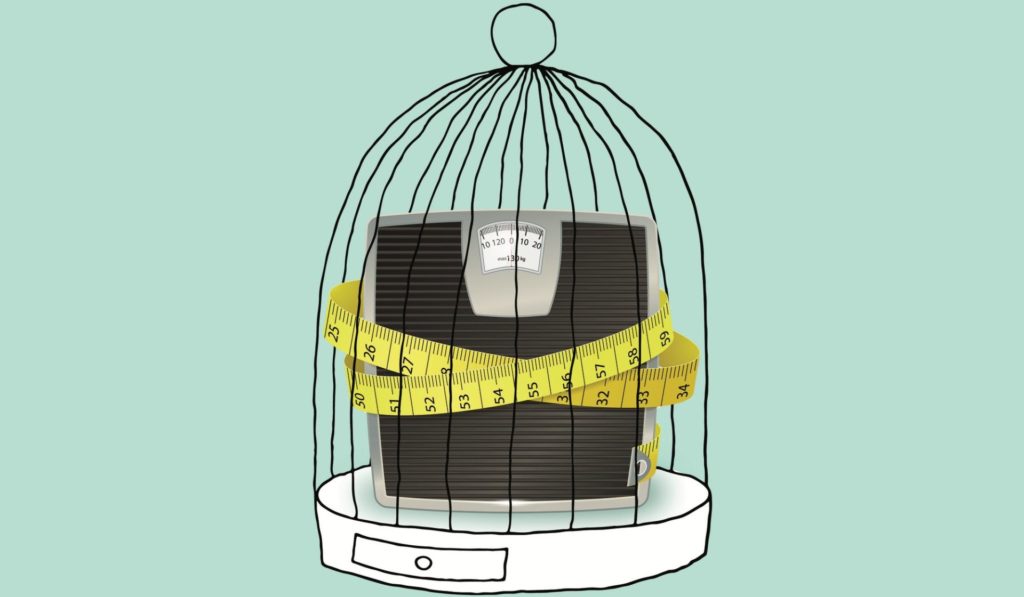
  • How My Pandemic Weight Has Affected My Life

    2020 was one hell of a year. We had coronavirus to deal with, the lockdown, curfew, zoom meetings, pandemic weight… Ah yes, pandemic weight, the focus of this article. 

    I was at my heaviest weight ever, during the lockdown. The last time I checked my weight before we all got locked in, I was somewhere between 80-85kg. I didn’t check again until July 2020, when I joined an accountability group. By that time, I had gotten to 109.3kg. I wasn’t shocked; I knew from the way I was eating that I had added quite a few kgs. Food was everywhere at home, and I was always bored, so I ate and ate. And exercise was definitely not a thing I was interested in. All I did was work, eat, watch TV series and talk to man.

    From the pictures and ill-fitting clothes, I could tell that I had gained weight, a lot of it. This is what pushed me to join my friend’s weight loss accountability group. It didn’t last long though; every time she told us to post our food, I’d post the fake small portion and then eat the actual portion, which was much bigger. My weight gain affected me badly, but on the outside, nobody could tell. I’ve been dealing with body image and self-esteem issues for as long as I can remember, and as I said, that was the biggest I’d ever been. I couldn’t take full-body pictures or look in the mirror confidently. I didn’t feel good in any of the outfits I wore, and I hated going out. In December 2020, I decided that enough was enough. I was going to join a gym. January 2021 was the beginning of my transformation. I lost 37kg that year and got to 72kg. Now, I weigh 74kg, I’m in love with exercising, my extra pandemic weight is gone, and I feel great about my body. 
    RELATED: 5 Nigerians Tell Us How the Covid-19 Pandemic Affected Their Relationships With Their Vices

    I spoke to some other people who experienced pandemic weight gain, and this is what they told me.

    “I was a wreck, and I turned to food for comfort.”

    Mariam*, 23

    I weighed about 82kg before the pandemic, and I was wearing size 14/16 dresses. It’s been two years since then, and I’m 107 kg. I no longer find clothes in my size. I don’t take pictures, and I avoid hanging out with friends because I fear I may not be as attractive as I was before, and it really weighs down on my self-confidence. I’ve tried to join several weight loss groups, but I just can’t seem to commit to any of them. It’s left me depressed, and I hate it so much. 

    During the pandemic, I lost my travel agency job in April, and my boyfriend broke up with me in June. I was a wreck. I turned to food for comfort. I noticed I had gained weight when my clothes no longer fit me, towards the end of 2020. When I stepped on the scale and saw 100kg, I wasn’t surprised. By 2021, I didn’t care. I was tired of crying about my weight, so I just stopped trying. I’m in a better place now, and I’m trying again. I’m taking it one day at a time. 

    “I knew I had added because my food intake increased and my movement reduced.”

    Ada*, 22

    I didn’t exactly check the scale, but I knew I had gained weight when my clothes were no longer my size. Also, my food intake increased and my movement reduced, so when I tried to fit into some clothes I used to wear comfortably (especially when I was going back to physical work) and they were tight, I wasn’t surprised. I’ve always had this back and forth journey with weight gain and loss. It’s been like that for the longest time, so I didn’t feel any kind of way when I realised I had added. I just told myself it was one of those things. I started being more intentional about exercising this year. My goal is 60% to get stronger and fitter and 40% to lose weight. It’s been okay so far. I still fall back to my unhealthy eating habits once in a while, but I move on from that with less guilt.

    “My daily routine was to wake up, eat, workout, write, and sleep. “

    — Miah, 22

    I’ve been skinny right from the start, and adding weight was always a struggle. After graduating in 2019, the plan was to work out consistently, gain weight, and bulk up in 2020. After leaving NYSC camp in March, 2020. The lockdown made it impossible to access the gym, so I was doing home workouts. Some people say it’s quite difficult to gain weight using home workouts and diet plans, but it worked for me. 

    I weighed around 56kg at the beginning of 2020, and when I checked in September, I was 65kg. I increased my calorie intake; I ate at least five times a day. My meals were mostly made up of fibre and protein. The gym re-opened around May, so my daily routine was to wake up, eat, work out, write, and sleep. I definitely think my increased calorie consumption contributed to my weight gain, but I was also doing less cardio and more strength and resistance training. My sleeping habits have also improved (which used to be one of the things that affected my weight gain). The last time I checked, I weighed 72kg. I’m happy with my weight gain and I’m consistently exercising. 

    “I’m never gaining weight like that again, even if we are locked down for a year!”

    — Andrew*, 41

    I knew I was in trouble when my favourite designer jeans couldn’t go past my upper thigh! The very next morning, I hit the pavement and cut my feeding to once daily. The changes were drastic and sudden, but they were effective.

    I was attending mixed martial arts (MMA) classes in 2020 when the lockdown happened. It was so devastating for me because I was really enjoying the gym and my new friends from MMA class. The initial depression from the lockdown hit me hard; I couldn’t get myself to do much. All I did was eat and read a lot.

     After three weeks of running in the mornings and working out in the evenings, plus the mini fasting of one meal a day, my jeans could fit again. I have kept most of the weight off and I can still rock them. And I’m never gaining weight like that again, even if we are locked down for a year!

    ALSO READ: Hear Me Out: It’s Time to Give Up Trying to Gain Weight

    Zikoko is launching a new series where we explore those friendships, familial and romantic relationships that are no longer sailing.

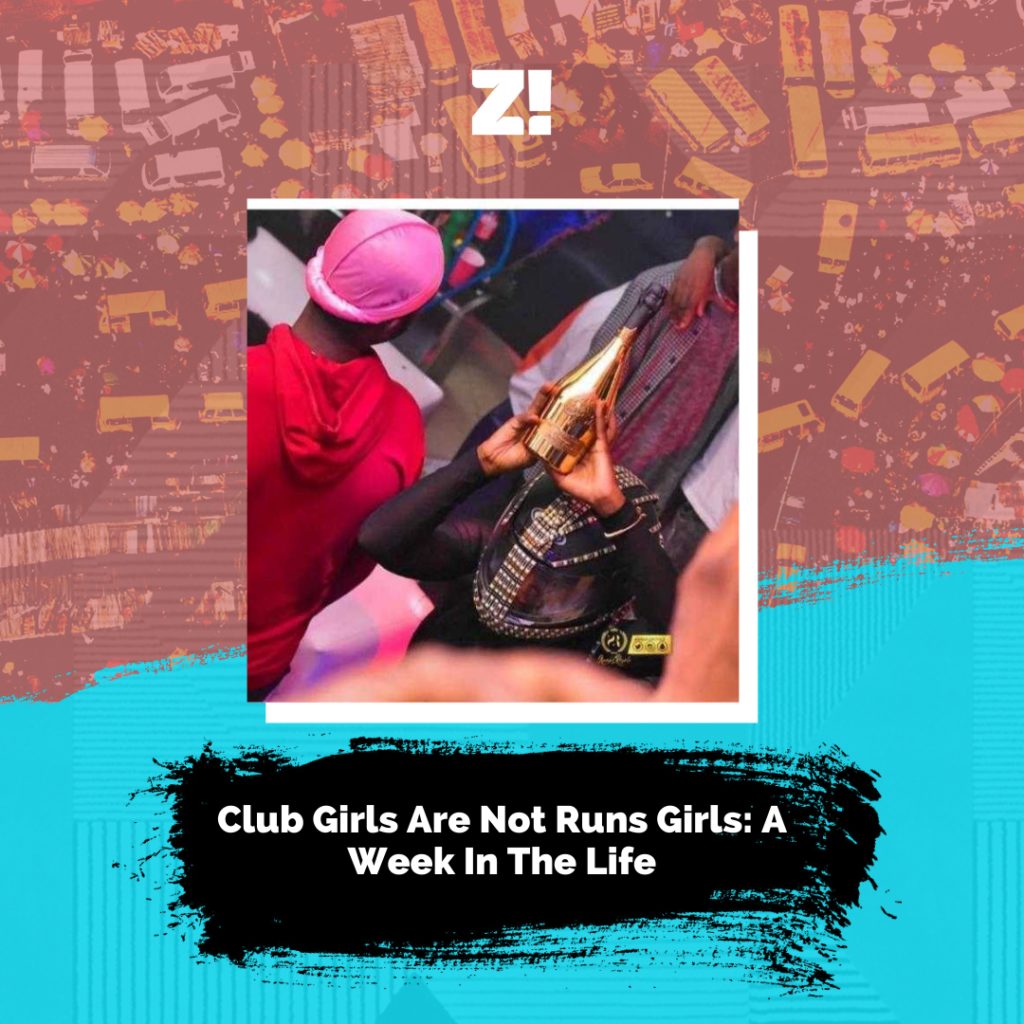
  • Club Girls Are Not Runs Girls: A Week In The Life

    A Week In The Life” is a weekly Zikoko series that explores the working-class struggles of Nigerians. It captures the very spirit of what it means to hustle in Nigeria and puts you in the shoes of the subject for a week.


    The subject of today’s “A Week In The Life” is a club hostess and waitress. Club hostesses help clients with reservations and carry out bottles with sparklers when people buy expensive drinks. Our subject talks about the stereotype associated with her job, balancing school and work, and some of the most expensive drinks she has served.

    FRIDAY: 

    I feel lucky that I have a job because I can’t imagine how I’d cope without one. A little back story: I’m currently living in Akure because of school and outside of classes, I have nothing to do. A typical day for me usually involves class, hostel, class, hostel, rinse and repeat. 

    With a job in the mix, I’m happy there’s finally some variety: class, hostel, work, rinse and repeat. Keeping a job as a student requires constant moving around of my schedule. Some days, I go from work to class. On other days, it’s from class to work. 

    Today, I’m going from the lab to work. School ends at 4 p.m., and I have to prepare for work at 6 p.m. The club officially opens at 9:30 p.m. but resumption time is 6 p.m. 

    I work as a hostess in a club and I like to call it waitressing pro-max — if such a name exists. 

    My job is to go to work, be on my best behaviour, look beautiful, put on a smile and welcome customers. It’s also my job to show them to their table and make them comfortable. On nights where we have a full house, I also substitute as a waitress and help serve drinks.   

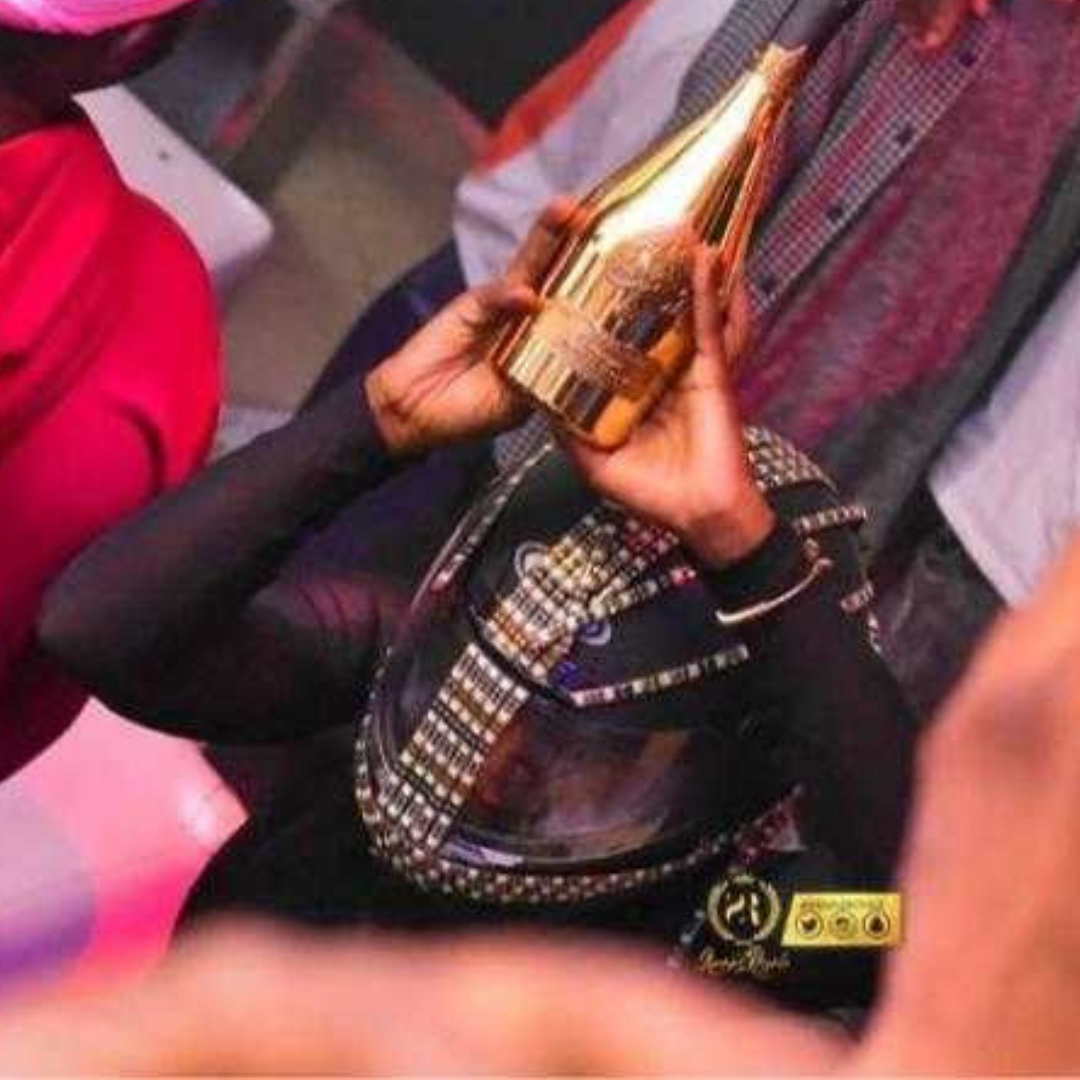
    The part of my job I love the most is seeing people buy expensive drinks, hey Jesus! Dorime things.  When I’m hyping the person popping drinks by dancing and carrying lights, I’m constantly reminding myself that if the drink falls, I’m finished. Some of these drinks cost more than my annual salary. I haven’t gotten used to seeing people casually spend millions of naira on alcohol in one night. 

    But, I try not to visibly show my shock because the show must go on. 

    School is currently in session, so my work schedule has changed from every day to only Friday to Sunday. From 6 p.m. to 6 a.m. Although, I still find myself working during the week because work is fun and my co-workers feel like family.  

    SATURDAY:

    Midnight of Friday/Saturday morning:

    I resumed work at 6 p.m. yesterday. I barely made it to work on time because I overslept when I got to the hostel. It took the grace of God for me to jump up when I did and I rushed to work. 

    The first thing I did at work was to eat the cereal I packed. Next, I started making reservations for guests coming later at night when we fully opened. At some point, I helped the barman take inventory and plan the drinks for the night. When I was tired, I went to a restaurant in the same building as the club to chill. 

    At 9 p.m., I went to change. I was torn between a red dress with a thigh slit and a plain black round neck shirt. I almost chose the red dress, but I remembered that the last time I wore it, a man pointed at my nipple, another slapped my butt and one couldn’t stop staring at my breasts — even though they aren’t that big. And so, the plain black round neck won. 

    3 a.m.

    I’ve been by the door welcoming guests all night. In that time, I and the other hostesses have danced up to five times for people popping drinks. I’ve also worn a mask to hide my face during those five times because I’m shy. 

    In this same night, I’ve also gotten offers from people who say they want to fuck me. One even offered to triple my monthly salary if I go home with him. Wonders shall never end. 

    4:00 a.m. 

    The alcohol has finally kicked in. The DJ’s playlist is fire. People have stopped coming in and now I’m catching my own fun.

    5:00 a.m. 

    I’m not doing again. I’m tired. These people should come and be going home. 

    6:00 a.m.

    God. These people are still here dancing and partying. Don’t they want us to go home? Are they not tired? I’m tired. 

    I miss my bed. 

    7:00 a.m. 

    Finally, the last customer just left. Thank you, Jesus! 

    Noon

    Nobody can separate me from this bed. Not food, not water, not even phone calls. I want to sleep till tomorrow if I can. 

    5 p.m.

    I can’t believe I have to get up for work. This adulthood is very somehow because someone can’t even relax. Just work every day until you die. 

    SUNDAY:

    Midnight of Saturday/Sunday morning

    Tonight has been uneventful. People are coming in much slower than usual and the energy on the dance floor is off. With the kind of evening I had when I got to work, I’m glad things are slow now. 

    For the longest time, I’ve suspected that people view so-called “club girls” differently. However, today’s incident proved me right. 

    The owner of the club I work in owns a hotel within the building our office is in, and I chill at the hotel’s bar and restaurant all the time. Yesterday, [male] friends from my school came to lodge in our hotel. That’s how I went to say hi to them because these are friends I had before starting this job. 

    As I was leaving their room to start work, I heard someone say, “she has gone to do the job they hired her for. The job of fucking customers.”

    My heart dropped, my palms and face were covered in sweat, and I was speechless. 

    It’s somehow when people just stereotype you. Club girl doesn’t mean she fucks around. Club girl doesn’t mean she’s for sale or wants your money. Club girl doesn’t mean she’s not a person; she’s a human being too.  

    Last last this work is not for everyone because if you don’t have sense they’ll run you streets. 

    3 a.m.

    The last customer just left, so we’re done for the day. However, according to our contract, we can’t leave until 6:00 a.m. Everyone is either sleeping or about to sleep. I can’t because my body is already used to sleeping during the day.

    To pass time, I try to match drinks to their prices. We have:

    Hennessy Paradis. We sell for ₦1M and people buy it like pure water. 

    Azul costs ₦400k and is decent. 

    — Ace of Spades is ₦450k. 

    Hennessy xo is ₦350k. Same price as Remy XO. Dom Perignon is around ₦300 – ₦350k too. 

    Don Julio is ₦400k. 

    — Then we have the Moet family which costs ₦65k. This is in the same category as Hennessy VSOP. 

    — We sell Glenfiddich between ₦65 – ₦85k too.  

    — Our Ciroc goes for ₦45,000

    There’s a drink for everybody. 

    6:00 a.m.

    Finally, my watch has ended. I’m going home to sleep all day. I’m grateful that my colleagues told me to go home while they stayed back to balance the account and clean up. 

    MONDAY:

    6:00 a.m.

    The only thing powering me this morning is energy drinks. Last night was so busy that you’ll never have imagined that the next day was Monday. Customers were everywhere, so I barely had time to rest. To make things worse, my first class starts at 8:00 a.m. today and attendance is compulsory. 

    I have to do everything in my power to not touch my bed. Anything that makes me lie down small, that’s the end. I’m gone. I just need to manage till 2 p.m. when school ends for today. I don’t know how I’ll survive the lectures, but the first step is getting to school in one piece. 

    It’ll soon be a year since I started doing this job. It’s funny how this job started as a way to keep busy and earn passive income after the lockdown was eased, and school was still closed. Now, it’s something I’ve come to enjoy. Beyond that, I’m really grateful I have a job I enjoy that occupies my time. 

    As a student, there’s no greater feeling than knowing I have my own money. I don’t depend on anyone for anything: I see something, I like it, and I save for it. Apart from the occasional harassment, this is a job I enjoy doing. 

    I can’t imagine what my life would be like if I had nothing to do.


    Check back every Tuesday by 9 am for more “A Week In The Life ” goodness, and if you would like to be featured or you know anyone who fits the profile, fill this form.

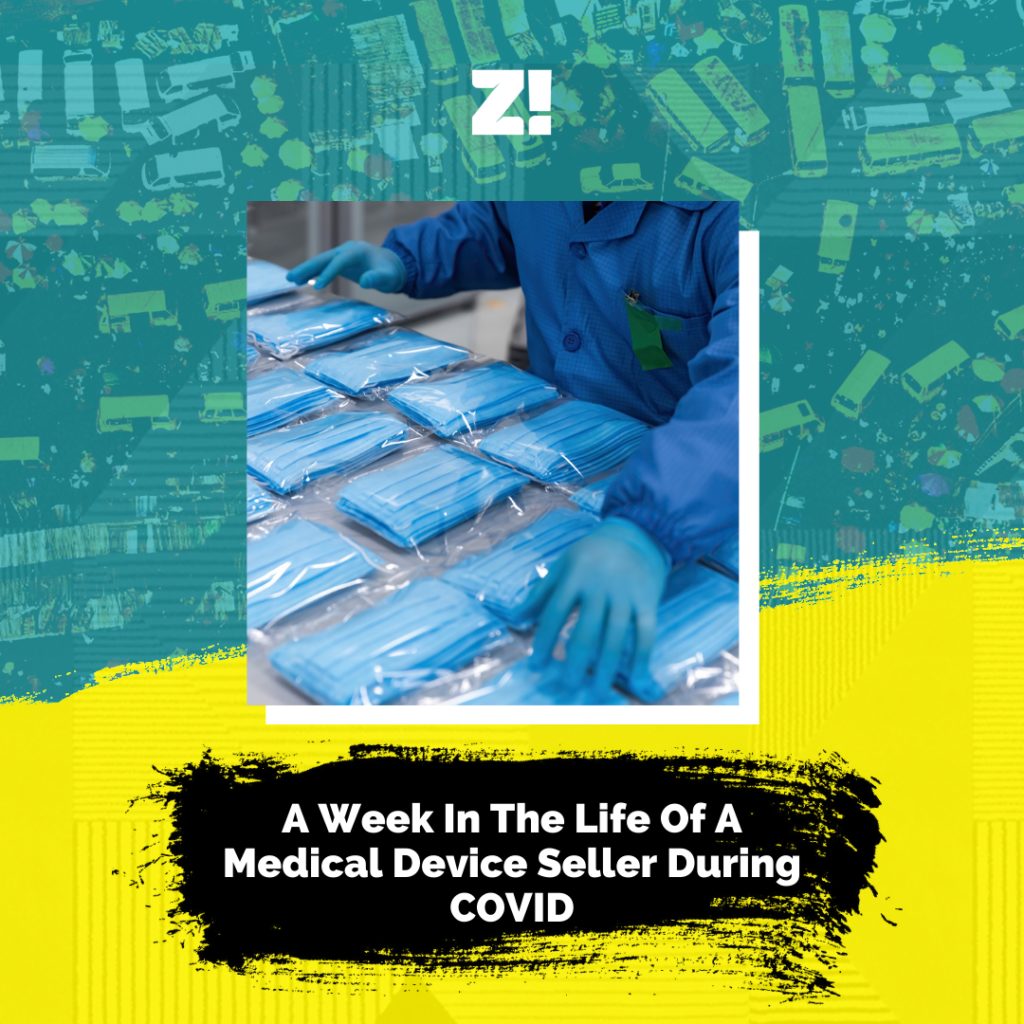
  • A Week In The Life Of A Medical Device Seller During COVID

    A Week In The Life” is a weekly Zikoko series that explores the working-class struggles of Nigerians. It captures the very spirit of what it means to hustle in Nigeria and puts you in the shoes of the subject for a week.


    For today’s “A Week In The Life” we go back in time to 2020. We explore what it was like to benefit from the height of the pandemic. We speak to a medical consumables seller who tells us about how COVID money changed his life.

    COVID

    MONDAY:

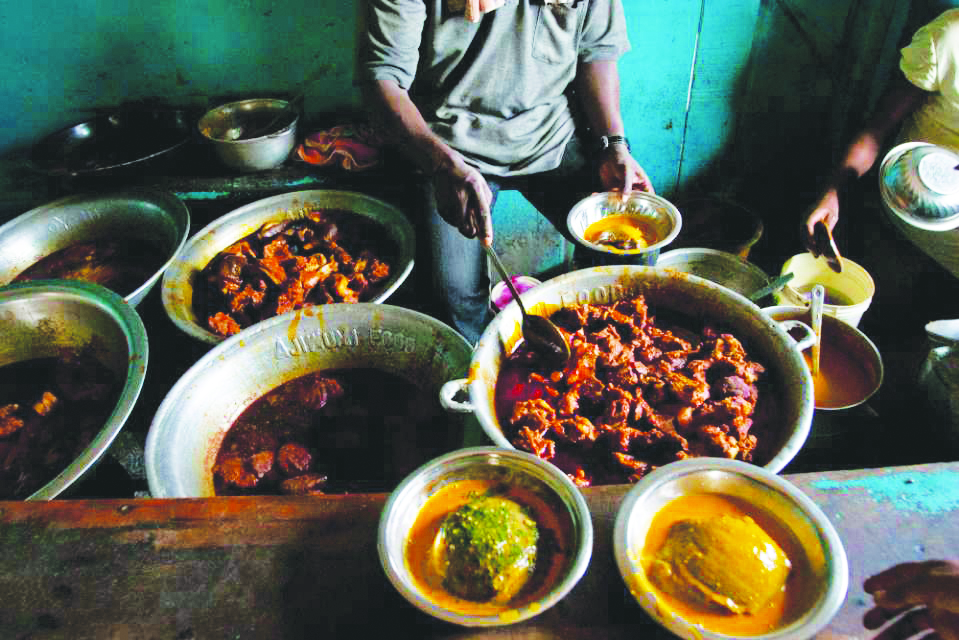
    Something crazy recently happened to my benefit: someone wanted to order face masks, my friend [who was called] couldn’t help them out, and so I took on the job. Now, I’m in Idumota market everyday sourcing masks and other COVID essentials. I make almost over 50% profit on every order I process. But I’m not foolish; I understand that this is rush money and it won’t always be like this, so I remind myself to make the most out of it. This bubble can only last for so long before people run out of money. 

     A lot of my day, like today, starts with phone calls from 6 a.m. I’m either on the phone with customers who want to order stuff or I’m calling my guys in the market to help me run a delivery.  If you had asked me two months ago about selling stuff, you’d have probably gotten a big no from me. But, hey I’m not complaining. 

    I’m in this business because I quit my job in anticipation of starting my compulsory internship program after pharmacy school. However, one month into my wait, the pandemic struck. I suddenly found myself jobless and without an internship. There I was in my room every day, moping until I overheard my friend almost decline an order to deliver face masks and hand sanitisers to a company. I volunteered to fulfil the order even though I had never been to Idumota market in my life. That leap of faith marked the beginning of a life-changing event. I quickly entered the world of negotiations, import and export, and uncovered previously unknown corners of Idumota market. There’s literally nothing you can’t find in that market and knowing the right people makes all the difference. 

    I started the business with one order and then two, three… After a while, it just took off mostly through word of mouth and referrals. And it’s been smooth sailing ever since. 

    It’s wild that a few months ago I was working in a community pharmacy where the pay was around ₦60,000 a month. And now, in a month, I make almost double the yearly salary of my old job. Which is a lot for a young pharmacist. 

    What I love the most about my current reality is stability. A year ago I was worried about where I’d do my internship, or if my life would ever amount to anything and how I’d jaapa. Now, I’m literally thinking of importing my own line of medical consumables and not worrying a lot about tomorrow. For the first time in a long time, I’m not worried about where my next meal will come from. 

    TUESDAY:

    I started my day by visiting my bank. Even though there were lockdown restrictions, I had to go in because my business was at stake. After being paid for my largest order so far, my bank froze my account. Their reason? The amount of money was simply too much. Ahan.

    So I had to go in person to explain that I was not a Yahoo boy. Simply a trader involved in the buying and selling of goods. After a few regulatory backs and forth to confirm my identity and upgrade my account, the restrictions were lifted. I felt my chest loosen up for the first time since I got the restriction email. 

    I’ve been trying to put how I feel into words and failing. I guess that there’s no way to talk about my gratitude without sounding insensitive to other people. While people have been lamenting about how COVID has dealt with them, it’s been a blessing in disguise for me. I’ve lost count of the number of things I’ve done with COVID money because the profit is not one or two million. It’s millions of naira. This experience has also taught me a lot about myself and opened my eyes to parts of me I had never been in touch with. I understand now that I possess some form of hustle spirit I never knew I had. 
    Sometimes I catch myself thinking that not getting Internship has been a blessing. I can run my business on my own terms without worrying about other engagements elsewhere. 

    Later today, I’m meeting up with a couple of guys who are supposed to walk me through the process of importing drugs. Apparently, it’s not very straightforward, especially if you don’t want Customs to seize your goods. However, nobody tells you this until you’ve entered wahala. Nigeria and ease of doing business strike again. The meeting will definitely not be fun. But I’m looking forward to after the meeting when I’ll buy asun and mortuary standard Heineken to share with my boys. I guess it’s true that the simple things of life give the most pleasure. 

    WEDNESDAY:

    I woke up with one word on my mind today: grace. I know that I’m not the only one who does this business so it’s not by my power that it’s going smoothly. I’ve heard of people who also do this same business and dulled. It’s humbling to me because I didn’t do any digital advertising or social media marketing. Just mostly word of mouth on my part, and my friends who put my business on social media. At one point, I was even shy to post my business, but thankfully the people in my corner really showed up for me. And for that, I’m grateful. It’s a blessing to have people in your corner who encourage you. 

    There was also the part where the traders in Idumota showed me the ropes. In my first month, I’d open with them by 8 a.m. and close by 5 p.m. daily. They dedicated their time to show me where to go and where to not go. I even learned how to identify the real value of a product after profit has been added. My negotiation skills went through the roof. On top of it all, they still help me out in one way or another, especially when I can’t be physically present at the market.  

    Again, grace. 

    Still, it’s not perfect. I’ve had to face people defaulting on agreements which made me lose a lot of money. I also have to deal with serious price fluctuations between each market visit. Scarcity of products is leading to over hiked prices. There was a time a carton of facemask went up from ₦350,000 to ₦600,000. [Editor’s note: A carton contains 2,000 pieces of facemask. A carton also has 40 boxes and each box/pack has 50 pieces of facemask]

    In spite of all this, I give God the glory because he’s a major part of my journey. Money will come and go but God’s grace is forever. 

    THURSDAY: 

    I’ve realised that at heart I’m still a pharmacist. And part of the requirements to becoming a fully licensed Pharmacist is completing my internship program. That’s why I’m spending a lot of time today filling out applications for where I’ll intern. For me, this is more a formality as opposed to a do or die affair. I’m aware of how internship money changes people’s lives. Starting life on a salary above ₦100,000 in Nigeria pushes you one step closer to your dreams — whether it’s to jaapa to the US or Canada. 

    For me, because I understand how unpredictable business is, my internship money is going to an account I can’t touch. At least after a year of piling it up, it’ll make a good safety net in case anything happens. 

    The government recently eased the lockdown and things will soon start returning to ‘normal.’ I know rush money from business will slow down, and I’m looking to diversify outside of it. I’m looking into becoming a vendor that supplies pharmaceuticals for banks, HMO’S and big companies. At least that’s some form of stable income in a world of uncertainty. 

    I know that whatever way this story ends, things are never going to be the same again for me. My perspective has totally changed. Even if, God forbid, I don’t take anything out of this experience, I know I’ll have stories to tell my children. I’ll just be like ‘hey guys, let me tell you the story of how your dad became a millionaire in the middle of a global pandemic.’


    Check back every Tuesday by 9 am for more “A Week In The Life ” goodness, and if you would like to be featured or you know anyone who fits the profile, fill this form.

    [donation]

  • QUIZ: How Safe Are You From Catching COVID-19?

    Yes, we’re still in a pandemic, and COVID-19 is lurking out there. Worse still, you CAN catch it. Wait fess, before you shout “God forbid!” take this quiz to find out just how safe you are.

    Do you know about #ProjectSafeUp — an initiative developed by My World of Bags, in partnership with Mastercard Foundation? The project produces and distributes free personal protective equipment (PPE) to the general public and health workers in Oyo, Lagos, Osun, Ondo and Ekiti. You can follow them on Twitter, Instagram or visit www.myworldofbags.com for access to PPE.

  • 4 Final Year University Students Share Their Unpleasant Pandemic Experiences

    The coronavirus pandemic caught the whole world off-guard and largely unprepared. The world switched into self-preservation mode and put stringent rules in place to curb the spread of the virus. Then, came the total lockdown of activities. Schools were not spared.

    Usually, Nigerian students are at their busiest in their final years as they have to write projects and write examinations. Alas, even that was brought to a standstill as lives had to be saved first.
    I asked a couple of final year students from different Nigerian universities to share what their experiences with the pandemic have been.

    Christian Ndukwe, Alex Ekwueme Federal Teaching Hospital, Abakaliki – Caught in a love triangle

    I always thought love triangles involving lecturers and students were absent in nursing schools until I got caught in one. I liked a female colleague, but her guardian, a reverend father, disapproved of our relationship. At first, I thought he was being overly protective. But that wasn’t the case. He had been having sex with her for over a year now. She told me she would have loved to be with me but feels her education might be affected if she did. When the ‘rona came around, the resistance to our relationship became more serious. The school’s dean of students affairs summoned me and threatened to expel me. He asked me to put down the names of the girls I’ve had sexual relations with. When I refused, he promised to deal with me.

    I had a problem with my course registration, but he refused to fix it until I succumbed to their wishes. I couldn’t understand what the fuss what’s all about, so I didn’t change my position on the matter. Eventually, he got my Statistics lecturer on his side, who said he would make sure I failed his course because I missed more than 50% of his lectures.

    I discussed the newest development with the girl, and we agreed to break off the relationship. I really wished we were still together, but when the result was announced and I cleared all my papers, I knew it was worth the sacrifice.

    Arinze Christian, University of Nigeria – Trapped in school

    After the COVID breakout, I had some project stuff to settle. I thought staying in school would give me space and time to accomplish a great deal on my project, but I was wrong. I couldn’t work effectively because everyone had left the school,– the entire school was like a graveyard, 7 PM became the new 12 midnight. It was so boring and frustrating. If the internet didn’t exist, I have no idea how I would have survived. When the inter-state ban was lifted and I didn’t hesitate to leave. I am now at home thinking and missing school. What a life!

    Precious Nwajuaku, Nnamdi Azikiwe University – Survived on garri and water without sugar

    During this pandemic, staying at home wasn’t a pleasant experience for me. I was always having issues with my mum over many things, especially money.

    When school was in session, my mom tried her best to send me money, so I was not always broke. But when the pandemic hit, collecting money from her proved to be difficult. If she decided to give me, I wouldn’t hear the end of it for the rest of the day. Not that I blame her much!

    The governor of my state declared a total lockdown of the state. We didn’t get the information on time, so we didn’t stock the house with food. The risk of getting arrested made us think twice about going outside. I remember sneaking outside when the hunger was getting too much to go to a woman who sold bread on my street, only to find out that her store was closed. God! We lived on garri and water without sugar for the next three days!

    Temidayo Jacob, University of Ilorin – Had to get an affidavit

    Graduating this year is on God. I guess I have moved on with my life. Whatever it is, it is. It’s bad enough to live during a pandemic, but banks have gotten more frustrating than usual.

    I went to a GTbank branch close to my lodge in school to open an account. I was out in the sun for 4 hours. To crown it all, their customer service was terrible.

    While I was waiting, the security man freely allowed affluent people in without stress. I was irritated that one set of people were prioritised over the others, and were allowed in as soon they arrived while we wey no sabi pesin and had no car stayed under the sun. Laslas, na person wey get property actually get money for the bank.

    On opening the account, I was asked to go to court to get an affidavit to update my BVN details. A whole me? Go to court? I just gave up on the whole thing and went home straight to sleep.

  • 5 Nigerian Couples Talked To Us About Getting Married During The Pandemic

    COVID-19 threw a well-aimed spanner in everyone’s plans this year. Nobody escaped unscathed. Some of Miss Rona’s victims were people who wanted to tie the nuptial knot and spend the rest of their lives together. Instead, they found themselves donning Sanwoolu face masks.

    However, some brave couples decided to go ahead with their weddings. I wanted to know what it took to get married during the pandemic, so I reached out to a few people who said their vows despite the coronavirus.

    Mojola, 26

    We initially planned to get married on April 18 and it was supposed to be massive. We had paid everyone; the vendors, the venue, everything. When we tried to get refunds, all the vendors refused, saying we should let them know when we’re ready to do the wedding.

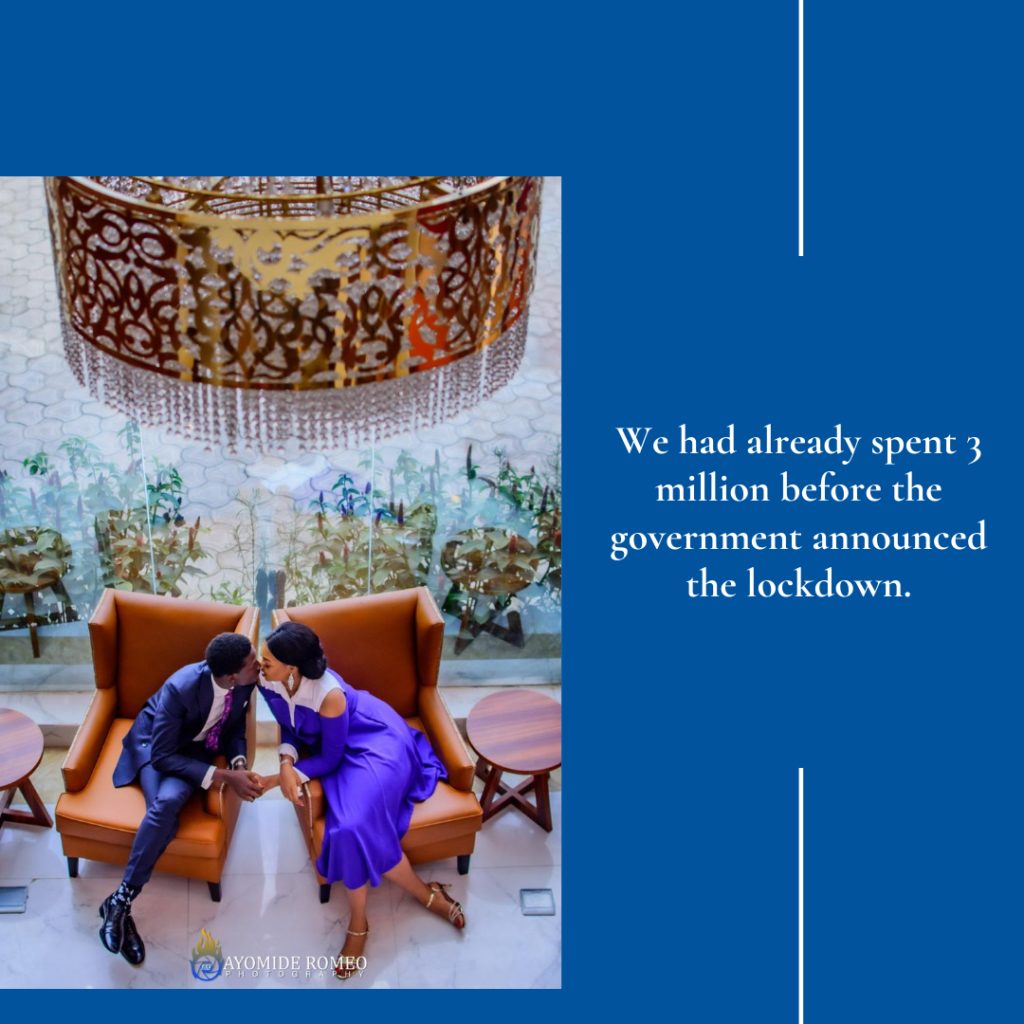
    Our parents were meant to sponsor most of the wedding. Nevertheless, my husband and I had spent more than 3 million already before the government announced the lockdown.

    We later decided to get married in a private registry ceremony. We still plan on having the ceremony later in the year, when everything has cleared up. Our families and friends are still on our necks to have a proper wedding ceremony, so that’s what we’re going to do. Besides, all our money cannot just go down the drain like that. So we’ll wait.

    Zipporah, 25 

    “My husband didn’t even get time off work. We got married during his break. Even during the wedding, he was replying to work emails.”

    We originally planned to get married in April and we had planned a huge ceremony. We already paid for everything; the hall, the caterer, the band. Everybody was ready for the wedding, flights had been booked from all over Nigeria, clothes had been sewn, everything was set.

    Then, the Federal Government announced the lockdown.

    We tried to get refunds from the vendors but you know you can’t get all your money back from Nigerian vendors. The venue and decoration guys still haven’t refunded any of the money till date.

    After waiting for a while, we decided to go ahead with the wedding in a much smaller way.We finally married on the 4th of June in a small ceremony. Because the state government hadn’t allowed places of worship to open fully yet, the pastor placed a 20-person limit on the ceremony. We didn’t even use microphones, just to avoid attention; police had been arresting whole weddings at the time.

    My husband didn’t even get time off work. We got married during his break. Even during the wedding, he was replying to work emails.

    Right after, we had a small reception for guests. The number of guests suddenly ballooned because tons of people in the area got wind of the wedding. Many of them were without work due to the pandemic so they came for the food. 

    This really increased the cost of the wedding. Added to the fact that the pandemic drove up the price of everything, it ended up being more expensive than a regular wedding.

    Muyiwa, 32

    I proposed sometime in November 2019 and planned our wedding for April 4. Two days to our wedding, the Lagos State Government imposed the lockdown.

    Of course, everything had been paid for, people had come into town and everyone was set. We waited to see how long the lockdown would last for. When there was no end in sight, we opted for a very lowkey wedding on May 27, which we had at my wife’s father’s house.

    There were only 20 people in attendance. Everyone was wearing a facemask, even in the wedding photos. Interestingly, we never planned to hold a reception for our original wedding. We were just going to go to church. So we didn’t pay any money to vendors or anything, lucky for us. 

    My wife is from Delta and you know how expensive Delta weddings are. We spent about 2.5m for the traditional wedding, and most of that was on feeding. The traditional wedding list from the bride’s family also took a bulk of the money. For the revised wedding, we spent less than 300k. We didn’t even have to spend on food. The smaller wedding was ideal for me because I personally don’t like being around crowds. God just worked it out for us and it was perfect. 

    Imade, 27

    This image has an empty alt attribute; its file name is Imade-1024x1024.jpg

    We set a date in April to allow ample time for his family, who lived in the US, to come down and prepare. Then COVID happened. We had no idea what to do. We didn’t know if or when we were going to do the wedding.

    Eventually, we decided to just get married anyway in July, when the lockdown was finally eased. His parents still couldn’t make it down because of the international travel ban. They were represented by his sister and uncle.

    We had our traditional wedding on the 1st of August. Every single person was wearing a mask. Even when we were dancing, people were coming to spray us one by one, not like you usually find at weddings, just so they could maintain social distancing.

    We couldn’t get much of the money back. Most of the vendors all insisted on taking a service charge out of the refund, mostly about 30%. And even at that, they are all saying they don’t have the money.

    There was no reception at our white wedding on the 8th of August. We just received church blessing and a small reception for friends who travelled and that was it. We had about 150 people in attendance in all.

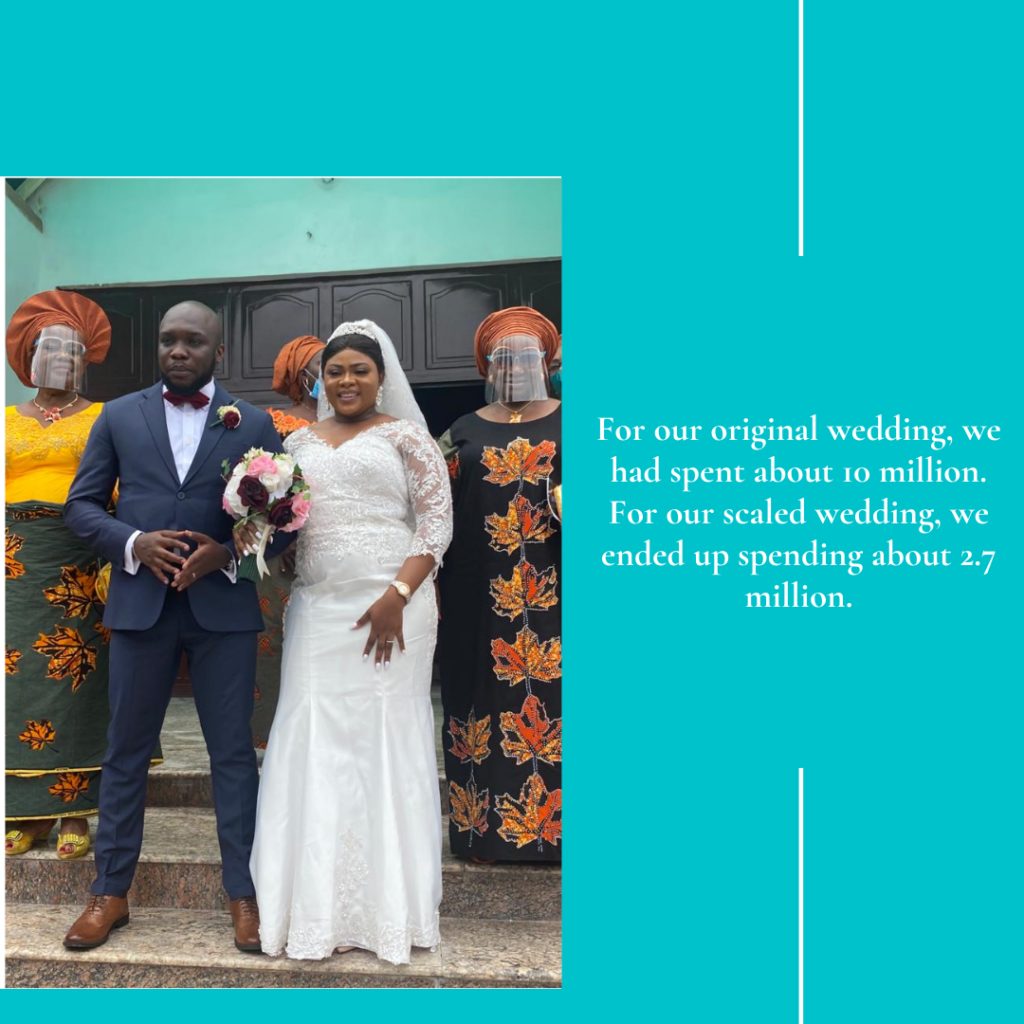
    For our original wedding, we had spent about 10 million. For our scaled wedding, we ended up spending about 2.7 million, in all.

    Dami, 24

    “I’m the firstborn and he’s also his parent’s firstborn, so that wedding has to happen. Besides, we’ve already spent about 25 million. And I just want to dance on my wedding day, abeg.”

    We set our wedding for April 12 in Lagos and it was going to be huge. Unfortunately, our flight to Nigeria was canceled in March.

    We were supposed to have over 1300 guests in attendance. People had booked their flights to Nigeria from London. We haven’t even attempted to get refunds because we decided to wait till December or next year to have the wedding ceremony. 

    We already had a court wedding here in London. We had a few people as witnesses and that was it. 

    I’m the firstborn and he’s also his parent’s firstborn, so that wedding has to happen. Besides, we’ve already spent about N25 million. And I just want to dance on my wedding day, abeg. 

    You might be interested in “I Was Fired From Work While Sick”: Stories From Nigeria About Surviving Coronavirus

  • This Is What Ramadan On The Frontlines Of Covid-19 Looks Like

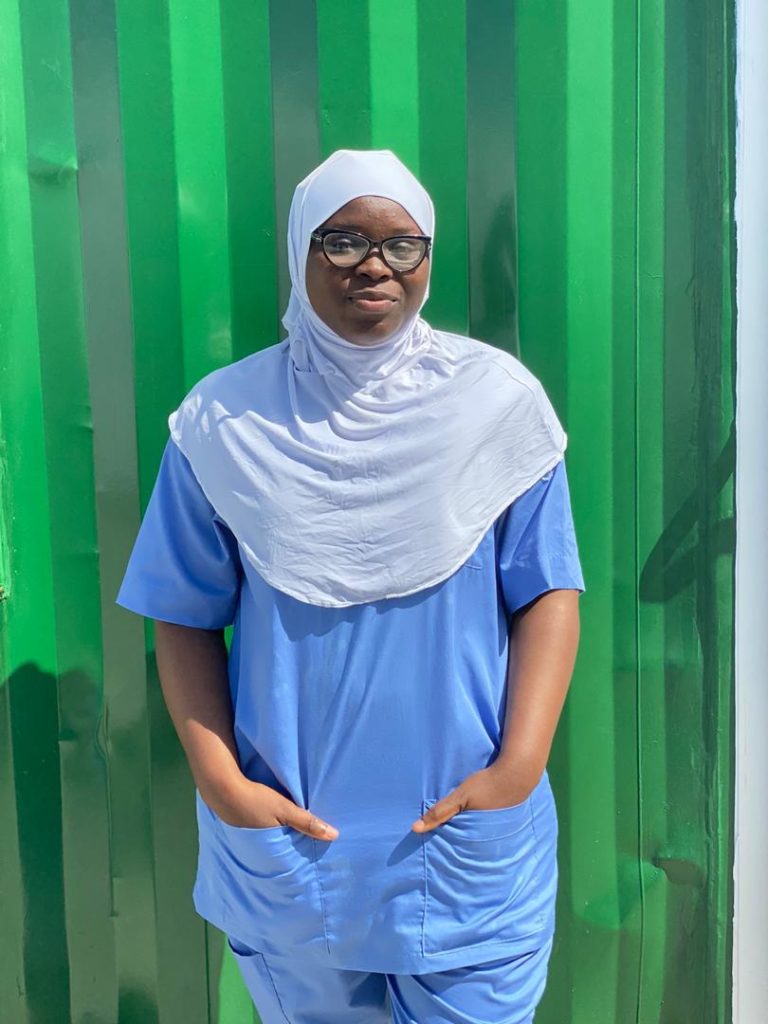
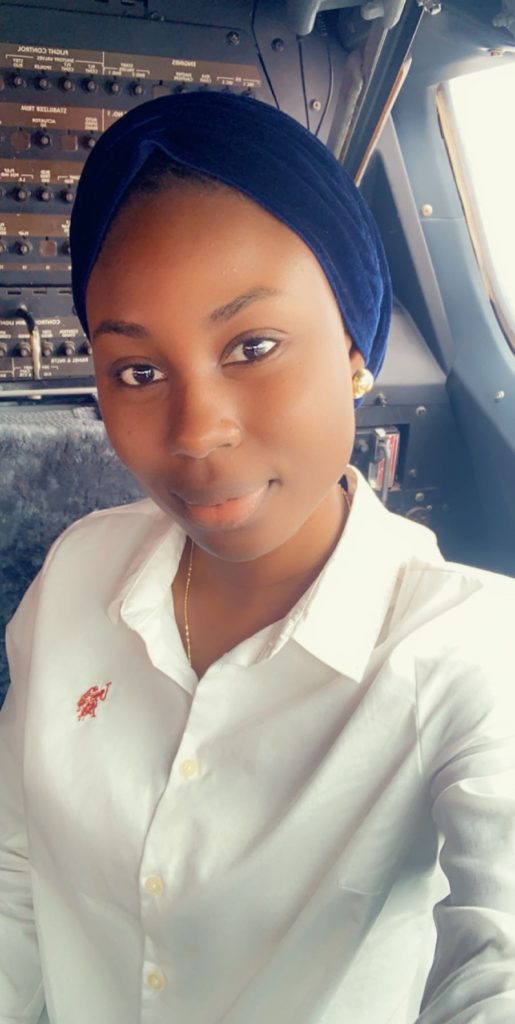
    With the shutdown of the holy city and the uncertainty of this year’s Ramadan, we spoke to three Muslim health workers. They tell us about juggling Ramadan with working on the frontline.


    A Special Kind Of Ramadan.

    Aminat (Nurse) 

    Muslim health workers

    Ramadan hasn’t been very hard. The only difference is that I don’t get to eat what I want to eat, and I am not with family. Because of the nature of my work, the hospital provided hotel accommodation for us. That means that I don’t get to go home and I have to eat whatever the hotel provides.

    Olamide (Doctor)

    Muslim health workers

    I can’t remember the last time I did proper Ramadan at home. From uni to house job, I have mostly done Ramadan alone as an adult. The only difference was that then, I could go home to spend some time with my family, but now I have to stay in a hotel provided by the hospital. It’s nothing out of the ordinary for me because I am used to fasting alone.

    Aminat (Nurse)

    Ramadan this year is different because I can’t afford to miss Sahur. I know that missing it will be problematic because carrying PPE requires energy. When Ramadan started, the first thing I did was call home to make sure that they always wake me up by 4 am, no matter what.

    Laide (Doctor)

    Muslim health workers

    In school, I was the only Muslim in my room. Most times, I had to wake up to eat Sahur and Iftar alone. So, it’s not really different. The major difference is a hotel which is not convenient food-wise because you have to eat whatever they give you. The hospital put us in a hotel to reduce the risk of infecting our families.

    On Loneliness:

    Laide (Doctor)

    My last Ramadan was a bit different because I was in Dubai. The iftar there is a celebration – There’s food, people, it’s a big deal. But this year, it’s just me eating alone in my hotel room or eating at work like any regular person.

    It’s a bit solitary because there are just three of us here who are Muslims. We work in different units and different shifts. So, it’s just you, your God, and your Ramadan. To be fair, it doesn’t feel like it’s Ramadan here. Except for the three Muslims here, everyone else is just going about their usual business. We are the ones telling them that we are fasting.

    Aminat (Nurse)

    It also doesn’t help that there aren’t a lot of Muslims around or on similar shifts, so I am very lonely. No one to remind me to read my Quran, or tell me when it’s time to break. Sometimes, I just sit alone in a corner. 

    Olamide (Doctor)

    It helps that one of my family friends who is a doctor is here with me. We work the same shift, so we do Sahur and Iftar together. It’s nice to have someone to do all of that with.

    The PPE Struggle:

    Aminat (Nurse)

    Muslim health workers

    My teammates are very nice. In situations where I don’t feel like going in, they offer to go in. This is important on days where I had very light Sahur and I am weak. Also, wearing the PPE leaves you dehydrated because of how hot it is. So, it’s very nice when they offer to go in.

    Laide (Doctor)

    Muslim health workers

    In the beginning, it was weird because wearing PPE makes me hot and dehydrated. On the first day of Ramadan, I didn’t eat proper Sahur. I had to go into the ward wearing PPE and we had a lot of admissions. What stood out for me from that day was that I was very thirsty when I came out. I don’t remember ever being that thirsty in my life.

    Olamide (Doctor)

    Any day I have to wear PPE longer than usual is a difficult day. This happens on days where there are a lot of samples to collect and patients to see. I try not to miss Sahur so I can be at my best. 

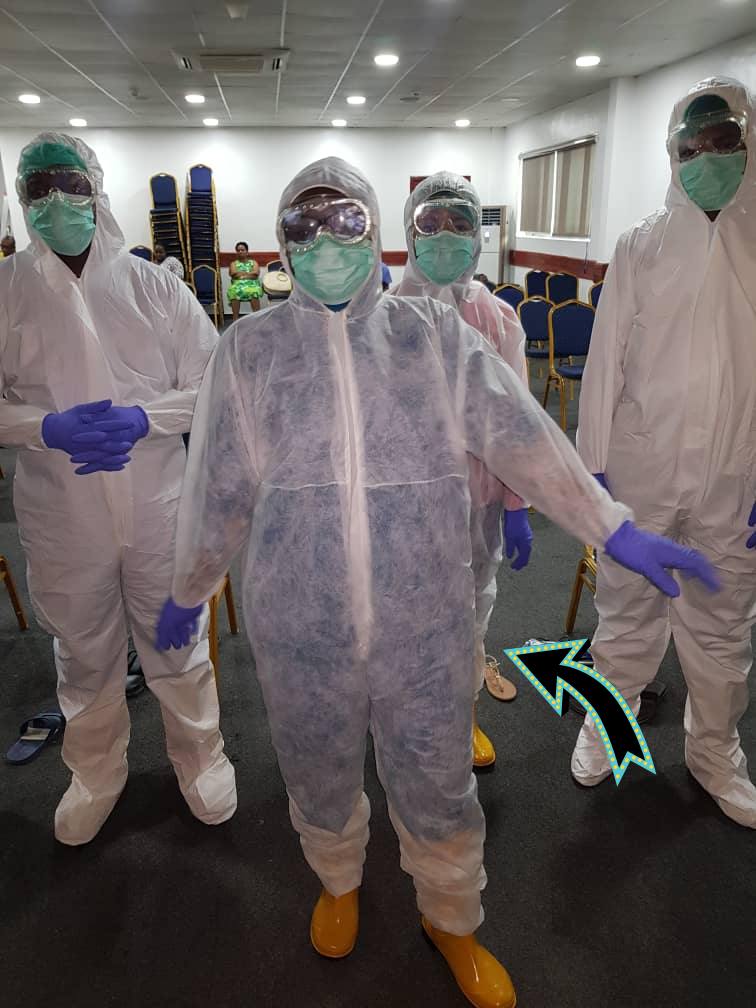
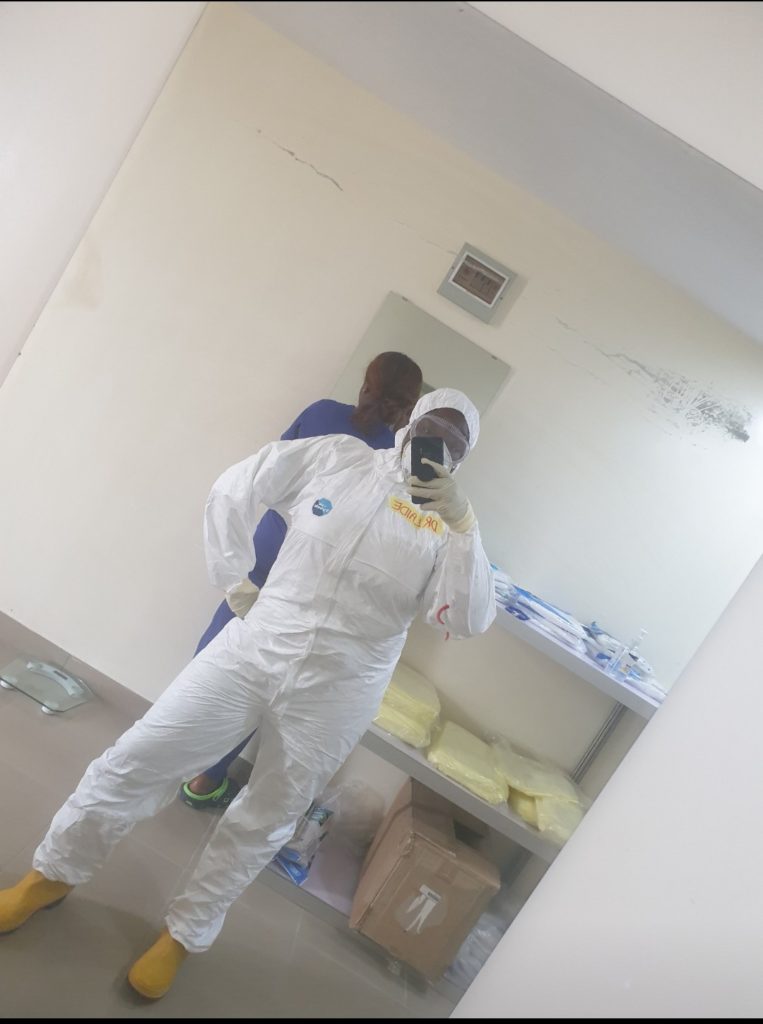
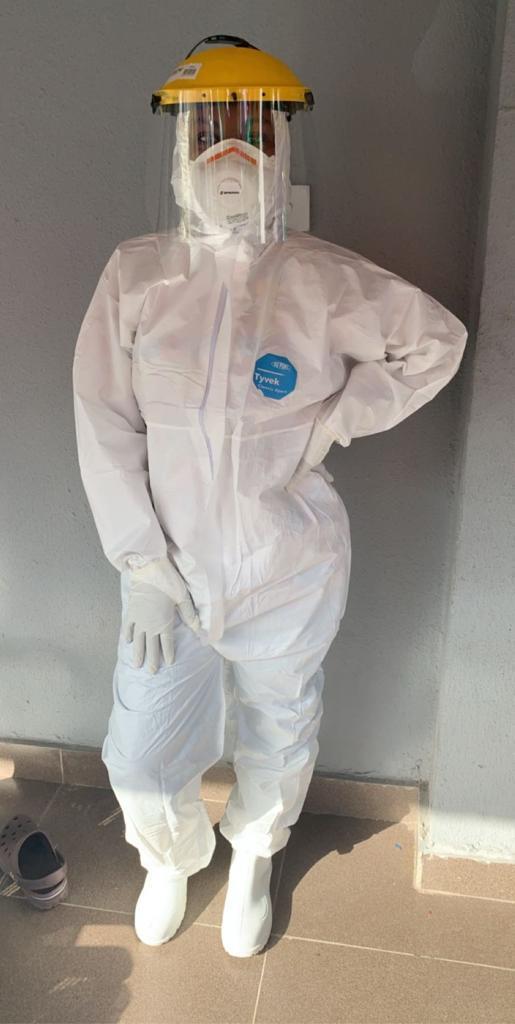
    The PPE is made from nylon. It is unbreathable. That means no air is getting to your skin and whatever is inside the PPE. It feels like you are trapped with all your body heat. Nigeria is hot, so on a sunny day, it’s ten times worse. No matter how cold the A.C is, you won’t feel it; you are sweaty and uncomfortable. It’s not like coming out and removing the PPE is a quick process. It takes at least 15 minutes to decontaminate you. So, if 12 people go in, you have to wait until it’s your turn. It’s really uncomfortable.

    When people come out, the first thing they reach for is a bottle of water. That’s where it can get tricky for people that are fasting. Because of this, a lot of Muslims aren’t fasting at the moment. 

    Food and Drink:

    Olamide (Doctor)

    I think one of the most difficult parts is looking for what to eat. The hotel provides us with food but sometimes you want to eat a certain meal for iftar and that option isn’t there. It’s not the same as preparing your own meal and planning ahead. I just have to eat whatever they provide. 

    Laide (Doctor)

    This year, I made the decision to eat well. But it’s not about food, it’s the thirst. I need to have something in my belly because I don’t want to add hypoglycemia to my dehydration troubles. 

    Because there are only three of us here, there’s no special arrangement for food for us. We have to sort ourselves. The hotel provides breakfast, lunch, and dinner, so people convert either their breakfast or dinner to Sahur. I had to get a microwave because the hotel doesn’t come with microwaves in the room. Using it to warm my food during Sahur has been super helpful as opposed to eating cold food. 

    “I enjoy the fulfilment that comes with it.”

    Laide (Doctor)

    I am fasting because I don’t feel like I qualify to not fast. I saw the Fatwa about not fasting if you are on the frontline. I don’t think I could have not fasted and been comfortable because I don’t see the difference between doing this and regular hospital work. For me, this is my regular job. I didn’t think it was going to be difficult. Or unbearable. To me, not fasting was never an option and it never crossed my mind.

    However, I understand that anyone not fasting on the frontline has their own reason for doing so. 

    Everyone’s case is peculiar. For me, it was never an option because I evaluated my experience and I knew I could handle it.

    Aminat (Nurse)

    I can’t remember the last time I completed Taraweeh. It’s not easy. Sometimes, on the night shift, I don’t get to pray Ishai till past 10 pm (I normally pray at 8 pm). And that’s after attending to patients. It can be difficult to complete Taraweeh because I am already tired by then. 

    Olamide (Doctor)

    Fortunately for me, I don’t sweat a lot so that part of Ramadan has been easy for me. I am committed to fasting because I enjoy the fulfilment that comes with it.

    I don’t think about it that much because I chose to volunteer. I wasn’t going to volunteer, at least not in this capacity, but an incident changed my mind. I heard about the patient who didn’t disclose his travel history in Luth. So, whether or not I am in an isolation centre, at the end of the day, I am going to be exposed to Coronavirus. Because you don’t know the history of whatever patient you are attending to.

    I’ll rather be in a place where I know this is what we are managing so it’s not a surprise. At least, if you are aware, you are more careful. At the end of the day, every health worker is at the risk of exposure. 

    Muslim health workers

    “The hardest part is the stigma”

    Olamide (Doctor)

    When I was moving to the hotel, I had to go to my apartment to pack some stuff. On getting home, my flatmate saw me, ran to her room and locked herself.

    Laide (Doctor)

    Unlike other parts of the world where they appreciate you for being on the frontline, in Nigeria, it’s “don’t come to my house!” In the beginning, there was stigma from the hotel staff where we were staying. They were scared, so we had to re-educate them and re-orientate them. I have also had to adjust the way I dress to make them comfortable. Even though the hotel is a walking distance from the centre, I can’t wear my scrubs from the hotel. I have to wear my regular clothes from and to the hotel. 

    Some people even have to show others their negative test results before they are comfortable around you. It’s that bad, but it is what it is.

    Aminat (Nurse)

    Being a Muslim already comes with its own stigma. When you add Covid-19 stigmatisation, it becomes a lot worse.. But I will be fine. At least that’s what I tell myself every morning. 

    “I find myself missing my friends and my family.”

    Olamide (Doctor)

    Because we can’t leave the hotel and isolation centre, I find myself missing my friends and family. It feels like I am in a routine – go to work, come back, stay alone in my hotel room.

    I try to stay in touch with my family through video calls. I am constantly updating them with what’s going on at work and they update me with theirs. I’m looking forward to when this is over. I miss my old life.

    Aminat (Nurse)

    I am used to spending Ramadan alone and away from family. However, the last ten days are  special because I get to go home. I go for Itikaf where I catch up with friends, family, and generally bond together as a religious community. It’s kind of like a reunion. Funny enough, I had plans for this year’s Itikaf because I missed last year’s. Sadly, Corona has prevented that.

    Laide (Doctor)

    I’ve been avoiding going home. I am worried about infecting my family. Especially in a case where I am asymptomatic. I really wanted to see my Grandma but I cannot afford to infect her.

    When this is over, I am going on dinners, travelling… It feels like my life is on hold. Covid-19 derailed a lot of plans and the world is never going to be the same. Even though I can’t envision what life would like in the aftermath of this virus, I am looking forward to the new normal.


    Glossary:

    Fatwa – a ruling on a point of Islamic law given by a recognized authority.

    Sahur – the meal consumed early in the morning by Muslims before fasting (sawm), before dawn during or outside the Islamic month of Ramadan.

    Iftar – This is the evening meal with which Muslims end their daily Ramadan fast at sunset. 

    Taraweeh – refers to additional ritual prayers performed by Muslims at night after the Isha prayer.

    Itikaf – an Islamic practice consisting of a period of staying in a mosque for a certain number of days, devoting oneself to worship during these days.


    If you enjoyed this, you should read this next: A Week In The Life Of A Nurse On The COVID-19 Frontlines.

  • COVID-19 Update: Chinese Doctors And More Protective Equipment Arrive In Nigeria

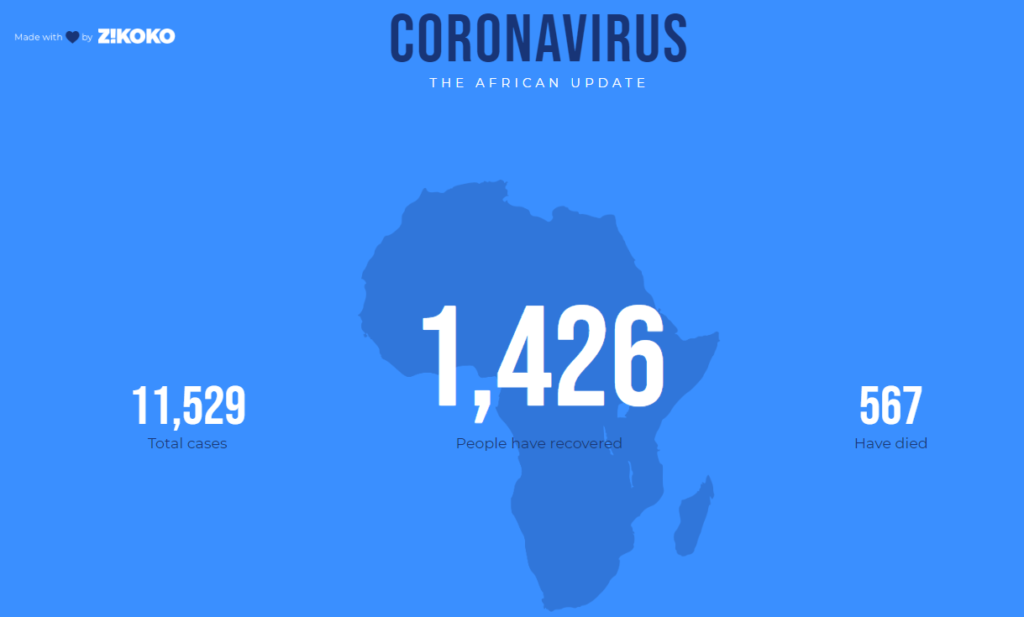
    We live in uncertain times and that can be scary. What if we promised you some form of certainty? Every day by 12 noon, we’ll bring you the latest updates on the fight against the COVID-19, both in Nigeria and Africa


    Nigeria’s Update from the past 24 hours:

    As of yesterday, 8/04/2020, these are the number of reported cases in Nigeria.

    There is an increase in the number of new cases when compared to yesterday’s numbers.

    Africa’s Stats:

    Covid-19

    Visit www.coronafacts.africa for the latest updates on the fight against Corona in Africa.

    Equipment and personnel update:

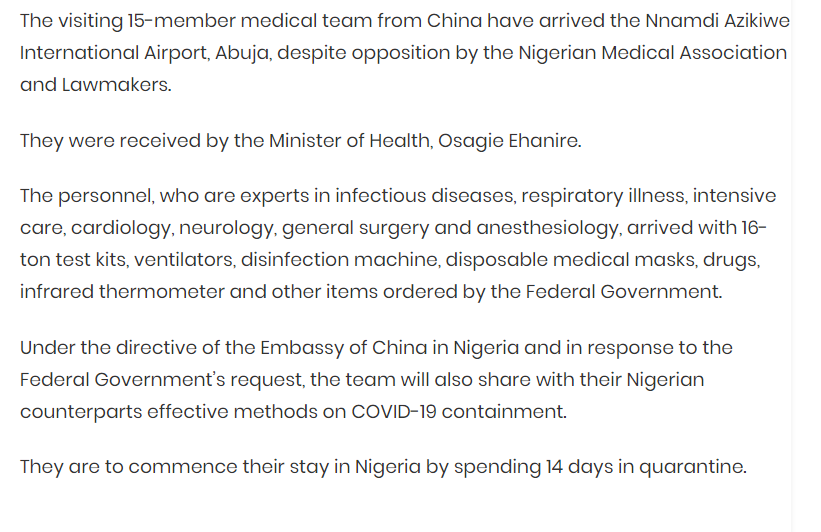
    As part of its effort to support the fight against this pandemic, China is sending medical delegates to African countries. Despite protests from the Nigerian Medical Association, the party sent to Nigeria landed yesterday. Along with manpower and expertise, they also brought along essential equipment Nigeria desperately needs.

    Covid-19
    Covid-19

    Read the full thing here.

    Zikoko’s pro-tip of the day:

    Try to sleep as early as you can. Pick a fixed time everyday and turn off all your devices.

    https://www.instagram.com/p/B-rQlD2l3Ts/?utm_source=ig_web_copy_link

    Stay updated:

    Head over to Zikoko’s brand new site www.coronafacts.africa for the latest and factual news on the efforts against Coronavirus.

    Today’s distraction:

    We know the news can be overwhelming so why not watch this to relax a bit.


    Come back tomorrow by 12 pm for more updates and tips on COVID-19. We will beat this!

  • 10 Things We Look Foward To After The Pandemic Is Over

    If there’s one lesson from this period, it’s that life comes at you fast. And now, we have decided to allow enjoyment to do the same.

    When this storm passes, here is a list of things we look forward to:

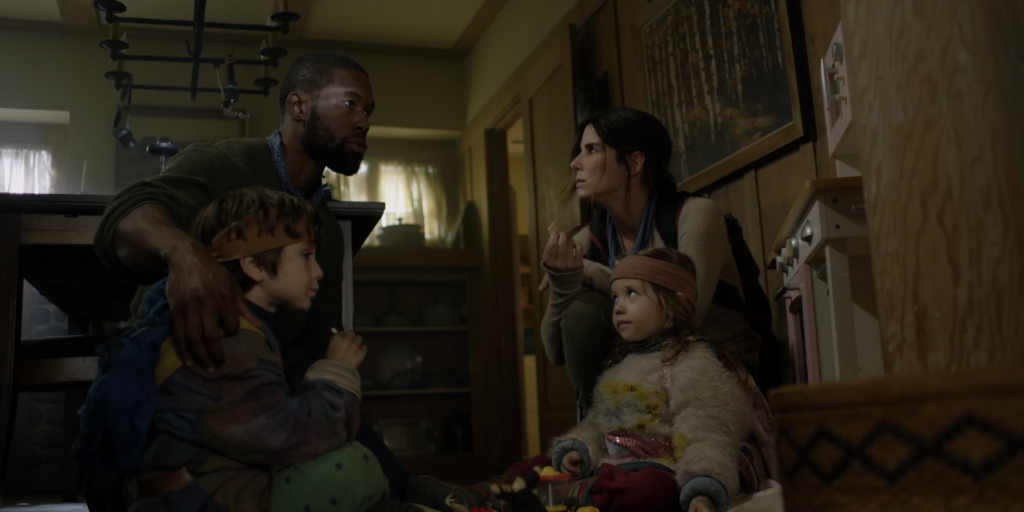
    1) Going outside and not living like the people in Birdbox.

    The ghetto.

    2) Peace of mind

    Tired of thinking every cough or sneeze is Miss Rona announcing her presence.

    3) Traveling.
    Take me on a magic carpet ride.

    4) Eating roadside food.

    My precious.

    5) Entering danfo once again.

    Taxify and Uber, e go be.

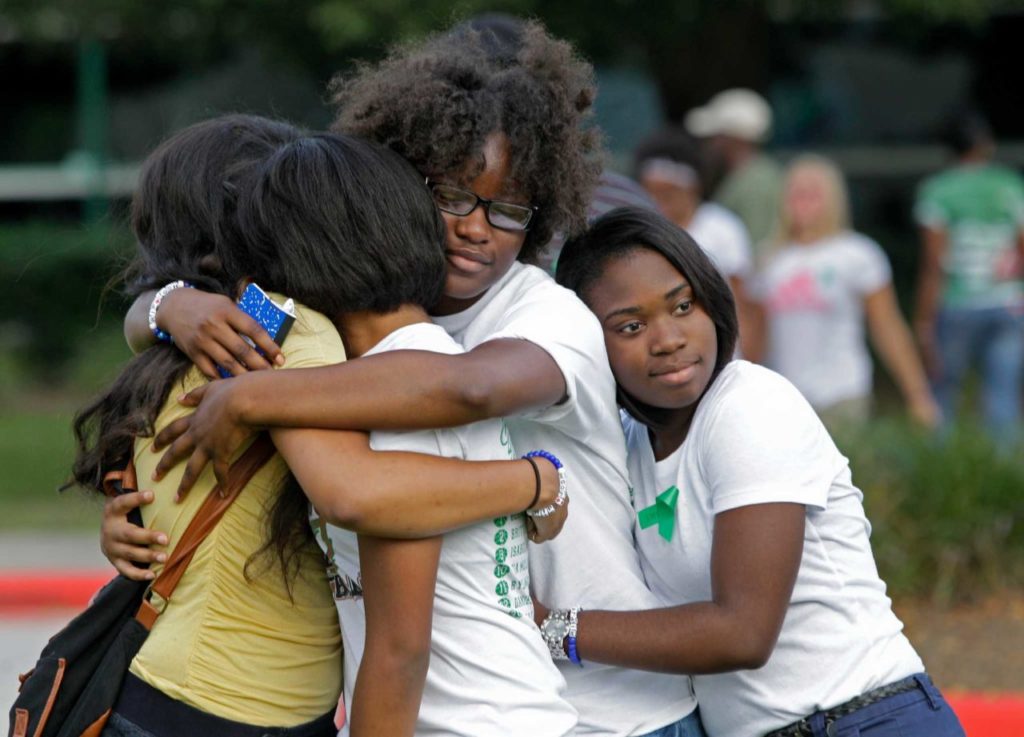
    6) Hugging my favourite people in the world.

    Social distancing 1 – 0 Me.

    7) Some Government approved fornication.

    It’s time for a baby to make some babies.

    8) Hating on colleagues in real-life and not virtually.

    Beef is just better in person.

    9) Being able to lie that you aren’t home.

    This lie is currently undergoing construction.

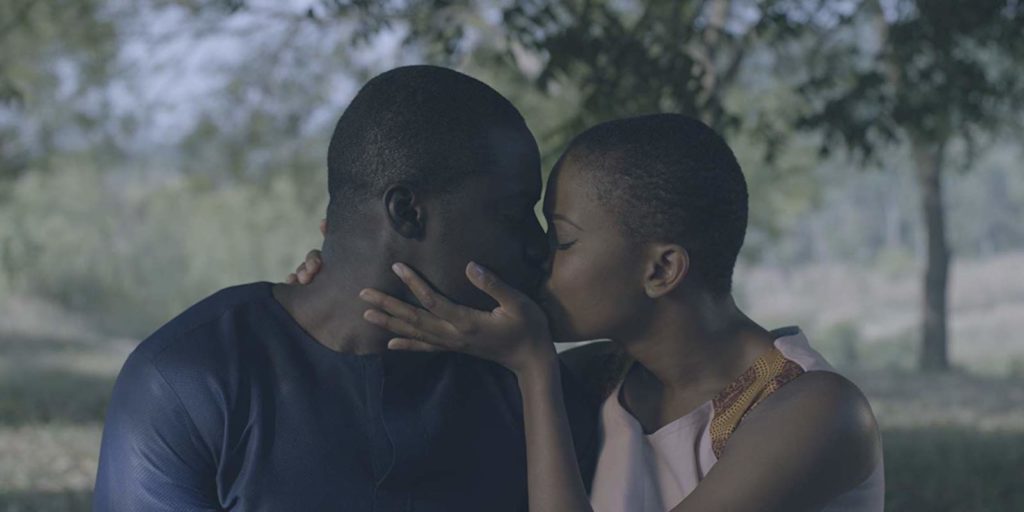
    10) Kissing.

    how good of a kisser are you?

    The chance to comfortably swap saliva with anyone without having to worry about infected spit.
    What’s up, Zikoko Fam? It would mean the world to us if you spared a few minutes to fill this Reader Survey. It’s so we can bring you the content you really want!