Notice: Function _load_textdomain_just_in_time was called incorrectly. Translation loading for the wordpress-seo domain was triggered too early. This is usually an indicator for some code in the plugin or theme running too early. Translations should be loaded at the init action or later. Please see Debugging in WordPress for more information. (This message was added in version 6.7.0.) in /home/bcm/src/dev/www/wp-includes/functions.php on line 6121
NNPC | Zikoko!
  • Nigeria has Standardised Fuel Prices. But Our Problems Are Not Over

    For Nigerians, fuel scarcity is not new, which is ironic, as Nigeria is the third-largest producer of crude oil in Africa. We go into every year expecting to experience at least 2-4 weeks of fuel scarcity, but 2022 shocked most of us and taught us to bury what was left of our expectations into the ground.

    Fuel scarcity fuel prices

    Reasons for fuel scarcity in 2022

    Adulterated fuel

    In February 2022, many Nigerians complained about their cars being damaged due to the poor fuel quality sold by filling stations. This was due to the high amount of methanol in recently imported fuel.

    Fuel scarcity fuel prices

    The Nigerian National Petroleum Corporation (NNPC) stopped distributing to tackle the problem, which kick-started our fuel woes.

    Flooding

    Nigeria experienced devastating floods in 2022, which displaced millions of people. It also submerged many cities, including Lokoja, which affected the distribution of petroleum products, primarily to Abuja and other northern states.

    Hoarding by independent marketers

    In 2022, NNPC reduced its supply of petrol from 103 million litres to 60 million. Their reason was that independent marketers were illegally selling fuel to neighbouring countries. However, this decision by the NNPC resulted in hoarding as many marketers claimed the petrol they got wasn’t sufficient.

    Although we said goodbye to 2022, our long battle with fuel scarcity followed us into 2023. The queues at filling stations are getting longer, and the official pump price is starting to look like a suggestion, as fuel is now sold between ₦250 – ₦300. But it seems like things will begin to look up soon.

    What’s happened now?

    On January 19, 2023, the federal government officially decided to increase fuel prices from ₦167 to ₦185, sending out a memo to all marketers, including the Independent Petroleum Marketers Association of Nigeria (IPMAN) and the Major Oil Marketers Association of Nigeria (MOMAN). 

    Some marketers have already begun changing their pumps to reflect this price, and hopefully, this will mitigate the problem. 

    But that’s not all; to also help with the traffic situation the fuel scarcity created, the Lagos state government has put out a timetable for filling stations.

    The Commissioner for Transportation Frederic Oladeinde stated that filling stations along major highways will now only be allowed to operate between 9 am to 4 pm daily. 

    Still, the “solutions” put forward by the government aren’t exactly impressive as Nigerians again have to go through another increase in fuel price despite past campaign promises. 

    We’re more than three weeks into a new year, but we have the same old problems.

    Are you signed up to our Game of Votes newsletter yet? We help you make sense of news jargon and keep you up-to-date especially with election news. Make the subscription of a lifetime here

  • How’s the Federal Government Tackling Fuel Scarcity?

    Since November 28, 2022, many Nigerians have experienced a new level of shege regarding fuel scarcity. Fuel shortages have affected over 30,000 filling stations nationwide and left millions of Nigerians wasting time in queues. 

    To make matters worse, fuel marketers decided to launch the Christmas season with breakfast as fuel prices went up from ₦180 to ₦230 per litre.

    The government has blamed traffic congestion for the scarcity and industry operators have blamed the private depot owners for the hikes in private depot prices. But what exactly is anyone doing about the crisis Nigerians are enduring when they should be enjoying the festive season? 

    The fuel price slash 

    To satisfy private fuel marketers, the Nigerian National Petroleum Corporation Limited (NNPC) decided to slash the fuel price from ₦200 to ₦148 per litre at private depots. Hopefully, with this, marketers won’t be forced to inflate prices, which means consumers can finally buy fuel at affordable prices and stop waiting in long fuel queues.

    The 48-hour ultimatum

    On December 13, 2022, the Department of State Services (DSS) issued a 48-hour ultimatum to the NNPC  — either resolve the fuel scarcity crisis, or those impeding the supply of fuel will face the consequences.  

    The ultimatum doesn’t seem to be bearing much fruit so far, as vehicle owners especially in Lagos and Abuja continue to have a tough time getting petrol from filling stations.

    We can only hope the government can find a long-lasting solution that doesn’t come with threats. Experiencing fuel scarcity is definitely not the best way for Nigerians to spend Detty December.

  • This Nigerian Department Is Spending ₦89B of Your Money on PR

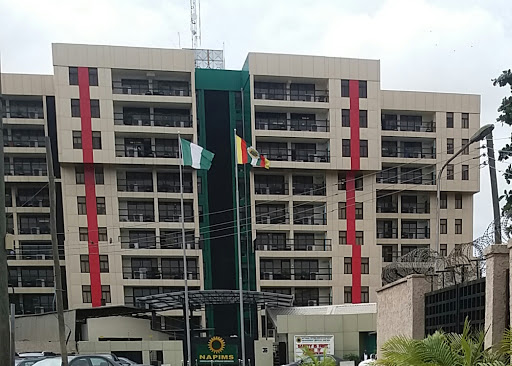
    Before October 25, 2022, many Nigerians had never heard of NAPIMS. I discovered the department by accident earlier this month when I visited a friend who lived near the agency’s head office in Lagos. At first, I thought NAPIMS was just a block of residential apartments for VVIPs.

     NAPIMS’ head office in Ikoyi, Lagos

    But after doing small amebo on my phone, I found out that NAPIMS is short for the National Petroleum Investment Management Services. The department is a subsidiary of the Nigerian National Petroleum Company (NNPC) — where all of Nigeria’s money is made and stolen. That was where my research stopped, so imagine my surprise when I saw NAPIMS in the news just weeks later.

    What did NAPIMS do?

    An audit of NAPIMS showed that the department spent ₦89.9 billion on public relations in 2021. This was more than triple the ₦20.7 billion NAPIMS spent on public relations in 2020.  

    How thoughtful of NAPIMS to stop just short of hitting the ₦90 billion mark. You’ve earned our undying gratitude, NAPIMS.

    But if just one department is spending ₦89.9 billion on public relations, shouldn’t Nigerians have actually heard of them?

    Let’s do some PR for NAPIMS, shall we?

    NAPIMS describes itself as a corporate services unit of the NNPC. The department manages the Federal Government’s investments in the upstream oil industry. That’s the boring part.

    The really interesting part is the department’s claim of maximising the Nigerian government’s oil profits. Because the obvious question is how well have they managed to do that? Let’s show you.

    The Nigerian department of flex

    As you probably guessed already, public relations wasn’t the only thing NAPIMS spent too much on. I took a closer look at the audit report and found out that this department has been flexing with Nigeria’s oil money. Audited financial statements are usually boring but I promise you this one isn’t

    In 2020, NAPIMS spent ₦680 million on maintenance but spent ₦63 billion the following year. Most of that fund probably went to maintaining stomachs rather than assets.

    In the same 2021 NAPIMS spent ₦2.2 billion on travelling and ₦1.1 billion on entertainment — because man must chop.

    Expenses on internet also went up from ₦84.6 million in 2020 to ₦6.8 billion in 2021. After all, NAPIMS is in the upstream industry, and streaming consumes a lot of data.

    Let’s also not forget that NAPIMS wrote off over ₦85 billion in bad debt in 2021.

    How are Nigerians taking this?

    An independent research analyst, Dayo Adenubi, told Citizen that NAPIMS’ administrative expenses are alarming, especially the bad debt write-off. 

    He said, “Debt write-off schemes are a common accounting fraud used by criminals to disguise unauthorised payments or reduce taxable income. I want to believe NAPIMS falls under the former.”

    A Nigerian on Twitter who claimed to have worked for NAPIMS said that despite the heavy bills, it’s still possible that the financial statement is understated. 

    “I was the Acting Head of Procurements and Acquisitions Department. My boss Mr Micah lost his family in an accident and took a year off work. If the NAPIMS books tell you they spent billions on something, just know say na trillions.”

    Another former NAPIMS staff said, “75% of NAPIMS staff are multi-millionaires. The Ogas are multi-billionaires. All IOC contracts are advertised by NIPEX but regulations, approval and contract awards are from NAPIMS (fill in the gap). In NAPIMS we only talk in dollars.”

    So what really goes on? 

    Many Nigerians are now curious about what goes on at NAPIMS as the department spends so much on public relations while remaining relatively unknown. The person best-placed to address the issue is the Minister of Petroleum Resources, President Muhammadu Buhari. But we wouldn’t hold our breath for a response.  

  • Will Nigeria’s Fuel Scarcity Be Over Soon? We Have Updates

    If you have a gen or car, two things may have crossed your mind in the past two weeks. First, you’ve asked yourself why you’re still in this country for the 100th time. 

    Then, you’ve wondered why you’ve spent the past two weeks queueing at fuelling stations.

    Well, the good news? We have all the details on the latter and we’re here with more updates. As for the former, we can’t really help you. 

    Pele, go and collect your PVC to vote in 2023.

    Now, for the updates

    The last time we had the resident big boys of Nigeria’s petroleum sector, the Nigerian National Petroleum Corporation (NNPC) and its ring leader, Mele Kyari, on the hot seat. Three main things went down:

    1. Earlier in February, adulterated fuel was imported and distributed to fuel stations across the country. 
    2. There was a tussle with MRS over who was to blame for the oversight that led to the importation of contaminated fuel.
    3. In the heat of the drama, an alleged entanglement between NNPC’s trading arm, Duke Oil, and a fraudulent law firm in Panama surfaced on Twitter.
    The gist is here

    So right now, who’s fixing this mess ?

    In the midst of all the “he said, she said” drama, NNPC assured Nigerians that 2.1 billion litres of methanol-free petroleum would be imported into the country to end the fuel scarcity in a few days. It’s been seven days since the update and well, your empty jerrican says it all.

    The Minister of State for Petroleum, Chief Timipre Sylva, has apologised to Nigerians on behalf of the Federal Government and asked us to stay focused.

    An excerpt from the speech: “It is not a time to trade blames as is customary in Nigeria. After the storm settles, there will be time enough to investigate and get to the bottom, so that this does not repeat itself.”

    So technically, we’re still here.

    Does it get better?

    Not really. In the midst of the power outages and hike in transportation fares, the Trade Union Congress (TUC) has threatened to go on strike due to the seemingly unending fuel scarcity.  

    Why is a strike from TUC problematic?

    They are the senior brothers of ASUU, so you may want to put some respect on their name. TUC is a union for senior staff from various associations in Nigeria to coordinate activities in their industries. 

    If they decide to embark on this strike, buying fuel for ₦1000 per litre won’t be our only problem. We will see stores shutting down, shipping and clearing agencies closing up — essentially every union under TUC will pack up.

    What is our designated bad boy, Uncle Bubu, doing?

    Uncle Bubu’s PR team is moving fast and will not tolerate any Buhari slander. In an interview with Channel Television’s, Femi Adesina,  the Special Adviser to the President on Media and Publicity, has asked Nigerians to stop crying as if the heavens have fallen.

    Uncle Femi out on parol for Bubu slander

    Does he stop there? No. He goes further to say: “Nigeria has only witnessed one major fuel scarcity since the inception of the Muhammadu Buhari administration.”

    Let me interpret

    Uncle Femi to Nigerians complaining

    At least we still have Google

    Let’s take a trip
    AdministrationYearChallenge
    Uncle Bubu2015Fuel scarcity
    Uncle Bubu2016Fuel Scarcity
    Uncle Bubu2017Fuel Scarcity
    Uncle Bubu2019Fuel Scarcity
    Uncle Bubu2021Fuel Scarcity

    So in other words, fuel scarcity is an annual event in the country, but according to Bubu’s PR squad, this is the first major one. Therefore, we all need to stop making noise.

    Nigerians to Uncle Femi

    So what next?

    We can only wait to see the 2.1 billion barrels of fuel distributed and hope things return to “normal”  soon. 

    Until then, stay glued to our daily updates on the chaos that is our beloved country, Nigeria, on Zikoko Citizen.