Navigating life as a woman in the world today is interesting. From Nigeria to Timbuktu, it’ll amaze you how similar all our experiences are. Every Wednesday, women the world over will share their experiences on everything from sex to politics right here.
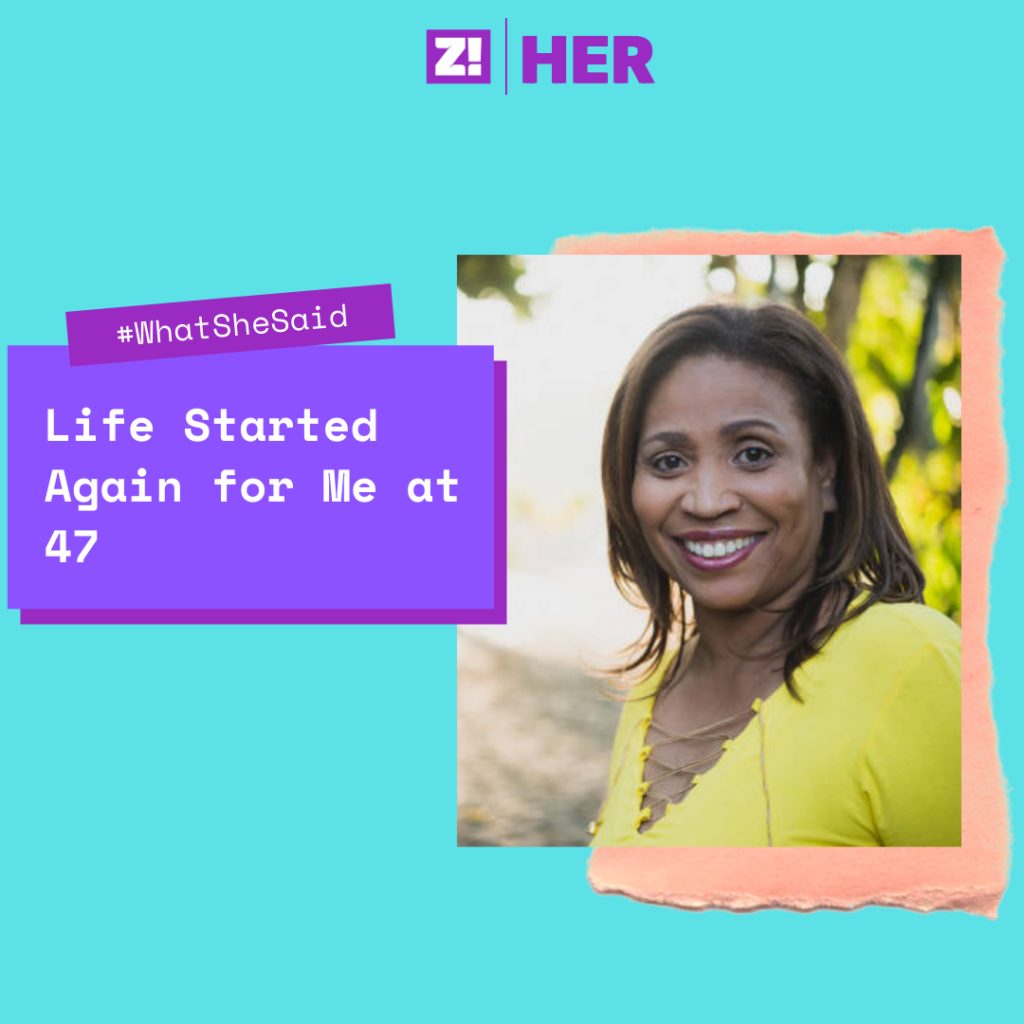
Today’s subject for #ZikokoWhatSheSaid is a 50-year-old mum of three living her life backwards. She talks about the ups and downs of having a police dad, navigating adulthood without a solid plan and the moment of epiphany that reset her life.
What was it like growing up in the 80s?
We moved around a lot when I was a child. My dad was an Assistant Commissioner of Police in Lagos, and his job made sure we moved to a new place every other year. Those trips were the most exciting thing about having a police dad. I knew we were always going to try someplace new — and loved it.
I was born in Lagos and lived in the officer’s quarters at the Police College in Ikeja. The first time we moved, I was nine. We went from Lagos to Makurdi in Benue State and moved between three towns in Benue: Makurdi, Ida and Otukpo. Eight years later, my father was redeployed and we settled down in Oji river in Enugu State, where we lived until my father retired from the police force and moved to Delta State.
What were the best parts of your road trips?
I miss the drive between towns. The fruity scent of my mum’s perfume in my dad’s Peugeot 504. The cool breeze as my dad drove through highways…
Didn’t you lose friends with all of this moving about?
My parents were pretty strict. My dad in particular. He was very strict about minding his business, which meant ensuring his kids didn’t mingle with the neighbours or make friends. He made sure we didn’t wander outside the compound. Our lives looped around home, school and church. It didn’t help that our flat at the barracks had its own compound. That seclusion made it so boring — the kids at the communal side of the barracks seemed to have all the fun. We didn’t even have a TV to watch. It was so annoying. The only form of entertainment we had was standing by the window in the living room and watching the other kids run around, roll tyres and get dirty.
I made my first set of friends in secondary school, but I didn’t feel attached to those relationships. Leaving right in the middle of a school term was second nature to me — it never felt like I was losing anything.
You never snuck out of the house?
Hm. Once bitten, twice shy.
Ghen ghen… Tell me about the once.
My older brother snuck out one day after school while my sister and I looked on. He was having the time of his life that afternoon, rolling tyres, throwing sand around with the other kids and laughing. All that laughter disappeared when my dad rode his bicycle into the compound. We didn’t even have enough time to call him back into the house. It was my dad’s belt that brought him inside. When my mum returned from the market, he received another round of beating. Nobody had to tell us to never try it again after that.
That’s harsh.
Yeah. Anyway, being stuck in the house got me obsessed with reading novels. I started saving any money I got to buy books. I also climbed a lot of trees. When we lived in Otukpo, our compound had been surrounded by tall mango trees, and we were allowed to play with them. It was fun racing my brother and sister to the top, and up there we were rewarded with cool breeze and juicy mangos.
Climbing trees made me feel daring, brave.
Wild. Deciding on a Netflix show is where my bravery ends.
LOL. I also remember things like hiding in the farm behind our house in Maiduguri to avoid going for a secondary school entrance exam that was miles away from home. My father threatened to not send me to school for the whole year, but I didn’t care. He eventually enrolled me at a school close to the house. My mother used to beat me for soaking my clothes in the bathroom for days and locking myself in the bathroom to avoid my chores. I was quite the coconut head.
When was the first time you got to do what you wanted?
Way way later. My adult life was pretty uneventful. When I got into uni, I wanted to experience new things in a new town. Sadly, as a broke Nigerian student, that dream had to take a back seat. I was also too shy and reserved. My mates were chilling with their razzlers.
Razz what?
LOL. That’s what we called the men chasing us back then — what you guys call toasters. I had my razzlers, but I was too reserved to go for any of their advances. I only hung out with one person — let’s call her Amanda — who would drag me to Aba to chill. After uni, the “fun” ended.
And what started?
Job-hunting. I moved to Lagos to find a job. My friends were going into the banking sector, but I couldn’t see myself working as a banker. I wasn’t sure what I wanted anyway. I got a job as a supervisor in a barbing saloon, but it still didn’t feel like the right place. I complained to my father and he advised me to work as a teacher since I had a degree in English — that wasn’t something I wanted either. Eventually, I asked my sister, who’d moved to the UK, to start sending clothes I could sell to my friends in Lagos. I did that for a few years but got fed up with the hustle in Lagos and moved back to Port Harcourt. I started the search for a new job again and met the man I married in the process. The years went by, and I still couldn’t find a job. When we started having kids, I started the clothing business again to support my family. My life pretty much shut down, until I turned 47.
Tell me what went down.
I had a moment of epiphany. I got married with three lovely kids, but I was always angry. I didn’t even realise how bad it was until the evening I was watching a series on Zee world and my eight year old daughter walked in to ask a question, and I snapped at her. She wasn’t being difficult; I was just transfering aggression.
I was angry at my status. It felt like one minute I was a 17-year-old getting admission into uniport, to study English, taking trips to Aba to visit my friend and enjoying life. Then suddenly, all that time — 33 years — had gone by and nothing exciting happened in between. I didn’t own anything for myself and my friends who’d chosen banking had solid careers. That reality built some kind of resentment in me. I wanted more, but it felt late at first.
At first?
Yes. Things changed once I renewed my mind. It meant allowing myself to become the coconut-headed child I once was. It meant trusting God again on the plans he had for me, believing I wasn’t a failure just because time had gone by. The first step was to build something my fears wouldn’t let me believe I was good enough to do. I decided to open up a creche the next year.
A creche?
Yeah. Six years after graduating from uniport, my close friend Amanda opened a primary school in Abuja. The parents at her school kept requesting a creche section for their younger kids, but she wasn’t interested in expanding. She called me up a few times to take up the opportunity and set up my own place. I wasn’t ready.
I shoved the conversation away until after the incident with my daughter. I went to see her to talk through the emotions. Her advice was to get past the anger and try something new. She mentioned setting up the creche again, and it just felt right.
I set up the school in 2020, and it’s gradually grown. I started off with only two staff, and now I have five. New kids come in each year.
What does it take to run a creche?
Continuously learning. You have to be open-minded and keep up with new trends to teach kids. The years they spend in creche are usually the most formative ones, so I’m very particular about exploring teaching strategies.
I started this school when I was 48 — a year after that moment of epiphany at 47. This year, I turned 50, and with each moment that passes, there’s something new to learn about teaching. Google had to be my best friend, and it was hard at first. I had to ask my own kids for help — you know that’s not an African mother’s forte. So learning to keep my school up to date has been the hardest thing. I have to be, how do you guys say it…
Woke?
Yes. “Woke.”
LOL. Looking at how your parents trained you, I’m curious about how you’ve trained your kids.
Haha. I used to be as strict as my parents, but it didn’t work with my kids. As they got older, they only became more rebellious and distant. At one point, I was called in by the principal because my son was suspended for stealing from the cafeteria. That was the moment I knew my father’s austere approach wasn’t going to work. I needed to find a balance.
At first, they didn’t trust me, but I kept trying. I let go of the stern boundaries and gave them room to socialise — our communication became more open. They could politely challenge me with ideas, and I was fine stepping back. As time went by, they started talking to me about things I could only dream about before — crushes at school, places they wanted to see — and I loved every bit of it.
That’s so sweet. What does a 50-year-old woman who manages a school look forward to in 2022?
Travelling! Last December, I decided to go on a trip with my kids, sister and her kids to see my dad. He retired and moved to Delta State after serving in the police force for almost 32 years. We couldn’t afford a train ticket, so we decided to take a train from Abuja. My elder brother felt it was a careless decision. But I didn’t want to overthink it.
I drove to Lokoja and bought the train tickets at a station there. It was a slow ride, but I enjoyed the scenery. It took me back to those moments in the Peugeot 504 with my family again. There was no breeze from zooming down the highways, but I had the trees and the sun.
The next thing on my list is to go on a safari in Kenya. I want to know what the sun feels like around the world. It’s small small sha. I’m starting life backwards — it’s scary, but I love it.
For more stories like this, check out our #WhatSheSaid and for more women like content, click here