Notice: Function _load_textdomain_just_in_time was called incorrectly. Translation loading for the wordpress-seo domain was triggered too early. This is usually an indicator for some code in the plugin or theme running too early. Translations should be loaded at the init action or later. Please see Debugging in WordPress for more information. (This message was added in version 6.7.0.) in /home/bcm/src/dev/www/wp-includes/functions.php on line 6121
Nigerian musician | Zikoko!
  • Lucid Isn’t Making Afro-depression, Listen Carefully

    To the average Nigerian music listener in Nigeria, shedding an emotional burden on wax is synonymous with making music for those who are losing it. The younger audience, especially, gives the music a distinctive, morose name like Afro-depression quicker than the artist can say what actually inspires their tracks. Before they know it, they’ve become a spokesperson for the listener’s existential crises. 

    This is the box Lucid, a 22-year-old singer from Abuja born Victor Barnabas Nanribetmun, has found himself in, even though he doesn’t fit into it. Let’s examine Lucid’s inspiration and what it means to be a young artist in 2024, stripping down the stereotypes about his music to decipher the context of his two popular “Afro-depression” songs, Hooligan and Therapy.
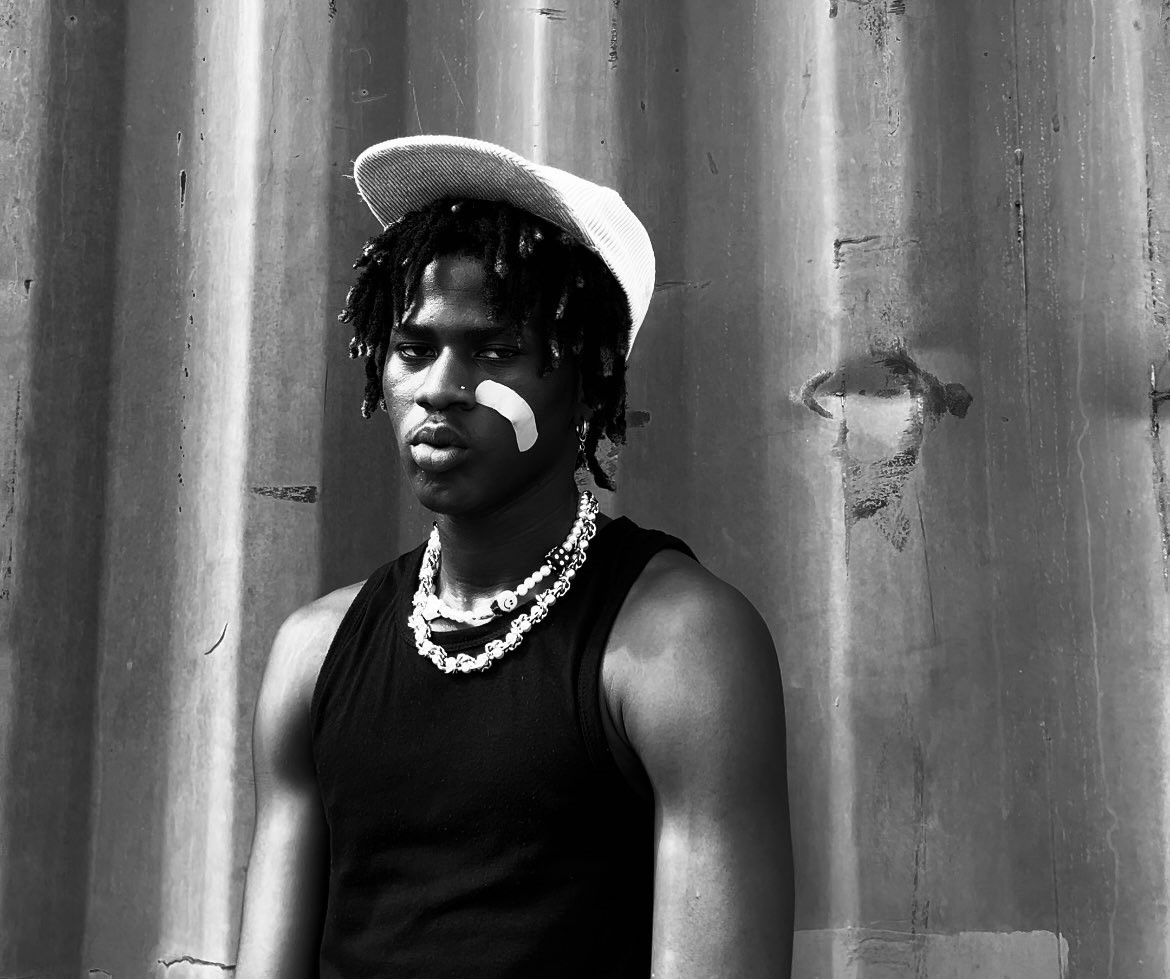
    Lucid

    Since Omah Lay’s 2020 “Get Layd” release that drowned him purple in vulnerability and confessions, there’s been a sudden buzz use of the word “depression” in connection with Nigerian music. No doubt, mental health deserves more awareness, and Omah’s music has a melancholy to it. His soft Afropop, soulful falsetto and emo-focused phrasings have inspired more artists. 

    Lucid is one of them, but only on a sonic level.

    Lucid caught my attention with Hooligan, a track that came out alongside Why in a two-song single package on February 7, 2024. He opened the song with “Righteous boy I am, but this life turn me to sinner man / And each time I do the best I can, something go turn me to hooligan”, a confession about taking unexpected turns when life doesn’t pan out how he wants. Scratching off the surface of the lyrics that painted him a depressed kid with little affinity for inside life, Hooligan expresses that extreme instincts take charge when faith is tested. [ad][/ad]

    Although Lucid sings with an understanding of the duality of life, he maintains enough consciousness to stay in the right lane. “I’m lucky to come from a good background. My family are good folks. My dad is a pastor. But I understand that sometimes hands get dirty because it’s the only way to make something work out. That was how I felt when I wrote Hooligan, guided by the things I’ve heard and seen too,” the young singer said when I asked him about this.
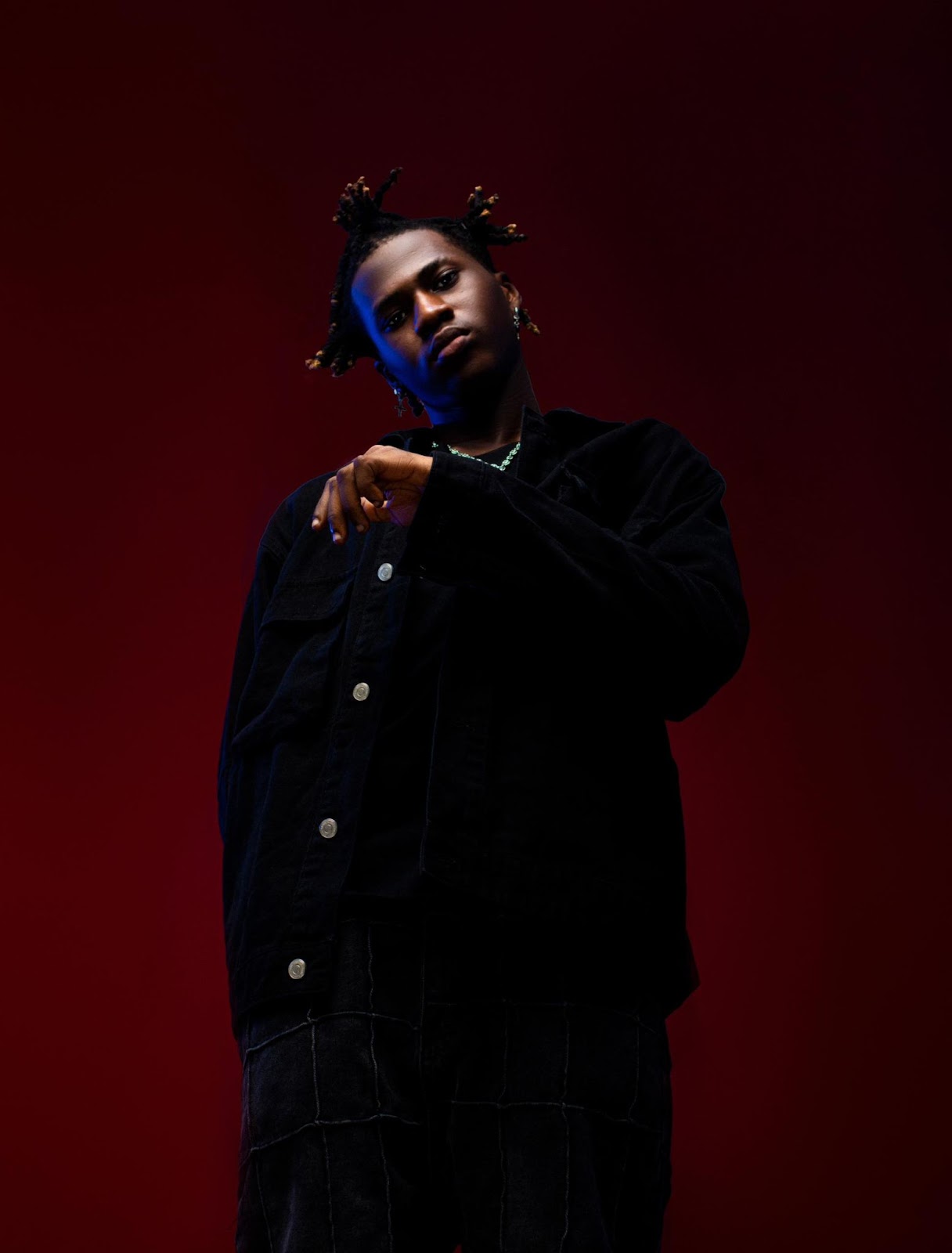
    Lucid

    “This life turn me to sinner man” from his Hooligan chorus brings to mind the “I’m a born sinner” line on J. Cole’s Born Sinner. In Christianity, every human is born a sinner, but we can get better through repentance. Although J. Cole swore he’d die better than a born sinner, Lucid is yet to find that clarity. Speaking of his hooliganism in the context of the song, he’s a young adult who finds himself drowning in liquor or in bed with a partner faster than he could finish his vow to abstain from both.
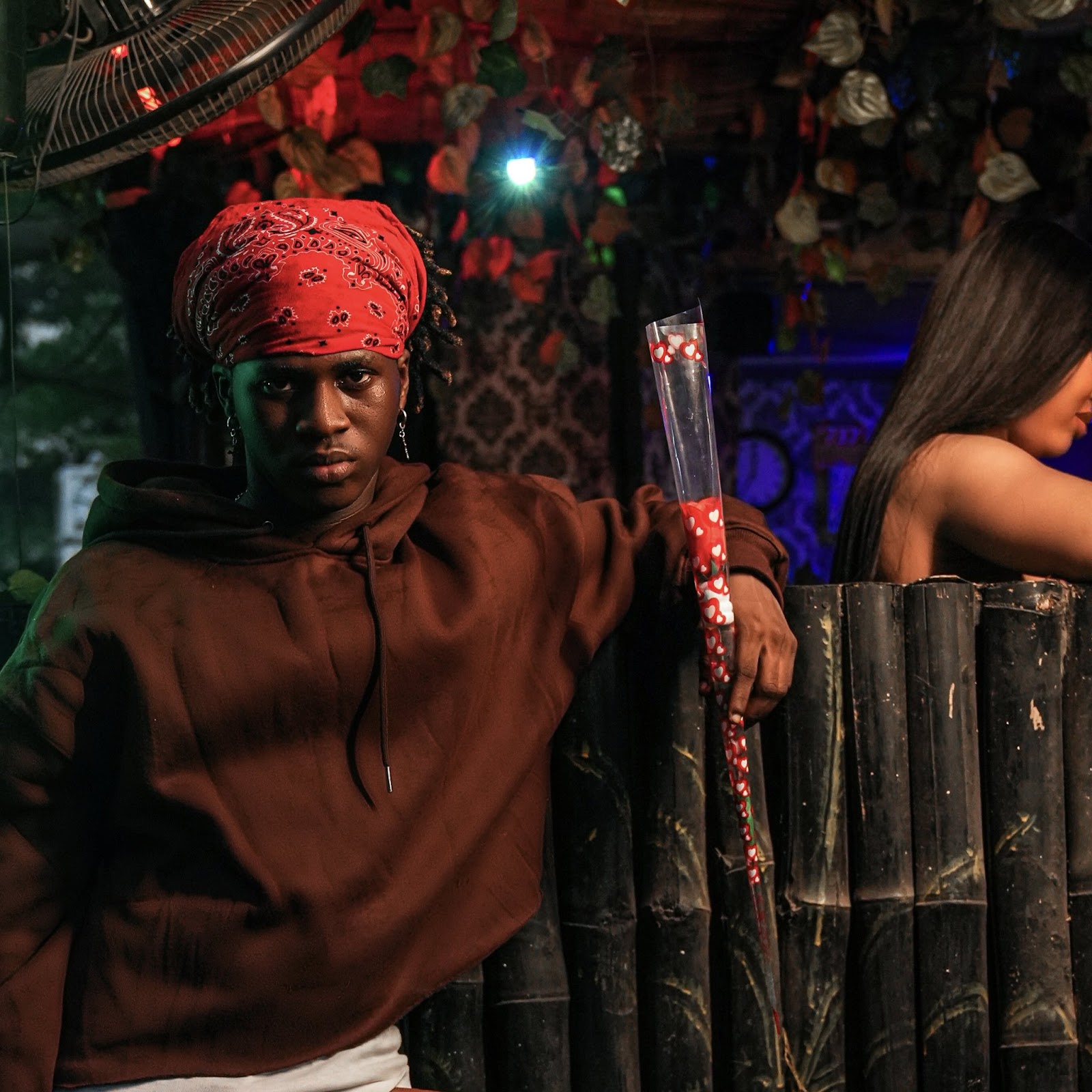
    Lucid

    Therapy is a song off his seven-track “Hi I’m Lulu” EP that came out in May 2023 — the only song in his discography that actually hits on mental health. The lyrics express the feeling of speaking to no one, being alone, an undiagnosed mental health issue and his need for therapy. This song calls for concern for his health and not a satirical categorisation that sets artists up for uninformed comparisons and stan wars.

    When I asked Lucid about the story behind Therapy, he said, “People around me might perceive me to be quiet and anti-social. This song tells them what I might not be able to tell them in actual conversations. It’s titled Therapy because I try to distract myself with anything I find therapeutic, which is mostly music. I know there are many people out there who can relate perfectly to this song, and my advice is to always try to be more positive, and whatever it is that takes you out of that dark space, use it as therapy.”
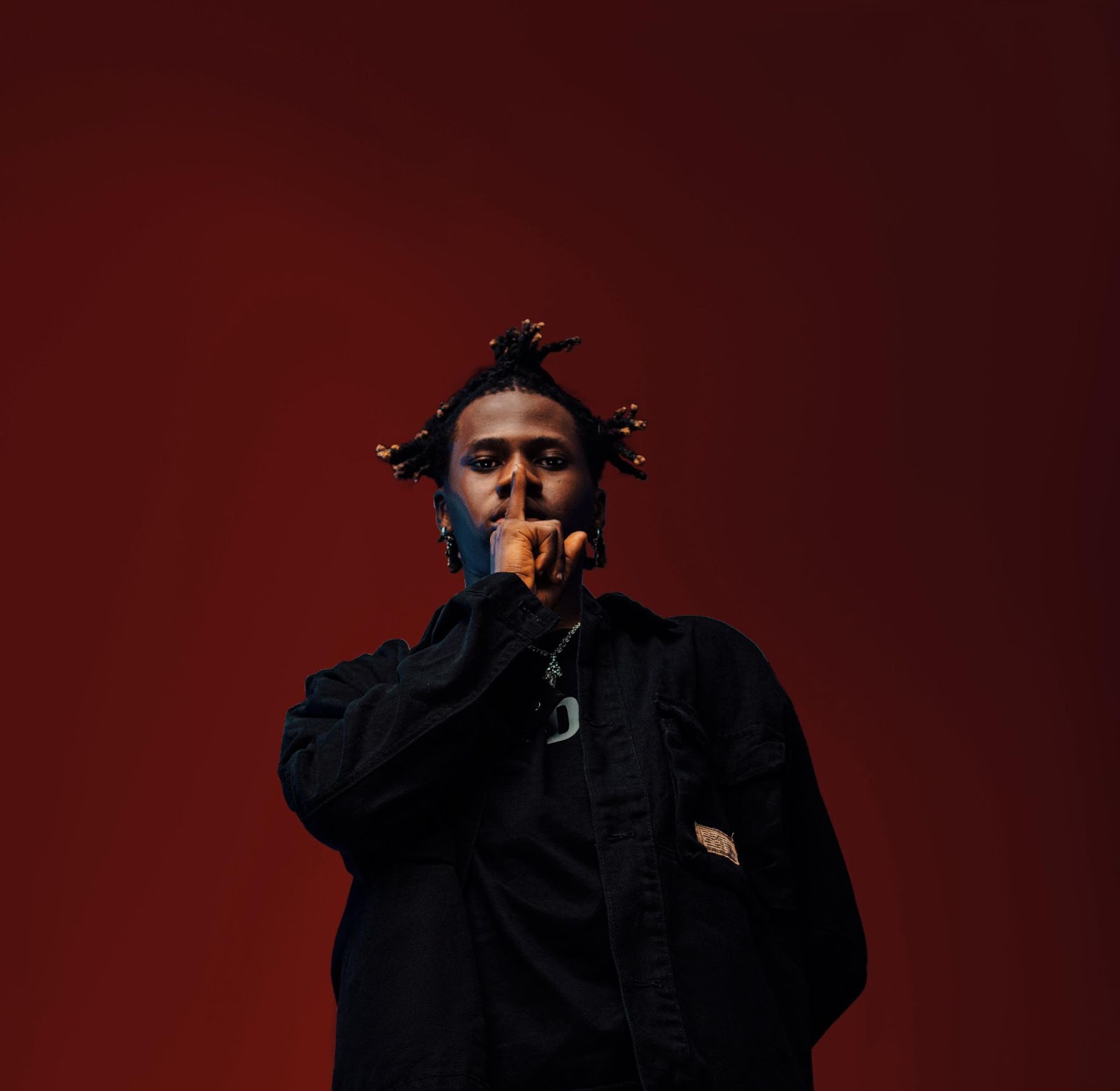
    Lucid

    “Afro-depression” is considered a playful tag as a subgenre for Nigerian dysphoric contemporary music. This is the wave Lucid has decided to latch on to as long as the listener keeps his name and music in conversation. This became clear after I asked him why he hasn’t shut down the “Afro-depression” label. “Most Nigerians consider a jam that isn’t upbeat an Afro-depression song.” Naive, but he knows where his art belongs. “I get sad like every human, but I’m not a sad artist,” he stated. 

    Lucid is as poignant in some of his songs as he is fun and explores light topics in others. He’s a versatile artist who engages his Afropop heritage and sometimes channels his inner Travis Scott. 

    “I understand being a young artist in 2024 means being different and outstanding every day. Many young cats are working as hard as I am. We’re at a time when one needs to maximise whatever he has. I can’t relent.” Lucid sees the saturated industry’s competition as motivation and charges it to continue to improve.

    His music isn’t Afro-depression, neither is it a musical offspring of Omah Lay’s. If anyone is carefully listening, Lucid’s music mirrors his experiences with matters of the heart, like love, intimacy and heartbreak. He wants to make evergreen music like his top influences, Fela Kuti and Asa.

  • Mohbad: The Poet I Needed at My Lowest

    Two years have passed since I discovered Mohbad’s music. Post-lockdown, sometime in early 2021, I was waiting for my school to resume so I could finish signing my clearance form and head for my NYSC programme.

    At home, young guys around me were broke and complaining. Most of us felt if we weren’t “bombing” a site or cashing out or spending crypto money, we were idle and wastemen. I could get by with my writing gig, but honestly, that didn’t matter to me. I equated every compliment, feeling and value to only money. I was under pressure to become a “Benefit Boy“. Like a battered ship, aimless, I looked for an anchor to hold on to. But nothing hooked until one evening when I was out with my guys looking for a good time.

    I remember that playlist clearly. A mix of selected Naija rap music and street-pop songs played in the background — then a special track cued in. It sounded a bit like highlife, with a sharp leading note and a softer riff playing together. One of the cleanest baritones I ever heard came on just as the music pulled me under. This voice told a story that gripped me.

    Sorry is the leading track on Mohbad’s official debut project titled Light (2020), and I still find it hard to go past that one song when I play the album. Sorry, a subtle apology to his parents and a cry-for-help, quickly became my nighttime ritual. The song didn’t put me to sleep, instead, it woke me up to the reality that other people were also going through things. At the time my desperation was at an all-time high, and it could’ve turned me into a Nigerian prince collecting “clients’” money online, I found Mohbad, born Aloba Ilerioluwa Oladimeji.

    The song, a semi-autobiography, runs for two minutes and twenty-four seconds. Not only did he tell about his humble and religious background, woes and strife, Imole (meaning light), as fans fondly call Mohbad, bared his then newly-found vices on the song. That was his superpower — an awareness of his environment and talent with a balance of street knowledge and soul. Even though my situation wasn’t as bad nor did we share the same waywardness he mentioned on the song, Sorry was my anchor throughout 2021. I found clarity and strength in his flawed story.

    I would need Mohbad’s discernment a year after. In September 2022, the street poet Mohbad had just released Peace, and I was two months fresh out of the NYSC — extremely free-spirited and filled with the ginger to make my own way. At that point, we both weren’t where we used to be. Allawee had stopped coming, my writing gigs were slow, and I was particularly scared of life after service. Mohbad, on the other hand, was in a row with his principals at Marlian Music, his former music label.

    Peace was the last song he put out under Marlian Music, and he made it count.

    The cultural intelligence that advises against saying everything at once is what Imole applied. He opened up on his unending battles with enemies disguising as friends, not naming names. In this song, what really hit me were the lines: “Surviver, mí ó nígba / money chaser / faster than a bullet / flying like a rocket / bad man will never rest”. My head was in that get-rich-or-die-trying space and those lines stuck in my memory and lips throughout the year.

    Mohbad was the soul of the street. A ghetto philosopher of hustle and survival, love and good times. He represented well for the trenches everytime, never at the expense of his faith which came forth on almost all his records.

    In 2023, he pushed his music independently under his own umbrella, Imolenization. Into the year, he put out Ask About Me, the seventh track on Blessed, his last project. Mohbad had left the problematic music label he was signed to and went back to pushing his music without backing. Ask About Me showed me a guy who had found his mojo. He’d regained his confidence and was ready to put hit songs in the street and clubs. Like most of his sounds that deeply resonate with me, this too came out at the time things still seemed bleak. The difference this time was I was moved by Mohbad’s triumphant energy.

    I was moving with blind faith but at the time, I just started regaining my confidence and showing my face outside again. No other song gave me the satisfaction that I was the shit than Ask About Me.

    Yesterday, Ask About Me, my mood lifter, my I’m-unfuckwithable anthem reminded me how far I’ve come. One of the deepest lyric that I really love due to its profoundness became a heart wrenching note yesterday. “Ikú tó p’àyá Teacher, ó lè pàwon niggas.” The death that killed the elder can also kill the young. Mohbad explicitly tells us that caskets don’t care for your age. To lose him at 27, these lines feel like a harsh premonition.

    Mohbad came, saw and experienced life. He documented his life, in visuals and verse, and gave his story to multitudes that didn’t know him personally. He loved the streets. The streets loved him back.

    While someone like me has probably lost a god, Mohbad claimed his and even talked to him in his music. I hope Imole’s finally at peace. I wish him light.

  • All the Best Moments From Asake’s O2 Show

    On August 21, 2023, Asake sold out the O2 Arena and filled it with his fans of afrobeats listeners screaming his lyrics.

    From his iconic entrance to flexing vocals with Fireboy DML and an almost-there show performance, Ololade Mr Money etched his name into the timeline of afrobeats artists who’ve had the iconic arena’s doors open up in their names.

    Asake’s dramatic entry

    Asake arrived on stage in a yellow and black helicopter with the YBNL logo sitting pretty on its side. We don’t call this guy Ololade Mr. Money for nothing. He has raised the bar for anyone who touches the O2 next.

    He paid tribute to the victims of his last concert

    A tribute video honoured Rebecca Ikumelo and Gabrielle who lost their lives at Asake’s O2 Academy (not to be confused with the O2 Arena) concert in 2022.

    Asake brought out Tunde Baiyewu

    It was a wholesome moment seeing Tunde Baiyewu, one of our veteran musicians, on stage to sing Ocean Drive — a song Asake sampled on Sunshine.

    He paid homage to Davido

    OBO had a show at the Afronation Fest in Detroit, U.S.A., on the same day, but Asake still paid respect to the old cat with his version of Davido’s No Competition

    He brought out other OGs

    Asake’s label boss, Olamide, came to perform Omo Ope and Amapiano with him. Tiwa Savage also sang some of her hits. Fireboy DML and Lil Kesh weren’t left behind either.

    Tribute to Wizkid’s mum

    Poco Lee and DJ Enimoney played some Wizkid songs, in honour of his mother’s passing on August 18, 2023.

    He performed his OG hit 

    Asake owned December 2020 with Mr. Money before people even knew him. He brought the jam back on the O2 stage.

    If Asake was this dramatic at his o2 concert, we wonder what actions his upcoming show at the Barclays Centre (New York) will unpack in September.

  • Somadina’s Taking Her Nollywood-Punk to Lollapalooza

    Among the current leading voices in the Nigerian music scene is the charismatic Somadina, a young female musician slowly penetrating the mainstream with radical, afro-psychedelic, emotion-lifting rock music.

    I first came across Somadina’s music in 2021. Her now deleted-off-internet debut EP titled Five Stages is a beautiful and melancholic musical interpretation of the stages of grief. It quickly became my life’s soundtrack for a few months, during a dark phase. Sometime in 2022, she shared that she doesn’t identify with the project anymore, hence its takedown, but she’s found a new channel to fully express herself.

    Off the strength of the cult-following she’s been building since her first official releases, IHY (I Hate You) (2018) and Lay Low (2019), she presented her album, Heart of The Heavenly Undeniable (HOTHU) in 2022. Ever since, she’s been going to music shows and on tours, from Lagos to Paris, Berlin to Accra, music taking her everywhere.

    Somadina was born in Garden City, Port Harcourt in 2002. She spent a year in Nigeria before going to the Netherlands to school and to stay with her dad. After going to London to secure a Sociology degree, she finally came back to Nigeria to pursue music in 2018. Her access to music as a kid was limited. She listened to Asa, Beyoncé, Rihanna and John Legend, only the music her dad listened to. But on coming back to Nigeria, she connected with the Alté community, collaborating with artists such as SGwaD, Lady Donli, Adey, etc.

    She’s breaking barriers and trailblazing her own path with her afropop fusion of R&B, punk and alternative rock music, and taking it beyond the barriers of Africa. In less than two weeks from now, (August 3 – 6, 2023), she’ll be performing at the 2023 Lollapalooza, Chicago, along with other Nigerian musicians like Tems and Rema, as well asinternational acts like Kendrick Lamar, Billie Eilish, Lana Del Rey, etc. On February 5, 2023, a month before her collaboration with NATIVE Sound System, Somadina played her first show in Los Angeles, courtesy of RnB Brunch. Between May 10-13, she took her Nollywood-punk sound to The Great Escape Festival 2023 in Brighton. On May 18, she was live at Live Nation UK; an event that brings artists and fans together to celebrate live music. On the 25th of May, the Kitty Amor remixes of her I Saw An Angel On The Roof & Wept song came out — the same day she was on the Royal Albert Hall stage in London, opening for her childhood hero, Asa.

    On July 12, the Gen-Z musician received the mainstream nod when The Headies, Nigeria’s most popular music award show, nominated her album, Heart Of The Heavenly Undeniable as one of the best Alternative albums of 2022. It’s an impressive feat, as it sits among strong contenders like Basketmouth’s Horoscope and Obongjayar’s Sometimes I Dream Of Doors

    READ: “Mami Wata” Is Taking Nollywood Around the Globe

    Unboxed by mainstream pressure and the dictates of the commercial market, Somadina forges ahead one release at a time, with her beaming falsetto. Somadina grew from a nomadic teenager who toured the UK with Odunsi the Engine and opened for Davido in Port Harcourt in 2019, to a songbird taking Nigerian pop culture to one of the world’s biggest festival stages in 2023. Go Somadina!

  • QUIZ: Which Nigerian Musician Should You Have a Baby With?

    Should you have a baby with Portable or with DJ Cuppy? Take the quiz to find out:

  • QUIZ: Only Millennials Can Pick Out The Odd Songs In This Quiz

    If you are younger than 25, don’t expect to smash this music quiz:

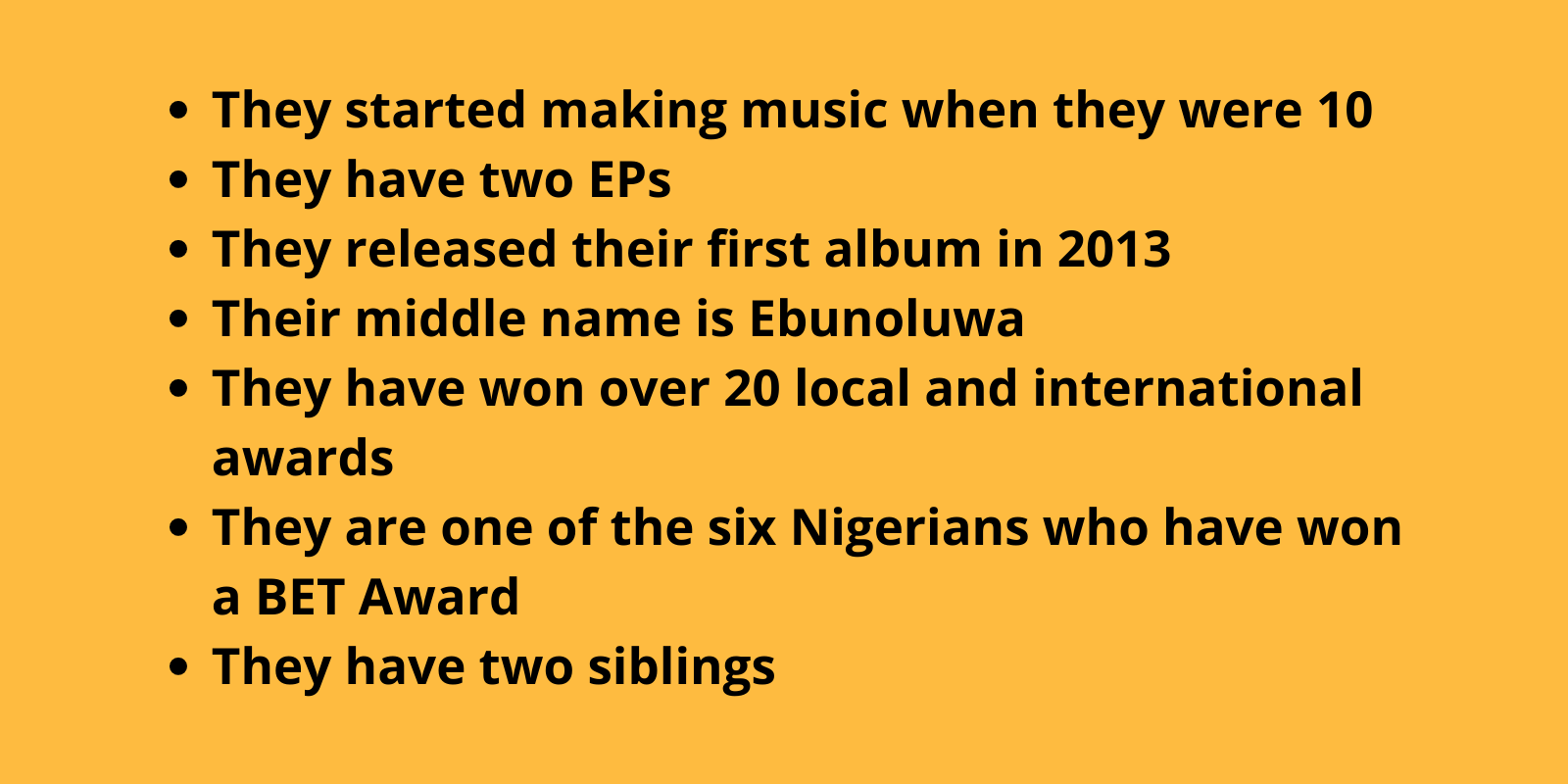
  • QUIZ: Can You Guess The Musician From These Facts In 1 Minute?

    Here are 7 facts about a Nigerian musician. You have a minute to guess who we’re talking about. Can you?

    Type “Ok” to start

  • The Story of Brymo And His Controversial Tweets
    Following the death of the two African-American men, Alton Sterling and Philando Castille, who were both shot by police officers in less than one week, the internet was thrown into major mourning and outrage.

    The Black Lives Matter movement was very much active and many Nigerians shared their concern on this.

    https://twitter.com/busolabiran_/status/750968170530340864

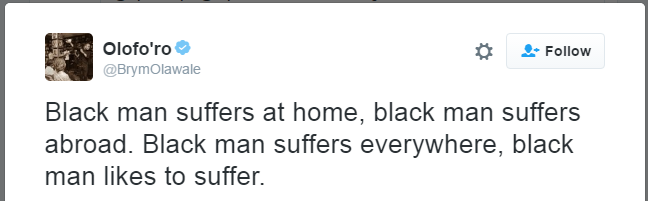
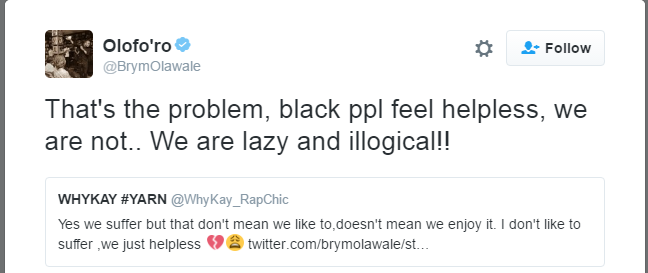
    And it was in this moment that Nigerian musician, Brymo, chose to share another dose of ridiculousness. According to him, the black man ‘likes to suffer’.

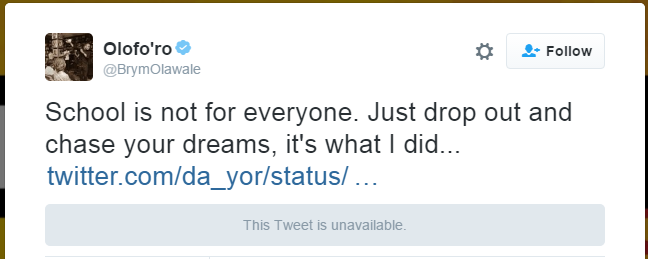
    Just a few weeks ago, he told someone who begged him to help fund his education to drop out of school.

    And in this sensitive moment, he decided to blame black people for these killings.

    Brymo has kuku shown his true colours.

    When someone that says school is important says something shows us the importance of school…

    Brymo needs to probably take history classes and learn what racism is really about.

    And if he was trying to be Fela, he has obviously failed, woefully.

    https://twitter.com/ephynatty/status/751029698541416448

    It’s rather unfortunate that some random Nigerian artist believes black people like the racism and prejudice they face.