Notice: Function _load_textdomain_just_in_time was called incorrectly. Translation loading for the wordpress-seo domain was triggered too early. This is usually an indicator for some code in the plugin or theme running too early. Translations should be loaded at the init action or later. Please see Debugging in WordPress for more information. (This message was added in version 6.7.0.) in /home/bcm/src/dev/www/wp-includes/functions.php on line 6121
Niger | Zikoko!
  • Niger’s Government Has Been Overthrown by Military Junta: Why Is It Nigeria’s Pot of Soup?

    Niger’s military, led by President Mohammed Bazoum’s presidential guards, recently installed a military junta. 

    In response, the Economic Community of West African States (ECOWAS) under the chairmanship of President Tinubu, convened in Abuja to deliberate on potential military action; a move which has plunged Nigerians in the country into fear of being caught in a crossfire. 

    Here’s what we know about the situation.

    How did it start?

    On Wednesday, July 26, multiple media outlets reported that some members of the elite Presidential Guard surrounded the presidential palace and denied President Mohammed Bazoum access to his official residence and office. The move by the presidential guard was indicative of another coup attempt years after an unsuccessful attempt in March 2021 — a few days before the president was sworn into office.

    Hours after the clampdown, a colonel-major and spokesperson of the elite presidential guard, Amadou Abdramane, in a TV broadcast quoted by Aljazeera said “the defence and security forces… have decided to put an end to the regime you are familiar with”.  

    Abdramane announced the closure of the country’s borders, the start of a nationwide curfew and the suspension of all institutions in the country. He also warned against foreign intervention.
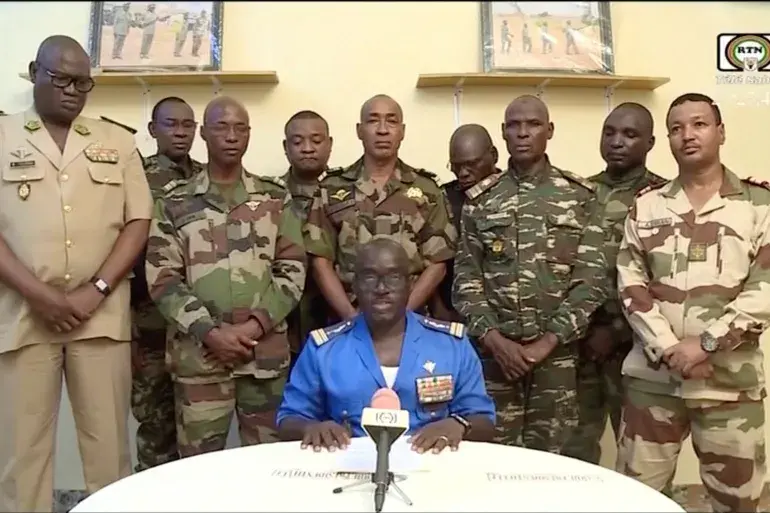
    Niger’s Government Has Been Overthrown by Military Junta: Why Is It Nigeria’s Pot of Soup?

    Source: ORTN via Reuters TV

    On July 28, 48 hours after the initial coup attempt, another member of the presidential guard, Abdourahamane Tiani, in a live TV broadcast declared himself as Niger’s new head of state. 
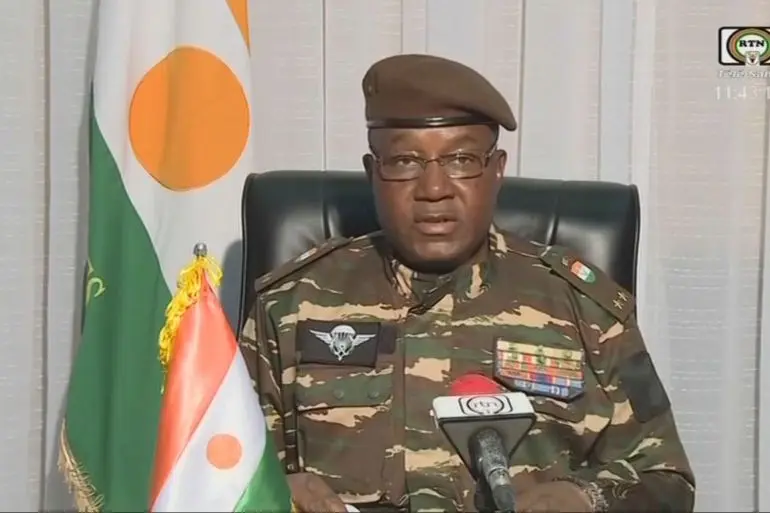
    Niger’s Government Has Been Overthrown by Military Junta: Why Is It Nigeria’s Pot of Soup?

    Source: AFP

    Tiani in his address on state-run TV said the intervention was necessary to avoid the gradual and inevitable demise of Niger. There was no mention of plans to return to civilian leadership.

    [ad]

    How did Nigeria come into the picture?

    A few hours after the July 26 coup, the Economic Community of West African States (ECOWAS) under the chairmanship of President Bola Ahmed Tinubu condemned the coup attempt in Niger. A statement issued to the press read in part:

    “I wish to say that we are closely monitoring the situation and developments in Niger and we will do everything within our powers to ensure democracy is firmly planted, nurtured, well rooted and thrives in our region.”

    “As the Chairperson of ECOWAS Authority of Heads of State and Government, I state without equivocation that Nigeria stands firmly with the elected government in Niger and equally conveys the absolute resolve of leaders in our sub-region that we shall not waiver or flinch on our stand to defend and preserve constitutional order.”

    On Sunday, July 30, the ECOWAS member states met in Abuja.

    During the session, a decision was made to issue a one-week ultimatum for the coup plotters in Niger to return power to the democratically-elected government. ECOWAS reiterated it only recognised Mohammed Bazoum as the legitimate president of Niger and called for his immediate release, adding that all measures, including the use of force, will be taken if the demand is not met within one week.

    Tinubu writes Nigerian senate

    Following the 7-day ultimatum to Niger, President Bola Tinubu who doubles as the ECOWAS chairman, on August 4, wrote the Nigerian Senate seeking approval for military intervention in line with the earlier agreement reached at the extraordinary session of July 30.

    His letter read:

    “Military buildup and deployment of personnel for military intervention to enforce compliance of the military junta in Niger should they remain recalcitrant. Closure and monitoring of all land borders with the Niger Republic and reactivating of the border drilling exercise. Cutting off Electricity supply to the Niger Republic, mobilising international support for the implementation of the provisions of the ECOWAS communique. Preventing the operation of commercial and special flights into and from Niger Republic; Blockade of goods in transit to Niger especially from Lagos and eastern seaports.”

    What does the Nigerian constitution say?

    According to part II, section 5(4a – b) of the Nigeria constitution, (a) “the President shall not declare a state of war between the Federation and another country except with the sanction of a resolution of both Houses of the National Assembly, sitting in a joint session; and (b) “except with the prior approval of the Senate, no member of the armed forces of the Federation shall be deployed on combat duty outside Nigeria.”

    “This means that for active external combat deployment, the president needs the consent of the National Assembly before deploying troops on combat duty in Niger,” Afolabi Adekaiyoja, researcher and political analyst tells Zikoko.

    Senate turns down Tinubu’s request for military deployment

    On August 5, a day after Tinubu’s request to deploy Nigeria’s military, the Nigerian Senate turned down his request and instead advised the president and ECOWAS to seek a political solution as opposed to military.

    Senate President, Godswill Akpabio, read the resolution after the lawmakers returned to plenary. It read in part:

    “The Senate calls on the President of the Federal Republic of Nigeria and chairman of ECOWAS to further encourage other leaders of ECOWAS to strengthen the political and diplomatic options and other means to resolve the political logjam in Niger Republic.

    “The National Assembly supports ECOWAS leadership under President Bola Ahmed Tinubu in resolving the political situation in Niger and returning the country to a democratic governance in the nearest future.”

    President Tinubu meets with governors of Nigerian states sharing border with Niger

    President Tinubu’s decision to seek military intervention against Niger stirred mixed reactions from Nigerians, with some security experts sharing concerns about the negative impact on northwestern states sharing borders with Niger.

    However, on August 6, President Tinubu in his capacity as ECOWAS chairperson met with the governors of the Nigerian states that share boundaries with Niger. The governors in attendance were Ahmed Aliyu (Sokoto), Umar Namadi (Jigawa), Mai Malam Buni (Yobe), Idris Nasir (Kebbi) and Dr Dikko Radda (Katsina). Details of the meeting were not made public.

    How are Nigerians reacting?

    President Tinubu and ECOWAS’ decision on military intervention has left many Nigerians divided and some prominent citizens have expressed strong reservations.

    Ex-Abia State governor and Senator representing Abia North Senatorial District, Senator Orji Uzor Kalu called on the president to withdraw Nigeria’s membership from the ECOWAS and avoid unnecessary military action.

    We cannot go to war. This war is in our backyard. I plead with the president to listen to the voice of the Senate. The Senate has said no and I’m joining the Senate and I join the majority of Nigerians telling President Tinubu not to go to war for the sake of brotherhood and the sake of Africa.”

    A pressure group, Southern and Middle Belt Leaders (SMBLF), equally urged the ECOWAS leadership to seek peaceful options to resolve the situation in Niger as opposed to taking military action. A communique read:

    “We discourage the temptation to adopt military means to force the illegal government out of power.  From our judgement, such a move will be resisted sternly by forces both within Niger and Nigeria.”

    More reactions from Nigerians on social media.

    On August 11, a video surfaced on Twitter showing several Nigerians on the streets of Kano protesting against ECOWAS’ planned military action against Niger. Some of the protesters held placards while others chanted “Nigeriens are our brothers, Nigeriens are also our family,” “Niger is ours, we don’t want war, war against Niger is injustice, a plot by the western forces.”

    Nigerians in Niger seek evacuation

    Meanwhile, some Nigerians who live in Niger have called on the Federal Government to evacuate them from the country ahead of any intended military action. Speaking to the press,  one of the individuals who has been working in Niger for over 10 years said: “The government should consider us in this issue; they should think of what will happen if these people take revenge on us and our businesses. We have been having a cordial relationship with them here but with this now, who knows what will happen to us and our businesses? All we want is for ECOWAS to take things easy.”

    Another Nigerian who crossed the border to Borno state before the coup but still has relatives in Niger said: “Our relations now daily complain to us that life is becoming unbearable in Niger Republic and are appealing to the Federal Government to arrange their evacuation back to Nigeria before ECOWAS troops will move in.”

    Does Nigeria have a history of sending military intervention to neighbouring countries in the past?

    According to political analyst Adekaiyoja, “Nigeria has often led military efforts in the region, primarily through the ECOWAS Monitoring Group (ECOMOG) forces. Nigeria was active in Liberia and Sierra Leone, and also had a navy team deployed to The Gambia when Yahya Jammeh refused to leave power after losing an election. Nigeria has one of the most active and well-trained troops on the continent — the challenge is that the army has been largely deployed domestically as well and there are seemingly intractable issues to address in the country.”

    This is a developing story.

  • Does The Kano To Niger Rail Line Make Sense?

    Citizen is a column that explains how the government’s policies fucks citizens and how we can unfuck ourselves.


    On Wednesday, 23 September 2020, Nigeria’s Federal Executive Council approved $1.96 billion for the award of contract for the development of the proposed Kano-Jigawa-Katsina-Jibia to Maradi rail line in the Niger Republic.

    The rail track will cover 248 kilometres, and will pass through seven cities in Nigeria: Kano, Dambatta, Kazaure, Daura, Mashi, Katsina, Jibia and then terminate in Maradi, Niger.

    Why are we building a rail line to Niger?

    In March 2018, Nigeria signed a Memorandum of Understanding with the Niger Republic, for the construction of hydrocarbon pipeline and a refinery in the border town between Nigeria and Niger.

    The idea is that crude oil from Niger can be transported to the refinery so that both countries can reduce petrol importation and refine crude oil to petroleum for local consumption.

    But does this arrangement make sense?

    To be honest, there are more pressing things to do than investing $2 billion in a rail line from Kano to the Niger Republic. 

    In fact, let’s look at three infrastructure projects this money could have been proposed on:

    1. Nigerian ports 

    Goods worth more than 5 trillion Naira are still stranded at the Apapa port.

    If we spend $2 billion on reducing congestion fixing infrastructure at the Apapa, Tin Can, Warri, Onne and Port-Harcourt ports, I’m sure we’ll get better value from it than the Niger Rail line.

    1. Nigerian rail lines

    Abuja to Lagos is still not connected by rail.

    https://twitter.com/Ambrosia_Ijebu/status/1308829553209507847

    Lagos to Ibadan, Abuja to Jos, Abuja to Lokoja, Port-harcourt to Warri, Onitsha to Aba, these are the rail lines we should be speeding up action on. It makes no sense if rail transport within Nigeria is left undeveloped at the expense of rail transport with another country.

    1. Ghana

    Nigeria’s biggest trading partner in West Africa is Ghana. Ghana has become one of our top ten trading partners over the last ten months, importing almost ₦900 billion Naira worth of non-crude oil products from Nigeria. It baffles me why we are not cementing trade ties with this country.

    If the argument is that this rail line is for trade in crude oil, Niger produces only 10,000 barrels of crude oil per day, far less than the 1.9 million barrels of oil Nigeria turns out daily. So how exactly is Niger a significant oil producing country? 

    Check back every weekday by 10am for more Zikoko Citizen stories.


    One year ago, we left Nigeria for an 80-day adventure across West Africa. Something is coming. Unshared stories. New perspectives. Limited series. 10 episodes. Check out: Jollofroad.com

     Also, read this: “We Just Dey Start” – We Went On Jollof Road, What Next?

  • We Asked 6 Corpers How They Are Surviving During The COVID-19 Pandemic

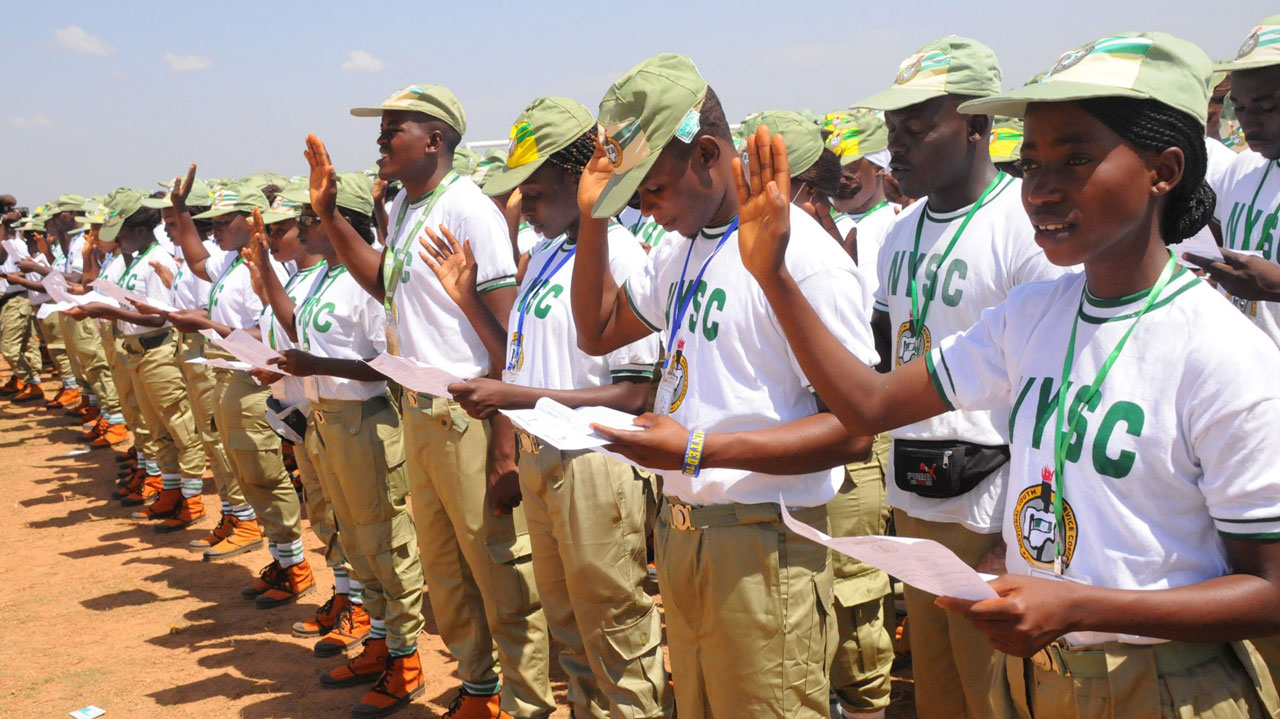
    Since COVID-19 hit Nigeria, a lot of corps members have been affected. Some were sent back home without completing the orientation camp, and those already serving were asked to stay at home. In this post, we spoke to 6 corps members in different states on how they are surviving this Coronavirus period.

    NYSC and Covid

    Hamdalat, Corper in Kano state.

    My family lives in Osun state. When it was confirmed that COVID was in Nigeria, I wanted to travel, but I considered a number of things. First of all, the distance: Kano is about 18 to 19 hours to Osun state. The journey is not a child’s play. And then the transportation fare. If I decide to travel, I will roughly #17,000 to and fro excluding feeding expenses.

    Besides, I feel it’s more dangerous to travel during a period like this because you don’t know the medical records of other passengers that will be in the vehicle. One might actually get infected in the vehicle if care is not taken.

    What then happens if I become infected? And I’ll be mingling with my family which might spread the disease further. So I decided to stay back.

    It has not been easy though. Especially if you consider the situation of things in Kano right now. These days, I go out once in six days to buy water, pepper and other essential items. Each time I go out, I make sure I’m obeying all the basic rules of hygiene. I try as much as possible to avoid physical contact too. When I’m bored, I turn to my phone for gist. There is no greater gist partner.

    NYSC and Covid

    Rachael, corper in Ogun state.

    My whole family is in Lagos, but I haven’t gone home since January. Ogun state is very peaceful and I like it here. Food is not a problem. Even my parents send money to get food stuffs for them via bus. Besides, by staying back here, my respect is intact. Nigerian can frustrate you and as I am like this, I am not ready for that.

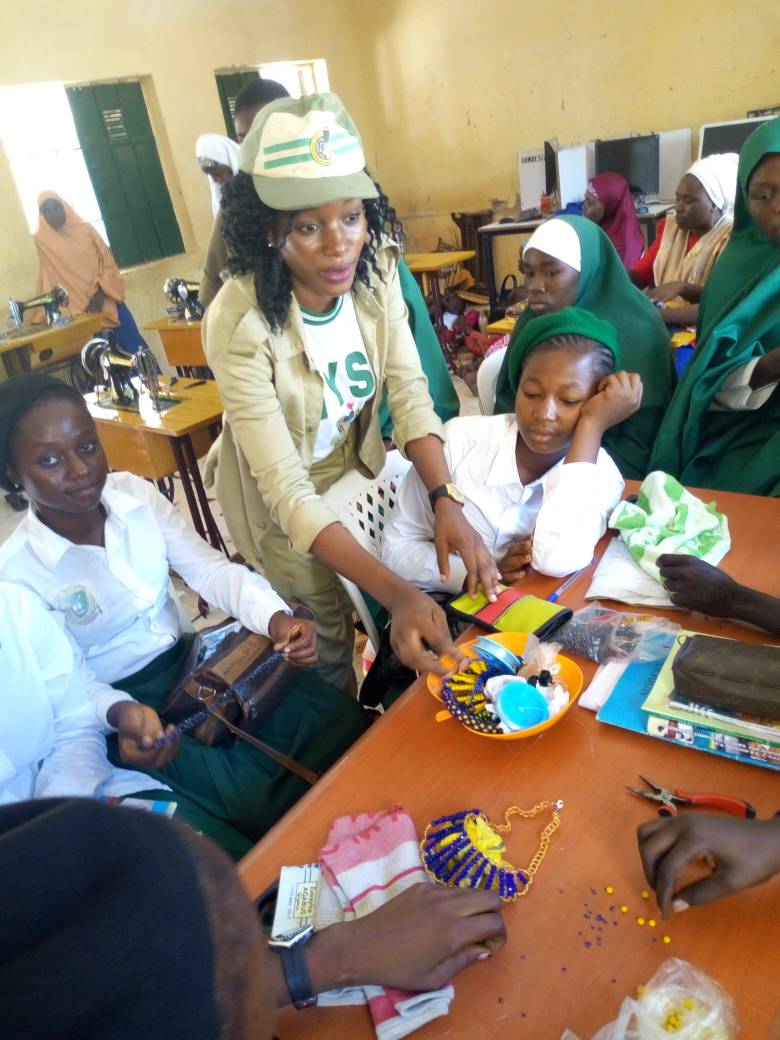
    I own a sewing machine and it has been a reliable source of income for me. There are so many guys in this area who like to do big boys. They always meet me to slim-fit clothes and I charge #300 per cloth piece, something that I don’t spend more than 10 mins on each adjustment. In one day, I can do 20 of such jobs. Calculate that. I also coach about 4 kids on my street. Another source of extra cash. I haven’t touched my allowee in a long time.

    I miss my family, but life happens and we all must learn how to cope. In my four years of university, I visited home only four times, so I think I can withstand not seeing them for a longer period. We video chat regularly, though. That’s one way I’m keeping up with them.

    One thing I’m concerned about right now is that NYSC should not call us back. Me I won’t answer. They should keep paying, sha. That money is necessary. When it’s time for Passing Out Parade, they should let us do it online. No more no less.

    16 Ways To Make Money During Your NYSC Year

    Oyeniyi, corper in Zamfara state.

    I intentionally chose to stay back in Zamfara. Lagos is really hit by the pandemic and the Lockdown is heavy there. If I had traveled home, I would have been forced to sit at home all day, and I can’t afford to do that. But here in Zamfara State, movement continues though work has since stopped. I can cope with that.

    It’s boring though; many of my friends have travelled so there is no possibility of hanging out or anything. Instead, I read, surf the internet and work on my system. I miss CDS. I miss our discussions and presentations. I can’t wait for the world to return to normal.

    NYSC and Covid

    Ezinne, corper in Niger state.

    I was initially posted to Ekiti, but I am married, so I redeployed to Niger state, which is where I’m based. Everything is quite normal here, but it is almost impossible to go out of the area, and things get more expensive by the day. For example, if you buy a mudu of rice for N500 today, expect it to be around N550 the next time you buy it.

    I have a baby, and she takes most of my time, so I don’t worry about being bored. I try to read a book sometimes, too. Because Niger state is home, I am around my family. My elder sister’s street is not far from mine and she just gave birth, so I often go there. My mother is there with her too. She came for the naming ceremony and got held back by the lockdown. And then my twin younger sisters, are home from school, so it’s all like a big family reunion. With all these people around, it’s hard to do anything useful.

    I really want to go back to work. Staying at home without doing anything is strange for me. Plus, I feel somehow getting paid for doing nothing. I hope this thing of ‘an idle mind is the devil’s workshop’ does not happen.

    Jonathan, corper in Ekiti state.

    Before the Coronavirus pandemic, I had been planning to organize tutorials for students here. But I kept holding back, because I had doubts about the whole thing. When Corona happened and everything went on hold, I decided not travel home to Ogun state. Ekiti has reduced number of cases, compared to Lagos. It is safer here, and I chose the safer option.

    When I realized that things are not showing signs of being reduced anytime soon, I decided to organize the lessons I had been planning to. Right now, it is the third week, and I must say it is very profitable. I charge N50 – N100 daily, and we start by 9AM and end by 12PM. As at today, we have realized about N10,000. COVID-19 makes it easy for parents to take it seriously; besides, they need a way to keep their children occupied in this period.

    Asides the lessons, I am trying to study binary and bitcoins. When I am not doing my studying, I sleep.

    Sofiat, corper in Rivers state.

    If I had known that things would turn out this way, I would have traveled home to Kwara since. In Port Harcourt, the border is closed, so nobody can travel. Lockdown is also in effect, so it’s like double wahala. And then the governor is acting like a dictator. Everybody is living in fear. You dare not step out anyhow. Once they catch you, it is straight to the isolation centre. A few days ago, he demolished two hotels for not adhering to the lockdown order. It has not been funny at all. Nobody can say anything or confront him.

    NYSC and Covid

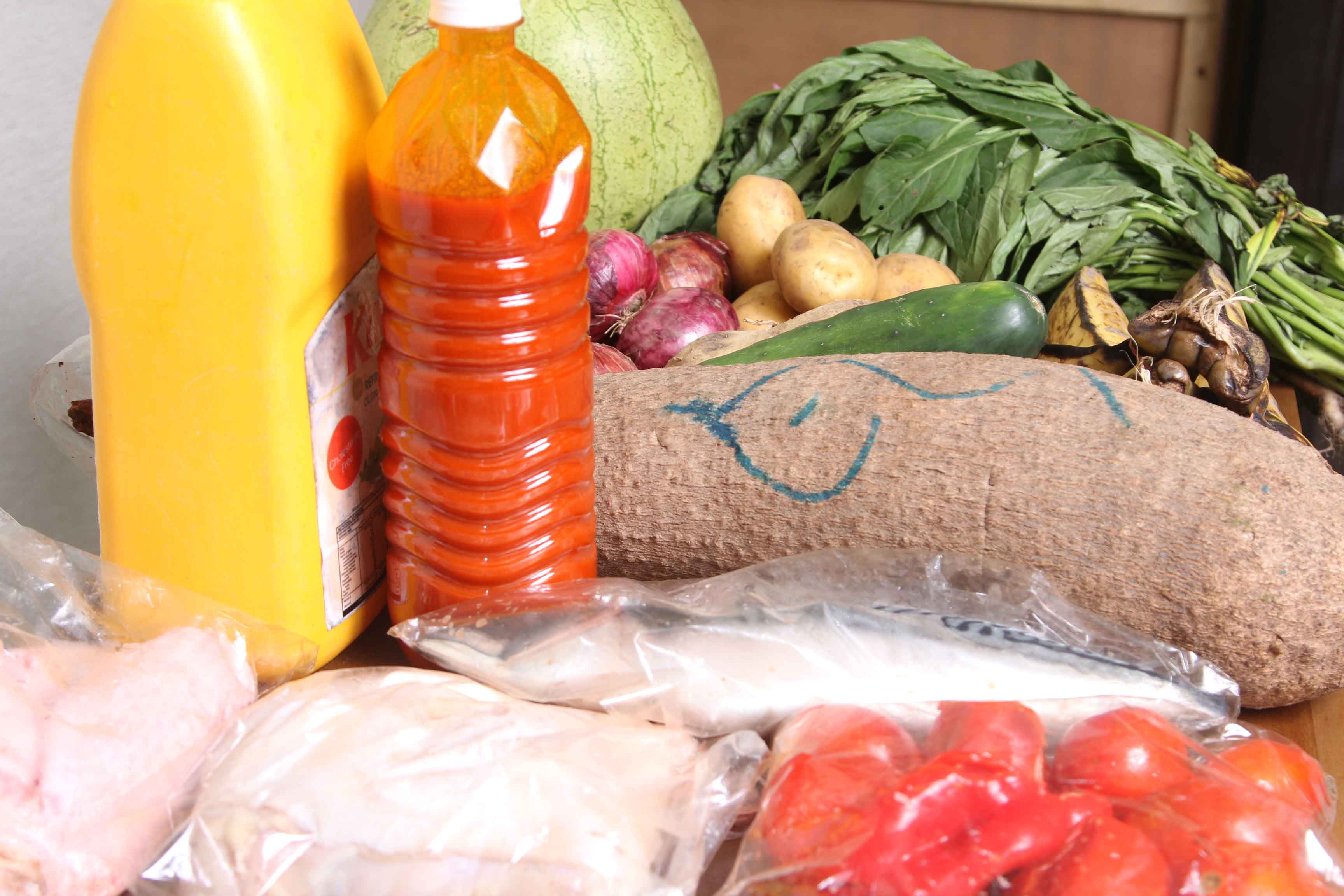
    Food stuff has become very expensive. 10 pieces of tomatoes for N500. Even garri has become gold. The least amount you get plantain for is N400. And it’s not the big size. Very tiny plantains.

    As much as we can, my roommate and I try to stock up and minimize costs. We miss work, but what can we do. Thank God for Ramadan, it is the one way we are keeping sane. Everyday, we seek Allah’s mercy on the world at large. We hope things go back to normal soon.

    NB: Pictures used for illustrative purposes only.


    Hello! Thanks for reading, as always. We are trying to create more NYSC posts for you, and we would like it very much if you can take one minute to fill this form: NYSC SURVEY. It would help us to know the kind of things you’d like to read. Thank you!

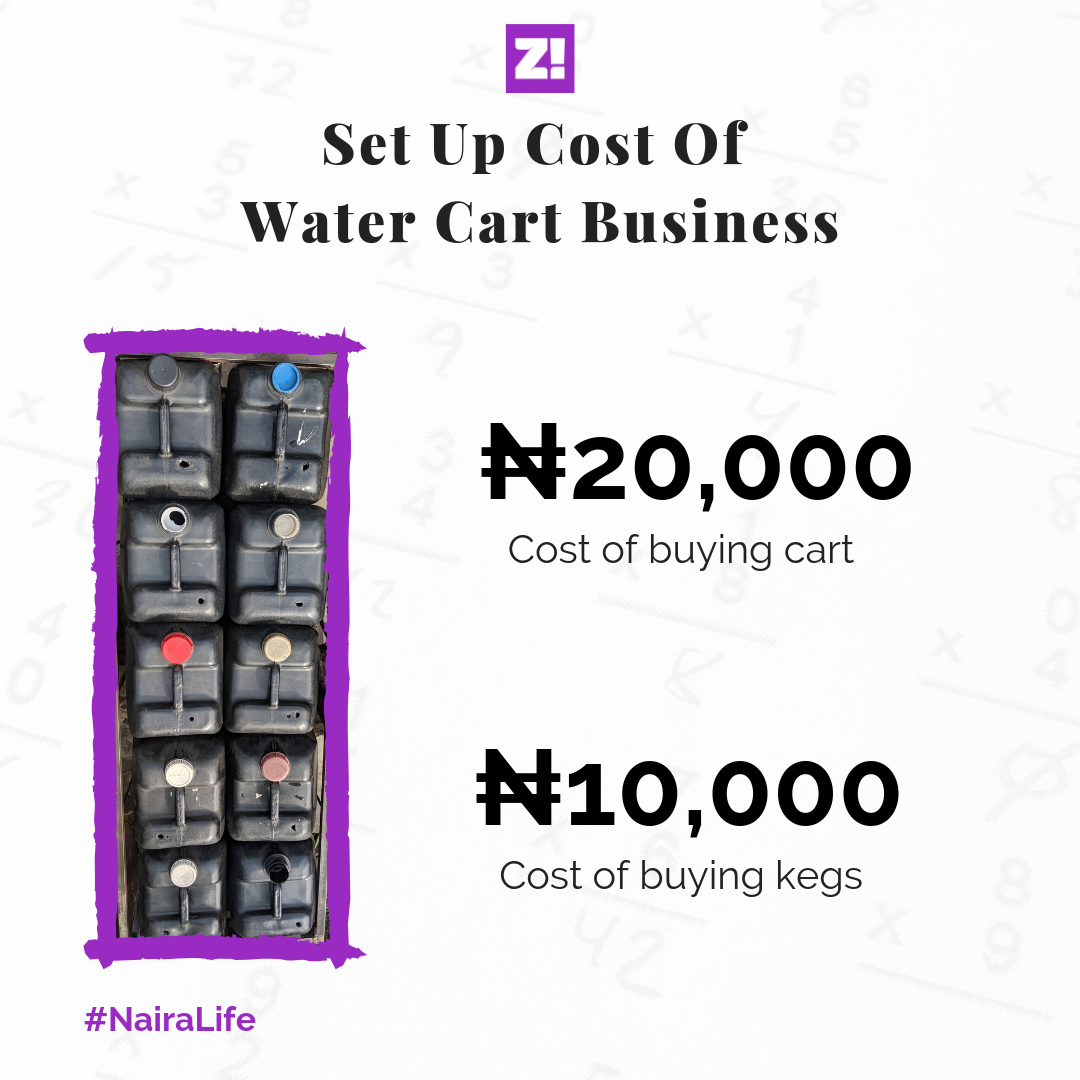
  • In this story, we talk to a man who spends his days selling water out of his cart, and his nights keeping watch. 


    Age: 27

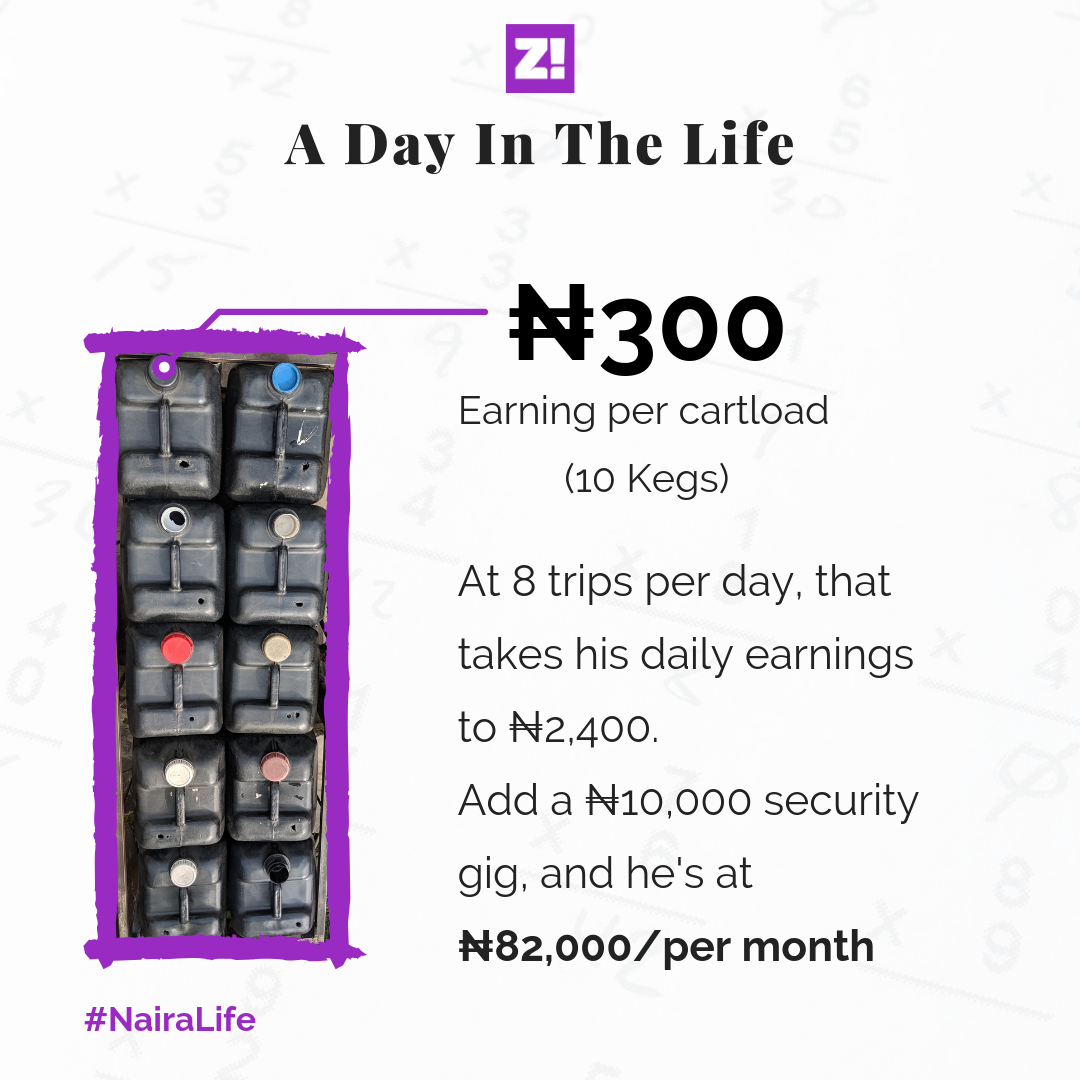
    Income: ₦82,000/month

    When did this hustle start?

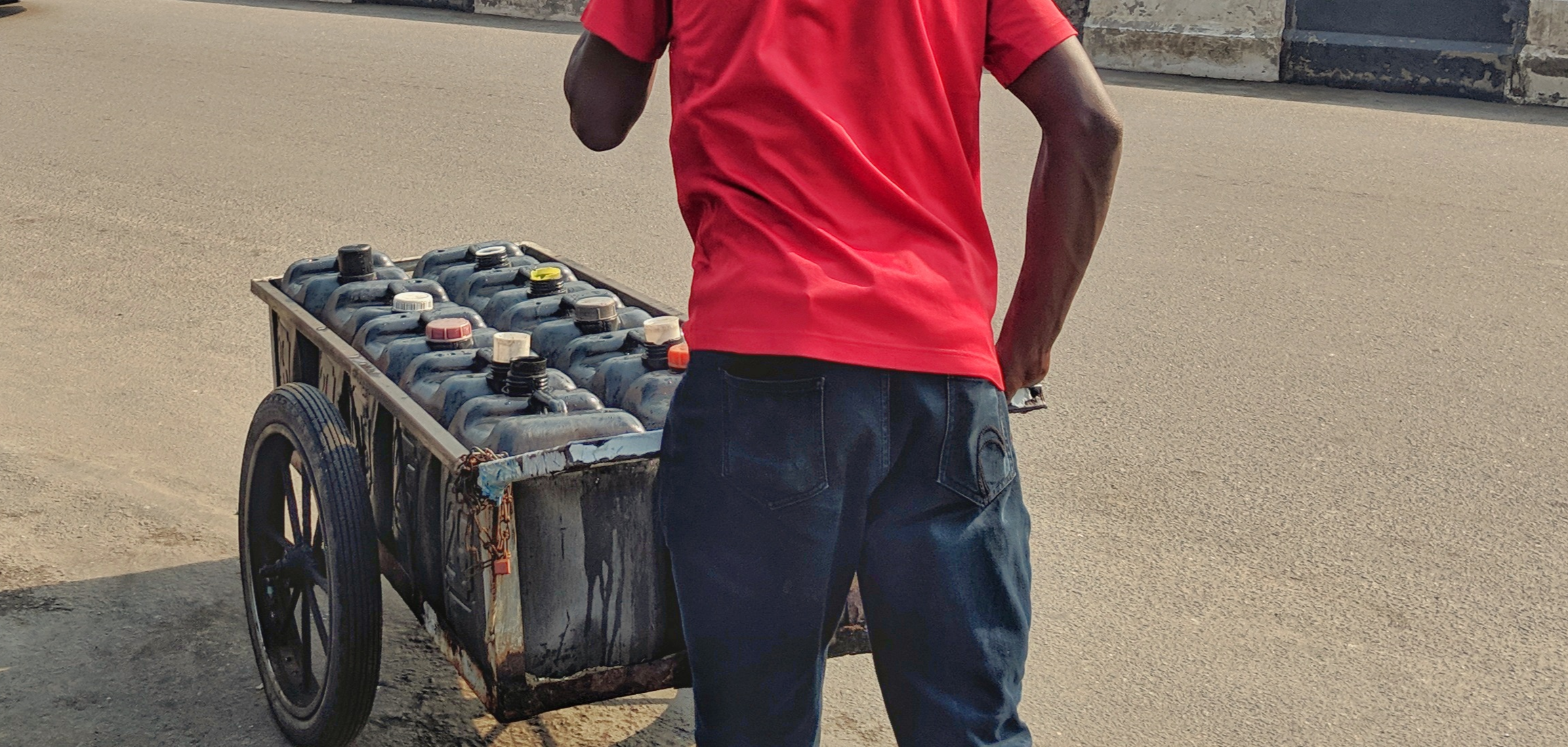
    I first came to Lagos around that time Jonathan first became President after Yar’adua died. The first job I started then was fetching water and selling. That time, water used to be sold for ₦20. I’ve been selling water since then.

    What’s your average water selling day like?

    I always sell between 6 to 8 carts. But on some very good days, I can sell up to 10 carts. My best water days are actually Monday and Thursday. I buy every keg for ₦10 when there’s light then sell each one for ₦40. When there’s no light and they pump water with a generator, each keg is ₦20.

    Then recently, I delivered water to one man, and he asked me if I could come and stay as security in his office compound every night to avoid burglars. He offered me ₦10,000. So that’s where I sleep. 

    So how do you spend your money?

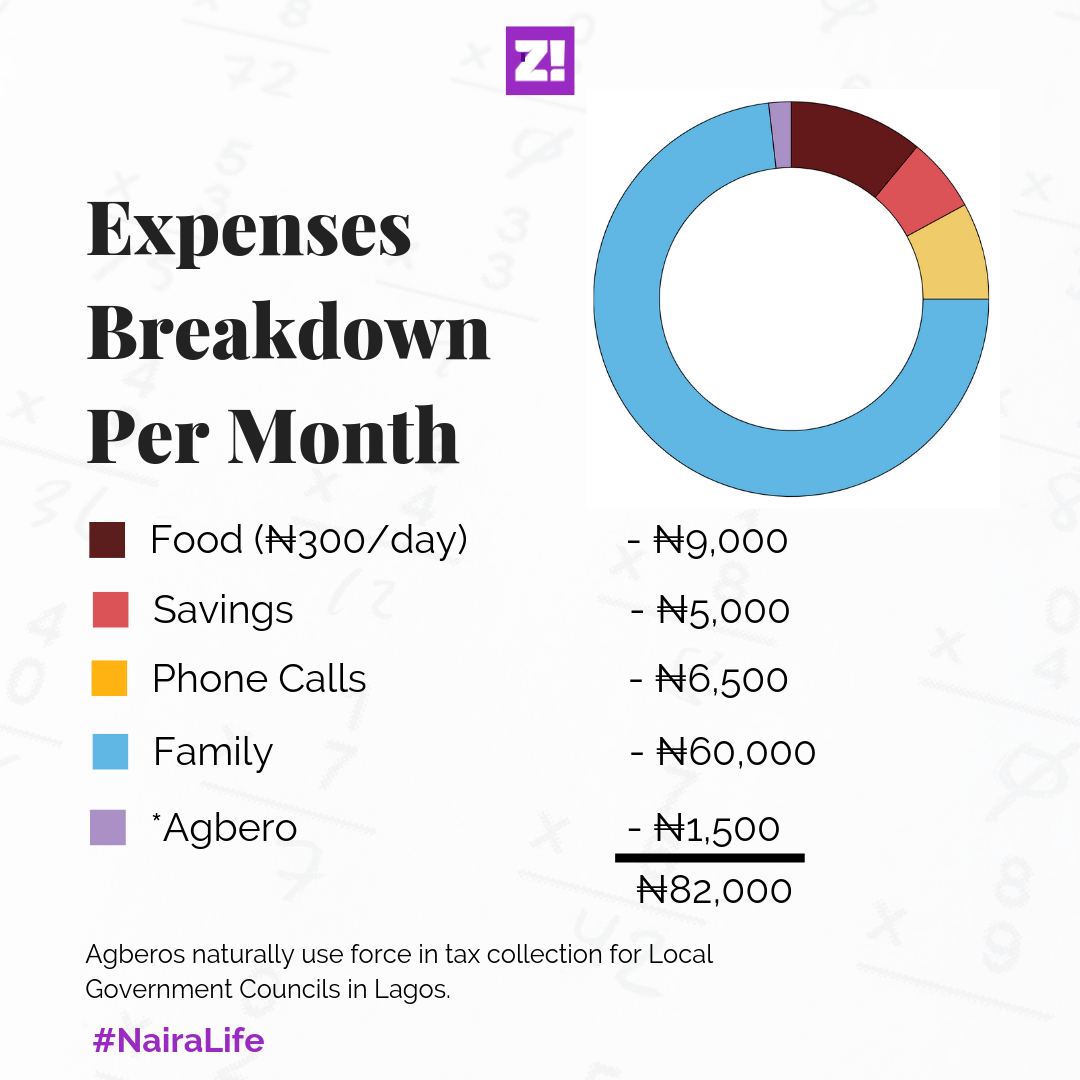
    I try to spend no more than ₦300 on food everyday. Then whenever I’m sick, I buy medicine. I try to call my family every time. Every time I call home, it costs me at least ₦500. 


    Ah, ₦500?

    Yes, every time I have to call my family back at home, it costs me ₦500 every 2 minutes. International call.


    Tell me about your family.

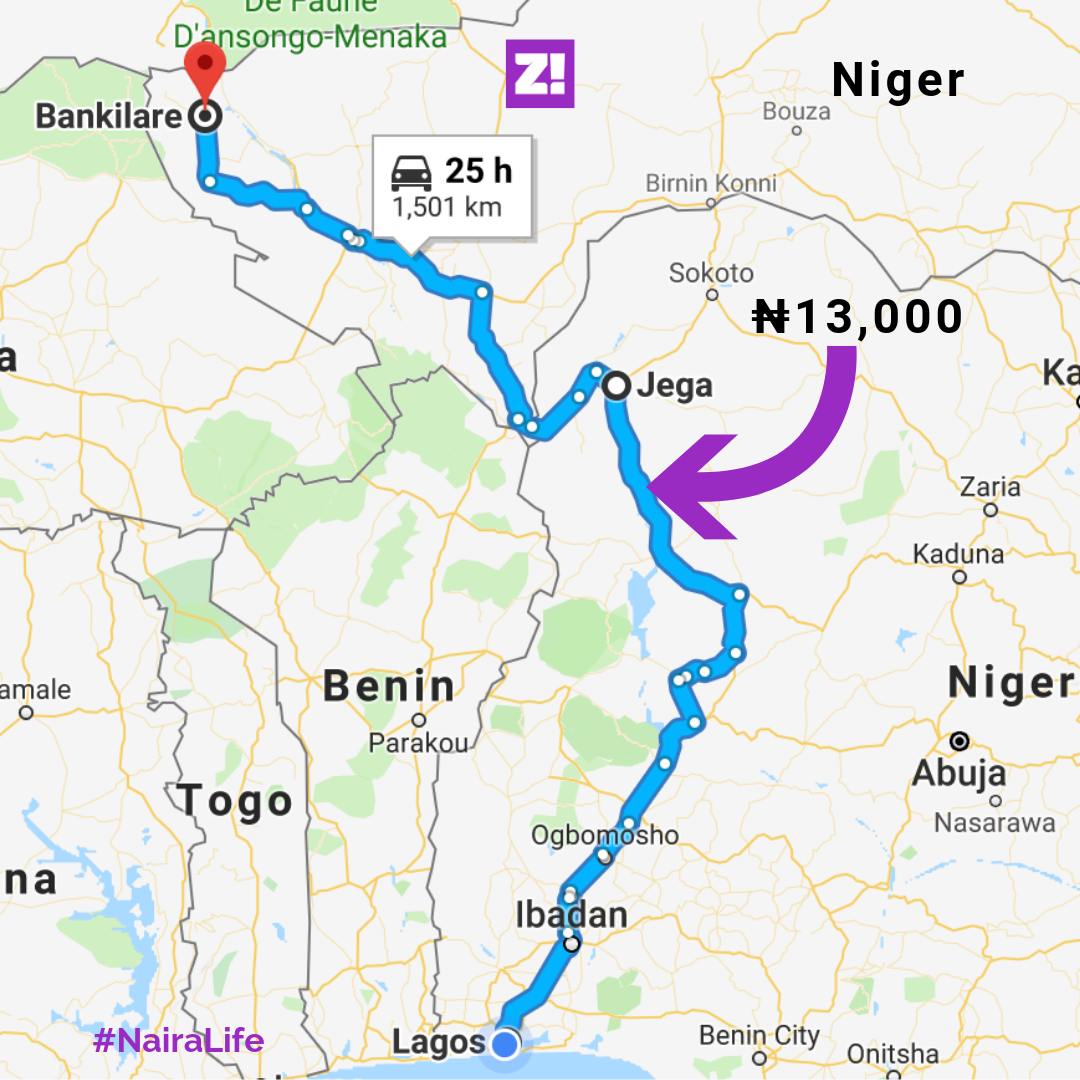
    My parents are from Kidal in Mali. It’s in Tuareg territory. So I’m Tuareg. Tuaregs were fighting to leave Mali and form their own country in 2012. We didn’t really support the movement and fighting in Kidal, because we didn’t want to follow those Tuareg to form new country.


    Why?

    Those Tuareg that were trying to form the new country are light-skinned. We’re dark-skinned. They won’t treat us well, so we just stayed with Mali. They didn’t succeed in the end. But my family moved to Bankilare in Niger. That’s where they live now.

    I have a wife that I married in 2017, we also have a daughter. My wife is 21 now. Then I have my father, my mother, and two sisters. The first one is 19 and the second one is 15.


    Does anyone of them go to school?

    My wife? No. My 15-year-old sister was going to school when she was younger, but no money again, so she’s no longer going to school. She dropped out of Primary School in 2013.


    Does your wife work?

    No, she just takes care of the child and maybe does small-small things at the market. But she doesn’t really work. Every month, I try to send home 100,000 CFA every month. That is about ₦60,000.

    Then she keeps 20,000 CFA and distributes the rest among my father, mother, and sisters.


    Back to Lagos; how far with these Agbero people?

    Those ones? They’re always mad. If they see you and you don’t have a Local Government Ticket, they’ll collect ₦5,000. But if you have a ticket, ₦50 every day. Then another thing that takes money once-once; immigration card. Every 6 months, we have to re-register at the immigration office for ₦1,500.


    Do you pay rent?

    No o. Because that security job is a night job, that’s where I sleep. If I earn more money, maybe I’ll try to get a place to stay.


    Do you keep aside any money?

    Yes, I try to save ₦5,000 every month. The money is supposed to be what I’ll use to travel back home. So, to travel back home, I need ₦100,000. Last time I travelled home was 2017.

    Because I need to take things for the family when I’m going home. For example, I’m going to buy clothes for the whole family. I want to travel around May or June.

    What’s the most vexing thing you’ve spent money on?

    It’s not even money I spent, but it pained me. One time like this, I went to the place where we buy water, it’s like when I removed my wallet to pay, I forgot to put it back in my pocket.

    By the time I went back to check it, someone had carried it. That wallet? It had ₦35,000 inside that I was supposed to send home.

    My head scattered. My chest was paining me.


    What do you think about your hustle, between 2014 and now?

    I’m getting old now. I really wish I had gone to school. Because if I know how to read and write, there are some jobs I’ll be able to do.  For example, I can get a better security job in a good place that will pay me well. Or even learn driving and become a driver.


    What are your plans for the next one year?

    I really just have to travel home. When I get home, I’m going to farm. I hate farming, but I have to do it. I’ll grow maize. What I grow, they’ll eat. The rest, we’ll sell.

    I also hope that when I come back, I find a better job, like good security work. Or even driving–this one, I have to learn reading and writing first.


    Right now, the only thing I want is for my family to always have food to eat.

    That’s why I’m here.

    Two things: 

    Check back every Monday at 9 am (WAT) for a peek into the Naira Life of everyday people. If you’d love to share your Naira Life with us, tell us here. You’ll be anon of course 🙂


    But, if you want to get the next story before everyone else, just subscribe here. It takes only one minute.