Notice: Function _load_textdomain_just_in_time was called incorrectly. Translation loading for the wordpress-seo domain was triggered too early. This is usually an indicator for some code in the plugin or theme running too early. Translations should be loaded at the init action or later. Please see Debugging in WordPress for more information. (This message was added in version 6.7.0.) in /home/bcm/src/dev/www/wp-includes/functions.php on line 6121 Navigating Nigeria | Zikoko!Navigating Nigeria | Zikoko!
Three significant events stood out this week in Nigeria. Depending on how you look at them, they elicited reactions ranging from sheer outrage to ineffable joy. For Navigating Nigeria, we’ll take you through the rollercoaster moments that made this week memorable as July comes to a close.
Our journey begins in Nigeria’s Red Chamber, the Senate.
Akpabio’s gaffe
While Nigeria’s Senate President, Godswill Akpabio, may have reached the apex of his political career, it seems he is still looking to outdo himself by how deep in trouble he can put himself in. We haven’t forgotten his public confession when as the Minister of the Niger Delta, he fingered members of the House of Representatives (HOR) whom he claimed benefitted from some lucrative contracts. It took the intervention of one of them on live TV to beg Akpabio to “off his mic” to stop him from incriminating everyone.
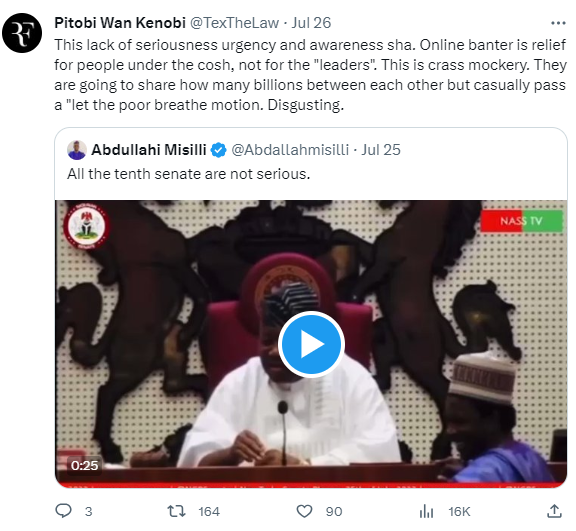
Akpabio, described as an “uncommon” senator, has promised to run an uncommon Senate. As he’s learning rather quickly, uncommon can become unpopular in a jiffy. In a viral video from a plenary session during the week, Akpabio asked the Senate to vote on a prayer to “let the poor breathe”. The manner of delivery, which appeared to be mocking, didn’t sit well with Nigerians. They lashed out at the uncommon senator.
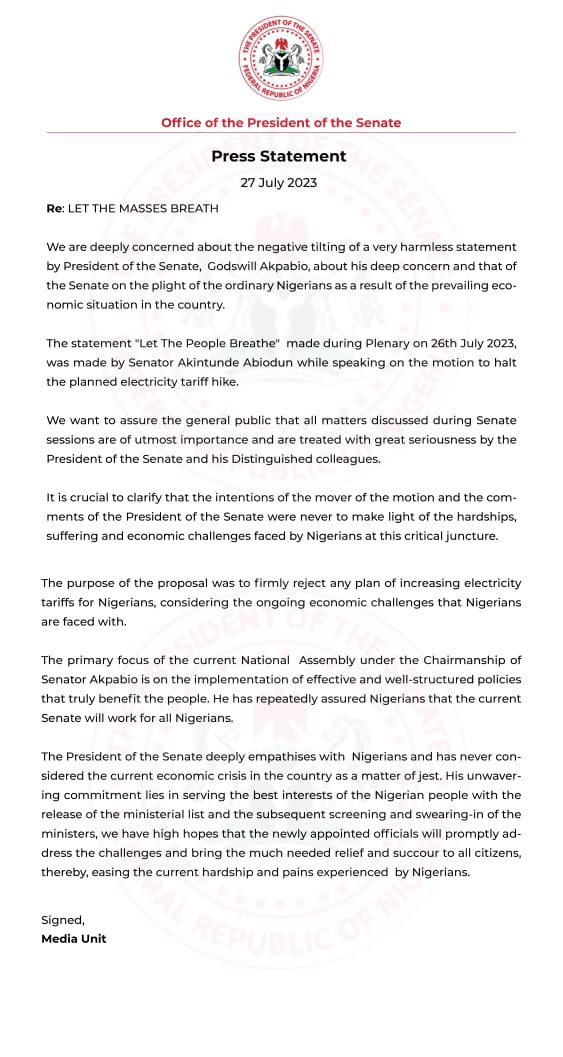
The office of the Senate President had to issue a press release. It clarified that it was a “harmless statement” based on a motion moved by another senator to halt the electricity tariff hike.
Nigerians aren’t smiling during this period. The last thing they need is a legislature that makes fun of their plight. Let’s hope Akpabio has learned his lesson.
Tinubu’s ministerial list
President Tinubu’s ministerial list finally reached the public and was met with mixed reactions. Early observations indicated that the list had just 28 names. The names were also weighted in favour of career politicians ahead of technocrats. No portfolios were attached to them either, which is unusual. Tinubu’s Chief of Staff, Femi Gbajabiamila, said it was intentional. Here’s how he explained it to the press:
“So many of these things have merits and demerits, advantages and disadvantages. I like the idea of attaching portfolios. I do because it makes it necessary for the Senate to know exactly what you’re asking and looking for.
But for now, it’s been thought wise that we stick to the tradition of sending the names and then, while the screening processes are going on, allow Mr. President and his team to look at the portfolios and the characters and see how they fit.
The first step that he has done is that these people can work wherever you put them. Except in specialized fields like attorney general and what have you. But in the main time, he believes most of them can fit in anywhere.”
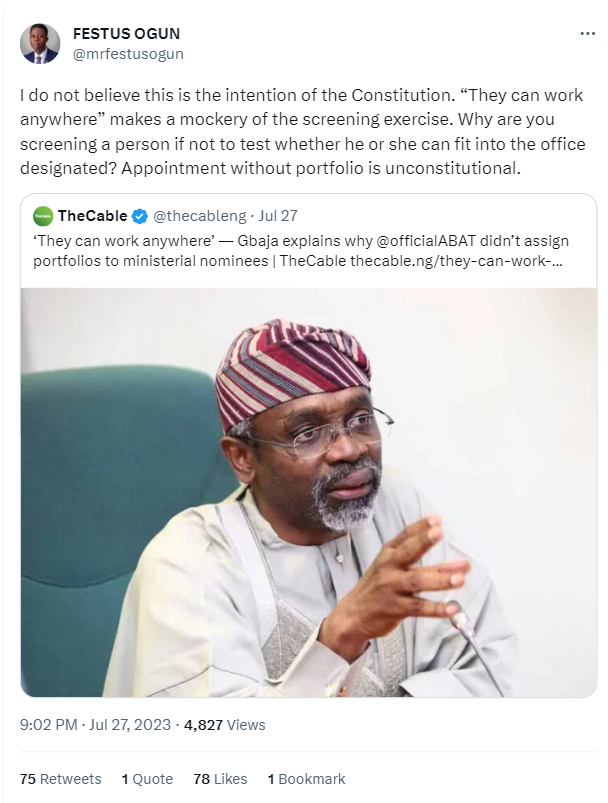
Constitutional lawyer, Festus Ogun, isn’t having any of that.
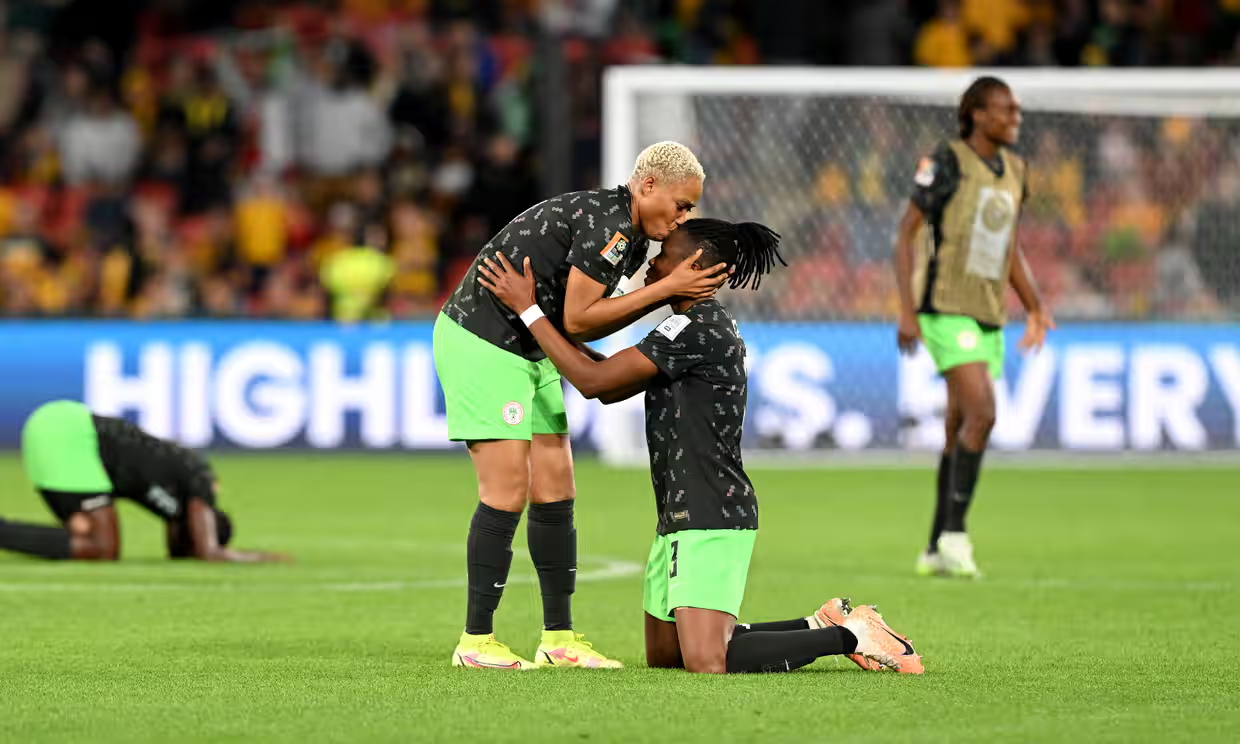
[Osinachi Ohale and Onome Ebi celebrate at the full-time whistle. Photograph: Bradley Kanaris/Getty Images]
By the time you read this, at least two days will have elapsed since the events of that heroic night on July 27 in Brisbane, Australia. Nigeria’s female national team, the Super Falcons, beat Australia with a 3-2 score at the ongoing FIFA Women’s World Cup.
Football unites Nigerians more than anything, and for those 100+ minutes of that engaging contest, Nigerians went through all the motions together.
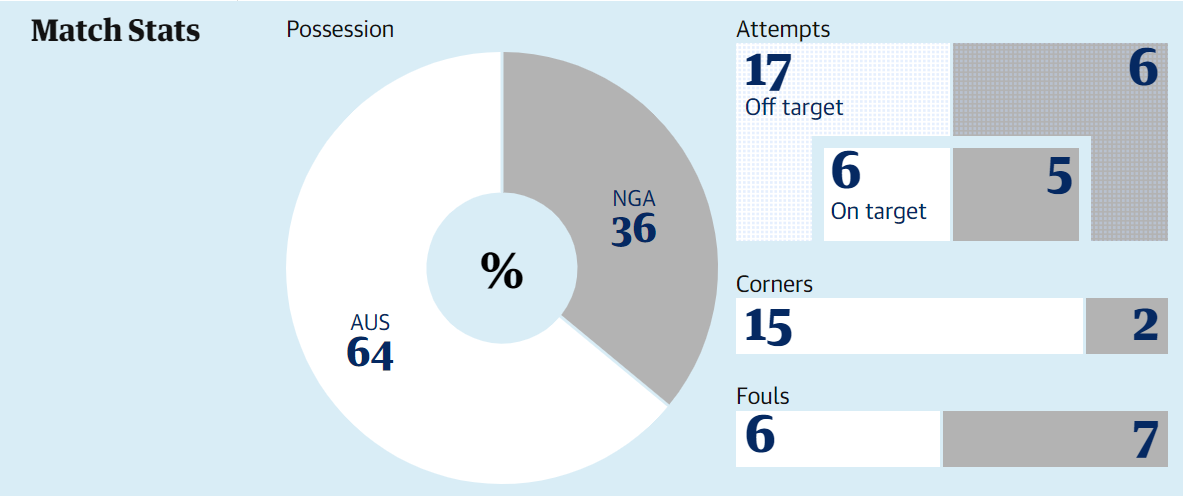
The match stats tell an exciting story.
For the most part, the Australians had control of the ball and dominated early proceedings. Nigeria, which had a solid defense for most of the game, conceded first in the 45th minute. The atmosphere was rapturous, and it looked like we would head into half-time with a loss. But the antifragile Super Falcons had different ideas.
In what was effectively the last kick of the first half after 5 minutes of added time, Uchenna Kanu scored a wonderful goal—a combination of good play and a fortuitous deflection. Cue the reactions from Nigerians halfway across the world.
By the second half, our ladies were amped. In the 65th minute, our star striker, Asisat Oshoala, was introduced to the pitch. You could hear the palpable silence in the stadium, almost as if the Australians could foretell the pain that was to come.
Osinachi Ohale put us ahead a minute later, despite getting a heavy knock in the process.
2-1, Nigeria.
Oshoala tormented the Australian backline and got her reward in the 72nd minute after a mixup in the Australian defense allowed her to score a brilliant goal from a wide angle. Taking off her shirt in celebration may have earned her a yellow card, but the iconic celebration will live long in the memory of Nigerians.
3-1, Nigeria.
[Asisat Oshoala of Nigeria celebrates after scoring her team’s third goal. (Photo by Justin Setterfield/Getty Images)]
Her goal made her the first African woman to score at three World Cups. She previously scored in 2019 and 2015. And while the Australians managed to pull one back deep into stoppage time, Nigeria, led by coach Randy Waldrum, emerged triumphant with three goals and three points.
3:2, Nigeria. FT.
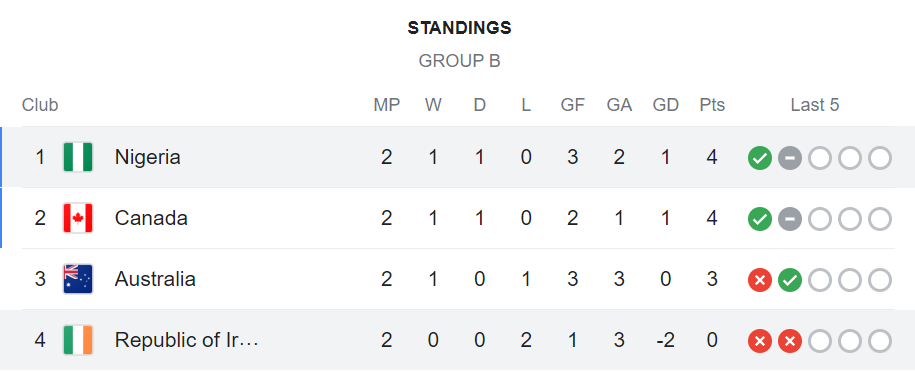
The result leaves us at the top of the table and in a good position to make the next round. A draw in our last game against already-eliminated Ireland would be enough. This is remarkable, given the team’s issues leading up to the showpiece.
Allegations of misappropriation, delayed payments, and a war of words between Waldrum and the Nigerian Football Federation (NFF) led many to fear the worst. But after a resilient showing against Olympic champion Canada, where we earned a point, there was some hope that the girls might be up to something, and they delivered in fine fashion.
Whatever they do going forward, the Super Falcons deserve our utmost respect for acting professionally and bringing joy to the faces of millions of Nigerians. As always, we will be cheering them on and hope they have fun doing what they do best.
Nigeria’s next match is on Monday, July 31, at 11 a.m.
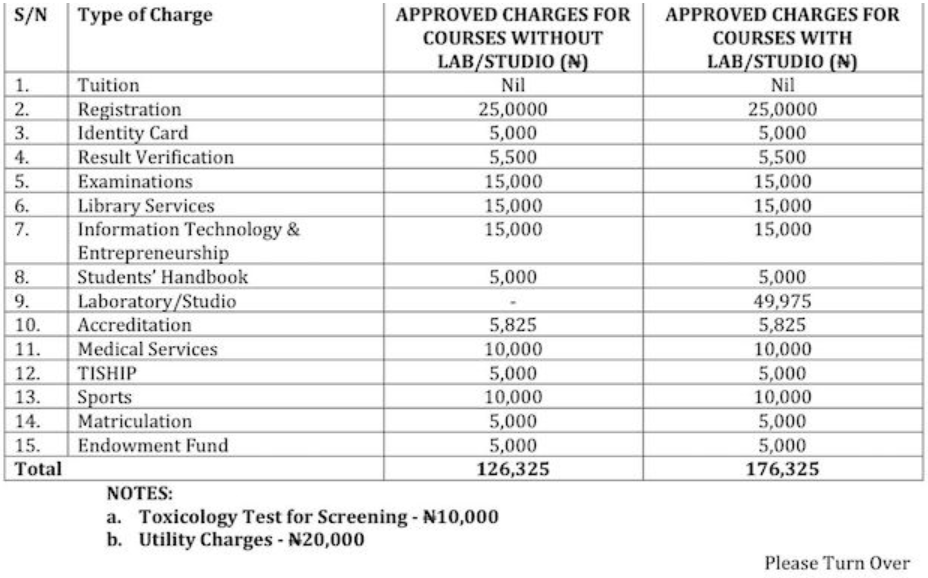
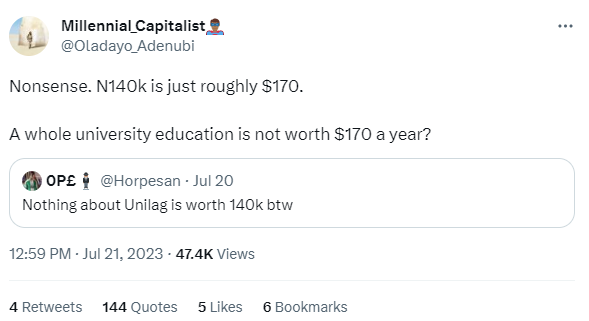
Students of the University of Lagos (UNILAG) received a rude awakening when, on July 21, the school announced that it had “reviewed obligatory fees” upwards. The mandatory charges are coming in light of what the school said were “prevailing economic realities and the need for the University to be able to meet its obligations to its students, staff, and municipal service providers, among others.”
The school said it consulted with stakeholders, including students and their guardians, before making this decision. Interestingly, UNILAG describes itself as “the school of first choice and the nation’s pride.” However, with the increment set to happen at the beginning of the 2023/2024 academic session, students may have to rethink whether they’d still stick with UNILAG as their first choice.
Here’s what fees look like now for new undergraduate students:
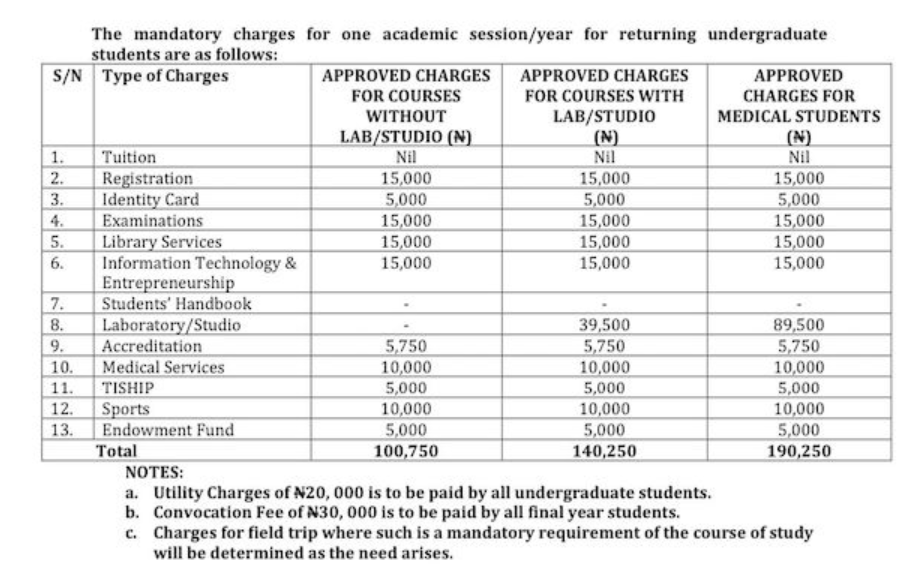
And here’s what fees look like for returning undergraduate students:
For comparison, previous fees for new undergraduate students were around ₦55,000, while returning students paid ₦15,000. While tuition remains free, the other mandatory expenses have gone up considerably. Understandably, the news has sparked strong reactions online.
What are the arguments in favour?
One major issue that has plagued public tertiary institutions is the lack of funding. You can draw a straight line between every strike that has occurred since the beginning of time and challenges relating to poor remuneration for staff and underfunding, leading to a paucity of research and development.
ASUU has argued for university autonomy, allowing institutions to raise funds for themselves rather than being overly dependent on government subventions. And although ASUU didn’t sanction this increase, it’s hard to see them argue against it. Some say Nigerian tertiary education is too subsidised and don’t consider the new fees expensive.
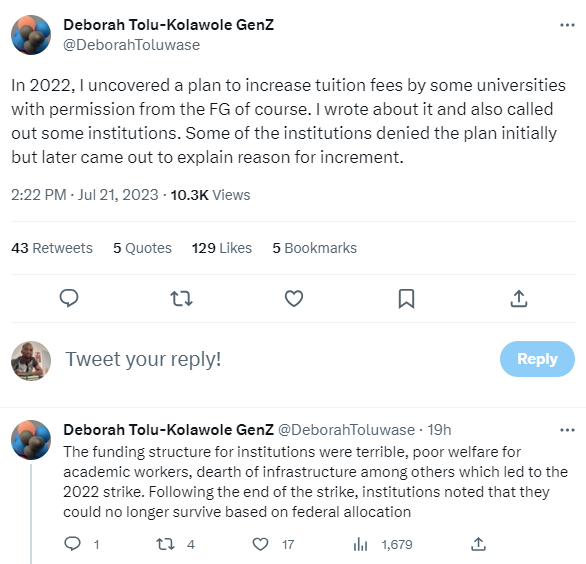
According to Deborah Tolu-Kolawole, who covers Nigerian tertiary education extensively, the hike in fees was inevitable. In a series of tweets, she explained that schools were struggling to stay afloat, with the federal government unwilling to release more funds.
She notes that for now, some subsidy is still in place, as evidenced by the zero cost of tuition. She warned that there will be more increments once full autonomy is granted to universities. This is where the Student Loan Act will come into play.
In economics, a public good is a commodity or service made available to all members of society. Typically, these services are administered by governments and paid for collectively through taxation.
A 2018 paper by the UNESCO Chair on Human Rights and Ethics of International Cooperation, Rita Locatelli, argues that education should be a public good in light of “current trends in the privatisation and marketisation of education.”
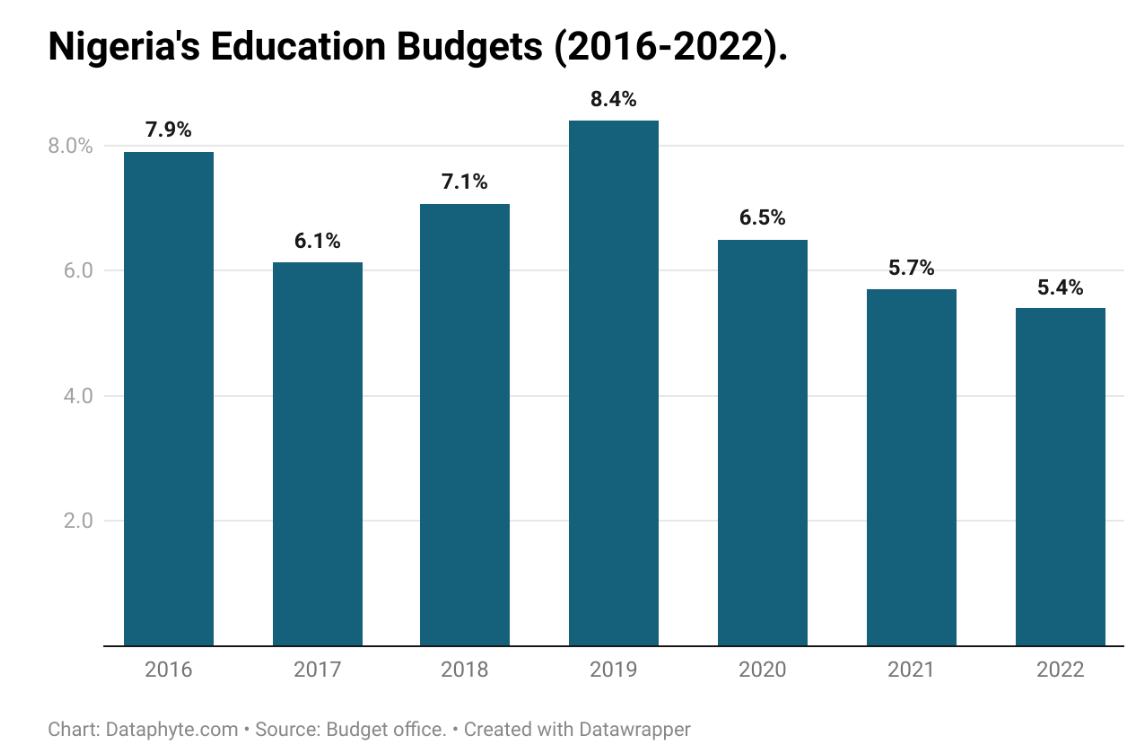
UNESCO recommends 15-20% of public expenditure on education. Nigeria has never met that threshold.
One in every five of the world’s out-of-school children is in Nigeria. Among those who manage to brave all odds and make it to university, they will now have to contend with this new hurdle of a fee hike. If other public universities follow UNILAG’s example, this will exclude even more students from tertiary education that they can’t afford.
So while we recognise that universities need funding and that education is subsidised in Nigeria, we also recognise that it is for good reason. The timing of this hike in light of economic circumstances is tough to justify, at least on moral grounds.
As it stands in Nigeria today, the return on investment in education is negative. This is apparent in the fact that many university graduates are unemployed. Hiking fees perpetuate the common Nigerian saying, “School na scam.” If fewer students get access to subsidised education, the outcome for Nigeria could be unpalatable.
In related news in education, the FG recently increased fees in federal government colleges, aka Unity Schools, by 122%. All of these combined will cause human capital development to slide even further. Nigeria’s prospects of leaving the ghetto might become bleak.
For now, UNILAG students are facing the brunt of it. Other universities are watching, and they will join in sooner or later. At some point, the federal government will have to lift its head out of the sand and intervene, or we could be staring at a full-blown state of emergency in Nigeria’s education sector.
Once bitten is twice shy, but not so for today’s subject of Navigating Nigeria. In two separate instances, she lost money to investments that promised quick returns. As she shares her experience about losing her hard-earned money, she’s also learned a few lessons from it all, the most important of which is the need to be financially literate.
Editorial Note: Navigating Nigeria is a platform for Nigerians to passionately discuss the Nigerian experience with little interference from individual opinions. While our editorial standards emphasise the truth and endeavour to fact-check claims and allegations, we are not responsible for allegations made about other people based on half-truths.
Walk us through your experience
My experience goes back to 2020. I’ve never been one to fall for Ponzi schemes, so when MMM came out and all those other platforms promising to double your money, I never engaged.
The first investment I lost money to happened via one of my mum’s ex-students who contacted me. He told me his friend ran a business related to forex trading. He told me I’d get my return on investment (ROI), which was 25%, after 25 working days. It didn’t sound too bad, so I said OK.
I put some money into it without telling anyone. After 25 days, I got my investment with interest. I told a friend about it, and he told me he wasn’t convinced and warned me to be careful. I then informed my partner at the time, and he was very upset with me. That didn’t deter me anyway, and I continued putting in money and collecting interest.
You wouldn’t believe this, but this guy kept sending me a memorandum of understanding (MoU), making the whole thing appear legally binding. That made it look legit in my eyes. That was enough to convince my partner, who later came on board. His was even worse because he wasn’t collecting his ROI. He had this weird plan of gathering everything till it became bulky enough and then cashing out large.
Chai
What hurt me, however, was that I’d taken a massive chunk of money I’d been saving for my son for some time and put it into the forex investment. Looking back, these guys changed their names at some point. They also claimed they were into not just forex but real estate and other stuff.
Everything appeared legit, and I told some friends to invest. Gawd. I convinced people to pool their money into this thing. I’m so glad that none of them got mad at me when everything disappeared. They knew that I didn’t intentionally set them up to lose money.
December 2020 was the last time I cashed out. I wanted to travel to Jos and needed funds to get around, so I took some money out.
About a week after, my friends who had also invested and wanted to cash out started getting messages that there would be some delay and were panicking. I told them that couldn’t be as I’d cashed out money only a week before.
One of my friends I’d introduced to the investment kept calling, and I was initially reassuring her that she’d get her money as it was a minor glitch. I contacted my mum’s ex-student, who reassured me that things would be resolved. I’d later find out that he wasn’t even the owner of the business but a third-party trader. The real owner was one popular guy, and I learned they dragged him on Instagram after the whole thing crashed.
I still had over ₦500k in there, and I began to wish I’d taken every dime out. When January came, I had hopes that they’d resolve the issue. Then February followed. Then March. And then it dawned on me that my money was gone. It became very real to me there and then that my money wasn’t coming back.
With this experience, you’d think I’d be wiser and not make such investments again, right? Wrong.
Ah
This time around, it was my best friend that wooed me into this agritech scheme, Titan Farms. She told me her mum, her sister, and even herself had invested so much money and reaped good returns. This one guaranteed returns after three months; it sounded reasonable. I don’t know what makes me put so much money into these things, but I did.
I withdrew my money from Piggyvest and funded the app. The reason I did this one was because I’d previously invested in Thrive Agric, which had an 18-month maturity period with 19% ROI. I didn’t like it because my money waited so long with little interest.
Anyway, I invested in them. Three months passed, and then I started receiving apologies that payment was coming late.
Wahala
They had a website. I tried to log in, but a prompt appeared saying that the website didn’t exist. They basically shut down, and I didn’t get my money back. Despite following up with them and sending multiple emails, nothing came out of it. They claimed to have paid investors, but it was all a lie—fraudulent people.
I’m sorry this had to happen to you twice. What is your takeaway from it all?
I’ve been twice bitten. If anybody comes to talk to me about investment, I’ll beat them up. However, I’ll admit that I wasn’t educated about how to invest money. Recently, I attended a finance seminar, and the person who spoke to us hammered on the point that before investing in anything, make sure you’re literate about finance.
When investing, I didn’t have complete information and wasn’t aware of the risk attached to the things I was putting my money in. So my biggest takeaway was being financially sound about investing. Even with legitimate businesses, there are risks involved. One has to know how much is too much so it doesn’t backfire horribly. I’ve not dabbled in any investments since then. For now, I’m focused on gaining more financial literacy. Maybe I can have another go when that is in place.
The last time the esteemed Nobel Laureate, Professor Wole Soyinka, made the news was in April when he almost came to blows with the Obidients, whom he accused of fascism. That didn’t sit well with them, and they fired heavy salvos in Prof’s direction. It would take a visit to Soyinka from their principal, the Labour Party’s Peter Obi, to diffuse the tension. But that hasn’t stopped them from giving Soyinka the bombastic side-eye.
Almost three months later, Soyinka is in another fight. This time, not on social media, but in faraway Kwara and its emirate capital, Ilorin.
So what’s the gist?
Punch reported that a Muslim group, Majlisu Shabab li Ulamahu Society, based in Ilorin, went to the home of an Osun priestess, Yeye Ajesikemi Olokun Omolara Olatunji. They warned her not to host a festival known as Isese in the state. It was reported that she released posters announcing a three-day event in celebration of Yoruba deities.
Ilorin is an emirate. It’s ruler is Alhaji Ibrahim Sulu Gambari. In reaction to the group’s activities, a spokesperson for the Emir said the Emir supported their actions. Although the spokesperson stated that Gambari did not send them, he added that the Emir made it public that no idolatry activities should be held in the Ilorin Emirate.
His words: “The Emir has made it public that he’s not in support. He’s warned them to stay away from Kwara or Ilorin Emirate. So, any group that shares the same view and opinion with His Royal Highness can also come out and then do such, which the group you just mentioned now has done.”
Essentially, the Emir thinks Yeye’s actions constitute idolatry. According to Gambari, that has never happened in Ilorin and would be heavily resisted should it be attempted.
Somehow, the news got to Soyinka, which made him angry enough to write a strongly-worded op-ed directed at Gambari.
How did Soyinka respond?
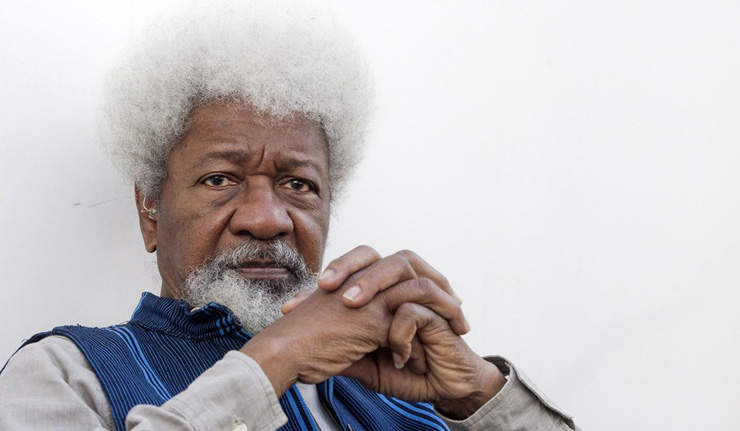
[Prof Wole Soyinka / The Cable]
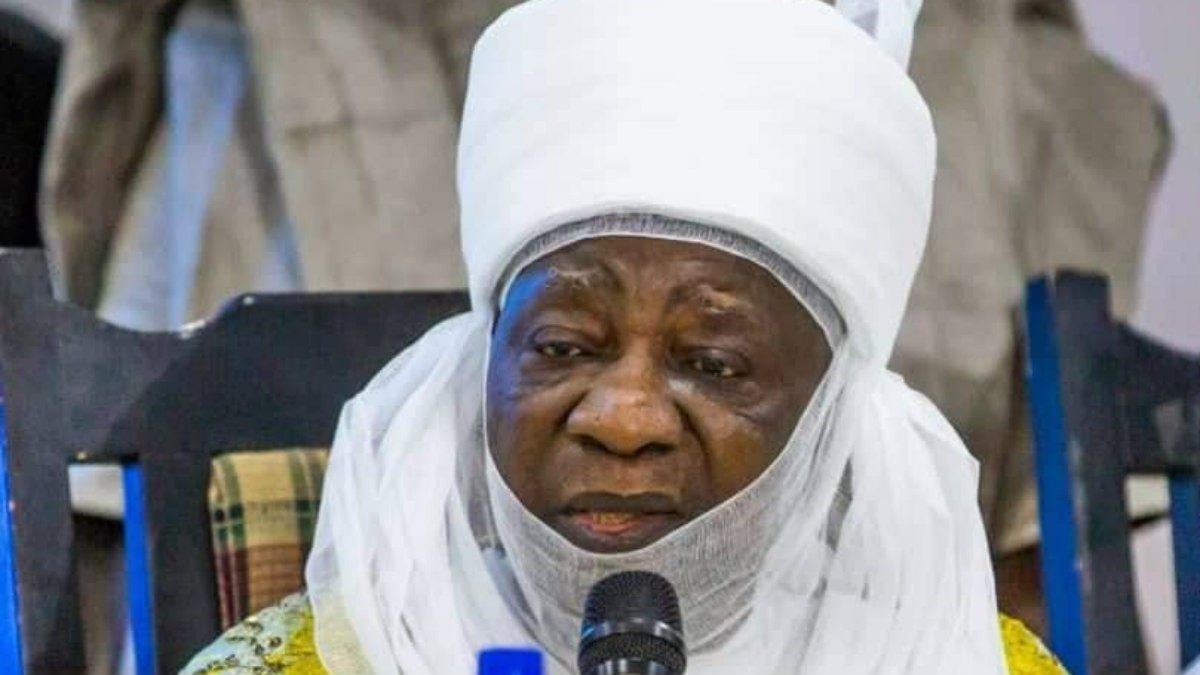
Soyinka described Gambari’s actions as a “grievous insult to our race.” He said he teaches courses in another Emirate, Abu Dhabi, in the UAE. Soyinka said it allows festivals from different religions to occur without hindrance. He wondered why the opposite was the case back in Nigeria. He criticised Gambari’s stance for impeding the right to embrace our humanity, reflected in how we celebrate different worldviews. Soyinka called on the Emir to rein in the “agents of division” before closing with the following:
“There is a thin line between Power and Piety. Call Yeye Ajasikemi OIokun Omolara to your side. Make peace with her and make restitution in whichever way you can for this grievous insult to our race. We know the history of Ilorin and the trajectory of your dynasty — but these are not the issues. The issue is peaceful cohabitation, respect for other worldviews, their celebrations, their values and humanity. The issue is the acceptance of the multiple facets of human enlightenment.
The greatest avatars that the world has known were not without human frailties, flaws, and errors of understanding. You are NOT Omniscient. And you are not Omnipotent.”
How has Emir Gambari reacted?
[Emir Sulu Gambari / PM News]
The Emir hasn’t taken things lightly. In a statement signed by his spokesman on July 7, he said Soyinka was being “economical with the facts”. The statement said Soyinka’s claim that Gambari disallowed festivals was “nauseating” and “uncharitable” to the Ilorin people.
“To set records straight, Professor Wole Soyinka tends to be economical with facts, forgetting that nobody wants war. He decided to settle with a factor capable of causing societal chaos if not quickly averted.
[The Emir’s action] is to prevent crisis and not wait until it erupts. The cost of managing crises cannot be equated to the wisdom or courage required to prevent them. Such proactiveness is necessary to sustain peaceful co-existence in society. It’s, therefore, surprising to hear that the position of Professor Soyinka is identical to someone who does not consider what might transpire if the programme was hosted.
It may result in issues which could also lead to reprisal attacks by sympathisers or promoters of such belief (Isese festival) in other parts of the country.”
The ball is back in Soyinka’s court. While he makes a case for freedom of expression and religion, the Emir’s claim that the people of Ilorin would uniformly resist any such traditional proceedings cannot be ignored either. We’ll see how this plays out in the coming days.
For Navigating Nigeria this week, Citizen speaks with Chukwuemeka, a Nigerian pilot who shares his story about his journey to becoming a pilot. He speaks about his motivations and challenges in navigating Nigeria’s aviation industry. He believes pilots deserve better pay, and you don’t need to be Stephen Hawking to fly a plane.
Editorial Note: Navigating Nigeria is a platform for Nigerians to passionately discuss the Nigerian experience with little interference from individual opinions. While our editorial standards emphasise the truth and endeavour to fact-check claims and allegations, we are not responsible for allegations made about other people based on half-truths.
How long have you been a pilot?
I finished flight school in 2015. So let’s see. That’s technically eight years.
That’s a complete Buhari tenure
Yeah, but then for three of those eight years after flight school, I wasn’t flying.
What happened?
I got sponsored to go to flight school by a company. The plan was that after flight school, I’d start flying with them. They had clients who were in the oil and gas sector. The company trained me to get a helicopter licence. Then oil prices dipped, and those clients weren’t producing as much oil anymore, so there was no reason to fly people offshore frequently. That meant they didn’t need as many pilots as before; it was a trickle-down effect.
I was on the ground for those three years, working in other parts of the company, which I enjoyed. By the beginning of 2018, I decided to get an aeroplane licence to be flexible with employment and open up more job opportunities for me in the aviation industry. The whole thing took about three months because I already had my helicopter licence and needed to meet some other requirements. In aviation there’s this thing called a type rating which is what allows aspiring pilots to navigate and operate larger commercial planes. It’s the standard you need to meet before operating a type of aircraft. You can’t just jump from one aircraft to another. There are lots of other technicalities and rules depending on the country, but I won’t get into them. But this was when I resumed flying aircraft commercially.
Interesting. Tell us, what were your motivations for becoming a pilot?
As a child, I was always fascinated when I looked up to the sky and saw a plane flying. I’d always wonder how the pilots did that. Then, in junior secondary school, JSS 2, I read this passage in an English comprehension book. The beginning of that passage stuck in my head. It went, “Fasten your seatbelts and announce the air hostess, please.” I can’t explain what’s so special about it, but it made me desire to fly a plane. From then on, if anyone asked what I wanted to be, I’d say pilot. Sometimes I’d switch to aeronautic engineer, astronaut, astronomer, or even astrologer lmao. I wasn’t even sure what they did exactly. I just knew I wanted to fly.
And fly, you did
During the holidays, I went to live with an aunt in Abuja. I enrolled in a youth camp. For the part about careers, we had to list ten career choices. The first seven were related to aviation, while I filled out the rest with the usual medicine, law and the like.
After school, one of my mum’s friends advised that I attend university first to have a backup in case my plans to be a pilot didn’t work out. I then pursued a closely related degree in aerospace engineering in Ghana. The first two years were tough. The engineering we did then was just so advanced. I knew there and then that being a pilot just had to work out because omo.
Lmao
Fortunately, some courses dealt directly with aviation, and I excelled there. But things were tough in the beginning.
What was life like during the pandemic?
Initially, there were no flights, but more flights happened when they introduced PCR testing. I flew helicopters during that period, so it affected me a bit. I worked in Port Harcourt, and oil companies weren’t flying often. But we still did some airlifting for a few companies. So I wasn’t grounded, but flights during that period were fewer.
Let’s talk about how you navigate Nigeria. Have there been any peculiarities about flying in Nigeria that are different from flying elsewhere?
So I’ve only flown in Nigeria and the US. Still, I’ll say the lack of basic infrastructure is glaring. You’ll see some things, and you’re like, “Nawa oo, why’s this not here?” or “Why are we managing this?”
For example, runway lights. I did not know that runway lights could spoil. They’re perishable, and since they’re electrical, they could develop faults. But throughout my training, it never occurred that runway lights could go bad, and I’d have to navigate the plane without them. Nigeria exposed me to that reality.
And we’re talking not days but months or even years where runway lights go bad without being fixed. Everyone accepts that these things aren’t working, and we’re just carrying on like that.
Wow
In Lagos, we have two runways; 1-8 left, which serves domestic flights, and 1-8 right for international flights. Both can serve either flight, but they were sorted that way because of their proximity to their respective terminals. You couldn’t land in 1-8 left at night for a long time because there were no lights.
So you’d have to land on 1-8 right then take a long taxi and then park near the domestic terminal for people to get off. Eventually, they fixed the lights. For the first week, things were working fine. The centre lights were fine, the headlights were fine, touchdown zone light was good. Next thing, half of the centre lights broke down, and the rest followed. Now nothing works. When you’re about to land, you have to start scanning for markings on the runway which are very faint because there’s no light.
I can land without the lights, but what would it take to fix and maintain the existing ones? We have international carriers landing every day, coming from places like Charles de Gaulle and Heathrow, and they see the state of our airports, which is pitiable. Meanwhile, when we go there, we see everything is in good shape.
We can’t go to some airports at night in Nigeria because they don’t have lights. We call them sunset airports because, after sunset, the lights go out.
Most of those have been fixed. Sometimes you see them when taxiing, and you must avoid them, but they fix them occasionally. So it’s not a permanent solution, but they fix them after a few weeks. I know I saw a notice about potholes in Enugu, but I have yet to experience one personally. I landed in Enugu yesterday and actively searched but didn’t find it, thankfully. Lagos and Abuja have frequent maintenance schedules where the runways are closed for resurfacing. The runway in Ilorin, though, whew. Sometimes you hear weird sounds and see cracks and grass growing on the runway.
What changes would you like to see in Nigeria’s aviation industry?
Generally, the Federal Airport Authority of Nigeria (FAAN) can do better with basic infrastructure. Sometimes you see some structures at airports, and you’re like, “Ok…but what purpose does this serve?” Some airports don’t have approaches, clear markings or adequate lighting. For example, there was a time I went to Port Harcourt. We were sitting on a ramp, waiting. All of a sudden, everywhere went dark. I was confused. They just took out the power, and we couldn’t see anything.
Pilots should get better pay. We think in dollars. A lot of training, travelling and so on are done in dollars, but we get paid in naira. And the naira isn’t even enough. Everything has finished by the time you convert to naira to meet your needs. When you compare what you earn by dollar conversion to your counterparts abroad, you’ll realise you’re not earning anything.
Have you considered relocating?
Oh yeah. That’s on my to-do list. I’m just trying to settle a few things first. Better pay and a better quality of life factor into my decision.
What advice would you give anyone who wants to go into aviation?
I get that a lot. People generally think you have to be Stephen Hawking to be a pilot. You have to be smart, but you don’t have to be Stephen Hawking smart to fly a plane.
One of my university lecturers, a flight engineer, said that you must be daft to be a pilot, lol. He’d say you’d be fine if you could read pictures.
Loool
But for real, you need to have the aptitude for it. You also need to work hard and want it. When I say “want it”, I mean it’s not just something you can skim through. It will show if you’re not putting in the work.
I know brilliant people that couldn’t cut it as pilots. It wasn’t because they weren’t smart. They just didn’t get it. You know how some people can’t dance no matter how they try or can’t move to a beat? Being a pilot is sort of like that. You have to have the aptitude for it. You have to want it and work hard. That’s the motivational side of it.
The other thing I’ll say is that flight training is expensive. Some can afford it, so no problem for them. But if you can’t afford it, you want to finish your training quickly. Because that would mean you’re paying less. Usually, flight school charges by the hour when you’re renting their aircraft. Your training is on you. You’re not giving that power to anyone, not even your instructor.
I mean, you have to be on top of it. You have to say, “This is what we’re doing today. I need to learn this before the next time.” That is, you’re putting in the work before putting in the work. That way, you’re not spending extra hours because extra hours mean extra flights, which means extra time. All that will add up because you’ll pay for accommodation, flights and fuel. I met some people in flight school still training after two years. Like, why?
So put in the work before the instructor comes. Stuff you can do on the ground, do it on the ground. Don’t wait till you get in the air. Own your training so you’re not spending more money than you need to.
Two stories about Nigeria caught my eye this week. They fascinate me because their disparity best captures the peculiarity of being Nigerian. Let’s start with the good stuff.
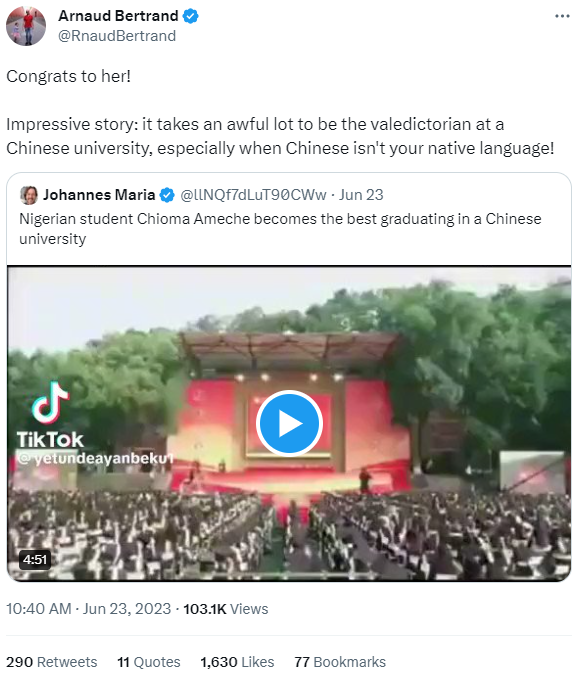
In what has been viral news during the week, a Nigerian, Ifeoma Amuche, studying at a Chinese university, went on to finish as the school’s best-graduating student. As the valedictorian, she delivered a speech over four minutes long in fluent Chinese. If it isn’t apparent, that’s a pretty impressive feat.
Another way to think of it is if a Chinese studied at a Nigerian university and finished as the best-graduating student—while learning in Yoruba, Hausa, Igbo or any of the hundreds of languages spoken in Nigeria. Ifeoma’s feat typifies Nigerian excellence, setting an incredibly high bar.
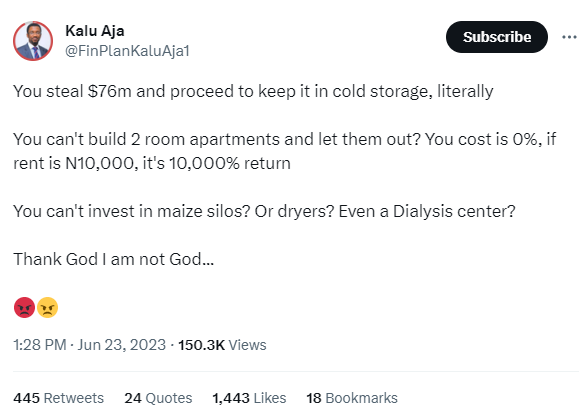
And now, to the other story. People’s Gazette exclusively reported that two federal civil servants conducted a $76 million heist, the proceeds of which were kept in cold storage at the height of the COVID-19 pandemic. The story’s lede reads like vivid imagination—the kind one only daydreams about when struck by severe hunger pangs. Here’s a screenshot below:
The story has several interesting subplots, including the alleged involvement of the disgraced police officer, Abba Kyari, who was alleged to have received kickbacks. You can read the full gist at your own time.
When the story broke, it triggered several reactions, like this one:
Having read through the story, here are a few thoughts:
Buhari’s anti-corruption crusade was a farce
Muhammadu Buhari may be away from power for good, but his terrible legacy remains. He had the option of strengthening our institutions but chose to hinge his initial anti-corruption crusade around the force of his personality. The result? Public officers carted away millions of dollars from government coffers wantonly.
Stealing huge sums is easy. Spending it is hard
It’s one thing to hatch a plan to steal plenty of money. As the last administration showed, that happened a lot. But spending it without leaving a paper trail while still serving in government is very hard. White-collar criminals usually find their way around that by laundering money. We explained here why that’s bad.
They might have gotten away with it
The reason we know about the story goes like this, in summary. Some government workers allegedly stashed $76 million. A driver for one of them thought COVID-19 palliatives were locked up in storage and told his friends, who were scrap metal collectors. These guys came around hoping to get their share of Indomie—recall that this period was when government officials were hoarding palliatives. To their surprise, they broke in successfully and found that what they thought were packs of noodles were stacks of dollar notes. They managed to cart away $4 million, leaving $72 million behind, while the driver himself was unaware. As they say, there’s no honour among thieves.
The government officials found out. They could have chosen to forgo the $4 million but decided to involve the police to recover it. Maybe they feared that they could return to cart more loot. Police managed to recover around $2 million, but long and short, a paper trail had emerged. Would their heist have remained a secret if they’d chosen to count their losses instead? We’d never know.
Something has got to give
If you recall that Nigeria suffered a severe dollar shortage, you’d understand why having $76 million in cash is mind-blowing. But an even bigger question is how these government officials got their hands on it in the first place. This represents the first major corruption case that the current administration has on its hands.
How the investigation will proceed from here on is anyone’s guess. But it would also indicate whether this administration is serious about reforms or if things will remain business as usual.
There’s a common saying that “tough times don’t last.” Nigerians from all walks of life will hope this saying manifests quickly, and why wouldn’t they? The new administration, led by President Tinubu, heralded its dispensation by removing the fuel subsidy.
The effect has been a marked increase in fuel costs, which has had ripple effects on the cost of living. On Thursday, June 15, the National Bureau of Statistics (NBS) announced that inflation in May rose to 22.41%. The subsidy removal and the subsequent announcement of a unified exchange rate have led experts to suggest that inflation will rise even higher in June.
To gauge the current adaptation of Nigerians to the prevailing circumstances, Citizen interviewed some of them for this week’s episode of Navigating Nigeria. Here are their thoughts:
Ola, Analyst at a VC firm
I’m a naturally frugal person who works on a budget. Because I follow the news, I saw the fuel subsidy removal coming, and I understood its implications. I got a solar inverter in May, which powers electronics like my TV, refrigerator, and laptop. I charge the inverter with PHCN’s power supply and switch to it when the power goes off. I did this because I didn’t want to find myself in a situation where I’d have to queue to get fuel for my generator. I’m also a remote worker who has to be online almost 24/7.
Getting a solar inverter has been one of the best cost-saving measures I’ve done this year. I don’t have a car, so I don’t have to worry about getting fuel for that because I rarely ever go out except for groceries. Speaking of that, I do my shopping in bulk, so there’s no need to visit the mall frequently. My data subscription plan is also in bulk; I pay a yearly data subscription of ₦100k on MTN that gives me one terabyte covering my internet needs.
I don’t eat out either; I make my meals. This one isn’t because of the subsidy removal. I’ve always been like that. It saves cost.
Another way I’ve adapted is to reduce my propensity to order stuff from online vendors. The other day I wanted to get stuff from Instagram, and the vendor told me it cost ₦2800, which was fine. Then I asked for the delivery cost, and she told me it was ₦2200. She told me the high delivery cost was because of the subsidy. I backed out because it made no sense to me. So yeah, these are the measures I’ve taken to readjust to life after the government removed the subsidy.
Itome, Business Analyst
For me, there are some essentials I can’t do without. Data is one of them, and that’s a non-negotiable, and I always make provision for that
Because my cost of living has increased, I go out only when necessary. I only use Bolt for significant outings. I take public transport most of the time.
To manage fuel, I turn on my generator when I need to charge my laptop and turn it off once my gadgets are fully charged. That’s how I’ve been managing.
Juliet, Banker
Cooking your food saves a lot. It’s much cheaper to cook at home and take your food to work than to buy food regularly. Imagine if my hubby and I buy food at work every day, plus our children. It would be very expensive. I also buy non-perishable food items in bulk.
Ilamosi, Sales Manager
Going out is the only thing I’ve cut down on. I barely go out now. Before the fuel subsidy removal, I’d be outside and come to work frequently. But now, with the hike in cab prices, it’s hard to leave my house. I’m now an introvert.
The cost of living has turned me into a home buddy. I’ve even reduced the way I order food. Usually, you’d find me on Chowdeck. Now? I cook. Dem no dey tell person twice.
Eloho, General Contractor
Regarding data, I use Fibre One wifi. It’s still cheap at the moment. For food, I made some bulk purchases before the inflation kicked in. I’ve not made any significant purchases afterwards.
Transportation is one area I’ve felt the pinch. Prices just dey surprise me every time. I use buses more than before to cope and only use Uber when necessary. I’m no longer shy of asking for Uber fare if my stepping out is doing someone a favour. I calculate in advance to reduce unnecessary trips
Regarding electricity, yesterday was the longest we ever ran my generator, which was babe-motivated. (Not my babe o, my brother’s babe). So far, our devices are charged, and we don’t run the generator like before. Before now, we’d put on the generator at the slightest inconvenience of heat. I go to places with better electricity to work instead of burning fuel.
Generally, I now think more business-wise, figuring out how every relationship can become financially beneficial to everyone. I make myself more available and render help to anyone
On a personal note, knowing the principle of giving makes giving more conscious. I budget a little daily, as much as possible, and look for the needy. It’s not just because of love but as part of my financial strategy because by giving, you receive more (not from the person you gave to, lol).
Shola, Oil and Gas Worker
I didn’t care about the fuel price until the subsidy removal. Now, I don’t buy full-tank like before. I only buy enough for the week. It cost about ₦32k to fill my car’s tank. So, these days, I just buy half, roughly ₦15k.
I don’t do long-distance drives, only making exceptions like going to my friend’s wedding or linking up with my babe. I had a chef that came in once a week but stopped her for a while. But eating out is biting, so I had to bring her back again at a higher rate. I’m now in between a rock and a hard place. I increased my housekeeper’s pay and slightly increased transfer payments to dependents.
My last movie dates were on the mainland, compared to my usual Ebony and IMAX at Lekki on the island. It’s cheaper, but my babe isn’t feeling this mainland level. It’s still the same film they’ll show us on the island or on the mainland.
Niyi, Corporate Trainer
I’ve stopped going anywhere. Fuel to fill my car’s tank is now about ₦37,000, up from ₦14,000. So I only go out when I absolutely have to go out.
I’m also investing in more solar generation. The inverter I own relies on fuel and electricity to charge the batteries. More investment has gone towards increasing the number of solar panels to avoid relying on generators. It’s become unsustainable to use generators.
I also had to bring forward some purchases before the prices inevitably go up.
Essentially, I’ve done a lot to reduce reliance on fuel because it’s become too expensive to maintain the lifestyle I was living in, pre-subsidy removal.
William, Lawyer
I’ve been in Abuja for the last few months, and it’s considerably different from living in Lagos. In Lagos, you at least have alternate transport like bikes. Here, outings are either via Bolt or a cab. Their cabs are arranged in a way that five people can sit in them. There are no bikes or buses here.
For the cabs, the price of transport has doubled. What cost about ₦1000 before now goes for ₦1800. I now go to court less than before. I also cut costs by moving in groups so that my colleagues and I can split the bill.
Personally, food prices haven’t increased. I still buy things at relatively the same price as before the subsidy removal. In Abuja, we don’t worry much about electricity. I think ours is way better than Lagos’s. On average, we get around 18 hours of consecutive power supply daily. On some days, it could be as high as 23 hours. That means you don’t have to worry much about fuel for your generator. You also don’t need to worry about wasting electricity to pump water, as ours is pipe-borne. The government supplies water, which is fascinating and different from Lagos, where everyone drills boreholes to get water. Abuja is giving American vibes.
Prices of other things may still go up over time, but for now, transport is the only area where I’m feeling the pinch.
Victor is a Nigerian police inspector who’s been in the force for 16 years. For this week’s Navigating Nigeria, he spoke to Citizen about his reasons for joining the police, why he thinks the Nigerian people get the police they deserve, and other policing matters ranging from Seun Kuti to the Police Pension Bill.
Editorial Note: Navigating Nigeria is a platform for Nigerians to passionately discuss the Nigerian experience with little interference from individual opinions. While our editorial standards emphasise the truth and endeavour to fact-check claims and allegations, we are not responsible for allegations made about other people based on half-truths.
What were your motivations for joining the Nigerian police?
I didn’t sit down and decide to join the police. It wasn’t out of free will. I joined out of anxiety for myself and my siblings. It’s needful to add that my father was a police officer. He was retiring from the force, so I had to take up the job to cater for myself because it’d have been difficult for him to provide for my younger siblings and me as a retiree.
I lived a quiet and principled life, thanks to my parents’ upbringing. This has helped me to stay sane in the force.
The truth is that many conditions have pressured some of us into doing not-so-nice things that aren’t worth mentioning. Ultimately, policemen aren’t drafted from space or a foreign country. We’re all a product of Nigerian society, for better or worse.
Care to shed light on this?
The police aren’t the most corrupt institution there is in Nigeria. We’re just closer to the people than other institutions, reinforcing the perception that we’re the worst, and I’d like to clarify this.
If you’re crude to them, don’t take care of them or see to their basic remuneration needs, or if working conditions are not good, they’ll do whatever they can to make things conducive for themselves. The risk involved in policing is high, and we’re endangering ourselves daily without adequate insurance. You meet all of these needs, and you’ll get a civil police. If you don’t, you’ll have a disgruntled and unsatisfied police force that can’t attract the best minds.
I hope Nigerians’ defensive nature can be worked on as we assert our authority when we feel undermined. Things could improve if Nigerians don’t always see us as the enemy.
Addressing these issues will attract people with principles to the force and help sanitise it.
What has your experience with the police force been like so far?
I’m a police inspector and have been in the police force for 16 years. A police officer is a member of society vested with the authority to keep society sane by a set of prescribed rules and regulations put in place by society. A police officer makes sure no one contravenes these laws. If these laws are contravened, the erring person faces the consequences.
Society has to consent to your authority as a police officer before you can police them. Other than that, it’s sheer slavery.
That said, my experience hasn’t been so bad. Besides the impediments I raised earlier, I’ve consistently tried to improve myself. I see some of the pitfalls police officers face when policing the community and learn from them not to replicate them in my life. I want to leave lasting impressions in the minds of the people I meet daily. I’m courteous with people, keeping an open mind, and empathetic in my interactions. This has made me stand out, and overall, the testimonies I’ve received make the experience worthwhile.
This would be a good time to hear your thoughts on the Seun Kuti matter
I think Seun’s reaction was malicious and premeditated. It was a calculated attempt at humiliating the entire Nigeria Police Force. He went on Instagram (IG) to brag that he isn’t like other celebrities who would come on IG to explain being slapped or confronted by the police. He even asked if we knew how many police he’d slapped in the past without consequence.
Overall, the police handled the situation well, as due process was followed after he turned himself in, and eventually, he was bailed. He would have been sorry he slapped an officer in uniform in other, more advanced countries. Somebody got 70 years imprisonment for spitting on a police officer in the USA.
In conclusion, men of the junior ranks, like the policeman involved with Seun, should exercise more restraint, and civilians should loosen up a little more and show some respect for our police force. It’s the only way the experiences between the two can get better.
The passage of the Bill for the Nigeria Police Pension Board is a very laudable and long due. I’m hopeful for the gracious endorsement of the President, and that implementation will be expedited.
I like this development because, consequently, police officers, upon retirement, can access a chunk of, if not all, of their retirement benefit and not the meagre amounts handed to them, which is almost inadequate to do anything meaningful with.
As with the other sister agencies, like the DSS and the military, which were since exempted from the contributory pension scheme, retired police officers would be able to maintain a decent livelihood and also cater for their essential needs, especially their health, as their take-home would remain their basic salaries while they were still serving.
That said, I’d like the government to look at upscaling the remuneration of police officers. As it stands, the risk involved in policing far outweighs the monetary compensation. I’m not implying that there’s a momentary equivalent of staking one’s life daily but as a moral booster. The Nigeria Police has one of the poorest remunerations compared to other African Countries.
There are also other welfare-related matters, such as comprehensive insurance packages for every police officer. The present Inspector General of Police hinted at it, but I’m not sure of the state of the proposal at this time. Housing is another crucial necessity. Most police officers live outside the barracks, largely in shabby and dilapidated states. The aforementioned facilities are the basic requirements that are supposed to be in place for a functional and confident police force and officers, as it were. Again, I’d say that every society gets the police force it deserves. If you compromise their welfare and working conditions, you’ll have a dissatisfied police force.
In this week’s Navigating Nigeria, Citizen speaks with an imam from Bauchi who shared his wild tale about visiting sex workers and encountering a trigger-happy police officer who boasted about ending his life. Through it all, the Imam believes everyone should be allowed to share their story without being judged. For him, reality is a spectrum, and morality is a construct.
Editorial Note: Navigating Nigeria is a platform for Nigerians to passionately discuss the Nigerian experience with little interference from individual opinions. While our editorial standards emphasise the truth and endeavour to fact-check claims and allegations, we are not responsible for allegations made about other people based on half-truths.
Walk us through your experience
This was in 2018. I lived in a large house in a Government Residential Area (GRA) in Bauchi. Our compound had six huge mango trees. It was also very close to the Government House. There’s this abandoned airport down the road, which also has an old air tower. It’s a fantastic spot. People come there on weekdays and weekends to play football. Some play around, go on trains or drive their cars. Nothing else happens around the area during the day.
One night, I was at home watching TV, and they told the story of a lady who got into prostitution. I remembered thinking then about how we were all part of some equation. It’s like calculus. Our environment influences what we become in the same way that deriving the function of a function changes the equation’s outcome.
I come from a society that tends to be hypocritical about sexuality. They talk about modesty so much you’d think we’re the standard. But there’s a lot of hypocrisy. You see people hiding who they are. I don’t have any trouble with homosexuals, as I understand it’s biology. I’ve seen gay men and women kissing in Bauchi. Yet there’s a lot of preaching against it as if it’s not part of the culture here. The TV documentary on prostitution inspired me to see it for myself.
I guess this is where your story takes off
I’d heard of this place called Bayan Gari. Bayan Gari, in English, means “behind the city.” It’s not really behind the city in reality. It just happens to be a place dominated by Igbos and people who aren’t core Northerners.
In the northern setting, there’s segregation between Christians and Muslims. They tend to live apart even though they’re in the same state.
I grew up in Lagos, but when I came to the North, I began to really observe this dichotomy. However, this isn’t to say that Lagos didn’t have its issues, particularly with the derogatory way of referring to anyone of Northern extraction as aboki.
Anyway, after that documentary, I decided to visit Bayan Gari to learn about and document it. I planned to immerse myself there to fully understand what was going on.
At the time, I was an imam at a local mosque. One afternoon, I drove down there using a friend’s car. It looked like a regular market, with people going about their lives and businesses. The stories I’d been told about it were that it was filled with naked prostitutes, but that’s not the picture I saw when I initially went there.
What was it like?
I debated whether I wanted to do this on my first night there. We live in a world where people get judgmental. They somehow think they’re better than others because of some norms they hold on to. But this highlights what Chimamanda has described as the danger of a single story. What about those people there? What about their lives? Do you know what they’re going through and why they’re doing what they’re doing?
I left around 9 p.m., donning a face cap and sneakers while presenting myself as what I presumed a person visiting such a place would look like. Bauchi has a cool club culture but also has other cultures, like Bayan Gari, which they don’t like to talk about.
The first thing I saw on my first night was the presence of almajiris. The term comes from Arabic and means “traveller.” Originally, almajiris were young folks supposed to grow in the way of scholars. But the whole system has been upended and now borders on exploitation everywhere in the North. I believe the practise should end.
The almajiris—young boys—were smoking cigarettes, weed, and gambling while dancing to a club banger. During the day, you’d see these kids on the streets, begging. At night, they’d come down here to flex. I was surprised to find that these happen in Bauchi.
I sat close to some guys selling porno CDs. There were ladies in their hijabs who were prostitutes. It felt like I was in a whole new world. The guys around me asked me to join them in gambling, but I didn’t answer. I felt like I didn’t belong there, so I walked around. There was a ghetto-like feel to it. Some areas were filthy. Some of the ladies there carried offensive scents.
I contrasted this with when I lived in Lagos. Then I stayed on the island.
When you go along Obalende at night, you’ll see prostitutes on the road pulling your clothes as you walk past. I didn’t see that sort of thing here. The Fulani ladies here don’t call out to you. You’d just see them drinking and smoking, ready to get in on the act.
I got back home around 11:30 p.m. No one knew where I went, not even my friends. As an imam, it would’ve been difficult to deal with the judgmental stares of folks if they’d known that I’d been to Bayan Gari.
How were you able to reconcile being an imam with visiting Bayan Gari?
Understanding science, philosophy, and history helped me navigate that.
Also, there is a verse in the Quran where Allah says, “Verily, in the creation of the heavens and the earth, the changing of day and night are signs for those who reflect.”
That verse alone doesn’t restrict what one can explore.
I went to that place to get answers to my questions and to understand why people do what they do. There’s a talk I listened to about the psychology of evil that has a lot to do with some of the answers most of us are looking for. The key realisation here is that we all have stories. And while we think our stories are valid, others think the same about theirs too.
That sounds deep
I visited again the next day because it had stories I believed should be told. It was the same experience as the previous day. I walked around as usual and saw this very pretty Fulani girl who was a prostitute. I’m Fulani myself.
I tried to have small talk with her, but it was apparent she was high on something. I asked how much she’d charge me per hour. She told me there was no hourly payment. It was simply a matter of having sex with her till I cum. Once that happens, I’ll pay her ₦500. I didn’t know if this was a uniform rate across the board, but this was what she charged for her services.
So I asked why she was doing this. She was reluctant to answer at first, but she eventually did. She said she needed to care for her parents and fend for herself because no one could help. She’d come down to Bauchi from her village in Jos.
I felt pity for her and offered her some money. She asked if I was taking her to my apartment in Bauchi, but I had no intention of doing so.
Then I left.
When I returned home, I was in deep thought, replaying everything in my head. People have different stories, yet it’s so easy to pass judgement when you haven’t listened to them. I walked around the old tower and was in a serious philosophical mood. The old tower used to be a bubbly place used by the rich but has now become a relic of the past.
And it hit me how the past and the present are interwoven. I never asked the girl’s name, but I kept thinking about how her past and her history with poverty had shaped her present situation as a prostitute. When I left her, she returned to her friends in her high state, laughing and going about her business.
She was so pretty. I considered asking her hand in marriage to get her out of there and giving her a new slate. I wrote about it but lost it. My mind kept returning to her, and I wanted to visit that place again. I didn’t know why I suddenly wanted to become her saviour—maybe because of her story. Or because she was pretty? Or because she had an innocent look? Her face was gentle, and she had large eyes.
Hmmm
I went there again three days later. After searching for and finding her this time, I asked her name. She told me it was Aisha. I tried following her around to talk to her, but she wasn’t listening, perhaps high on some substance. She kept telling me to let her be. She left me and went to a dark corner, where another guy followed her. I kept waiting for her and hoping the guy would be done with her to make my case.
While waiting, I saw another tall, pretty girl who looked like a Shuwa Arab. I was gobsmacked.
I’d found another potential story in my head, so I approached her to ask the same questions I had asked Aisha. She told me to give her ₦5,000 for the whole night. I was only interested in hearing her story. She insisted on that amount regardless, which made me realise she was old in the game.
In the bargaining process, I sensed that ladies were clustering around me, so I removed myself. As I left, I saw the ladies come around with two policemen, who accosted me. I’d seen policemen smoking and touching girls on my earlier visits.
The policemen told me I had to pay that amount. That was unexpected; I had nothing with the lady except a discussion. I was almost outside of Bayan Gari at this point.
When they saw that I refused to pay, one of them brought out a chain and started wiping me with it.
Wawu
They had guns with them. At one point, one of them left while the other continued assaulting me. The girls, meanwhile, were laughing at the whole thing. They queued up behind the policeman while he kept beating me. I fell on my knees, pleading that I had done nothing wrong.
Some people gathered around to intervene on my behalf, but the policeman escalated matters. He lied to them, saying I was a Boko Haram member.
Ahhhh!
He said I was one of the leaders of Boko Haram in Jos and that he knew my face very well. I don’t know if I mentioned this, but I have beards. He told them I ran to Bauchi when security agents tried to track them down.
The policeman took out his gun, pointed it at my head, and said he’d shoot me, and no one would know what happened. He said no one would question him. See, my body went cold.
Fortunately, I’d withdrawn some money earlier that day, which I had on me. He put his hand in my breast pocket and took out the ₦5000 there. People started pleading with him after seeing me battered, saying he should let me go. It was after he extorted me that he eventually left with the girls.
Narrow escape
I started trekking alone that night. It was around 12:30 a.m. No bikes were on the road, and I was going to a GRA. I was thinking about everything that had happened and started laughing. When I got to Wunti market, I saw a bike man and explained my encounter with the police to him. He laughed at me and zoomed off. I wondered why no one cared to listen to or help me. In my mind, I was a good person and didn’t deserve what was meted out to me.
I walked further until I got to a mosque, where I saw another bike man sympathetic to my plight. He carried me to my gate.
What was the aftermath of your experience?
When I got in, I took off my clothes. My skin was tender with bruises, and my back was swollen. I was still shocked by the thought that a policeman was willing to pull the trigger because of ₦5,000. I was pursuing a story, but another story came at me.
None of my friends knew about this because they wouldn’t understand why I chose to go to a place known for prostitution and drug use. Many would judge me, and only a few would appreciate why I did what I did. It was only in 2020 that I shared this story with a few open-minded friends.
There are other places where people go for cheap sex, like Gwalla-meji where the federal polytechnic is located. So when I see Northerners go online to bash people for engaging in sexual activity, I consider it collective hypocrisy because it happens in our backyard.
My takeaway is that beauty exists in different formats; people experience it differently and call it different things. I see those young boys in Bayan Gari as having embraced hedonism in their own way, even though the rest of the world frowns at it.
But we should ask, how many people who frown at these things indulge in them in one way or another? People do things for reasons best known to them. We shouldn’t be too quick to judge until we hear their stories. To my mind, reality is a spectrum, and morality is a construct. This is how I choose to see the world.
Sometimes in life, you don’t get a warning about what’s ahead of you. Some things show up, and you are expected to make tough decisions that have to weigh many factors, such as love, the law, societal norms, and moral values. Suppose you find yourself in an online dating scenario where you only want a good time, and a drug trafficker shows up and asks for your help. Will you stake it all out for love? For Navigating Nigeria this week, Citizen spoke to Angela*, who narrated how she almost unknowingly became a drug courier.
*Name redacted to protect their identity
Editorial Note: Navigating Nigeria is a platform for Nigerians to passionately discuss the Nigerian experience with little interference from individual opinions. While our editorial standards emphasise the truth and endeavour to fact-check claims and allegations, we are not responsible for allegations made about other people based on half-truths.
Walk us through your experience
This was in April 2021. It had been years since I had a boyfriend or someone to call a lover. It also didn’t help that I’m an introverted person. Parties and nightclubs weren’t scenes I was accustomed to.
Because of this, I used Tinder, the dating app, to connect with people within my neighbourhood. Call it naïveté, but I wasn’t particular about the age of the guys. I was looking for anyone with a fine face and a sexy body.
Lol. Any luck?
I found the profile of this fair-complexioned and handsome man named David, who happened to be in his 30s. I swiped right to accept, and after a few minutes, I got a notification that he swiped right on my profile too. Boom, a match!
We then got talking, and he mentioned that he worked as a project manager in London and was coming to Nigeria for his sister’s wedding the following weekend.
He then asked me if I was single or in a relationship, as he was looking for a cool lady to “settle down with” and that he “admired me.” I began to suspect that things were fishy because how could he admire me after only two days of knowing each other? But I went along with it.
A few days later, he came to my DMs to ask if he could buy anything for me since he was coming to Nigeria. I told him it wasn’t necessary, and he sounded cool about it.
The following week, I woke up early in the morning to receive a call from a freight agency saying that I had a package from David. That morning, David had also sent a message that he had sent me gifts despite my earlier insistence that it wasn’t necessary.
The gift items included an iPhone 11, wigs, shoes, and a sealed box. I won’t lie, I was so excited and started planning how to receive the package from Customs.
Three hours later, I got a call from Customs asking me what was in the box. I told him it was £300 as David told me, and they didn’t believe me. They had dogs sniff the package, and they had every reason to suspect that there were drugs in it.
I confronted David about it, and he told me that he had kept both £300 in the box for me and also five grammes of methamphetamine, aka meth, which is a banned substance.
Ahhh
He wanted to sell it to a firm in Nigeria to produce certain pills. David also told me things had been difficult for him in London, and he was planning to relocate to Nigeria. He had to use the drug to get money for relocation. It was then that I knew that I had been interacting with a drug trafficker all along and that I was in serious trouble if this matter proceeded any further.
He begged me to tell them it was just money, but I refused and left Customs to confiscate the package. We never spoke again after that day.
What was your takeaway from the whole experience?
The primary emotion I felt was anger, not even fear. Because if I had known that the guy was a drug pusher, I wouldn’t have gone through this wahala. Thankfully, I wasn’t there when the dogs were sniffing the package. It was the Customs guy who informed me of the arrival of the goods and told me everything via phone.
I only got away without much trouble because I was crying hot tears on the phone. And this was after I paid #10k or so. Even then, I had to plead my innocence with them, using my age as a young girl who’d never met the man in my life. Since then, I’ve not used Tinder again. I prefer making real-life connections.
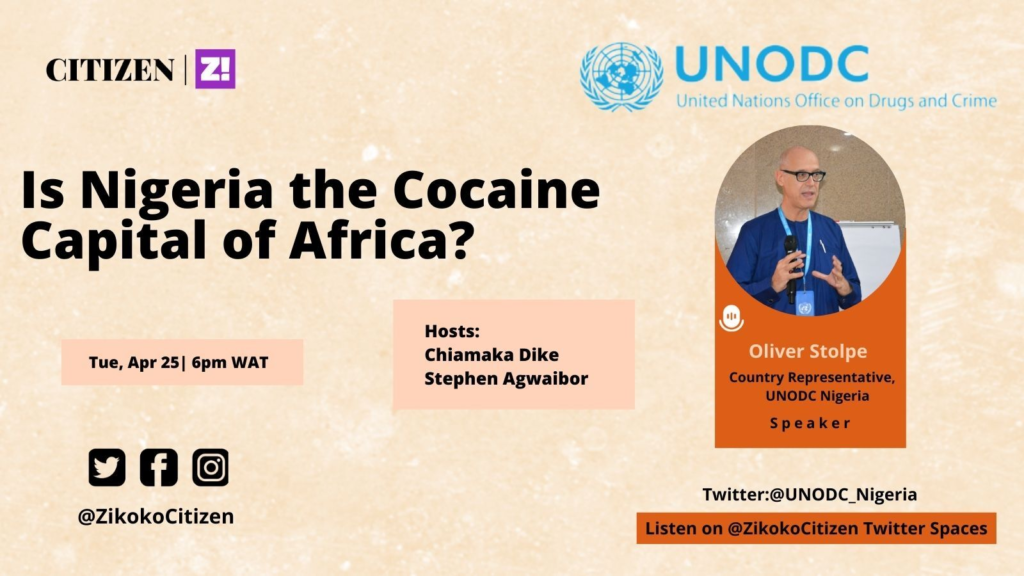
***In April, the UN Office on Drugs and Crime released its Global Cocaine Report for 2023. The report revealed that Nigeria played a significant role in the smuggling of drugs—particularly at mid-level and dealer levels—in Africa and beyond.
For Navigating Nigeria this week, Citizen spoke to Itunuoluwa Awolu, a lawyer and the fundraising director at the Headfort Foundation, an NGO focused on providing free and easy access to justice to indigent and wrongly incarcerated inmates, victims of police brutality, and minor offenders. She shared her thoughts on the Nigerian correctional system and how it can be reformed.
Editorial Note: Navigating Nigeria is a platform for Nigerians to passionately discuss the Nigerian experience with little interference from individual opinions. While our editorial standards emphasise the truth and endeavour to fact-check claims and allegations, we are not responsible for allegations made about other people based on half-truths.
Icebreaker. Have you ever heard of Citizen and the work we do?
Yeah, of course I have. And I’ve gone through some of your stories and interviews. You guys like interviewing people about relatable occurrences or things affecting their communities. And that’s one thing I love about Zikoko Citizen, bringing the media to the people.
I think that’s crazy. It’s crazy in the sense that if you look at the work that we do at Headfort Foundation and the inmates for whom we’ve secured their freedom, the stories that are shared as regards their experience in prison make it unbelievable to think that amount of money is put into the correctional system.
How do we have that kind of budget and see people with different health issues when they come out of correctional facilities? You hear them complain about starvation. The food they receive is so poor that you wouldn’t even give it to animals.
The Minister of Interior must explain precisely how that money is spent. To think that that amount of money is put into feeding almost sounds too good to be true, but I’m not going to categorically say that it’s a lie because I’m not in the system. But from the reviews and reports we’ve gotten from inmates who have interacted with our foundation, it’s unbelievable.
Interesting. Do you want to tell us more about what Headfort does and how it started?
Yes, Headfort Foundation started in March 2019. We provide easy access to justice through different means, such as providing free legal services to poor people who can’t afford to engage the services of a lawyer.
We also integrate the rehabilitation process for inmates after securing their freedom. Also, we sensitise the Nigerian public about their rights. We raise awareness about the effects of police brutality, how to engage with police officers, police-community relations, and the consequences of crime. We adopt different practical approaches.
Since we started in 2019, we’ve secured the freedom of 445 persons for free. We also have a mobile app called Lawyers NowNow that connects citizens with lawyers. So if you’re in Lagos, for example, and require a pro bono lawyer, you can use the app to contact us. If you have a case at the police station or are due in court and need legal advice, you can contact us.
How does Heardfort Foundation help people who are unjustly arrested or facing incarceration? Please share the process. I’d like to know how you advocate for their rights and provide them with legal representation.
Every month, we go for prison visitations to take on cases of people who meet our set criteria because it’s not everyone we can take on—legal services must be paid for. But we try to optimise for people languishing in custody because they are poor, illiterate, or unjustly arrested. We ensure that we take up their cases and secure their freedom, which is our way of providing justice for them. Then we also have mobile offices in some courts in Lagos and Ogun states.
Can you handle the hotness of Zikoko’s Hertitude? Click here to buy your ticket and find out.
Unfortunately, yes. And it’s not just peculiar to Nigeria. It shouldn’t be so, but when you look at Nigeria, some other African countries, and even across the world, the issue of over-congestion is a big deal. This is why we have different enactments regarding fundamental human rights. Fundamental human rights should be respected, such as the right to dignity. Inhumane and degrading treatments shouldn’t occur in correctional centres because they’re congested.
When you look at the percentage of inmates in correctional facilities creating this congestion, you’ll see that many of them are awaiting trial, or pretrial detainees, as they’re referred to in other climes.
Now bringing it back to Nigeria. This has been the reality for decades, and although the government has tried, the issue persists. A correctional facility was built to take 4,000 inmates but is housing 9,000. And if you check the category of these inmates, not all are convicts. Many of them are pretrial detainees. This means their trials haven’t even commenced in court; they’re just there languishing in custody, and no one’s sure they’d be found guilty.
From our work at Hertford Foundation, we’ve seen cases where people spent eight years, 11 years in prison. I think 11 years has been our highest number. Eleven years in custody without trial.
Wawu
Someone goes to the police station to report a case, or the police pick up people, and then, due to the high level of corruption, you see that people are taken to court over frivolous charges, and there’s no evidence to back it up. There’s no way to prove that this person has committed the crime for which they’re being charged. Then they remain in custody because there’s no way they’ll start the trial without evidence against them.
You find out that the justice system is a prolonged one in Nigeria. The judges are trying, but they’re also limited. You go to some courts and see judges with 40, 50 cases to adjudicate daily. When the judge gives an adjournment, it can last months.
So in a year, someone in custody may only appear three or four times before a judge. Before you know it, a person would’ve spent five or ten years awaiting trial.
My goodness
When the trial eventually commences, closing the case can take another five or 10 years. And this affects the entire justice system because the courts and wardens are overwhelmed while inmates suffer.
Imagine someone is charged with an offence punishable by one month of imprisonment, and then this person has spent three or four years. How’s that justice?
You’ve raised issues worth pondering. What would you recommend?
Importantly, correctional centres are made for rehabilitation and reformation purposes. As such, in Nigeria, we’ve been trying to lean towards that model to ensure that people aren’t kept just for the sake of custody. They should be reformed and reintegrated into the society. We’re still lagging here.
I recommend that now that we have the correctional service under the concurrent list, states can, hopefully, have the financial capacity to build and run their correctional service centres. This way, we’d solve this overcrowding problem, eliminating all these challenges of health issues among inmates. It would also address fears of hardened criminals influencing one-time offenders or innocent ones.
I also recommend the use of restorative justice and non-custodial sentences. Not every offender needs to go to a correctional centre. The system can then adequately cater to those who need rehabilitation and reformation.
Let’s talk about the issue of jailbreaks. We’ve had a spike in those recently, with escaped inmates unaccounted for. What are your thoughts?
With technological advancement happening in the financial system and other sectors, you’d find out that we’re still lagging in technology regarding the justice system and even our security agencies. This, in turn, affects the correctional service centres—there’s no data.
When you want to calculate the estimated number of part-time inmates in custody, the general public doesn’t have that data. Unless the Minister of Interior or their spokespersons say, we have 75k people and must work with whatever they say. So when you have a jailbreak, like in Edo State or Lagos State during the COVID-19 pandemic, where some facilities got burned, and data in files not backed up are lost, these questions come up. Many inmates in custody have their files missing.
Whew
These are the challenges. For example, the burned facilities have been renovated in Lagos, but can they regenerate the lost data? So when there’s a jailbreak and inmates escape, the lack of adequate data means it’ll be difficult to recover them. Those apprehended probably had issues finding a place to go or no money to transport themselves out of the state. It’s also easy for the authorities to pick up people wandering about. They’ll return them and say they were part of the escaped inmates. This happens because there’s no data to guarantee that these people picked up were the same as those who escaped.
We must inculcate technology into our data collection and stop making it secretive. This applies to law enforcement agents at correctional service centres who can be secretive. There’s secrecy around the available data they have, which even extends to when you go for prison visitation.
As much as we want to protect data, we should also be able to ascertain that whenever we need data for the inmates or for whatever legal purpose, we’ll access it.
The Nigerian Prison Service has changed its name to the Nigerian Correctional Service, suggesting a reformatory model. Yet Nigeria still practises capital punishment. Over 3,000 Nigerian inmates are on death row. What are your thoughts on this?
Beyond changing the name from the Nigerian Prison Service to the Nigerian Correctional Service, the Nigerian Correctional Service Act was also passed into law [in 2019].
One of the recommendations was to make a provision for inmates on death row to have their sentencing commuted to life imprisonment. This is for situations where a person has spent over 10 years in custody.
So if, after 10 years of sentencing someone to death, that person remains in custody, appeals have been made to either the Court of Appeal or the Supreme Court, and this person is awaiting execution, the Chief Judge of that state has the duty of commuting the death sentence to life imprisonment. That’s what that Act has done.
Hmmmm…
I understand that since we now have a correctional centre, people on death row should be forgiven and the death penalty removed. However, I think the death penalty remains necessary to instill fear in other people who are yet to be caught and to make them understand that the punishment for this grave crime is death.
I think that’s why the death penalty still exists. Most times, you rarely even see governors assent to the death penalty being carried out. So you see many people awaiting the execution of their sentences, but the governors are not ready to implement them. The essence of it is to deter. Although it’s also true that we’re still holding on to archaic and pre-colonial beliefs that instituted the death penalty, we still don’t believe that for grievous offences, the death penalty should be removed because it’s going to pass the message that the worst that can happen is remaining in custody for many years.
I think that if, after 10 years, the death penalty can be commuted to life imprisonment, why not just remove the death penalty? And let’s have life imprisonment as the maximum sentence. But I also understand the perspective of people who are victims of grievous crimes. When you see someone who’s killed, say, 30 or 40 people, it’s hard to argue to the victims’ families that such people are entitled to remain in custody, breathing and enjoying the right to life.
Robust response there. Tell us about female inmates. Do they suffer similar indignities as male inmates in Nigerian correctional facilities?
I’ll say no, they don’t. I mean, they don’t face the level of pain or degrading, inhumane treatment their male counterparts face. First of all, female prisons are rarely congested. In Nigeria, we have over 75,000 inmates in custody, and over 73,000 are male. And then we have like 1,600 or so who are female. So it means the female correctional facilities are not congested; they’ve been managed well. Because they’re a limited number, the staff can take care of them. Even if significant rehabilitation or reformation is not being done, they’re at least able to enjoy some rights better than their male counterparts.
They face fewer health challenges and get relatively better medical care than male inmates.
How does the Headfort Foundation raise funds, and how can we help?
Fundraising is still a significant challenge for us, especially considering the scale of our work at the foundation. We provide free legal services for many people with our limited resources. This means there’s also a limit to the number of people we can help.
Every quarter, we organise fundraising online, whereby we have donation links that we share on all of our social media platforms. We seek support from people to donate to us so we can continue to do our work. The operation is vital.
We also look for organisations and individuals to partner with us and help sponsor our projects. Headfort Foundation holds sensitisation programs, mentorship and rehabilitation programs, and vocational training as a means for our beneficiaries to gain employment. We connect them with employers and even provide scholarships for them. And for those with business ideas, we give them financial support to start up or continue from where they stopped before incarceration. We also provide accommodation facilities for some of them who have accommodation challenges.
As I mentioned, we go on prison visitations to support inmates and provide essential items like toiletries, food, and books. But none of these can happen without support from partners and everyday Nigerians like you. A little donation can go a long way.
[You can learn more about what the Headfort Foundation does here. If you’d like to support the Headfort Foundation financially, use the Flutterwave donation link here.]
The National Youth Service Corps (NYSC), created in May 1973, is celebrating its 50th anniversary. To commemorate this, Citizen spoke to former and serving corps members. They shared their thoughts on whether the scheme should stay on or be scrapped.
Opinions were mainly divided among three camps. The “let it stay” guys argued that the NYSC remained relevant in fostering unity and job creation for Nigerians. The “let’s get it scrapped” folks said they didn’t benefit from the scheme and that it doesn’t serve the purpose it was created for. A third group, the “chill first” guys, said the NYSC should be revamped and given a fresh look.
In any case, Twitter gave us many smashing photos of young Nigerians who reminisced about their time in service. To feast your eyes, type “NYSC50” or “NYSCat50” in the search box. That said, I’d later stumble on an interesting tweet. I also had a conversation with a friend, both of which inspired today’s Navigating Nigeria topic. First, the tweet:
I spoke with a friend last night, and it occurred to me that she didn’t join in the WhatsApp frenzy of folks sharing photos of themselves dressed in Khaki. That was interesting to me because, knowing her, she’d be the first to jump on trendy stuff. So I asked why, and she told me like she was pleading her innocence, that she didn’t do it.
“Why, what’s the story there”? I asked. “Nothing”, she said. My journalistic instinct wanted to keep pressing her on the matter. Given her staccato responses, however, my head told me I was beginning to irritate her and would enter her block list if I continued. But she did manage to add, “I’ve always said I wouldn’t serve Nigeria.”
Now that we have some context let’s delve right in. What if I’m not interested in serving Nigeria? So what?
What the law says about NYSC
The National Youth Service Corps Act of 1993 specifies the Corps’ objectives and the service conditions for corps members under the Corps. Here’s what it says about the calling up of corps members:
This passage says that every Nigerian citizen must serve in the NYSC for one year unless exempted. The requirements for mandatory service include graduating from a university in Nigeria, graduating from a university outside Nigeria, obtaining a Higher National Diploma or other professional qualification as prescribed, or obtaining a National Certificate of Education. The service must be completed within one year from the date specified in the call-up instrument.
So what are the conditions for being exempted?
The section above says that starting August 1, 1985, certain people won’t be required to serve in the NYSC even if they meet the requirements stated in subsection (l) of the Act. These people include those over 30 years old, those who have served in the Nigerian Armed Forces or Nigeria Police Force for more than nine months, those who are staff members of certain security agencies, and those who have received national honours.
But I don’t want to serve; is it by force?
There are different arguments to consider here. The most important is the argument for patriotism and why serving is a civic responsibility as specified by law. It’s like paying taxes. You don’t have to like it, but you’re expected to do it. Give to Caesar what belongs to Caesar.
Another is that there are penalties for not taking part in NYSC. Just because they’re not strictly enforced doesn’t mean they don’t exist.
Failure to report for service or refusal to make oneself available for service carries a fine of ₦2,000, imprisonment for 12 months, or both. Two thousand naira might be chicken change, but how does a one-year jail term sound? Think about it.
Before you retort that it’s not that serious and no one will arrest you, consider that if we want our leaders to uphold laws, we too must be willing to abide by those same laws, or else we’re only paying lip service.
Lastly, the law says that employers must demand either an NYSC certificate or a certificate of exemption from anyone who has obtained a first degree.
And as is common knowledge these days, aspiring to public office without an NYSC certificate—or worse, a forged one—can land you in soup. Someone like former finance minister Kemi Adeosun would tell you it’s a bad idea to do such a thing.
With these few points of mine, I hope I’ve made a case for why you should participate in the NYSC scheme. All that’s left is to forward this article to my friend while I wait with bated breath.
For Navigating Nigeria this week, I spoke to Morenike*, a University of Lagos (UNILAG) student. She’s 26 years old and makes footwear. She shared her experience of being exhausted by the struggles of life in Nigeria. Like so many other young Nigerians, she’s heard the phrase “Education is the key” so often that it’s lost all meaning for her.
Editorial Note: Navigating Nigeria is a platform for Nigerians to passionately discuss the Nigerian experience with little interference to individual opinions. While our editorial standards emphasise the truth and we endeavour to fact-check claims and allegations, we do not bear any responsibility for allegations made about other people founded in half-truths.
“I’ve never liked school. I don’t like reading”, Morenike tells me matter-of-factly. “I finished secondary school in 2013, then wrote JAMB, which I took six times.”
I’m listening to her, partly bewildered, as she recounts her struggles getting into school. She appears to have lost count of how many entrance exams she did as she ponders whether she applied six or eight times.
“I eventually got admitted into the Yaba College of Technology (Yabatech). When I finished there, I went to UNILAG in 2017.” She rationalises this decision by explaining the uncertain prospects of a person with a polytechnic degree.
“I didn’t have a business at the time. Imagine not having a business and relying on my National Diploma (ND) certificate to survive. It can’t work in Nigeria.” Her fears are valid. In December 2022, the federal government stopped polytechnics from awarding degrees and restricted them to only focusing on technical courses.
I asked her why she opted for UNILAG. “It’s because I live in Lagos. I can quickly dash home to get stuff and return to campus.” She tells me she wanted to study mass communication but didn’t have a credit in literature as was required. She’d failed to ace the course on multiple WAEC attempts. Morenike chuckles as she relays this to me. She considered political science because of her love for politics. But friends advised that a career path there would, at best, make her a political analyst.
Her options were limited because, as she admits, “I hate calculations.” This effectively ruled her out of taking a management science course. Her options were narrowed down to the faculty of social sciences, and she settled for social work. “I went for fieldwork occasionally and fell in love with the course. I’d found something I felt I could do.”
But things haven’t been rosy as she laments that she has been through various strike actions since her first year.
“Before I officially got admitted, the Non-Academic Staff Union of Educational and Associated Institutions (NASU) went on strike. We couldn’t do our clearance. The lecturers had to step in to do that. By the second year, we had gone on another strike.
“Then, in 2020, COVID-19 happened. I was in 300 level. We stayed at home from March 2020 till January 2021. There was yet another strike in February 2022. We only resumed in October.” As a result, Morenike feels left behind compared to her peers.
“My cousin, whom I wrote JAMB with, is done with NYSC. My peers who went to private schools have all graduated. Even some that went to state schools. I think about how ASUU can wake up on a whim to embark on an indefinite strike.”
Morenike is upset by her situation and explains that lecturers often vent their frustrations on students.
“Last semester, we wrote a test in the evening. The lecturer, a lady, just kept screaming at us and told us she’d pour her annoyance on us for not receiving salaries for seven months. How’s that our fault or business in any way? We’re also affected as well. We can’t get jobs.”
“Being at the same level for almost three years has traumatised me. I got a job offer that paid ₦250k per month, which was later rescinded because I was a student. I cried for days. Employers don’t want to take risks on people who might disrupt their goals due to ASUU’s unpredictability. Some place age restrictions on job openings. At 26 now, my options are getting limited”.
A momentary pause follows before she continues her narration. Morenike isn’t alone. Many young Nigerians are caught in limbo because, on the one hand, they want to start making money quickly in an economy where the unemployment rate is projected to soar to a historic high of 41 per cent. And yet, they can’t commit to work fully and abandon schooling. A university degree still serves as a fallback for all the deserved flack that the Nigerian educational system gets.
“The zeal to read is no more there”, Morenike says with a hint of sadness. “I entered the university at 20, I’m 26 now. I don’t like attending school anymore, but I must try. When we resumed after the last strike, which was depressing, we faced numerous tests and exams. The lecturers didn’t care about our readiness for them. When ASUU and the FG go to war, we’re the ones who suffer while they go scot-free. How’s it my fault I’m not finished with school at 26?”
There’s an air of resignation as Morenike brings her story to a close. She has a few regrets. She tells me about her secondary school group chat on Whatsapp, where she frequently sees news of her friends either going for their master’s degrees or graduating. “I see them and feel envious, asking God why I’m still here struggling to earn a BSc.”
Would she do things differently if she could afford tuition at a private university?
“I wouldn’t go to a private university even if I had the money because I’m not that smart”. Morenike feels she needs to clarify her statement. “Not that I’m not smart I’m sure if I read, I’d pass. But the truth is, I don’t like reading. Reading depresses me, I’m never happy reading a book. I just want to do my business.
“For me, school is plan Z for if all else fails — which I doubt. I won’t say school is a scam because it’s through school I’ve met people I sell my products to. School has helped my business, and I’ve been able to build a network.”
Regarding her education, the journey ahead remains unclear, and Morenike can’t say when she’ll graduate. Still, she remains grateful for her business which helps her get by. For a country designed to stifle the dreams of young people, she’ll take what little wins she can get.
For Navigating Nigeria this week, Citizen spoke to Nanretdeng, a Nigerian student who had to leave schooling in Nigeria for the Benin Republic after a lengthy ASUU strike. Her story shows that leaving Nigeria doesn’t always insulate you from trouble, as it can find its way back to you. Here’s the sad experience she and her colleagues are currently facing at the hands of a dubious man named Shehu. If this were a movie, it would be titled “The Good, The Bad, and the Shehu.”
Editorial Note: Navigating Nigeria is a platform for Nigerians to passionately discuss the Nigerian experience with little interference to individual opinions. While our editorial standards emphasise the truth and we endeavour to fact-check claims and allegations, we do not bear any responsibility for allegations made about other people founded in half-truths.
My name is Nanretdeng. Let me tell you my story.
I used to study at the University of Jos (UNIJOS), but a strike by the Academic Staff Union of Universities (ASUU) in 2020 disrupted my studies for almost a year. I started thinking about going to school outside Nigeria. Before the strike, I had a friend who left UNIJOS to study at École Supérieure de Management (ESM) in Cotonou, Benin Republic. So I asked her how she did it, and she referred me to this guy named Shehu, who was part of the AP Usman Foundation and had links with ESM.
When she referred me to Shehu, I had no idea that the foundation offered scholarships. All I knew was that he had helped my friend process her admission to the university. I contacted him, and he asked me to visit Jos’s AP Usman office.
I met him there, which was when he showed me my options. Before issuing a form, he asked me about the course I wanted to study and other relevant information. I still wasn’t aware at this point that this was a scholarship. I wasn’t honestly looking for that. All I wanted was enlightenment on attending school in Cotonou, but then Shehu later told me that the foundation had provided half scholarships for students applying.
That must have felt like good news at the time
The tuition was ₦430k thereabouts. The foundation promised to take on some of that fee while other colleagues and I were to pay ₦150k each with an additional ₦20k bringing the total payment to ₦170k. So that’s what I paid to the foundation. I still have the receipts. This was in October 2020. We were 14 and were told to prepare to leave either in December 2020 or, at the latest, by January 2021.
Instead, we went in February of 2021 since they kept postponing our resumption date. On the day we were to leave, a few of us were at the AP Usman office in Jos. We all took off from there and arrived in Cotonou.
When we got to Cotonou, we started school activities. Things were going okay until it was time for exams, and we needed clearance. We realised that we hadn’t received receipts from the school confirming that our tuition was paid. Shehu had only remitted about 60 per cent of the payments to the school, even though we thought it was all taken care of. I ended up tweeting about it to draw attention to our situation, and we found out that it was the school that offered the scholarship. Crazy, right?
[ESM Benin / Facebook]
Crazy
It came as a surprise to us all. We tried reaching out to him, but a back-and-forth amounted to nothing. The school was generous and let us write the exams and participate in other activities. They were aware that we had made payments to the foundation. We finished our first year with nothing productive coming out of the talks with Shehu.
Before the commencement of our second year, Shehu still reached out to people asking them to make payments. This was after he hadn’t remitted first-year tuition fees.
At the time, I’d resolved to make all payments directly to the school going forward. When the second year began, Shehu referred other students using the foundation as cover to pay tuition fees to ESM through him without remitting our outstanding payments.
That’s audacious
That went on for a while. At one point, the school admin that had been in touch with Shehu told us that Shehu had stopped responding to his messages and calls. Shehu had gone MIA. The second year rolled by with these issues unresolved.
In our third year, we agreed that no one would make any payments to Shehu or the AP Usman Foundation but to the school directly. At this time, I was the university’s president of the Plateau Students Union. I was picked for this because I was bilingual, and the Benin Republic is a francophone country. It helped, too, that I studied foreign languages at UNIJOS.
After our joint resolution, students from the union began making tuition payments to another bank account I own — different from my primary one. I was then remitting payments to the school from my end. The amount I paid to the school was around thrice what Shehu sent. Despite this, we still have some ground to cover, which explains why I put up that Twitter thread. There are some people among us who Shehu believed were only making a one-time payment. These people are stranded with no hope of getting financial support from home.
We need all the help we can get because we’re in the last lap. It’s a three-year degree. The school has been gracious enough up until now, but that can no longer last. I’m grateful that my story is getting enough traction. Hopefully, it translates to financial help to offset our outstanding bills.
Sounds like this Shehu guy is fraudulent. What has the school done about it?
The school has done their best. It has tried to maintain contact with Shehu. But the school is in Benin Republic while Shehu is in Jos. By the time Shehu decided to stop taking calls, there was nothing anyone from ESM could have done about it. When I returned to Jos, I tried to swing by the office only to find out it was no longer there. It’s not a lack of effort on the part of the school per se. I know the school’s various efforts to get Shehu to remit our fees. They’ve not been successful.
How do you hope this ends? Do you want to see Shehu apprehended, or are you content with settling the outstanding fees?
My priority as the student representative isn’t Shehu getting apprehended. I mean, that would be nice, but what I’m hoping for is that we offset all our debts. The means to that end don’t matter to me. Whether through crowdfunding, a donation, or a charity that notices us and decides to help, it doesn’t matter to me now. If Shehu gets caught and is made to pay, that would be the icing on the cake. But to be honest with you, I’ve taken my mind off of Shehu.
For Navigating Nigeria this week, Citizen spoke to Pascal* and Folake* who told their stories of being mugged. For Pascal, staying calm while being robbed is the “smart” thing to do. Folake’s experience taught her that this is Nigeria, where you should “expect anything.”
Editorial Note: Navigating Nigeria is a platform for Nigerians to passionately discuss the Nigerian experience with little interference to individual opinions. While our editorial standards emphasise the truth and we endeavour to fact-check claims and allegations, we do not bear any responsibility for allegations made about other people founded in half-truths.
Pascal*
I was a student at UNILAG at the time. This was in September 2015. My friend and I went to see a friend at the Radiography Hall. It’s a part of UNILAG but outside the school gates and much closer to the Yaba environs. She had thrown a small birthday party, and we turned up.
We left a bit late, around 9 p.m., but not “Lagos life late”, if you know what I mean. I remember telling my friend that we should take a bus back to school, and he was like, “Which bus? Let’s walk this thing, jare.” Because at the end of the day, that’s what my guy always does: he believes he can leg any distance. To be fair to him, though, waiting for a bus would have taken a lot of time, so I agreed and decided to walk.
We had passed underneath that overhead bridge at WAEC junction when my friend heard someone shout at him from a distance as though he had recognised him. It was dark, and it was a poorly lit road. We should have picked up the pace and made a run for it had we known what was coming, but my friend, thinking it was a case of mistaken identity, responded that they had the wrong person.
Big mistake
The next thing we knew, two guys were on us. I faintly recall one of them, fair-complexioned, in a white shirt and looking so haggard. He dipped into my friend’s shorts and picked up his phone while struggling with another assailant. I had a small iPhone then, but it looked like the thieves were in a hurry and didn’t hassle me much.
Another guy was walking along that road who looked like he was keeping watch, and I suspected he was among them. I had to tell my friend to let go when they held a broken bottle to his neck— he didn’t know.
My friend was still furious and was fighting them when the third guy joined them. I could tell he was reaching for something in his pocket, although I couldn’t say what, maybe a knife or a gun.
Or perhaps he was bluffing.
I’m naturally calm, and the way I read the situation, fighting there wasn’t worth the danger. So I convinced my guy to free the phone, which he did. It was late, and the road was lonely. Getting back to school safely was the priority.
I laughed when I replayed the incident in my head the next day. I was thinking, what if my friend had died that day? What would have been the story? That we went to see Babe and got stabbed on the way back? I was thinking of the narratives that could have come up, like how we should have stayed in school and not gone outside. This would’ve been funny because my friend and I were doing great at school, and the one time when we decided to take a break, we nearly paid dearly for it.
We joked about it for a long time, as guys do, but things could have gone sideways in an instant. Looking back, my reaction to the whole thing was fair and calm. Since it was at night and these guys were confident enough to mug us, letting go was smart.
Folake*
My mugging experience happened in Ajah around December 2019. I was heading for work at about 4:30 a.m. This was the best time to leave home to beat heavy traffic. I remember feeling very reluctant to go to work that day, but I had no choice as it was a weekday. I left home singing. On my way to the bus stop, I saw a group of boys ahead of me, but I thought they were regular people returning from a party. They were in my path, so I passed between them.
Immediately, one of them said, “Hey, come here”. I hissed because I thought they were teasing. Before I could even turn to see who called, I saw the other guys with knives telling me to give them my bag. I had to surrender my bag to them because I didn’t want to get stabbed.
Damn
They took my phone, which I had just bought, my ATM card, shoes and some money I planned to deposit at the bank that day. I was lost and confused for about five minutes. I saw them as they left. It took a while to dawn on me that they’d taken everything from me and that I had nothing left. I didn’t know when I started running. I ran to the bus stop. When I arrived, I began begging people to help me, telling them I had been robbed. Nobody responded. I went to the main road to cry for help; no one was willing to help.
I didn’t report the incident at the police station because I knew that if I did, they wouldn’t bother to do anything about it. You know the Nigerian police nau. They’ll ask you to write a statement and ask you to cough up money, and nothing will come out of it.
I returned home sad. After the incident, I felt terrible for two days. But then I told myself this is Nigeria, where you should expect anything. I later got a new phone and continued with my life.
*Name changed to protect their identity.
Join us on Twitter on April 25 at 6 p.m. to discuss Nigeria’s worrying rise as a cocaine trafficking hub.
For Navigating Nigeria this week, Citizen spoke to Yemi, media practitioner and part-time hobbyist. He shared his story about using a cargo company to transport his belongings from the North, down to Lagos. His experience made him vow never to use the company again and has made him “avoid playing nice” with Nigerians.
Editorial Note: Navigating Nigeria is a platform for Nigerians to passionately discuss the Nigerian experience with little interference to individual opinions. While our editorial standards emphasise the truth and we endeavour to fact-check claims and allegations, we do not bear any responsibility for allegations made about other people founded in half-truths.
Could you walk us through your experience?
Before this experience, I’d used ABC transport once, and it was because of proximity. It was the closest and most accessible transport available the first time trying in 2021. Then, I sent out a bag of books, and they delivered to my location within four working days, which they promised.
This time, I was moving from Abuja, in the North Central, to a new city in the South West. I visited several transport companies. I wanted to make a road trip, and I wanted to travel with a company that had robust bus services. I remember going to GIG Logistics. They said they could transport my belongings. The cost wasn’t an issue for me either.
The challenge I had with them was their route. What they had in mind was to go straight to Lagos. I wanted to head to Ibadan before going to Lagos, and their path wasn’t convenient for me. I wanted one company to sort out my baggage and movement.
So this was what led me to ABC Cargo.
The beginning of the wahala
At first, I carried one bicycle and three bags to them. The bags contained personal effects like my clothes, my books, cutlery, and all that stuff. This was on December 18. On December 19, I brought another bicycle I used to participate in a marathon. Then I went to book a ticket for my road trip on December 20. I recall that my bags were still at their office when I arrived.
I encountered a couple of problems that day. I was travelling with my cats. Their manager came to me and said I couldn’t travel with pets. They were inside a carrier, mind you. I was willing to pay for extra seats to avoid inconveniencing anyone, but this guy refused. He just kept shouting and yelling. It was a whole lot of back and forth.
So what did you do?
I called a private bus service that came to the park to meet me. I got a refund for my ticket right there. When I asked why they’d not sent my luggage ahead, they assured me they’d deliver in four days, per their policy, and told me not to worry. I took them by their word and left.
So imagine my surprise when my bags didn’t arrive four days later. I called them to understand the cause of the delay. They said things like, “ehn, it’s just four days; it hasn’t passed.” I had many plans for December, particularly road-tripping, and the delay affected them.
After the first week without getting my luggage, I still kept waiting. I had my brother check their office at some point which was when I discovered they didn’t have my bags.
What?
By the end of December, the company found one bag. But they told me they couldn’t release it to me because I sent all my luggage items as a bundle and wanted to ensure I got everything immediately, so they held on to that bag for a while.
In the first week of January, one of my bicycles arrived. It came in damaged. It was from that point I started showing them shege.
LMAO
I went to their office with some boys to threaten them to give me my things as fast as possible. They begged and said they were working on it.
Why not the police, as Nigerians like to do?
I did not go there to use force. I went there to let them know it was an option. Outrightly involving the police would have closed the door for negotiations, but I wanted them to have the benefit of the doubt.
I told them that the next time I’d show up, it would be with the full force of the law. That’s when they had someone from their headquarters call me. These were the same people I’d been calling that had been rude to me on the phone. They kept telling me they were on top of the situation.
Through January and February, I had many phone calls with them. I recorded them. They kept insisting that my bags weren’t missing. At some point, ABC Cargo said they’d compensate me with ₦100k. They said the value of the items I had with them was around ₦400k. So how do you have that estimate but decide to compensate me with ₦100k?
I told them that for me to consider compensation, they’d have to start with ₦500k. After that, I contacted the Federal Competition & Consumer Protection Commission (FCCPC). I also warned that they’d hear from my lawyer if they didn’t do something after the governorship elections. That’s when they started taking me seriously. In March, they begrudgingly sent a Cheque for ₦400k.
Did you think that was fair compensation?
The compensation was not reasonable. I had just bought a suit, some jackets that were just two months old, and lots of new sweaters. These alone were definitely above ₦400k.
What’s your takeaway from the whole affair?
Don’t use ABC Cargo services. If you find yourself in a similar situation, reach out to the FCCPC, but also try to avoid playing nice with Nigerians. They have to understand you can go from “good morning, sir” to “you wan see crase” to “you’ll hear from my lawyer” as the situation evolves.
For Navigating Nigeria this week, we look at the March 18 governorship elections and some key states to watch out for. While the February presidential and national assembly elections threw up some surprises, it’s anyone’s guess whether the status quo will be restored or if lightning can strike twice.
After a one-week delay, the 2023 governorship elections are upon us. On March 18, 2023, 28 states will vote for their governors. The reason all 36 states are not taking part is due to off-cycle elections. We saw this in Ekiti and Osun last year, where the states held their elections at different times.
The February 25 presidential and national assembly elections had some surprises, with the ruling All Progressives Congress (APC) losing national assembly seats. For example, in Nasir El-Rufai’s APC-led Kaduna, the PDP won all three senatorial seats. The APC had previously held two of those. The PDP also won ten out of 16 house of representatives seats in the state.
There were also surprising performances by the New Nigeria People’s Party (NNPP) in Kano and the Labour Party (LP) in Lagos. With the governorship elections two days away, it’s anyone’s guess about whether to expect more shocks or if the ruling party will re-strategise to reclaim some scalp. Here are five states to watch out for in the March 18 governorship election.
Kano
In Kano, the three leading candidates are Yusuf Abba Kabir of the NNPP, Gawuna Nasir Yusuf of the APC and Wali Mohammed Sadiq of the PDP. The NNPP won 38 out of 44 local governments in the presidential election with 997,279 votes. The APC won the remaining six, polling 517,341 votes. The margin of victory was over 470,000 votes.
The odds are long for the APC, led by the term-limited Abdullahi Ganduje, to retain power. But this is Nigeria, where miracles happen daily.
The LP swept through the South-East at the presidential election. In Abia state, currently led by PDP’s term-limited Okezie Ikpeazu, the PDP had a disastrous outing where it only managed 22,676 votes to fall a distant second to the LP, which polled 327,095 votes. Okpezie also lost his bid for the senate, marking a shocking decline in popularity.
Thirty-six people are vying for the governor’s seat, but the leading candidate is Alex Otti of the LP. If the LP repeats a performance similar to the presidential election, it will become the first time it leads the state.
Ahmadu Umaru Fintiri of the PDP is the current governor of Adamawa. Atiku Abubakar of the PDP won the state at the presidential election by a distance, with 417,611 votes to beat his closest challenger, Tinubu, with 182,881 votes. However, the governorship election is likely to be a much tighter affair.
Fintiri is up against Senator Aishatu Binani of the APC. Binani is the first female governorship candidate of a major political party. She clinched the party’s ticket after defeating Nuhu Ribadu, former chair of the EFCC. No small feat as Ribadu was a former presidential candidate in 2011, finishing third with over two million votes.
[Aishatu Binani / The Sun Nigeria]
Binani’s journey hasn’t been rosy. She had to fight to reclaim her mandate after a federal high court nullified the primaries. She remains confident of victory against the incumbent. If she manages to pull it off, she’ll become Nigeria’s first-ever elected female governor. You can read more about her here.
Lagos
The state, which prides itself as the centre of excellence, will be the scene of a hard-fought contest on March 18. The incumbent, Babajide Sanwo-Olu of the APC, is up against Gbadebo Rhodes-Vivour (GRV) of the LP and Abdulazeez Olajide Adediran (Jandor) of the PDP.
[Sanwo-Olu, GRV and Jandor / BBC]
At the presidential election, Obi won Lagos with 582,454 votes, ahead of Tinubu, a former Lagos governor who got 572,606 votes.
The dynamics of the governorship election are different, however. The shock factor the LP had on February 25 is no longer there, and Sanwo has responded by going into overdrive in his campaign.
This one’s hard to call, but a repeat of the February 25 results would be seismic — at the risk of stating the obvious. It would be the first time BAT loses his grip on the state. Lagos is BAT’s prized possession, and while he’s achieved a lifelong ambition by emerging president-elect, it doesn’t look like he’ll let go of Lagos without a fight.
Rivers
Without beating about the bush, Rivers was the scene of electoral fraud at the just concluded presidential election. While BAT emerged victorious, there’ve been growing calls for the results to be investigated. That said, the state’s governorship election will be tightly contested. The LP, PDP, APC and Social Democratic Party (SDP) have strong candidates. Nyesom Wike, the state’s outgoing governor, will want to have his say on who emerges as his successor. Will the outcome of the February 25 election repeat itself, or will a different party emerge winner? Your guess is as good as mine.
[Nyesom Wike / Punch]
We’ll be bringing you special coverage of the governorship elections as they happen across the country. To get live updates, join us on how WhatsApp by clicking the image below:
Wunmi* was an ad-hoc staff in Lagos at the just concluded presidential and national assembly election. She spoke to Citizen about the experience and how expectations differed wildly from reality. She’s calling it quits with INEC, who expect her to turn up for the gubernatorial elections on March 18. She says the pay is peanuts and not worth being “treated like trash.”
Editorial Note: Navigating Nigeria is a platform for Nigerians to passionately discuss policies and politics with little interference to individual opinions. While our editorial standards emphasise the truth and we endeavour to fact-check claims and allegations, we do not bear any responsibility for allegations made about other people founded in half-truths.
What to expect in this episode:
Where INEC ad-hoc staff sleep
How much INEC pays (guess)
How INEC staff are exposed to compromise
Walk us through your experience
TL;DR – Have a backup plan for working with INEC because accommodation isn’t guaranteed.
I got a call from a relative who works in the local government (LG) that they need people who’ll work for INEC. He said they’d pay us ₦25k; I told him I was interested. He also asked me to inform any of my interested friends. I was like, “ok, cool money for one day’s work”.
I started calling my friends, and they all showed interest. They told us that INEC would contact us, but we didn’t receive any call. On the morning of February 24, a Friday, he sent me a document with all our names. The list had about a thousand and five hundred names on it. They arranged us in groups to different locations, which were our polling units.
He told us to head to the LG to verify our names and get any needed information. That was all he told me. At 3 p.m., I was at the LG. I’d told some friends to come so we didn’t miss out on any info. Because they were all coming from different places around Lagos, the plan was for them to all converge at my end after we got the relevant info since my place was close to the LG. I asked my relative about accommodation during the election, and he told us they’d provide somewhere to sleep if we worked very late and couldn’t go home. My friends would follow me to my house if the accommodation weren’t conducive.
Ok, good plan so far
However, they didn’t attend to us in time, and there was a curfew that day. I decided to run home and get food, bedspreads and mats for myself and my friends. We were seven. When I got back, there was a crowd of people. Nobody was saying anything, so we didn’t know what to do. We saw some people checking a list of names posted on the boards, but it didn’t click that we were supposed to do that to know who our Presiding Officers (PO) were. None of us knew what POs or Assistant Presiding Officers (APO) were. Eventually, using the numbers attached to our names, we located our POs.
(Editorial note: A presiding officer is an official in charge of a polling unit. In Nigeria, this responsibility usually falls on corp members trained by INEC.)
Progress, finally
TL;DR – LG offices of INEC can be places of fun and chaos in equal measure.
At 10 p.m., nobody said anything to us. The same thing happened at 11 p.m.
We knew we were on our own. Inside the LG was a DJ playing music with speakers and a microphone. Some women cooked food too. It was like a mini-party although the food wasn’t for us. The LG was congested, so we had to lay our mats on the pavement opposite the LG office.
Around 1 a.m., we heard again that they were calling names, so we all ran inside. Someone was trying to address the crowd. The man on the microphone asked us to locate our Supervisory Presiding Officer (SPO). At the time, I had no idea what that meant.
It was a disorganised process with plenty of confusion. You had to ask questions to understand what to do, like locating the number of your Registration Area Centre (RAC), aka ward. I saw several buses outside the INEC office, which I’d discovered were to convey election materials to the polling units. Most of us were lucky to be in the same RAC, so we were still together till 5 a.m. We couldn’t sleep and couldn’t return to that pavement because it was empty outside, and we felt unsafe.
Meanwhile, not all of us in that compound were INEC ad-hoc staff. Some were party agents. By 5 a.m., they started calling RAC 1, where I belonged. It was also the closest ward to the LG. We assembled, along with our PO, inside the office. At this time, I realised election materials were within that building. I thought they were going to bring them from elsewhere.
The POs started picking their materials according to their materials. They gave them activated Bimodal Voter Accreditation System (BVAS) machines for data capture. They also provided a SIM card to log in with their details. The POs were corp members, and I assumed they got trained on how to go about the process. We, the ad-hoc staff, didn’t get any training.
Yikes
TL;DR- You learn quickly that you’re on your own during an election period. Be prepared for long periods without bathing or food while working for INEC.
Funnily, when I met my PO hours earlier, she asked me if I knew how to navigate proceedings, and I told her I didn’t. INEC had trained them, after all, and I wasn’t. If she wasn’t sure of what to do, how could I?
In any case, we marked an attendance sheet and a log sheet to tick the materials we received in a bag. It was my first time seeing ballot papers before elections. We didn’t tamper with it. All we did was count and record the materials we received.
It was around 6:30 a.m now.
People were looking for how to brush and freshen up. There was nowhere to bathe. The toilets at the LG needed fixing. We started to go our separate ways. My friends and I agreed to reach out should we experience any issues on the field. I was in polling unit 2 (PU), so we were among the first set of people to leave. We found our driver, who wasn’t even sure where the PU was. He only had an address and had to locate its whereabouts.
For example, the PU would be somewhere, but there’d be no number, so you have to scan for yourself to know exactly where the PU should be. I called my SPO to give us a landmark to describe where we should be, but even he didn’t know. He told us to ask around.
O.Y.O
We located the PU, but we had a new problem. There were no chairs or tables on the ground for us to set up. I called my SPO again, but his line was understandably busy because he got calls from other people. When I finally got through to him, he told me to be patient and that the chairs and tables were coming.
We got to the PUs some minutes past eight. As of 9:00 a.m., nothing was on the ground. There was a man around who had some experience with elections that guided us on what to do. So we started posting our banners and posters and setting up the voting cubicle. Some minutes to ten, people had begun gathering around. I helped some of them using a list I had to direct them to their PUs. We were supposed to paste this list publicly, as they later told us. There were arguments that the list should have been placed days before and not on election day.
The register has two copies, in coloured and in black and white. After I confirmed with my SPO, we placed the black and white posters on the wall with the help of the voters. All these things delayed the voting process. When it was close to eleven, I had to call again for tables and chairs because we couldn’t commence without those. The SPO raised his voice at me and told me that the chairs and tables he said were on their way were meant to be provided by party agents.
Wahala
TL;DR- Nothing prepares you for what you’ll meet on the field. A calm head is required to navigate the tough life of an election official.
This was new and unexpected information. I had to inform the impatient voters that party agents had to deliver the needed tables and chairs. Arguments ensued. I was scared because I’d never done this before. I kept begging them to calm down. We got a table, but it was too high. Eventually, we found a workaround by asking food vendors to provide us with their benches and tables. This was how we were able to begin the accreditation process.
Phew!
We still had other issues. We forgot the covers of the ballot boxes in the early morning rush to get to our PUs. The voters refused to vote until we had the covers in place. They volunteered to drive one of us down, along with a security agent, to pick up the covers at the LG office. That was how we settled that. When they returned, I climbed on a pedestal to address the crowd that voting was about to commence. I was an APO 2. I’d read the voting guidelines for INEC officials, which I relayed to them, explaining voting procedures.
We noticed that not all parties had representation on the ballot papers for the senatorial and house of representative elections. My guess was they didn’t have candidates for those positions. I explained this to the crowd.
Eventually, at about 11:30 a.m., the voting process started. As you can imagine, there was a long queue. For the first fifty or so voters, the process was seamless. However, after some time, the BVAS started having network issues.
Another headache
TL;DR – For polling officials, elections don’t end on the afternoon of election day. There’s a whole new world of stress ahead after counting ballots. Brace yourself.
We improvised by connecting with a hotspot. The issue occurred at intervals, and we had to take turns using our phones to connect to the BVAS. Some people couldn’t find their names on the list we placed but swore that they were in the right PUs because they’d voted there for years. We checked their PVCs, and for most of them, they’d changed their PUs to somewhere else. This frustrated many voters and affected turnout because many had gone around and couldn’t vote.
By 1:00 p.m., about 100 people had voted, and the queue had significantly reduced. But we were exhausted. We hadn’t brushed, bathed, or had any water or food. By this time, we had established a cordial relationship with the voters and party agents who provided us with water. Someone ordered gala for the crowd, and people scampered around to get their share. A kind stranger brought three for myself and my colleagues, although I couldn’t eat mine because I was busy.
Pele
The number of registered voters at my PU was 750, but only 106 voted. No one came around till 2 p.m. The party agents were still present, but the security agents had gone. The agents kept asking us for their food, which they claimed they had paid for. But we didn’t have any. We were starving too.
At 2:30 p.m., the security agents returned. This was when we decided to do the sitting and counting of votes. In my PU, the APC won by a wide margin. The party agents signed the result sheets, and I also took pictures. I called my SPO, who sent a driver to our location to pick us up. The bus went around a couple of other PUs to pick up some of us who had finished our duties. Together, we headed for the collation centre.
We learned there that we had to cancel out unused ballot papers. We had a lot of sheets to cancel because only 106 people voted across the presidential, senatorial and house of representatives elections. Party agents were making videos of us cancelling, which was annoying. My colleagues and I cancelled over 2,000 sheets while our PO tried submitting our results sheet to the collation officer.
That’s a lot of work
TL;DR: Did you know Wunmi didn’t get 25k as promised? Wait till you read what she earned after the work she put in.
At my collation centre, the collation officer refused to collect the BVAS until we had uploaded the results. He directed us to the RAC technicians (RACTECH), who handled any technical issues with uploading. We also had to tie the used ballot papers with a rope and keep them sealed. It was close to 7 p.m., and we were all drained by this time—still no food.
Our PO hadn’t successfully submitted her results sheet, and the whole place had become chaotic. Party agents were on our necks as though the delay with uploading was our fault. We had to beg them to stop harassing us.
At 8:00 p.m., we were still at the collation centre. We contacted our SPO to ask him if our driver would still be coming around to transport us back to the LG office. He said he didn’t know and referred us to the electoral officer (EO). It looked like we were on our own. I was angry and frustrated. I’m an ulcer patient, and the only thing I’d had all day was water. My uncle had to drive down with some mama put rice, but I couldn’t eat it.
Hugs
Before we completed the collation, it was midnight on election day. It was only then we received ₦4,500. We discovered then that our pay wasn’t even ₦25,000 but ₦17,500.
Ahh
They told us they’d send the balance of ₦13,000 to our bank accounts. Till today we’ve not received the balance. We don’t know the year that will happen. Some people told us they’d pay after a month or at a time of INEC’s convenience. Some guys got angry and wanted to cause chaos with all the added information regarding the sealing and tying of ballot papers. They refused to because they didn’t inform them about it earlier.
There was tension everywhere. Some people walked to the LG office from the collation centre. Eventually, all my friends got attended to.
We left the collation centre around 1:30 a.m. It rained that night, and we couldn’t sleep on the pavement like before because the ground was wet. We were lucky that we had someone who volunteered to drive us. He was a Surulere resident, so he dropped us all at my home before he departed for his end.
What’s your takeaway from this experience?
Almost every one of us broke down from this experience. They admitted one of us to the hospital. I’m getting admitted today. INEC hasn’t paid our balance, and they expect us to return for the governorship election. I’ve decided that I’m not going. I can’t go ahead because of the peanuts they want to pay to get treated like trash.
Barring any last-minute changes — like in 2019 — the 2023 general elections will go on as scheduled on February 25, 2023. The elections, especially for the top job of the president, are seen by many as crucial and likely to set the direction of Nigeria for years to come.
Without wasting time, here are a few things to expect in the 2023 elections.
Higher voter turnout than in 2019
2019 recorded historic lows, with only 34.75% of registered voters showing up at the polls, less than the 50.96% historical average.
The three states with the lowest voter turnout were Lagos (18.95%), Abia (20.16%) and Rivers (21.09%). On the other hand, the three states with the highest voter turnout were Jigawa (55.67%), Katsina (50.74%) and Sokoto (50.13%).
Nigeria has an unwritten agreement of alternating the presidency between the North and the South. Two of the frontrunners in the 2023 presidential race are from the South. Therefore, expect a much-improved turnout from the southern states.
The looming possibility of a runoff
Nigerian elections typically get decided on the first ballot. This is due to the duopoly between the leading parties, the People’s Democratic Party (PDP) and the All Progressives Congress (APC). However, the emergence of a third force in the Labour Party (LP) and the New Nigeria Peoples Party (NNPP) means there’s a good chance the big two won’t dominate as they usually do.
The constitutional requirement for winning the presidency is not just a simple majority but winning with a spread of at least a quarter of votes in two-thirds of Nigerian states. Many people interpret this to mean 25% in 24 states. If nobody meets these requirements, then a runoff happens, which INEC will conduct within 21 days of the first round of balloting. We wrote everything you need to know about that here.
Heavy security presence
First-time voters may be surprised by the presence of heavy security officers during the polls. To ease your mind, they’re only there to ensure the smooth conduct of the election.
Neither the military nor the police will interfere with the democratic process — unless you go out of your way to be a nuisance. The Electoral Act empowers presiding officers to call on the police to arrest voters who may be impersonating. Underage voting is also not allowed.
Free flow of traffic
This is what Ikorodu road in Lagos looked like on election day in 2019.
[Empty Lagos roads on election day. AFP]
It’s best to sort out your needs before this Saturday’s polls. If you had Owambe planned, you should revisit your calendar to postpone because polls will severely restrict traffic during voting hours. Please don’t say we didn’t do anything for you.
Party agents
There are over 176,000 polling units in Nigeria. On election day, each of them will be monitored by party agents. These are people accredited by political parties and INEC to watch proceedings during the voting process. You would see them wearing tags indicating the parties they represent.
Party agents can call the attention of election officials if they suspect someone isn’t who they claim to be, that is, an impersonator. Per the Electoral Act, they can also challenge a count at the end of polls if they believe the presiding officer made an error. The presiding officer must do a recount, but only once.
Party agents are pretty observant. During the counting process, if they notice that a voter’s choice isn’t clear on the ballot paper, maybe because of smudged ink that leads to a vote cast for two different parties, they’ll object loudly. So as not to have your ballot voided, shine your eyes when voting. We did a video explainer on that here.
What else should I know?
If you need help determining where your polling unit is, click the link here to confirm or follow the prompt in the screenshot below.
We also did an explainer here on how to survive election day. Our election tracker goes live on February 25. Get yourself up to date with verified results from across the country by visiting this link.
For Navigating Nigeria this week, Citizen spoke to Samson Itodo. Itodo is a lawyer and the founder of YIAGA Africa, an NGO dedicated to promoting democratic norms across the continent. He famously led the #NotTooYoungToRun campaign to lower the minimum age for elective office in Nigeria. Itodo touched on several issues, including youth participation in the democratic process, unfair competition in Nigerian politics, resistance towards BVAS, reforming the campaign financing model and why he believes you don’t need a PVC to vote.
YIAGA Africa has monitored elections over the last decade and achieved notable milestones. In what way is the 2023 election different from previous ones?
This election is different for different reasons. The first one is that compared to other polls, this election is regulated by a new set of laws. The new Electoral Act will handle this election, but it’s not just the Act; it’s the provisions of the Act.
For this particular election, the Act permits the electronic transmission of results. It wasn’t part of the electoral process previously. Electronic accreditation now has the force of law. Look at things like timelines for specific activities. This cycle, we had early primaries. Primaries started in April 2022 till June. Previously, primaries would begin around September or October. So parties have had five full months of intense campaigning. This is one way things are different.
Another one is the number of registered voters. Compared to previous electoral cycles, we’ve increased the number of registered voters by over ten per cent. We’ve added 9.5 million new registered voters to our voter register. In 2019, there were 84 million registered voters. Now there are 93 million. What that means is it increases the cost of elections.
That’s an understated point
This election is notably different regarding the actors because it’s transitional. There’ll be a change of guard. The incumbent in the presidential election isn’t running. His party has fielded a different candidate. The actors are different, but in some cases, it’s still the same actor. Some parties have fielded the same candidate for two or three election cycles, depending on the political party.
For this particular election, it’s the fact that there seems to be a third force which is the third difference from other polls. Previously, the election was between the two main parties, but now, we have a third force, and young people drive it.
Yay for Gen Z
One last thing that is different is the level of insecurity. For two to three electoral cycles, we’ve always grappled with insecurity, but now, there’s a multidimensional insecurity that we’re grappling with. It’s banditry, farmer-herder crisis, kidnapping, insurgency and unknown gunmen. The same discussion we had in 2015 on insecurity is the same we’re having. But now, every part of the country has its security challenges.
These are some of the differences. On the whole, you can sense on the part of Nigerians that this is an opportunity to elect leadership that can fix our challenges.
As we head into the election in a couple of days, there’s naira and fuel scarcity simultaneously. This new monetary policy introduced in the buildup to the polls changes the entire dynamics.
For some people, the level of suffering will push them to go and vote. It’ll influence how they vote. Some others may feel the hardship is too much and stay away from voting. It could go either way.
You mentioned the third force. Can they shake things in the coming elections?
Nothing is happening now that hasn’t happened before. What you see happening now is what happened in 2015 that led to the alternation of power. What’s different is young people have decided to look for alternatives outside the two traditional political parties. It behoves young people and Nigerians in this third force to galvanise. Because it’s about the number of people you can get to the polling units to vote — and not just vote — but vote for you as a candidate.
This hype and enthusiasm will come to nought if people don’t attend elections. We could have performed better as a country regarding turnout for elections. In 2019, the turnout was 35 per cent, which could be a lot higher. Out of that 35 per cent, the number of young people that showed up for the election was poor. Fifty-one per cent of young people were on the voters register, and only 29% came out to vote.
Over 40 per cent of young people are on the current voters register. But the big issue is, will these young people show up for the elections?
Hmm. A drop from 51% in 2019 to 40% in 2023. Doesn’t this burst the myth of youth participation in the political process?
No, it doesn’t. The reason is that — and this is where INEC needs to review its classification — in 2019, they classified young people as 18 and 35. Surprisingly this time, it’s between 18 and 34. So even INEC’s data is questionable, and we’re currently in talks with INEC to review that age classification because the age classification is 18 and 35, not 18 and 34.
You recently tweeted about disinterest in fair competition. Can you talk about that?
YIAGA Africa is part of a cohort of civil society organisations, and we released the election manipulation risk index (The report covers the period between February 2019 and January 2023). It’s a tool that scans election manipulation in the buildup to the elections. Nigerians must know that election manipulation isn’t limited to what happens on election day. They can manipulate them even before.
Wow
We’re tracking that information, and we’re tracking six variables that we see as a pattern for manipulation. One is INEC capture, two is resistance to the Bimodal Voter Accreditation System (BVAS), three is voter suppression, four is frivolous election mitigation, five is a history of election manipulation, and lastly, the tampering of the voters register.
When we looked at these threats, we clustered states into high-risk, medium, and low-risk. It is high risk if we find three or more variables in a state. When we ran the analysis, 22 states were considered high risk for election manipulation.
When you look at the pattern, it’s clear that most political actors aren’t interested in credible elections. They want to subvert the process to secure power at all costs. Let me put it in street language; they want to rig this election at all costs.
Chilling stuff
That’s why I said in that tweet that there needs to be more interest from most political actors to have credible elections. You can see them doing everything possible to undermine the process. Most politicians don’t care about democratic principles or credible elections. All that matters to them is to be declared winners. It doesn’t matter how they procured the victory and forced themselves on people, and that’s very sad.
We’ll publish a second iteration report by February 20. We hope that some of these high-risk states, the ones in red, will go to yellow and that the medium ones stay high.
You look at the data on voter suppression, and it’s disturbing. We’ve been receiving reports, confirmed by the police, that politicians are buying off PVCs. When you do that, those people can’t vote. Politicians are going to opponent strongholds and buying off PVCs in those locations, thereby suppressing their votes.
[newsletter type=”gov”]
Thirty-two states have this element of voter suppression which is very disturbing. If you look at states with a history of electoral manipulation there’s either falsification of results, overvoting or vote buying during elections. We have to keep an eye on these states.
We’re publishing this to inform the electorate and prevent rigging the 2023 elections.
Kudos to YIAGA Africa for this extensive report. In light of recent events in Osun state, how confident are you in INEC’s ability to conduct elections using BVAS and IReV?
I’m very confident. The BVAS is a remarkable and innovative tool that limits multiple voting, election rigging and voting by proxy. Now that it has the force of law, politicians are scared of the BVAS and the INEC Election Results Viewing Portal (IReV). These two technological tools are game changers.
I urge Nigerians to support using the BVAS because it will limit election manipulation.
Let’s talk more about these tools
The BVAS is a device, while IReV is a web portal. We need to make a distinction between these two. For me, issues like the Osun judgment raise the salience and even add more credibility to the BVAS. Here’s why.
The BVAS identifies and tracks multiple voting or overvoting. The BVAS contains the voters’ register in a particular polling unit on election day. You need to register to vote. It verifies your biometrics — fingerprints, and facial identity. We talked about overvoting in some polling units (PU) in Osun because there was the BVAS. There’d be no way to track overvoting if it weren’t available. You can’t follow overvoting using manual accreditation. That’s one.
Interesting
Two, what happened in Osun, which Nigerians need to know, is that when the BVAS concludes accreditation, the data uploads to INEC’s server. The thing with uploads is they happen at different times. They occur in days. Sometimes when the network is unreliable, it won’t upload the data to the cloud.
There are over 3,000 PUs in Osun and over 3,000 BVAS machines. One of the parties applied for a report just after the election. INEC issued them the report, but it was incomplete because all the figures had yet to be uploaded on INEC’s server. The mistake INEC made was that the report should have indicated that it was provisional, but INEC didn’t. After the whole upload was concluded, INEC issued a final report which it tendered at the tribunal.
Three, the tribunal asked INEC to present all the BVAS used in the over 700 PUs contested. They brought the BVAS. The court checked them one after the other and compared what was on the BVAS with what was in the final report. Both of them were consistent. The big question is, what is the primary source of accreditation data? The primary source of accreditation data is the BVAS. If you will rely on something other than what was uploaded online, at least rely on the device. The figures in the BVAS and the final report were consistent, so why did they rely on an incomplete report to deliver their judgment? In any case, you should read between the lines.
Hehehe
The other thing the public should know, which the law is clear on, is where there’s overvoting, you cancel the votes in that PU, and you don’t apportion votes. When you cancel, you need to declare the election inconclusive. Then you conduct elections in those affected PUs, provided the total number of people who collected their PVCs in those affected PUs is higher than the lead margin. They ignored that particular provision in the law and ruled in the way they wanted, which is unacceptable. It’s an attempt to cast doubt on the BVAS.
The public must also know that BVAS is an electronic device for accreditation. But, someone has to copy the figures from the BVAS into the result sheet. That process has human interference because it’s a manual process. When there’s a manual process, there may be errors in copying figures. This is why young people voting in the elections should be vigilant at the PUs when elections have ended. They should ensure and verify that the number on the BVAS is recorded on the result sheet because politicians can compromise officials and have them record false figures. This leads to overvoting, cancellation and declaring results inconclusive.
See scope
That’s something Nigerians should be mindful of. The BVAS has its limitations, but it’s a tool that’ll deepen the integrity of our elections.
A BBC investigation raises the problem of misinformation by influencers in Nigerian politics. How’d you think Nigerians can protect themselves?
The first thing is to verify, verify, verify. Only trust some information that comes your way because many are fake. That’s one. Two, determine your source of information and stick to those credible platforms. If you check how those fake news purveyors work, sometimes they clone website addresses of credible media and news platforms. You have to check.
Refrain from consuming news in haste. Self-regulation is the best way to deal with issues around fake news.
The third thing members of the public can do if they’re looking for information on election results, it’s that INEC has the power to declare results. INEC has provided the IReV portal. Go and sign up. Create an account, and you can download the result on your own.
We at YIAGA Africa are also working with a TV station in Nigeria. We have the election results analysis dashboard (ERAD). So for Nigerians who don’t have email accounts, stay glued to your TV sets. We’ll provide you access to real-time results as they come, primarily because of the ERAD and the IReV. We’ve done this in the Ekiti and Osun elections.
We must be careful about how we share information, especially on WhatsApp. Just know that this is a political season, and politicians have their “infrastructure” as part of their campaign strategy to continue to dish out propaganda.
You have to decide, a personal effort. There are also reporting platforms for fake news. Platforms like Meta and Twitter have tools where you can report fake news. Counter it immediately if a piece of information is circulating and you know it’s fake. Don’t wait for anyone to tell you to do that. Counter it and provide accurate information out there.
The Electoral Act limits campaign financing, but it’s hard to see how they enforce them with blatant vote buying occurring. Thoughts?
Politicians don’t want to regulate political finance reforms. They are the culprits. In all these attempts at limiting the influence of money, who makes the law? These same politicians believe so much in money. Some of them know the only power they have is money. They’re not popular in their communities, so they buy votes.
Just look at the primaries. How many of the political candidates were elected out of the free will of the members of their parties? A lot of them bought their nomination. They procured delegates. When you procure delegates to elect you, that’s not an election. I look forward to the post-election period. Let’s discuss political finance reforms.
Fingers crossed on that one
But it’s essential to make a distinction. First, if you want to run elections, you have to spend money. The conduct of elections is a logistic operation, and when you have those, you’re going to spend money. You’re going to host meetings, give people refreshments, recruit agents to keep watch over elections, train them, move them around, run campaigns, use technology, procure data, etc.
So, elections involve spending money. We have a problem with this obscene commercialisation of the process where everything’s just determined by money. The leadership selection process is based on the highest bidder rather than one with the qualifications, competence and character to run for office.
No loud am
You have the introduction of dirty money into our politics. That’s where we need regulation. So you look at the current Electoral Act and see why politicians aren’t interested and are just gaming the system. On the one hand, the Act says INEC can impose limits on contributions. Contributing to a party or candidate, it’s ₦10 or ₦50 million, and it mustn’t exceed that. But another provision in the law says you can donate more than ₦50 million as long as the party can show and demonstrate the funding source.
But you also say, on the other hand, that INEC has powers to impose limitations. So you give INEC power with the left and take it with the right.
LMAO
You see this sort of inconsistency, and it’s deliberate. Politicians don’t want limitations on spending. They don’t want to limit money’s influence because it means retiring from politics, and they don’t want to be retired. I can think of a few things to do.
One, INEC has the power to audit and sanction political parties because it’s the regulatory body based on the provisions of the constitution and the Electoral Act. How many political parties have been audited? How many reports have been made public, and how many parties have been sanctioned?
The second is parties need to rethink their revenue generation mechanism. This is where maintaining an accurate and authentic register of members is critical. Members of parties aren’t paying dues because they don’t see the value in doing so. Political parties are owned by individuals who have the money to run the affairs of parties.
Why’s that? Isn’t it shameful that state party leaders are in the governors’ pockets? It’s the governor that funds the political party structure. The governor pays the salaries of party officials, which is unacceptable.
So when the primaries eventually come, the governor already has the entire party structure under his control. How do you expect internal democracy to flourish in those political parties? Parties need to think about ways of generating income.
One of the parties says it has over 40 million members. Imagine if those 40 million people pay ₦1000 as annual dues. Think about how much money they could raise. You don’t need to charge nomination forms of ₦50 million or ₦100 million. These are some of the things to consider.
I didn’t see this question coming, haha. Where did you get that from? There are a few things we need to change within our electoral process. It’s challenging to be a voter in Nigeria. You show up to INEC (at least) three times in Nigeria.
First, you show up to register. Second, you show up to collect your PVC. Third, you show up to vote. Now, that’s a lot of time. Yes, it’s a sacrifice, but we can still do things differently. Any commission should first consider itself as a service provider. As you’re providing services to the people who are your clients, they are king. In business, the customer is king.
If you ask me one thing, I want people to vote anywhere they find themselves. Two, you don’t need a PVC to vote. Once you have your National ID and you’re 18, go cast your vote. Ultimately, it’s about the voters. Democracy is about people, and how they express their choice is central to democracy. When you say democracy is a government of the people, by the people and for the people, it connotes that people are at the centre of deciding. That process of decision-making is critical to the success of any democracy.
This thing where we make it difficult for people to express their right to vote is something we need to address, and if you do that, you’ll be shocked by the number of Nigerians voting during elections. You’ll also make voting fun and exciting for people. Don’t make it stressful. Yes, several things account for the stress, but we have all it takes to make voting more straightforward. Any commission should set that as its target. How do we serve the Nigerian voter effectively?
For Navigating Nigeria this week, Citizen had a chat with Abdul-Hameed Adeshina. He’s a media and public relations expert and a proud card-carrying member of the APC. He spoke on a lot of things including his party’s scorecard over the last eight years, BAT’s gaffes, the fuel and naira scarcity and why citizens — not the government — should protect government property.
Editorial Note: Navigating Nigeria is a platform for Nigerians to passionately discuss policies and politics with little interference to individual opinions. While our editorial standards emphasise the truth and we endeavour to fact-check claims and allegations, we do not bear any responsibility for allegations made about other people that are founded in half-truths.
Are you familiar with Zikoko Citizen?
Unfortunately, today’s the first time I’m hearing about you guys.
We hope you take the time to check us out. You claim to have been a long-time member of the APC. Why should young Nigerians vote for your party at the polls?
Young people from the age of 15 should choose the APC as their sure banker. Reason’s that the APC is progressive. We’re a party that cares for the young and the aged. The party has a structure in place for the betterment of not only youths but all Nigerians.
We have a lot of young men in our party, in governance, that are doing well in life ever since they joined. We have a good template for the betterment of every youth in the country.
This view you hold, is it a consensus as a member of the APC, or a personal one?
We have many political parties in Nigeria. The APC, PDP, LP, APGA, and NNPP. Now, look at all these states. Which party produced the youngest governor in Nigeria? It’s APC and that person is Yahaya Bello of Kogi state. Lagos state is one of the largest economies in Africa led by Babajide Sanwo-Olu. You can categorise him as a youth. He joined us, I think, at the age of 32. He’s among the best-performing governors in Nigeria today.
So when I say APC has a structure for the youths, I’m not saying it to promote my party. I’m backing it with facts and figures. Go to Kogi state and see what Yahaya Bello is doing.
How would you rate the APC’s performance over the last eight years?
We have a scorecard. When talking about infrastructure I’ll rate the APC 100/100. On security which hasn’t really been fair, I’ll say 60/100. On jobs, 85/100.
100 per cent in infrastructure?
Before we came on board, Goodluck Jonathan said he’d be the first president to construct the Second Niger Bridge. Funds were allocated for that project. We came on board, said we’d do it and we’ve done it. That’s number one.
Lagos-Ibadan expressway was started and funded by the OBJ administration. They did nothing. Our administration has taken it to almost 95% completion.
The last time the Minister for Works, Babatunde Fashola, gave updates on that expressway, he said the project would have been completed if not for some conflicting projects being done by Oyo state governor, Seyi Makinde.
We have federal and state roads. Fashola spoke to Makinde to inform him that it’s his projects that are delaying them. We know what that road was like in 2015, so 95% is what I’d give.
Hmm. Besides these two projects, what else?
Funding universities, building roads, and provision of jobs. Recently, the president came to commission a rice mill in Lagos making it the largest producer of rice. The Kaduna-Abuja expressway is there.
When the PDP was there we travelled by road. Now we have railways working perfectly. Our administration brought back the lost glory of railways.
You’re bringing up a narrative of some people sabotaging the nation. Government and the people have duties. It’s for the government to provide social amenities, and it’s for the citizens to protect government property. We’re taught this in the first year of university. It’s the citizens that should be blamed for this.
I tweeted that God’ll judge the people doing this evil to us. We cannot say because people are sabotaging government efforts we then put the fault on the government. No, it doesn’t work that way. It’s our promise that we’ll do something and we’ve done it. There’s a difference between “we will do it” and “we’ve done it”. We’ve done it.
Security is also part of our success story.
How?
When we came on board we all knew how rampant kidnapping and banditry were. In April 2014 nearly 300 girls were kidnapped in Chibok under the PDP-led administration. In 2015 we told Nigerians to vote for us on two basic issues. For a prosperous economy and to fight insecurity. Before we came on board, 13-14 local governments were under Boko Haram. Today, it’s a thing of the past.
At every level, there’s a different devil. We’ve fought the devil of bandits, of terrorists, but now we still have the devil of kidnappers which I believe will be resolved before May 29, 2023.
We experienced increased herder-farmer clashes under the APC. Are you satisfied with how this government handled this issue?
On this herdsmen issue, they’re not Nigerians.
They operate in Nigeria
That’s it. They’re not Nigerians but they’re terrorising our people. I don’t want to use the narrative that they’re Fulani herdsmen because there are instances where security operatives arrested them and they’re not Fulanis. You could just term them kidnappers. There’s nothing like Fulani herdsmen. We have Yorubas as herdsmen, we have Igbos as herdsmen.
But I never mentioned that
Ok. When was the last time you heard about this?
So you’re saying the government intervened?
Not only the government, we the people. Citizens should also be given kudos for being supportive towards the men in uniform.
BAT has spoken in recent times about fuel and naira scarcity. Do you think this will affect your party’s chances at the polls?
It will not and it cannot. Do you know why? In 2015 there was no fuel scarcity like this, all the way till 2021. Before, we experienced fuel scarcity during festive periods but people gave us kudos for how we managed it under this administration. There was no fuel scarcity three to four months ago. Why’s it now, close to elections, that we’re experiencing this?
Yes, Abuja could be experiencing fuel scarcity but not as it is now. Practically every state in Nigeria is experiencing fuel scarcity and we have fuel. There’s enough fuel. The NNPC director said it. Punch published this article that some people are sabotaging government efforts to make life easy for people. You’re collecting fuel from the NNPC, why are you hoarding it? It’s not the fault of the government. It is our own evil agenda towards ourselves.
It’s not the fault of the government. There’s fuel, people are hoarding it. There are filling stations that have fuel 24/7 and sell as low as ₦180 per litre. Why’s the price of others different?
The new naira design is a good approach but the timing is what I’m personally against. The APC governors met with the president who told them to give him seven days to review the decision.
The reason for this naira redesign is to stop kidnappers from operating. We’ve tried using the National Identification Number (NIN) and tracking them with SIM cards but it doesn’t work. Ok, they collect cash ransoms. What if we try a cashless policy? How would they receive ransom when they know cash isn’t in circulation? That’s what brought about the policy, as well as to reduce the amount we use in printing money.
Nigeria is not that developed in terms of technology to use the cashless policy. The pepper and flour sellers don’t know what technology is.
Kenya has M-pesa, a cashless policy initiative that has appeal among the classes of people you describe. Don’t you think the implementation is the issue here?
I’ll use this medium to apologise to Nigerians that are feeling the pain. Like I said in one of my tweets, I’ve separated myself from any policy that brings pandemonium and hardship to the people that elected us.
BAT has made several gaffes prompting laughs on social media. Do you think this could affect his chances, and whether he’s fit to lead?
Lots of questions but I’ll answer every one of them.
Hahaha
Let’s talk about the gaffes. Asiwaju is a politician and wants to be the talk of the town. In his recent one, he said, “vote for me, your eight years (in school) will be eight years.” Honestly, I don’t think that should be a matter of discussion in the public because this is Nigeria and we’ve seen a lot.
Let me now tell you something. You can’t be working 24/7 and not make mistakes. Could be when you’re working, walking or even eating. Asiwaju was in Osun and left around 9:50 p.m., got to Ekiti where they wrapped things up and moved on to Nasarawa. It’s not easy.
But other candidates are moving around as well
They’re making the same mistakes. There’s no top presidential candidate that hasn’t made a funny mistake. Is it Atiku, or Peter Obi, who? Was it not Peter Obi that went to Nasarawa and said it was a very big country? How’s Nasarawa a big country? People don’t talk about that.
Atiku that’s telling us he’s strong went to a state and told his supporters to vote APC. There’s none of them that haven’t made such errors because they’re all working hard. If you’re supposed to sleep for six hours in a day and you sleep for two, your head will be hot. Your thinking might even be different. You might be pressing your phone and dozing off. One can’t cheat nature. You can’t use these things as factors to determine who Asiwaju is.
Lol. A former member of the APC presidential campaign council Naja’atu Mohammed, has said BAT isn’t fit for office. What’s your take on this?
If you’ve read Hajiya Naja’atu’s profile you’ll know she’s not a doctor and has never worked in the health sector before. So her comments on Asiwaju Bola Ahmed Tinubu are false. She’s in no position to know who is or isn’t fit. The only person who can speak authoritatively about my state of health is my doctor.
She left our camp for Atiku and she said Yemi Osinbajo was her choice. If Osinbajo believed her she wouldn’t have left our camp for the opposition. It’s a paid job. When you see a paid job you’ll know.
We can talk about one of the former aides of Alhaji Atiku Abubakar, showing the world how corrupt Atiku is. Nobody’s talking about that.
Well, that has been discussed a lot on social media
This is 1-1. Someone left their camp and came to ours because they believe in us. Likewise, someone left our camp and went to theirs. Our political ideology is quite different from others. If someone brings us any evidence we show it to the world and back it up with the law. If she believes BAT isn’t fit let her come up with evidence. All she’s doing is just public relations (PR). I’m a PR expert.
You’re based in the UK. Some might say your support for the APC is only possible because you’re not in Nigeria
This isn’t the first time I’m hearing this. Let me tell you something. I was supposed to go to Onward Primary School, a private school. I was given money to purchase a form but misplaced it. It was then I settled for a public school, Methodist Primary School in Iragbiji, Osun state. My secondary school was Iyana Community School in Oyo state. I went to Community Grammar School, Sasha. Then I went to the Federal Polytechnic, Offa. I also went to Kwara State University.
Now, tell me. What’s wrong with me coming overseas for another degree? I’m not the first person to come to the UK to live or study. Why’s my case different? They’re talking about suffering. I schooled in Kwara. I had classes around 8 a.m, I’d leave Oshogbo around 5 a.m, take a bus from Otefun to Ilorin. From Ilorin to Malete.
I’m not an ajebutter, we’re in it together. I don’t see the UK as paradise. What I’m telling you is that in Nigeria people are enjoying themselves more than in the UK.
How so?
Let me tell you. If I fail to go to work tomorrow, I might become homeless in the next three weeks. Do you know why? If you don’t go to work you don’t get paid. If you don’t get paid how can you have electricity? Water? Transport? You have to work. Unlike in Nigeria where in some places it’s difficult for NEPA to disconnect you from power. People just make assumptions.
This young man talking to you is coming home to vote. When I was in Nigeria I did giveaways on Fridays on my Twitter and Instagram.
So you’re coming to Nigeria to vote?
Insha Allah. I’m just waiting for permission from my manager. Once I get it I’m coming home to vote. Let me say that ever since I’ve been in this game of politics I’ve never, in my life, received a penny from any political leader. This is going all the way back to Rauf Aregbesola who I worked for, day and night. Same with Gboyega Oyetola, never collected a penny.
Reno Omokri came to the UK the other day to disrupt Asiwaju’s speech at Chatham House. I know what I brought on the streets (to counter him). All the things I’m doing fall under professional PR work and people pay millions for it. I do it for free, for my country. And I’m not the only one.
There are other people overseas who are paid millions to support Atiku and Obi and they’re not coming home to vote. Why’s my case different? It’s only when I’m campaigning for BAT that people say I’m enjoying the good life. If I’m enjoying the good life are my parents at home enjoying? We’re middle-class people and I can support my party anywhere I want. That’s my submission on that.
One of Buhari’s legacies is the Electoral Act which he’s received commendation for. Do you think BAT will improve Nigeria’s electoral system if he gets in?
Asiwaju, despite not being president, has fought for democracy. Asiwaju wasn’t president when he fought the PDP in Osun state when Aregbesola was being cheated. He wasn’t president when he helped a PDP governor reclaim his mandate in Oyo state. He doesn’t care what party you belong to, he just wants the rule of law. He’s the only man alive who fought the president for eight years and won.
Are you referring to his time as Lagos state governor and his spat with President Obasanjo over federal allocations?
Yes, with Baba Obasanjo then. Asiwaju respects the law which is why till today there’s no case of corrupt practice against him. I can say this anywhere.
Corrupt practices he’s yet to be found guilty of, you mean
Yes. He was charged by the code of conduct tribunal but they found nothing. Don’t forget this was when OBJ was in power, if he was guilty they’d have nailed him with whatever they had.
One criticism against the APC is nomination forms are very expensive which makes it hard for youths to take part
At the beginning of this year the party leadership offered a discount. Any youth from 25-35 would get a 50% discount on nomination forms. We also made it free for women contesting. In some instances, some didn’t pay. We have the consensus and direct primaries and depending on whatever’s used some people might not even pay.
Does the APC have confidence in INEC’s ability to conduct free and fair elections?
President Muhammadu Buhari has provided everything needed for INEC to conduct free and credible elections. In terms of security, the president has pledged to do his best. We experienced it in Ekiti and Osun. So come February 25, I urge everyone to come out and cast their vote. There won’t be any form of intimidation, violence or ballot snatching. I have 99% trust in the leadership of INEC led by Prof. Yakubu.
The Citizen Situation Room and Helpline are your ultimate plugs for real-time gist and drama on the 2023 elections. Join the conversation today!
You should also sign up for our Game of Votes newsletter. We help you make sense of news jargon and keep you up-to-date, especially with election news. Make the subscription of a lifetime here.
For Navigating Nigeria this week, Citizen spoke to Ndi Kato, a spokesperson of the Labour Party. She’s also an activist, political analyst and the executive director of Dinidari Africa. She spoke on various issues including the Labour Party dominating in three geopolitical zones at this month’s presidential election, her party’s stance on subsidy and why some leaders in the South East are against Peter Obi’s candidacy.
Editorial Note: Navigating Nigeria is a platform for Nigerians to passionately discuss policies and politics with little interference to individual opinions. While our editorial standards emphasise the truth and we endeavour to fact-check claims and allegations, we do not bear any responsibility for allegations made about other people that are founded in half-truths.
Peter Obi has trended on Twitter and gathered huge online support. Do you think this will convert to votes on election day?
Social media is representative of the larger picture. It’s representative of the larger community. It’s not robots that are here but human beings. I always say that one online [person] represents the thought processes of ten other persons who may not be here.
If other parties have plenty of supporters then they too should be on social media, it’s not as if when Jack launched Twitter he made it exclusively for Obidients, there was no conversation like that. It’s random people who are on social media, normal Nigerians who are on social media who have become supporters of this movement.
So those other people who say they have that many supporters, let them come on social media because this place is representative of the larger society. This will translate to votes. I’m not saying we’re going to get the highest number of votes everywhere, but we’ll get the highest number of votes in at least two regions. Na we go dominate. In fact, three regions. We’ll get plenty of votes in their regions.
Is this part of our interview, because Zikoko, the way you guys move? Hahaha.
Yes it is, lol
We have the South East, the South South and a good chunk of the North Central. And then we’d balance out in places like the South West. We’re not saying we’re going to get everything in the South West but we’ll have quite a good outcome there. That’s Tinubu’s base but we’re going to make a dent there. And with these new campaigns, you’re seeing the inroads we’ve made in the North. We’re beginning to see that 25% in some of these places is quite possible. So we’re moving, we’re moving.
We understand your candidate has support in the South East, but Tinubu also had a following when he campaigned in Enugu
Do you know how far they had to go to get people to come with their buses? See, once you attend a rally and you begin to see people in uniform, like people wearing green berets, just know that mobilisation has happened and it’s not organic. If you see people come as they are then that’s an organic rally.
If you come to my village and you tell people you’re going to give them ₦10,000 to enter a bus, in this economy that they’ve weaponised poverty, you think they won’t enter?
After the New Year, I was in Imo state. I can tell you that among the gathering there was only one guy that wasn’t with the Labour Party. And the way that guy had to defend himself? At some point, he asked to be left alone. He had no arguments to make anymore. They even have a song, once you mention Obi they respond with kererenke.
But the South East has two APC governors and even Soludo has said he won’t support Obi
God help them. The more these people talk, the more they have to backtrack. Remember when Ihedioha spoke against Obi? The pushback was so strong he had to apologise.
He did say he was taken out of context
Isn’t it good that he quickly came out to say he was taken out of context? When Peter Obi went to Imo state what happened? The governor came out to welcome him because he doesn’t want wahala. He doesn’t want the pushback because he wants to win a second term — if he can stand a chance to win it. And that’s wisdom.
Some of these people are pushing back because they’re wondering “why Peter Obi?” They believe that if power should come to the South East it should be them because they’ve been building their careers [from way back] and if Obi gets it then it means they won’t stand a chance to get it. And I understand. Doing everything they think is right, sucking up to the system and hoping they’d be the one and then this very simple man who doesn’t suck up to the system and always does what his mind tells him — which is for the good of the people to be honest — ends up being the one who gets this organic love. It can be painful.
Still, my guy. I’ve seen people in the South East who are serving in government, commissioners who have told their governors that as far as the presidential election is concerned, they’re voting for Peter Obi.
Well, all of that’s hearsay
It’s not hearsay. I know these people myself. I’ve worked with these people.
If they could come out to publicly say these things then that would confirm what you’re saying
You can see them sponsoring billboards. Have you gone to put mics in their mouths and they said no? That’s their method. You go to some of these places and you see these billboards where they say ‘for governor vote this party, sponsored by so-so person’. Same with other positions and for president, Peter Obi’s name will be there.
The Labour Party and the Nigerian Labour Congress have sat on different sides of the subsidy issue. How does your party hope to reconcile this?
If the party hasn’t settled this issue, the candidate won’t be speaking about it. You know, the last time I heard the candidate speak about subsidy and it being criminal itself and having to be removed, was right in front of the chairman of the party in Karfanchan. And the chairman of the party didn’t have anything against the removal of fuel subsidies. He’d have raised this to say “excuse me.”
I was there and to the best of my knowledge, no such thing happened. So yeah, the fuel subsidies will be removed. We cannot continue to pay that huge amount of money to a few individuals. It is organized theft, our candidate has said so repeatedly in front of party members and we stand by it.
You’ve said the LP would win the South-South. Aren’t you worried that the region is led by elected officials from the PDP?
My answer to this will be the same answer I have for the South East which is, they have the political class but we have the people. The people have decided to rise up and we’re seeing the people organising themselves and that should be recognised. When the people are organising themselves the political class [are just individuals] and they’ll be reduced to one person.
When the political class has the upper hand, they hope for voter apathy, they hope for things that will make voters not come out so that they can use their power to move things, you know, use the power of incumbency, buy votes here and there.
But when the people rise it’s a whole different ball game entirely. And so, again, my answer to all of this is they have the politicians, we have the people and the people are overwhelmingly larger in number.
You were once with the PDP, the same with your principal. What led you to make a switch? And how do you respond to those who say it’s hypocritical?
Politics is, hopefully, a conduit to good governance. It’s not something everybody likes to participate in. I’m not a fan of politics but it’s a necessity. It’s an uncomfortable necessity you have to participate in, in order to be able to deliver good governance to the people and many people do participate on that note. Peter Obi is one of those people.
He’s a successful businessman with so many other things to do and here he is participating in this because he feels it’s the best way to deliver good governance and bring about change for the people.
Unfortunately in Nigeria, you can’t run as an independent candidate, you have to join a political party. At some point, you’ll have to join a party that’s most viable to run with. But when push comes to shove, you have to take the bull by the horns. There’s nothing wrong in saying you want to step into one of the other political parties and run from there. I don’t see what’s hypocritical about that.
You once made a run for office in Kaduna. What was your biggest takeaway from that experience?
We need to do more for women’s political participation. We need quotas. Quotas are a good stepping stone to women’s political participation. We need to push for laws that will help women’s political participation. We need to push for laws that provide equal rights for women. The gender and equal opportunities bill has been on the floor of the House for quite a while and we need to push that. The special seats Bill too. Calls for special seats. One hundred and eleven special seats for four election circles.
I’m hoping that bills like that get in. Within political parties, gender-friendly policies are needed to help women’s political participation. I run an organisation, Dinidari Foundation, and there are other women-led organisations working on that. So more needs to be done and more attention needs to be paid to women.
There have been videos online about Labour Party supporters complaining about not being paid mobilisation fees for rallies. Could you confirm if your party pays for these things?
How do you suggest supporters get to the venues of the rallies? Buses need to move.
That’s your answer?
That’s my answer.
Does the Labour Party have full confidence in INEC’s ability to conduct the elections?
We’ll continue to put INEC on their toes. Our job’s to make sure we continue to put pressure on INEC to do the right thing and hopefully, INEC does the right thing at the end of the day.
You don’t sound confident
It’s the office of the citizen. The job of that office is to put pressure on and make sure those in charge do the right thing. When you do your own part, you hope that they do theirs and that’s where we’re at. We’re putting pressure anywhere we see that INEC is lapsing.
What’s your advice for young people looking to get involved in politics?
The best way to participate is to participate. Register with a political party. Many young people should know they’re already participating in politics by canvassing for votes for their candidates. They’re already participating in politics and that’s a good step, take the next step to register.
If the election doesn’t go the Labour Party’s way, is there any chance it would take it up in court?
I think we’ll leave it till then.
Do you plan to run for office in the future?
As of now, I can’t answer that question.
We write the news and track the 2023 elections for citizens by citizens in our weekly newsletter, Game of Votes. Make the subscription of a lifetime here.
For Navigating Nigeria this week, Citizen spoke to Ose Anenih, son of former minister and chairman of the Board of Trustees of the PDP, Anthony Anenih. He’s a member of the PDP presidential campaign council and deputy director for polling. He spoke on various issues including his party’s chances, the breakaway G5, PDP fumbling the bag, and why he thinks Peter Obi’s campaign would’ve never taken off without EndSARS.
Editorial Note: Navigating Nigeria is a platform for Nigerians to passionately discuss policies and politics with little interference to individual opinions. While our editorial standards emphasise the truth and we endeavour to fact-check claims and allegations, we do not bear any responsibility for allegations made about other people that are founded in half-truths.
Icebreaker. Have you ever seen any of Citizen’s work?
I have. I feel like I’m Daniel walking into the lion’s den because of your work and because of your audience. Most of your readers might see politicians as the antithesis of everything they stand for. I’m hoping you guys will be gentle.
Haha. Off the bat, could you answer whether you have any relations to the late Chief Tony Anenih, a legend of Nigerian politics?
He’s my dad, yes.
Wonderful. Your dad was a former minister under President Obasanjo yes?
Former minister of works. My dad and Anthony Enahoro — who moved the motion for independence — come from the same community. There must be something in the water.
Lol. Tell us, what was growing up like?
We always grew up around politics. My mum is a politician and a former minister of women affairs as well. One of my earliest childhood memories was during a meeting held in our living room in Benin. I peeked out the door and saw Shehu Shagari, the then president. He had come to Benin for a visit and we hosted him.
Bragging rights
I’m from a polygamous home and we grew up politicking. Politics is in my blood. I’m, however, more than just a politician. I’m a hotelier and businessman. My brother and I run a property development company which pays the bills while we go about trying to convince people to vote for us.
Before your dad passed, he was chairman board of trustees (BOT) of the PDP, correct?
He was chairman in 2015. After we lost that election, he stepped down and adopted an elder statesman role.
Did your dad influence your journey into politics under the PDP?
Yes and no. I say yes and no because on one hand you have to join a political party. It could have been NNPP, LP or APC. On the other hand I know a lot of these people because I interact with them across divides. I feel a sense of fellowship with them and know what they believe in. So in deciding what party to belong to I asked myself which community I’d like to work out of and I picked the PDP.
I like the PDP’s ideology. We’re progressive and pro-business. I’m a firm advocate of free speech which is something my party also believes in so it was natural for me to work with the PDP.
We made some mistakes in the past but looking forward, our party’s Nigeria’s best choice for prosperity, security and growth.
Supporters of other parties won’t agree with this assertion. Why should Nigerians give your party, not just your candidate, another chance at leadership?
I’m a fan of Kingsley Moghalu and I read his books. He’s one of the best presidential candidates I’ve ever seen. I’ve interacted with him and interrogated his ideas and he’s solid. But, he always seems to pick parties that don’t appreciate what he brings to the table or stand no chance of winning. I say this to highlight that you can’t separate a candidate from its party.
When we took over from the military in 1999, we had an almost negative GDP growth. We grew it to 15 per cent in 2002. I can point to that to say we’ve been in a similar situation as we are now where we’re bankrupt, there’s insecurity and skyrocketing inflation. The PDP fixed that then and did it within three years. One of the stewards of that success, Atiku, is vying for the top office today.
We did some stuff that was great, but we also made mistakes. The beauty of Nigerian democracy is that in 2015 Nigerians clearly showed they can punish bad behaviour. However, they were only able to do that because the PDP produced a candidate that allowed free and fair elections.
Jonathan signed a presidential amendment to the Electoral Act a few weeks before the election and it was that same amendment that kicked him out of office.
My worry going into the 2023 election is, on one hand we have a ruling party that doesn’t have a democratic bone in it and on the other hand a divided opposition who if they don’t band together, will find it difficult to unseat a ruling party desperate to hold on to power.
But Buhari signed the Electoral Act into law which has benefited your party. For example, governor Adeleke’s emergence in Osun. What do you say to that?
If Buhari had signed it in 2018, my applause for him would’ve been more enthusiastic. Right now he has no skin in the game as he’s not contesting. He did it in pursuit of a legacy. He wants to be remembered as the president that advanced our democratic process. If he was sincere he’d have signed it in 2018. All he’ll get from me is a one-handed clap.
You spoke of mistakes your party made. One which many people have talked about is the emergence of Atiku who’s of Fulani ethnicity to replace Buhari who’s also Fulani. How do you respond to those who say it’s unfair?
I ran for the PDP primaries to contest for the House of Representatives (HOR). Bro, if you see my manifesto ehn? I had a beautiful manifesto. I had a campaign team which was structured off of Obama’s when he ran in 2008. We were everywhere on social media including Twitter and WhatsApp. My constituency has 21 wards and we covered everywhere. Went to the markets and broke kola with everyone.
Omo, on the day of the primaries hahahaha. That day the conversation wasn’t about manifestoes. It was about what was in the best interest of my community. I was running for HOR and my community also had someone running for Senate. My delegates, people for whom I hired a bus to take to the venue, decided that they were better off having someone in the Senate than in the HOR.
Chai, that must have hurt
That’s the dark underbelly of politics. In the end these things come down to negotiations. You may not like it but as a democrat you should accept it. I wasn’t rigged out.
I say this to answer your question. Democracy isn’t perfect. The PDP presidential primaries had Wike, Atiku, Saraki and a host of others. There was a lot of horse-trading and in the end the delegates said Atiku was the best choice. The primaries weren’t rigged. Delegates across the nation came together to form a consensus on Atiku.
I hear people talk about fairness a lot and it makes me cringe. When you begin to have these ethnic arguments under the guise of equity and fairness it becomes problematic. Because you’re setting a precedent that we’d put ethnicity and religion over character, competence and a track record. The threats we face today from insecurity, displaced people, out-of-school children are markers of state failure. Ethnicity or religion won’t solve this.
So to answer the question of if it’s fair my Twitter bio reads, “It’s not fair, it’s politics.”
That’s interesting, because Atiku himself has slammed the APC’s Muslim-Muslim ticket and called for a “balanced” ticket. Doesn’t this contradict your previous point?
Speaking for myself now, let’s not deceive ourselves. Tinubu is a Yoruba Muslim. How can he pick a northern Christian if he’s serious about winning an election? Elections have historically been determined by bloc votes from the northeast and northwest. When Tinubu is looking for a running mate will he aim for competence or for the person most likely to deliver him the most votes?
So you’re saying Tinubu sacrificed competence for the sake of winning elections?
What I’m trying to say is, Tinubu was hamstrung from the get-go. Nigeria still has these conversations about where you’re from and who you pray to and Tinubu knows this. If it was a smaller party you could get away with a Christian-Christian or Muslim-Muslim ticket and no one would bat an eye about it. I’m deputy director of polling for the PDP and what shows up in our polls is that people tend to vote along ethnic and tribal lines. So I understand Tinubu’s decision. It was a cold and calculated move although I don’t think he’ll get far with it but I wish him well.
In 2019 you wrote that the next Nigerian president should be Igbo and you even mentioned Obi. So what changed? Why aren’t you supporting him?
The arguments I made in that piece are still valid, which was about recognising Nigeria’s diversity. I penned it around calls for secession at the time by Nnamdi Kanu. The thrust of it was that a certain section of the country felt they were still being punished for events from the Civil War which made them feel like they didn’t belong and couldn’t aspire to the highest office.
These issues aren’t anecdotal, they’re systemic. For instance, the North-East Development Commission (NEDC) was established because of the Boko Haram devastation as well as the Niger Delta Development Commission (NDDC) to deal with the issues in the south-south. You don’t have anything similar in the southeast. This is a region which was the theatre of the Civil War and you don’t have anything set up to fix the infrastructural and physical damage they suffered. That was the background in which that article was written.
If you’re from the region — my mum is from the southeast — you’ll see how the state pushes back at you or doing tokenistic projects like the Second Niger Bridge. If after eight years the only thing you can give back to an entire region is a bridge, then it’s tokenistic.
But the PDP ruled for 16 years, how come they didn’t at least deliver on what you say is a tokenistic project?
That’s a brilliant question. We talk about bubbles of national sentiment and during Jonathan’s time the South-East didn’t feel they were being persecuted. Even though there was Nnamdi Kanu he was more like an irritant. There wasn’t a full blown agitation to leave the country. That only began to rear its head when Buhari got to office and made the “97 per cent, five per cent” remark.
Fast forward to 2023. Nigeria’s problems have gone beyond giving a certain section of the country a sense of belonging. Yes that too is important, but there has to be a Nigeria before anyone can hope to get a sense of belonging or anything like that. I mentioned earlier that to my mind, Nigeria’s at the edge of state failure. We need to fix that before addressing subnational agitations that are ongoing.
This brings us back to Obi
The good thing about the Peter Obi candidacy is it addresses part of that agitation and I absolutely love it. I’m up and about in Abuja and I see people in their isi agu outfits and you can feel the general sense of pride in being Igbo because they’ve put someone who for me is a great candidate. His candidacy has also, to a large extent, doused tensions in the South-East. Agitations have shifted from ”we want to leave” to “this is our guy” which is amazing.
So I don’t think overall my position has changed. I just think there’s a list of priorities now brought about by the APC’s bad governance. As a result other more pressing issues have overtaken the sentiments expressed in that article.
Given the growing support Obi has gathered in the race, do you think the PDP fumbled the bag by not fielding him?
I think it’s a disservice to your audience to ascribe what’s happening to just Obi, instead of being the result of a protest movement of young, energised, organised and mobilised Nigerians.
Even you could’ve picked up a ticket and if that movement had gotten behind you, we’d be talking about you the way we’re talking about Obi. It’s not about the LP either, which literally doesn’t exist.
In my village, Uromi, people who contested under the PDP platform and failed to get a ticket were the ones that took up the LP ticket.
I don’t think it’s quite the same thing comparing me with Obi, a former governor with experience running a national campaign under the PDP
I’m saying that between 2019 and 2023, several people have been posturing for president. Wike, Seyi Makinde and even people like Tony Elumelu, Atedo Peterside and Pat Utomi were making the right noises. So it’s not just Obi. Without EndSARS there’d be no Peter Obi.
Please explain
We’ve seen youth involvement in politics before. Young people were involved in Buhari’s presidential campaign. What we hadn’t seen before was organised young people working together on a large scale and with efficiency. The first time we saw young people band together to push a political agenda — even though they say it wasn’t politics — was during #EndSARS.
Young people across the nation said they were tired of police brutality and were demanding police reform to the point where the president thought there was a plot to overthrow him.
I was out of the country on October 20, 2020 and I saw the evil this government did. My heart broke and I worried they’d crushed the spirit of Nigerian youths. So to see that spirit re-emerge now is a brilliant thing to watch even though I’m with the PDP. Although I think they’re backing the wrong horse, the engagement they’ve promoted in our political space has made it worth the while — whether Obi wins or not.
So I’m saying that if young people hadn’t led campaigns outside of the LP structure, Obi’s movement wouldn’t have gained any traction at all because the LP is struggling to even hold rallies. I’d rather give credit to young people instead of Obi who only left us in May. Obi’s one of us, he’s an old breed politician and not new.
He just happens to be the tip of the spear of a rebellious movement that wants to transform the country for the better. And I envy him for that. I wish we’d been able to draw that attention to our campaign, we haven’t been able to.
So is this you admitting the PDP fumbled the bag?
If the PDP fumbled the bag it’s not about Obi, it’s that we didn’t appeal enough to the youth demographic. Even the young people say that this isn’t about Obi but about them and their future and I 100% agree.
You’re part of the PDP presidential campaign council. Give us the amebo, how’s the PDP dealing with the agitations of the breakaway governors of the party, the G5?
As e dey pain them, e go dey sweet us. Let’s talk real politics. I think they made a tactical error in showing their hand too early. Because it allowed us to ask ourselves how we’d manage if we lost any of the five PDP states. Can we chart a path to the presidency without these states? We spent the last four months developing that pathway to victory.
That’s why you still see confidence in our campaigns. Even if we don’t get those states back, we stand a good chance of competing and winning the election. If they’d waited a bit longer and caught us unawares then things would have been different.
Can you speak more on the grievances of the G5?
The G5 are saying they aren’t happy because the party appears to be top-heavy. They’re saying the presidential candidate is from the North, national chairman from the North, campaign DG from the North which lacks equity and justice.They want the chairman to step down so a southerner can take over.
The problem with that is it’s a disingenuous argument. Governor Wike is a lawyer and he knows the PDP constitution. Because of past issues regarding replacing chairmen who step down, we inserted a clause in the constitution. If I, Ose, from Edo state, steps down, someone from my zone will have to replace me.
We have a national chairman, Ayu, a deputy chairman one from the North and a deputy chairman two from the South.
Here’s the point to understand, Ayu is a middlebelt Christian. Forget the fact that he’s called a northerner. Wike is saying Ayu should step down so that a northerner, a Muslim from the northeast would take over as chairman. How does that address Wike’s agitation?
Or will Wike also lead another campaign for the deputy chairman one to step down so the next person becomes chairman? It doesn’t work. The proposal made to him was a simple one. We recognise your grievances and we’ll address them as soon as the candidate emerges as president. The chairman will step down.
There are six principal offices that parties share that are mapped out to the six geopolitical zones. The president, vice president, senate president, speaker of the house, secretary general of the federation and the national chairman. Okowa is already VP and from the south-south. Any imbalances that exist will be addressed when Atiku wins the presidency.
If…
Like I explained, our constitution makes it impossible to give him what he wants. Unless he’s asking us to hold another national convention. The irony is, Wike was among those who conducted the last national convention and financed Ayu’s campaign. He was also among those who moved against the former chairman, Secondus, his kinsman.
Governor Ortom was a part of the committee that insisted the contest be thrown open without zoning. So it’s all, for want of a nicer word, somehow.
Hmm
I’m a politician and I’ve been blessed enough to have personal security when I travel. How many Nigerians can afford that? How many can travel without being kidnapped? I get a huge amount of DMs soliciting help. However, you can’t crowdfund governance or healthcare. So when I see my leader like Wike acting in a manner that allows the APC to continue in office, it concerns me. I also ran for office and lost. The pertinent question is why? I ran to help my people and was willing to set aside my ego and act in a manner that yields positive outcomes. Can you honestly tell me the way Wike is acting is going to help Nigeria? It’s not.
That’s your opinion
Well, Wike came to Lagos and endorsed Sanwo-Olu. Let’s be serious. I keep saying that you shouldn’t be involved in a democratic conversation if you’re involved in what happened at Lekki Toll Gate. So how do you come to Lagos and say someone anointed by a godfather and imposed on Lagosians deserves a second term? I don’t get it.
How do you go and meet with Tinubu? After the last eight years how are they still an option? You asked if we made mistakes, I said yes. 2015 was a referendum on PDP’s 16 years in power. Nigerians said they wanted more and voted us out.
As a PDP member do you consider this unforgivable?
Forget my partisanship. I think as a Nigerian it’s a bitter pill to swallow. Beyond the theatrics a lot of us loved Governor Wike because he’s very hardworking. When you have someone you hold in such high regard acting in an emotional, scorched-earth way, it’s a dangerous game to play. It’s the politics of attrition with the lives of 200 million Nigerians.
What’s the PDP’s plan to woo back young Nigerians disillusioned with the party’s conduct of in-house elections? Case in point, the Banky W experience
Banky’s an example of how you should take part in politics. His candidacy was initially disputed but he fought for it. He took his case to every single member of the party leadership. Fresh primaries were conducted and he won.
A lot of people think because they have good plans or went to Harvard they’re entitled to power. Nobody gives you power, you have to take it. That’s why this election is different. Young people are no longer sitting on the fence or waiting for the PDP or APC to cede power to them. They’re going for it.
On our internal primaries, I think we should adopt direct primaries. Once you have delegates you’re creating a captured structure. Independent candidacy has to become a thing too. If we get into office that’s one of the reforms we’d try to push.
Is this a promise?
Yes it is, hold me to that. And not just independent candidacy, diaspora voting as well. We’ve committed to it in our manifesto. It makes no sense that you work abroad, send money here but can’t vote because you’re geographically displaced.
I want to say because of the youthful audience, that I appreciate their involvement in this conversation. I’m on this platform because I recognise the importance of speaking to that demographic. This isn’t necessarily an appeal to vote for our candidate, I think by this time lots of minds have been made up.
This is just to encourage young people to say they’re doing an amazing job. We have lots of youths in our campaign as well. Regardless of the outcome, an Atiku-Okowa presidency will prioritise young people.
Are you confident in INEC’s ability to conduct free and fair elections this time around?
Real talk, there’ll be violence. I believe the ruling party will deploy violence in areas they aren’t strong. There’ll also be lots of vote-buying. But, the new Electoral Act and BVAS means this election will be the most transparent and most reflective of public opinion we’ve ever had. On that score I’m confident that regardless of the outcome, it’ll be representative of the will of the people.
So kudos to Buhari right?
Kudos to the INEC chairman. Because BVAS isn’t in the Electoral Act, it’s in INEC’s guidelines. So let’s keep praying for him. As long as BVAS stays in place, I’m confident that we’ll have a free and fair election.
Does this mean if the outcome doesn’t favour the PDP it won’t seek redress in court?
You saw what happened in 2015. We lost the election and there were issues with it. But you always have to look at the greater good. I think it was important for us to reinforce not just confidence in INEC but confidence in the electoral process.
We could’ve challenged it but the president decided not to and I belong in that school of thought. But I’m speaking for myself, not my candidate. And we don’t know what might happen between now and February 25. But fingers crossed, it all comes good.
We write the news and track the 2023 elections for citizens by citizens in our weekly newsletter, Game of Votes. Make the subscription of a lifetime here.
With about five weeks left until the 2023 presidential election, Citizen went through the Electoral Act and found some interesting things. The Act was signed by President Muhammadu Buhari on February 25, 2022 — exactly one year before D-day. For Navigating Nigeria this week, we present some key things to know.
A party’s logo on the ballot paper can’t bear the portrait of a person, living or dead
For many voters, next month would be the first time they’d lay their eyes on a ballot paper. This sensitive election material contains a list of all the parties participating in the elections and their logos. In 2019, 73 parties participated, which of course made the ballot papers unusually long.
Dear voter, this is the SAMPLE ballot paper for the Presidential elections. As you prepare to vote, take note of the logo of your choice party; use the roll & flatten method in folding your ballot and ensure you deposit your marked ballot paper in the right box #WatchingTheVotepic.twitter.com/3anksXLWwo
An interesting point to note is that the logos never bear the portraits of individuals, living or dead. The Electoral Act 2022 provides dos and don’ts on how parties should go about selecting their logos. See section 79, subsection 4c(vi).
Political parties are banned from receiving anonymous donations
As a way to audit and monitor campaign financing, political parties are banned from receiving anonymous donations. It’s not clear how enforceable this has been despite the Electoral Act’s provision.
Political parties aren’t allowed to use masquerades for their campaigns
Section 92 subsection 4 prohibits the use of masquerades during campaigns. Even though it can be said the law isn’t always followed, the Independent National Electoral Commission (INEC) has it clearly stated.
It’s illegal to operate an army in support of any political candidate
INEC may need to step up to curb the excesses of political parties that flout its rules. Having an “army” — no matter the intention — goes against the Electoral Act, as can very clearly be seen in Section 92, subsection 5.
The penalties for taking part in any of the two acts above are a maximum fine of ₦1,000,000 or imprisonment for a term of 12 months for candidates. For a political party, a fine of ₦2,000,000 in the first instance and ₦1,000,000 for any subsequent offence.
Party agents can have original copies of ballot papers for inspection on election day
Election materials like the ballot paper and smart card reader are sensitive. Ordinarily, you wouldn’t be able to touch them until you’re about to vote. However, a particular class of people (outside electoral officers) are exempted. These include accredited election observers and party agents. These agents are those selected by the respective parties and approved by INEC to monitor proceedings at various wards. This can only happen before polls officially begin.
If you mark your ballot paper, it’ll be rejected
Your finger will be marked with indelible ink before you cast your vote. The ballot paper isn’t classwork that you’re marking. Only a fingerprint is recognised. Anything else will be rejected when votes are counted.
Polling agents can challenge your right to vote
As mentioned earlier, polling agents will be at polling units to monitor how elections are conducted. Polling agents can flag you as suspicious if they have any reason to believe you’re ineligible, maybe because you’re underage or impersonating someone.
If that happens, that’s wahala for you, and you could get arrested.
At the close of ballot, votes can be recounted but only once
After polls have closed, the presiding officer counts the ballot. If there are any objections, a party agent could ask for a recount but only once.
There are other interesting provisions covered in the Electoral Act. If you want to know more about the regulations guiding the conduct of Nigerian elections, click here to download the Electoral Act.
We write the news and track the 2023 elections for citizens by citizens in our weekly newsletter, Game of Votes. Make the subscription of a lifetime here.
In the first issue of Navigating Nigeriafor 2023, Citizen spoke to Vera, a part-time student and sales executive. She told us about her wild experience dealing with extortion at the hands of the Lagos State Task Force. For her, Navigating Nigeria requires having friends in high places.
Could you walk us through your experience?
My most eventful experience with Nigerian security agencies was the day I encountered the Lagos State Task Force. The notorious ones are attached to one of their offices at Bolade; they call it LASAC — Lagos Safety Arena Complex.
The centre is quite large, and they impound all vehicles there: buses, bikes, cars. They’ll threaten to auction your vehicle if you don’t play ball.
It was a Saturday, some six months ago. I was driving to Abule-Egba from Iyana-Isolo. To enter the Lagos-Abeokuta expressway, you’d need to go through Isolo and navigate your way from the DHL bridge through Mafoluku to come out at Brown Street, which links to the expressway.
I wasn’t familiar with the route, so I used Google Maps. As I got off the DHL bridge, I drove on the service lane heading for Mafoluku. However, I missed a left turn. Unknown to me, every road ahead was one-way as I skipped that left turn. I kept driving, looking for the left turn I was supposed to make based on my map’s directions. Not long after, I saw one agbero making hand gestures and frantically trying to grab my attention. He kept pointing forward, but I didn’t get what he was saying. It was at that point that I slowed down.
This was when you knew you were in soup
I opened my windows to hear what he was saying. Unfortunately, the moment I slowed down, members of the task force jumped out of nowhere and surrounded my vehicle. They told me to park. Next thing they started shouting at me and harassing me. “Don’t you know that this is one-way?” Of course, I didn’t. I explained to them that I wasn’t familiar with the area and had mistakenly missed my turn.
I thought that these officers would at least issue a warning and ask me to turn back. Instead, they asked what I was doing and searched my vehicle. They also told me to follow them to their office, where they’d impound my car before charging me to a mobile court. I started pleading and begging. At this point, they hadn’t even started talking about money. I went on my knees and started crying. They didn’t even answer me. They just kept pushing me around. One asked me to meet one person who was his oga. The oga asked me to meet another person who was his oga, and on and on it went.
So sorry
It was very upsetting. At some point, the Oshodi agberos stepped in to plead on my behalf. Still, they refused to budge. We were like this for over an hour. They told me to release my car keys to them, but I declined. I wanted to settle the matter there and then. How could I give my keys to people who had already threatened to impound my car? That would be another round of wahala.
So what they did was call their towing truck. When the truck arrived, it became apparent that they weren’t playing. I had to relent and submit my car keys. They then took me to their Bolade centre, which I described earlier.
When we got there, they refused to enter. I think their general boss was there, and they wanted to keep the racket within themselves and not loop their boss in on his share.
Lol
We were outside the gate. That was when they demanded ₦100k from me. I told them I didn’t have that kind of money to give them and that I was a student. After another round of pleading, they cut it down to ₦50k. They said it was the lowest they could go. I kept begging them and even showed them my bank account balance. I asked them to collect ₦20k from me and let me go. I had some drinks in the boot of my car; they seized them. They also took some merch I had, like shirts and other customised items.
Sigh
I don’t know why they did that, but I was like if it would solve our problem, go ahead. Despite that, they still insisted on ₦50k. Mind you, they stopped my vehicle around noon. I was with them at their centre till past 2pm, which was over two hours.
Eventually, I called my office. I didn’t want to do that at first because I knew I was at fault for entering one-way and couldn’t explain that away. But at this point, I had reached my limit. I called, and someone at my office reached out to the commissioner of police. The commissioner called me, and I explained my situation. He asked me to pass the phone to the officers, which I did. As soon as he introduced himself to them, their expression changed. It was like a sudden turn of events. All I kept hearing was, “Yes, sir”.
Power pass power
In front of me, they lied to the commissioner that they had released me since and that they didn’t know what I was still doing there. These were people that, until a few moments earlier, I had asked them to take ₦20k to let me go.
Me having to “show power” wasn’t necessary. They could have just collected the bribe and let me go. After the call, they returned my car keys. As I was about leaving, they asked me, “Aunty, you no go find something for us? We don dey with you for long nau.”
The audacity
I was so upset. I just sped off from there. It was a terrible experience because I was alone and subjected to profiling and extortion.
What’s your take on how this played out?
My biggest takeaway is to know people in high places in Lagos. It’s survival 101. It was an honest mistake, and they could’ve let me go with a standard fine if they were genuinely doing their jobs or even with a warning based on empathy.
Road laws in Lagos are shabby. If a road is one-way, I expect bold red signs to show it is, not that it’ll be hidden for sinister reasons.
This week’s subject of Navigating Nigeria is Santa who’s enjoyed an interesting career journey. He started out as an events promoter who became an engineer, Uber driver and dog father before venturing into farming. He’s not resting yet though and has his eyes set on becoming a billionaire in Buhari’s Nigeria.
How did it all start?
I officially finished secondary school in 2004 but I didn’t get into the university until 2008. I was working for a company in Lagos that was a subcontractor to Globacom. Between 2005 and 2007, Glo did this promotion called Campus Storm, so we travelled around Nigeria visiting various institutions, hosting gigs and concerts. Faze and Stereoman were the headliners then as the song Kolomental was the rave of the moment. We’d then have local talent join in when we got into the universities. Comedians like Basketmouth and Okey Bakassi would also perform.
I wasn’t really bothered about continuing my education because I was making money. It was my mother who cried out that I had to go to school so as not to bring shame to her name. You know how African mothers are.
That sounds familiar. Lol
I tried Covenant University and I passed the written exam but failed the oral one on purpose. There was no way I could have survived in that environment — phoneless and too many restrictions. It wasn’t a lifestyle I was used to, I needed freedom.
I applied to four universities — the University of Jos, the Federal University of Technology Yola, University of Port Harcourt and the Niger Delta University, Bayelsa — but none was successful.
Yikes
A friend from secondary school told me to try the Federal University of Technology (FUTO) in Imo State. It didn’t work out, but then he advised me to enrol in the school’s pre-degree programme as a way to get in via direct entry, so I did.
My girlfriend at the time was from Benin, so I thought it wouldn’t be a bad idea to apply to school there. I’d always been fascinated by engineering and how power worked. While doing my pre-degree programme, I wrote JAMB again and applied for electrical/electronics engineering at the University of Benin (UNIBEN) as first choice, while I registered FUTO as second choice. Luckily in 2008, I got in UNIBEN. Last last, na woman carry me go UNIBEN.
LMAO
I won’t say I went to school for myself. I’ve always been on the streets hustling from when I was a child. I’ve always understood that to get the bag, you need to put in the work.
During my internship, I worked at an internet service provider (ISP) called Layer 3 in Abuja and we had lots of clients. I was in the customer service department. Being restricted to an office environment wasn’t my lifestyle. I had a no-nonsense boss and she wanted me to be on my A-game at all times. It was good, but there was no room for errors. I knew then it would be difficult for me to work for someone. So I started to restrategise.
I finished university and got posted to Imo State for NYSC. I served there for about six months then redeployed to Abuja to work for an engineering firm. Unfortunately, the firm and NYSC didn’t pay me for the final six months of service. Thanks to my parents who provided transport fare.
I went to complain at the NYSC secretariat and they explained that the payment issue was because I used the account created in Imo as my salary account and that I had to open a new account in Abuja. I fixed that and got an alert of ₦120k just before my passing out parade. This was a lot of money back in 2016.
See flex for government pikin
When I saw the alert, I had one option — go out, have fun, forget about life’s worries and blow the money. Just as I was looking for my fellow corp members that night to go and flex with, I don’t know where the inner voice came from that asked me to think again. After spending this money drinking alcohol, what next? Because after that money was spent, there was no way I’d have been able to raise it again. I held myself back, quietly drove to my house — I had a car now. I had the ₦120k on me and I slept on it. By the time I woke up, I’d had a vision.
An epiphany
I grew up with dogs both in my father’s house and my grandma’s home in the Niger Delta. There was always a dog around and I’d always wanted to have a proper kernel established with dogs. This was how the idea for my first business came. I bought two dogs — a rottweiler and a boerboel named Xena and Boogey — for ₦50k each and used the remaining ₦20k to buy food for them. But I started feeding them homemade meals like eba and soup when the food finished and there was no money left.
The full Nigerian experience
When I wasn’t home, my mum would feed them. Whatever we ate, the dogs ate. I did this for over a year but it wasn’t sustainable. I had to think of how to sustain the kernel but I was unemployed. I had to look for something to do to raise money to cater for myself too. I still be guyman, I had to drink beer and track girls. I learned about Uber and had a driving license, so I joined the platform. They were doing promotions at the time and it was a whole lot of money. Sometimes I’d go home with ₦100k, sometimes ₦150k. From there, I made enough to feed myself and take care of the dogs. It was around the first time I had my first litter.
Proud dad
Boogie gave me 11 puppies. I had a stud deal with a friend whose male dog I used to breed her. I gave one of the pups to him and sold the remaining 10 for ₦50k each. I had my first ₦500k in bulk from the sale of my dogs. I reinvested the money into the business, bought more food for them and was thinking of expansion. I met with other dog owners in Abuja and the idea of pedigree dogs — dogs with known parentage going as far back as 10 generations — took form.
These kinds of dogs are pricier so I started doing my research and found there’s a good market for dog breeding. In four months Boogey and Xena were in heat. I mated Boogey with the same stud from earlier and she birthed the same 11 puppies, 10 of which I sold. Xena gave birth to 10 but lost six of her pups, leaving me with four. I sold each of Xena’s puppies for about ₦150k because they were extremely good. I made ₦600k from Xena and over ₦500k from Boogey. That’s how I made my first million naira.
You were eating good
From then, more expansion. I bought a female pedigree rottweiler called Arya, then a boerboel male, Zeus. In total, I had five dogs. I also had my Uber business going on at that time and even bought a car for my girlfriend’s mum. Business was booming.
The older dogs died, but they birthed healthy litters that people bought off quickly. I also sometimes bought back bitches I had sold off for breeding purposes. I’ve sent my dogs all over the country to mate.
My dad had a water factory as well as a dormant fish farm that wasn’t operating due to financial issues. I took over those after his death and used the proceeds from my dog business to renovate and get the farm working. That’s how I got into fish farming in 2020.
A man of many talents
People today get the impression I’m a farmer but I’m not — I’m an investor. I saw an opportunity and took it. I’ll always put my money where my mouth is, always. I started hatching and selling juvenile fish and made money from it. I moved to the water factory too which is a capital intensive business. I renovated the factory, sold off the old vehicles and bought new ones. I got a license and also bought landed property, but I was lucky too that my parents had bought property around Abuja so I had enough space to really set up my businesses.
I also learned from my friends who had land and saw how they were maximising it for profit. One of them planted ugwu vegetables and sold them off every three weeks for ₦300k. I also had someone who really helped me with setting up irrigation beds and identifying the right seeds for my farm and so I got into crop farming as well. I learned about crop rotation, alternating between crops like ugwu, pepper and ginger.
Has it been smooth sailing for you?
Not at all. I had a falling out with some of my farming friends over the business and had to learn some lessons the hard way. I leased out plots of my land to some people and I watched and learnt from their mistakes which guided me. I also went into yam farming, inspired by my girlfriend.
How so?
We were having discussions about marriage and then she brought the list of things I needed to pay as dowry. Part of it included 100 tubers of yam. So I thought to myself, “Instead of buying the yams, why don’t I just plant them?”
I reached out to someone and struck a deal with him. I had the land, he had the expertise. I’d pay him to manage the whole process from the beginning till the end and he agreed. He made around 2,000 heaps across my various plots and then went to his village to get yams seeds. He brought back 1,100 seeds which we divided into two and started planting in April this year. His brother also joined in when he got busy and managed the process of spraying the farm with herbicides and man, it’s a delicate process.
We also planted beans around the yam heaps because beans grow by spreading. That way, weeds don’t take root around the yam heaps. It’s win-win as we harvest more crops and also tackle the weed problem. I currently have a thousand yam tubers for sale and over a thousand seedlings for the next planting season. I can’t complain.
If you could go back, would you do anything differently?
I have no regrets whatsoever — I’d still choose this same path over and over again. The pivotal point for me was during my internship. That experience made me realise I wouldn’t do so well working under someone and I’m better off for it. Although if you ask me, I’ll say nothing has played out yet and I’m not doing alright. I still need the billionaire status.
This week’s subject of Navigating Nigeria is Anthony*, a media practitioner who spoke to Citizen about the frustrating process of getting roadworthiness papers in Lagos and why he thinks there’s still work to be done.
What was the process of getting your papers like?
I don’t really recall if this was in 2021 or 2022, but the Lagos State government announced that anyone who wanted to update their roadworthiness papers had to undergo testing for their vehicles.
Before then, the law required you to take your car to a Vehicle Inspection Service (VIS) centre for a test. But Nigerians abused the process and paid for it without actually having the vehicles tested. The officials would turn a blind eye, you collect your certificate and go about your day.
But things changed and it became so difficult to beat the system. You’d have to actually take the test and pray you pass. If you fail, you’d need to fix the issue and take back your vehicle for inspection before you get the certificate.
So this is how the whole thing works. When you initially go and pay, they’ll give you a receipt, along with a date for testing. On the given day, you go with the receipt to any of the centres in Lagos, based on the proximity to where you reside. Mine was around Ojo.
If you go on a day that isn’t scheduled for you, you’ll be delayed because they’d have to first answer the guys on the schedule before they get to you. I had visited earlier but the VIS centre had issues with the machines so I had to return another time.
What was it like when you visited again?
It was a very frustrating experience because the guy who attended to me had internet issues. At some point, he had to use his own hotspot to connect to the internet. When the internet started working, the system developed its own issues. They’re all connected to the cloud which also experienced a downtime. I spent around two hours just to make sure they entered my details correctly into the system.
We were given numbers and you’d wait your turn to get your details uploaded. After that, you’d go out and join a queue — I spent close to four hours there. I was just praying for something unexpected not to happen, like rainfall or the machines just packing up.
Any Nigerian who’s queued under hot sun knows the pain of waiting your turn and then finding out you cannot be attended to due to unforeseen circumstances. Their operating hours are between 9 a.m. and 3 p.m. after which they’ll restrict the people coming to get their vehicles tested. Having to return to that scene again is a nightmare. Luckily, none of that happened to me.
Were there any positives?
Eventually, my turn came and the process really impressed me. It’s not a human doing the inspection and the machine does very thorough checks on the vehicle. You drive your car through and it performs a very detailed scan of everything — the brakes, engines and so on.
What’s your assessment of the process?
I still think the process can be better optimised, starting with the unnecessary waiting time to upload your details to the computer. Also, the downtime can be reduced with better internet infrastructure. Even though the process was supposed to be by the book, the guys there still asked me to, “Show them love”. It wasn’t forced though. Remove those and maybe the process would be less complicated.
Is that all?
I understand these inspections are important, but the process needs to be improved. For example, look at those danfos we see daily on Lagos roads, are they also being inspected? There’s hypocrisy there if you really look at it.
This week’s subject of Navigating Nigeria is Pelumi who’s struggling to understand why land grabbers, in collusion with the police, demolished and took her community hostage. She told Citizen the injustice her community has suffered and how the Lagos State government and the Nigerian Police have turned a blind eye to their cry for help.
Walk us through your experience
I live with my parents in Age Mowo, Badagry. They acquired two properties in two different parts of the community when they first moved in. Where we live now is about a 20-minute walking distance to the other property which my dad uses for farming and storage. What’s left of the remaining is what he rents out.
The property we live in is currently not affected by any issues, although there was a time the federal government was expanding the road and marked it for demolition. Luckily, the road was fixed and our house wasn’t demolished. Our other piece of land isn’t owned by the government or under any acquisition. My father got it like several others from omo oniles around 2009.
I was in school about four weeks ago when my dad called. He said some thugs came into town and announced they’d acquired a portion of the community where my dad’s second property was located. They said everyone should vacate it and that the order was from above.
Obviously, we were perplexed. Who issued this order? Initially, those affected had a meeting and went to talk with the omo oniles. Did you people resell our lands to these new guys? They said they didn’t. Some weren’t even aware of what was going on.
Apparently, the land grabbers, who came with policemen to pursue us from our lands, had gone to file a case in court without even informing us. This meant at first that we were a no-show in court. But when we found out, we started attending court proceedings after which the land grabbers dropped the suit. They just said they were no longer interested in a court case, that they’d acquired our lands and there was nothing we could do.
Ahhhhhh
While that was happening, my dad and the others reported the matter to Area K Police Command that oversees Badagry and its environs. The police officers said they were aware land grabbers were on our property, but the matter was out of their hands. They said the police officers on our lands were from the Zone 2 Police Command. The officers advised us not to cause trouble.
Ehn?
It’s not like we had a choice anyway. These people brought guns into our community. We made attempts to reach the Zone 2 Command and get in touch with the officers in charge but they weren’t responsive. There were more meetings in the community on plans to take things up in court. But the community is populated by indigenes who aren’t wealthy — just average Nigerians that work menial jobs or sell things. Hiring a lawyer who’s asking for ₦3 million or more is a lot for most of them. Spending that kind of money is a huge expense for many of these people who are also looking for alternative places to live now.
In fact, the first time the community’s lawyer appeared in court, my dad contributed the most that was paid as fees. The issue is also nuanced in that my dad’s residential property isn’t the one affected, just the one that contains his farmland. My dad didn’t want to be at the forefront of the issue because he doesn’t want to be targeted by the land grabbers and be kidnapped. They’ve done that in the past so he had to play it cool to be safe.
Wow. What other steps did you take?
The chairman of our Local Council Development Area (LCDA) who was assisting the people affected wrote a petition to the Lagos State government concerning the land grabbers. It wasn’t even up to 30 minutes after he submitted it that someone somewhere in the state government’s office alerted the land grabbers and told them of the petition.
Damn, that was fast
Next thing, the land grabbers came to the chairman’s house and demolished it. It was really shocking and scary because we sent a petition to the government and somehow the land grabbers knew about it and came to break down the petitioner’s home as a way to intimidate and threaten us.
We went to the police who told us they were aware but asked us to stand down. We went to the government who informed the land grabbers about our move. It’s like there’s an organised ring with some very strong backing. No one wants to come to our aid and there’s no one we can turn to.
The land grabbers even demolished my dad’s fence. He had to try and salvage some things he stored on his land. The funny thing is, if you want to salvage your property, the land grabbers and their louts will tell you to pay some money before you can pick up your things.
Nawa
My community is a small town and almost everyone knows everyone. This is December. With these guys on ground they’ll probably settle down there and the crime rate will increase, or they’ll just keep coming back. The police don’t seem to care and it’s a scary situation right now.
I have cousins, friends and acquaintances who once lived around here and are now currently displaced. I grew up with these people and now they’re living on the streets because somebody somewhere decided one day to go about stealing people’s lands and the government is doing absolutely nothing about it.
That’s serious
At one point, my dad wanted to forfeit the property, but it didn’t sit well with me. It was an injustice, so I said, “Let me bring it to Twitter and see what can be done about it.” I didn’t even tell my dad about it. I also didn’t really think it would go viral but my friends helped with retweets. It was posted on my WhatsApp and sent as a broadcast message to my contacts. My aim was to get the police to comment on it and probably send people there to maintain the peace because the louts are still there, constituting a nuisance and beating people up.
How did the police respond?
Ben Hundeyin, the police spokesperson for Lagos, and Prince Olumuyiwa Adejobi, the head police spokesperson in Abuja, responded to the tweet. Adejobi said it was a civil matter and that the police can’t do anything about it. He asked me to take it to court.
This was surprising to me because I believe the duty of the police is to protect lives and property. I don’t think they need a court order to perform their duties. People are being threatened and beaten up. Even if it’s a civil case, at least the police should come there to restore the peace. Those demolishing property should at least present a warrant. If they don’t have it then they should be stopped until the court decides on the matter.
Why do you think this is happening?
Let me give you a back story. There’s a seaport that’s about to be opened in Badagry. From my house to the seaport is about ₦400, and that’s because of the fuel hike. It used to be around ₦150 to ₦200 before then. Because of the economic value the port will bring when it’s launched, people are trying to steal our lands there. They’ve already made promises on how much they’d share from the proceeds. An Anglican church that bought plots of land in the area is also affected and has taken the matter to court.
I think the excuse of the police is mental, but it’s Nigeria — everyone’s mental. Ben Hundeyin even said I was lying, that I knew that the land grabbing was a government activity.
How did that make you feel?
This is where I live, and the police spokesperson is trying to gaslight me that they aren’t louts. I’m not interested in arguing about semantics here. I asked him, if this is a government operation does the government now operate with louts? Does the government demolish houses without any prior warning or court order?
At least if this was the government’s doing, they’d have put up posters and government officials would have notified us. Nobody came, except for the land grabbers and the police officers that accompanied them. Is this how the government now operates?
When I tagged him to the tweet, he responded about 24 hours later. He perhaps already discussed it with the higher ups before dishing out that layman’s excuse to discredit me. His reasoning had many holes in them which I pointed out to him. Till today, he hasn’t replied.
How do you think this will end?
I had hopes that the police would intervene but seeing their responses offline and online, it’s clear they won’t do anything about it. An NGO reached out about helping but they’ve not said anything since, despite sending them a message. My dad is still hoping we can get justice, but our best hope now is through the media or the court.
This week’s subject of Navigating Nigeria is Mike, a serving corps member in Rivers State. He spoke to Citizen about his camping experience in Yobe State, and the twists and turns are straight out of a Nollywood film.
Walk us through the moments leading up to NYSC
I was supposed to graduate in 2019 but had school issues . Then 2020 came and COVID-19 struck which meant another year wasted. Eventually, I graduated from the University of Lagos in 2021. The Senate published the call-up list and that’s when I knew I’d be a part of Batch A2 for NYSC.
You know how the process for NYSC is na — printing letters, photocards, this document and that. Everything was quite stressful because I was already working at the time. Taking permission from work was a big issue and I really had no idea how to go about the registration process.
Mad
I resigned from work two weeks before my resumption to NYSC camp. One of my brothers was staying around UNILAG so I stayed at his place. I went to the cafes around and thankfully those guys knew everything about what was needed for registration. After they were done they gave me a printout and asked me to wait a few days to know where I’d be posted. Oh my God, I was so nervous.
What was the problem?
On one hand I’m an adventurous guy, yet on the other I was praying, “God, don’t let them carry me to Jigawa, or Borno or Benue”. Still I made up my mind that wherever I was posted I wouldn’t redeploy because that’s where God wanted me to be.
I remember the day I got the posting. March 12, 2022. I wasn’t online. I was playing at home when my phone rang. “Guy, how far, you don see your call-up”? Omo, that’s when I turned on my data. First place I checked was the WhatsApp group chat. I saw people wailing. They were lamenting about being posted to places like Gombe, Jigawa and so on.
I had issues with accessing the site. The tension was mad. To calm myself down, I just told myself I’d go do something else. I was supposed to pick up my statement of result and some other documents from UNILAG, so I took a cab there. When I tried to visit the NYSC portal again, it asked me if I wanted to download my call-up letter. I clicked yes. As I opened it, what did I see? “You’ve been posted to Yobe State”. I shouted “Jesus”.
Lmao
I just kept shouting Jesus inside the cab. The driver was asking what was going on? I was asking him “How would they carry me to Yobe”, as if he could fix the issue. It was crazy. I know I said I wasn’t going to redeploy but when I saw the posting, there was just no way on earth I would do my youth service there.
The first person I called was my mum and she too screamed. I have three older brothers who have served and I called them too. They told me I had to go to the camp, and could only redeploy after I’d completed the three-week camping.
Yeah, you can’t skip that
I was so sad. Anyway I started planning to travel. I went to the market to shop. I had grown so big, the items I bought didn’t even fit but I took them with me anyway. After much debate with my family, I eventually took a cross country bus that had nine other prospective corp members going to Yobe.
At first everyone kept to themselves and some were pressing their phones. I brought three novels with me and my power bank in anticipation of boredom. It was about an hour into the journey that we loosened up and started making friends. It was the longest journey of my life. We were on the road from 7 a.m. till we got to Abuja around 11 p.m. where we had to stop for the night.
I wanted to stay at a hotel but it was a Friday night and the one I saw was fully booked. So I settled for the bus park. We resumed our journey the next morning. and arrived in Yobe around 10 p.m. We were searched and cleared and eventually settled in the camp.
How was the experience at the NYSC camp?
The first thing that surprised me about camp was people wearing their whites even late at night. Apparently there was strong enforcement of the rule against mufti. Then lights out was also a thing. They’d turn off the lights and it would be pitch black.
Camp was fun. I was assigned to a platoon. I ran from parade duty at first because Yobe was so hot. It was like the state was the headquarters of the sun. But seeing the soldiers parading was beautiful. After a while I took interest in it. It was a good way to shed some weight.
But there were three things I disliked about camp. One was the skills acquisition programme run by the Skills Acquisition and Entrepreneurship Department (SAED). The programme bored me to death. I still hate it, till now.
Another was being woken up by the annoying bugle at 4:30 a.m. I used to silently curse the soldiers, “Una no dey sleep”?
I also didn’t like the food. Maybe I ate camp food only four or five times. I sorted myself at the mammy market. I made a wealthy friend who used to take me and a couple of other ladies on spending sprees at the market.
Must be nice
My platoon was mid and always finished in sixth or seventh positions at competitions. But we won the Macho competition and finished second at the march past.
That’s something. Were there other good times?
Well, the weather during the morning parades was so cold. There was this babe who couldn’t stand it and would come and hold me tight to keep herself warm. Ah, camp was sweet. In those moments all my troubles would disappear.
The three weeks went by quickly and we had our passing out parade. Everyone was sad at this point because we’d bonded. We said our salutes to the state coordinator and then it was time to get to the real thing.
Which was?
During camp, we were told that anyone interested in relocating from Yobe State should fill a form. I didn’t have to pay anybody. When I heard this I told myself, “Forget the promise you made to God that you’ll stay here. Wetin you dey find for Yobe?”
I filled the form and thought that was done but I found out later from my platoon leader that my application wasn’t submitted for some weird reason. I was worried. The government really wanted me to stay in Yobe. I’d given up hope but another opportunity came up, thank God.
Apparently, a lot of other corp members had failed redeployment requests so they had to do another round of applications. This time I ensured it was properly submitted and I noted I would stay anywhere but the North. I chose Rivers State for a funny reason. I’m a good chess player and I knew Rivers had the strongest chess players in the country after Lagos.
Check
I wasn’t sure the request would be successful. My folks at home were already thinking I’d remain in Yobe and were suggesting I sit out service year and try again another year. But I’d lost enough time. My mates had served in 2020 already.
On the final day at camp, I got my letter. I had been posted to a polytechnic in Potiskum.
Wow
There were lots of tears that day. Some corps members had paid money but got postings to remote villages. Among those of us that didn’t have success with our earlier relocation applications, I was congratulated because Potiskum is the largest city in Yobe.
Almost everyone had left the camp, and there were just five or so left. I decided to stay back a bit and relax before heading to my place of primary assignment (PPA) to secure accommodation and other documents. I left to take my bath and before I got back, my school bag had disappeared.
Ah
I was just away for like six or so minutes and that was all the time needed for this bag to find legs. I went around looking for it. It had a distinct red and yellow colour and had all my documents in it. Omo, where didn’t I search?
It was getting lonely so I just went with the rest of my stuff to my PPA. When I got there, they had closed for the day. This was just around 1 p.m. or so, and that’s when I learnt it was a Muslim state and they don’t work long hours there. I went to a nearby market to try and replace a few of the items stolen from my bag, like toiletries and my charger. It shocked me to discover how very cheap things were. Afterwards, I had to stay the night at the corpers’ lodge.
I was going to resume the PPA for documentation the next morning when one spirit told me to check the NYSC portal again. That was when I clicked the relocation option and downloaded a document. That was when I shouted “Jesus” again, but this time it was good news. My redeployment was successful, I had been moved to Rivers State.
Checkmate!
I was so happy, but also a bit sad because I’d already made friends at the corpers’ lodge. They had this Calabar market they took me to where we had fun. Potiskum wasn’t a bad place after all. I was introduced to some of the beautiful ladies there — I still remember Jumai who was so, so lovely.
I was having second thoughts about staying back but when I called my mum and told her the relocation process worked, she talked sense into me like an African mum would and told me to get set to leave. From Yobe, I said my goodbyes reluctantly and took a bus to Kano where I arrived around 9 p.m.
I didn’t want to risk traveling at night so I had to lodge in Kano. I noticed that when I got there almost all the shops and kiosks had shut down. A Lagos boy like me found that very strange because that’s the time nightlife ordinarily begins. It was tough for me because most people didn’t understand the English I was speaking. I was also low on cash at this point.
I had to find a nearby NYSC secretariat to spend the night. My phone’s battery was dead, and I couldn’t communicate my whereabouts to my parents. The next day, I bought a power bank at the park to charge my phone. We left late, at around 1 p.m. and arrived at Port-Harcourt at 10 the next morning. That was how my camping experience was. I’d say those three weeks were a bit of a rollercoaster.
This week’s subject of Navigating Nigeria is Matilda*, a 24-year old author who spoke to Citizen on her failed japa attempts, switching passions and churches, and the harsh reality of getting a job in Nigeria even with a first class degree.
Growing up, what did you want to be?
I’ve always felt from a young age I was meant to study medicine. When I was in primary school, my father brought home a calendar that had cartoon characters with different professions. There was a lawyer, engineer, accountant and doctor. I didn’t like the first three characters, only the doctor. And that was it.
Just like that
Yeah. Going forward from that point though, I had to really convince myself I wanted to become a doctor till it became an obsession. In secondary school, I was adamant I would study medicine or nothing. Anyway, JAMB happened and you know how that usually is. I had to find another way to study medicine so I chose to go through the direct entry format by doing a diploma at the University of Lagos (UNILAG).
That’s a familiar story
Midway through my diploma, I was tempted to change to physiotherapy. It wasn’t too much of a departure from medicine and it had a lower cutoff mark. But I eventually decided to stick with medicine because I was too lazy to go through the stress of changing courses.
Lol
Diploma was such a trying time for me. I stayed in a bad hostel with six other people who weren’t supposed to be there. My roommates had squatters and it was so congested. This made me uncomfortable because I cherish my privacy. And then there was terrible power supply, it was so bad.
To make matters worse, some road workers broke a connecting pipe that delivered water to the hostel. So we had gutter water flowing through the pipes. Everywhere stank. I had to go fetch water from two streets away which was a struggle. All of that contributed to emotional stress for me. In the end, I finished with 13 points out of 16 in my diploma. It was a good result, but not enough to get me into medicine.
Yikes, sorry
I was lowkey happy. I was sad small o, but not that sad. At that point, I didn’t want to spend seven years in school anymore. It was just a lot of work I didn’t think I was willing to go through. I’m not about that life.
When I tried to change my course of study to cell biology, UNILAG gave me botany instead. And I was like, “Fine, I’ll do it like that.”
I figured that without doing a medicine-related course, it would be harder to get a good job in this country. So, my sole focus was finishing with a first class. I worked really hard and did side jobs tutoring people. But even that sef, na wa because people don’t pay tutors that well. I was also a mentor to some students. There was this programme in school that allowed us to teach students for a semester which I participated in. In the end, I finished with a first class.
Oshey
I enjoyed botany even though Nigeria doesn’t give a hoot about it. The reality is a good job for a botanist is hard to come by here. There’s an expectation that everything will be smooth once you get a first class. I thought I’d apply to different schools overseas and further my education. But that didn’t happen because UNILAG kept messing with my transcript.
Ah
I don’t know how they kept fumbling it. In 2019, I got admitted into the University of Westminster but it didn’t come with a scholarship so I had to leave it. I applied to the University of Alabama but I didn’t get sufficient funding so I had to let that one go too. I applied and got a scholarship to the University of Illinois, but UNILAG didn’t send my transcript on time so I missed that opportunity.
In 2020, I applied to four Swedish universities that offered scholarships. I personally went to the transcript office this time to follow things all the way. I explained the urgency of the situation and paid all the fees that were required. Still, they never delivered it. I think they sent it to the wrong institutions or so.
Sigh. What options did you explore?
There’s this thing called World Education Services (WES) where you can send your transcript when you want to apply to foreign universities. But to do that, your school has to send the transcript directly to WES.
There are backdoor payments to expedite the process, but even that didn’t work out for me. I didn’t have any legal steps I could take because this problem affects almost everyone. I went to the department of student records to get it fixed but it wasn’t, even till today. You could submit an unofficial transcript at the beginning but you’d still need the official one to process your admission.
Wahala. How did that make you feel?
I was mentally exhausted and really fixated on leaving the country because I believed everything about my life would be fine when I did. I have this nerve illness I’ve been battling that subjects me to episodes of extreme pain. It makes it very difficult to eat, drink or even touch my face.
I was hoping I’d be able to treat myself better if I left Nigeria. Instead, I was left frustrated when that didn’t happen. I also come from a deeply religious background, one of the firebrand churches I won’t name. I started having this mentality that this was the work of village people. It seems like a joke now but it was a serious issue then. I was getting panic attacks and anxiety because of the pressure from my church that felt my whole situation was a spiritual problem.
How are things for you now?
I had to tell my mum I wanted to switch churches but she was against it. It was when I broke down in tears and told her I really had to leave that she understood the gravity of the situation.
The new church made me see things from a new perspective. My pastor made me understand everything happening was just “life, lifing”. From then on, I started having more peace. I got a better job and my mindset changed. I was no longer pressed to japa — it’ll happen when it’s supposed to happen. Before, when I’d see stories of people who have japaed, I’d be a bit sad. But now, I’m just happy for them. And I finally feel like I’m moving forward with my own life too.
What lessons do you take away from your experience?
Basically, you shouldn’t just do things for the sole purpose of pleasing your parents. I chose medicine partly due to pressure as a first child and because of the prestige that comes with being a doctor. My parents sacrificed a lot to send me to school so it felt like a great way to repay them. It was also a primary motivation for wanting to travel out, to make money and provide for them.
When I really think about it, if I had pursued botany to the fullest I’d have been a researcher or lecturer and I really don’t want to get stuck in a lab for the rest of my life. I’d be bored.
That’s a valid fear
But I have peace now as a writer. I tell stories that matter and do things that give me a sense of achievement. When I see my stories out there, I feel proud that I’ve done this. I’ve always admired writers from afar, like, “How are you able to express all these beautiful things from your head?” I do that now and it makes me feel accomplished.
In this week’s episode of Navigating Nigeria, Citizen spoke to Naomi*, a 22-year-old Cameroonian who migrated to Nigeria under special circumstances. She talked to us about the process of getting in, her experience with Nigeria’s educational system, being in darkness for the very first time in her life and why she thinks Nigerian police are the worst.
Walk us through your experience.
Where do I start? I was born in Cameroon. My dad is someone whose job takes him around a lot. So we sometimes moved with him. Today he could be in Mali, tomorrow Niger, next Togo, and so on.
He got a job in Nigeria and it was time to move again. We weren’t supposed to move with him this time around, but there were a lot of family issues happening in Cameroon. You know those kinds of issues where your dad’s family doesn’t like your mum’s family and vice-versa. This was why we had to relocate.
The arrangement for relocation was taking longer than usual and I really wanted some stability to move on with my own life. I was tired of the constant moving. Eventually, we found our way to Nigeria and it was a totally different experience for me.
What was the first thing that surprised you?
For starters, the schooling system here is totally different from what I had known. I went to register for WAEC at a secondary school in Fagba as an external student. It was a “special center”. Omo, I wrote WAEC and failed woefully. I got F’s everywhere. I started hearing talks about how to handle “expo”, that there’s a way to “dub”.
Lmao.
I used to think of myself as a scholar because the competition was quite tough in Cameroon and I was acing it. Nigeria humbled me.
I think part of what affected me is that Cameroon is majorly a French-speaking country. Although I stayed in the English-speaking part, we had to adapt to the French standard.
Another difference I noticed was that in Cameroon we had off days for school. I think ours was Wednesday. So school was four days a week. Here in Nigeria it’s everyday.
Anyway, I wrote WAEC again and this time I was more attentive and passed. Then I wrote JAMB too and passed.
Nice!
I got admitted to study medicine and surgery in UNILAG.
But ah, the competition was too much and exhausting. I had to drop out. I went back again to take up psychology and I’m almost done now.
How has life in Nigeria been for you?
I would say it has been interesting for me. First off, stepping into Nigeria was the first time I ever experienced darkness in my life. I passed out when I saw my shadow. That is something I’ll always remember.
When we first moved in, we hadn’t wired our house. So my mum lit a candle that night. I came out of my room and saw this mighty shadow and screamed. I ran to a corner of the room and this shadow followed me. I saw it and passed out. They took me to the hospital after. My mum couldn’t explain to people that it was my first time seeing the shadow of a candle.
Lol.
Secondly, I remember that when I was trying to register for JAMB, I was told that northerners in Nigeria have a better chance of getting admitted. And my name sounds like someone from the North, so I went to get documents claiming that my state of origin was from the North.
The immigration process was something else. They told us that residential fees, work permits and all would come at outrageous prices. My dad had someone who advised him to take shortcuts. To even get Nigerian citizenship I think the law says you must have lived in Nigeria for fifteen years. See, I got my Nigerian passport through magomago. The forgeries were done so well. My National Identification Number and all were attached to one northern state.
I also had to deal with a lot of bullying. In my first three years here, I had five cases with the police that centered on bullying. I had lots of fights with girls who sometimes beat me up.
In 2017, three girls beat me because apparently, they thought I stole the boyfriend of one member of their clique. I was living around Shomolu then to give you an idea of my environment. I was beaten up so badly, I spent one week in the hospital. Crazy times.
Wow.
My friends at the time wanted to handle the matter their way but I felt the police would do a better job. My mistake. My experience with the Nigerian police was bad. They’re very terrible at their jobs. I went there with my clothes all torn and covered in blood and they told me to pay them before they’d attend to me.
I transferred ₦5,000 to them. They still asked me to buy fuel for their vehicles. The whole process was irritating. Another thing I learned too is that no be who report to police first dey win case. Sometimes, you just have to take matters into your own hands.
My parents were angry because they felt I wasn’t adapting to life in Nigeria. I had to create a narrative in my head that I wouldn’t allow myself to get into police trouble again.
Any takeaways?
All in all, I do enjoy Nigeria. The experiences are what keep you on your toes. If I hadn’t come here, I don’t think I’d be the way I am now. I’m now street smart and know a lot of things.
Nigerians are lovely and very sociable. In Cameroon you could be in an estate with your house close to others and you’d die inside with no one noticing. In Nigeria, people know you right to the compound you reside in. If they don’t get to see you for days someone will come knock on your door. “Ah, e don tay wey I see you o, how far?”
I really love that and the attention they pay to their surroundings. If I ever get to leave Nigeria I won’t take my experiences for granted because it has really shaped me.
For this week’s episode of Navigating Nigeria, we spoke to Mark*, an IT and networking specialist who is dealing with a huge electricity bill after being swindled by his landlord.
In the wild adventure that is house-hunting in Nigeria, there are chances that an unsuspecting tenant can be tricked into getting a house with heavy electricity arrears among other issues. This is Mark’s experience about the pains of estimated billing and the dishonesty of some landlords.
Walk us through your experience getting an apartment in Lagos
I started house-hunting in early 2020, just as we were entering the lockdown proper. Lagos being what it is, has a high demand for residential buildings. It wasn’t easy at all. The process of jumping from one agent to another was so annoying. You’d have to pay an agent fee for anyone you came in touch with. And you’d still have to pay their transport fares.
There are multiple agents for one property and when you call them, they’ll tell you agent fee is ₦5000. I found a way to negotiate it down to ₦2000 although this also depended on the nature of the apartment. Several agents took me around. I couldn’t find anyone to my taste because it felt like all the places I was taken to were shacks. And the landlords really don’t send you because they know that if you don’t take it, someone else will.
I was just walking on my own one day and was fortunate enough to see this bricklayer working in front of a building still under construction. I stopped to ask if he could give me the contact details of the house owner or the agent in charge. He told me all the apartments in the building were already taken, even though it was still under construction. Imagine the extent people go to secure houses in Lagos.
Wow.
Anyway, he told me there was an available place somewhere he had finished working on, somewhere around the Palmgrove-Shomolu axis. Lucky me! When I got to the location I found the only available room left there — it was a one room self-con with a bathroom and kitchen and it looked quite spacious. I didn’t waste time, I took it. I paid ₦300,000 for the rent. Agent fee, agreement and damages took ₦50,000 each, so in total I paid ₦450,000. Service charge came down to ₦5,000 a month.
The next week, I moved in. This was in June 2020. The building had 14 flats of different sizes in it. Before paying the rent I confirmed with the landlord about any outstanding bills — Electricity, water, service charges and all. He promised that we would be getting a prepaid meter and made me feel at ease and I believed I was getting a very good deal.
So, I settled in my place. The first three months were smooth. We were paying our electricity bills at ₦2000 per occupant which seemed fair enough even though I didn’t have appliances at the time. In the fourth month I started noticing some hidden charges in the light bill. Electricity distribution officials would come around to harass us. They’d tell us we had some things to pay. From ₦2000 it went to ₦3000, then ₦5000, then ₦7000. When it got to ₦7000, I knew there was a problem as it wasn’t normal anymore. The bills we started getting were outrageous, the type that printing presses or industrial companies accumulate.
Our light bill as a whole moved from around ₦100,000 to ₦200,000 per month. Don’t forget that the landlord had promised that I’d get a prepaid meter. He didn’t fulfill that promise and so the Ikeja Electricity Distribution Company (IKEDC) was charging us based on estimated billing. If we were only billed based on three meters — which was what the house had at the time — it would have at least been bearable.
We later found out that the landlord had opened extra accounts with IKEDC for the prepaid meters that were yet to arrive. So we were receiving estimated billings for the yet to be installed meters. They opened 10 accounts like that for that building.
Ah!
To make matters worse, I found out that the house had accumulated a power bill of ₦3 million before I even became a tenant. At first, we thought it was a joke because the landlord said he had cleared every debt. He swore to God and everything, asking us to confirm from outsiders. We tried everything, including going to IKEDC’s office to confirm the authenticity of our landlord’s claims. The IKEDC officials showed us the account and we saw the bill for ourselves. An outstanding bill of ₦3 million was passed down to us.
This three million was aside the prepaid meter accounts that were opened for us. So while we were even thinking of how to resolve that debt, another was piling. Every month, we were receiving estimated billings for these prepaid accounts. Some months we’d receive bills as high as ₦700,000.
What?
See ehn. We were in a bad place because who doesn’t want light? And no matter what, you cannot shoulder all that debt on yourself with your salary. How much will you have left at the end of the month?
We had several engagements with the landlord and asked him to at least try to clear his own end of the outstanding bill. Among the tenants we agreed to pay ₦60,000 each to at least offset some of the bills because IKEDC’s harassment was unbearable. Almost every day you’d see them coming to disconnect us. Imagine the pain of coming back from work, every other person has light and it’s just you living in darkness.
Even after we convinced the landlord to clear his own debt, we had a new problem. The uninstalled prepaid meters had accumulated a bill of ₦3 million — this was separate from the ₦3 million the landlord was owing. It was a real terror for me. The estimated billing was pure extortion by IKEDC. No matter how much electricity was used, there’s just no way we were consuming that much.
Eventually, the landlord met with his lawyer who advised him to put the house up for sale. By early December 2021, we received an eviction notice. Despite the eviction notice, we were still paying bills through our nose.
Towards the end of December, the landlord came with a surprise announcement. He had had a rethink and would no longer sell the house.
Phew.
But there was a catch. The landlord informed us that at the end of the year, we would be treated as fresh tenants. This meant we were to pay agreement, commission and all those fees again. And he doubled it. What we were paying as ₦50,000 had become ₦100,000. He also increased rent, some apartments increased by ₦100,000 while some increased by ₦200,000.
The audacity. Did you explore any other options on your own?
Yeah. We tried to engage an insider who worked with IKEDC to confirm if there was a scam going on with the billing. But then, they all work for the same people and even if there was, there was no incentive for him to get to the bottom of it.
We also tried to engage a lawyer. But I noticed that not all the tenants were into that and some were nonchalant about it. Me taking it all upon myself would have been an exercise in futility.
I had no choice and as much as I hated to cough up those fees, the place had some features that I liked. It was just unfair to be given an eviction notice for no reason and then to have my rent increased unjustly.
What happened to the laws on giving quit notice and not increasing rent until after three years? There are many unanswered questions and I know that even though my story might be different from others, there are some similarities that you will find that Lagos tenants face at the hands of their landlords.
Even though it was difficult for me, I just had to pay. I considered the stress of looking for a new apartment, moving, repainting and so on. There was also the fact that most places wouldn’t be as spacious as where I am. Also, if I was getting a new place I’d still have to pay those commissions and other charges. My plan was that if I had to move, it would be to a bigger accommodation and at the time I didn’t have the funds for that.
What is the situation for you like now?
Not every tenant renewed their rent. Some were aggrieved and felt cheated. For those of us that stayed, we finally received our prepaid meters. Ideally, IKEDC will need you to pay a certain amount before giving you a prepaid meter. What they did was to sum up the debt and split it equally across those meters.
Whether you’re a new or old tenant, you have an outstanding bill waiting for you if you agree to stay in that building. So every month I pay two light bills, one to offset an outstanding charge and another to pay for the power I plan to use for that month. And I cannot skip these payments or else I won’t be able to load up my prepaid meter. The last time I checked, the outstanding bill on my meter was ₦400,000.
Sigh. What advice would you give to people looking for accommodation in Lagos?
First, you should do due diligence on any apartment you plan to move to. When agents are showing you a house, just note the address. Take it to an electricity distribution office to confirm if there are any outstanding bills for that address.
This is important because these are things the landlord won’t tell you. Even if they tell you the house has prepaid meters, don’t fall for it because even those have hidden bills. In your excitement about getting a prepaid meter, you may not be aware that there are bills you’d end up servicing.
Today’s subject of Navigating Nigeria is Damilare, an events specialist who came face-to-face with death at the hands of an angry mob. He shares his story about surviving mob violence and how his experience has made him an advocate in the fight against jungle justice.
Tell us about your experience with jungle justice
I used to work in Lekki as a talent manager for a record label. One day in July 2016, I planned to go home along with my colleagues after work but I was hungry, so I went out to buy food first. My colleagues already left when I returned to the office so I had to find my way home alone.
I lived around Kingdom Hall in Sangotedo, so I walked down to Marwa bus stop and took a bus headed to Ajah Bus Stop. On getting there, I waited for another bus to take me to Sangotedo when I saw a parked red car. I approached it but immediately noticed its occupants were nodding at each other, like it was time for them to do something.
That should have been a red flag
I didn’t think much of it and approached the car to ask where it was headed. Someone dropped from the passenger side of the car and asked me, “O boy, why you hold my leg that time?”
I was confused. I didn’t know him and was still trying to wrap my mind around what he was asking when the first set of blows came. The first one landed on my head and then one person hitting me became two, two became five and five became seven. I was wearing a white T-shirt and it was soaked in blood in no time.
Wow
They tore my shirt from my body and were trying to strip me completely naked. I kept asking what they were doing but all I kept hearing as they were beating me was “Na dem. We go kill dem today. Na so dem dey do.”
That was when I started shouting and ran to the middle of the road but cars just drove past me. These people chased me and dragged me back to the side of the road and kept beating me with sticks, stones and blows to my face.
At one point they were trying to break my knees. They said once they did so, I wouldn’t be able to run and they’d do whatever they wanted to me. Other people at the bus stop would stop by to either curse me or hit me.
Damn. What did they say you did?
According to my accuser, someone touched his leg when he was passing through Ajah Bus Stop but he didn’t find anything strange about it. It was when he got to the next bus stop at Abraham Adesanya he found out his phone was missing.
He raised alarm and mobilised people to follow him back to Ajah Bus Stop to find the thief. The person he claimed touched him was wearing a white T-shirt and jeans. So when they got to Ajah, they were looking for someone that fit that description, and there I was: wearing a white T-shirt and a pair of jeans. That was all they needed, no questions asked.
What really stood out for you during this horrible experience?
One thing I noticed was they were so bent on stripping me naked and humiliating me. It wasn’t enough that they were hitting me, they had to humiliate me and make me beg for my life. I cannot wish this experience on my worst enemy. I begged and begged and explained in English, Yoruba and Pidgin.
There was an area boy I kept pleading with. I told him I didn’t know my accusers and that I’d never met them before. But the mob kept saying “Na lie e dey lie, na so dem dey do. Make we kill this one today.”
Someone suggested they call the police and I even begged them to do that. The police station wasn’t far from where we were but someone in the crowd said the police shouldn’t be involved because they’d release me the next morning. They said they’d teach me a lesson by burning me alive that night.
Ah!
The area boy asked me why I would go about stealing but I maintained my innocence. Fortunately for me, when a police patrol team drove by, he ran over to the other side of the road and called them to the scene. That’s how I was saved from death.
At the station, my accuser wrote his statement and kept telling the police he wanted to leave. He said he had an emergency meeting in Port-Harcourt the next day. The police let him go but I think he paid them some money.
I spent the night in a cell with my swollen face and injuries. The next day, my colleagues came to release me after the police took my statement.
How did you recover from your experience?
My face was swollen to almost double its size and I had cuts on my head. I was first taken to Doren Hospital for treatment, and later got to tend to myself. Apart from the physical injuries, I had to deal with PTSD, depression and panic attacks.
I spoke to a therapist for a long time but I’ve not gotten over the psychological effects of that experience. I’m grateful to my family and friends for their understanding and for helping me.
How did the experience shape you?
One thing I’m happy about is I used that experience to create a positive impact. Six years ago, my friends and I set up an initiative that goes to different communities in Lagos to educate young Nigerians on the dangers of jungle justice. We often use football to interact with them — by setting up matches, donating football kits, balls and all that.
My friends who are lawyers and human rights activists also talk to them and make them understand that jungle justice has no place in human society. We can’t be judge, jury and executioner.
I’ve also been on radio and TV to discuss these issues, emphasising the need for Nigerians to have some measure of trust in the police and allow them perform their duties.
In some cases, we noticed that police officers allow jungle justice to happen. The inaction can be due to pressure or the size of the mob — like in the ALUU incident and even recently in Ikorodu. So our discussions also extend to law enforcement.
Nice
I’m grateful we’ve been able to initiate these conversations on jungle justice and spread the message. Our group is called Project Candlelight and we go about with our mission to stand against jungle justice. I’m happy I was able to use this experience to initiate change.
Today’s subject of Navigating Nigeria is Titilope who manages a filling station in Bariga, Lagos . She talks about what fuel scarcity means for a filling station manager and how much of it is really good or bad for business.
What does a filling station manager feel about a fuel scarcity crisis?
Whenever a fuel scarcity crisis happens, it’s mixed feelings for me. On one hand, we’re excited about the price surge because it’s an opportunity for us to make more in sales. Selling a full truck or two in a day gives you access to higher profit margins. But on the other hand, it can be very stressful because we enter a race with the big guns in Nigeria’s oil industry to get fuel products at very exorbitant prices.
What caused this latest fuel scarcity?
The current fuel scarcity actually started on Thursday, October 20, 2022 — Nigerians just didn’t notice it. On that day, nobody could place an order because naval officers didn’t allow vessels to land at the ports. Unofficially, we were told there was a fight but it’s privileged information so I won’t mention the people involved. The landing cost of fuel increased as a result and the few operators who had stock increased their prices.
Mad
Last week for example, we were getting stock as high as ₦168 per litre because there was limited stock. Don’t also forget that there are floods affecting various parts of the country. In fact, at the depot two weeks ago, the government didn’t allow filling stations based in southern Nigeria to load up fuel. Priority was given to filling stations in states affected by the floods. So, if there are 10 trucks loaded up, states in the northern region like Kogi got top priority, meaning that the southern states have to fight for the few available trucks left.
Wow
As at Thursday, no new vessels had come in for landing. From Thursday till Monday, the effect of no landing is what Nigerians are now experiencing in the form of fuel scarcity. This also affects us as dealers. For instance, I wanted to place an order on Friday but I couldn’t because the available product had already been hijacked by the big wigs. So, small companies like us can’t compete.
Another thing is that in situations like this when there’s scarcity, companies like Forte Oil, Conoil, NNPC that operate downstream have the advantage. Naturally, they’ll give priorities to their own filling stations.
There was product in the free market but it was as high as ₦178 per litre even though the retail price is ₦170. Many people didn’t buy and that’s why you see a lot of filling stations locked up because the owners are thinking about it.
Don’t also forget that there was a blackout in many parts of Nigeria during the weekend. The blackout caused a surge in demand for fuel and we exhausted our stock by Sunday with nothing to fall back on.
Mad. So how are fuel marketers getting along?
Since it’s looking like a full-blown scarcity in the next few days, we may be willing to take the risk to buy as high as ₦178 per litre, even though government agencies like the Department of Petroleum Resources (DPR) will still come to bully us. Despite knowing we buy at these high prices, they expect us to sell to Nigerians at ₦170 per litre.
These are the things that many people aren’t willing to get involved in. The DPR doesn’t even deal in petty bribes of ₦50,000, they deal in bribes of hundreds of thousands. When you buy at ₦178 and sell at ₦170, how can you gain?
Don’t also forget that we pay taxes. To load a truck within Lagos you pay as high as ₦250,000, and ₦400,000 outside Lagos. When you consider these things, it’s not favorable for us in the long run.
How badly does this affect your pocket?
The impact for us is that we all have to sit at home. We can’t afford to get into trouble with government officials and Nigerians won’t know that the scarcity isn’t our fault. We can’t afford to buy what we can’t sell, and those that can sell simply increase the prices — probably because they have the money to bribe the DPR.
Since Sunday night I’ve been observing the trend through inside sources and driving around to see if our competitors are selling or not. Generally, I’m just testing if the water is shallow enough to put my leg in.
That process must be stressful
It’s not easy. It’s a family business and when my father started it, it wasn’t this hard. Right now, we’re just doing it for the sake of doing it because profit margins are as low as ₦2 or ₦1. You buy stock at ₦164 but it’s ₦165 tomorrow and ₦166 the day after. That’s what happens when there’s no proper regulation.
If you don’t want Nigerians blaming station managers like you, who should we be talking to?
NNPC and the Nigerian government. The Independent Petroleum Marketers Association of Nigeria (IPMAN) are trying their best, but what do you expect us to do? Think about it, if we’re buying today at ₦183, we have no choice but to sell to Nigerians at ₦200 per litre, at least.
What’s the way out of this current scarcity?
There’s hope it’ll end soon because we’re in the election season and the government in power wouldn’t want it to last for too long. The fuel scarcity may end towards the end of this week, or next week.
What needs to happen to avoid the next fuel scarcity?
Proper management. The NNPC in all honesty has shown that they don’t have the capacity to manage this thing — there’s too much corruption. So what they do is allocate to the big guys who have the capacity to hoard products — the whole thing revolves around a circle of people. Despite laws in place against this, the government isn’t implementing anything. The NNPC isn’t supposed to have exclusive authority over everything.