Notice: Function _load_textdomain_just_in_time was called incorrectly. Translation loading for the wordpress-seo domain was triggered too early. This is usually an indicator for some code in the plugin or theme running too early. Translations should be loaded at the init action or later. Please see Debugging in WordPress for more information. (This message was added in version 6.7.0.) in /home/bcm/src/dev/www/wp-includes/functions.php on line 6121
National Assembly | Zikoko!
  • Who Are The Peace Corps of Nigeria?

    The 9th National Assembly will be dissolved in less than two months, but it looks like they’re focusing on finishing some side quests. 

    On April 13, 2023, a harmonised version of the Peace Corps Bill passed the third reading and was forwarded to President Buhari for assent within 30 days. This Bill would change the name “Peace Corps of Nigeria” to the Nigerian Peace Corps. And it’ll transform the agency from its volunteering template into one funded by the federal government. 

    The road to this has been challenging. The Bill was first proposed by the National Assembly in 2017, but it was rejected by the president based on lack of funds and concerns over it replicating existing security agencies. Amidst these concerns, there were reports of the members of the National Assembly taking bribes to pass the Bill.  

    Regardless, the Bill was reintroduced in 2019, and this time, the National Assembly claimed that it had addressed the previously raised issues. 

    We need to know, however, who the Peace Corps of Nigeria are and its functions. 

    History of the Peace Corps of Nigeria

    PCN was founded on July 10, 1998, by Dr Dickson A.O., who was 25 years old, to engage unemployed youths, productively: by giving them purpose and engaging them in paramilitary activities.

    Some of the functions of the Peace Corps are:

    • Job creation through the provision of alternate employment
    • Social and economic development through volunteering programmes and partnerships with Non-Governmental Organisations (NGOs) and governments.
    • Organising immunisation, census and sanitation programmes.
    • Check criminal activities and insecurity with volunteers who form vigilante groups or neighbourhood watch.

    Hopefully, the approval of this Bill will ease the Peace Corps in performing their duties, and it won’t be another proxy for corrupt politicians. 

  • Everything You Should Know About Nigeria’s Tenth Senate

    The National Assembly elections (Senate and House of Representatives) were conducted on February 25, 2023. But only 98 out of 109 senate seats and 325 out of 360 seats for the House of Representatives have been declared by the Independent National Electoral Commission (INEC). This is because elections were postponed in certain places, and some results were declared inconclusive. 

    Some of these places include: Enugu East, Kebbi North, Plateau Central, Sokoto North, South and East, Yobe South and Zamfara Central. The Commission announced that supplementary elections will be held in these regions after the governorship elections conducted on March 18, 2023, but a date hasn’t been announced yet.  

    However, on March 7, 2023, INEC released the names of the senators-elect for the tenth senate and here are some key things to note in the current senators-elect list:

    Don’t hold your breath for gender inclusion

    The 2023 elections had many turns, including almost giving us Nigeria’s first female elected governor, Aisha Binani. While we seem to have moved forward, the reality is different, as the incoming tenth National Assembly will only have three women in the Senate compared to the seven we have presently.

    These women are Banigo Ipalibo Harry of the Peoples Democratic Party (PDP), Adebule Idiat Oluranti of the All Progressives Congress (APC) and Ireti Kingibe of the Labour Party. 

    The APC controls the Senate

    The Senate has 109 seats, and in the elections, the APC won 57. The PDP won 29 seats, and the Labour Party 6. 

    The New Nigeria Peoples Party (NNPP) and the Social Democratic Party (SDP) won two seats each, while the Young Progressives Party (YPP) and All Progressive Grand Alliance (APGA) had one seat each.  

    30 current lawmakers return to the Senate

    In the National Assembly elections, 55 incumbent senators contested to retain their seats but only 30 won their re-election bids. Some prominent names are Orji Kalu, current Chief Whip of the Senate, Seriake Dickson, Danjuma Goje and Adamu Aliero. 

    Fewer ex-governors grace the Senate

    It has become “normal” to see former Nigerian governors end their careers in the Senate. A fine example is the current National Assembly which consists of 17 ex-governors. 

    However, things will be different in the tenth National Assembly as there’ll be only 11 governors in the Senate. These governors are Godswill Akpabio, former governor of Akwa Ibom state; Seriake Dickson, former governor of Bayelsa state, Ibrahim Dankwambo, former governor of Gombe state; Aliero Adamu, former governor of Kebbi state; Gbenga Daniel, former governor of Ogun state, Ibrahim Shekarau, former governor of Kano state, Orji Uzor Kalu, former governor of Abia state, Adams Oshiomole, former governor of Edo state, Danjuma Goje, former governor of Gombe state, Abdul’aziz Yari, former governor of Zamfara state and Ibrahim Gaidam, former governor of Yobe state. 

    The tenth National Assembly is expected to be inaugurated on June 13, 2023, and hopefully, the legislative arm effectively serves and protects the interest of Nigerians for the next four years.

  • What Region is Going to Produce Nigeria’s Next Senate President?

    For many elected senators of the tenth National Assembly, it’s crunch time. Winning the national elections held on February 25, 2023, was just one hurdle. Now it’s time to fight for the Senate presidency and other principal offices like the Majority Leader and Chief Whip. 

    It’s customary for the Senate President to come from the party with majority control of both chambers. And the All Progressives Congress (APC) has 57 seats in the House of Senate for the tenth assembly. However, there’s already a lot of talk about how this seat will be zoned. 

    The former minister of Mines and Steel Development, Hon. Abubakar Bwari, believes that the new Senate President should come from North-Central so the economic and insecurity problems plaguing the region will be adequately addressed.

    And some members of the APC believe the seat is likely to go to the South-East to ensure an inclusive government. 

    However, before we proceed, how exactly is the Senate President elected?

    Steps involved in choosing a Senate President

    The eligibility is determined

    The Senate comprises 109 senators, but not everyone can contest for the Senate president seat. A standing order exists that gives preference to senators based on the following:

    • Returning senators
    • Senators who were former members of the House of Representatives
    • First-time senators

    Nomination

    Senators nominate their colleagues to be president of the Senate.

    Acceptance

    It’s not enough that you’re nominated; you must also accept the nomination in front of the Senate. Once this is done, the Clerk declares the elected Senator as President of the Senate. However, this is if there’s one nominee only.

    Election

    In cases with more than one nominee, an election will be conducted by either electronic or secret ballot, where each senator will be given a ballot paper to cast their vote.

    The winner is declared

    After votes are cast, the Clerk of the National Assembly announces the senator’s name with the highest number of votes as the winner and new Senate President.

    For the tenth assembly, it’s still unclear what region the senate president’s seat will be zoned to. Still, we can make some predictions by looking at the makeup of the National Assembly’s leadership to past Nigerian presidents

    1999-2003

    In 1999, Nigeria had its first democratic president, Olusegun Obasanjo, from the South West, and the vice president, Atiku Abubakar, from the North East. The Senate President,  Evan Enwerem, came from the South East; however, in 1999, he was impeached over allegedly falsifying his name. 

    Evan Enwerem

    Evan was replaced by Chuba Okadigbo from the South-South, who was impeached in 2000 on corruption charges and replaced by Anyim Pius Anyim from the South East.  

    The Speaker of the House of Representatives was Salisu Buhari from the North West. But he resigned from office on allegations of certificate forgery and was replaced by Ghali Umar Na’Abba, also from the North West.

    2003-2007

    In 2003, the president and vice won their re-election bid, but the Senate President and Speaker of the House of Representatives were changed. 

    Adolphus Wabara from the South East became the Senate President from 2003 to 2005 till he resigned for being involved in a bribery scandal. He was replaced by Ken Nnamani, also from the South East.

    Ken Nnamani

    Although the House of Representatives had a new speaker, Aminu Masari, the zoning remained in the North West. 

    2007-2011

    2007 was another election year that produced a president from the North West, Umaru Musa Yar’Adua. And his vice, Goodluck Jonathan, was from the South-South. Goodluck eventually became president in 2010 following the demise of Yar’Adua.

    This year, the Senate President, David Mark, was from the North Central, and Nigeria got its first female Speaker of the House of Representatives, Patricia Etteh, from the South West. 

    Senate president tenth assembly south
    Patricia Etteh

    Unfortunately, Patricia was involved in a corruption scandal that caused her to resign. She was replaced by Dimeji Bankole from the South West.

    2011-2015

    Goodluck Jonathan contested and won the presidential election with Namadi Sambo, from the North West as his vice president.

    David Mark retained his position as Senate President, but the Speaker of the House of Representatives was replaced by Aminu Tambuwal from the North West.

    2015-2019

    After defeating Goodluck Jonathan in the presidential election, Muhammadu Buhari from the North West became the president, alongside Prof. Yemi Osinbajo from the South West as his vice. 

    This year, the Senate President was Bukola Saraki from the North Central, and Yakubu Dogara, from the North East, became the Speaker of the House of Representatives. 

    2019-2023

    President Buhari won his re-election bid in 2019, but Ahmed Lawan, also from the North East, became the Senate President and Femi Gbajabiamila from the South West became the Speaker of the House of Representatives. 

    If this pattern is to be followed, the next Senate President is likely to be from the South, and potential candidates are:

    Godswill Akpabio

    This former governor of Akwa Ibom state is no stranger to the Senate as he was the former minority leader. He has already expressed interest in the seat, and it’d be interesting to see how things play out in the coming weeks.

    Adams Oshiomhole

    Despite his political history, Adams Oshiomole will be a first-timer in the Senate. However, his supporters believe that the time spent in the Senate shouldn’t determine the candidate for the senate seat and that he has the experience needed to work well with Nigeria’s president-elect, Tinubu.

    David Umahi

    He’s the current outgoing governor of Ebonyi state who defected to APC to contest for the presidential ticket in the primaries.

    Senate president tenth assembly south

    He stepped down for Tinubu, but now his sights are set on the seat of the Senate President. 

    Orji Kalu

    This former governor of Abia state joined the Senate in 2019 and is currently its Chief Whip. He was re-elected in the national elections held on February 25, 2023, and believes that for inclusion, the seat of the Senate president will be zoned to be South East, which makes him a favourite. 

    The tenth National Assembly will be inaugurated on June 11, 2023, so we still have much to look forward to as the story unfolds even more. 

    Nevertheless, on March 18, 2023, the gubernatorial elections will be held across the country in less than two days. We’ll be bringing you live election coverage and fact-checks to avoid misinformation. 

    To get live updates, join us on how WhatsApp by clicking the image below:

  • What to Expect in Nigeria’s Tenth National Assembly

    The Independent National Electoral Commission (INEC) has now made available a partial list of legislators-elect based on the February 25 National Assembly (NASS) election. 

    The NASS comprises two legislative houses. The upper house is the Senate, with 109 seats: three for each of the 36 states of the federation and one for the Federal Capital Territory (FCT). 

    The lower house is the House of Representatives (HOR). There are 360 available seats in the HOR, varied unevenly across constituencies. Lagos and Kano have the most seats, with 24, while the FCT has the least; two seats. 

    By May 29, when a new administration takes office, they too will reconvene to constitute Nigeria’s tenth national assembly. Here are a few things to look out for:

    Fewer ex-governors than usual

    [The Nigerian Senate / Arise]

    The Nigerian senate is perceived as a retirement home for term-limited governors. Since 1999, many past governors have found the senate a lucrative cash cow to fund their baby boy lifestyles. However, that trend is about to change.

    Several outgoing governors lost their bids to transfer to the senate, including Ben Ayade of Cross Rivers, Simon Lalong of Plateau, Okezie Ikpeazu of Abia and Samuel Ortom of Benue. Only two out of nine outgoing governors successfully transferred to the senate.

    Upsets in the national assembly

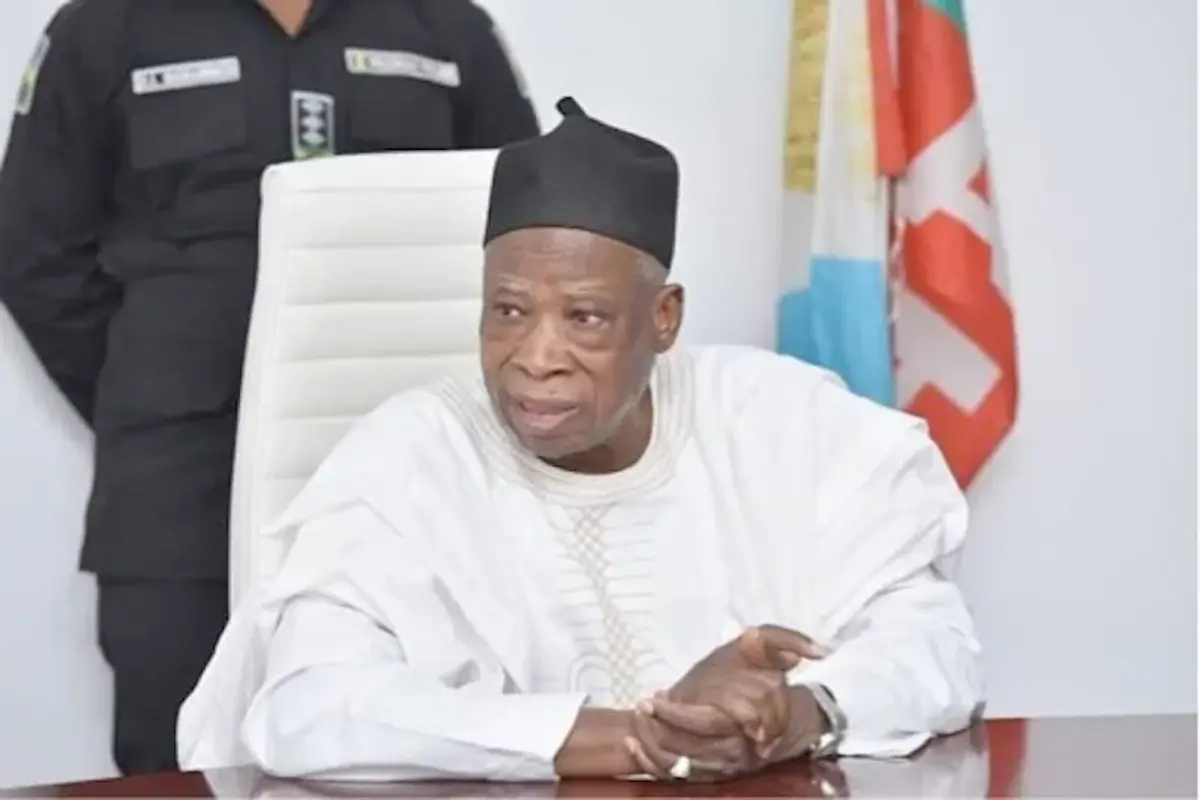
    There were a few shocks from the national assembly elections. The All Progressives Congress (APC) chair, Abdullahi Adamu, who vacated his seat (Nasarawa West) upon assuming the position of party chair, lost his senate district to Aliyu Wadada of the Social Democratic Party (SDP).

    [APC chair, Abdullahi Adamu / Vanguard]

    The senate spokesperson, Ajibola Basiru, a former attorney general of Osun representing Osun Central at the senate, lost to the People’s Democratic Party’s (PDP) Fadeyi Olubiyi.

    In the HOR, the deputy chief whip, APC’s Nkeiruka Onyejeocha from Abia, lost her re-election bid as she bowed out to Amobi Ogah of the Labour Party (LP).

    Fewer women seats

    While INEC is yet to release a full list of legislators who won seats in the national assembly, we can infer, based on the ones seen so far, that women’s representation in Nigerian politics still has a long way to go. Only three women made it to Nigeria’s senate.


    It’s disheartening as 378 women contested for office at the national assembly. We can only hope results from the March 11 elections boost better returns for women running for elective offices at the state level.

    Oshiomole and other familiar faces make their senatorial debut

    Former labour union chair, Edo governor and APC chair, Adams Oshiomole, has completed the quadruple as he clinched a seat at the senate. Oshiomole defeated the PDP incumbent, Francis Alimekhena, by some distance to earn a seat in the red chamber. 

    Oshiomole is not the only new entrant. Ned Nwoko of Delta North district, who has had his fair share of controversy, defeated the APC incumbent, Peter Nwaoboshi, who finished third. Jimoh Ibrahim, another controversial businessman representing the Ondo South district, is another new entrant to the senate running under the APC’s banner.

    Labour Party makes significant inroads into the national assembly

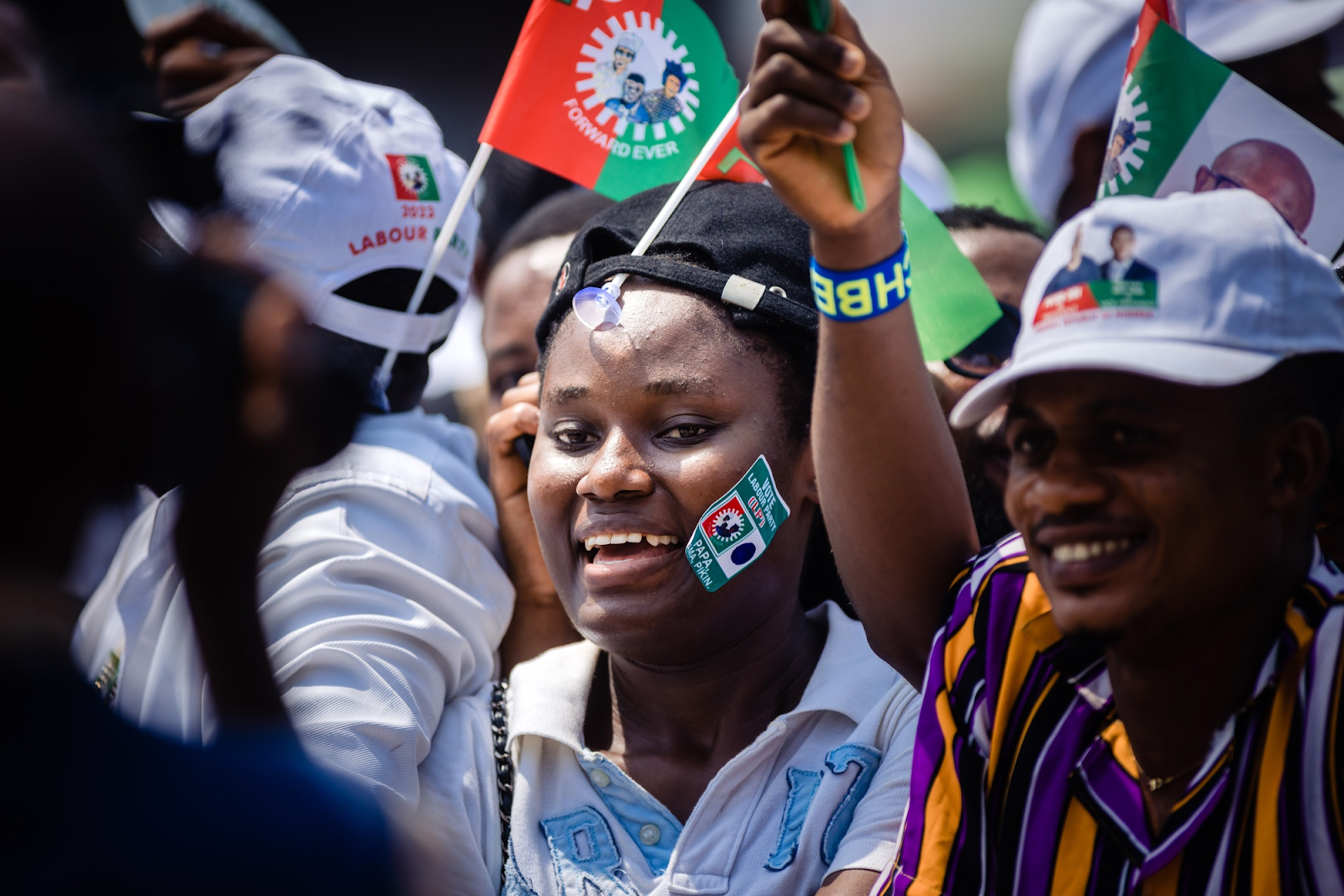
    [Labour Party Supporters / Bloomberg]

    Off the back of the Obidient movement, the LP can count itself as one of the big winners at the just concluded general elections. While the top position didn’t materialise, yet, the party can boast 40 out of 469 seats in the national assembly. These include six in the senate and 34 in the HOR. This is an impressive feat, given that the LP won zero seats in the 2019 elections. The tenth assembly is taking on a different structure now. Let’s see how it performs over the next four years.

  • Why Nigerians Are Angry With the 2022 Finance Bill

    It’s no longer news that Nigeria is entering the New Year 2023 with a host of problems. From tackling insurgency and other forms of insecurity to voting for the next president in the upcoming elections, a lot of decisions need to be made.  

    For now, let’s focus on the Finance Bill of 2022. This is a legislation document created in order to support the implementation of the national budget. 

    What is the purpose of the Finance Bill?

    The Finance Bill was created to help increase revenue for the country. This is done in order to shoulder the costs of expenses in the National budget. In simple terms, the bill was made to make more money for Nigeria as expenses accumulate in the budget.

    What’s wrong with the Finance Bill? 

    The bill, which was recently passed by the National Assembly (NASS) on December 28, 2022, has caused a lot of anger amongst Nigerians. This is because of two reasons – the time the bill was passed and the content of the bill.

    The bill was approved for the president’s assent by both the Senate and the House of Representatives in the National Assembly (NASS) three weeks before the public hearing of the bill by stakeholders in January 2023. This simply means that none of the parties involved were able to see the contents of the bill before it was passed.

    A statement was made by the Director of the Centre for the Promotion of Private Enterprise (CPPE), Muda Yusuf, which expressed his displeasure with the hasty passage. So far, there has been no response from NASS on the statement.

    However, the major bone of contention is the content of the bill. The amendments seem to be heavily focused on billing Nigerians (especially business owners and investors in the private sector) in the form of taxes. Let’s take a look at some of them:

    A 0.5% import tax levy on all goods from outside Africa

    At first, an import tax levy sounds great to help boost revenue for local producers. However, this isn’t the case at all. Manufacturers are complaining about the high import duty costs for raw materials needed. 

    These import duty costs could be as high as 35%. The tax so far has affected their income and even made some producers close down their businesses.

    Every service provided in Nigeria will be charged with an excise duty tax

    Excise duty tax is now to be charged on every service in Nigeria. Currently, it is only taxed on certain manufactured goods such as alcohol and narcotics. The rate is to be announced by the President himself.

    This simply means that tariffs on data subscriptions and calls, medical bills, electricity bills, and even TV subscriptions are about to get even more expensive than usual for the average Nigerian.

    An income tax raise for all gas companies from 30% to 50%

    Ballers in the oil and gas business may be on their way to becoming mechanics. The Finance Bill has declared a raise in Company Income Tax (CIT) from 30% to 50%. This is for all companies that deal with natural gas.

    Considering that the Nigeria Liquified Natural Gas Company (NLNG) had to declare a force majeure (a law that absolves companies from the obligation of supplying their clients during emergencies) during the flood crisis in 2022, it seems unfair to call an income tax raise just at the beginning of the year. 

    Digital assets including cryptocurrency are now to be taxed

    Owners of all digital assets may now have to pay a price for their ownership. The Federal Government is now taxing 10% of all digital assets. These include Non-Fungible Tokens (NFTs) and cryptocurrencies.

    Chargeable assets such as land are to be taxed based on capital loss

    A capital loss is the amount derived when a chargeable asset has decreased from its original value. Examples of these chargeable assets could be cars, jewelry, land, etc.

    With this explained, capital losses from chargeable assets are now to be taxed from the gain one makes when the item is sold. For instance, if one sells a piece of land and it has decreased in value, then the owner is going to pay tax on the capital loss to the government if it is eventually sold.

    Can anything be done to change this?

    For now, the bill has not yet been passed into law, as the nation still awaits President Muhammadu Buhari’s assent. We can only hope that he gives a listening ear to all stakeholders and grants a public hearing on the bill. 

  • What Are the Forces Holding Up the Constitutional Amendment?

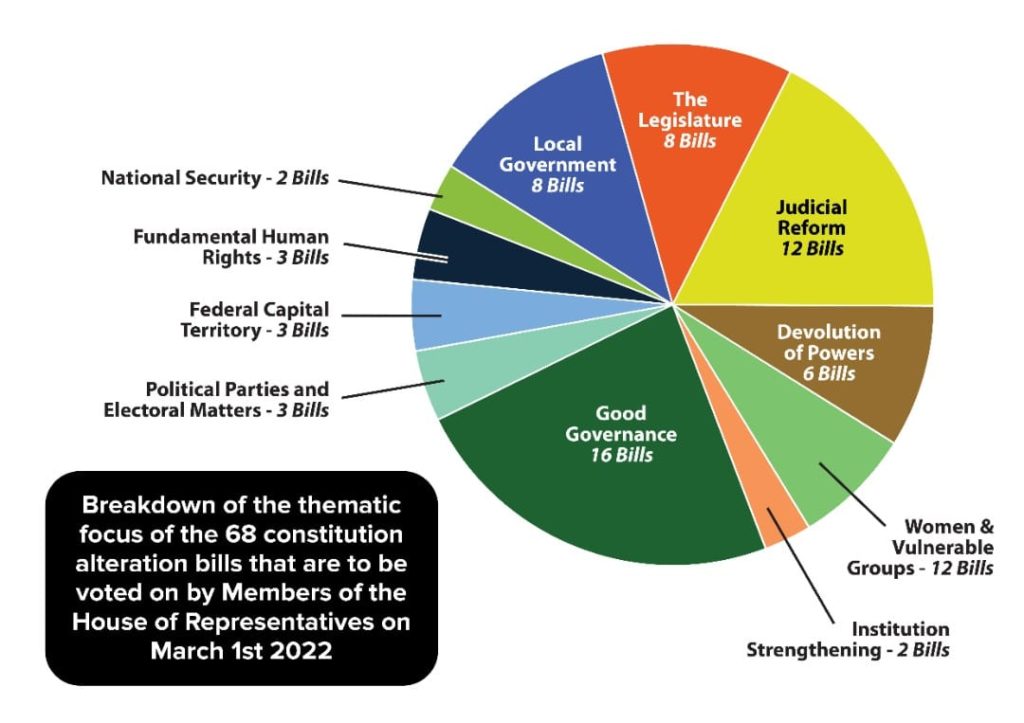
    On March 2, 2022, the National Assembly voted on 68 bills to amend the 1999 Nigerian Constitution for the fifth time. The bills covered restructuring, electoral reform, welfare, and the advancement of women’s rights. For the process to be complete, the bills passed by the Senate and House of Representatives also have to be passed by at least 24 of Nigeria’s 36 State Houses of Assembly.

    But state lawmakers have aired the National Assembly

    Nine months later, more than half of the Houses of Assembly are yet to give their response. This delay puts the 9th National Assembly in a tight situation as they have only six months left to put these bills on the president’s table before their tenure expires in June 2023.

    The Speaker of the House of Representatives, Femi Gbajabiamila, expressed his frustration with the delay. This was during a lecture organised by the National Institute for Legislative and Democratic Studies (NILDS) on December 12, 2022. The Senate President, Ahmad Lawan, and Kaduna State governor, Nasir El-Rufai, were also present at the event. 

    Lawan pleaded with El-Rufai to lobby his fellow governors to take action on the bills. However, El-Rufai tackled him with some demands for the National Assembly that were pressing on his mind. 

    Give Federal Government control of VAT collection

    Value Added Tax (VAT) is a tax paid when goods are purchased and services rendered. Currently, the Federal Government, through the Federal Inland Revenue Service (FIRS), collects VAT nationwide and then remits certain percentages to state and local governments. The Federal Government enjoys this arrangement but state governments have started rebelling.

    The Rivers State government dragged the Federal Government to court in 2021 and won the battle to collect VAT. However, the FIRS isn’t letting go easily and threatened to fine anyone who stands in the way of its bag.

    El-Rufai wants the National Assembly to end the tug-of-war by removing VAT from the constitution’s concurrent list. This list gives state governments some control over VAT collection. Instead, the National Assembly should move VAT to the exclusive list. This is so that only the Federal Government can collect VAT. This would render the court judgement invalid. 

    El-Rufa believes that the Federal Government being in control of VAT collection is the only way Nigeria can make enough money to spread around and sustain every state.

    Pass state and community police bills before leaving office

    The National Assembly and state governors have been in a tug of war concerning the issue of state policing for the longest time. The governors have maintained that unless state policing is passed by the Senate, they’re not going to blink an eye toward any of the bills.

    But why are governors so adamant about state policing being passed and why are lawmakers so against it?

    The governors see the state police system as an answer to the insecurity issues in the country. However, lawmakers are scared that the governors may not be able to pay the police officers’ salaries on time. They may also use police officers for ulterior, sinister motives. Governors like Nyesom Wike, Dave Umahi and many others have been guilty of showing lawmakers pepper with the police.

    Decentralisation of offshore mining and exploration

    If the National Assembly decides to listen to El-Rufai, the federal government will stop having control over 100% of solid minerals in the country. El-Rufai could really just be thinking of how to cash out if a mineral resource like oil is ever found in his state.

    The local government should be peculiar to each culture

    This speaks to the recent clamour for local government autonomy, as the state governments control the local governments. These local governments have now turned to playthings in the hands of their creators. As the closest tier to the people, they can hardly seem to do anything without their oga’s intervention.

    El-Rufai is begging that each local government should be unique to its own culture. This is so that they can serve the people better without doing things like this:

    After his speech, El-Rufai then replied Lawan’s request. He said he can never retire to the National Assembly because he simply doesn’t have the patience to lobby for issues.

    We can only wish Lawan and his colleagues good luck as they race against time to complete the constitutional amendment process.

  • What We Learnt from Buhari’s Presentation of the 2023 Budget

    On October 7th, 2022, Muhammadu Buhari presented his final annual budget as the president of Nigeria. 

    What We Learnt from Buhari's Presentation of the 2023 Budget

    He proposed a bill of ₦20.51 trillion to the National Assembly in a long speech that surprisingly didn’t put us to sleep. Here are the things we learnt from his presentation of the 2023 budget.

    Buhari is proud of his achievements

    Buhari has only seven months left until the end of his eight-year reign as Nigeria’s president, so it’s expected that he’d be in a reflective mood. 

    He travelled down memory lane to talk about his supposed achievements in the areas of infrastructure and good governance.

    He also talked about his government’s “impressive” investment in improving Nigeria’s power generation to 4,000 megawatts. Let’s not forget that this figure is serving a country of over 200 million people. 

    The president also forgot to mention the seven times the national grid collapsed this year and stressed Nigerians.

    Buhari wants your taxes

    What We Learnt from Buhari's Presentation of the 2023 Budget

    Bring before me all your taxes so I can afford a medical trip to London

    Nigeria wants to be a baller, but it’s currently on a mechanic’s income, and Buhari doesn’t like that so much. The president described revenue shortfall as the “greatest threat to Nigeria’s fiscal viability”. 

    And his most prominent solution for addressing that is checking inside the pockets of Nigerians to collect taxes, but sapa has already beaten the government to it.

    Everyone is worried about crude oil theft

    What We Learnt from Buhari's Presentation of the 2023 Budget

    One of the main causes of Nigeria’s revenue shortfall is decreased earnings from crude oil which is the nation’s main source of income. This decrease is due to the activities of oil thieves who are lining their personal pockets with resources that belong to everyone. 

    What We Learnt from Buhari's Presentation of the 2023 Budget

    The Senate President, Ahmad Lawan, described the thieves as “the worst enemy of Nigeria” in his opening speech. We don’t know if that’s because he really cares about Nigerians or because the situation potentially puts his own jumbo allowances in jeopardy. 

    Buhari and the Speaker of the House of Representatives, Femi Gbajabiamila, also raised concerns about the theft. We just didn’t hear them propose concrete solutions to stop the stealing.

    Buhari isn’t worried about Nigeria’s gbese

    What We Learnt from Buhari's Presentation of the 2023 Budget

    Even though Nigeria isn’t making as much as it needs, and is using much of its meagre revenue to service heavy debt, Buhari still isn’t worried. 

    With Nigeria’s total public debt at ₦42.9 trillion, Buhari considers Nigeria’s position as within acceptable limits compared to other countries. So, he thinks this is an “I better pass my neighbour” situation even if both neighbours are stranded in a sinking boat in the middle of the Atlantic Ocean. 

    In Buhari’s proposal, Nigeria will even borrow an additional ₦8.8 trillion to finance the 2023 budget.

    ASUU strikes are forever?

    Nigerian students have been sitting at home for eight months due to the strike action by university lecturers over the government’s failure to respect agreements made several years ago. 

    Students watching Buhari’s 2023 budget presentation wouldn’t have been too pleased to hear the president say his government won’t sign any agreements it can’t implement due to scarce resources.

    The president proposed that the government and the people jointly share the cost of education and build a more sustainable system. He didn’t elaborate on how this can happen, but you can imagine it won’t be his problem for much longer.

    Buhari has set a standard

    Before Buhari became president, Nigeria’s budget presentation and passage used to be chaotic, especially with timelines. But this is the third consecutive year that a national budget will be signed before the beginning of the year it’s proposed for. The timely passage of the budget helps better with implementation and fosters a healthy process. It’s not much, but it’s not nothing. Sai Baba, maybe?

    Buhari loves his National Assembly bromance

    What We Learnt from Buhari's Presentation of the 2023 Budget

    In his final budget presentation, Buhari didn’t miss the opportunity to note that he’s enjoyed the massive support of the current National Assembly for his second term in office. 

    Critics have called them a rubber stamp assembly for being yes-men to Buhari, but the president, who loved getting their many yeses, gave them a shoutout before he dropped the mic.

  • This Federal Lawmaker Wants to Shackle Agberos in Nigeria

    Agberos have become a huge part of the circle of transport life in Nigeria. They’re hard to miss — you can find them in motor parks, bus stops and highways extorting commercial drivers, tricyclists and motorcyclists. 

    With street names like Shadow and Poison, they’re not the kind of guys you want to engage in a shouting match because they can do one or two things to your face or your vehicle.

    In a state like Lagos, they’ve even gained some legitimacy — uniforms and all — to make transport operators pay them taxes, monies no one knows where they really go. Such illegal revenue generation by agberos has been mainstreamed all over Nigeria and transport operators have been the main victims of their activities.

    It’s always, “Where’s your tax?” never, “How’s the family?”

    On September 22nd, 2022, some of those transport operators in Anambra State protested against the burden of taxation and exploitation by agberos. The state governor, Charles Soludo, had recently ordered operators to start paying a ₦15,000 monthly tax to the government.  But they told him first to get rid of the agberos already charging them tax illegally. They refused to serve Mammon and God at the same time because the economy is hard and sapa is taking hostages.

    But only two days before this protest, far away in Abuja, a federal lawmaker was cooking a legislative action against the same villains.

    A federal frown

    On September 20th, 2022, lawmakers of the National Assembly resumed legislative sittings after two months of what they called “summer break”.

    One of the pressing businesses of the resumption day agenda in the House of Representatives was proposed by this guy:

    The name’s Edun… Lanre Edun

    Edun’s motion raised alarm on the unruly behaviour of agberos operating in Nigeria and persuaded the Nigerian government to make efforts to contain the scourge. Because the roads are a major mode of transportation and contribute significantly to Nigeria’s Gross Domestic Product (GDP), the lawmaker believes it must be saved from the grubby hands of agberos.

    “Grubby bawo? What’s the meaning?”

    Here’s a list of problems he has with them:

    1. They harass and extort commercial drivers, tricyclists and motorcyclists.

    2. They’re under the influence of alcohol and hard drugs and often resort to violence.

    3. The presence of agberos is increasing the cost of transportation for passengers.

    4. Some law enforcement officers are either in bed with them or too powerless to stop them.

    A call for reform

    Edun’s motion expressed worry that the agberos have simply refused to go away despite many government efforts to remove them. It may have something to do with the unemployment rate being at the worst level in Nigerian history, but we’d hate to speculate.

    Edun’s motion proposed four resolutions:

    1. Governments at all levels must check the lawlessness of agberos on Nigerian roads.

    2. Government authorities like the Ministry of Transport must develop methods to remove agberos from highways.

    3. Security agencies must arrest and prosecute offending agberos.

    4. An ad-hoc House Committee must be set up to investigate the activities of agberos in some states.

    Looking at you, Lagos

    Will this motion change anything?

    The existence of agberos in the Nigerian transport ecosystem has been a controversial subject for decades. No one knows where they fit exactly, but their existence is provocative, especially for the motorists and commuters who are often their victims. They’re generating billions of naira from people struggling to make a legitimate living, but who’s benefitting from it?

    Lanre Edun’s motion is a big step in giving the issue the attention it deserves at the highest level of government. But lawmakers stepped down the motion at the plenary because Edun failed to show up on the day his motion appeared on the agenda. We don’t know why a handsomely-paid public servant would fail to show up at work after two months on holiday, but we hope it wasn’t agberos that blocked his path.

    Until he shows up to attend to his motion, agberos can continue their reign of terror on the Nigerian transport ecosystem.

  • Can a Nigerian Lawmaker Represent Constituencies in More Than One State?

    Nigerian politicians are not famous for being loyal to their political parties. They open up transfer windows all the time and jump from one party to another to serve their own interests. A presidential candidate we know has switched parties five times. Even snakes are more loyal than that. 

    But if you think a Nigerian politician’s restlessness is restricted to serving breakfast to political parties, we have some news for you.

    A lawmaker who has represented a constituency in Lagos for nearly 20 years is packing his bags and moving to play politics in Ogun State.

    Yayi is on the move

    Solomon Olamilekan Adeola, more commonly known as Yayi, has been winning elections as a lawmaker since 2003. He represented Alimosho State Constituency 2 at the Lagos State House of Assembly from 2003 to 2011. From there, he stepped up to the National Assembly to represent Alimosho federal constituency in the House of Representatives. 

    Not a man to stay in one place, Yayi contested for the Senate and won in 2015 to become the representative of Lagos West senatorial district. He won the seat again in 2019. He’s been busy.

    A lawmaker who has represented a constituency in Lagos for nearly 20 years is packing his bags and moving to play politics in Ogun State.

    After 19 years of using Lagos as his base of operations, Yayi’s eyes are straying and he’s now bent on contesting the 2023 elections to become the representative of Ogun West senatorial district. 

    Wait, can he do that?

    Yayi was born and raised in Lagos State, but Ogun is his state of origin, and he’s just remembering that now. A lot of dust has been raised over his switch, and the prevailing question has been, “Can he even do that?” 

    The short answer is yes. There’s simply nothing in Nigeria’s laws that stops him from making that sort of move.

    A lawmaker who has represented a constituency in Lagos for nearly 20 years is packing his bags and moving to play politics in Ogun State.

    Why is Yayi moving?

    Even though Yayi is only just making his move official, it’s been brewing for a long time. He made moves to contest for the Ogun State governor’s seat in 2019 but never completed it

    It stands to reason that returning to his ancestral state in 2023 is a preamble to get him settled enough to run for the governor’s seat in 2027. By then, the current state governor, Dapo Abiodun, would have wrapped up his second term in office, if he’s re-elected in 2023. Yayi and Abiodun are both members of the All Progressives Congress (APC).

    ALSO READ: Time Is Running Out for You to Register for Your PVC

    Is this kind of move rare?

    We’ve discovered that Yayi isn’t the first Nigerian politician to jump from constituency to constituency. We found some other examples.

    Binta Garba

    Binta Garba was born and raised in Kaduna State. She represented Kaduna South federal constituency in the House of Representatives between 1999 and 2007. She then hopped to her native Adamawa State where she represented Madagali/Michika federal constituency between 2007 and 2011. 

    Like Yayi, she also stepped up to serve in the Senate. She represented Adamawa North senatorial district for one term between 2015 and 2019. She lost her re-election bid to this guy:

    Babajide Omoworare

    Babajide Omoworare represented the Ifako-Ijaiye constituency in the Lagos State House of Assembly between 1999 and 2007. He then found himself contesting a senatorial election in Osun State in 2007 but didn’t win until 2011 when he was elected as the senator representing Osun East senatorial district. He was re-elected in 2015 and also tried to run for the Osun governor’s seat in 2018. 

    Mudasiru Hussein 

    A lawmaker who has represented a constituency in Lagos for nearly 20 years is packing his bags and moving to play politics in Ogun State.

    Mudasiru Hussein is yet another Lagos lawmaker who made a transfer window jump to his native state in the middle of his political career. He represented Oshodi-Isolo federal constituency in the House of Representatives for three terms between 1999 and 2007. Like Omoworare, Hussein jumped into Osun politics in 2007 but lost the senatorial election. He later won in 2011, though, and represented Osun West senatorial district for four years.

    Kolapo Osunsanya

    A lawmaker who has represented a constituency in Lagos for nearly 20 years is packing his bags and moving to play politics in Ogun State.

    Kolapo Osunsanya is the current representative of Ijebu Central federal constituency in the House of Representatives since he was elected in 2019. But before that, he represented Eti-Osa Constituency II at the Lagos State House of Assembly from 2003 to 2011.

    Clement Awoyelu

    We know you were thinking it — and you’re correct — Clement Awoyelu’s political career also started in Lagos State. 

    Awoyelu was a member of the state’s House of Assembly before returning to Ekiti to be elected the senator representing Ekiti Central in 2003.

    There are two things we’ve just learned — Yayi is in good company of constituency defectors and someone needs to close that Lagos portal that keeps producing them.

    ALSO READ: Can a Court Sack a Nigerian Governor for Being a Traitor?

  • Old WAI, New Bottle — Senators Are Bringing Back Buhari’s War Against Indiscipline

    In his previous life as a military dictator, President Buhari was obsessed with orderliness, and this gave birth to War Against Indiscipline (WAI) in 1984. He created WAI to correct social vices and instill ethical values in Nigerians using the power of TV ads and military whips.

    Nigerian senators are bringing back War Against Indiscipline

    WAI targeted corruption and laziness in the public sector, but it also concerned itself with making sure Nigerians maintained orderly queues at bus stops. Military men were on hand to whip sense into Nigerians that didn’t stay in line. Also, civil servants that failed to recite the national anthem were suspended without pay. But the war against indiscipline lasted only a year; it ended as soon as Buhari was removed from office in 1985.

    Buhari has found his way back to Nigeria’s seat of power in civilian clothes, and his WAI may be making a comeback of sorts.

    Nigerian senators are bringing back War Against Indiscipline

    Old WAI, new bottle

    ALSO READ: Game of Thrones: Who Wants to Be Nigeria’s President in 2023?

    What’s happening now?

    On March 16th 2022, Nigerian senators debated a bill to consider the establishment of a National Agency for Ethics, Values and Integrity Compliance.

    The bill is the brainchild of Senator Ayo Akinyelure (Ondo Central – PDP) who’s not happy with how badly ethical morals and values have fallen in Nigeria. The lawmaker proposed the bill to tackle Nigeria’s many problems in the areas of indiscipline, abuse of office, and criminal acts.

    Senator Akinyelure set five objectives for the national agency to accomplish:

    1. Define Nigeria’s ethical values.

    2. Ensure the maintenance of high standards in workplaces.

    3. Develop and enforce ethical standards for Nigerians to live by.

    4. Create and develop programmes to combat unethical behaviour.

    5. Develop a reward system for dedicated citizens.

    We don’t have the full picture of how this agency is supposed to do all that, but we hope it doesn’t involve the use of whips. Because we’d like to know now if singing Sungba in public would be a violation of this ethical code. And would Nigerians still be allowed to give Bubu nicknames and call him a bad boy? We have so many questions.

    Nigerian senators are bringing back War Against Indiscipline

    ALSO READ: Buhari’s Weirdest Decisions We Thought Were April Fool’s Day Jokes But Weren’t

    Where have we seen this before?

    The Buhari administration already relaunched the WAI brigade in August 2016, but little has been heard about its activities since then. The administration also approved a national ethics and integrity policy in 2020 to reclaim Nigeria’s “lost ethical and integrity values”. 

    The creation of an enforcement agency as proposed by Senator Akinyelure would give such a policy “teeth”. Senators passed a similar bill in July 2018, but Buhari didn’t sign it before the tenure of that Senate expired in 2019.

    Will the WAI bill succeed this time?

    The bill passed the second reading after the debate on March 16th, 2022. The Senate referred it to the Committee on Establishment for further legislative action.

    This legislative action includes a public hearing where any interested parties can make recommendations on the proposal.

    What did senators say about the WAI bill?

    This is a compilation of what senators said during the debate on the bill.

    Nicholas Tofowomo (Ondo South – PDP)

    I see this bill as a rebirth of the War Against Indiscipline (WAI). The ethics breakdown in the transport sector is so embarrassing. People drive recklessly. Even in Abuja here, you see people breaking traffic laws here and there. 

    Emmanuel Orker-Jev (Benue North-West – PDP)

    If you take a look around, a lot of the morals and ethics of our society have been degraded and something ought to be done about it. But we don’t need to create a new agency. Whatever can be done as espoused by this bill can be done by the National Orientation Agency (NOA).

    Adamu Aliero (Kebbi Central – APC)

    There’s a need for value orientation and for leadership to inculcate discipline in our society. It’s time for us to really look into our value orientation so that we can refine the politics and leadership of this country. If we don’t do that, we won’t reach where we want to be.

    Ahmad Lawan (Yobe North – APC)

    This issue of the orientation of Nigerians is a major fundamental issue and should be treated as such. In fact, it’s at the centre of the failure of so many things the government tries to do. When you have someone who has become a bandit all of a sudden, I’m sure one of the reasons is that he’s completely forgotten the orientation of his community. When people are properly orientated, they can live with so much discomfort and work hard to make sure they overcome them.

    ALSO READ: The Motion: Should First-Class Graduates Get Automatic Government Jobs?

  • Why’s Everyone Fighting Over Section 84 of the Electoral Act?

    When President Buhari signed the Electoral Act 2022 on February 25th 2022, he made one tiny request to the National Assembly — he asked that they delete Section 84 (12).

    Section 84 of the Electoral Act 2022 is causing some division

    The leaders of parliament present at the signing of the law said, “We’ll look into it.” But the two arms of government have been struggling over the issue since then.

    What is Section 84 (12)?

    The long and short of Section 84 (12) is that political appointees like federal ministers and state commissioners have to resign from office before they can contest in elections.

    For example, if the current Minister of Justice, Abubakar Malami, wanted to run for the office of Kebbi State governor, he’d have to resign his position before he could contest in his party’s primary election. 

    According to the timetable that the Independent National Electoral Commission (INEC) released for the 2023 general elections, primary elections will take place between April 4 and June 3, 2022. This means Malami would have to resign from office before being eligible to contest for the primaries, according to Section 84 (12). 

    Why’s Section 84 (12) controversial?

    Before the introduction of Section 84 (2) of the Electoral Act, the resignation issue was dealt with by Section 66 of the 1999 constitution. It stipulates that public service employees have to resign from office at least 30 days to the general election if they’re contesting. With this timeline, an appointee would have already won their party’s ticket and run part of their campaign while still in office. 

    Basically, Section 66 of the constitution leaves room for political appointees to contest in primaries without the risk of losing their appointive positions, but Section 84 (12) of the Electoral Act makes it possible for them to lose both ways.

    So if Section 84 (12) had not been signed in February, Malami wouldn’t have to resign till January 2023.

    P.S.: We didn’t pick Malami as a random example — he’ll be important later.

    ALSO READ: What Should You Do When Buhari Visits Your City?

    Why Buhari is against Section 84 (12)

    Buhari’s argument against Section 84 (12) is that it violates the constitutional rights of appointees to vote and be voted. According to him, the wording of the section prevents affected appointees from participating in their party’s internal affairs even when they’re not standing as candidates. 

    What did the National Assembly do?

    Remember that lawmakers promised Buhari they’d look into his request to remove Section 84 (12)? Well, they looked into it, and their verdict was:

    Section 84 of the Electoral Act 2022 is causing some division

    Getting the National Assembly into a direct fight with the Buhari administration is as rare as seeing Buhari at a local clinic. But Section 84 (12) did that. 

    The lawmakers refused to remove the section because they believe that political appointees use the influence of their office as an advantage over other aspirants. With their public offices, they have access to public resources to run their election campaigns.

    Enter: The Courts

    When Buhari first made his request in February, the Federal High Court in Abuja stopped the National Assembly from taking any decision on retaining or removing Section 84 (12). Lawmakers ignored the ruling and voted to retain the section against Buhari’s wish.

    But on March 18th 2022, the Federal High Court in Umuahia, Abia State asked Malami to delete Section 84 (12). Justice Evelyn Anyadike ruled that Section 84 (12) clearly violated Section 66 of the 1999 constitution and could not be allowed to stay because the constitution has supreme authority.

    And with the sort of speed rarely seen in Nigerian politics, Malami agreed to do it. He announced the Electoral Act 2022 would be gazetted without Section 84 (12). Gazetting is the official implementation of a law, and this would mean the end of the road for Section 84 (12) if Malami goes through with it.

    Who benefits from the death of Section 84 (12)?

    In the short term, the deletion of Section 84 (12) would be a relief for certain ministers in the Buhari administration rumoured to be nursing ambitions to contest in the 2023 general elections. 

    One of such beneficiaries is Malami, whose name has been sounded out for the governor’s seat in Kebbi State.

    Others who are rumoured to also nurse 2023 ambitions are the Minister of Works and Housing, Babatunde Fashola, the Minister of Transport, Rotimi Amaechi and the Minister of Labour, Chris Ngige.

    Should Nigerians care?

    The fight over Section 84 (12) is deeply political, but many consider it to be beneficial to the commonwealth of Nigerians. The provision effectively prevents political appointees from using public resources to fund their campaigns. Also, public officers running election campaigns simultaneously are typically distracted from their appointive duties while campaigning. Section 84 (12) potentially fixes that.

    Where will the Section 84 (12) drama end?

    Legal experts have argued both in support and against the appropriateness of Justice Anyadike’s ruling against Section 84 (12). There are also burning questions over Malami’s powers to enforce the court order. The National Assembly is angry and has passed motions to appeal against the court order.

    But while everybody chats away, Malami, who is eager to drive Section 84 (12) off a cliff, is in the driving seat of the decision to either retain or void it.

    Section 84 of the Electoral Act 2022 is causing some division

    ALSO READ: What’s RCCG’s Business With 2023 Election

  • Lawmakers Are Bringing Back Coins to “Stabilise the Economy”. And No, It’s Not Bitcoin

    Kobo and naira coins in Nigeria must feel like the introvert that withdraws to a corner of the party to watch everyone else have fun. In fact, talking about coins as legal tender in Nigeria feels like time-travelling back to 2007 when Obasanjo was still president and sardine wasn’t a luxury item. So, why are kobo and naira coins back in the news?

    Kobo and naira coins are making a comeback

    What’s old?

    In 2007, the governor of the Central Bank of Nigeria (CBN) at the time, Charles Soludo, rebranded and reissued ₦1 and 50 kobo coins and introduced ₦2 coins.

    The Bank expended a huge budget in sensitisation and advocacy for Nigerians to use them, but commercial banks and citizens were not feeling them.

    Kobo and naira coins have grown over time to have low purchasing power in the markets, which means trying to sell them to Nigerians is like mining snow in the desert. 

    Kobo and naira coins are making a comeback

    In 2012, another CBN governor, Lamido Sanusi, announced a proposed currency restructuring exercise that was codenamed “Project CURE (Currency Restructuring)”. The project was the Bank’s attempt to respond to the changing needs of the economy and to stay on top of evolving trends. 

    When he announced the project, Sanusi admitted that Nigerians didn’t seem to care for coins. What was his cure for that problem? More coins!

    Sanusi said the CBN would coin ₦5, ₦10 and ₦20 and put them in circulation in 2013. The proposed currency lineup looked like this:

    Kobo and naira coins are making a comeback

    President Goodluck Jonathan killed Project CURE in September 2012, else you’d be buying gala right now with coins. Jonathan asked the CBN to pause the project, and nothing was ever heard of it ever again.

    What’s new?

    The House of Representatives passed a motion on Tuesday, March 22nd 2022 urging the CBN to reinforce the use of kobo and naira coins as legal tender in Nigeria. Honourable Muda Lawal Umar sponsored the motion and pleaded that the coins shouldn’t be allowed to go extinct.

    His motion argued, “Injecting low denominations into the economy will go a long way in curbing price inflation and stabilising the economy.”

    And by that argument, we imagine he means something like this: 

    ALSO READ: You Only Need Three Things at Nigerian Police Checkpoints

    Who needs kobo and naira coins?

    Some economists consider the absence of kobo and naira coins in circulation one of the reasons for Nigeria’s struggles with inflation. For example, if a low-priced item increases its price today, it’d have to go from, say, ₦5 to ₦10. But if coins are available, they could slow down that inflation rate, as the item would likely first increase to ₦6 or ₦7 instead of just jumping to ₦10.

    But Nigerians’ history with coins has shown they’re unlikely to hook up with them again. Who wants to risk being stoned with coins by an angry bus conductor? Or go around like a walking alarm bell? Also, you can’t do this with coins:

    Kobo and naira coins are making a comeback

    What will happen with this new motion?

    The House Committee on Banking and Currency has been charged with ensuring the CBN complies with the motion on reinforcing the use of kobo and naira coins. This entails communication to the Bank that’s currently under the leadership of Godwin Emefiele.

    Since he was appointed CBN governor in 2014, Emefiele’s not messed with the natural order of things for coins.

    Kobo and naira coins are making a comeback

    The only coin he’s interested in is Bitcoin and how to ban it. It’s unlikely this new motion will lead to anything meaningful.

    ALSO READ: Can a Court Sack a Nigerian Governor for Being a Traitor?

  • What National Assembly Got Wrong About Amending Constitution

    There are many Nigerians who hate the 1999 constitution and just want it completely scrapped. This has been their one prayer point for years:

    The National Assembly is amending the constitution

    The sentiment is that the constitution is a fraudulent document that was brought to life under unfortunate circumstances and doesn’t fully accommodate the Nigerian experience. For those critics, the 1999 constitution is a malaria drug being used to treat a kidney infection.

    Despite agitations for a new “people-driven” constitution, the Nigerian government is not interested in the hard work of compiling a new one from scratch. So, the only middle ground to address the concerns about its inadequacy is to amend it. A constitutional amendment is basically like a home revamp — you want to get an AC to replace the standing fan, get a couple of new throw pillows, and maybe throw a new rug in the centre of the room. 

    The National Assembly has been in the news a lot over the past week following the constitutional amendment votes of March 1, 2022. Lawmakers in the Senate and House of Representatives voted on 68 bills with issues ranging from restructuring, welfare, to women’s rights. The simple rule of the vote was that each bill must be passed in both chambers. Failure to pass in one chamber was a failure to pass in both.

    The National Assembly is amending the constitution

    We’ve already highlighted some of the most impressive bills approved by the lawmakers. Here is a look at their worst decisions.

    1. No judicial reform

    For context into this particular subject, let us remind you that more than 70% of inmates in Nigerian prisons are awaiting trial. Some of them have been in prison awaiting trial for so long that if they were immediately convicted for their suspected crime, they’d have finished their sentences.

    Now let’s play a quick game of Yay or Nay:

    Who wants a judicial system that ensures timely dispensation of justice? Now, who wants a constitution that provides timelines within which civil and criminal cases have to be determined at trial to eliminate delay in justice delivery? Also, who wants a system that allows courts to conduct trials remotely, virtually and online with the full aid of modern technology? If you voted Yay for all, then you’re not ready to be a senator.

    The House of Representatives voted Yay on all three bills, but the Senate went in the opposite direction and rejected them. Who does judicial reform hurt?

    The National Assembly is amending the constitution

    2. No punishment for changing parties

    “Cross-carpeting” and “defection” are words that have become popular in political circles in Nigeria because of how much politicians don’t sit down in one place. Many of them switch between the same parties to pursue their personal interests so often that the average politician has been a member of at least two parties. A controversial part of this culture is when elected public office holders abandon a party that helped them win the office and take that advantage to another party.

    A bill was introduced to terminate the tenures of such office holders, but it was rejected by the Senate. This doomed the bill even though the House of Representatives passed it. Failure to punish elected officials who fail to take their mandates seriously upholds a culture that allows politicians to do as they please without consequences. It’s not a surprise that the bill didn’t pass because it’s the same people that would be affected by it that made the decision. It’s like expecting goats to vote against guarding yams.

    The Nays have it.

    3. Voting for torture?

    The 1999 constitution prohibits torture and establishes the right to dignity for every Nigerian, but torture enjoys free rein in Nigeria. Security agencies are known to torture and dehumanise Nigerians and get away with it especially because it’s so loosely defined. For lawmakers that claim to care about the wellbeing of Nigerians, closing the loopholes that fuel this culture should be an easy decision.

    An alteration bill was introduced to have the constitution clearly define acts that qualify as torture, inhuman or degrading treatment. Both chambers voted against the bill, handing torture specialists in security agencies a lifeline.

    4. FCT Minister slot

    As the child of circumstance that it is, the Federal Capital Territory (FCT) is not administered by a governor, but a minister that’s appointed by the president. Seven FCT ministers have been appointed since 1999 but none of them is an FCT indigene. There have been campaigns by FCT indigenes to change this, and there has even been a court judgement in their favour.

    However, when lawmakers voted on an alteration bill that would make it unconstitutional to appoint an FCT minister that’s not an indigene, the House voted yes, but the Senate voted no.

    5. Blocking women

    A lot has been said about the performance of gender-based bills voted on by lawmakers on March 1, 2022. We have written extensively about their rejection, and the general attitude of the National Assembly towards gender-based bills will continue to be a blot on its records.

    Passing any of the five gender-based bills would have enhanced the inclusion of women in politics, governance and society, but the National Assembly said:

    Dont Do That Avengers GIF - Dont Do That Avengers Black Panther - Discover  & Share GIFs

    6. No name change for Barkin Ladi LGA

    This is a very strange one and we’ll explain why. Of the 68 bills considered, six of them were about changing or correcting the names of some local government areas across the country. Five of them passed, but the one that sought to rename Barkin Ladi local government area of Plateau state to Gwol LGA was rejected by both chambers.

    Gwol is the ancestral name of the indigenous people living in the local government area, and they want the name to reflect their identity, not Barkin Ladi which is from the Hausa language. The renaming issue is a subject affected by ethnoreligious sentiment and a similar bill was defeated in 2017.

  • What Did National Assembly Get Right About Amending Constitution?

    A lot of noise has been made about the choices of the National Assembly lawmakers that voted on March 1, 2022 on bills to amend Nigeria’s 1999 constitution.

    The constitution establishes the principles that guide the running of a country. Amending the constitution is basically like redecorating your home — you want to repaint the room, maybe add a new stool and change the worn-out leather of the couch.

    Lawmakers in the Senate and House of Representatives voted on 68 bills with issues ranging from restructuring, welfare, to advancing women’s rights. The simple rule of the vote was that each bill must be passed in both chambers. Failure to pass in one chamber was a failure to pass in both.

    The National Assembly is amending the constitution

    Here’s a look at some of the most commendable decisions made by lawmakers.

    1. Local Government autonomy

    This is the current state of local governments in Nigeria:

    The National Assembly is amending the constitution to favour local governments

    State governors have turned local governments into their plaything and remote-control their activities so that there’s no independence. This arrangement means that the tier closest to the people is unable to serve them in any meaningful way without approval from oga at the top

    Federal lawmakers passed two important bills on March 1 that could prove vital to freeing local governments from bondage. One of the bills establishes local governments as a tier of government with guaranteed democratic existence, and the second bill separates the accounts of the state and local governments. 

    Bye bye to this:

    The National Assembly is amending the constitution to free local governments

    2. Financial independence of judiciary and legislature

    The Supreme Court ruled against President Muhammadu Buhari’s attempt to use an executive order to free state judiciary and legislature from the financial bondage of state governors in February 2022. The National Assembly has now passed a bill to codify this very important independence in the constitution. 

    3. No pension

    As if the National Assembly is not already a big drain on the national budget, a bill was considered to make it law for the country to start paying pensions to presiding officers of federal and state legislative chambers. Thankfully, common sense prevailed and both chambers voted against it. 

    It’s easy to suspect this pension bill was only ever considered by lawmakers so they could be praised for voting against it. And if that was the plan, it worked because that’s what we’re now doing here.

    4. Restructuring exclusive list

    One of the biggest issues in Nigeria since 1999 has been the centralisation of too much power in the Federal Government. The short version of the argument is that the centre is too strong and has its fingers in everything, denying state governments the freedom to take significant control of their own individual economic fate. The exclusive list contains items that only the National Assembly can legislate on, robbing state governments of control.

    Lawmakers approved five bills that would remove some of the items from the exclusive list and empower state governments more. The items being taken off the list are airports, correctional services, railway, power generation, transmission and distribution, and fingerprints, identification and criminal records. 

    5. Independent Candidacy

    The 1999 constitution recognises only political parties as sponsors of candidates for elections in Nigeria. This freezes out candidates who don’t want to play the game that goes on at the level of party politics. Lawmakers have now approved an amendment that would make it possible for individuals to run on their own independent platforms.

    6. Advancing human rights 

    Lawmakers also voted for two alteration bills that advance human rights in Nigeria. One of the bills makes free, compulsory and basic education a fundamental human right, and the other compels the government to ensure rights to food and food security.

    7. Rejecting VAT bill

    Money is a great motivator for conflict, and Nigeria’s restructuring debate has mainly centred around control of revenue generation and management. State governments challenged the Federal Government on the collection of Value Added Tax (VAT) in 2021 and even secured a crucial victory in court. The Federal Government’s position has always been that its tax collection duty is backed by the constitution. But this is not constitutionally sound, and the government is only now just making attempts to alter the constitution to get that unquestionable backing. Lawmakers in both chambers threw the bill out. The fight goes on.

    The National Assembly is amending the constitution

    8. Cabinet nominations

    Remember how mad everyone was that President Muhammadu Buhari ran the first five months of his government without appointing ministers? And remember how much of a lesson he learned from that episode that it took him only two months to nominate ministers for his second term? Well, there’s a new bill that ensures the most time any president or governor can take before nominating ministers or commissioners cannot be more than 30 days.

    9. No immunity

    Lawmakers also voted against a bill that would protect members of the legislature and the judiciary with immunity from criminal prosecution. The privilege of immunity is only enjoyed by federal and state executives and even the status of that has been debated. Another victory for common sense.

    10. Census timeline

    Imagine you’re the head of a house, but you’re not sure how many people live under your roof. You have to buy foodstuff and clothes for everyone every now and then, but you’re not sure how many people you’re actually buying for so you do guesswork all the time. One day, there are 200 million people living there, the next day it’s probably 180 million people. 

    The National Assembly is amending the constitution

    Could be 5 million people or could be 5,000. Who cares to count?

    The global standard timeline to conduct a census is every 10 years. Nigeria’s last census was conducted in 2006 and promises to conduct a fresh one keep getting postponed every year. On March 1, lawmakers voted for a bill that would specify the time frame for the conduct of censuses going forward.

    What happens now?

    All the bills passed by the Senate and House of Representatives also have to be passed by at least 24 of Nigeria’s 36 state Houses of Assembly.

    And then President Buhari has to sign them. There’s a long journey ahead, and some of these bills won’t make it to the finish line.

  • Does the National Assembly Hate Nigerian Women?

    There was one moment during a plenary session in the House of Representatives on March 1, 2022 when lawmakers openly jumped for joy. The chamber was filled with cheers, wide smiles and fist bumps that would make you think they’d just solved world hunger or negotiated debt cancellation for Nigeria. However, what they had just done was vote against a bill that would have given women special seats in federal and state legislative chambers.

    In the Senate chamber, just across the hall from the representatives in the National Assembly complex, the mood was not so different when they voted against the same bill. The Senate President, Ahmad Lawan, was in a fit of laughter that lasted for nearly 30 seconds as he recorded the vote. He said he was reluctant to declare that the vote had failed, but it was hard to believe him.

    The National Assembly keeps disappointing Nigerian women

    What happened in those two chambers on March 1 was a missed opportunity to advance the rights of women in what has been a robust constitutional amendment process.

    Constitutional what now?

    The National Assembly is alienating Nigerian women again with the constitutional amendment

    Think of the constitution as a document that guides how a home operates. It outlines how the head of the family is chosen, how they’re supposed to take care of the home and how everyone else conducts themselves so the home does not collapse.

    Since human behaviour is guided by the social times we live in, the way people lived 40 years ago would be different from the present — hopefully for the better.

    And this is why the constitution leaves room for itself to be updated occasionally. Nigeria’s current constitution was enacted in 1999 and has been updated four times since then.

    After years of consultation on a new list of amendments, the National Assembly voted on 68 bills covering many issues. Five of those bills especially affected women.

    The National Assembly keeps disappointing Nigerian women

    The main rule was that each of the bills had to be approved by both the House and the Senate. Failure in one chamber meant failure in both.

    What did the National Assembly do to the women?

    This is the short version of how lawmakers voted on all the bills that affected women:

    The National Assembly keeps disappointing Nigerian women

    Here’s the long version:

    1. No special seats

    Only 4% of the 469 lawmakers in the current National Assembly are women — a statistic that spotlights the low visibility of women in elected office in Nigeria. This bill would have created 111 exclusive seats for women in the National Assembly and 108 seats in the 36 state legislative chambers if it had passed. It would also not have prevented women from contesting for other seats against male candidates.

    The most popular argument against this bill is that it would inflate the size of legislative chambers at a time when many Nigerians are calling for a reduction, especially in the size of the National Assembly and wages of lawmakers.

    2. No citizenship for foreign husbands

    Section 26(2)(a) of the 1999 constitution allows any foreign woman married to a Nigerian man to become a citizen by registration. Nigerian women have no such gift to hand to their foreign husbands. This would have been corrected if lawmakers voted for a bill to fix it on March 1.

    But they said:

    The bill failed to pass in the House of Representatives. When House Speaker, Femi Gbajabiamila, tried to explain the importance of passing it, in an attempt to force a second round of voting, a lawmaker off-camera said, “We know this thing; we don’t like it.”

    The bill was passed in the Senate, but that won’t matter.

    3. No affirmative action in party politics

    The low representation of women in elected public office is partly tied to their low representation in party politics. This was why a bill was proposed to ensure 35% of executive committee positions of political parties are filled by women. Many parties have promised to do this on their own in the past but hardly implemented it. Codifying it in the constitution would force implementation. The bill failed in both the Senate and House of Representatives.

    The National Assembly keeps disappointing Nigerian women

    4. No indigeneship

    The bill on indigeneship would have allowed a woman who is married to an indigene of another state for more than five years to automatically become an indigene of that state. Since Nigerian women face so many issues over getting cleared for appointive and elective positions based on indigeneship alone, this bill should have passed easily. The bill would also allow anyone to become an indigene of a state where they’ve been resident for 10 years. It passed in the Senate but failed in the House of Representatives.

    The National Assembly keeps disappointing Nigerian women

    5. No cabinet quota

    The cabinet quota bill was another attempt to ensure at least 10% of federal and state cabinets are filled by women. A frustrated Gbajabiamila found a way to force the bill through in the House after increasing the quota to 20%. When lawmakers rejected it through electronic voting, he ignored the result and put it up to a voice vote, the mode of voting in which they shout “Aye” or “Nay” like it’s 1982. He then passed the bill even though it was hard to tell which side’s voice was louder. The Senate voted against the bill anyway.

    At the end of the day, women finished with zero bills passed in their favour.

    The National Assembly keeps disappointing Nigerian women

    How are Nigerian women taking this?

    What Nigerians should be worried about is not just that all those bills were rejected, but the manner in which they happened. Lawmakers jumped in glee and rejoiced over the rejection of the bills like they weren’t alienating half of the population. 

    This happened while the nation’s Second Lady, Dolapo Osinbajo, was seated in the House of Representatives chamber to observe the process and press for women’s rights. The First Lady, Aisha Buhari, had also been present in both chambers when the bills were presented on February 23. 

    The rejection of the bills did not sit well with Nigerian women who mobilised and protested in front of the National Assembly complex on March 2.

    Their demands were simple: enhanced inclusion of Nigerian women in politics, governance and society. This is not too much to ask for, but the National Assembly has a history of standing in the way.

    The National Assembly keeps disappointing Nigerian women
  • Tired of Paying Rent Annually? This Senate Bill May Just Fix That

    Without question, house-hunting in Nigeria is the ghetto

    On top of paying agents outrageous inspection fees to show you overpriced apartments that look like crack dens (looking at you Lagos), you can also occasionally encounter ridiculous rules that border on discrimination.

    “The area does not flood, as long as it doesn’t rain.”

    Added to all this, your prospective landlord wants you to pay a year’s rent in advance. Or two years. Or three, if the wickedness is sponsored by your village people.

    That last part may be changing soon if things work out well in Abuja.

    A bill to regulate annual rent payment was introduced for the first reading in the Senate on January 18, 2022.

    The bill was sponsored by Senator Smart Adeyemi (Kogi West – APC) and was presented for second reading and debated in the chamber on February 1.

    We don’t have the document because it’s not been made public yet, but here’s everything we know about it from what has been said in the Red Chamber:

    The bill only applies to the FCT

    Paying annual rent is a big headache for tenants in Nigeria

    Non-FCT tenants feeling intense jealousy

    The full title of the bill is “A Bill for an Act to Regulate the mode of payment of rent on Residential Apartments, Office Spaces, etc in the Federal Capital Territory (FCT) and for other matters connected therewith, 2022 (SB. 893).” It’s a mouthful, I know.

    One thing the title tells us is that this bill only applies to residents of the FCT. This is because housing is a state issue, and the National Assembly can only make a law of this nature for the FCT which it has state legislative control over.

    Only the Houses of Assembly of the other 36 states can separately legislate on the same issue for their territories if they want.

    Rent advance reduced to 3 months maximum

    The rent control bill, if passed, will stop landlords from asking tenants to pay advance rent of more than three months in the FCT. This is to be followed by monthly payments starting from the fourth month.

    The average advance rent requested by landlords tends to be one year, but Senator Adeyemi and others who support the bill believe it places a huge burden on tenants, especially low and middle-income earners struggling in these Sapa times.

    When the bill passed first reading last month, the lawmaker said, “Many people are involved in corrupt practices to get their rents paid, while the ladies took to prostitution.”

    From where to where?

    There’s opposition to the bill

    Of course, the bill has haters. Chief among them is former Enugu state governor turned lawmaker, Senator Chimaroke Nnamani (Enugu East – PDP) whom we cannot say for certain is not a closet FCT landlord.

    In his argument against the bill, he said advance payment timelines should be determined by market forces such as availability of land, cost of building materials and income.

    The senator implied that if the government has such a hard-on for resolving pressing housing issues, “Government can go into housing schemes, mortgage schemes, housing credit facilities, not control the business of private individuals in an emerging African democracy.”

    It's not surprising that landlords don't want annual rent payment controlled

    They may take our lives, but they will never take our three years advance rent!”

    The rent control bill is set for public hearing soon

    The bill has been passed for a second reading and referred to the Senate Committee on Housing to report back within four weeks.

    The committee is charged with conducting further legislative action on the bill. This process includes a public hearing that you can attend to contribute to the final draft. So if you only want to be paying your landlord weekly, they will at least hear you out.

    The bill will then be returned to the chamber for a third reading and will be passed or rejected.

    If passed, it will be forwarded to the president, who is an FCT homeowner himself, to sign into law or reject.

    The final decision to pass the annual rent bill lies with Buhari

    “So I must sign this and block my own bag? Is this a prank?”

    The bill is long overdue

    The annual rent system in Nigeria has come under public attention many times, and the only real surprise here is that it took this long for the National Assembly to attempt an intervention.

    The Minister of Works and Housing, Babatunde Fashola, has long campaigned for landlords to switch to a monthly rent system which is practised in many developed countries.

    Supporters of rent control argue that the annual payment system has worsened inequality in housing supply, but real estate developers have argued that there are no adequate frameworks to protect landlords if tenants default in a monthly payment system.

    If passed into law, Senator Adeyemi’s rent control bill is expected to encourage similar legislation in other states (looking at you, again, Lagos).

    Every state in Nigeria could have an annual rent bill if this one is successful

    Non-FCT tenants calling their state legislators right now to start cooking their own rent control bill

  • How Is A Law Passed In Nigeria?

    Citizen is a column that explains how the government’s policies fucks citizens and how we can unfuck ourselves.

    A law is a system of rules that regulates how people in a society behave.

    Once a bill becomes a law, any action against the law is deemed illegal and carries a punishment if a person is found guilty by the court of law. This is why it is important to know how a bill becomes a law.

    Read: Nigerians React To The Social Media Bill Proposed By The Senate

    Stage 1: Origin of a bill

    A bill is a draft of a proposed law that is presented by a lawmaker before the legislature for deliberation before passage into law.

    A bill must be presented on the floor of the senate, house of representatives or a house of assembly before it can be passed into law.

    Section 76 of the senate standing orders (2015) as amended provides that there are three classes of bills: executive bills, member’s bills and private bills.

    An executive bill is a bill from any arm or member of the executive, like the president, a minister, or an agency of government.

    An executive bill has to be sent to the speaker of the house of reps and the senate president with a cover letter personally signed the president.

    A member’s bill is a bill that is from any member of the house of assembly, or a group of members.

    A member’s bill has to be sent to the senate president or the speaker of the house of representatives before it is read and discussed on the floor of the senate.

    A private bill is any bill that is not an executive bill or a member’s bill.

    A private bill has to be sent to the speaker of the house of representatives or the senate president before it can be read and discussed on the floor of any house of assembly.

    Stage 2: Initial Review of the Bill

    Once a bill is received on the floor of the senate or the house of representatives, the senate president or the speaker of the house of representatives forwards the bill to the senate committee on rules and procedure or to the house of representatives committee on rules and business for a review of the bill.

    These committees are committees of the national assembly, and their job is to publish the bill in the schedule of bills and register it in the register of bills. They will also review if the bill is well written and then determine when the bill can be presented on the floor of the senate or house of representatives.

    If the bill is not well written, it is forwarded to the legal department of the national assembly so it can be re-drafted. Once this is done, the committee will send a printed copy of the bill to every house member, and then determine when the bill can be read for the first time on the floor of the senate or the house of representatives.

    Stage 3: Gazetting of the bill

    The next process after a review of the bill is to put the bill in an official gazette.

    A gazette is an official and legal newspaper of a country that publishes the new laws and official notices from the government.

    It is important to gazette a bill so that members of the public can be aware that the senate or house of representatives is considering passing a new bill into law.

    The public can also give their opinions and recommendations on the bill by writing to the senate or house of representatives.

    Step 4: First reading of the bill

    Once a bill has been gazetted, the bill is read on the floor of the house of representatives or senate by the clerk.

    The clerk will read a short title of the bill and present it to the senate president or the speaker of the house of representatives.

    At this stage, there is no debate or discussion over the bill, as the purpose of the presentation is to inform the lawmakers that a new bill has been introduced.

    Step 5: Second reading of the bill

    This is when a bill is debated on the floor of the legislative chamber.

    If the bill is a senate bill or a house bill, the sponsor of the bill will move a motion that the bill should be read a second time. The legislator will also talk about the purpose of the bill, including the objectives, benefits and general principles behind the bill.

    If the bill is an executive bill, a motion will be moved by the senate president or the speaker of the house of representatives, who will talk about the purpose, objectives, benefits and general principles behind the bill.

    A motion is a formal proposal for a discussion or a conclusion on the floor of the legislative chamber.

    After this introduction, a motion that supports the initial motion must be moved by another lawmaker if the bill is a senate or house bill, or by a member of the president’s party, if the bill is an executive bill. Before the bill can be read a second time.

    If no motion seconds the first motion, the bill cannot be read a second time.

    Once a second motion is moved, the chamber goes ahead to debate the bill. The bill is then put to a vote on whether it should be moved to the committee stage. If a majority of lawmakers vote for the bill to move to the committee stage, then the bill moves to the committee stage. If not, the bill ends at this point.

    If the bill moves to the committee stage, the senate president or speaker of the house of representatives must determine the relevant committee to oversee the bill.

    Step 6: Committee stage

    There are currently 57 standing committees in the senate and 89 standing committees in the house of representatives. Each committee considers all the issues that concern a subject e.g a health committee will be concerned about all health issues.

    When a bill moves to the committee stage, the committee examines the bill thoroughly.

    The committee is also expected to organise a public hearing for the bill, where members of the public can attend and debate the bill.

    A member of the public can make suggestions on any aspect of the bill, but only a member of the committee can make an amendment to the bill.

    However, all amendments that are made to the bill must be in line with the initial objectives and purpose of the bill.

    Step 7: Committee report

    Once the public hearing is concluded, the committee must make a report of its work. The chairperson of the committee must submit a report of the committee’s work to the senate or the house of representatives.

    After the report of the committee, the house will decide, via a motion, whether the bill should be read a third time, either immediately or later.

    Step 8: Third reading

    The third reading of a bill is the last time the bill can be read, and no amendments can be made to the bill again after it has passed the third reading stage.

    However, if a legislator wishes to amend a bill before it passes the third reading stage, the person must move a motion that the bill should be taken back to the committee stage.

    If the motion is agreed upon, the house of representatives or the senate will discuss the bill and recommend amendments. After this, the assembly will move the bill to the third reading stage.

    Step 9: A clean copy of the bill

    After the bill passes the third reading stage, a clean copy of the bill, which is signed by the clerk and endorsed by the senate president or the speaker of the house of representatives, is printed.

    The clean copy will then be sent to the clerk of the other house of assembly, with a message requiring the agreement of the other chamber.

    Step 10: Concurrence

    Nigeria operates a bicameral legislature, courtesy of section 4 of the constitution. This means that the two houses of assembly i.e. the senate and the house of representatives must pass a bill into law.

    The other house of assembly sends the bill to the clerk of the national assembly if it agrees to the bill.

    However, if the other house of assembly does not agree with some parts of the bill, it may make adjustments to the bill before sending it to the clerk of the national assembly.

    If the house of assembly that first passed the bill does not agree with the new amendments, then both houses of assembly will set up a “conference committee” where they will work together on the amendments.

    If the joint committees come out with a report and send it to the houses of assembly, which is then accepted, then the bill is sent to the clerk of the originating house of assembly and a clean bill is sent to the clerk of the national assembly.

    Step 11: Assent of the president

    Once there is concurrence on a law, then the clerk of the national assembly will “enrol” the bill for the president’s signature.

    Enrolment is when the clerk of the national assembly produces a clean copy of the bill, certifies it and then forwards it to the president for the president’s assent.

    Courtesy of section 58 (4) of Nigeria’s constitution, the president has only 30 days to give his approval to a bill or not, and the bill cannot become a law until the president signs it into law.

    If the president does not sign the bill within 30 days, he has vetoed the bill, and it cannot become a law. Also, if the president would like some amendments to the bill, the bill can be withdrawn from him and the national assembly can make the necessary amendments to the bill.

    However, if the national assembly does not agree with the president’s veto, it has the power to pass the bill into law.

    The two chambers will simply recall the bill sent to the president, and if a two-third majority (i.e 73 members in the Senate and 240 members in the house of representatives) vote for the bill to become a law, then the bill becomes a law even without the signature of the president.

    Notes on the social media bill

    The social media bill is currently at the committee stage.

    On March 9, 2020, the senate committee on judiciary and legal matters, led by senator Opeyemi Bamidele, held a public hearing on the “Protection From Internet Falsehood and Manipulations Bill, 2019”.

    At the public hearing, the bill drew sharp criticism from many civil society organisations, including media regulators like the Nigerian Communications Commission (NCC) and the Broadcasting Organisation of Nigeria (BON). However, the senate committee on judiciary and legal matters has yet to submit its report from the public hearing to the senate.

    It is after the committee makes this report publicly available and presents it on the floor of the senate that the general public can have a good idea of what the committee thinks about the bill, and whether the Senate will go ahead on passing the bill into law.

    Read: A Brief Timeline of The Social Media Bill

    We hope you’ve learned a thing or two about how to unfuck yourself when the Nigerian government moves mad. Check back every weekday for more Zikoko Citizen explainers.


    [donation]

  • #EndSARS: We Can Submit A Petition To The National Assembly

    Citizen is a column that explains how the government’s policies fucks citizens and how we can unfuck ourselves.

    If the president is not moving fast with police reforms, we can submit a petition to the National Assembly.

    24-hour Curfew

    Governor Babajide Sanwo-Olu has imposed a 24-hour curfew on all parts of Lagos State as from 4 pm, 20th October 2020. He also added that only essential service providers and first responders “must be found on the streets”.

    What is particularly interesting about this curfew is that the governor did not state from where he was drawing the powers to impose the curfew. Granted that he is the Chief Executive Officer of the state, a statewide curfew order must still derive from laws and constitutional powers.

    This was, well, a proclamation – and one that security officers will be happy to follow.

    Violence Amidst The End SARS Protests

    For 12 days now, the EndSARS protests have been ongoing relatively peacefully across different cities in Nigeria. But over the past few days, the protests have turned violent in some parts of Nigeria, with rival terror gangs using the protests as a cover to cause mayhem.

    Flowing from this, the Lagos State Governor stated that he had to impose the curfew so that anarchy would not descend on the state. Remember that the Edo State Governor also imposed a similar curfew yesterday after news broke that prisoners had escaped prison in Benin City, Edo State.

    The Governor Has Played His Hand, What Can We Do?

    The #EndSARS protests have witnessed significant incidents of violence over the past few days. The once peaceful protests seem to have been hijacked by hoodlums, thugs and rival cult gangs. The jailbreak in Benin yesterday is proof of this, and it seems state governors are happy to use this as a reason to impose curfews.


    Read: #EndSARS: Prisoners Have Allegedly Broken Out of A Benin Prison


    A Petition To The Senate Committee On Ethics, Privileges and Public Petitions

    Given that the president has refused to move speedily with the reform of the Nigerian Police Force, an alternative will be for the National Assembly to step in.

    Section 88 of the Constitution gives the National Assembly the powers to direct investigation into the affairs of any government official executing laws enacted by the National Assembly.

    The Inspector of General of Police operates under the Police Act 2020, and clearly is a government official working under laws enacted by the National Assembly.

    Nigerians can subsequently write a petition to a senator (or through their lawyer) who will then present it to the Senate Committee on Ethics, Privileges and Public Petitions. The committee will present the petition to the Senate, and an investigative hearing will be held on the petition.

    The Senate Committee on Ethics, Privileges and Public Petitions is the committee of the Nigerian Senate who takes petitions on various issues of concerns from Nigerian citizens.

    This way, the IGP can be summoned before the Nigerian Senate.


    P.S: If you don’t trust the Nigerian Senate or anyone in the Nigerian Government to act, that is more reason for you to come out and vote at the by-elections happening all over Nigeria this October 31, 2020.

    Read: Everything You Need To Know About The Upcoming By-Elections

    We hope you’ve learned a thing or two about how to unfuck yourself when the Nigerian government moves mad. Check back every weekday for more Zikoko Citizen explainers.

  • What Happens When You Get Misplaced Anger From Nigerians?

    If we know one thing, it’s that Nigerians are vocal. Very vocal. We can’t be oppressed or suppressed. 

    Who wan try?

    And with social media, ain’t nobody holding us down.

    We speak our mind.

    But what happens when Nigerians fed up with our numerous problems attack the wrong person or party?

    What is going on here?

    That is the story of Nasser Al-Saadi from Qatar and senior executive at Aljazeera, who got caught in the crossfire between the people of Nigeria and the National Assembly.

    Nasser’s relationship with Nigeria began in June of 2015. His Twitter handle came under attack from angry Nigerians when the National Assembly began giving more trouble than they already do. The members got a wardrobe allowance that totalled N8.64 billion!

    As Nasser’s Twitter handle is @Nass, which is the same as the acronym ‘NASS’ for National Assembly, he got a lot of misplaced fury.

    His handle literally became infamous on this side of the world.

    His mentions were on fire. He just couldn’t take it.

    But he soon began to see the humour in the situation and decide to embrace it.

    He gave us listening ear.

    And even began to champion for our rights!

    And was sad when most Nigerians finally understood what was happening.

    But he refused to change his handle.

    He gave us updates about Nigeria.

    https://twitter.com/Nass/status/625971142407229440
    https://twitter.com/Nass/status/628909139654127616

    Now Nasser and Nigerians are best of friends.

    And he checks in with us from time to time.

    And had chats about football.

    https://twitter.com/Nass/status/672127599066394624

    The when all was too quiet recently, he wondered why.

    And Nigerians had answers for him.

    @Nass You assume wrong, we are quiet because nothing has gone more wrong than usual.

    — So Weird (@BodieLowber) March 7, 2016

    His mentions are about to catch fire.

    Some even want him to be an Ambassador to Nigeria.

    Some have disowned the National Assembly for Nasser.

    It’s just so funny and interesting how everything turned out!

    [zkk_poll post=23979 poll=content_block_standard_format_23]