Notice: Function _load_textdomain_just_in_time was called incorrectly. Translation loading for the wordpress-seo domain was triggered too early. This is usually an indicator for some code in the plugin or theme running too early. Translations should be loaded at the init action or later. Please see Debugging in WordPress for more information. (This message was added in version 6.7.0.) in /home/bcm/src/dev/www/wp-includes/functions.php on line 6121 Naira Marley | Zikoko!
Sometimes, you hear two artistes are working together, and it makes a lot of sense — Wande Coal and Olamide, Wizkid and Burna Boy, The Cavemen and Asa or Flavour and Phyno. Other times, your first reaction to a collaboration is, “WTF?”
This is a list of the collaborations that started out as “WTF?” but after listening, changed to “Yasss.”
Showmetheway — Cruel Santino and Poco Lee
A collaboration between alté king, Cruel Santino, and hype man, Poco Lee, wasn’t on my bingo card for 2023, but here we are today. Even though Showmetheway has been a popular sound on TikTok since 2022, listening to the full version with its unexpected feature is a whole other experience. Poco Lee’s appearance is a blink-and-you-’ll-miss-it moment, but it further amplifies the synthy-owambe fuji music vibe of the song.
Stand Strong — Davido and The Sunday Service Choir
It’s easy to imagine Kanye West’s Sunday Service Choir providing backup to some inspirational song by Cobhams, Asa or Darey Art Alade that’ll get you teary-eyed. But a song with David Adeleke, Nigeria’s very own Shakespeare? No one saw that coming.
Surprisingly, Stand Strong stands out, pun very much intended here, as one of Davido’s best songs to date. Over ten years into his career, the song is a testament to Davido’s growth from Back When to international choirmaster.
All I Ever Wanted — Asa and Amaarae
2022 came with many surprises, but listening to Asa and Amaarae vibe on lyrics about hotel sex, eating coochie and five-star diamond dick was lowkey one of the year’s biggest surprises. Having the artiste who made alté music way before it was called alté on a track with one of the sound’s new leading voices was the gift we didn’t know we needed until we got it.
Every time Burna Boy collaborated with white people
From rock bands like The Fallout Boys (Sunshine Riptide) and Coldplay (Monsters You Made) to British icons Lily Allen (Heaven’s Gate), Sam Smith (My Oasis) and Ed Sheeran (For My Hand), Burna Boy has built a reputation for the most unhinged international collaborations.
If you think an artiste’s sound won’t work well with Burna’s, that’s the artiste he’ll carry on his head. The best part is his coloniser collabs always slap.
Coming — Naira Marley and Busiswa
Naira Marley and Busiswa’s Coming is everyone’s guilty pleasure. Granted, we can’t play it in our Nigerian homes (or you’ll have to explain doggy style to your parents).
Still, it’s two artistes who lead two very different movements. Naira Marley rules street pop, and Busiswa is the South African queen of house music. Now, we just need someone to erase this Tiny Desk version from the internet and our minds:
What if 2Pac and Biggie Smalls squashed their beef and released a song together after years of dragging each other like small gen? That’s what Vector and M.I did when they hooked up with Pheelz for the song, Crown of Clay.
This 2021 collaboration was so unexpected because I can’t imagine working with someone who called me Judas, The Rat. M.I is a much better person than most because the beef would’ve turned to shaki by now. Nice song, though.
P-Square and Rick Ross’ Beautiful Onyinye remix is hands down one of the most random international collaborations ever. Then again, the song came out when Nigerians were willing to take any international collaborations that came their way. Remember Wizkid’s remix of Don’t Dull with Akon? P-Square threw in a random rapper on an audience fave, and now, we can’t listen to the original because the remix is somehow better.
Sweet in the Middle — Wurld, Zlatan and Naira Marley
Only Davido could think of adding Wurld on a Zlatan and Naira Marley feature. After dropping R&B and alté-inspired songs like Show You Off and Contagious, Wurld laying vocals alongside two of the biggest names in street pop sounded weird, but Sweet in the Middle became a major bop. Each featured act killed their parts, with Davido’s adlibs tying it together.
Although the remix doesn’t even come close to the magic Rema captured on its original, it’s hard not to like it — especially after hearing it 100 times a day thanks to the radio, TV and social media.
While an Adekunle and Wizkid collaboration might’ve sounded very on-brand, something about collaborating with Davido felt off. But that’s exactly what Adekunle needed to complete his transition. High was so good it ended up on our 2021 list of best Amapiano songs.
If you’ve never heard the phrase, “Abi ki pe Rexxie?”, you don’t spend enough time on the internet. As someone who’s chronically online, I spend days going through Nigerian Twitter. And not only is it a place where the funniest people on Earth dwell, it also teaches you a thing or two about pop culture. So, it makes sense that it was the first place I heard the phrase.
At first, I thought it was from a skit, or one of those viral TikTok sounds, but I knew I’d heard the name Rexxie before. I figured it had to come from a song or something related. So, with investigative journalism skills that rival the best in the nation, I went to google and typed “Abi ki pe Rexxie?” Hold your applause, not everyone can be an award-winning journalist.
The phrase is from Abracadabra, a song by — you guessed it — Rexxie featuring Naira Marley and Skiibii. I wasn’t expecting that song title, but it’s Nigerian music, you should always expect the unexpected. Now, it’s not Naira Marley’s song, but if there’s one thing we’ve learnt about Naira since he blew up in 2019, it’s that he will make a tune so catchy, it’ll be stuck in your head. That’s why if you asked the majority of social media users who use the phrase what the name of the song is, they wouldn’t have an answer for you. Why? Because they’ve not actually listened to the song beyond the Naira Marley snippet.
If you don’t know what “Abi ki pe Rexxie?” means, it‘s “Should I call Rexxie?” After listening to the song a couple of times, I’ve realised that Naira Marley wants to turn us into modern day philosophers. That line alone has left me with enough thoughts and theories to outrank Aristotle and Plato.
Why is Naira Marley calling Rexxie? Does Rexxie owe him money? Rexxie is a producer and Naira is singing on his beat, so it’s not like Naira Marley is calling Rexxie to come and take over the verse. What then are we calling Rexxie for? Is there something Naira Marley knows that the rest of us are unaware of? Should I beckon upon Rexxie whenever I have problems? Will Rexxie have answers?
After spending days dissecting it, I’ve come to the conclusion that only one person has the answer to the questions I seek. So, maybe I too should call Rexxie.
Mohbad’s Peace is one of the biggest songs in the country right now, but anyone following social media would know that the Afropop star’s name has been dominating online conversations for reasons far from peaceful.
Here’s everything we know about the ongoing back and forth between Mohbad, his record label, Marlian Music and its leader, Naira Marley.
February, 2022: NDLEA arrests and Mohbad’ allegations of Marlian Music being after hiss life
On February 24, 2022, operatives of the National Drug Law Enforcement Agency (NDLEA) arrested Mohbad alongside his label mate, Zinoleesky after a midnight raid on their residence in Lagos. Giving reasons for the arrest, the NDLEA stated that they’d recovered “some quantities of molly and cannabis” from the six persons they’d arrested.
24 hours after his arrest on Friday, 25, 2022, Mohbad was released from NDLEA custody and immediately went on Instagram live where he told over 20,000 viewers, “If I die like this, na Marlian Music and Naira Marley kill me,” among many other accusatory statements about his label hating on him and plotting to kill him.
March, 2022: Naira Marley lets everyone know that all is well in Marlian HQ
Just five days after accusing his label and Naira Marley of trying to kill him, Mohbad was spotted in a video Naira Marley posted on March 2, 2022 with the caption, “As a marlian✌🏾👊🏾”
The video also featured Zinoleesky and temporarily put the rumours about trouble in Marlian Music to rest.
October, 2022: Tensions reach an all time high after Mohbad posts disturbing videos
On October 5, 2022, the Twitter trend table went apeshit after Mohbad posted a video with him in a white singlet covered with bruises on his back, neck and hand. Not long after that, two other videos turned his tweet into a thread showing more bruises and the attack that caused them.
Just because I want to change my manager which is their brother, see what they did to me at Marlian House pic.twitter.com/Tqsb1y2UYF
In his tweets, Mohbad revealed that he’d been allegedly attacked by Marlian Music after he requested to change his manager (Naira Marley’s brother), which didn’t go down well with the label.
Not long after Mohbad’s accusation, Marlian Music head, Naira Marley went on Instagram live to defend himself and the label, claiming that Mohbad had started the fight as a result of being intoxicated. He further explained that while he wasn’t present at the start of the fight, he’d done all he could to settle things between Mohbad and the other guys.
Naira Marley also reiterated the intoxication accusation in a now deleted tweet where he said, “Mohbad has a history of getting intoxicated which affects his emotions and actions. #ImNotPerfect. However, all issues would be resolved amicably within the label.”
Not long after Naira Marley’s live video, fellow artiste, Bella Shmurda tweeted in defence of Mohbad, stating that the Feel Good singer was doing good before he got signed to Marlian Music.
A label is suppose to be your family not your enemy… The world is watching,that boy was doing very fine without u damn!!!
Responding to Naira Marley’s Instagram live, Mohbad in a series of tweets sent out that same day, went on to defend himself, sharing a medical condition he’s currently dealing with while accusing Naira Marley of lying about the whole issue.
Everything he said on the live video is a blatant lie.
This isn’t the first time. The last video was made out to look like I was high or overreacting. My life is being severely threatened.
Mohbad also explained that the label has always used his alleged intoxication as a way of burning his accusations against them. Something he predicted they’d do before Naira Marley went on Instagram live.
I’ve been admitted as an emergency hypertensive patient but I’ll be back later to say my own bit of the situation.
Quick flashback to February 24th this year when this happened and they said I was intoxicated.
In a final thread discussing the issue, Mohbad explained in detail that his attack had allegedly been coordinated by Naira Marley, his brother Tunde, and a couple of other members of the Marlian crew present at the meeting he had at Naira Marley’s place, to discuss changing his manager.
Maintaining his sobriety during the attack, Mohbad ended his statement by revealing that, “Justice will soon be served.”
The events of the last two days have left indelible scars in my heart.
I have always just wanted to create good music and to provide for my family and myself through my music. As an Artiste from the street, I thought the Marlian Family would be a good place for me.
It’s unclear the direction the case will take or if Mohbad will eventually take legal action. While label vs artist drama is nothing new, the violent nature of the drama between Mohbad and his label is a major cause for concern.
We’re officially entering a new Wizkid era, and y’all will have to call me Gal Gadot because I don’t know how to act right now. Almost two years after dropping his best album yet, Made in Lagos, Wizkid is set to drop a follow-up, More Love Less Ego (#MLLE) and the streets are going crazy.
The Grammy award winner recently previewed tracks from the album at a show in London (Ayodeji, Lizzie’s body is not even cold yet) and here’s all the hot tea I’ve been able to get from people who attended since my own visa didn’t come on time.
There’s an Ayra Starr feature that’ll have everybody in a chokehold
Ayra Starr wasn’t playing when she said, “E dey rush,” because, omo, her cup has turned into a swimming pool. Just hours after releasing the remix to Bloody Samaritan with THEE Kelly Rowland, the gist getting to us from the late Queen Lizzie’s compound has it that Ayra is on a banging track off #MLLE.
Remember how Essence turned Tems into a global superstar? It looks like Ayra Starr is in her emi lo kan era.
Chances are this album will get you pregnant
What is it with artists wanting to get everyone pregnant? First, it was CKay with Sad Romance, and now we’re hearing #MLLE is filled with baby-making music. Cerelac is expensive, dears. Conduct yourselves wisely this winter.
Watch out for a song called Balance. E get why
People lucky enough to attend Wizkid’s show have been going on about a track called Balance. It’s rare to see a track blow up weeks before it drops, but with how things are going, Balance might just be a hit before it leaves Wizkid’s memory card.
Naira Marley on a Wizkid song? O por
Marlians, arise, don’t waste your master’s leg work. The one and only Naira Marley is set to make an appearance on Wizkid’s #MLLE, and I don’t know why this collaboration didn’t happen earlier. Best believe this song is already number one on my Detty December playlist.
The album release date is rumoured to be October 29, 2022
No official date has been confirmed yet, but the streets are saying it’ll drop on or before October 29, 2022. Honestly, it sounds very on brand, considering Made in Lagos dropped on October 30, 2020. One way or the other, this album must drop this year or we protest.
This album is for lovers. Single people, please leave this place
Beyoncé has asked us to get cuffed up this season, and now it looks like Wizkid’s #MLLE will be our final reminder to find a significant other before matching pyjamas season starts in December. This is a challenge I’m willing to tackle head-on, which means I have approximately 30 days to fall in love.
There’s a Travis Scott feature on the album
Wizkid is known for big international features, so it’s not shocking that Travis Scott is on #MLLE. I can bet it’s just the first of many international collaborations on the project.
There’s a song that has something to do with flowers and it slaps
Is the name of this song Flower, or is it about flowers? These are the critical questions, and I feel it’s time we enlist the CIA, FBI, NAFDAC, EFCC and Kiki Mordi to do some serious investigations. Ayodeji, confess!
You can’t talk about Nigerian slang without talking about Nigerian music. Right from time, Nigerian artists have intentionally or unintentionally coined new words or provided a platform for niche slang to make their way into regular pop culture. Zule Zoo did it with Kerewa, 2Baba did it with Nothing Dey Happen, and Olamide did it with Baddo and Who You Epp?
With new music dropping every day, the shelf-life of slang has reduced. So befpre the current crop of popular slangs fade away, let’s find out the artists responsible for them.
1. E Choke
Yes, Shakespeare wrote about two annoying lovers who drank sniper. But did he come up with one of the most iconic slangs of all time? No. Once you like something, the first thing that comes to mind is E Choke. It could be a song or a bomb ass outfit; omo, anything can choke you these days. If you’re feeling like a baddie, follow it with E restrict airflow or Who dey breet? Once again, Davido >>>>>>>Shakespeare.
2. Ma Fo
Naira Marley made this slang popular with his 2019 song of the same name. Yoruba people will tell you Ma Fo means “don’t break it”, but marlians will look you in the eye and tell you it means “Don’t be intimidated or afraid”, and honestly, I’ll go with the latter.
3. Zazoo
No one knows what it means, but it’s provocative, and it gets the people going! If you know the meaning of Zazoo, please step forward and teach me. Portable, how far? Let’s run these extra moral lessons.
4. Opor
This list has so many people attached that it’s crazy. From the Naira Marley song of the same name that features Zlatan and Lil Kesh to the other Rexxie version that features Zlatan (again) and Ladipoe, collaborations with this word, omo, o por.
Making a massive comeback on features with Wizkid on Fake Love, Tiwa Savage on Lova Lova and Davido on Aza, 2018 was undoubtedly the return of Duncan Mighty. While all these songs slapped, Aza featuring the DMW was the one that introduced us to this slang. Apparently, saying the word account is too much work for us these days, so we had to shorten it.
6. E Be Tins
You’ve probably said E be tins once or twice and sighed right after if you live in Nigeria. Even though this was already common, it took Dremo making a song about it for the slang to actually stick. Truly and truly, e really be tins on the streets these days.
7. Gege
You must hear someone shouting Gege anywhere you see people dancing. While its origin is debatable, it sounds like the short form of another slang, Mayorkun’s “This bread no be Agege.” If it is, then Mayrokun needs to get his flower for introducing us to this sick hype sound.
8. Watimagbo
Davido strikes again! Gen Zs have been rinsing Watimagbo and who can blame them. Dropping this gem on High with Adekunle Gold, Davido reminds us that he’s not our mate, and we should’ve heard about his doings by now. But for those who aren’t familiar, they’ll soon find out.
9. Gbe body e
Nigerians love a good motivational slang, and Gbe body e provides peak motivation. Made popular by Zlatan on Killin Dem with Burna Boy, this slang provides ginger that goes beyond dancing or having fun. When life hits, it’s necessary to gbe body no matter what.
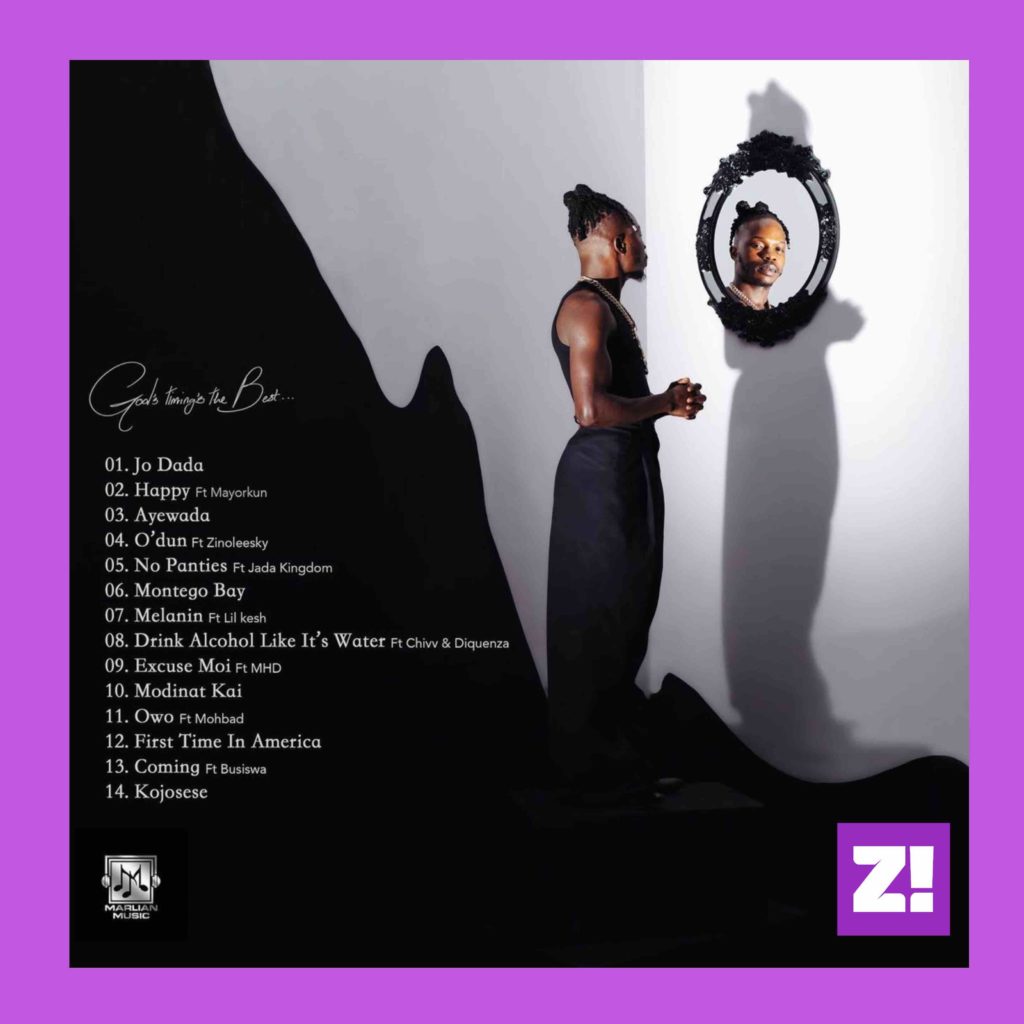
One thing about Naira Marley, the man loves chaos. Four years after kicking his way into the Nigerian music scene with 2018’s Issa Goal, the infamous Marlian leader released his debut album, God’s Timing Is The Best on Monday, the 30th of May 2022. In a time where Fridays have become the official day to flood the airwaves and streamers with new music, Naira Marley’s decision to pick a Monday feels chaotic, but is also reflective of who he is — a disruptive artist whose star has been powered by controversy from the very start.
As I said, chaos is nothing new to the Lagos-born, Peckham-raised artist. Between 2018 and 2019, Naira Marley’s ascension to the top of the charts and social media conversations saw him go through police and EFCC raids, court sittings, social media backlash (or praise, depending on what side you’re on), sold-out shows, and countless hits. Between May and September of 2019 alone, he dropped the certified bangers, Am I A Yahoo Boy, Soapy, Opotoyi, Pxta, Tesumole and Mafo.
It doesn’t matter whether or not I subscribe to the Marlian way of life; it’s hard to deny the unstoppable force that is Naira Marley. The man drops a song, and suddenly, you can’t escape it. From rowdy bus stops to bougie clubs, Naira Marley is everywhere all at once. He is a movement.
With this much controversy, Naira Marley is not your conventional star. Going by his antics and shocking lyrics, this is the type of artist parents would ban their kids from listening to in a heartbeat. So why are we still obsessed with Naira Marley?
One thing about Naira Marley that I recently discovered is how he taps into the dramatic chaos of some of the artists before him. Artists that we loved. Think back to Terry G’s Free Madness era and how the unhinged star had all of us in a chokehold. Then there’s early Timaya — not the mellow Cold Outside Timaya Gen Zs know today, but the one that frowned on all his album covers and sang about the killings in Bayelsa state. I also feel the need to add the king of the streets, Olamide, whose decision to name his record label Yahoo Boy No Laptop (YBNL) was a major conversation back in the day. Naira Marley leans into this feeling of nostalgia where everything and everyone was extra. Think Cruel Santino, but comprehensible. And it’s not just the music; it’s the energy—the rebellious energy of the ones that came before.
This rebellious energy is arguably why Naira Marley gets a pass, especially with a generation that is tired of being told what to do. While Naira Marley had built a massive fanbase before the #EndSARS protests of 2020, it took the protests happening for me to finally understand why he was such a modern day rockstar. Agreeing with his alleged lifestyle or not, his entire existence and success are a big middle finger to the powers that be, especially the police and other security agencies. And with more young Nigerians feeling the need to rage against the system, it makes sense for Naira Marley to be placed on an artistic pedestal. After all, it feels good to see someone beat the system over and over again.
Antics and controversy aside, the music still matters to me. And while I still describe myself as Marlian-adjacent, the music doesn’t slap like it used to. The shock value and repetitive beats have worn off, and now, I want more. The thing is, I know he’s capable of delivering. God’s Timing Is The Best has its moments, but I expected better from a debut album that was due like four years ago. When Naira Marley came on the scene, we didn’t have the Zinoleeskeys, MohBads or Zlatans killing the game and blurring the lines between the streets and our playlists. So to keep up, our favourite rebel might have to reinvent his sound because shock value won’t do much for you in a time where Nigerians move on quickly.
“A person who does not know where his mates are succeeding will just die for nothing.” African proverb (and if it’s not African, take it like that).
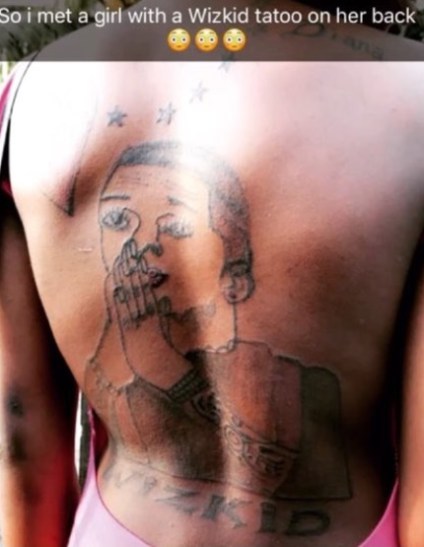
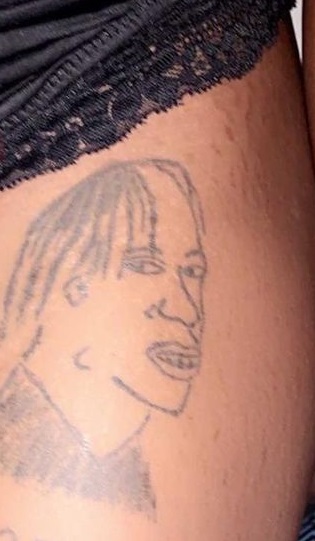
While you are here crying out of poverty, people are cashing out seriously with very little work. How? By tattooing the face of a celebrity on their bodies!
Oh please don’t be scared. Me I know how you can do it that you will cash out.
Let me teach you.
a. Identify the celebrity that will be your cash machine.
Important qualities to look for:
b. Find those ones that are very active on social media. Any small matter, they chook mouth.
If you pick someone like Genevieve Nnaji, I’m sorry, but you have just wasted a portion of your body that you cannot get back.
c. Target Yoruba socialites (Don’t make me mention anybody’s name, plis), Yoruba Nollywood actors and actresses. You know, find your way into that circle.
d. You can also target politicians or Nigeria as a whole. You may not get money oh, but at least you will have donated your body to a worthless cause.
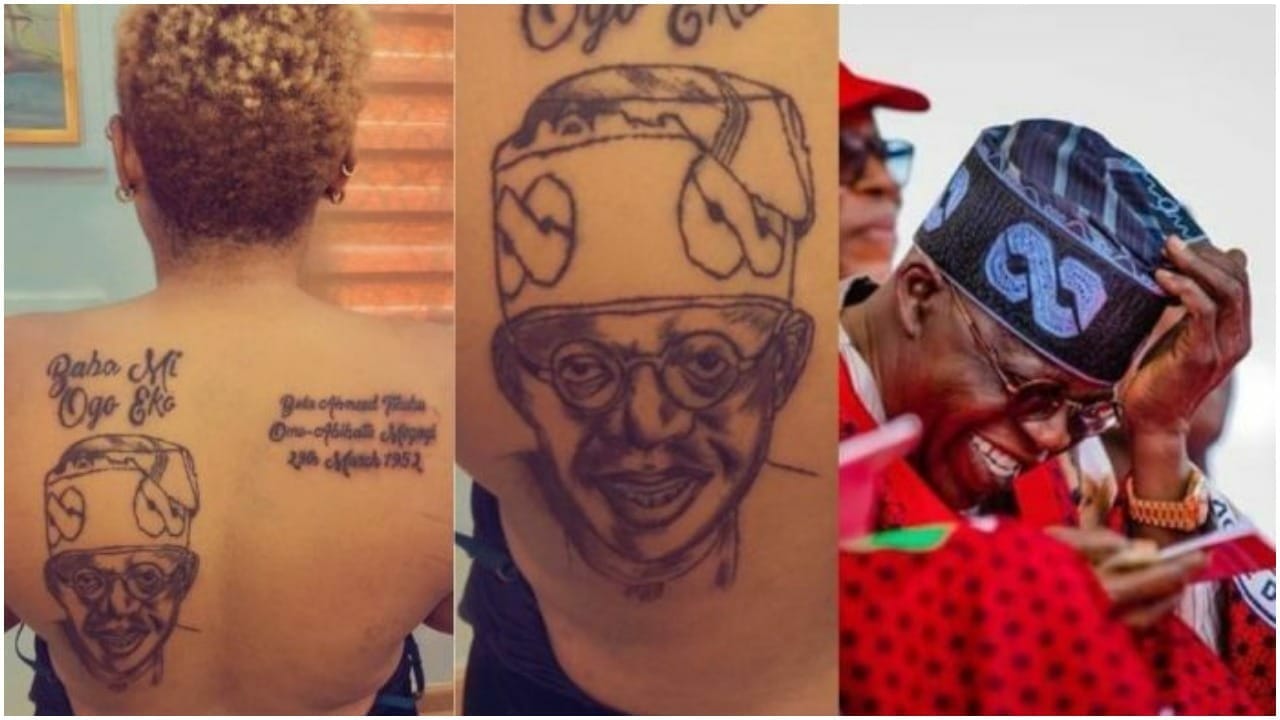
Exhibit 1.
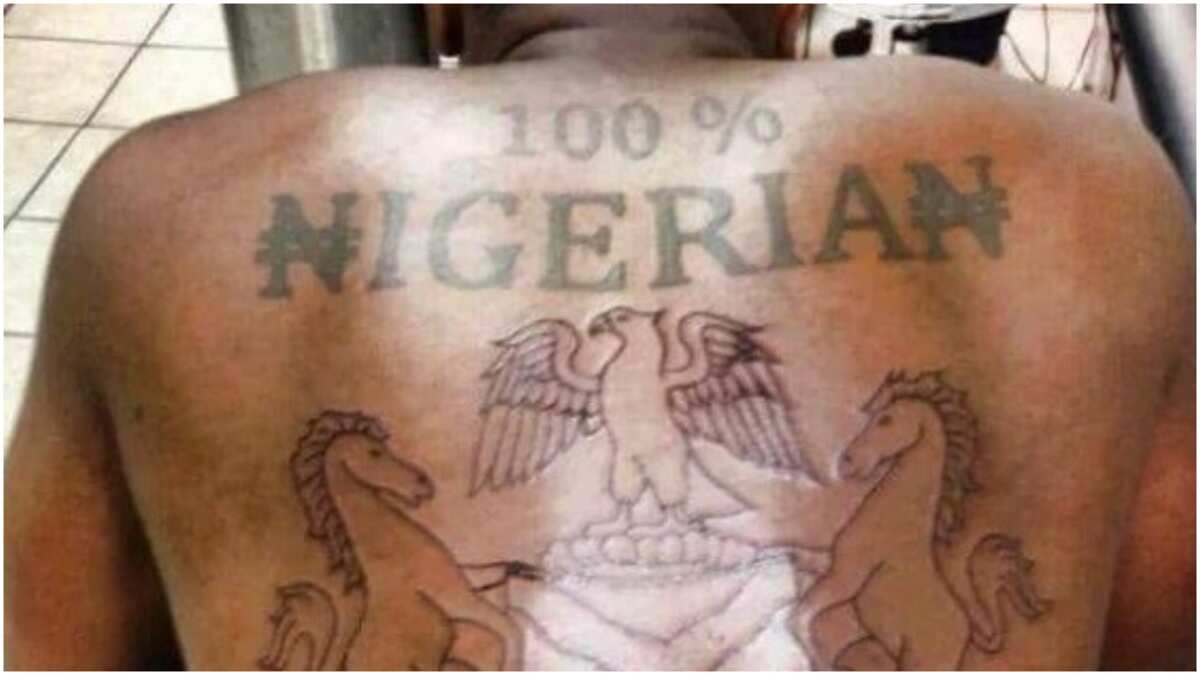
Exhibit 2. Imagine carrying such a problematic coat of arms of your body forever. Hmm. It will take God’s intervention to separate you from jagajaga.
But enough of this shalaye. HOW DO YOU CASH OUT FROM YOUR TATTOOS??
Word on the street is that a celebrity tattoo can fetch you between N100K to N1m. Imagine that. ONE MILLION NAIRA. Just to do this?
Best believe I’ll cover myself completely in like 68 tattoos. N1m x 68 = N68m. That is, N68,000,000.
Me, after I draw the tattoos.
But your village people can manifest at that time sha. And things can go wrong for you, just like it did for my madam here.
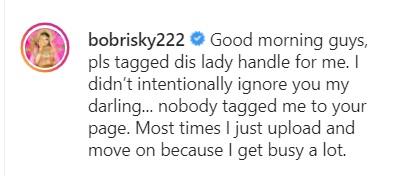
Apparently, she got a tattoo of Bobrisky. While she was waiting for cashout so she can go and ball, her father disowned her. As if her condition could not get even poorer, Bobrisky did not acknowledge her.
Alexa, play ‘Problem.’
But her guardian angel did not overdose on Fufu. Bobrisky finally responded.
And just like that, my good sis is a millionaire.
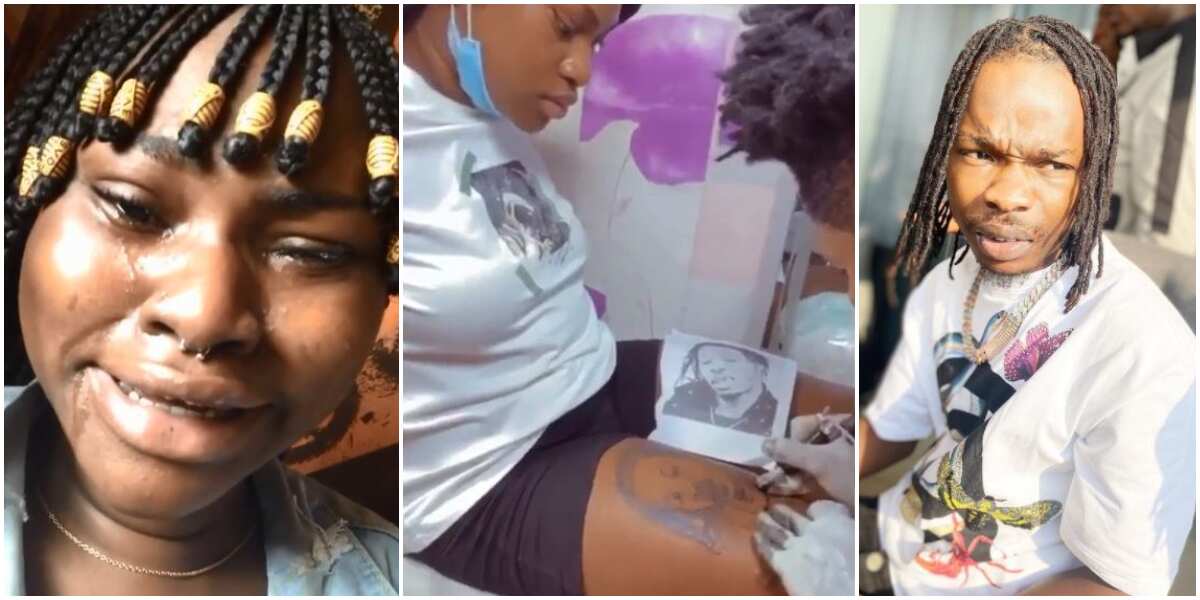
Another good example is my homegirl, MandyKiss, who tattooed Naira Marley on her leg and became an ‘internet sensation’.
How so? Naira Marley followed her back on Instagram! If that is not enough clout, then I don’t know what it is.
So, there you have it. Pick your target and tattoo away.
Ever since WAP was released, a lot of hot takes have happened. The song has also topped charts, despite the hot takes and everything accompanying its release.
But can you imagine WAP as a Nigerian song? Well, we can. And here’s what would happen if it was one.
1. For starters, it would be sung by Saint Janet, not Cardi B.
The title would be something like “Ariya WAP“. Or “Obo Tutu.” If you don’t understand what that is, please ask a friend to tell you. I will not be the one to lead you into sin.
2. There would be a remix, and it would feature Naira Marley, not Megan Thee Stallion.
Naira Marley will now add lyrics like:
To ba doko ma l’ole, WAP. Even me I get WAP, WAP. Omoge shey you go wap? Oya, wa ba mi n’ile, make I no go do soapy.WAP
3. The lyrics will then annoy the morality police in Nigeria.
I won’t mention names, but expect a LOT of tweets on how Nigerian youths have lost focus to concentrate on fruitless things like sex. (As if sex does not produce fruits when fertilization occurs).
4. Sha, the song will not be played on radio.
But Nigerians like bad-bad things, so the lyrics video will gather an insane number of views, and it will trend for days.
5. Because they have coconut heads, Saint Janet and Naira Marley will shoot a video for the song.
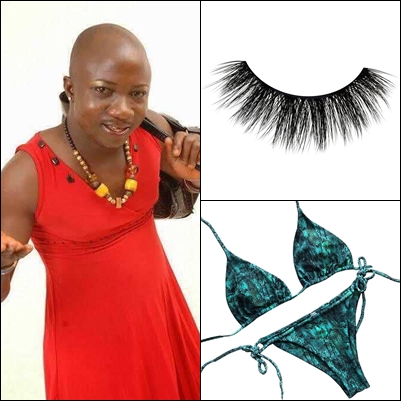
Ladies in bikini, a lot of soap water, synthetic eyelashes, Naira Marley with a beltless trouser, Saint Janet serving retired Sugar Mummy realness.
Vision board for the WAP video
6. The National Film and Video Censors Board will now vex and kuku ban the video.
And for reasons beyond human explanation, Naira Marley will be declared wanted by law enforcement agencies. Yes, Naira Marley is almost always having an issue with them, but imagine being arrested on top of WAP. Ordinary WAP.
7. By the way, the locals will jam the song until it becomes irritating.
Fuji remix will be in excess. DJ 4kasibe, DJ Lamba, DJ JiMasun will produce mixtapes with it, and one of these DJs will play it at somebody’s wedding ceremony where the entire crowd will go wild and leave there wondering if the bride has a WAP and how did the DJ know this.
It’s all going to be a mess, really. But in 10 years time, WAP will be resurrected on Twitter as a meme.
Growing up in a Nigerian home means that there are certain things you must NEVER do. One of this includes singing certain types of songs. If you love yourself, you’ll read this list and take the advice we have to give.
1. If I Die Young by The Band Perry
We know that you have grown old and you don’t fear anything again. But your parents still have a lot of fears. So if you love yourself, please don’t ever sing this song at home. Why? The lyrics speak for themselves:
If I die young bury me in satin Lay me down on a bed of roses Sink me in the river at dawn Send me away with the words of a love song
Yes, Asa falls into the category of artistes accepted by Nigerian parents. But see ehn, one time I sang this part at home:
I’m in chains you’re in chains too I wear uniforms and you wear uniforms too You’re a prisoner too Mr Jailer
I have fears you have fears too I will die, you sef go die too
That was all the ammunition my father needed to say that I was possessed, singing songs about being a prisoner and wanting to go to jail and die. Why couldn’t I sing songs about being rich? Why do I like to curse myself? See ehn, it was an experience I will never forget.
3. If I Die (Make You No Cry For Me) by Da Grin
Imagine singing this in front of your Yoruba parents. Do you really want to die? They just might assist you with small transport fare to meet your God.
4. Everything by Naira Marley
Especially, toba doko malole or whatever that death sentence of a song is called. It’s like confessing your atrocities, because your parents will then ask you how you know what an oko is. Aren’t you supposed to be holy and pure?
PS: The only oko I know is farm. Don’t corrupt me, dears.
5. The entire discography of Saint Janet.
Not sure if any young person still sings this madam today, but if you’re planning to, it might be time to perish that idea. It will likely end in tears.
6. Everything by Obesere. In fact, the name Obesere is forbidden in a Nigerian home.
I’m so sure that this man’s return must have triggered anxiety in Nigerian parents. To them, he is nothing but a corrupting influence and their holy children will be tainted. Remember how they hid his tapes from you back then? They probably don’t know that you will grow up to become an Obesere intern. Sha don’t sing his song near them.
Did I leave any song out? Tell me in the comments!
Nigerian music is riddled with not one, not two but thousands of songs that are sexist — objectifying and degrading women. The lyrics and videos of these songs, support or justify misogyny and sexism, yet a lot of them have such catchy tunes, we sometimes cannot resist them.
In this year of our Lord, how are sexist Nigerian songs still a thing? Pretend we didn’t ask that. The answer is obvious: Misogyny is fire in this country.
Anyway, since it is women’s month, we made a list of a few songs that fall under this category. The misogyny in these songs is so bad, many women will not listen to them.
1. Falz’s Child of The World
The song is a Nollywood trope and that’s that about that. It talks about a good girl who was raped at a young age and then becomes a runs girl. If you listen closely, there’s a load of victim blaming and very little about the abuser, an uncle who raped her. And it is for this reason women hate it. Read more here.
2. Kizz Daniel’s Pak n GO
This song is on top of every woman’s list. If you do not pay attention to lyrics, you probably want to pay attention to this one because the beat is perfect for a night out with your girls. Almost everything about the song is sexist. But you know what takes the crown? This part: “O l’omoge biggy-biggy, when will you marry eh? Until your bobby touch your belle oh?”
Makes me want to throw up.
3. Oritsefemi’s Igbeyawo
This song is definitely stuck in some century that is certainly not the 21st century. If you’re not Yoruba and do not understand Yoruba, you’ve probably been jamming this song and enjoying it, especially at Nigerian weddings and other kinds of parties.
A translation of the first verse of the lyrics is enough to tell you that this song belongs in the dustbin: “Wife, listen to your husband, prepare food on time, fetch water on time, wash clothes on time, GIVE SEX ON TIME????” It doesn’t end there. In fact, he tells women that it’s what we neglect that another person will pick up.
Never ever want to hear that sexist anthem again.
4. Yeba by Kizz Daniel
Some songs should come with trigger warnings because, I don’t see the point of this line in this song: “Uncle, stop touching.” It clearly shows someone is not comfortable. Yet it is said so, so casually. While the beat of the song is delightful and upbeat, that line triggers lots of women, especially women who have experienced some form of sexual assault. What’s worse is that he was called out for this nonsense lyrics and went on to justify it with the tweet below. Kiss or Kizz Daniel, please.
D song teaches our ladies to speak out against wat they haven't consented 2 nd 4 d men to realise dat if a lady says No, No means No. Apologise nd don't go further, hence d reply by d guy…"sorry madam" D fact dat a lady agrees 2 dance wit u doesn't translate 2 sexual consent https://t.co/LbfJuowJbI
There are a lot of sexist Nigerian songs, but we’ll stop here. Did we miss any song? Add to the list! Let’s compile them until the government sees this and bans them.
Ever heard a song and related to it on every level? Well, that’s the power of music. So, based on what’s truly important to you at the moment, we’ve created a quiz that shows you which Nigerian artist is most equipped to create the soundtrack to your life.
There’s so much new music being released that it’s hard for even the most loyal fans to wade through the trash to find the gems. That’s why we’ve created #BumpThis – a Friday series that features new songs, by and featuring Nigerians, that you absolutely need to hear.
Naira Marley — “Anywhere” ft. Ms. Banks
Naira Marley was one of 2019’s most essential stars, thanks to the inescapable hits he flooded our airwaves with. He’s now brought that same energy into 2020, kicking things off with the solid “Anywhere”.
On this track, we get more of the smooth-talking Naira Marley that stole the show on Davido’s “Sweet In The Middle”. He sings and raps about doing absolutely anything for the woman he loves.
Gifted UK rapper, Ms. Banks continues her impressive streak of killer features. “Anywhere” is an exciting indicator that Naira Marley intends to show off his range this year, and we can’t wait.
In case you went under the rock this weekend then you MISSED. There was a lot of excitement for our Nigerian superstar musicians and the spotlight was on them, big time.
From the much anticipated Headies award, to the birth of Davido’s son, Naira Marley’s legwork and his subtle shade at the organizers of the Headies, here’s what you might have missed:
The Headies Award:
Teni , Falz, Burna Boy, Johnny Drille, Rema and others had big wins at the 13th edition of the Headies Award, which held on Saturday at the Eko Conventional Centre, Lagos.
Emerging as the biggest winner this year, Teni snagged four awards, which include; Best Recording of the Year, Best Pop Single, Best Vocal Performance and the Viewers Choice Awards.
Meanwhile other winners included; Barry Jhay (Rookie Artiste of the Year), Wurld (Best Vocal Performance. Male), ChinkoEkun (Best Street Hip-Hop Artiste), Falz (Best Rap Single, Best Rap Album, Album of the Year), Johnny Drille (Best Alternative Song), AQ (Lyricist on the Roll), Burna Boy & Zlatan (Best Collabo), Yemi Alade (Best Performer), Seyi Shay & Runtown (Best R&B Single), Mayorkun (Best R&B Album, Hip Hop World Revelation), Clarence Peters (Best Music Video), Killertunes (Producer of the Year), Burna Boy (Artiste of the Year, Song of the Year)
Davido Jr is Here!
Nigerian musician, Davido couldn’t contain his joy at finally holding his son in his arms. He took to Twitter to share the good news with his fans, while announcing the birth of his first son, named, David Adedeji Ifeanyi Adeleke Jr I.
David Jr is Davido’s third child and his first child with his fiancee, Chioma. Meanwhile, hours after his birth, about 200 fake Instagram accounts have been created in his name.
OMOBA TI DE!!! DAVID ADEDEJI ADELEKE Jr I !! D PRINCE IS HERE!!!! 20 – 10 – 2019 !!! Love you my STRONG WIFE!!! I LOVE YOU!!!!! ❤️💕 pic.twitter.com/KfWgBdlaqn
Afterwards, he tweeted that, “legwork is bigger than Headies 2019”. Considering that Naira Marley is a close friend of Zlatan, who sang Zanku (which the legwork dance originated from), that statement was most likely a shade from the Soapy crooner to the Headies for giving Rema the Next Rated award instead of Zlatan.
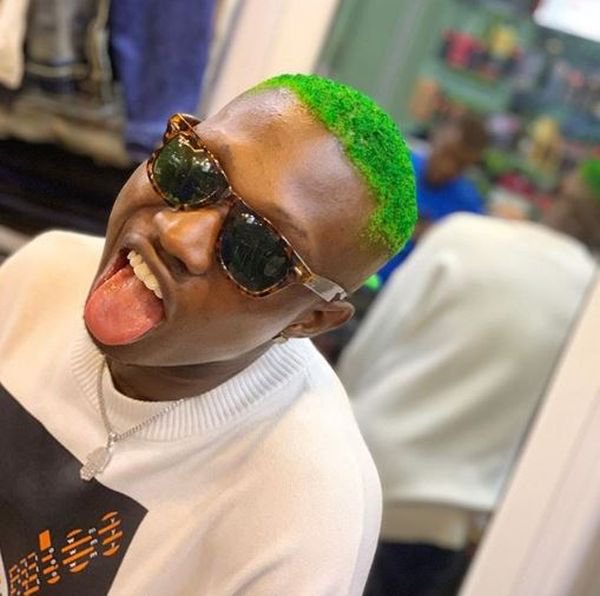
It’s 2019. Zlatan Ibile, a green-haired lyricist from the slums of Agege, is the hottest rapper in Nigeria. He’s everything you didn’t know you needed. Like if someone found a way to make amala and catfish pepper-soup work as a combo.
Zlatan is a certified pop star now. There’s no arguing that. To be honest, no-one can say how and why he came this far, so quickly. He’s not the first Nigerian rapper to bring the music of the streets to the mainstream. He’s not the first to have such frequent brushes with controversy either.
One moment, he was one of thousands in the dark underbelly of Nigerian music, where Naijaloaded holds sway, and the next moment we were shouting ‘kapaichumarimarichupaco’ and doing the Zanku into 2019.
Zlatan kicked off the year in 2018, ironically. Like watch-night services and prayer sessions in the years before the economy swallowed our faith in God, “Killin Dem” was the song that ushered many Nigerians into the new year. Since then, Zlatan has refused to let go of our necks.
He’s managed to achieve all his success without losing what makes him distinct: his energy. The defining feature of Zlatan and his work is its capacity to move you, even when he’s trying to be serious. It comes from an energy that’s contagious. It’s peer pressure at its finest. And by god, it’s beautiful to listen to and watch in action.
Think about “Am I A Yahoo Boy” for instance. It’s supposed to address claims that the two are internet fraudsters. On any day, that’s a serious allegation. But as soon as the beat comes on, your home training evaporates and your legs start to fight for freedom. Like it or not, you soon find yourself dancing to a song that packs 30 years of counterculture into three minutes.
If you’ve (refused to succumb to your problems and) partied in 2019, you’ll know what happens when a Zlatan Ibile song comes on the speakers. It’s like someone sprinkled hard drugs in the air. Only this time, it’s a rare form of cocaine that compels people to jump and stab their feet in the air.
The only other person who has this capacity is his friend, Naira Marley. Unlike him, Zlatan can combine his energy and affinity for street culture with being a rare likeability. He’s like the neighbourhood delinquent who worms his way into your family until he earns the right to show up for Sunday dinner unannounced.
The best example is probably not any of his songs, even though each one sounds like a war chant and a celebration of unexpected dollars rolled into one. It’s those videos of him laying his adlibs over newly recorded tracks. Even without an accompanying beat, they sound like you’re expected to do something. You get the same feeling as when your father opens the door to your room and stands at the entrance, silently staring into your eyes. You don’t know what you’ve done wrong but you just want to fix up your life and make up for your mistakes.
It’s that energy, coupled with Rexxie’s beats that has made certain DJs build their entire club mix around his music. It’s why Tekno returned from an unfortunate hiatus and had to tap Zlatan for a low-budget Zanku ripoff titled “Agege”. Because when you’ve copied a person’s sound and featured him on the song, naming it after their neighbourhood is a small ask. It’s why Zlatan’s music is what gets the party moving; whether it’s the first or penultimate song on your tracklist.
It’s why I think we should go further and make it an informal rule at least; it should be illegal to party without Zlatan’s music.
I know this sounds like a joke. In a sense, that’s what it started as, but since I started writing this, I’ve gotten more reasons why this is necessary.
The Morality prefect inside you is probably asking, “Segun, wazz all this?” Get over yourself and your Sunday school lessons. This is bigger than us all. This is about love, a shared identity and most importantly, social equality. This is about passion.
You see, Zlatan is a kind of cross-cultural, inter-class mixologist. Think of him as a member of Major Lazer. Only, instead of generic Carribean vibes, his forte is making music that forces you to lose your self-control, whether you’re a 12-year-old selling gala in traffic or a billionaire looking to reconnect with the simpler days of his youth. Zlatan’s voice attacks the legs, which makes sense because the Zanku is also known as ‘legwork’.
Anyone with the ability to get people dancing across generations and social classes has to use his ability for something more than Eko Hotel shows and Instagram likes. That’s why we need to weaponize his music to do what Buhari, 30+ years of NYSC and Jollof rice have struggled to achieve.
It’s difficult to harbour resentment towards anyone for being richer than you when you’ve danced “Zanku” together at an owambe, with bottles of beer raised to the high heavens as a sign of togetherness.
Making Zlatan’s music a compulsory part of our lives will bridge tribal & social prejudice. The broke Yoruba transporter from Oshodi will see his wealthy Igbo brother from Port Harcourt and as they both ‘gbe body’ to Shotan, they’ll find that they have so much more in common than they know.
It’s only a short distance from there to world peace.
Midway through “Opotoyi“, Naira Marley’s first song since his release on bail as he faces charges of fraud, the rapper stops what is a fast-tempo dance song to preach:
“Ko s’ogun aiku, iku lo gara ju, werey to’n s’ogun aiku fun gan, t’oba ku tan bawo lo se fe gba refund“
In English: “There’s no way to beat death; if there’s anyone who’s gullible enough to pay for such charms, how will he get his refund if he dies?”
In isolation, it would be a confounding statement, but as a part of “Opotoyi”, it is a targeted show-off of street smarts that stands out on a song that’s little more than an exercise in crass shit-talking, delivered in perfect street lingo.
In the last few months, the rapper/singer, real name Afeez Fashola, has become a phenomenon mired in controversy. Not much is known of his early life. He moved to the UK as a teenager. According to a recently-surfaced news report, he was one of many young people declared wanted by Lewisham Police for crimes ranging from robbery to sexual assault on a night bus in 2014. He made a light splash in the UK rap scene shortly after before a brief hiatus.
When he returned, he was the perfect hybrid of two cultures. Naira Marley raps in a mix of Pidgin, English and Yoruba in a drugged drawl spiced with a South London accent. In subject matter, he’s more similar to Obesere, the vulgar Nigerian fuji icon than Kida Kudz, another Nigerian/UK rapper from his generation.
A string of hits and ample use of social media, buoyed by strategic friendships with Lagos socialite, Rahman Jago and one of the hottest commodities in Nigerian music, Zlatan Ibile, shot him into the top 10 of streaming charts and made him a party staple.
Since March 2019, Naira Marley has owned at least two of the 10 most streamed songs in Nigeria. In a notoriously fickle music space like Nigeria’s, such a drastic change in fortunes often inspires artists to tighten their bootstraps. Not Marley.
Over the course of three months starting April 2019, Naira Marley grabbed a seat on the back of outrage and shot himself to infamy. On April 6, soft-spoken singer/songwriter Simi criticised internet fraudsters in a Live session on her Instagram. Simi has an appetite for social commentary on issues from football to politics; and after several tweets on the topic, a fan had told her to leave yahoo boys alone.
The IG live session appeared spontaneous but it was not unwarranted. As Simi would go on to say, “I’m not the problem, the world is laughing at us”. Nigeria has earned an unhealthy reputation for breeding a daring strain of internet fraudsters who, in 2017, earned themselves the 3rd spot in global internet crimes.
They are the more imaginative spawn of the ‘pen pal’ fraudsters of Nigeria’s 1980s, and more profitable as well — About N127 billion was lost to cybercrime in Nigeria in 2015, according to Professor Umar Danbatta, CEO of the Nigerian Communications Commission. They haven’t discarded the old playbook either — Nigerian prince scams still rake in over $700,000 a year, as this report by the CNBC claims.
In a sea of vitriolic responses to Simi’s video, Naira Marley stood tall, launched his own Instagram live session and offeredreasons, including reparations for the transatlantic slave trade, on why internet fraud is justified.
The events that followed read like the final chapters of a Ben Okri book. Days later, on April 22, Naira Marley took to Instagram to accuse Simi of snubbing him at an event, “@symplysimi I saw u at d homecoming last night, u look sad & upset.. why? Am I a yahoo boy?” he wrote beneath a picture of him. The caption has since been changed.
No publicity is bad publicity, someone once said. And once online conversation pushed the spat to viral proportions, it was only a matter of time before Naira would take advantage. Released on May 9, “Am I A Yahoo Boy”, a trap single featuring Zlatan, expanded on Marley’s IG video by asking rhetorically, if the two were in fact internet fraudsters. Within hours, the song shot to the top of digital streaming charts.
Naira Marley may have offered answers on the song but the EFCC wanted more. As the cock crowed in the wee hours of May 10, Zlatan, Naira Marley and three others were arrested during a raid on Zlatan’s residence at Ikate, Lekki, Lagos.
While Zlatan regained his freedom after days of questioning, Naira Marley’s fate was more thorough. On May 30, the rapper was arraigned before a Lagos court on 11 counts of violating the Cyber Crimes Act of 2015, and granted bail in the sum of 2 million naira. Days later, Marley was free.
Many had first expected Naira Marley’s first song after his arrest to be a plaintive reaction to his stint in jail. Music typically reflects the state of whoever’s making it. As shown by every artist from Sinzu to Zlatan, who recorded “Four Days In Ekotie-Eboh” upon his own release, time behind bars typically inspires bars of the written kind.
Instead, Naira released “Opotoyi (Marlians)”, a lewd song for drunken nights, filled with vulgar appraisals of the female body and drug use. In any other artist’s case, it would have gone down as a wasted opportunity to attract valuable sympathy. For Naira Marley however, his devotion to a certain way of life and his efforts to celebrate it trump everything else.
https://www.instagram.com/p/BxSYYarAhRs/
Despite introducing himself to the audience as a semi-IJGB schooled in Lagos street life, Naira Marley has always shown allegiance to the latter part of his identity. His early releases wouldn’t sound out of place on a London DJ’s playlist, but over time, Naira has gradually unveiled his ‘real face’.
From his frequent Instagram Live sessions to his very public responses to trending issues and his affiliation with suspected gang members, even when singing about seemingly innocuous topics like football on “Issa Goal” or the paparazzi on “Illuminati”, Naira has always offered up subtle and sometimes overt praise for two of the biggest scourges that are defining a generation of Nigerian youth today — internet fraud and drug abuse.
Covered by the sheen of celebrity and glossy music videos, Naira Marley can be easy to digest. At best, he’s seen as a playful charlatan; at worst, a harmless nihilist. It belies the fact that the real-life version of the persona that he offers is much darker.
You’ve seen him before; the average street boy who is as quick to hustle for a wad of notes as he is to explore the shorter route there. He doesn’t care what you think; he is often eager to project power, physical or financial. He is one of the people who make up Naira Marley’s core fanbase.
https://www.instagram.com/p/Bs55zK5DvVS/
The “Marlians”, as they are called, are a survivalist bunch, groomed in a dog-eat-dog world where morality is a fickle construct and strength in numbers is a policy. While well-meaning Nigerians applauded on Twitter his arrest, they complained that EFCC chose to arrest him on his birthday.
The burning question of how Naira Marley secured their attention and devotion and became a “national star” is worth discussing. For decades, the music of Nigeria’s most culturally-vibrant ghettos has often existed in its own vacuum – with only a few artists making the journey to nationwide acceptance and becoming relative ambassadors. The analogy that best describes this process is crossing the third mainland bridge.
No one crosses the Third Mainland Bridge except to meet a need on the other side. In a sense, it can feel more like a journey between social classes, than a trip on a 14km-long bridge. One end of the bridge has always felt left out when it comes to popular music.
It’s easy to recognise what we’ve come to describe as street music – amateurish production, aggressive delivery, subject matter that focuses on dance or occasionally larger-than-life ideas ranging from ‘hustle’ to ‘fate’.
https://www.instagram.com/p/BpXdh3cDARU/
Since Kerewa became a national hit and topic of concern among Nigerian parents fearing for their impressionable young kids, the music of Nigeria’s slums has only ever blown up courtesy of acceptance on the other side of the bridge – in Lekki’s snazzy clubs and lounges, behind location filters and retro-cameras of highbrow Lagos and its islands.
The Shaku-Shaku sound and dance that dominated 2018 are the most definitive examples. According to its biggest ambassadors, Slimcase and Mr Real, Shaku-Shaku and the drum-heavy sound of hit songs like”Legbegbe” and “Diet” became integral parts of the culture in Agege, a not-so-highbrow area of Lagos since 2016. Yet it did not reach nationwide acceptance until the dance became a social media phenomenon, with celebrities from Genevieve to D’banj taking stabs at it.
It soon showed up in the Island’s biggest clubs. DJs, ever the willing suppliers, found the songs to fit – and introduced new audiences to its stalwarts. Collaborations spurred more hits and by the time concert season came in December 2018, the only thing that mattered was Shaku-Shaku.
On your first attempt to juggle your memory, it would appear Naira Marley’s journey happened on the shoulders of the Zanku – the dance style popularised by Zlatan that leveraged Shaku-Shaku’s entry into the mainstream and hasn’t gone away since.
The reality is much less linear: Naira Marley crossed the third mainland a lot earlier, in the most innocuous of ways. It happened thanks to a song you may remember from that one time Nigeria’s World Cup jersey stunned the world – 2018’s “Issa Goal”.
https://www.youtube.com/watch?v=im22OgaMImk
Unknown to most of his audience prior to its release, the song presented Naira Marley as a UK resident who was in love with the country of his birth and had the lingo to earn his place alongside Lil Kesh and Olamide . It was also picked up by Coca-Cola as the Nigerian National Team’s unofficial theme song for the 2018 World Cup. It was a move which, unwittingly, put him in a class alongside other prominent young Nigerians with more friendly brands, like Alex Iwobi and Wizkid.
His follow-up, “Japa” contains a more overt reference to credit card fraud, but if anyone heard, and some people raised concerns, everyone soon got drowned out by the noise of feet stomping on both sides of the bridge.
“Am I A Yahoo Boy” will perhaps go down as the most definitive song in Naira Marley’s career. The song’s title was the perfect query for the situation that birthed it – which is why it is worth noting that both artistes glorify internet fraud on a song which was supposed to acquit them of these accusations. Naira Marley’s arrest was celebrated in certain circles as a quick reaction to a budding menace. And it would have an effect, just not the one we expected — Marley’s message had stuck.
In the eyes of his fans, he’s become the street kid who’d made it enough to earn himself a love/hate relationship with the elite. He’s known by everyone from A-list artists to an audience out of Nigeria and the UK that loves his music but refuses to accept his violent nihilism — a way of life that Marlians are all too familiar with. What’s not to aspire to?
Make no mistake; Naira Marley knows exactly what he’s doing. Behind the braids, droopy eyes and seemingly haphazard behaviour is an artist who cross-pollinated Nigerian andUK street culture to produce a hybrid that has done what countless PR firms and record labels have struggled to pull off.
He’s dropped three songs since his arrest in May: “Why”, “Opotoyi” and “Soapy”. If you’re willing to explore the pattern, it goes far beyond his recent releases; he’s learned to pick the most targeted song titles, using words that draw instant reaction or take advantage of a trend.
“Issa Goal” made him one of the faces of a country’s appearance at the World Cup. “Japa” brought a common slang to life by embodying a generation’s obsession with evading haters, hard times or in his case, London’s Met Police. “Illuminati” was an attempt to elevate perceptions of his stardom by name-dropping a group that is believed by some to give musicians stardom in exchange for their souls. “Am I A Yahoo Boy” took advantage of the heavy buzz following his defence of internet fraud. “Opotoyi” stamped the “Marlians” as a community. Each of these songs has been streamed over one million times.
His latest release, an unfortunate dance single titled “Soapy” is an effort to strengthen his hold on that community. The song references his stint in jail and has been described as an effort to draw attention to the terrible conditions in Nigerian jails. However, on the morning of its release, Naira Marley took to social media to unveil the “Ijo Soapy”, the accompanying dance style that mimics public masturbation. It has taken only a few days for the song to become a menace.
“Don’t you trust me; trust me, I don’t trust myself” – Naira Marley (“Jogor“, Zlatan, Kesh and Naira Marley, 2018)
What Naira Marley represents isn’t just his music. The rapper may be his own biggest fan and his brand of pedagogy is largely self-serving. What more evidence does one need than that cringe-worthy self-comparison to Africa’s greatest individuals – Fela Kuti, Nelson Mandela – on “Am I A Yahoo Boy?”.
Yet it’s finding a greater audience than we expected because it’s the reality of a street culture that we’ve ignored for so long. It’s why the primary defence by most of his fans is that his music reflects reality; they’re correct. If terms like ‘maga’, ‘opotoyi’, ‘ase’ seem to be entering the popular lexicon, it’s because they were already in use before – albeit on the wrong side of the bridge.
The best evidence of the diversity of Naira Marley’s clan is best found on his Instagram. Hundreds of his fans have volunteered submissions of themselves doing his Ijo Soapy. Those who have made it to his page are more varied than you’ll expect; a group of young Peckham teenagers dancing around in circles, young Nigerian women in glossy lace at an Owambe, a stripper and not least by any means, Lil Kesh.
https://www.instagram.com/p/Bp_7wWADVjb/
He may be an outcast in the hallowed halls of Naija twitter. But in the places where it often matters, away from the moral certitudes of ‘woke’ conversations, Naira Marley has held himself up a beacon of rebellion and young adult angst.
Like Simi did in April, many of Naira Marley’s colleagues have described his newest offering as what it is — a new low. Dancer, Kaffy is the latest person to do this. “In the history of Naija dance, I’ve never seen a more disgusting dance immoral dance called Soapy. It should never be encouraged,” she wrote in an Instagram post.
https://www.instagram.com/p/BzbV-IxBwb1/
For all its worth, her voice and that of many others count. But when compared with the viral rates with which new videos of people dancing Soapy are popping up on social media, the reality gets even more worrying.
The question we need to ask is this: Are we ready for an artist who does not care what anybody thinks and has a horde of raucous if misdirected young adult males hanging on his every pronouncement?
Naira Marley knows what he’s doing, do we?
Did you enjoy this? You should sign up for our weekly pop culture newsletter, Poppin’. You’ll get to know what we’re up to before anyone else + insider gist, reviews, freebies and more. If it sounds like your deal, sign up here.
There’s so much music out there that it’s hard for even the most loyal fans to stay up with their favourite artists or what’s new and hot right now. That’s why we’ve created #BumpThis – a daily series that features the one song you need to listen to, every day. Don’t say we never did anything for you.
In 2017, the Migos were at the top of their fame. Every rap-leaning artist who hadn’t created an identity set in stone had jumped on this three-tiered wave whether in sound, cadence or appearance. The Street Billionaires, a group of four rappers, Gbafun, IJay, Candy Bleakz and Lemon, seemed to be the most intense iteration of that wave.
The group’s 2016 debut was a refix of Migos’ “Bad and Boujee” which earned them a sizeable following. The music video in particular presented them as the Nigerian street version of the group, complete with their eponymous flow, outlandish jewellery and rainbow-hued shirts.
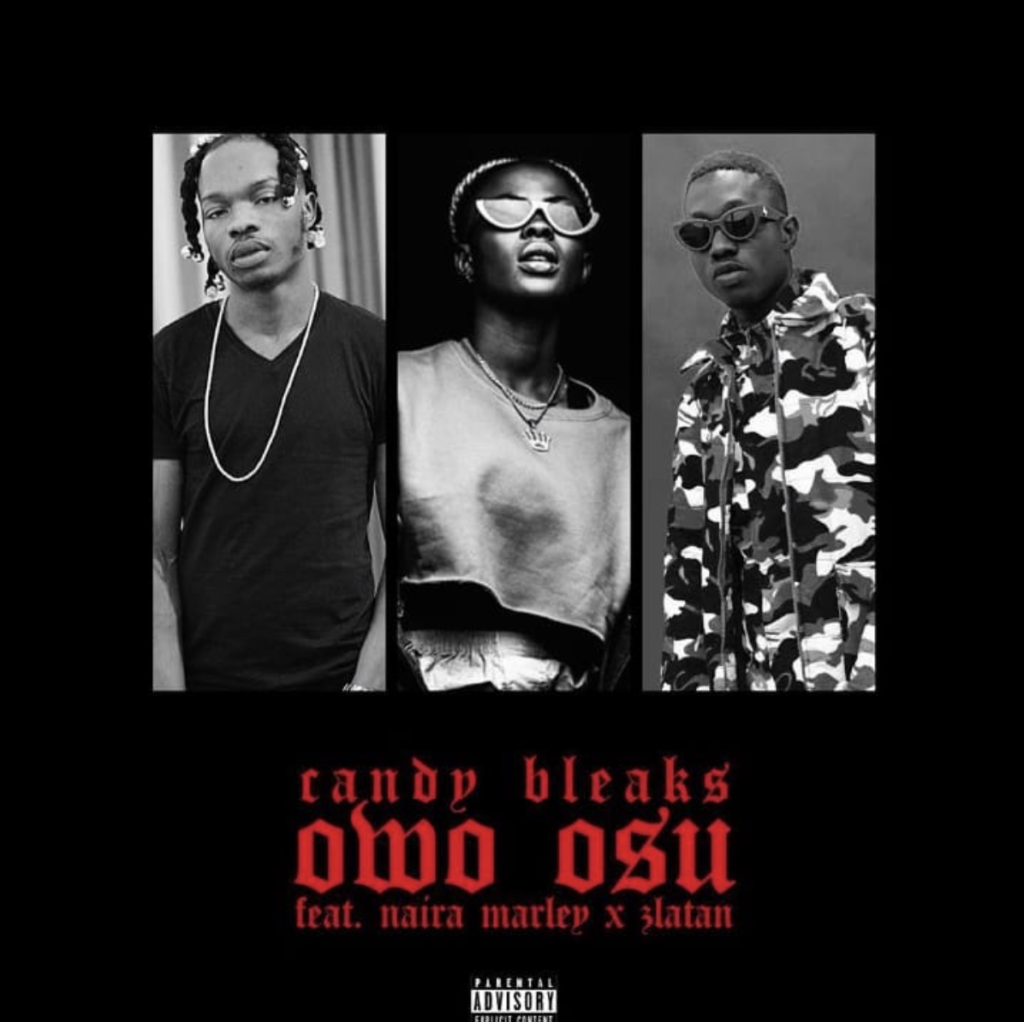
The group’s first lady, Candy Bleakz, rides yet another wave with her debut, “Owo Osu”. Over the last two years, Candy’s grown her following on Instagram with freestyles and comedic commentary – increasingly one of the more popular scripts for success in the digital age. To find her way around her solo debut, she enlists help from two heavyweights of the Zanku sound, Zlatan and Naira Marley.
Street Billionaires – “Bad and Boujee (Refix)” | YouTube
Their Chocolate City affiliation didn’t drum up much attention. But a 2018 follow-up, “Owo Mi Da” hinted that for these less-than-privileged former hobbyists (The budget for the video for “Bad and Boujee Refix” was 95,000 naira), the Migos wave was merely a starting point.
Zlatan Ibile, arguably the breakout star of 2019, repels any suspicions that he has eyes anywhere but on the bag. It’s one of the common tropes of the Zanku sound he has helped popularise; aspirational raps by young hustlers intent on getting paid, not surprising considering the street lifestyle and bootstrapping that birthed the sound.
He delivers a typical high-energy verse, building on the familiar adlibs, like “Kuronbe!” that dot the song from start to finish. See, Zlatan is not in the business of performing for free or a half-full bag, as he emphasises. Then as if to press the point home, he asks one of his more chronic debtors why he’s guzzling cold bottles of beer if he hasn’t paid up.
Turns out she could do without them. Candy’s rebellious-girl-next-door persona is more believable than you’d expect as she teases anyone who’s broke and unfortunately within earshot in her native Yoruba. “Sho ti gb’owoosu” (Have you gotten your monthly pay?), she asks matter-of-factly.
Candy’s lyrics seem to taunt salary earners and the inevitable spending limits that come with a fixed income. As the song goes on, it becomes obvious that ‘owoosu‘, (literally ‘salary’ in Yoruba), is an epithet for just about any source of income.
Zlatan’s BFF, Naira Marley has only just secured a temporary respite from detention, after being charged for internet fraud in May. His verse here doubles down on the gleeful boss talk that caught the attention of the EFCC and earned him the troop of fans he calls “Marlians“.
“Money is money, my guy. As long as it’s not Ogun Owo (Blood Money), my guy“, he proclaims. Statements like that will obviously do nothing to help the rapper’s cause or absolve him of any suspicions.
But it is totally on-brand – Naira Marley has increasingly begun to feel like everyone’s problematic friend. You swear you’re against anything he stands for. That’s until he come through with the best cruise you’ve had in ages and you suddenly decide he’s a necessary evil. Here, it manifests in how this subtle nod to fraud is most likely to be the part of the song that sticks in your head, along with the other reckless boasts that he splatters on his verse.
Whatever scepticism you may have about Zanku and its potential lifespan, or its alleged ties to internet fraud, Candy Bleakz’s summer bop is a necessary reminder to secure the bag. Enjoy the guap (and the music) while it lasts.
Stream “Owo Osu” by Candy Bleakz w/ Zlatan Ibile and Naira Marley here.
Thanks largely to the grand efforts of the Nigerian rapper, Naira Marley, internet fraud and just how much it has penetrated Nigerian society have been standing front and centre or lingering in the background of online conversation for weeks now.
As his ubiquitous name hints, Naira Marley, whose real name is Afeez Abdul, has created an online persona that revolves around his love of the bag and marijuana, alongside his music. He’s added another feather to that cap by donning the role of spokesperson for internet fraud sympathizers.
It began with a series of retorts to Simi’s put-down of cyber-crime in this video and peaked with the release of rhetorically-titled “Am I A Yahoo Boy?”, a song which addressed claims that he, and fellow rapper, Zlatan Ibile, are internet fraudsters.
Either they were foreshadowing or just using a very elaborate music video to draw even more attention to themselves, the two, alongside three others, were arrested by the Economic and Financial Crimes Commission. Marley’s arrest and the shenanigans he’s been up to have overshadowed another issue; that of yahoo-yahoo and its marriage of circumstance to Nigerian music.
Many Nigerian musicians have stained their white with yahoo money at various times, wittingly and unwittingly. And more money is always useful; they’re in an industry that’s low on cash beneath the charade of overlit music videos. But what happens from there? I’m thinking it’s either of these;
Nigerian Gansgta Music
The original gangsta rap, a sub-genre of hip-hop, emerged when gangsters – the street and mid-level criminals, gang members and drug dealers, and people close to them began to tell their grimy real-life stories on wax. Now imagine that, but in Nigeria with songs like “The 10 Bombing Commandments”, and “Lexus RX350 Music”. My point is we can still get something good out of this mess.
The G-Boy Music Monopoly (*insert evil laugh here*)
Now that everyone’s agreed that we’re broke, individually and as a nation, it shouldn’t be hard to notice that music and entertainment is one of the few sectors that’s growing while everything else shrinks. A big part of that is down to the funding, and the federal government’s budget for 2019 sure as hell doesn’t have a provision for “Wizkid, Davido, Don Jazzy and friends”. The clue is in the nods; like how M.I Abaga praised internet fraudsters and blessed their hustle for keeping Nigerian music alive, so to speak, on an episode of Pulse Nigeria’s Loose Talk Podcast. So what happens when the proceeds from internet fraud become the go-to source of seed funding for music startups? Which brings us to the next alternate universe.
A Yahoo-Music Cabal
What if the proceeds from internet fraud become the ONLY source of seed funding for music startups? There are already signs of what it would sound like; quite a few musicians have earned their keep and name by praise-singing certain ‘gentlemen with questionable income’. I thought about the best way to say that last one. It wouldn’t be new. For centuries, artists were entirely funded by families, dynasties and empires. So picture it. Record labels named according to the scam? Wire Records Inc. Genres by most profitable country?
An Underground G-Boy Music Scene
Naira Marley and Zlatan Ibile didn’t just crawl out of the woodwork. Both artists have been making music for years. They represent a lane of street rappers from mainland Lagos that popped with Small Doctor in 2016. The subject matter dates way back though. Some people mention Olu Maintain’s 2007 mega-hit, “Yahooze” as a landmark moment.
D’banj’s “Mobolowowon” features a supposedly personal tale featuring credit card fraud that seems a direct inspiration for Naira Marley’s “Japa“, a 2018 sleeper hit. In both songs, where the rapper, cast as a survivalist anti-hero, repeatedly evades arrest by officers of the UK Police. Since 2012 and Reminisce’s “Too Mussh“, indigenous rappers and singers have been naming benefactors and friends by name. Some of them are, you guessed it, gentlemen of questionable behaviour.
To be fair, the behemoth that is Nigerian music is too strung up on dancing and immediate returns on hasty, large-scale efforts to cultivate a rap scene for 100 Stacks, the retired g-boy from Agege. Nigerian music has eyes on it now, and the bar for entry is rising. So sorry, 100 stacks.
Naira Marley’s recent arraignment before a Federal High Court in Lagos is proof that the powers that be are hip to the times (or in simpler terms, STREETS IS WATCHING), it’s unlikely this moment alone would undo almost a decade’s worth of cultural influence. Get strapped; we’re in for some very interesting times.