Notice: Function _load_textdomain_just_in_time was called incorrectly. Translation loading for the wordpress-seo domain was triggered too early. This is usually an indicator for some code in the plugin or theme running too early. Translations should be loaded at the init action or later. Please see Debugging in WordPress for more information. (This message was added in version 6.7.0.) in /home/bcm/src/dev/www/wp-includes/functions.php on line 6121 Masculinity | Zikoko!
Macho rules are nothing but lies insecure men cooked up. Let them call you weak if they like. Does that make you less manly? Only you can decide.
Be the “man” of the house
What does this term mean exactly? You’re already the man of the house because of your gender. It doesn’t need to come with specific roles or perks for it to count. Embrace equality today, please.
Unhealthy boundaries
Don’t allow unnecessary bromance breed contempt. Your space is precious. Unserious bros should let you breathe small.
Growing up as men, the world has continued to hammer on things we should or shouldn’t do as we try to “protect” our masculinity. As the world continues to change around us, we are beginning to understand what’s toxic and what isn’t. Despite these changes, some men still struggle to shake off societal standards and beliefs on masculinity. These six Nigerian men spoke to Zikoko about the times they didn’t feel like men.
Donatus, 41
I hit a rough patch financially when my daughter was just starting primary school. Before this happened, we’d had a deal where my wife took care of little things in the house, while I paid the main bills like rent and school fees. But things got so bad my daughter was refused entry into school. So, my wife had to gather the money herself and pay. My wife has probably forgotten about it now, but the fact that I’d failed at my responsibility to my family broke me. There are a lot of things I’ve connected and disconnected from manhood over the years. However, the one thing that still makes me feel less of a man is not being able to provide.
Ishaya, 30
I was super religious in university and remained a virgin up until my third year, even though I drank alcohol. After our final paper, my friends and I went out for drinks. We all picked up girls from the club and took them home. I lost my virginity that night. I regret having to pay for the sex I felt (and still feel like) shit every time I think about it. I haven’t paid for sex since then and I’ll never do it again. I don’t believe in having to pay for sex, as it makes me feel like I’ve failed as a man.
Aliyu, 33
The day I felt less like a man was the day I realised that my ex had been cheating on me with some other guy in our social circle. The cheating part hurt because I loved her, but the part where everybody knew and I was just the mumu playing love? That part messed with my head. I couldn’t go out for months and I cut everyone off. People still think it was the pain from the break-up, but for me, it was the embarrassment that stuck. I had become a joke in Lagos. Anyway, that’s why I keep serving breakfast left, right and centre. It will reach all of us.
Jeremiah, 29
Do you know how after break-ups we all assume women gather with their friends, hold hands and recite words of affirmation? Well, this was me when I went through a bad break-up in 2016. I was crying every day like somebody died and I couldn’t call my friends to join me because they would’ve slapped some sense into me. I didn’t even think it was a big deal until I came online and saw that this babe had gone to Dubai with another man while I was in Surulere weeping. It was serious first-hand embarrassment for me. People say she might’ve been sad too, but it’s my own I know. Men can cry, but crying over someone that doesn’t want you is just pathetic please. Never again.
Uzoma, 24
So I was hooking up with this girl one time and she tried to peg me. We were having missionary sex as the Lord intended, and this babe just started sliding her finger towards my butt. The next thing I knew, it was in and I liked the feeling. She continued for a bit and then asked if she could use her strap. Now, hollup! The West African in me took back control and I was like “Hell, no!” I said it in a jocular manner sha, even though I was firm, so I wouldn’t ruin the vibe. The crazy thing is that I liked it, but the toxic part of me was like, “We don’t do that ere! ” God abeg!
Tonye, 30
If you can believe it, I’m a 30-year-old closeted bisexual who still believes sleeping with other men makes him less of a man. While I had always liked women, I hooked up with this guy once after our office’s Christmas party. He was someone’s plus one that night, but went home with me. It was great and everything, but I woke up the next morning feeling like shit — it’s not like I’m religious or anything. I think it goes back to my uncle always telling me not to behave like a girl when I was a child, which is something I struggled with growing up. I rarely hook up with guys because that feeling keeps coming up. I’m seeing a queer-friendly therapist now and hopefully, I get over it and enjoy my life.
In today’s society, everyone has an opinion about what it means to really be a “man”. Whatever those opinions are they end up doing more harm than good, seeing as 75% of suicide victims are men. Here are some of the ridiculous ways society thinks you should act like a man.
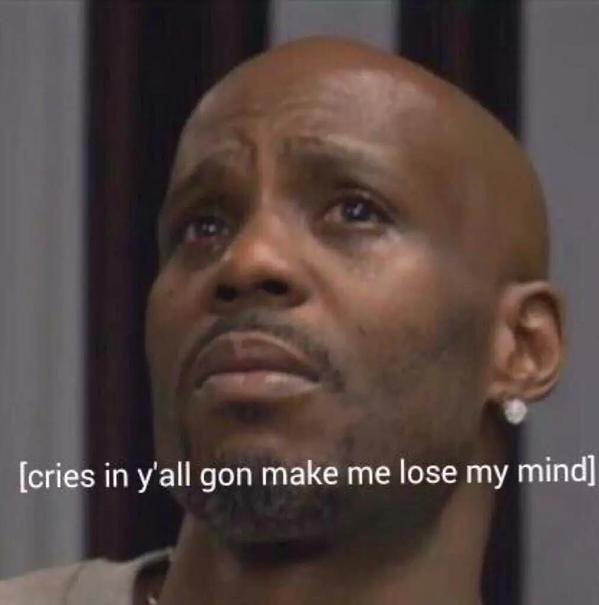
1. Never cry.
As society assumes men don’t have tear ducts, we’re not allowed to cry. If you cry, you’ve lost your men’s membership card. People would say, “don’t cry now, are you not a man?” As per men don’t have tears inside their eyes or what? Better cry before you give yourself BP. It’s a great outlet.
2. Be aggressive
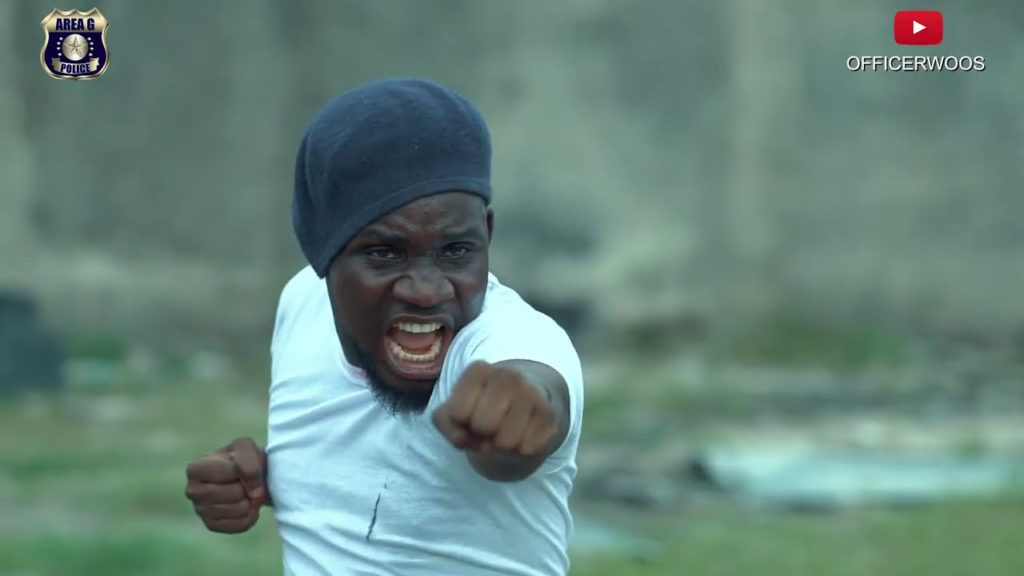
Sorry o, Mighty Igor. Kung-fu master. More times than not, you end up looking foolish.
3. Never share your problems with anyone
They want you to keep your problems in your chest and as we all know, problem no dey finish. What do you think will happen to your chest?
4. Sleep with more women to seem manly
Sleeping with women not because you want to but because you want another “feather in your cap” is childish. Love yourself. That’s how people catch venereal diseases.
5. Cover up for your bros when they’ve fucked up
Don’t encourage nonsense. Call out bad behaviour when you see it.
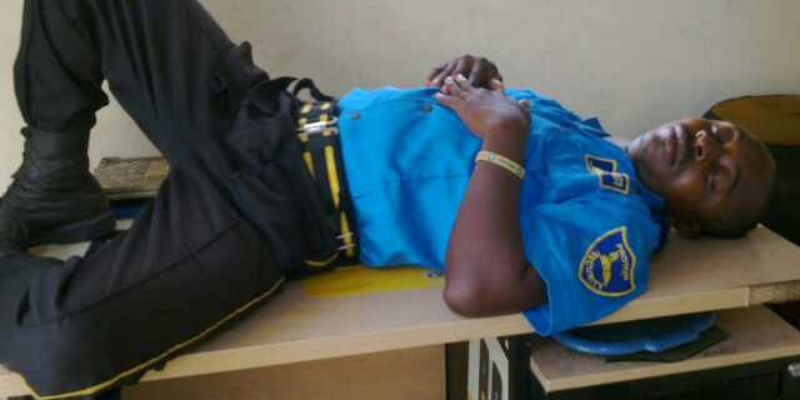
6. Don’t take care of your body
Being a man is no reason not to maintain basic hygiene and skincare. Your masculinity does not lie in your ashiness. Moisturize today.
7. Don’t be involved in taking care of your home/kids
Society expects the job of home-keeping and child-raising to be women’s jobs. When it’s your turn, try and do better.
What does it mean to be a man? Surely, it’s not one thing. It’s a series of little moments that add up. Man Like is a weekly Zikoko series documenting these moments to see how it adds up. It’s a series for men by men, talking about men’s issues. We try to understand what it means to “be a man” from the perspective of the subject of the week.
Check back every Sunday by 12 pm for new stories in the Man Likeseries. If you’d like to be featured or you know anyone that would be perfect for this, kindly send an email.
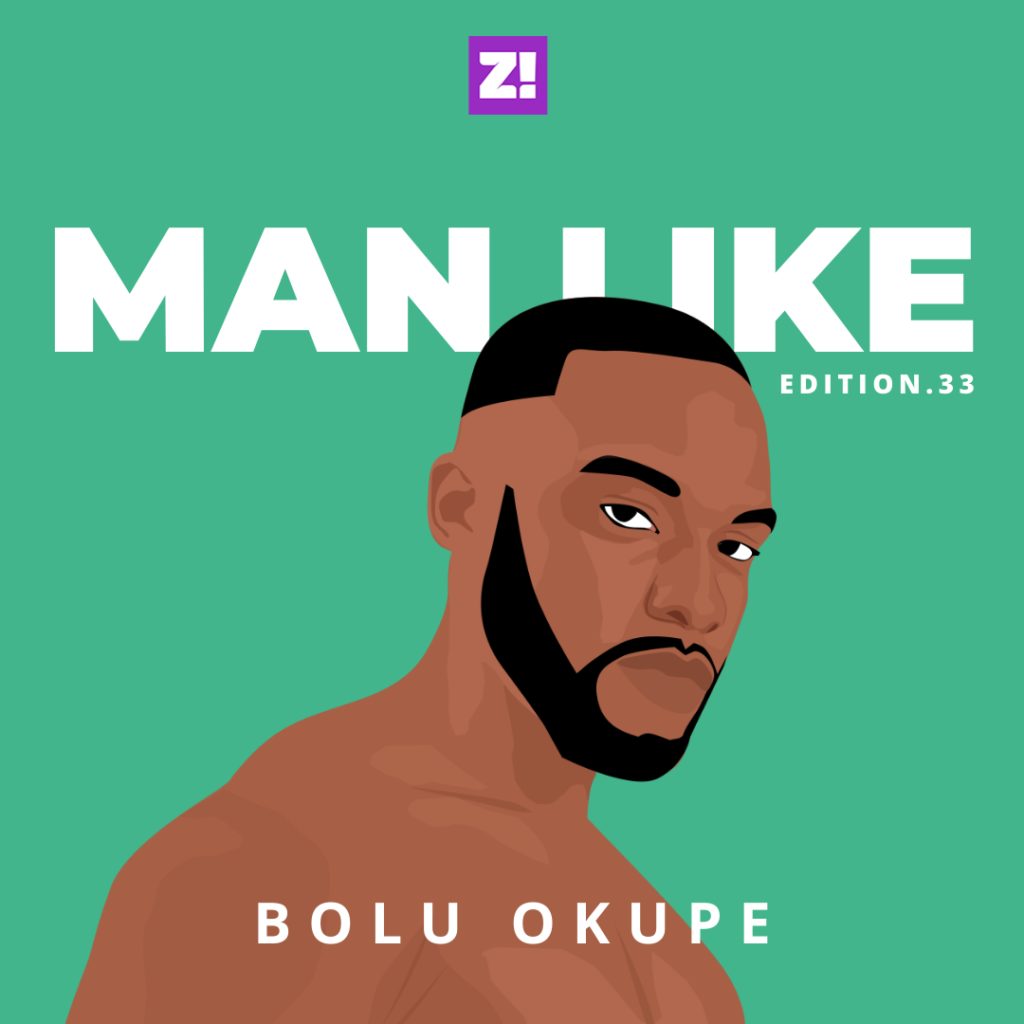
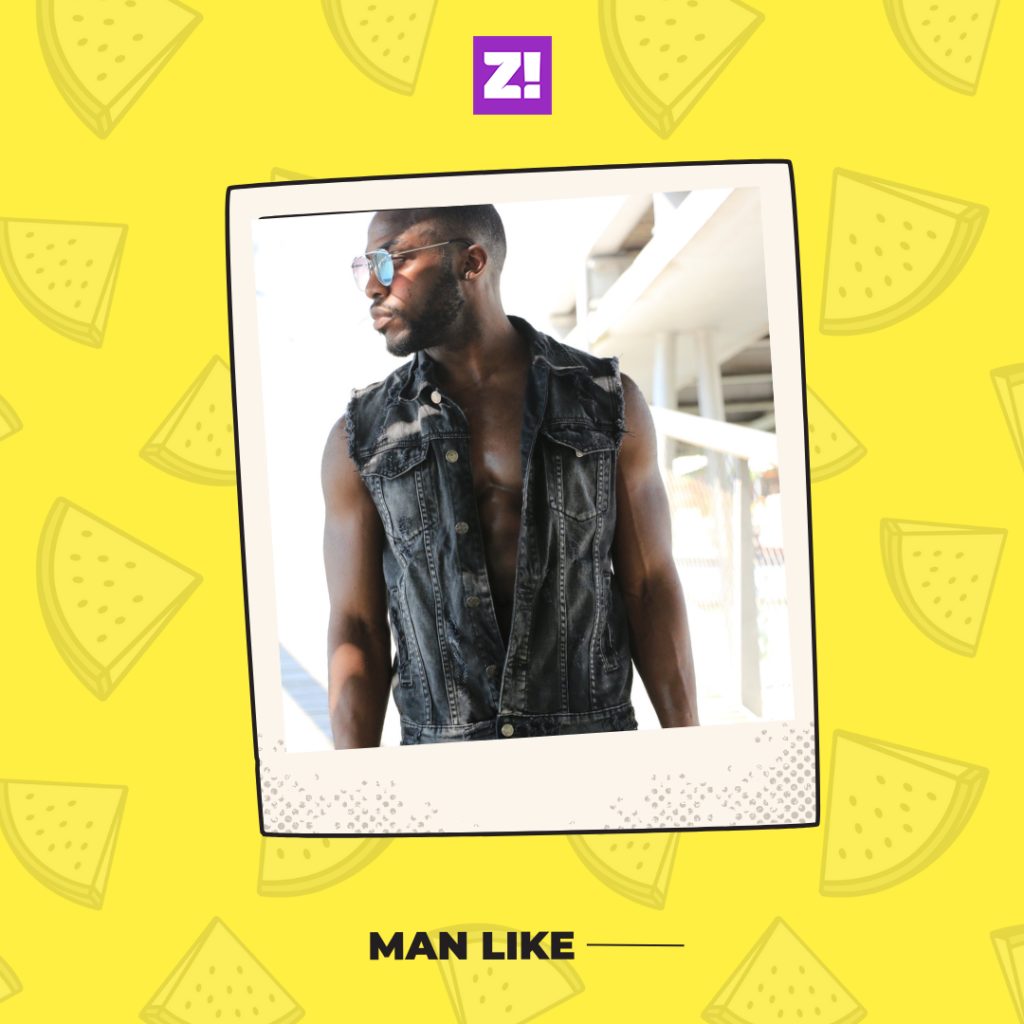
Today’s Man Like is Bolu Okupe, a 27-year old bodybuilder and model living in Paris. He talks about repressing his sexuality until he was in his 20s, having to assert his masculinity and how he deals with internet trolls.
When did it first hit you that you were a man?
I don’t think there was any single point where I realised I was a man. Even when I struggled with my sexuality, I knew innately that I was a man. I never called my gender expression into question because through it all, I was secure in myself.
Tell me about your journey with your sexuality.
Let me tell you a short story. On the 20th of January 2021, I hit send on an Instagram post that ended up going viral. In that post, I came out as gay. One of the reasons it went viral was because my father is Doyin Okupe, a popular Nigerian politician who championed Nigeria’s anti-LGBT legislation during Goodluck Jonathan’s tenure.
Wow.
I think that sums up my situation.
When did you realise you were gay?
I knew I was different since I was 10. I didn’t know I was sexually or romantically attracted to men because I wasn’t sexually aware yet. When I was a student at Dowen College, there was this boy who was my senior I was drawn to. I was always around him. I didn’t realise what I had then was a crush. In retrospect, that was when I started to see the signs that I was attracted to men. I think it wasn’t until I was 15 that I was certain. My hormones started to rage, and I was fully aware of sex and sexuality.
How did becoming certain affect you?
I fought very intense personal battles. I didn’t start exploring with men until my 20s because I was trying to suppress my feelings. I felt guilt and shame, especially because I came from a religious family. I cried and prayed and begged God every night to fix me and turn me straight. Growing up in a religious home makes you feel like there’s something wrong with you for feeling differently. There were mental battles as well — I was depressed for several months and started abusing alcohol and weed just to make the mental torture stop.
I used to force myself to date and sleep with women. After I came out, some of those girls came to ask me if our relationships were fake.
Were they fake?
I’m not going to say it wasn’t real. I liked them. Outside of physicality, I bonded emotionally with them. I believe you can have emotional connections with anybody regardless of their gender or your sexuality. I may not have been all the way honest with them but then again, I wasn’t being honest with myself.
When did you start being honest with yourself?
One day, I just said, “Fuck it. If I’m gay, I’m gay.” Fortunately for me, I lived in the UK at the time where you could be openly gay without any fear.
How did your family react to this?
I had actually told my family. I used to be very dramatic so I called a family meeting with my older brother and mother when I was a teenager and said, “I’m sorry guys, but I think I’m queer.” So they always kinda knew.
I never discussed it with my dad. I was surprised when I heard him say that he had always known I was gay during an interview. I used to make queer content on my YouTube channel and some of it must have found its way to him.
What was your relationship with your dad like, growing up?
I moved to the UK at a young age, so we never really had a close relationship, but it was good. Even now, with our differences, we talk on the phone often. One thing I’m never going to do is go anywhere to bash his name. I owe a lot of my life to him. While I no longer depend on him, he was responsible for me. It’s thanks to him I was able to travel to the UK and France, where I currently live. I’m always going to have that gratitude for the things he’s done for me.
Do you think things would have been different if you had grown up with him?
Definitely, and not in a good way. I would never have been comfortable with expressing myself or exploring my sexuality. I recognise the privilege that allowed me to grow up in a different country. I know that queer Nigerians don’t have that the privilege to live openly because of how homophobic Nigerians are. I’m satisfied with the life I’ve lived, so I wouldn’t trade it for anything.
Interesting. Do people often question your masculinity because of your sexuality?
Of course. All the time. When I came out, mean homophobic people were in the comments replying with “yass queen” and “congratulations Miss Bolu” in obvious attempts to feminise me. There’s a stereotype that all gay men are hyperfeminine. I don’t even think it’s just a Nigerian homophobia issue. It’s a global notion that needs changing. There are different types of gay men and that’s okay. This is why it’s important to have different representations of gay men in the media. We don’t get to see a lot of masculine gay men, probably because it’s not as sensational.
I imagine you are a target of a lot of bullying and homophobia, being the son of a prominent Nigerian who supported the passing of Nigeria’s anti-LGBT law. How do you deal with it?
Frankly, I just laugh. I recognise that a lot of people are lost. I’m not trying to make excuses for them, but when you’ve grown up in such a religious culture and you’ve been indoctrinated daily since your childhood, it becomes all you know. It takes a certain amount of exposure, open-mindedness and willingness to learn to be able to divest yourself of homophobia. I’m really not surprised by the backlash I get for being gay.
Hmm.
I don’t think that every person who is homophobic is actually a bad person. I think that they are just operating based on what they know. They don’t know anything else until they make the decision to unlearn what they’ve been taught and not everyone is capable of doing that.
I’m fortunate to have thick skin, so I’m not really bothered by what people say. I get the vilest, abusive remarks from people in the comments section of my IG even though I’ve never done anything to hurt any one of them. Thankfully, none of it gets to me. There’s also some positivity from people who show their support and let me know that I’m not alone. I get DMs and emails from people who say they were positively impacted by my situation, and honestly, I’d do it all again if given another chance.
That’s good to hear.
Check back every Sunday by 12 pm for new stories in the Man Likeseries. If you’d like to be featured or you know anyone that would be perfect for this, kindly send an email.
Are you a man who would like to be interviewed for a Zikoko article? Fill this form and we’ll be in your inbox quicker than you can say “Man Dem.”
Today’s Man Like is Andy Obuoforibo, a 40-year-old politician and product manager. He tells us about how his father’s warmth and work ethic taught him the real meaning of masculinity, how his mother’s foray into politics influenced him to participate in politics and why he supports the LGBTQ+ movement as a Nigerian politician.
When did you realise you had become “a man”?
I don’t think it was in a single moment. There have been times in my life when I felt like I scored some “man points” — like when I got my first job at a Safeway grocery store as I turned 18. Or when I took my first student loan, signifying that I was now responsible for my own education.
As I grew older, it became less about external accomplishments and more about my show of strength, like the first time my father asked me for advice.
Nice. Speaking of your father, what was your relationship with him like?
I was blessed with a good father. He was warm, affectionate and very present in our lives, even for the most trivial things. When I was 14, I had pretty fringe tastes for a Nigerian kid: I loved heavy metal and role-playing games. My dad went on a trip to the US and he came back with Metallica’s Black album and some role-playing game guidebook. He taught himself how to play Dungeon Master so he could play with me.
As I got older, we started to disagree on two fronts: political ideology and career. He wanted me to become a doctor — a professor of medicine — like him. So he taught me a lot about medicine — much of which I still know today. But I realised from the onset that I was more interested in computers. We had a bit of friction there, but during my college years, we mended fences and found our way back.
Would you say your father’s relationship with you influenced you as a man?
Very much. The biggest lesson I learned from him before his death was that strength isn’t in rigidity, because that makes you brittle. He knew how to be warm and soft in his strength. Now that I have fewer things to prove, I’m starting to understand the value of that. It helps me interface with my sons and other people better.
On the flip side, I picked up some bad things from him too that I wish I accessed closely and earlier. I learned from him to take on everybody’s burden. I learned that duty comes first. These are all good things, but when taken too far, they can cage and destroy, and this is what we often see happen to men. My father was very dutiful to his work, to his family, to his church, to his God. I never saw him miss work out of illness, and I try to emulate that. But it can be detrimental. You think you must accept everything “as a man,” you must be the rock and centre. You think you must be the one everybody leans on, but this makes it hard for you to lean on people.
Hmm. Is there anything about your upbringing you’d change with your kids?
A big thing I’ve learned to not do is to try and predict and hope for what they’ll become. I’m all for Project Mbappe and I’m hoping it works out in that direction, but I’m learning to think, “These kids are going to find their way. They’re going to figure it out.” They were born into a world I’m too old to understand. I need to be aware of that. I’m learning to be okay with figuring it out —not telling them where they need to go, but being able to detect their destination quickly enough to help them get to it. That’s really the job — to give them all the tools you can.
My parents really did a great job of giving me a lot of tools. When I was young, they exposed me to a lot of things. I think that that’s something that I also want to be able to do. I’ll tell you a story about my father.
My popcorn is ready.
We moved to Uganda when I had just started JSS2 in Nigeria. My father had gone back to work with the World Health Organisation. He was working all over eastern Africa, but he chose Uganda as our primary base. When it was time to choose a school for me, he looked at all the international schools and everything and said, “You’re going to a French school.”
I didn’t speak French. I only knew “comment ca va”. But my father said, “Not knowing a second international language has limited me in my career. I could have gotten to the very top of the UN, but there’s a limit to where I can get to because, in terms of international languages, I’m monolingual. You’re not going to have that same limitation. You’re going to be bilingual or better.”
So he put me in this school where I could not speak a single word of the language of instruction. I was in JSS 2 when I left Nigeria. Because of the language barrier, they moved me back to Primary 3, and it was the most horrifying experience. Just imagine this 12-year-old black kid in a class of eight-year-old white children who thought he was stupid because he couldn’t talk. You can imagine what that was like. My father was like, “Well, it’s really that simple. You will learn French, or you will fail and keep repeating.”
Omo.
It worked. I learned the language. It was tough, but my dad was there every step of the way. Every time I would complain that some kid made fun of me, he didn’t just brush it off. He’d say, “I’m sorry you’re going through that. But you know why you’re going through this right now.”
When my mates were learning English, the school made me take Spanish because why learn a language I was already fluent in? Somewhere in there, it turned out I had a knack for languages, so after learning French and Spanish, I learned German, Italian and Portuguese. Speaking Spanish and French made it easier to learn the rest.
It taught me early that life is not always easy, that things can be difficult and even unfair. But if you have a plan, you stick to the plan. That’s something I hope I can do for my children — expose them to experiences that teach them grit while showing them that when they come home, there’s always going to be a warm hug waiting.
Profound.
Life can be brutal. I try to be fair to men of previous generations. The toxic masculinity system exists because no one thought of a better way to help men navigate this cruel, unforgiving world while taking care of their responsibilities. Now we know better. We’ve learned and we’re learning. The danger is in overcorrecting. We still have to find a way to prepare sons and daughters for a tough, unforgiving cruel world without making them unforgiving and cruel themselves. That’s the balance we have to strike, the holy grail. I think that’s the real tough job of parenting.
Looks like you have this parenting thing down to a science.
LMAO. Not even close.
I hear you’re into politics. What’s that about?
My mum was one of the first women who ran for governor in the old Rivers State during the Third Republic. Civics was as much a part of my life like the way going to church on Sunday was.
One striking thing about history is that change is always made by normal people. In societies that work, there is no sense of separation, that the “civic space or politics is for some people, so I’m not bothered.” Getting involved in our community, getting it to work the way it’s supposed to work was a given in our house.
Facts.
The more active you’re in a particular space, the more likely it is that eventually, something in that space will connect for you. A series of events snowballed me into politics. I got really involved in activism. The government at the time wanted to demolish a waterfront community in the Niger Delta, where I was from, and I got very involved in the protests to stop that. Because of that, people from the community were like, “Hey, come and run for political office.” After a while, I eventually left politics to become a chief. It’s still that same relationship I have with my people that has moved me away from politics into chiefdom.
You’re one of the few, perhaps the only Nigerian politician, who openly supports the LGBTQ+ community. How do you balance keeping the people’s support and standing for what’s right?
There is no balance when it comes to justice. There is either justice or no justice. As long as there is a single law or rule in Nigeria that discriminates against LGBTQ+ people, we don’t have justice. If the only way to succeed politically in Nigeria is to bend to that injustice, maybe others can do that, but I’m not one of those people.
When I had to go to college in the US, I had to write TOEFL because I never took English in secondary school. One of the essay questions stated: Electorate politicians have to carry out the will of their electorate. But elected officials also have a duty to do the right thing by conscience. So what should the politician do when the demands of the electorate clash with their conscience or what is morally right? My answer, which hasn’t changed since I was 17, was that if it’s a question of fundamental issues of morality of justice, the politician has a duty to say, “On this issue, you are wrong. Let me give you a compelling argument why.” His next duty is to make those arguments.
If he fails, he fails. They vote him out, he goes home, and that’s okay. I believe that completely. I believe people have a right to have sexual and romantic relations with any consenting adult they want to. If people choose not to vote for me because of that stance, then guess what? I don’t want to be elected in Nigeria. I don’t want to be elected by people who will only vote for me if I support injustice and oppression. For most parts of my life I’ve been a minority. I’m from the Niger Delta, I’m oppressed. As a black man in America, I was oppressed. So I will die before I become part of the system that extends that oppression to any other human being. Oppression thrives because people who know better turn a blind eye simply because it’s more convenient for them or the personal stakes for them are too high. I can afford not to be elected to office. I have the skills and other ways to influence policy and influence my society. If elections are the one thing I can’t win because I support gay rights, so be it.
What are the biggest challenges with masculinity in Nigerian men?
I’d split this in two: the things that hurt us as Nigerian men and the ways we hurt others.
I think men, men in general, but Nigerian men in particular (because of the pressures we find on ourselves), just have to learn that there’s no single way to be a man. It has already happened. You can’t lose your masculinity. The status cannot be revoked so you have nothing to prove. Knowing that and having that pressure taken off you reduces a lot of things that we do that can harm us: the way we don’t share our problems, the way we put impossible standards on ourselves which we may be able to live up to in one moment but we’re bound to fail in the next.
When it comes to how you treat other people, I think there, again, it comes down to allowing yourself to be vulnerable. You know, and I don’t mean allowing people to harm you. We have to learn better ways of communicating our wants and feelings in ways that allow people a chance to make conscious decisions on how to relate with us. We don’t have to just be reactive.
Your dad seemed like such good vibes so one last question about him: When you think of him, what memory comes to mind?
My favourite memory was raiding the fridge at midnight with him, and then when my mother was shouting about food missing in the fridge, he framed me for it and said, “You know you have a teenage son in the house.” I turned to him in shock and he winked.. We were quite conspiratorial like that.
Check back every Sunday by 12 pm for new stories in the Man Likeseries. If you’d like to be featured or you know anyone that would be perfect for this, kindly send an email.
Are you a man who would like to be interviewed for a Zikoko article? Fill this form and we’ll be in your inbox quicker than you can say “Man Dem.”
What does it mean to be a man? Surely, it’s not one thing. It’s a series of little moments that add up.
“Man Like” is a weekly Zikoko series documenting these moments to see how it adds up. It’s a series for men by men, talking about men’s issues. We try to understand what it means to “be a man” from the perspective of the subject of the week.
The subject of today’s Man Like is a visual artist, writer and occasional spirit husband. He tells us about losing his parents when he was 10, moving a lot because he lived with different families and starting to live when he turned 24.
When did you get your “Man Like” moment?
So there are two answers here. If you ask me the first time I started feeling like a man, my closest answer would be final year project defense. I wore some ash wool trousers with a blue striped shirt, second-hand shoes and suspenders. And I followed the combo with a big boy bounce. In my head, I was like, “Wow, yes, I have arrived.”
LMAO.
In a sense, it was the aesthetics of being a man that dawned on me. The first time I felt the expectations of being a man was when my parents died. I had just turned ten, and there were expectations that I was going to continue my father’s lineage. It was weird because I had been insulated from all of these expectations up until then. At the burial, people kept on saying I shouldn’t cry because I was “a man”. In my head, I thought, “Okay this is new.”
Mahn, I’m sorry. How did you cope after their death?
I lived with different families through my teenage years up until my early twenties.
What does moving around do to you as a person?
It makes you not hold on to a defined sense of identity. It also leaves you craving permanence; a desire to stay in one place and hold on to something for a while. You lose a part of yourself each time you move and assimilate to a new family. As an adult, I find that I’m still always travelling. I’m still interested in moving. Even now that I have my own place, there’s a restlessness to move on to the next thing.
Are you an only child?
I have a not so little sister, but we lived separately and only got to spend Christmas together during our teenage years. In my head, I’m an only child because I had to deal with a lot of things alone — it’s only recently I started to rely on people. In fact, I called my sister before this interview.
LOOL. How did constantly moving affect your ability to make friends?
On one hand, I amassed an uncomfortable number of people in my life. Uncomfortable because moving into so many families meant i had no psychological or physical space of my own.
On the other hand, I always had it in the back of my mind that I’d return to the city where I grew up in. However, by the time I went back, all my dear friends had either left the country or had changed.
These days my disposition is to be personable and friendly, but I don’t actively encourage friendships. I remember someone trying to be friends with me, and I was like, “You’re an amazing person and we could both learn a lot from each other, but you came at the wrong time in my life. I have a lot of things to deal with.” Even with my tactic, some people have still managed to find their way into my life.
Awww. What are some important relationships that have added to your life?
I’d say intergenerational friendships. I find that because my friends differ from me in lived experience, age and geography, these friendships pull me out of my reality. I get to witness other possibilities. I’m 29 now, and I’m looking forward to my thirties mostly because I’ve seen how my friends above thirty have embraced life. Watching them just live life gives me a lot of hope. This is a lot of improvement from the teenager who had no plans of seeing past 25.
Interesting. Does anything scare you?
I don’t think I have any fears. I see the possibility of death hanging over anyone I love so I’m always telling myself that loss can happen at any time. I know I love someone when the thought of them dying stresses me out.
Ah. I see.
I really started coming alive as a full person around the time I turned 24, which was around the time I wore suspenders. It was also the year of good music. I started listening to what young people my age were listening to, and I stopped thinking about death.
Before turning 24, I had just been going through the motions. I really feel like I’ve lived a full life and if I die now I’ll be happy.
Wawu. What are some differences before turning 24 and after turning 24?
Kidney pie — dough with kidney stuffing — gives me joy. Then Citrus! I love using citrus-scented soaps. I also love Electronic dance music: I pray the angels fast forward the footage of me dancing alone in my apartment when they put my life on the projector on judgement day.
Then the colour red makes me happy because God speaks to me in the colour red. I own red candles and my dressing room is painted blood red.
Are you… like a cultist?
Haha.
I want to hear about your models for what it means to be a man.
Because of how I grew up, I had models that were not gender-specific — My parents alternated cooking and other house chores. My dad was more likely to laugh or say sorry to me than my mom in fact. I only started considering him as a model after he died and I started encountering other forms of [toxic] masculinity. These encounters made me start archiving memories of my dad because I was like this is how men are expected to behave in society, but this is how it was in my house. For me, those memories were in a way me clinging to being soft and kind.
Interesting.
In addition to being soft and kind, I also wanted to be as creative as my father.
How so?
My dad had a studio behind the house where he used to make stuff because he was very good with his hands. While I didn’t follow his exact path, I still feel that a lot of my identity has been defined by my creative career. Being able to create is what made me consider life.
A lot of decisions I took in my life, the characters in my stories did them first. The first time I asked someone out was because I had written a character where a 19-year-old — who was my age mate then — had asked someone out, so what was the big deal? In real life, it ended up becoming a two-hour conversation and some long ass walk.
Damn.
Tying your identity to a career is not healthy because I remember this one time where I was in a bad space because my career wasn’t where I wanted it to be. I had to constantly affirm myself outside of my career. It was a constant struggle to remind myself that I didn’t need to be a great author to be worthy of being alive.
Heavy stuff.
How do you define your masculinity?
I only define it in the parts that interest me. And that’s in the aesthetics/fashion. But there’s also socialisation and how masculinity relates to me in terms of bias. Even though I don’t feel “masculine”, I still find myself unlearning little biases I didn’t know I had in me.
I thought I was “woke”, but I have realised no matter how feminist you are in your relationship with a woman, the world is still waiting with its nonsense outside. I was in a friend’s car once and when road safety stopped us, the officer came to “bargain” with me and not my friend in the driver seat who owned the car — because she was well, a woman. I almost responded to him but I had a ‘wait a minute’ moment in my brain.
There was a funnier incident years ago when someone had asked me out, and I accepted and was happily enjoying the relationship. One day I got a text: When are you going to ask me to be your girlfriend officially? I was like, wait, is it joke we have been joking since? I’m learning that at the end of the day, we all have inherent gender biases to work through.
Preach. Has anything ever threatened your idea of masculinity?
I think there’s generally a sense of compulsory masculinity that piles certain expectations on you. I internalised some of those ridiculous expectations when I was younger.
For example, I hated jewellery growing up. When I started interrogating my hate, I realised it was simply because society decided men wearing jewellery was effeminate and anything that leans towards the feminine must be punished. I read that before colonisation came, my father’s people (Tiv) actually mocked teenage boys who turned fifteen without wearing gold earrings.
Oh wow.
I don’t think masculinity is bad. It can be colourful too. I’ve lived in parts of Nigeria where men dye their beard orange or wear eyeliner. I’m also interested in the idea of collaboration between men. There’s a strong chance for men to have real conversations and unlearn toxic masculinity. If men on Twitter could come together and build a stingy men association website, then they could intervene in the case of boys who go through sexual abuse.
Overall, I’m just interested in being soft last last. I don’t have strength for the performance society wants from me. It’s too limiting. The world is vast and full of wonders.
Check back every Sunday by 12 pm for new stories in the “Man Like” series. If you’d like to be featured or you know anyone that would be perfect for this, kindly send an email.
What does it mean to be a man? Surely, it’s not one thing. It’s a series of little moments that add up.
“Man Like” is a weekly Zikoko series documenting these moments to see how it adds up. It’s a series for men by men, talking about men’s issues. We try to understand what it means to “be a man” from the perspective of the subject of the week.
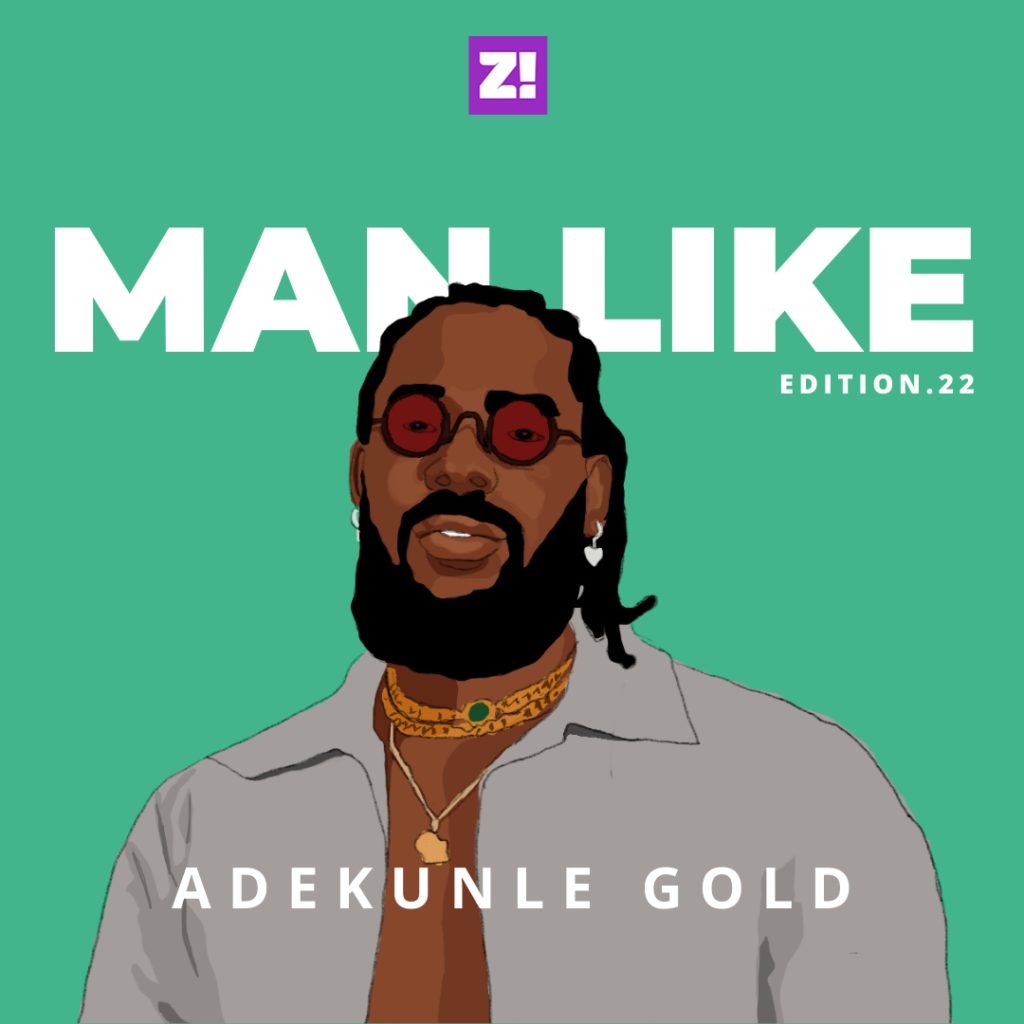
Everyone gets their “man now” moment. When was yours?
I think this was 2011/2012 when I moved out of my parent’s house. I was 25 years old, and for the first time, I had to cater for myself — buy food in the house, buy fuel, pay light bills. I was like, yes, I’m now on my own.
LMAO. What pushed you to leave?
I’d always wanted to leave my parent’s house since I was 18, but I couldn’t afford to. I grew up in Ikotun and I didn’t like the area at the time, so I wanted to leave to see the world. I still remember when my friends and I went to one area outside Ikotun to find out the cost of a mini-flat. That’s how badly we wanted to leave. By the time I finished NYSC, I felt it was time, so I packed my bags and moved to Lekki.
Ahan. Biggest boy.
LMAO. My parents thought I was mad. They kept asking how I could afford to move from Ikotun to Lekki. I told them that I’d be fine. I didn’t have more than a year’s rent neither did I have a car. The only thing I had was my energy, which is to always do things nervously. I’m grateful I moved because going from Ikotun to Lekki exposed me and changed my life.
Noted. I too will move to Lekki.
What was the toughest part of moving out?
Ọmọ, everything was tough. When I lived in Ikotun, my transport fare was ₦100 to most places, but in Lekki, because there were barely public buses, I was spending ₦2,000 daily on transport to work. In between transport, stocking up my house and still trying to do omo boy, I was struggling. It was tough but at least it pushed me to increase my earnings.
How much were you earning during this period?
My brother, I was earning ₦150,000 before tax and spending like ₦40,000 out of that money on transport. That’s how badly I wanted to leave home.
Mahn. What drove you then, and what drives you now?
I didn’t have a lot of exposure growing up — I can count on one hand the number of times I went to Lagos Island before I turned 18 — but I always knew there was better beyond my environment. Stepping outside Alimosho LGA to the island was a dream for many kids in my area, and I wanted to see why.
I’ve never been comfortable with a fixed idea of myself because there has to be more to the type of conversations I’m having, more to the type of sound I’m making, more to what I can become. I’ve always been a curious person who is all about more.
Hmm. How does this play out in your life?
One major place is my sound. If you take my first recording as the final version, you’ll be disappointed. I easily change my mind. I can decide to change the tempo of the song or remove an instrument from the background. I’ve learnt to detach from the idea that there’s a fixed version of me.
Interesting. Doesn’t constant change scare you?
Most definitely. There’s nothing I’ve tried that I haven’t done nervously. One thing I’ll never do is hold back. Not trying will bother and fill me with regret. If I fail, at least I know that I tried. It might sound stupid, but I don’t see how anyone can thrive by playing safe. Everything I’ve done, I did it afraid.
Tell me about your biggest failure.
Anytime I “failed”, it turned out to be a stepping stone. I’ve made many mistakes in my life, but God found ways to switch it around because there’s no way my decisions have been perfect. I won’t say I’ve never made mistakes, but I don’t see them as failures. THEY all added up.
AG baby is Jesus’ baby oh.
Lol.
I’m curious about your sense of style. Tell me about it.
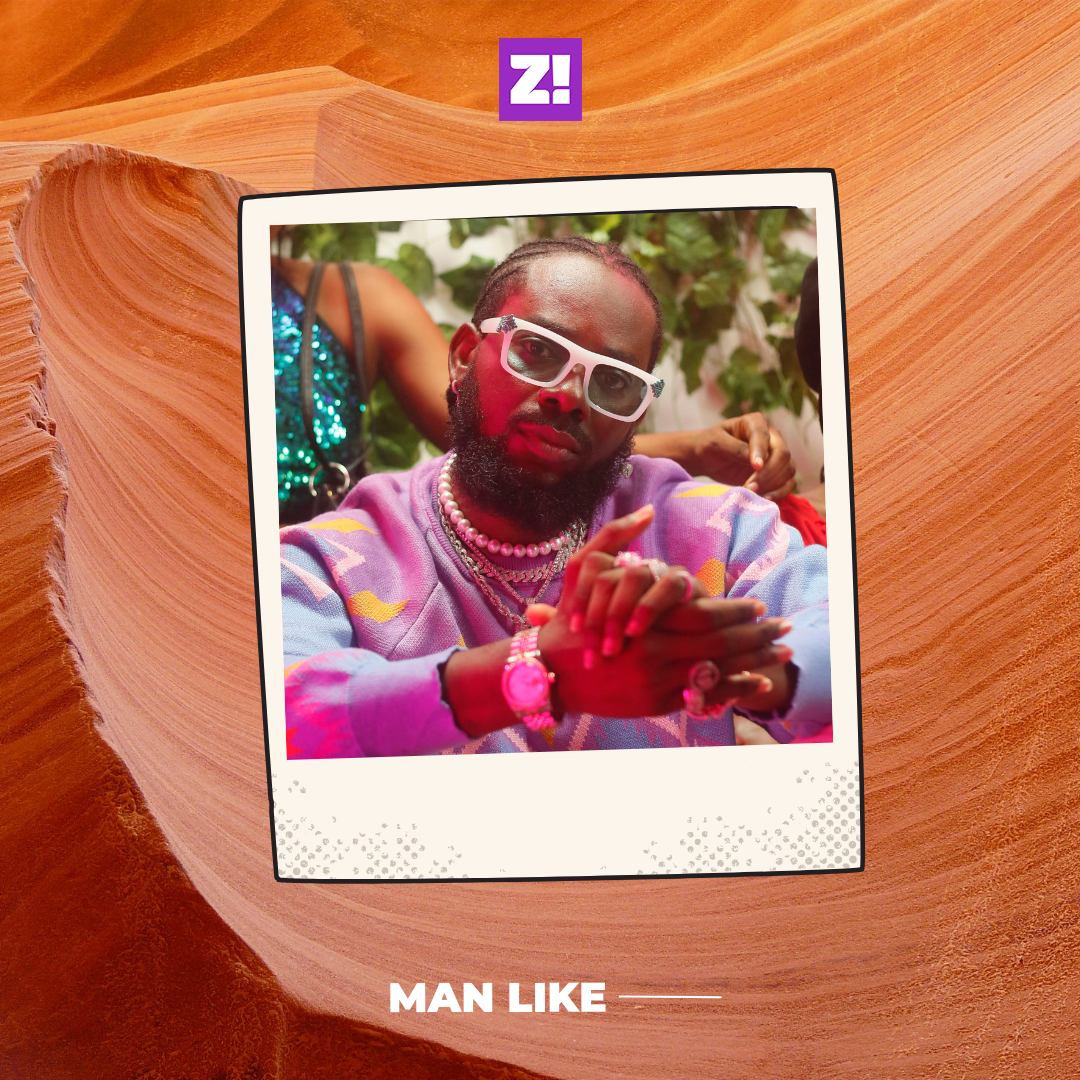
From my sense of style, you can already tell that I’m a spontaneous person — if I think it, I’m doing that shit because I don’t believe there should be fashion rules. Wear the shit that looks good on you: If you like palazzo, wear it. If it’s beads you like, wear it. If you want to dye your hair, dye it. Life is too broad, too wide and short to be worrying about how fashion should be done.
The most important thing is that you’re comfortable with your style. I know it comes across like I have my fashion shit together but the truth is that I don’t overthink these things.
My president! Has there been pushback?
So many times, and it’s not limited to fashion alone. There are decisions I’ve made that people around me were not happy with. I remember losing friends when I switched to Afropop. I kept on hearing, “You’re the King Sunny Ade [KSA] of our time, why do you want to switch?” I told them that I’m AG and not KSA, so I’m going to live life and make art on my own terms. I’m not going to allow anyone to project their fears on me. The switch to Afropop was scary, but it turned out to be one of the best decisions I ever made.
AG baby is our baby!
Haha.
What are some things that give you joy?
Quality time with my friends and family. I’m happy playing PS 4 or 5 with my boys in the house. Or when my boys are in the house, and we spend time throwing banter. Then of course, I enjoy spending time with my girls because they give me the most beautiful feeling in the world. I’m at peace just chilling with them.
My chest. I want to hear about your fatherhood journey.
Even though I’m still fresh, I enjoy being a dad so much. I enjoy being responsible for raising a beautiful girl. Fatherhood is such a beautiful feeling and my prayer is that my daughter grows up in a world where she’s able to do whatever she wants. I want my daughter to live her life and grow up to be an amazing person.
Did anything prepare you for fatherhood?
I’ve always liked the idea of starting my own family, so I was looking forward to fatherhood. I was curious about the type of man I’d be with a child, and I don’t think I’m doing badly so far.
One minute while I confirm from Simi.
You can ask her. LMAO.
What would you say has changed since you became a father?
I make sure I don’t use swear words around my daughter because I’m very conscious about how my actions can influence her. I know she’s still small, but kids these days are very smart and this is a foundational period for her. I also spend more time at home — if it’s not money, you will always catch me in the house with my girls.
Family seems important to you. Would you say your background influenced your love for family?
I didn’t have a good family experience growing up and that’s why I’ve always desired to have my own beautiful family. Because my experience wasn’t something I wanted to carry on, I made a covenant to do better when I got the chance to start my own family.
What would you do differently from the way our parents raised us?
I’m never going to beat my child the way my father beat me. I’m not one of those “but I turned out good” gang. I’ve also learned that communication is important, and I’m going to ensure that I create an environment where my child is comfortable enough to tell me anything.
Can you adopt me?
Na so.
I’m curious about what you think is different about being a man in Nigeria.
Growing up as a man in Nigeria requires a lot of work. “To Be A Man Na Wah” is still a valid song because it’s not easy. My desire is that as men raised in Nigeria, we do a lot of unlearning especially regarding understanding and respecting women. I’m hopeful that in a few years, we raise mindful men who know to not harass women, unlike the current way where we raise women to be careful of men. I know that it’ll take a while because Nigerian men are raised on pure vibes.
Dead. I’m curious about the things you had to unlearn.
First thing is that rubbish mentality we had about not marrying a woman who can’t cook. Who says that a woman has to cook? If you can afford to hire a chef, do that shit. I’ve also learned that house chores are not a woman’s responsibility. You’re living with your friend, not your slave. Some people have told me that I’m not the lord of the house because I’m not “controlling” my wife. In marriage, you’re not lord anything. Ogbeni better calm down.
I feel you.
How would you describe your masculinity?
I am a guy-guy. If I like something, I show it. I cry if I’m emotional about something. I’m also clearly a lover boy.
LMAO. Has anything ever threatened this idea?
That one is normal everyday yarns for Nigerian men. That’s why you’ll find men who find it hard to say “I love you, bro” to their fellow men. It’s also why you’ll tell your dad you love him and he goes cold and says, “God bless you.”
You’re a man doesn’t mean you’re a rock. Men also run on blood and emotions, so farabale and loosen up because life is not hard.
I love you, AG!
Lol.
What has changed between Ikotun AG baby and the current you?
One thing that hasn’t changed is Ikotun. LMAO. I’m still that excitable boy who doesn’t know how to form — if I like or dislike something, you can tell on my face. One of my prayers is that I never lose my sense of wonder because I’m still that Ikotun boy who is learning and unlearning about life.
Check back every Sunday by 12 pm for new stories in the “Man Like” series. If you’d like to be featured or you know anyone that would be perfect for this, kindly send an email.
What does it mean to be a man? Surely, it’s not one thing. It’s a series of little moments that add up.
“Man Like” is a weekly Zikoko series documenting these moments to see how it adds up. It’s a series for men by men, talking about men’s issues. We try to understand what it means to “be a man” from the perspective of the subject of the week.
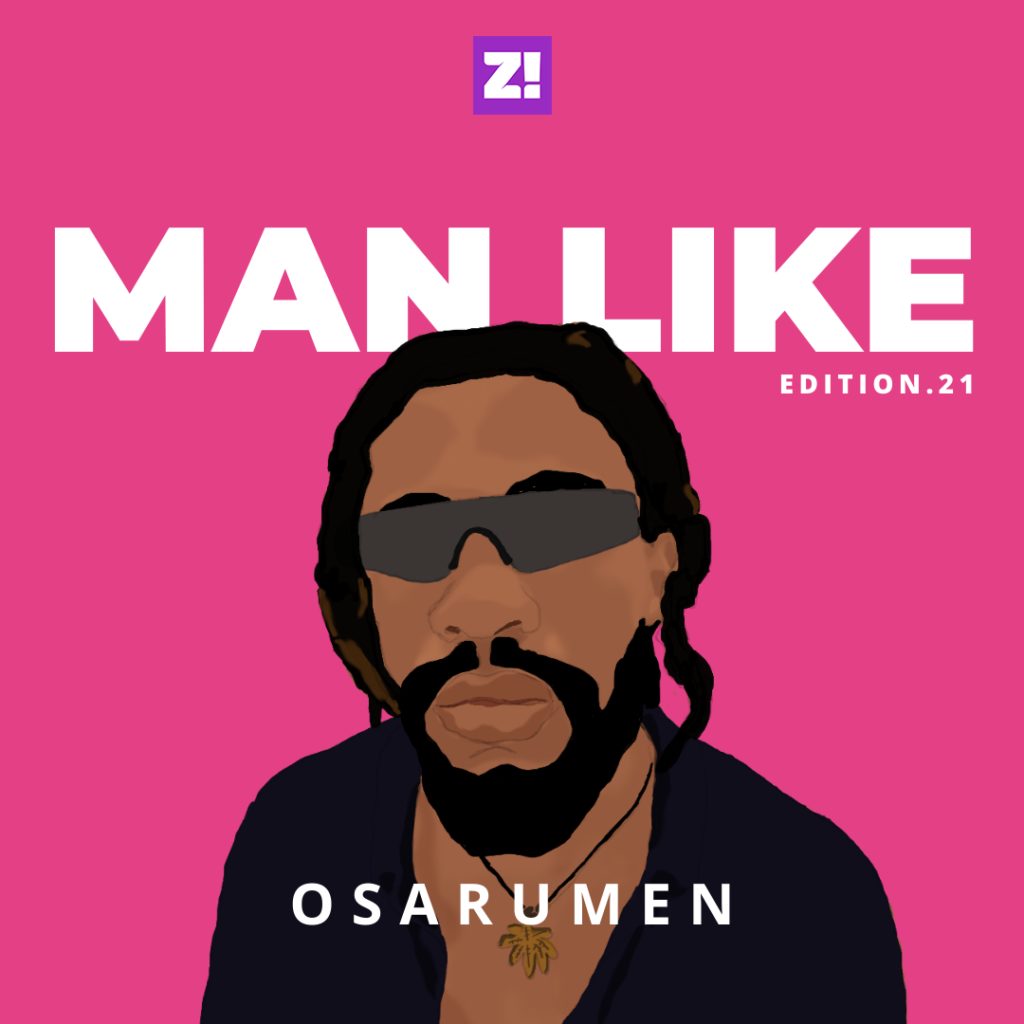
The subject for today’s “Man Like” is Osarumen Osamuyi. He’s a tech investor, a music composer and industry analyst. Osarumen talks about dropping out of school to pursue music and disappointing his parents at the time. He also talks about the struggles he faced during the transition from leaving school to his rise back to glory by building a career in tech, reviving his music career and the release of his new EP. He closes off by telling us about being polyamorous and why he doesn’t think that gender is a useful concept.
When would you say you had your “man now” moment?
To properly explain this, we need to go back a bit. As a child who started out life with my parents being proud of me, dropping out of school was painful for everyone around me. Initially, I was along with my parents’ plans for me — in secondary school, my dad used to talk about me getting a PhD at 25 — but as I got more exposed, I realised that the path they wanted for me was the least exciting way I wanted to live my life. I dropped out of school to go compose music, and that was the first time I ever heard my dad cry. He became microaggressive, like during morning prayers, he would switch from talking to God to talking about me. Or being compared to my childhood friends who finished school, graduated and were now doing NYSC. All these created a relatively hostile environment for me that when I saw a tweet that TechCabal was hiring writers, I applied. On 6 January 2016, I told my father I was moving from Abuja to Lagos and he let me move. That’s how I started my journey to sleeping on the office couch.
Wait. What?
Coming from a super privileged upbringing to basically earning ₦40,000 a month was not an easy experience, but it was one of the most genuinely happy moments of my life. I remember sleeping on the office couch and waking up at 6 a.m. to get ready before my colleagues resumed at work. I was on a journey to prove to my father that he was wrong about whether or not academics would make or break me. I was also on a journey to prove that I was better than the people my father said were better than me because they finished school.
What in the name of comic book villain origin story is this?
Lool. This is why, in the past, when people met me I had a big chip on my shoulder: I thought I was the greatest thing on earth and that nobody understood that. I felt the need to show them that not only was I smart but that they were also foolish to disagree with me. Thankfully I’ve since grown up. I became a “man” through the process of moving out from my father’s house to progressing to the stage where I no longer felt the need to prove myself to anyone.
Interesting. Did you ever earn your parents’ respect?
Yes. I’m now friends with my father again. It has become a relationship beyond “Oh he’s now doing well” to one where they started to communicate their disagreements with me. I suspect this change is because I’m doing better than the people that they compared me to.
I’m dead. What was hardest about moving out?
I think that would be the first time I failed. I remember getting promoted to a new role and I wrote a flowery blog post about the job and its importance to the world. However, four months into my appointment I hadn’t shipped a single one of my deliverables. In hindsight, this was a no brainer because I had no experience and I had moved up the ranks too quickly. I failed at that role and quietly left for school. After I was done with school, I came back and resumed at my old role before the promotion. Somehow everyone at the company just kept quiet and moved on from my failure.
Damn.
Until that point, I had taken it for granted that whatever I did turned out great. Learning I was not invincible was painful, but it also made me realise that I had to work really hard to get good at anything.
I feel you. With all of this knowledge, does anything still scare you?
I’m scared of stagnation or failure. One of my biggest fears is failing as I did in the past. It’s super scary now because such a failure will be very public and very severe. I’m also worried that I’ll reach a point where I’m no longer growing quickly.
My old boss once told me: “you can assume that you’re a smart kid and the youngest person in every room so you’re making lots of progress. Then you turn 30.” Most of my career has been built around being the youngest smartest person in the room but I’m getting closer to 30. While it’s a fake standard to hold myself to, I do think that I have to do something globally significant before getting old. The thought that I might not makes me tremble.
It seems we’re all in the same WhatsApp group.
Lol.
On the flip side, does anything give you joy?
I haven’t been happy for a long time. However, seeing my “work” have an impact on the real world pleases me. For example, roughly once a year, I write a long essay about the tech industry, and it makes a bit of a splash and that pleases me. I’m also pleased when I’m making music even without any financial rewards.
Lmao. You and this music. Tell me about it.
I composed the score for a VR film that got nominated at the International Documentary Film in Amsterdam. I’m really proud of it because the entire score was made in a couple of days. I’m also releasing an EP this year under my music act: LMBSKN. I’m excited to live my old dream and build a career as an artist, and I’m singing on some of the tracks I’m releasing.
Wait. What?
I’m excited about this project because I’ve found my sound. I’ll know I’ve succeeded when I’ve built a high-level tech career alongside a successful music career.
Love it.
I’m curious about your style. You’re the first man I saw with painted nails.
Funny story about the nail thing is that it happened during a fight with my ex-girlfriend while we were trying to reconcile. On that day, we went to a nail bar, and I thought it’d be a funny joke to get my nails done to make her laugh. And laugh she did. Mid-laughter, I kind of looked at my nails and was like, okay… I like the way this looks and so it became a thing.
Interesting.
The truth about my personal style is that I have periods of obsession. Sometimes, I might be obsessing over turtlenecks. Another time it’d be waistcoats. My most recent fascination was kimonos and I wore them everywhere. I’m currently in the long sleeve dress shirts, jeans and sneakers phase. My dressing reflects how I’m feeling inside at different points in time. And as cliche as it sounds, my dressing is also a reflection of the fact that I do think myself different from other people.
Do you think you’re a different man from other men?
I don’t think gender as a concept is very useful. On some level, there’s definitely attributes and similarities that I have in common with other men. However, I find it increasingly ridiculous that we try to put people in neatly labelled buckets. I think gender definitions are too straitjacketed when in reality, the world is a lot more complex. I don’t think gender or masculinity is a meaningful concept because it means so many things to different people. There are individual dots in the entire construct for each person that are similar, but you can’t add that into a coherent concept that defines masculinity. In fact, each generation has a different idea of what it means to be a man. The only utility I’ll say gender has is organizing society into useful buckets so it can be more coherent.
I—
What would you say is different about being a man in Nigeria?
I think Nigerian men like all men are a product of their society. I don’t think you can say that Nigerian men are uniquely good or bad along a certain axis because a man who grew up in Ikoyi probably has more in common with a man who grew up in Kilimani, Nairobi than he does with another man who grew up in a less affluent part of Lagos. Again, I don’t think that the concept of a Nigerian man is a coherent one.
Fair enough.
Tell me about your love life.
I’ve been really bad at relationships in general so I’ve had to mature emotionally. I’m still maturing. When I’ve loved, I’ve often not paid enough attention to my partners needs, instead,focusing more on what I imagined their needs should be. Additionally, because I have spent a lot of time explaining myself to the world, I have often reacted strongly to cases where it felt like my partner was misunderstanding me. However, I’m glad that things are way different in my current relationship and I’m learning every day. I should add that I’ve been polyamorous, aka an ashewo.
Ahan. Spicy. Don’t you get jealous?
All the time.
Lmao. Then why were you there?
I don’t think polyamorous relationships preclude the concept of jealousy. The only difference is coming to an understanding that the way to respond to jealousy is not by raising your voice or by throwing a tantrum. The solution is to talk about it. People get jealous in non-romantic relationships all the time, but nobody pretends that’s enough reason to have only one friend.
Polyamory sounds like a recipe for premium tears.
It is. But the heart wants what the heart wants.
Is your current relationship polyamorous?
I prefer not to speak.
Lmao.
Before I go, what’s something people expect you to like that you don’t like?
I’m many things to many people. Those who interact with me in professional settings never expect me to be able to have fun in a very carefree silly way. But a few times in a year, I dedicate time to letting myself go — parties, music, and all-nighters. Those who meet me as a producer or DJ are often surprised that I’m leaving our overnight studio session to head to the office. Sometimes, my different sides don’t quite make sense together. It reminds me of the Walt Whitman line, “Do I contradict myself? Very well, then, I contradict myself; (I am large. I contain multitudes).”
Check back every Sunday by 12 pm for new stories in the “Man Like” series. If you’d like to be featured or you know anyone that would be perfect for this, kindly send an email.
What does it mean to be a man? Surely, it’s not one thing. It’s a series of little moments that add up.
“Man Like” is a weekly Zikoko series documenting these moments to see how it adds up. It’s a series for men by men, talking about men’s issues. We try to understand what it means to “be a man” from the perspective of the subject of the week.
The subject of today’s “Man Like” is Jeremiah Oputa. Jerry tells us about how his father’s death made him more aware of becoming a “man.” And how the incident fostered a new relationship between him and his mum. He also tells us about the friendship encounter that changed his mindset from not wanting friends to discovering the beauty of friendships. Additionally, he talks about how men can be both masculine and effeminate and uses himself [who people consider an alpha male] as an example.
Everyone gets their “Man Like’ moment. When did you get yours?
For me, it was a series of moments. The first time I felt like “Oh my God I’m a man” was when I was 13 years old and had my first wet dream. I was like, “I can get someone pregnant now.” The second time was when I turned 18, and I told myself that I was old enough to go to jail. The third and most profound time was when I lost my father —this was shortly after school — I was like, yeah, okay. My father’s absence made me suddenly feel an immense responsibility towards myself and my mother.
Oh wow. I’m sorry.
Well, my dad had been ill for the longest time — I watched his illness progress from my time in school until graduation — so I dealt with his death with a certain preparedness for his departure. I remember him being so bedridden that he couldn’t attend my graduation.
After his death, I didn’t get to mourn until a year later. I didn’t cry at any point prior to his funeral or anything. But a year later, I was having these vivid dreams about my dad that looked like he was really back, then I’d wake up to see that he was not there. I never wanted to wake up because there was a crushing emptiness that followed these kinds of dreams.
Omo.
The most “annoying” part was that I wasn’t trying to be a hard guy and suppress my emotions the year before — I strongly subscribe to feeling your emotions as they come — it’s just that tears didn’t come until a year later when the dreams hit me, and I was crying for six months straight.
I’m so sorry. After events like this, I wonder if people ever find joy again. Did you?
My friends give me joy. It’s funny because growing up, I was raised not to keep friends. Thankfully, I learned early the value of having genuine friends who are present in my life. The ability to lift another person out of an immediate crisis is another thing that gives me joy, and that’s why I’ve decided to be rich. Overall, I try not to confuse joy with the fleeting emotion called happiness. I also don’t chase joy or happiness but instead, I accept whatever emotions come to me. Once I feel joy, I feel it to the fullest and vice versa.
Love it. What changed your mind about friendships?
My friend, Pelumi. I think we were neighbours in 100 level, and he’d come to visit me every day. I remember being upset because he’d stay for hours. In my mind, I was like, “Why is this boy disturbing me?” I wasn’t the most hospitable person; I still don’t understand why he stayed. The turning point in our interaction came in the second semester. I had given up on physics because I didn’t read or attend any classes for it. However, Pelumi encouraged me to attend some tutorial for two days which I did. I ended up getting an A in physics.
In retrospect it was a small thing, but it meant everything to me. Without Pelumi, I may not have easily crossed over from Unilag to Idi-Araba to study medicine. With my little understanding of friendship at the time, I was like, this boy has proven his worth to me. Now that I’m more enlightened about friendships, I know that there’s nothing he has to do to prove his worth because it’s an honour to do anything for him. Through him, I’ve met more beautiful people who are responsible for so much in my life.
I’m not crying. You are.
Lmao.
What scares you?
I’m a risk-taker so being poor scares me. However, it’s not a debilitating fear neither do I think the fear is as real as my exaggeration of it. I feel every state can be as temporary as it can be permanent; even if I become poor, it won’t be forever. I also fear being in a relationship where na manage we dey manage. Then, I fear being forgotten. Not by people but by my own self. I don’t want to look in the mirror and not remember who I used to be or who I am anymore because I’ve gotten lost in the hustle and bustle of everyday life; just another cog in the machine contributing to the senselessness of the rhythm.
Marcus Aurelius aburo Seneca, pls.
Lool.
Do you think the fear of change will limit some of your growth?
I believe the self is ever-changing, but I also believe that there’s a primary self highlighted by kindness, empathy etc. The change I’m scared of is one that results in loss of virtue and principle. I remember there was a time I stopped giving beggars alms because I had gone through some hardship during that period. One time I had money, I completely ignored this little child that had been chasing me on the road. Along the way, I turned back and asked myself: “What has become of you? Is life that hard? Even if this little boy is scamming you, you can’t allow him?” I believe that kindness regardless of the end goal of the person you’re helping helps to keep your heart tender. You can’t help people without caring.
Fair enough.
I’m curious about your relationship with your mum these days.
My relationship with my mum is getting better. Because my mum and I didn’t have a lot of intimate moments, my relationship with my dad was the better one. With my dad’s passing, I realised the vacuum in the relationship between my mum and I. However, I’m trying my best and we’re talking more — that we’ve even spoken up to 15 times this month is shocking. I’m hopeful that we’ll get better.
Love it. From your experience, how would you raise your kids differently?
Oh God. I’m not even sure I want kids. Raising children is hard — I saw how my father’s life became manure for mine. A lot of his energy was spent making sure that I was in the most comfortable position he could provide. Naturally, this involved letting himself completely go for me. I became his new life goal and dream, and this both gave me joy and put me under pressure [I deserved and welcomed the pressure]. I fear, like my father, I would pour myself into my kids, and I fear resentment. People don’t talk about it, but you can love your kids so much and you can also resent them, especially if they don’t live up to the potential you deem them capable of. If I were interested in the topic, I’d try not to force my identity on them but since I’m not…
Fuck them kids.
Bro! Lmao.
Tell me about your first heartbreak.
I think I was 16/17, and I was sure that the person I was dating at the time was going to be my wife. Lol. That’s how at the beginning of second semester, she told me she was travelling outside the country to continue her education. To prevent failing my exams, I broke up with her mid-semester. That was the most painful thing I’ve ever done to myself. I remember crying myself to sleep every night while listening to Impossible. My routine was to cry, skip classes and stare at a wall in my hostel. I made a mess of the entire situation and ended up not talking to her again. Anytime I feel bad, I remember that I at least passed my second semester exam.
Dead.
What are your red flags in romantic relationships?
The first one is entitlement. Of course my babe is entitled to some things — my time, not all of it, but a decent amount that ensures that she knows that I love her. She’s also entitled to affection. However, she’s not entitled to my money. I’ll spend on her freely and of my own accord. In the same vein I’m not entitled to her money but because of love and affection we give each other freely. I believe that you can give without loving but you can’t love without giving.
Pls love me so you can give me money.
Lmao.
Another red flag for me is manipulation. Once I see that you’re trying to emotionally manipulate me into agreeing that you’re right or accepting I’m wrong, I’ll resent you. I prefer a partner that uses logic to disprove my point over one that uses tears as a strategy. Crying makes me uneasy and also makes me feel robbed of my power to freely express myself. The last red flag is an unwillingness to change — team this is how I am.
Scream.
I’m curious about your definition of masculinity.
Masculinity is masculinity. It’s also the state of being a man. I have a good degree of femininity within myself as well as masculinity, and it’s a freeing experience to be able to switch between both. I don’t do a lot of traditionally masculine things, but I’m heavy on the gym and I have a strong alpha male personality.
I also like to dance and a major part of my routine is whining my waist. People have suggested that I’m gay and waist whining is effeminate, but I like it. Ever since Primary 4 when my sister taught me how to dance Shakira, I have been whining my waist. In addition to the dancing, my sister used to make me up and wear earrings. I liked it because it made me feel pretty.
Ahan, pretty boy.
Lmao. I think that masculinity should not preclude expressions of femininity.
You can be masculine and effeminate within the same body. It’s not like I’m seeking to validate the effeminate part of myself but whenever it finds expression — sometimes by the flicking of my wrist or batting of eyelids — I welcome it.
Interesting. Has anything ever threatened your masculinity?
Nothing actually. All I’ll say is that not everyone is sold on the idea that a guy can be effeminate. And as far ideologies are concerned, there can be no one consensus over the definition of masculinity. If I say a man can be both masculine and effeminate and another man says a man should be only masculine, there’s no guarantee that one person is more correct than the other. I generally think we should embrace the live and let live. As far as it’s not harming anyone, we should be tolerant of differing opinions.
Love it.
Check back every Sunday by 12 pm for new stories in the “Man Like” series. If you’d like to be featured or you know anyone that would be perfect for this, kindly send an email.
What does it mean to be a man? Surely, it’s not one thing. It’s a series of little moments that add up.
“Man Like” is a weekly Zikoko series documenting these moments to see how it adds up. It’s a series for men by men, talking about men’s issues. We try to understand what it means to “be a man” from the perspective of the subject of the week.
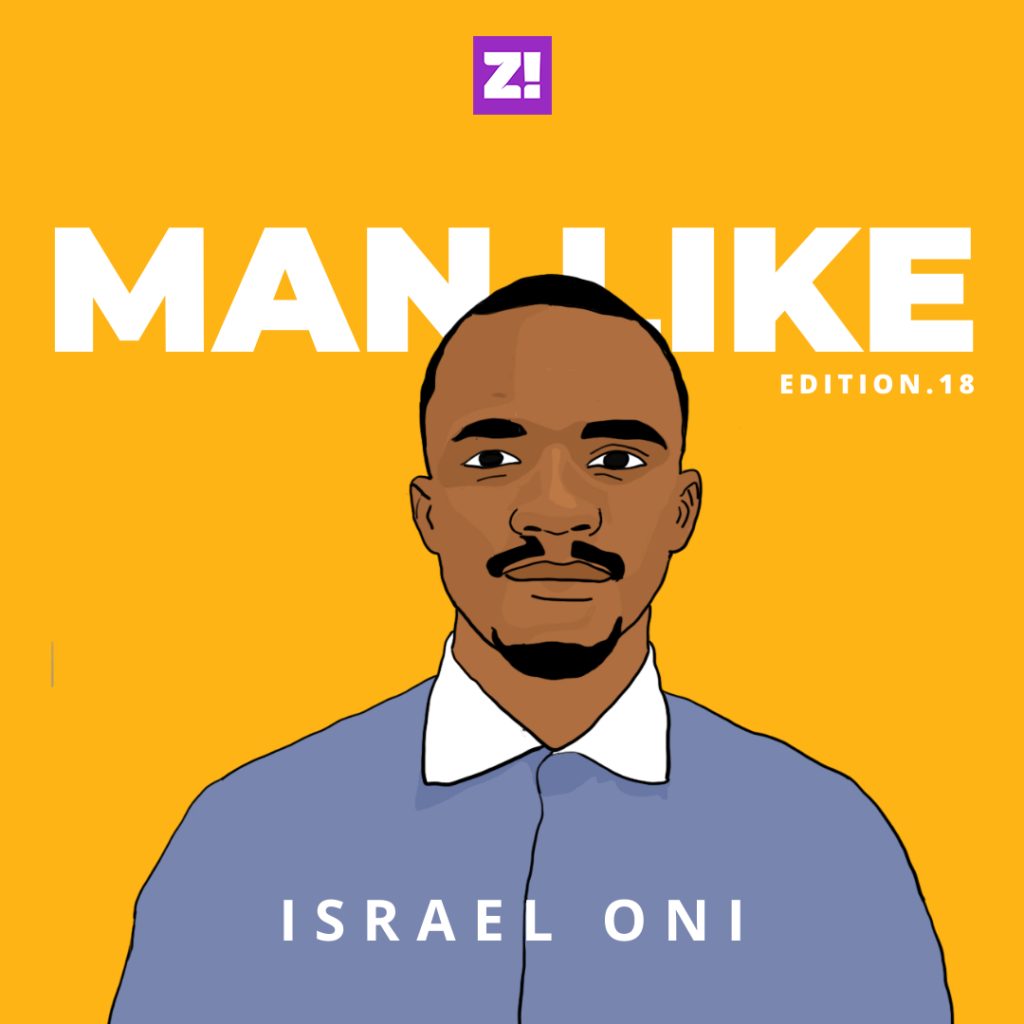
The subject of today’s “Man Like” is Israel Oni, a pharmacist and content creator based in Lagos. While working as a pharmacy intern in 2018, Israel lost his mum, who was an integral part of his childhood and adult years. He talks about navigating grief as a medical professional and then as an individual. Israel says that his mum’s death provided an avenue for him to bond with his dad who was busy with work for most of his life growing up. He talks about the struggles, setbacks, and eventual success with getting to slowly know his dad. Israel has some very deeply held beliefs about what it means to be a man, and he says his inspiration is Jesus Christ.
Everyone gets their “Man Like” moment. When did you get yours?
It was during my time at university. I was the assistant class rep, and this meant that people always came to me with one problem or the other: “Israel, I failed this course. What should I do?” “Israel, how do we register for this?” Some even brought personal problems, and with that, the pressure to try to help them make good decisions because they believed whatever I said. People confided in me so many times I started to wonder what they saw in me — I felt like a priest at confession.
Omo.
Then the second time…
Wait, second time?
Ah. Yes. The second time was when I lost my mum in 2018. Her death hit me like a rock on the head because it was really hard to take in. Also, as the only medical person in my family, I couldn’t afford to fall hand. So while my friends, family and siblings were crying, I had to be strong for them and make arrangements. Sometime during the running around, it hit me that I no longer had a mum and I would have to take care of my old dad; check up on him, support him and spend time with him so he doesn’t get depressed. These newfound responsibilities reminded me of being a man.
What position are you in the family?
Funny enough, I’m the last born, the baby of the house. I have a brother and a sister.
Wait. Why was it up to you to do all of these things?
It’s not like my siblings didn’t want to help. It’s like this: my sister is married and lives with her family. My older brother stays on his own. So it was just me, my dad and mum at home before I lost her. Now that one of us was no longer in the picture, I couldn’t abandon my dad like that. My siblings call and visit, but when the responsibility of physically staying came up, it fell naturally on me. I felt I had to be the one to do all of the running around for my dad.
I’m wondering: did you get time to properly grieve as a person? Not as a son or medical professional now.
I lost my mum in 2018, and I went for NYSC outside Lagos at the end of that year. I hadn’t processed what happened because it felt like a dream during that period. But you see 2019? I cried every day from around February till June. Every night, I’d come back from work, lock my door, think about the incident surrounding my mum’s death and start to cry myself to sleep. I’d wake up and go to work the next day, come back and repeat. One time I forgot to lock my door and my neighbour saw me crying. She was so shocked, she didn’t know whether to beg me to stop crying or to join me. She just sat down with me until I got myself. Death is such a terrible experience.
I’m so sorry.
Have you been able to find joy after this experience?
I find joy in seeing other people happy. Once they’re happy, I’m happy. Life is not as hard as many of us take it and so it’s the little things that matter to me. Even when I’m going through anything, I focus on the positive. I believe that if you keep focusing on the negatives you’ll never find a way out. Perspective matters when you’re going through things
Interesting. Do you have any fears?
I’m scared of poverty. If I’m poor, I can’t put smiles on people’s faces, and I want to help people. I try to be as hardworking as possible because, without money, you can’t help even yourself.
My brother.
I’m curious: what’s something everyone assumes you’re supposed to like but you don’t?
During my time as assistant class rep, a large number of people who used to confide in me were women, and over time, a lot of these people have gone on to become my friends.
People looking in from the outside who see me surrounded by a lot of female friends assume I’m having affairs with them. Me that I’m scared of womanising because I can’t imagine playing with someone’s heart. I’ll now break it and carry curse.
Lmao. But that’s how Lagos men do now. Small curse.
I dey fear oh, and I don’t like to toy with people’s emotions. If I’m not going to be serious with the person, there’s no point leading them on.
I feel you.
It’s not good to break women’s hearts. They already go through a lot on a normal day, so why add more? Have you seen a woman having menstrual pain before? Or giving birth? It’s painful to add on top of that. Fear God.
My brother, it’s like both of us are the last two God-fearing Nigerian men left.
Lool.
I was going to ask: what’s your relationship with your dad like now? Especially now that your mum isn’t around.
It’s very different because my siblings and I grew up with my mum. My dad is a pastor so he was always on the move doing one thing or the other. It’s not like he abandoned his responsibilities as a father; he just didn’t have time to bond with his kids. My mum was the one keeping things together.
So when she was no longer around, it was difficult for me to try to shift the relationship I had with her to my dad. However, with time we settled into a routine. We’ve both accepted that whether we like it or not, we only have ourselves. I can say our relationship is better now because I can talk to my dad about a woman I like, and we’ll laugh and he’ll advise me. This didn’t exist before.
My dad is a great person. He just didn’t have time when we were growing up.
I hate the dry season because it makes tears come out of my eyes.
Lmao.
Do you think your upbringing will affect how you raise your kids?
Definitely. From my relationship with my parents, I learnt the benefits of bonding early with your children and some of the challenges that come with not bonding on time. I like to think I’m properly armed with the dos and don’ts that’ll make my kids my best friends. Top of my list is quality time with their parents, and so help me God, I’ll provide it.
Amen! What would you say is different about being a man in Nigeria?
We’ve made it look like it’s the sole responsibility of a man to provide everything. And once he can’t provide, his masculinity is in question. The worst thing you can do to a Nigerian man is say they’re not man enough. E dey pain o. To be regarded as “men”, they work their asses out and fail to do other things like bond with their family. When they get old, they see all their effort has been for nothing because the kids don’t check up on them and everybody is on their own. Then they get lonely. Some go into depression while others develop disease conditions because they didn’t pay attention to their health while slaving away. I think that being a man is much more than providing, and there must be a balance. Men should know that there are a lot of ways to show impact as a man.
Why exactly did you get married if you know it’s only you that’ll handle all the responsibilities? Your wife is supposed to be your partner, so it’s supposed to be teamwork. You’re supposed to do this life thing together and make it easy for each other so you can enjoy each other until the last day. Men fail to understand that providing is important, spending time with kids is also important, but striking a balance is “importantest.”
Preach.
How do you define your masculinity?
A man should always stand up for the things he believes in. He should try as much as possible to not allow society define him because it’s easy to fall into a stereotype. Men should know and go for what they want. Men should respect and welcome the opinion of other people because they can’t do life alone. Men shouldn’t say because they are men their word is final — you learn more from listening to others. Another important thing is that a man shouldn’t be ashamed to seek help when he needs it.
I can’t but wonder who your role models are.
Jesus Christ is my role model of what it means to be a man. I liked the life he lived because he listened and was slow to respond. In the book of John, when people were feeling very religious, Jesus would ask them questions and let them answer. By the time they realised what was happening, he’d give them a savage reply. Remember when Jesus asked, “If there’s anyone among you without sin, let him be the first to cast a stone.” He makes me want to do better, and although I’m not perfect, I try to live up to his teachings.
Wow.
I also see some of my friends as role models, so I wouldn’t say I have a particular person. I look at different people and emulate one or two things from their lifestyle so I can be better. As long as they have traits I admire in them, I see everyone I meet as a potential role model.
You mentioned being raised by your mum, and I’m sure she started you on this journey. I couldn’t help but wonder about the last memory of your mum you have.
It’ll be the time when she told me, “Israel, do fast and bring wife oh. Let me carry my grandchildren while I still have strength.” It’s almost like she saw the future because she said this just a few months before she passed.
Damn. I’m so sorry.
Check back every Sunday by 12 pm for new stories in the “Man Like” series. If you’d like to be featured or you know anyone that would be perfect for this, kindly send an email.
What does it mean to be a man? Surely, it’s not one thing. It’s a series of little moments that add up.
“Man Like” is a weekly Zikoko series documenting these moments to see how it adds up. It’s a series for men by men, talking about men’s issues. We try to understand what it means to “be a man” from the perspective of the subject of the week.
The subject of today’s Man Like is Justin Irabor. He talks about how and why men should be responsible, the role of friendships in his life, and the things necessary for everyone to live a happy life.
When did you get your “Man now” moment?
I’ve been independent since I was a teen. But even then, I didn’t consider myself a man. I was just a boy who was hustling. It was during my NYSC year that I considered myself a man, which was weird because I had full-time employment before going for NYSC.
In my NYSC year, a set of conditions emerged — I was living on my own, I had an asshole for a boss, and I was suddenly teaching and imparting young kids with wisdom. Back in university, I had roommates who were like father figures to me and coupled with the fact that I was the youngest in the room, I used to defer to them in terms of life experience. At my job before NYSC, my boss was also a father figure. Now, here I was with a boss who was an asshole and living alone far away from home. To me, that was my “man now” moment.
Whew. What was the hardest part for you?
I was happy to be away from home, so I don’t think that any part was hard. Rent at the time was ₦25,000 per year and I was earning close to ₦100,000 per month.
If I had to pick, I’ll say the hardest part was dealing with my boss at work. He was an asshole who was constantly flirting with the corpers. He’d ask me to cut my hair and change my clothes and I’d refuse. I could have done all he asked, but I wanted to antagonise him so I guess I was reaping the fruits of my labour. The beauty was that he couldn’t do much to me because I was always technically correct. And that’s how my life has been: being technically correct.
Lmao. Does anything/anyone even scare you?
What scares and drives me is not doing, to the fullest of my ability, the things I believe myself able to. People who know me call me “multipotentialite” because I can do a lot of things fairly well. Though they generally over-index on my ability to do things — I’m not as good as the reports say, but I appreciate the sentiment. It’s good PR.
What scares me is the obscure idea of people saying the “boy is good” while I know that I could be better. I don’t jump up when people say I’m good because I feel like the anime villain who’s supposed to say, “You fool, I’m only at 10% of my power [Laughs].” I don’t think I’ve given anything a hundred percent. That’s also part of the reason I empathise with Ryan Reynolds. You can tell that he has the potential to be a bigger star but he just coasts. You know he’s great but when you look at his filmography, you don’t see anything major outside of maybe Deadpool.
One of my greatest fears is that I’m going to go through life being vaguely awesome. There are people who are clearly awesome and have a defined body of work to prove it. I feel like I have to do something like that to show that Justin is great and here is proof. Right now there are scatterings of my greatness, and I don’t have a coherent body of work. I’m working towards changing it and everything in my life is fuelled by the desire to do my best work.
Love it. What gives you joy though?
Most of the things that give me joy are fairly recent because I wasn’t particularly a joyful person. These days, I find joy in what makes a person amazing. Anytime I look at a person and I find what makes them great, I go ahead to tell them. It’s a very small thing but it makes me very happy. It’s one of those things that are bi-directional because it benefits both the person and yourself. It works this way: if you’re spot-on in your assessment, they will remember you as someone who saw their true nature, and they are incentivized to push for greatness. If you’re an employer, it’s a great instinct to have, knowing what unique traits individuals in your team have, waiting to be activated.
I get some joy from supporting my family. I get some joy from being in a relationship with someone who gets me. Until very recently, I genuinely believed there was something wrong with me on the relationship front because the things that people used to complain about me were almost the same thing masked in different forms: “Justin is a cold son of a bitch.” But I don’t feel cold. I feel like a very warm person. It’s such a relief to not feel the need to suppress core aspects of my being which was not always the case in previous relationships. I am with someone who gets me and that’s liberating.
I’m also happy to be a software developer.
Tech bro, pls do giveaway.
Lmaooo.
You said something about growing up independent, so who did you go to for advice growing up?
My problem was doubly difficult because I’m super independent and also super proud to the point of arrogance. I never went to anyone for advice, and I figured out life on my own. In fact, whenever my brother asks me for advice, I admire him because he has something I don’t have: the presence of mind to ask for help. One of the reasons I’m a voracious reader is because I don’t want to ask anyone for advice. Whatever topic I don’t know about, I read up on. I have people who inspire me, but I mostly don’t reach out to them for advice. Once I have a problem, I take long walks and speak to myself. Between myself and me, we might come to some form of idea on how to begin to think about the problem. Sometimes I might talk to people. But typically I talk to people when I have a couple of ideas in place and need them to see what I have moved around in my head.
Interesting. What do you think you could have done better if you had someone giving advice?
Sigh.
In my first job, my boss offered to split my salary 50/50 — 50 cash and 50 in stocks. I didn’t take the advice because my dad was already splitting my salary 50/50. But sometimes, and not because the stock would have been great, I wish I had taken that offer because that advice would have jump-started my interest in money.
Another advice I wish I had taken was when I had a breakdown in 2016 — a very private, quiet event — nothing dramatic. At the time, someone told me that the reason for my breakdown was that I was angry with the world because I thought I deserved better. He told me that to think I deserve better meant I felt my life had more intrinsic value than the life of a boy who sells pure water on the street. Naturally, I was upset because I thought the person was downplaying my frustrations because mental health is a super delicate affair. I thought about this for a while and I came to the conclusion that as far as life was concerned, I was not owed anything. In fact, with the way I grew up, I should have been worse than I was. I had done well for myself but I could not see it because I was always thinking about doing better, and that’s what triggered my breakdown.
I’m sorry mahn.
After that incident, my philosophy on life changed. I put my head down and started to let my work speak for me. If I had taken that advice sooner, I’d have arrived at where I currently am sooner. Because right now, I’m content. I’m not earning a billion dollars or riding the latest car neither do I have a house to my name but I’m content. This contentment fuels my obsession with my craft [whatever I’m working on] because I’m not thinking about being the best at it. I just want to be good at it because it seems like a noble pursuit. If I happen to earn an income and be wealthy as a result, that’d be great.
Please, where are they selling this peace of mind? Asking for a friend.
Lol.
Since you do a lot of things alone, I’m curious about the role your friends play in your life.
My friends will disagree, but I think their role in my life is to stimulate ambition. Just by interacting with them, I have a mental road map for how much drive a young person should have. I’m so introspective, so I don’t pay attention to the world — where should I be? How much should I be earning? etc. But my friends do. And by watching them lay out their lives and track it, I borrow from them. I guess I’m lucky to be surrounded by some of the most ambitious and smartest people I know because they surgically implant ambition in me.
Wahala for who no get smart and ambitious friends.
Lmao.
What do you think is the hardest part of being a man in Nigeria?
One thing that is true about being a man in Nigeria is that it confers some expectations on you. These expectations are upheld not by the law but by your peers. One of them is the idea that you have to be the Gestapo of the house who controls all the affairs. As soon as you make yourself an unbridled authority on discipline, you’re creeping down the corridors of cruelty and you limit the amount of love you can get from your wife and kids. Then you grow old and wonder why your children love their mother more than they do you.
By adopting unhealthy expectations on yourself followed by societal reinforcement, you unwittingly make choices that are detrimental to you. You then unthinkingly uphold them and force other men to abide by these bad principles, sometimes even going as far as classifying whatever doesn’t conform to these masculine expectations as weak.
Nigeria makes it hard to find yourself because everything around you reinforces a particular notion of masculinity. It can be difficult to tell where you end and imported notions about masculinity start. And that can be confusing sometimes.
How do you now define your masculinity?
I generally think of myself as a boyish man because I think youthfully about things. However, in terms of myself in relationship with other men, I understand my need to dominate. I want to enter a room and allow my presence to be felt. Because of this tendency, I always feel the need to be tempered by a partner who’s not meek or timid because I think I’ll unwittingly subdue her.
I also think that although masculinity is something that gets bestowed upon you arbitrarily, it can be beautiful if you know how to use it. By virtue of being a man, you have the ability to protect a lot of people. The weakest man in the world can defend people today. This is a privilege that I wish more men internalised.
Sometimes, I see some men lamenting about how being a man is becoming demonised and how people are suspicious of men, and I’m usually like, men are really powerful beings and with great power comes great responsibility. The reason men can do a lot of good is also why you can do a lot of bad. We can’t increasingly acknowledge that we’re powerful and expect to be given the benefit of the doubt when many times we haven’t lived up to expectations.
I think of my masculinity as a tool I’ve been given to use responsibly. So I try to speak up for other people when they need someone to speak for them.
I’m also learning to be vulnerable. As a younger man, I felt the need to be tough because I thought there was something reprehensible about being emotional. It wasn’t really affecting me, but people could never interact with me. By not showing all of me — strengths and weaknesses — people couldn’t know me. Being a man is me learning that I can be both vulnerable and responsible without muddying any waters. Being vulnerable doesn’t undermine my masculinity or make me less of a man.
In the spirit of being vulnerable, do you want to tell me your deepest darkest secret?
No.
Lmao.
Before I go, I want to ask what you think are some things necessary to live a good life.
I think that being useful is the root of happiness — when I send money home, I feel useful. When I build apps, I feel useful. When I make something that makes my company a profit, I feel useful. Every time I’ve felt down is because I felt useless in the face of something. If you find what arrests all your sensibilities and keeps you working and striving, that thing is what will make you happy. Life is funny in that you don’t know what will make you useful until you get there, so keep pushing it.
What does it mean to be a man? Surely, it’s not one thing. It’s a series of little moments that add up.
“Man Like” is a weekly Zikoko series documenting these moments to see how it adds up. It’s a series for men by men, talking about men’s issues. We try to understand what it means to “be a man” from the perspective of the subject of the week.
The subject for today is Victor, and he’s the managing editor of TechCabal. He talks about the struggles of growing up effeminate, the challenges of toxic masculinity and what it means to be human.
When did it first dawn on you that you were now a “man”?
[Pause]
The reverse to your question is that was I ever a child and the answer is no. I‘ve been responsible for stuff for the longest time. As early as eight years old, my mother would leave my siblings with me to take care of. I remember changing my sister’s napkins and her just crying. It was on one of these occasions that I cooked rice for the first time without supervision. I don’t remember the details, but the cry just full everywhere, so I had to do something.
After then, I graduated into worrying about family and stuff. I was very anxious — how’s the family going to be? What does the future look like? How would my siblings fare? This manifested in such a way that I went from thinking to going to look for work. It didn’t help that I was the first child, so there were expectations vs reality vs trying. I pulled nine million other stunts in the name of hustle and trying to contribute in my own way.
Mahn. Do you remember your first job?
It was a mixture of things: I worked at a bookstore for a while. I also worked at construction sites doing manual labour. I think there was also work in a factory as a factory hand.
When I was doing these things, my age mates were not working. We’d just finished school, and they were carrying babes, but I had the mindset of “what would I do next?” How would I apply myself? I guess that’s what drove me.
What’s something growing up like this does to you?
I’ll talk about relationships — I’ve noticed that I’m always the carer. I’m the one worrying about the other person’s physical and emotional wellbeing. And it happens by default. I think my childhood of looking after people influences this behaviour.
Interesting.
What’s interesting is that I once dated someone that said I was going to have a midlife crisis because I didn’t have a childhood. The person was like I skipped some developmental phases, and it’d affect me. I don’t remember having the time or the mental luxury to play like a child. I can’t remember being a child.
Did you ever talk to your parents about this?
I had a period in my life when I was angry. As a teenager, I was angry at the world, angry at Nigeria, angry at my parents. The anger reflected in a lot of things. I was more physical; I had a temper problem, and I was just very angry.
However, the more experienced I got, the more I saw life from a different perspective. You’ve been born, and nobody owes you anything. I started to understand that I was in charge of my life to a large extent. I also strongly believe in God and the place of luck and chance in people’s destiny. The belief that my actions would be responsible for a lot of things helped my anger and resentment. The older I got, the more I saw my parents as human beings with their own flaws. By the time we started to talk, it was from a place of understanding.
And your siblings?
I practically brought up my sisters. They were like my practise family. Until recently, I was very hands-on with them. I was trying to map their direction. I love the process of ageing and learning because it gives you perspective, and you see the world differently. I have come to accept that people will make decisions you don’t agree with and they’ll also be fine. My role is to support them. I love them very much, and I’m there for them to the extent that I can. Now, we chat, we text and all have a cordial relationship.
Nice. What gives you joy?
I think it’s important to make a distinction between joy and happiness. Someone like me, I can be happy at will. In making others happy, I’m happy. However, I think joy is one of those internal struggles that a human being embarks on until they die. Joy is a lifelong journey and there’s not one destination or route to it. I’m optimistic and at peace. I’m the kind of person who thinks that if I’m alive, the future will be fine. Inner peace for me is like a precursor to some form of joy because the pursuit is an unending one.
Philosopher, please. Does anything scare you?
Because of how I was brought up… I wasn’t brought up. Because of how I grew up, I quickly learned that the worst thing anyone could do was kill me. And if I didn’t die, I’d get through whatever challenge. I’m not saying I’m fearless, but I’m not constantly scared like OMG — I’m not in that constant state of trepidation. Again, maybe I’m suppressing it.
I’m more familiar with uncertainty. Uncertainty is exciting for me because I’m like, what does the future hold? There’s this thing in life where you make plans and it falls through. The knowledge that your well-stacked chips can just fall down is a vulnerable state; it sets uncertainty that’s akin to fear. It’s a blurry line between fear, excitement and uncertainty. I try not to think about it as fear, and I think that’s me being international in a Zen-like way.
I’m curious. Who are your role models?
Growing up, it was my dad. I had a great relationship with him, and he was instrumental to a lot of things. He introduced me to sports, creativity, and working out. But we weren’t always together. Somewhere along my late teens, separation happened, and he was no longer in the picture.
One of the biggest sources of my anger [growing up] was that I didn’t have anybody. At one point, when I was modelling, I wished there was someone to guide me. Most things I did in my life was basically just figuring shit out by myself — I’d just rough the thing. I’d read where I had to read. In other places, I’d put my head there and combine with hard work, smart work, God’s grace and luck. I honestly know that if I had guidance, I’d have gotten a lot of things “right.” In retrospect, it doesn’t matter because I think everything worked out the way God wanted it to.
Mahn…
The experience formed the way I looked at role models growing up. I’d scoff at people who had role models. It’s ironic because I grew up needing these people. And by not having it, a defence mechanism came up. Growing older and wiser, I’ve realised that you need models: mental models and human models. And if you don’t have physical access, you can learn from them over the internet.
I have a tonne of role models. People blog and tweet and I know it’s not their life, but I’m like: I like this model of you and what you made of your career. Teach me how you did it. But I don’t need to talk to you. I’ll read your book, your blog or your tweets. My work also gives me access to talk to people, so I can throw in a question and learn from the person’s experience. Life for me has become like the role model — a mental model of everybody. It’s not intentional, it’s just circumstantial, and I’ve made the best of it. I want to have things like career mentors that I talk to about my career. But I’m afraid, and I don’t want to bother someone. At the back of my mind, there’s still that inhibition that I’m being a bother.
At the end of the day, I’m still growing every day and trying to be better.
Heavy stuff. What was the hardest part of growing up as a man in Nigeria?
One day, I’m going to write about how toxic masculinity is the worst thing that can happen to a boy child. In my early teens, I was effeminate. My earliest memories involved singing — I sang soprano. I read books and carried novels everywhere. I got a lot of “Why you dey waka like a woman?” “Why you dey carry book like woman?” — this is gay.
Growing up in Nigeria, there’s a lot of expectations of you to be manly. Most of it is societal norms that you are forced to conform to. I’ve heard people say it’s wrong for a man to rub cream like a girl, and they should do “like man.”
I rebel against many definitions of manhood. For example, being a man doesn’t mean that when we’re gathered, we have to talk about who dey toast this one or who slept with this one. It stresses me out that there are adults still having that conversation. I’m talking about professionals. It’s stressful because it means that I can’t relate to a lot of young people who grew up this way.
I don’t want to be talking to you and the only thing we talk about is Arsenal and Chelsea. There are nine million other things for us to discuss and a world of interest that you probably have if you paid attention. But because your definition of being a man dictates that these are the things you talk about, we have to talk about them.
I feel you.
Being a man in Nigeria means being emotionally stunted. It’s just too much burden to place on one person. There are all these moulds in our mind that have nothing to do with manliness. You’re first human before you’re a man. If you start losing your identity because you’re attempting to fit into a societal male cast, then you have a problem.
Not every man is built to have a square chest, broad shoulders and slim hips. Some men are genetically built to have a big stomach, barrel bodies no matter how much they work out. Someone with a potbelly is not less of a man than I am.
I think the Nigerian definition of manliness is dangerous. Men think they own women or that they’re superior. These stereotypes make you believe that you own the world. And by fitting into this cast, you’re the king of the world; nobody can tell you nothing or sit with you. Then you grow up to become a shit human. You should be human before being a man.
Word. Tell me a major transformation that has happened between growing up and now.
I eventually grew up to be masculine, and became really sporty and athletic; I played basketball, did boxing, lifted weights. All these were antithetical to when I was younger where I had a lot of side comments to deal with.
At that age, I was impressionable, so the comments shook me to the core. This is one of the reasons why I can’t say this is what it means to be masculine. It took me a while to know that masculinity is not my identity. I’m Victor, and I’m human. I am kind and compassionate. I have the will to thrive. I’m a warrior and a survivor. There’s Victor from my early teens and there’s the current one, and both of them are masculine.
Sweet. What makes you human?
MR NIGER D, and then empathy.
Check back every Sunday by 12 pm for new stories in the “Man Like” series. If you’d like to be featured or you know anyone that would be perfect for this, kindly send an email.
What does it mean to be a man? Surely, it’s not one thing. It’s a series of little moments that add up.
“Man Like” is a weekly Zikoko series documenting these moments to see how it adds up. It’s a series for men by men, talking about men’s issues. We try to understand what it means to ‘be a man’ from the perspective of the subject of the week.
The subject for today is Nonso Egemba popularly known as Aproko Doctor. He’s a doctor, an actor, and health communications specialist. He talks about sacrifices made for him growing up, the new wave of broken men, and navigating male friendships as a married man.
Tell me the first time it struck you that you were now “a man”?
Immediately after university. I come from a family of three siblings and a lot of sacrifices were made for me to attend university — my mum sold ogi and Akara to see me through medical school.
I’d watch her fan smoke for fire and be sad because I knew the hazard. However, knowing the hazard is one thing, putting food on the table is another. In fact, during school breaks, I’d help out with fetching firewood and selling akara.
1—–
One of my biggest worries at the time was that none of my classmates should come to buy Akara. So that it’d not scatter my rep in school. Thankfully, I was good all through.
Whew!
The moment I finished medical school, the demands [for money] kept coming. At some point, I was like, I have to jazz up. One of the things that hit you hard as a man in this part of the world is that most men are expected to provide. I’m not saying it’s not expected from women, but it’s almost as if the burden is more on men. A lot of us tend to judge our effectiveness from the angle of “am I able to provide for the people I care about?”
As I was finishing school, I knew that I couldn’t joke around anymore. I just had to make it work.
Mahn. That’s heavy.
See, all I’m trying to do is to run faster than poverty. I never want to experience it again.
What’s something poverty does that’s difficult to explain to someone who hasn’t experienced it?
The constant lack changes you because to get something, you have to sacrifice another. That mindset is something that stays with you. Even when you escape poverty, you have to keep fighting it. For many people, something as simple as buying bottled water is mundane. But, if you had my kind of background, in some part of your head, you’re thinking, that’s five sachets of pure water.
Every day is a constant battle against that mentality — I tell myself that I’m no longer that person. I also remind myself that “problem no dey finish, try dey enjoy.”
A movement I endorse. What gives you joy?
Top of the list is seeing my parents happy. When I give them gifts and help them solve issues, it feels like their sacrifices were not in vain.
Another thing is impacting people’s lives. Only a few people know how my Twitter threads have changed people’s lives. I remember someone who saw a thread on how to save a choking baby. When her baby was choking, she followed the steps and it saved her baby. Things like that show me I’m making a change in the world and my work [health advocacy] is not in vain.
Ahan, Superman dey disguise.
[haha] Video games also make me happy. I’m a fan of Call of Duty any day, any time. Once I pick up my rifle, I just go bam bam bam.
Lmao. I’m curious: what’s your definition of masculinity?
There’s a picture of Atlas carrying the world on his head — that’s the picture of masculinity I have in my head. Men are, first of all, pillars. A good society rests on the shoulders of men.
Men protect, provide and nurture. I cringe to see standards that try to default men to a background role. I feel that if you take away from what men are supposed to be, you’ve destroyed that particular man. It’s almost as if we now have men who apologise for being men. I’m not talking about anything bad. I’m talking about taking charge, which is ingrained in boys from childhood. As kids, if there was a reason to climb the burglary proof or fridge, nine out of ten times, it’d usually be the boy child who would.
When men shy away from taking charge by nurturing and providing, then we have problems. You can’t be nurturing a woman and be beating her up. You can’t be a pillar in her life and abuse her. It’s almost as if we have a generation of broken men in society who think taking charge involves brute force.
The world has moved on; use your brain. It’s not a competition because no one is trying to take manhood from you. It’s only when men are insecure that they need to show their masculinity. When statements are made to reinforce masculinity, it’s usually closely related to violence — “do you know who I am?” “I will show you today that I’m a man.” Before you know it, there’s a slap or a blow.
No, there are other ways to show masculinity.
Interesting. Has anything ever threatened your idea of masculinity?
My wife is 6’1” and I’m 5’10”. Initially, people would say things like, “how you wan take climb your wife?”
It almost started getting to me. But then, being a man is not about muscle mass. Yes, many men have more muscle mass than women, but if that’s the basis of your masculinity, then you are a very fragile man. What if you get paralysed from the neck down? Does that mean you’re no longer a man? I’ve had to ensure that “being a man” is not based on how well or how tall I look. When I look at my wife, I trip all over again. Abeg my babe fine, see as she just tall like shege.
Lmao. What are some things you wish you knew before getting married?
No matter how much you love a person, they’ll annoy you. Many things will annoy you: the way they chew food, the way they drop stuff, the way they use toothpaste. And it goes both ways. Marriage teaches tolerance because you’re sharing your life with someone from a different background. It requires a lot of unlearning, relearning and compromise.
Another thing is understanding that when you argue, face the problem and not the person. When you attack the person, you end up missing the problem.
I’m jotting things. What’s a relationship deal-breaker for you?
Someone whose ideology of marriage is “I just want to be relaxed and be taken care of.”
Will I take care of you? Yes.
But if you don’t want to work, I don’t want to be with you. As a result of my background, I have the mentality of getting things done. I don’t want someone comfortable with sitting down and waiting for things to come to them. I want someone who’s also a dreamer and wants to be more than what they are right now. I don’t want someone whose only identity is “wife.” I want my wife to win in her sphere so that we’ll both be powerful.
Ahan. The Carters.
[laughs]
I’m curious. Do you have close male friends? Has marriage affected your friendship with them?
Yes, I have two. Sorry, I mean I had two because one passed on recently.
Wow. I’m sorry.
He was my best friend. Sometime this year, I got a call that he slept and didn’t wake up. When I heard the news, I didn’t cry because hard man, hard man.
It was two days later when it fully hit me that my friend was gone that I cried the kind of cry that had catarrh running down my nose.
I’m so sorry.
Back to your question. When I feel down because things in my life aren’t working out the way I think they’re supposed to, I call my friends… friend.
I call and rant and he’ll be quiet, listening. When I’m done, he gives me that back to reality talk — that it’s not as bad as it looks, which is true because we overestimate the importance of things. It helps to have someone that brings you back to reality.
It also helps that I’m married to an amazing person.
How so?
I’m lucky to have someone secure enough to know that talking to my friend doesn’t mean that she doesn’t have a place in my life. When I’m on the phone discussing issues with my friend, she understands that we’re having a man moment.
She also understands that I’m calling because I want a man’s perspective on the issue. And that’s something she can’t give no matter how much she loves me. I like that she doesn’t try to be everything for me in one person. She knows she can’t. I respect her by making sure that there’s nothing that they [friends] know that she doesn’t know about.
Is there space in the marriage?
Nah. It’s just the two of us.
Lmao. Tell me something you’re grateful for.
Many things. One is that I can take care of my mum; she no longer has to expose herself to the smoke from frying. I’m glad that her effort was not in vain.
Check back every Sunday by 12 pm for new stories in the “Man Like” series. If you’d like to be featured or you know anyone that would be perfect for this, kindly send an email.