Notice: Function _load_textdomain_just_in_time was called incorrectly. Translation loading for the wordpress-seo domain was triggered too early. This is usually an indicator for some code in the plugin or theme running too early. Translations should be loaded at the init action or later. Please see Debugging in WordPress for more information. (This message was added in version 6.7.0.) in /home/bcm/src/dev/www/wp-includes/functions.php on line 6121 Law | Zikoko!
On Friday, May 10, 2024, the Niger State Speaker of the House of Assembly announced that he planned to “assist” young victims of banditry attacks in his constituency by marrying them off.
What is the genesis of this issue?
The Speaker of the Niger State House of Assembly, Abdulmalik Sarkindaji, said that he only came up with these plans because he had been approached by religious leaders in Mariga LGA regarding how the orphans were helpless after the banditry attacks that took their parents.
Sarkindaji stated he would pay the dowries for the bridegrooms during a mass wedding ceremony scheduled for May 24. He described the initiative as an empowerment project to alleviate the suffering of the orphans.
Although local religious leaders supported this idea, it didn’t sit well with the Minister of Women Affairs and members of the public who took to social media to air their grievances.
What did the Minister of Women Affairs do about this?
The Minister of Women Affairs, Uju Kennedy-Ohanenye, expressed reservations about the legality of the wedding, questioning whether the girls had reached the age of consent and marriage as defined by Nigerian laws, including the Child Rights Act. Subsequently, Kennedy-Ohanenye filed a complaint to the police and sought a court order to halt the plan for further investigations on the girls’ consent, ages, and marriage arrangements.
She said, “I have filed for an injunction to prevent him from doing whatever he intends to do on May 24th, until a thorough investigation is conducted on those girls, to determine whether they gave their consent, their ages, and who is marrying them”.
What was the speaker’s reaction?
On Wednesday, May 15 2024, Honourable Sarkindaji announced his withdrawal from the planned mass wedding of orphans after the intervention of the Minister of Women Affairs.
However, Sarkindaji later defended the initiative, insisting that the minister had misunderstood it. He said his intention was humanitarian and the planned marriages would not violate the Child Rights Act, contrary to the minister’s concerns.
Sarkindaji emphasized that the girls, despite “being ripe for marriage”, don’t have the means to wed because they are orphans or from impoverished families. He urged the minister to visit his constituency to better understand the situation of the girls and see how she could assist them directly.
The Speaker also stated that the preparations he made for the wedding, including paying bride prices on behalf of the grooms, remained in place, but the decision on whether to proceed with the wedding or not would be taken by traditional and religious leaders in the area.
[ad]
How is the public reacting to this event?
The public’s reactions were divided, with support rising from the Imams and residents within Niger state. In contrast, members of the public in other areas of the country continue to raise concerns about the mass marriage.
A petition circulating online has garnered thousands of signatures, with citizens expressing shock and dismay over what they perceive as a misuse of public funds, a violation of the rights and dignity of vulnerable children.
The Niger Imams council, represented by Umar Abudullahi states that the girls were not being forced into marriages.
The council maintained that the Minister had overstepped her bounds and would have the whole Imams in the country to battle with, if the weddings do not hold as planned.
They also asked that the Minister of Women Affairs tender an apology for her actions and words which have misrepresented their intentions and to retract her petition otherwise a lawsuit would ensue. The council also petitioned that her appointment be retracted and declared her unfit for the position of Minister.
“The planned weddings have the blessing of all the religious and traditional leaders from the area. The sponsor of the wedding consulted widely before accepting to take the responsibility and we are strongly behind him.
“The girls are not underage and they are not being forced into marriage as the minister has made the public believe. This is what the minister failed to investigate,” the council added.
Before this, the Take It Back Movement called on the Speaker to rescind his decision to marry off the 100 female orphans.
What happens next?
It’s unclear if the girls will be married off or not. The Imams council awaits a response from President Tinubu.
Some of the laws on this list have never ever been enacted, either because Nigerians don’t know them or because they just sound like page fillers in the Criminal Code Act of the Nigerian Constitution.
By the end of this piece, all you’ll wonder is “Who even thought of these laws?”
Witchcraft and juju
According to Section 210 of the Criminal Code Act of the 1990 Nigerian Constitution, if the accused confesses to being a witch or is confirmed to own or to have used charms on someone else, they get jail time. We all know village people are real, so if you have proof of their existence in your life, you can actually have them imprisoned. But if your accusation turns out false, you might be the one to spend ten years in jail.
One of the rare witchcraft cases to make it to court happened in Bauchi state in 2011. The case was settled amicably between the two witches, and it’s unclear if they served the two-year jail term.
Promising and failing to marry
In the case of Egbe v. Adefarasin (1987) NWLR (Pt. 133) 594, the Nigerian Supreme Court held that breach of promise to marry is actionable. The court insists there must be proof of this promise, like letters, a ring or pictures. In the absence of this, witnesses can testify.
One Ms Mabamije received ₦20 million in 2016, among other things, because her fiance broke his promise to marry her. The law applies to both men and women, so if your longtime partner misbehaves or has broken their promise to marry you, you know what to do.
Motivating or challenging others to fight
According to Section 84 of the Criminal Code Act in Nigeria, anyone who challenges another to fight a duel, or attempts to provoke another to fight a duel, is guilty of a felony and could be imprisoned for three years. The next time someone challenges you to throw hands, get them arrested immediately.
Aiding or committing suicide
Section 327 of the Criminal Code Act in Nigeria states that any person who attempts to kill himself is guilty of a misdemeanour and is liable to one year imprisonment. Anyone who aids suicide gets life imprisonment.
But this law has been under review since October 2023, because it’s baffling that the government really thought one year of imprisonment was the best way to help suicidal people who actually need therapy and counselling.
Using fake gold or silver coins
The consequence of dealing in fake gold or silver coins is two years in prison according to Section 148-151 of the Criminal Code. Imagine what the lawmakers of the ’90s must’ve been through for something like this to make the Criminal Code.
If like Peter in the bible, you don’t have silver or gold, you’re safe for now.
Disrupting religious service
We have questions here. Does it count if the disruption is from the offering queue, or because members are busy staring at a fine Christian brother or sister? It probably does.
This also means if Muslims have to use the main roads for Jumaat prayers, it is illegal to disrupt them because you want to drive to your destination. Find this in Section 206 of the Criminal Code.
[ad]
Insulting religions
Considering how much this happens on social media, we have mixed feelings about this one.
Section 204 of the Criminal Code says the punishment is two years in prison. However, Sharia law considers it blasphemy, which has been used to justify the killing of people alleged to be blasphemers.
Selling bad meat
If Mr Shola who sells meat at Iba is reading this, your days are numbered, sir.
The next time you get bad meat, no need to shalaye or return it. Take it to the police station. You and the meat seller will discuss this in court. Outside food safety laws, Sections 243 & 244 of the Criminal Code specifically state a two-year sentence for people who sell diseased meat.
Street begging
Lagos state banned street begging in 2023 and said defaulters would spend two to three months in jail if caught. A few people have faced the music in court for this, but many still roam the street in ignorance.
Cheating in business
Section 421 of the Criminal Code spells out two years in prison for a trader who sells overpriced or stolen products to customers.
If this law were implemented, many Instagram vendors would be behind bars for their overpriced products, but that’s an article for another day.
As the arm of government that handles the prosecution and interpretation of all laws in the country, there are several tiers of the Nigerian Judiciary System the average citizen may not be familiar with. There are two categories of courts recognised in the Nigerian Constitution: federal and state courts. The National Judicial Council recommends justices or judges for the courts, the President appoints the Chief Justice for the federal courts, and the state governor does the same at state courts.
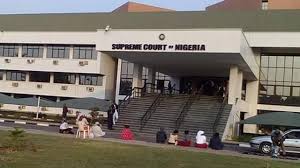
Three courts exist under the federal: the Supreme Court, the Court of Appeal and the Federal High Courts. Under the state courts, there is the High Court of the State, the Customary Court of Appeal and the Sharia Court of Appeal. Northern Muslim states usually have Sharia Courts rather than Customary Courts.
The hierarchy of courts in Nigeria refers to how they are organised by level, jurisdiction and region with the federal courts wielding more authority.
Tier 1 Courts: The Supreme Court
The Supreme Court is the highest and most powerful court in the land and all decisions here are final. The apex court is provided for under section 230 of the 1999 Constitution of the Federal Republic of Nigeria (as amended). It comprises of Chief Justices and other justices who must not exceed 21. They are appointed by the president and must be qualified practitioners with at least 15 years of service. The Supreme Courts have the jurisdiction to reassess the decisions of the Court of Appeal. They also have the jurisdiction to determine State vs. State and Federal vs. State cases.
Tier 2: The Court of Appeal
The second highest court in Nigeria is the Court of Appeal. It is located in Abuja alongside 20 other locations to make it more accessible to the masses. The Federal Court of Appeal is provided for under Section 249 of the 1999 Constitution of the Federal Republic of Nigeria (Amended).
The president of the Court of Appeal is the head of the 49 justices that operate the Federal courts. The Court of Appeal hears and judges cases from other courts in the hierarchy. It has the jurisdiction to determine all election-related cases of the executive branch of government. The Court of Appeal is the centre of all legal systems in the country and is constitutionally required for three justices well knowledgeable in the customary and Islamic personal law to be included.
Tier 3 courts
The Tier 3 Courts are the Federal High Court, the High Court of a State/FCT, the Customary Court of Appeal of a State/FCT and the Sharia Court of Appeal of a State/FCT. All judgments reached at any of these courts can be appealed to the Tier 2 courts (Federal Court of Appeal).
The Federal High Court
The Federal High Court is based in Abuja but has other branches across the 36 states of the Country. The court is provided for under Section 249 of the 1999 Constitution of the Federal Republic of Nigeria (Amended). It has jurisdiction over civil matters and other cases as set out under Section 251 of the 1999 constitution of the Federal Republic of Nigeria (Amended). The court also has appellate jurisdiction to determine cases from tribunals.
The High Court of a State/FCT
The highest English legal court in a state, the court is provided for under Section 255 of the 1999 constitution of the Federal Republic of Nigeria (Amended) and has a large jurisdiction under the Constitution in Civil and Criminal Matters. The court is presided over by a chief judge and other judges and has appellate jurisdiction on cases from the Customary and Magistrate Courts. It shares a lot of powers with the Federal High Court.
The Customary Court of Appeal of a State
This is the highest customary law court in a state. The courts are established under Section 280 of the 1999 Constitution of the Federal Republic of Nigeria (Amended). The President of the State/FCT Customary Appeal Court is the head of the court, assisted by other judges to review decisions of Customary Courts in the state.
The Sharia Court of Appeal for a State/FCT
This is the highest Sharia court in the States. It is established under section 277 of the 1999 Constitution of the Federal Republic of Nigeria (Amended). The head is called the Grand Khadi, assisted by other Kadis to review decisions of Sharia courts in the state.
Tier 4 Courts: The State Courts
State courts are the lowest courts in the hierarchy of courts in the judiciary. They include Magistrate Courts that handle all English legal cases, Customary Courts that handle all customary legal cases and Sharia courts that handle Islamic cases enacted in northern states. The courts are established under state law and are the only courts not established under the 1999 Constitution of the Federal Republic of Nigeria (Amended). All judgments under these courts can only be reviewed by their Tier 3 counterparts.
Tier 5 courts (others)
Election Tribunals
There are two types of Election Tribunals: The National Assembly Election Tribunals which handle petitions on disputed results of Senate and House of Representative elections; and the Governorship and Legislative Electoral Tribunals which handle disputed gubernatorial and state legislative electoral decisions. The Tribunals are set up by the President of the Federal Court of Appeal under the advisement of other chief judges and presidents of courts of appeals.
The Code of Conduct Tribunal
This is established by the Chapter C1 Code of Conduct Bureau and Tribunal Act, No. 1 of 1989 Laws of the Federation of Nigeria. The Tribunal hears the petitions of citizens on corrupt public servants for breaches made under its provisions. The president of the country selects the chairman of the tribunal under the advice of the National Judicial Council. The judgment of the Tribunal can be reviewed by the tier 2 courts (Federal Courts of Appeal).
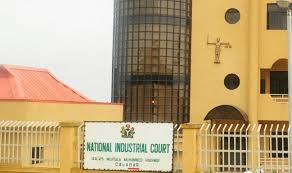
National Industrial Court (NIC)
This court is provided for under Section 254A of the 1999 Constitution of the Federal Republic of Nigeria. It has exclusive jurisdiction over all industrial disputes including Workers’ Compensation Law, Trade Union and Labour Laws as well as Factory Law.
While power needs to exist in sections like this, they all follow the same manual, so justice gets served equally.
Law enforcement agencies in Nigeria are all established to enforce the law without bias, but each agency has a different focus.
From the famous EFCC to the lesser-known NIA, we’ll break down each law enforcement agency in Nigeria to help you identify them, their history and job descriptions.
The Nigerian Police Force (NPF)
The Nigerian Police Force is the largest organisation on this list and principal law enforcement agency in Nigeria. It was established in 1930 and is currently headed by Inspector General Kayode Egbetokun.
The NPF is saddled with the responsibility of maintaining law and order and executing the activities of all other law enforcement agencies in the country. They operate under their functions in Section 214 of the 1999 constitution of the Federal Republic of Nigeria (as amended) Nigeria Police Act 2020.
National Drug Law Enforcement Agency (NDLEA)
The NDLEA is the country’s foremost agency in its fight against illicit drugs and intoxicants. It performs covert and major operations tackling the cultivation, trafficking and distribution of illegal and dangerous drugs in the country.
The NDLEA was established in 1989 by decree number 48 of 1989 Act of Parliament. The current chairman of the NDLEA is Brig. Gen. Mohammed Buba Marwa (Rtd).
Economic and Financial Crimes Commission (EFCC)
The EFCC is the financial safeguard of the country. They focus on financial crimes such as money laundering, fraud, embezzlement and other financial corruption-related cases.
Their mandate is to combat these crimes and recover stolen funds from guilty defendants. The commission was established in 2003 under the EFCC Establishment Act 2004. The current chairman of the EFCC is Olanipekun Olukoyede.
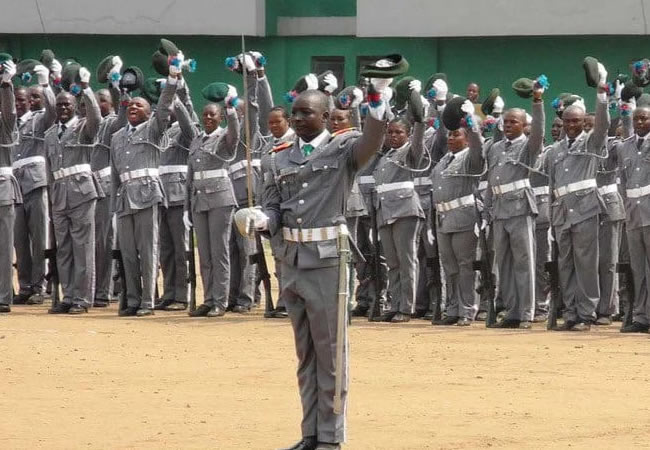
Nigerian Immigration Service (NIS)
The NIS handles border security and the integrity of the country. They are in charge of issuing visas, passports and any other document required to make legal entry into the country.
The NIS was established on August 1, 1963, by the Act of Parliament, CAP 171, Laws of the Federation Nigeria. It is currently headed by Comptroller General Kemi Nanna Nandap.
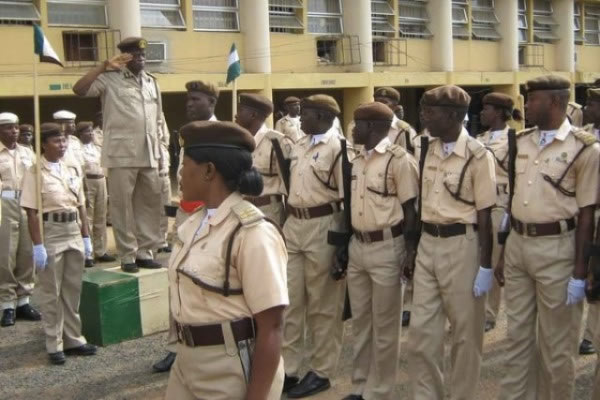
Nigerian Customs Service (NCS)
The NCS is another agency that ensures the security and integrity of Nigerian borders. Their focus is primarily on imported goods. They ensure the veracity of such goods, issuing documentation and clearance for all imports into the country.
They’re also tasked with rooting out smugglers and traffickers who circumvent legitimate means of importation to bring in illicit goods like drugs, stolen merchandise, cars, etc. The NCS was established in 1891 and operates under the Customs and Excise Management Act. It is currently headed by Comptroller General Bashir Adewale Adeniyi.
National Intelligence Agency (NIA)
The NIA is the country’s foremost intelligence agency. They operate in secret, focused on finding and distributing intelligence to other agencies.
They gather intelligence on sensitive issues such as terrorism, kidnapping, child and drug trafficking, cybercrime and gun trafficking. It was established on June 5th, 1986, under the National Security Agencies Act of 1986 (Decree 19). The NIA is currently headed by Director General Ahmed Rufai Abubakar.
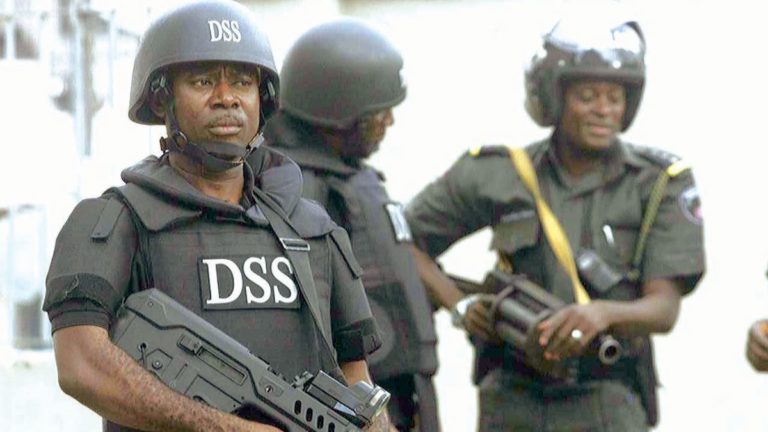
Department of State Services (DSS)
This agency was formed on June 5th, 1986, under the National Security Agencies Act of 1986 (Decree 19). The agency is currently headed by Director General Yusuf Magaji Bichi. Like its sister agency, the NIA, it is tasked with providing intelligence to the government and other agencies.
The DSS is focused on counter-terrorism and investigating national security threats; they also handle the security of core officials of the government.
Nigeria Security and Civil Defence Corps
The NSCDC is a paramilitary institution that handles everything from providing security to public infrastructure to protecting the country’s pipelines from vandalism.
They’re in charge of registering and regulating private security enterprises in the country. It was founded on June 28th, 2003, under the 2003 NSCDC Act. The current head is the Commandant General, Dr. Ahmed Abubakar Audi.
Federal Road Safety Corps (FRSC)
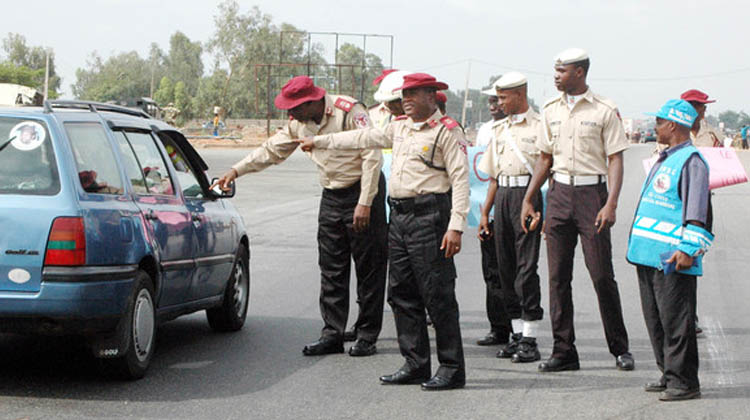
The FRSC is the principal road administration agency and traffic law enforcement agency in the country.
They were established in 1988, under the Federal Road Safety Commission Act and are responsible for all road administration matters such as issuance of driver’s licenses and roadworthiness documents, traffic management and regulation, and ensuring the safety of all vehicle users on the highways.
The Independent Corrupt Practices Commission (ICPC)
Established on September 29, 2000, the ICPC is responsible for investigating reports of corruption-related cases of any public body or system.
They receive, investigate and prosecute cases of corruption as dictated by their constitutional mandate under the Corrupt Practices and Other Related Offences Act of 2000. The current chairman of the agency is Prof. Bolaji Owasanoye.
From traffic law enforcement to drug control, corrupt financial practices and maintenance of law and order, every agency on this list is committed to enforcing the law and promoting order.
To learn more about other national agencies in Nigeria, click here.
Call it what you want — cyberstalking, cyberbullying or trolling — it doesn’t change what it really is. Since social media became a global means of communication, it has become common to troll or bully anyone just for fun.
There’s a chance anyone can call it freedom of speech and harmless trolling, the Nigerian law sees it as cyber-stalking and can put you in trouble.
Although the main victims have been content creators, influencers and public figures, cyber-stalking happens to people around the world every day in several shapes and forms.
Now, if you’re asking yourself, “What is considered cyberbullying in Nigeria, and how can it put me in trouble?” Here are your answers.
What Does The Nigerian Law Say About Cyberstalking?
Let’s forget our lawmakers’ previous efforts to ban social media or regulate its usage, Nigeria has laws that can incriminate some of your actions on social media.
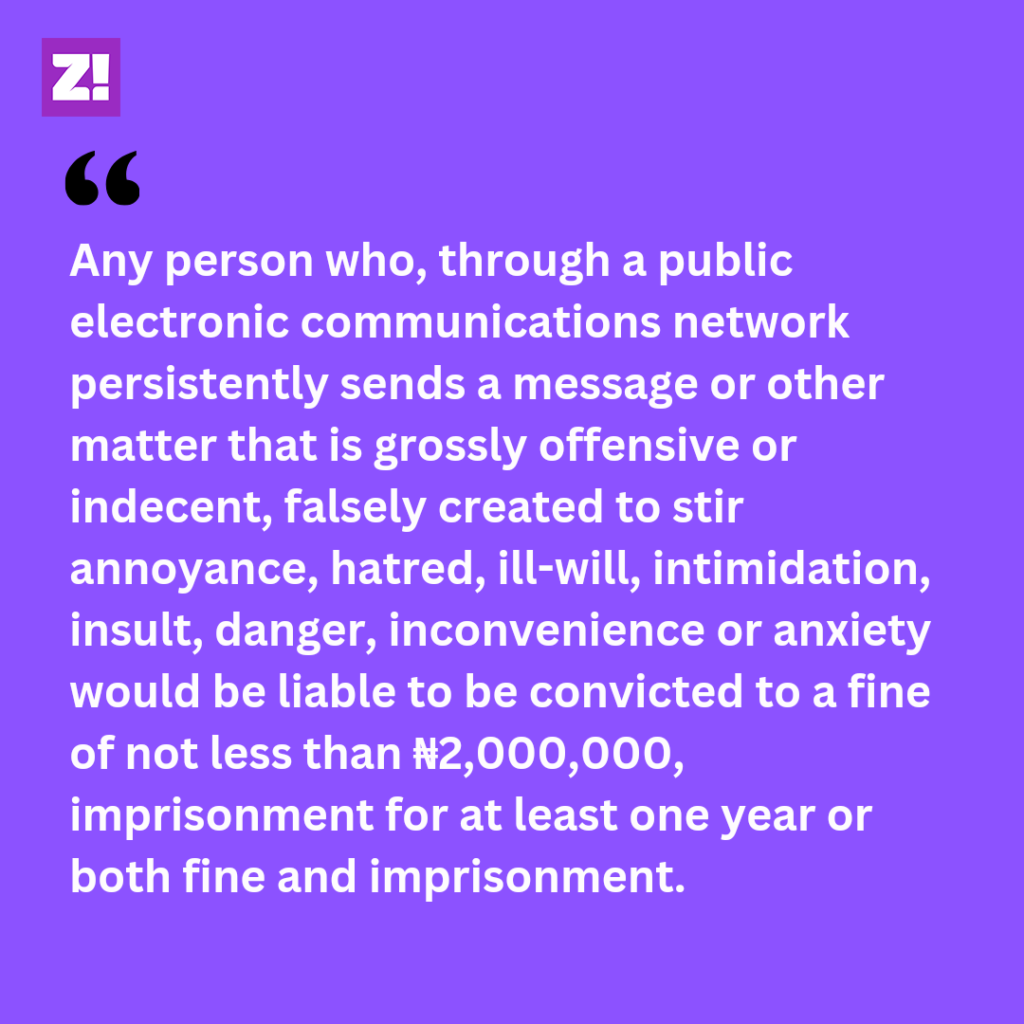
The act also states that any person(s) who sends messages with the intent to; harass, blackmail, bully or threaten another individual in such a way that causes fear of death, violence and anxiety may be convicted of a jail sentence between five to ten years, a fine between ₦15,000,000 and ₦25,000,000 or both imprisonment and fines.
What Does This Mean In Layman’s Terms?
It turns out that even if you don’t mean it, anything you say or do on social media can be used against you in a court of law — literally.
If your comments were deemed defamatory, insulting, misleading or violent by their recipient, you might have to speak to their lawyers next.
[ad]
Have These Laws Ever Been Applied?
Yes. Many artists and public figures have taken this legal “no gree for anybody” anthem seriously this year and in the past.
Although not all these cases make it to court or jail like that of Iyabo Ojo and Lizzy Anjorin, it would be best to avoid it happening in the first place. Who knows? It could be your turn and your village people decide to sprinkle trouble in it for you.
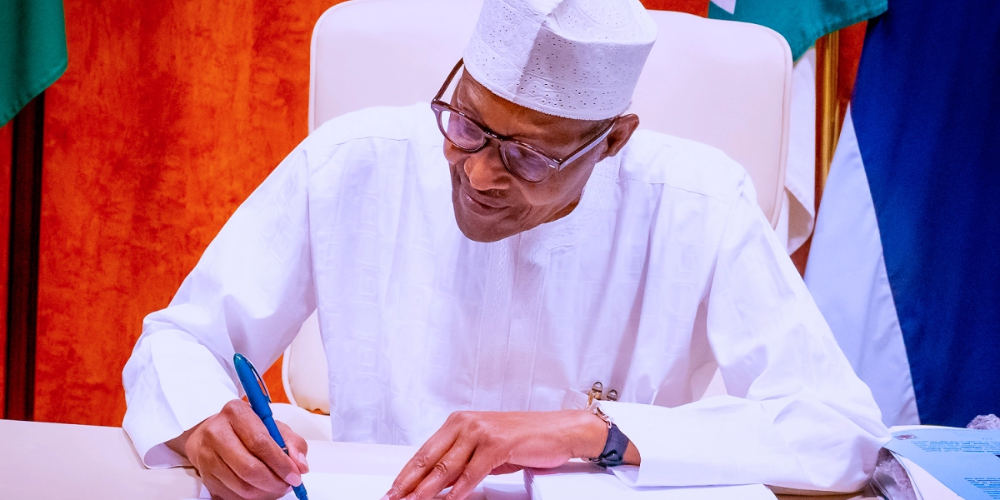
With President Muhammadu Buhari counting down to his Aso Rock exit, he’s been ticking off last-minute items on his bucket list. The latest was granting assent to 16 constitution amendment bills on March 17.
Buhari received 35 bills from the national assembly but only assented to 16. So what are these bills, and how do they concern you?
Bill No. 1
If you’re from Ebonyi state, you want to pay attention to this bill. This bill, titled “Fifth Alteration (No.1)”, is to alter the Constitution of the Federal Republic of Nigeria, 1999, to change the names of Afikpo North and Afikpo South Local government areas (LGA). They’re now known as Afikpo and Edda, respectively.
Bill No. 2
This bill concerns people from Kano and is titled the “Fifth Alteration (No.2)”. It’s to amend the Constitution to change the name of Kunchi LGA. It’s now known as Ghari LGA.
Bill No. 3
Gather here if you’re from Ogun state. The “Fifth Alteration (No.3)” is a bill to change the names of Egbado North and Egbado South LGAs. They’re now known as Yewa North and Yewa South, respectively.
Bill No. 4
The Fifth Alteration (No.4) is to correct the name of Atigbo LGA; and for related matters. The LGA is in Oyo state. Its correct spelling is Atisbo.
Bill No. 5
The Fifth Alteration (No.5) is to correct the name of Abia/Akpor LGA to Obio/Akpor; and for related matters. If you followed the elections closely in Rivers state, this LGA might ring a bell.
Bill No. 6
Fifth Alteration (No.6) is a Bill that seeks to alter the Constitution of the Federal Republic of Nigeria, 1999, to provide for the financial independence of State Houses of Assembly (HOA) and State Judiciary and related matters. This means that state HOAs and state judiciary now have financial autonomy. That’s a good thing.
Bill No. 8
The Fifth Alteration (No.8) regulates the first session and inauguration of members-elect of the National and State HOA. This bill provides a procedure for how assembly sessions should go.
Bill No. 9
The Fifth Alteration (No.9) is to delete the reference to the provisions of the Criminal Code, Penal Code, Criminal Procedure Act, Criminal Procedure Code or Evidence Act from the Constitution. This makes the constitution less voluminous since these Acts are codified separately into law.
Bill No. 10
The Fifth Alteration (No.10) amends the Constitution to exclude the period of intervening events in the computation of time for determining pre-election petitions, election petitions and appeals, and related matters.
Essentially, periods in filing election petitions are sacrosanct, and no extenuating circumstances are considered. However, with this bill, pre-election petitions can now be excluded from the period if a party raises a preliminary objection or interlocutory issue (i.e. judgement given provisionally).
The Fifth Alteration (No.12) is to alter the Constitution to provide for the post-call qualification of the Secretary of the National Judicial Council; and for related matters.
Bill No. 15
The Fifth Alteration (No.15) Bill amends the Constitution to delete the item “prisons” in the Exclusive Legislative List and redesignate it as “Correctional Services” in the Concurrent Legislative List; and for related matters. While it may appear trivial, the name change is significant as it’s symbolic of what reform is, which is to correct behaviour and not necessarily punish for the sake of it. This bill also means states can now build correctional facilities instead of just the FG.
Bill No. 16
The Fifth Alteration (No.16) Bill is to move the item “railways” from the Exclusive Legislative List to the Concurrent Legislative List; and for related matters. As in the previous entry, states can now create railways—and earn revenue from them—just like the FG.
Bill No. 17
I like to call this the “Up NEPA Bill”. The Fifth Alteration (No.17) Bill alters the Constitution to allow states to generate, transmit and distribute electricity in areas covered by the national grid; and for related matters. Fingers crossed, many states will take advantage of this.
Bill No. 23
In Fifth Alteration (No.23), the Bill seeks to alter the Constitution to require the President and governors to submit the names of persons nominated as Ministers or Commissioners within sixty days of taking the oath of office for confirmation by the Senate or State House of Assembly.
The days of “Baba Go Slow”, when Buhari had to wait till September 2015—after being sworn in on May 2015—to submit a ministerial list, are gone. Publicly elected officials need to hit the ground running. However, it remains unclear what the penalty is if they default.
Bill No. 32
The Fifth Alteration (No.32), the Bill amends the Constitution to correct the error in the definition of the boundary of the Federal Capital Territory, Abuja, and related matters.
Bill No. 34
The Fifth Alteration (No.34) alters the Constitution to require the government to direct its policy towards ensuring Nigerians’ right to food and food security. More rights for us? Amen to that!
There’s fire on the mountain and everyone seems to be suing everyone. First, it was producer, Tempoe who sued Asa early this year [2022] over copyright infringement on her songs, IDG with Wizkid and Love Me or Give Me Red Wine. Now, Asa has served Joeboy papers of his own over the song, Contour, and everything is messy.
Tempoe was allegedly in the studio and part of the team that created two songs off Asa’s V album, but like those shady friends on IG, she allegedly didn’t give him credit for his work. Meanwhile, Asa also claims she was part of the team that created the beat for Joeboy’s Contour, and even though she ended up not using the beat, she’s suing Joeboy for ₦300 Million.
Because of these cases, Asa’s IDG with Wizkid and Love Me or Give Me Red Wine have been removed from the interwebs and streaming platforms. How did we get here, and what’s all this big big legal jargon they’ve been speaking?
Let me explain.
What does copyright mean?
Breaking it down in the simplest way possible, copyright can be described as the rights given to creatives, which means they have full legal ownership and control over their music, literary work or any type of creative work. Basically, if I record a song called Zikoko Babe today and copyright the song, it’s officially mine, and nobody else can profit off of it.
Wait, Nigeria has copyright laws?
If anyone was wondering, yes, the Nigerian constitution supports the copyright law above. You can confirm by looking at The Copyright Act (as amended), Cap C28 Laws of the Federation of Nigeria, 2004.
So if anyone messes with your creative property, don’t be afraid to use the famous “see you in court” line. But how do you even know when your copyright is being taken fi eediat?
How can someone infringe on your copyright?
Copyright infringement happens when someone uses your work without your permission or presents a close imitation of your work as their own. This has to be public, so people streaming your song aren’t infringing on your copyright — you’re also getting paid. But another artist releasing or performing a song that’s a clear rip-off of yours is a major copyright infringement. Note the difference.
What is this court injunction Asa and her people are pursuing?
Just like Tempoe got a court injunction against Asa, the Jailer singer is also seeking a court injunction against Joeboy. A court injunction is an order by law to either refrain from or actually do something. In Tempoe’s case, Asa was given an injunction and had to take IDG and Love Me or Give Me Red Wine off every streaming app. Now Asa is out to get Joeboy’s Contour off streaming too.
Direct evidence to support your claim, such as eyewitnesses
Concrete evidence that you’re the owner of what you’re fighting for
Proof that the person you’re accusing had access to hear your song because they can’t steal what they haven’t heard
Clear evidence that their work is similar to yours
Can I carry my copyright to the grave?
According to the Nigerian laws, copyrights expire 70 years after the owner of the work dies. If you live forever, then your copyright is set for life. So my advice? Avoid death by all means. If not, the clock to expiry will start ticking.
Asa, Tempoe and Joeboy’s case is not the first time
The spicy drama surrounding Asa, Tempoe and Joeboy may sound like news to people. Still, a trip down memory lane will show that this musician-on-producer or musician legal wahala is nothing new.
In 2018 alone, Tiwa Savage, 2Baba and Tekno were all accused of infringing on the copyrights of other artists. Danny Young accused Tiwa of stealing One from his 2009 song, Oju Tiwon and 2 Baba was accused of stealing his Peruzzi-assisted hit, Amaka from an up and coming artist, Yoko B. Meanwhile, Tekno’s call-out was by Danfo Drivers over a sample of their song Kpolongo featured in his song Jogodo (it’s the title similarity for me).
One thing that has always plagued the Nigerian music scene is a lack of structure — and by structure, I don’t mean the mansions artists unveil on Instagram every day. For the longest time, people’s creative works have been stolen (intentionally and unintentionally) and passed off as the work of others because of a lack of copyright knowledge. But things are changing.
With musicians now choosing violence and dragging their peers in public, the industry is set to change with a lot more focus on copyrights. If you want to copy a video style, reach out to the owner; If it’s a sample, reach out to the team behind it. No matter what, just be like Beyoncé and credit everyone who deserves to be acknowledged.
The Future of Hiring Lawyers During COVID-19 and Beyond for 200 Million Nigerians
Christian Nwachukwu, Cofounder of TalkCounsel
With the spread of COVID-19, most industries have adjusted their standard practices of conducting business. The legal profession is no exception, with TalkCounsel at the helm redefining the legal experience for countless Nigerians. TalkCounsel’s digital workspace hosts vetted lawyers that offer a comprehensive range of services equipped to cater to the multifaceted Nigerian community’s ever-changing needs.
It’s often the case in human affairs that the most relevant lessons emerge from the most devastating times. The onslaught of COVID-19 has made apparent the critical role technology plays in business and our day-to-day lives. The new reality arising from the ongoing pandemic is the importance of digital systems and solutions. Some organizations were in the throes of digital transformations pre-pandemic. COVID-19 accelerated their efforts and forced others to implement digital capabilities for the first time as a means of survival. This unprecedented period made room for rifts to be addressed by the likes of Zoom and Slack that offered tech-solutions to a world reeling from the abrupt and rapid shift to virtual operations and interactions.
The legal community in Nigeria was not spared of the growing need to adopt tech-solutions in the advancement of lawyering. As evidence of such, several courts sitting in Nigeria adopted Zoom or Skype for court proceedings. The pandemic and restriction of human contact resulted in a burden for both the legal community and the public. Multiple clients expressed difficulty finding, hiring, and collaborating with lawyers in Nigeria remotely. The inability to do so prompted a decline in legal services requests, which affected the revenue stream for attorneys in Nigeria.
In addressing this setback, TalkCounsel was birthed by a Nigerian-trained attorney, Christian Nwachukwu, and Gina Onyiuke in the United States. TalkCounsel is a cloud-based legal workspace that enables businesses and individuals within and beyond Nigeria to find, hire and collaborate with attorneys in Nigeria remotely without ever visiting a law office. With TalkCounsel, requesting and finding legal help has never been easier.
As legal practice in Nigeria continues to grow in size and capacity, and considering the current state of the world, it is evident that a conflation of law and technology should take place. By merging the two, quality legal services can be made accessible to the average Nigerian and prospective foreign clients in need of legal services in Nigeria during this challenging time and beyond. And all from the comfort of one’s couch using your device of choice. In altering the Nigerian legal landscape, TalkCounsel seeks to ensure that Nigeria’s legal digital future is more robust coming out of COVID-19 than it was coming in.
Thus far, TalkCounsel has accumulated more than 1,000,000 impressions and still counting. Moreover, our strategic partnership with partners in North America and Europe will, in turn, boost the income stream for Nigerian lawyers, as well as the nation’s GDP.To learn more about TalkCounsel, visit our website at www.talkcounsel.com
This week is one of those times where we, as a country, wonder if the constitution is simply a suggestion. Many lawyers have complained of studying and practising law in a lawless state. Like with most issues, women’s experiences take a unique form. In this article, nine Nigerian female lawyers talk about practising law in Nigeria.
Jumoke
I have had clients who refuse to pay me what they would pay my male colleagues because of misogyny. This has happened to me three times over the past year. There was this client my aunt introduced me to. We were discussing one of his properties when he asked me to send him nudes. I was like from where to where? He was my biggest client at the time so I ignored him. After everything, he was to pay me 100k, and he kept posting me. He would say things like, “You are a woman, what are you using that amount of money for?” To date, he still hasn’t paid me.
Another client asked for my number under the guise of helping him prepare a contract. Instead of listening to me, he would be telling me he wants to make me his second wife. When I asked him for his email address to send an invoice for the contract so he can pay a deposit and I can start working, he said he has a lawyer and he just wanted to help me.
I am expected to handle all of this professionally. I can’t call them out because I am afraid of being professionally blacklisted.
Yemi
When I was in law school, I worked at a small law firm as part of the bar assessment. The lawyer who owned the firm was also a lecturer at my university, so he didn’t always come to the office. He said I and the other women from law school that worked there didn’t have to come to work all the time, which was fine with us, since we were preparing for bar exams. Sometimes, we would go because we had to fill our log sheet with activities. But the man always made us run errands every time we went to the office. It was extra annoying because there were two other male lawyers and a cleaner in the office as well. One day, we got to work and the office was dirty — the cleaner wasn’t around. The owner of the firm asked us, the female law students, to clean it, talking about how we will behave in our husband’s house. It was such a degrading experience.
Adesuwa
I wouldn’t describe it as a smooth experience. Most law firms are inherently misogynistic in their policies and practices.
Female lawyers are often passed over for high profile cases outside jurisdiction because they are supposedly meant to be catering to their homes and wouldn’t have time for such cases.
There is also a sexual harassment problem in law firms — I have heard of instances where senior partners harass female junior associates. There is a certain way a female lawyer is supposed to look and it changes depending on the setting. In courts you can’t be too pretty or flashy, else there’s an assumption that you don’t know what you’re doing. At the office, you have to wear makeup and high heels to be taken seriously. I hate all of it.
Ego
I used to work in a law firm where I experienced a lot of benevolent sexism. I had a supervisor who used to infantilize women. He would say, “ Why would a woman be carrying her case file when I’m there?” or “Why would I send a woman to a case out of town when there are men there?” and so on. There are a lot of gender roles within the profession. Most people believe that men are better at litigation than women. I saw that while my peers and I were paid the same amount as the men, our superiors also expected the women to take up roles like party planning or sharing food. I also noticed that the bias becomes more visible as you climb the ladder. When I was being interviewed for the job, they asked me if I had a boyfriend and when I planned on getting married. They wanted to know how long I could work for them before, according to them, marriage and kids get in the way.
Clients also have a bias against us. They accord my male colleagues more respect than they do me because I am a woman. It’s baffling. When I say something, they argue with me but when my male colleague says the same thing they immediately agree. I’ve had a client call me “Babe” multiple times and comment on my looks in front of my male supervisor. They laughed about it. My voice is tiny and my physique is small. People tend to use my voice and appearance to try to discredit what I say or try to bully me and stuff. I’ve learned to hold my ground but I wish I didn’t have to.
Pelumi
First and foremost, practising law in Nigeria is hard. After all that stress from university and law school, we are offered peanuts as salary. As a practising female lawyer, I have to work harder than my male counterparts because there is an assumption that female lawyers are not good enough. Male colleagues are more likely to be promoted than female lawyers.
There is also the case of being addressed as gentlemen at the bar. It doesn’t look like anyone is questioning and I don’t understand why. I have also heard people say female lawyers don’t make good wives. I don’t even understand the rationale behind this.
Ife
I washed my hands off practising litigation from the beginning — I am more of a corporate lawyer. It is a fun and rewarding experience but Lagos traffic ruins everything. My house is quite far from the firm I work at, so I spend an average of four hours in traffic every day. This kills the vibe for me.
There was a time I had a case outside our jurisdiction, which I was looking forward to. But my boss told me to stay back at the Chambers because I am a woman.
He said I couldn’t cope with the stress. What happened to me gaining experience on how proceedings are done outside my state?
Then there’s the dress code. I can’t dye my hair because I’m a lawyer. I can’t make bum length braids because I’m a lawyer. So many things I’d like to do but can’t because I am always in court and I don’t want the judge to embarrass me.
Korede
It’s tough being a young female lawyer in Nigeria. On some days, it’s the absolute ghetto. On other days, it’s okay. People think I don’t know as much as my male counterparts. There is this shock on some clients’ faces when they realize they will be attended to by a female lawyer. There are the clients that make passes at you during the first meeting. It’s all very annoying.
Blessing
I worked in one of the biggest law firms in Nigeria and I faced emotional, verbal, and sexual abuse while working there. I thought the owner of the firm was a father figure, so it took a while for me to see his behaviour for what it was. Sometimes, he would walk up to me to say that he wanted someone to lay on his back — someone with my body stature. Other times, he would remove the pendant of my necklace from in between my breasts and say, “As a lady, your necklace should sit on your breasts.” He had a habit of dusting off invisible dirt on my clothes. He would send me errands in front of clients and insult me even when everything goes right just to belittle me in front of everyone. I was the only female lawyer in the office so I was alone dealing with this.
The Elevator is a limited Zikoko series that details the growth of young successful Nigerian women. We tell their stories every Tuesday by 12 p.m.
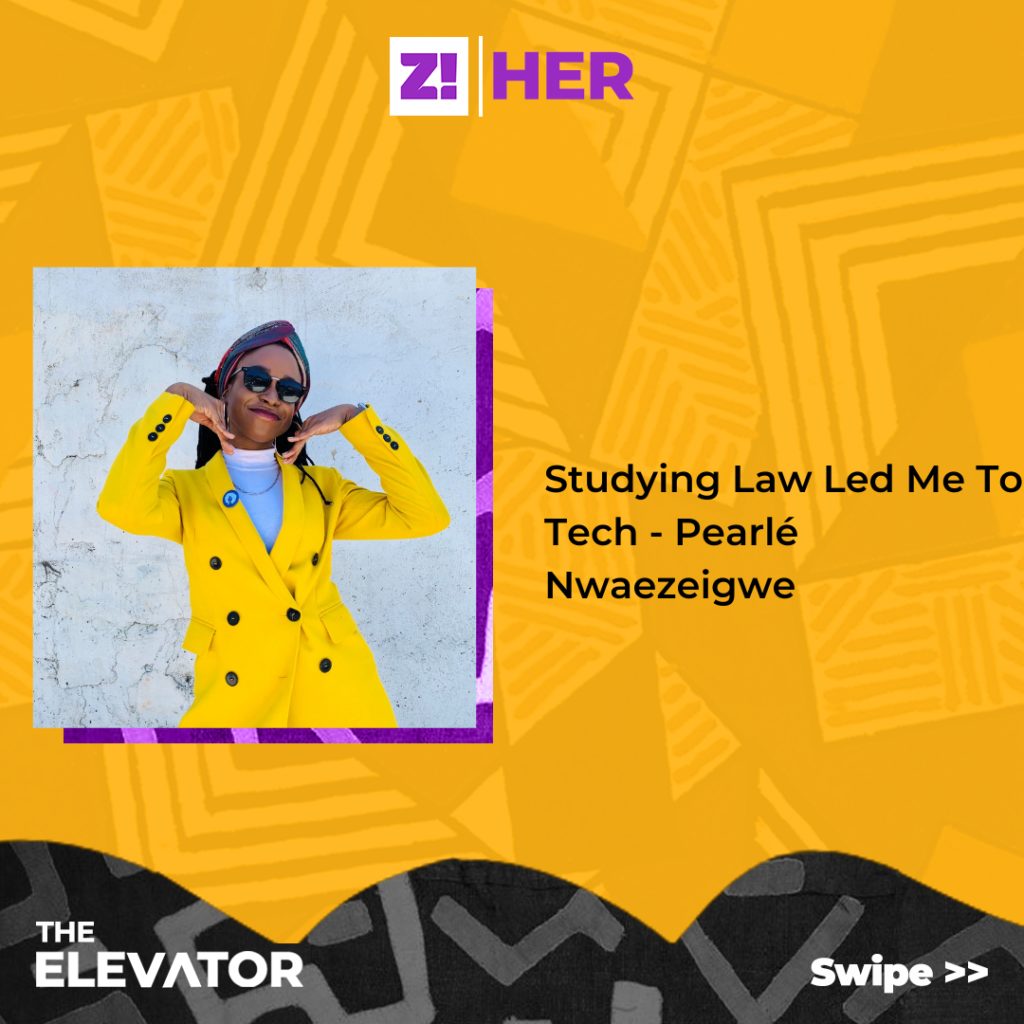
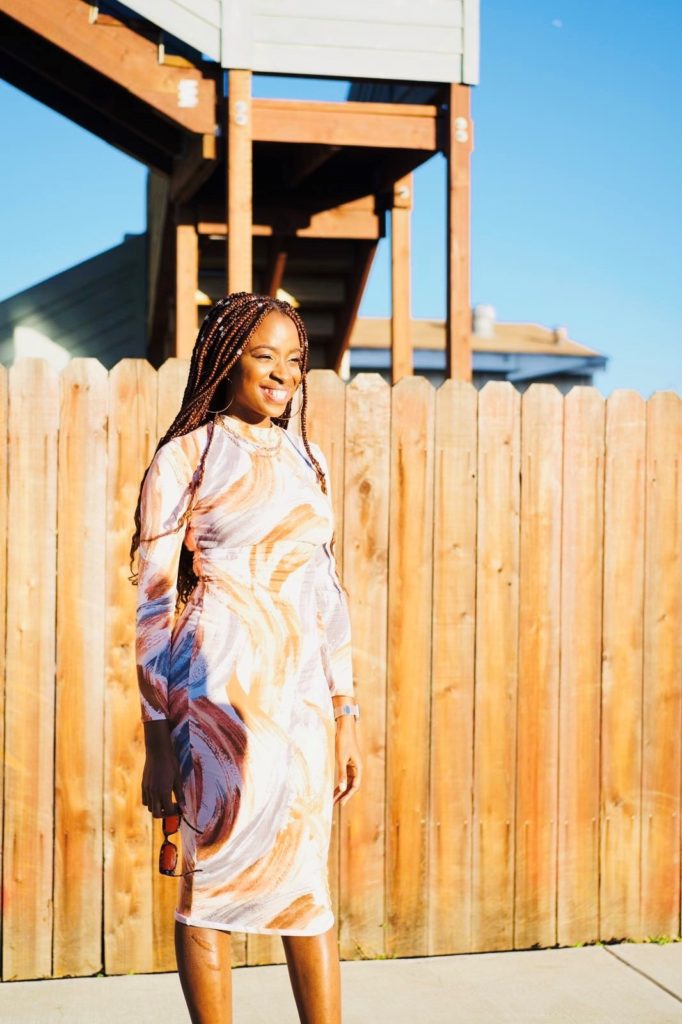
Pearlé Nwaezeigwe always knew she wanted to be a lawyer, but she did not know that law would lead her to tech. Now at 26-years-old, Pearle works at TikTok, where she creates policies that protect TikTok’s African users.
What did you want to be when you were younger?
A teacher. I was obsessed with teaching, so I would steal chalk from my class and take it home to teach imaginary students. Down the road, I still plan to be a professor.
I also wanted to be a lawyer and was inspired by my dad, who’s a lawyer. He would stay up all night reading big books, and I wanted to do that, to advocate for people and be a voice to the voiceless. I wanted to be the attorney general for the Federation of Nigeria. I wanted to do something very ambitious, and I thought studying law was the way forward.
So, you studied law in university?
Yeah, I did and it was intense but at the same time, I knew I was meant to do it. I am grateful I went to University of Lagos because that’s where I joined the Mooting Society. I would go for competitions, mock court cases, and I got to travel to the US for conferences. This exposed me to things a lot of my classmates were not exposed to, and I realised that my life was beyond Nigeria. Unilag’s hustle spirit helped make me who I am today.
What was your first job?
I was an intern at Chocolate City. I was interested in intellectual property law, so my aunt spoke to the general manager of Chocolate City at the time, and I got an internship. It was an interesting experience. Sometimes you would come to work and MI will be beside you writing songs. I was there for a couple of months.
Nice. What did you do there?
Well, it was a lot of reading contracts and trying to be sure that artists didn’t get screwed by companies. Also, creating contracts that kept artists comfortable and engaged. I worked with a lawyer who walked me through the process.
My experience at Chocolate City helped me see the deficiencies in the music industry and how much of a long way we need to go to protect artists rights. It was really exciting going back and forth and feeling like I was a part of something. Initially I was not supposed to get paid, but they were really impressed with my work ethic, and they paid me. I also got VIP tickets and backstage passes.
What happened next?
Law school. Law school is a place you can’t survive without resilience. The program, the grading, the back to back exams, was a lot. I stayed up long nights studying for the bar exam and made really good friends, but I won’t wish law school on my worst enemy. You have to be sure you want to study law because Nigerian law school is not for the weak.
After law school, I worked at a law firm and I didn’t really like it. Usually, a lawyer is useful at any firm they find themselves in, but the law firm I worked in was very litigation centric. I was at the court all the time filing documents that did not make sense. After I left the law firm, I went to get my masters in International Law and International Human Rights in UC Berkeley. I was 24.
What was UC Berkeley like?
Well, I wouldn’t say it was an Ivy League university, but our major competition was Stanford. It was nice being in that space and having classmates that have worked in major companies. The school was in Silicon Valley so we were surrounded by Facebook, Google and so many tech companies. My plan when I got there was to work in the UN, but I found myself doing research on the impact of human rights on technology.
Do you think Silicon Valley had anything to do with that change?
Definitely. UC Berkeley is known for human rights, civil liberties and technology. For my project, we collaborated with Microsoft and Google. They wanted to know the impact their products were having on human rights, specifically on children’s rights. I was able to understand that there was an intersection of human rights and technology. After my degree, I got my current job and moved all the way to Ireland.
What job, and why Ireland?
Well, I work for TikTok where I create policies on behalf of the company to ensure that the rights of users are protected. My focus is to create policies that protect African users on the African continent.
On why Ireland, Dublin in Ireland is like the Silicon Valley of Europe. TikTok has its own office here and most of the African activities in these tech companies usually happens in Dublin.
How Do You Protect African Users at TikTok?
We create policies on behalf of the company to ensure that while people can say whatever they want online, they cannot abuse that power and spread homophobic, sexist or racist content and fake news. So, we create policies that protect people’s freedom of expression and safety. Those are the kind of hard things we have to do on the policy team— we ask, how do we create policies that protect Africa?
Were there any major stumbling blocks you faced along the way?
One of my challenges was getting this job. A whole year after I finished from UC Berkeley, I was searching for a job. I went for more than thirty interviews with all the big companies like Facebook and Twitter. The rejections really affected my self-esteem. People who knew me kept asking why I did not go into legal counsel or work at a law firm and do what everyone else was doing, but I just knew that tech policy was what I wanted to do. I realised that people these tech companies hire are those that have a lot of experience and then there was me who was fresh out of graduate school. So, I went to a lot of conferences and studied my ass off because I had to prove myself. One thing that helped was that I was also very good at cold emailing. There was nobody I would reach out to that would not respond — I even got to speak to the vice president of Twitter.
Well, I ran into her on an elevator during a conference, so I decided to tweet at her. I also mentioned in my tweet that they had a job opening, and I really wanted to join the team. She sends me a job link and I told her I had already applied for the job and I even tagged the job recruiter saying I was waiting for his reply. The next day, I got a call from the recruiter. He said, “the vice president of Twitter sent me a dm and told me to have an interview with you.” Unfortunately, it was difficult to get a work permit in the US because my role wasn’t that popular and the country didn’t rate me. I cried.
How were you able to move from that?
I had come too far to quit on myself. There were very few black women in these roles and I did not want them to remove one less black woman, so I kept going. I wanted to succeed in that one thing people thought I was not going to be able to do.
I also had other challenges, like my health. They found lumps in my breasts and I was dealing with severe migraines. Coupled with the fact that I was so far from family, it was very hard.
What are some lessons you learned in this journey?
Well, I learnt that every dream is valid. Society wants you to be one thing, but you can be so many. You are allowed to shift and be whatever you want to be. Another thing is that you have to believe in yourself. It is easier said than done, and it is hard to not compare yourself with others, but I had to snap out of it. Also, I learnt to be extra. I do not want to be in a crowd and blend in. I always want to stand out. Lastly, you need to learn balance. You need to balance friends and school and work and life in general.
Are there any women you look up to?
Beyoncé. Her work ethic is amazing and she keeps beating her own standard. She reinvents herself every time and she is black excellence personified. Before my interviews, I would play a Beyoncé song and take in some of that energy. She goes 100 and inspires me to be extra. Another person is my mum. My mum taught me humility and that had helped me get some opportunities I know I would not have gotten. She is like my best friend. My headmistress was also important to my development. She taught me almost everything I know when it comes to creativity and allowed us to be expressive. She made me feel like I could do anything if I put my mind to it. She passed away when I was 10 from cancer, and it was very hard for me.
What is something you are really proud of yourself for doing?
When I was in Unilag, I founded the first Model UN conference in Lagos. Trying to raise funds and asking people to register was very rocky. I also had to train my friends on how to be directors and secretary generals etc., but it all paid off. The dean was super impressed and gave us three days off from classes; he also gave us free WiFi. Now the conference is six years running. The second thing is that I wrote a book about my life last year. I am really proud of myself for doing that. I plan to be more intentional about promoting the book this year.
How do you rest with all of these things going on?
I rest by sleeping. I actually do not joke with my sleep and I keep my weekends open for me. Sometimes I play loud music and just dance in my living room.
Nice! What’s next for you?
I have always had structure in my life, but for the first time, I can say I do not really know what is next. What I do know is that I am destined for greatness.
Citizen is a column that explains how the government’s policies fucks citizens and how we can unfuck ourselves.
On Tuesday, December 8th 2020, Nigeria became the first democratic country to be included in the United State’s official list of Countries of Particular Concern (CPC) for 2020 — a list that curates the countries that do not allow religious freedom and expression.
Today the U.S. designates Burma, China, Eritrea, Iran, Nigeria, the DPRK, Pakistan, Saudi Arabia, Tajikistan, and Turkmenistan as countries of concern under the International Religious Freedom Act of 1998 for engaging systematic, ongoing, egregious religious freedom violations.
In the CPC list for 2020, Nigeria, alongsides Burma, China, Eritrea, Iran, the Democratic Republic of Korea (DPRK), Pakistan, Saudi Arabia, Tajikistan and Turkmenistan were alleged to have been engaging in “systematic, ongoing, egregious religious freedom violations”.
Now, while this recent CPC list by the US State Department may or may not be a true picture of religious activities in Nigeria, it is important to know about some of the prominent religious institutions in Nigeria — including the hisbah corps.
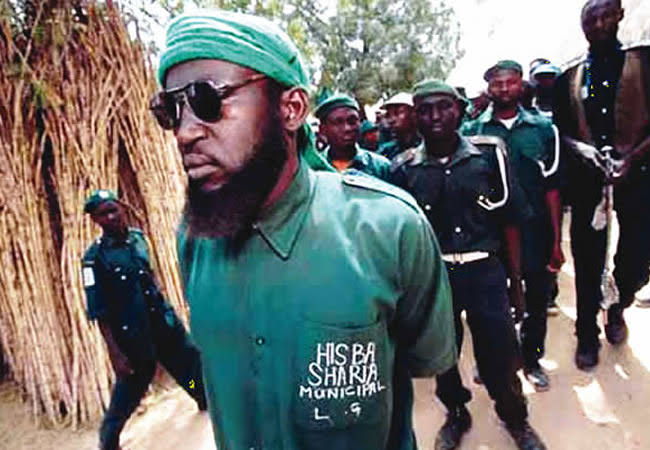
First created in Kano State, in 2003, the Hisbah Corps are now present in other Nigerian states, with many Nigerians curious about their true functions.
The Kano State Hisbah Corps
Hisbah is an Islamic doctrine which means “accountability”. Under Shari’ah law, Hisbah is also a collective duty which means: “to enjoin good and forbid wrong”.
In Nigeria, the Kano State Hisbah Board Law No. 4 of 2003 and Kano State Hisbah (Amendment) Law No. 6 of 2005 established the first hisbah board in Kano State, Nigeria.
The general function of the Kano State Hisbah Corps, as established by the hisbah board, is to be a local and vigilante police force which will enforce obedience to Shari’ah.
The Kano State Hisbah Corps is regulated by the hisbah board, which is composed of government officials, secular police officers, and religious leaders. The board is also made up of local units supervised by committees composed of officials and citizens in the communities in which they operate.
The Kano State Hisbah Board started operation on the 7th November, 2003, and is composed of:
A representative of the state shari’ah commission;
A representative of state zakkah and hubusi commission;
A representative of the state emirate council;
A representative of the state civil defense corps;
A representative of the ministry of justice;
The state hisbah commander;
A representative of the police;
A representative of the office of the secretary to the state government; and
Four other members who are part-time members.
What Do The Hisbah Corps Do?
In Attorney General of Kano State v. Attorney General of the Federation (2006), a very important court case over whether the Kano State government had the power to create the hisbah board and the hisbah corps, Justice Umaru Atu Kalgo, a Justice of the Supreme Court of Nigeria (as at the time), stated that some of the most important duties of the Hisbah Corps include:
(i) rendering necessary assistance to the police and other security agencies especially in the areas of prevention, detention and reporting of offences;
(ii) Handling non-fire-arms for self defence like batons, and other non-lethal civil defence instruments;
(iii) Assisting in traffic control; and
(xiii) Assisting in any other situation that will require the involvement of hisbah, be it preventive or detective.
However, other duties of the Hisbah Corps include resolving disputes, condemning violators of Shari’ah, maintaining order at religious celebrations, and assisting with disaster response operations.
The Hisbah Corps do not have authority to execute arrests and officers are armed only with weapons for self-defense, such as batons. Hisbah officers who observe violations of Shari’ah are also expected to simply alert the Nigeria Police Force.
Recent Controversies Trailing The Hisbah Corps
In November 2013, the Kano State Hisbah Corps, also known as the Shari’ah police, confiscated and destroyed over 240,000 bottles of beer and alcoholic drinks, to the consternation of many alcohol retailers and distributors in the state.
In November 2020, the Kano State Hisbah Board wrote to Cool FM, a radio station, warning it to desist from embarking on a proposed “Black Friday” sale, given that the majority of Kano state residents are muslims who consider Fridays as a holy day, and that it is a gross disrespect to the religion to tag their day of worship as “Black”.
A few weeks ago, the Kano State hisbah board also conducted a door-to-door search of “sinners” in the state, and the board has now placed a ban on things like “stylish haircuts”, sagging of trousers, playing music at events by disk jockeys (DJs), and seizing tricycles adorned with images that are deemed un-Islamic.
Two women are also banned from sitting on the same motorcycle.
The Nigerian Constitution
Section 10 of Nigeria’s constitution states that the government of the federation or of any state must not adopt any religion as state religion.
Section 38 of the constitution also guarantees a Nigerian’s freedom of religion, including the fact that a person can change their religion at any time, and a person is entitled to engage in their religion both publicly and privately, anywhere in Nigeria.
However, since 1999, 12 states in Nigeria have instituted the Shari’ah, or Islamic law, as the main body of their civil and criminal laws.
It remains to be seen how Nigeria balances non-religious and religious laws in different states of the country.
We hope you’ve learned a thing or two about how to unfuck yourself when the Nigerian government moves mad. Check back every weekday for more Zikoko Citizen explainers.
Citizen is a column that explains how the government’s policies fucks citizens and how we can unfuck ourselves.
Lately, Nigerian courts seem to be issuing a lot of ex parte orders. On November 6, the Central Bank of Nigeria obtained an ex parte court order freezing the accounts of 20 individuals and public affairs companies linked to the #EndSARS protests.
The CBN was able to freeze the accounts of 20 #EndSARS campaigners after a written address to a Federal High Court in Abuja stating that the funds in their accounts might have been linked to terrorist activities.
Afterwards, Justice Ahmed Mohammed froze the accounts for 180 days subject to renewal, but said anyone who was not satisfied with the ruling was free to challenge it.
Also, on November 9, 2020, one Kenechukwu Okeke filed an ex-parte motion against 50 #EndSARS “riots promoters”, stating that they breached public defence, public safety and public order.
Having initiated criminal proceedings against the #EndSARS riots promoters at exactly 1052hrs WAT, 09/11/2020, we shall ensure that same is diligently prosecuted in the interest of defence, public safety and public order.
Ex parte is a Latin term that is gotten from the phrase from “one side to a dispute”. In law, an ex parte motion means that a party to a case wants a court order carried out without hearing from the other party, so as to preserve the important things in a case.
So, in the CBN’s case, for instance, the motion was sought and the court order were carried out without the presence of the other parties i.e. the 20 accused people whose bank accounts were allegedly used in carrying out terrorist activities.
What Is The Purpose Of An Ex Parte Order?
If Mr A and Mrs B are in dispute over ownership claims on a portion of land and Mr A wants to sell the disputed land to Mr C, who is an innocent third party, Mrs B can seek an order of ex parte order of interim injunction from the court so that Mr A will be unable to sell the land to Mr B.
If the law does not allow Mrs B seek this order, Mr A might sell a land that is still does not belong to him, a situation that will be very hard to reverse.
So, the purpose of an ex parte order is to protect the main issue in a matter like land or money, before both sides begin their case in court.
Are Nigerians Officials Abusing Ex Parte Processes?
Ex parte orders are supposed to be temporary and are not to last more than 14 days.
Section 12 (1) of the Federal High Court (Civil Procedure Rules) 2000 states that “no order made on motion ex parte shall last for more than 14 days…or last for another 14 days after application to vary or discharge it has been argued”.
In other words, ex parte orders are not supposed to last more than 28 days, even if they are extended. This is because, by nature, they are only supposed to be temporary.
Unfortunately, Nigerian courts now generally issue ex parte orders for 90 days and up to 180 days, in the case of an extension.
One can only hope that court processes are not abused in Nigeria.
AGF Malami just obtained an ex parte order for service against Sahara Reporters. Today, one Kenechukwu Okeke obtained exparte order on #EndSARS protesters. Last week, bank accounts were restricted by ex parte order. The abuse of Ex parte orders is fast becoming a dangerous trend
We hope you’ve learned a thing or two about how to unfuck yourself when the Nigerian government moves mad. Check back every weekday for more Zikoko Citizen explainers.
Citizen is a column that explains how the government’s policies fucks citizens and how we can unfuck ourselves.
Perhaps it skipped your attention
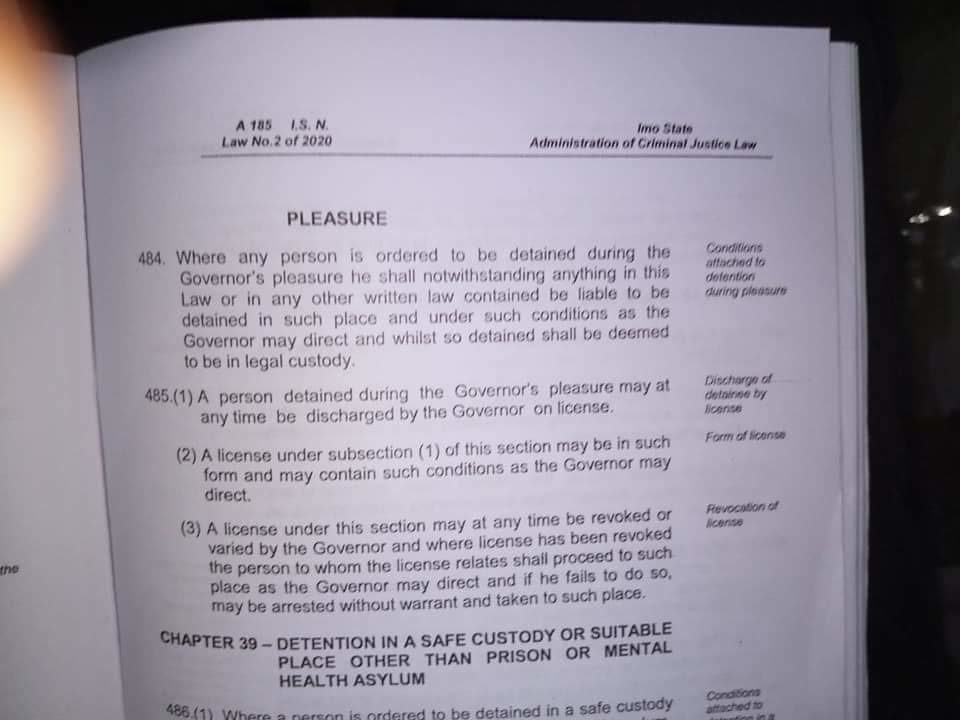
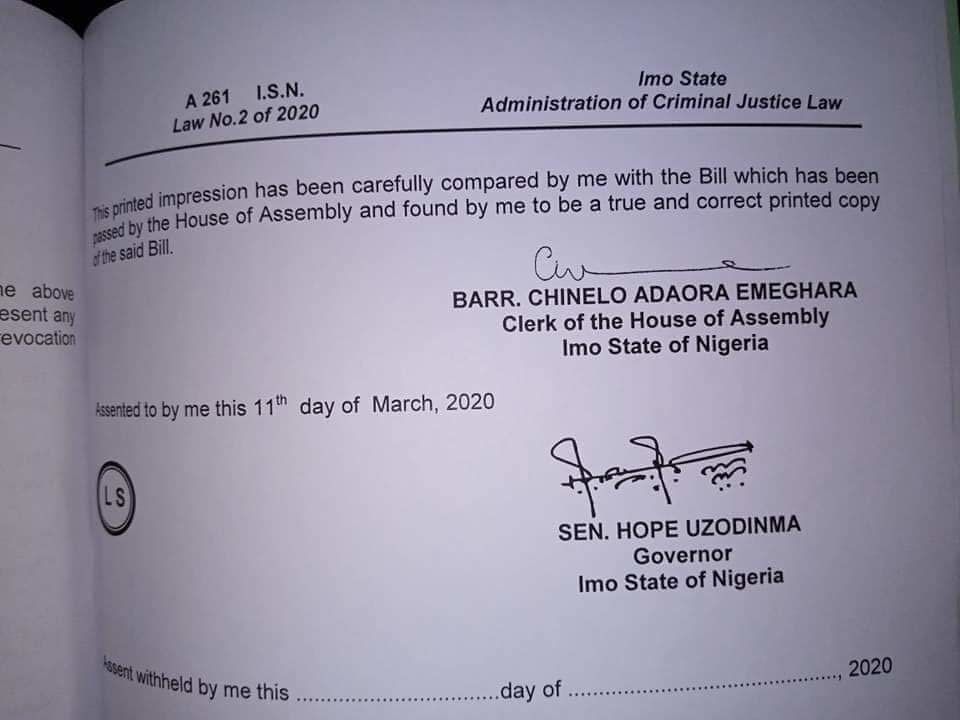
The Imo State Government has passed a new Administration of Criminal Justice Laws No 2 of 2020. But criminal justice laws are supposed to be routine.
Except that buried somewhere in Section 484 of the law is a hilarious and terrifying clause that gives the Governor the right to detain anyone at his “pleasure”. The person may also be discharged at any time by the Governor “on licence”.
What does the constitution say?
Section 35 of Nigeria’s 1999 constitution states that every person shall be entitled to his personal liberty, and no person can be denied of that, except in certain conditions – which at pleasure of a state Governor isn’t one.
Section 34 of the constitution also talks about the dignity of the human person, while Section 41 of the constitution decalares that Nigerian citizens have a freedom to move freely.
It is clear that this law contradicts the foundational law of Nigeria (or grund norm) and is unconstitutional.