Notice: Function _load_textdomain_just_in_time was called incorrectly. Translation loading for the wordpress-seo domain was triggered too early. This is usually an indicator for some code in the plugin or theme running too early. Translations should be loaded at the init action or later. Please see Debugging in WordPress for more information. (This message was added in version 6.7.0.) in /home/bcm/src/dev/www/wp-includes/functions.php on line 6121 journalist | Zikoko!
This story opens with the Foundation of Investigative Journalism (FIJ Nigeria), a media organisation that pursues investigative stories such as corrupt activities at Nigeria’s borders, decadence within the police force and negligence of citizen rights.
However, the job often comes with lawsuits and unlawful detentions. The most recent is the recent arrest of FIJ journalist, Daniel Ojukwu.
What’s the backstory?
Daniel Ojukwu, an investigative journalist for FIJ, went missing on May 1, 2024, with his phone switched off. On May 3, FIJ Nigeria discovered him in police custody on May 3, detained over a report he published in November 2023.
Despite meeting bail conditions, the Nigerian Police allegedly refused to release Ojukwu due to an “order from above”. The Committee to Protect Journalists (CPJ) called on Nigerian authorities to release Ojukwu and end press intimidation in the country.
He was being held at the State Criminal Investigation Department (SCID) on allegations of violating the Cybercrimes Act. On May 5, Ojukwu was transferred to the National Cybercrime Centre in Abuja from Panti in Lagos.
Why was he really arrested?
Daniel Ojukwu was arrested over a report in which he alleged that Adejoke Orelope-Adefulire, Senior Special Assistant to Ex-President Buhari on Sustainable Development Goals, diverted ₦147 million (US$106,154) of government money into a restaurant’s bank account. A complaint was filed on behalf of the Ex-President’s SSA by an NGO affiliated with the All Progressive Congress (APC) political party.
Ojukwu’s detention by the Nigerian Police is not the first of its kind. On February 7, police charged reporters, Azeez, Ayatullahi, Taofeek and Damilola, with conspiracy under section 27(1)(b), and cyberstalking under section 24(1)(b), of Nigeria’s Cybercrimes Act, and defamation under section 393 of the penal code. The most recent case is First News Editor, Segun Olatunji, who recently resigned from his role after his release from police custody on March 28, 2024. His firm claimed that his reports were falsified after his arrest but Segun Olatunji maintains his stand and says that his reports are true.
As Democracy Day draws closer, concerns continue to rise about press freedom in Nigeria.
[ad]
What was the Nigerian Police’s response?
Following the protests at Abuja on Thursday, May 9, 2024, by action groups affiliated with press freedom and human rights protection in Nigeria, the FCT Police Commissioner, Ben Igweh, assured that the detained Daniel Ojukwu will soon be released from detention.
This promise was kept on May 10, 2024, when Ojukwu was released.
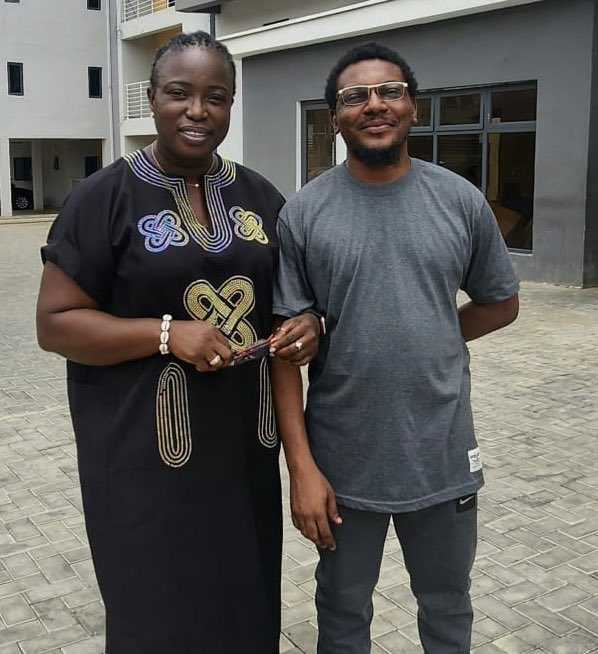
Daniel Ojukwu and Bukky Shonibare after his release on Friday, May 10, 2024.
The CP also warned journalists to be careful of what they write and say as they would be arrested and prosecuted like normal citizens if found guilty. Although Daniel Ojukwu is now free, many questions linger. Every journalist behind a keyboard may be writing with a new fear.
A few weeks back it was Segun Olatunji, today it’s Daniel Ojukwu. Who’s next?
Every week, Zikoko seeks to understand how people move the Naira in and out of their lives. Some stories will be struggle-ish, others will be bougie. All the time, it’ll be revealing.
Kwakol Markets is a global broker that lets you trade multi-asset financial markets with ease. They aim to provide transparent and innovative technology that gives you a simple, secure and superior experience. Start trading with Kwakol Markets today and create the future you deserve.
Let’s talk about your earliest memory of money
I counted ₦5k for the first time in my life in JSS 1. My dad gave it to me to give my mum. This was around 2005 when the ₦1k notes were newly introduced. He had access to it because he worked in a bank. I remember that the notes were in mint condition. He gave my mum ₦5k a couple more times, and he always passed the money through me or an uncle who lived with us at the time.
Was there a reason for that?
My parents weren’t on good terms, and they hardly talked to each other. We grew up in Bodija, Ibadan, but around the time I got into primary school, his bank transferred him out of Ibadan, so he was hardly around. He typically only visited twice a month, and it was only when he was around that he gave us money.
What did this mean for the family’s finances?
My mum took on most of the household expenses with her teaching salary. She didn’t earn much, and we were three boys. We ate beans a lot. Drinking a bottle of Coke meant you’d done something right; it was a privilege.
I used to win many prizes in school, which helped my mum because the principal allowed us to delay school fees payment. In secondary school, she had to take loans to pay my school fees. I think my dad only contributed twice during my entire time there.
For the rest of secondary school, I relied on whatever my mum could give for allowance. My dad lost his job in 2009, when I was in SS 2. That’s when he just stopped coming home. We haven’t spoken since then.
That’s tough. What happened after secondary school?
I went for a pre-degree program in 2010. It cost my mum ₦135,600. My mum was so upset when I eventually failed and had to come back home. But it was during my pre-degree that I met the person who introduced me to a business opportunity.
I’m listening
He was my pre-degree classmate, and I don’t know why, but he took a liking to me. He sold movies and games, and he decided to make me his partner. We sold the films by transferring them from hard drives to fellow students’ devices.
One episode of a series was around ₦50, 12-episode series were ₦600, and 24-episode series cost ₦1,200. The games were anything from ₦500 to ₦2k. He used to give me a 10-15% commission on every sale. We later progressed to splitting the sales 50-50.
Sounds like an interesting business model
We kept a massive database of movies in three 1-terabyte drives. Those sizes weren’t common then. He bought the first for ₦32k and the others, when the drives became more common, for ₦17k each. Before I started working with him, I didn’t even know words like “torrent” or “gigabytes” existed.
How much were you making?
Typically, we made ₦5k/month each, but we often made more. We made ₦15k once, but then, I spent almost all of it on a girl.
Your girlfriend?
We weren’t even dating at the time. I just liked her, and we were quite close during the pre-degree programme. I wanted to do something nice for her, so I got a card and a bouquet of terrible-looking flowers. Then I took her to get food. It all cost about ₦10k, and she loved it. When I realised the money was remaining ₦5k, I sent it to my younger brother. I couldn’t send it to my mum because she’d warned me to focus on my studies and leave business alone.
Maybe she knew what she was saying?
You could say so. I felt remorseful about failing to secure the admission, but when I returned home, I got a couple of jobs to keep busy. I taught in a private school for ₦7,500/month. I was in charge of three junior secondary classes, and I taught maths, agriculture and integrated science.
On the weekends, I did ushering gigs for ₦1k per day. I got introduced to them by a friend’s mum, who was a caterer. Some gigs required us to spend two-three days at an event to help with cooking and clean-up after. I looked forward to the three-day gigs because it meant I made more money. So, after I finished teaching in the school by 1 p.m. on Friday, I’d resume at one ushering gig or the other.
How long did that last?
The entire year I was home. I was also still making some money with my movie business partner. He still sent me commissions when the people on my referral list made a purchase, but he was just being nice because he was the one selling the movies. He sent around 10 – 20% of whatever he sold monthly.
What were you spending on?
My family. I’m the firstborn, and without a dad, I became the father figure. So, if they needed anything, my mum would be like, “How much are you bringing as the father of the house?” I was 18 then.
I later did JAMB in 2012 and got admitted to study architecture at the same university as my movie business partner, who’d gained admission earlier.
So you went back to selling movies
I continued till my second year, when I felt the money was too small. I became an executive in my department and, somehow, got into a shirt printing business.
How did that happen?
My department was to play a football game, and I was in charge of getting jerseys for the team. I made findings, and the prices were exorbitant. I kept thinking, “What’s hard about printing these things?”
I walked into one of the jersey print stores and pitched to the owner to do it for free. He refused and offered us a discount instead. We agreed, and I left his office thinking of how much money he would’ve made from us, so I went there the next day and said I wanted to learn. He agreed, showed me the ropes, and I started printing shirts.
Did any capital go into setting up?
No. He allowed me to work out of his shop for a small cut of each contract I got. I told my folks at school about my new business so they could patronise me. I was in my third year when I started.
All they had to do was pay me, and I’d get the shirts and print them. Profit was around ₦700 per shirt. One time, I made 50 shirts for another department’s freshers’ week and got ₦25k in profits. On average, the business brought me around ₦30k/month.
So it was going well
Until I ran into debt in my final year.
One department wanted to make about 1000 sweatshirts. Production was to cost me ₦2k, and I gave them a ₦2,200 estimate per shirt. It was a large number to supply, so my markup would’ve been high regardless.
I was supposed to produce the shirts in three batches, but by the time they approved and I went to the market, the cost of producing each shirt had increased to ₦2,500. I went back to inform them, but they’d already approved the initial price with their executives, so I decided to continue.
By the time I produced the second batch, I didn’t have any money left to produce.
I saw that coming
I told them they should get someone else to continue, but they got a lawyer and threatened to sue me. To save my reputation, I borrowed ₦200k from the man whose printing shop I worked in and produced the rest.
Did you pay back?
I did, but it took me about a year. Six months after graduation, I had to return to school to continue the business so I could pay back the debt. He was really patient with me and just took any amount I had to spare at the end of the month till I finished the repayment.
[ad][/ad]
What happened next?
I went for NYSC in 2019 and decided to intern at a radio station. I’d had a brief stint with my school’s radio station in my undergraduate days for free. I’d also worked at an external station for ₦400 in airtime per show.
I landed a radio job for NYSC, where I did sports news and beat writing. They paid me ₦30k/month, in addition to NYSC’s ₦19,800 — which got increased to ₦33k about six months in.
After NYSC, I got retained, and they increased my salary to ₦100k/month.
That’s a nice jump. How did it feel?
My radio journey had gone from working for free to getting paid in airtime to finally getting good money for it. I was excited. Immediately I saw the first alert, I went to Shoprite and bought food.
I’m curious. Did your financial responsibilities increase?
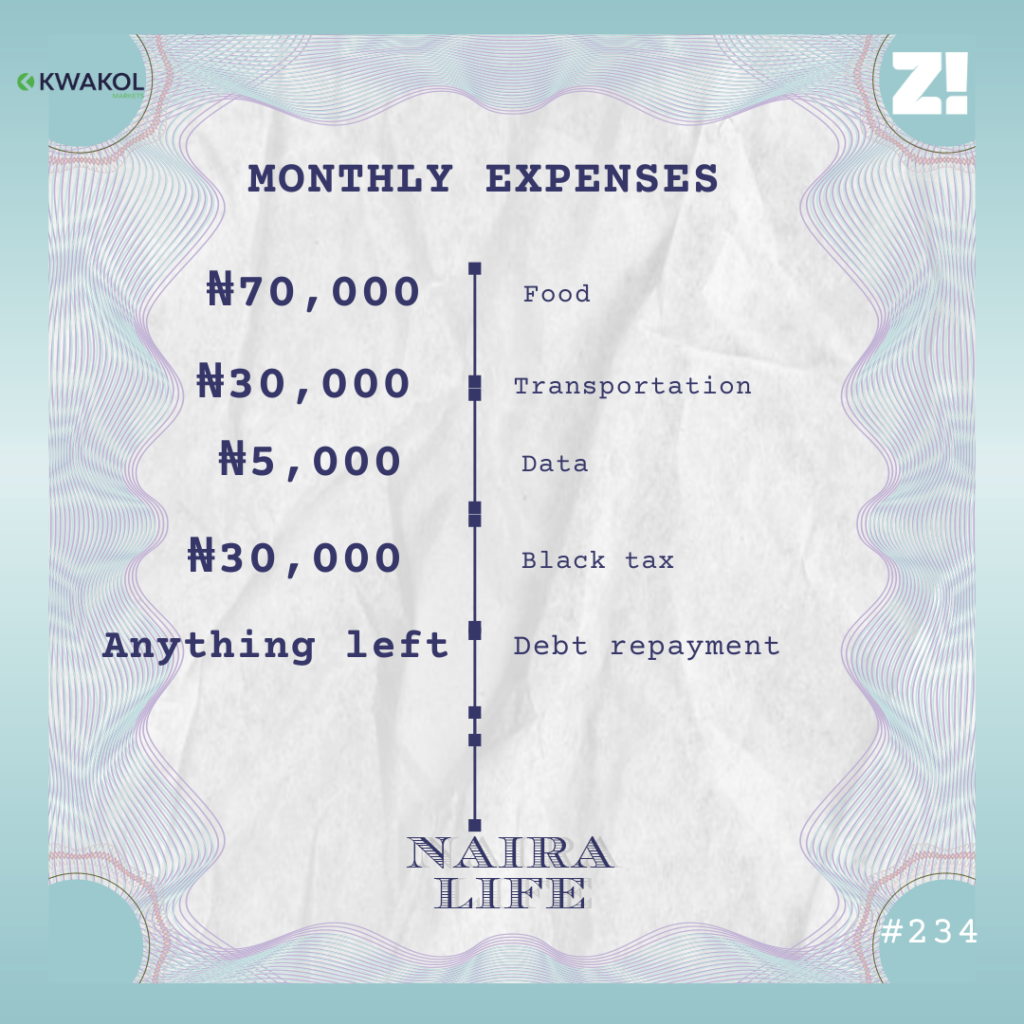
Black tax definitely increased. I started sending about ₦30k/month. My mum didn’t put pressure on me, but it felt good to send money home.
I was staying with a friend at the time, so I didn’t have to spend on rent or data because he had a MiFi from his office that I also used. But I used to pitch in with food and other utility bills. I also make money via commissions from work. If I market my radio shows and get someone to sponsor them, I get 15% of the income. This helped after my roommate japa in 2021, and I had to leave his place to rent my own apartment.
How much did that cost?
₦1.1m. I had just made ₦500k in commissions from work, and I didn’t have any other savings, so I borrowed ₦400k from my mum, and ₦200k from my former roommate, to get the place.
My roommate had just travelled, and he needed money to settle into his new country, so he was the priority for repayment. In a bid to meet up, I had the not-so-bright idea to join a ₦100k monthly ajo.
But you were earning ₦100k/month?
In fact, the ₦100k was gross. The net salary was 90-something thousand. We were six in the ajo, and I was the first to collect the ₦600k. I paid off ₦400k from my debts and had ₦200k left. A smart person would’ve saved the money, right? Not me.
Please, don’t tell me you spent it
I started buying food every other day. There was also this babe I liked. I sent her ₦50k. By the time I’d spent about ₦100k, I had to ask myself, “Are you okay? How do you intend to survive for the next five months?”
Skrimming
I got a few beat writing gigs from someone who wanted content for their sports website, and that paid ₦25k/month — I still do that fairly regularly now.
Then I got another commission from work in 2021, about three months after I started the ajo. I’d gotten a brand to sponsor our weekend show for a year, and my 15% cut was ₦1.4m.
Millionaire doings. What did you do with it?
I spent almost all of it on a woman in one week.
How?
I met her online in 2020, and we became fast friends. She was in a relationship, so we were just friends. Then her boyfriend broke up with her, and I tried to comfort her with, “I’ll be your assistant boyfriend till you find someone else.”
We got even closer, and I got to learn about her family. In my mind, we were unofficially together. Then I started spending money on her. Even before I got the commission, I’d borrowed money to pay her ₦100k school fees, and another ₦50k for her sister’s school fees.
By the time the commission came in, it was her birthday, so I organised a surprise party with her best friend. I also paid her flight fees from Port Harcourt to Lagos so she could attend the party. That cost ₦50k. Then I gave her ₦250k as a gift. I sent ₦50k to her younger sister who just gained admission, and another ₦50k to her mum because she wanted to travel. I really lost count at a point, but it was about a million in total.
All this was within a week?
Yes. I used some of the money to get a gift for the person who signed off on the sponsorship, and settled a few people at work. By the time I noticed the money was almost gone, I remembered I hadn’t sent anything to my family.
I sent my younger brother ₦50k to get a phone and ₦50k each to our youngest and to my mum. Then I bought a pair of shoes for ₦25k. I still have the shoes today.
How would you describe your relationship with money?
It’s a rollercoaster.
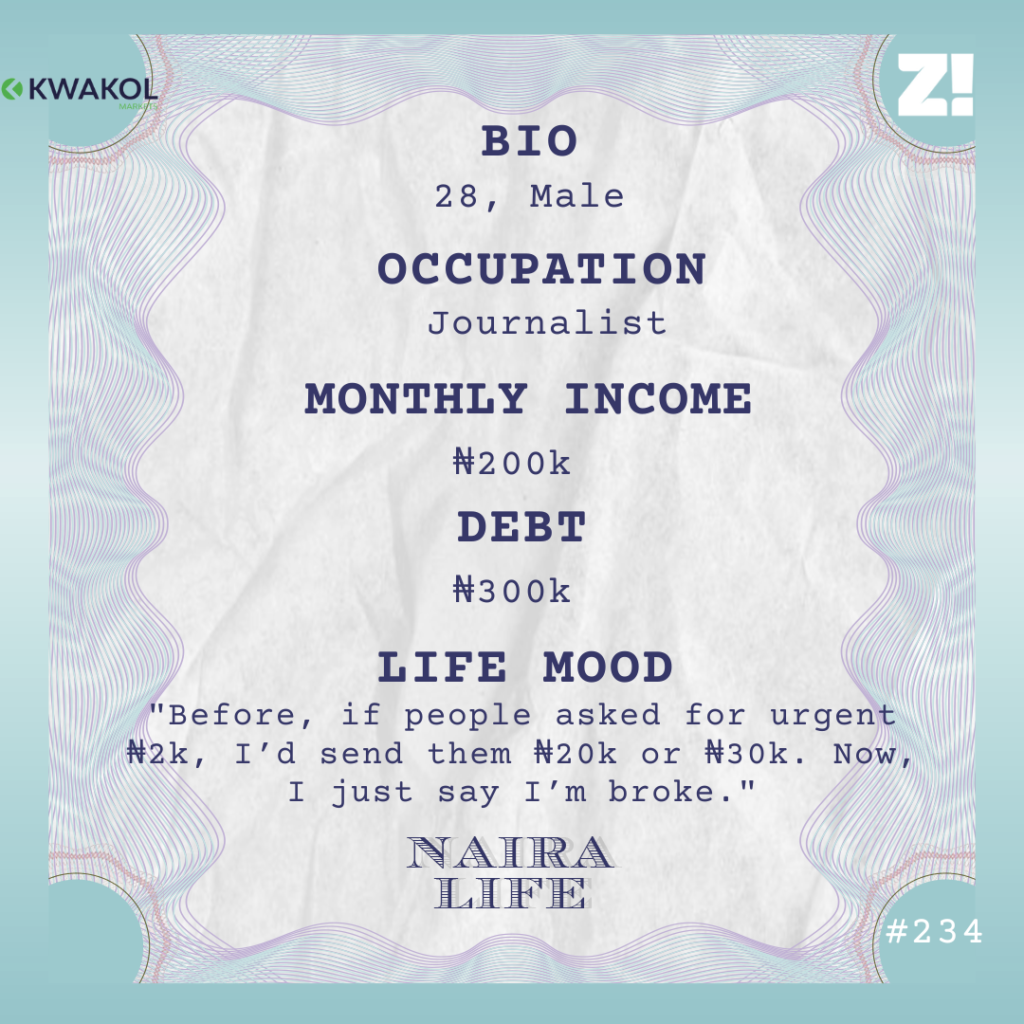
I got another salary raise in 2022. I earn ₦200k/month now, but I have no savings. I just run on vibes. I didn’t even know how I’d pay my last rent till I made ₦300k from another commission at work. I had to borrow more money to settle my part of a ₦1.6m bill we got at my house because someone bypassed electricity illegally. So, more debt. I’m still trying to recover from that.
I’m now making an effort to be less of an impulsive spender, especially considering the person I spent ₦1m on eventually returned to her ex-boyfriend.
Wiun
It was brutal, but it was then I thought about how I could’ve done so much with the money if only I’d properly planned it out or even told my mum so she’d make sure I put it to good use.
What are your finances like these days?
I’m currently in about ₦300k debt. The commission gigs are less frequent, so it’s just my salary. Transportation, food and literally everything is more expensive now. Staying home is one of the ways I curb my impulsive spending. I think it’s working.
Before, if people asked for urgent ₦2k, I’d send them ₦20k or ₦30k. Now, I just say I’m broke.
What does that look like in a month?
Have you made any unplanned expenses recently?
I spent about ₦15k on a friend for her birthday in July. I was even the one who told her to come so I could give her a treat.
Interesting. What about long-term career plans?
I’ve been considering practising the architecture I studied. I’m still in touch with the architect I interned with in school, and they want me to return, but I want to see if I can combine journalism with architecture.
Is there anything you want right now but can’t afford?
A high-end gaming laptop. One would cost approximately ₦800k. I also need a house. My rent is expiring in two months, and I currently have no money.
How happy are you financially? The scale is 1-10
2. I’ve messed up many of the financial opportunities I’ve gotten. Life hasn’t gone the way I envisioned it. I should be able to tell my mum to rest, or open a shop for her, but I can’t afford to do that.
If you’re interested in talking about your Naira Life story, this is a good place to start.
Every week, Zikoko seeks to understand how people move the Naira in and out of their lives. Some stories will be struggle-ish, others will be bougie. All the time, it’ll be revealing.
What’s the first thing you ever did for money?
I was writing my guy’s notes in secondary school. I didn’t even have complete notes for myself.
Haha. What were your going rates?
About ₦250 for the day’s notes, which was about six or so hours of classes.
Why did you do it?
I wanted more money to spend during break time. I was getting ₦50 from my father to spend at school, and I wanted La Casera, which was ₦100.
What could ₦50 get you?
Fruits mostly, sometimes biscuits and water. Anyway, I didn’t do any hustle again until after uni.
What came after Uni?
I got an internship position at a branding firm in Lagos in 2018. I’d just turned 20 and submitted my final year project in school, so I came back home to Lagos to hustle before NYSC. It was nothing fancy or stressful, just long hours and ₦30k at the end of the month.
Tell me about your most stressful day.
We were working on a project for a telco, and I had to work till like 7.30 p.m. Coordinating with painters, carpenters and all kinds of skilled workers. I still had to make the three-hour commute back home – I spent six hours commuting daily. Some days, it was longer.
Woah. Where?
I live with my parents on the outskirts of Lagos – my mum built a house there.
After a while, I quit the branding firm. I was working in the projects management department, but I wanted to write.
I spent the next two months waiting for NYSC.
Did anything happen in those two months?
Nothing o, just my mum trying to convince me to join the police. It was a nonstarter for me!
Wait, why the police? Was she in the police force before?
Her father was a policeman. She felt that with my BSc and young age, I’d be able to get favourable placement. I just ignored her and was passive-aggressive when it came up.
So, NYSC finally came.
I got a Lagos posting. Because I wanted to write, I wrote to a number of media houses to employ me. No bite. I eventually saw a job posting that said “media house.” I left camp for the interview and got the job. The man said he’ll pay me ₦20k monthly. And so began the hardest year of my life.
I’m listening.
It was generally just harder than normal. I was still commuting from Mowe, but I was working every day. Even on Saturdays and Sundays – it was a news aggregation site, and I was on the celebrity gossip beat.
I was miserable.
Man, I’m so sorry.
The ₦20k wasn’t cutting it at all, but my parents were angels. My dad almost always went out with me in the morning. So the morning costs were sorted. But then, I spent ₦600 in the evenings.
What were your daily deliverables?
I was writing 14 articles every day. About 200-300 words each. At a point, I was so good that I’d deliver 14 articles before 4 p.m., then my boss would be on my neck to deliver more.
Ah, I know this grind.
Hahaha. I’m sure you do. My formula was that I’d try to get into the office before 9 a.m., so that by nine, I’d be in the headspace fort writing. I was in charge of compiling our newsletter that went out by 12 p.m.. My goal was to get eight stories by then. Then I’d stagger the pace and write about six or seven for the next six hours.
Interesting. How long were you at that job?
One year – I spent my whole NYSC there. I wanted to leave, but I was stuck because of housing. I knew an even farther office was impractical. By the end of 2019, I finished NYSC.
So, that means throughout your service year, you earned from two streams eh?
Yes. Everything led up to ₦39,800 monthly. I tried to save ₦20k monthly, and my parents are the reason it was possible. By the end of NYSC, I’d saved ₦180k.
Impressive. What came after NYSC?
Another job, and I was determined for it not to be gossip. I applied to another company. I thought I’d get at least 80k, but to Jesus be my glory, I was offered ₦45k.
Is it just me or is this hilarious?
It’s funny now o, but back then I wan mad. I took it sha, but I knew I wasn’t going to last. It meant that I had to start squatting with family members, but I’m never truly comfortable around extended family, so it just hastened my decision to quit. I was there for six months – I quit when the pandemic hit.
Ah.
When it hit, I knew I wanted to be with my family for a bit. I didn’t expect it to be this long.
For how long were you not earning?
I was always earning haha. I was already freelancing – that’s what gave me the liver to quit sef. My first gig was like 150% of the 45k salary. I also discovered that music PR people always needed someone to write release literature for them.
Interesting. How much were you netting as a freelancer?
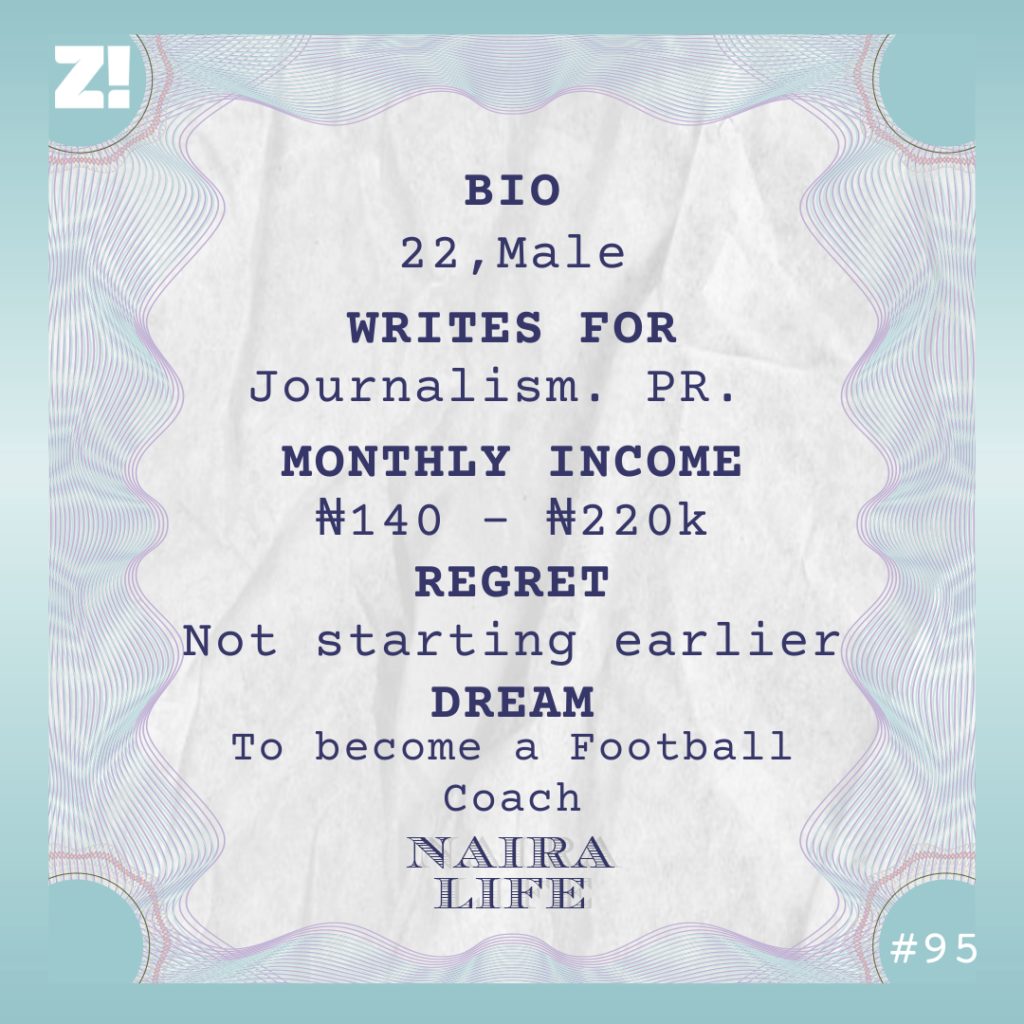
I was making ₦140k on two stories monthly and about ₦20-30k from writing copy for PR. Sometimes more. I considered a full-time gig but I’m a bit of a wallflower, so I didn’t have the connections or see any openings in the places I wanted to work at.
Breakdown the ₦140k per two stories. For the culture.
Haha! I was contributing to publications: I always target doing two or more stories monthly. Publications typically pay around $200 for stories. Or more. So the first month I left my work, I did three stories. One was $200, another was $250. There’s only been one month since April 2020 where I haven’t done at least two stories.
Walk me through how you secured your first forex gig.
2019 felt monumental to me for Nigerian journalists and content creators internationally. I saw Nigerian topics being covered contextually by Nigerians in international publications. That inspired me. I said to myself, a foreign byline won’t be bad. One day at the office, I got three British editors’ emails and pitched them an interview. I had just done it to see how it went. By the next Monday, I got emails expressing interest from two editors. That’s when I knew I had to pay some attention to this.
Love to see it. What’s your average income per month now?
Let me first add that I signed a retainer with a PR firm that pays me ₦80k per month. I took it because I was bored when I wasn’t working on stories. A conservative month will see me earn ₦190k/month. In my best month, I made about ₦300k, without factoring in this ₦80k – it was mostly a backlog of invoices coming through. My best invoice ever was for three stories billed together, and it had $750 on it.
How does the money go from your Abroad editor to your wallet?
It’s fairly easy. I submit an invoice with a whole bunch of details that I can pull up if you need specificity. It’s usually a 30-day wait, so in a way, it’s like monthly income. I once had to chase an invoice for like 60 days sha. But basically, it just comes into my bank account like a transfer or any fund will.
How has the general experience shaped your perspective on money?
I used to be so guarded about money because I worked hard and it was literally dripping like a bad tap. But this year, I’ve worked smarter, and it’s been a good year. Ultimately, I feel like money comes and goes jare.
What do you think about all of this in the context of other journalists like you?
I know a couple of people, but I don’t really talk about finance with them, though they hint that it’s not really encouraging. One guy I know worked as a writer with one of those first digital publishers. He was earning less than 85k and working seven days a week. He’s quit now though.
Now, let’s talk about your monthly expenses.
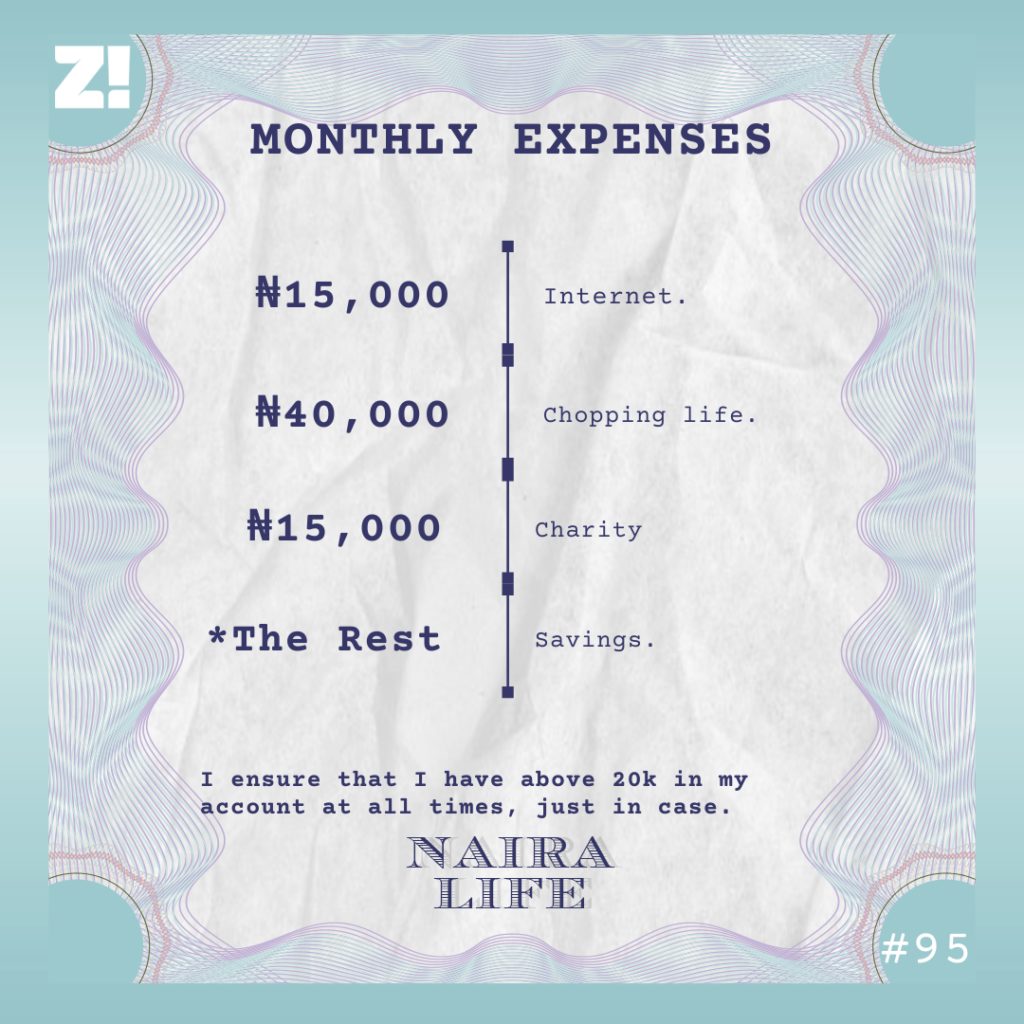
I have no serious black tax from the nuclear family, except that lockdown period sha. Also, I ensure that I have above 20k in my account at all times, just in case. I keep whatever is left inside Piggyvest.
What’s in your Piggyvest these days?
Close to a million. It’s all for my apartment set up sha. A quaint mini-flat somewhere on the mainland. Just one couch, a big ass TV and gaming system.
How much do you imagine your ideal set up will cost?
Uhm, realistically, ₦2 million, but I’ll never blow that on my apartment because japa bells are ringing at the back of my mind too.
Tell me about the japa part.
I was supposed to exit this year – I gained admission and my mum was going to take a loan to pay for the first semester. It was a very wuru-wuru plan sha, but I was gingered to go because nothing was happening for me here.
Then COVID happened.
Masters eh? Are you still as gingered now that you’ve hacked income here?
I’m still gingered o, #EndSARS even solidified my resolve to go.
I feel you. Back to income, how much do you feel like you should be earning at this point?
Make I no lie, 400k monthly. I’m presently netting between ₦140k and ₦220k monthly, which is decent. But between all my hustles, there’s still loads of free days that aren’t filled and could be put to productive use. If I hack how to make them productive, I’ll be on to something.
How many days a week will you say you’re productive?
Less than 50 hours. See, I’m young (and capable of putting in more hours), but this number is me being generous with the hours. I’m almost always in the constant process of ideation, and I consider that work. Core work hours are probably less than 25 hours a week.
Do you ever wonder why you have more productive hours working less, but still earning more?
Capitalism, chief. I know that being plugged into the global economy of content while residing in Nigeria is the simple reason for the change. I keep opening myself up to speak with as many people as I can. It’s a little gesture in the grand scheme of things, but I believe in multiplicity.
If I show A my pitch that got accepted somewhere or help B finetune an essay, they know what’s up and can help person c and d and so on.
Neat. And thoughtful.
Thank you.
When was the last time you felt really broke?
2019 December. Broke meant that by Christmas, I hadn’t been paid and didn’t have any money at all.
Ouch. Must have sucked.
I can’t even put it in words.
Do you have an emergency plan for weird stuff like health emergencies?
At all o. It’s vibes and in shaa Allah. I keep praying because I know myself. I don’t ever want to do GoFundMe.
Why?
It’s not pride;I just have never been one to put my problems on another person’s neck. So if it came down to GoFundMe or literal death, I truly don’t know.
Do you have any financial regrets?
Not starting to freelance as a university undergraduate. I would have had more reach, influence and financial safety by now.
What’s a purchase you made recently that improved the quality of your life?
A phone. It cost ₦95k and elevated me from worrying about my phone getting hot or not charging fast enough.
How would you rate your financial happiness on a scale of 1-10?
5.5. If I could afford the tuition for a sports management course in a European university, it instantly goes to 8.5. The remaining 1.5 is the residual discontent that gingers my hustle.
Sports management? Interesting.
I’d love to be a football coach someday.
Tell me more.
Growing up, I was football-mad. Of course, playing didn’t work in Nigeria because you must be a doctor or go to school. So I started throwing myself into tactics, football principles and all that. But to progress how I want to, I need to go to Europe to study. That’s the home of the best football.
How much do you think it’d cost?
Roughly ₦10 million.
Is there anything you think I should have asked you but didn’t?
No, we pretty much touched everything. Thank you! Talking about these things is therapeutic lowkey.
“A Week In The Life” is a weekly Zikoko series that explores the working-class struggles of Nigerians. It captures the very spirit of what it means to hustle in Nigeria and puts you in the shoes of the subject for a week.
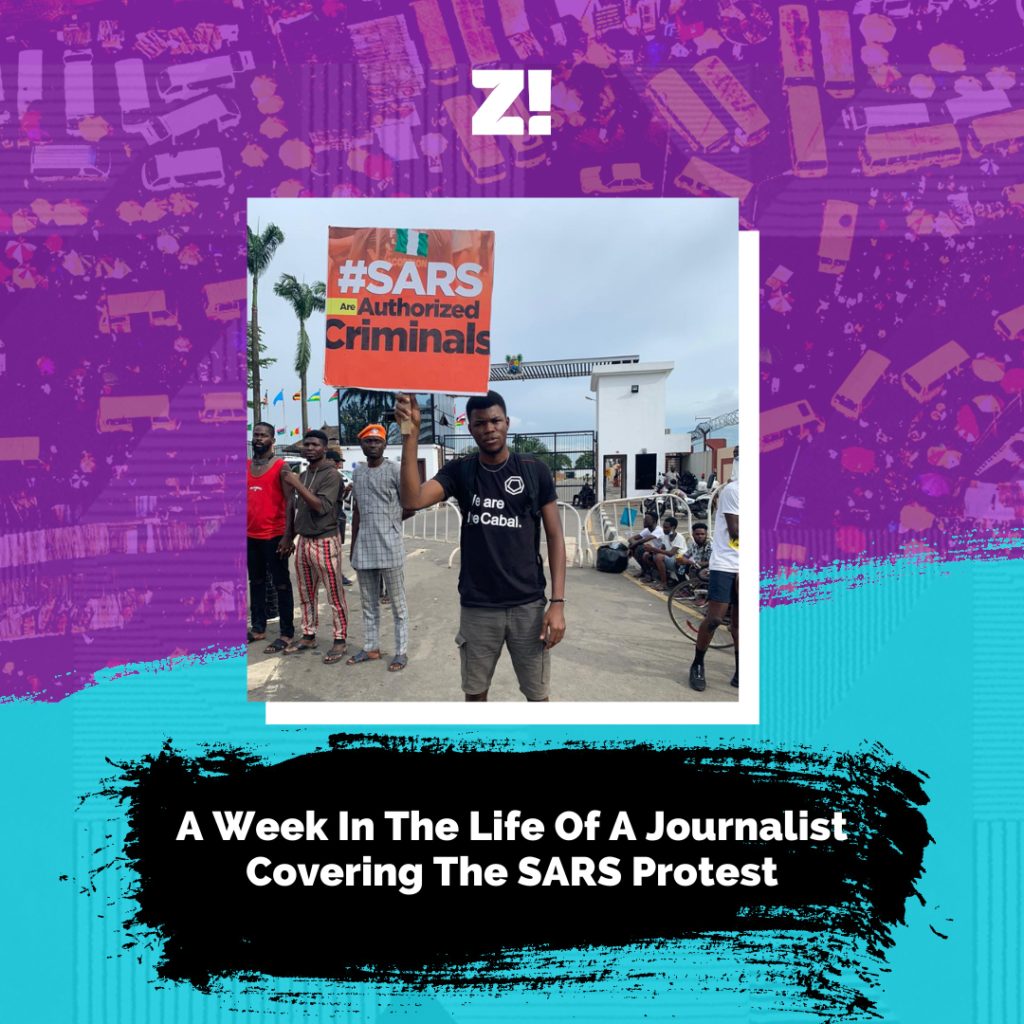
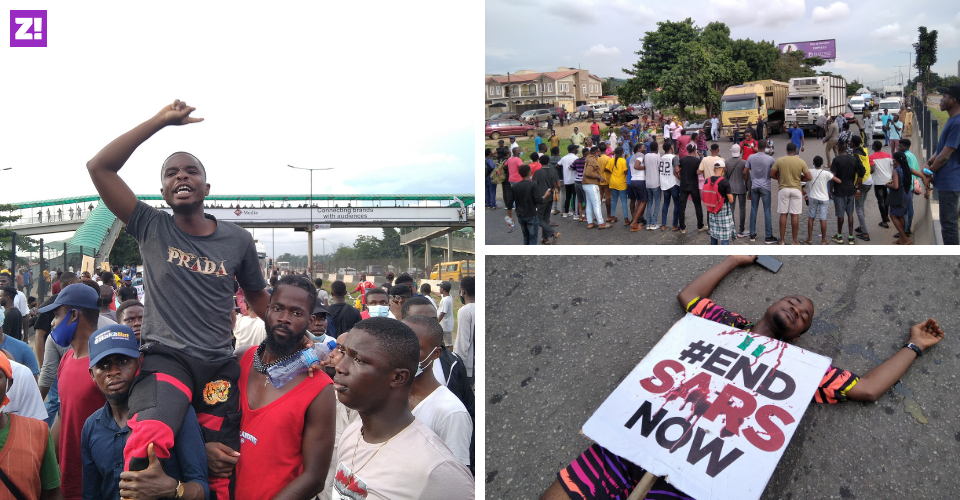
The subject of today is Femi, a writer at Zikoko. He talks about his experience covering the #Endsars protest in Lagos, how the protest is affecting relationships, and why every Nigerian should support the protest.
FRIDAY:
Today is a big day because I’m covering the #EndSARS protests in Lagos. I’m happy because lowkey, I’ve been annoyed about Nigerians not speaking up for their rights. So, seeing young people come together to stage a peaceful protest makes me proud of them. Of us. And that has gingered me to document the protest. As a journalist, it’s my duty to ensure that society works the way it’s supposed to. That’s why I’m up two hours earlier than I’d normally wake up to complete my tasks for the day.
I left my house by 10 am, but I didn’t get to the protest venue [Alausa] until 11 am. There was a bit of traffic caused by the protesters. It’s easy to get carried away by protest frenzy, so I have to remind myself that I’m here in an official capacity. That means before I react to anything, my camera should be rolling.
12 noon:
A thug tried to snatch my phone while I was recording videos. He was surprised that I didn’t let go of my phone easily. I even got a punch in the mouth for struggling. Thankfully, people surrounded us and pushed him away. It’s funny how he just kept on walking like he didn’t just try to steal from me. I’ve texted my friend safety tips for when he’s coming to join me: “Come along with water, snacks, ID cards, cash, comfortable clothes and no jewellery.”
1 pm:
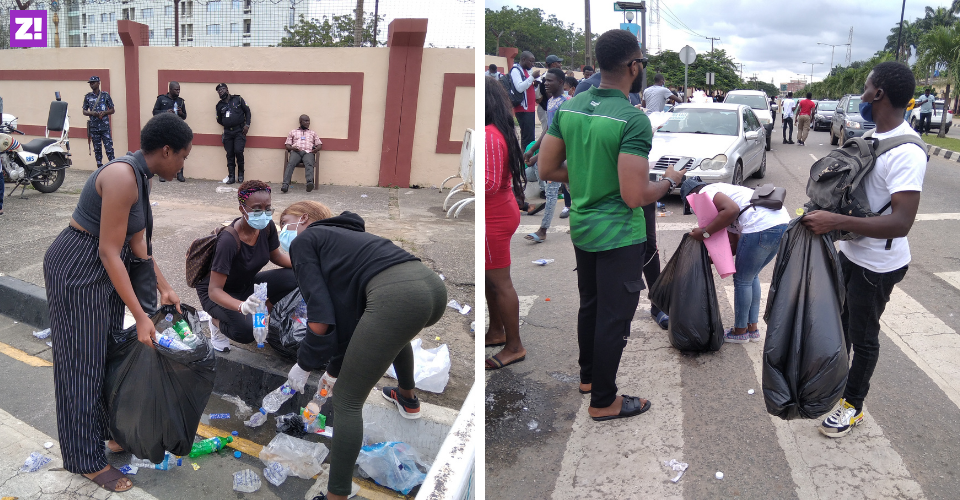
The protest has been peaceful so far. We have people volunteering to clean up after people littering. I’ve lost count of how many times someone has offered me snacks and water. There are people here distributing facemasks for protesters. Everything is just so orderly. The one time we had an agitated person, we took them aside to ensure that the protest didn’t turn violent. I’m so proud of everyone here who showed up.
1:30 pm:
I’m a bit worried. There are a lot of policemen stationed outside the house of assembly where we’re protesting. Even though it’s a peaceful protest, there’s that underneath fear that anything can happen. The police say they’re here to observe. I’ll soon go on IG live for work. Let me show the people at home how it’s going and that we’re safe.
2:00 pm:
At some point, some agbayas with berets attempted to make themselves the centre of the protest. We promptly shouted them down and didn’t allow them to speak because we don’t want political affiliations with our protest. One of the ways we’re keeping the protest anonymous is to have everyone on equal standing. There’s no one person handling the crowd. There’s no one person talking all the time. The megaphone passes to different people so everyone has a chance to say something at any given time. There’s no central figure, and that’s good because the government can’t pick one person to either harass, bribe or use as a stumbling block to the protests. I think that’s one of the reasons why the protest has gathered momentum.
2:30 pm:
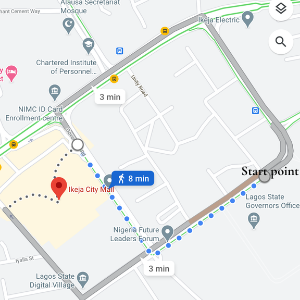
At this protest, there are two types of people. People who urinate in a large drainage near the Lagos state house of assembly, and people who walk the distance to the city mall to use their toilets. Do with this information what you will.
3:00pm:
Some people suggested that we block the Lagos-Ibadan expressway. Their reasoning is that we’re not making enough impact at the house of assembly as the traditional media is still ignoring us.
We’ve blocked the traffic lanes on the express, and traffic is stretching as far as the eye can see. There are convoys, bullion vans, army and policemen in the traffic. I’m scared of an altercation, but I also understand the importance of this cause.
Some people came to negotiate, so we left one lane open for traffic on both sides. Instead of a total shut down, it’s now go-slow. I hope the government is paying attention.
4 pm – 6 pm:
I was worried that morale would drop in the evening. Apparently, someone has booked a DJ. Another person rented a generator. Someone else has gotten canopies, so there’s ginger at the protest ground. The first song the DJ plays is Fem by Davido, and the crowd loses it. Why everybody just dey para for us?
10 pm:
Some people are hell-bent on passing the night at Alausa. However, I’m going home to sleep. Seeing all these people coming out to air their grievances gives me an overwhelming sense of pride. For the first time in this generation’s memory, we’ve decided to let our displeasure be known to the government.
I’m proud, tired, and I can’t wait to hit my bed.
SATURDAY:
I’m up early. Again.
Today’s protest starts by 8:00 am, so I have to get there early. I’m thinking about the fact that Nigeria is notorious for human rights abuse, therefore protests require courage. Every time you attend a protest, you don’t know if you’re going to be bundled away. Summoning bravery is the first barrier many Nigerians have to overcome before deciding whether they want to make their voices heard or not.
I think protesters need to know that in addition to wearing correct gear, they shouldn’t incite violence. If any faction is becoming violent and destroying properties, they should immediately leave the area. It’s also crucial to have a protest partner who knows your full name, address and emergency contact. In case anything happens. I recommend as many protest partners as possible because the more the better. The more details people have, the better chance you stand if anything happens.
I’m running late with all this thinking. I need to get up and get going.
They [government] must not take us for idiot.
SUNDAY:
I woke up tired today. Standing and walking around Lagos takes a toll on your body, but my eye is on the prize — our voices must be heard. I know that effort is not wasted, so that’s encouraging. We must keep gathering. We must keep pushing. If we don’t support the protests by our physical presence, we’ll donate. If we don’t have money, we’ll amplify on social media.
It’s been tiring, and I’ve had less sleep in the past few days than I should, but it’s for a worthy cause. We’re all fighting for a Nigeria we can be proud of.
The most surprising thing for me has been seeing the middle class come out to protest. I think that has given a lot of humanity to the protest. You see people who look like you, went to the same school as you. People who talk like you. And they’re putting themselves on the line. I didn’t think I was going to see Nigerians from different backgrounds protest together. At least, not anytime soon.
Another thing from this protest is hearing how it’s affecting relationships. A friend called to tell me that he hasn’t spent as much time with his girlfriend in a while. Another friend had a similar complaint. After reminding ourselves why we’re protesting, we came to a conclusion: na person wey dey alive go fuck.
MONDAY:
My biggest fears are coming to fruition. Two people in Lagos were shot by the police today. I was afraid of people losing their lives during this protest because people lose hope when the shootings start. However, it seems like the more they kill us, the more young people are ready to push for basic human rights. I’m concerned the protests will become a full-scale riot, and I hope that we don’t get there.
For me, this is bigger than a SARS Protest. We are at the point where Nigerians are finally fighting for what they believe in. We finally have a voice and can demand better.
We’ve proven to govt and international bodies that Nigerian people will no longer be pushed around. That’s a major win for me even if the protest doesn’t meet its objective of ending Sars.
I have to work today, so I’ll support the cause on social media. Tomorrow, I go again. I’m pulling up with my guys physically to make sure that our voices are heard. Or I will stay back to document that we spoke, and the government was silent while we died.
Check back every Tuesday by 9 am for more “A Week In The Life ” goodness, and if you would like to be featured or you know anyone who fits the profile, fill this form.
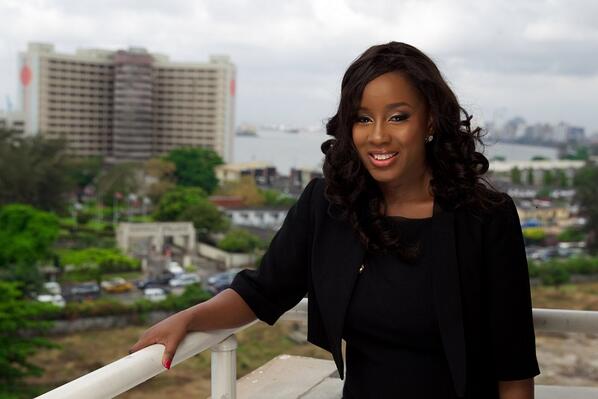
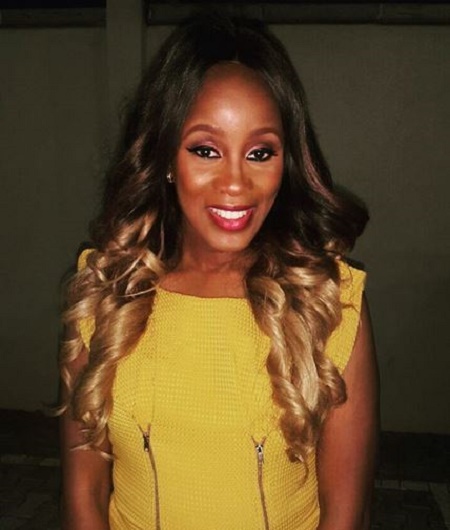
Hard-working with a passion for telling African stories, the award-winning Didi Akinyulere launched her career in the financial sector in 2011 after graduating from University of Nottingham.
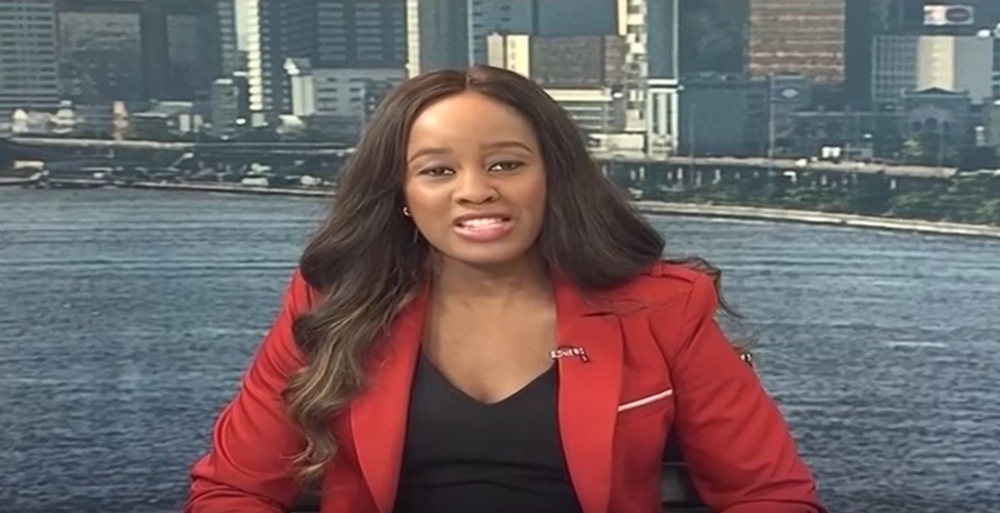
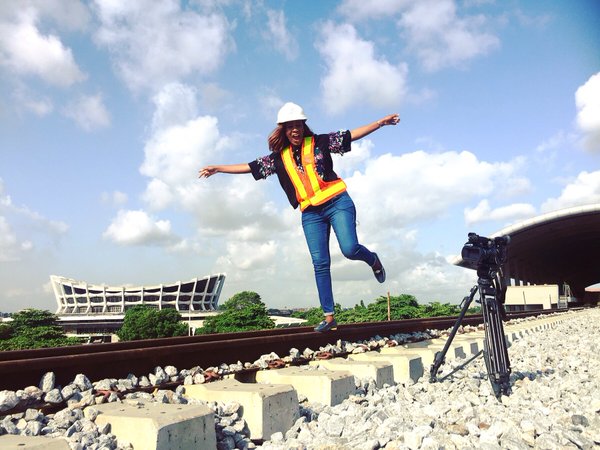
She moved to journalism in 2013 when she joined the Lagos branch of CNBC and is currently the producer and presenter of a business show, Open Exchange West Africa.
Following the sudden death of Ghanaian BBC World New presenter, Komla Dumor, in 2014, an annual award was set aside in her memory. And this year, Didi is the second journalist to be honored with the award.
As part of the award prize, Didi will join the BBC team in London for a 3-month placement in September where she’ll attend a course with the BBC Academy.
This prize also comes with an additional opportunity for her to travel to a country in Africa with a top BBC producer to report on a story targeted at the global audience.
One of the judges of the panel, BBC Africa’s Josephine Hazeley, described Didi as excellent in telling business stories and the right candidate for the award.
Didi is proof that Nigerian journalism will only keep getting better. We’re so proud of her!