
Notice: Function _load_textdomain_just_in_time was called incorrectly. Translation loading for the wordpress-seo domain was triggered too early. This is usually an indicator for some code in the plugin or theme running too early. Translations should be loaded at the init action or later. Please see Debugging in WordPress for more information. (This message was added in version 6.7.0.) in /home/bcm/src/dev/www/wp-includes/functions.php on line 6121
Isa Pantami | Zikoko!
  • The Devil Works Hard but Social Media Regulation Works Harder

    This is Zikoko Citizen’s Game of Votes weekly dispatch that helps you dig into all the good, bad, and extremely bizarre stuff happening in Nigeria and why they’re important to you.

    Subscribe now to get the newsletter in your email inbox at 8 am every Friday instead of three days later. Don’t be LASTMA.
    The Devil Works Hard but Social Media Regulation Works Harder

    I have a riddle for you: If a tree falls in the middle of the forest but there’s no one to tweet about it, did it really happen? If your answer was yes, then you don’t spend nearly enough time on social media — in which case, get a life, okay? If your answer was no, then social media means a lot to you and you probably want to sit down for this next part.

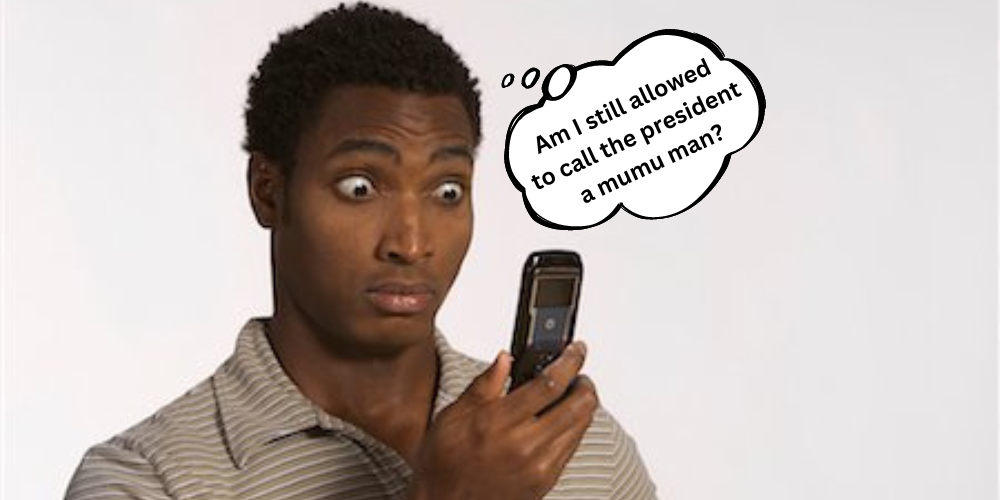
    On September 26, 2022, two very important people signed a document called the “Code Of Practice For Interactive Computer Service Platforms/Internet Intermediaries”. The document’s title is deliberately boring and isn’t more appropriately named “Social Media Regulation Stuff” because that would get your attention and rightfully alarm you.
    The Devil Works Hard but Social Media Regulation Works Harder

    [Zikoko Memes]

    One of the two people who signed the code was the Minister of Communications and Digital Economy, Isa Pantami. You may remember him as the high-ranking government official who kept his job even when everyone found out he openly supported terrorists when he was a naive 34-year-old boy.

    The other signee was Kashifu Inuwa Abdullahi, the director general of the National Information Technology Development Agency (NITDA). There’s no evidence yet that he’s a terrorist sympathiser.

    NITDA first floated a draft of the code back in June. And when everyone raised eyebrows about some of the shady stuff sprinkled all over it, the government said, “Hey, it’s just a draft, okay? We can dialogue and iron things out before it becomes law. Purr?” Well, the code is now law but little changed from what was initially drafted. So, what happened?
    The Devil Works Hard but Social Media Regulation Works Harder

    [Zikoko Memes]

    It’s impossible to pick apart everything in the NITDA code, but the most worrying part is the burden it places on social media platforms to regulate content that “compromises the security or undermines the unity, or sovereignty of Nigeria or promotes the act of terrorism”. It also affects content that “instigates public disorder or interferes with an ongoing investigation”.

    While both these things sound like decent propositions on paper, Nigerian legislation is where all good intentions go to die. The potential for the misapplication of these clauses is worrying especially since #EndSARS showed us how easy it is for the Nigerian government to brand anything as terrorism. 

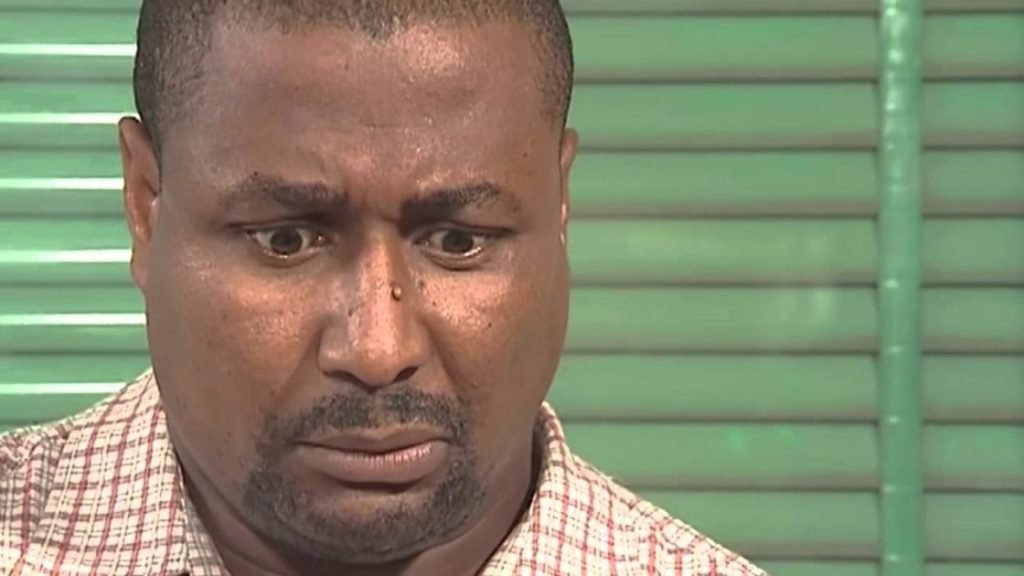
    Can it be considered an incitement of public disorder if you call the president a fool or Lai Mohammed a liar? Does investigative journalism interfere with an ongoing investigation and run foul of this code? It’s a window too dangerous to just leave open.
    The Devil Works Hard but Social Media Regulation Works Harder

    [Zikoko Memes]

    The code isn’t all evil and establishes laws that protect the interests of Nigerians in an increasingly volatile online jungle. But it also helps the Nigerian government sneak social media regulation through the backdoor after failing to get it through the National Assembly. It smells.

    What else happened this week?

    Election campaign funds don’t fall from heaven
    [EFCC]

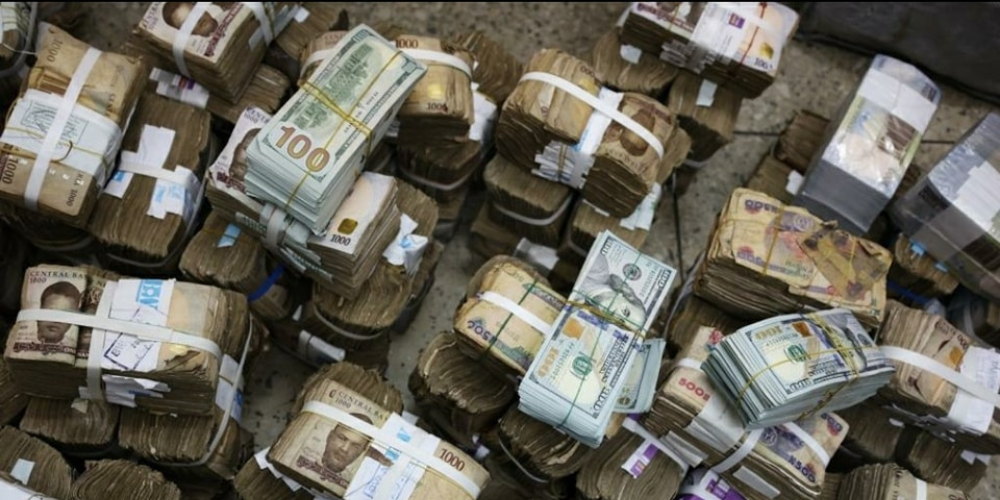
    One of the most closely-guarded secrets in Nigeria — other than Buhari’s skincare routine — is how Nigerian politicians actually fund their election campaigns. This week, we found out one of the ways to run it is through 419. Allegedly.

    On October 30, 2022, the Economic and Financial Crimes Commission (EFCC) arrested one Ismaila Yusuf Atumeyi with ₦326 million and $140,500 cash in Abuja. His name may not ring a bell now, but he could become a household name if he wins a seat in the Kogi State House of Assembly in 2023 as a candidate of the New Nigeria People’s Party (NNPP).

    The EFCC is accusing Atumeyi’s suspected cyber fraud ring of hacking a commercial bank and carrying out a ₦1.4 billion heist that would make Lawrence Anini jealous. The ring laundered the loot through bureau de change (BDC) operators and bought some high-end cars. What’s to stop Atumeyi from using the proceeds to buy overpriced nomination forms for political office or run his campaign?
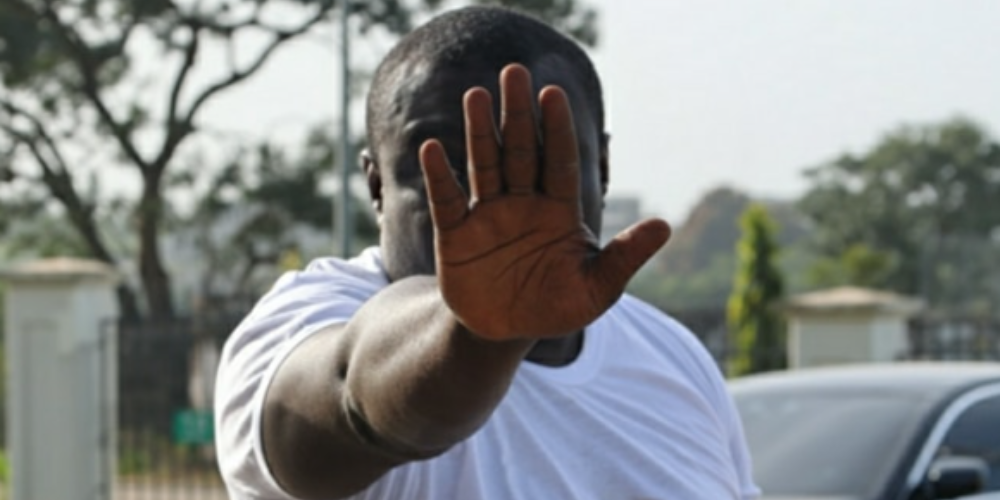
    This guy is too camera-shy for a Nigerian politician [EFCC]

    Transparency in Nigeria’s election campaign financing is quite rubbish and even the Independent National Electoral Commission (INEC) is tired of trying to enforce campaign finance laws. Without presuming his guilt, cases like Atumeyi’s reinforce why we should take transparency in campaign financing more seriously and clean up the system.

    Should we start suspecting politicians who don’t beg the public for campaign funds? Because there’s sapa outside so where’s everyone seeing money to run campaigns running into billions of naira?

    Have you seen this video?

    Question of the week

    If Meffy put you in charge of redesigning the naira banknotes to launch in December, what would you change?

    Click here to tweet your answer to @ZikokoCitizen on Twitter.

    Ehen, one more thing…

    Buhari once again flew to London this week to play ludo with his doctors and free himself from the shackles of pretending to be a president for two weeks.

    He won in life, but 200 million Nigerians are paying for it.

  • How Are Nigerians Dealing With NIN-SIM Ban?

    The Nigerian government doesn’t deliver on a lot of promises, but it seems to be doing something with NIN-SIM linkage.

    Some Nigerians are refusing NIN-SIM linkage

    Just to recap, the government came up with an idea in 2020 based on security and socio-economic reasons. Many kidnappers were making simple phone calls to demand ransom payments from their victims’ families, and they were getting away with it. To make that process harder, the government directed all mobile subscribers in Nigeria to link their National Identity Number (NIN) with their Subscriber Identity Module (SIM) cards.

    How did Nigerians take it?

    Millions of Nigerians rushed to link their NIN to their SIM cards to avoid getting banned by a government that has a Ph.D. in banning stuff. But there were thousands of other Nigerians who were not enthusiastic about it. 

    Some Nigerians were discouraged by the rush and queues that followed the directive, and others just didn’t trust the government to know their business. It didn’t help that it became public knowledge around the same time that the man behind the idea, the Minister of Communications and Digital Economy, Isa Pantami, had some past romance with terrorism.

    But Buhari said the minister was an impressionable young man when he was doing PDA with terrorist ideas and all sins were forgiven. But Pantami was actually 34 at the time.

    ALSO READ: 5 Nigerians Talk About Getting Their NIN

    What did the government do?

    Because the initial two-week deadline set by the government in December 2020 was an inconvenient joke, it was moved by more weeks. And then it was moved by more months and more months after that. In total, the government postponed the deadline eight different times spanning over 15 months.

    The continuous postponements fueled public scorn that the government would never actually go through with banning millions of people and wreck one of Nigeria’s few profitable sectors. That was until April 4th 2022.

    Some Nigerians are refusing NIN-SIM linkage

    No NIN-SIM linkage, no outgoing calls

    On April 4th 2022, the government directed telecoms companies to bar people who have failed to do NIN-SIM linkage from making outgoing calls. Over 73 million active mobile lines in Nigeria are affected by the ban.

    Pantami asked those affected to link their NIN to their SIM cards to get the ban lifted.

    Some Nigerians are refusing NIN-SIM linkage

    We spoke to some of the Nigerians affected on how they’re dealing with the situation.

    Chioma* graphic designer in Enugu

    The reason for not registering for NIN or linking it to my SIM is very simple — the system cannot be trusted. The idea of submitting my BVN as one of the criteria didn’t sit well with me. The same government asked for BVN registration for easy tracking of individuals but today, kidnappers and other criminal groups collect ransom via bank accounts. The government and its agencies are doing nothing about it. 

    I see the government and its agencies as jokers and a confused set of people. Why should I even pay to get NIN? Right now, I’m not feeling bad about my line being blocked, because there are alternative means of communication. My friends and family are calling in, and I can make outgoing calls with WhatsApp. I’m still not registering. 

    Adetoye*  student in Lagos 

    I tried to do the NIN-SIM linkage offline but it was looking stressful so I stopped trying. I didn’t get a chance to do it since then because I don’t go out often. The ban isn’t really affecting me because I don’t like phone calls like that. I mostly just stay online and chat. As long as I can still browse, I won’t link anything. What will be will be.

    Some Nigerians are refusing NIN-SIM linkage

    Daniel* — data analyst in Ogun State

    Interestingly, I had linked my Airtel lines before the deadline. It was only my MTN lines that I didn’t link. My Airtel lines were barred but my MTN lines are still active as we speak. I have been unable to do anything work-related as I mostly use my Airtel SIM on my router. I had to buy data on my MTN to continue working.

    I’ll wait for the system to self-correct. It’s not like I have a choice. I’d fancied my chances at filing a class action suit against NIMC, NCC, FG, and Airtel but we all know my chances at getting compensation are as real as pigs flying.

    Linda* student in Abuja

    There’s just one reason I didn’t link my SIM to my NIN, abi is it NIN to SIM — I get coconut head and I no dey hear word. Also, I wanted to see what would really happen if I didn’t do it. E no too affect me. I was owing MTN ₦4500 that I had used up. Make dem no unblock am sef.

    I’ll enjoy this peace of mind and continue using my router to browse and use my social media apps to make calls. When they’re tired, they’ll rest.

    Jude* — student in Lagos

    I did my NIN-SIM linkage in 2018 before the linkage drive even began in 2020. I was just surprised I couldn’t call since then because I did it alongside my first line. The ban isn’t affecting me because it’s only my second line that’s barred. My first line is still active and linked with my NIN. There’s nothing to do about it. Maybe GLO’s NIN activation was temporary or not working when I did it. I’ll try the code again later.

    ALSO READ: How to Get Away with $9.8 Million — the Andrew Yakubu Story