Notice: Function _load_textdomain_just_in_time was called incorrectly. Translation loading for the wordpress-seo domain was triggered too early. This is usually an indicator for some code in the plugin or theme running too early. Translations should be loaded at the init action or later. Please see Debugging in WordPress for more information. (This message was added in version 6.7.0.) in /home/bcm/src/dev/www/wp-includes/functions.php on line 6121
inflation | Zikoko!
  • The #NairaLife of a Trader Who’s Tired of Fighting Inflation

    Every week, Zikoko seeks to understand how people move the Naira in and out of their lives. Some stories will be struggle-ish, others will be bougie. All the time, it’ll be revealing.
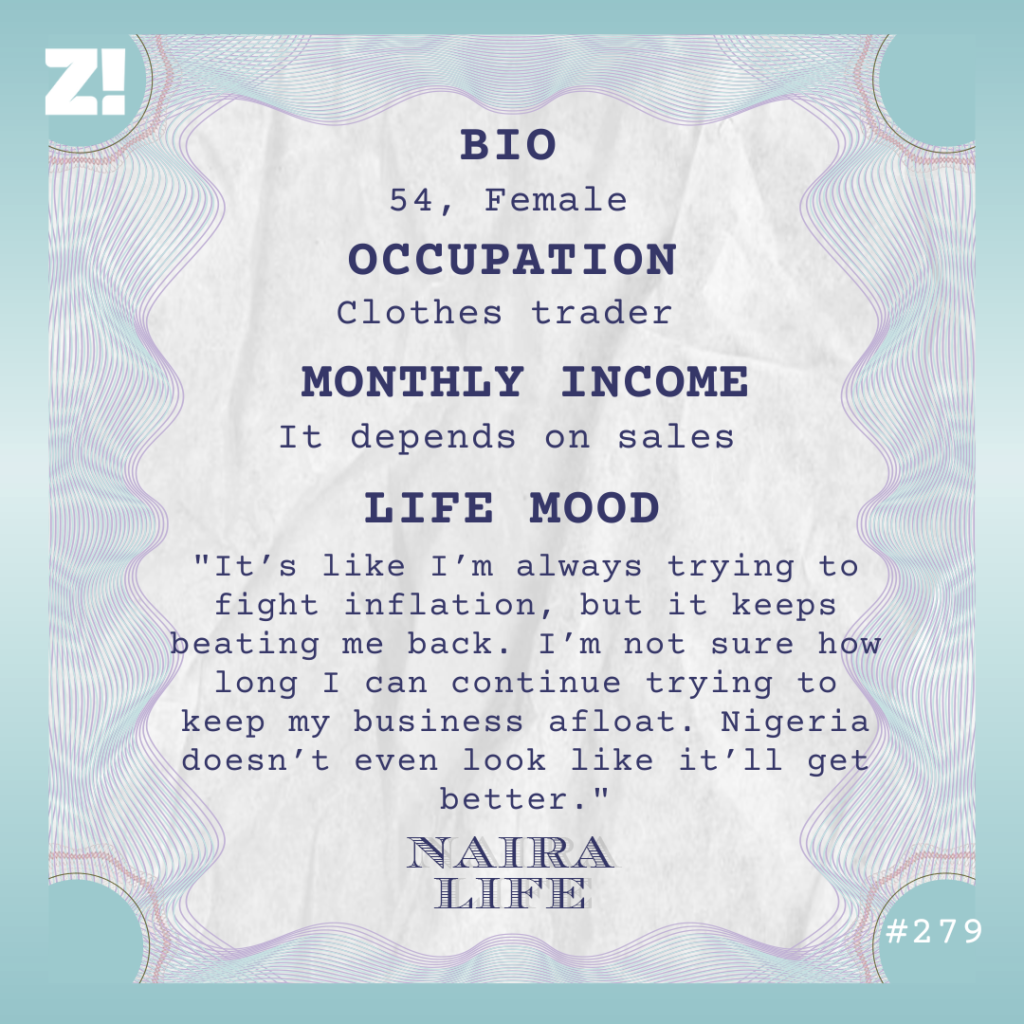

    Nairalife #279 bio

    When did the hustle start for you?

    1987. I was 17 and had just run away from home. I squatted with a friend whose mother sold ice water, so I started helping her hawk, too. Although she didn’t pay me, she fed and allowed me to live in the one-room apartment she shared with my friend. 

    It’s not like I hadn’t hustled before sha. My mother had a restaurant, and I always helped her cook and serve guests. But hawking ice water was the first thing I did on my own to survive. 

    Why did you run away from home?

    I was a young, stubborn woman who wanted to experience life by making her own mistakes. I grew up in Ajegunle — a popular slum community in Lagos — and it was easy to follow the wrong crowd. You know, the type that drank and partied with area boys. 

    My stepfather always tried to discipline me. To me, it was like the man just didn’t want me to shine or was only trying to prove seniority. This led to us fighting a lot, and my mother was always on his side. So, I left home immediately after finishing class 5 — what you people call SS 3 now.  

    Did you have a plan, though?

    Freedom was the only thing on my mind. I squatted with my friend for a year before her mother brought someone she was seeing to live with us. It was obvious that time had come for me to leave. 

    I squatted with another friend and got a job at a nearby canteen. My job was to keep the place clean and wash the plates. I can’t remember how much I earned, but it may have been around ₦200/month. ₦200 was enough to buy foodstuff —  for me and my friend  — to last at least three weeks.

    Ah. Why wasn’t I born in the 80s?

    Funny enough, we also complained about things getting expensive, but things were so much better then, compared to what our eyes see now. I was living well on that ₦200. I even saved out of it to pay to learn nursing in 1989.

    Like nursing school?

    Nursing school, ke? It was auxiliary nurse training. I paid a doctor some money, and he trained me in his clinic for two years.

    Why did you decide to go into nursing?

    I was tired of working at the restaurant, and nursing seemed like a more distinguished job. So, I asked around and found the doctor who trained me. I also worked for him during those years at his clinic. He saw that I was a fast learner and retained me after the training, paying me ₦1k/month.

    Was that good money for 1991?

    Somewhat. It was a small clinic, and I wasn’t an actual qualified nurse, so I was earning quite well at my level. It was enough to move out of my friend’s house and rent my own apartment.

    Also, I mended my relationship with my family around this time. My mother reported me to one of my aunties in the village, and the woman appeared in the clinic one day to talk to me. Since I was now on good terms with my mother, I started sending money home once in a while. I wasn’t making money only from my job, though. I also started selling okrika (thrift clothes) in 1992.

    How did that work?

    You know I mentioned that I worked in a small clinic? Well, it’s not every time we had patients. The clinic had a verandah at the back that opened up to a major street. People always passed by, and I thought it was a great spot for an okrika business. 

    I used to buy the clothes I sold from Katangua market and display them on the verandah when work was slow. Thankfully, the doctor didn’t have a problem with it. I made roughly ₦4k in profits monthly from the clothes. That time you could buy up to ten shirts with ₦100. 

    My salary was ₦3k/month when I left the clinic. I spent five years there. I sold okrika throughout the years I spent at the clinic. 

    Why did you leave the clinic?

    The doctor married a new wife who started complaining about my okrika business. I think the woman just didn’t like me. She helped her husband run the clinic, and one time, she put me on night duty for a month. I got angry and resigned. After I left, the woman started selling okrika at my spot. 

    What did you do next?

    I got married and moved out of the area in 1997. I tried to continue selling okrika, but it was difficult to manage during pregnancy. There was one time I went to the market to buy more clothes to sell during my third trimester, and I fainted at my customer’s shop. She warned me seriously not to show my face until after I’d given birth.

    While at home, I found another business idea.

    What was that?

    Jewellery. I lived close to a local government office and noticed that the staff loved owambes. I used to take my okrika to the offices to sell to them, but most of them either wore corporate clothes or ankara. However, they all wore jewellery. So, I decided I was going to sell that.

    I started with watches and costume jewellery sets. I’d load them in my bag and go from office to office. The good thing about the business was that I could sell a ₦800 or ₦1k watch for ₦3k. The more expensive, the better. Office people like to dress well, and these ones thought that “expensive” meant quality.

    Most of my customers bought on credit because they were salary earners. They only paid me at the end of the month. But it wasn’t hard to collect my money because the local government paid in cash then. The staff would all line up at the bank on salary day to withdraw money, and me too, I’d wait outside for them. Immediately I saw any of my customers come out, I’d go meet them to collect my money. They couldn’t tell me stories because we were in public.

    Hehe. I love it

    That was a good period for me, and I made a lot of money. My husband and I bought our first land for ₦100k in 2000. Unfortunately, we lost it years later to a land grabber — I mentioned it so you have an idea of how well the business was going. 

    In 2001, I bought my first mobile phone and SIM card. I think it was a Nokia 3310, but I know it cost ₦18k. The SIM card was also ₦18k. It’s hard to believe that these telecom companies basically give out SIM cards now.

    2001 was also the year I started considering other business opportunities.

    Did jewellery stop being profitable?

    Something like that. The debt became too much. Some of my regular customers were transferred to other local governments, and I think the government also changed how it paid its staff. Or maybe the bank they used. I can’t recall well now. I just know it became more difficult for me to pursue my debtors and collect my money on time. So, even though I was still making some money, I was close to broke as most of it was tied up in bad debt. 

    I thought about it for a bit and decided it’d be best to get a shop and expand into shoes, bags and other accessories. That way, I wouldn’t limit my customer base to the local government office.

    I found a small kiosk close to the local government office in 2002 and rented it at ₦12k/year. Then, I used all the money I had at the time from my jewellery sales to stock shoes and bags. It was a risk, but I knew I couldn’t start with two bags. No one would enter an empty shop.

    Did the risk pay off?

    It did. I was already popular in the area, so it wasn’t difficult to get customers. But I still couldn’t avoid credit buyers, so I tried to make up for delayed payments by increasing the cost for people who wanted to pay later. For instance, if I wanted to sell a bag for ₦2k, but the buyer wanted to pay later, I’d sell it for ₦3k. On average, I made ₦20k- ₦50k monthly.

    My income went into assisting my husband to provide for the house and our three children. His mum also lived with us from 2000 to 2005, when she passed away. She suffered from a stroke, and a good part of our income went towards her medication too. 

    In 2006, I moved from the kiosk to a bigger shop where rent was ₦36k/year. I also added ankara and lace to the list of items I sold. Those were the days when people could just buy fabric and sew. I could buy six yards of material at ₦1k and sell it for ₦1800 or ₦2k. I stopped selling these in 2010 and faced my shoes and bags because people were no longer buying. 

    Do you know why?

    It got more expensive — six yards of ankara fabric increased to ₦3k upwards without profit — and more people had more aso-ebi than they knew what to do with. It didn’t make sense to just buy fabric to sew when you’d get a new aso-ebi for someone’s wedding or burial by the next month.

    But even though I stopped selling fabrics, I was comfortable. I still sell shoes and bags till now, but I really enjoyed the business during those early years. Some friends offered to help me land a job at the local government, but I laughed it off. Why should I sit in an office for ₦30k/month when I made up to ₦200k in two weeks during the Christmas season in 2015? 

    Now, I sometimes wonder if I should’ve taken the job because things started changing in 2016.

    How so?

    Buhari entered, and everything just scattered. I think 2016 was when the dollar first entered ₦300. I buy most of my goods from wholesalers in Lagos Island, who import them. With the rising price of the dollar, everything became more expensive. Fuel prices also increased. 

    I remember I had this bestseller that my customers really liked: a half-shoe that cost ₦1200 from the market. I always sold it at ₦2k.  Then, this shoe moved from ₦1200 to ₦2k in a matter of weeks. People didn’t understand why I was suddenly trying to sell it to them at ₦2500. I was charging even less profit, but my customers still struggled to pay. I went from going to Lagos Island twice a week to restock to once every two weeks.

    I began thinking of more ways to make money to cushion the decline and decided to try a business that grew popular in that period.

    What business was that?

    It was like a mini-provision business. People could no longer afford to buy tins of milo and milk or even full packs of cornflakes, so sellers started selling these provision items and cereals the same way they sell rice — with measurement cups. So, instead of spending ₦2k on a tin of milk, you could ask them to sell ₦500 worth for you, and they’d measure it with those tin cups and tie in a nylon. 

    I wasn’t too sure about the business — I heard some of the sellers buy these cereals in unmarked bags from factories — but the business was moving, so I decided to try it. I took ₦50k and used it to buy a few 50kg bags of milk, cornflakes, chocolate powder, and sugar. Then, I arranged them in one corner of my shop. This was 2017.

    Was it profitable?

    Profit is a different matter. It was selling fast because people needed to buy these things in small quantities, but the profit wasn’t much. I could sell a whole bag of milk and only make ₦2k in profit. The profit only made sense when I sold plenty of bags quickly.

    But everybody likes good things, and soon enough, almost everybody was selling measurement cereals. It made sales even slower. I didn’t bother at first because I still had my shoes and bags to sell. 

    However, in 2019, I noticed that I was practically making nothing from it. The cereals got more expensive, and I couldn’t raise my prices too much because of competition. The last straw for me was when the bag of milk I usually bought for ₦16k increased to ₦30k in two days. I decided enough was enough.

    So you returned to focusing on shoes and bags

    I did. They were still expensive, but at least I didn’t have to sell my whole shop to make ₦1k profit. But business gradually grew worse as inflation grew worse. You don’t expect people looking for what to eat to think about getting a new bag. There were weeks in 2019 when I sold only one bag for the whole week.

    Business was far worse in 2020 due to COVID. No one was going anywhere, and for a while, I returned to selling the measurement cereals. I was hardly making anything in terms of profit; I just sold it to have something to do.

    In 2021, I decided to start selling ready-to-wear boubou gowns too. They were popular then, and I thought, “At least, if people don’t want shoes, they’ll buy gowns.”

    How did that turn out?

    It was a saving grace. People loved the gowns. I’d buy them for ₦1500 and sell them at ₦3k or ₦3,500. In addition to the few sales from the shoes and bags, I returned to making at least ₦30k monthly. In good months, I made ₦50k.

    But good things hardly last in Nigeria. I began recording a slump in sales in 2023 after the whole fuel subsidy issue. Again, people were looking for how to survive, not how to look good. 

    As if that wasn’t enough, prices kept skyrocketing. The gowns moved from wholesale prices of ₦1500 – ₦2k to ₦3k, and then ₦4k. Now, wholesalers sell these gowns for ₦6k – ₦8k. By the time I add my profit, it’s around ₦10k. How many people are ready to buy simple boubou gowns for ₦10k? I’m so tired. 

    I can relate. What’s your income like these days?

    My dear, I honestly don’t know. I went to the shop all through last week and didn’t sell a single item. Sometimes, I sell one pair of sandals, make ₦1k profit, and not sell anything again for the week. 

    It was much easier to make a good profit by selling bags. I could buy a bag for ₦5k and sell it for ₦9500. But when quality bags now cost ₦25k from the market, how much do I sell them for? I can’t even remember the last time I sold a bag.

    I’ve been racking my brain about what I can add to my business to make money. I’ve considered a food business, but do I really want to try that with food prices going up every day? I just bought four pieces of shombo pepper for ₦500. Imagine doing that on a large scale. 

    I’m tired of the whole thing. It’s like I’m always trying to fight inflation, but it keeps beating me back. I’m not sure how long I can continue trying to keep my business afloat. Nigeria doesn’t even look like it’ll get better. My children have advised me to stay at home and rest. But I also don’t know if I’m ready for that. What will I be doing at home? I can’t sit idle.

    What takes your money on a monthly basis?

    Basically, feeding and transportation. I lost my husband in 2022, so it’s been just me and my last born in the house. My eldest is married, and my other one is in university. I pay school fees for the children still in school, but thankfully, my husband’s family also supports us. I don’t know how I’d have managed otherwise. 

    God is just good. The economy can be doing its own thing, but I’m not homeless or begging for food.

    What’s something you want right now but can’t afford?

    I want to send one of my children out of this country. At least, with one abroad, the other siblings can find ways to go too.

    How would you rate your financial happiness on a scale of 1-10?

    5. Things are tough, but I’m alive with my children. There’s hope.


    If you’re interested in talking about your Naira Life story, this is a good place to start.

    Find all the past Naira Life stories here.
    Subscribe to the newsletter here.

    [ad]

  • “The Nigerian Market Is Pure Chaos”— Lola Akintola on Running a Tech-Enabled Food Business

    Image: Canva AI

    In 2014, Omolola Akintola left the US for Nigeria with a dream. She’d spent the last seven to eight years getting her degrees — a BSc in Economics, an MBA and an MSc in Marketing — and knew she didn’t want a long-term banking or consulting career.

    “I wanted to do something different, something that didn’t already exist,” Lola tells me. “I wanted my own startup so I could solve a problem and impact Nigeria.”

    She decided on greenhouse farming. Nigeria’s fine dining scene was on the rise and with it, the need for fresh produce. Lola predicted that it’d be difficult to keep up with importing produce like fresh strawberries and herbs, necessitating a need for all-year-round cultivation — the perfect market for a greenhouse farm.

    But setting it up isn’t a small investment. The cost of a small 250 square meter-sized greenhouse averages ₦3m now, and Lola had big plans. Bigger than just one greenhouse. 

    “I knew what I wanted to do would involve a lot of money,” Lola says. “I planned to stay and work in the US for a few more years to raise capital for the farm and then return. But I fell in love with my partner and returned to Nigeria much earlier — let’s hope my dad doesn’t read this. Greenhouse farming was still the plan  — specifically, a 10-year plan. I just needed to work for some years in Nigeria before that could happen.”

    Soon after returning to Nigeria, Lola found a job at Access Bank, one of the country’s big four banks.

    “I enjoyed my time at Access. I worked in the strategy department, and I felt useful. I loved the fast-paced, exciting environment. I was going to stay at the bank for years so I’d have saved enough for my greenhouse farm.”

    However, Lola only spent a few months before she resigned to pursue another business idea.

    A “breakfast for the skilled middle-class” business opportunity 

    Working at the Access Bank head office in Victoria Island opened Lola’s eyes to two things. 

    First, the 9-5 life for young professionals in Lagos is hard. She had to leave her home in VGC before 6 a.m. if she hoped to beat traffic and get to work by 8 a.m. Returning home wasn’t easier as long hours at work meant she often had to leave the office at 10 p.m.

    Secondly, her new lifestyle meant she never had time to grab breakfast or prep food. This wasn’t a problem peculiar to her.

    “My colleagues had the same problem. The higher-ups could afford to get in-house chefs or maids to bring them food. Married guys didn’t have to worry about food because they had someone else doing that labour for them. But the single men and women — mostly millennials — didn’t have time to cook their own food.”

    Lola also noticed something interesting. The skilled middle-class wasn’t willing to rely only on roadside food.

    “It was 2015 in Lagos, and people had disposable income. There was always a concert or show happening during the weekend, and people could afford to go. I had 9-5 friends in different industries too, and I knew that the average millennial Lagosian liked going to cafés on the Island to treat themselves to brunch on weekends. What if they didn’t have to wait for the weekend to treat themselves? What if they could have nice, fancy breakfasts delivered to them daily?”

    And Milk and Honey Gourmet Services was born.

    Building a tech-enabled food business

    “In business school, we discussed how businesses are gradually going online,” Lola says. “Buildings are disappearing, and people are exploring new ways of doing business. When I got the idea for a breakfast business, I knew I didn’t need to invest resources in a physical restaurant.”

    It made economic sense to run her new idea as a subscription-based service, where customers could subscribe to a meal plan, pay and get their food delivered daily. This way, Lola didn’t have to worry about buying ingredients in bulk and hoping that the power supply was regular enough to store them.

    She did a trial run with her sister and some friends first. “I’d close from work and prep the meals I wanted to send to them the next day. My menu included local and international (mostly American) cuisine. Most of what I did was self-taught and by reading recipe books. I already had a passion for cooking and wanted to attend culinary school to get professional skills, but that would’ve meant sponsoring myself and an additional two years of study. So, I decided to just start.

    I’d wake up really early to cook and send the meals through my sister’s driver to save costs. Interest grew when other colleagues at work noticed my sister and friends having meals like tortilla wraps and quesadillas for breakfast.”

    The referrals flew in, and Milk and Honey became a full-fledged business in 2015. Lola offered different meal plans, from the Bronze subscription plan (breakfast-only) at ₦7,500 weekly to the Platinum plan (including lunch) at ₦20k/weekly, with customised recipes designed to replicate the fine dining experience.

    She did that for a few weeks before deciding she could no longer juggle it with her 9-5 at the bank.

    “But I was wary about leaving because I had senior colleagues who loved me. Fortunately, I had to report to the NYSC orientation camp soon after, and I used the opportunity to resign. I couldn’t bring myself to do it face-to-face.”

    Without the distractions from her 9-5, Lola could now give her full attention to building her business. And she did exactly that, but there was a lot to figure out.

    “I was new in the country with a lot of theoretical knowledge. But I didn’t know how to get the right people to bring my vision to life. I was building a tech-enabled startup, so I needed to know where to find experienced website developers. Also, I knew the kind of packaging I wanted, but I needed someone who knew how and where to get materials to make it happen. My lawyer-sister helped with filling me in on legal registrations and regulations, but I needed someone who knew how to run a business specific to Nigeria — a partner.”

    Olumide Akinsola became that person. Introduced through mutual friends, Olumide was the key to connecting Lola to everything she needed for her new startup.

    “Olumide had a guy for everything,” Lola says. “We discussed the brand image, website and operations. It was like a meeting of the minds. He immediately saw the vision and ran with it. We created a system and knew it would work. We were creating the next big thing.”

    Slow and steady [and expensive] growth

    Naturally, running a business involves spending money. While Lola didn’t have to invest in a physical restaurant, she had to spend on chefs and kitchen assistants, branding, digital marketing and delivery bikes.

    “I didn’t get external funding, and my parents’ support only extended to them allowing me to cook out of the home kitchen and using my dad’s car for delivery initially,” Lola explains. “I get it, though. My dad didn’t understand why I left my US degrees to come and cook.” 

    However, as Milk and Honey’s clientele expanded to over 300 subscribers, running the business out of her parents’ kitchen became impossible, so she had to rent a ₦1.1m/year kitchen space and office. 

    “I’d saved about $20k over 7-8 years working summer jobs in the US, and most of it went into keeping the business running between 2015 and 2018. It shouldn’t have cost that much, but like Temple Run, Nigeria kept bringing us new hurdles to jump over.”

    Inflation and the adverse effects of government policies

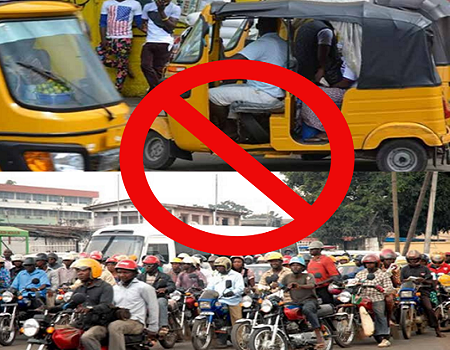
    In 2017, the Lagos State government announced a ban on commercial motorcycle (okada) and tricycle (keke) movements on major highways, bridges and roads. This wasn’t the first time the state would restrict bike activities — the last ban was in 2012 — but the new ban affected hundreds of routes, including Yaba, Surulere, Ikeja and the entire Lagos Island. These areas were the major hotspots for Milk and Honey’s activities.

    Image: Tribune Online

    “We initially bought two bikes for delivery,” Lola says. “But when the government impounds one, you have to go and beg, which affects delivery time. At one point, it was like we had to buy proper motorcycles that didn’t look like okada. 

    We did that, but we still ran into problems. When it became too much, we partnered with Gokada — the government allowed their bikes on the road. That cost us an extra ₦5k/day for each bike.”

    With Nigeria’s age-long power supply problem and the need to keep generators running to preserve ingredients, Lola also had fuel price increases and scarcity to worry about. In 2016, fuel prices rose from ₦87 to ₦145 and maintained the same price between 2017 and 2018. However, frequent scarcity increased the price slightly at several points in the same period.

    “It was just hard. I had to maintain relationships with several fuel station managers because no one knew when fuel would suddenly become scarce again.”

    On top of all that, the naira kept falling against the dollar. By 2017, it had fallen to ₦300/dollar as against ₦197 to the dollar in the previous year. For an importation-heavy country like Nigeria, this led to a steep rise in the cost of packaging material Lola needed to keep her business going.

    “We tried multiple things to keep our costs low. We started a recycling drive and encouraged our customers to return their plates for a discount, but it didn’t do much to minimise expenses,” Lola explains. “I also never paid myself a salary — even though I made sure my eight regular staff were never owed, but it was a lot of money. We had no choice but to increase the prices of some of our plans.”

    Even as Milk and Honey was fighting for its life, the customers were fighting for theirs, too. 

    “People could no longer afford to pay ₦7,500 weekly (without delivery) for breakfast. It wasn’t like they were moving to different brands. There were just more important things they had to pay for or prioritise. When I started the business, I argued that people would always eat. Now it became clear that, yes, people would always eat. But what they ate was a different question. Bread and eggs could fill them just as much as a BLT sandwich.

    For most of my bronze plan subscribers, the service was initially a small price to pay for luxury. But when the economy took a nosedive, it became a luxury they couldn’t afford. There just wasn’t as much disposable income to work with. We lost 70% of our bronze subscribers in 2017”. 

    Trying to stay ahead of the curve

    In a quest to stay afloat and reinvent the wheel to continue serving her customers, Lola started offering health-based meal plans in 2017.

    “I got a dietician, and we started offering nutrition consultations to create meal plans for people with dietary restrictions who wanted to stay healthy.”

    Of course, this service was mostly used by the richer middle and upper-class who could afford to care about what they put in their mouths. The problem? This target audience was a tiny portion of Milk and Honey Gourmet’s initial customer base. 

    “I had to gradually abandon the idea that our service would be for the global millennial. I had to focus on older rich people, and this category isn’t necessarily online. I needed to re-invent Milk and Honey if we wanted to make enough to keep running. That would involve a new form of branding, marketing and the whole works.”

    Making the difficult decision to exit the business

    By 2018, it became clear that the economy was deteriorating faster than it was trying to improve, and everyone was struggling. Even Lola’s husband, who’d initially refused to leave Nigeria, had decided it was time to leave.

    “At the end of the day, I didn’t really leave Milk and Honey. I left Nigeria,” Lola says. “I’d already calculated that the pivot to an older market was what we needed, and we could turn profitable in the next two to three years so I could take a step back and let the business run on its own. 

    But Nigeria just wasn’t working. Did I want to stay because of all the time and money I invested or because I thought Nigeria would get better? What if the upper class also have to make tough decisions and decide our services are an unnecessary luxury?”

    Lola left Nigeria for the UK in December 2018 after giving her customers a month’s notice to shut down operations. She sold the remaining bikes and donated most of her cooking equipment. 

    “I rarely talk about Milk and Honey because giving it up was so sad. I’d invested everything into it; my finances and my mental and physical health, and for a while after it ended, I lost my confidence. I did everything by the books, and while that always resulted in success, I was suddenly introduced to the possibility of failure. That fear followed me into the other dreams I tried to pursue.”

    As our conversation ended, I asked Lola what the experience has taught her about doing business in Nigeria and what other prospective business owners might benefit from knowing.

    “Nigeria discards economic principles. I have a degree in marketing and knew all the fun things to do to make a business work, but one plus one was no longer equalling two. The government can announce a new policy, and you may think it’ll have a positive effect. But it doesn’t because they don’t follow through with all the other things that should make the policy work. 

    For instance, the government can announce it wants to tackle inflation by releasing funding. That should work, right? At the same time, the same government can decide to stop importation and allow only one person to produce an item. Or they sell forex cheaper to that person. It causes chaos. The word for the Nigerian economic market is just chaos. Some businesses are still making it work regardless, but it’s exhausting. All your permutations and projections can mean nothing at the end of the day.”

    On what she thinks might help, Lola says, “So many businesses would do much better if the electricity and transportation problems were solved. If someone comes and solves just those two problems, I’d say they did a wonderful job.”

    Ten years later, Lola isn’t the same person who stepped into the country with big dreams.

    “I don’t think I’ll return to Nigeria. Many people are doing greenhouse farming now too, so no one needs me. I might consider returning for a vision that has to do with the girl child. If I’ll be helping save a million lives, then I can come back. Otherwise, I’m fine where I am.” 


    NEXT READ: The Nigerian Dream Is Dead. Why Did I Move Back Here?

    [ad]

  • 7 Nigerians on How Their Approach to Self-Care Has Changed Over the Years

    You know how you see something you like at the market, but then you hear an outrageous price and realise you don’t like it like that?

    That’s how adulting has changed how these Nigerians think about self-care and their guilty pleasures.

    Image designed by Freepik

    Joseph, 31

    I used to take myself to a high-end restaurant immediately salary entered. It started when I got my first job in 2013 with bukas. Then I moved to fast-food spots and proper restaurants as my money grew. 

    I started living alone in 2018, and increased responsibilities shook this tradition, but I kept at it. My breaking point was when my rent increased from ₦800k/year to ₦1.6m in 2023. No one told me to budget first before anything else. I still spoil myself sometimes, but I do it with sense. High-end restaurants are now once in a blue moon.

    Charles, 35

    I love taking road trips. Since 2019, my idea of unwinding has been driving four to five hours from Ado-Ekiti to Lokoja to spend the weekend at least twice a month. Sometimes, I spend my time in Lokoja with relatives. Other times, I stay in a hotel and only come out in the evenings. 

    Since the fuel subsidy removal in 2023, I’ve only been to Lokoja once. A trip that typically cost me ₦15k – ₦20k fuel to and fro now costs ₦25k just to get to Lokoja. It’s not sustainable. I encourage myself by reasoning that the kidnapping situation has worsened, so I shouldn’t do road trips anyway.

    Anu, 31

    For a long time, my idea of self-care was trying out continental recipes I found online. It’s my way of travelling the world without actually travelling. But I’ve hardly cooked anything new since I started having kids in 2018. My children are picky eaters, and I hardly have time between taking care of them and working to even consider making extra meals. I only get to satisfy myself when they’re away on holiday.

    Jen, 28

    Food was once my go-to when I was stressed, bored, or sad; it made me feel better. But my metabolism is no longer what it was. At university, people always wondered how I could eat so much but stay skinny. Now, I can’t even breathe near shawarma if I don’t want to add 2kg. 

    My new form of self-care is exercising. I’ve been a regular gym goer since 2022, but my gym just increased their fee to ₦70k/month from ₦50k, and I’m considering doing my exercises at home instead.

    Ima, 24

    Ekpang Nkukwo is my favourite meal, and my mum made it almost every week when I was growing up. She’d also make it when she noticed I was unhappy, and I associated the meal with feeling better. Anytime I was on holiday from school, I’d call her on my way home and ask her to prepare it. 

    I started living alone in a different town because of work in 2023, and I thought I’d make the meal every weekend to congratulate myself for surviving the week. I’ve only made it once since then. The preparation stress no be here. Sleep is now my way of making up for a stressful week.

    Jesse, 33

    Since I started earning reasonably well in 2020, I’ve taken one full month’s salary a year to splurge on something I really want — mostly electronic gadgets. But I couldn’t do that in 2023 because of wedding preparations and my MBA studies. It doesn’t look like it’ll be possible this year too because I now have a family to consider. I’ll probably have to settle for splurging a small percentage rather than the full salary. 

    Ella, 26

    Sleeping in during the weekends was my way of spoiling myself until I had a child in 2023. I make up for it by bingeing old movies to de-stress. And I try to squeeze in power naps as often as possible. Hopefully, I can resume sleeping in when my child gets older. Sleep is life.


    The biggest women-only festival in Lagos is BACK.
    Get your tickets here for a day of fun, networking and partayyyyy

    NEXT READ: “We Make Do With Our Imagination” — 7 Nigerians on How Inflation Affects Their Relationships


    [ad]

  • “We Make Do With Our Imagination” — 7 Nigerians on How Inflation Affects Their Relationships

    Nigeria’s annual inflation rate has climbed to 29.9%, its highest in almost 28 years. The cost of living is choking the living, and it’s touching every aspect of our lives, including relationships.

    I spoke to some Nigerians about how inflation has changed their relationship dynamic, and here’s what they said.

    Rotimi, 27

    My friends and I have this weekly tradition. We hang out at bars every Friday to drink and just talk about our week. We also rotate payment, so if I pay for the whole group’s drinks this week, someone else will do it next week.

    When I paid for the group in December 2023, it cost me about ₦80k. That was even with Detty December price hikes. But when it was my turn in February 2024, it was over ₦100k for the same drinks and chops for five people. I’ve avoided the last two hangouts because spending that kind of money isn’t sustainable on a ₦350k salary. I still have bills. 

    My friends are considerably richer, so they probably haven’t noticed how sick the increase is. But I intend to tell them soon that I can’t keep up. We’ll have to consider other ways to hang out.

    Chioma, 31

    Since the first time my best friend and I went on a girl’s trip in January 2022, it’s been like an unofficial rule to do it every year. We went again in January 2023. Things are typically cheaper in January. 

    But we didn’t even talk about a girl’s trip this year. We sent a couple Instagram links of resort locations to each other, but we didn’t discuss logistics because we knew we couldn’t afford it. Between local flight costs — because the roads are too dangerous to even consider — accommodation and feeding, you’re already budgeting ₦500k. We’ll just make do with our imagination for now.

    Tobi, 26

    I used to fill my boyfriend’s car tank once a month to show love. But what used to cost me ₦40k increased to over ₦100k when the fuel subsidy was removed in 2023. I still sent the ₦40k monthly for a while because at all at all na im bad pass. 

    But now, I only send ₦20k occasionally because I have other bills, and things double in price every day. He understands and even sends me money occasionally. It’s just sad that I can’t be as intentional as I want to.


    ALSO READ: “It’s Shameful to Just Be Collecting” – 7 Nigerians Talk About the Struggle to Gift Their Abroad Friends


    Ayomide, 23

    My siblings and I always go all out for my mum’s birthday. Our father is dead, so we do everything to make sure she doesn’t feel lonely on that day. In 2023, we contributed ₦150k to pay her shop rent and do a small celebration. 

    Her 2024 birthday is a few weeks away, but my siblings haven’t mentioned anything about contribution. We’ve talked about birthday plans but haven’t billed ourselves yet. I understand because everywhere is dry. 

    We want to get her a phone, but it costs over ₦200k. Something that was just about ₦100k in 2023. It’s just somehow.

    Femi, 27

    My girlfriend likes receiving flowers, but she specifically told me not to buy her flowers on Valentine’s Day 2024. She said I should send her the money or buy something else. I fully understand her point. Flowers used to cost ₦15k – ₦18k, but now, you hear ₦30k – ₦50k for the smallest bouquet. When it’s not like the flower will live forever.

    Glory, 32

    My husband and I go on fancy dates every weekend to spend time together away from the children. This typically costs ₦20k maximum, but inflation has made restaurants charge higher. When we considered the increased cost of fuel and foodstuff, we had to think twice about spending up to ₦35k on dates. 

    We’ve reduced the frequency to once per month since late 2023. Sometimes sef, we do indoor dates to save money. It does the same work.

    Iyanu, 28

    I’ve made it a habit to bring bags of foodstuff with me when I visit my mum because she always has family members staying with her. But I haven’t been able to meet up with that since 2023. When I visited her last month with only five tubers of yam and a paint bucket of garri, she called me aside to ask if all was well. It won’t be well with this government. 


    NEXT READ: 7 Nigerian Millennials Share Hacks for Living Through Inflation


    [ad]

  • Alternatives to Consider Now That Inflation Has Driven Restaurants Mad

    Even if you live under a rock, it wouldn’t stop you from feeling the biting effects of the inflation in Nigeria. According to recent data, January 2024’s food inflation stood at an alarming 35.41%. God, abeg.

    It’s not surprising that fine dining restaurants that’ve always charged through the roof for their meals are moving madder than mad. If you don’t plan to spend two weeks worth of your hard earned salary on a plate of food, these alternative spots should be on your radar.

    Your parents’ house

    Alternatives to Consider Now That Inflation Has Driven Restaurants Mad

    If you have a date, take them to your parents. It’s a huge step, but beloved, your pocket might not survive the effects of that creamy pasta and strawberry daiquiri. Ten minutes after your arrival, your mum or dad will ask, “So, what is your friend going to eat?” And the good thing is you’ll also get a plate.

     [ad]

    Your grandparents’ house

    Alternatives to Consider Now That Inflation Has Driven Restaurants Mad

    Lagos restaurants can argue all they want, but ₦14k for a plate of abula is wild. That’s a pot of soup for a week, if you think about it. Everyone knows baby boomers make the best abula anyway, so why not just visit your grandparents. You even get a wide option of paternal or maternal. Alternate between their houses, and you wouldn’t have to pay a thing for homemade local delicacies again.

    Don’t forget the Mama Put on your street

    Alternatives to Consider Now That Inflation Has Driven Restaurants Mad

    If you’ve rolled your eyes at all the Mama Put spots in your area, it’s time to do better. They might bump up their prices a little, but you’ll still fix yourself a decent plate with a ₦500 – 1k budget. Some of them even throw in garnishes like red onions to help your food cosplay as a fine dining meal.

    Or that friend that knows how to cook

    It’s fine if they weren’t inspired to start cooking until after Hilda Baci’s cook-a-thon. Now, you can fill their ears with sweet whispers of how food is the new crude oil. If they’re scared to start a food business, offer yourself up as their first paying customer and let them cook.

    Owambe

    Alternatives to Consider Now That Inflation Has Driven Restaurants Mad

    If you’re in Lagos, the weekdays have nothing on you. Search the nook and crannies of your neighbourhood and you’ll find an owambe to gatecrash. Just make sure you wear white so you can blend in no matter the theme of the day. Find a good spot and make yourself comfortable. If the food doesn’t come, find a waiter to tip. 

    People outside Lagos should target the weekend though. 

    Fast food chains

    Just a reminder that you can still dine like a second-class king with a ₦3k budget when you walk into any franchise outlet near you. Swallow your pride today.

    The house of God

    Perish the idea that you’ll get small chops, coffee or even jollof because inflation has made that a thing of blessed memories. But remember, feeding your spirit is just as important as feeding your earthly body.

    If you need even more places for your must-visit list: These Are the Best Suya Spots in Lagos.

  • 7 Nigerian Millennials Share Hacks for Living Through Inflation

    It’s crystal clear we have a problem in Nigeria. Inflation has reached 28.92% — the highest in 27 years — and things are going from bad to worse.

    Since all of us can’t just japa and leave this country empty, we might as well figure out how to live through it. I spoke to some millennials, and they shared the hacks they’re holding onto in these trying times.

    Prioritise essential expenses

    If you know you typically finish a bag of rice in a month, it’s better to buy that bag when you have money rather than buy it small small because that rice can double in price in two days.

    I like to also buy things in twos or threes. At least, I get to delay buying the same thing at an (inevitably) higher price for a little while. I can stay broke happily, knowing I already have most of what I need till the next paycheck comes.

     — Kelvin

    Take loans if you have to

    Gathering money over a couple of months to make a big purchase doesn’t work in this economy again. Before you finish saving the money, the item has doubled in price.

    So, if it’s an item you absolutely can’t do without, consider taking a loan to buy it. I do this regularly and advise anyone else to do the same. It works even better when you can get informal loans with little or no interest. But pay back your loans o. Let’s not be unfortunate. 

    — Opeyemi

    Comfort is good, but survival is better

    This might sound like advice to reduce your quality of life, but if you don’t want that quality of life to reduce by force, you need to start making sensible cuts.

    I used to run my generator all day whenever NEPA did their thing, but now, I do most of my work within the three hours that my generator is turned on daily, so I can be on my laptop while it’s connected to electricity. That way, my battery is still charged when the generator is turned off, and I can still squeeze out a couple of hours before the battery dies.

    Think about what you can cut sensibly. Do you need to take an Uber for the entire trip, or can you take public transportation to a point first?

    — Peace

    Nobody will beat you if you haggle

    Our mothers knew what they were doing when they priced things at the market. I used to be ashamed to haggle, but now, I have to do it.

    Pro tip: Start the haggling process by dividing the initial price into three. For instance, if the seller says something costs ₦1k, start pricing from ₦300 or ₦350. You’d be surprised how much you save when you and the seller eventually settle on a price.

    — Christy

    Avoid billing like your life depends on it

    I now do a thing where I refuse to open or respond to WhatsApp messages until the sender reveals why they’re messaging me.

    Messages with only “Hi” or “Hello” go unanswered unless you follow it up with “My name is XYZ, and I’m reaching out for ABC reasons”. For not-too-close family members, I make sure to start conversations with my own problems. Everywhere is hard, and this is not the time to make any unnecessary expenses.

    — Kene


    RELATED: The Most Effective Ways to Avoid Aso-Ebi Billing


    Have a budget, but be flexible

    I’m big on budgeting, but I recently noticed that my budgets weren’t adding up. For instance, I could budget ₦5k for gas and suddenly hear that they’ve increased the price. 

    I still budget, though. If not for anything, it helps me track my expenses and have something to look at when I start wondering where all my money disappeared to. So, have a budget but still have it at the back of your mind that things can change. At least, if it doesn’t work out, you know it’s Nigeria, not you making poor financial decisions. 

    — Ola

    Make money

    It’s easier said than done, but at the end of the day, money is what will still save you from totally erasing your quality of life due to inflation.

    I’m constantly on the lookout for side gigs and better job opportunities to increase my income. If you like, be feeling guilty or thinking you want to be loyal to any company. Even your oga is looking for a better-paying job.

    — Bori


    NEXT READ: 7 Salary Earners Across Different Income Ranges Get Candid About Saving


    [ad][/ad]

  • How Are Small Business Owners Dealing With Inflation in Nigeria?

    Within the space of two months, fuel prices have tripled, the naira has fallen to record lows and inflation has gone through the roof. 

    Now more than ever, doing business profitably in Nigeria has become even more difficult. How has this affected small business owners? I spoke to a number of them about how they’re staying afloat during this period.

    Some have had to increase retail charges

    “I sell decorative flowers, and my business depends on foreign exchange because many of my suppliers have to import the products. Since June [2023], prices from my suppliers have doubled, and I’ve had to do the same for retail. For example, a small flower vase that I used to sell for ₦9k just two months ago is now ₦17 – 18k. My customers are angry, and sales have reduced drastically, but I can’t afford to charge lower. If I sell everything at a loss, how would I restock?” — Glory, Flower shop owner

    “I deal with electronics, which means I need constant electricity so prospective buyers can test the products. Before now, I spent around ₦7 – 10k weekly on fuel. Now, I ration my fuel usage but still spend close to ₦21k weekly. I’ve had to increase my prices by 30% to meet up with the operational costs. I may even have to increase it again because supply has also become more expensive. I have to transport my products from Lagos to Ekiti, and shop rent is still there o.” — Nedu, Electronics dealer 

    “The difference hasn’t been that much because my plant business only started operating in April [2023], but delivery costs have risen. When we started, we could do Uber delivery from our location at Surulere to Lekki at ₦3k, but now, drivers don’t accept anything less than ₦4,500. The cost of decorative items like plant pots and white stones have also increased, which of course, increases the selling price. We informed our customers of the price change and increased delivery fees; they’ve been good sports about it. We also try to give a subsidy of sorts on delivery by paying a percentage of the cost so it’s not too costly for our customers.” — Tobi, Plant and furniture business owner

    Others have had to take a break

    “Inflation is dealing with me, not the other way around. I market bags on WhatsApp for a commission fee from a wholesaler, but sales have been really bad for about two months. The prices have doubled, and people are looking for what to eat, not fashion. In a good month, I used to make around ₦40k in commissions, but I’ve not sold anything since July. I just want to take a break and re-strategise.” — Becca, Fashion entrepreneur

    “I sell food, and I normally cook twice a day to meet up with demand. But I’ve had to limit my cooking to only mornings because of the high cost of food and items like plastic spoons, nylon and “takeaway” plates. Customers complain about the reduced food quantity, and some even eat on credit. I’ve moved from making around ₦6k in daily profit to about ₦2k. It’s hard.” — Iyabo, Roadside food seller

    Others just closed down

    “I’ve had my provision store for about three years but closed it down last month. Sales have been challenging since last year, but 2023 has been something else. 

    I used to get items from my wholesaler on credit with the agreement to pay back when I need to buy more, but she’s now refusing to sell on credit. And it’s not her fault; the economy isn’t smiling at all. I still have drinks in my freezer that I haven’t been able to sell because the limited power supply means they can’t get cold, and I don’t have money to fuel my generator regularly. I’ll find a way to sell them off later. For now, I’m just tired of selling at a loss.” — Gold, Provision store owner

    “I started making natural hair care products in January, but I’m stopping this month because it’s too expensive to keep up. I was still struggling to build my client base when the cost of production went up. For example, a cream I sell for ₦4k used to cost ₦3,200 to produce. Now, it costs ₦4,100 to produce. How do I tell the customers I’m still trying to keep that I’m increasing prices just seven months after I started selling?” — Moji, Haircare entrepreneur

    [ad][/ad]


    NEXT READ: Are You Financially Irresponsible, or Is It Nigeria?

  • Are You Financially Irresponsible, or Is It Nigeria?

    Our parents started teaching us delayed gratification early. 

    You know how growing up, you didn’t dare eat the meat in your food till you’d cleaned your plate? They wanted you to resist immediate pleasure for the satisfaction of eating something you actually like after being forced to swallow semo. It was a good lesson, but it’s not really useful these days. There’s no guarantee that the meat wouldn’t have grown wings by the time you’re done eating.

    https://twitter.com/oluchukwuijn/status/1681408439489101824?t=Jx0m7IDlxQ005ZiY64NrIw&s=19

    In case you haven’t already figured it out, meat is a metaphor for money. Tinubu’s Nigeria Today’s economy might have you thinking that you’re making bad money decisions. That’s a lie from the pit of capitalism, and here’s my case.

    Inflation is on colos

    AKA, inflation is flying higher than a kite right now. So, no matter how frugal you try to be, your ₦5k can  never comfortably last one busy work week again. Blink once and it’s gone, but it has nothing to do with your ability (or inability) to make good financial decisions.

    The naira is falling more than someone in love

    In a country that’s heavily dependent on forex and importation, everything is suddenly triple the price. Well, except your salary.

    The price of gratification has gone up

    You can decide to put off buying shawarma till you receive salary at the end of the month, only to hear that the price has increased by ₦2k because the shawarma vendors are business people trying to cut a profit too. So according to Nigeria’s economy, instant gratification is the way to go.

    Government-induced sapa isn’t hitting the brakes

    In just about three months, fuel prices, school fees and food prices have soared through the roof. The sapa is touching everybody. Even if you’re getting ₦1m every month, by the time you buy fuel of ₦500k, you’ll be wondering if you’re living above your means.

    You may just faint

    It’s not like you’re throwing money away. You’re literally buying things you need to survive. So what if you finish your money on something “unnecessary” like cake? You’ll need something to replenish your energy after thinking about how messy Nigeria has gotten.

    It’s not you, it’s Nigeria

    At the end of the day, it’s just Nigeria. You’re doing amazing, sweetie.


    [ad][/ad]

    NEXT READ: School Might Be a Scam, but Not if You’re Nigerian

  • The Anti-Inflation Naira Policy That Brought More Inflation

    Ever since CBN governor, Godwin Emefiele, introduced the naira redesign policy in November 2022, it has brought nothing but chaos. 

    From a naira scarcity that impoverished millions of Nigerians to protests that led to the loss of lives and property. 

    The latest failure in the policy to rear its head is an inflation rate of 21.91%, which is the highest rate Nigeria has experienced in 18 years. 

    This comes off as strange however because there hasn’t been any money in circulation in the last two months. Isn’t there supposed to be a reduction in inflation when there’s hardly any cash in circulation?

    RECOMMENDED: Why Are The New Naira Banknotes So Scarce? 

    How bad was the inflation and what is the government’s response to this? Let’s dig in:

    The Inflation 

    In February, inflation was mostly caused by a rise in the prices of food, as it rose to 24.35 per cent year-on-year. 

    Food was more expensive in Kwara as food inflation hit 29.51 per cent, Imo (27.47 per cent), and Lagos (27.42 per cent). 

    It was lowest in Sokoto (18.54 per cent), Jigawa (19.67 per cent), and Yobe (21.89 per cent).

    It was also disclosed that increase in the price of bread, cereal, rent, potatoes, yam, tubers, vegetables, and meat drove inflation up in February.

    What was the CBN’s response?

    It was one of defence. Emefiele claimed that the recent monetary policy decisions are working. According to him, “We have started to see inflation trending downwards and exchange rates relatively stable.”

    Of course, the National Bureau of Statistics has proven that to be false. 

    But let’s hear from the Research analyst at Atlas Portfolios Limited, Olaide Baanu to tell us about this.

    What does the expert say?

    According to Baanu “The increase recorded can be attributed to the ongoing cash crunch, as some vendors now require extra charges for payments.” 

    The food inflation expanded by three base points to 24.35 per cent year-on-year following the cash crunch policy and dry-season effect as Nigerians search for cash to purchase scarce staple foods (like meat, tubers, vegetables, etc.) from farmers.”

    What happens next?

    Right now, CBN has granted citizens permission to make use of the old naira notes as legal tender, but would this reduce inflation? Would it be higher than before? 

    Let’s wait and see. 

    Be sure to get the latest coverage on the 2023 gubernatorial elections right here on Citizen! If you want to be part of the conversation, you can join our community here

  • Who Will Take Responsibility for Nigeria’s Poverty Mess?

    On November 30, 2022, the Federal Government absolved itself of total blame concerning poverty in Nigeria.

    The Minister of State for Budget and National Planning, Clement Agba, shifted some of the blame to governors of the 36 states. The minister said the governors should stop spending borrowed money on unnecessary projects and spend on projects that fulfill the basic needs of the people instead. 

    Agba said, “We appeal that governors should concentrate on building rural roads so that the farmers can at least get their products to the market.”

    But are state governors really to blame? Or is this simply a case of the pot calling the kettle black? Let’s first understand the state of Nigeria’s poverty.

    How’s Nigeria’s poverty level looking? 

    133 million Nigerians have been classified as “multidimensionally poor” by the National Bureau of Statistics (NBS).

    In its National Multidimensional Poverty Index report, 63% of Nigerians are poor due to a lack of access to health, education, living standards, employment, and security. This figure even exceeded the World Bank’s estimate of 95.1 million. Remember when our dear president said in 2019 he’d lift 100 million Nigerians out of poverty

    Now that we understand the poverty level, who’s to blame? 

    Agba has already called out governors, but the Federal Government is in the driving seat of the  public policies that determine Nigeria’s poverty level. Here are some examples:

    Border closure

    In August 2019, Nigeria closed the land borders shared with neighbours like Chad, Cameroon, Benin, and Niger. This closure shut down the movement of goods between the countries and badly affected trading activities. 

    Buhari said he  closed the borders to prevent the smuggling of goods, especially rice, into Nigeria. But a bag of rice that used to sell for ₦23,000 before the closure now sells for as high as ₦43,000. The border closure clearly just caused more suffering for Nigerians.

    High cost of governance 

    One thing that should be seriously considered is the ridiculously high paychecks of politicians in the executive arm of government. 

    Why should there be hardship allowance, entertainment allowance, and even wardrobe allowance for people whose salaries already run into millions of naira? No wonder Nigerian lawmakers have been known to be one of the highest-paid in the world.

    The Monetary Policy Rate (MPR)

    The MPR is one of the measures the Central Bank of Nigeria (CBN) uses to stabilise prices in an economy. It’s the rate the CBN lends to commercial banks, and the commercial banks lend to their customers.

    In order to reduce Nigeria’s inflation rate, the the CBN raised the MPR from 11.5% to 13% in May 2022 and 14% in July 2022. The result? The 18.6% inflation rate  in June 2022 increased to 21% in October, the highest rate in 17 years. And what happens when you don’t have the money to buy essential goods? Poverty.


    In the end, what Nigerians care about is that all levels of government coordinate their efforts and seriously start pulling Nigerians out of poverty.

  • Meffy Keeps Raising the Interest Rate and You Should Be Worried

    The man whom we all love to hate, Godwin “Meffy” Emefiele, can’t stay out of news headlines. Between his announcement that our big boy naira notes will get a facelift and the actual reveal which turned out to be not what we ordered, the interest rate also rose from 15.5% to 16.5%.

    Without mincing words, that’s not great news. 

    What’s the interest rate and how does it work?

    You know how people say, “Time is money”? The idea behind that saying is the value of money you hold today is different from the one you hold tomorrow. 

    To illustrate this, think of 10 or so years ago when ₦‎100 could buy you enough chow to fill your belly. To get that same quantity of food today, you’d have to spend at least ₦‎500. The quantity of food is constant, but the value of money has depreciated over time because of inflation.

    Inflation is when there’s a rise in prices which can be translated as the decline of purchasing power over time because your pocket can’t catch up.

    To account for this inflation, people who lend money like to charge what’s known as interest. And the biggest lenders in any economy are the banks. The grandfather of all commercial banks in Nigeria is the Central Bank of Nigeria (CBN) and it’s the one that determines the interest rate. That’s where this guy comes in.

    ALSO READ: Meffy Has Launched New Naira Banknotes and We Have Questions

    The interest rate is the amount banks charge borrowers and is a percentage of the amount loaned. Using Nigeria’s example, with the interest rate at 16.5%, it means anyone who borrows ₦1 million from the bank will have to pay back the original ₦1 million loan plus ₦‎165,000 as interest at the end of the year. That means the cost of borrowing is quite high. But that’s not just what’s messed up about this.

    Nigeria’s inflation rate rose to 21.09% in October 2022. This means even at the high cost of borrowing, anyone lending money will still be doing it at a loss because the inflation rate exceeds the interest rate.

    Wow. But why’s the CBN raising the interest rate?

    That’s a good question and the answer may surprise you. The reason the CBN is raising the interest rate is to…fight inflation. In fact, this is the fourth time in a row it has raised the interest rate, yet inflation is still doing agidi

    It’s a circular problem. The government wants to mop up excess money in circulation and has been trying various moves. It introduced the Snapchat naira notes and has been raising interest rates while confidence in the naira remains low. 

    One of the key reasons for the persistent inflation is our foreign exchange (forex) which is highly volatile. We already did a story explaining how the EFCC is going after bureau de change (BDC) operators who the government keeps blaming for causing the naira to depreciate in value. 

    Another important component of our inflation is food inflation. With the rising cost of obtaining agricultural produce particularly with floods ravaging farmlands, our situation is pretty bad.

    How does this affect you?

    If you’ve been following so far, you can already see how the interest rate and inflation rate are connected and how it affects the cost of food you get at the market. But it goes even beyond that.

    Experts have warned that factories will likely shut down which obviously means more unemployment. There’s also what’s known as nonperforming loans (NPL), or simply bad loans. Imagine borrowing ₦10 billion and having to repay that, along with ₦1.65 billion as interest in an economy where everything is upside down. Most businesses will find it hard to repay and that just keeps domestic debts mounting. Already, the manufacturing sector is indebted to the tune of ₦5.1 trillion to Nigerian banks. So don’t expect inflation to ease off anytime soon.

    What can be done?

    Fixing this challenge requires attending to the fundamentals which includes the government providing more support for farmers. If they can get special interventions and exceptions from the high interest rates, they can get cheap loans that can help them with farming and producing more crops. This can address food inflation.

    The CBN can also restore some confidence in the economy by easing off a bit on the interest rate. It’s clear that the continuous hike is hurting more people than it’s helping. We can only hope that whoever comes in by 2023 has a better handle on this issue.

    ALSO READ: Nigeria May Be Moonwalking Into a Debt Trap

  • How the Greed of Three Nigerian Governors Will Affect You

    Ever since the Central Bank of Nigeria (CBN) announced the redesign of the naira banknotes, the financial economy of Nigeria has been going haywire. The naira continues to tumble, the scarcity of dollars is making waves and even the Minister of Finance has washed her hands from the mess

    To add to all the commotion, some governors are trying to play smart and use civil servants to launder the money. We’re not making up stories and this is coming directly from the chairman of the Economic and Financial Crimes Commission (EFCC), Abdulrasheed Bawa.

    What we know about this plot is that instead of paying into their workers’ bank accounts, as usual, the governors plan to pay them cash so it would be easier to dispose of stashed old notes. The gang of Money Heist would be so proud.

    Who are the governors?

    So far, Bawa is only giving us half gist and has refused to mention the names of these governors. But he mentioned that two of them are from the northern region and the third is from the southern region. Considering the fact EFCC can’t prosecute serving governors, we’ll probably never hear the names from him. But we know whose collar to hold whenever they announce they want to pay workers in cash.

    But how do the actions of these governors affect citizens? 

    The exchange rate will get werser

    With the rapid and uncontrolled influx of money by these unknown governors, consumption rates are increasing. But the unstable demand will negatively affect bank rates. So if you see ₦‎1000 to a dollar as the exchange rate before 2022 is over, you know who to blame.

    Nigeria will start losing its daily ₦‎2k from foreign investors

    The price instability caused by black money in the financial system will affect the economy’s credibility in the global community. Rational entrepreneurs will find it inconvenient to invest in the country because they’ll also consider the country’s risk before investing. 

    And if Nigeria isn’t making money, it’s very unlikely that you’d make money as well. You may as well fix your appointment for a salsa date with sapa.

    https://twitter.com/Astronaut_ijebu/status/1480423096934973443?s=20&t=ZYtutc8TNs72sdvq2Jk_3w

    Mechanics may never become ballers

    With the high rate of inflation, there’ll certainly be a divide between the rich and poor. It’d be harder for those making money in naira to purchase goods as prices would steadily increase while those earning in dollars will keep getting richer. No hope for mechanics.

    In the end, what these three governors and others like them should know is that EFCC is watching, and so are Nigerians.

  • These Young Nigerians Are Sick of Inflation Killing Their Dreams

    In Buhari’s Nigeria, young people are slowly giving up on the soft life dream. Not only is 33% of the working population unemployed, but even the ones who are employed are fighting sapa

    One of the biggest opps Nigerian youths are battling is inflation which rose to 20.77% in September 2022. It’s the highest inflation rate in 17 years and we fear Buhari just wants to break any record whether good or bad. But the biggest victims of the worrying inflation rate are young Nigerians and their dreams. 

    We had a conversation with two young Nigerians to understand how they’re surviving the inflation crisis.

    “Data and fuel are my weekly money suckers” — Irene

    Irene Akinyemi is a 23-year student and community builder. And, of course, data is necessary for her work – one thing that is hardly ever available or cheap in Nigeria.

    ALSO READ: The Naira is Fighting for Its Life. Who Can Save It?

    How are you coping with inflation?

    Transportation, data and electricity costs are through the roof. The fuel of ₦5,000 which used to be enough for a week in the generator now lasts three days. ₦6,000 for 25GB used to last for a month — and sometimes spill over into the next one  — but now finishes after three weeks, or even two.

    What adjustments are you forced to make?

    I’ve had to reduce the money spent on my necessities and cut down on unnecessary items that I used to buy. Also, before I make a purchase, I go over the things I need to buy to see if it’s really necessary or not.

    What’s the biggest thing inflation has deprived you?

    Inflation has reduced my fun money or the money that I spend on things that aren’t necessities. For instance, I don’t splurge on eating out as I used to.

    A Stears Business report in 2017 estimated that Nigerians spent an average of 7% of the minimum wage of ₦30k on data monthly. But the Alliance for Affordable Internet (A4AI) reported that affordable data should cost no more than 2% of their monthly income. Inflation has grown worse in Nigeria since those reports five years ago, and our second subject is feeling the burn.

    “I’m this close to shutting down my business” — Samuel

    Samuel* is a chef who owns a restaurant on Lagos Island. He also doubles as a caterer for special occasions and events. But since he started his business, 2022 is the first time he’s regretting his career path.

    How are you coping with inflation?

    Things hadn’t been the smoothest since I started the restaurant in 2018, but at least one was trying. I could budget for ₦1.3 million as my rent, and buy foodstuff at Mile 12 around ₦300k and ₦400k every month. But with this inflation, it takes the grace of God to run a business.

    In a week, I can spend up to ₦400k or even ₦450k per week on foodstuff, and my landlord increased next year’s rent to ₦2 million. I don’t even want to talk about overhead and payment of salaries. Three of my best employees left in August because of the ₦70k salary, but I can’t steal to pay these guys. My turnover since September has been ₦50k or less. 

    It’s becoming a huge issue for me to run this business and I’m this close to shutting everything down because of inflation. I might as well focus on getting referrals for special occasions.

    What’s the biggest thing inflation has deprived you?

    I’ve always wanted to be like Chef Stone and have my very own five-star restaurant, get global recognition, and even start my own catering school. But all of that may be on pause until we get a new era of government. Hopefully, things will pick up soon.

    ALSO READ: You Should Worry About Nigeria’s Hunger Crisis

  • Nigeria’s Bread Strike, Explained

    If the most common staple foods in Nigeria had to line up in order of popularity, bread would easily be in the top three. Bread is one of the most versatile meals and isn’t limited to any social class — it can be the much-loved agege bread in the trenches or the fancy sliced bread on high-brow dining tables

    Bread simply doesn’t discriminate. But, like everything in Nigeria, it’s facing a hard time.

    Nigeria's Bread Strike, Explained

    On July 13th, 2022, the Association of Master Bakers and Caterers of Nigeria (AMBCN) commenced a nationwide strike to force a conversation. The association is an umbrella body that caters to players in the Nigerian baking industry.

    When the AMBCN first announced the strike in June 2022, the association accused the government of neglecting its members who are facing many business challenges. The association warned the government to use the warning strike as motivation to address its concerns. 

    Nigeria's Bread Strike, Explained

    What caused the bread strike?

    The high cost of production is the AMBCN’s biggest concern. Data compiled by the National Bureau of Statistics (NBS) shows that the average price of 500g of unsliced bread rose by 35.21% from N310.81 in May 2021 to N456.79 in May 2022.

    This hike in the average price is down to the prices of ingredients like flour which is made from wheat. Wheat can also be milled to make other popular meals in Nigeria like cereals, pastries, cookies, biscuits, cakes and noodles.

    Nigeria's Bread Strike, Explained

    Wheat is the Michael Jackson of grains

    Like many of Nigeria’s consumables, wheat is a largely imported product. Nigeria produced only 55,000 tons of wheat in 2020, despite consuming an average of 5 million tons annually. The NBS reported that Nigeria’s durum wheat import rose from N401.31 billion in 2019 to N1.29 trillion in 2021.

    Russia and Ukraine are two of the top producers of wheat globally. They jointly account for about 30% of the global wheat trade. Their output means that the February 2022 invasion of Ukraine by the Russian military would have an impact on the wheat supply chain to countries like Nigeria. 

    Even before the Russian invasion, the COVID-19 pandemic had created shipping disruptions that affected imports in Nigeria and drove up prices of wheat-affiliated products like bread. The Russian-Ukraine war just made things worse globally for the wheat trade.

    The average prices of other bread-making ingredients such as sugar and butter have also skyrocketed over the past year.

    The worsening value of the naira against the dollar is another issue that Nigerian breadmakers have to face.

    Nigeria's Bread Strike, Explained

    This is what the cost of production of bread looks like

    Regulatory overreach blamed for bread strike

    Another one of AMBCN’s complaints to the Nigerian government is the conduct of regulatory agencies. The association accused agencies like the National Agency for Food and Drug Administration and Control (NAFDAC), Standards Organisation of Nigeria (SON) and the National Environmental Standards and Regulations Enforcement Agency (NESREA) of making life difficult for its members. The main complaint is that the agencies are charging bread makers “outrageous levies” at a time when business is more difficult than ever.

    The high cost of production is forcing many bakeries to shut down nationwide as owners simply can’t keep up. Shutting down businesses means more Nigerians are further populating the already saturated unemployment market. These issues are what inspired the AMBCN to embark on its strike.

    What do bread makers want?

    Bread makers have steadily increased the price of their products to adjust for the high cost of production over the past year. But the July 13th strike is a statement to the government that simply increasing bread prices isn’t a sustainable strategy. So this fight with the government is for your benefit, dear bread customer reading this.

    Nigeria's Bread Strike, Explained

    The AMBCN has requested that the government take deliberate steps to arrest the inflation of prices for the ingredients driving up production costs. 

    One of such suggested steps is the reduction of tariffs on baking materials like the 15% levy on wheat importation. The AMBCN also wants the government to open up the competition on sugar importation and not limit it to only three licenced importers.

    Another obvious step is to give dealers easy access to foreign exchange at the official rate to buy important bread ingredients like wheat.

    They also want the government to make NAFDAC the sole regulator of bakeries to prevent exploitation by other regulatory agencies.

    Okay, but will I still get my bread?

    Nigeria's Bread Strike, Explained

    The bread strike will create some disruption in bread supply nationwide, but not enough that production would completely halt. The strike is only a warning strike and will end on July 27.

    ALSO READ: What Just Happened in Kuje Prison?

  • Is the Abacha Stove Making a Comeback?

    The 1990s wasn’t such a bad time for Nigeria. The Dream Team won a historic gold medal in football at the 1996 Summer Olympics. The country returned to a democratic system of government after nearly 20 years of military rule. And a really brutal dictator died.

    But the 1990s wasn’t such a great time for Nigeria too. And that was mostly down to that dead dictator: General Sani Abacha.

    This ashy guy.

    General Abacha ruled Nigeria for half of the 1990s — from 1993 when he hijacked power till 1998 when he mysteriously died, to wild jubilations

    Abacha’s legacy is defined by the trail of the destruction he left behind and the billions of naira he stole and stashed abroad. That legacy of stealing is one that even new generations of Nigerians are very familiar with. After all, much of his stolen loot is still being recovered over 20 years after his death.

    However, there’s another one of his legacies that has progressively faded from memory but isn’t completely erased.

    Introducing… the Abacha Stove

    As a Nigerian, nothing inspires innovation more than hardship. It’s what led to things like this:

    Is it a bird? Is it a plane? No, it’s an aero-amphibious jet car.

    And whatever the hell this is supposed to be:

    It’s that same kind of hardship-enforced ingenuity that birthed the Nigerian invention that’s known as the Abacha Stove. It looks like this:

    Is the Abacha Stove Making a Comeback?

    How did the Abacha Stove happen?

    When kerosene became scarce and expensive as hell under Abacha, Nigerians innovated with a new stove technology. The stove wasn’t complicated and was a cheap substitute for kerosene stoves.

    The Abacha Stove was mainly powered by sawdust. Sawdust is made of small chippings of wood and is commonly found at sawmills and carpenter workshops. Because it’s a waste product of woodwork operations, Nigerians could acquire it for free to cook their meals. Sawdust looks like this: 

    Is the Abacha Stove Making a Comeback?

    The Nigerian economy under Abacha wasn’t in the best of conditions. And sawdust was simply economical and helped poor Nigerians get around paying for expensive kerosene.

    How did the Abacha Stove work?

    Many of the stoves were products of Do-It-Yourself experiments. For example, you could find a metal paint container and create holes in it to stack the sawdust and let it breathe while it burned. You still needed a bit of kerosene to start the fire and keep it alive during the course of cooking.

    Is the Abacha Stove Making a Comeback?

    What was so bad about the Abacha Stove?

    The most pressing concern with the Abacha Stove was its health implications. Because of how unstable it was as a fuel, you still needed to keep fanning the stove with your mouth or an object to keep it burning and complete cooking your meal. 

    The implication of this is exposure to poisonous fumes that potentially caused lung diseases and were especially harmful to children. The Abacha Stove may have saved families money, but it was also having an adverse effect on their health.

    Is the Abacha Stove Making a Comeback?

    The United Nations International Children’s Emergency Fund (UNICEF) said in 2021 that almost 185 children under the age of five die every day from pneumonia due to air pollution in Nigeria. The majority of the deaths are from air pollution in the household, including that from cooking over open fires.

    ALSO READ: “We Are All Smokers in This City!” — The Life of Port Harcourt Residents Under the Soot

    Is the Abacha Stove making a comeback?

    Is the Abacha Stove Making a Comeback?

    Over 20 years after Abacha’s death and the eventual decline of the Abacha Stove, Nigeria is yet to fully embrace cleaner methods for cooking. The incumbent Buhari administration has been promoting the use of Liquefied Petroleum Gas (LPG) as cooking fuel. But the inflation of cooking gas prices has derailed the drive to get more Nigerians to adopt LPG in the past few years.

    According to a February 2022 report by the National Bureau of Statistics (NBS), the average retail price of LPG increased by 83.69% from February 2021. The average retail price of household kerosene also increased by 26.66% in the same period.

    Lack of access to clean cooking fuel is what drove many Nigerians to the Abacha Stove decades ago. In 2022, there is a danger of a deja vu as the country’s economic situation is forcing many to stick to unsafe cooking methods. And a Buhari Stove probably isn’t as impossible as many think.

    May affliction not rise a second time.

  • Interview With Titus Sardine: “I Am Now A Bad Bitch”

    Interview With… is a Zikoko weekly series that explores the weird and interesting lives of inanimate objects and non-human entities.


    Before our very eyes, Titus sardine that used to be about ₦350 has jumped to ₦750 and is slowly approaching ₦1,000. What could be the reason for such a drastic increase in price? Of course, hold Buhari. And more importantly, how does Titus sardine feel about being the newest luxury item?

    Today on Interview With, Titus sardine graces us with its expensive presence.

    Zikoko: Hello, welcome to Interview With. We are so pleased to have you here.

    Titus Sardine: Thank you.

    Zikoko: We

    Titus Sardine: First of all, you can’t have me. I am now close to a thousand Naira.

    Zikoko: No, that’s not what I meant. I was saying

    Titus Sardine: I completely understand what you mean, dear. I am not a Nigerian sardine. I was born and raised abroad, so English is not a problem for me.

    Zikoko: Yes, yes.

    Titus Sardine: Very good. Now, what you should have said was, “Thank you for gracing us with your expensive presence.” I could have chosen not to appear here at all. I am not hungry for publicity.

    Zikoko: Yes, yes. Thank you for gracing us with your expensive presence.

    Titus Sardine: You’re welcome. It’s good to see that we are now on the same page.

    Zikoko: Now to our questions. You have been

    Titus Sardine: Goodness me, is this an office or an oven? I’m cooking in this heat!

    Zikoko: Sorry oh. We will turn on the AC now. We are trying to ration it. Shebi you know fuel is now expensive.

    Titus Sardine: Oh dear. So you turn it on and off at intervals?

    Zikoko: Yes. Some days sef, we don’t even turn it on at all. We give our staff plastic hand fans to fan themselves.

    Titus Sardine: And does that work? 

    Zikoko: Not always. But when everywhere is hot, the heads of our writers become hot too, and they are able to produce more crackhead content.

    Titus Sardine: Um, chile that sounds like the ghetto. Anyway, I am not a Zikoko writer. Could you please turn on your AC? I don’t want to leave here feeling boiled.

    Zikoko: It’s now on.

    Titus Sardine: Whew. Let’s hope I feel cooler. So, what were you saying?

    Zikoko: You have been the subject of discussion these days. Could you tell us why?

    Titus Sardine: I believe it has something to do with the recent increase in my retail price.

    Zikoko: How much were you retailing for and how much are you now?

    Titus Sardine: You’ll have to ask multiple stores for their individual prices, but a few years ago, I was sold for between ₦250 to ₦350.

    Zikoko: And now?

    Titus Sardine: I sell for ₦750 naira.

    Zikoko: Goodness!

    Titus Sardine: And mercy.

    Zikoko: That’s almost double the previous price. 

    Titus Sardine: Yes. It means I am now a bad bitch. I am no longer just a tin of sardine, I am money itself. If anyone walks into the market today and picks me off the shelf to eat me, they are not eating sardine, they are eating money.

    Zikoko: Or maybe they are into money rituals, because how can someone pay almost one thousand Naira for three pieces of fish tails inside vegetable oil?

    Titus Sardine: Those who know my value will pay for it. Listen, I am now considered a luxury item, and it pleases me. Gone are the days when I’d be on a store shelf competing with other cheap sardines for relevance. 

    Can you guess what is coming next?

    Zikoko: What?

    Titus Sardine: Very soon, I will become an investment option. People will no longer buy me to eat, rather, they will buy me to get rich. Think of Bitcoin and other Cryptocurrencies. I too will become Tituscurrency.

    Zikoko: Ahan Taye Currency. To the mooooon! 

    Titus Sardine: I said Tituscurrency, not Taye Currency. 

    Zikoko: Listen, pride goes before a fall. And the way you are going, you will soon fall.

    Titus Sardine: You sound like a Nigerian man who has just been jilted by a bad bitch. Don’t worry, I feel your pain. You want to taste my goodness, but you can’t have it. That must surely hurt.

    Zikoko: You and who is hurt? Me, I am just telling you to beg them to reduce your price. Remember, there is frozen Titus fish in the market and it has more uses than you.

    Titus Sardine: Well then go for the Titus fish and leave me in peace. Bad Bitches are not for everyone. If Titus fish chooses to give itself to you people at a cheap price, that’s its cup of tea. As for me, there’s no looking back from here. Besides, isn’t one piece of Titus fish now ₦900?

    Zikoko: And what’s your point?

    Titus Sardine: Oh. If you don’t realise that there is a deeper problem in your country, then it’s not on me. Go fight whoever you need to fight, not me. As for me, I’ll be staying pretty and waiting for those who can afford me to come for me.

    [Titus Sardine starts to walks out]

    Zikoko: Shior! Go! You are not even that sweet!

    Titus Sardine: [Turns back] Surely that can’t be me. I know what I bring to the table. Again, I am a bad bitch. Eat me with bread, put me in spaghetti, or use me for toast and I will still stand out. These other sardines are my sons.

    [Titus Sardine flips weave and walks out finally]


    READ NEXT: Interview With Boxers and Singlet: “A King Was Born Today”

    [donation]